

Table of Contents
Cozy spring coloring pages turn the season into a set of small rooms and quiet corners worth lingering over: open windows, greenhouses, flower stalls and porches full of plants. Nobody is rushing anywhere in these scenes, which makes them good company for a slow afternoon or an evening with the television off.
Print on plain white paper for pencils or on a slightly heavier sheet if you plan to use markers or gel pens, since thinner paper can let ink show through. A home printer set to its best or highest quality setting keeps the fine lines crisp, and trimming the edges with scissors or a paper cutter gives each page a neater finish for framing or gifting.
Using these images: free for personal projects such as printing, coloring, cards, journals and gifts. Handmade items that include them may be sold up to 30 pieces per design. More than that is commercial use and is not permitted, and neither is selling or sharing the images themselves or passing them off as your own. Please ask before any other use.
Quiet Window Corners
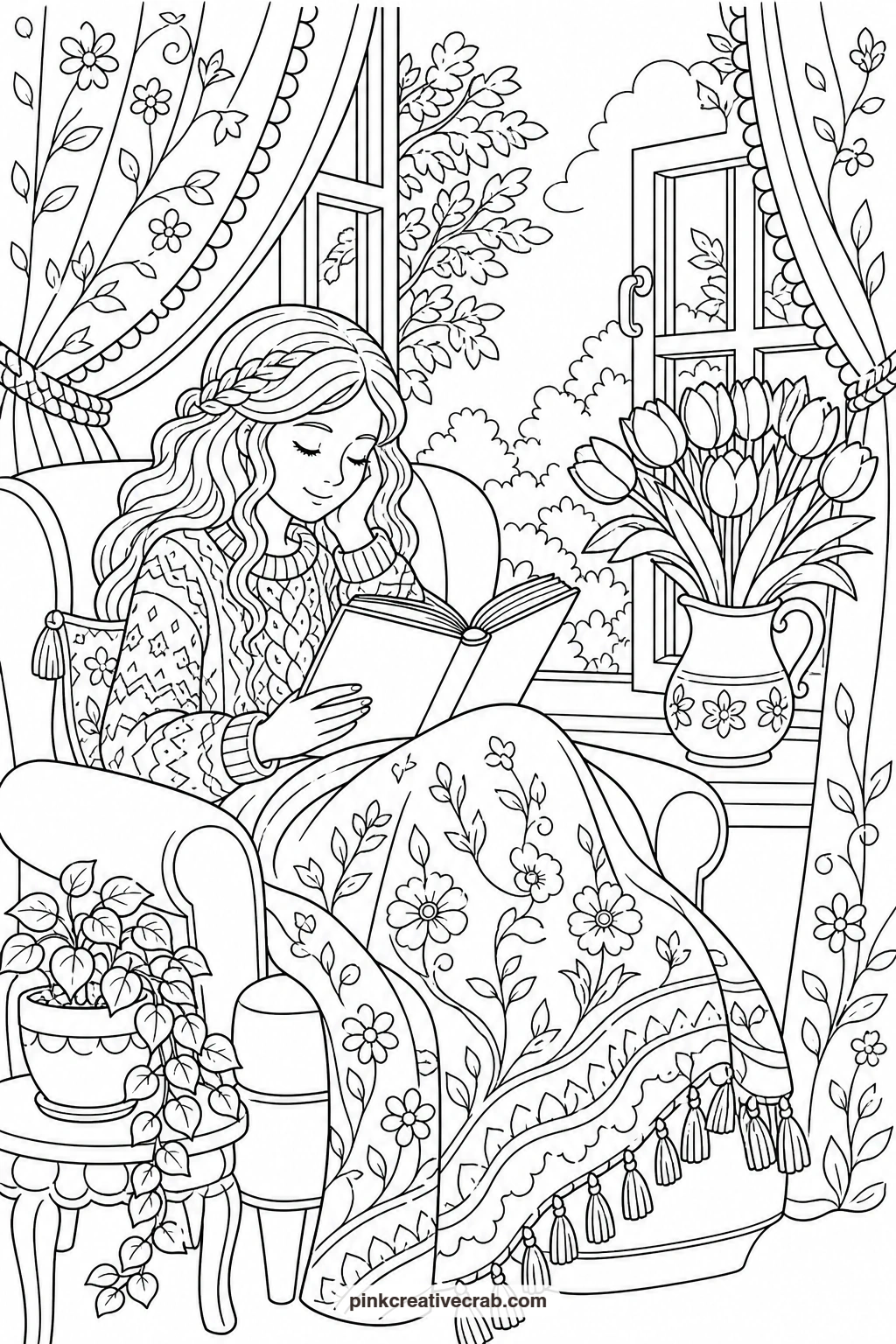
Readers who like long, unhurried sessions will enjoy this one, since the jug of tulips on the sill and the folds of the curtain both reward slow, careful shading.
Anyone newer to coloring can keep it simple by filling the tulips first and leaving the window glass plain.
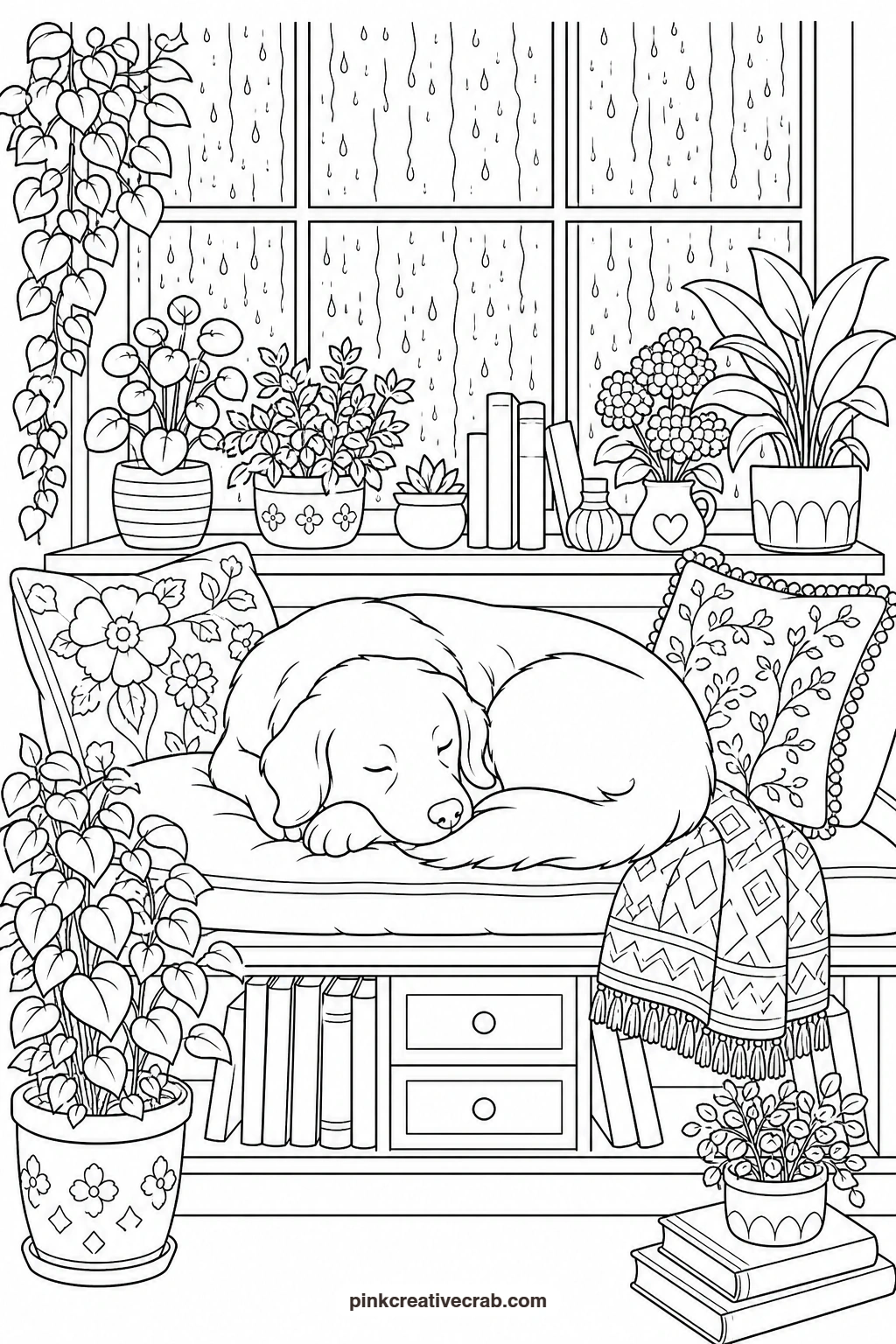
Fine liners work well on the raindrops and the dog’s fur, while a soft pencil suits the cushions underneath; start with the dog so the rest of the page builds around it.
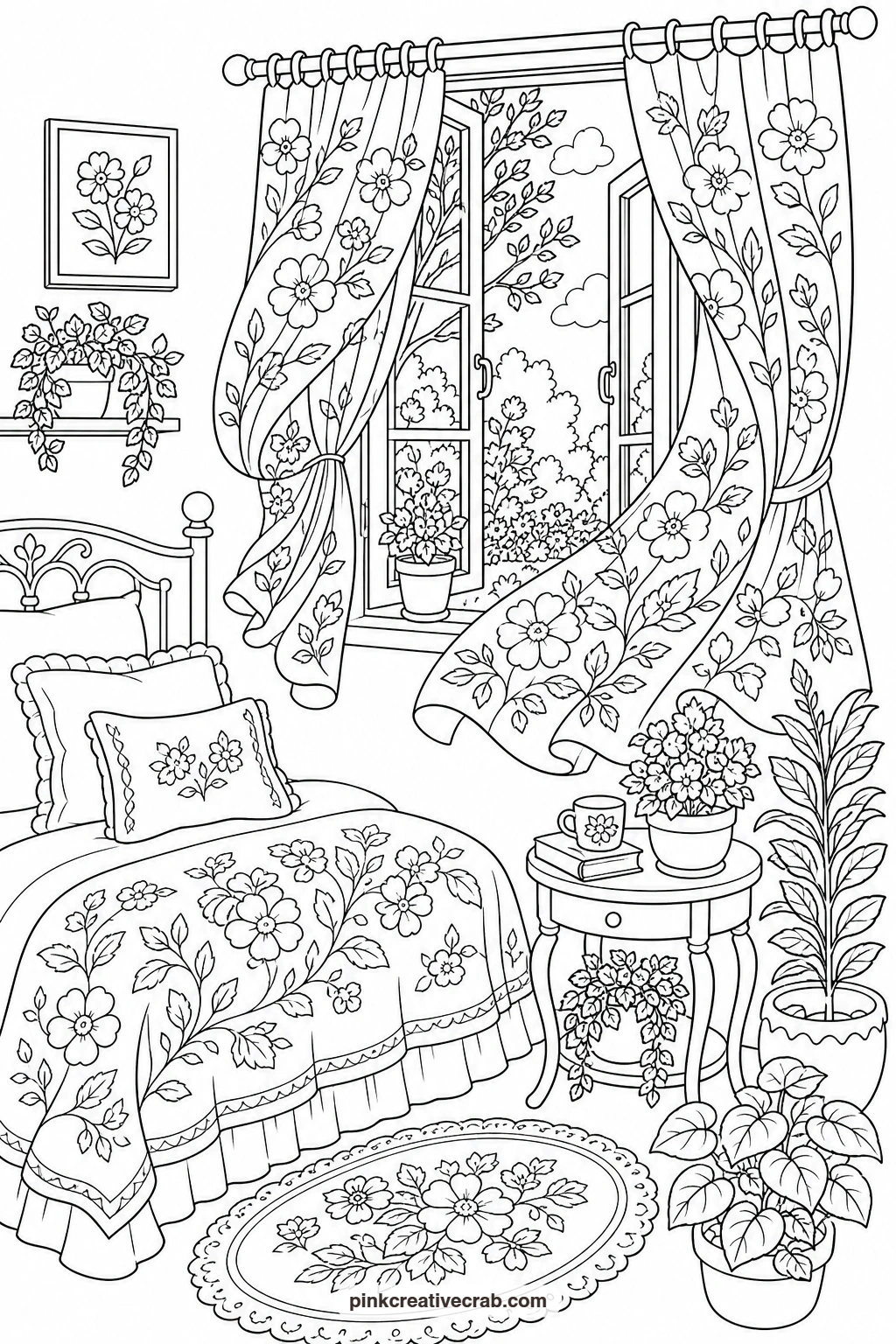
Billowing curtains caught in a spring breeze give this page a sense of movement that pairs nicely with the stillness of the room around it, so it rewards anyone who enjoys coloring fabric folds and pattern work in one sitting.
Porches and Steps
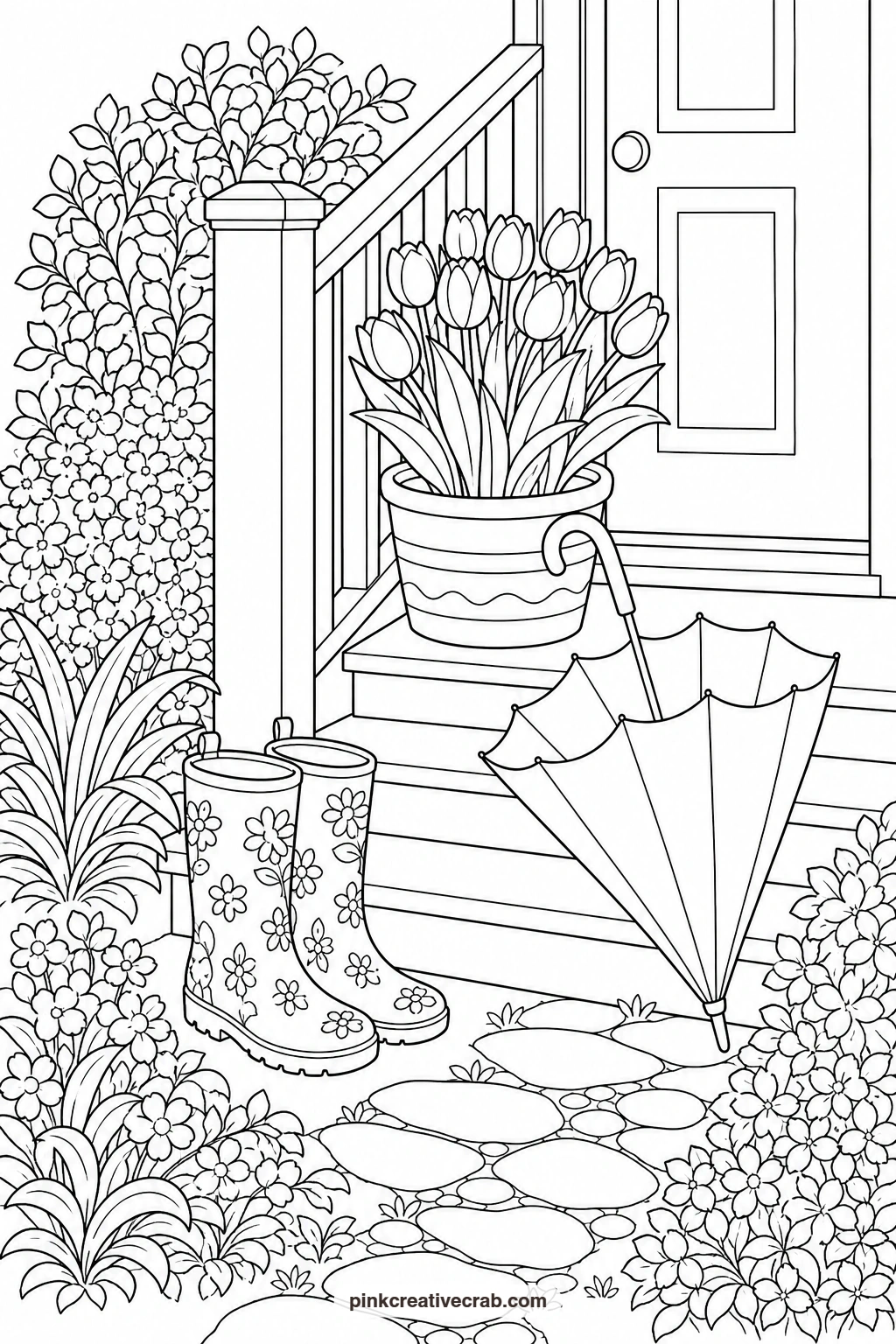
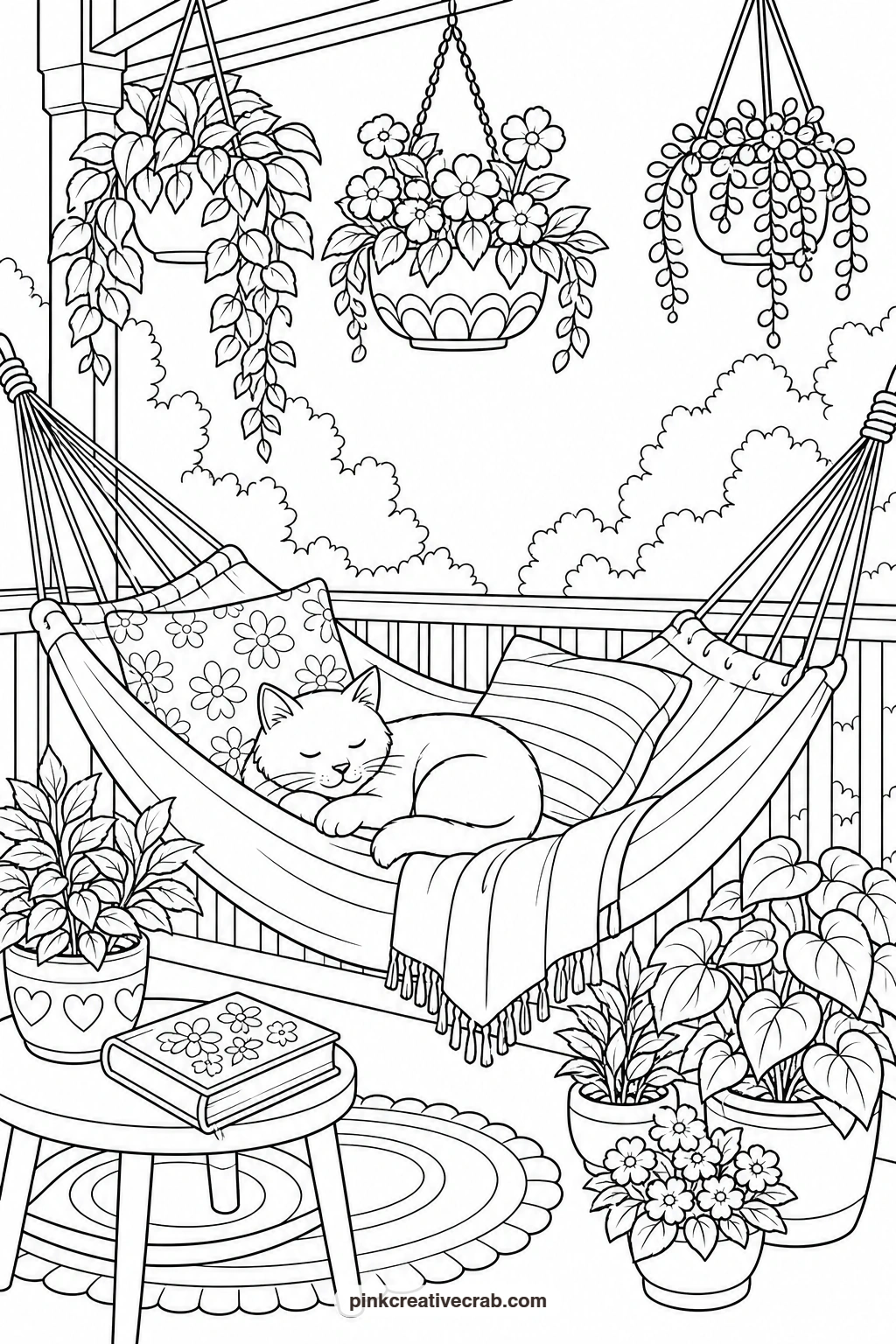
Pair this one with the hammock porch page later in the set for a little matching pair of outdoor scenes worth framing side by side.
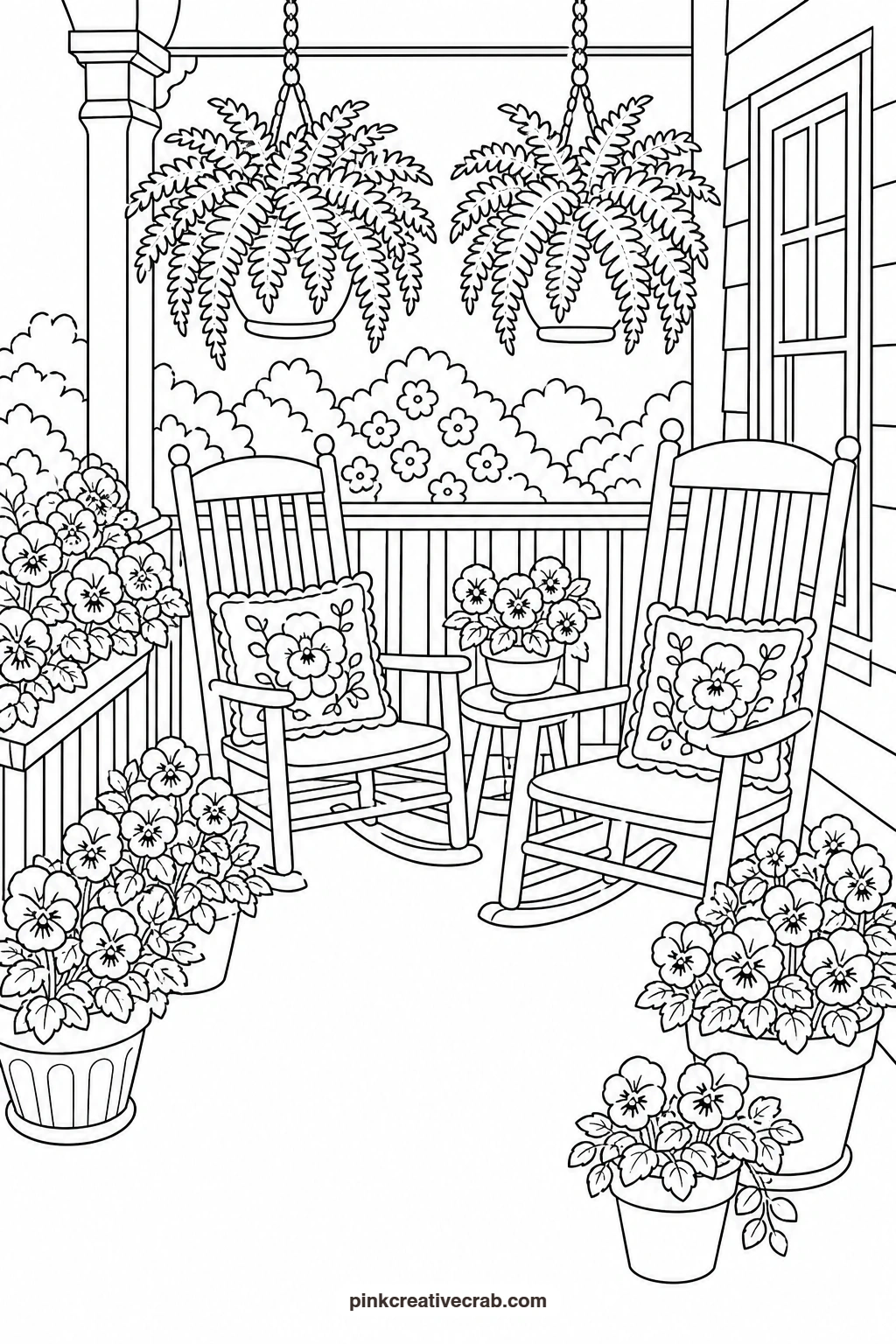
Coloring this page is a matter of a mistake and a fix: many people color the rain boots and the umbrella the same shade, which flattens the page, so give each one its own color family to keep them distinct.
Short on time? This one works as a ten minute version too: color just the cat and the hammock stripes, then leave the hanging planters as plain outlines for another day.
Greenhouses and Garden Sheds
Greenhouse glass, seed trays, a watering can and a sleeping cat tucked among the pots give this page a packed, cozy feel, so it suits a confident colorer who enjoys working through many small shapes rather than a few large ones.
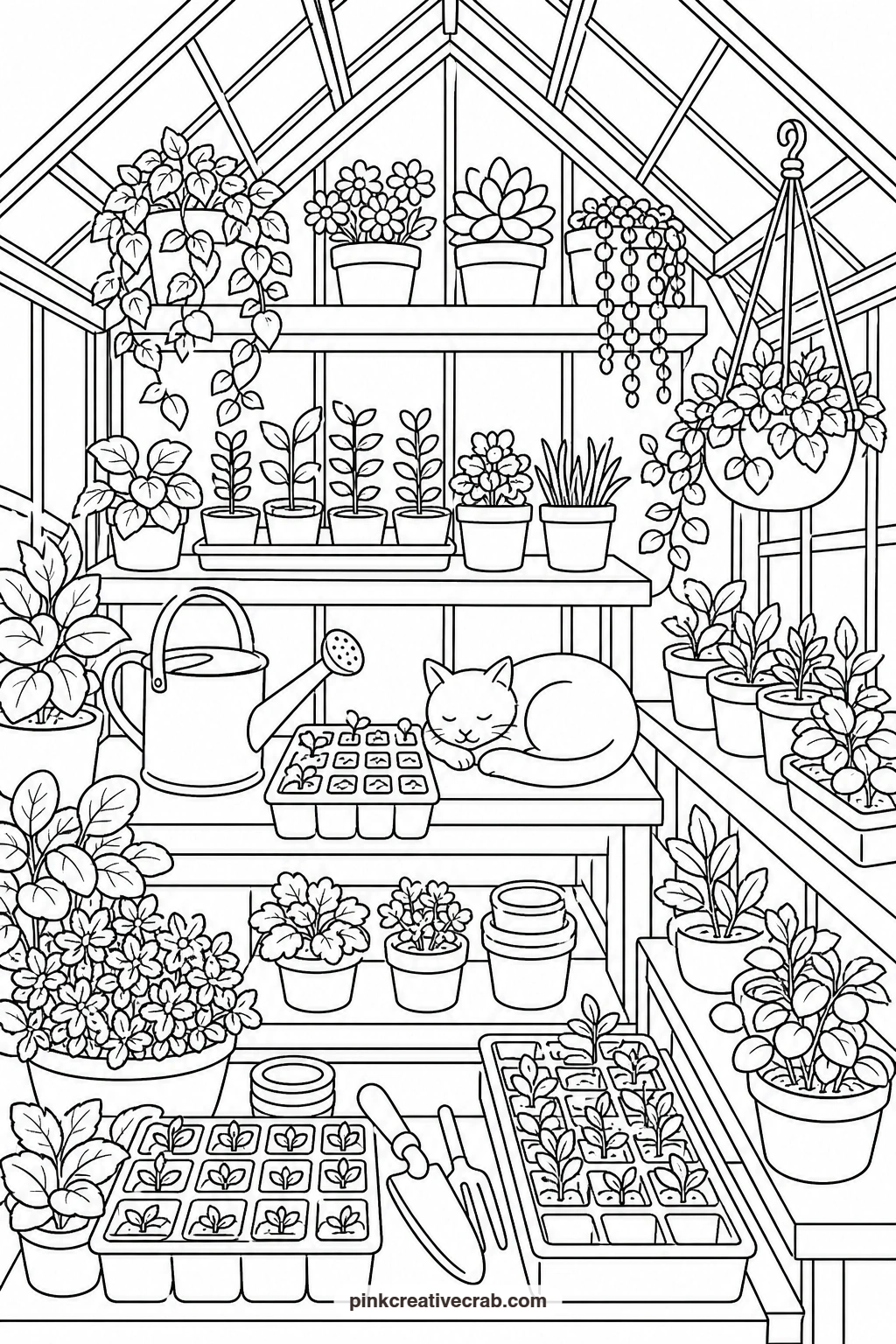
Try blending browns across the clay pots and the wooden bench, moving light to dark in one direction, to give the whole bench a sense of real wood grain.
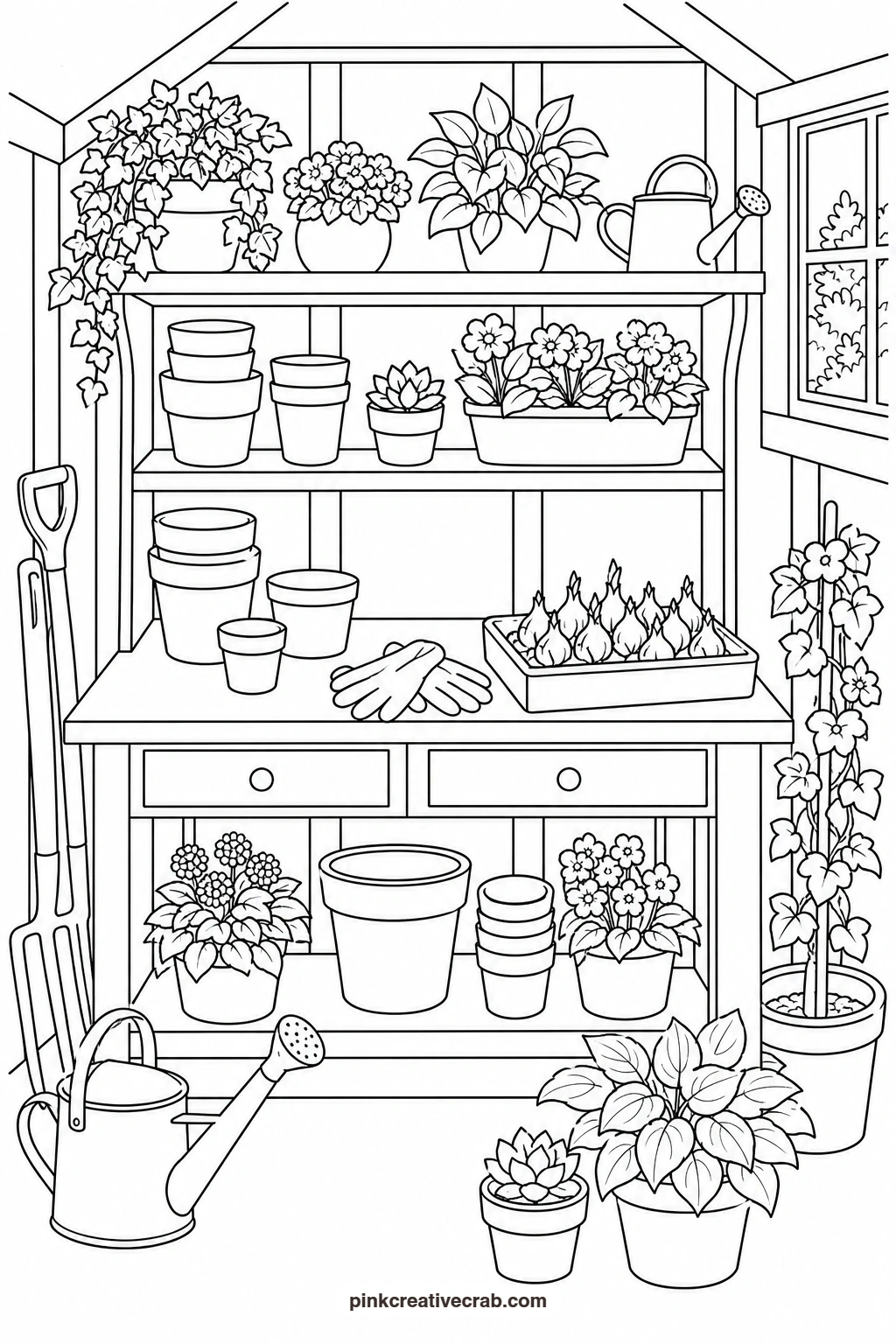
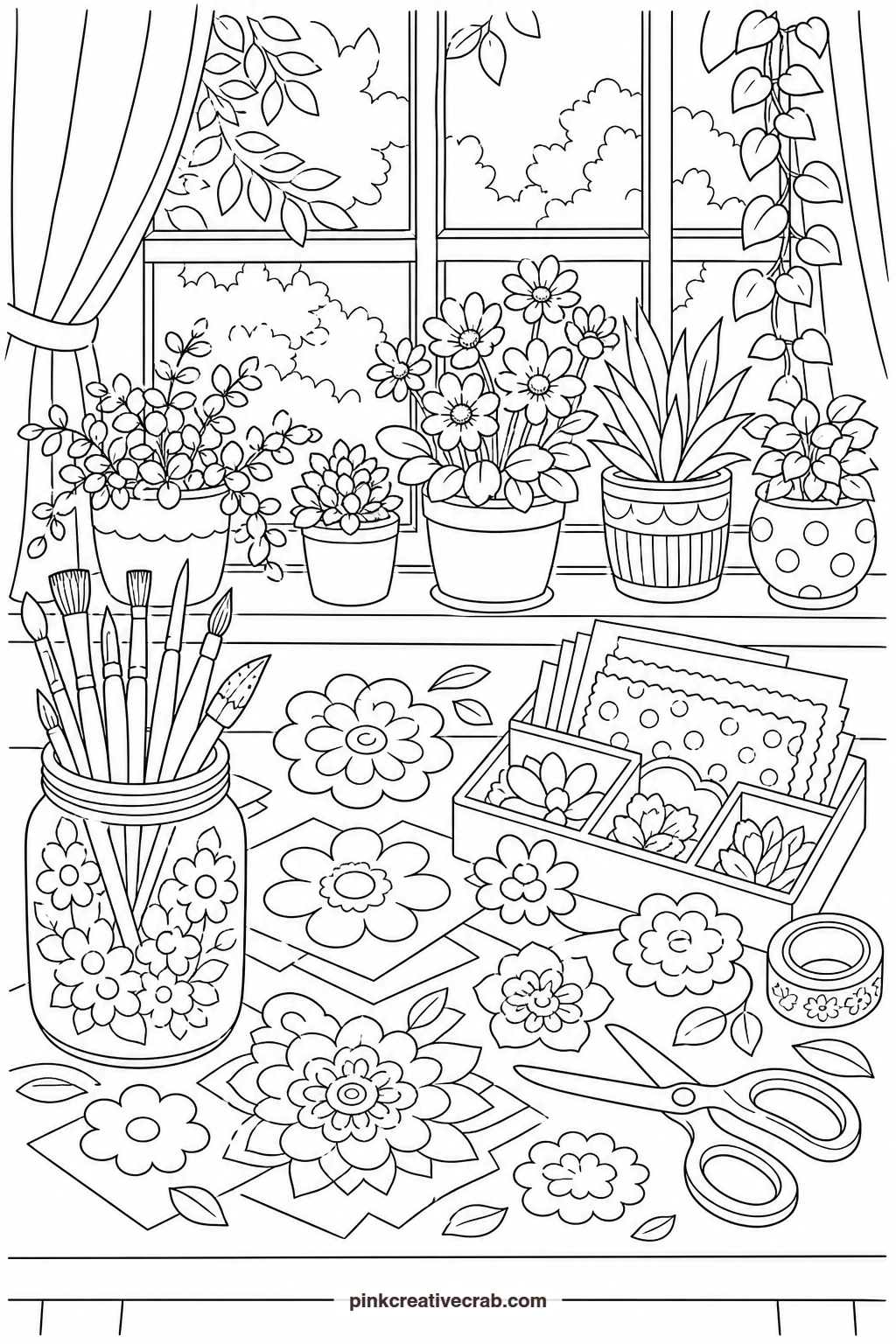
A jar of brushes and a pile of paper flowers sit beside a sunny window on this page, which pairs well with the attic studio page for anyone who likes coloring scenes about making things rather than just resting in them.
Flower Cafés and Stalls
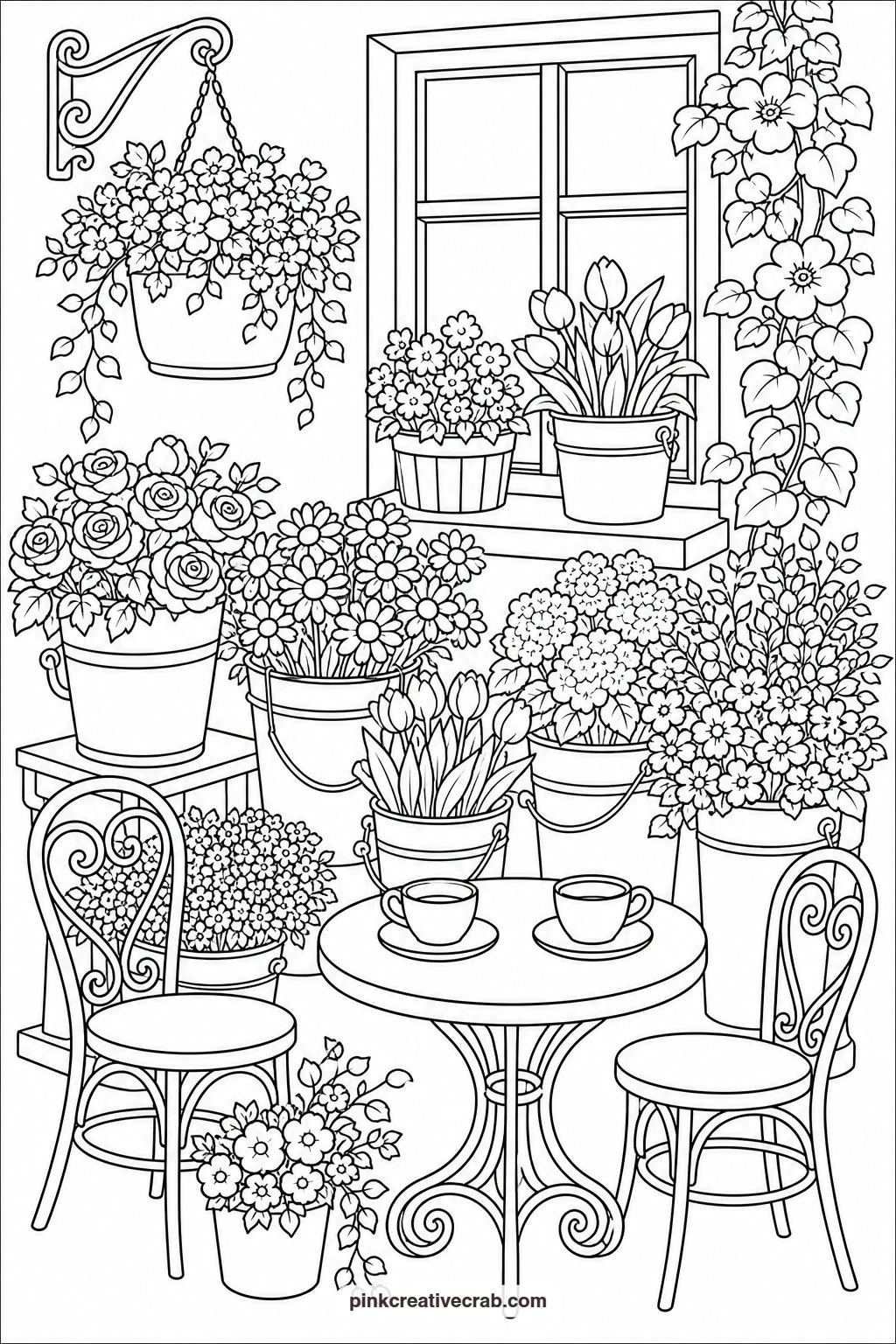
Gel pens in soft pastel shades suit the flower buckets especially well, and starting there before moving to the little round table keeps the color balance even across the page.
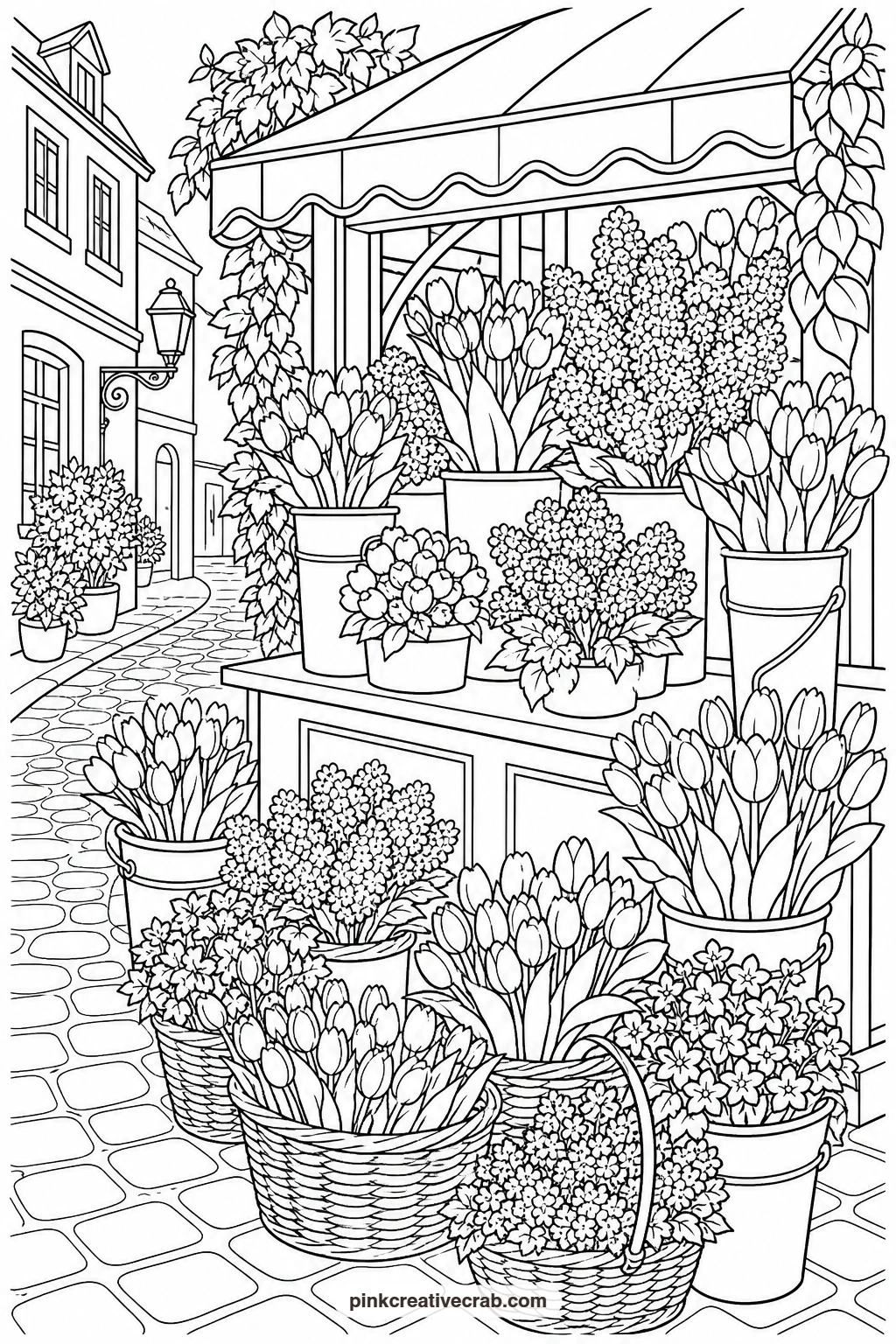
Bunches of tulips and lilacs fill a street stall on cobbled stone, a scene with enough small bundles of flowers to keep colored pencils busy for a long, satisfying stretch.
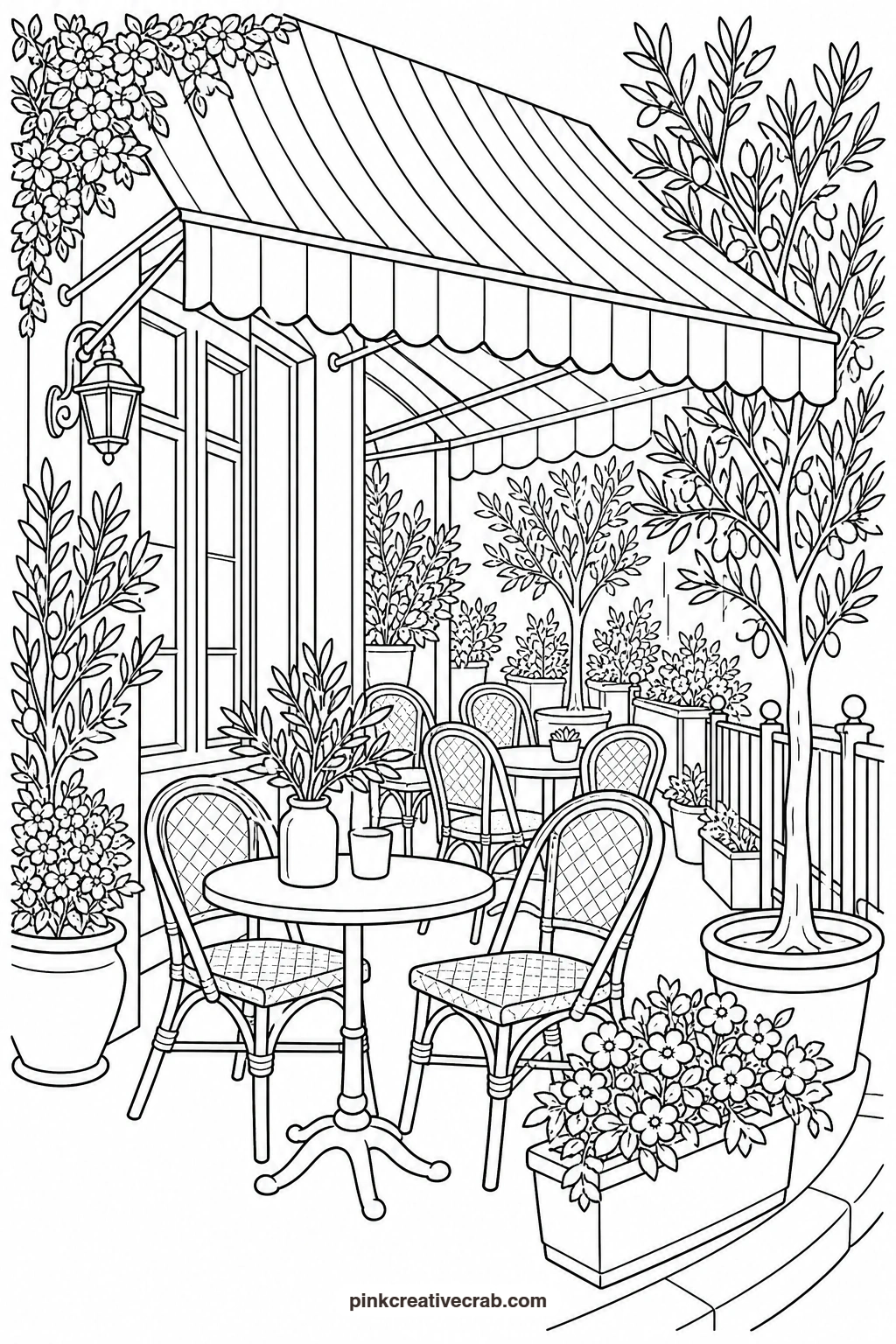
The usual mistake on this page is coloring the awning stripes in random order, which makes them look uneven, so plan the colors before starting and keep the pattern consistent across the whole terrace.
Garden Gatherings
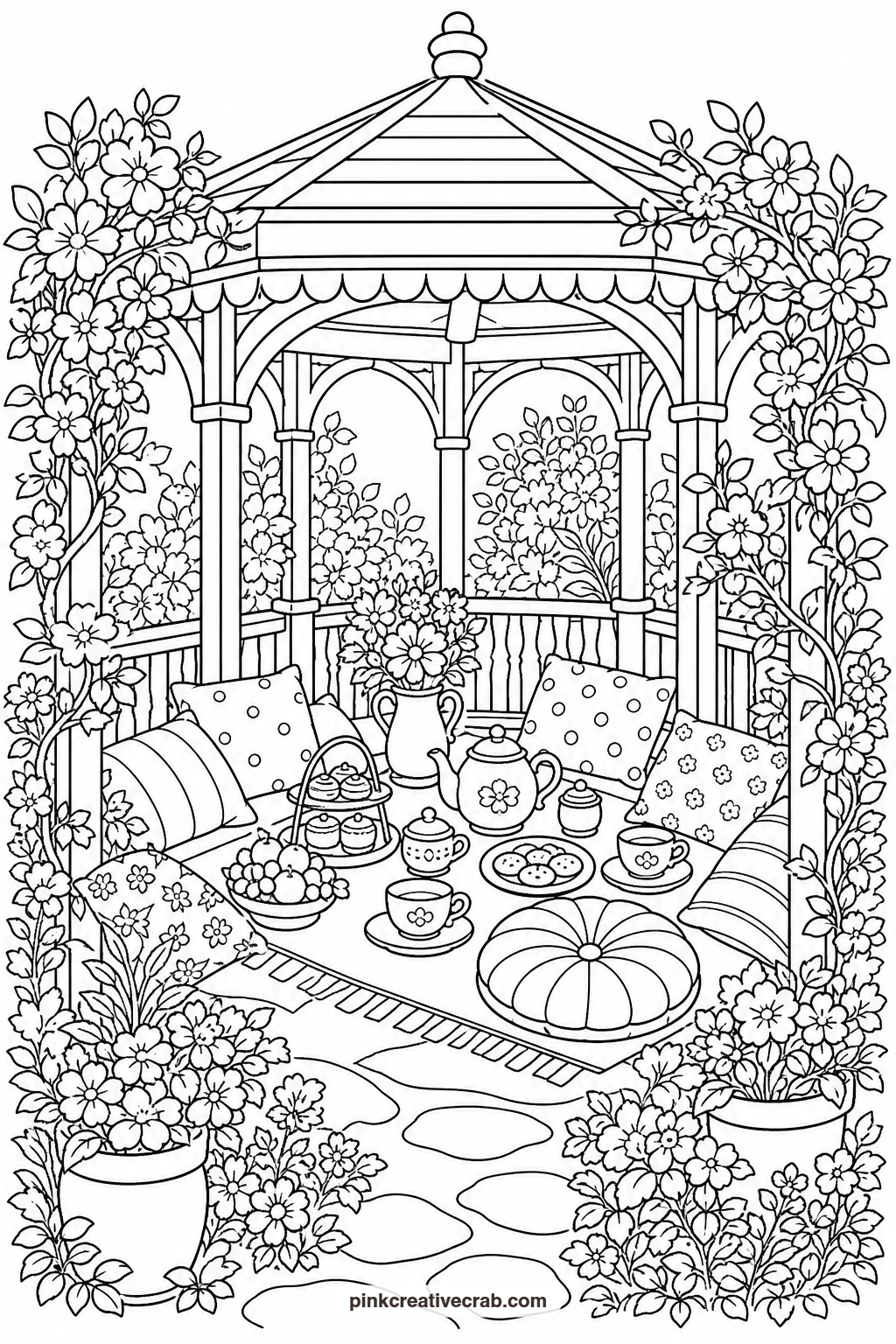
Picnic cushions, a little tea set and the gazebo frame overhead make this one of the more detailed pages in the set, well suited to anyone who wants a long session with a cup of tea nearby.
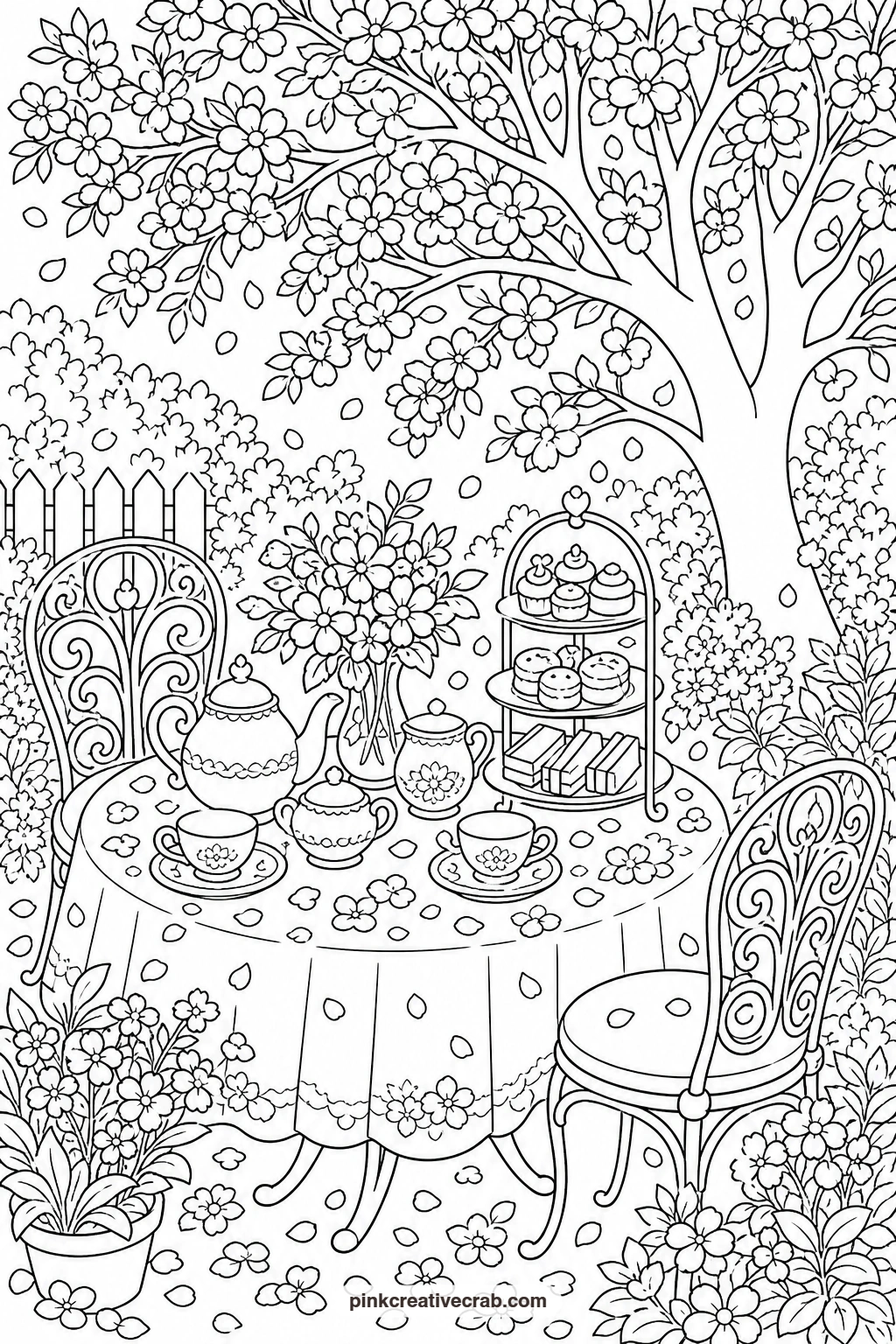
Try leaving a few blossom petals uncolored to let the white paper show through, which gives the tree a lighter, more delicate look than filling every petal in.
French doors open onto a flower garden here, which makes this page a good one to frame afterward, since the open doorway gives it a natural sense of depth once it is colored.

Sunrooms and Conservatories
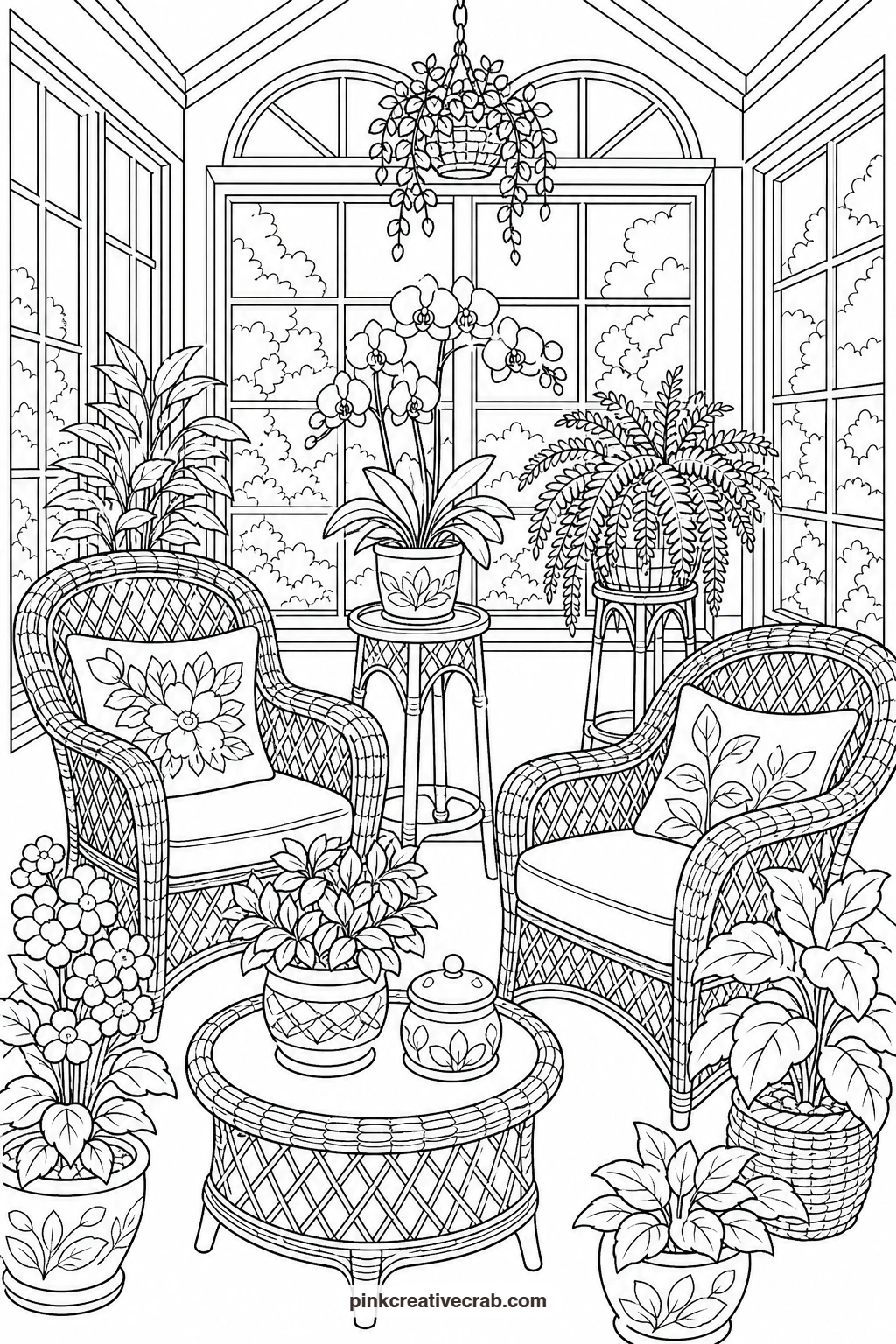
Wicker texture on the chairs takes well to a fine pen outline before color goes in, and the blooming orchids on the fern stand nearby reward close attention with soft purples and whites.
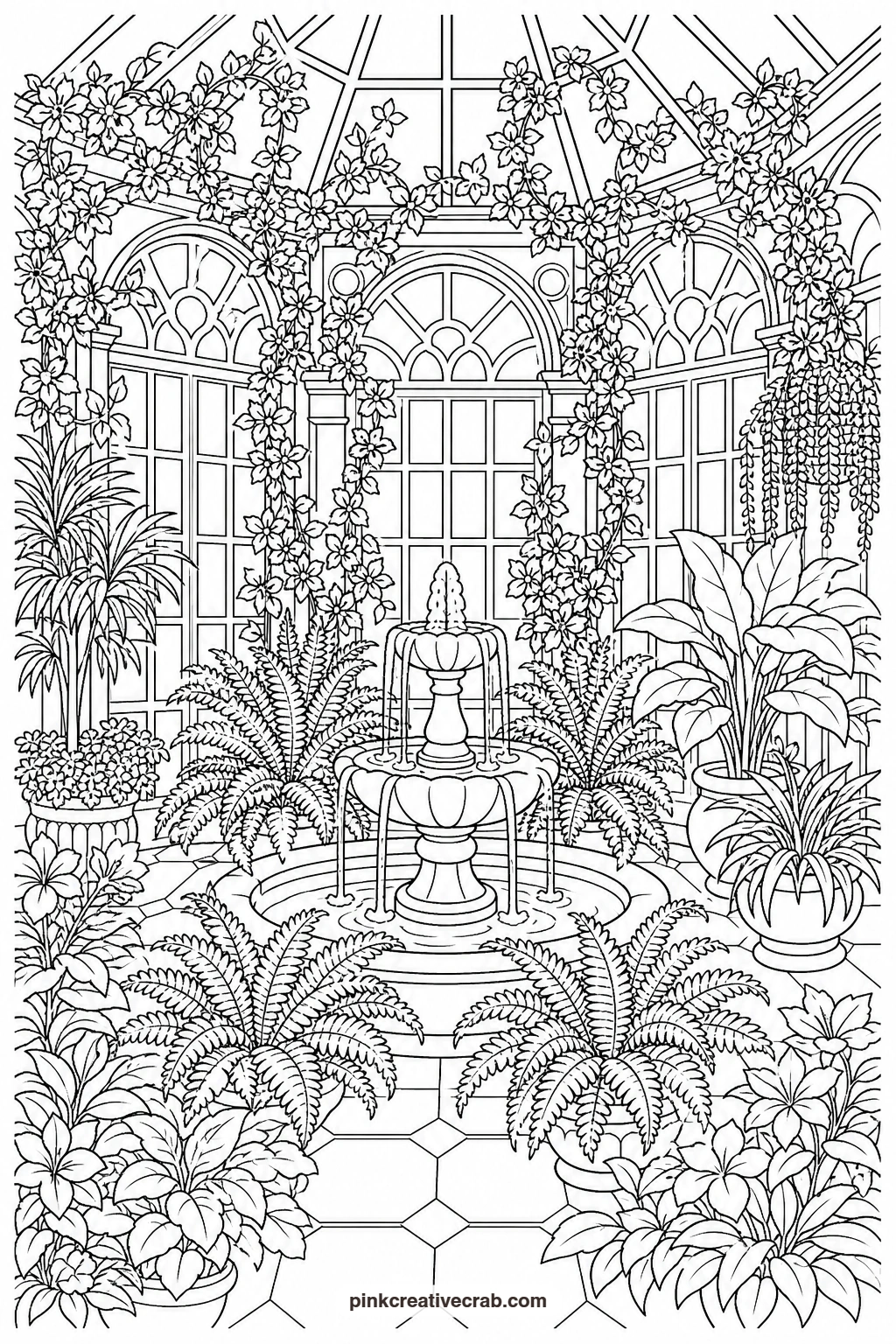
A small fountain, ferns and climbing jasmine fill this conservatory scene, pairing naturally with the sunroom page just before it if you want two green, plant filled rooms side by side.
Potted hyacinths, a candle and a folded towel sit along a narrow window ledge, a smaller page that works well as a quick, calming break between longer ones.
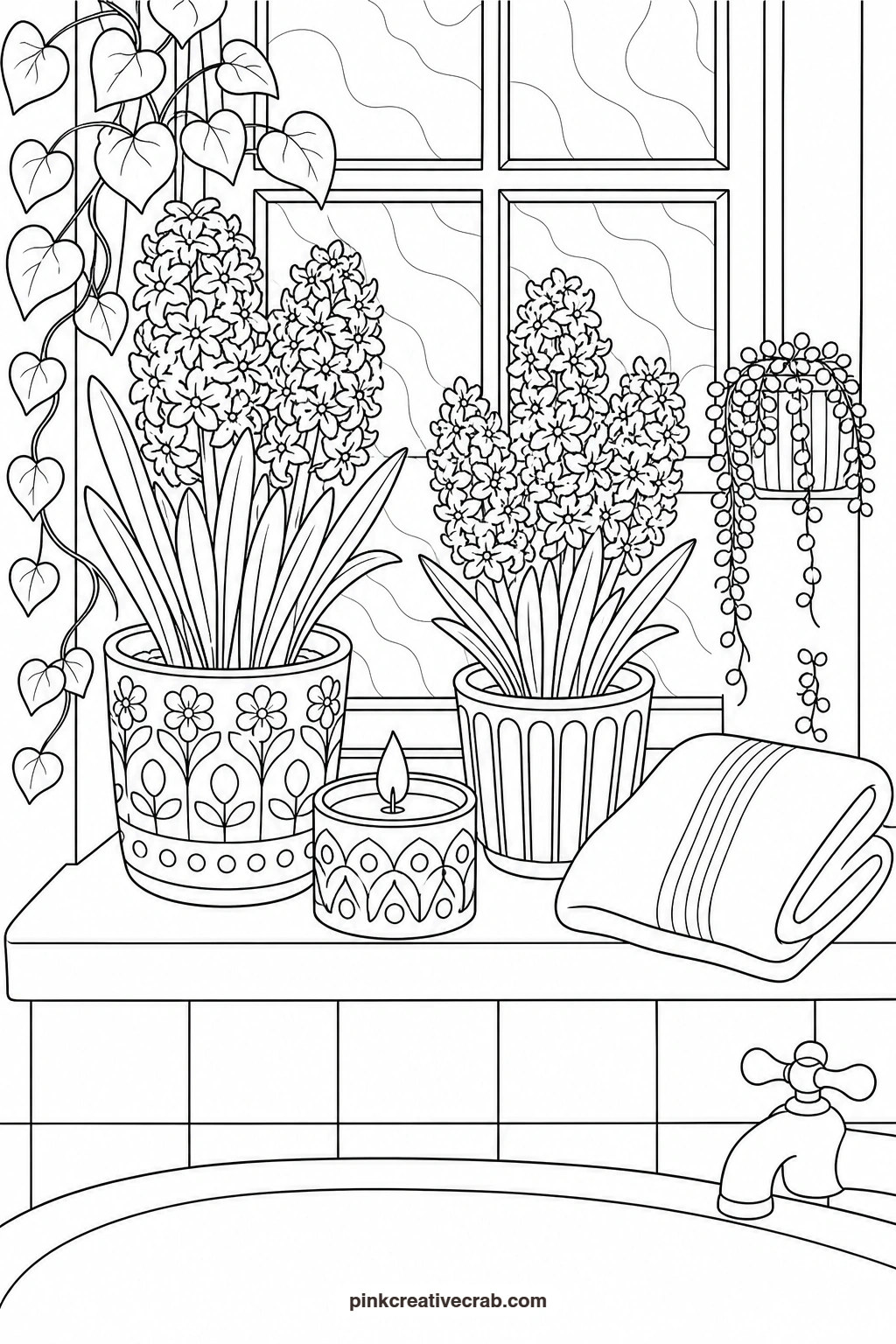
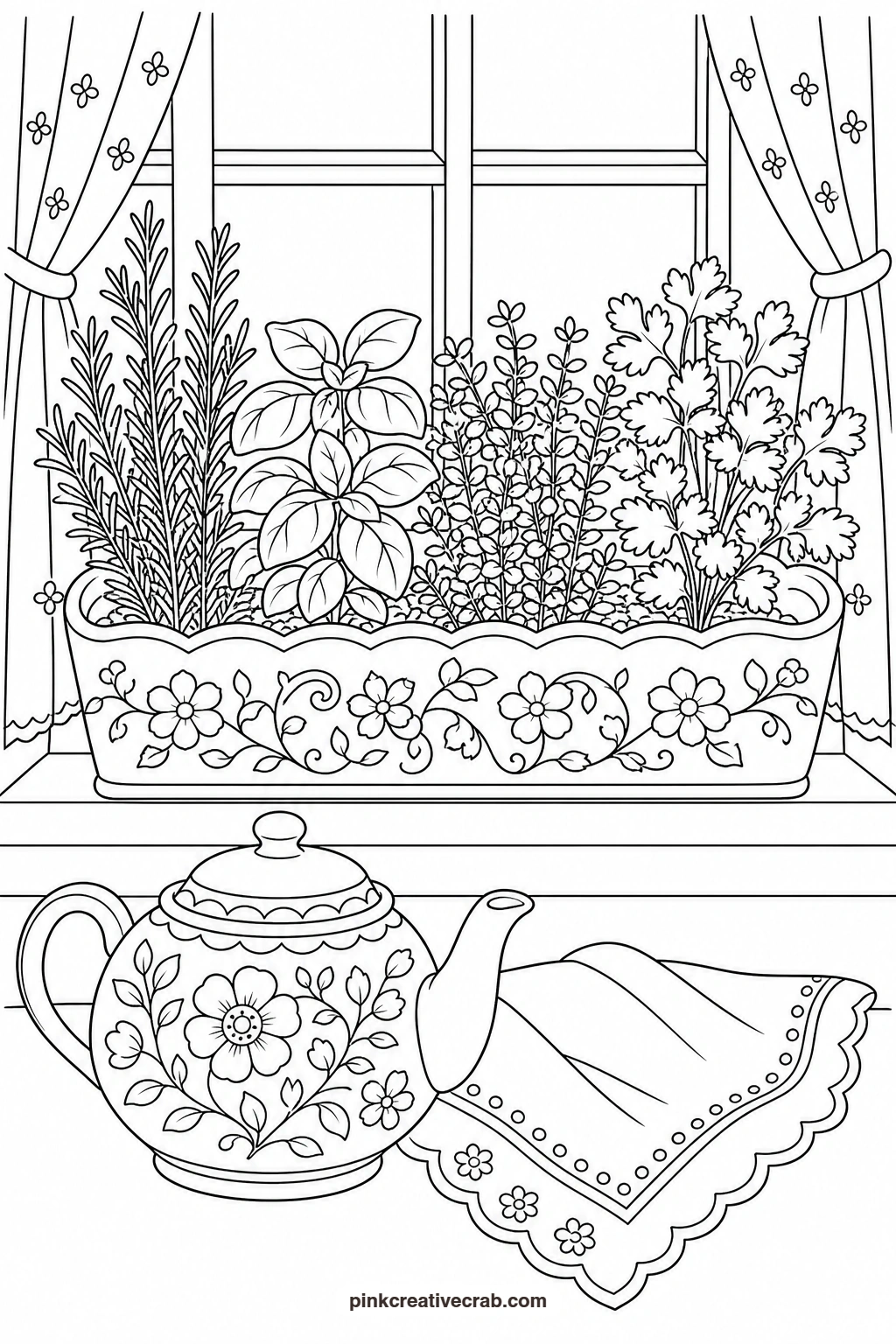
Kitchen and Reading Corners
Fine tip markers suit the herb leaves in the window box, and starting there before the teapot on the table keeps the greens from bleeding into other colors on the page.
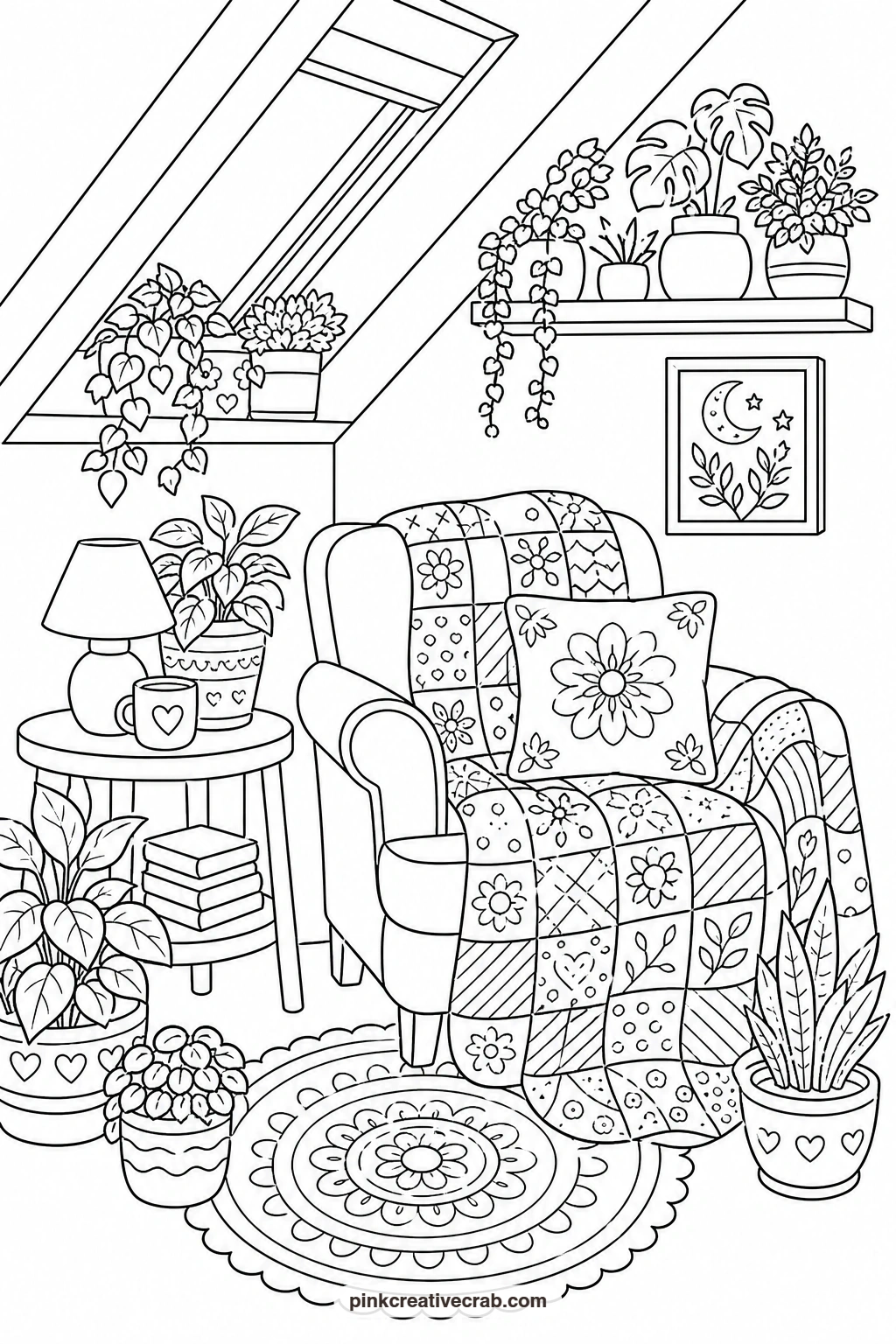
Plants and a patchwork quilt tucked under a sloped ceiling make this a favorite for anyone who likes coloring small enclosed spaces, since the ceiling line gives the whole page a snug, contained feel.
Ask a child coloring alongside you what color the blossom should be this time, since the vase of cherry blossom beside the armchair gives plenty of room to try something other than pink.
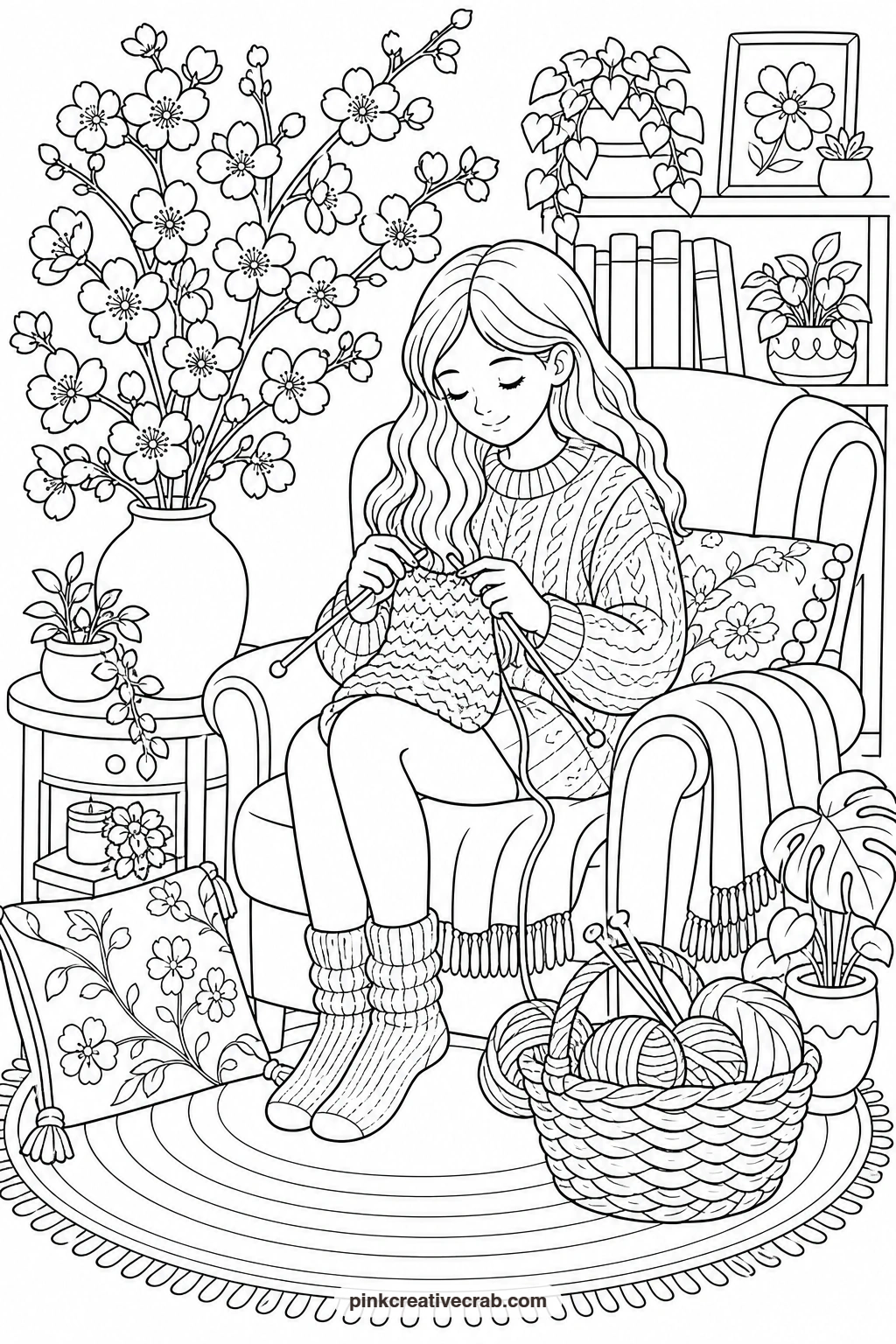
Creative Corners
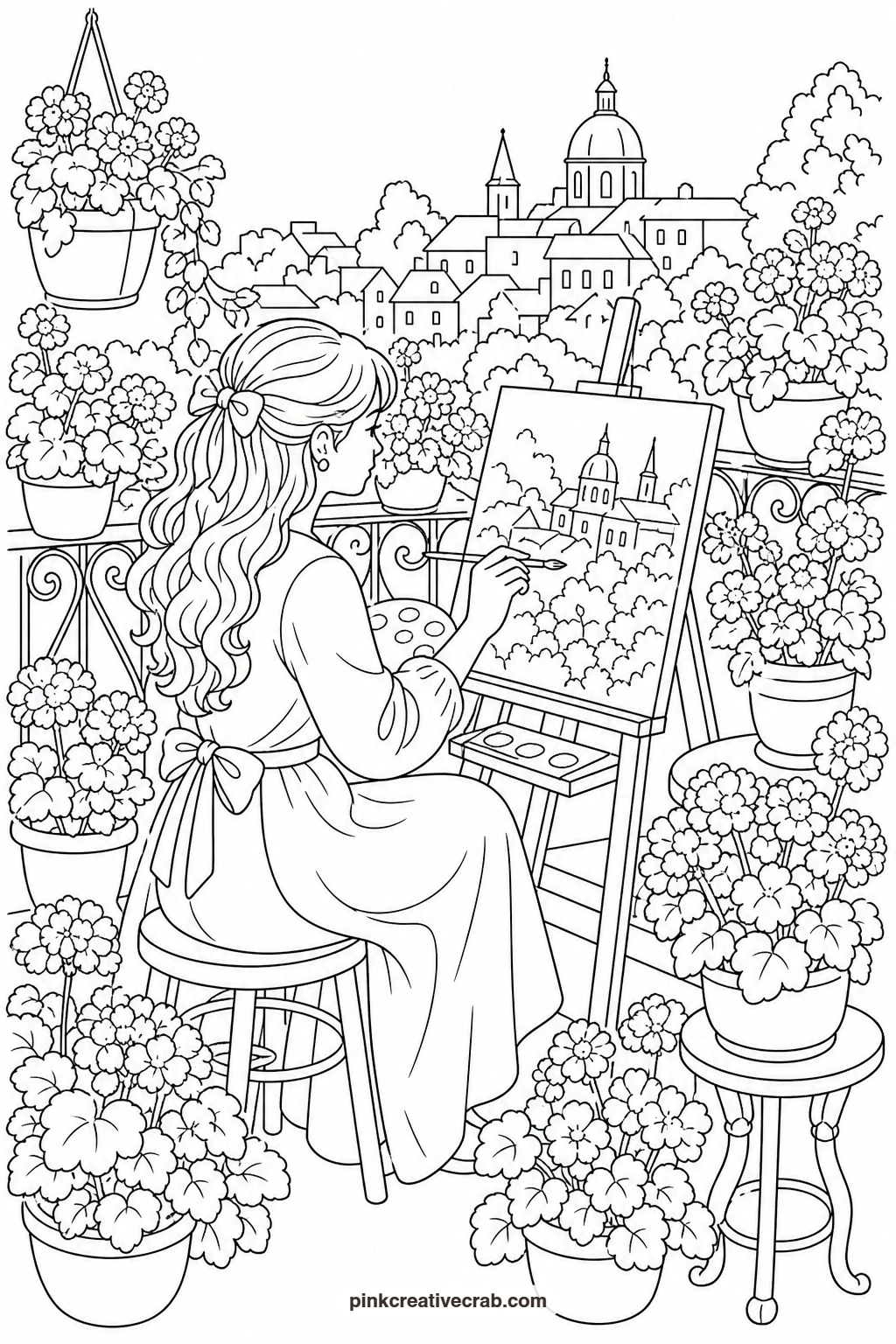
Geraniums crowd the balcony railing around a girl at her easel, making this one of the more detailed pages, so anyone with a shaky hand might start with the easel and simpler shapes before tackling the flowers. You can read more of the thinking behind scenes like this one in these watercolor spring flower ideas to draw.
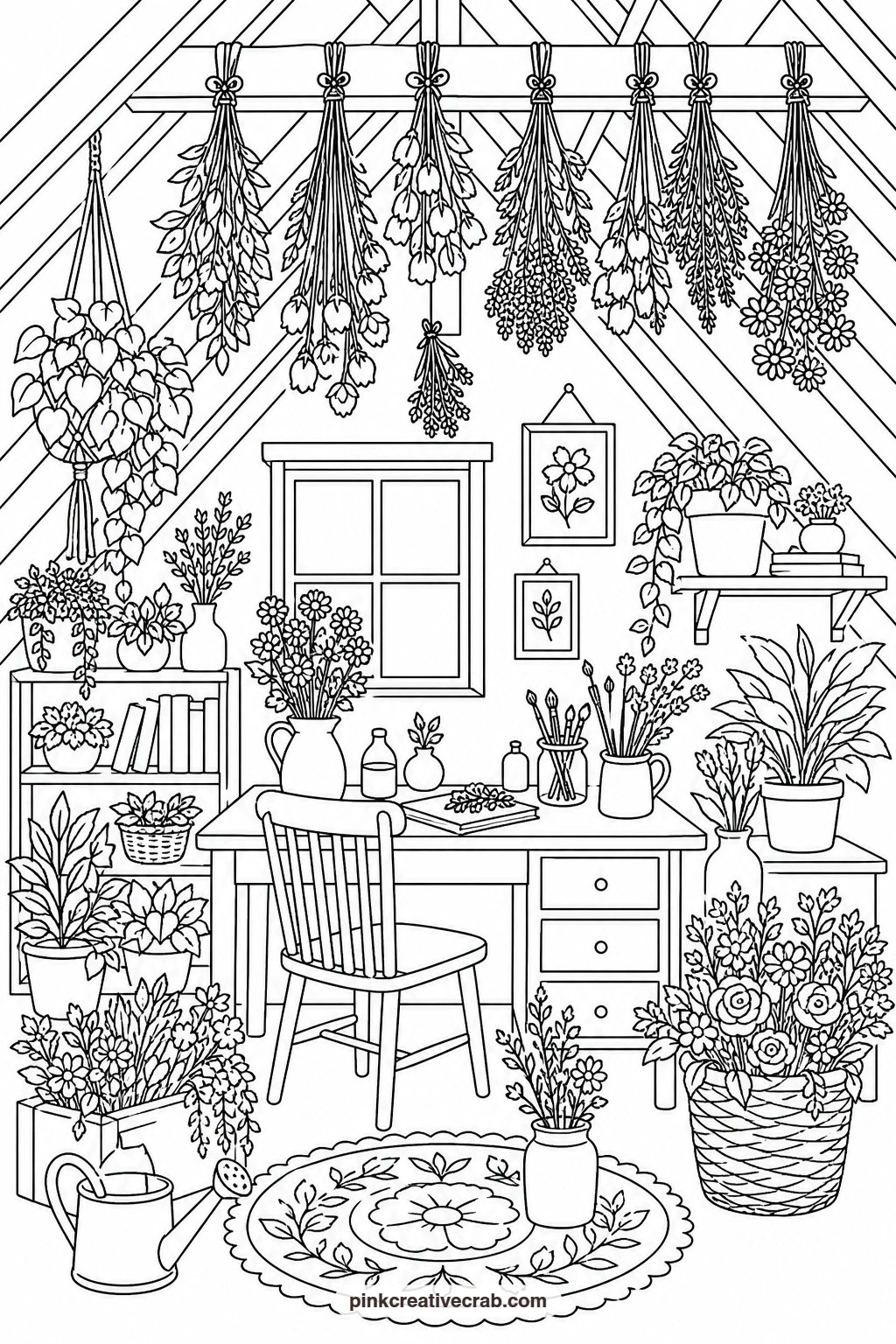
Bunches of drying flowers hang from the beams of this attic studio, a page that closes out the set well since it combines the plants and the quiet, creative corners seen throughout the other pages. For more plant and flower subjects worth drawing after this set, the spring drawing ideas page is worth a look, and the aesthetic coloring pages make a good next set for the same mood.
What to Do Next
Print the pages that call to you first, or work through the whole set room by room, and let each one take as long as it needs.
Frequently Asked Questions
What paper works best for these cozy spring coloring pages?
Plain white printer paper works for pencils, while a heavier sheet around 90 to 120gsm suits markers and gel pens better, since it resists ink bleeding through to the next page.
What printer settings give the cleanest lines?
Set the printer to its best or highest quality setting on plain or matte paper, which keeps the fine detail in the plants and patterns sharp instead of fuzzy or faint.
What size should I print these pages at?
Standard letter or A4 size suits every page in this set, and printing at 100 percent or actual size keeps the line work and small details from being stretched or shrunk oddly.
What should I color these pages with?
Colored pencils, fine tip markers or gel pens all work well, with pencils best for blending and markers best for bold, even color in the larger flat areas like walls or tabletops.
Can I glue or frame these pages once they are colored?
Yes, a glue stick works well for mounting a page onto cardstock, and a simple frame or clip frame suits any finished page meant to hang on a wall afterward.
Have any thoughts?
Share your reaction or leave a quick response — we’d love to hear what you think!
-
 0
-
 0
-
 0
-
 0
-
 0
-
 0
