Table of Contents
This set of easter bunny coloring pages gathers 24 scenes of bunnies painting eggs, tending gardens, riding bicycles and lounging in flower meadows, each one a full sheet with big open shapes and no small lettering to fuss over. Kids, parents and teachers can print the whole set for an Easter morning activity, a classroom stack, or a quiet basket of pages to pull out whenever the mood strikes.
Print on plain printer paper for a quick stack or on heavier cardstock if the pages will be painted with watercolor or pressed hard with markers. A standard printer on its normal or best quality setting handles the line work cleanly, and a paper trimmer squares up any page headed for a card or a frame.
Using these images: free for personal projects such as printing, coloring, cards, journals and gifts. Handmade items that include them may be sold up to 30 pieces per design. More than that is commercial use and is not permitted, and neither is selling or sharing the images themselves or passing them off as your own. Please ask before any other use.
Painting And Dyeing Eggs
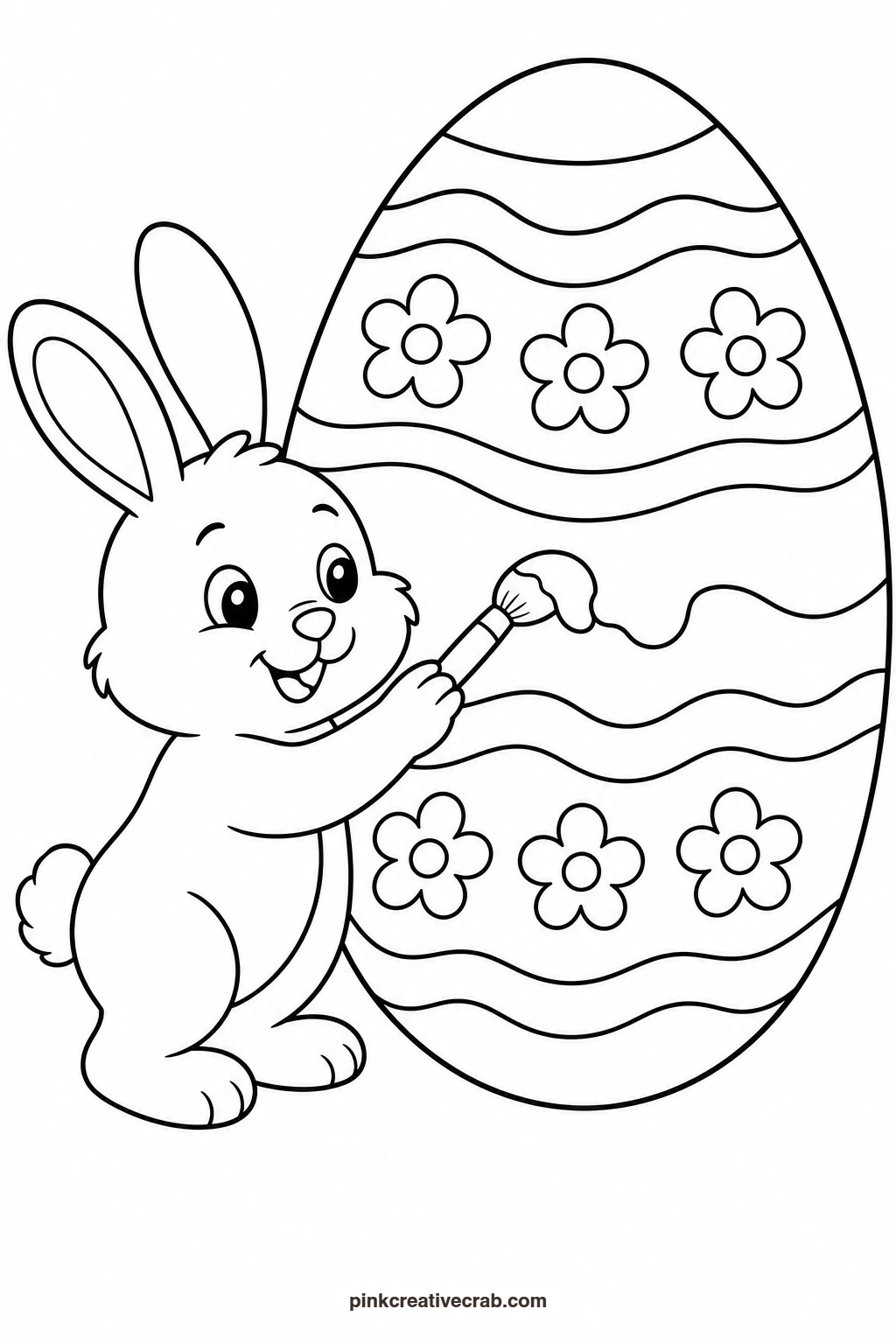
Suits younger colorers who like one big shape to fill, since the egg takes up most of the sheet and leaves the stripes and flowers loose enough for any color choice.
A beginner can keep the stripes solid and bright, while a steadier hand might add a dotted pattern between the painted bands for a busier finish.
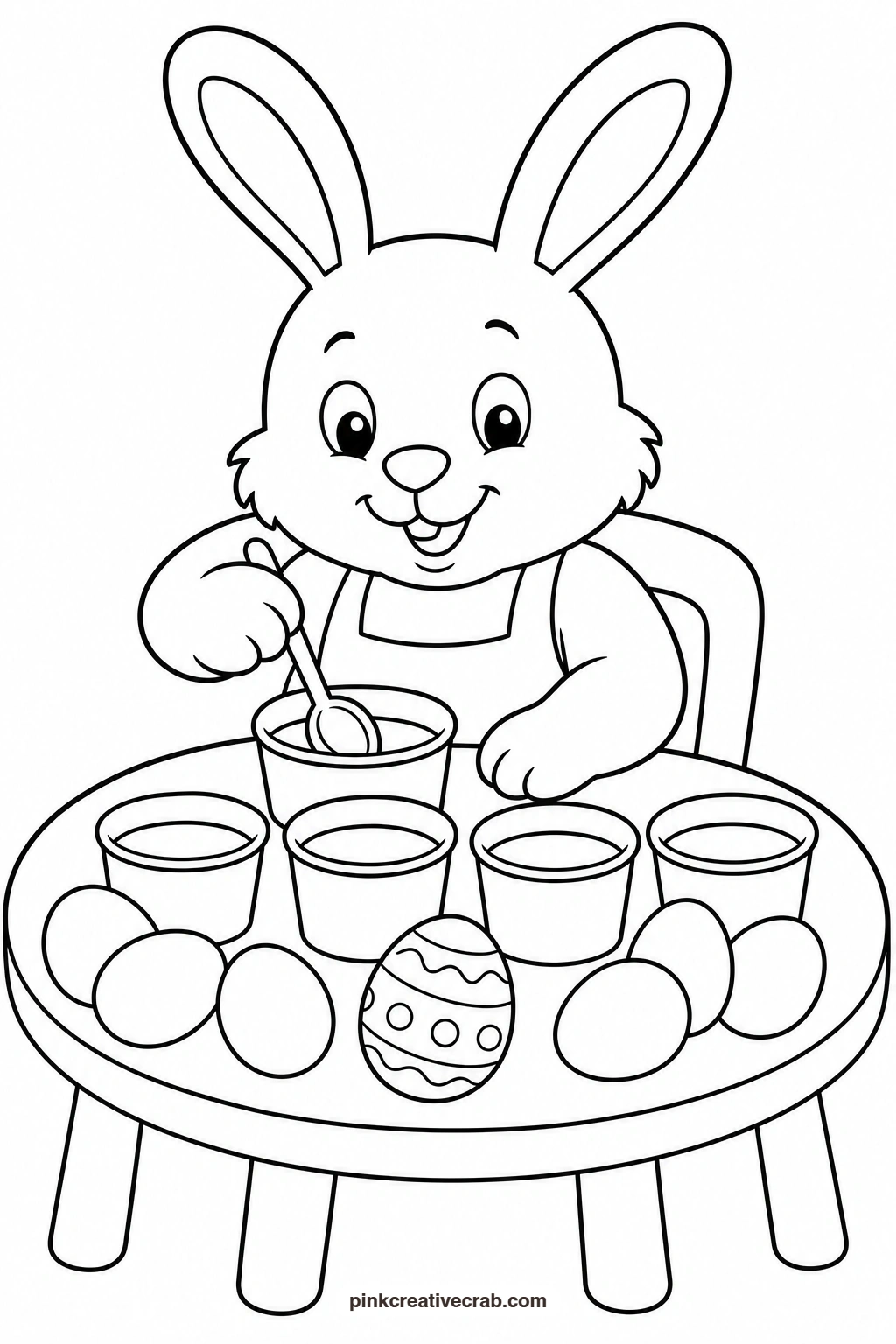
Fine-tip markers work well on the small cups and spoons here, while broad markers or crayons suit the bunny’s fur and the tablecloth, so starting with the cups keeps the detail from getting smudged by a bigger tip.
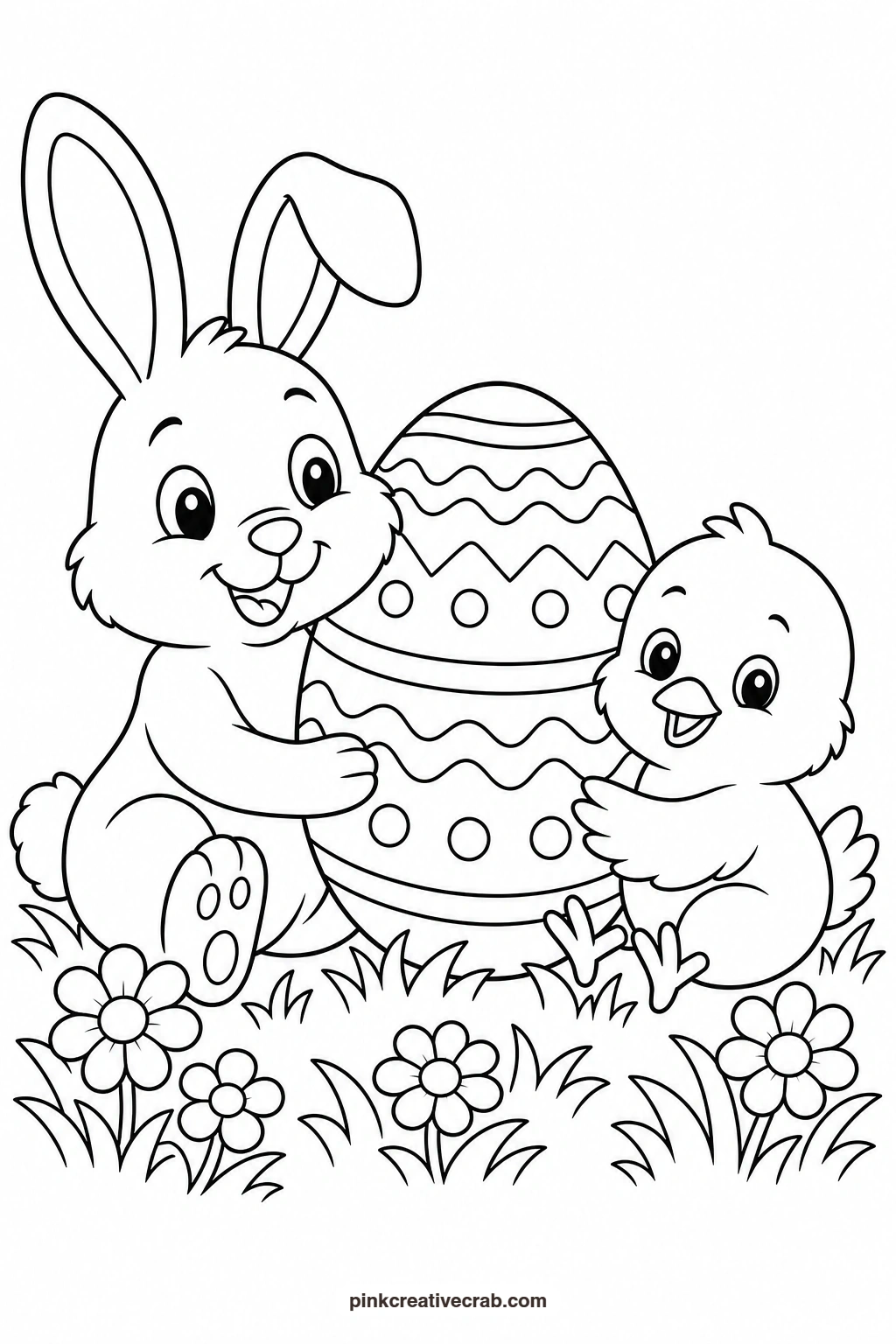
A gentle pairing of a bunny and a chick resting against one large decorated egg works well for a shared coloring session between a younger and older child, since the egg gives one big area and the two animals give smaller, easier details.
Garden And Egg Hunt Scenes
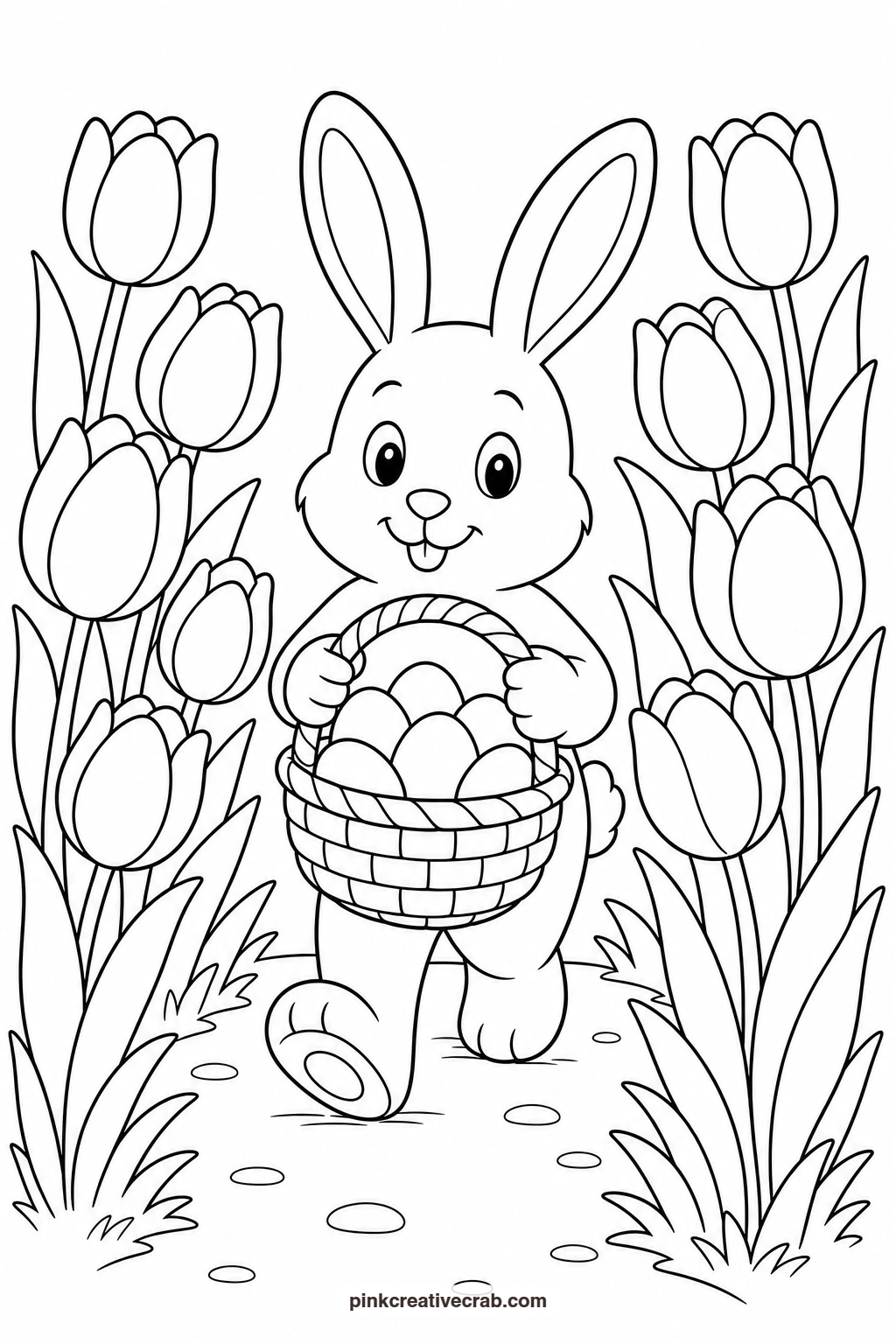
Try blending two shades of the same color across the tulip row, light at the base of each petal and darker at the tip, to give the flowers a bit of depth without any extra tools.
The basket and eggs can stay simple and flat beside that blended row, so the contrast does the work.
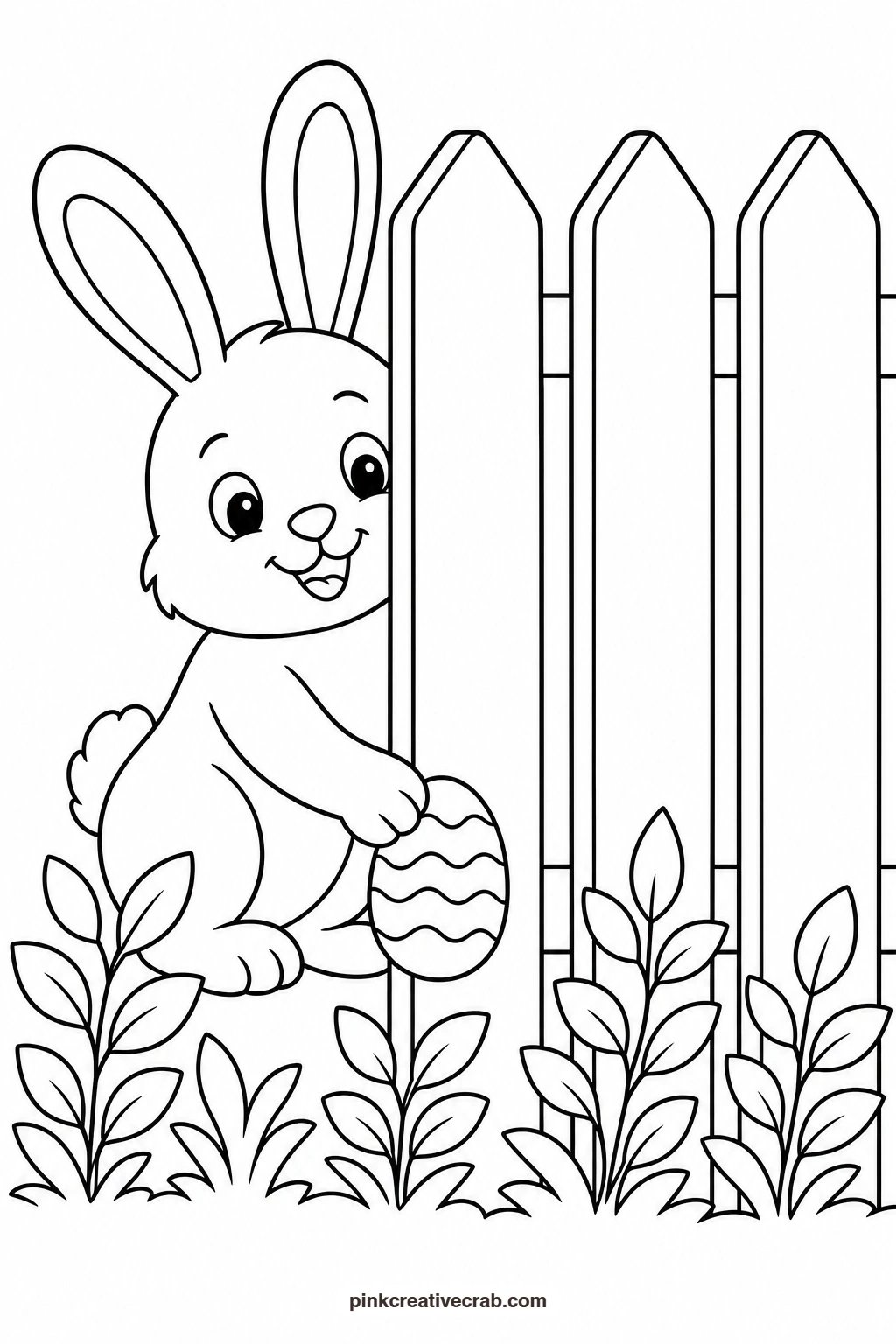
Pairs nicely with the tulip basket page above, since both scenes sit in the same kind of garden and make a matching set once colored and placed side by side.
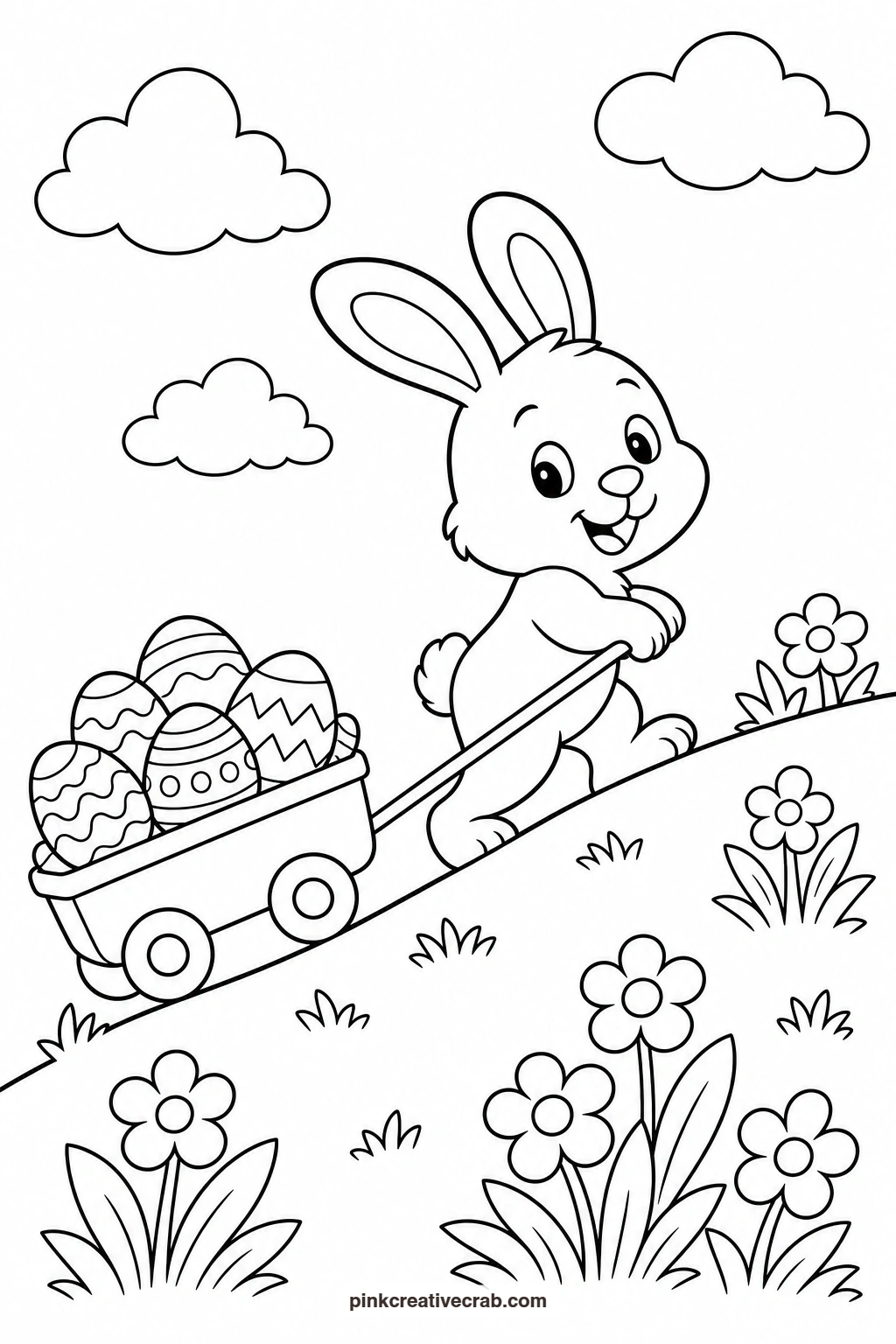
The usual mistake on this page is coloring the hill and the wagon the same shade of green or brown, which flattens the whole scene, so pick a different color family for the ground than for the wagon to keep the slope readable.
A simple fix is grass in green and the wagon in a warm wood tone or bright red.
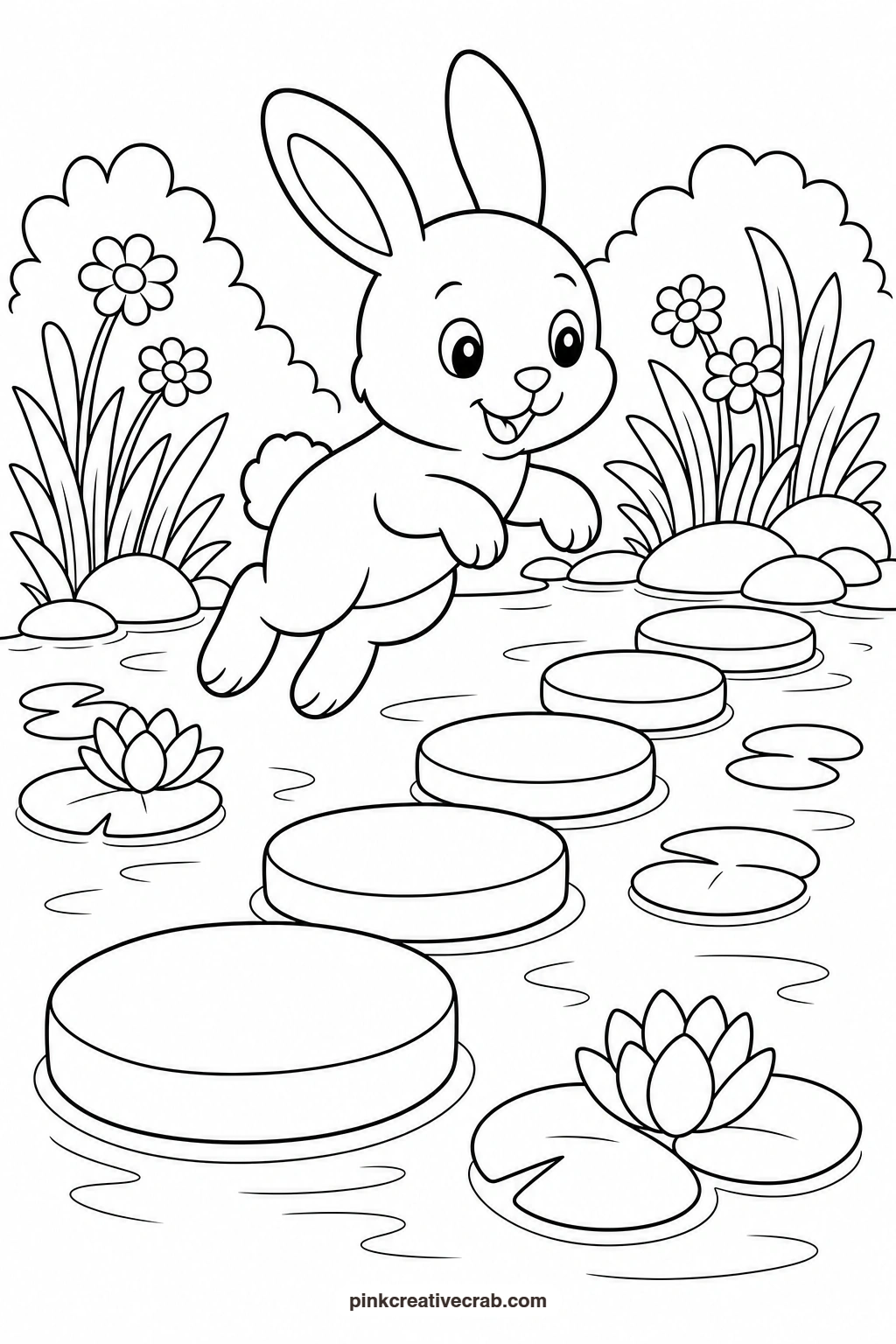
Ten minutes is enough to color just the stones and the pond water, leaving the bunny for later, which makes this a good page to start when time is short and finish another day.
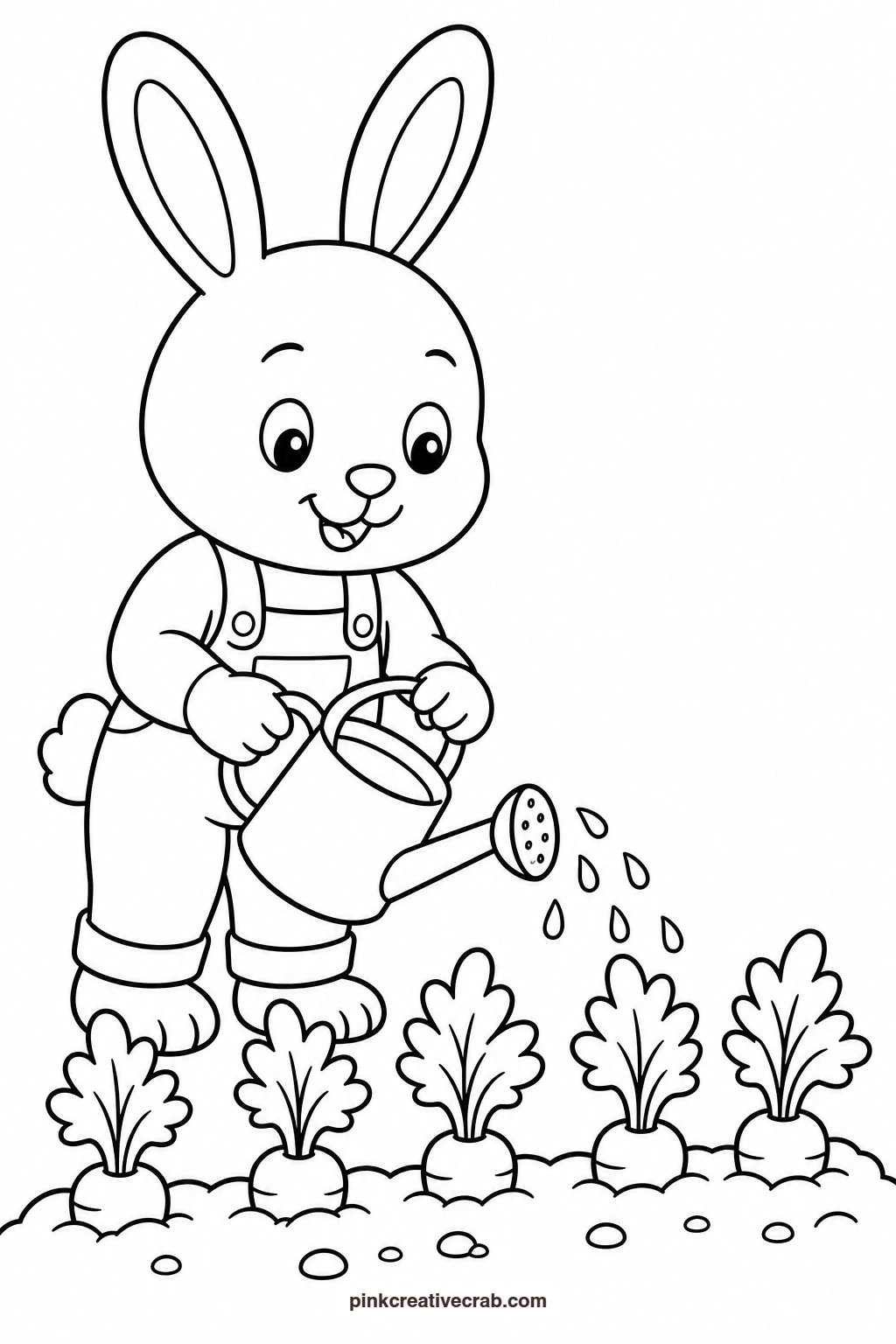
A bunny in overalls holding a watering can over a row of carrot tops gives a steady hand plenty of small leafy shapes to work through, while a younger colorer can treat the whole row as one green mass.
Ask a child watering alongside this page what they would grow if they had their own garden bed.
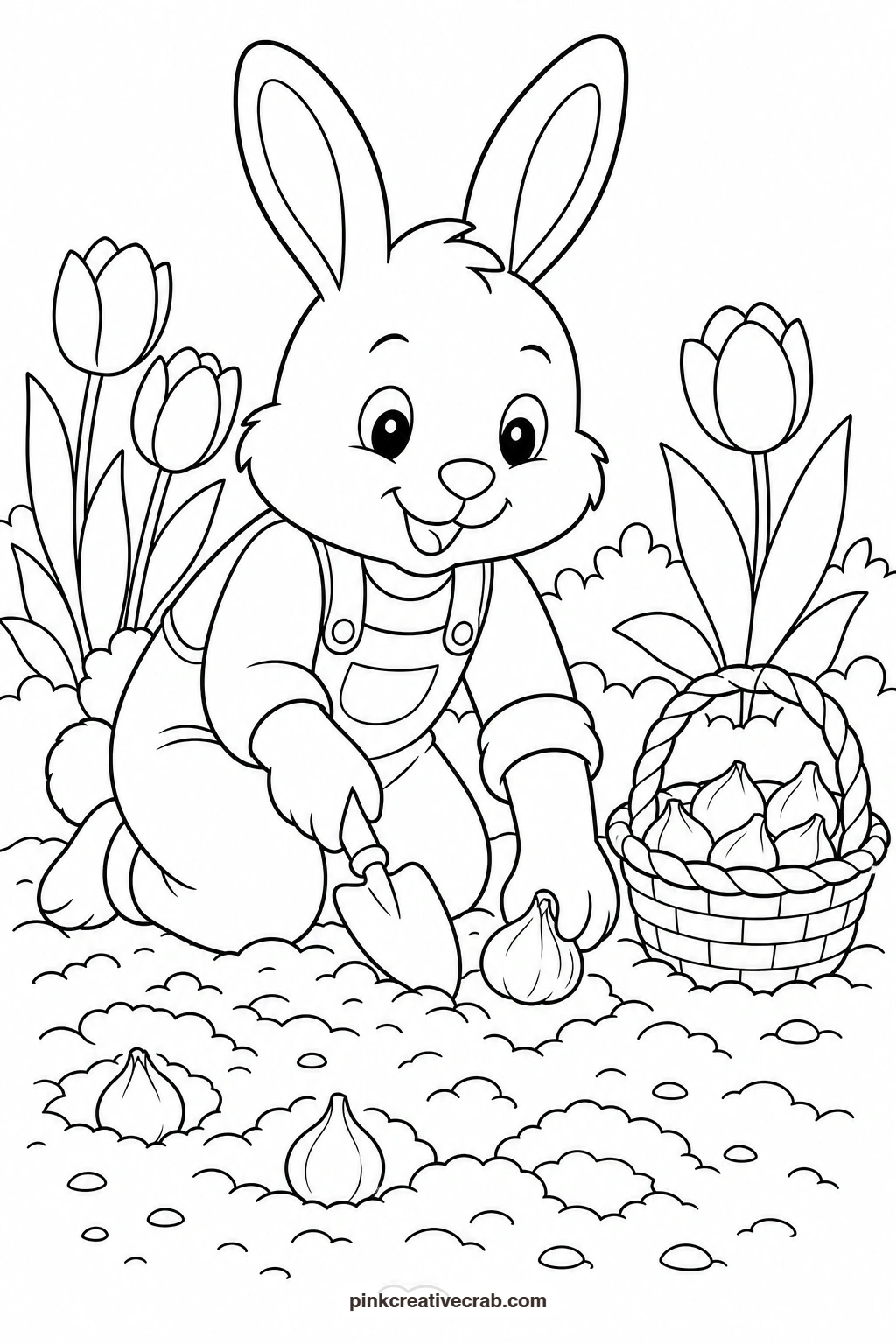
Kneeling with a little trowel and a basket of bulbs, this bunny suits a confident colorer who enjoys small tools and dirt textures as much as the bunny itself, since the bulbs and trowel add detail beyond the usual fur and flowers.
Hiding And Resting Places
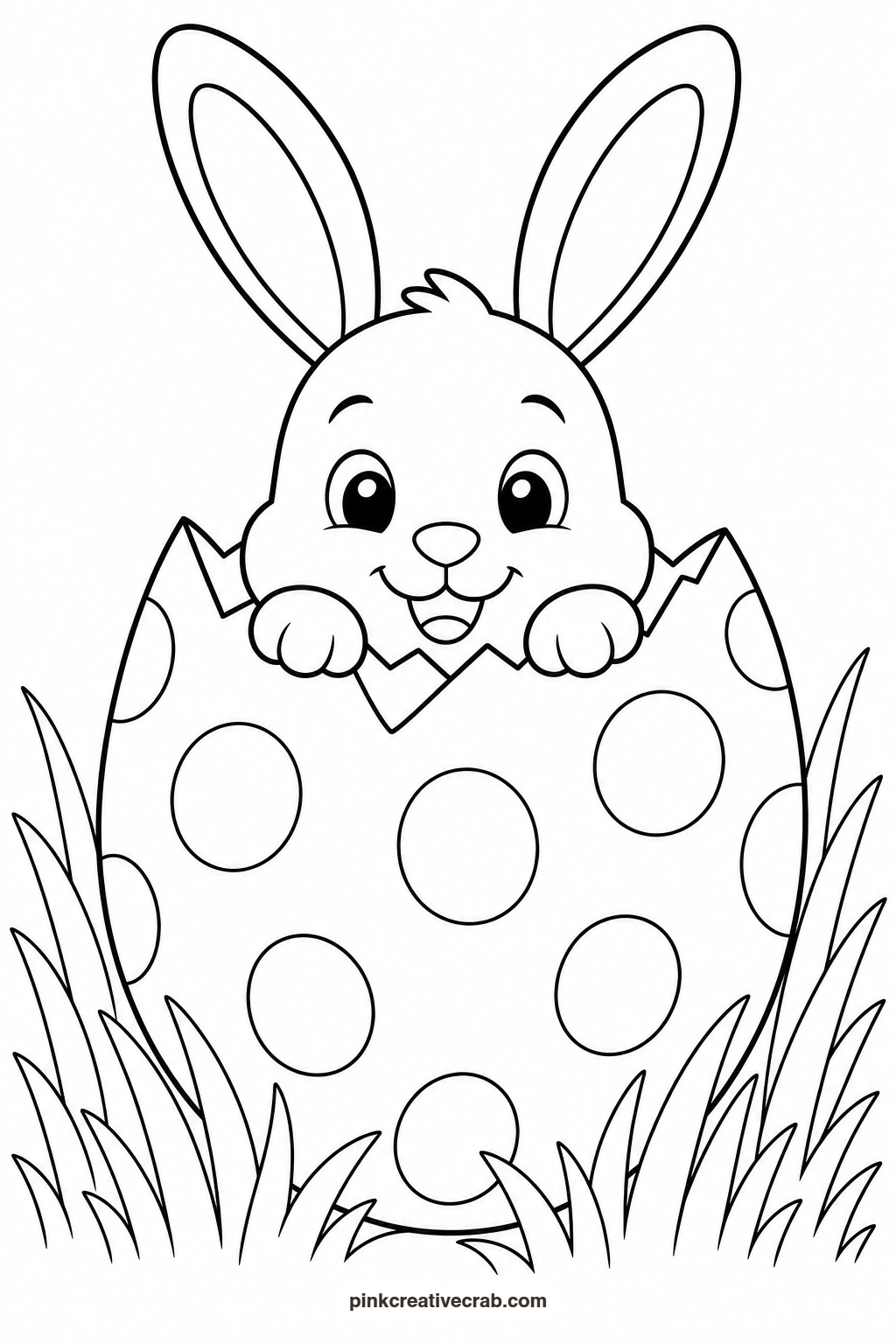
Suits a child who likes a bit of a surprise in the picture, since the bunny appears to be hatching right out of the shell among the grass rather than simply standing beside an egg.
Younger colorers can keep the shell plain white with just a crack line, while older ones can pattern it like a painted egg.
Outlining the moss patches first in a darker green before filling them lighter keeps the texture from blending into the rest of the log, a small trick that makes the hollow look properly old and soft.
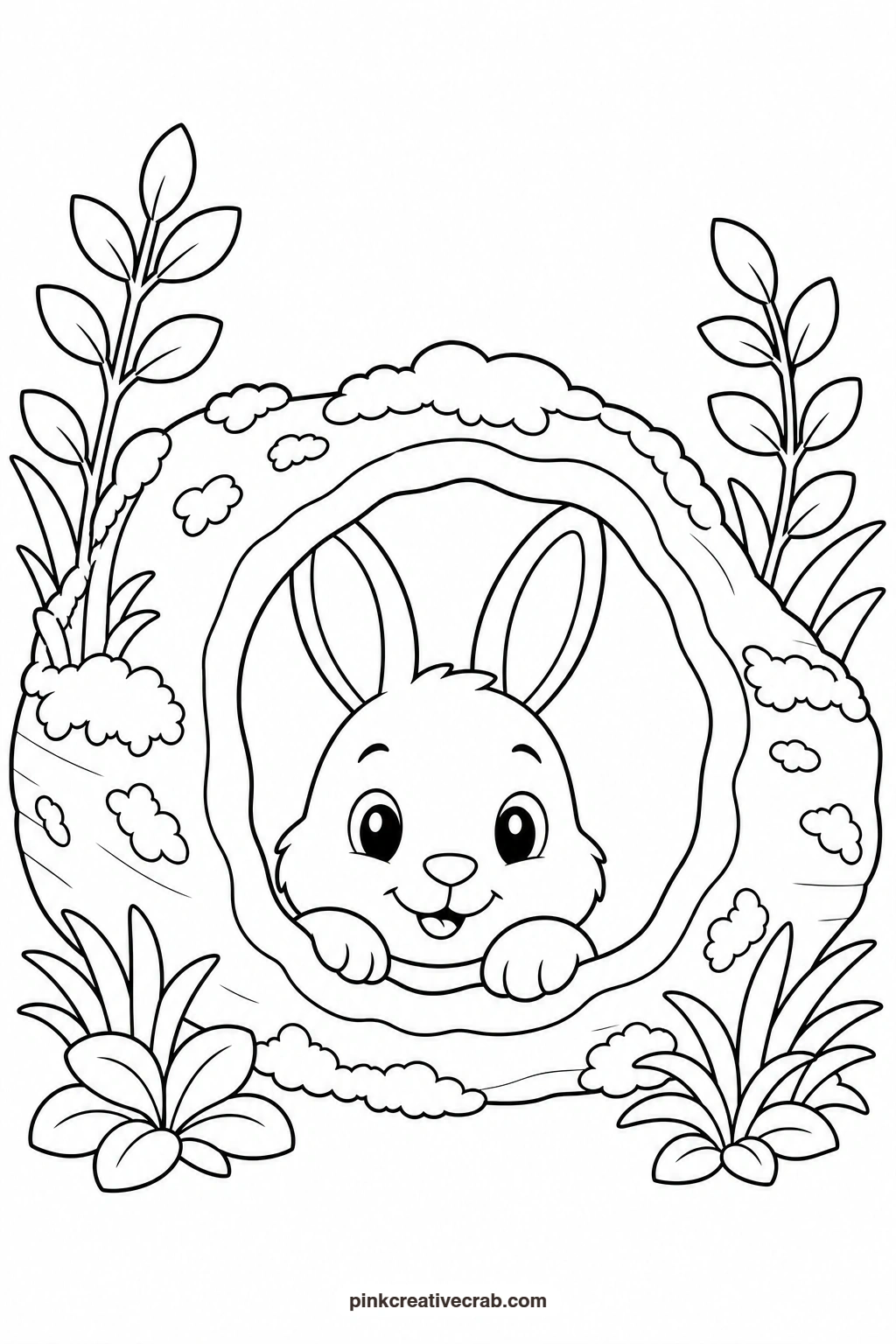
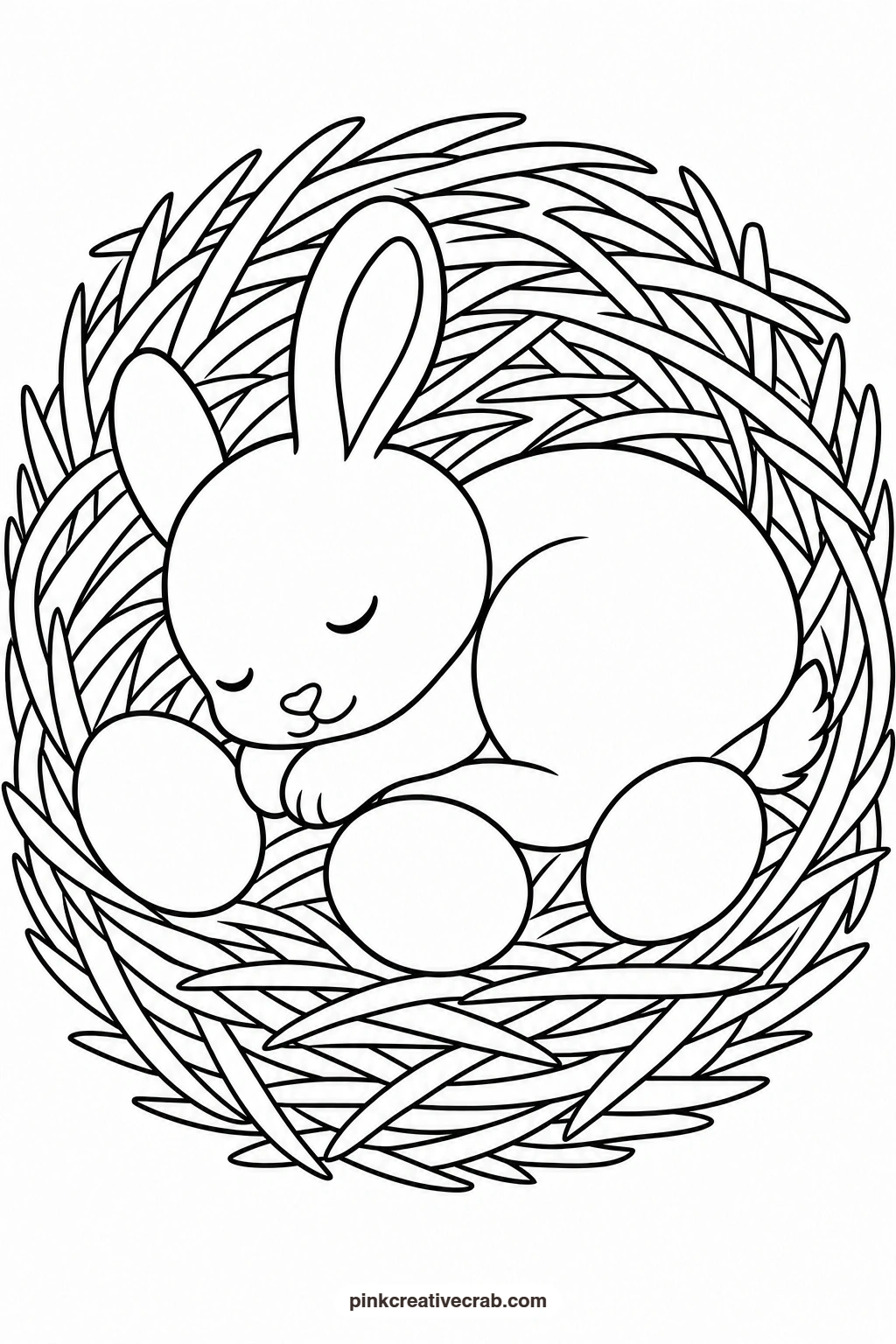
This quiet page pairs well with the bunny reading under the blossoming tree, since both are restful scenes that work nicely printed together for a calm corner of a classroom display or a bedtime coloring set.
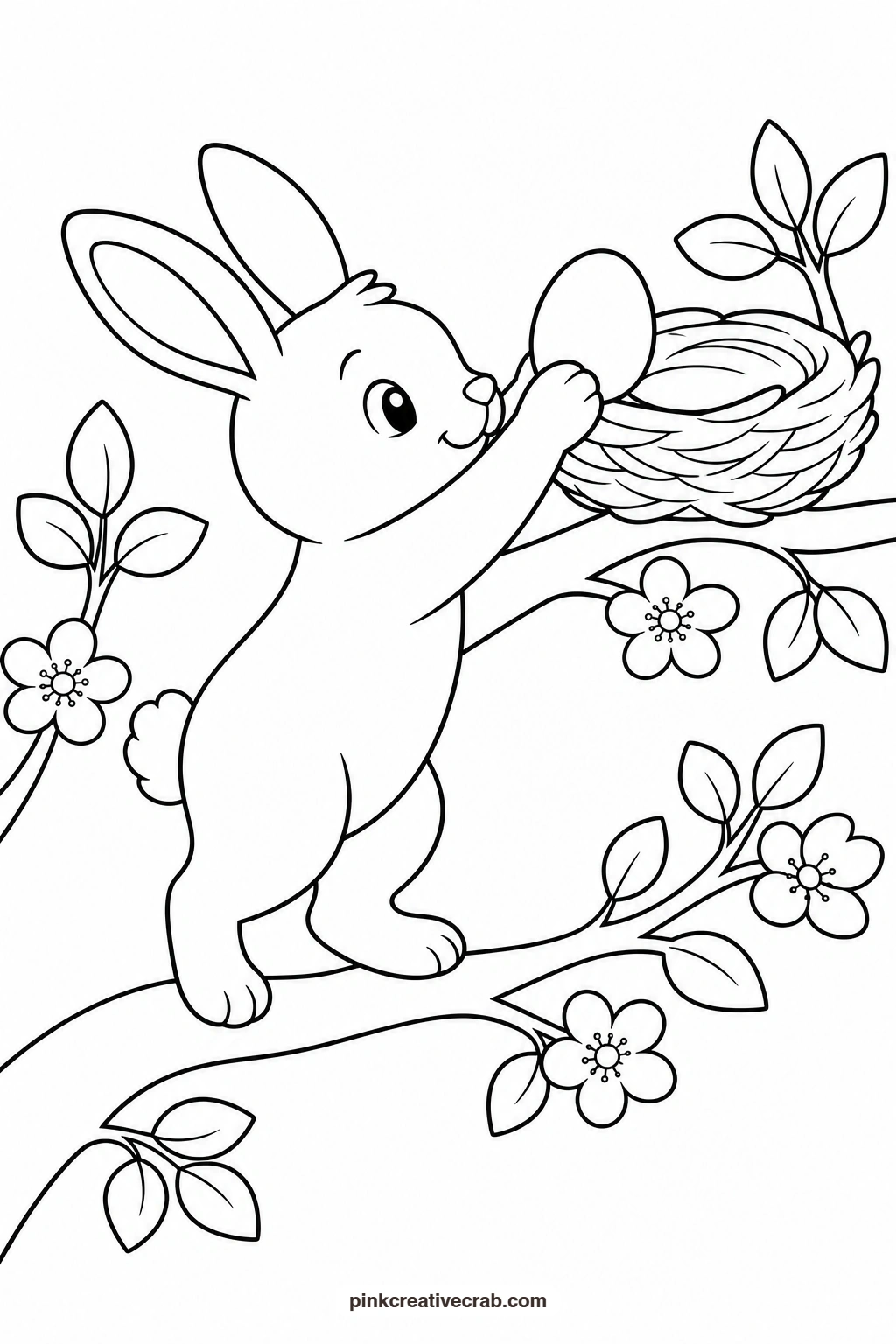
A branch stretching across the page holds a small nest, and the bunny reaching up to tuck an egg inside gives a nice contrast in scale between the tiny nest and the larger bunny figure below it.
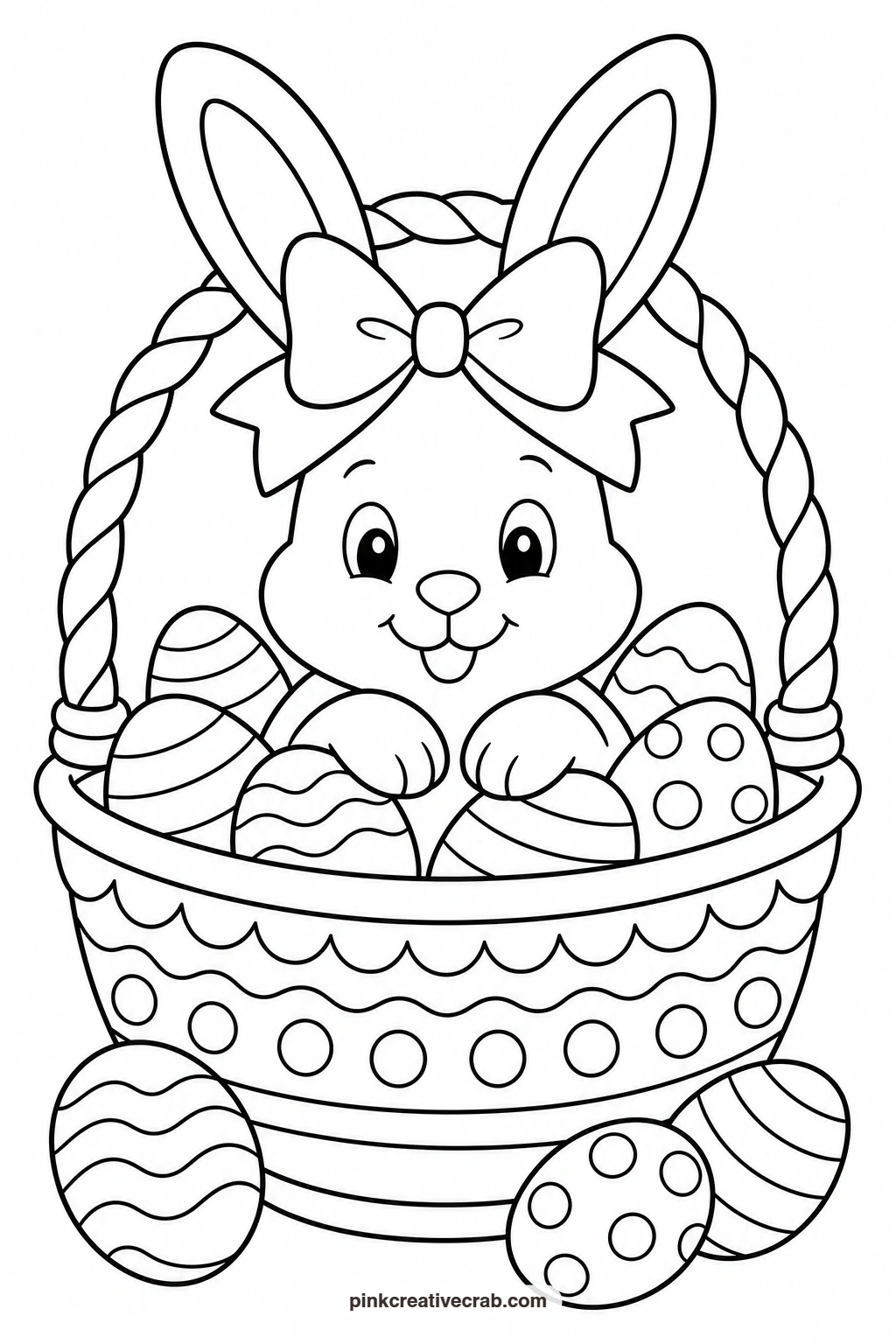
Fine liners suit the bow’s ribbon folds, while a broad marker fills the basket weave quickly, so working the small bow details before the wide basket strokes keeps lines crisp.
Once colored, this one trims neatly into a gift tag for an Easter basket.
Flower Meadows And Gatherings
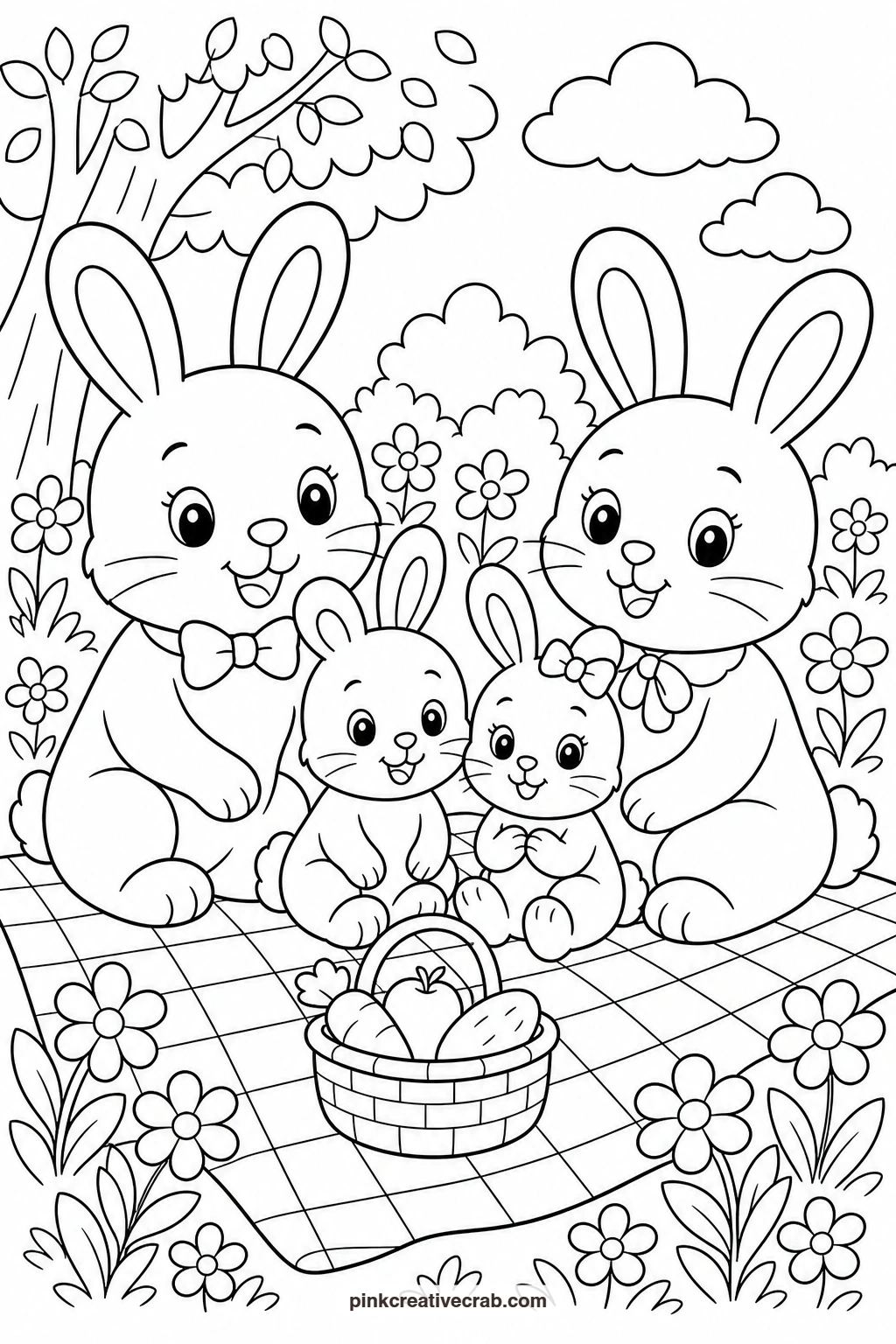
Several small bunnies sharing a checked blanket gives a group of children something to color together, each picking a different bunny or a different square of the blanket to claim as their own.
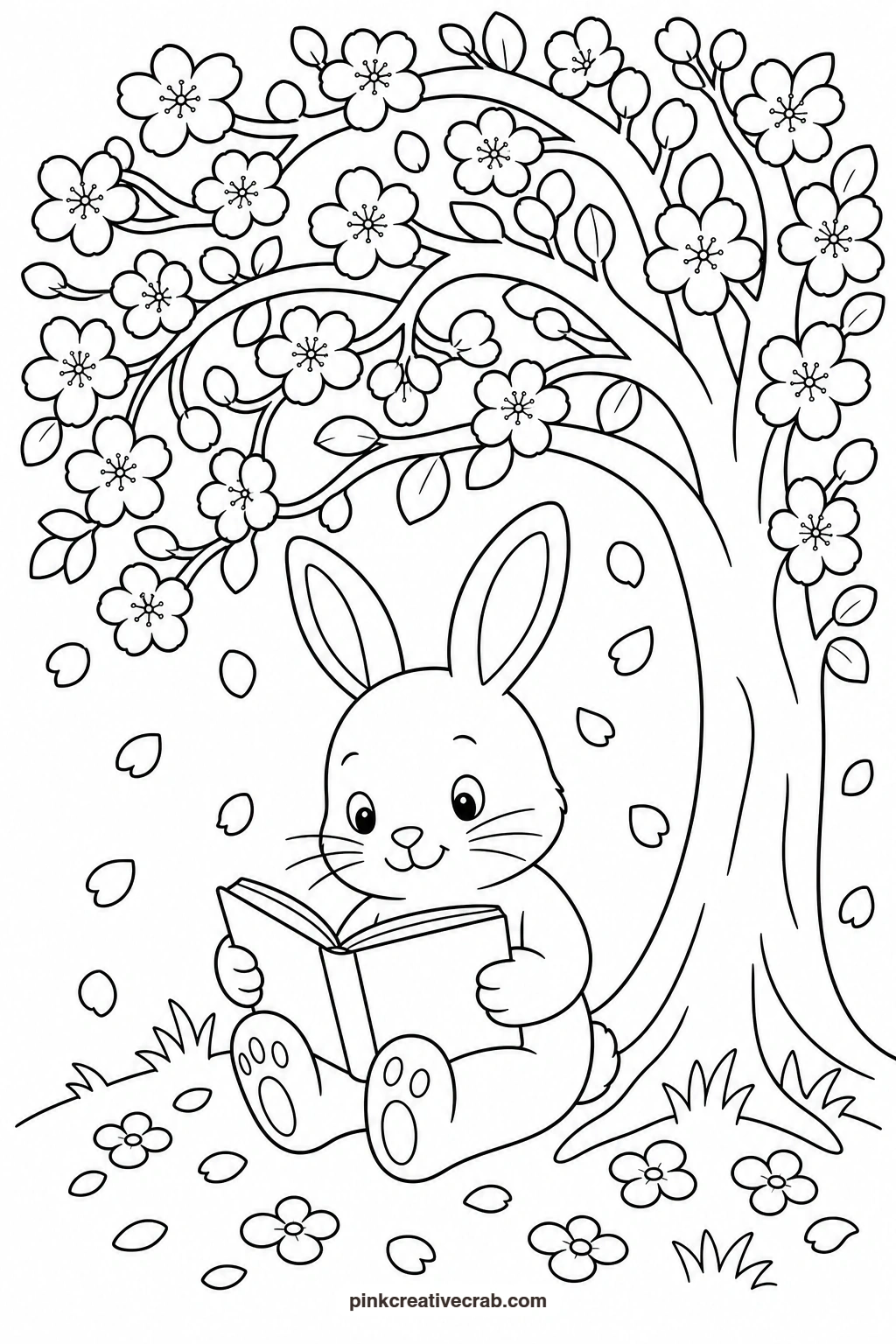
A relaxed scene for anyone who wants a slower page, since the tree’s blossoms can be colored one petal at a time over several short sessions rather than finished all at once.
Framed afterward, it suits a reading nook or a child’s bedroom wall.
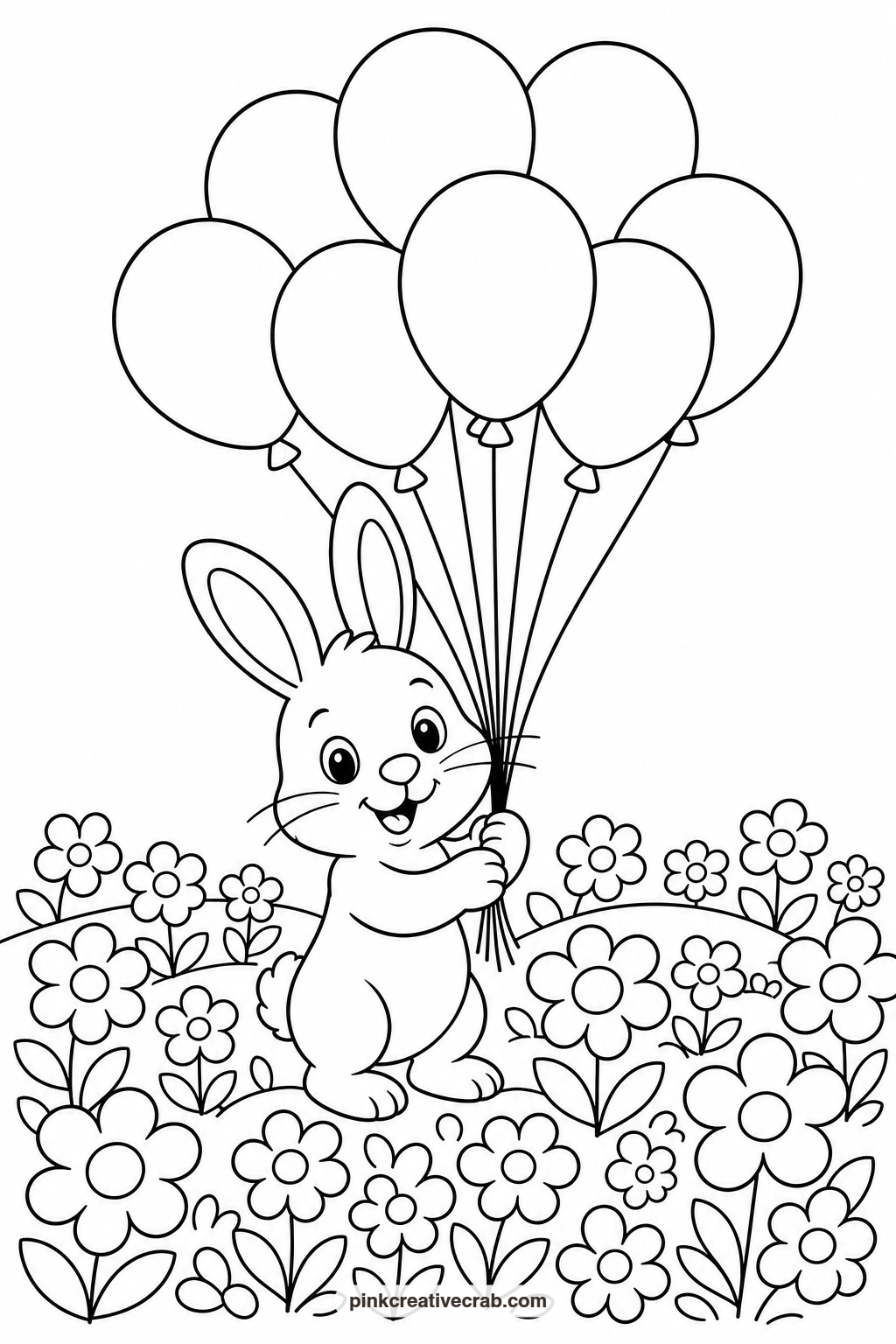
Leaving the balloons white or pastel and saving the boldest colors for the flower field below keeps the eye moving from top to bottom of the page, which works better than coloring everything at full strength.
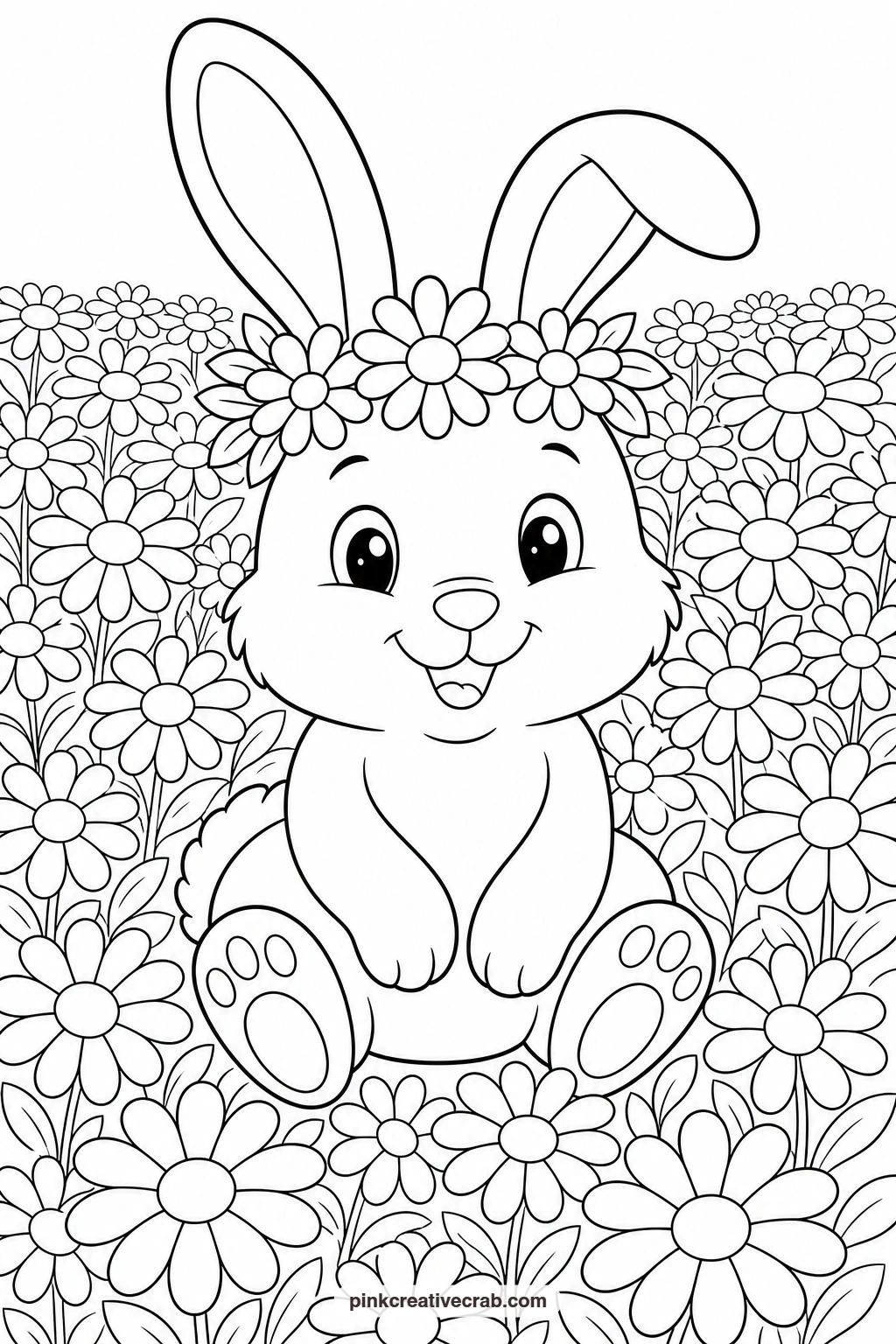
Suits a confident young colorer who enjoys repeating a small shape many times, since the daisy meadow is really dozens of tiny flowers rather than one big area.
A simpler option is to color just a few daisies fully and leave the rest outlined, which still reads as a full meadow.
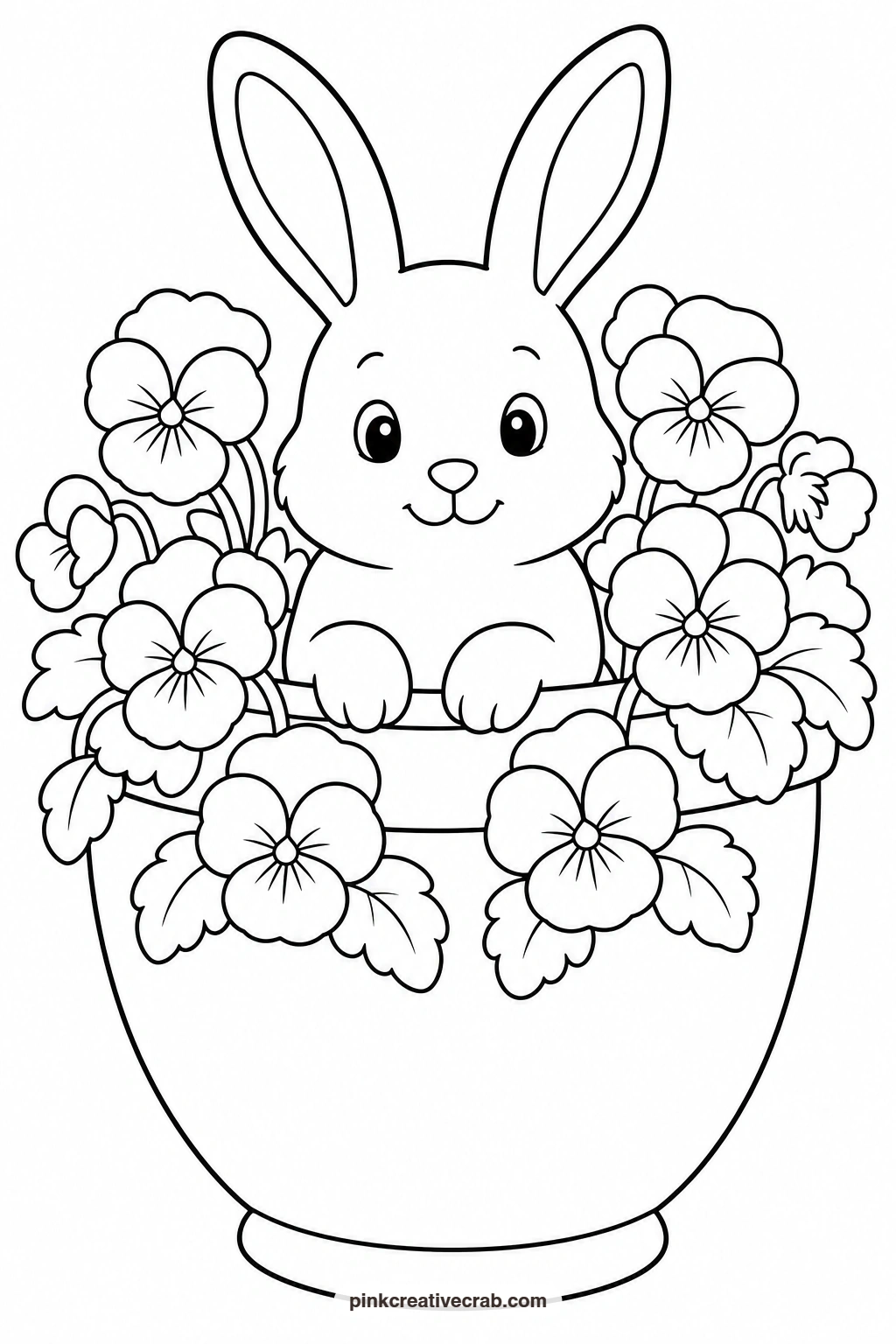
Ask a child coloring this one which color they would choose for the pansies if they could only pick one, then see if they stick to it or reach for every color in the box anyway.
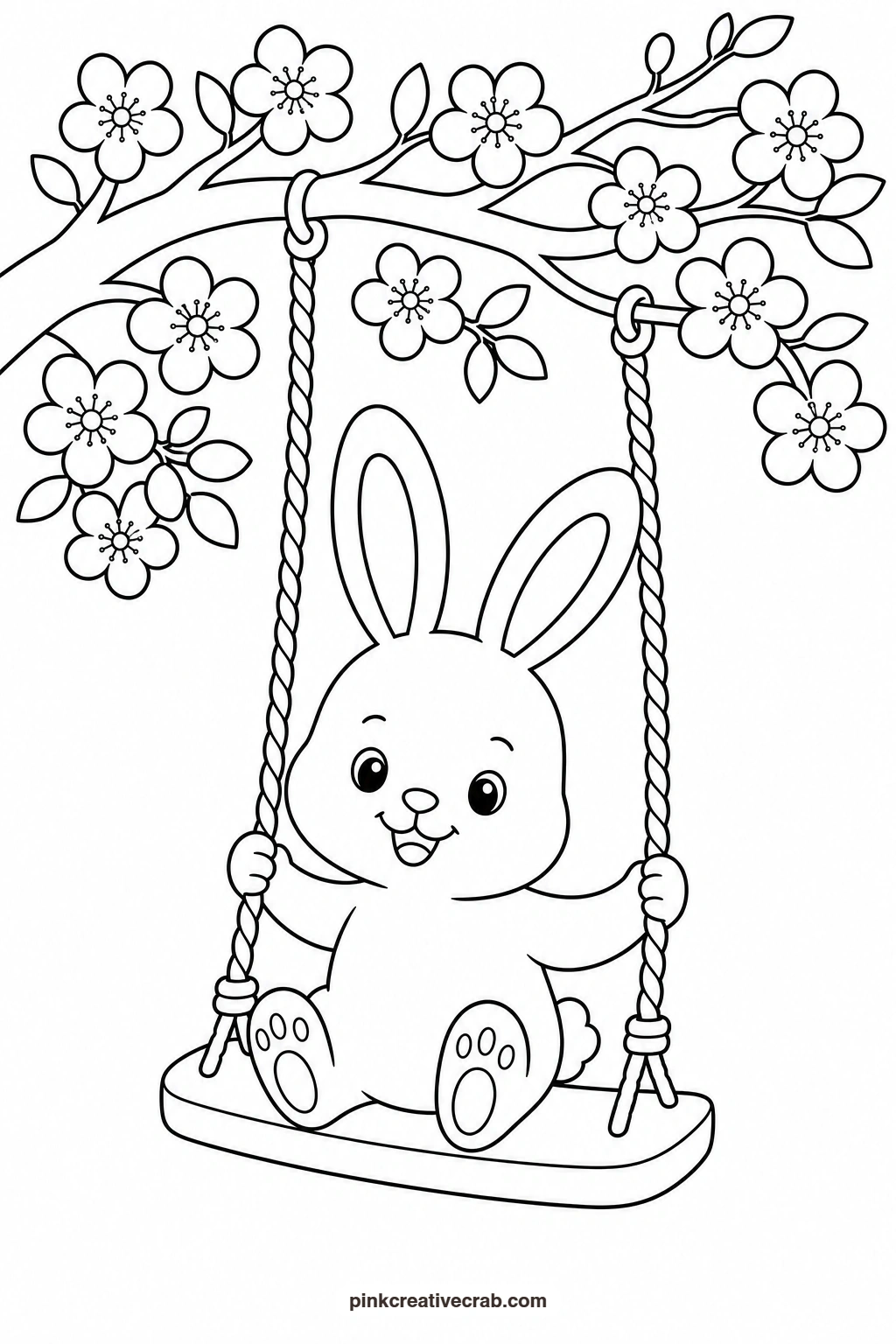
The usual mistake here is coloring the swing ropes the same color as the branch, which makes them disappear into the background, so pick a contrasting color for the ropes to keep the swing readable against the tree.
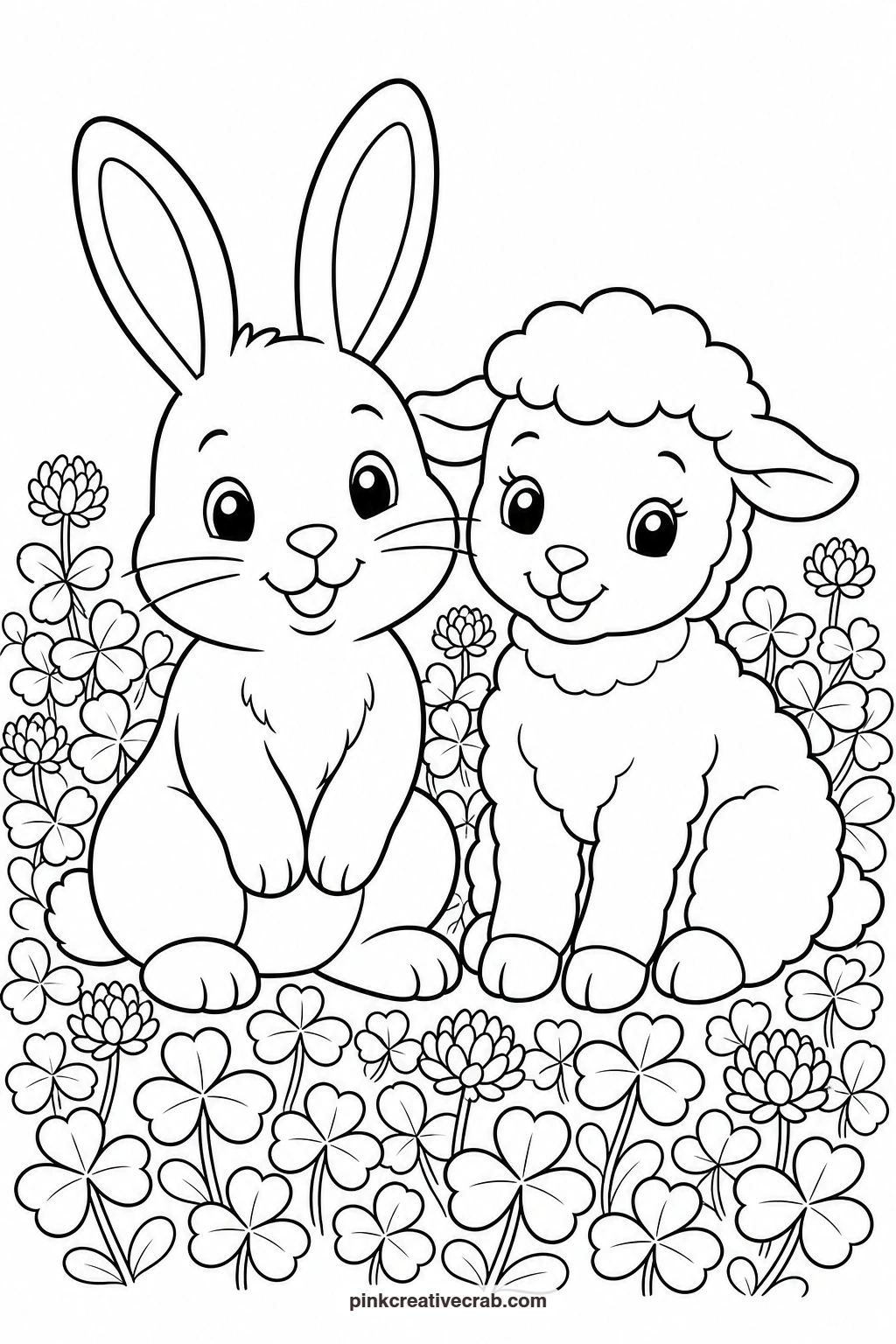
Sitting together in a stretch of clover, the bunny and lamb give two different textures to color, soft wool against smooth fur, which makes a nice pairing page for anyone also working through the 31 Easter Drawings of Lambs, Chicks, Egg Baskets and Little Egg Hunts.
Spring Outings
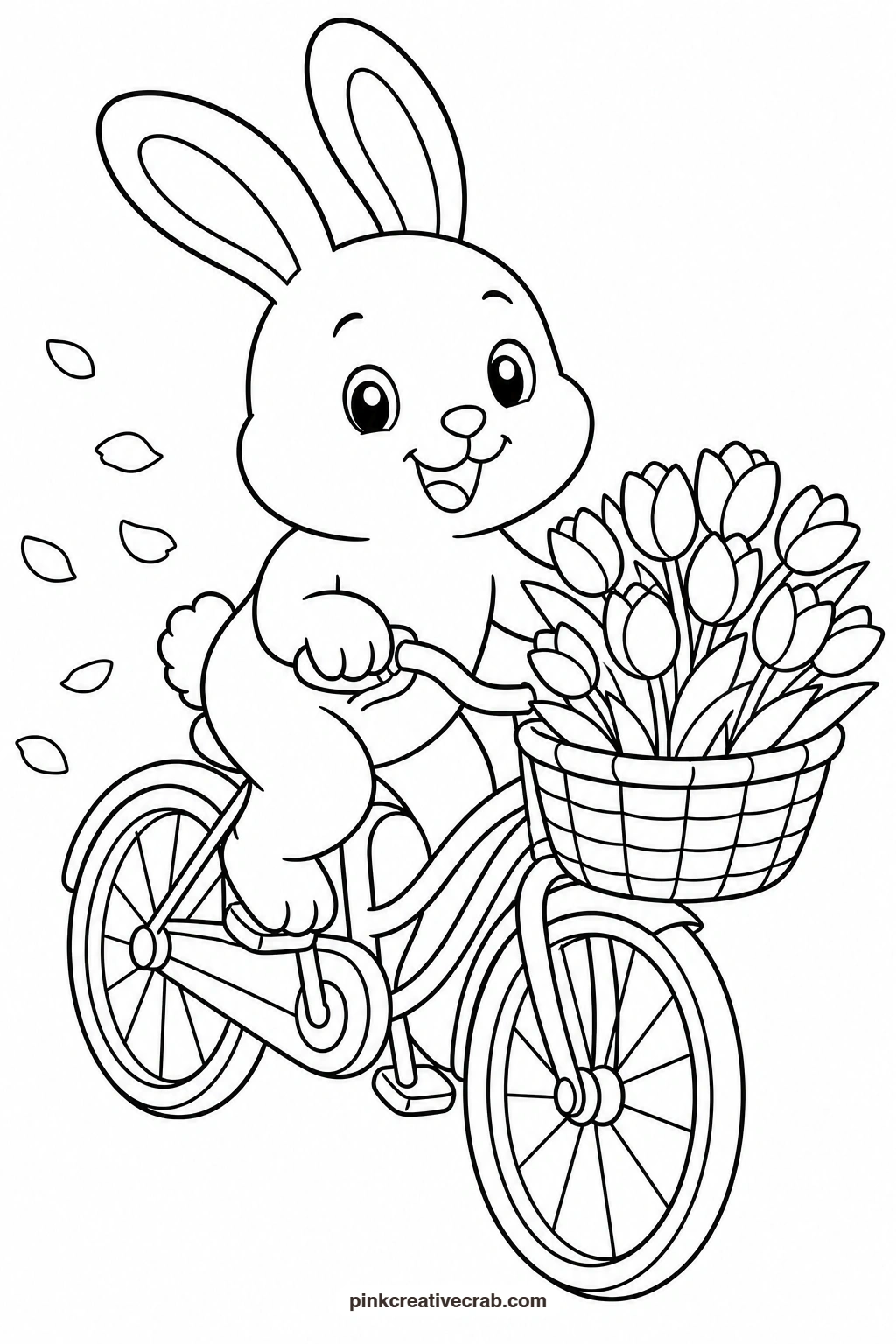
A bicycle basket full of tulips adds a nice bit of movement to the page, so coloring the wheels last keeps the spokes from smudging while the basket and flowers are still being filled in.
Younger colorers can simplify the spokes into a few thick lines rather than many thin ones.
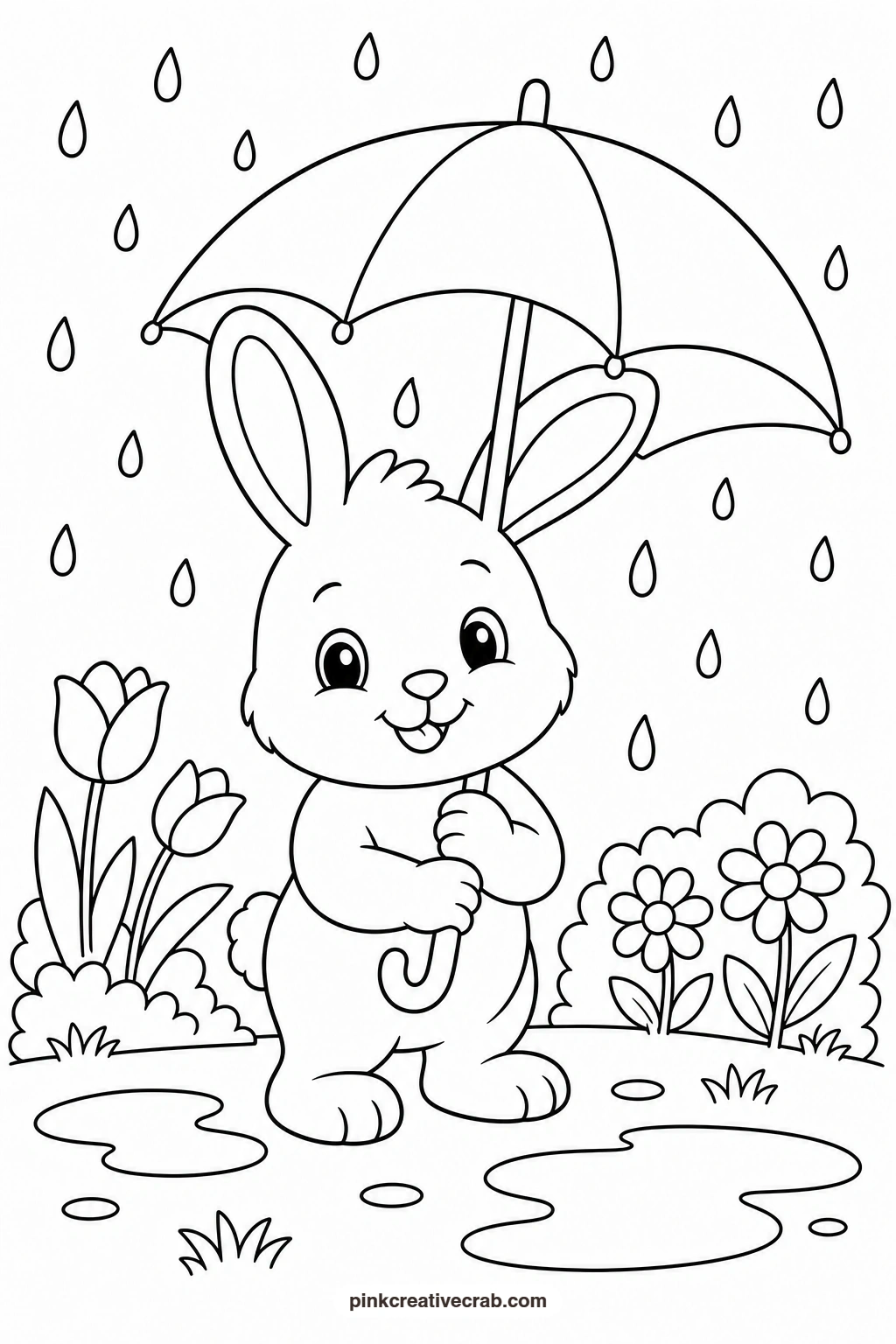
Gentle raindrops and a single umbrella make this a quieter page than most of the set, a good one to pair with 29 Spring Doodles of Sprouting Seeds, Rain Boots and Sleepy Bees for a rainy-day coloring theme.
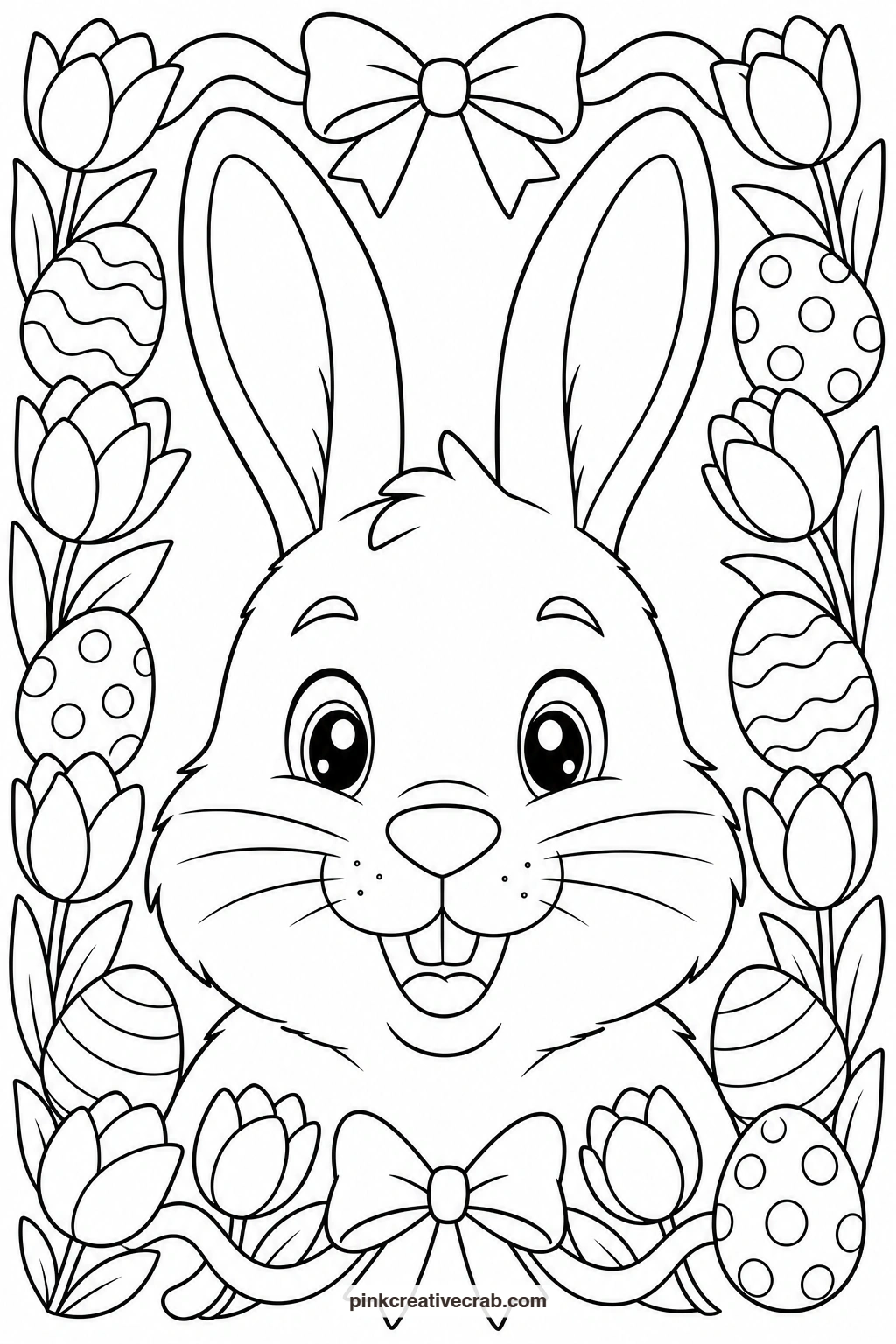
Works best as the last page colored in the set, since it reads as a kind of finishing portrait once the bunny’s face is filled in carefully and the ribbon border is added around the edge.
Framed on its own, it makes a simple seasonal piece for a front door or a classroom wall, much like pages pulled from the 33 Free Easter Junk Journal Pages With Bunnies, Painted Eggs and Spring Gardens.
What to Do Next
Print the pages that fit the moment, whether that is one quiet page before bed or the whole set spread across a table for an Easter morning activity, and keep the rest ready for next time.
Frequently Asked Questions
What paper works best for these Easter bunny coloring pages?
Plain printer paper works fine for markers and pencils, while cardstock holds up better if a page will be painted or trimmed into a card. Heavier paper also resists bleed-through from darker markers, which matters if pages are colored on both sides of a desk.
What printer settings give the cleanest lines?
A normal or best quality black and white setting on a standard printer reproduces the outlines cleanly. Draft settings can leave lines thin or patchy, so it is worth the extra few seconds per page for a crisper result.
What size should the pages print at?
Set the printer to full page or 100 percent scale on standard letter or A4 paper, which keeps the bunny and scene details at the size they were drawn. Shrinking the page to fit can make small details like flower petals too fine to color easily.
What is the best way to color in the small details?
Fine-tip markers or sharp colored pencils handle small areas like eyes, ribbons and flower centers, while broader markers or crayons fill large shapes like fur and grass quickly. Working from the smallest details outward keeps lines from getting smudged by a wider tip.
Can these pages be turned into cards or decorations?
Yes, a trimmed and folded page makes a simple Easter card, and several pages glued to a string make a short garland for a window or mantel. A paper trimmer gives the cleanest edges for either project.
Have any thoughts?
Share your reaction or leave a quick response — we’d love to hear what you think!
-
 0
-
 0
-
 0
-
 0
-
 0
-
 0
