

Table of Contents
A vintage train junk journal turns every old railway daydream into something you can hold: steam curling past stone viaducts, luggage trunks stacked on a platform, teacups rattling gently in a dining car. This kit gives you nineteen full scene pages, four seamless background papers and four lined writing pages, all built around the same slow, romantic railway journey through green hills and quiet country stations.
Print the set on heavyweight matte paper (at least 24 lb, or a thin cardstock if your printer takes it) so paint and glue do not warp the sheet, and choose your printer’s best or photo quality setting to keep the fine ink lines crisp. Trim each page to your journal size before you start gluing, and keep a few scraps nearby: the background papers are generous enough to cut into smaller pockets, tags and tucked-in journal cards.
Using these images: free for personal projects such as printing, coloring, cards, journals and gifts. Handmade items that include them may be sold up to 30 pieces per design. More than that is commercial use and is not permitted, and neither is selling or sharing the images themselves or passing them off as your own. Please ask before any other use.
Steam Trains Through The Countryside
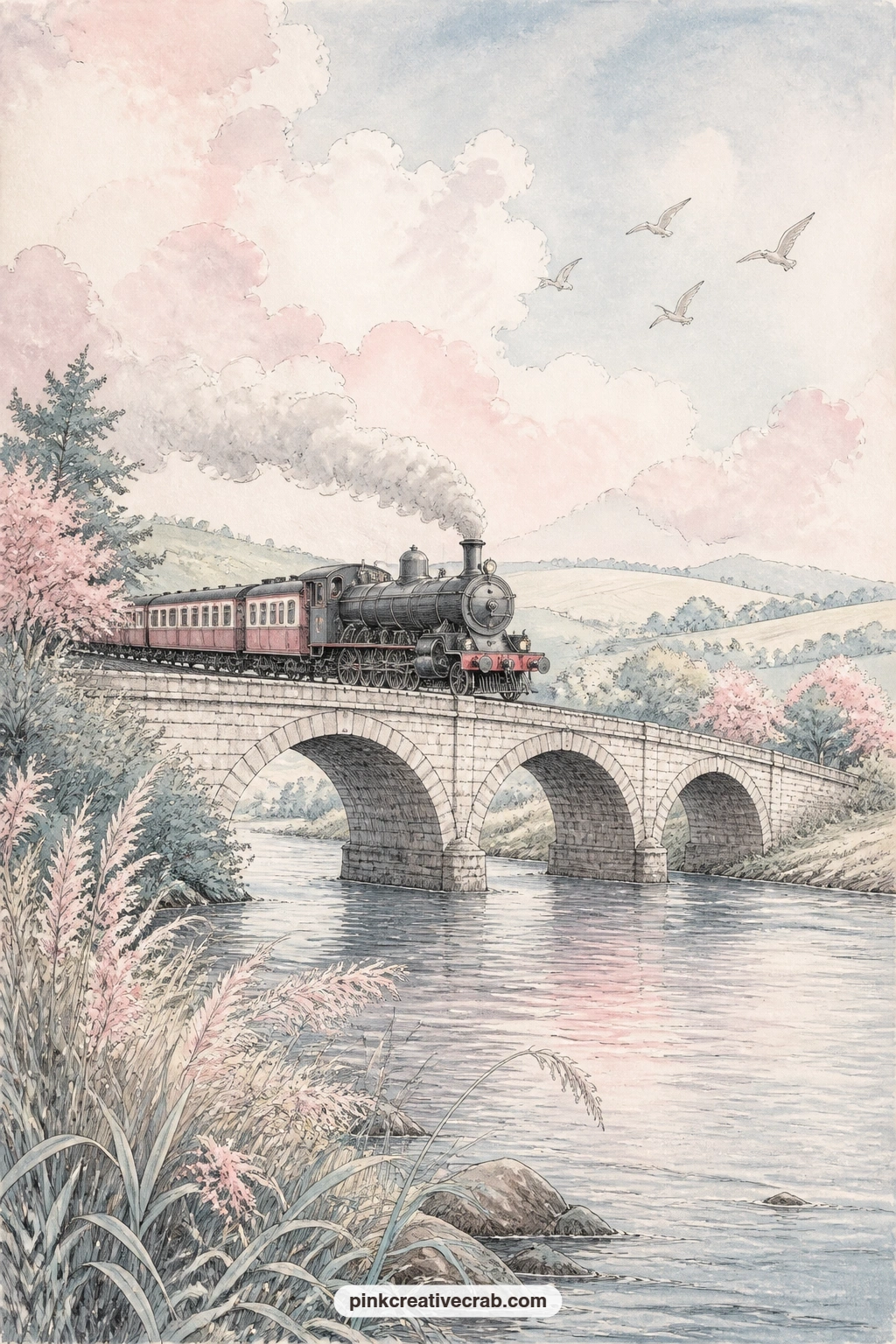
A steam locomotive crosses a tall stone viaduct over a green valley, trailing a soft plume of smoke above the fields below.
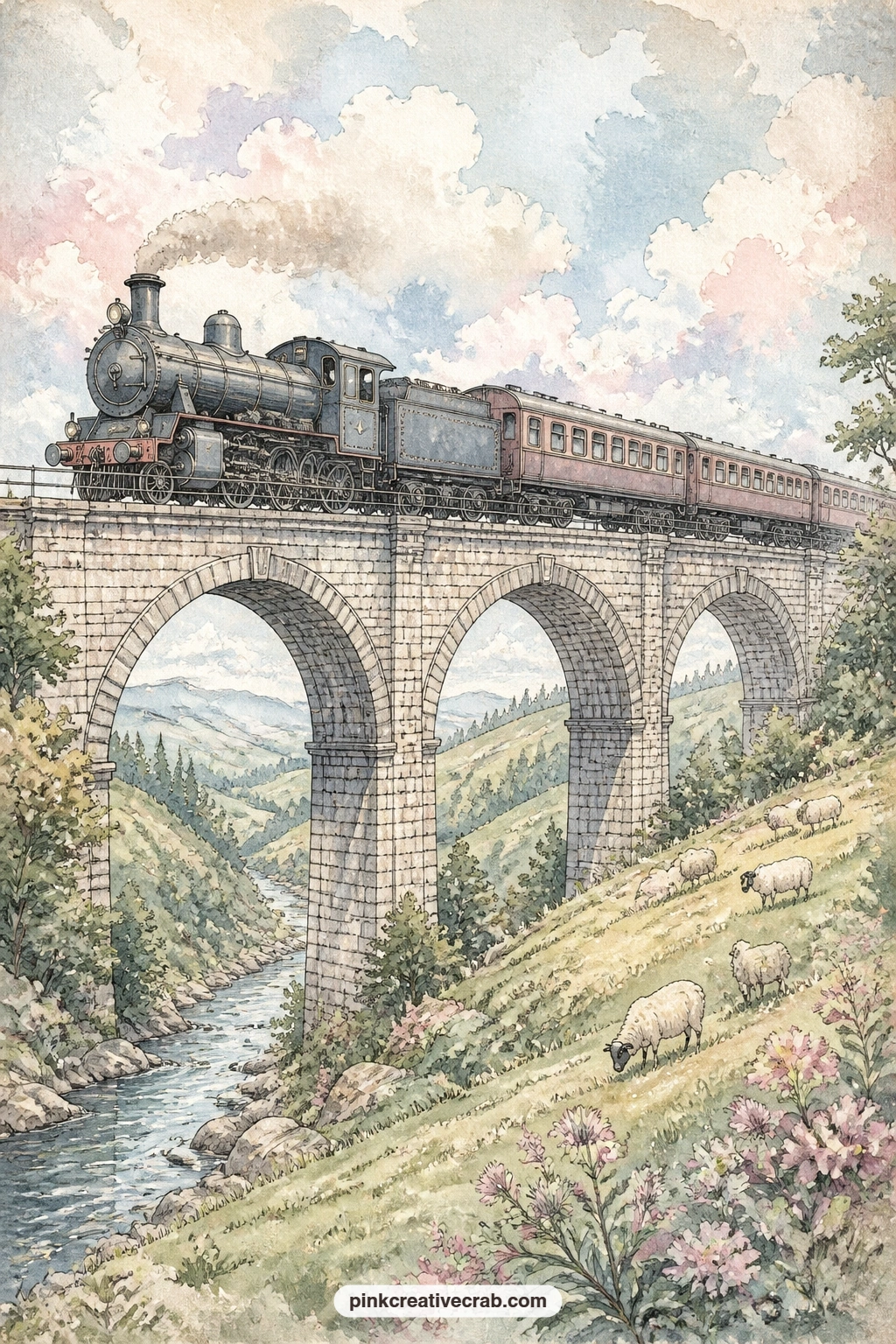
Pair this one with the railway tracks and wildflowers background: use the pattern as a pocket behind the page, or trim a strip of it to frame the meadow like a window border.
The red poppies against the dark engine give the pairing real warmth, and the background’s smaller blooms echo the scene without competing for attention on the spread.
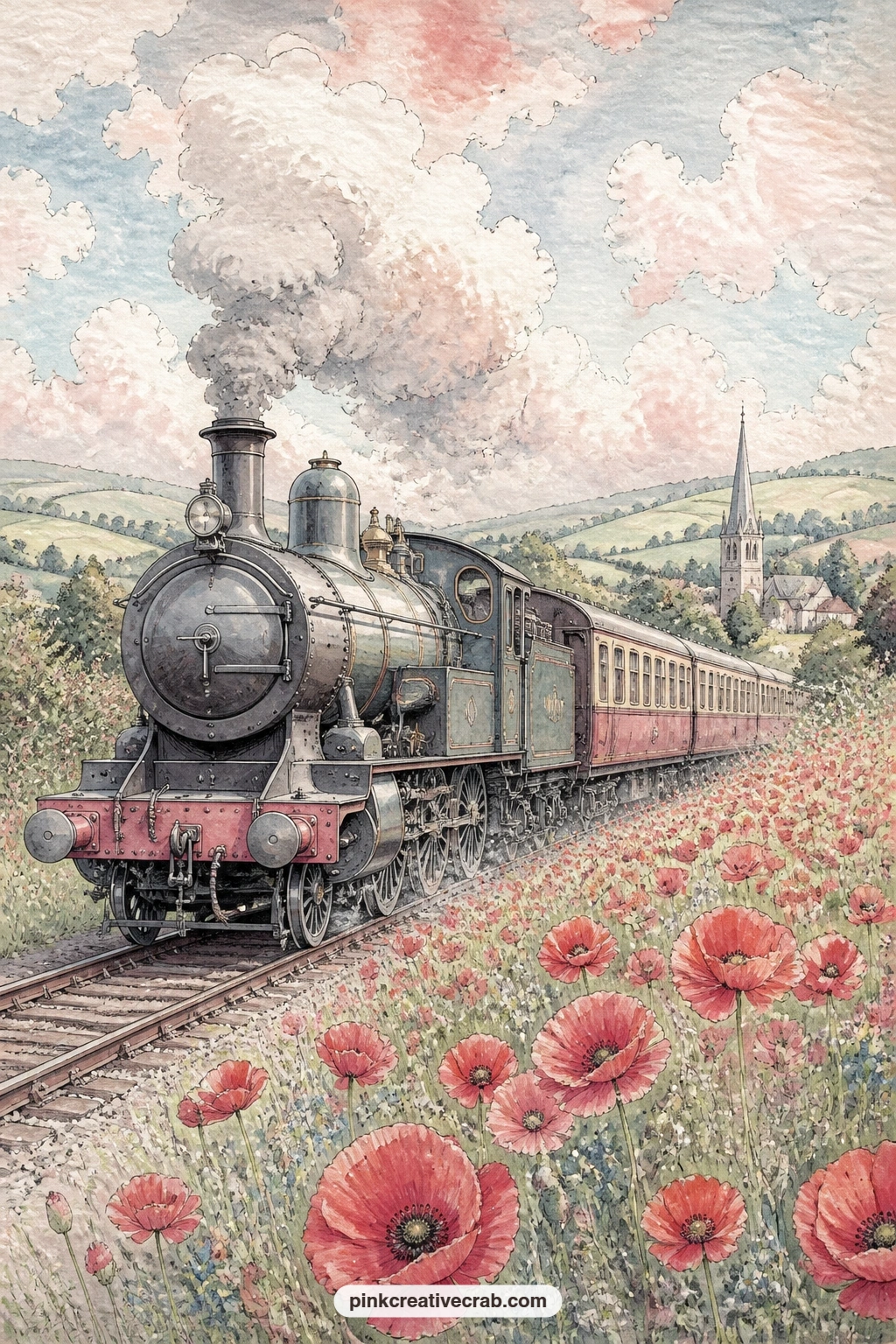
The usual mistake with a wide landscape page like this is leaving the sky plain white: paint it instead with a soft wash, even a pale strip of colour low on the horizon makes the whole scene feel finished.
Grazing sheep, a low stone wall and a far-off farmhouse give the eye places to rest as it follows the curve of the train.
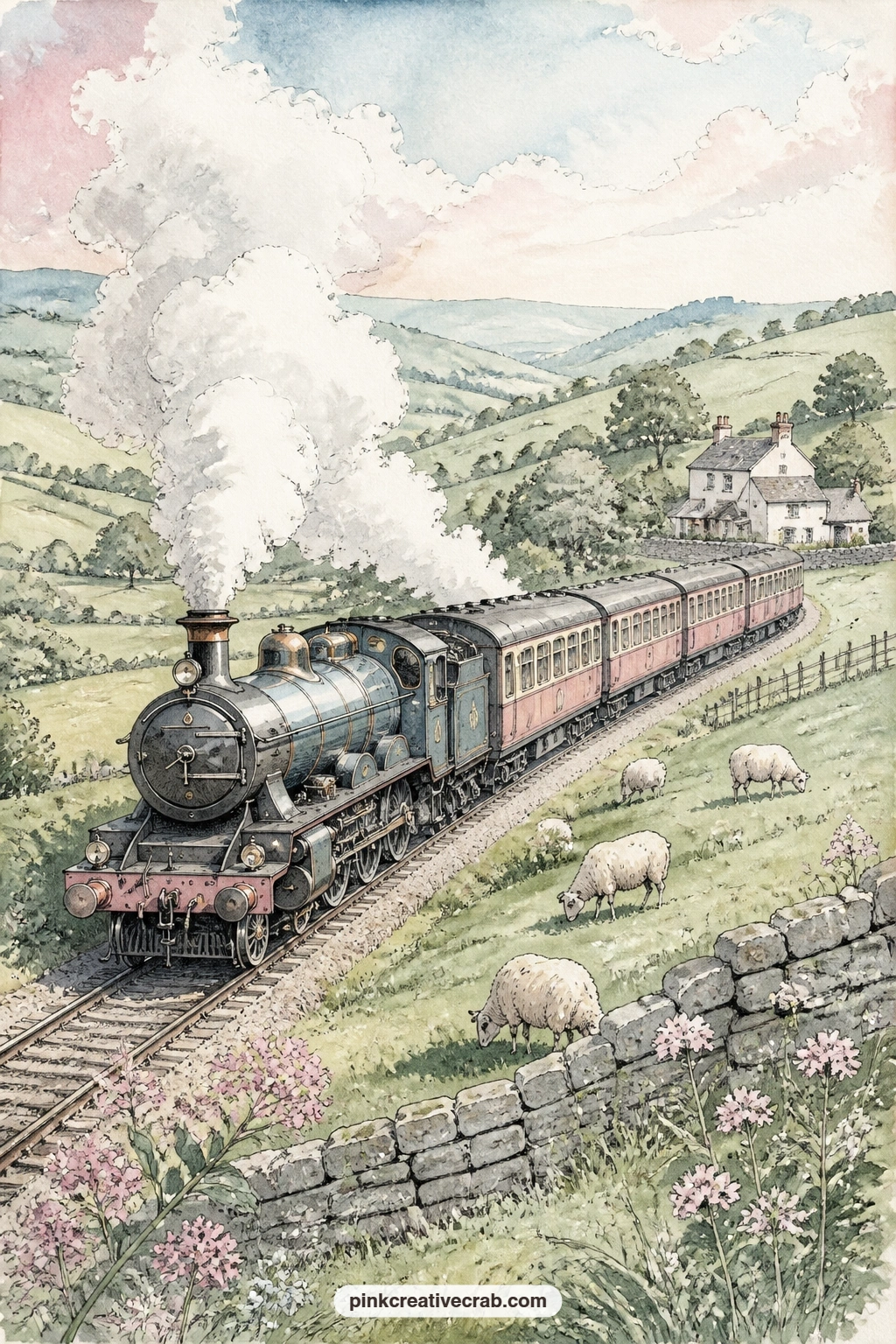
Give this page five minutes: glue it in whole, add one line of journaling along the bottom edge about a stop you remember or imagine, and move on to the next spread.
The water tower, a waiting engine and an open field behind it already carry the page, so there is no need to add anything more to make it feel complete.
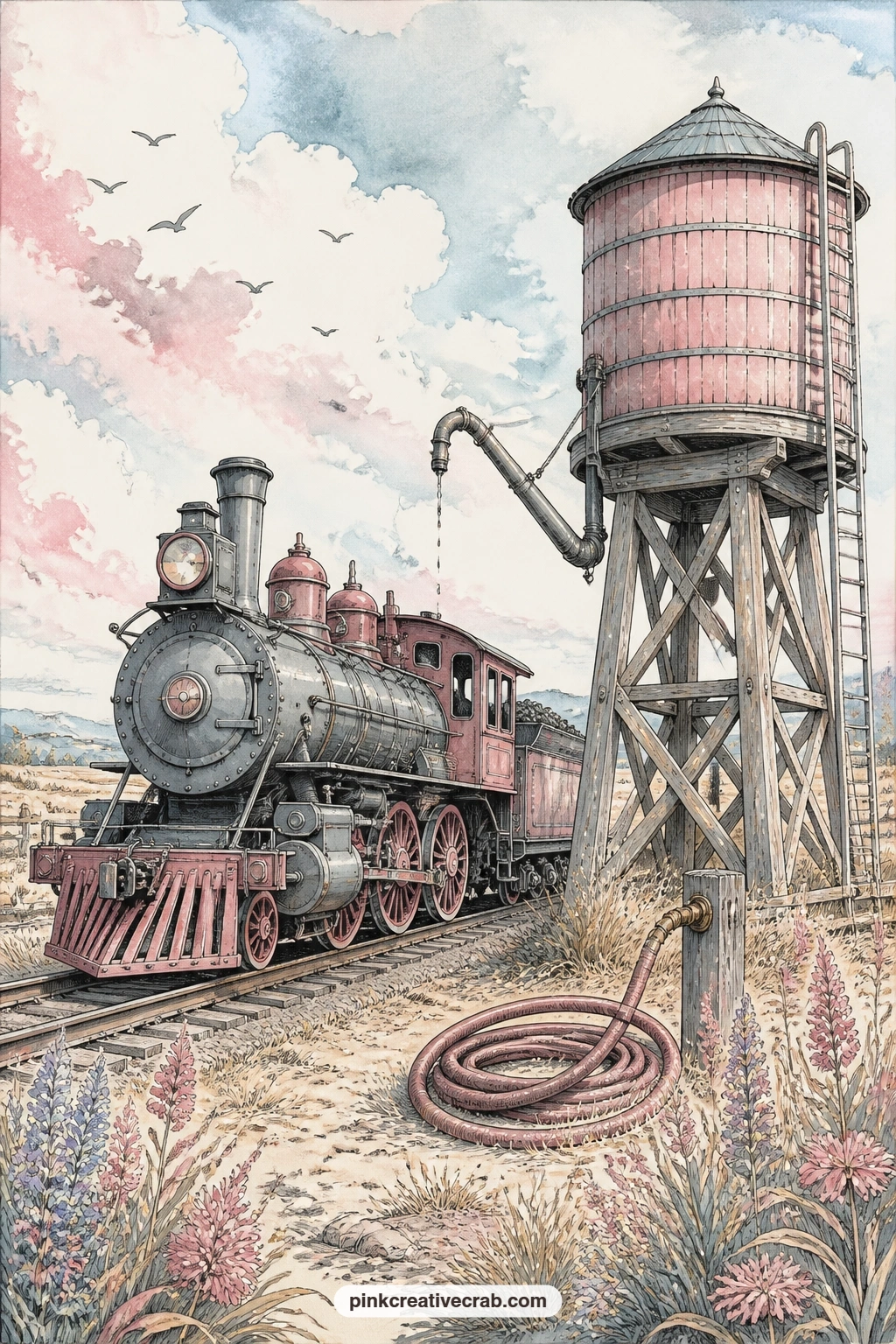
Tuck a small paper luggage tag or a torn ticket stub along the lower corner of this page before gluing it in, so it peeks out from the edge of the bridge scene.
The river below, a few reeds at the bank and rolling hills behind the bridge give the page enough depth to hold its own on a spread, the way a good vintage junk journal page often does.
Platforms, Porters And Waiting Rooms
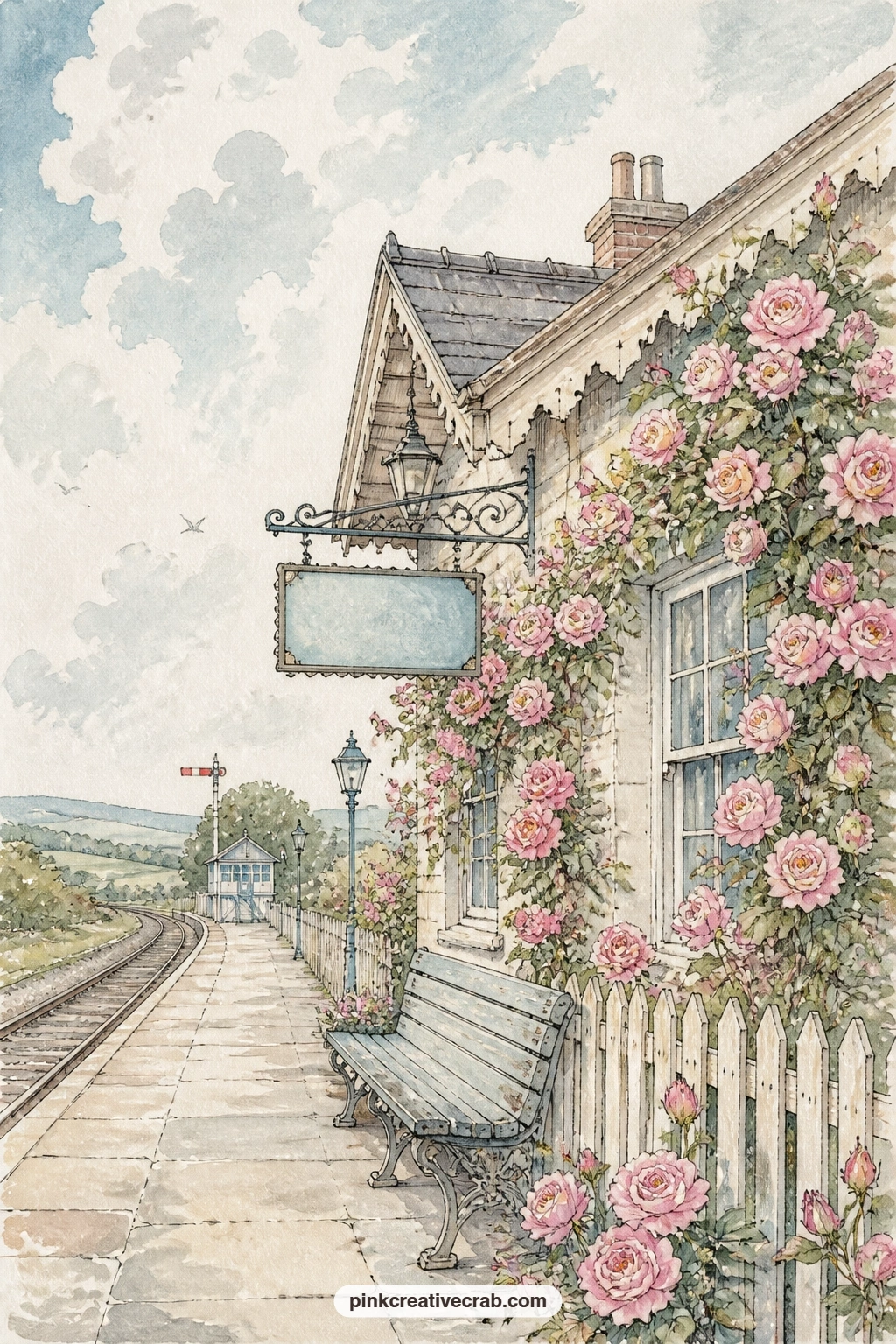
Leather trunks and baskets of flowers line a quiet country station platform, waiting beside the rails for a train that has not yet arrived.
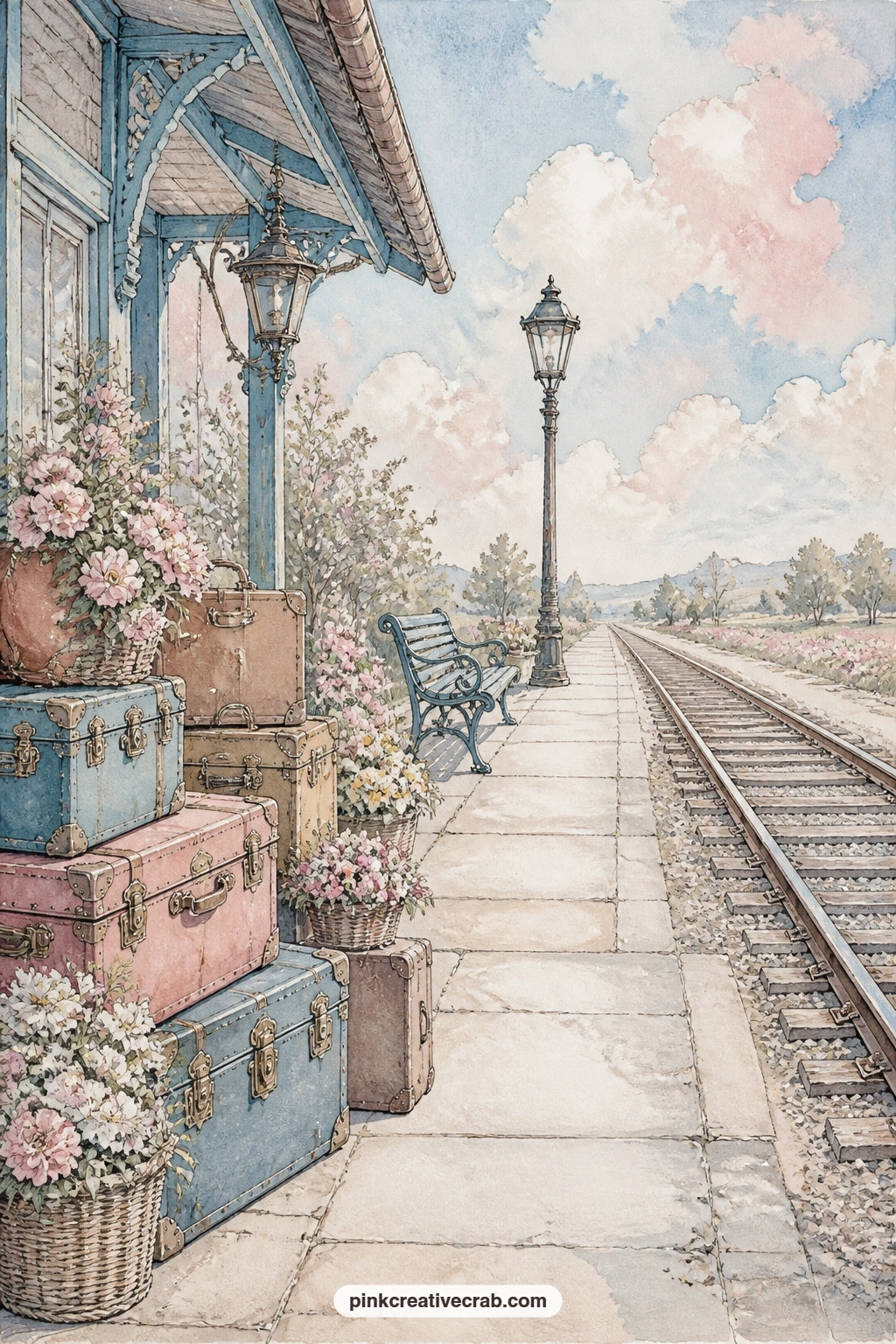
This page suits a gift journal made for someone who loves slow afternoons and old towns: it reads as quiet and patient rather than busy, so it fits near the front where the pace of the whole book is still settling in.
A ticking clock, a stack of newspapers and a glowing stove around the benches give the room enough small life without turning the page crowded.
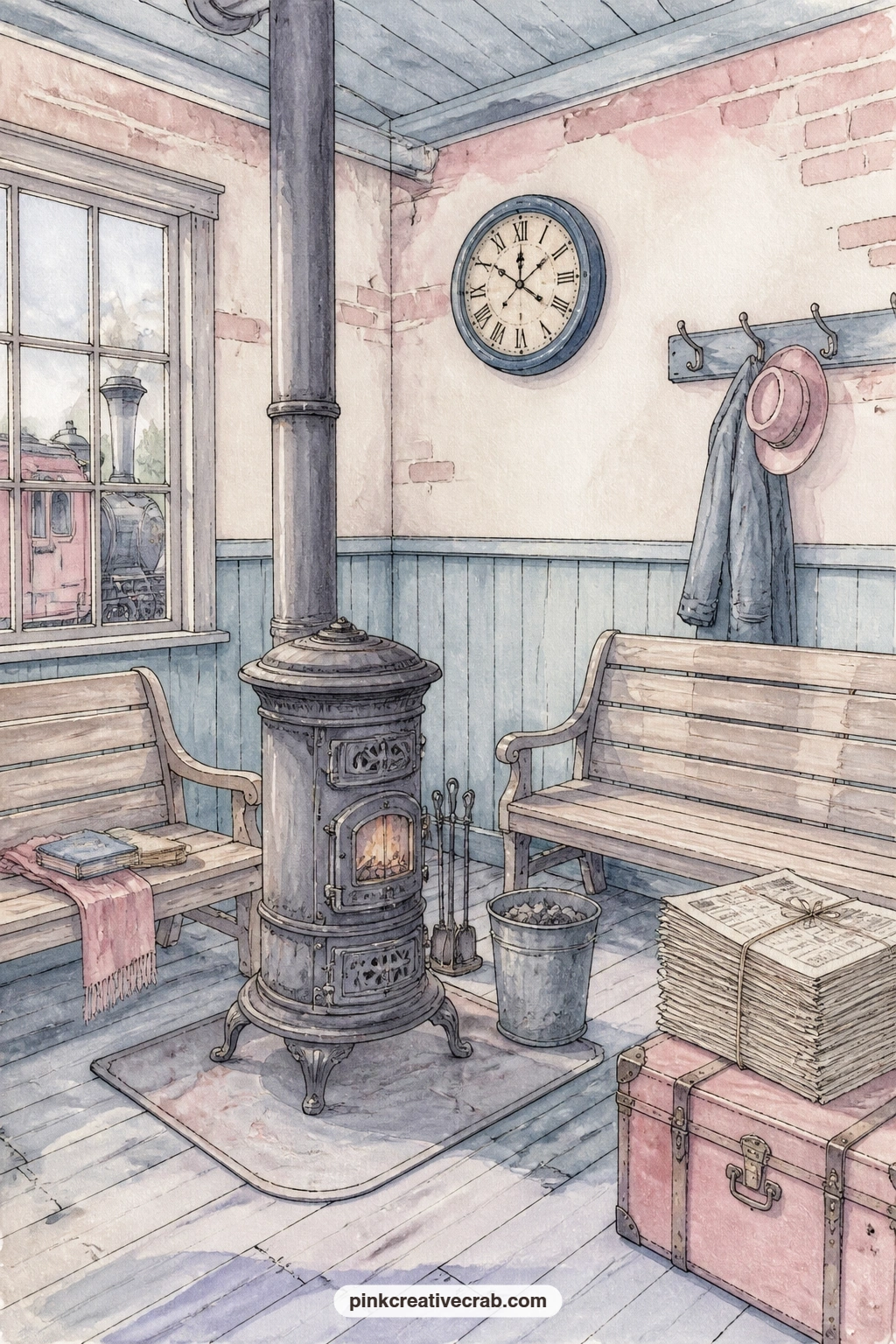
Ask a short question on this page before you glue it in: what would you pack for a journey with no fixed return date, and where would the first stop be.
A conductor’s lantern rests on a wooden bench beside a folded pair of leather gloves, with a pocket watch and a coil of rope nearby.
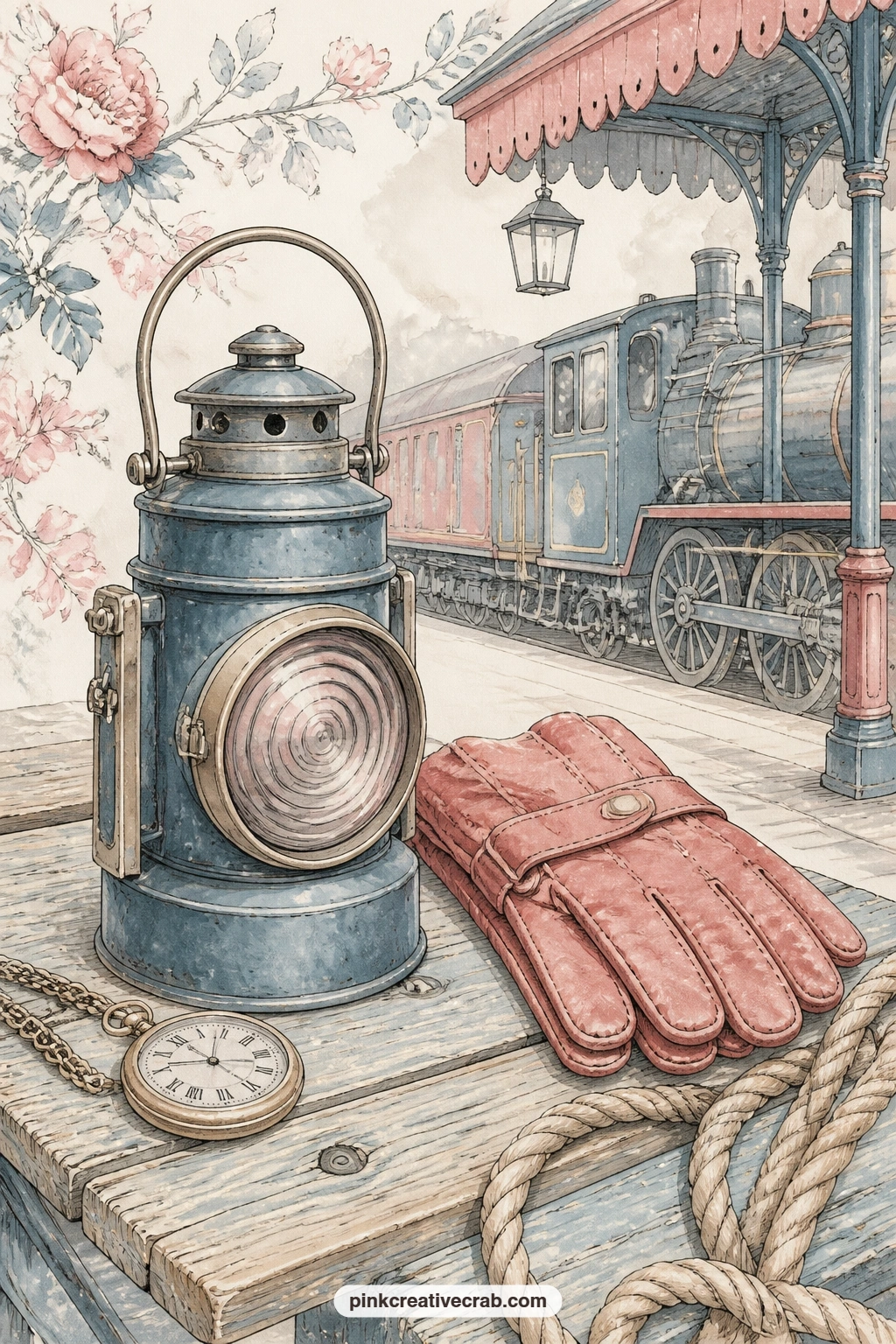
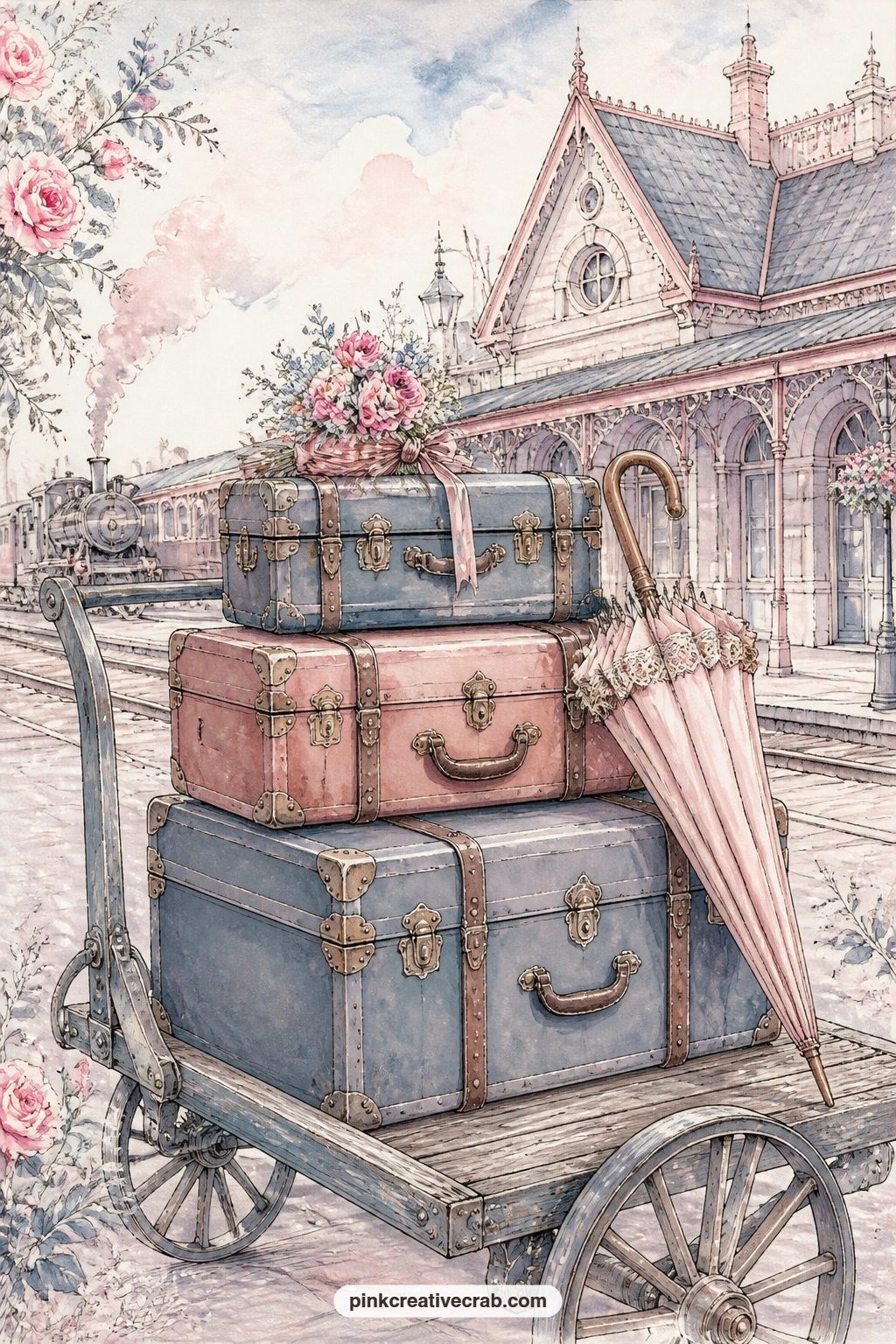
Place this page right after the station platform page in your spread, letting the porter’s cart seem to roll straight off one sheet and onto the next, trunk for trunk.
A parasol leans against the stacked luggage, with a small bouquet tied on top and a station building painted softly behind.
Glue a pressed paper flower or a small handwritten note onto the bench in this scene, or leave a thin strip of the page edge untouched for a future tuck-in you have not thought of yet.
Dining Cars And Window Views
White linen, two teacups and a single rose in a slim vase sit together on a dining car table, set for a journey shared with someone else.
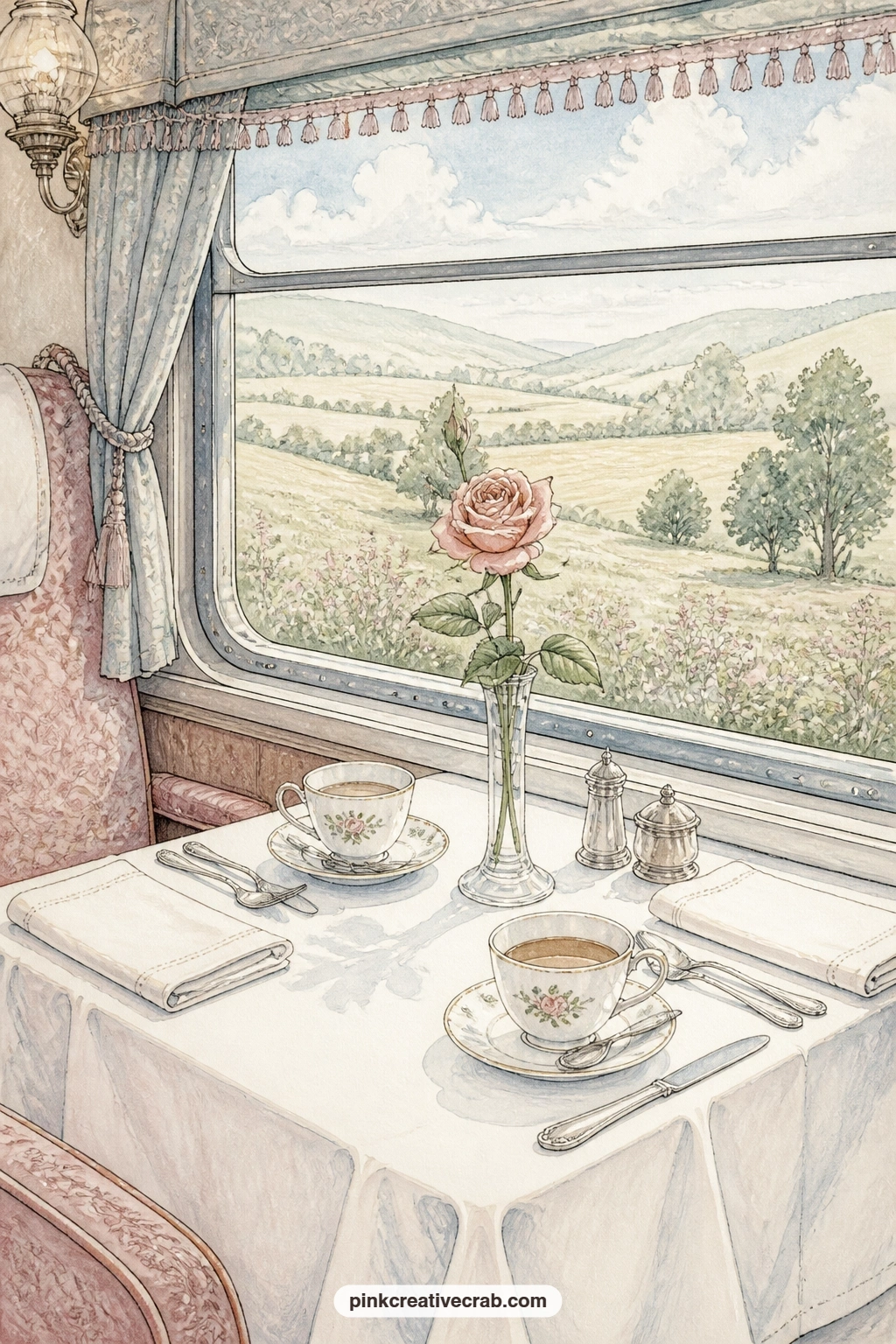
The usual mistake here is treating the window view as the whole page and leaving the foreground bare: anchor it instead with a small still life, the way this page does with its waiting teacup.
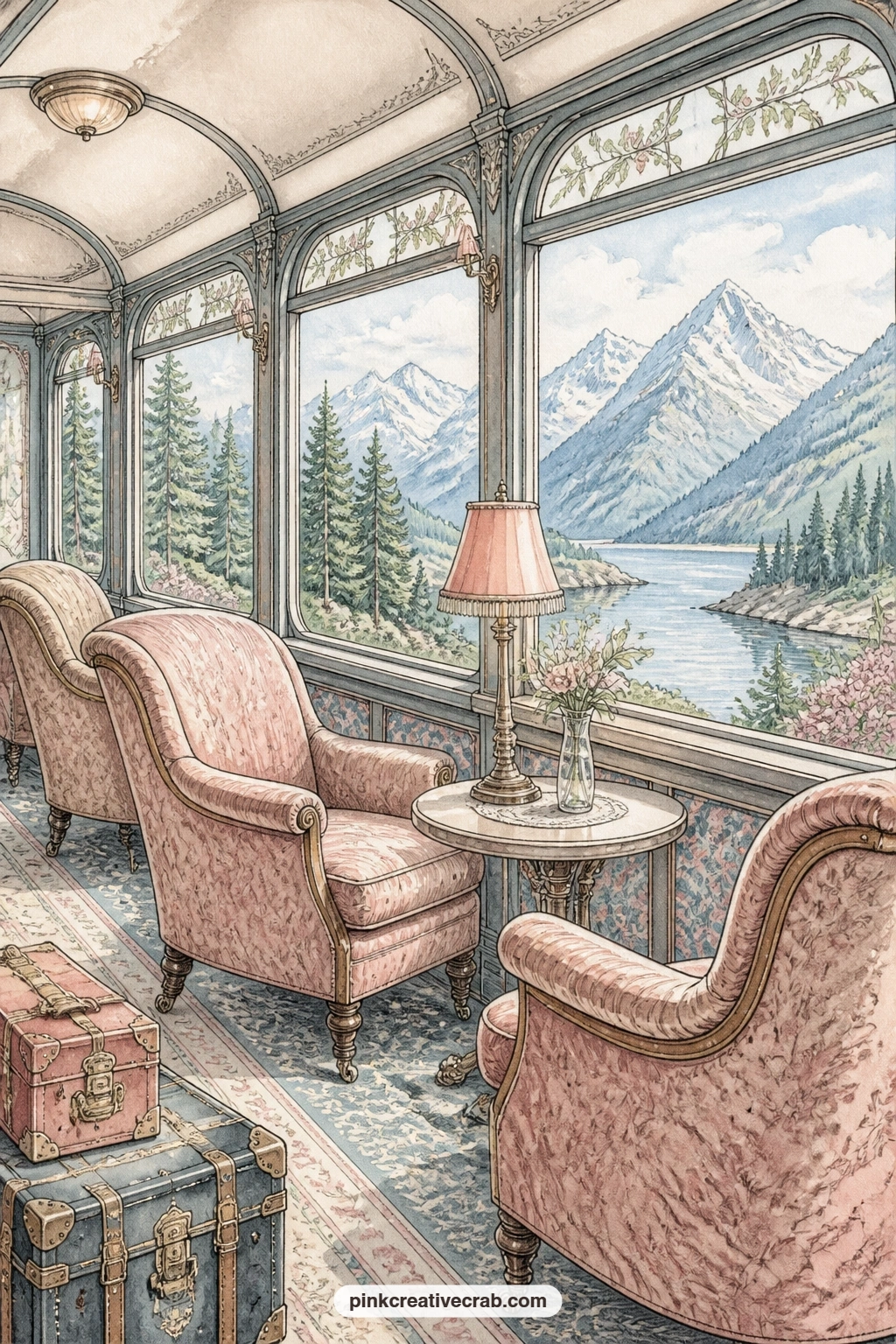
A teacup rests on the sill as mountains and a quiet lake drift past outside, slow enough to notice the light on the water.
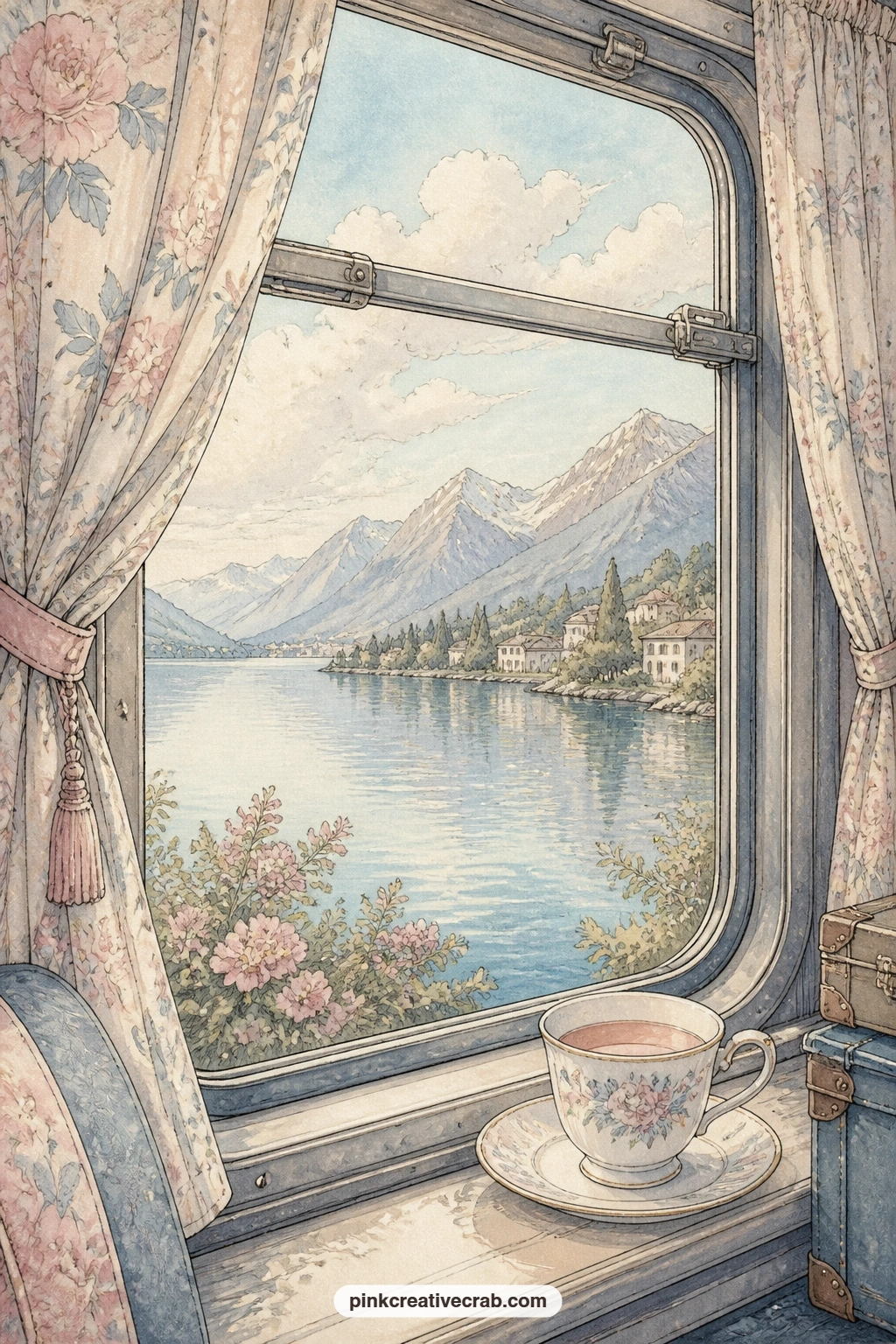
This page works well for someone in a gift journal who always wants to stop for something sweet along the way, pastries, tea and a short rest before the next platform.
A teapot and a plate of pastries sit along the counter, with a small chalkboard menu and a jar of sugar lumps nearby.
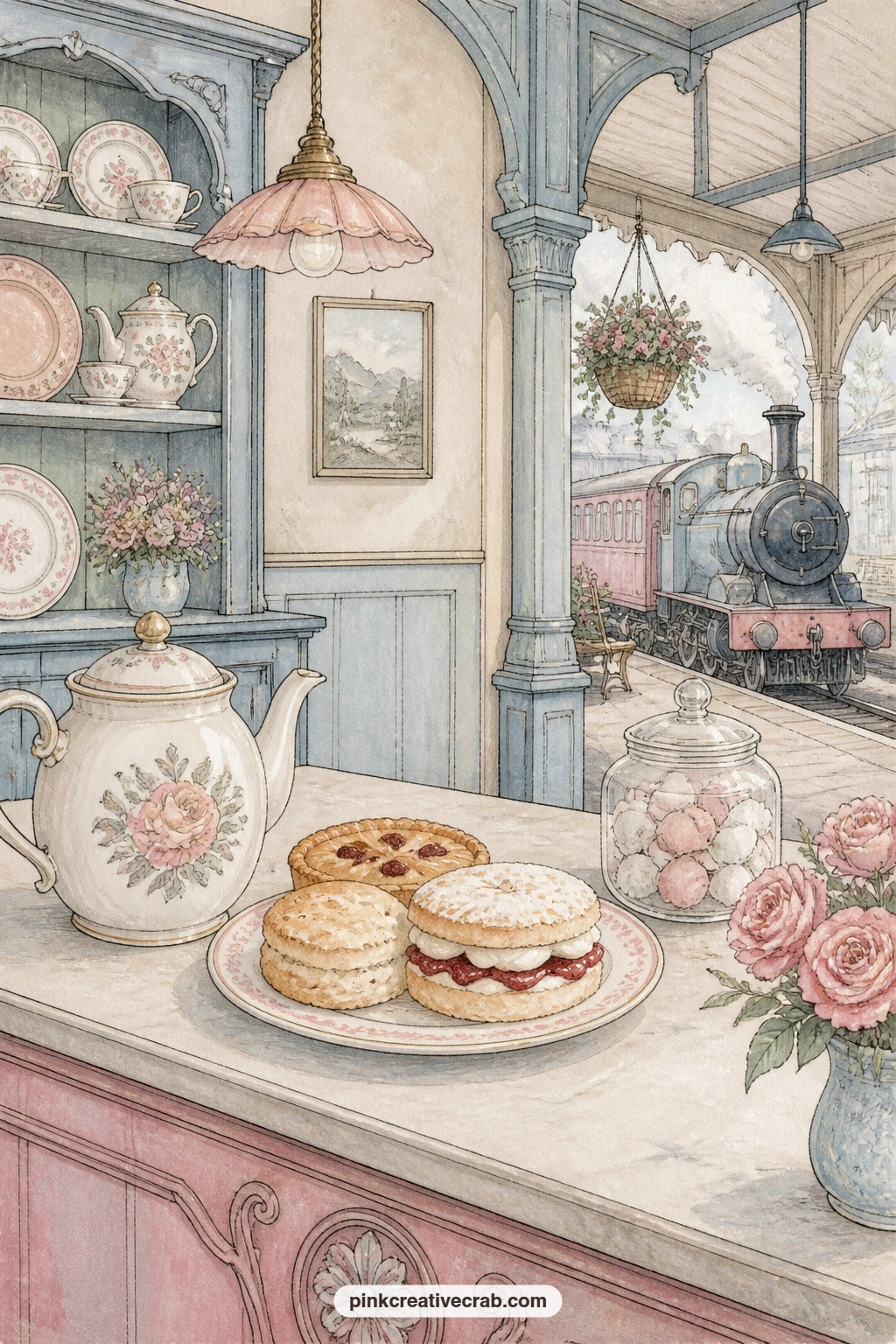
Tea-stain just the lower edge of this page before gluing it in, a light wash along the bottom border suggests a journey already well underway without touching the window view itself.
A woven picnic basket and a wide-brimmed hat rest on the train seat, with countryside sliding past the glass behind them.
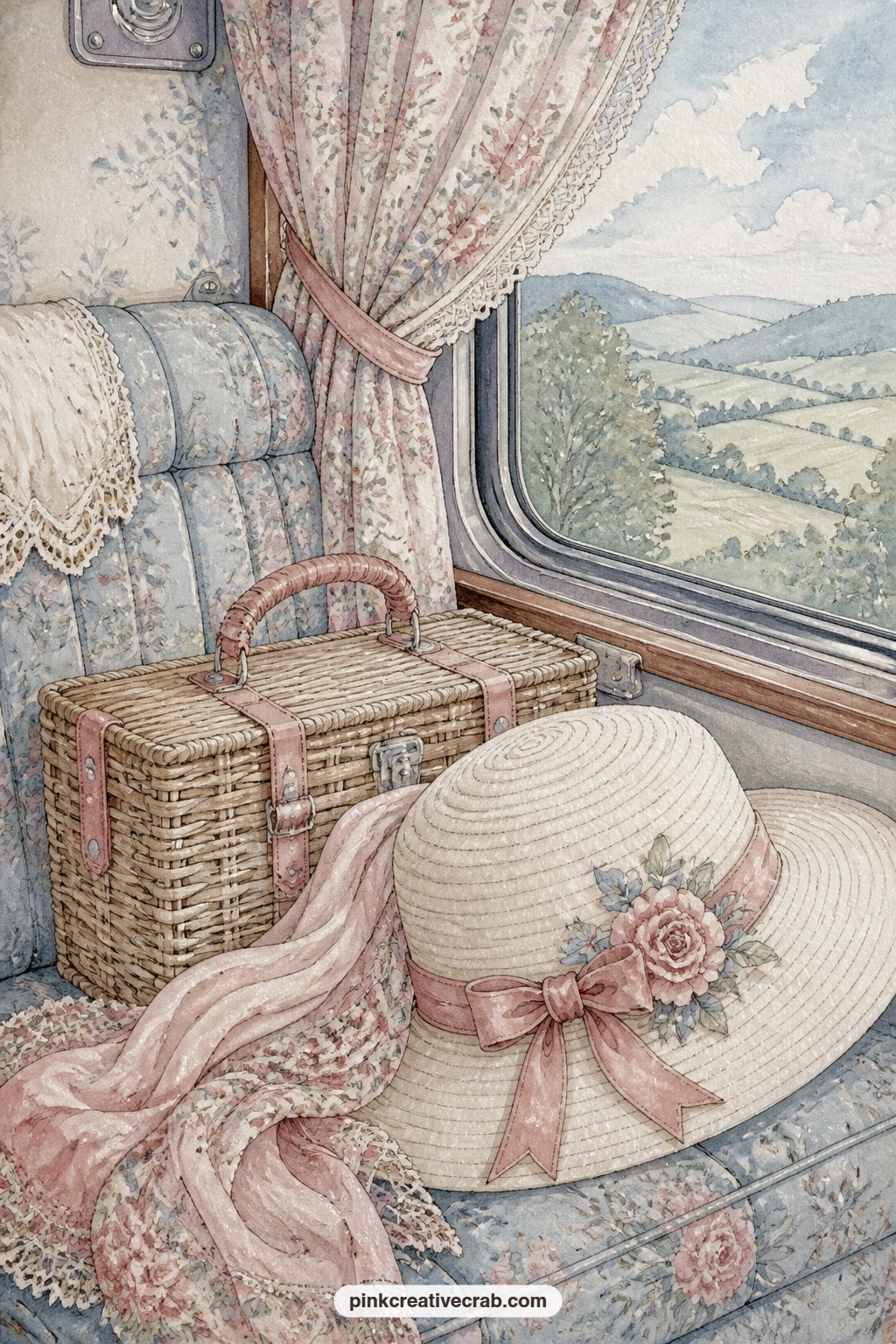
Write a short list of places you would want to see from a window like this one, real or imagined, along the bottom margin of the page once it is glued in.
Trunks, Compartments And The Caboose
Velvet seats, a round hat box on the rack and a window view of passing fields fill this quiet compartment, built for a long and comfortable ride.
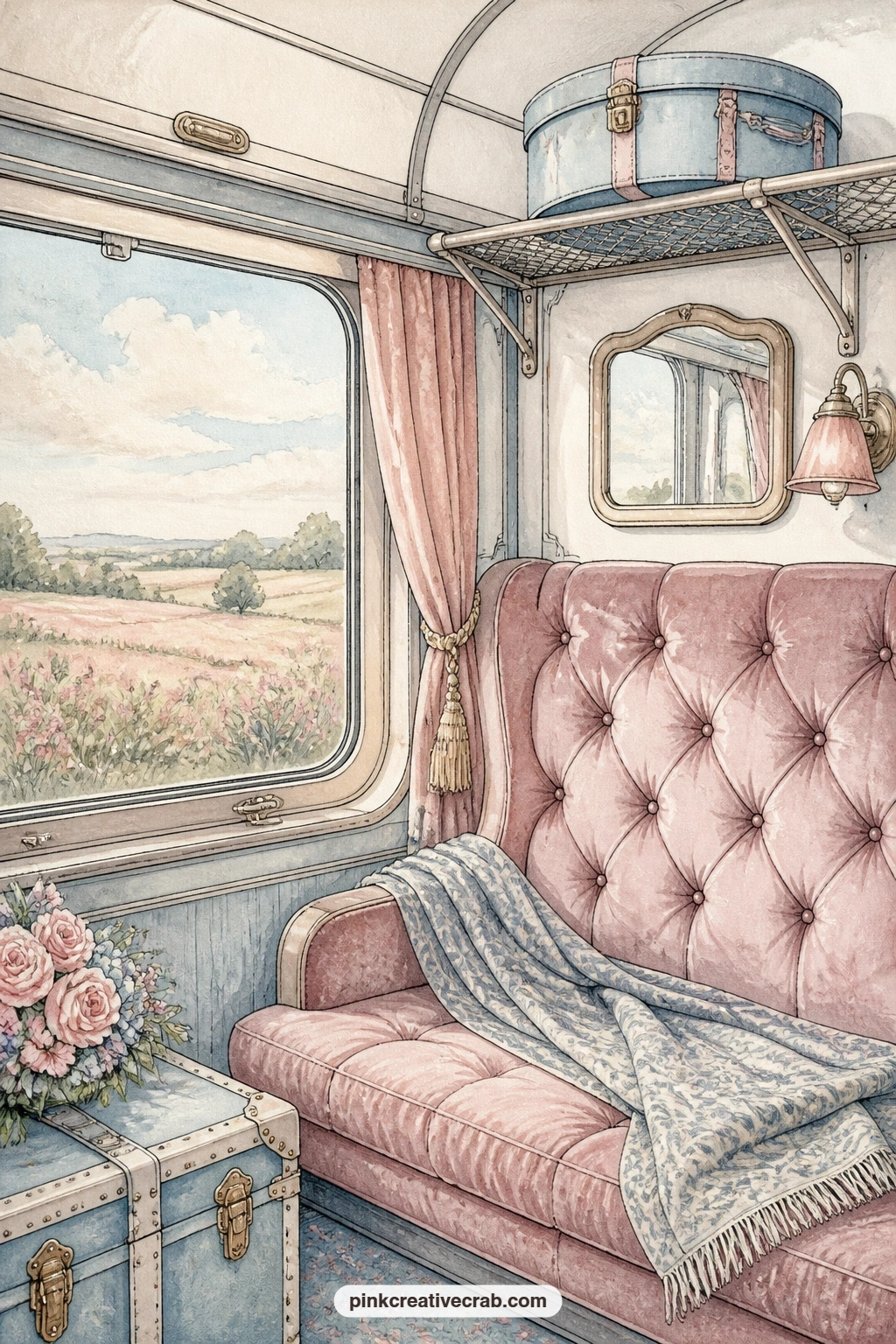
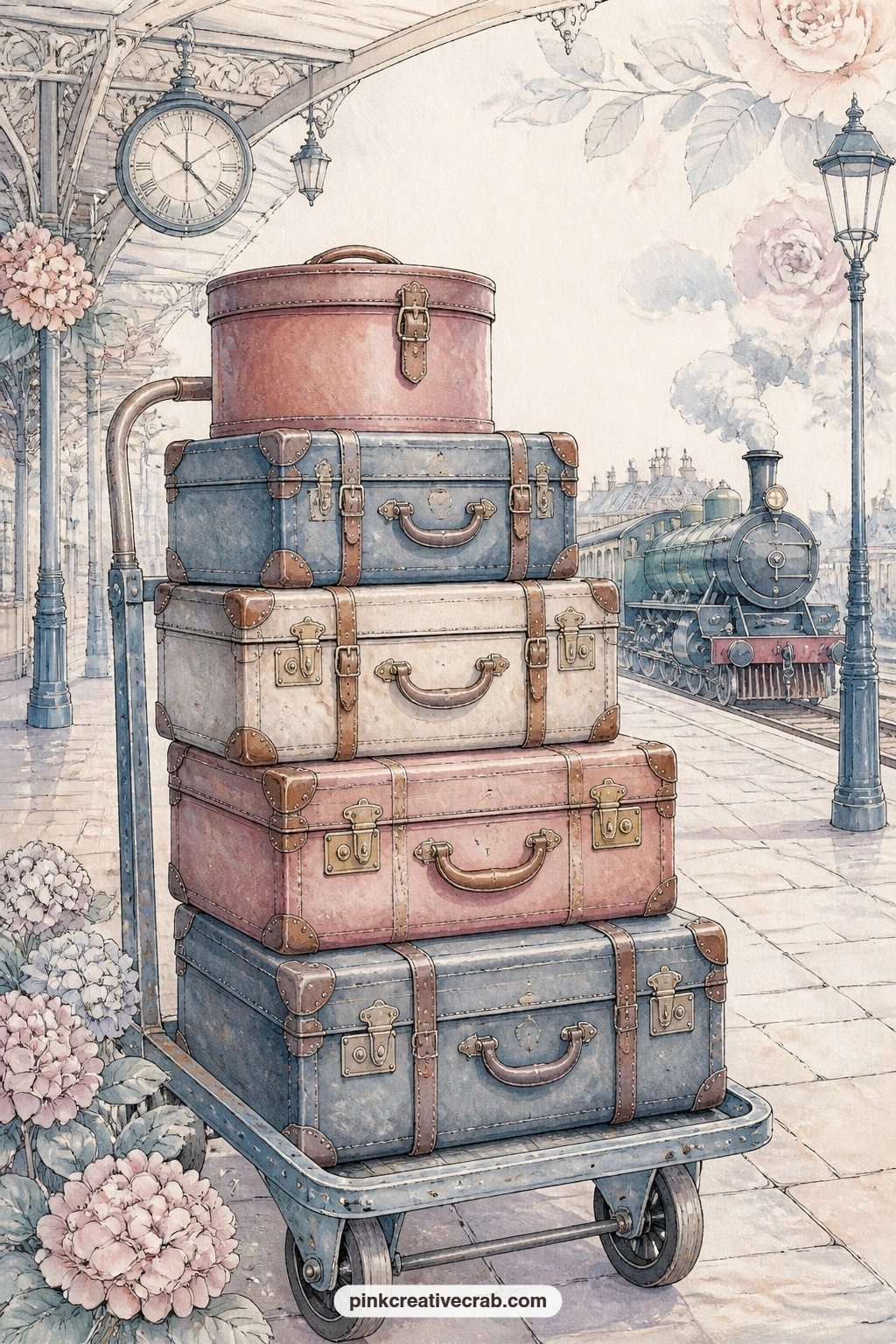
Cut a small pocket from the leather luggage background paper and glue three sides of it directly onto this page, right over the trolley, to hold a ticket or a folded note.
The stacked suitcases and a round hatbox balance neatly on the trolley, with a platform and distant train painted behind them.
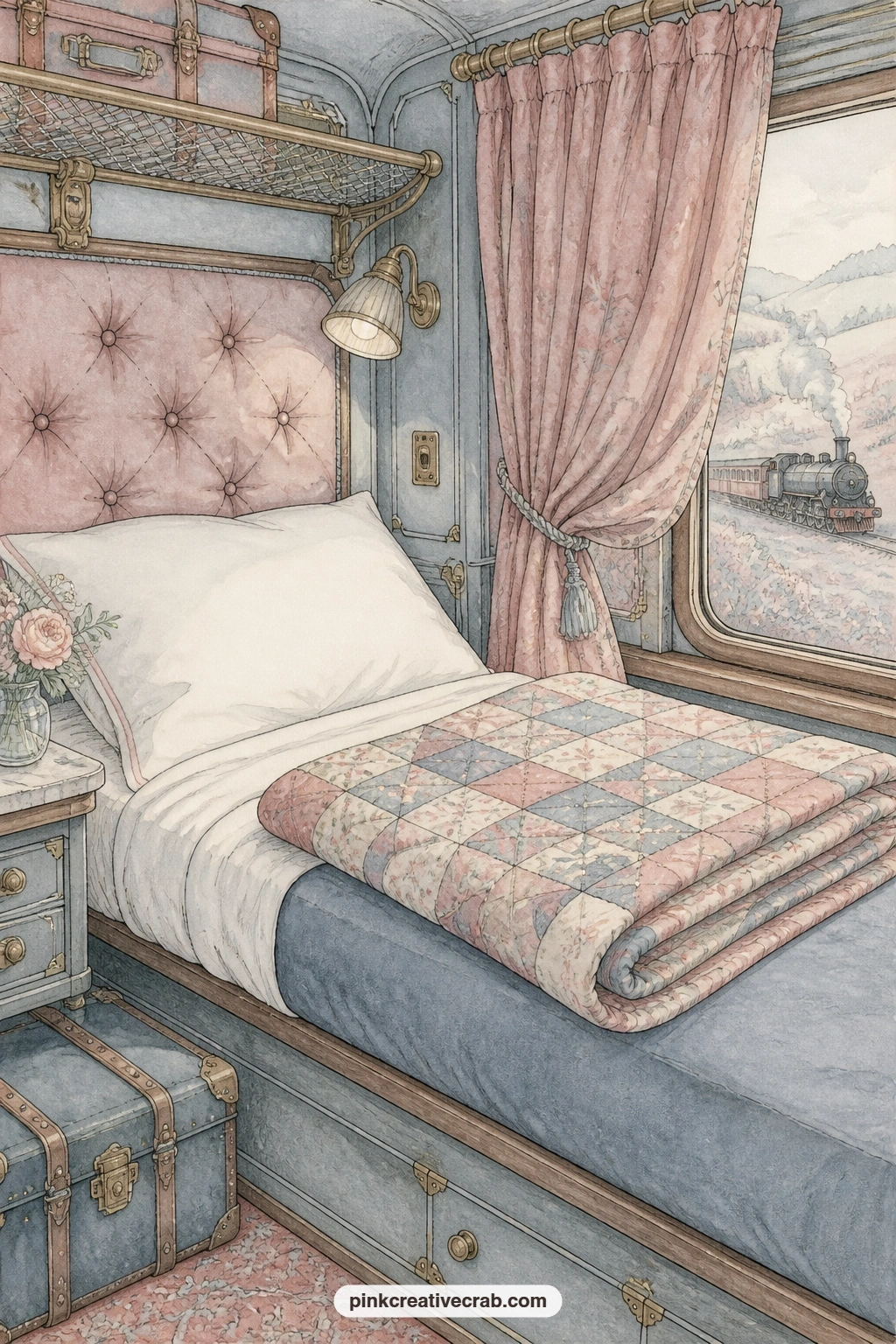
A small lamp glows beside a quilt and pillow tucked into a sleeping car berth, ready for whoever climbs in once the countryside outside turns to dark.
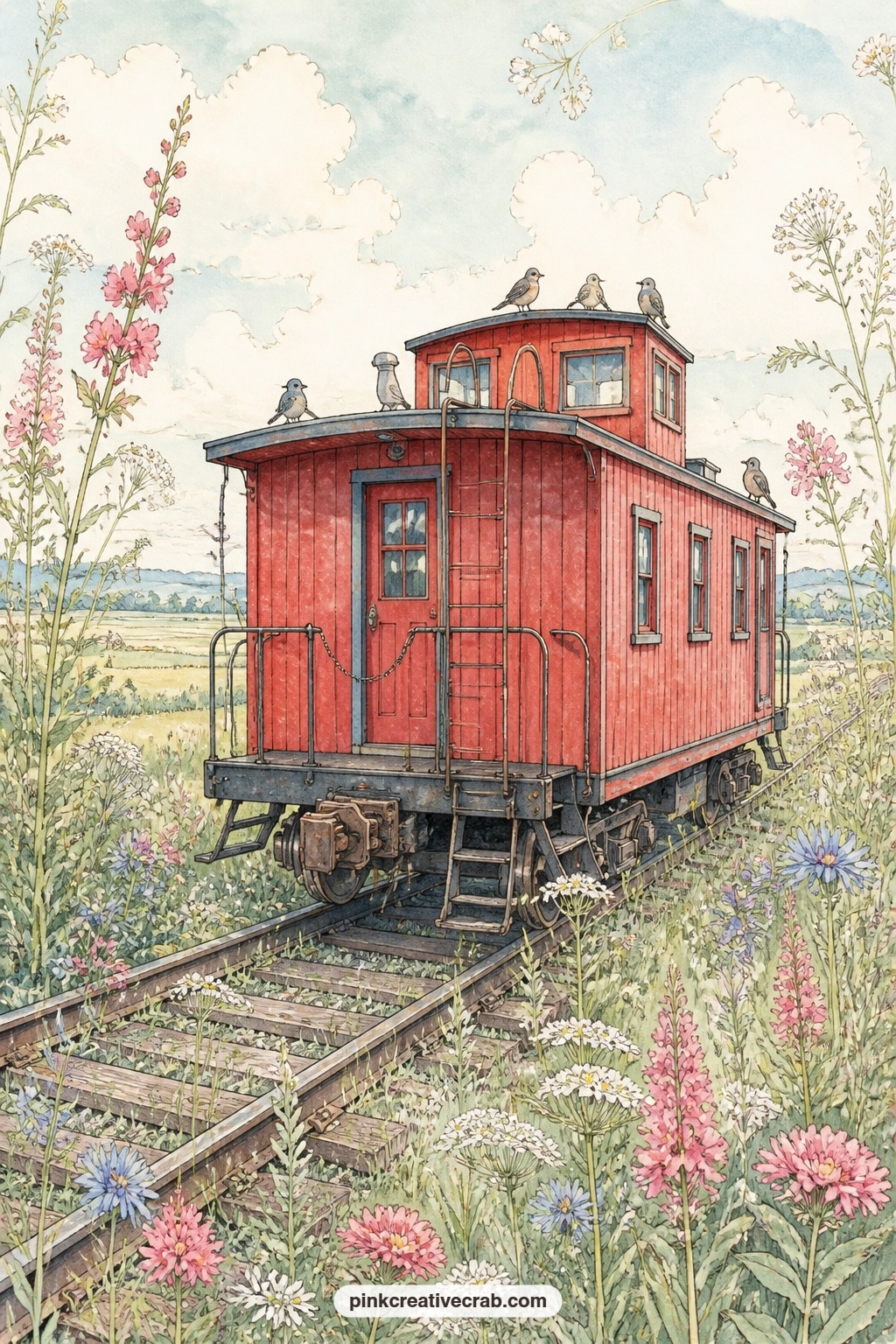
Tear the right-hand edge of this page by hand instead of cutting it with scissors, a rough tear along the siding gives the caboose a weathered, well-travelled feel that suits the subject.
Wildflowers grow thick around the rails where the red caboose sits, with a few birds resting on the roof and open fields stretching behind.
Background Papers
Small steam locomotives repeat in neat rows across the page in dusty rose and soft slate blue, perfect under a photo, lining a luggage-shaped pocket, or wrapped around a journal cover.
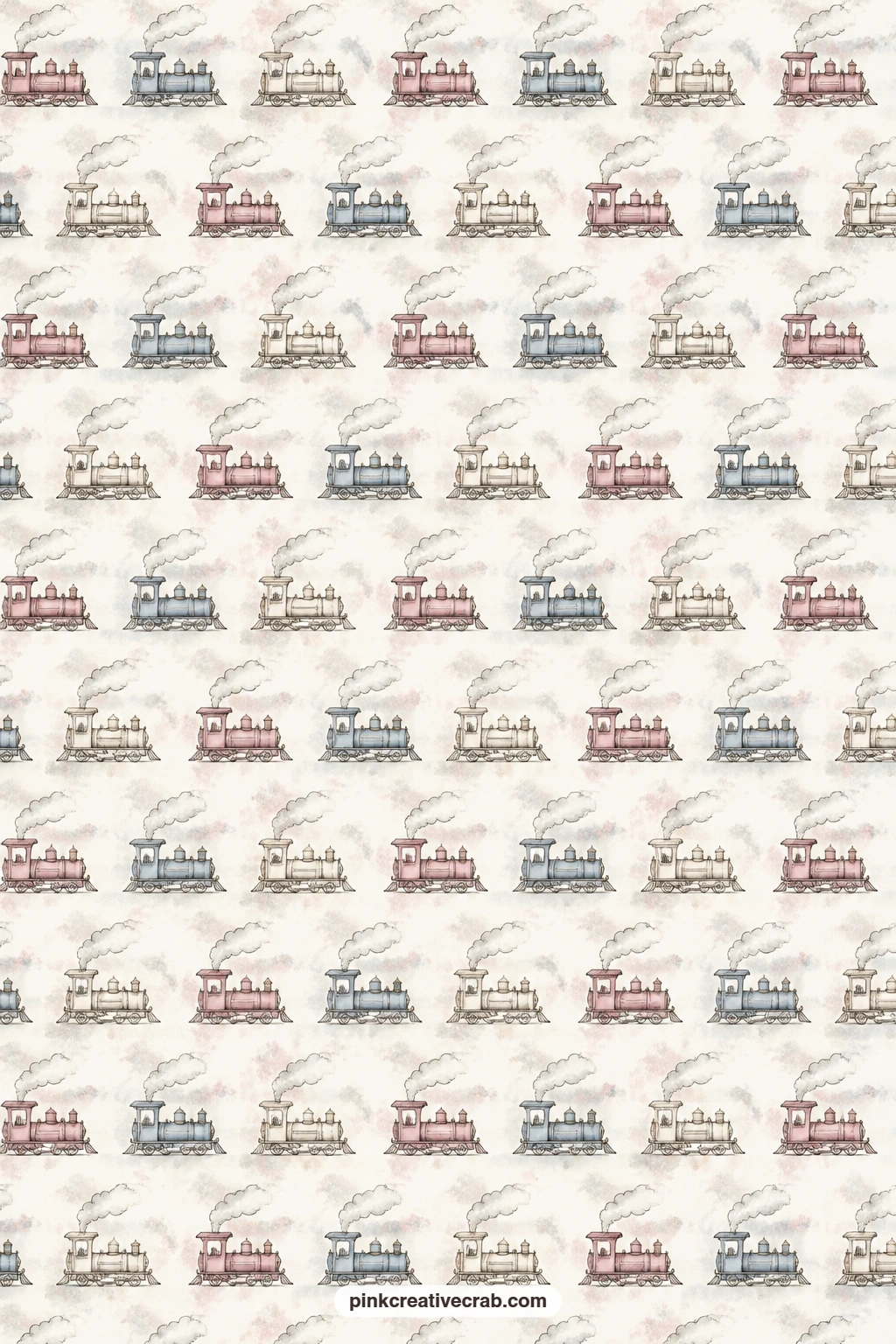
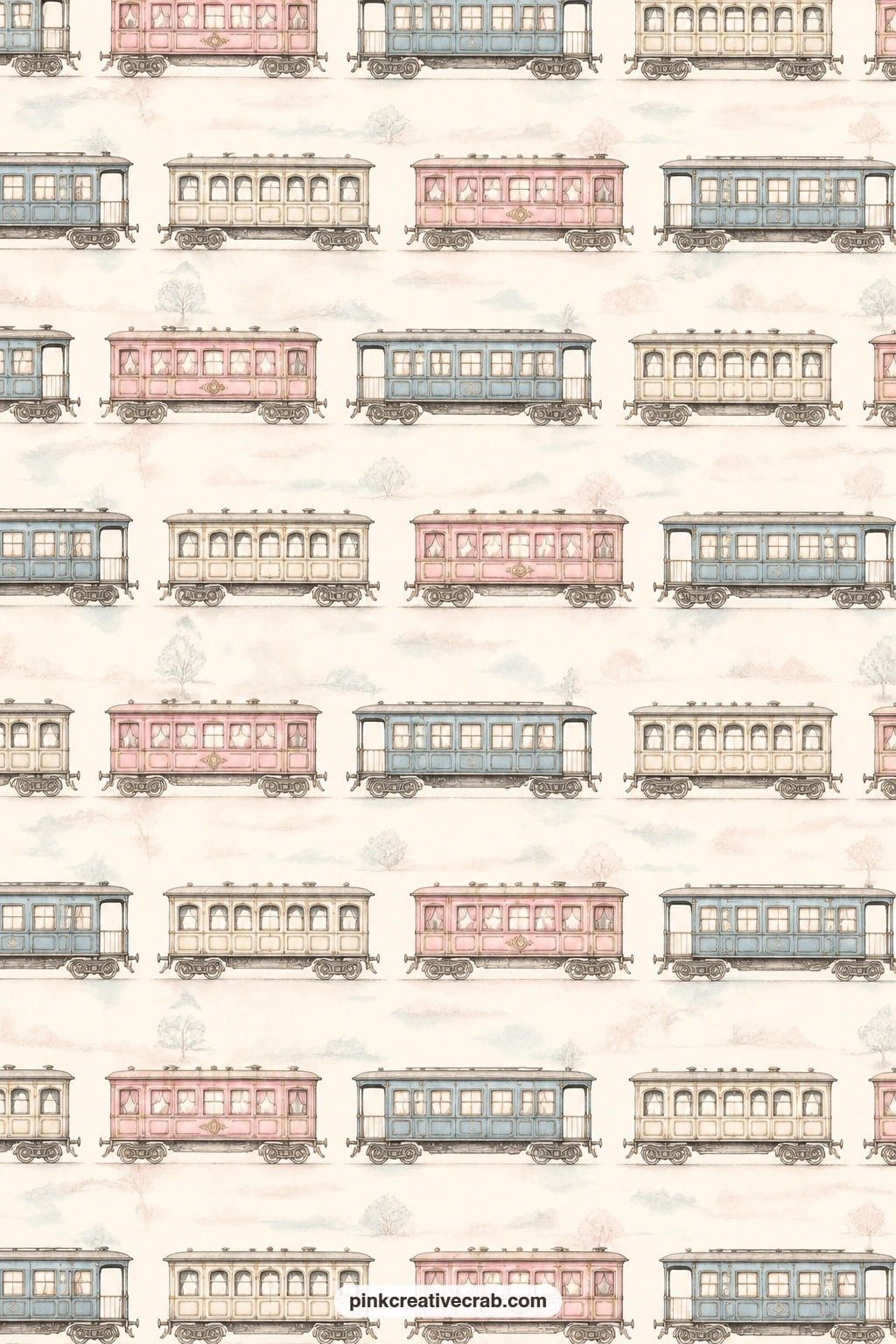
Rows of vintage train carriages in warm cream and dusty rose cover this sheet edge to edge, ready to sit behind a window-view photo, line the inside of a pocket, or wrap a small journal.
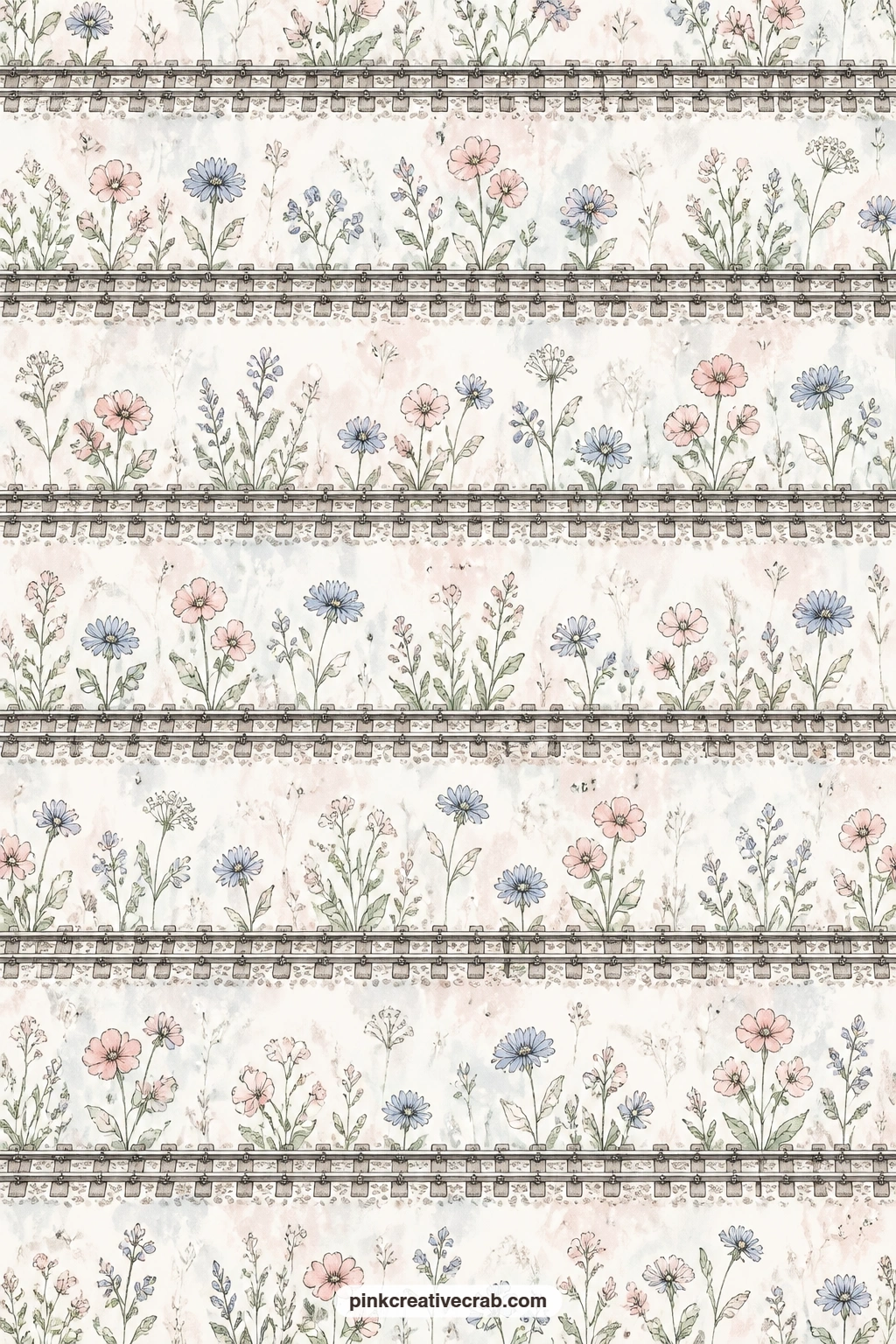
Thin railway tracks run between scattered wildflowers across this all-over pattern, suited to a pocket lining, a backing sheet behind a pressed flower, or the inside cover of the finished journal.
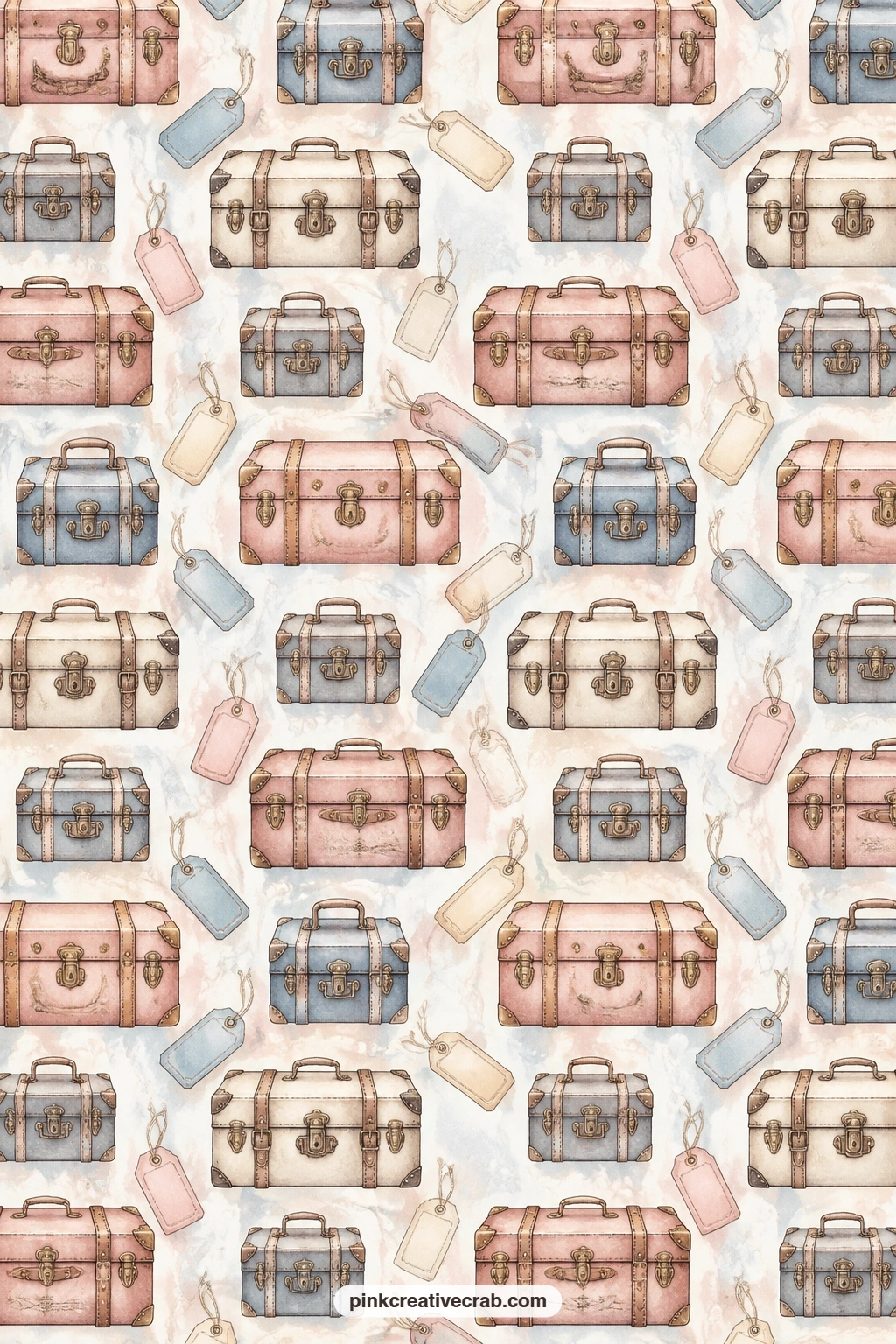
Small leather trunks and travel labels repeat across this sheet in soft slate blue and cream, good under a travel photo, as a pocket lining, or cut down for a luggage-tag embellishment.
Lined Writing Pages
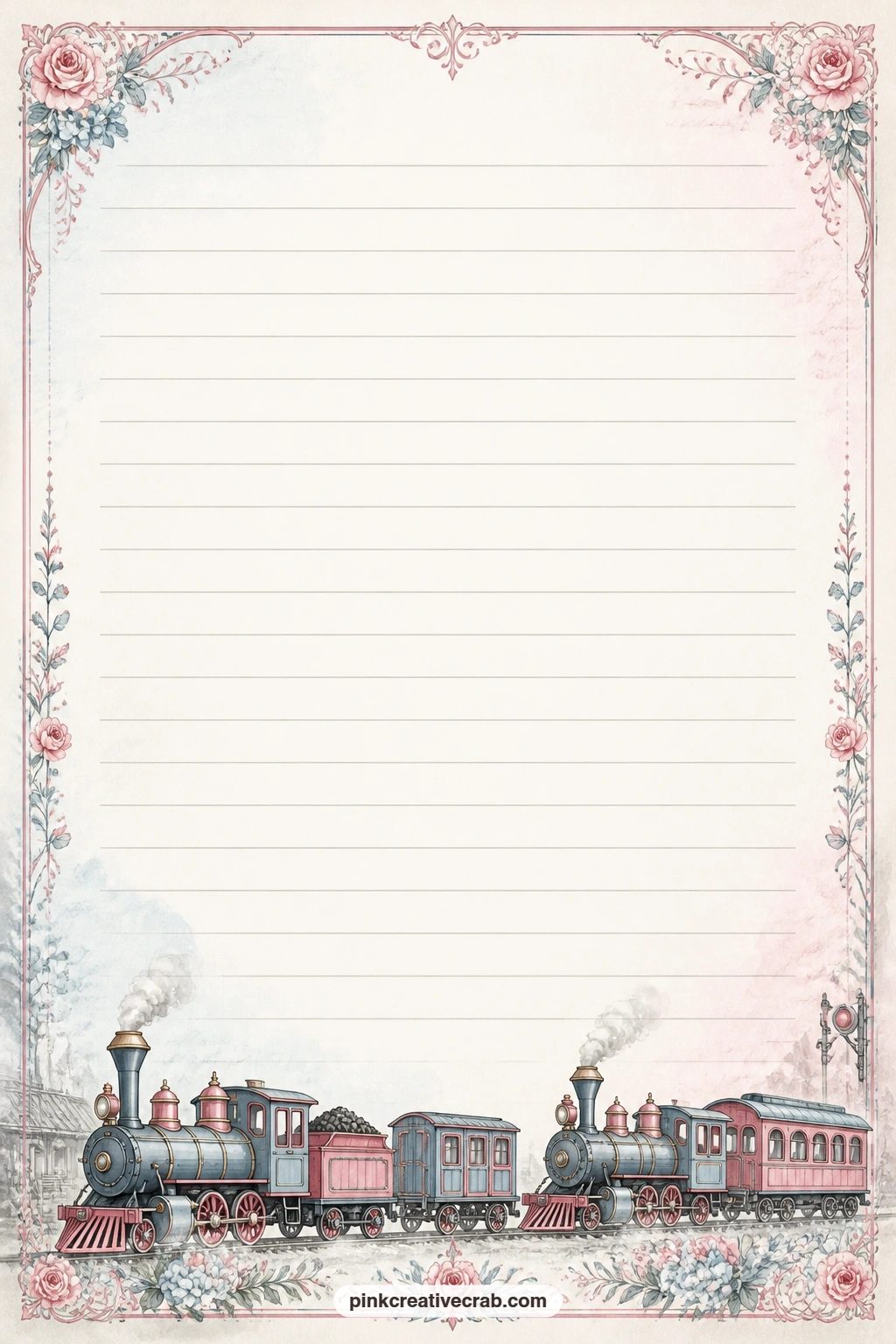
A row of tiny steam trains travels along the bottom border of this page, leaving the ruled lines above free for a packing list, a letter to next year, or notes from a long afternoon ride.
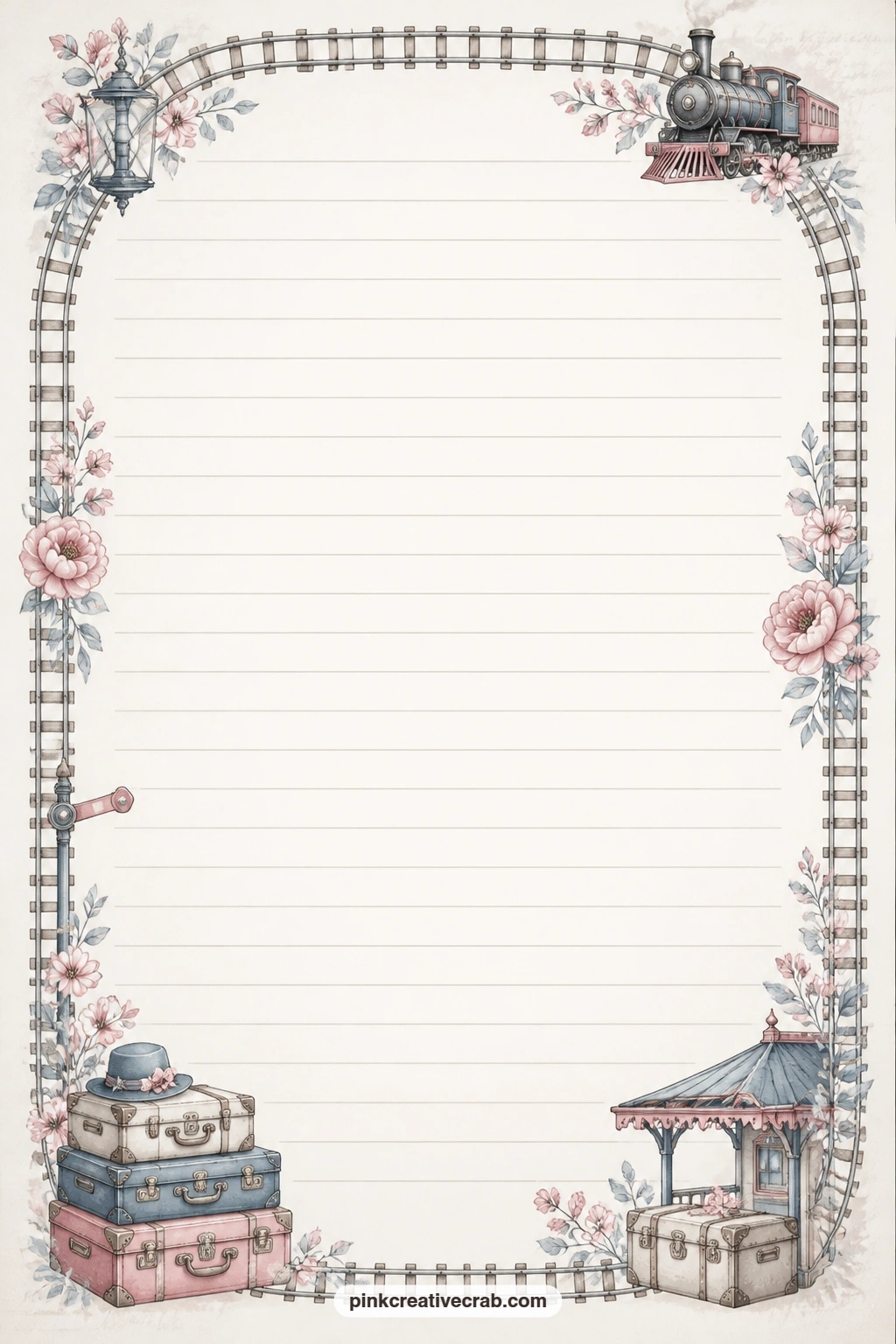
Railway tracks curve gently around all four edges of this page, framing faint ruled lines in the centre that suit a gift list, a short poem, or a record of stations passed along the way.
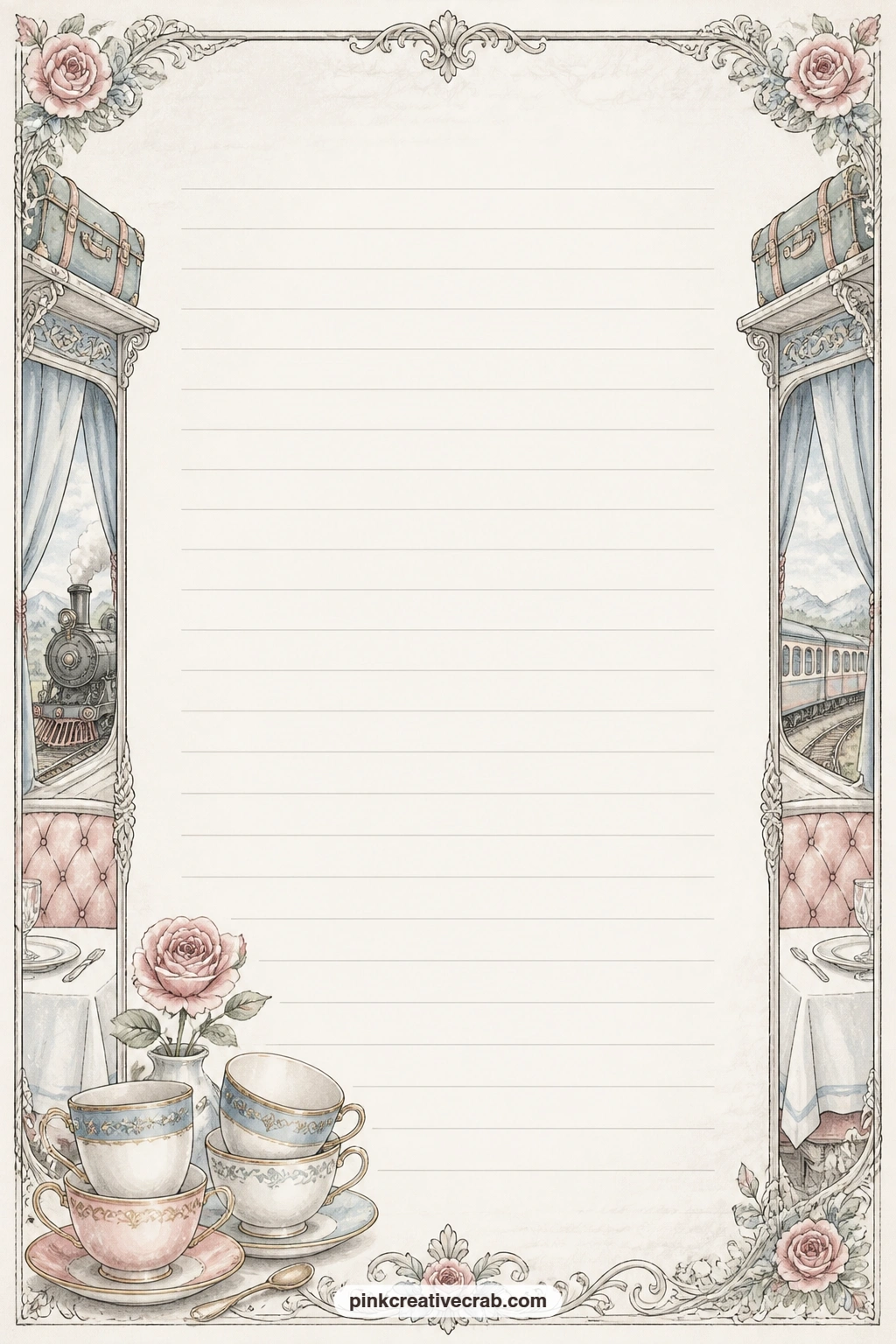
A small cluster of teacups and a rose sits in one corner of this page, leaving the faint ruled lines open for a menu, a toast written for someone special, or a quiet dinner memory.
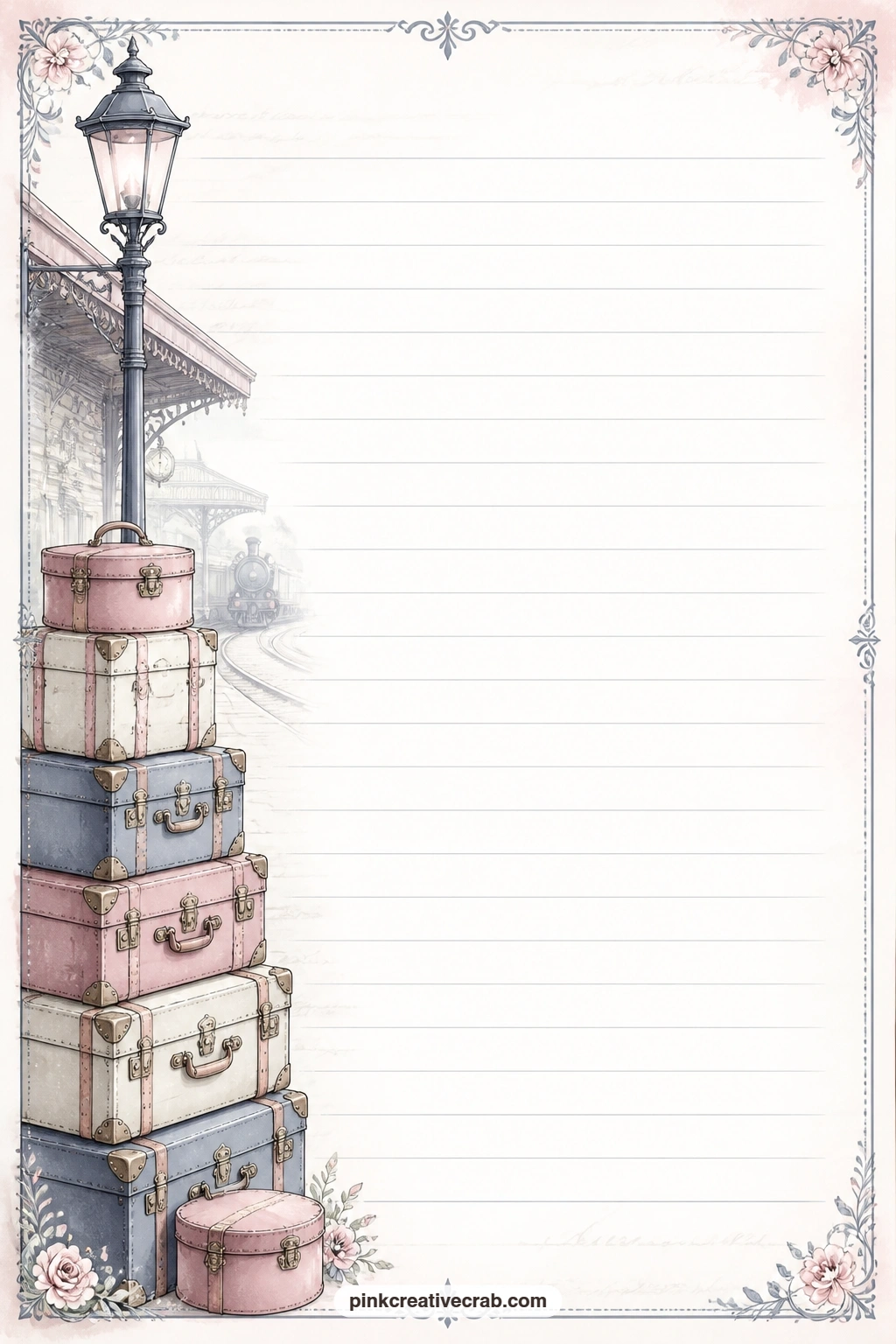
A narrow band of luggage trunks and a lamppost runs down one side of this page, framing faint ruled lines for a travel diary entry, a departure list, or a letter mailed from the next stop.
What to Do Next
Print the full set, trim it to your journal size, and start with the viaduct scene as an opening page before working through the platforms, dining cars and lined pages in order.
Frequently Asked Questions
What paper works best for printing a vintage train junk journal kit?
Heavyweight matte cardstock around 24 lb works best, since it holds glue and light paint without warping. Thinner paper is fine for lined pages you plan only to write on.
What printer settings keep the fine ink lines sharp?
Use your printer’s best or photo quality setting, since draft mode blurs the thin sepia-grey outlines. Choose matte or plain paper in the settings menu rather than glossy photo paper.
What size should the pages be trimmed to?
Trim each page to match your journal’s trim size, commonly A5 or 5.5 by 8.5 inches for a handheld book. Leave a small margin uncut until you confirm the fit against your covers.
What should I use to colour or add to these pages?
The pages print in full colour already, so no extra colouring is needed unless you want to add shading. Fine tip pens suit journaling directly on the lined pages and the open areas of scenes.
What glue is safe for assembling the pages into a journal?
An acid free glue stick is the safest choice, since it will not yellow or wrinkle the paper over time. A thin layer along the edges only also keeps pages from buckling once bound.
Have any thoughts?
Share your reaction or leave a quick response — we’d love to hear what you think!
-
 0
-
0
-
0
-
0
-
0
-
0


