Table of Contents
This bookshop junk journal kit gathers every corner of a cozy little shop into one set of pages: the cafe counter, the shop cat, the rolling ladder and the window seat where somebody left a mug going cold beside a stack of novels. There are 20 scene pages full of these small moments, 4 seamless background papers for covers and pockets, and 5 lined writing pages for the words that go with them.
Print the set on plain white or lightly textured cardstock, something around 160 to 200gsm so ink does not show through, and set your printer to its best or photo quality for true colour. Trim each sheet to the journal size you want, then glue, tape or stitch the pages in. Nothing else to buy beyond paper, glue and whatever you already keep in your journal box.
Using these images: free for personal projects such as printing, coloring, cards, journals and gifts. Handmade items that include them may be sold up to 30 pieces per design. More than that is commercial use and is not permitted, and neither is selling or sharing the images themselves or passing them off as your own. Please ask before any other use.
Cafe Corners and Counters
Tuck a real receipt from your last bookshop visit into the fold of this page, or write the name of the book you were reading that day right on the teacup.
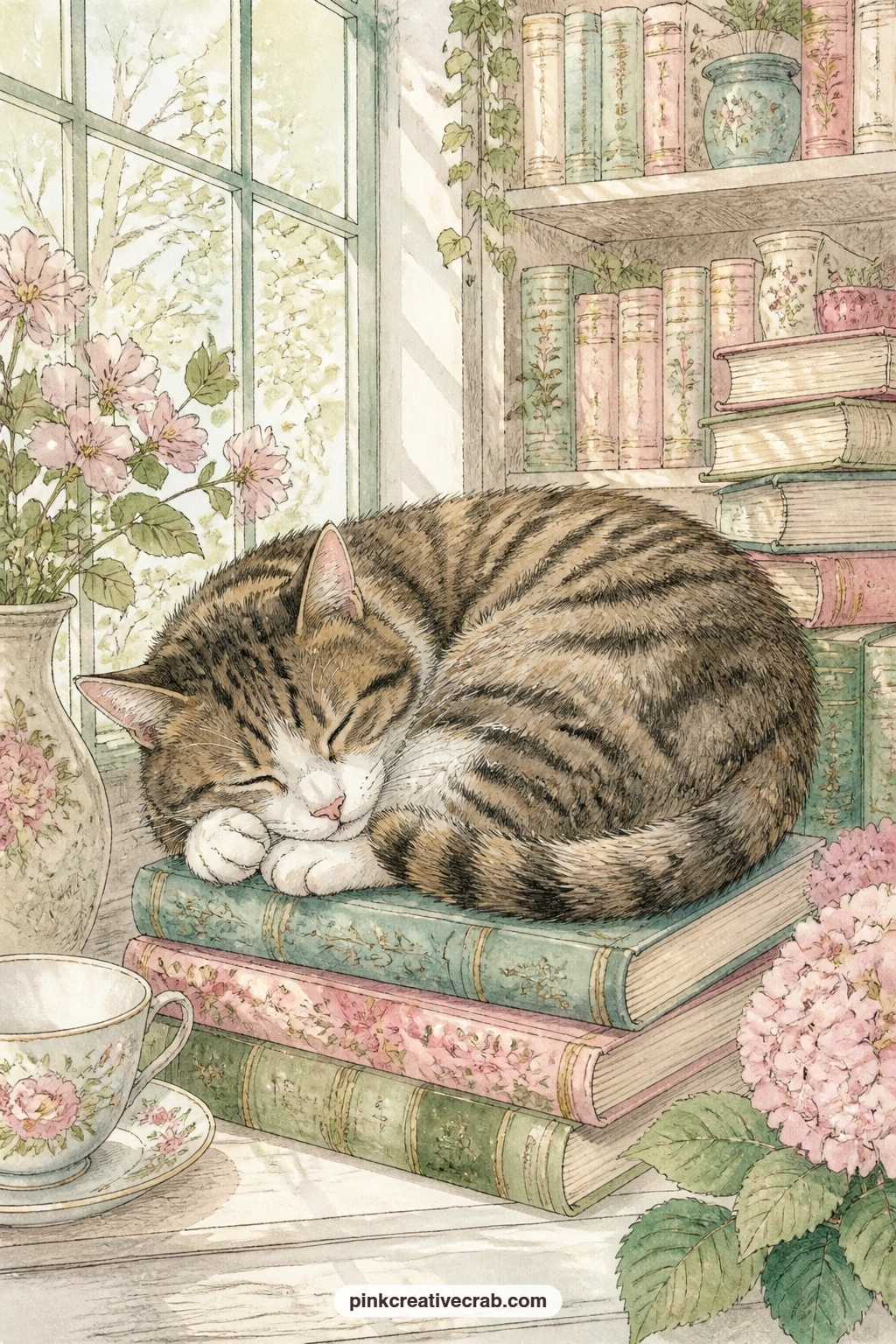
Pair this page with the coffee cups and croissants background from this set, using the pattern as a facing page so the cat’s nap gets a warm little neighbour.
The usual mistake with a shelf page like this is leaving the ladder floating with nothing around it, so the shelves look thin and bare.
Fix it with a potted plant at the base and a few books left open or stacked nearby, then paint the wall and floor behind so the whole corner feels lived in.
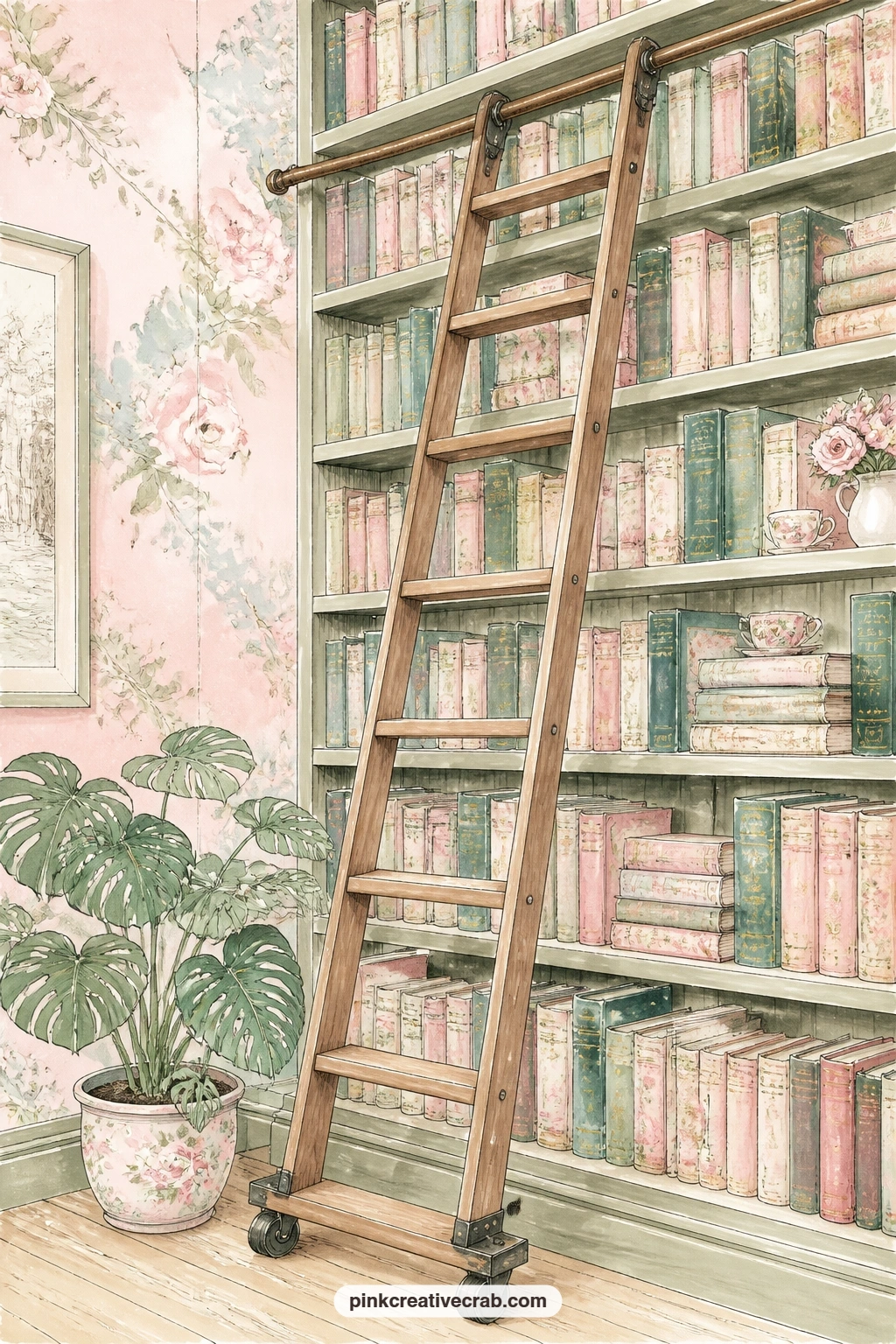
Write a short line here about the drink you order without fail, or leave the space for whoever reads this journal to confess their own.
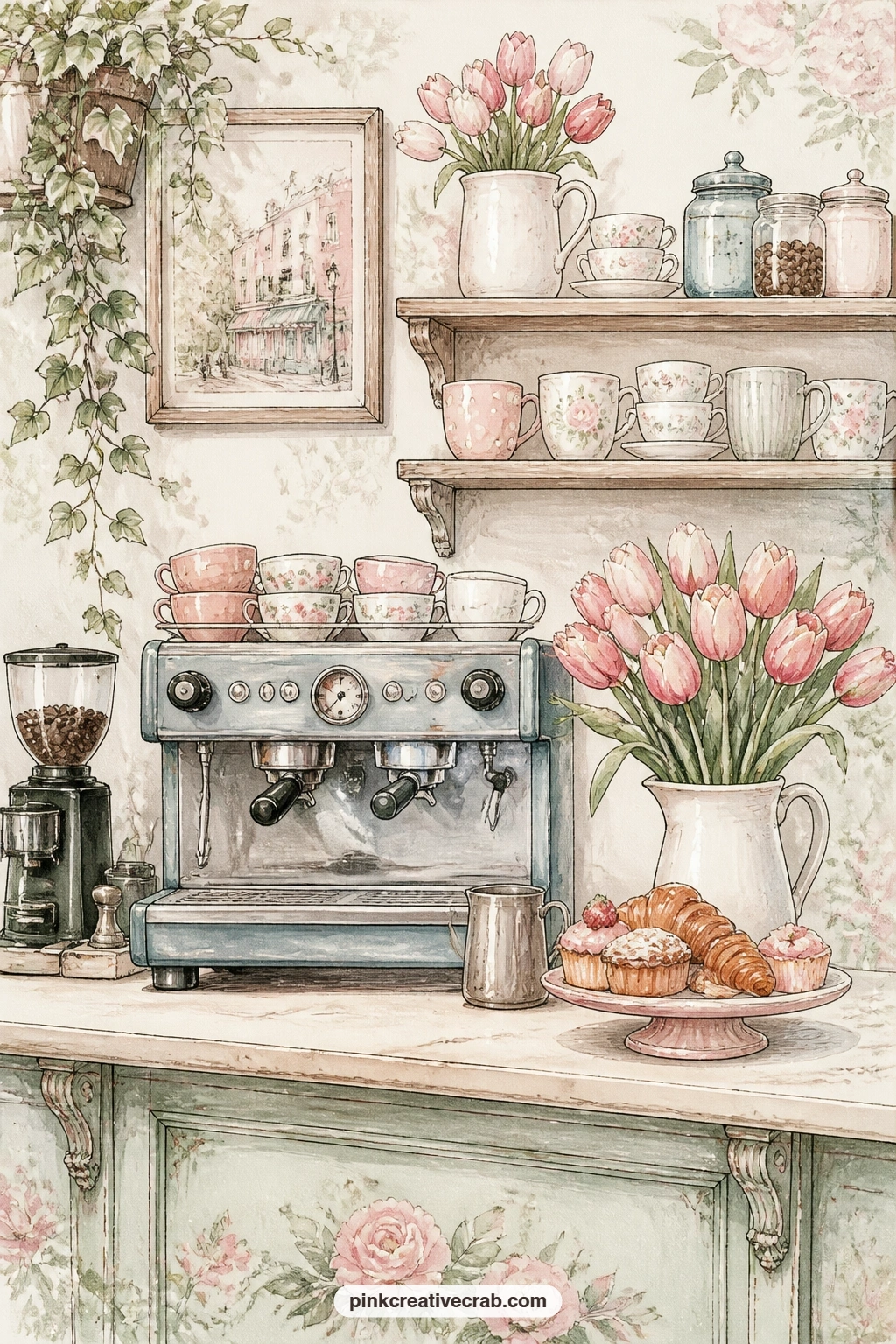
This page suits anyone building a gift journal for a friend who plans her weekends around a good bookshop, since the whole display reads like an invitation.
Beginners can keep the garland simple with a few plain flags, while a steadier hand can add lettering to the spines or tiny price tags tucked between the teacups.
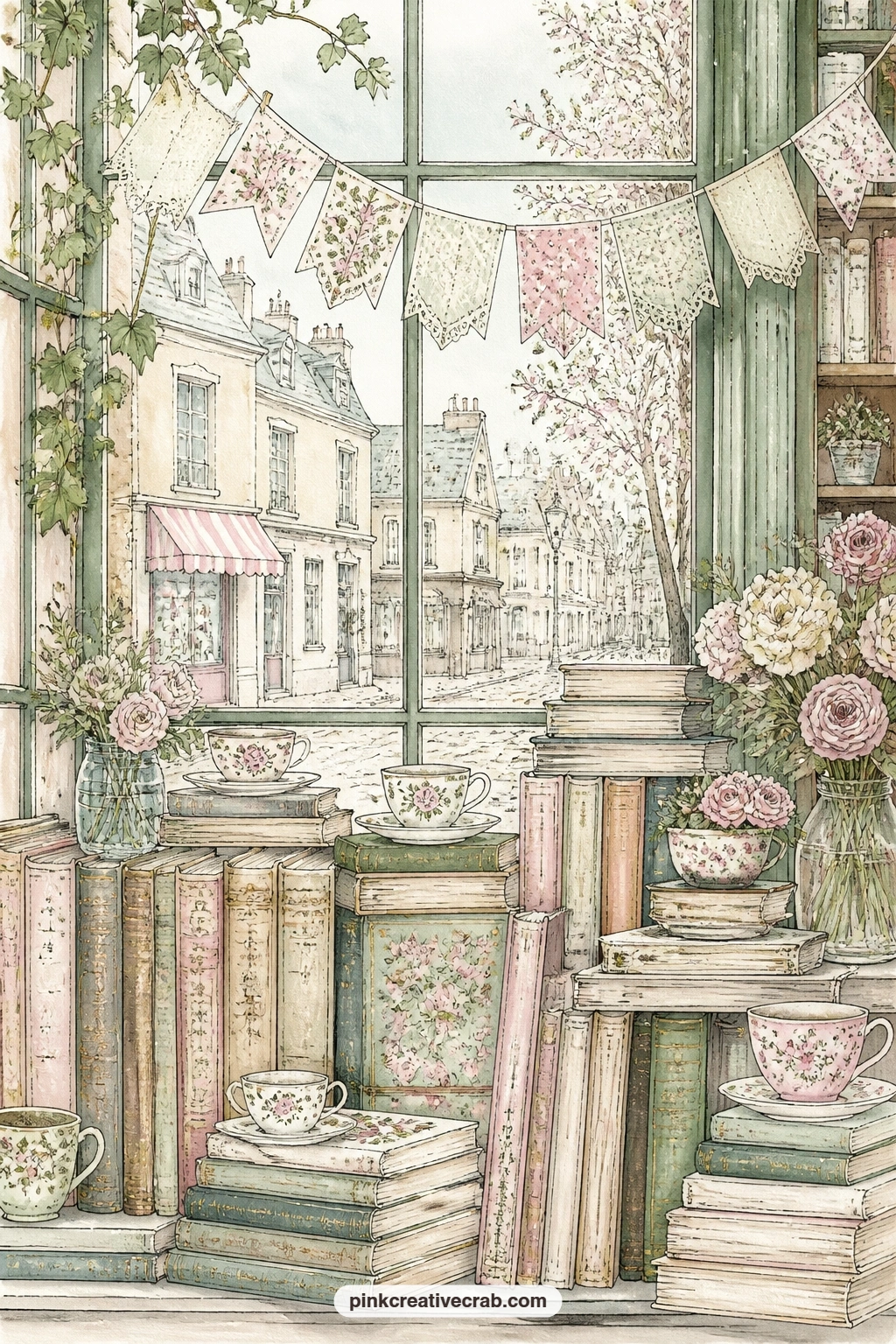
What would you write in this notebook if nobody else ever read it? Answer that question in a few lines right beside the latte.
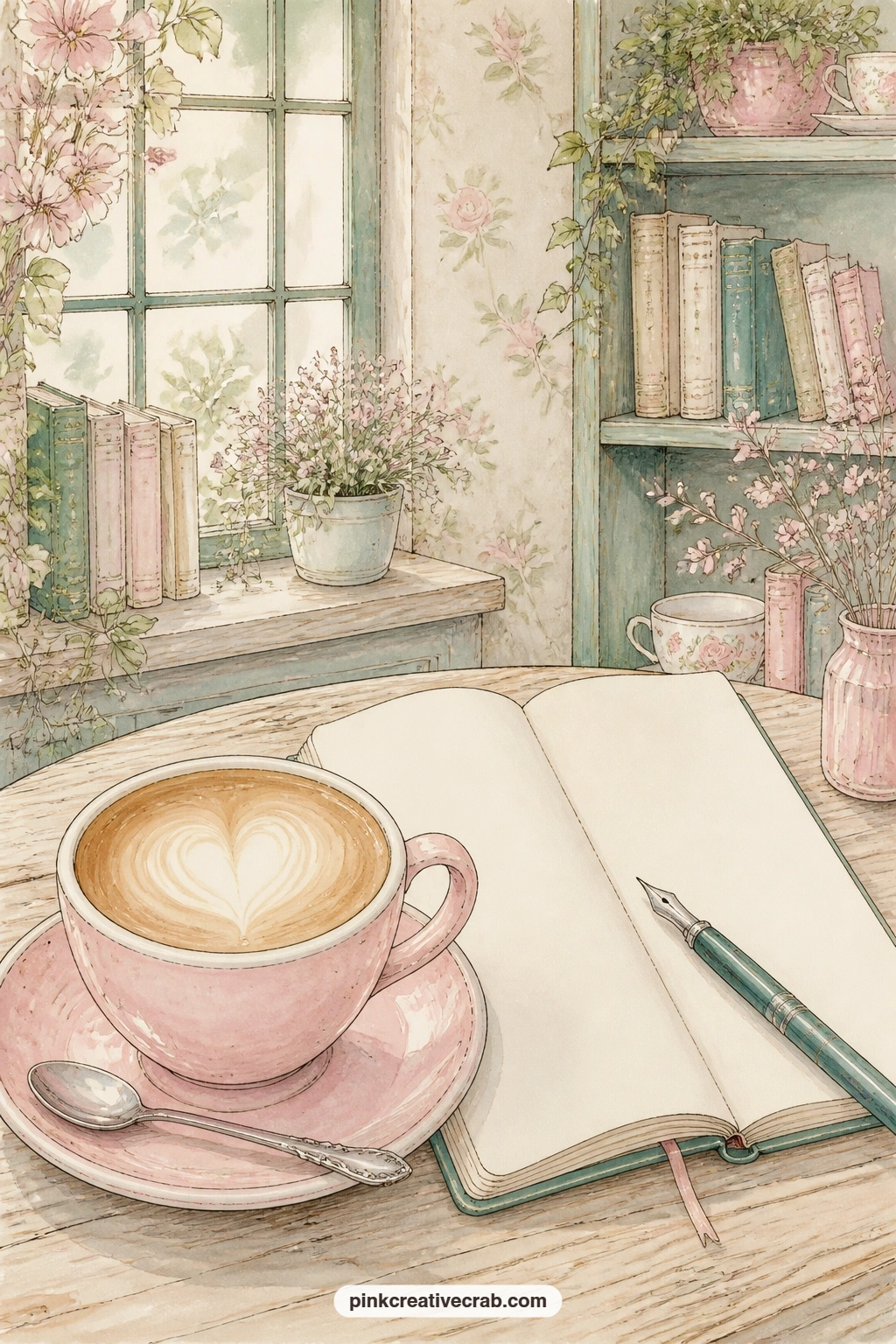
Reading Nooks and Quiet Corners
Tea-stain just the edge of this page before gluing it in, so the nook looks softened by years of afternoons spent curled up in it.
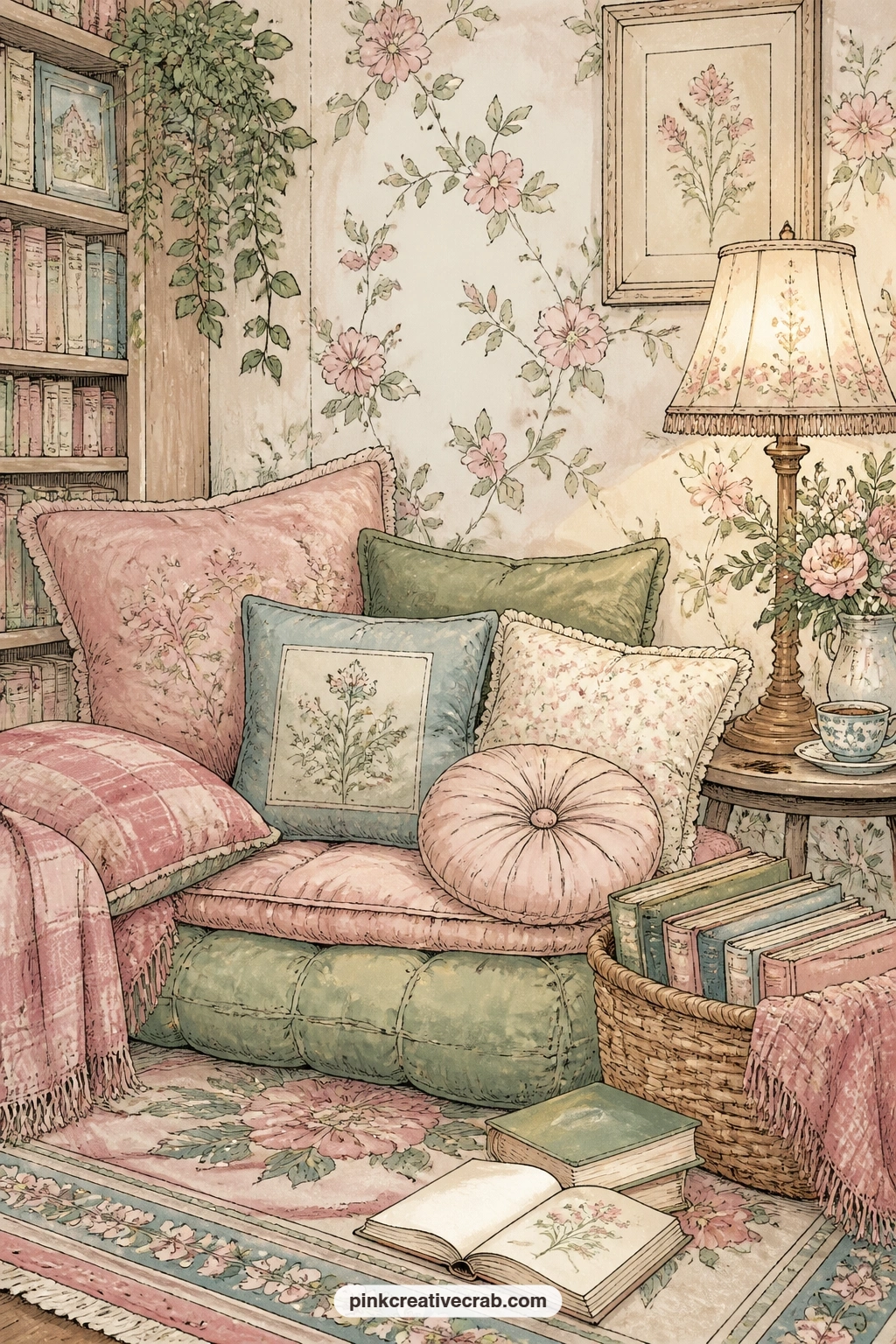
Glue in a paper napkin or a folded sugar packet here, something small that smells faintly of the cafe you are remembering.
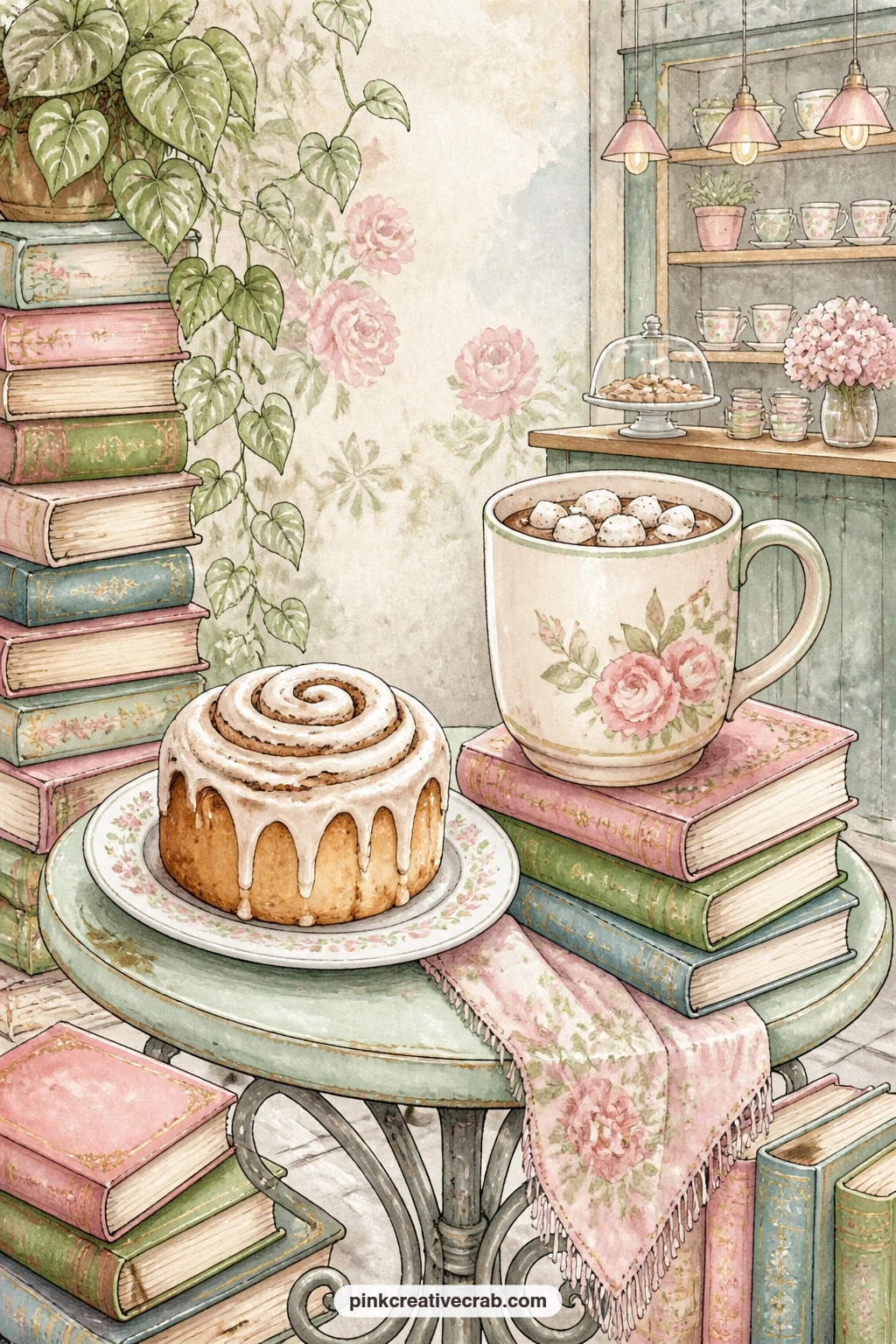
Place this page opposite the window display page from earlier in the set, so the outside and inside of the same shop sit side by side across the spread.
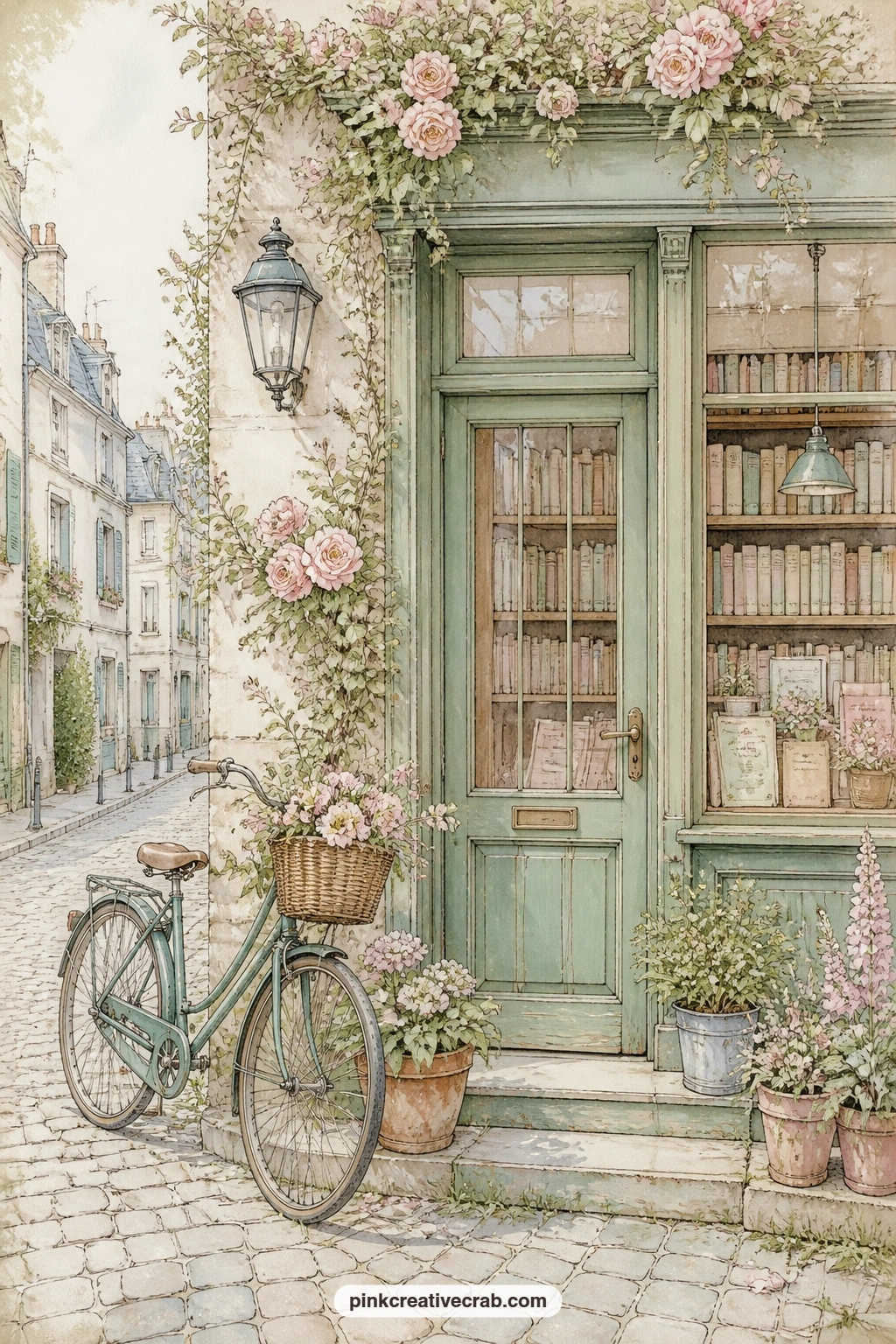
If you want a quick version, paint just the door and the flower pots in five minutes and leave the bicycle for another sitting, the page still reads as finished on its own.
Who is this page for in a gift journal? Hand it to a friend who always heads straight for the clearance cart, and let her write the titles she actually found there.
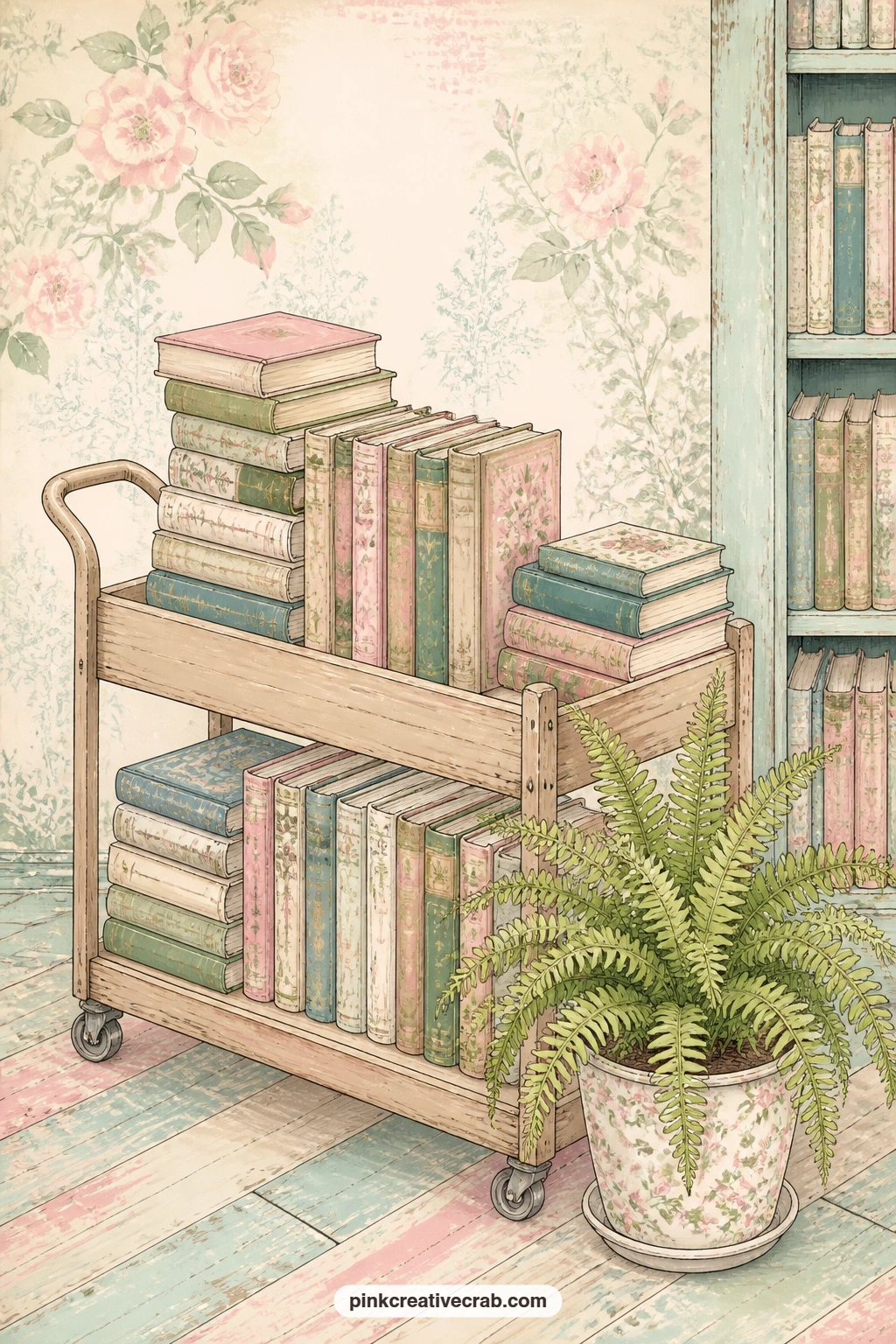
List the three books you would bundle together as a gift for someone who loves slow mornings, right along the edge of this page.
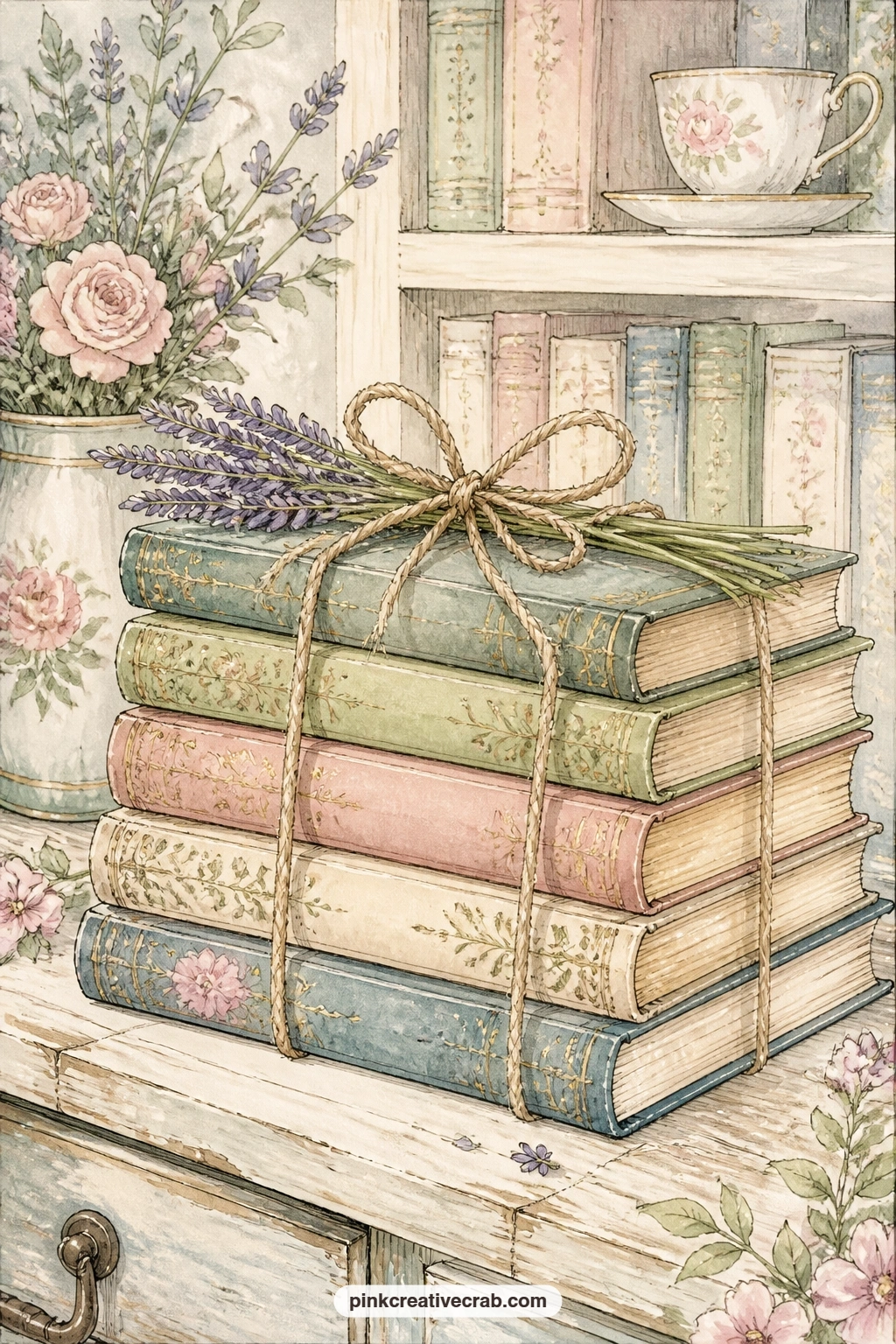
Fold the corner of this page down like a dog-eared book, then tuck a tiny note underneath for whoever turns the page next.
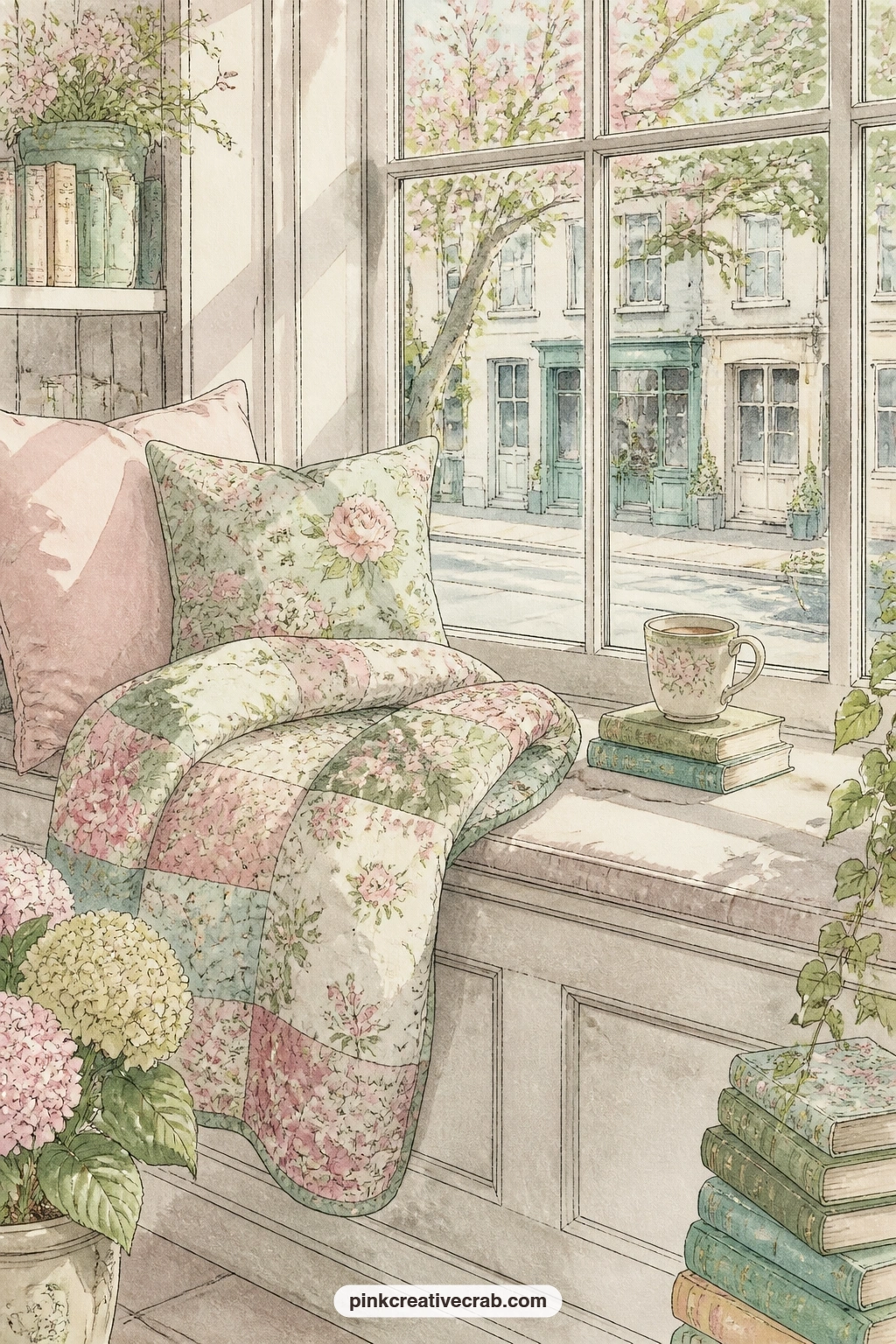
Shelves and Staircases
Write a short list of the plants you would keep on a bookshop shelf if it were yours, beside the fairy lights strung through this page.
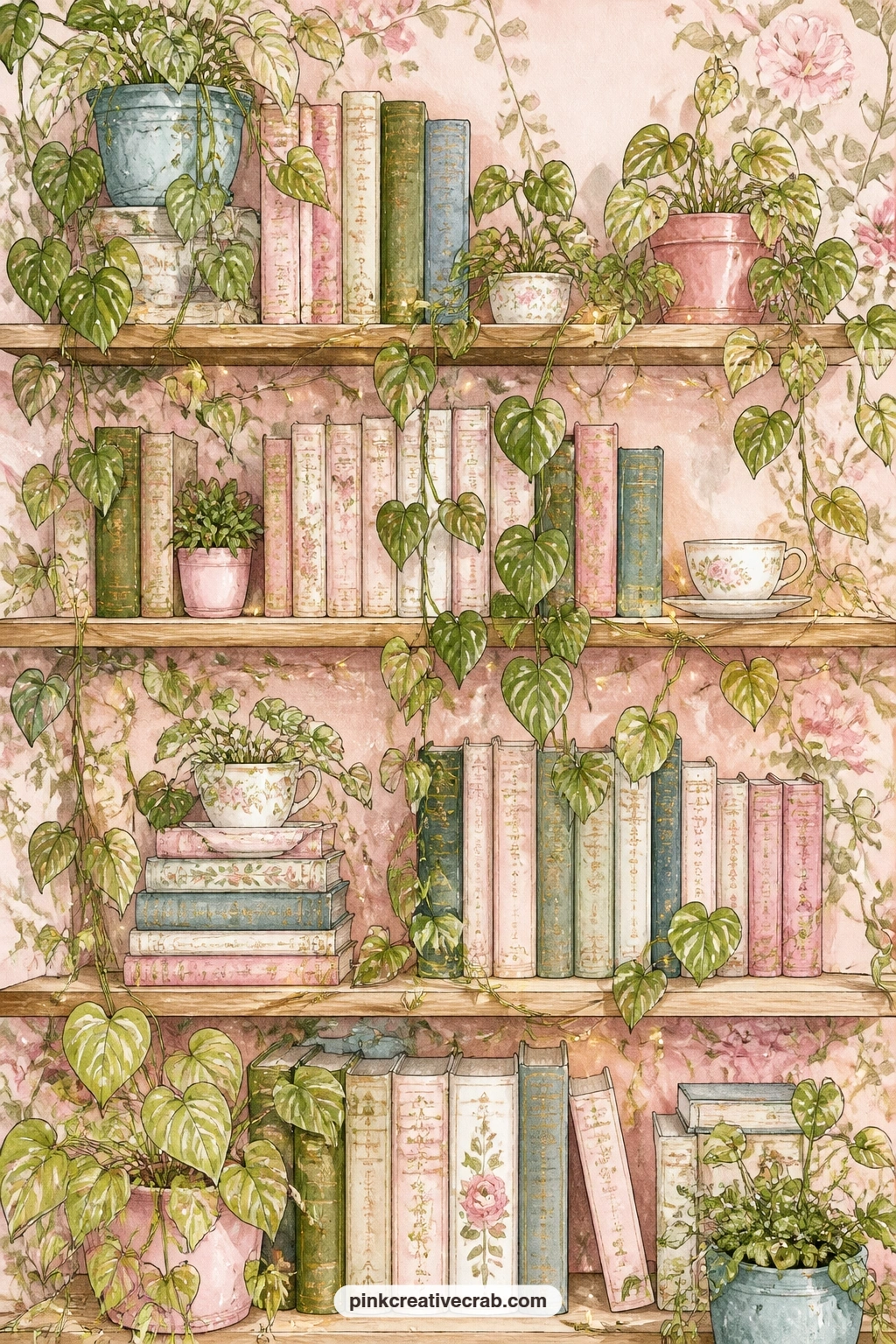
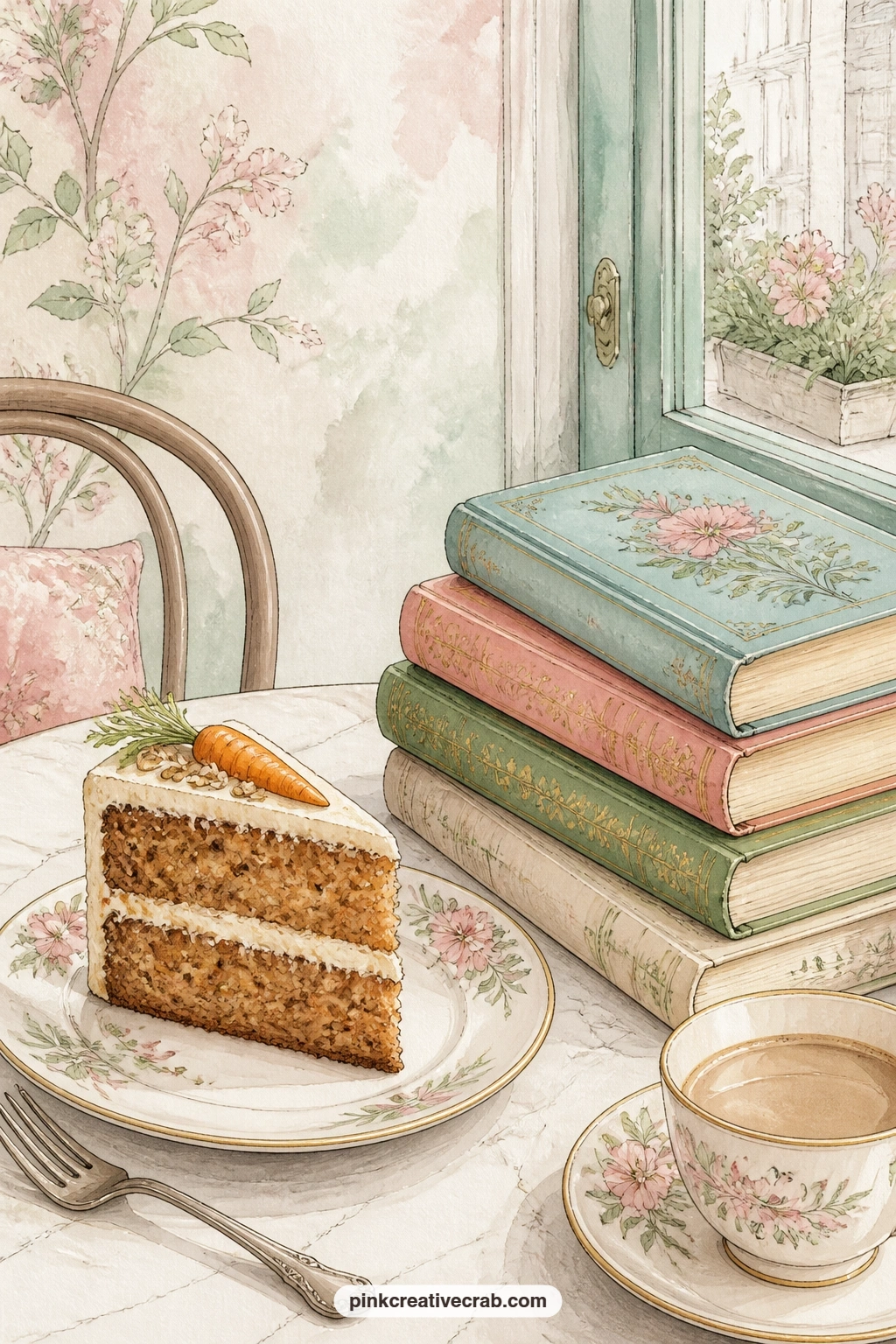
The usual slip with a cafe table page is crowding it with too many tiny crumbs and cups, which makes the slice of cake disappear.
Keep the cake the clear centre, add just two or three novels stacked beside it, and let the painted table and wall carry the rest of the quiet.
Jot the sound you imagine this bell makes, or the first line you would say to a customer walking through the door with it.
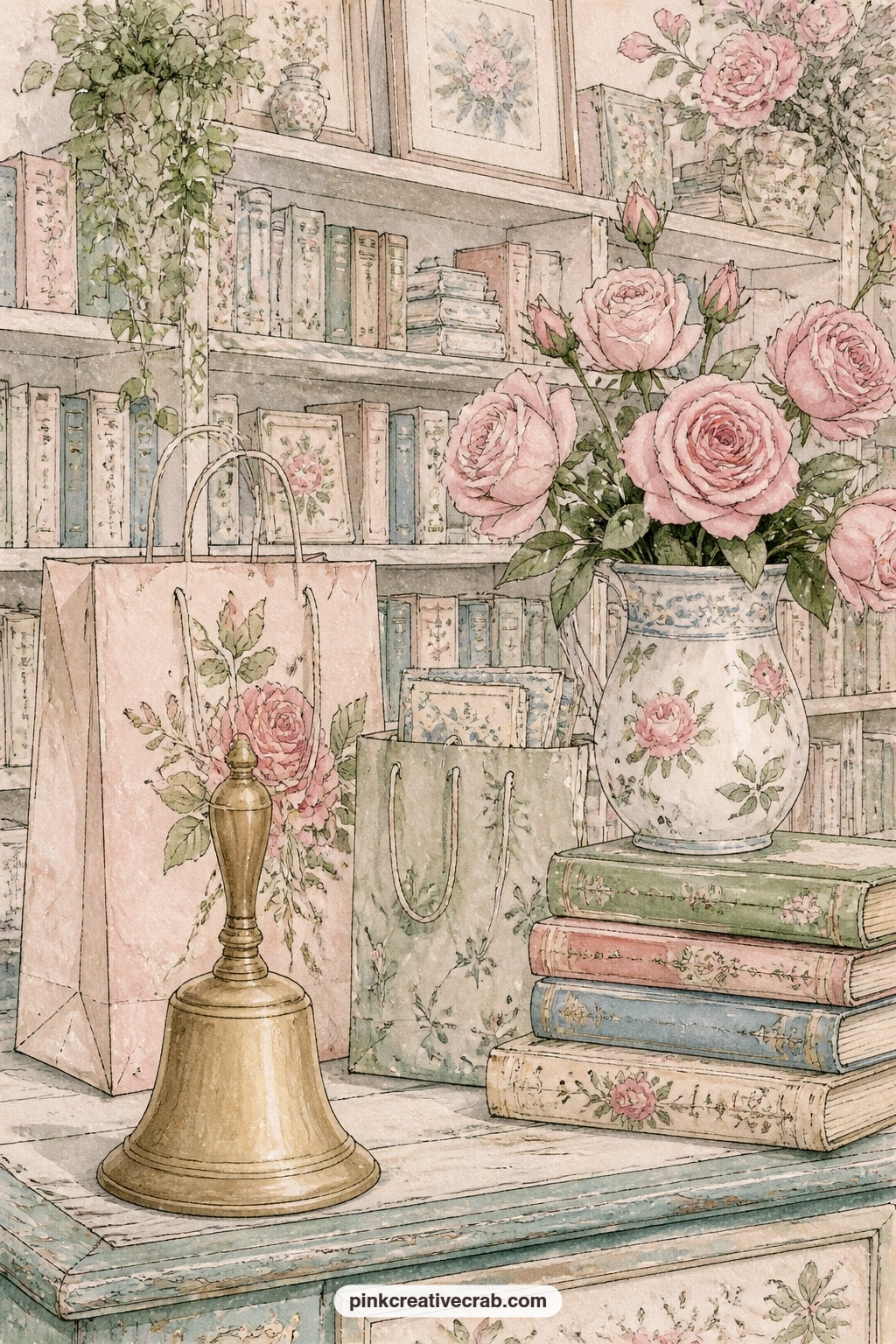
Five minutes is enough for the staircase and a few books on the lower steps, then come back later to fill every step if you want the fuller version.

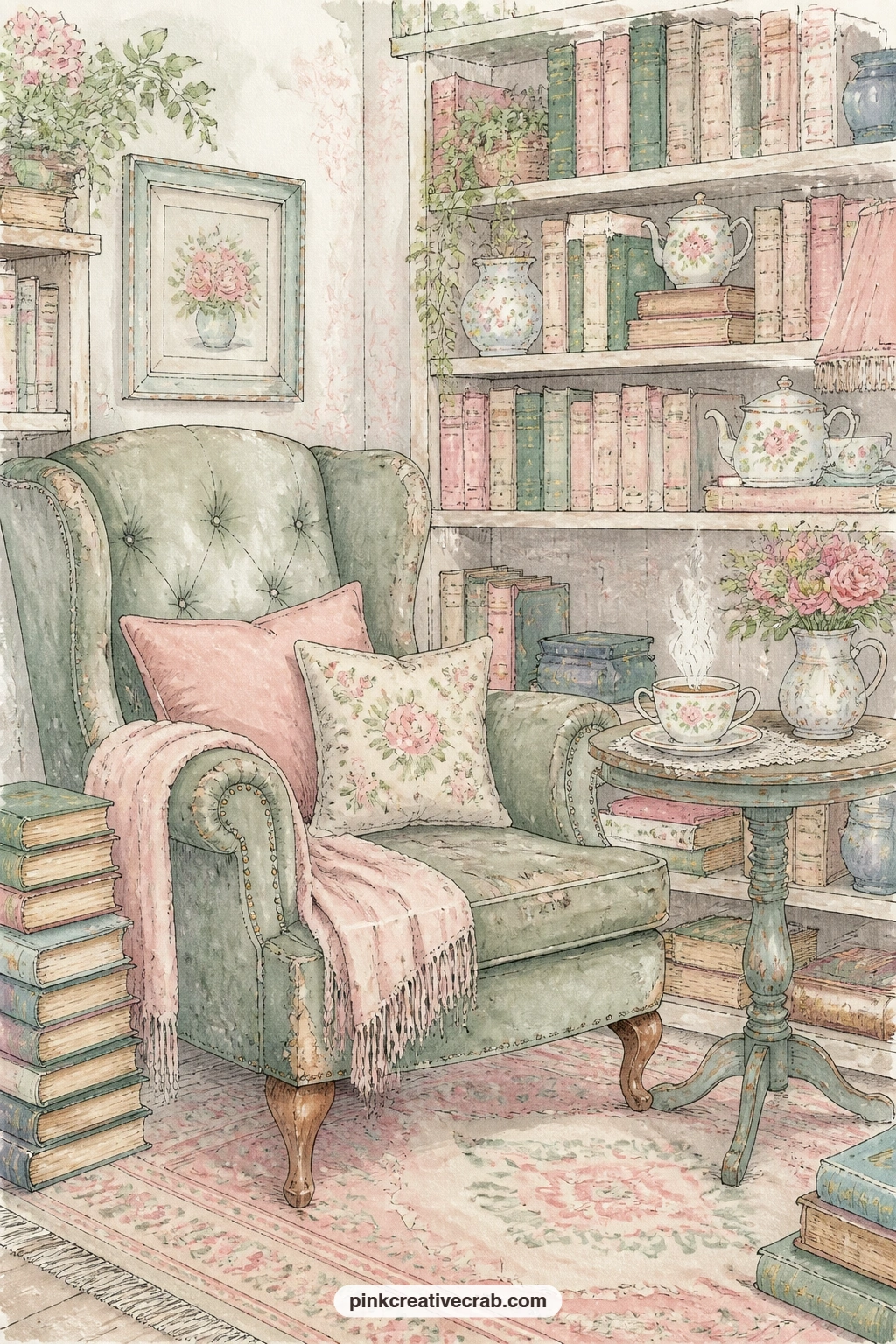
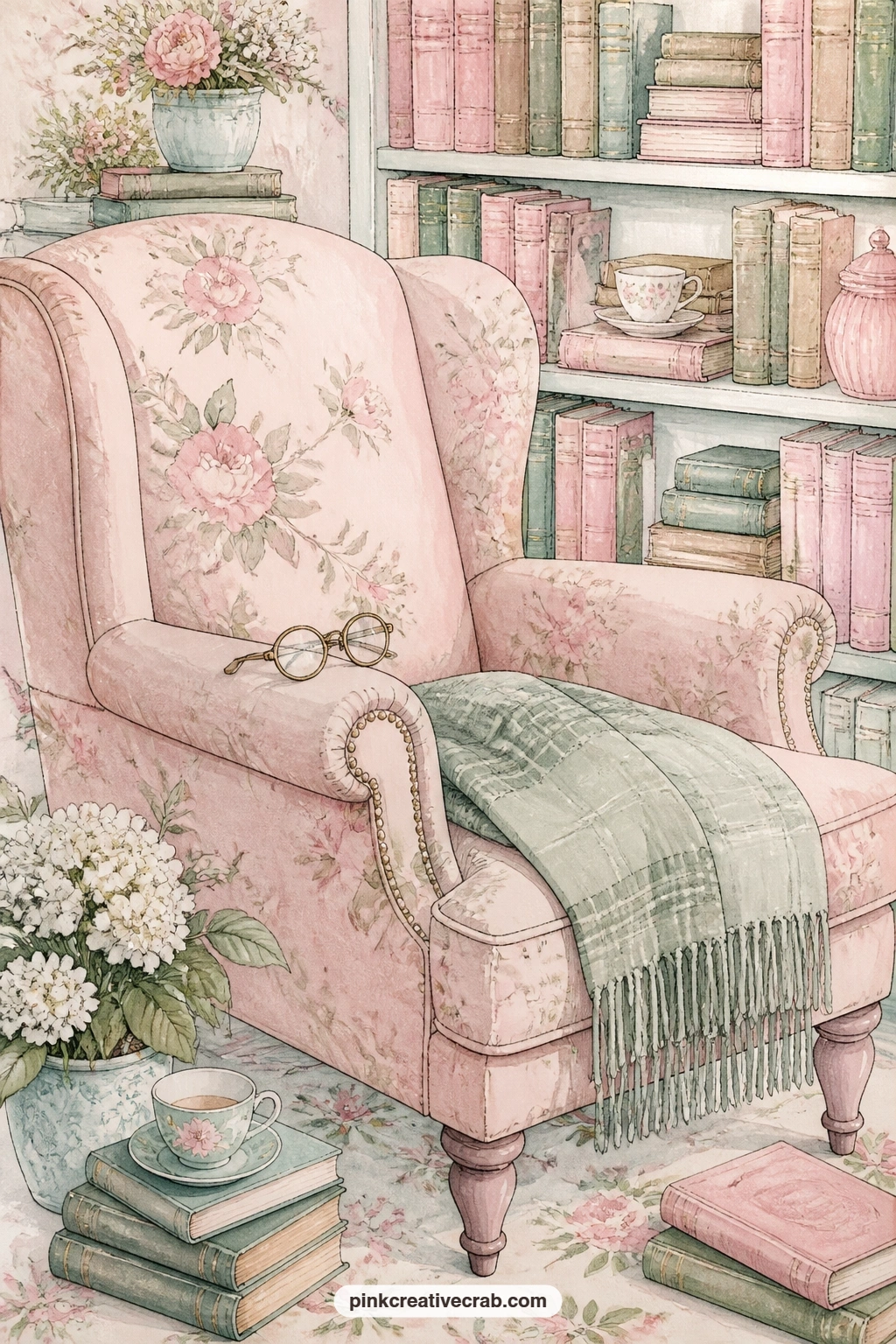
Pair this page with the lined cat and teacup page later in this set, using the armchair as the quiet half of a two-page reading spread.
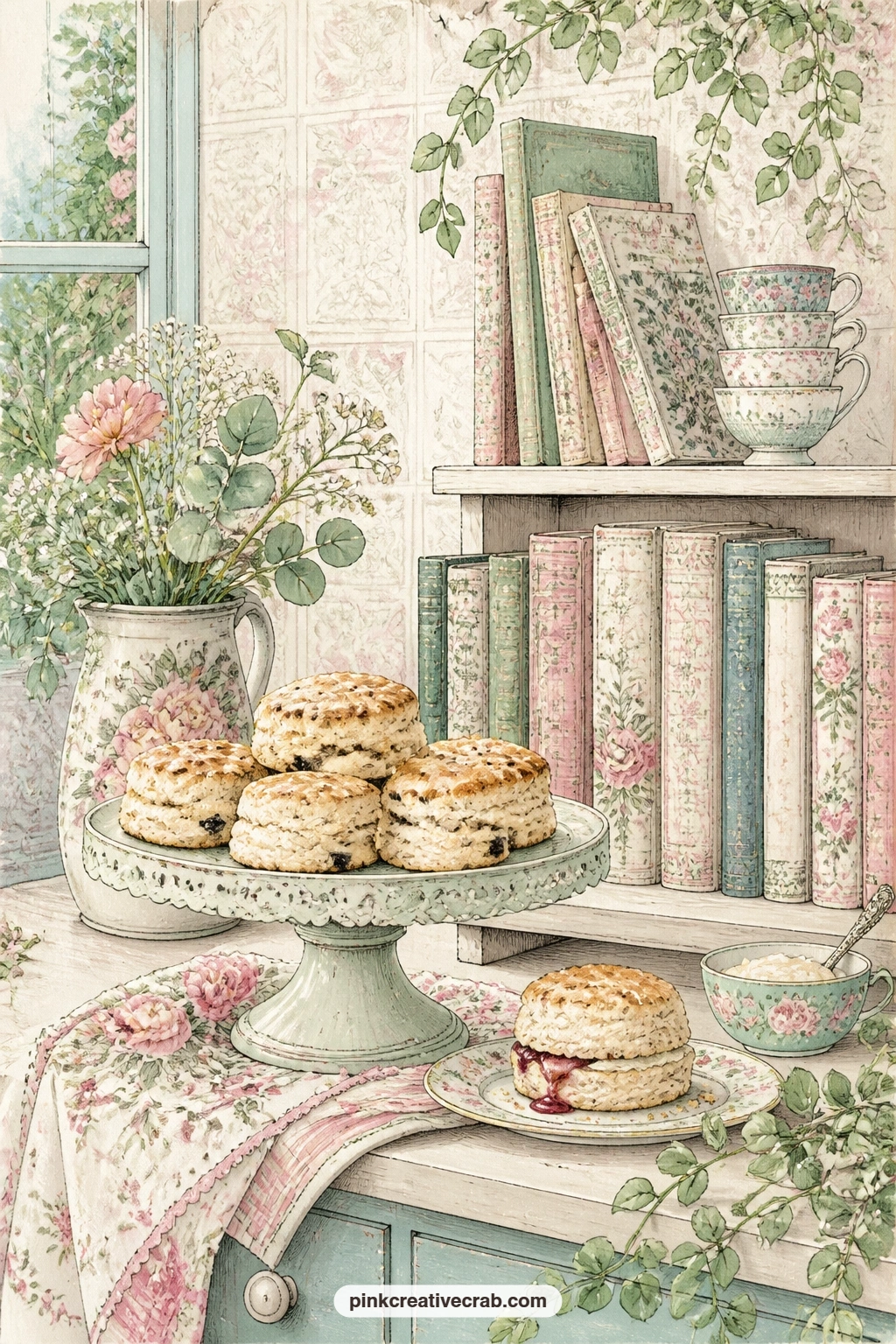
This page suits a friend who collects cookbooks more than she cooks from them, so let her write the recipe she keeps meaning to try beside the scones.
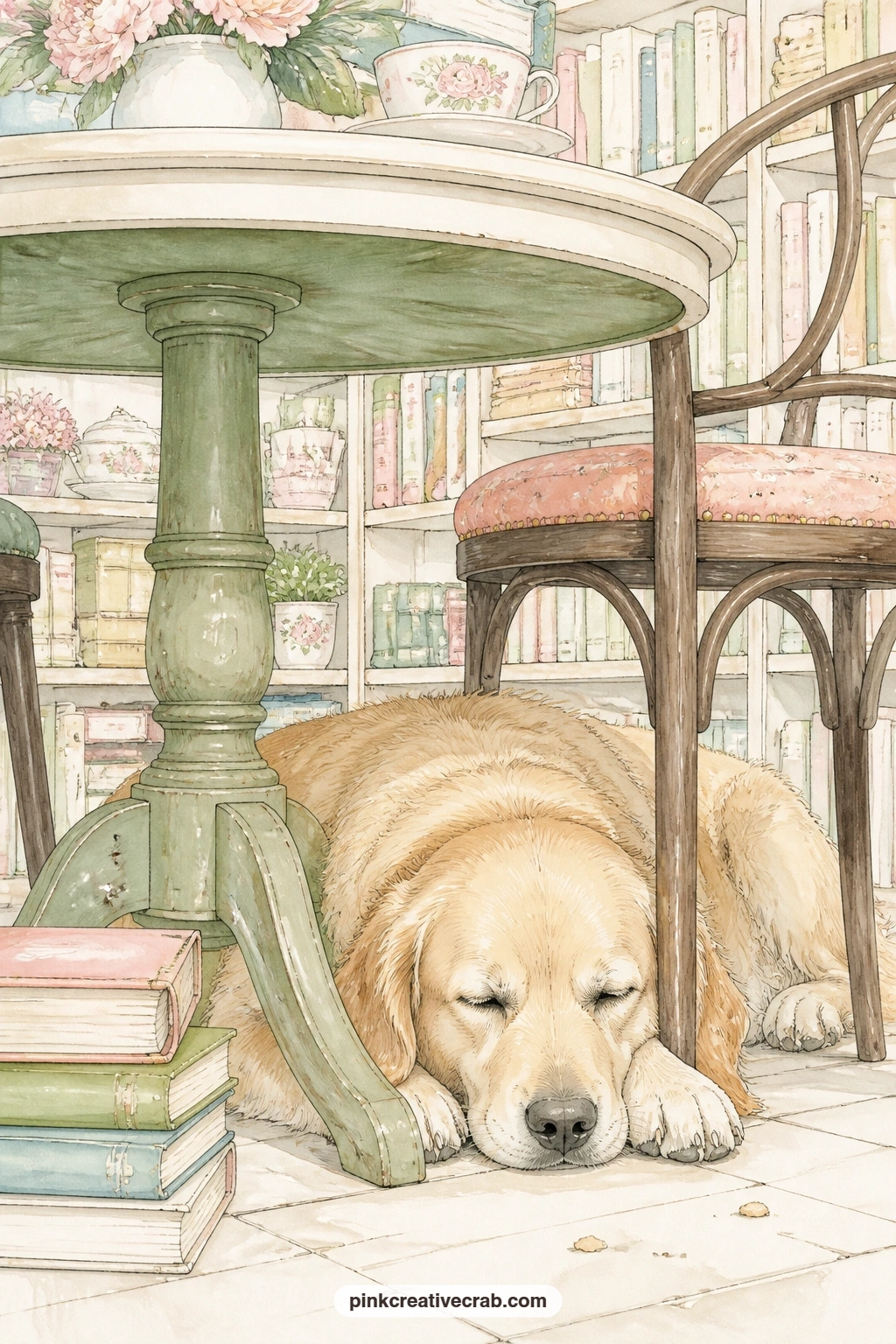
Tear the bottom edge of this page slightly before gluing it in, so the nap feels as soft and unhurried as the dog curled beneath the table.
Keep the entry here short and simple: what are you reading right now, and who would you want to share this pot of tea with over it?
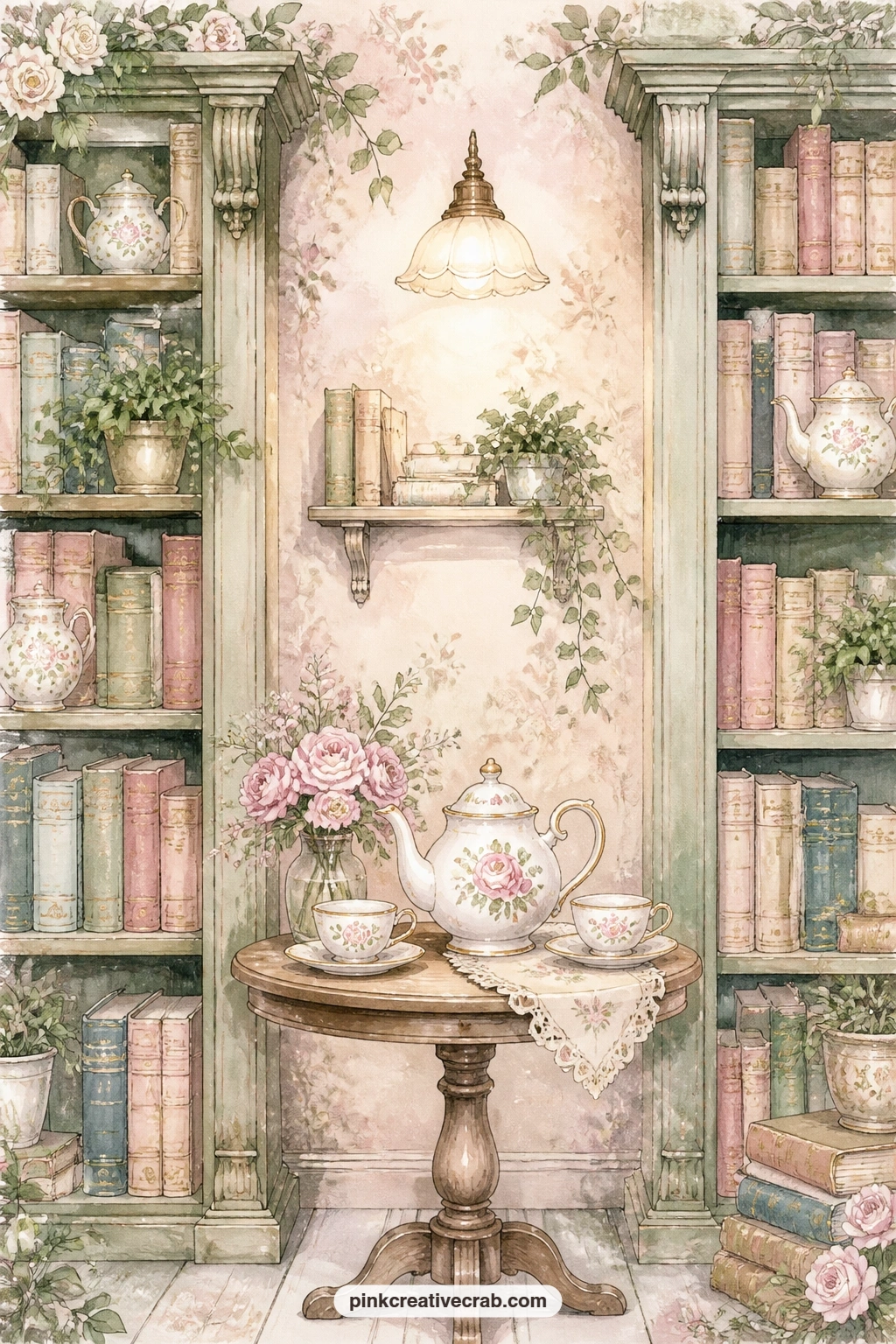
Background Papers
Use this pattern under a photo from a real bookshop visit, as the lining for a pocket page, or as the cover for the whole journal in this set’s soft palette.
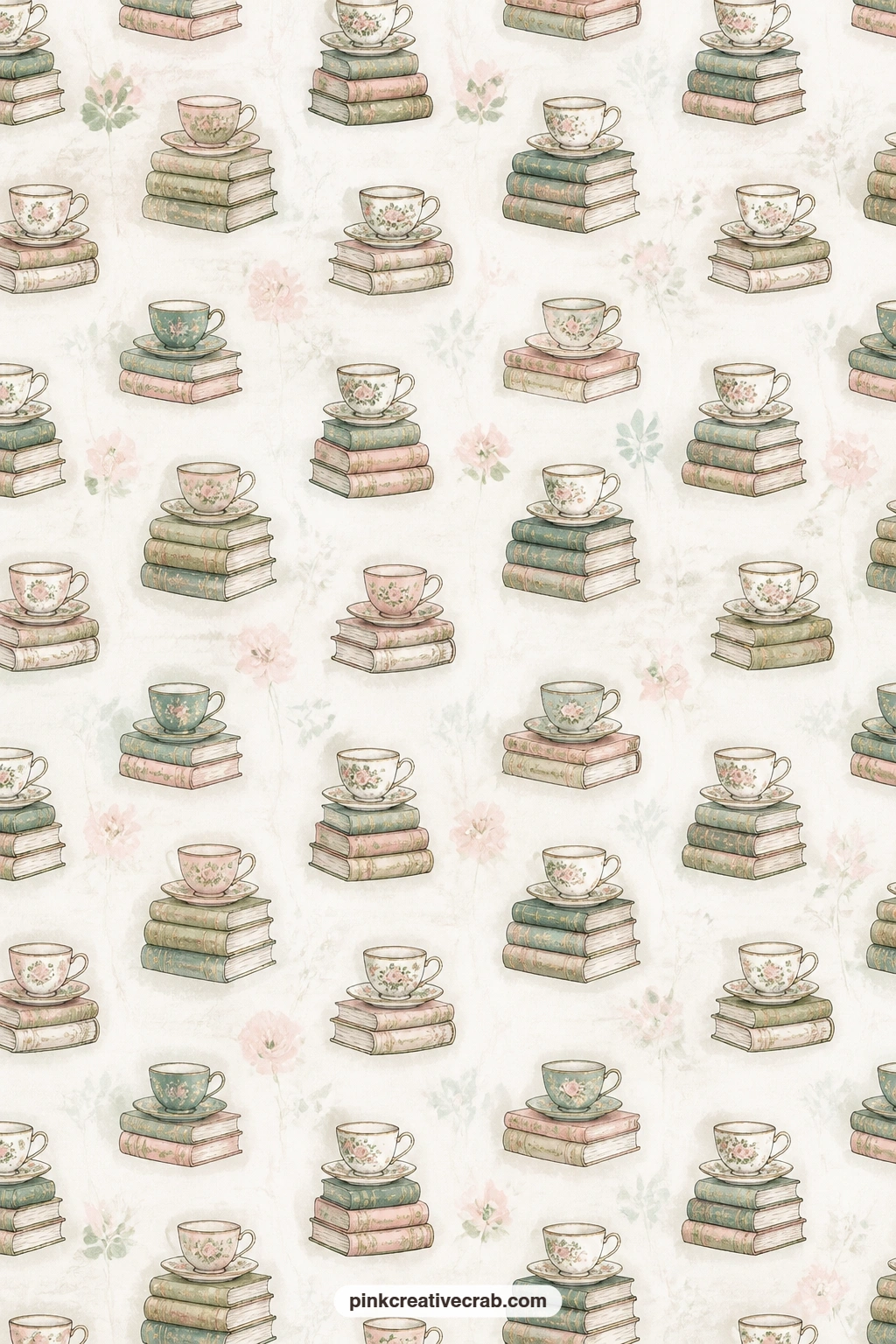
Slide this one behind a reading log entry, use it to line the inside cover, or cut it into strips for a border along the edge of a scene page.
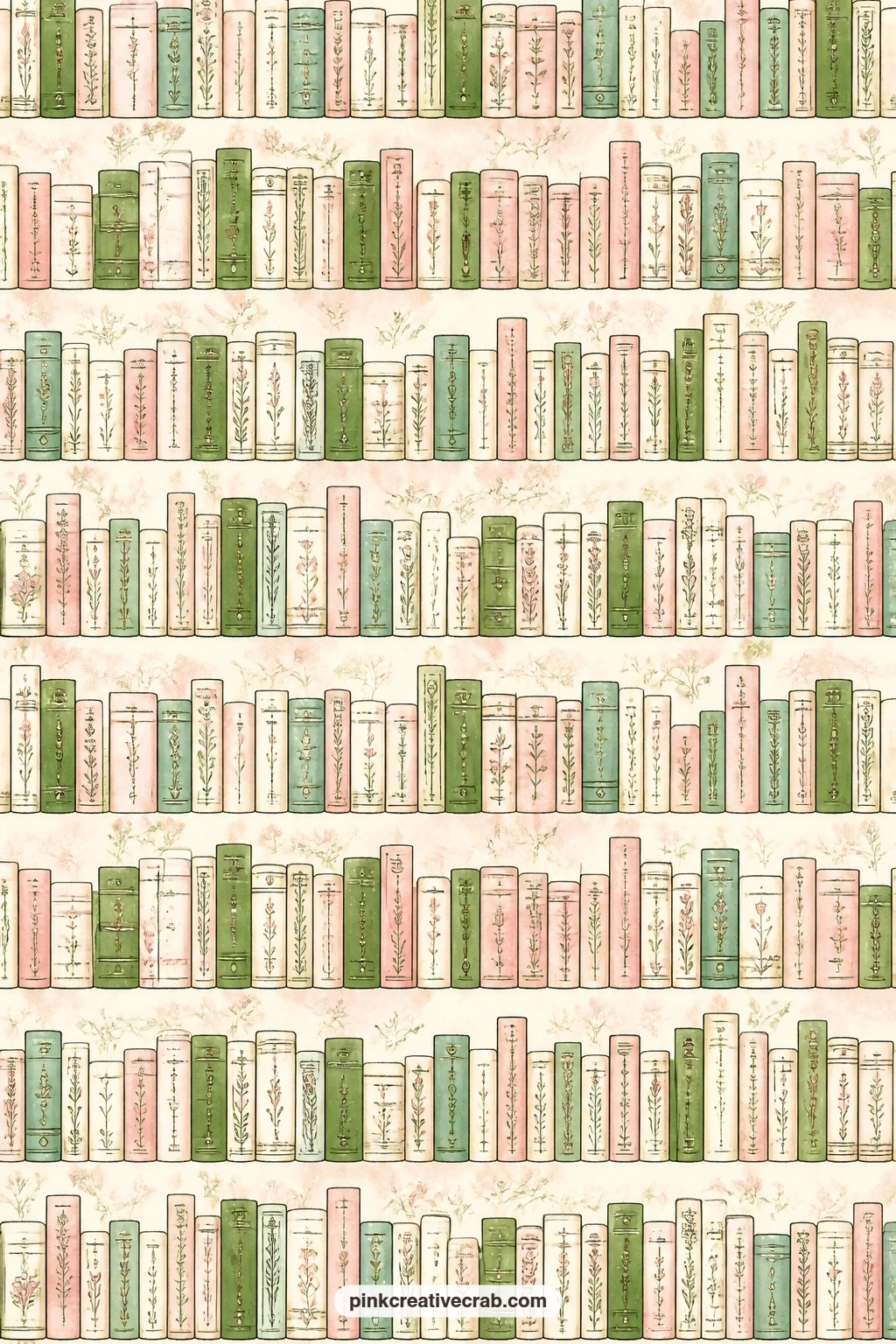
Set this behind the heart foam latte page for a matching spread, use it as a pocket lining, or wrap it round a small gift tucked inside the journal.
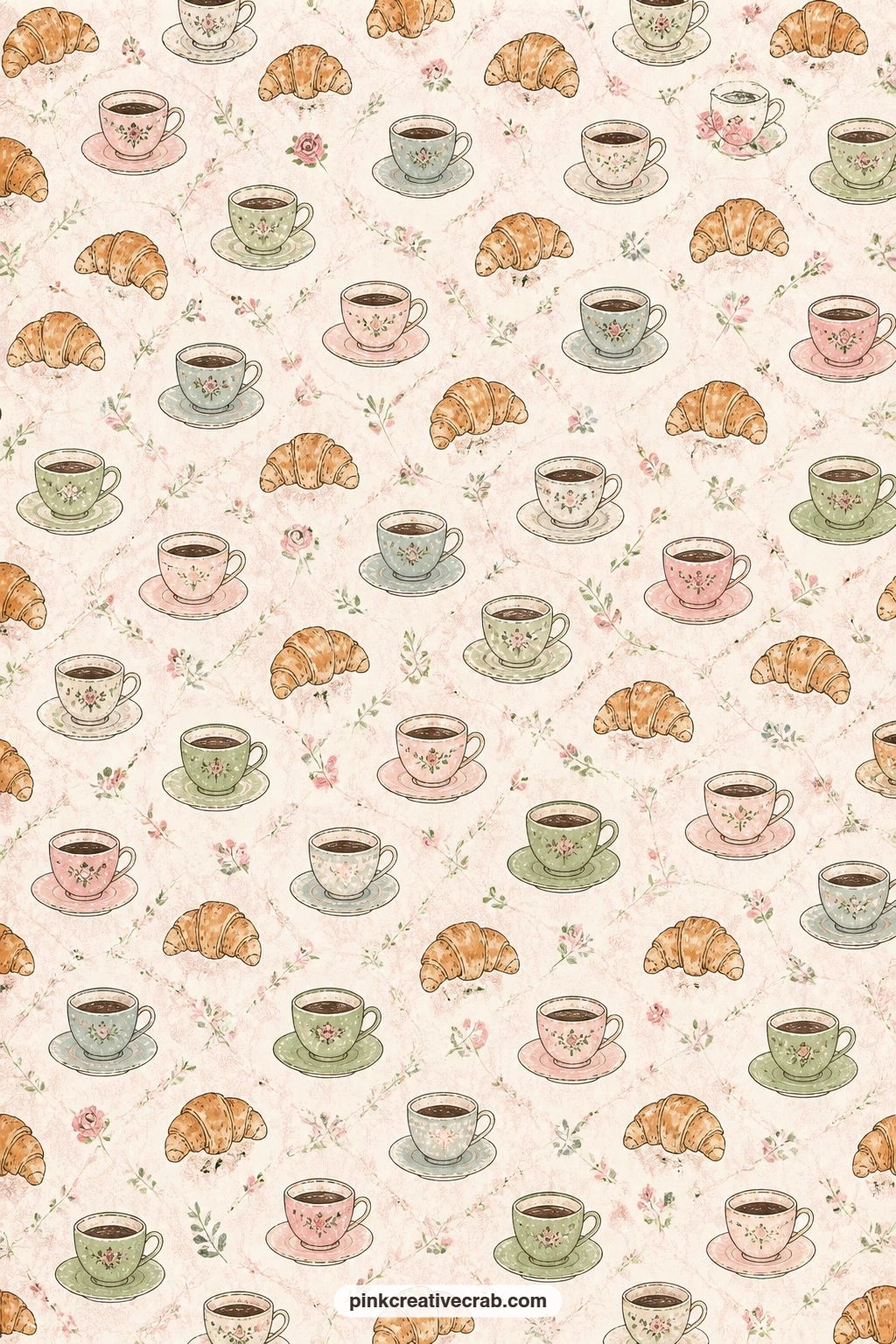
Try this behind the rolling ladder scene, as a cover wrap, or cut into tabs for dividing the journal into its different sections.
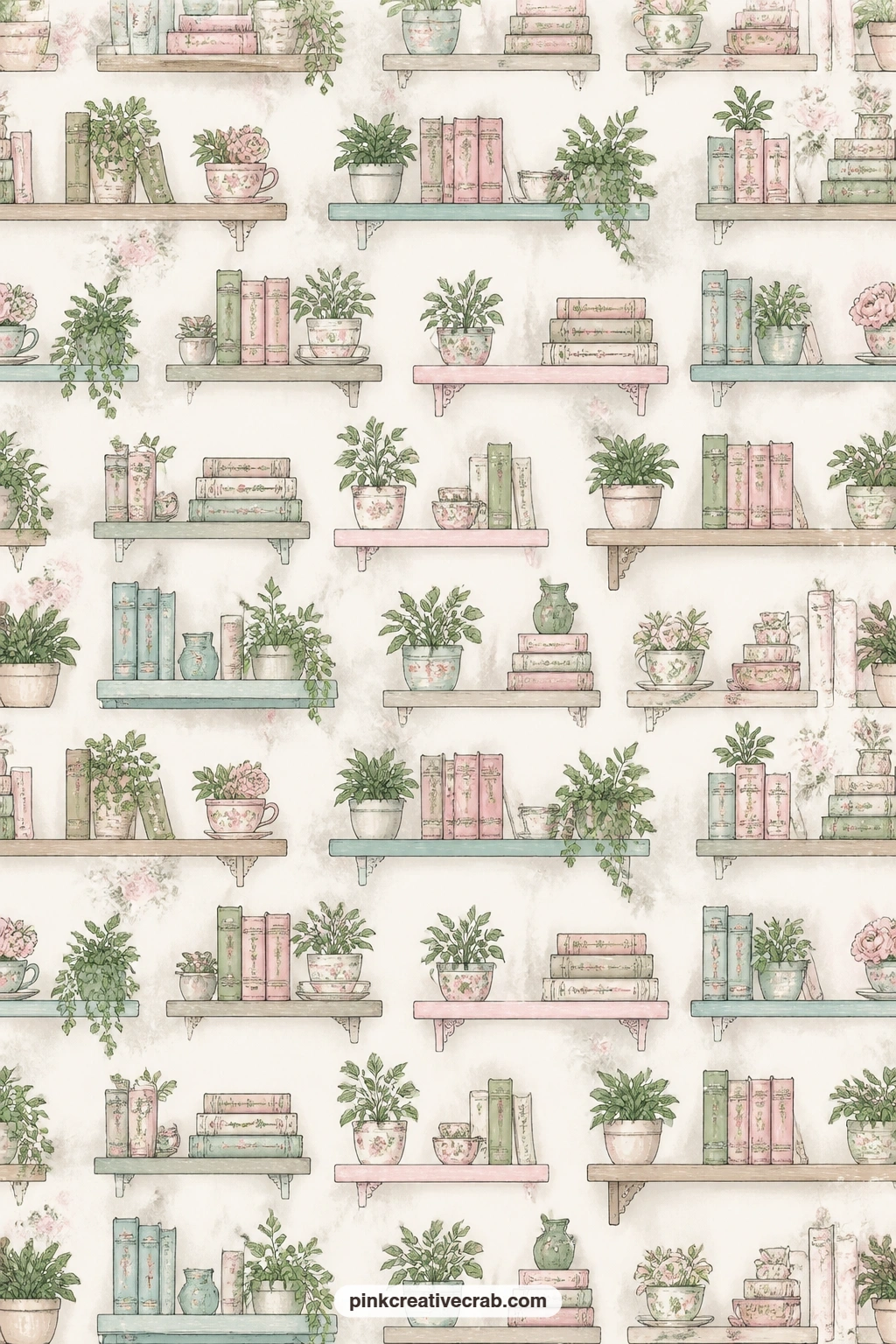
Lined Writing Pages
Use this page for a running list of titles to find next, a shelf you want to build one day, or notes on a book you finished and loved.
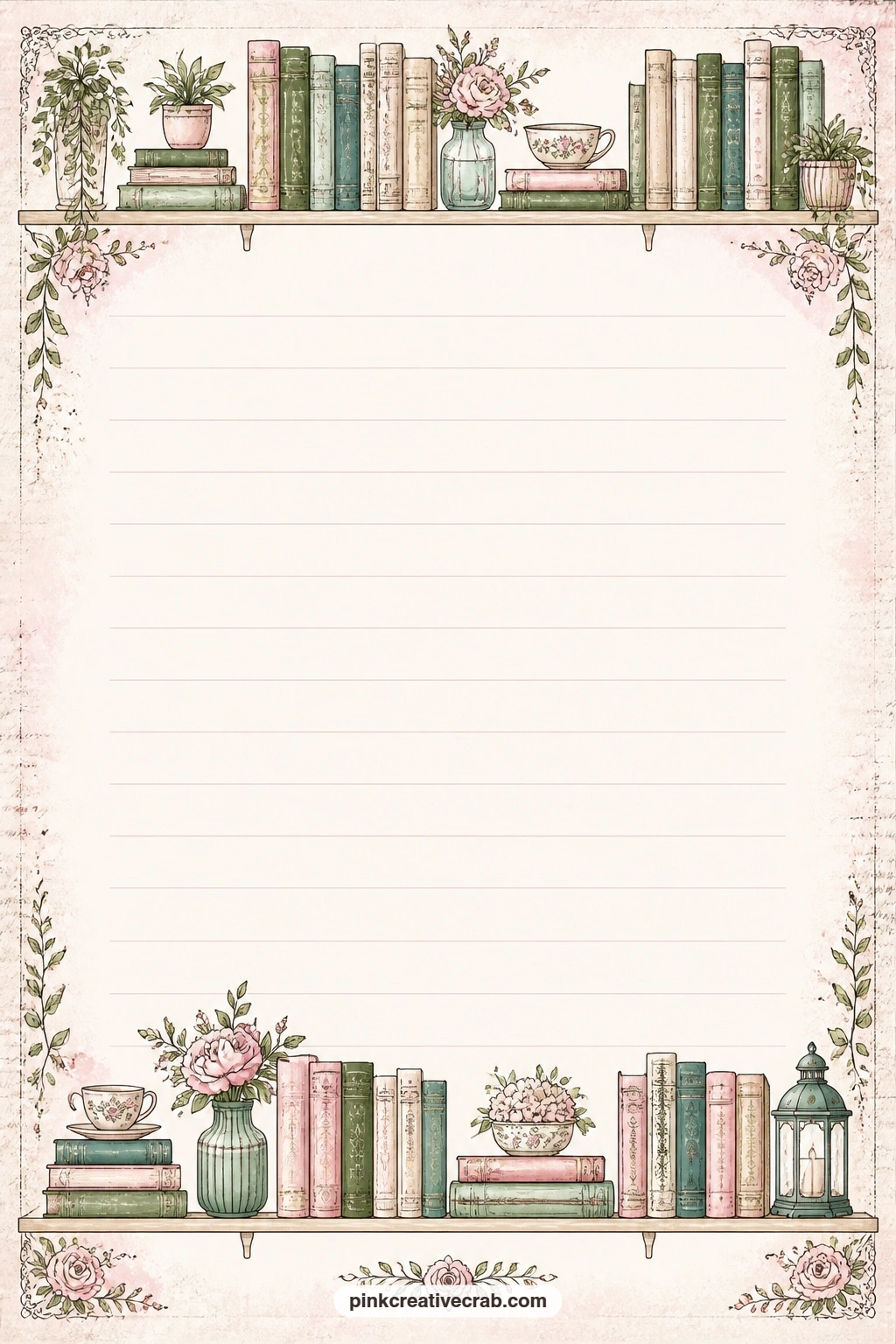
Write a short letter to next year here, a cafe order you always come back to, or the opening line of a book that stayed with you.
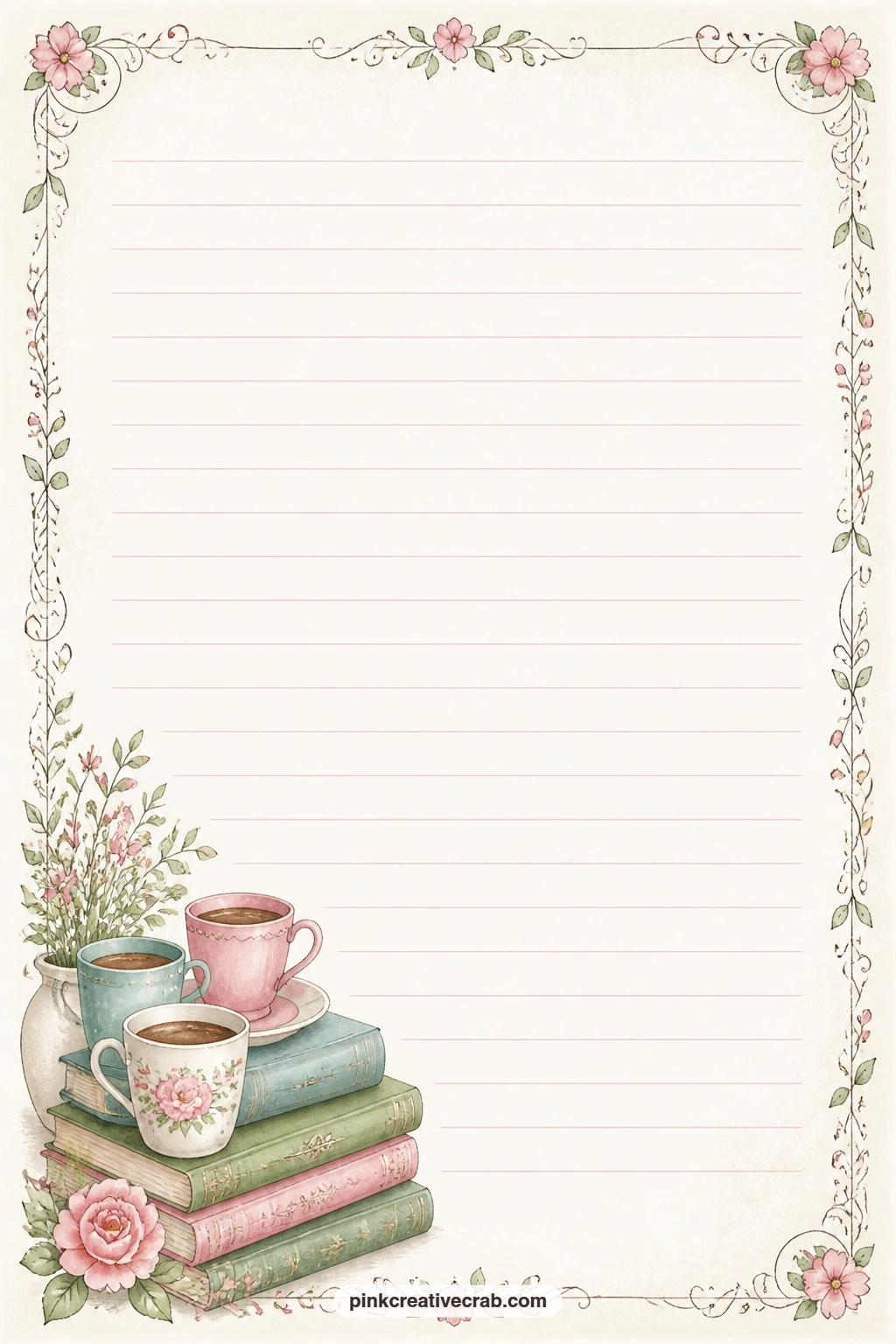
Try a gift list for the reader in your life, a menu for your own imagined cafe, or a short note about the last shop you wandered into.
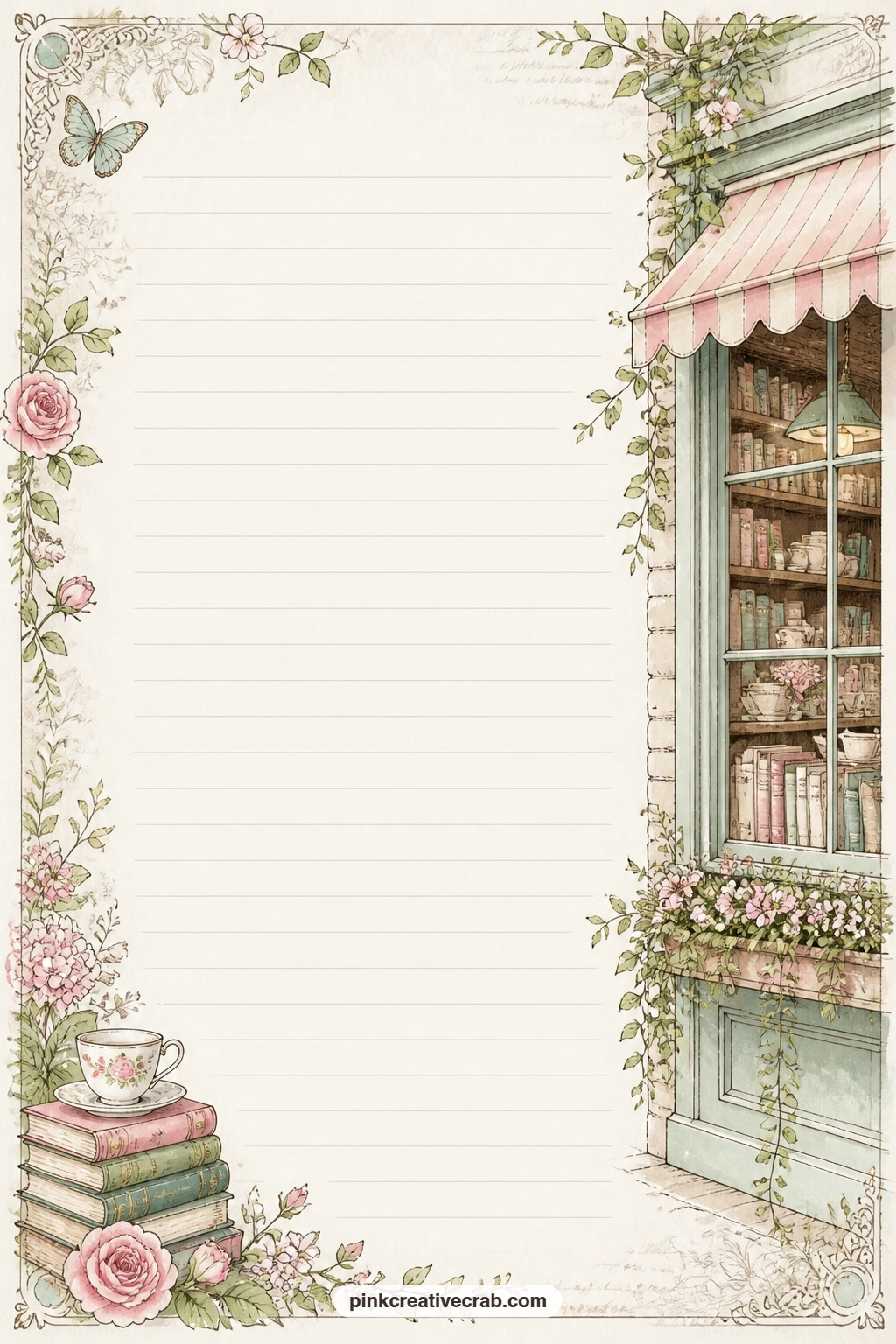
Use the space for a reading list for the season ahead, a note to the friend who lent you a favourite book, or a few lines about a quiet afternoon.
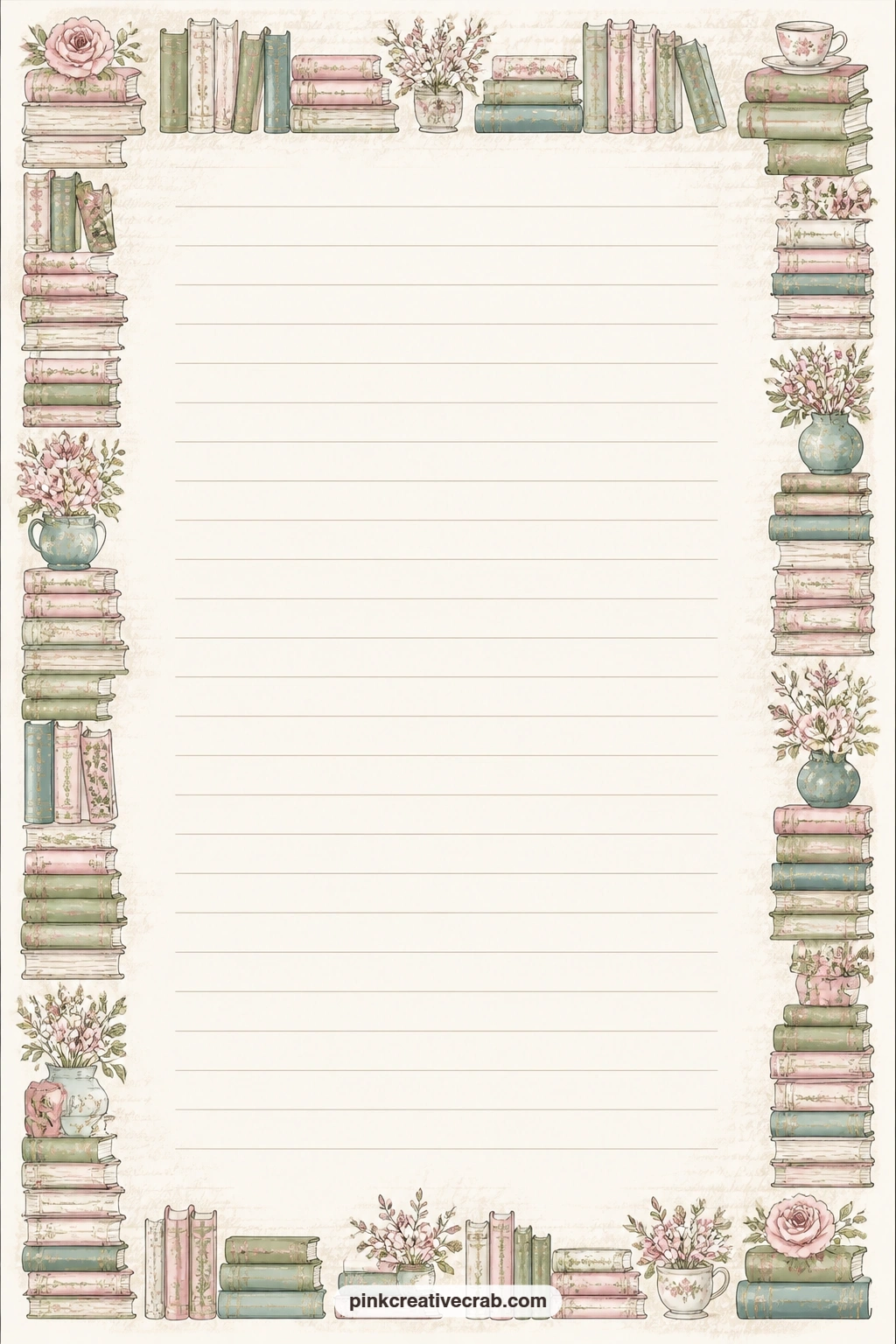
Write a letter to your future self about the book you are reading now, a wish list for the shop cat, or a short memory of a cozy afternoon.
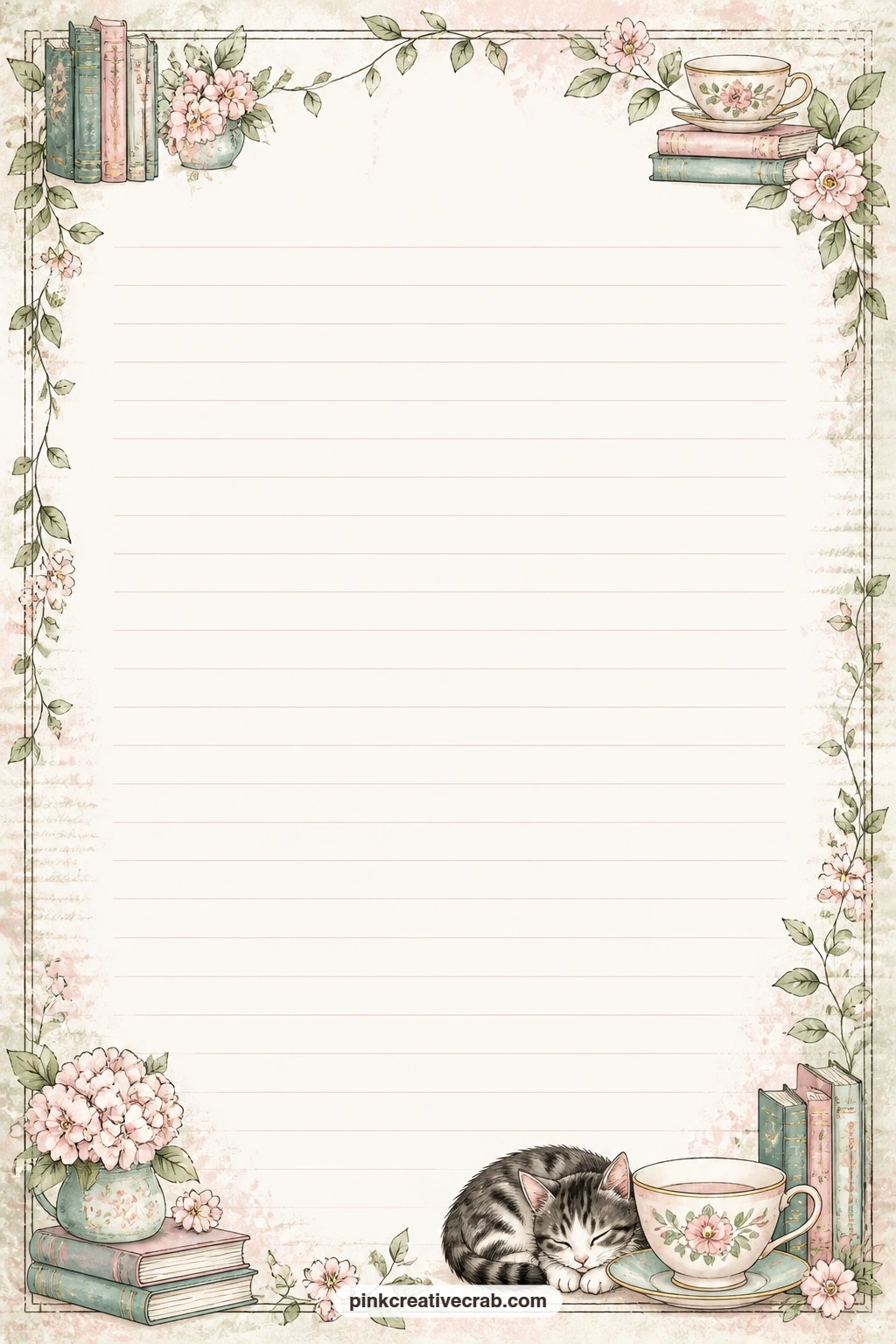
What to Do Next
Print the full set, trim each sheet to your journal size and start gluing from the cafe corner pages outward, pairing scenes with the backgrounds and lined pages as you go. For more reading-themed pages to mix in, take a look at the 29 Free Reading Log Junk Journal Pages for Book Lovers and Library Days, the 33 Free Coffee Junk Journal Pages for Slow Mornings and Corner Cafes, or the 31 Free Cat Junk Journal Pages and Ideas With Sunny Windowsills, Yarn Balls and Bookshop Naps.
Frequently Asked Questions
What paper works best for a bookshop junk journal?
Cardstock around 160 to 200gsm works best, since it holds ink and glue without curling or letting colour show through the back of each page.
What printer settings give the truest colour?
Set your printer to its best or photo quality setting and choose plain or matte photo paper in the print dialogue, which keeps the soft pastel palette looking clean rather than washed out.
What size should I print these pages at?
Print at standard A4 or US letter size and trim down afterward, since cutting to your journal’s exact size after printing wastes far less paper than guessing beforehand.
Do I need anything beyond paper and glue to finish the pages?
A glue stick and sharp scissors cover most of the assembly, while fine tip pens let you add your own journaling straight onto the lined pages and open corners of the scenes.
Can I colour or add to these pages myself?
Yes, the pages print in full colour and are ready to use as they are, though a few extra pen strokes or a wash of watercolour over the edges can personalise any page further.
Have any thoughts?
Share your reaction or leave a quick response — we’d love to hear what you think!
-
 0
-
0
-
0
-
0
-
0
-
0


