Random sketch ideas are the cure for a sketchbook that has sat closed on the shelf for a week. You do not need a theme or a plan, just one odd little picture at a time: a teapot on legs, a snail on the rim of a cup, a toaster with a sleepy face. Nothing here asks for a model or a trip outside, just the stuff already in your head and a pencil within reach.
Below are 36 small, funny subjects to fill a page each, built from ordinary objects doing things they have no business doing. Work through them in order if you like, from the simplest shapes to the fiddlier ones, or just flip down and pick whatever makes you smile first. Every one is sized to finish in a single sitting, so pick up a pencil and start wherever the page falls open.
Using these images: free for personal projects such as printing, coloring, cards, journals and gifts. Handmade items that include them may be sold up to 30 pieces per design. More than that is commercial use and is not permitted, and neither is selling or sharing the images themselves or passing them off as your own. Please ask before any other use.
Start the whole sketchbook off with a teapot walking on little legs, since its round body is the easiest shape on this list to get right first try. Block in the body as a soft circle with a flattened bottom, add the spout and handle, then the legs as two bent little sausages ending in round feet, almost like a bird’s.
Shade the belly of the teapot with a 2B pencil in smooth circular strokes, darkest where it curves away from the light, leaving a bright streak of white paper for the shine. If the roundness goes lumpy, soften it with a blending stump in one direction only, following the curve rather than scrubbing across it.
The usual mistake is making the legs too short to look like they are mid-stride. Lift one foot slightly off the ground line and tilt the body a touch forward, which reads as walking instantly even with simple shapes.
No blending stump on hand works too, a cotton bud does the same smoothing job in a pinch.
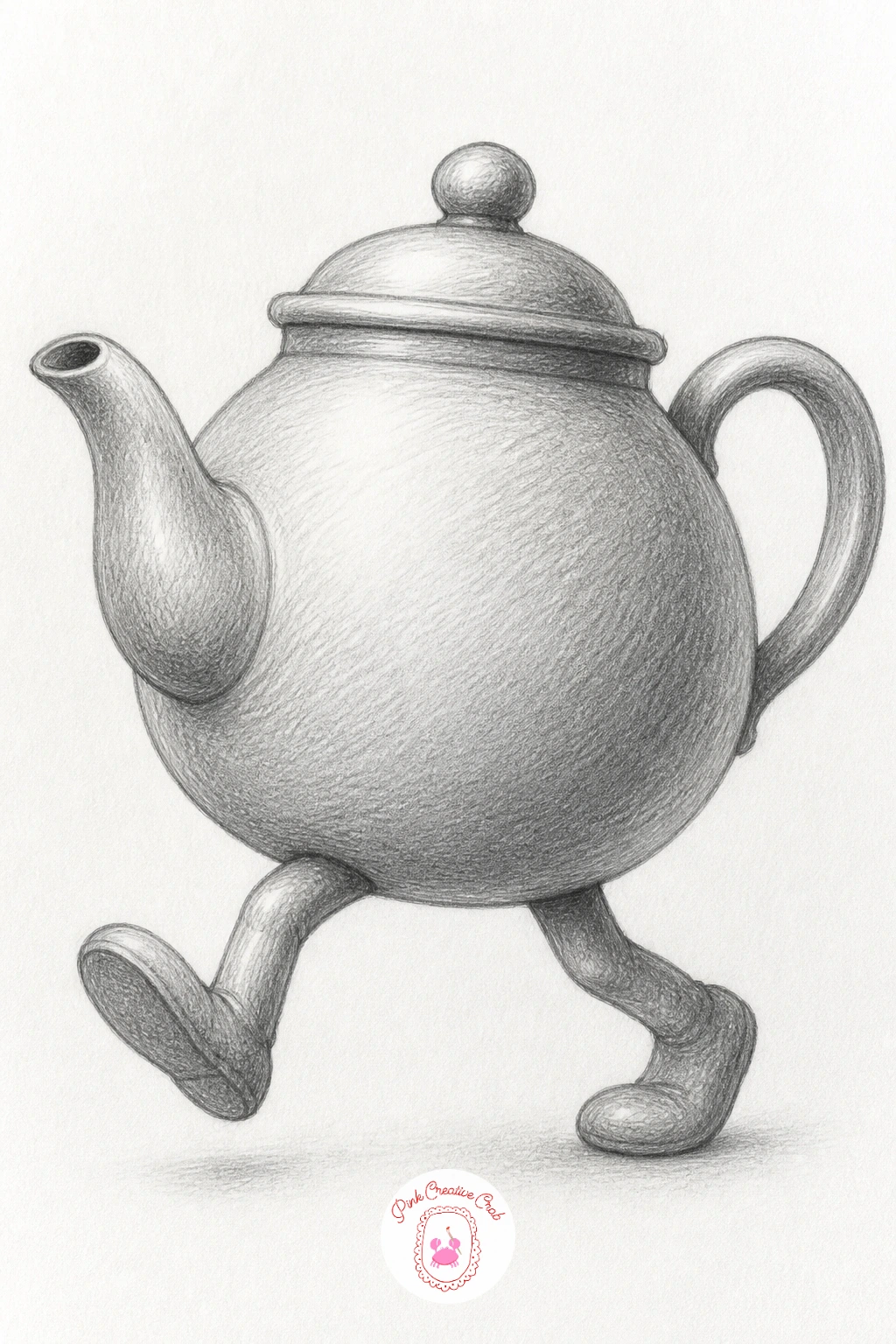
Palette: Graphite Grey,Charcoal Black,Paper White
Follow the teapot with something flatter and more linear: a single key tied on a long silk ribbon that trails and loops across the page. Draw the key first, an old-fashioned shape with a round bow, a thin shaft and a few notched teeth, then let the ribbon spill out from the bow in soft curves.
Compare the ribbon’s width to the key’s bow before you commit to the loops. Keeping the ribbon a consistent width as it twists and folds is what sells the silk, so measure it against the key rather than guessing freehand each turn.
Shade the key with firm, even pencil strokes so it reads as cold metal, then shade the ribbon much lighter with soft sweeps that follow each curve, leaving thin white highlight lines along the fold edges. This contrast between hard metal and soft fabric is the whole charm of the piece.
If the ribbon loops start looking tangled instead of elegant, simplify to two or three long sweeping curves rather than many short ones.
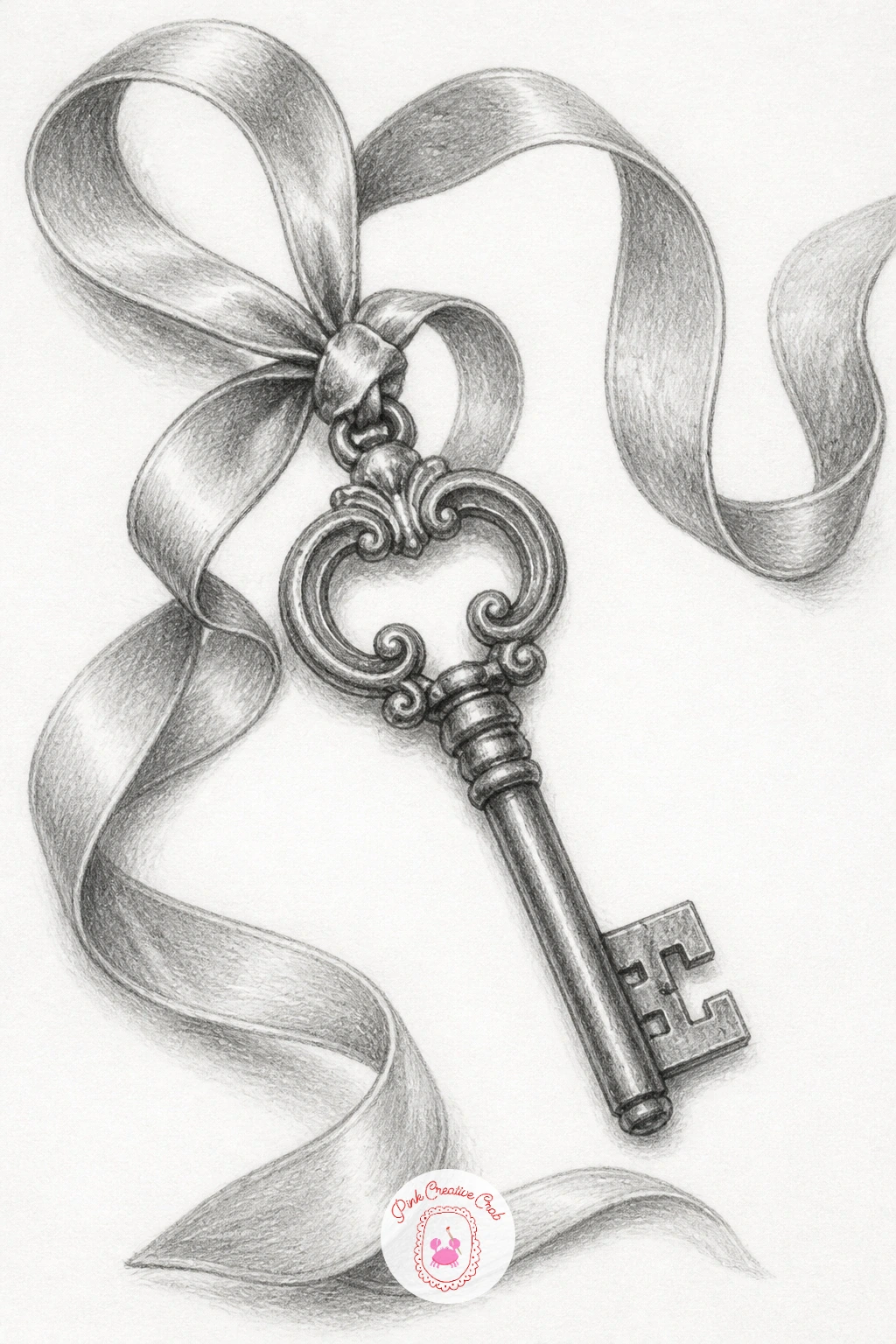
Palette: Graphite Grey,Soft Silver,Paper White
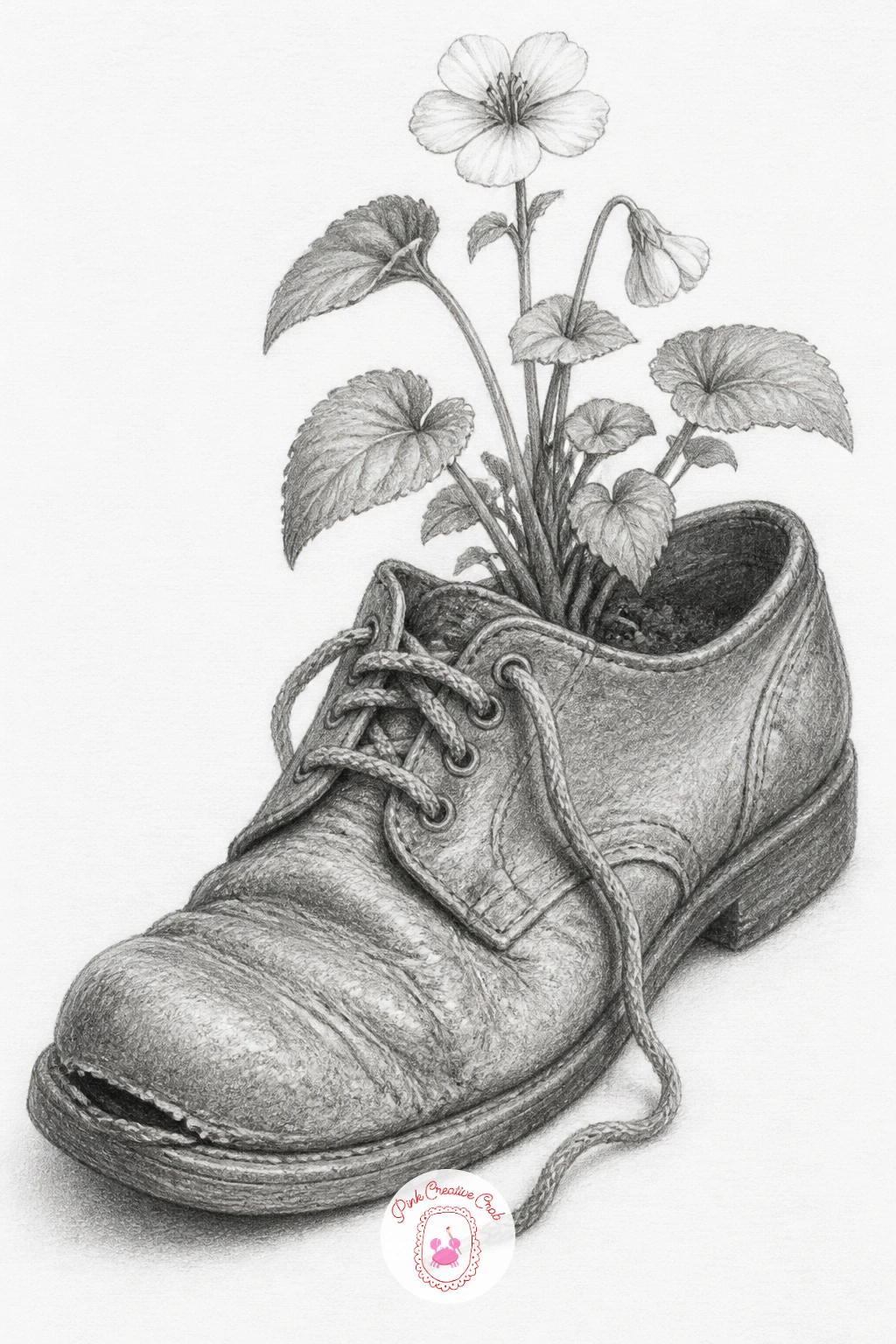
An old shoe with a plant growing out of it is a nice next step since it mixes a stiff man-made shape with a loose organic one. Sketch the shoe first as a worn leather boot or loafer, with a few creases at the toe and a slightly curled sole, then let a cluster of leaves and one small flower sprout from the opening where a foot would go.
Work the shoe’s leather with mid-tone shading and small hatched lines along the creases to suggest age and wear, then switch to a lighter touch for the leaves, letting the pencil barely skim the paper so they read as soft and fresh against the tired old shoe.
Where this one usually goes wrong is balance: if the plant is too small, the shoe just looks dirty rather than charming. Let at least one leaf arc up higher than the shoe itself.
Swap a boot for a sneaker if laces are easier for you to draw than leather creases, the idea works just as well.
Palette: Warm Sepia,Leaf Green Grey,Paper White
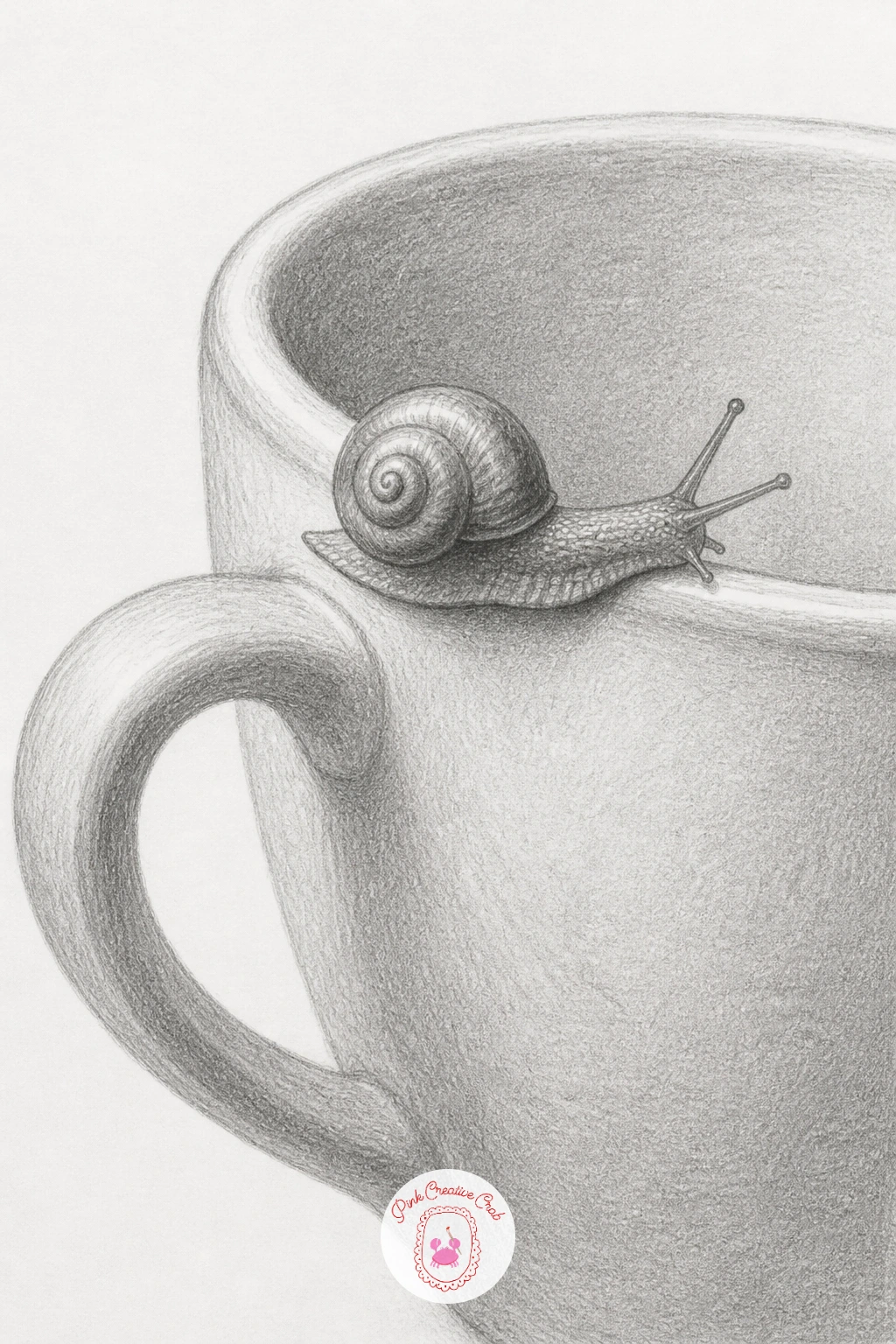
Draw the cup first for this one, a simple rounded mug with a handle, then perch a snail right along its rim as though it is mid-journey around the edge. The snail’s shell is the fun part: start with a spiral guideline before you commit to the shading, so the coil winds in on itself convincingly rather than looking like a flat swirl.
Measure the snail’s body length against the width of the cup’s rim before drawing it in, since a snail even half the size of the handle will look wrong the moment it is finished. Keep the body small and the shell slightly larger in proportion.
Shade the shell in gradual bands that follow the spiral, darkest at the inner coil, and leave the cup mostly light with just a curved shadow underneath to seat it on a surface. A damp cotton bud can soften any shell band that shades too harshly.
If you want more of these slow little travelers afterward, there is a whole snail painting list worth a look.
Palette: Graphite Grey,Warm Taupe,Paper White
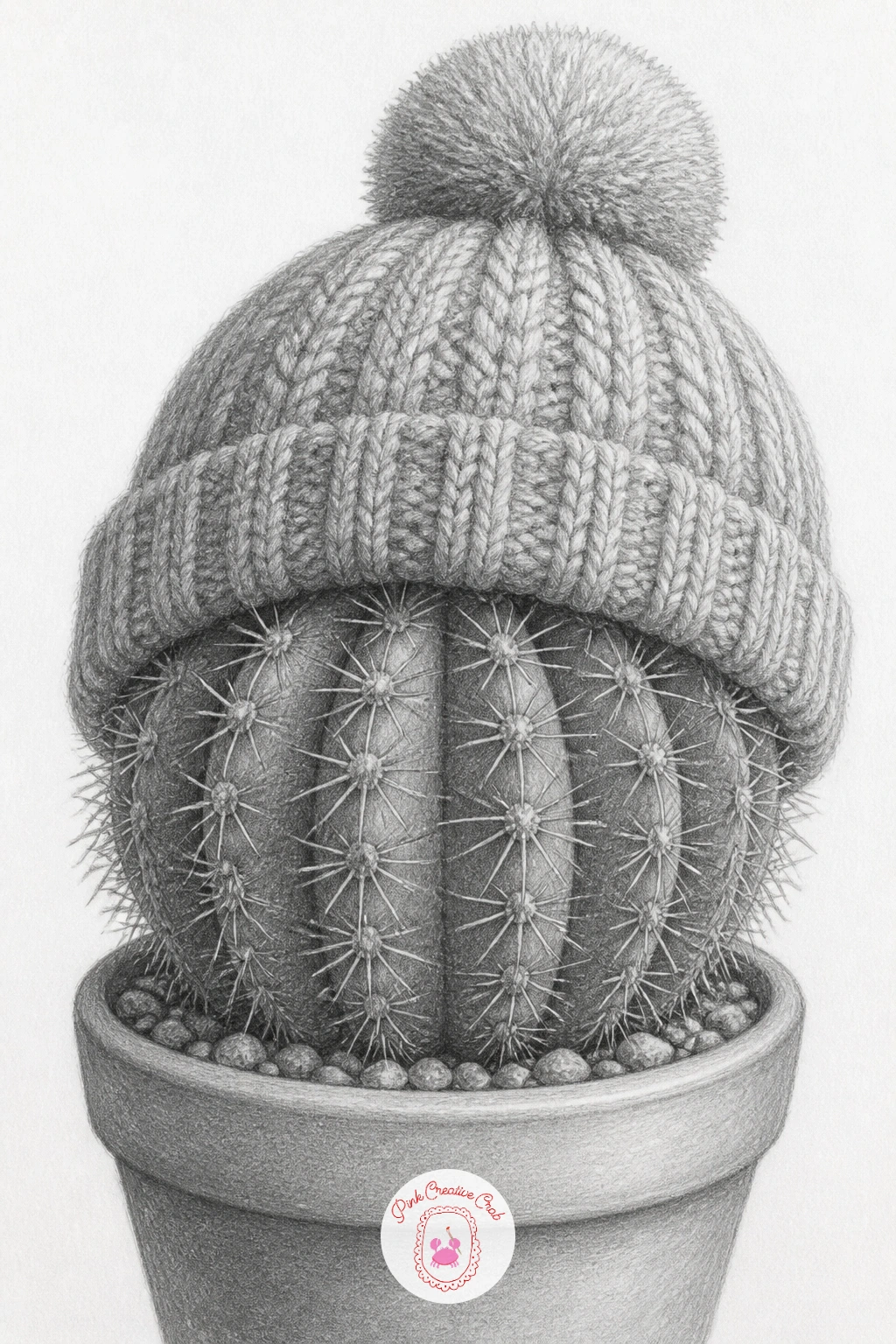
A cactus wearing a knitted hat gives you a good excuse to practice a repeating pattern without it feeling tedious. Block the cactus in as a simple rounded barrel shape with vertical ribs, sitting in a small plain pot, then design the hat as a loose dome with a pompom on top, pulled slightly over where the spines poke through.
Shade the cactus body in smooth bands between each rib line, keeping one side lighter to suggest the round form catching light from one direction. Add the hat’s knit texture with short, evenly spaced diagonal strokes in rows, which reads as ribbed wool far better than scribbling.
The pompom is the easy place to lose the whole drawing if it is overworked, so keep it a loose circle of short curved strokes radiating outward and stop before it gets fussy.
No pot handy to copy from, a plain terracotta triangle shape works fine, it just needs a rim line near the top.
Palette: Sage Green,Warm Grey,Terracotta
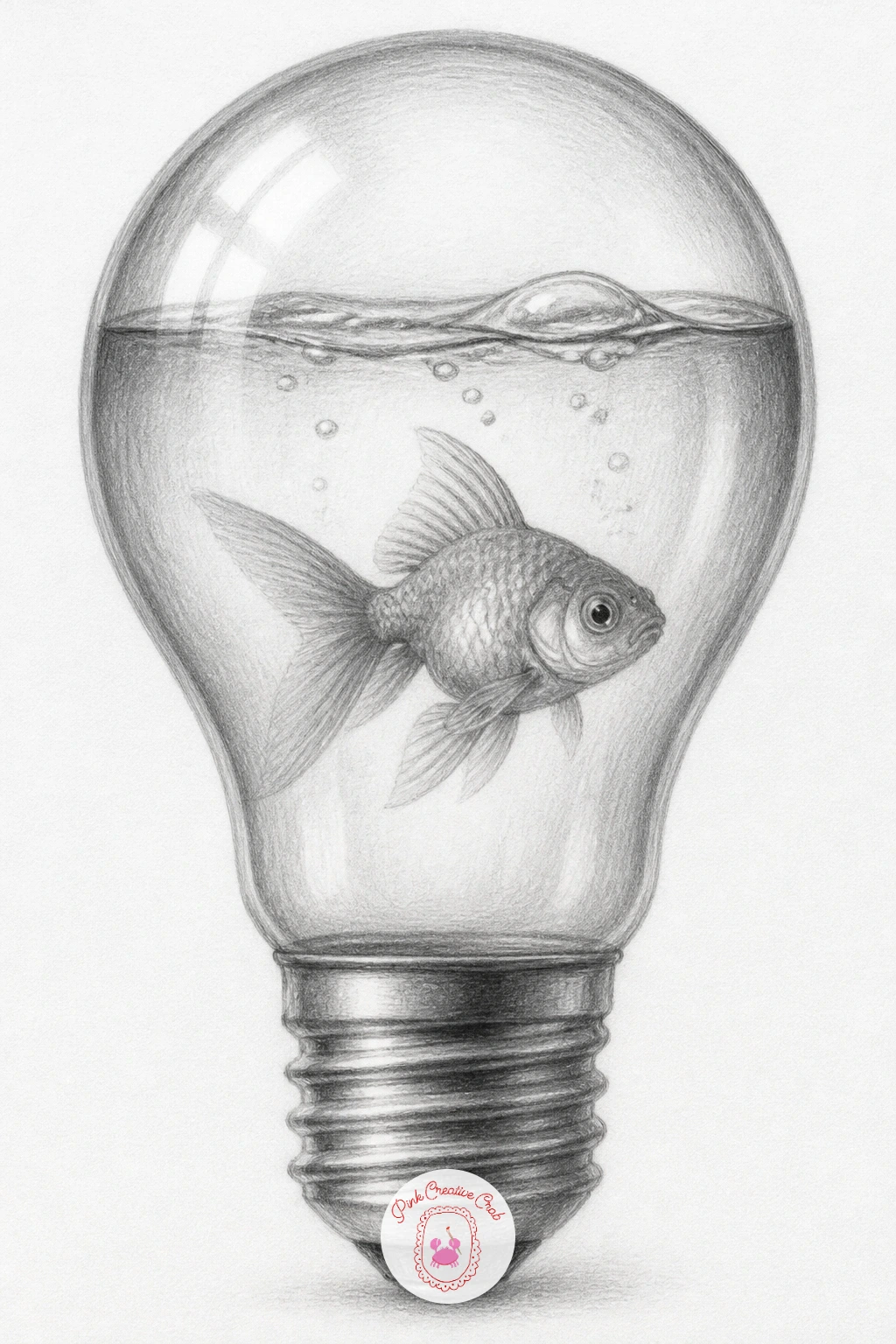
Keep the odd logic going with a goldfish swimming inside a light bulb, water and all. Draw the bulb’s glass shape first with a light, confident outline, then decide where the eye level sits: looking at the bulb slightly from below makes the glass curve read rounder and the fish inside feel like it is floating higher up, which suits this idea nicely.
Shade the glass with very light, even tone and leave two or three sharp white highlight streaks untouched to suggest reflection, since glass reads as glass mostly through what you leave blank. The fish sits darker and more defined inside, with a few curved lines around it suggesting the water line and a bubble or two drifting up.
It is easy to overshade the glass until it looks solid instead of transparent, so step back often and compare it to the white of the page around it.
If the bulb’s screw-thread base feels fiddly, simplify it to three or four horizontal ridge lines, no one will count them.
Palette: Graphite Grey,Soft Silver,Paper White
Try the bulb from a slightly higher angle too, looking down into it, which shows more of the fish’s back and changes the whole mood of the piece.
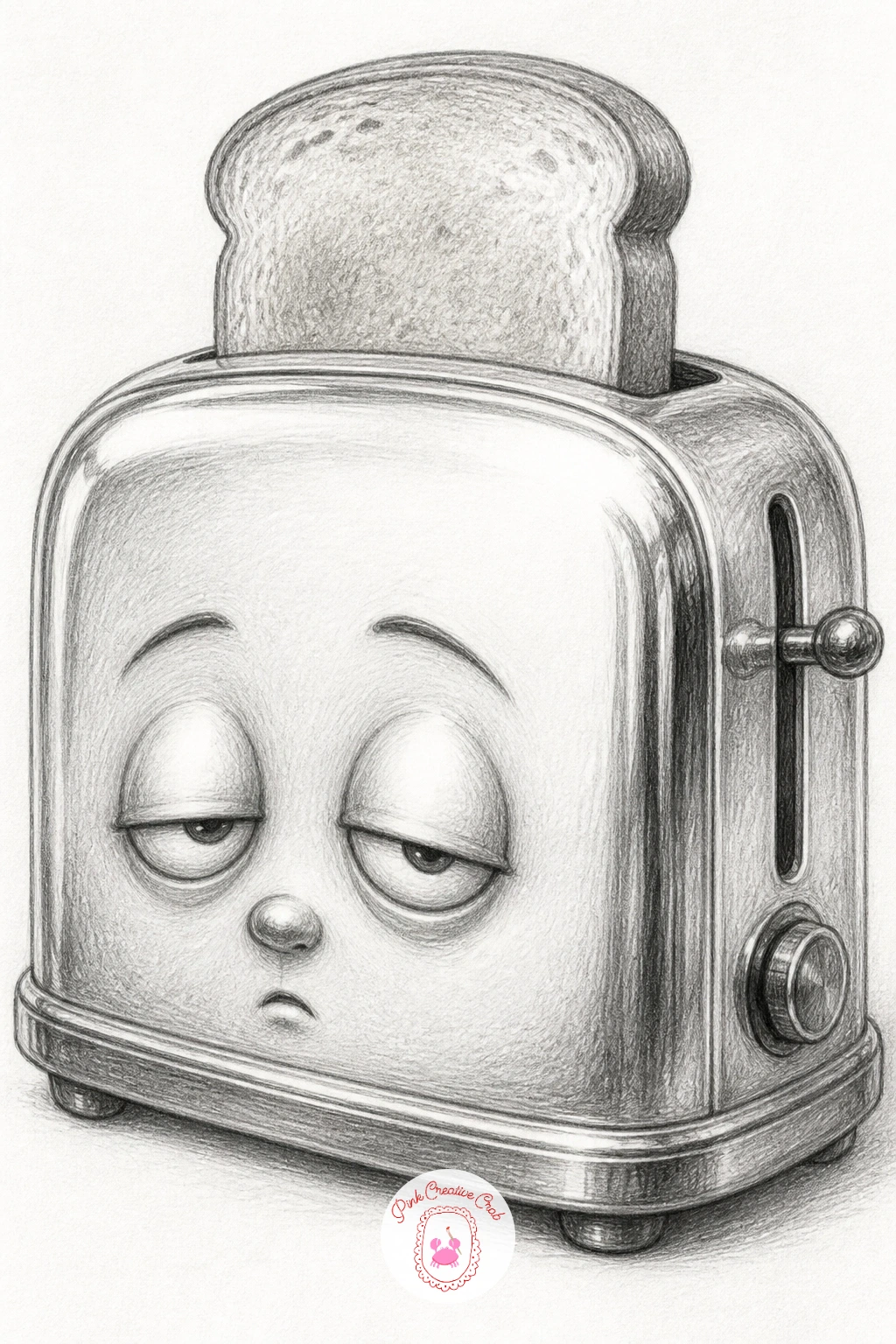
A vintage toaster with a sleepy face is a gentle one to draw after the light bulb, since the body is just a rounded box shape with a chrome shine. Sketch the toaster’s silhouette first, slightly bulging at the sides the way old chrome toasters are, then place two half-closed eyes and a small yawning mouth low on the front panel, like a face just waking up.
Shade the chrome body with long smooth gradients from dark to light across the curve, and leave a bold white highlight streak down one side to sell the metal shine. The face stays simple, just a few soft pencil lines, since a toaster’s expression works better underplayed than exaggerated.
The slice of toast poking from the top is a nice finishing touch, drawn with a rougher, more textured edge than the smooth metal body so the two materials read differently.
If chrome shading feels tricky, swap it for a dented old tin toaster instead, which forgives a rougher, more hand-drawn shine.
Palette: Graphite Grey,Soft Silver,Warm Beige
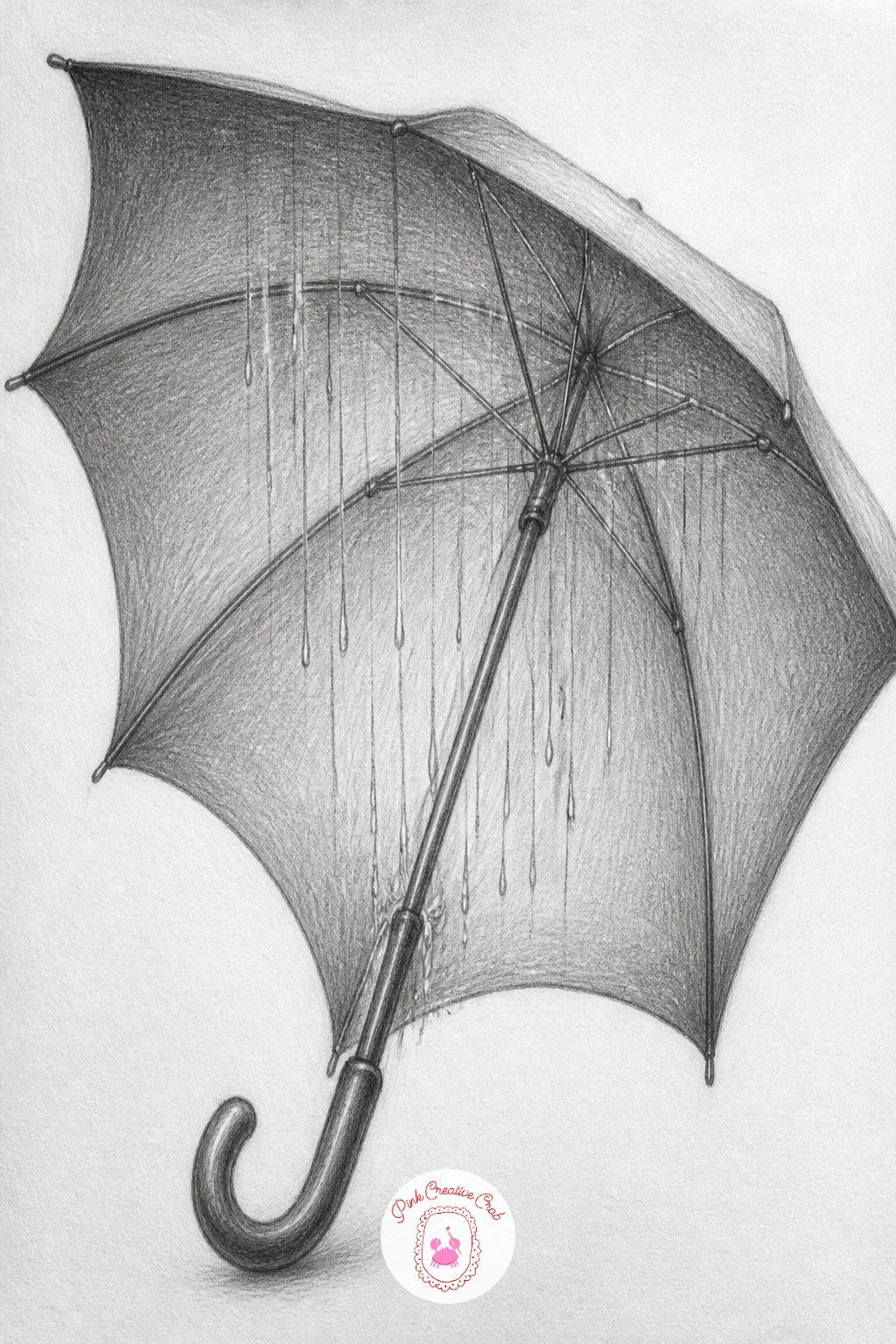
For a proper visual joke, try an umbrella raining on the inside instead of keeping the rain out. Draw the open umbrella canopy first from a three-quarter angle so its ribs and panels are visible, then work out where the light source sits before adding any rain, since that decides which panels stay bright and which fall into shadow under the dome.
Add short straight raindrop lines falling from the underside of the canopy down toward the handle, varying their length slightly so they feel like real falling rain rather than a repeated pattern. A few small splash marks where they would land finish the joke.
Shade each canopy panel slightly differently in tone so the ribs read as separate folds rather than one flat shape, which is where this one most often falls flat if every panel is shaded the same.
One concrete tip for today: draw the rain lines last, after the umbrella is fully shaded, so you can judge exactly how many you need without crowding the drawing.
Palette: Graphite Grey,Charcoal Black,Paper White
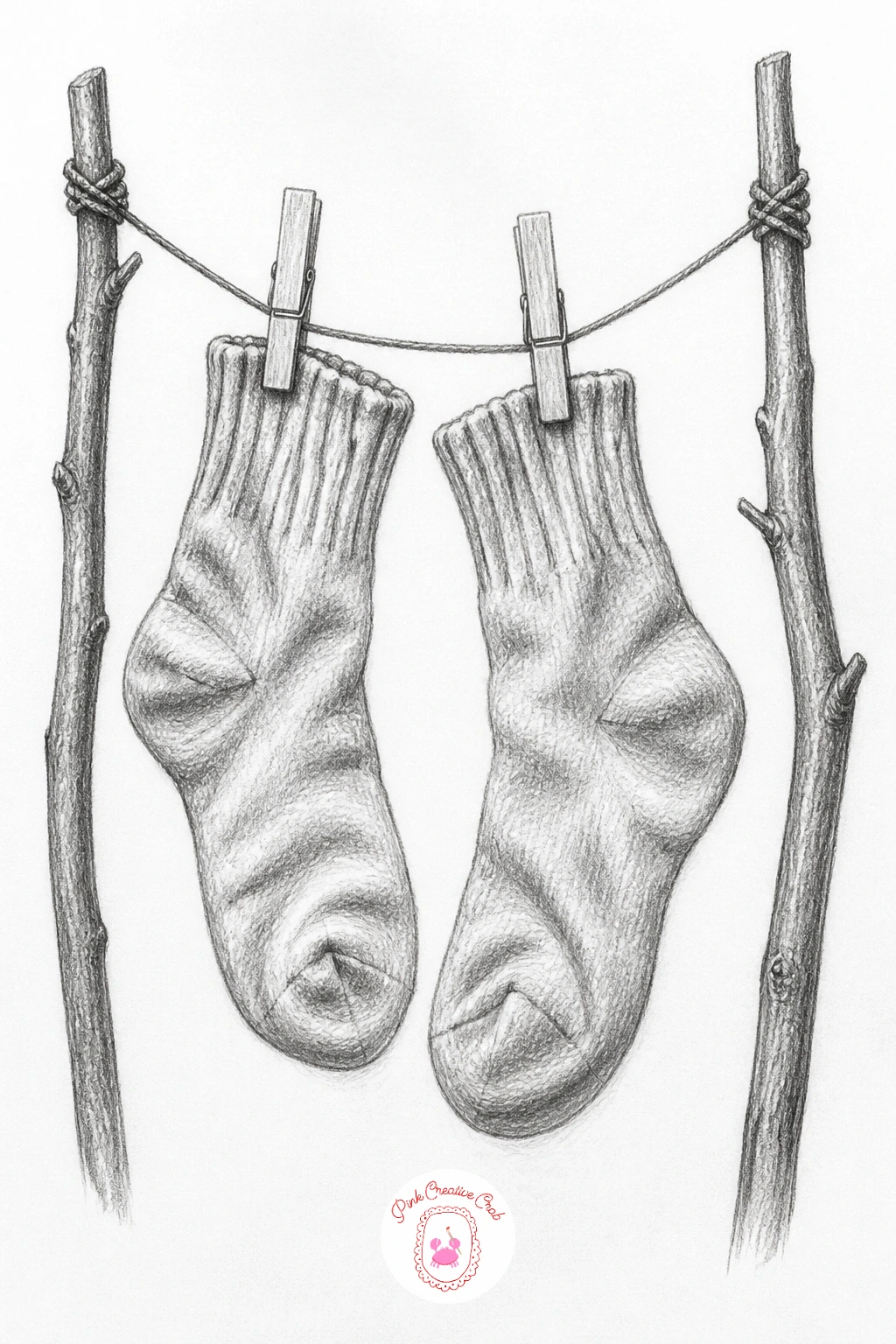
Give yourself a breather with a pair of socks on a tiny clothesline strung between two pegs or two sticks. Draw the line first as a slightly sagging curve, since a perfectly straight line looks stiff, then hang each sock from it with small wooden pegs clipped at the toe or the cuff.
Shade the socks with soft, even tone and a few loose wrinkle lines where the fabric bunches near the peg, keeping the shading lighter than the pegs themselves so the wood reads as the harder material. A faint cast shadow beneath each sock on an implied ground or wall grounds the whole scene.
If the socks end up looking stiff and flat, add one small fold or wrinkle near the top of each, since fabric almost never hangs perfectly smooth.
No pegs to reference, a loop of string tied around the sock works just as well and is honestly easier to draw.
Palette: Graphite Grey,Warm Beige,Charcoal Black
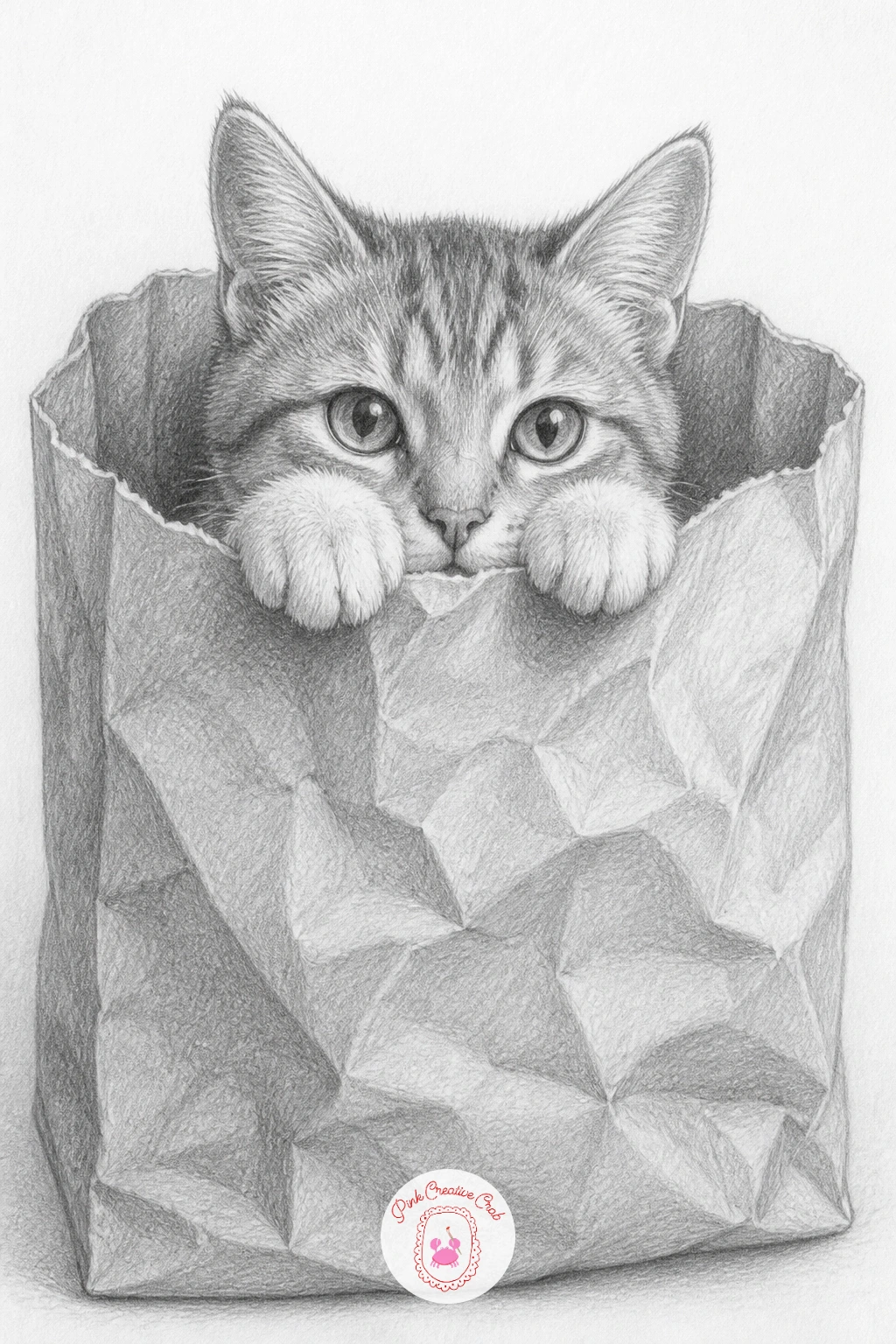
A cat sitting in a paper bag earns its spot here because cats and cardboard are simply funnier together than either alone. Start with the bag’s shape, a slightly crumpled rectangle with soft folded edges at the top rim, then nest the cat inside it with just the head, front paws, and maybe one ear peeking over the top edge.
Shade the paper bag with short angled strokes that follow its creases, since paper folds in flat planes rather than smooth curves, and keep that shading clearly different from the cat’s soft, rounded fur shading so the two materials separate visually.
The fur is where confidence pays off: use short flicking pencil strokes in the direction the fur grows, building up tone gradually rather than going dark in one pass, and a kneaded eraser can lift soft highlight streaks back out once the shading is done.
If a whole cat feels like too much, just the ears and eyes peeking over the bag’s rim is funnier anyway and much quicker to finish.
Palette: Warm Kraft Brown,Graphite Grey,Charcoal Black
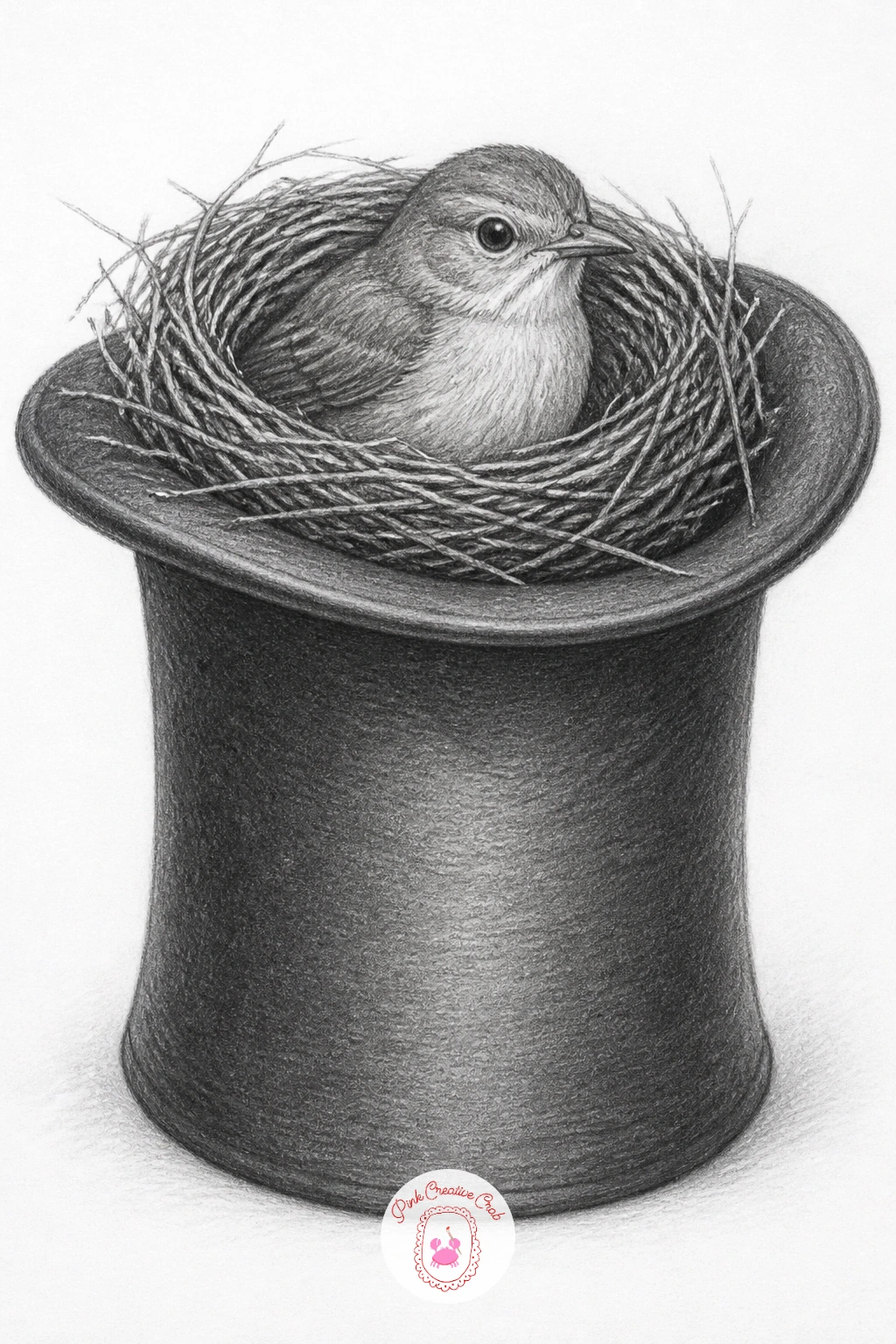
A bird nesting in a top hat trades the crumpled paper bag for a stiffer, taller shape to draw next. Sketch the hat first as a simple cylinder with a brim, then build a loose twiggy nest sitting in the open top, with one small bird settled into the middle of it.
Keep the hat’s surface shading smooth and simple, almost like the chrome toaster earlier, with one clean highlight running down its side to suggest felt or silk catching the light. The nest, by contrast, is built from short overlapping curved lines in every direction, which is the quickest way to suggest twisted twigs without drawing each one individually.
Where this one goes wrong is a nest that looks like a scribble instead of a woven shape. Keep the twig strokes curved rather than straight and let a few ends poke out past the hat’s brim for a more natural, untidy edge.
If a top hat feels too formal, a simple bowler or flat cap holds a nest just as well and draws faster.
Palette: Charcoal Black,Warm Brown,Graphite Grey
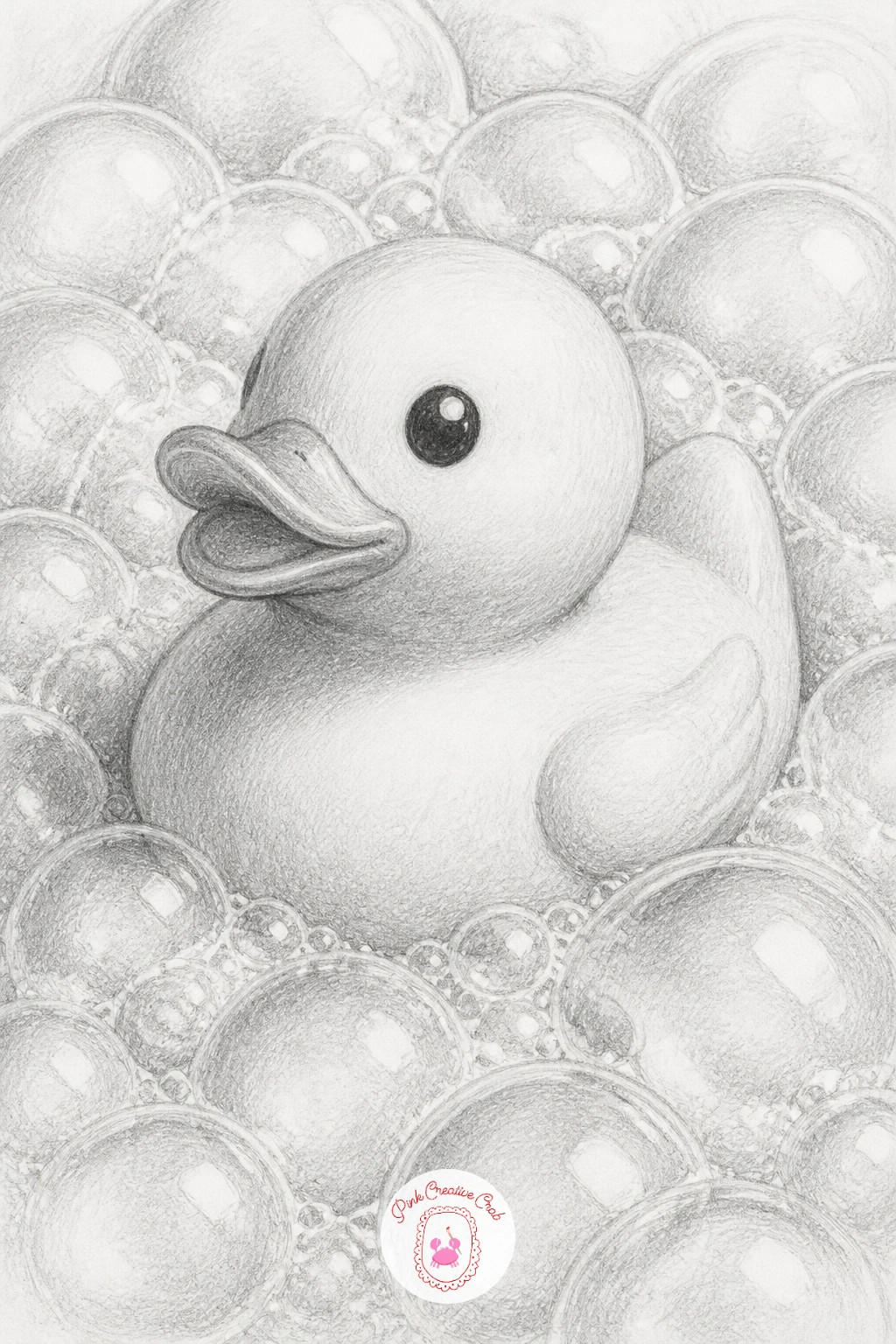
Lighten the mood further with a rubber duck floating in a bubble bath, which is mostly an exercise in drawing convincing bubbles. Draw the duck’s simple rounded body and beak first, sitting slightly tilted as if bobbing on water, then build the bath’s edge in loose curves around it before adding bubbles.
For the bubbles, draw a cluster of overlapping circles of varying sizes rather than one even pile, and shade only a thin crescent inside each one to suggest roundness, leaving most of each circle as bare white paper. Too much shading here is the most common mistake, since bubbles read as bubbles mostly through what stays untouched.
Shade the duck itself with soft, smooth tone and a single sharp highlight on its back to suggest the shiny rubber surface, which contrasts nicely against the soft matte bubbles around it.
If circles feel uneven freehand, trace a small coin or bottle cap lightly for a few of the bubble outlines before erasing the guide marks.
You Will Need
- small coin or bottle cap for tracing circles (optional)
Palette: Sunny Yellow Grey,Graphite Grey,Paper White
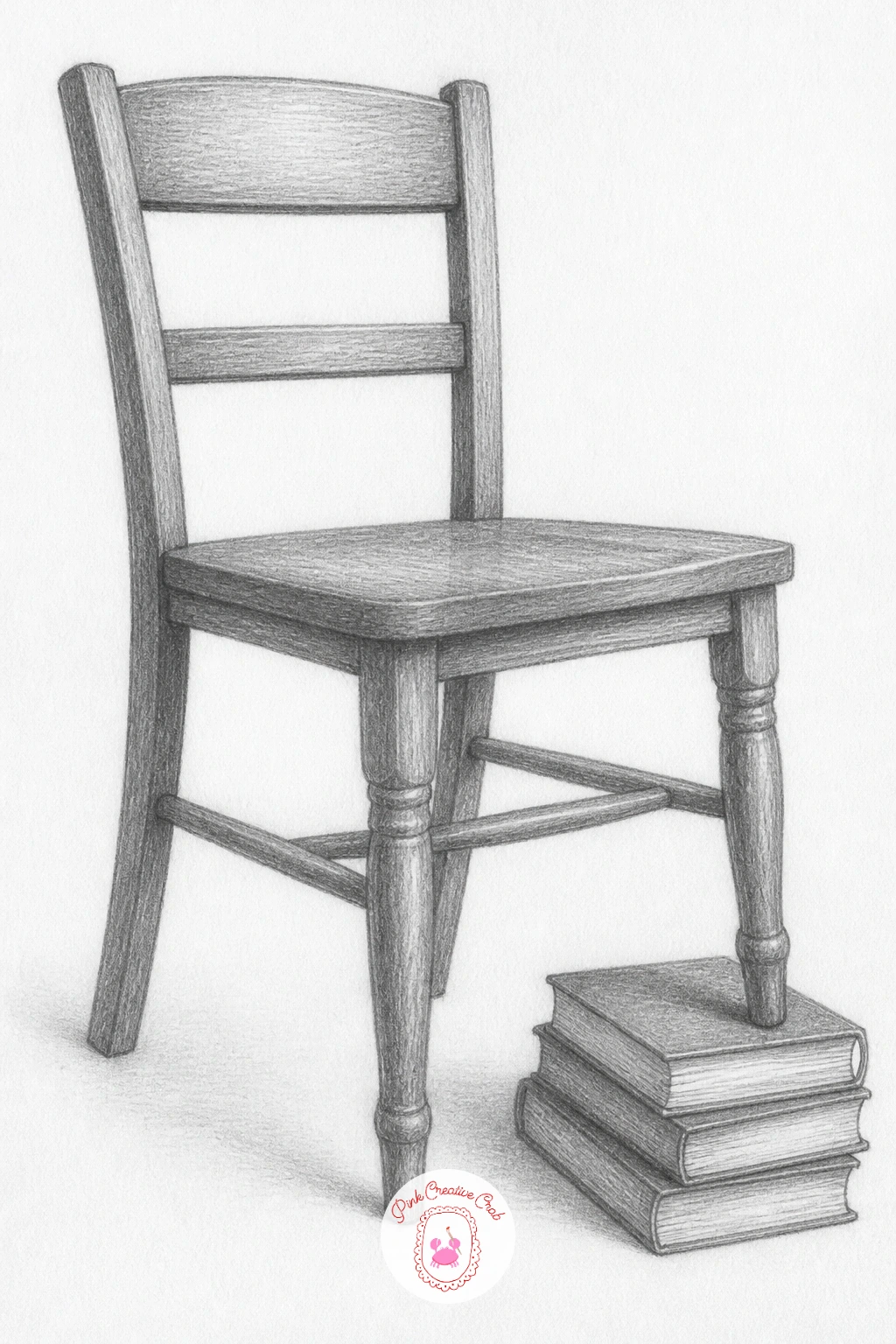
A chair with one short leg propped up on a stack of books is a good chance to practice perspective on furniture without it getting technical. Decide where your eye level sits before drawing a single line, since a chair seen straight on at seat height looks very different from one seen slightly from above, and that choice changes how much of the seat and the book stack you actually show.
Draw the chair’s basic frame first as a simple box shape with four legs, then shorten one leg and slip a small stack of two or three books underneath it, each book drawn as a slightly uneven rectangle rather than a perfect one, since real books lean and wear.
Shade the wood grain on the chair with long, light vertical strokes and keep the books’ shading flatter and more even, which separates the two materials clearly.
If full perspective feels like too much today, draw the chair from directly side-on instead, it hides most of the tricky angles.
Palette: Warm Brown,Graphite Grey,Faded Red
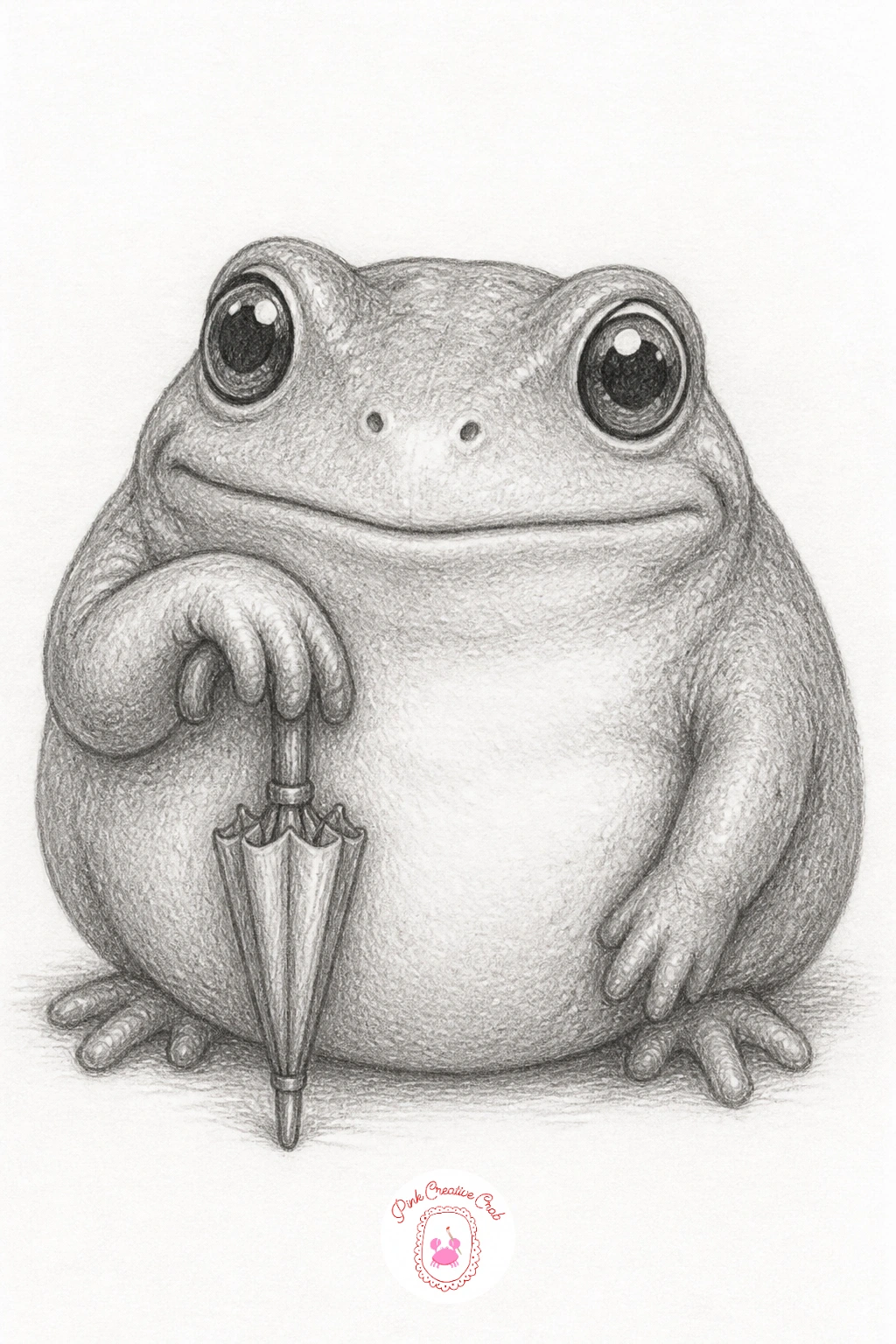
After the chair’s straight lines, a frog holding a tiny umbrella is a nice return to round, friendly shapes. Build the frog from two overlapping ovals for the body and head, bulging eyes on top, then add a small closed or half-open umbrella tucked under one front leg like a cane.
Shade the frog’s skin with smooth, gradual tone that darkens slightly along its back and lightens toward the belly, since frogs read as glossy and round mostly through soft gradients rather than hard lines. Leave two tiny white dots unshaded on the bulging eyes for a wet shine.
The umbrella’s ribs are the fiddly part: keep them to four or five straight lines meeting at a single point, and resist adding more, since extra ribs quickly turn tidy into cluttered.
If the frog’s proportions feel off, compare the size of one eye to the whole head first, frog eyes are usually bigger relative to the head than people expect.
Palette: Moss Green Grey,Graphite Grey,Charcoal Black
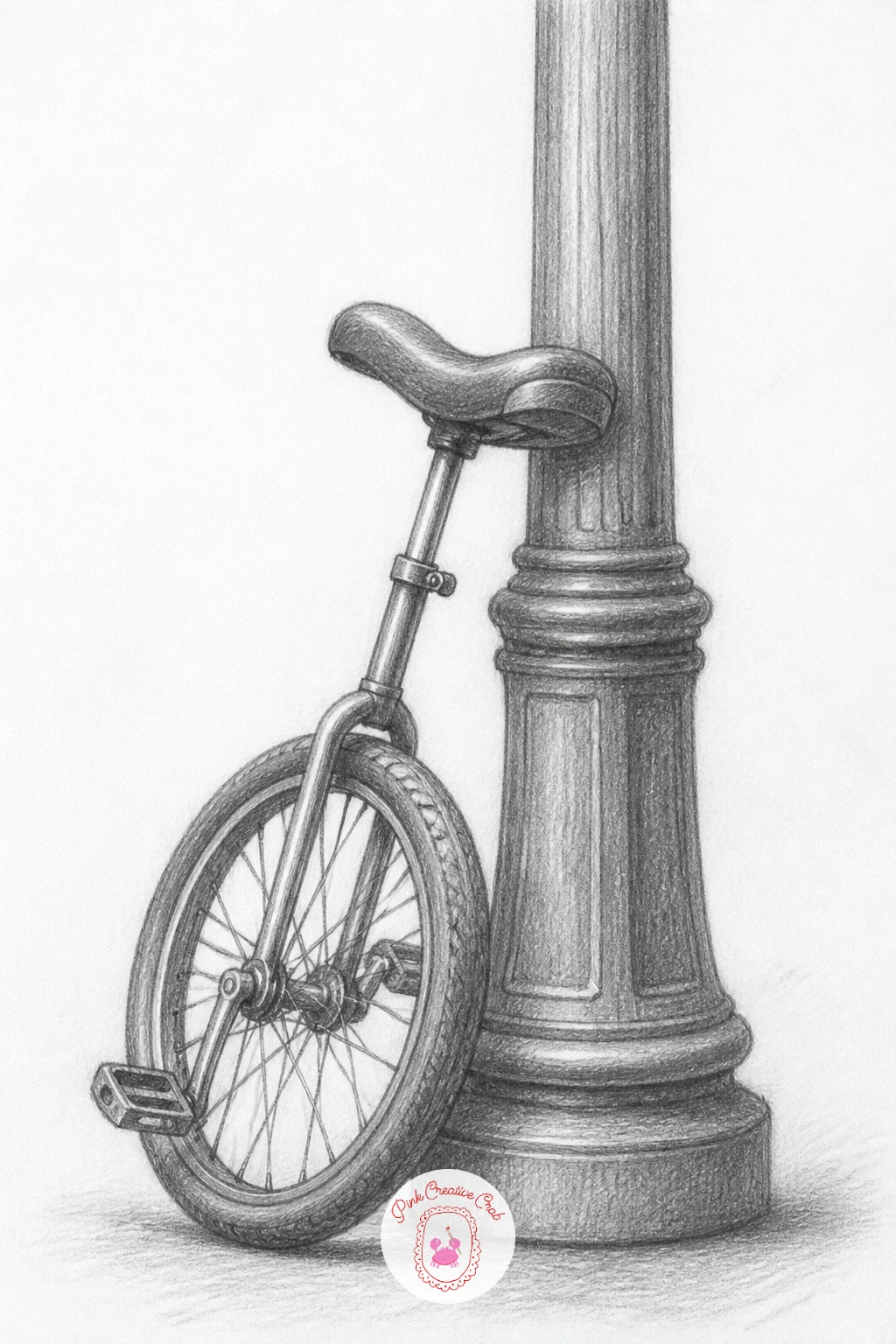
Move from the frog’s roundness to something more linear: a unicycle leaning against a lamppost, left there as if someone just wandered off. Draw the lamppost first as a tall straight pole with a lantern top, then lean the unicycle’s frame against it at a believable angle, single wheel touching the ground a short distance from the post’s base.
Getting the lean right is mostly about the contact points: mark where the unicycle’s seat touches the post and where the wheel touches the ground before drawing the frame between them, which keeps the whole thing looking balanced rather than floating.
Shade the wheel’s tire with dark, even tone and add a scatter of small white flecks for texture, then keep the metal frame lighter with one or two clean highlight lines running along its length to suggest polished metal.
If a full street lamp feels like too much, a simple wooden fence post holds the unicycle just as believably.
Palette: Charcoal Black,Graphite Grey,Soft Silver
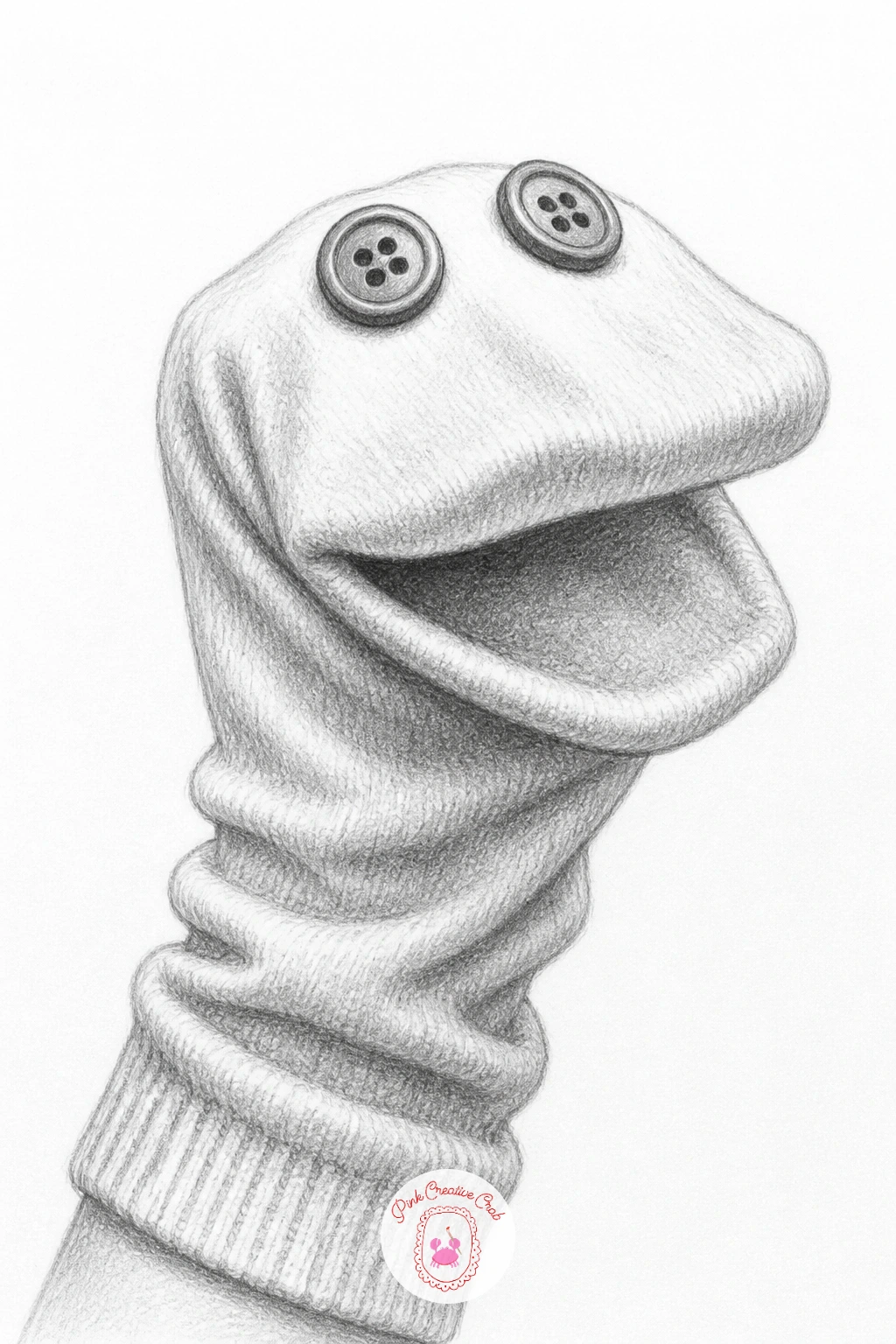
A sock puppet on a hand brings a human element into the mix without needing a whole figure. Draw the hand first in a simple relaxed shape, fingers curled slightly to suggest they are inside the puppet, then build the sock around it, letting the fabric bunch naturally at the wrist and stretch smoothly over the knuckles where the mouth opening sits.
Sketch button eyes and a stitched smile loosely, nothing too precise, since a slightly wonky handmade look suits a sock puppet far better than a neat one. Shade the sock fabric with soft, even tone and a few gentle fold lines at the wrist where it bunches, keeping the hand underneath barely suggested through the fabric rather than drawn in hard detail.
The usual trap is making the hand too visible under the sock, which breaks the illusion. Let the fabric’s folds do most of the work of showing where fingers are, rather than drawing finger shapes directly.
If hands feel tricky to draw, reference your own in a mirror, holding the pose you want to draw.
Palette: Warm Beige,Graphite Grey,Charcoal Black
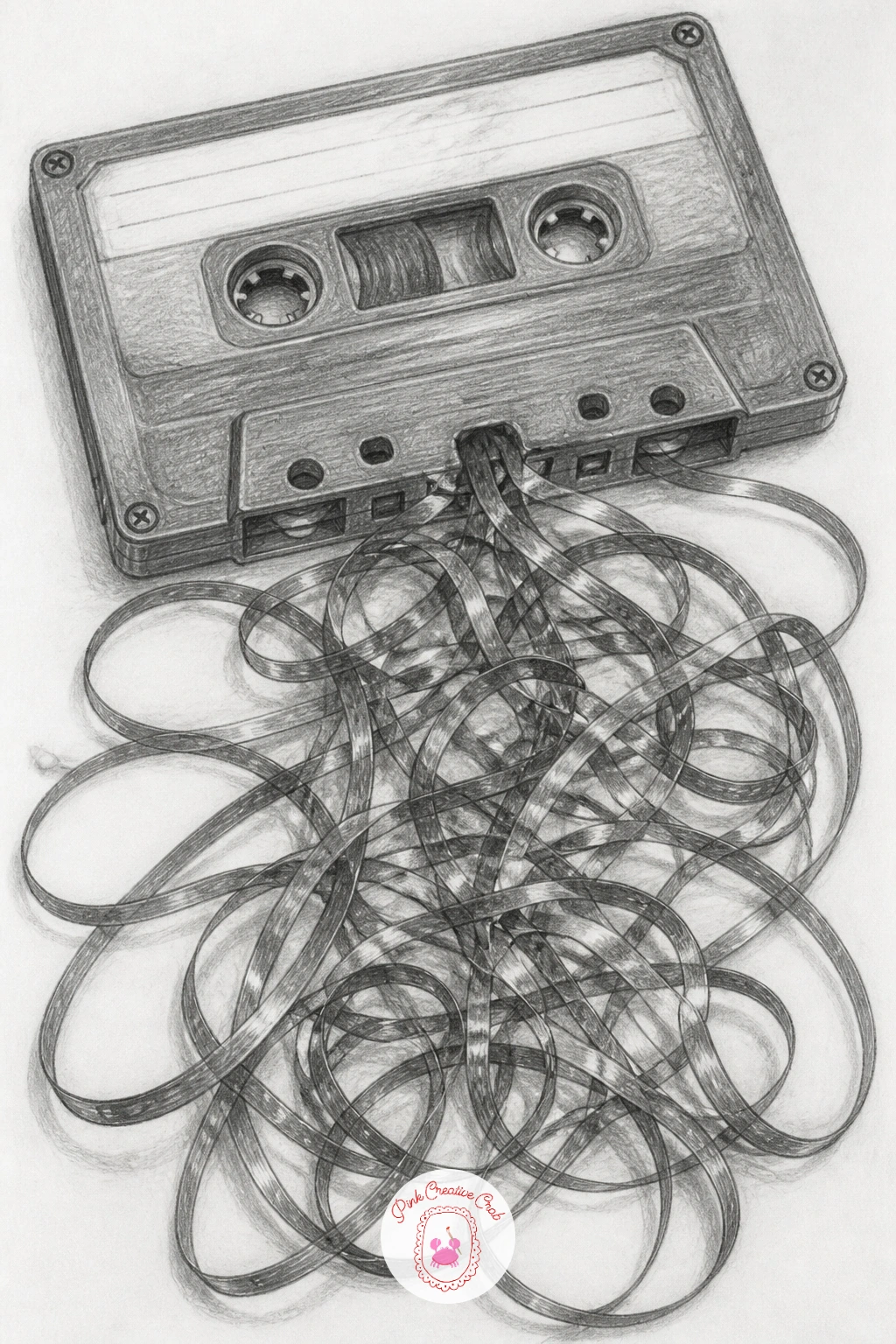
A cassette tape with its tape tangled out is a satisfying one for anyone who likes a bit of mess to draw. Block in the cassette’s rectangular body first with its two round reels, then let loops and curls of thin tape spill out from one reel across the page, overlapping itself in places.
In ten minutes, keep the tangle to three or four loose loops and call it done. Given forty, build up more overlapping strands, varying the gap and shadow where each strand crosses another, which is what actually makes the tangle look three-dimensional rather than a flat scribble.
Shade the cassette’s plastic body with smooth, even tone and a couple of sharp highlights to suggest hard plastic, then shade the tape itself much darker and thinner, with tiny gaps of white paper left wherever one loop crosses in front of another.
If thin curling lines feel shaky, rotate the page as you draw each loop so your hand always moves in its most comfortable direction.
Palette: Charcoal Black,Graphite Grey,Warm Brown
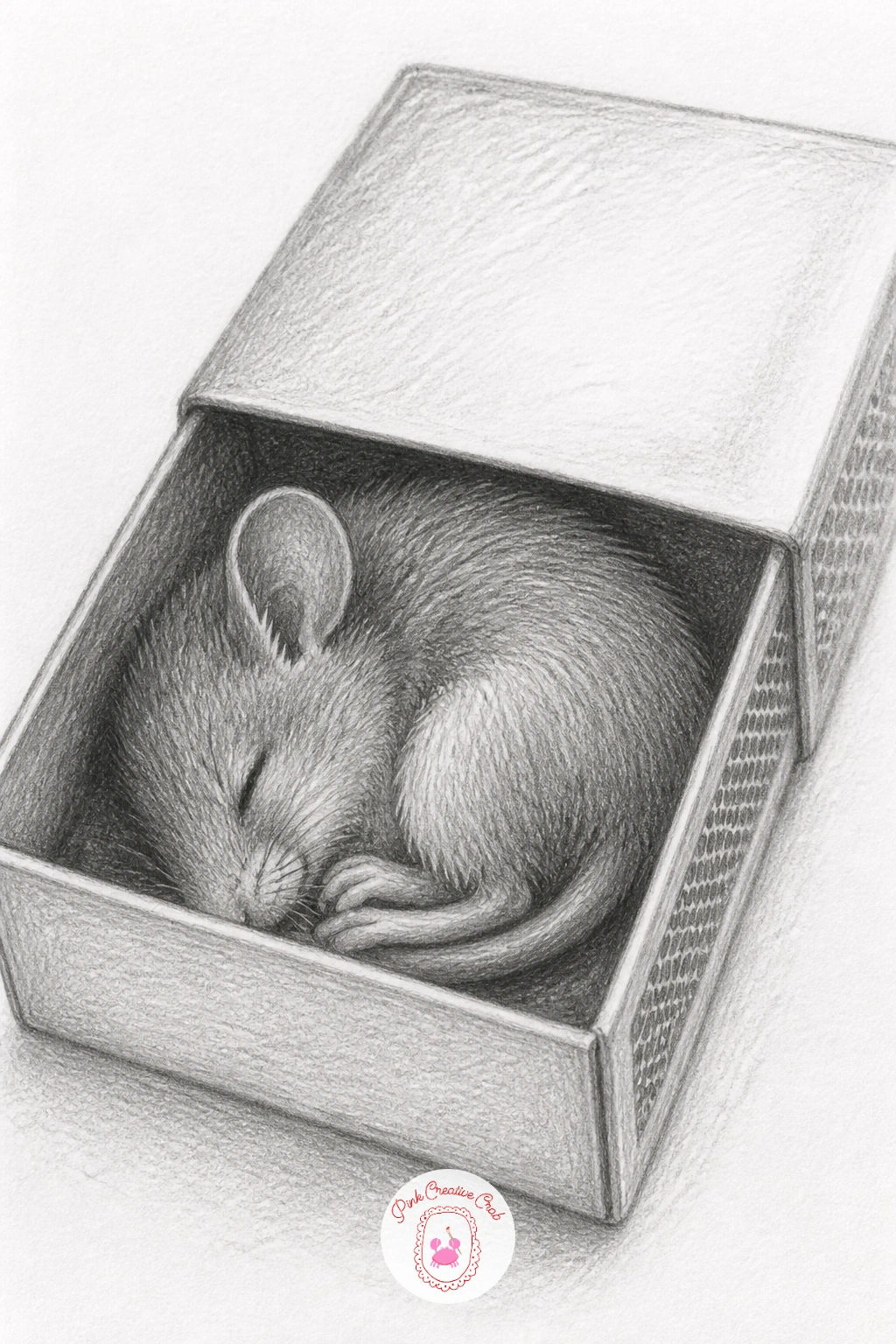
After the tangled cassette, slow right down with a mouse asleep in a matchbox, one of the smallest, cosiest scenes on this list. Draw the matchbox first as a simple sliding drawer shape, partly open, then curl a tiny mouse inside it with its tail wrapped around itself and eyes closed.
Shade the matchbox with flat, slightly textured strokes to suggest cardboard, then switch to much softer shading for the mouse, building its fur with short light pencil flicks rather than a hard outline, which makes it look properly asleep and relaxed rather than stiff.
Where this one often goes wrong is scale: a mouse drawn too large makes the matchbox look like a normal box, so keep the mouse curled tight and small, filling maybe two-thirds of the box’s length at most.
No matchbox on hand to reference, any small hinged or sliding box, like a tea tin or pill box, tells the same story.
Palette: Warm Brown,Graphite Grey,Soft Pink Grey
A lampshade shaped like a jellyfish turns a household object into something that drifts rather than sits. Draw the lamp’s base and stand first in simple, sturdy lines, then let the shade billow out above it in a soft dome shape with long trailing tendrils hanging down like a jellyfish’s.
Deciding where the light source sits matters a lot here: if the bulb glows from inside the dome, the top of the shade stays brightest and each tendril catches a thin streak of light along one edge, fading to shadow on the other side, which is what makes it look lit from within rather than just drawn as a shape.
Shade the dome with smooth gradients and keep the tendrils loose and slightly wavy, varying their length so they do not look like a repeated pattern.
If trailing tendrils feel like too many lines to manage, four or five longer ones read just as well as a dozen short ones and draw much faster.
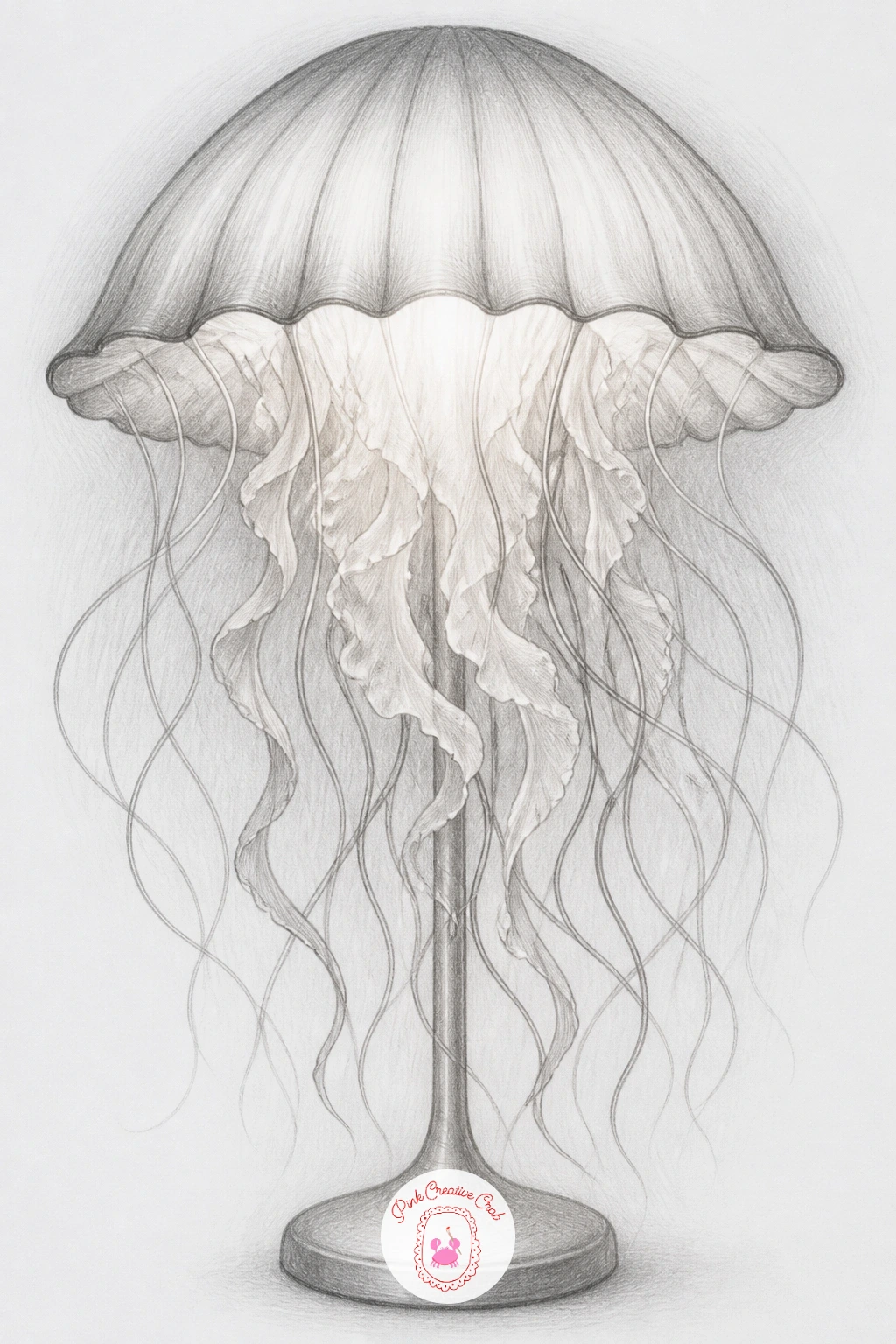
Palette: Graphite Grey,Soft Silver,Warm Glow Grey
A sneaker with feathered wings sprouting from its sides needs you to get the shoe’s shape solid before the wings make any sense. Draw the sneaker first in a three-quarter view with laces, sole, and stitching lines in place, then attach the wings low near the heel, spreading outward and slightly upward as though caught mid-flap.
Build each wing from a few long primary feathers first as simple curved shapes, then layer smaller feathers over the base in overlapping rows, each one shaded slightly differently so they separate from each other rather than blurring into one mass.
Shade the sneaker’s canvas or leather with its own clean material logic, smooth for leather or textured for canvas, which keeps it reading as solidly a shoe even with wings attached.
If feather layering feels like a lot, four or five large feathers per wing look just as convincing as twenty small ones and take far less time.
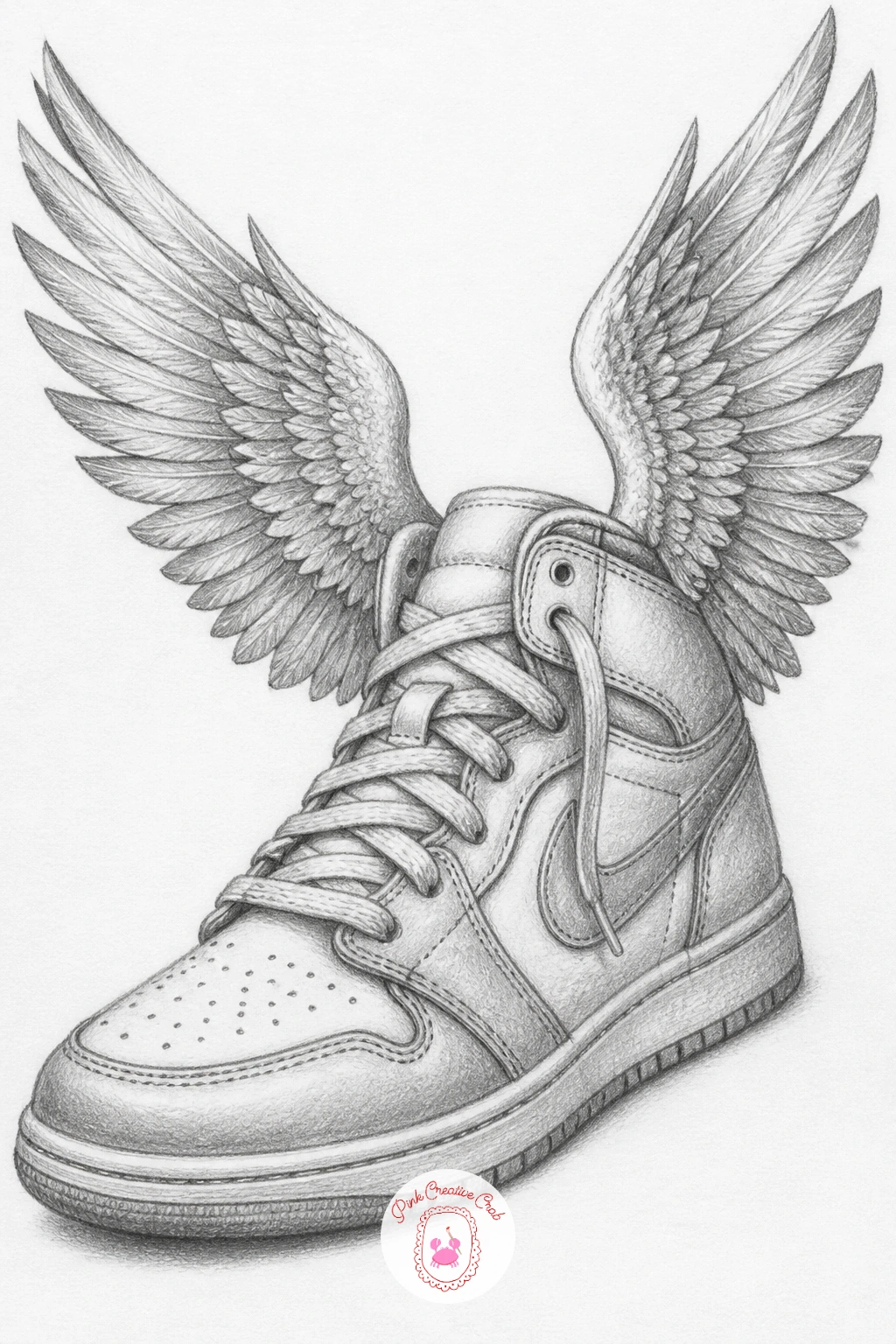
Palette: Graphite Grey,Charcoal Black,Warm Cream
A dog in sunglasses riding in a convertible is pure fun and a good one for practicing a sense of motion. Draw the car’s body first in a simple sweeping shape with the top down, then place the dog sitting up in the front seat, ears blown back and sunglasses perched on its nose, facing slightly into an implied wind.
A few short speed lines trailing behind the car’s rear and the dog’s ears do most of the work of suggesting movement, so add them last once the car and dog are fully drawn, keeping them light and only a handful rather than filling the background with them.
Shade the car’s body with smooth gradients and one bold highlight along its hood to suggest glossy paint, then keep the dog’s fur shading soft and short-stroked, with the sunglasses rendered in flat, dark, glossy tone for contrast.
If a full car feels ambitious today, just the front seat and steering wheel with the dog behind it tells the same joke and finishes much faster.
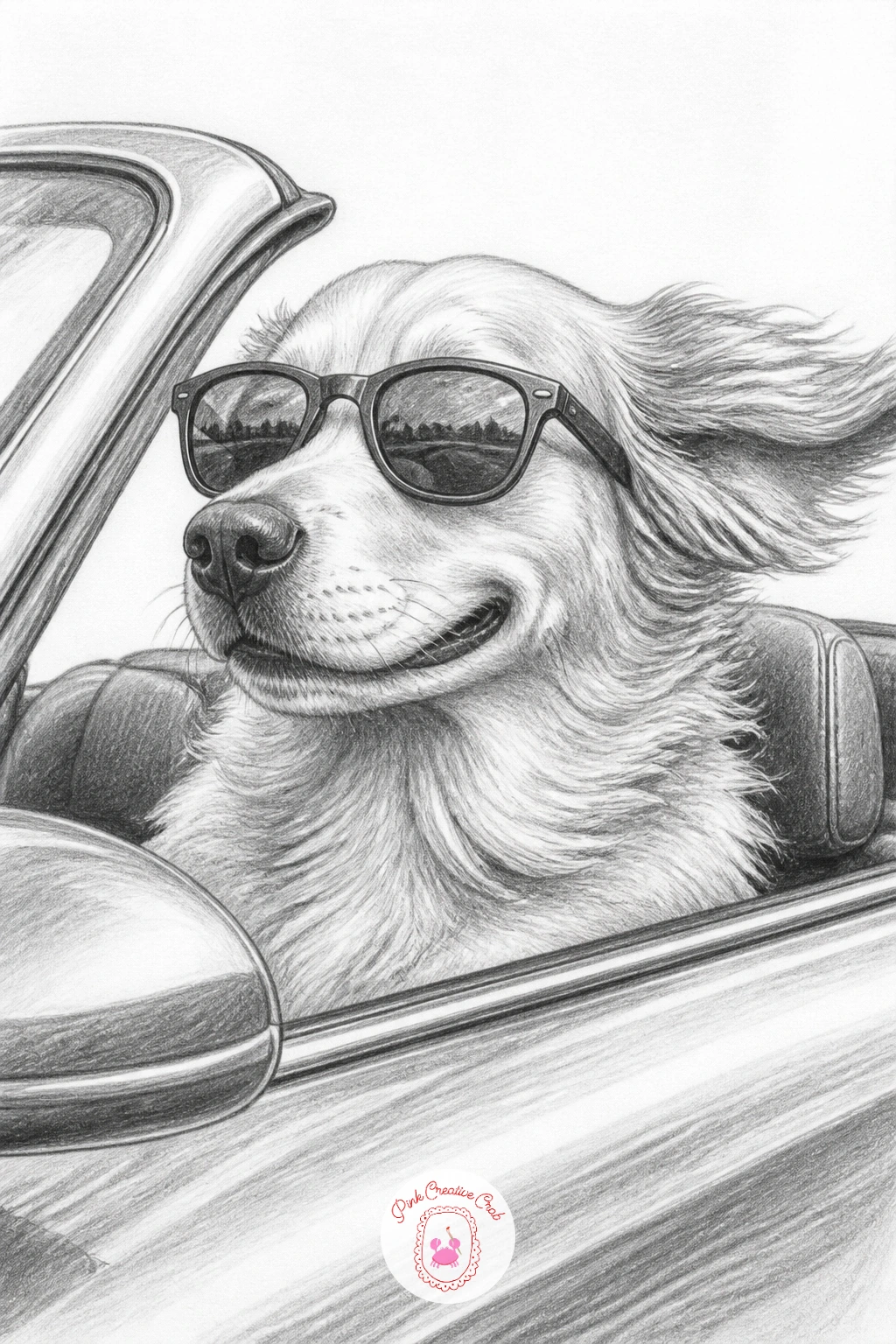
Palette: Graphite Grey,Charcoal Black,Warm Tan
A crab carrying a thimble as its shell is a fun swap on the usual hermit crab idea, since a thimble’s ridged texture gives you something more interesting to shade than a plain shell would. Draw the crab’s legs and claws first in simple jointed segments, then fit the thimble over its back like a borrowed shell, open end down toward the legs.
Compare the thimble’s height to the width of the crab’s claws before finishing the legs, since a thimble shell that towers too high over a small crab looks wrong the moment it is done, while one sized close to the claw span looks settled and natural.
Shade the thimble with small evenly spaced dimples across its surface, lightest at the top where light would catch each tiny indent, which reads as metal texture far better than smooth shading would.
If a thimble is hard to picture, a small bottle cap gives the same ridged, borrowed-shell effect and might be easier to find and look at directly.
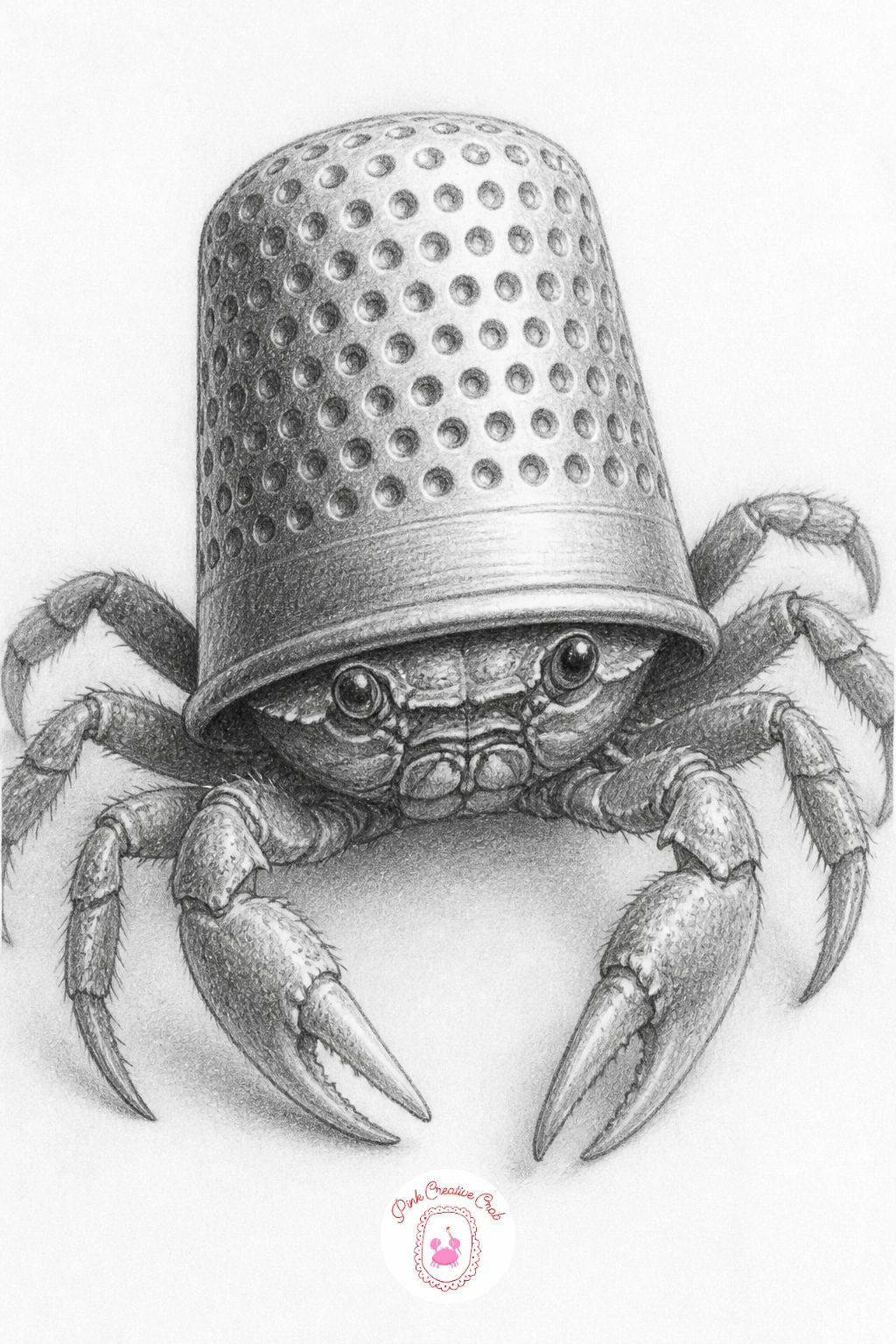
Palette: Soft Silver,Graphite Grey,Charcoal Black
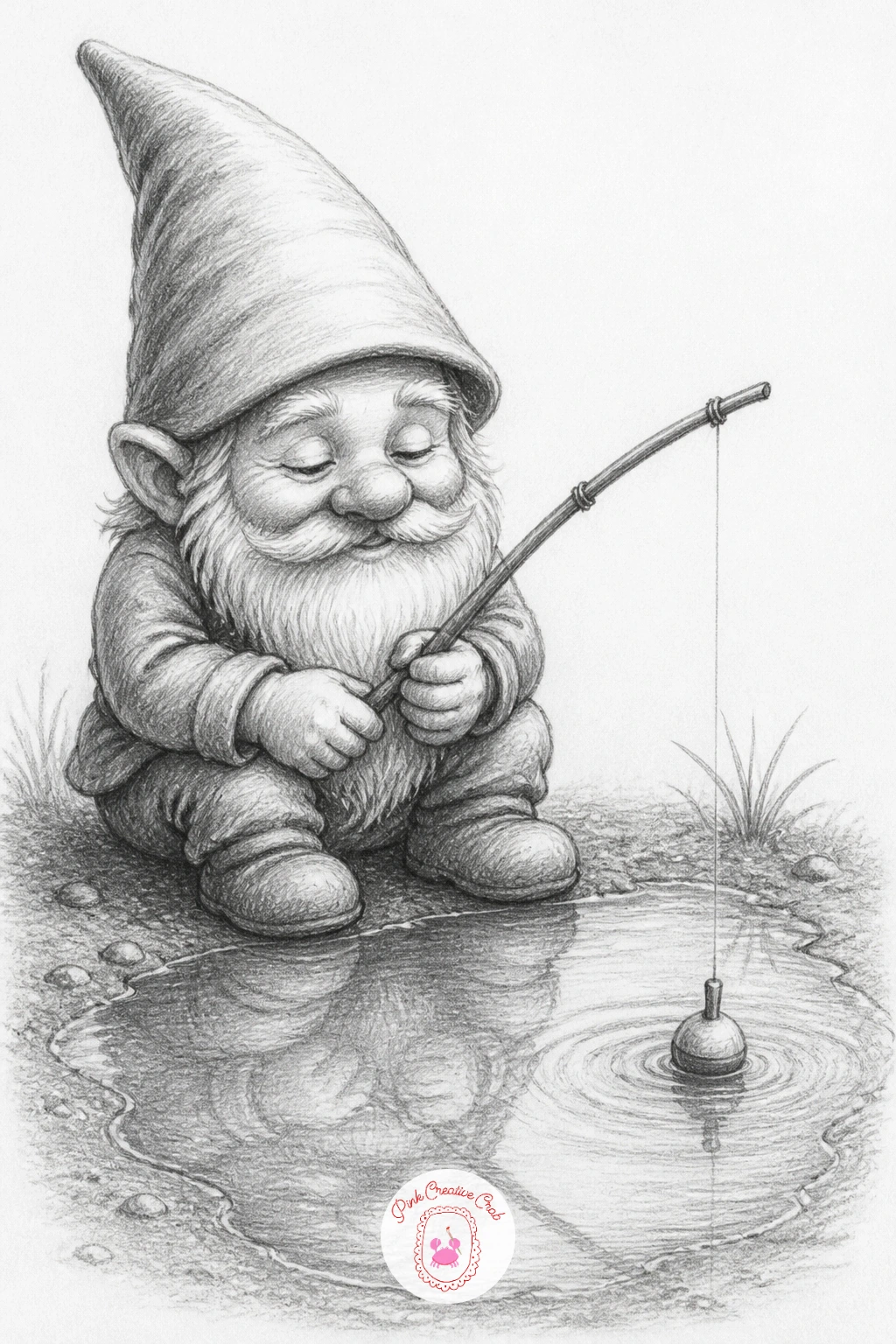
A garden gnome fishing in a puddle is one of the two classic lawn-ornament picks on this list, so give it a proper little scene rather than just the figure alone. Draw the gnome first in his usual pointed hat and round belly, seated on a small rock or log at the puddle’s edge, fishing rod dipped into the water.
Draw the puddle as a simple flattened oval shape and keep its edge soft and slightly uneven, since a puddle is never a perfect circle. A few short curved lines rippling out from where the fishing line enters the water suggest it is a real body of water rather than a painted patch.
Shade the gnome’s hat and beard with contrasting textures, smooth gradients for the felt hat, short curling strokes for the beard, so the two materials separate clearly even without color.
If a full fishing rod feels fiddly at this size, a short cane pole with a simple line is easier to draw clean and still tells the joke.
Palette: Faded Red,Graphite Grey,Soft Blue Grey
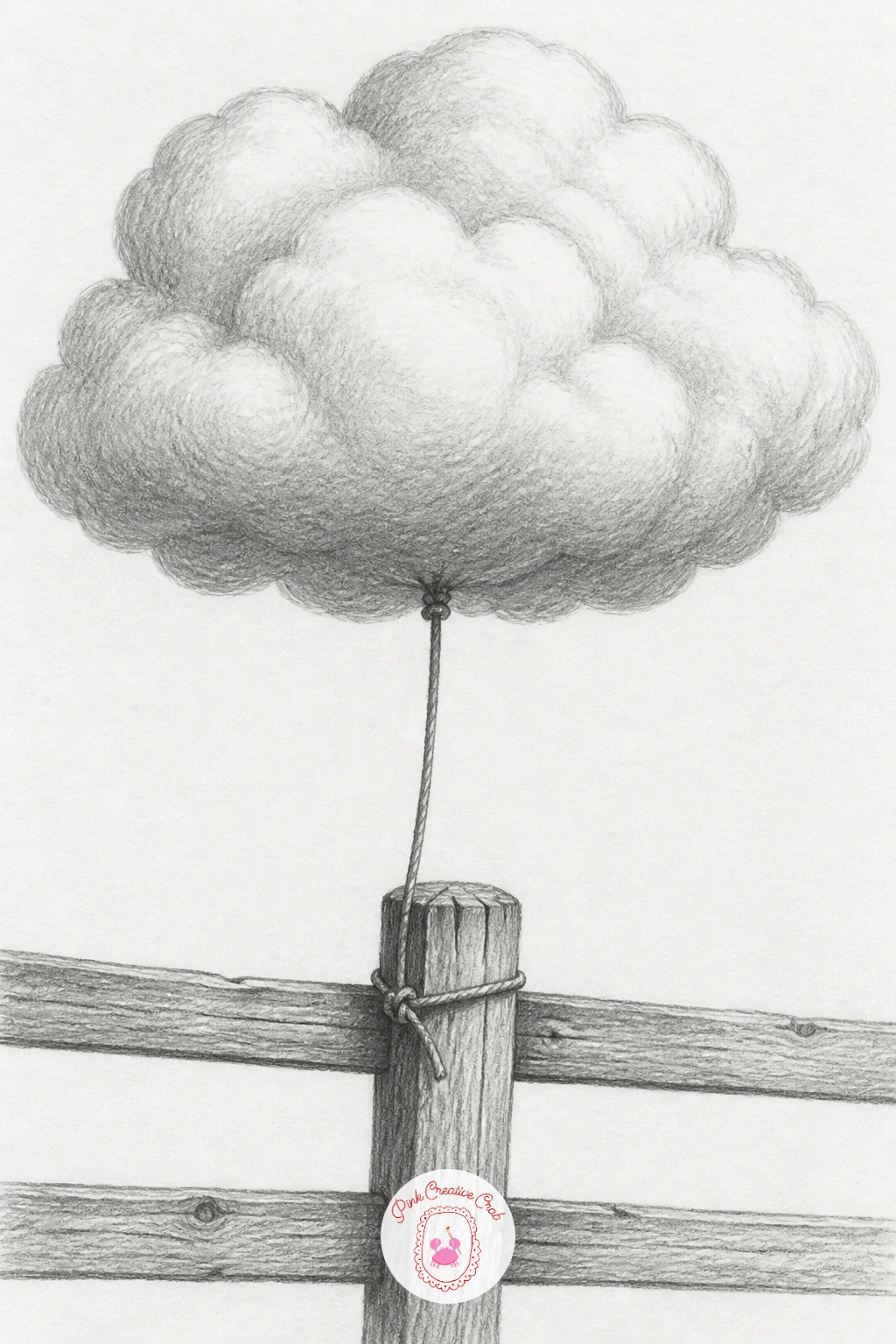
A cloud tied to a fence like a balloon is one of the more purely surreal ideas here, and it hinges on keeping the cloud soft against the fence’s hard lines. Draw the fence first as a few simple wooden posts and rails, then tie a length of string from one post up to a fluffy cloud floating just above it.
Build the cloud from a cluster of overlapping soft bumps rather than one smooth outline, and shade it with very gentle, smoky gradients, almost no hard edge anywhere, which is what separates a convincing cloud from a flat white blob.
Keep the fence posts and string shaded firmly with clean, straight strokes and sharp edges, since that contrast between the crisp fence and the soft drifting cloud is what makes the whole idea read as funny rather than just odd.
If the cloud looks too flat, lift a few soft highlights out of the shaded areas with a kneaded eraser, dabbing rather than rubbing, to open it up.
Palette: Graphite Grey,Soft Silver,Warm Brown
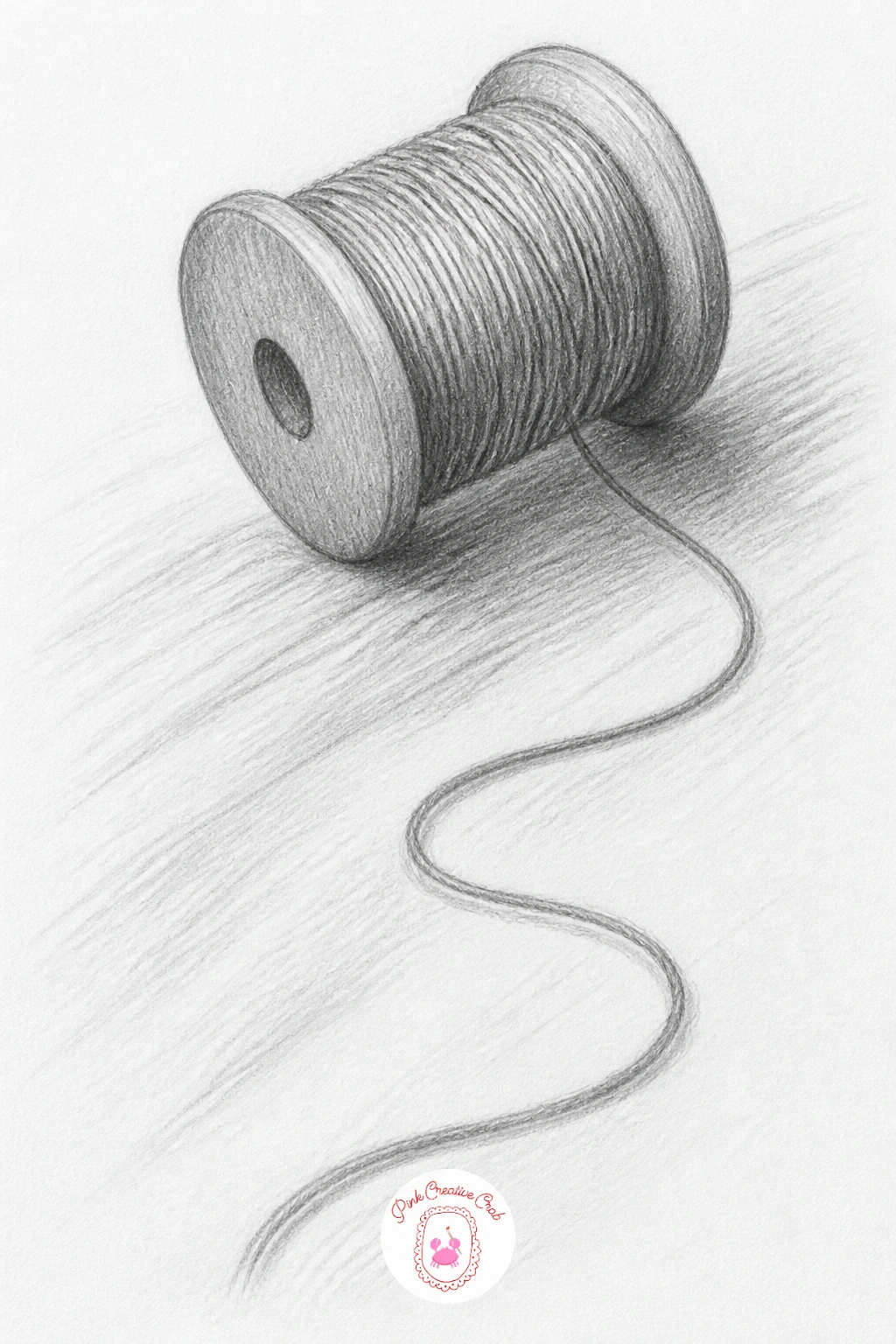
Ease back into something simpler with a spool of thread rolling across the floor, trailing its thread loose behind it. Draw the spool as a simple cylinder shape first, wrapped thread shown as tight parallel lines around its middle, then let one long thin line of thread unspool and trail off behind it across the page.
Deciding where the light source sits changes this one more than it looks: light from one side makes the cylinder’s curve read clearly through a smooth gradient from light to dark across its width, while flat front light flattens it, so pick a side and commit before shading.
Shade the wound thread with tight, even parallel lines that curve slightly to follow the cylinder’s roundness, and keep the trailing loose thread as a single thin unbroken line with just a touch of shadow beneath it.
If the rolling motion is not reading, add two or three short curved motion lines just behind the spool, same trick as the convertible dog’s speed lines.
Palette: Graphite Grey,Warm Red Grey,Charcoal Black
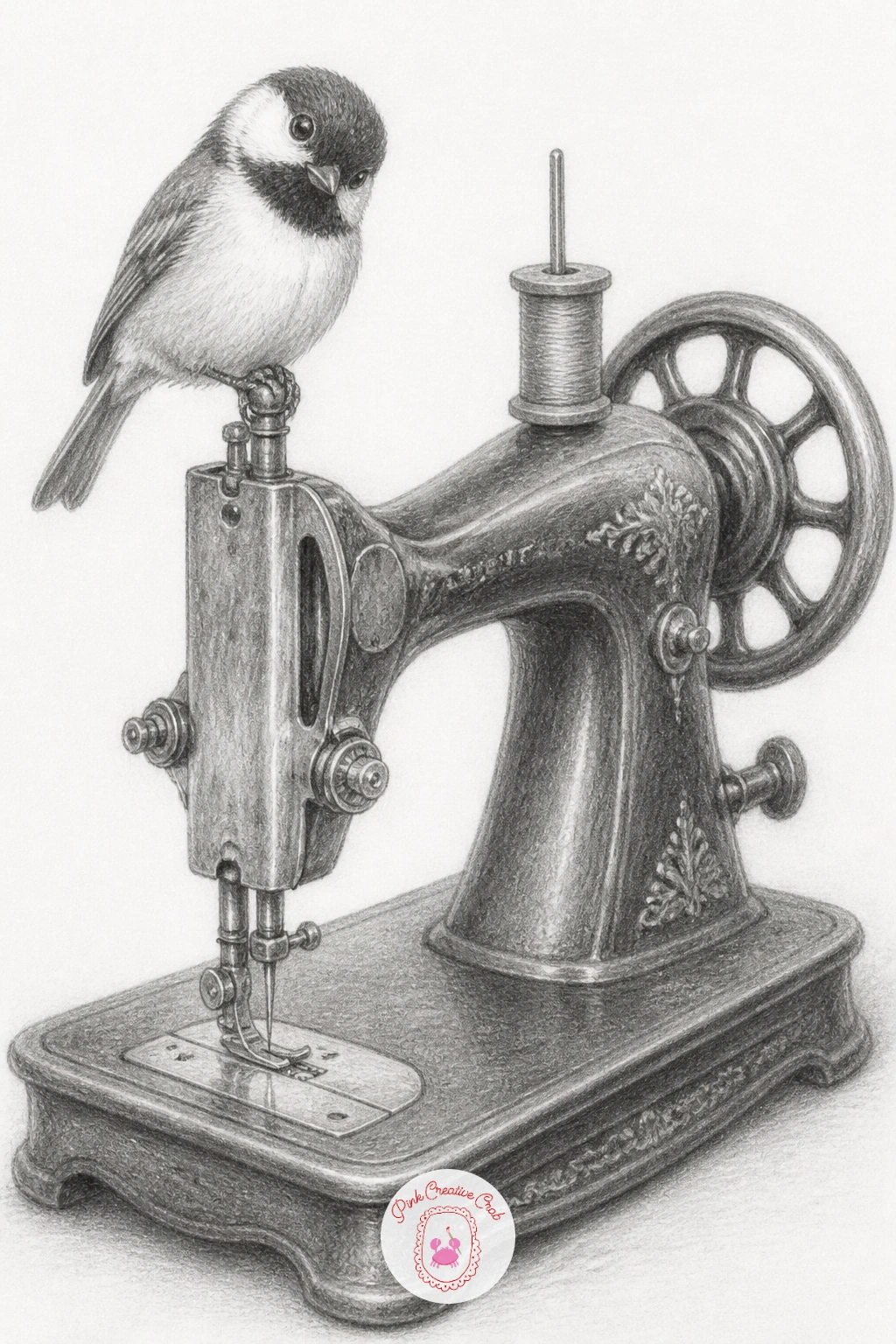
A sewing machine with a bird perched on it brings back a bit of mechanical detail to balance the simple thread spool before it. Draw the machine’s body first, a sturdy rounded shape with the wheel, needle arm, and base plate in place, then settle a small bird on top of the arm, head tilted as though it just landed there.
Here is a quick version versus a longer one: in ten minutes, keep the machine simple with just its main silhouette and the wheel detail, bird sketched loosely on top. Given forty minutes, add the stitching detail on the base plate, texture on the wheel, and fuller feather layering on the bird.
Shade the machine’s metal body with smooth gradients and a couple of sharp highlights along the curved arm, then shade the bird separately with short soft strokes for feathers so the two materials stay distinct.
If the machine’s mechanical shapes feel daunting, an older, simpler hand-crank model has fewer parts to puzzle out than a modern one.
Palette: Charcoal Black,Soft Silver,Warm Brown
If old sewing machines are hard to picture, the music doodle ideas have a similar mix of mechanical shapes paired with small perched birds worth a look.
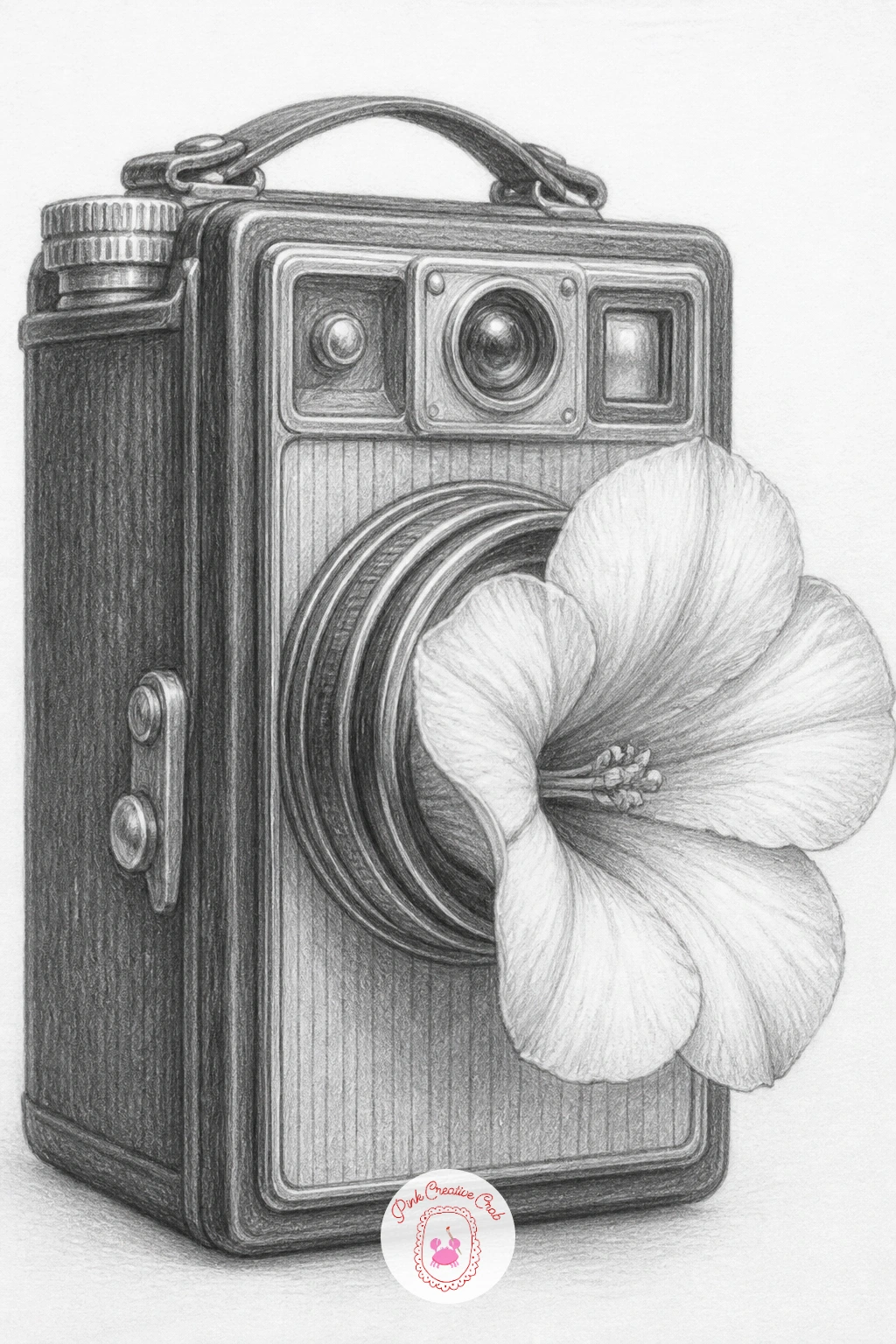
A camera with a flower growing from the lens pairs two completely different textures in one small drawing. Draw the camera’s boxy body first with its lens barrel extending forward, then let a single flower with a few open petals bloom out from the end of the lens where glass would normally sit.
Shade the camera’s body with flat, even tone and a scatter of small dials and buttons sketched in simply, keeping every edge on the camera crisp and straight. The flower, by contrast, gets soft, rounded petal shading with gentle gradients from the center outward, which makes the organic bloom feel like it is genuinely sprouting from something rigid and manufactured.
Where this idea tends to wobble is the lens barrel’s perspective: keep its circular front edge a true ellipse rather than a flat oval, or the whole camera reads as tilted wrong.
If drawing a full camera body feels like too much, a simple old box camera shape, wider at the base, needs far fewer mechanical details than a modern one.
Palette: Charcoal Black,Graphite Grey,Soft Pink Grey
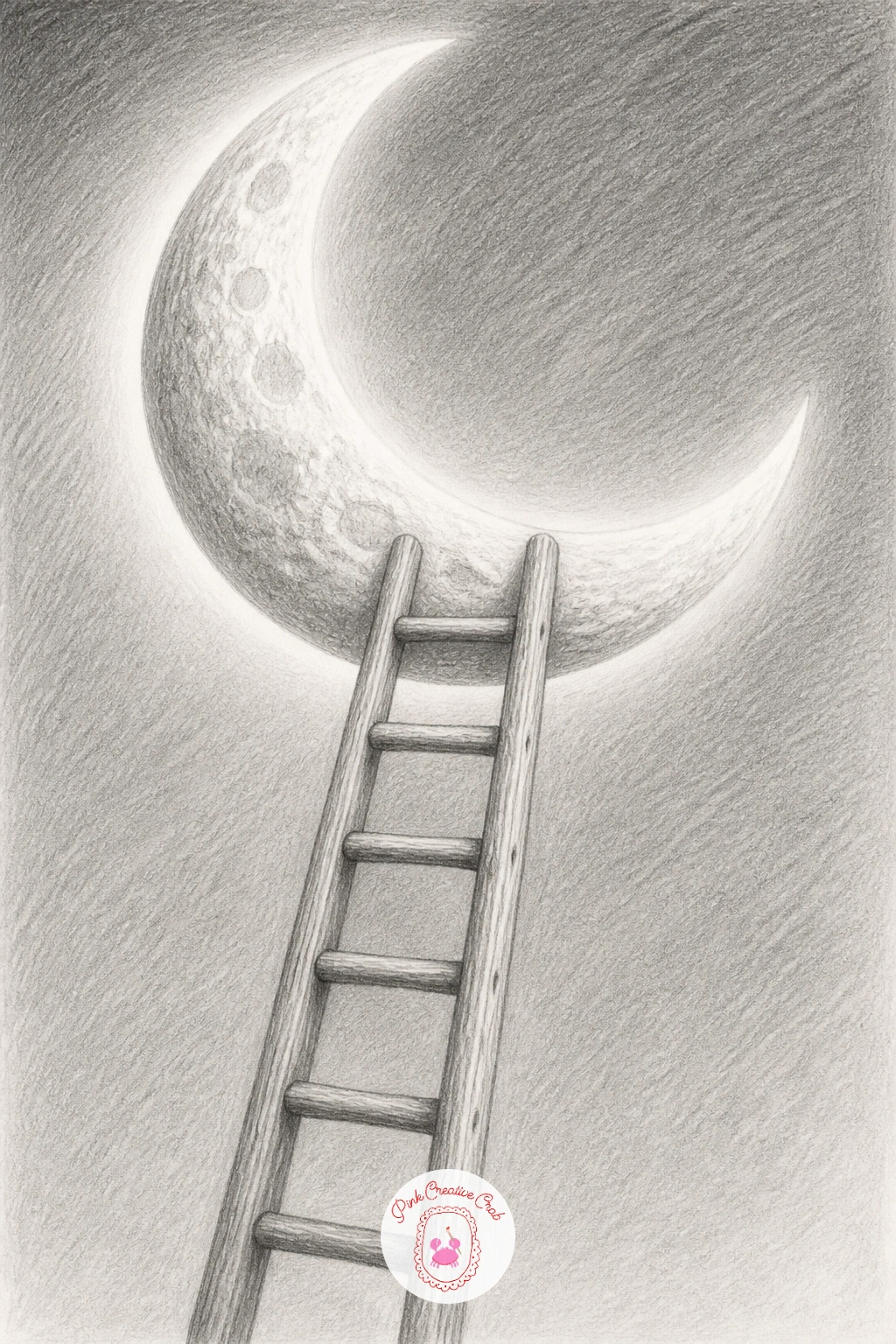
A wooden ladder propped against a crescent moon takes the everyday object into the sky for one of the dreamier ideas on this list. Draw the moon first as a clean crescent shape, then lean the ladder against its lower curve at a believable angle, same trick as the earlier unicycle against the lamppost: mark the two contact points before filling in the rungs between them.
Shade the moon with a soft gradient, darkest along the inner curve of the crescent and fading to near-white at the outer edge, leaving the background around it completely untouched so the moon glows rather than sitting flat on a grey sky.
The ladder’s wood grain comes from a handful of long, light vertical strokes rather than heavy shading, since a ladder reads as old and worn more through its uneven rungs than through dark tone.
If the rungs start looking mechanically even, stagger their spacing very slightly, real old ladders are rarely perfectly regular.
Palette: Graphite Grey,Soft Silver,Warm Brown
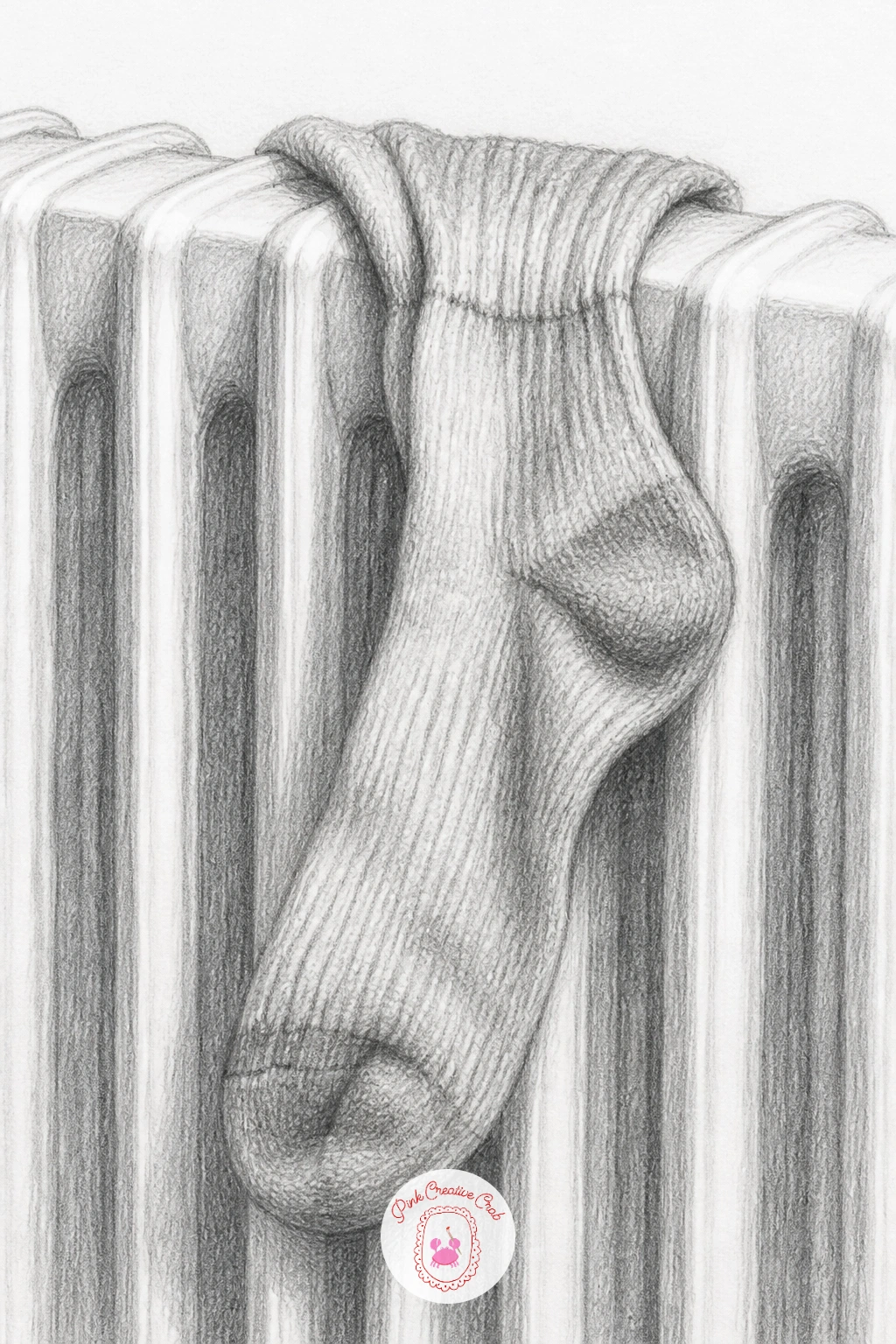
Come back down to earth with something quietly funny: a lone sock drying on a radiator, abandoned by its pair. Draw the radiator first as a simple series of vertical ribs or panels, then drape the sock over the top edge, letting it hang down with a slight curve and a little fold where gravity pulls at the fabric.
Shade the radiator’s metal ribs with firm, even strokes and a sharp highlight along each raised edge, since metal radiators have that repeated hard-edged rhythm. The sock, draped over it, gets much softer shading with loose fold lines, which contrasts the stiff metal nicely.
The usual trap here is making the sock symmetrical on both sides of the radiator edge, which looks pinned rather than draped. Let one side hang noticeably longer than the other for a more natural, lived-in feel.
If a radiator feels fiddly to invent from memory, a simple towel rail does the same job and has far fewer ribs to draw.
Palette: Graphite Grey,Warm Beige,Charcoal Black
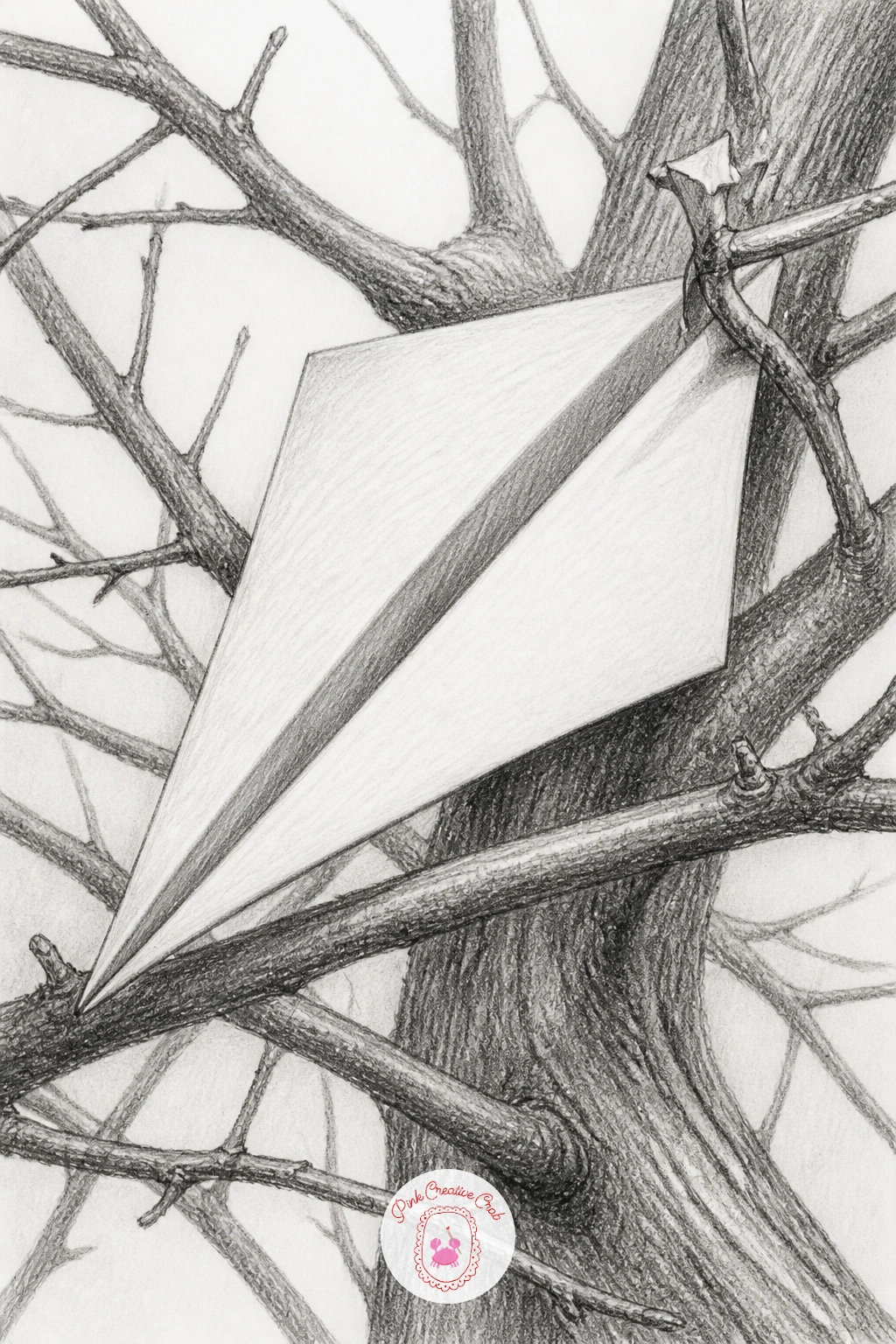
A paper airplane stuck in a tree branch is a small, satisfying scene once the folds of the plane are solid. Draw the paper airplane first with clean straight fold lines defining each wing and the central crease, then wedge it gently into a cluster of branches, one wing tip caught against a twig.
Keep the paper’s shading flat and simple, following each fold plane as its own flat tone rather than a smooth gradient, since paper creases in sharp angles, unlike fabric or skin. The branch and leaves around it get softer, more textured shading by comparison, which helps the paper plane pop forward from its tangle.
If the branches start looking like a solid mass instead of individual twigs, thin out the leaf clusters and let more white paper show between them, crowding is the main thing that sinks this one.
No real tree branch to study, a few photos of bare winter branches online give you the forked, angular shapes this idea needs.
Palette: Graphite Grey,Warm Brown,Sage Green Grey
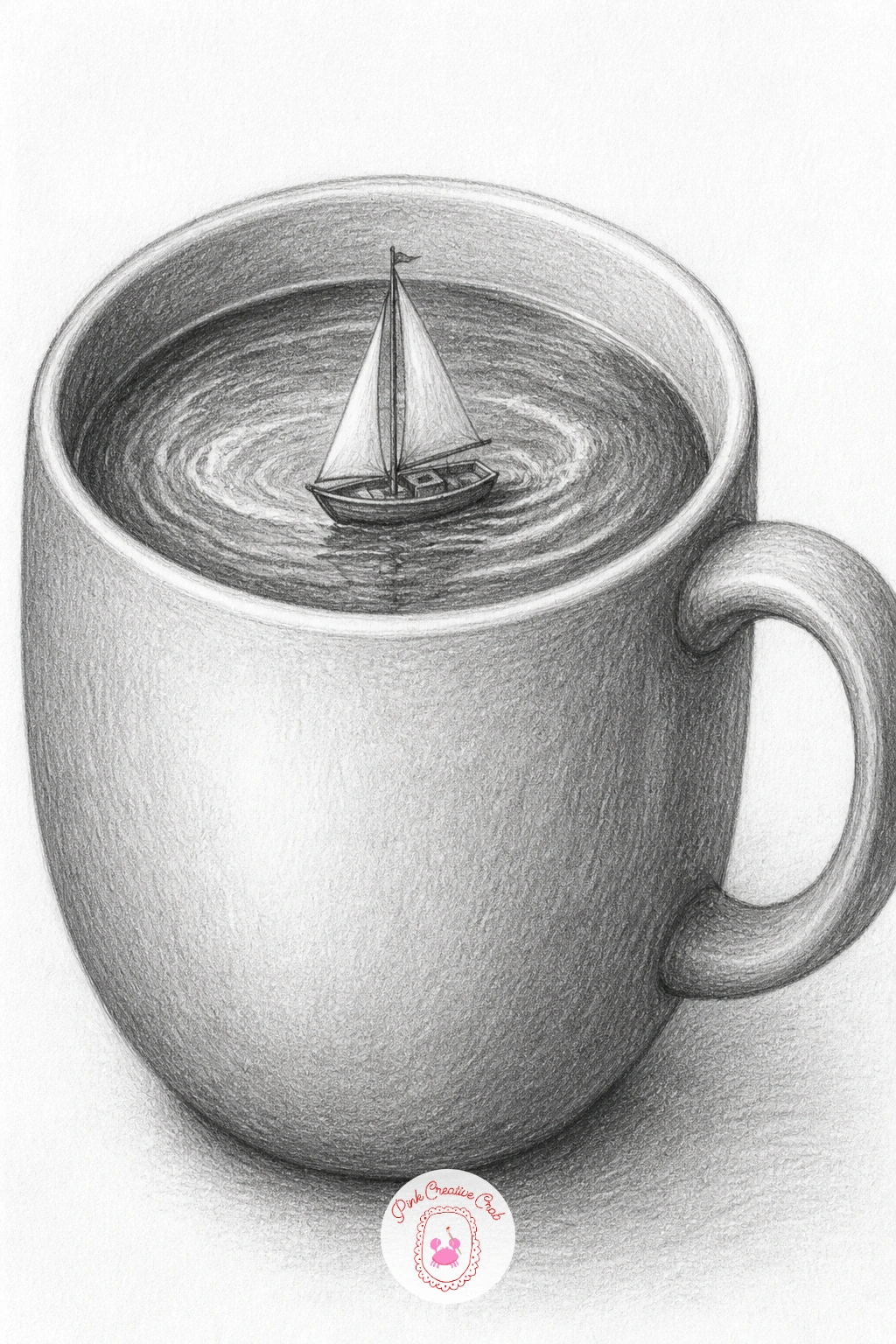
A mug with a tiny boat sailing in the coffee is a cozy little scene worth taking slowly. Draw the mug first as a simple rounded cylinder with a handle, then add the coffee’s surface as a flattened ellipse near the rim, with a tiny sailboat perched on top of it, sail slightly billowed.
Compare the boat’s height to the mug’s handle before finalizing its size, since even a slightly oversized boat breaks the illusion of scale that makes this idea funny in the first place. Keep it small enough that the whole scene still reads clearly as a mug.
Shade the coffee’s surface with smooth, dark, glossy tone and one or two curved highlight streaks to suggest liquid, then keep the mug itself lighter with a single soft highlight running down its side.
If coffee feels too dark to shade evenly, build it up in several light layers rather than one heavy pass, it stays smoother that way. For more cozy mug scenes afterward, the coffee illustration list has plenty more.
Palette: Charcoal Black,Warm Brown,Graphite Grey
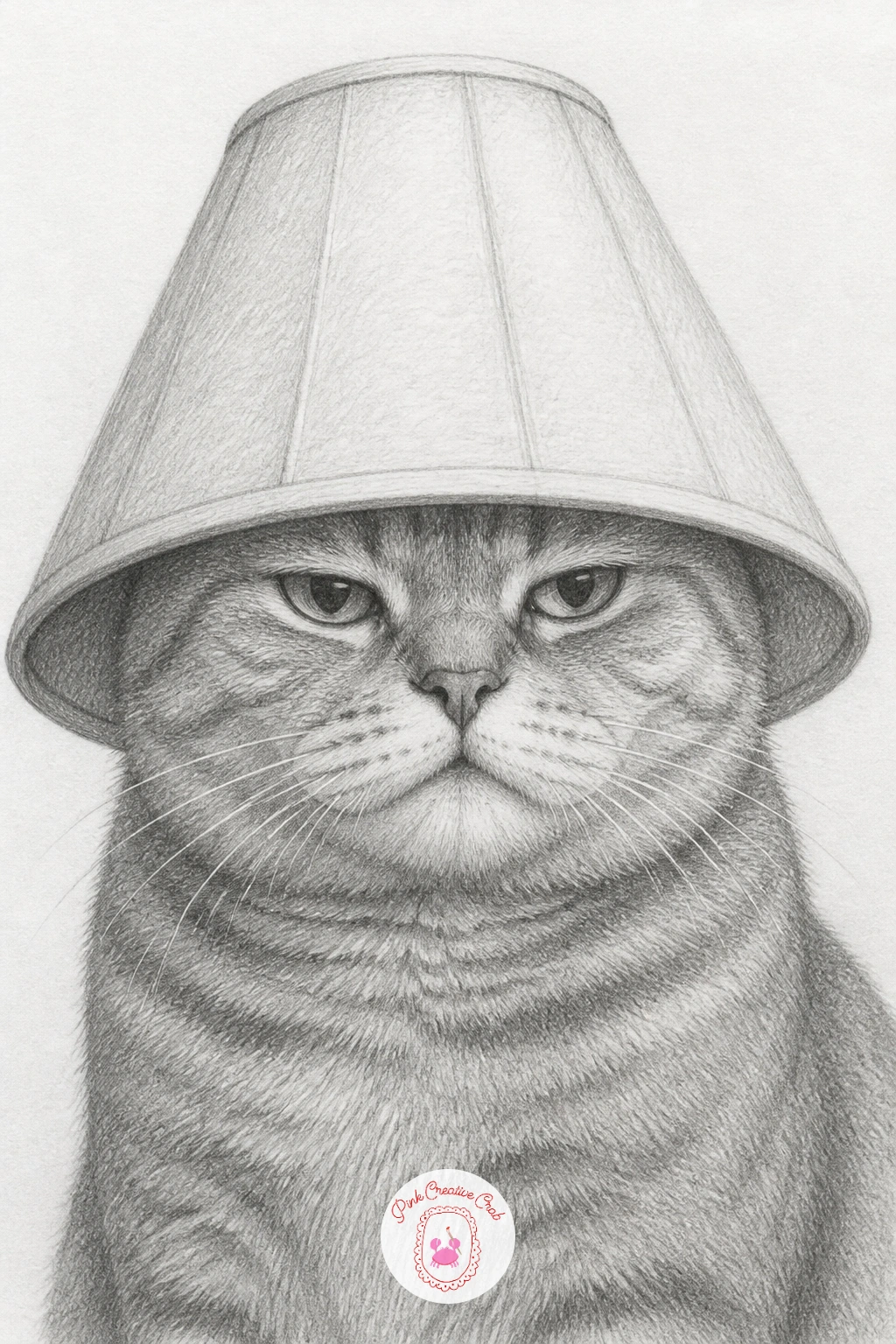
A cat wearing a lampshade as a hat brings the whole sketchbook back to something universally funny. Draw the cat’s head and shoulders first with a calm, unimpressed expression, since the joke lands best when the cat looks completely used to the indignity, then fit the lampshade over its head like an oversized cone hat.
Shade the lampshade with smooth gradients and the same quiet glow trick used in the jellyfish lampshade earlier, lighter where it catches light, with the cat’s ears pressed slightly down under the fabric edge.
Build the cat’s fur shading in short layered strokes, darker around the eyes and along the edges of the face for contrast against the lampshade’s smoother surface. Keeping the cat’s expression flat and deadpan rather than exaggerated is what sells the whole joke.
If drawing a full lampshade cone feels fussy, a simpler bucket shape does the same job and is much quicker to shade evenly.
Palette: Warm Beige,Graphite Grey,Charcoal Black
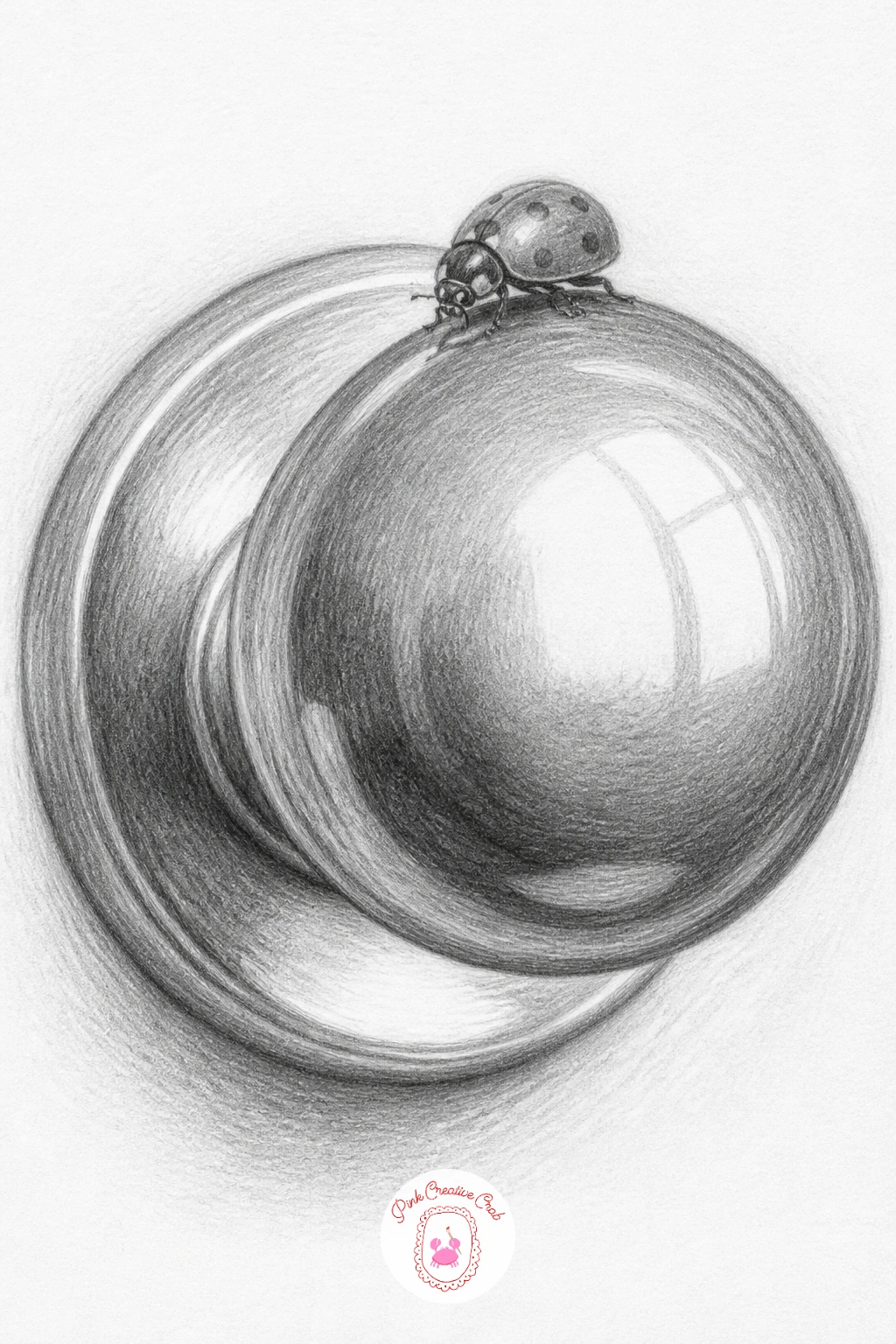
A ladybug sitting on a doorknob is a small, quiet one after the lampshade cat, good for slowing the pencil down again. Draw the doorknob first as a simple round or oval metal shape with a sharp highlight to suggest polished brass or glass, then perch the ladybug on its curved top, legs just visible along the edge.
Shade the ladybug’s shell with smooth, even tone and a scatter of small round spots, leaving a thin bright highlight line along the curve of the shell to suggest its glossy surface, same logic as the goldfish’s glass bulb earlier: shine comes from what you leave untouched, not what you add.
Keep the doorknob’s metal shading separate and harder-edged, with one bold highlight streak rather than a soft gradient, since metal and insect shell catch light quite differently even though both are glossy.
If a round doorknob’s highlight looks muddy, lift it clean with the sharp edge of a kneaded eraser after shading rather than trying to leave it perfectly blank while drawing.
Palette: Faded Red,Charcoal Black,Soft Silver
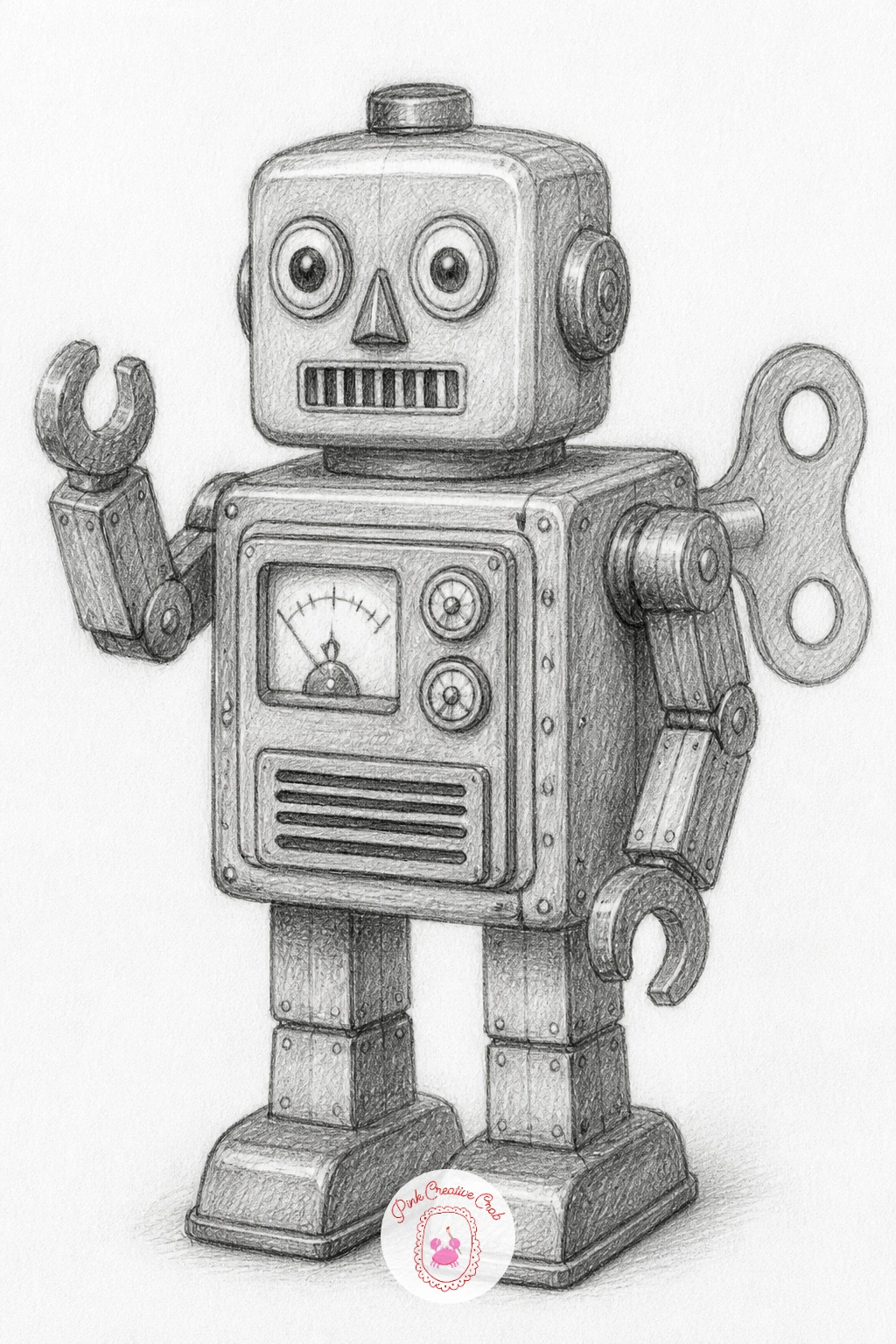
A wind-up toy robot gives you a chance to enjoy straight edges and mechanical repetition after so many organic shapes. Draw the robot’s boxy body first, simple rectangles and cylinders for the torso, arms, and legs, then add the key sticking out of its back, slightly turned as though mid-wind.
Vary it next time once this version works: try the robot mid-stride with one arm raised, or facing a different direction, or swap the boxy build for a rounder, more bubble-shaped body for a softer character.
Shade the metal body with flat planes of tone, each surface a slightly different shade depending on which way it faces, which is the quickest way to suggest a solid three-dimensional box shape without a lot of blending. A few straight scratch marks and small rivets scattered across the body suggest old, well-loved tin toy texture.
If the mechanical proportions feel hard to judge, block the whole robot out of simple rectangles first and only round the corners once the overall shape feels balanced.
Palette: Graphite Grey,Charcoal Black,Soft Silver
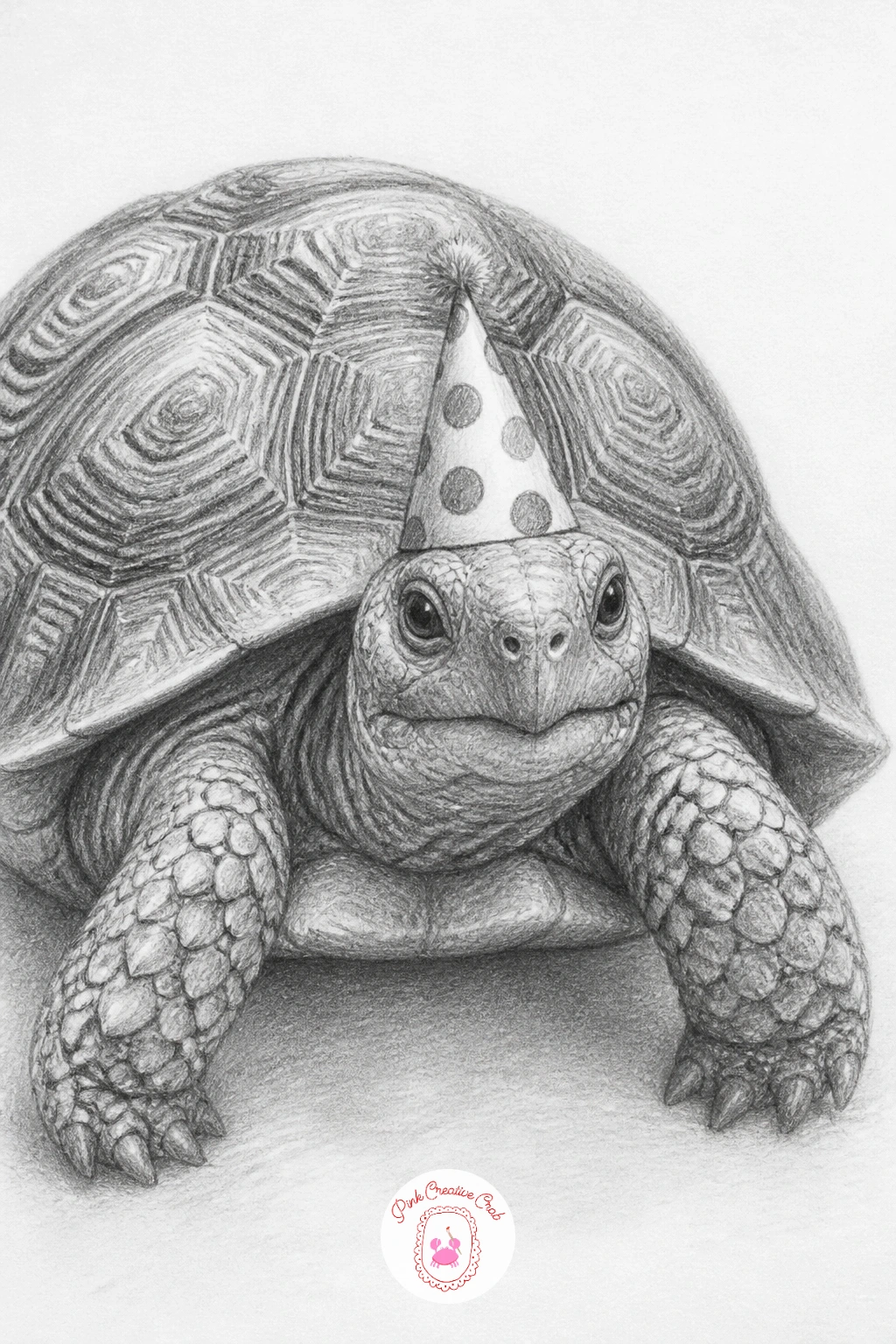
A turtle wearing a party hat is a gentle, celebratory one near the end of the list, and its shell gives you a nice bit of pattern practice. Draw the turtle’s domed shell first with a grid of hexagon-ish segments lightly sketched in, then add the head and legs, and perch a small pointed party hat at an angle between its eyes.
Shade each shell segment slightly differently in tone, some a touch darker, some lighter, which breaks up what could otherwise be a flat repeated pattern and makes the shell feel domed and three-dimensional rather than a flat tiled surface.
Keep the party hat’s shading simple and flat by comparison, with a tiny pompom on top rendered the same loose, radiating-stroke way as the cactus’s pompom earlier in this list, so the two materials, hard shell and soft paper hat, read clearly apart.
If the hexagon shell pattern feels fiddly to plan, lightly draw a few curved guide lines across the dome first and let the segments follow those curves rather than trying to freehand each one from scratch.
Palette: Moss Green Grey,Warm Brown,Faded Red
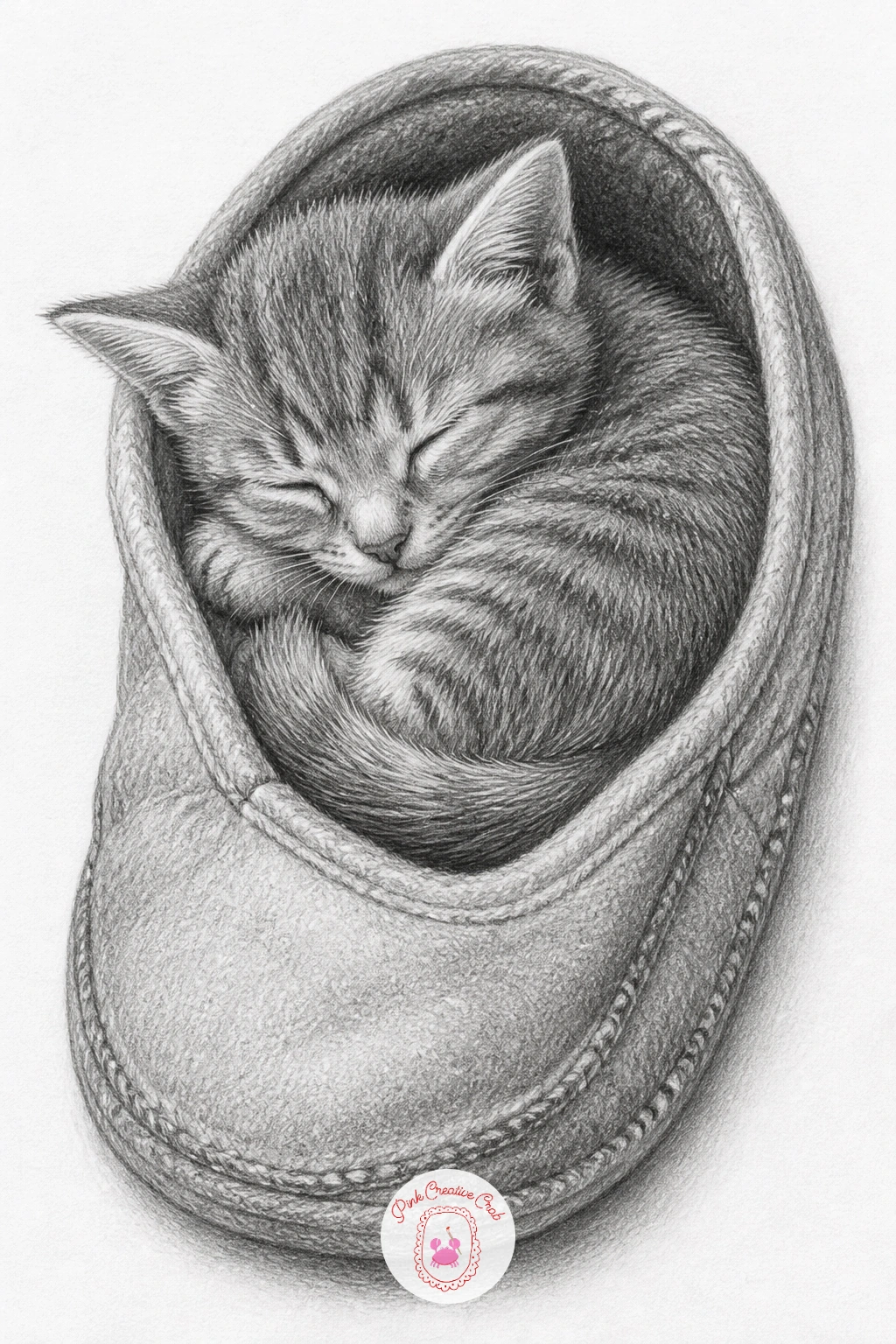
Close the whole sketchbook session on something soft and quiet: a slipper used as a bed by a kitten curled up fast asleep inside it. Draw the slipper first as a simple worn shape with a slightly flattened heel and a soft fabric opening, then curl the kitten into the space where a foot would normally rest, tail wrapped close to its body.
Shade the slipper’s fabric with smooth, flat tone and a few soft crease lines where it has been stepped into many times, then build the kitten’s fur with the same short flicking strokes used for the cat in the paper bag earlier, keeping the shading gentlest right around the closed eyes where the fur lies smoothest.
The easiest way to lose this one is making the kitten too large for the slipper to still look believable. Keep its curled body smaller than the slipper’s opening, tucked well inside rather than spilling over the edge.
If a slipper is hard to reference from memory, a soft basket or a folded blanket nest tells the same quiet story just as well, and finishes this sketchbook session on a calm note.
Palette: Warm Beige,Graphite Grey,Charcoal Black
What to Do Next
Pick whichever idea made you smile first, grab a pencil and a page with some room to breathe, and start with the simplest shape in the scene before adding any shading. There is no wrong order to work through this list, so let the sketchbook fill up one odd little object at a time.
Frequently Asked Questions
What makes a good random sketch idea when you are stuck creatively?
A good random sketch idea pairs one ordinary object with one unexpected action or detail, like a teapot that walks or a toaster that sleeps. Keeping it to a single subject with a small twist makes it quick to finish and easy to repeat daily.
Do I need reference photos for these quirky sketch ideas?
No, most of these subjects come straight from imagination since you already know what a teapot, a shoe or a sock looks like. A quick reference photo only helps for trickier mechanical shapes like the sewing machine or the toy robot.
What pencils work best for this kind of soft graphite sketch?
A range from HB through 4B covers it well, with HB or 2B for most outlines and midtones and a softer 4B for the deepest shadows. A kneaded eraser is just as important for lifting soft highlights back out of shaded areas.
How do I keep these random objects from looking stiff or flat?
Add one small asymmetry, like an uneven lean, a longer fold on one side, or a slightly tilted head, since perfectly symmetrical objects read as stiff. Gradual shading rather than flat tone also helps every shape feel rounded and real.
How long should one of these sketches take to finish?
Most of these fit comfortably into ten to forty minutes depending on how much shading and detail you add. Simpler subjects like the sock on a clothesline finish fast, while textured ones like the robot or the thimble crab reward more time.
Have any thoughts?
Share your reaction or leave a quick response — we’d love to hear what you think!
-
 0
-
 0
-
 0
-
 0
-
 0
-
 0
