Birthday card ideas for dad work best when they skip the balloons and cake and go straight for the moment he actually loves: the grill smoking, the dog at his feet, the lake at dawn. Markers are the right tool for this because they lay down flat, confident color fast, and a card front only needs one clear scene, not a whole gallery piece.
Below are 27 scenes built from the everyday things dads do, from flipping burgers to sharing a sandwich with a seagull on the pier. Pick the one that sounds most like him, grab a black fineliner and a small set of alcohol markers, and you will have a finished card before the kettle boils twice.
Using these images: free for personal projects such as printing, coloring, cards, journals and gifts. Handmade items that include them may be sold up to 30 pieces per design. More than that is commercial use and is not permitted, and neither is selling or sharing the images themselves or passing them off as your own. Please ask before any other use.
Start here if you want the easiest win on this list: dad flipping burgers on a backyard grill with smoke curling up above him. Sketch his shape first in light pencil, a wide stance with one arm raised holding a spatula, then go over the lines with a fineliner once you are happy with the proportions.
Block in the grill as a simple dome shape with short lines for the grate, then color the figure in navy blue for his shirt and brick red for an apron or cap. Leave the smoke as white paper, just outlining its curls with a thin grey marker so it reads against the sky.
The usual mistake is making the smoke too solid, which flattens the whole scene. Keep it as a few loose curved lines rather than a filled shape, and it will look like it is actually rising.
If you do not have a grey marker for the smoke, a light pencil shading or even leaving it as pure white outline works just as well.
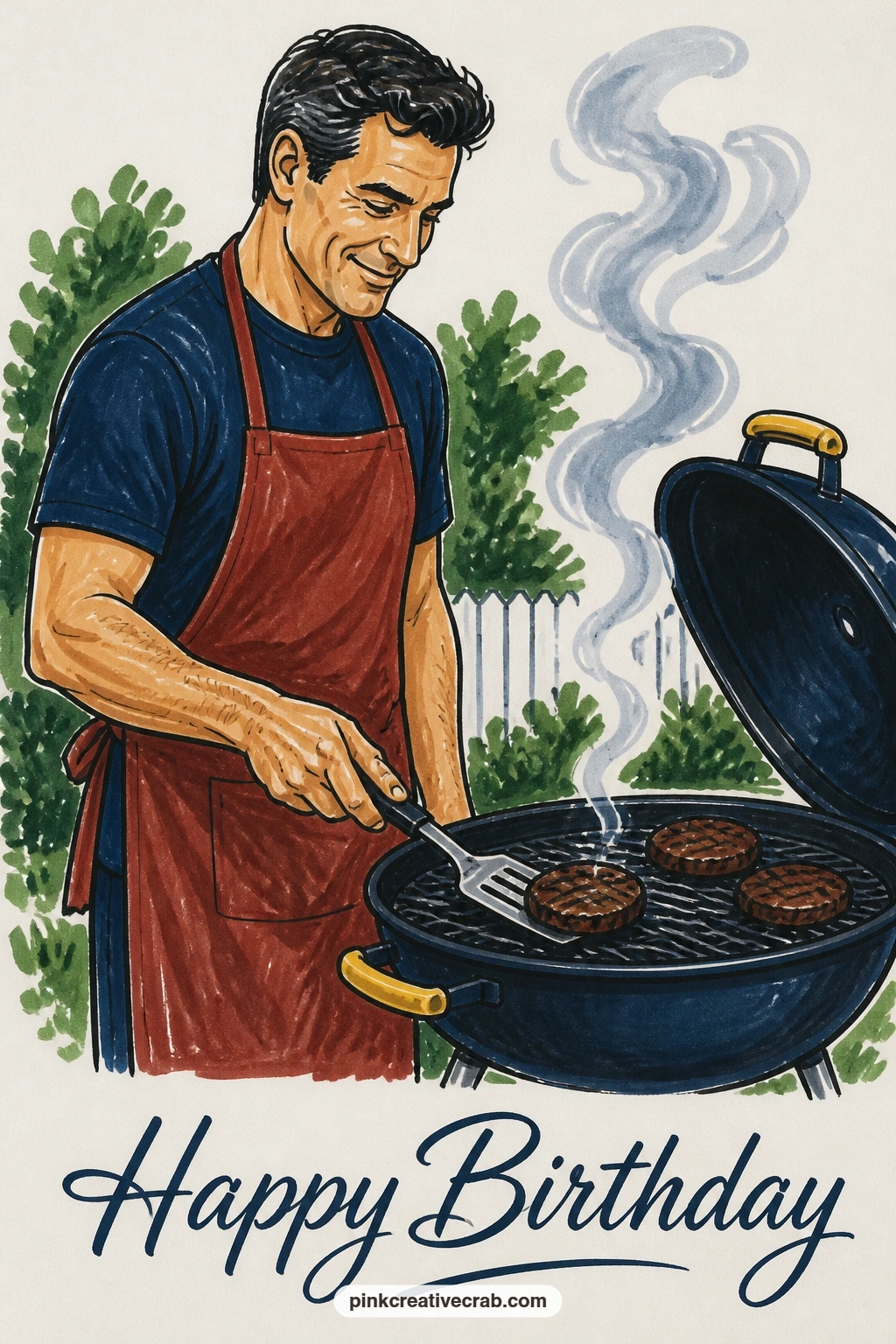
Palette: Navy Blue,Brick Red,Mustard,Warm Grey
Move from the backyard to the water with dad fishing from a rowboat at dawn, a thermos propped beside him. Draw the boat first as a simple curved hull shape sitting on a flat horizon line, then add dad sitting inside with a fishing rod angled out over the water.
Layer the water in horizontal marker strokes, navy blue closest to the boat and a lighter blue further out, so the surface reads as calm rather than choppy. Keep the sky mostly white or pale mustard to suggest early morning light, with the thermos as a small brick red cylinder beside his feet.
Boats tip over easily on paper if the waterline sits wrong, so check that the hull sits just below the surface before you commit to ink. A ruler helps keep that horizon line straight if your hand is not steady yet.
No thermos reference handy? Draw it as a plain rounded cylinder, it reads instantly without extra detail.
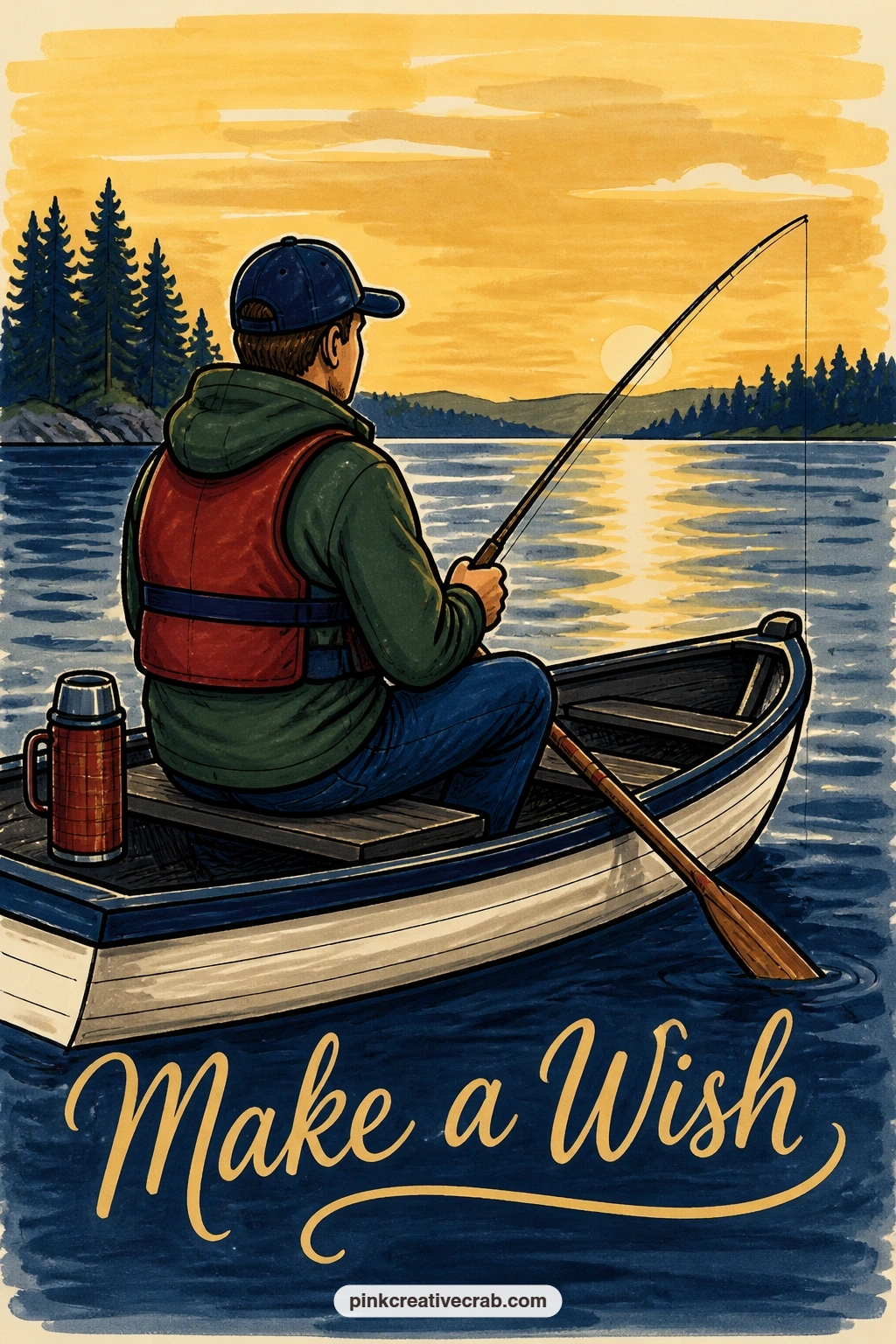
Palette: Navy Blue,Sky Grey,Brick Red,Mustard
Fishing takes patience, and so does this next one: dad dozing in his armchair with a coffee mug in hand and the dog asleep across his feet. Draw the armchair as a wide rounded rectangle first, then fit dad into it leaning slightly to one side with his eyes closed.
Add the dog as a simple curled oval shape at his feet, legs tucked in, and the mug resting loosely in his hand or balanced on the chair arm. Color the chair in forest green and keep dad’s clothes in navy, letting the mustard show up as a small cushion or mug detail.
This scene can look stiff if the body sits too upright, so slump the shoulders and tilt the head just slightly for a convincing nap. A kneaded eraser lifts any pencil lines that show once the marker goes down, which keeps the whole thing looking clean.
Try this one in ten minutes with flat color only, or spend closer to forty minutes adding soft shading along the chair folds for a more finished look.
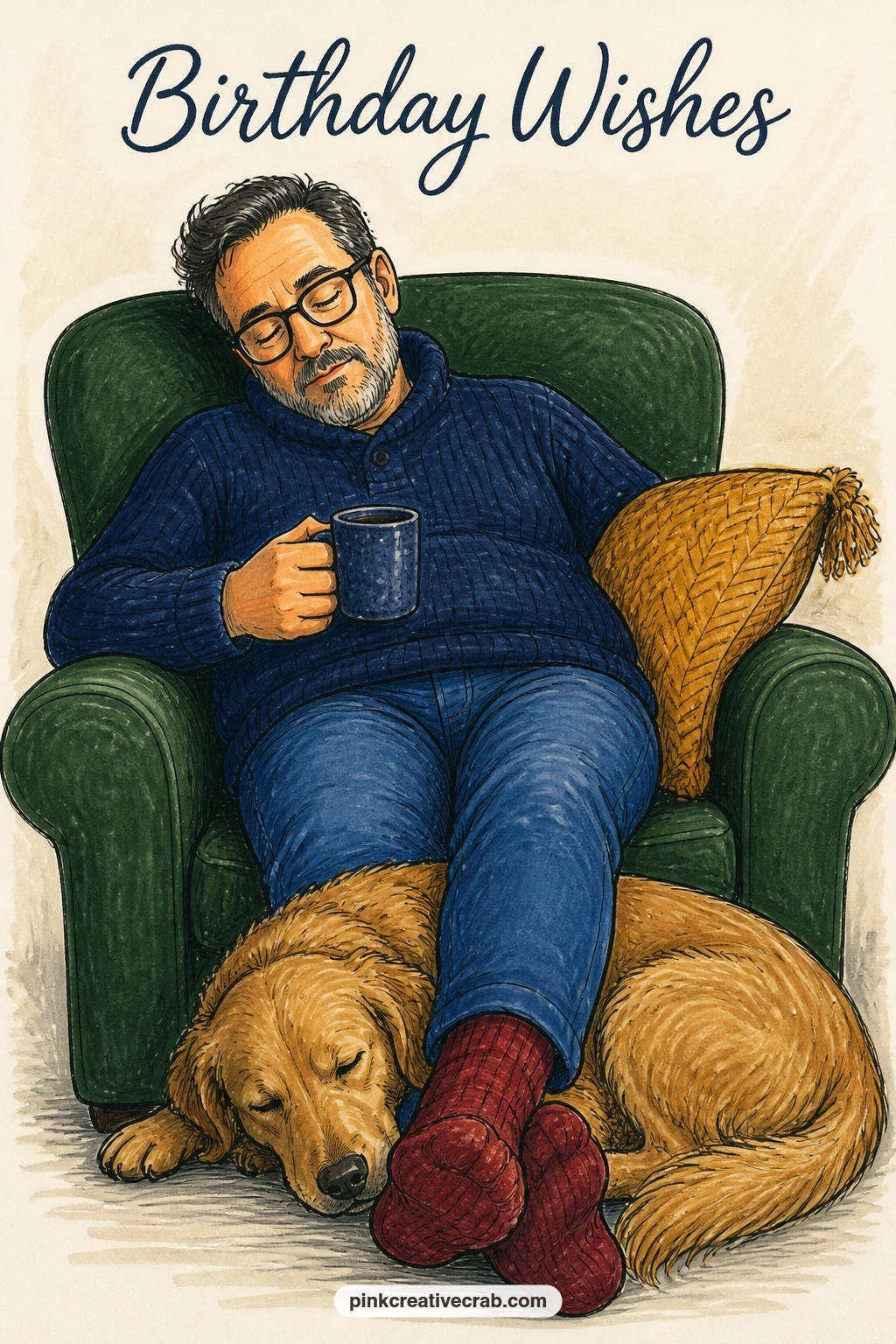
Palette: Forest Green,Navy Blue,Mustard,Warm Brown
From a quiet nap to a brisk walk outside, try dad in a flat cap walking the dog through autumn leaves. Start with dad’s silhouette mid stride, one hand holding a leash that angles down to the dog trotting beside him, and keep the flat cap as a simple curved shape on his head.
Scatter leaf shapes across the ground in brick red and mustard, varying their size so the path feels full without looking cluttered. Keep his coat in navy or forest green so the leaves stand out as the warm accent color in the scene.
Drawing leaves one at a time often ends up looking too neat and gridded, so vary the spacing and let a few overlap near his boots. If you want to skip detailed leaf shapes altogether, loose dabs of color read just as well from a small card distance.
For more autumn ground cover ideas, the autumn sketchbook ideas page has plenty of inspiration for scattered leaves and walking paths.
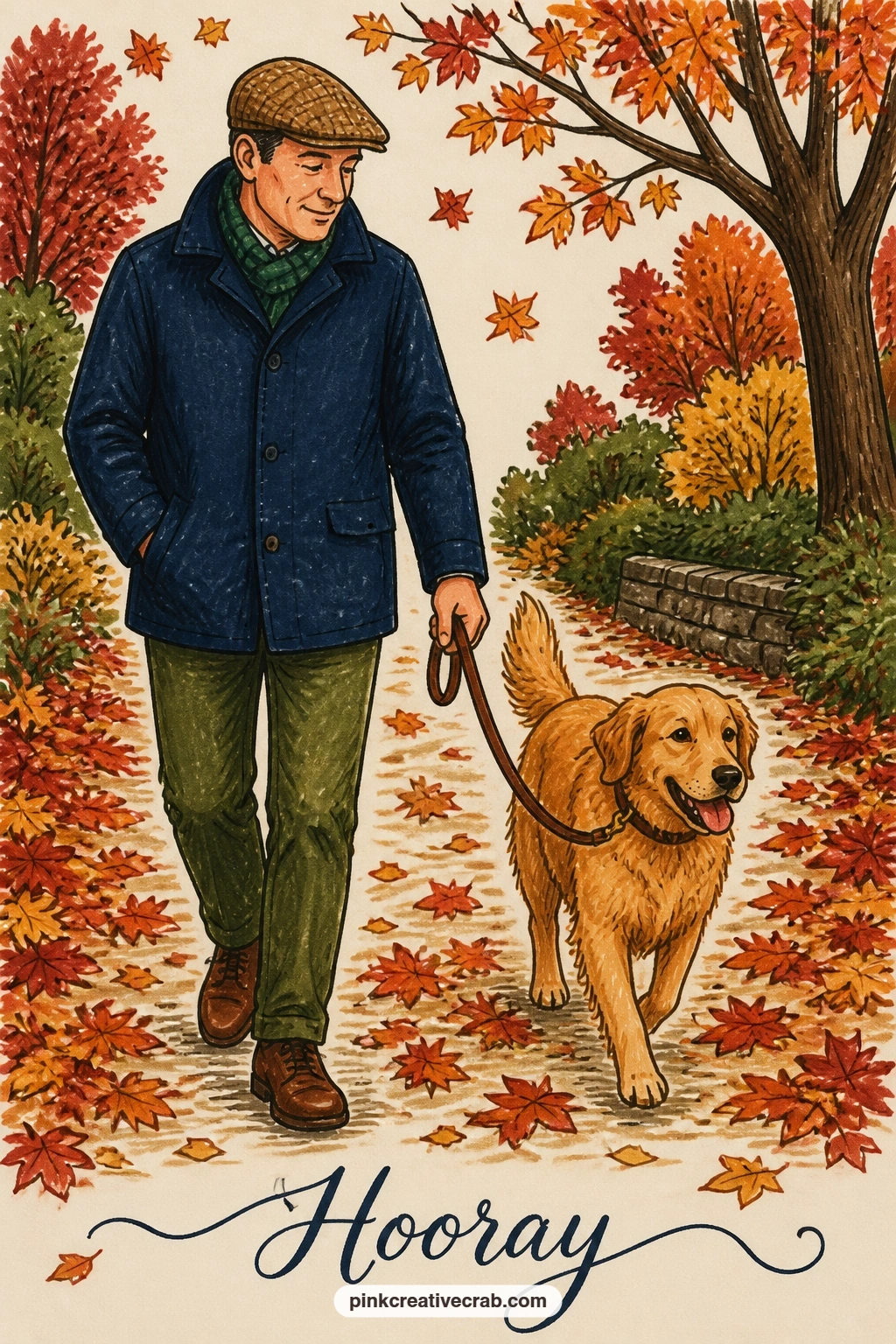
Palette: Brick Red,Mustard,Forest Green,Navy Blue
Keep the outdoor energy going with dad tending a vegetable patch beside a wheelbarrow full of squash. Sketch the wheelbarrow first as a simple rounded tub shape on one wheel, since getting its proportions right early makes the whole scene sit correctly on the page.
Measure dad’s height against the wheelbarrow handle, roughly twice as tall, to keep the scale believable before you ink anything. Fill the wheelbarrow with a few mustard and brick red squash shapes, overlapping slightly, and give dad a simple kneeling or bending pose with a trowel in hand.
Vegetable patches can turn into a messy tangle of green scribbles if you are not careful, so keep the rows as a few clean curved lines rather than filling the whole background with detail. Forest green works well for the leafy rows behind him.
If squash shapes feel tricky, round pumpkins are an easy stand in and still read clearly in mustard and brick red.
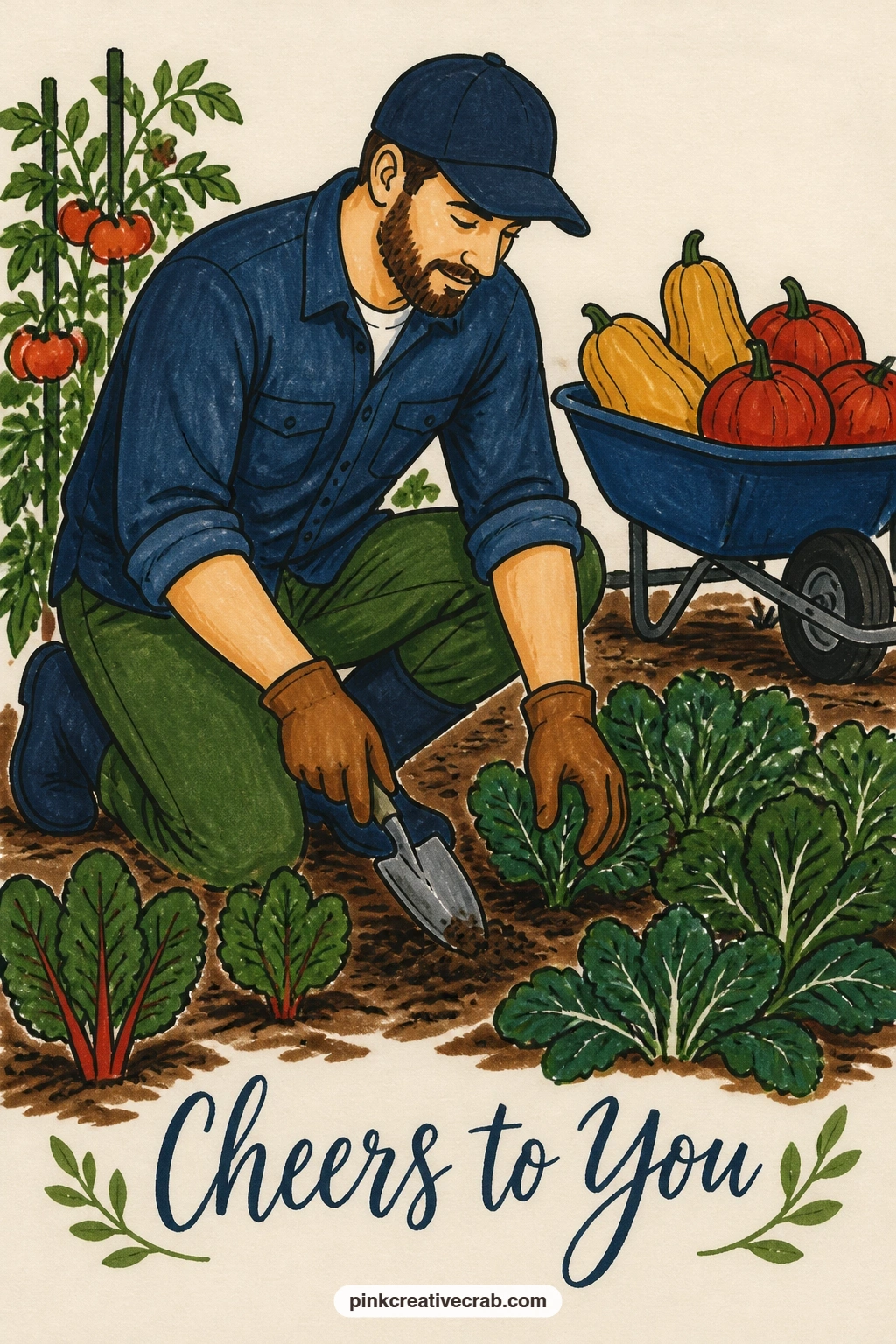
Palette: Forest Green,Mustard,Brick Red,Navy Blue
Trade the garden for a campsite and try dad pouring coffee from a camp kettle beside a lakeside tent. Place the tent as a simple triangle shape first, anchoring the whole composition, then add dad crouched or standing beside it with the kettle tipped toward a cup.
Think about where the morning light sits here, low and warm from one side, since that decides which side of the tent and which side of dad’s face gets the lighter mustard tone and which stays in navy shadow. The lake behind can stay as a few flat navy strokes with a thin strip of pale sky above.
A common slip is drawing the coffee stream too thick, which makes it look solid rather than poured. Keep it as one thin curved line between kettle and cup.
No kettle on hand for reference? A simple rounded shape with a spout and handle is all it needs to read clearly.
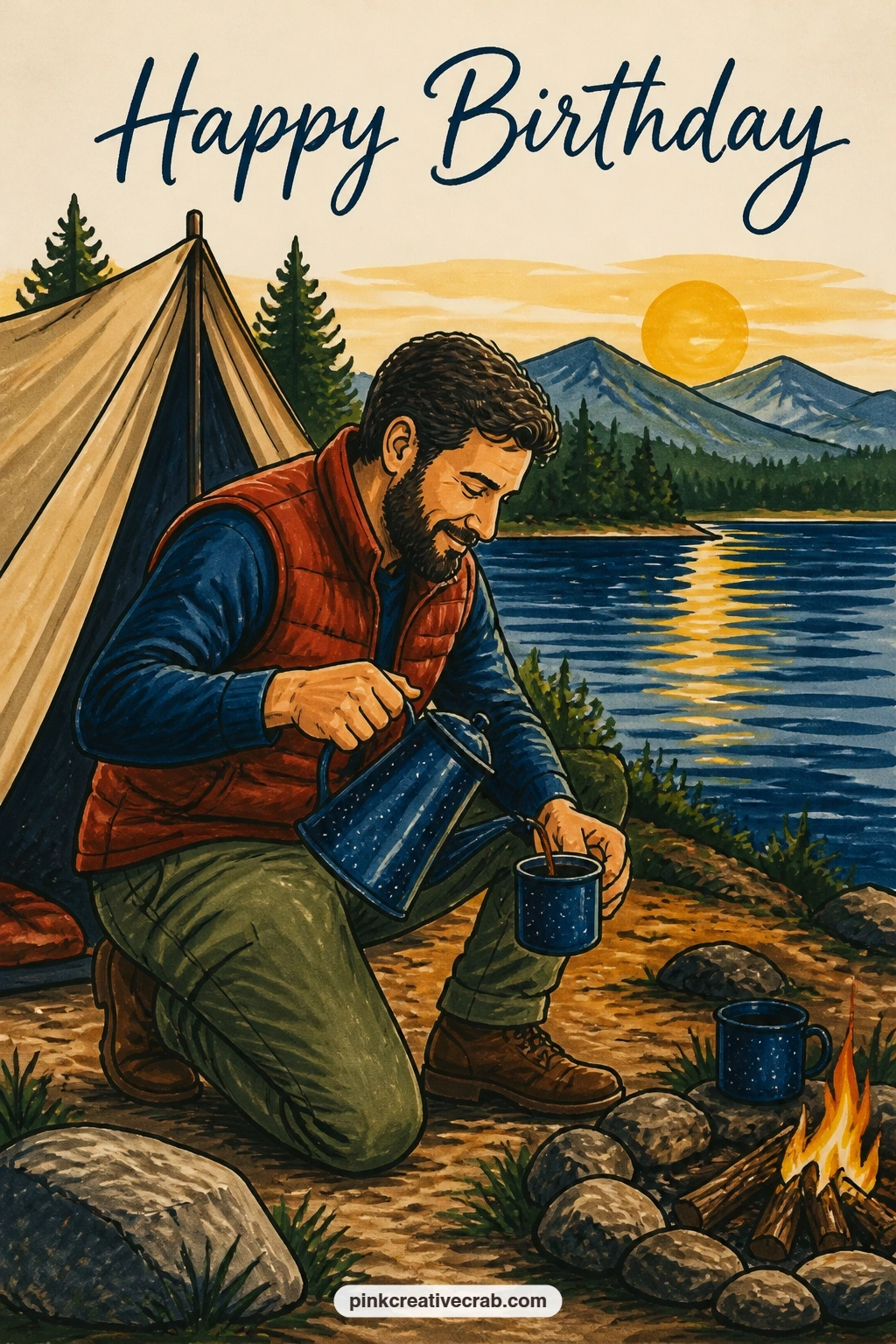
Palette: Navy Blue,Mustard,Forest Green,Warm Brown
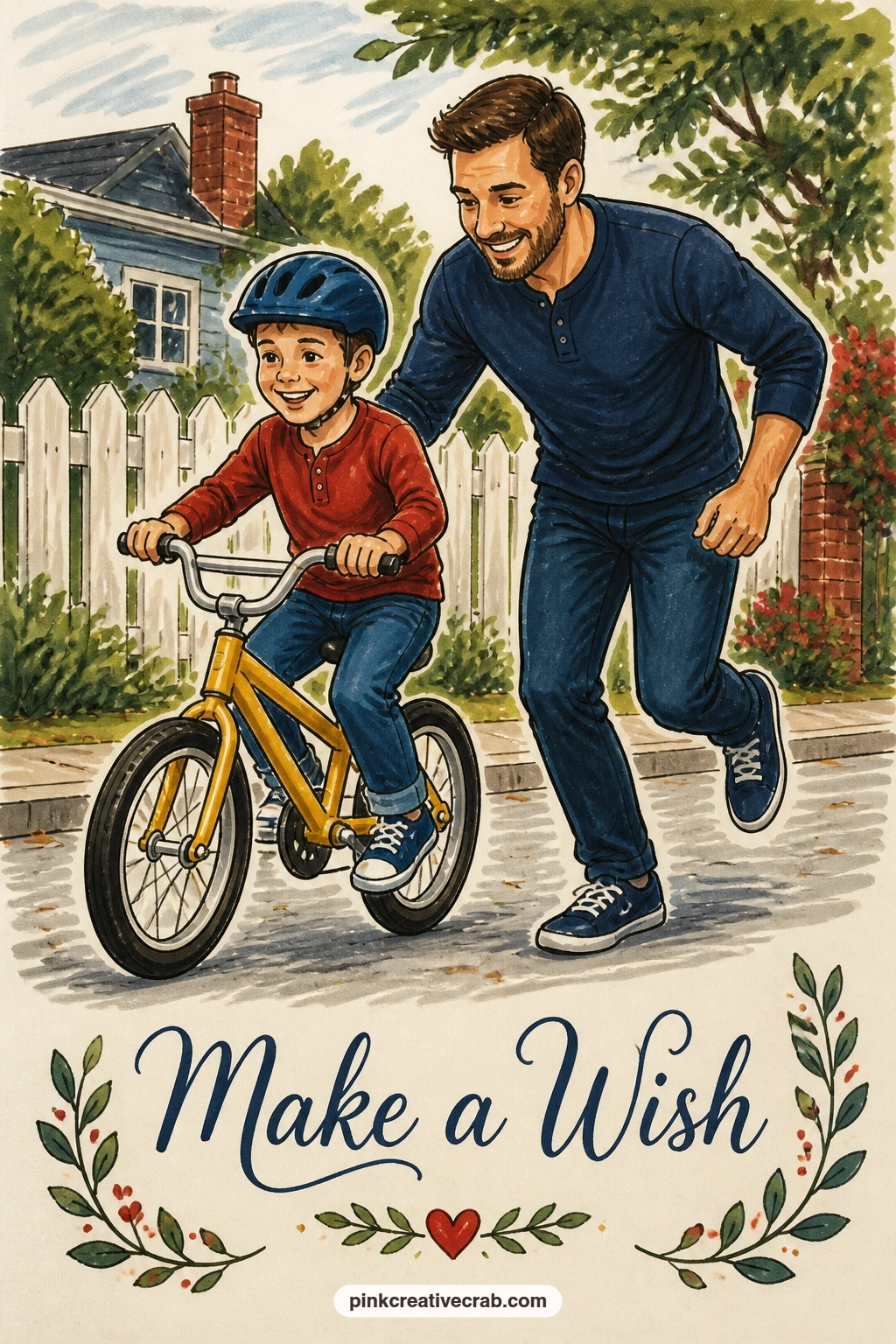
Family moments work just as well as hobbies, so try dad teaching a child to ride a bike on a quiet street. Draw the bike first since it anchors the whole pose, a simple two circle wheel shape with a frame between, then add the child seated on it leaning slightly while dad runs alongside with one hand on the seat.
Keep both figures in motion by angling their legs and leaning their bodies forward rather than drawing them stiff and upright. Navy works well for dad’s clothes with the child in a brighter mustard or brick red so the two figures read as separate from each other at a glance.
Bikes often come out lopsided if the wheels are not the same size, so trace one coin or cap for both circles to keep them matching. The street itself needs only a simple horizon line and maybe one lamppost, nothing more.
Try the quick version with just the two figures and bike in ten minutes, or add a fence and a tree in the background if you have more time.
Palette: Navy Blue,Mustard,Brick Red,Warm Grey
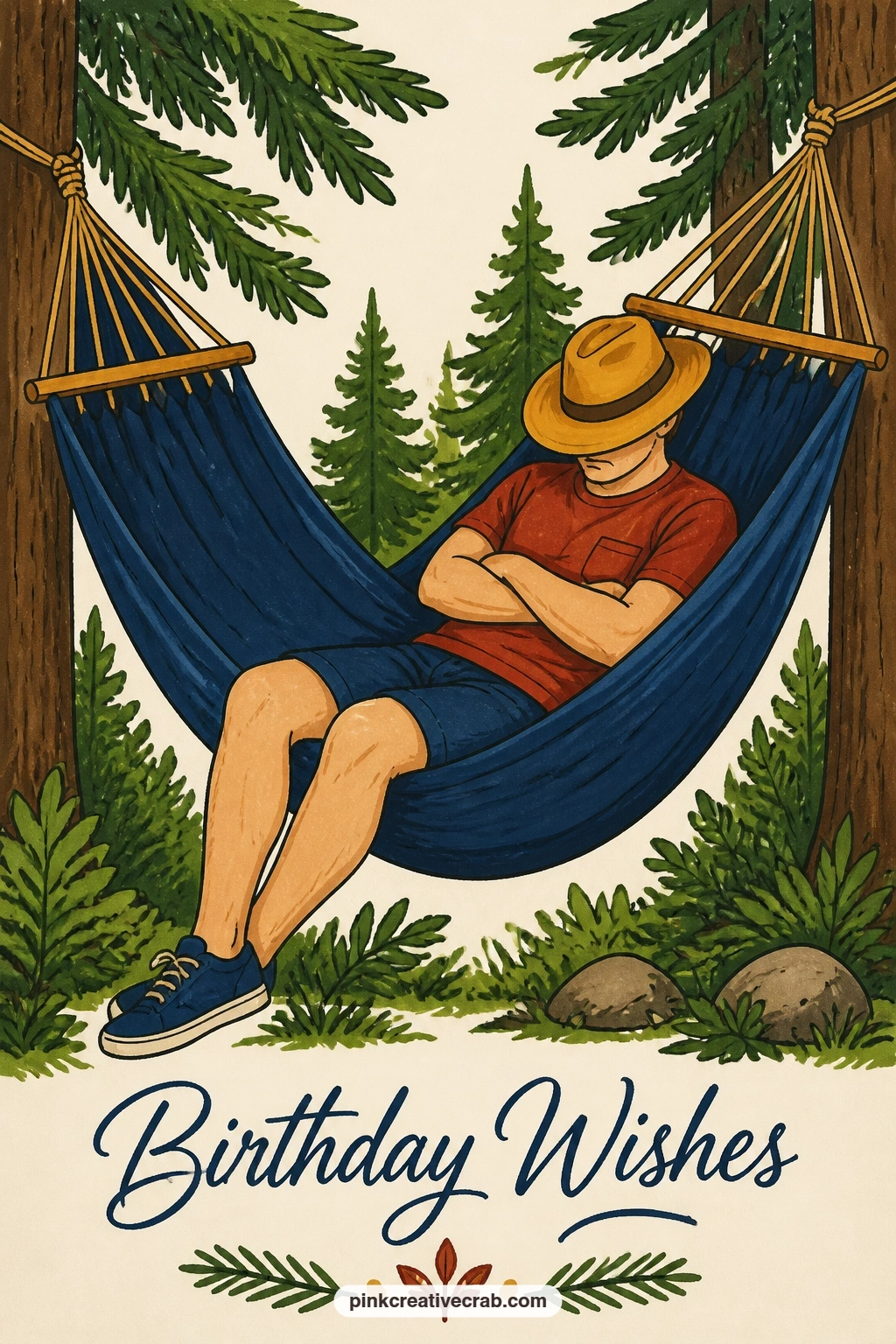
Slow things down again with dad asleep in a hammock, a hat tipped over his face. Draw the hammock first as a wide curved sling shape strung between two simple tree trunk lines, then fit dad’s body into that curve so he sags naturally rather than sitting flat.
His arms can fall loosely over the sides and the hat covers most of his face, which actually makes this an easy face to skip drawing altogether if portraits feel intimidating. Keep the trees in forest green with the hammock itself in navy or brick red fabric.
The hammock curve is the part that goes wrong most often if it is drawn too shallow, since a flat hammock looks like a plank rather than something he is sinking into. Deepen the curve more than feels natural and it will read correctly.
Swap the trees for two simple posts if you would rather skip foliage entirely, the hammock still reads the same way.
Palette: Navy Blue,Forest Green,Brick Red,Mustard
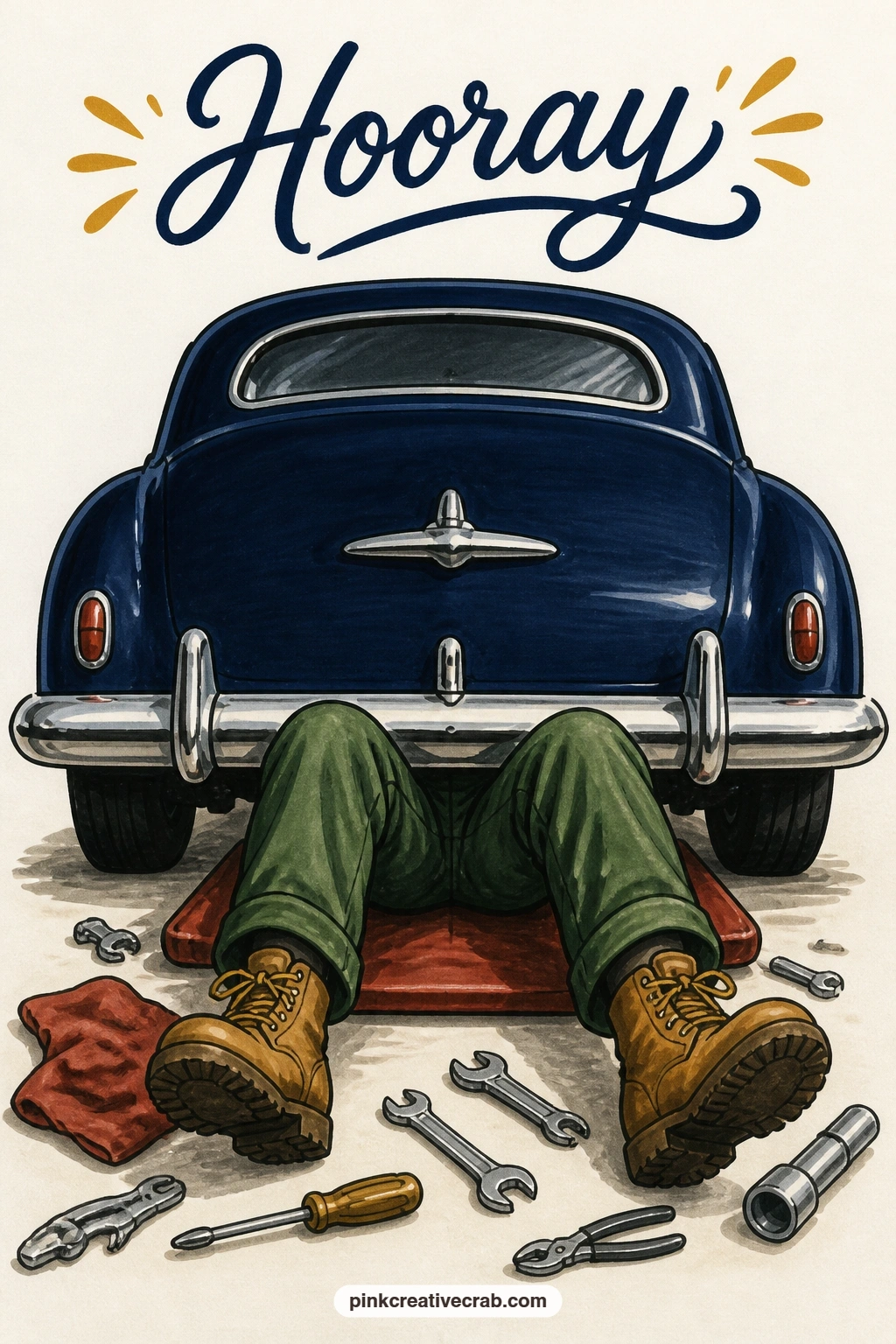
Switch gears entirely for dad fixing a vintage car with only his legs sticking out from underneath it. Draw the car body first as a rounded, slightly boxy shape with clear wheel arches, since getting this silhouette right is what sells the vintage look before anything else goes in.
Add just two legs poking out from under the front end, bent at the knee with work boots on, and a scatter of simple tools beside them. Navy or forest green work well for the car body with brick red for a tool handle or rag as the accent.
Wheel arches are the detail that most often throws the whole car off balance, so sketch both wheels the same size using a tracing circle before inking the body around them. Keep the chrome trim as thin white gaps rather than drawing it in detail.
If you want to vary this scene later, try the same pose with a lawnmower or motorcycle instead of a car body.
You Will Need
- round object to trace circles for wheels
Palette: Navy Blue,Brick Red,Warm Grey,Mustard
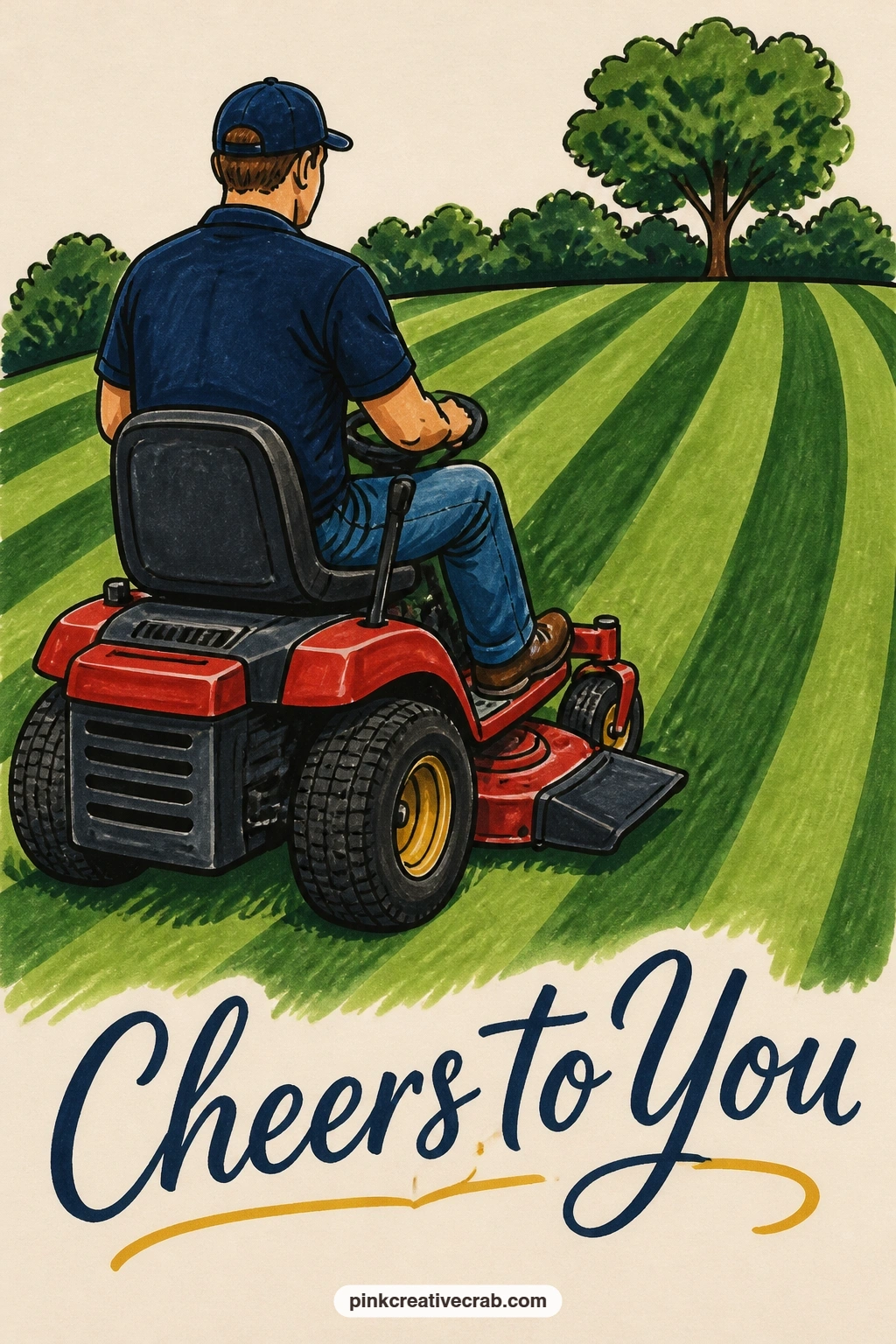
Bring the scale back down with dad mowing stripes into the lawn on a ride-on mower. Draw the mower first as a simple boxy seat over two wheels, then sit dad on top with his hands on the steering wheel and his posture upright and relaxed.
The eye level here sits low, almost at lawn height, which means the mower and dad both sit fairly high in the frame while the mowed stripes stretch out flat beneath. Alternate two shades of green in straight bands behind the mower to get that classic striped lawn look, darker forest green and a lighter mustard green mix.
Stripes drawn freehand tend to wobble, so lay a ruler lightly for the first few lines until your hand gets the rhythm, then finish the rest by eye. Navy works well for his shirt against all that green.
No ruler nearby? Fold a strip of paper in half repeatedly to mark even stripe widths instead.
You Will Need
- ruler
Palette: Forest Green,Mustard,Navy Blue,Warm Grey
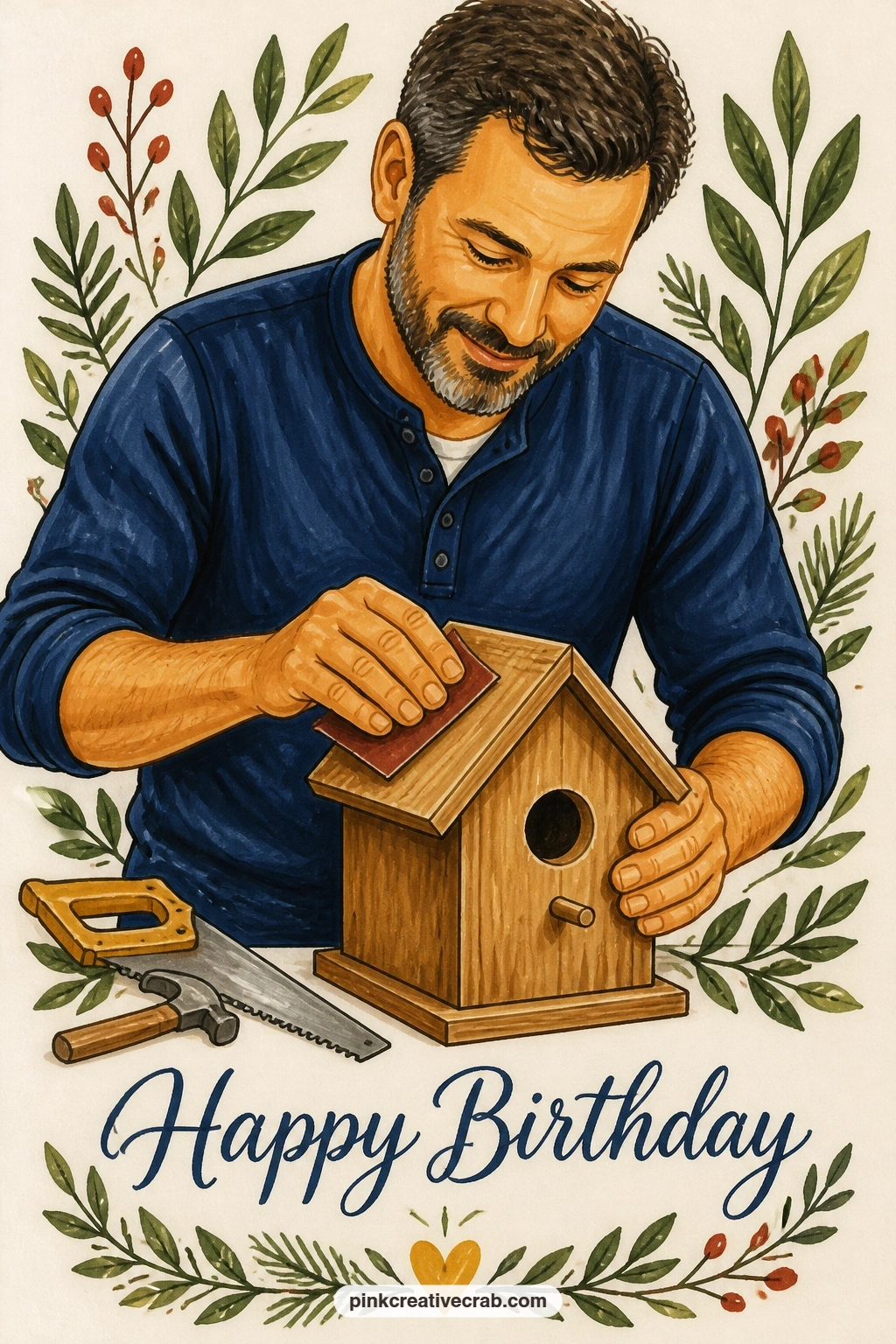
Head into the workshop next for dad sanding a wooden birdhouse at his workbench. Draw the birdhouse first as a simple box with a triangle roof and one round hole, since that small clear shape becomes the focal point of the whole scene.
Dad leans over the bench with both hands on the birdhouse, sanding block pressed against one side, and the workbench itself can stay as a simple flat rectangle with a couple of tool shapes resting on it. Warm brown works well for the birdhouse wood, with navy for his shirt and mustard for a hanging tool or lamp light.
A dry brush technique with the marker, going over an area twice while mostly dry, gives the wood grain a worn texture instead of flat solid brown. This small touch makes the birdhouse look handled and real rather than painted.
Swap the birdhouse for a simple wooden toy or picture frame if you would rather draw a different workshop project.
Palette: Warm Brown,Navy Blue,Mustard,Brick Red
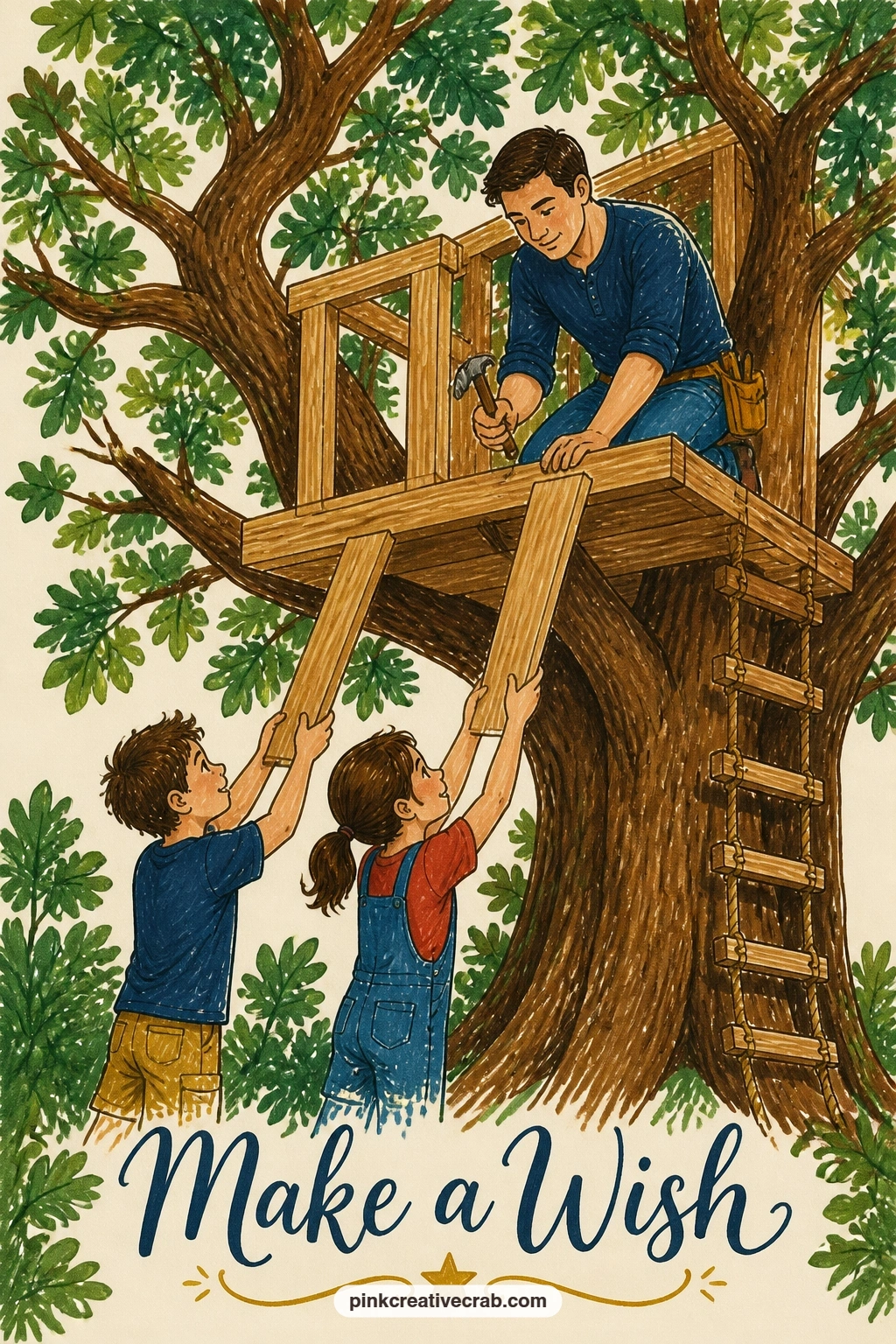
Raise the stakes a little with dad and the kids building a treehouse in an old oak. Start with the oak trunk and main branches first, drawn thick and gnarled, since the treehouse platform needs a believable branch to sit on before anything else goes in.
Place the half built platform across two branches with a few loose planks still leaning against the trunk, then add dad standing on it hammering while one or two kids hand up more wood from below. Keep the oak in forest green and warm brown, with navy and mustard on the figures so they stand out against all that foliage.
Group scenes like this often end up cluttered if every figure gets equal detail, so make dad the clearest, most finished shape and let the kids stay a little simpler and smaller. That keeps the eye moving to him first.
For more ideas on drawing figures in outdoor group scenes, the park drawing ideas page covers similar compositions.
Palette: Forest Green,Warm Brown,Navy Blue,Mustard
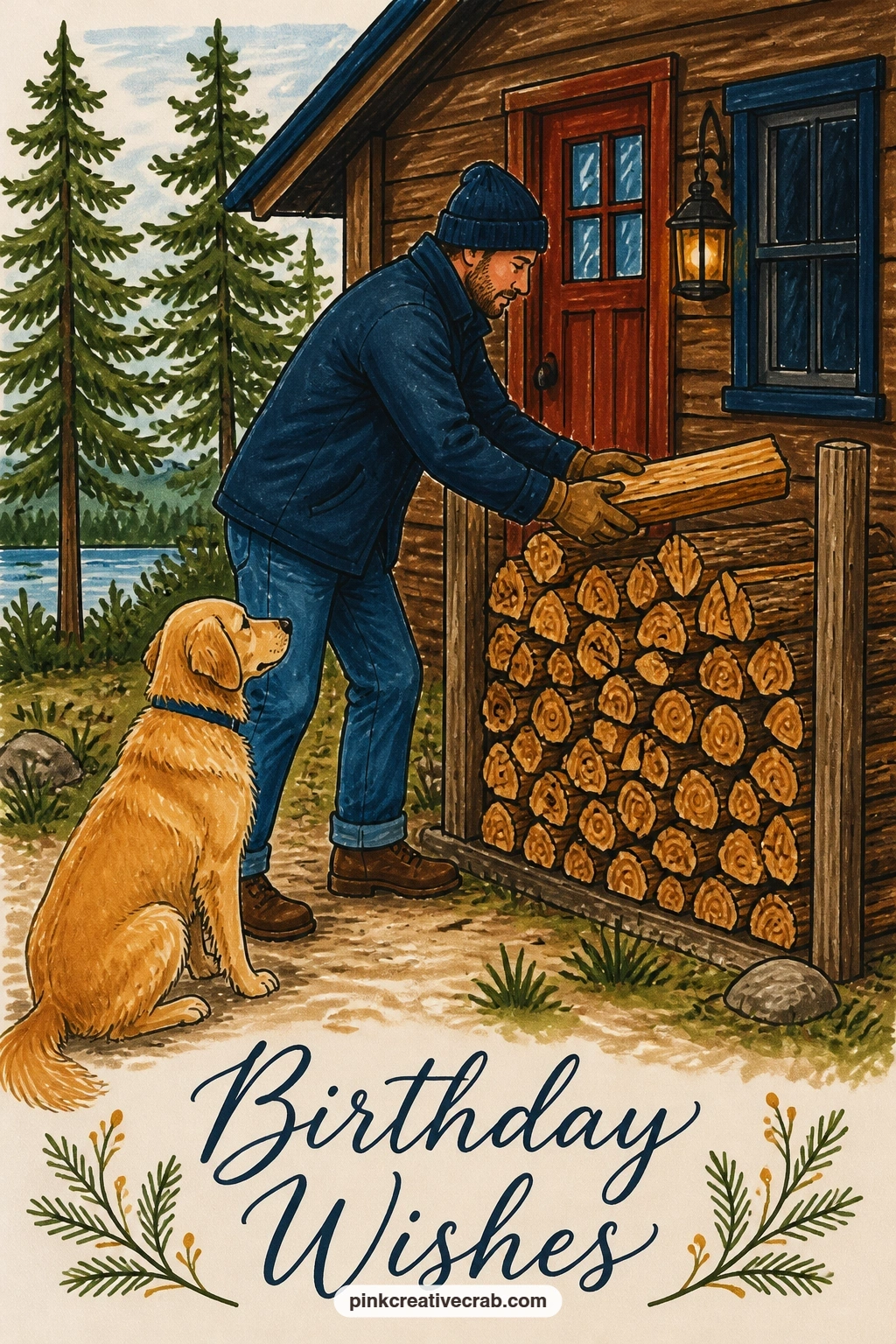
Settle into a calmer scene with dad stacking firewood by a little cabin while the dog watches nearby. Draw the cabin first as a simple square with a triangle roof and one small window, then build the woodpile beside it as a stack of short overlapping log circles.
Dad stands mid stack with one log in his arms, and the dog sits a short distance off, simply watching rather than doing anything active, which makes it an easy shape to keep loose and relaxed. Warm brown carries both the cabin and the logs, with navy on dad’s coat and a touch of brick red in the window or door.
Log ends drawn as perfect circles can look too uniform, so vary their size slightly and let a few sit at a slight angle in the stack. That small inconsistency is what makes a woodpile look real.
Try the quick version with just the woodpile and dad in ten minutes, and add the cabin and dog if you have more time to spend.
Palette: Warm Brown,Navy Blue,Brick Red,Forest Green
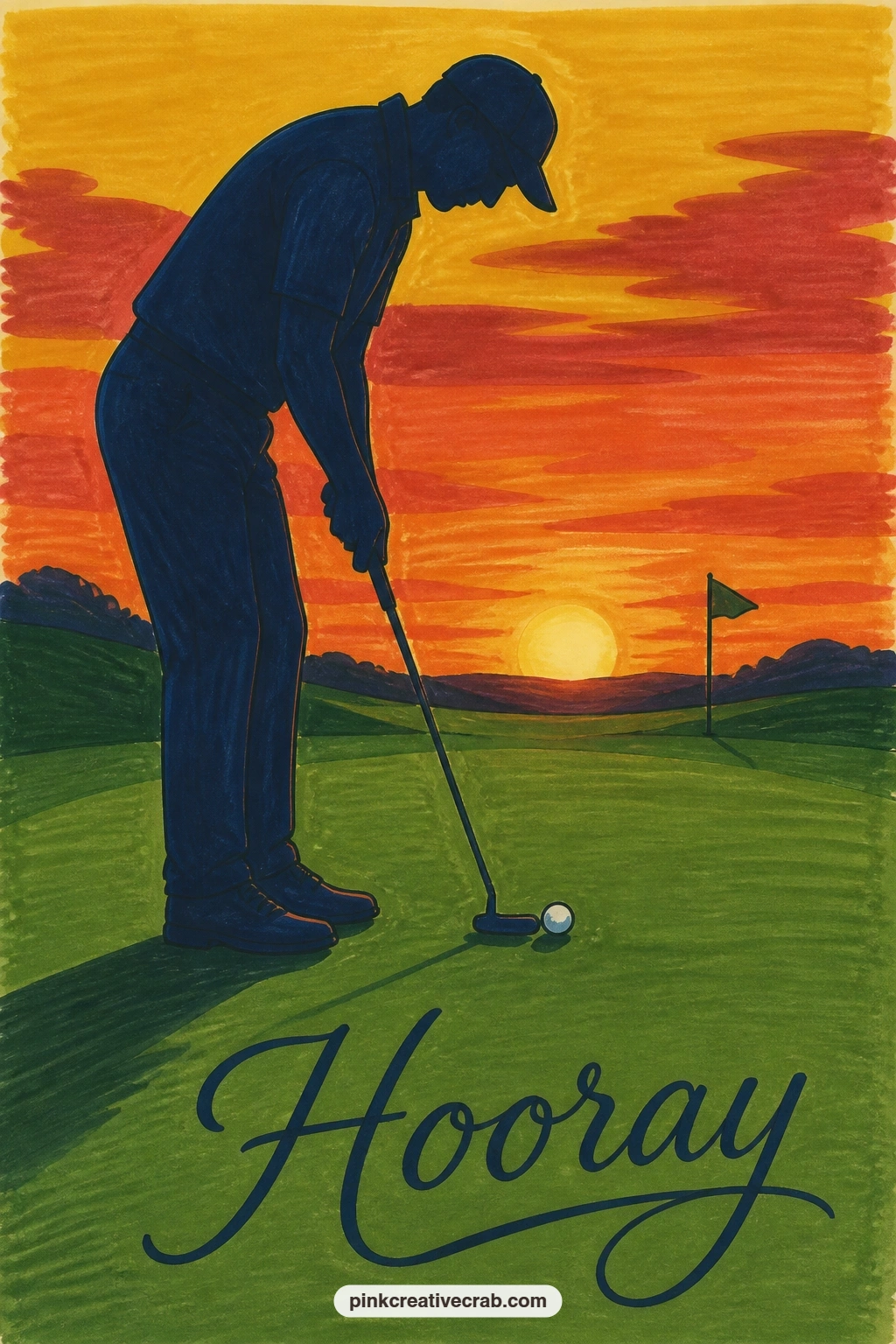
Move to the golf course for dad lining up a putt at sunrise. Draw dad’s stance first, bent slightly at the waist with the putter held low, since this pose is what makes the whole scene instantly readable as golf rather than any other sport.
Think about where the sun sits here, low on the horizon behind him, which means his figure can read almost as a darker navy silhouette against a warm mustard and brick red sky. Keep the green itself as a simple flat shape with one small flag and hole marked in the distance.
Figures bent at the waist often come out stiff if the spine stays straight, so curve the back slightly and bend the knees a touch for a natural stance. That small curve carries the whole pose.
No flag reference handy? A thin vertical line with a small triangle on top reads clearly from any distance.
Palette: Navy Blue,Mustard,Brick Red,Forest Green
Push the energy up a notch with dad cycling a mountain trail, the valley stretched out below him. Place the horizon line low on the page first, since that choice is what gives this scene its sense of height, with dad and his bike sitting above it against open sky.
Draw the bike at a slight diagonal lean into the trail, with dad crouched forward over the handlebars, then layer the valley below in soft overlapping bands of forest green and navy to suggest distance. Mustard works well as a warm light catching the ridge line behind him.
Mountain trails can look flat if every band of valley color sits the same size, so make the nearest band largest and each one behind it progressively thinner. That simple shift reads as distance immediately.
If shading those distant bands feels fiddly, a dry brush pass with a nearly empty marker softens the edges nicely.
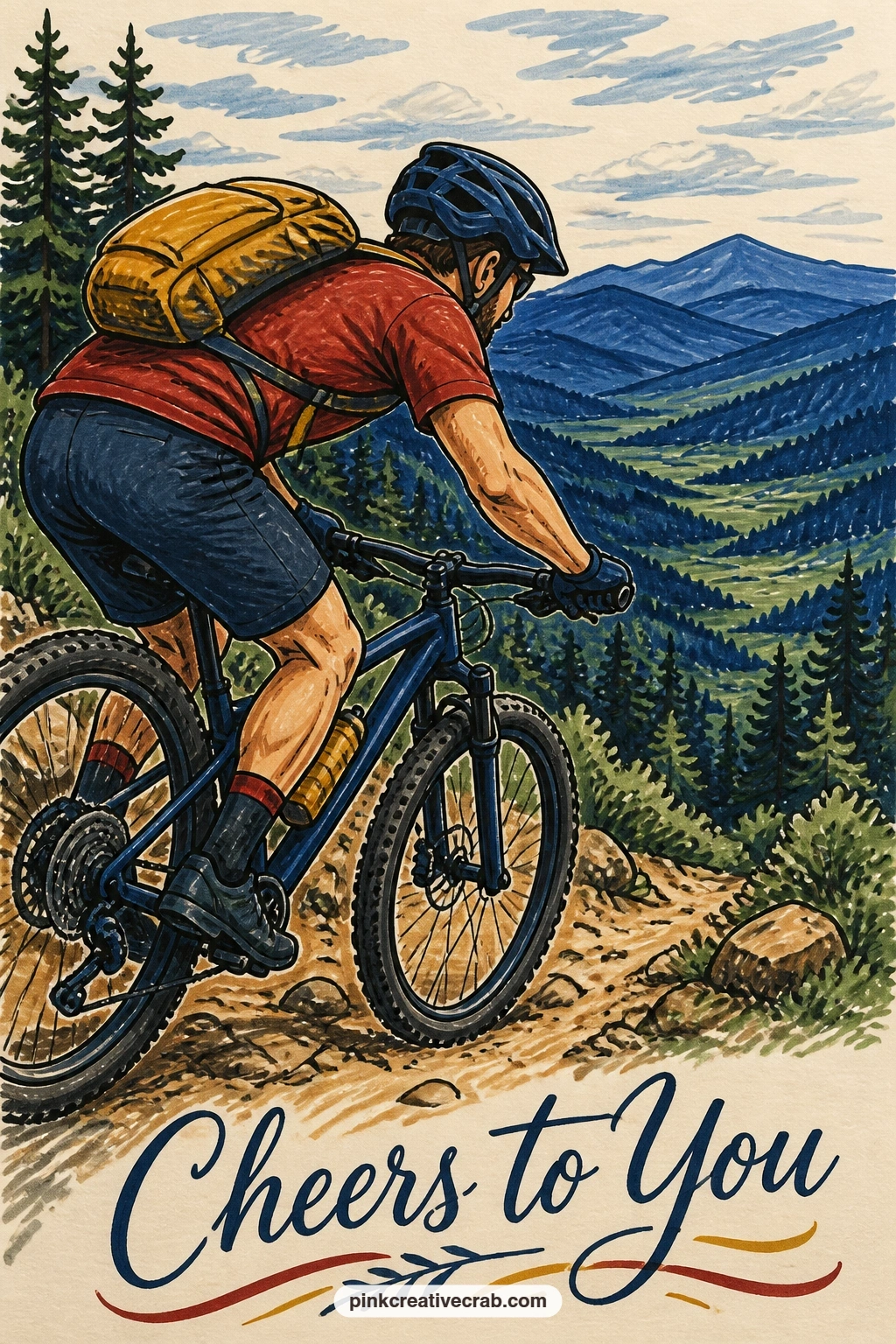
Palette: Forest Green,Navy Blue,Mustard,Brick Red
Bring things back to a quiet moment with dad playing chess with a grandchild on the porch steps. Draw the chessboard first as a small flat square set on the step between them, with just a handful of simple pieces rather than a full board of thirty two.
Seat dad and the child facing each other, both leaning slightly toward the board, which is the small gesture that makes the scene feel like a real moment rather than two stiff figures posed side by side. Keep the porch steps and railing in warm brown with navy and mustard on the two figures.
Chess pieces drawn too small turn into confusing blobs, so simplify to three or four basic shapes, a tall one, a round one, a small pawn shape, repeated rather than trying to render every piece type accurately.
For more ideas on pairing a figure with a younger character in a simple pose, the sketchbook portrait ideas page has useful groundwork.
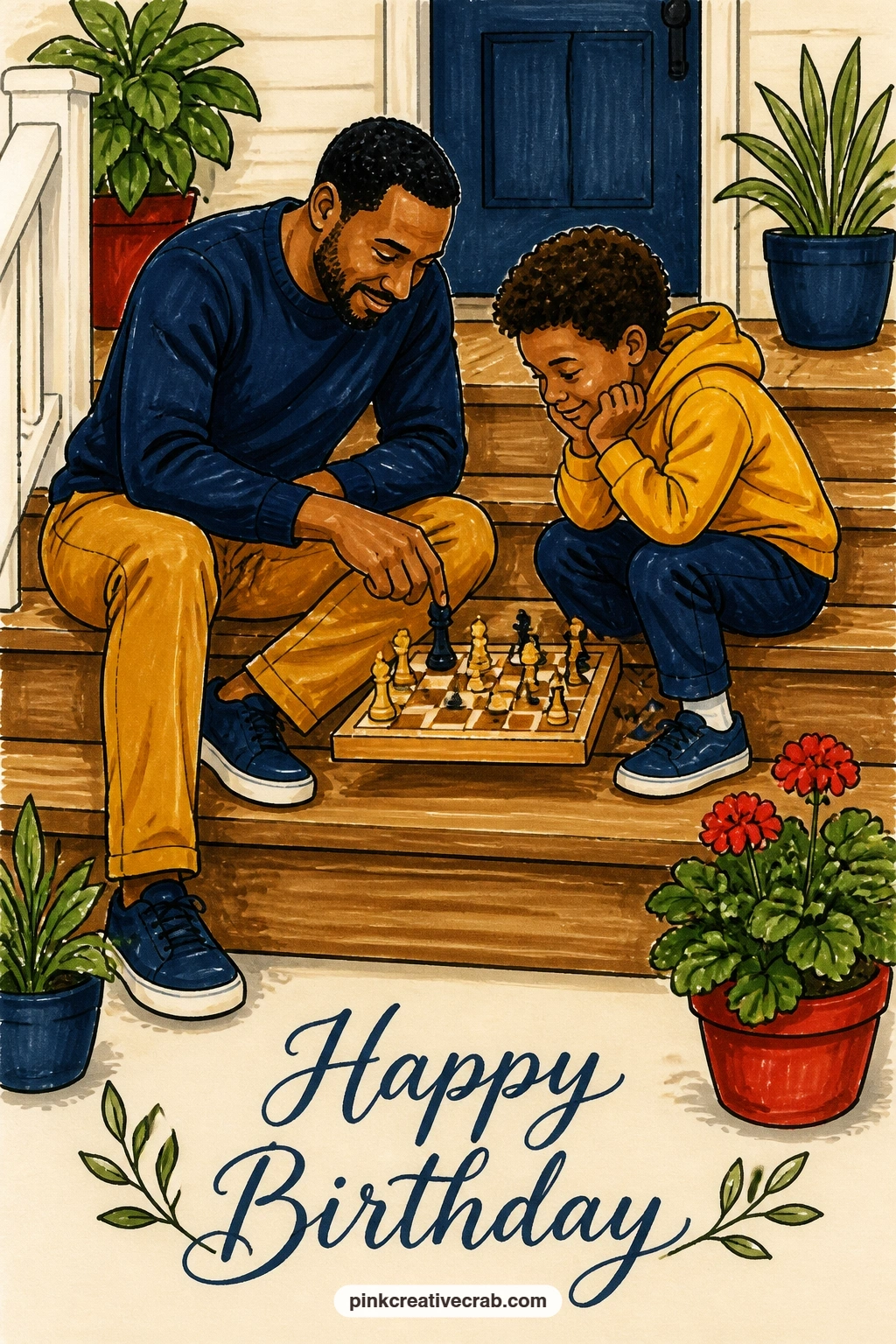
Palette: Warm Brown,Navy Blue,Mustard,Brick Red
Step indoors for dad brewing coffee in a sunny kitchen, still in his robe and slippers. Draw the counter and coffee maker first as simple flat shapes, since this becomes the anchor the rest of the kitchen builds around.
Light here comes through a window to one side, so let that side of dad and the counter stay in lighter mustard tones while the far side slips into navy shadow, which gives the whole scene a warm morning feel without much extra work. Keep his robe loose and simple, a big soft shape rather than fitted clothing.
Kitchens get cluttered fast if every object on the counter gets drawn in detail, so pick two or three items, a mug, a fruit bowl, a folded newspaper with no visible text, and leave the rest of the counter clean.
Try the quick version with just dad and the coffee maker in ten minutes, or add the window and counter detail for a fuller scene.
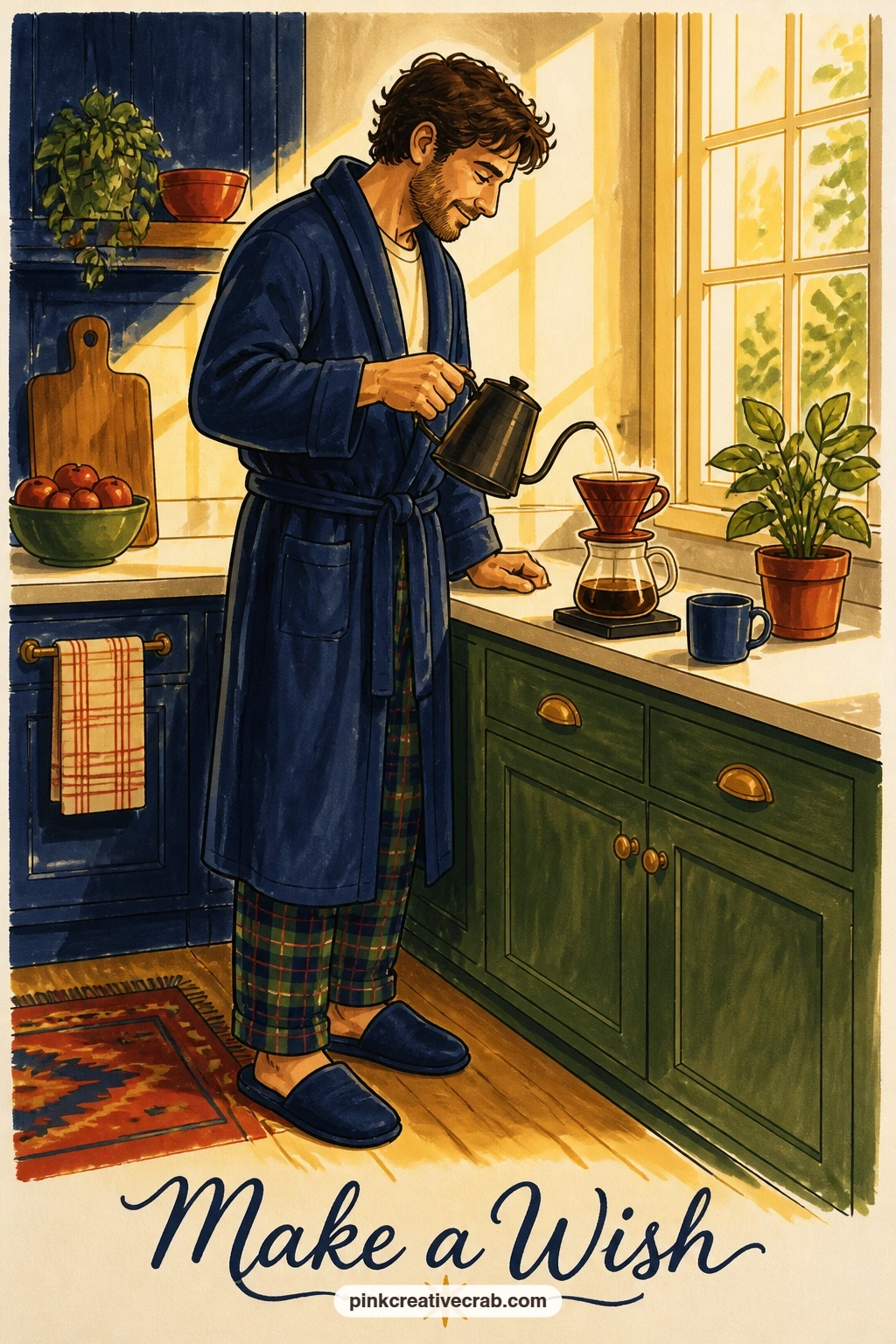
Palette: Mustard,Navy Blue,Brick Red,Warm Grey
Head out to a summer fair next for dad with a child on his shoulders. Draw dad’s standing pose first, feet planted a bit wider than usual for balance, then build the child’s small shape sitting securely on top with hands either on his head or gripping his hair.
Compare the child’s head size against dad’s torso to keep the proportions believable, a small child’s head should sit roughly a third the size of dad’s own head. Behind them, a few simple shapes, a striped tent top, a string of round shapes for lights, suggest the fair without needing a full busy background.
This pose can look unstable if dad’s stance is too narrow, so widen his feet and bend his knees slightly for a grounded look. Navy and brick red work well together here with mustard in the fair decorations.
No fair backdrop in mind? A single striped tent shape behind them is enough to set the scene.
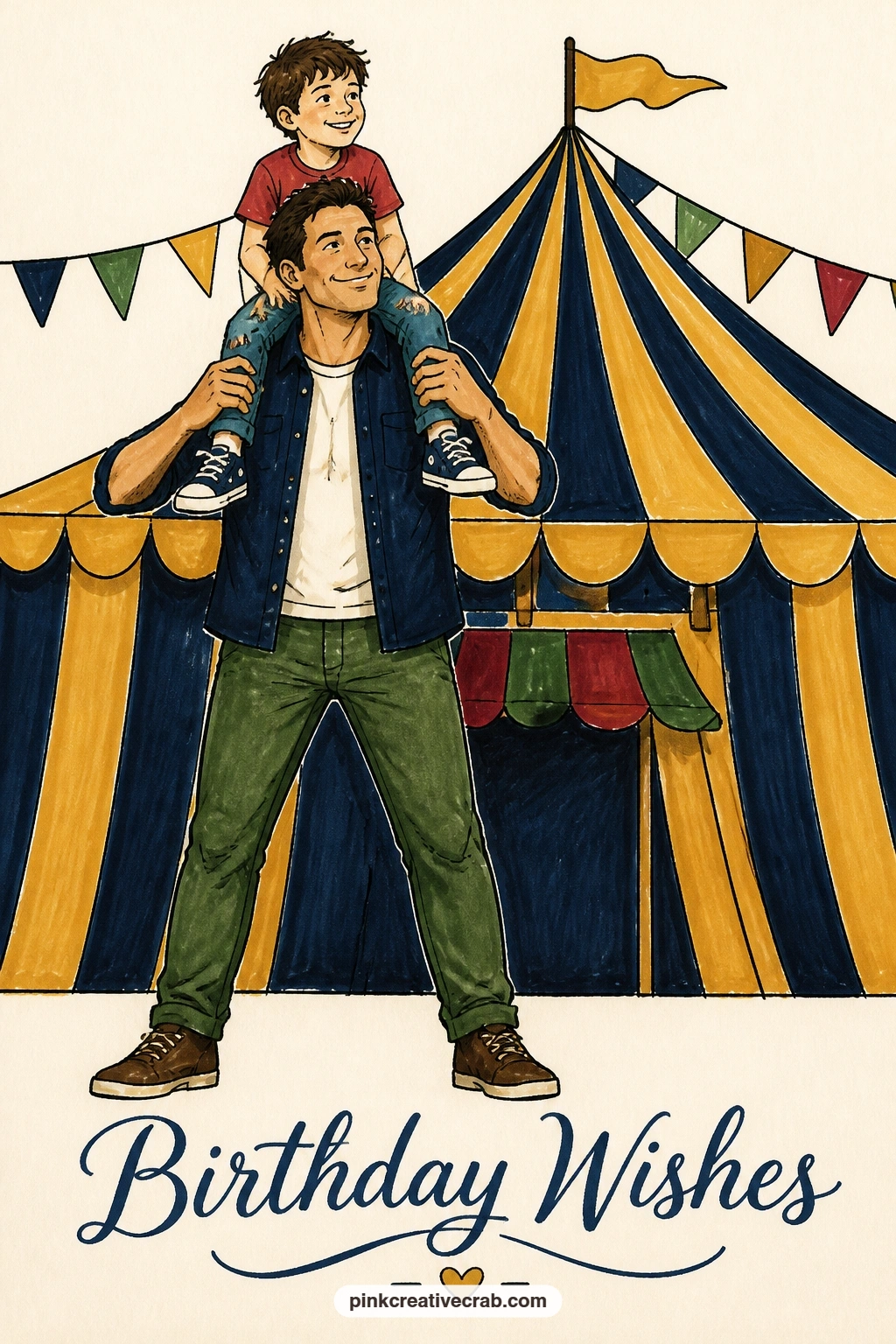
Palette: Navy Blue,Brick Red,Mustard,Forest Green
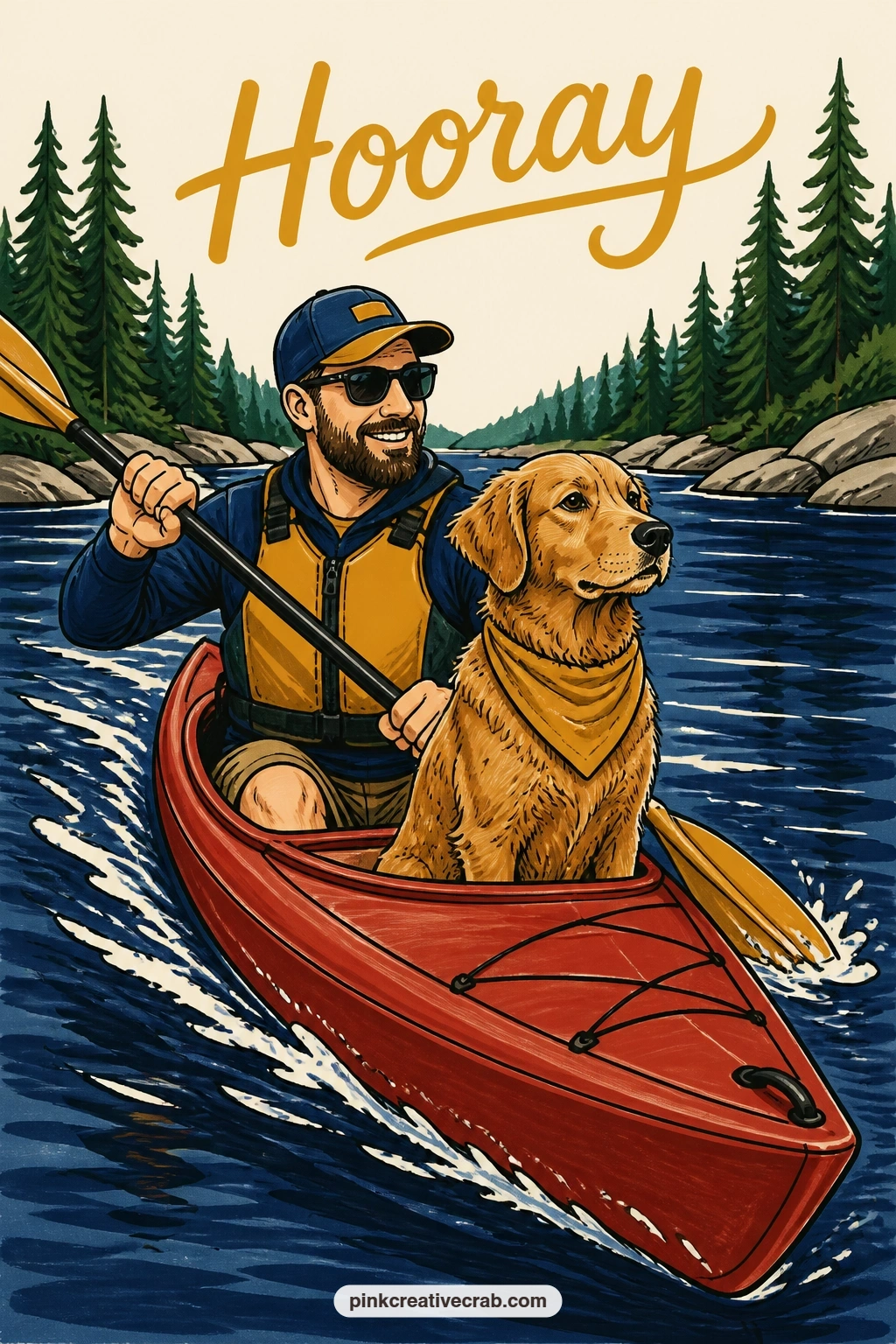
Return to the water with dad kayaking down a river, the dog sitting up front in the bow. Draw the kayak as a long narrow shape first, slightly curved at both ends, then fit dad into the middle with a double bladed paddle angled across the water.
Sit the dog just ahead of him in the bow, a simple alert shape with ears up, which gives the whole boat a sense of forward motion even though nothing is actually moving on the page. Navy works well for the water in loose horizontal strokes, with the kayak itself in brick red or forest green for contrast.
Paddles drawn flat and straight can look stiff, so angle the blade so one end dips into the water and the other lifts slightly, which reads as mid stroke rather than posed.
If you want to vary this scene later, try the same river setting with dad in a canoe instead, seated lower with a single paddle.
Palette: Navy Blue,Brick Red,Forest Green,Mustard
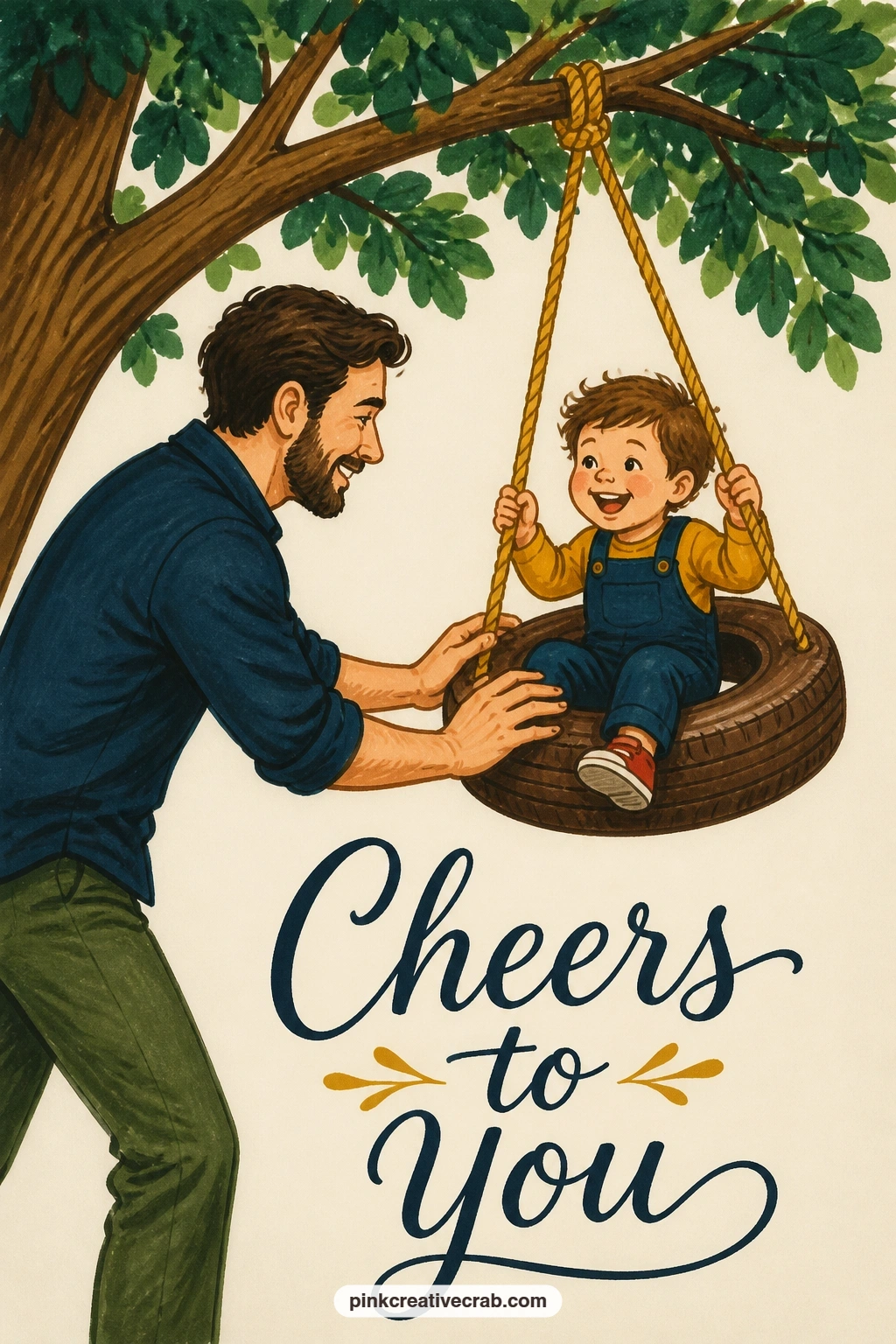
Slow the pace again with dad pushing a toddler on a tire swing. Draw the tire itself first as a simple thick ring hanging from a rope, then fit the toddler’s small shape sitting inside it, legs dangling through the hole.
Dad stands to one side mid push, one arm extended toward the tire and his weight shifted onto his back foot, which is the detail that sells the motion of an actual push rather than a static pose. Keep the tree branch above simple, just enough to show where the rope attaches, with forest green leaves kept loose and minimal.
Ropes drawn perfectly straight look stiff, so give the rope a very slight curve as if it is still swaying from the last push. Warm brown works for the tire and rope together, with navy or mustard on the figures.
For more ideas on relaxed outdoor figure poses, the park drawing ideas page has related compositions worth a look.
Palette: Warm Brown,Navy Blue,Mustard,Forest Green
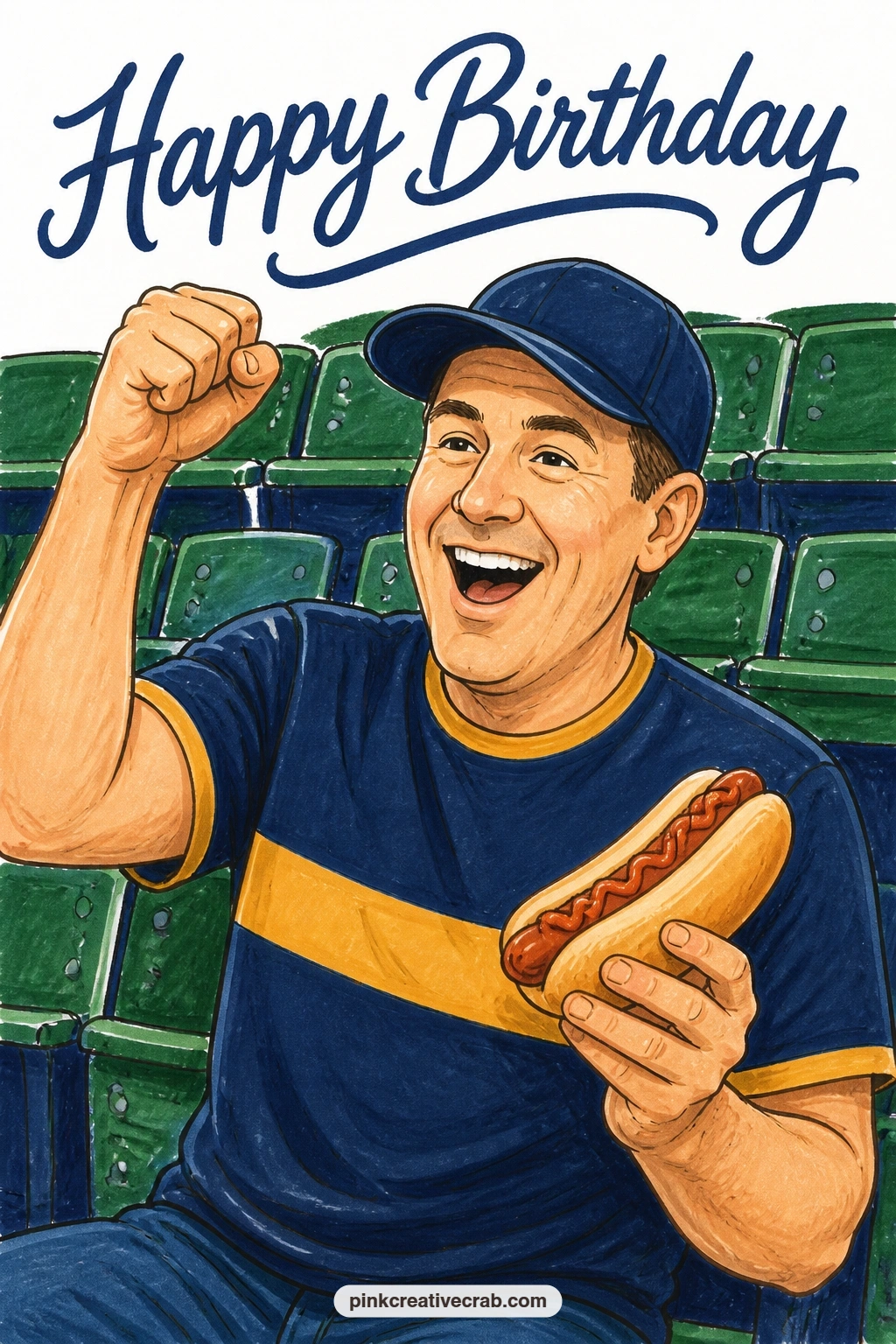
Take the scene to a ball game with dad cheering in the bleachers, a hot dog in one hand. Draw dad’s pose first with both arms raised or one fist up, mouth open mid shout, since that energetic gesture is what carries the whole scene without needing any crowd around him.
Keep the hot dog simple, a bun shape with one brick red zigzag of ketchup, held loosely in his other hand. The bleacher seats behind him can stay as just a few flat angled lines in warm grey, nothing more detailed needed.
Raised arms often end up looking flat if both are drawn at the same angle, so vary their height and bend one elbow more than the other for a livelier pose. Navy works well for a team style shirt with mustard as an accent stripe.
Try the quick version with just dad and the hot dog in ten minutes, or add a simple stadium light tower in the background for more context.
Palette: Navy Blue,Brick Red,Mustard,Warm Grey
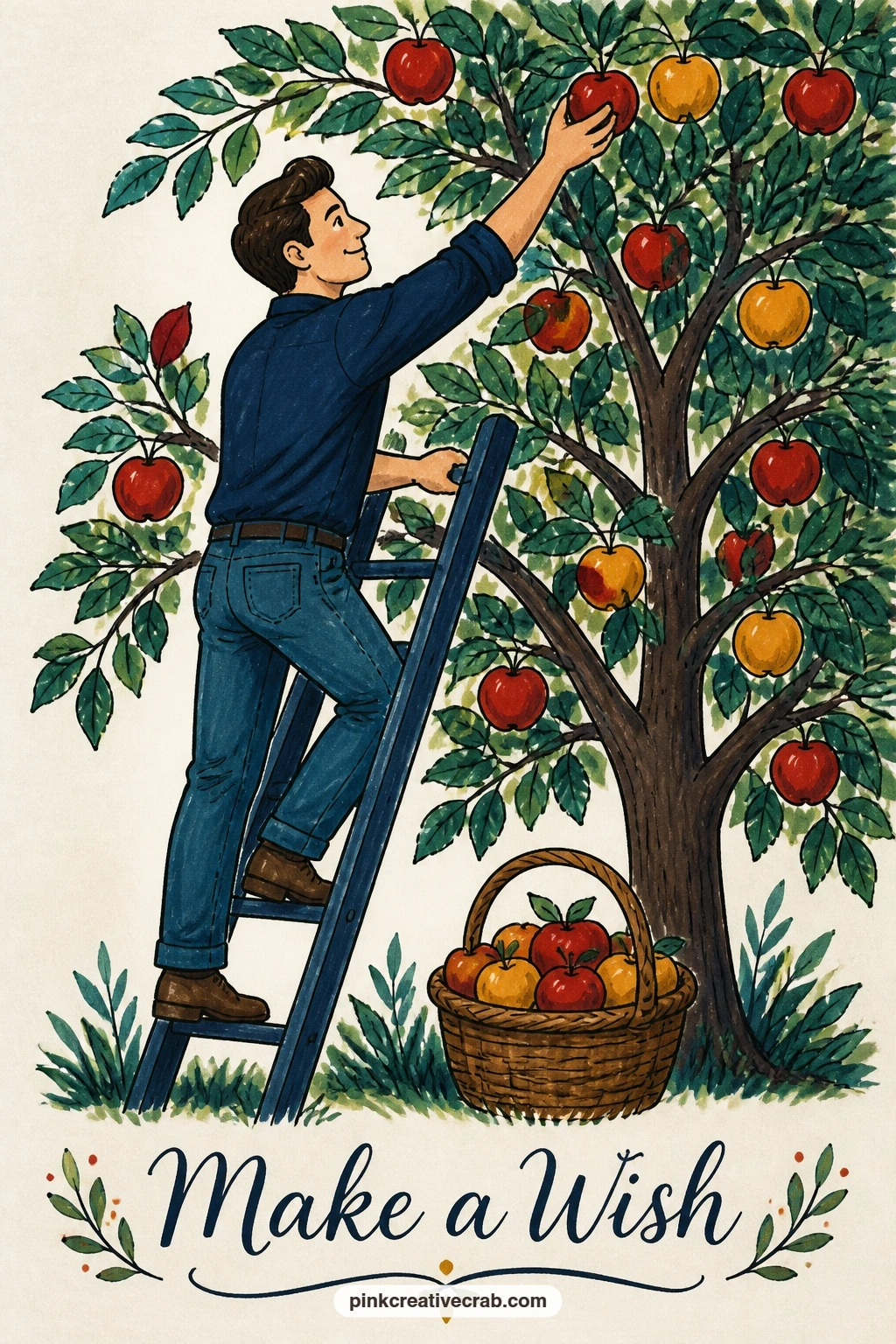
Head to the orchard for dad picking apples from a ladder among the trees. Draw the ladder first leaning against the tree trunk at a believable angle, then place dad partway up it reaching for a cluster of round apple shapes among the branches.
Compare the ladder’s height against the tree trunk to keep the scale sensible, it should reach roughly two thirds of the way up a modest orchard tree rather than towering over it. Scatter the apples in brick red and mustard among forest green foliage, keeping clusters uneven rather than evenly spaced.
Ladders often come out leaning at an impossible angle if drawn freehand, so use a ruler for the two side rails and only draw the rungs by eye. A basket hooked over one arm or sitting at the base of the tree adds a nice finishing touch.
No basket in mind? A simple round container with a handle reads clearly without extra detail.
You Will Need
- ruler
Palette: Brick Red,Mustard,Forest Green,Warm Brown
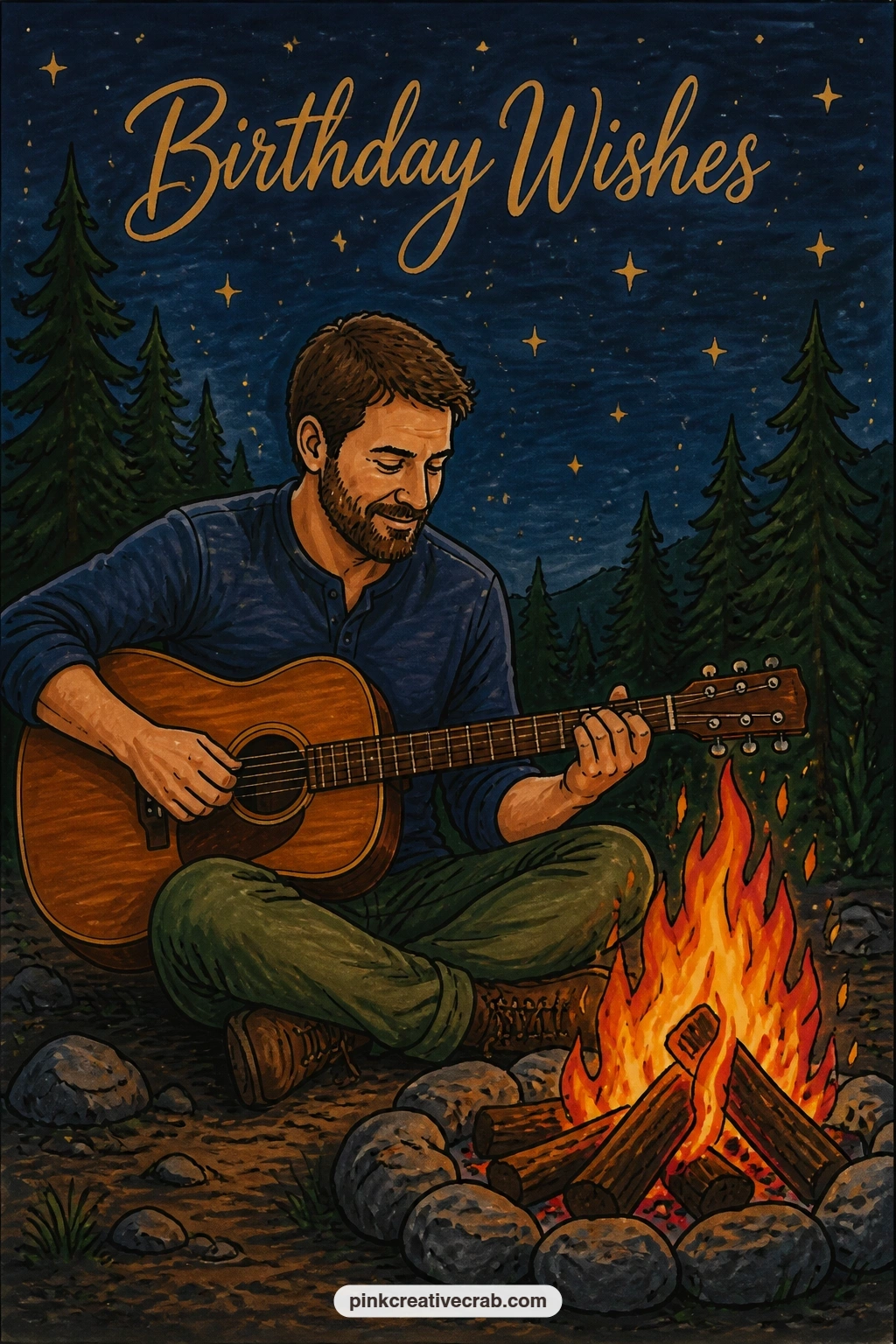
Settle into evening next with dad playing guitar by a campfire under the stars. Draw the guitar body first as a simple rounded figure eight shape resting against dad’s seated pose, legs crossed or bent, since this instrument shape anchors the whole scene before anything else.
Place the campfire just in front of him as a simple triangle stack of logs with brick red and mustard flame shapes licking upward, and let its glow light the near side of his face and hands while the far side slips into navy shadow. Scatter a few small white star dots in the dark sky above for the simplest kind of night detail.
Flames drawn too rigid look like triangles rather than fire, so let the flame edges wobble and taper unevenly as they rise. That small looseness makes a big difference here.
If stars feel fussy to add individually, a white gel pen flicked lightly across the dark sky gives a quick scattered effect instead.
You Will Need
- white gel pen
Palette: Navy Blue,Brick Red,Mustard,Warm Brown
A white gel pen is worth keeping nearby for any night scene on this list, it adds stars, highlights or a moon in seconds once the dark marker layers are dry.
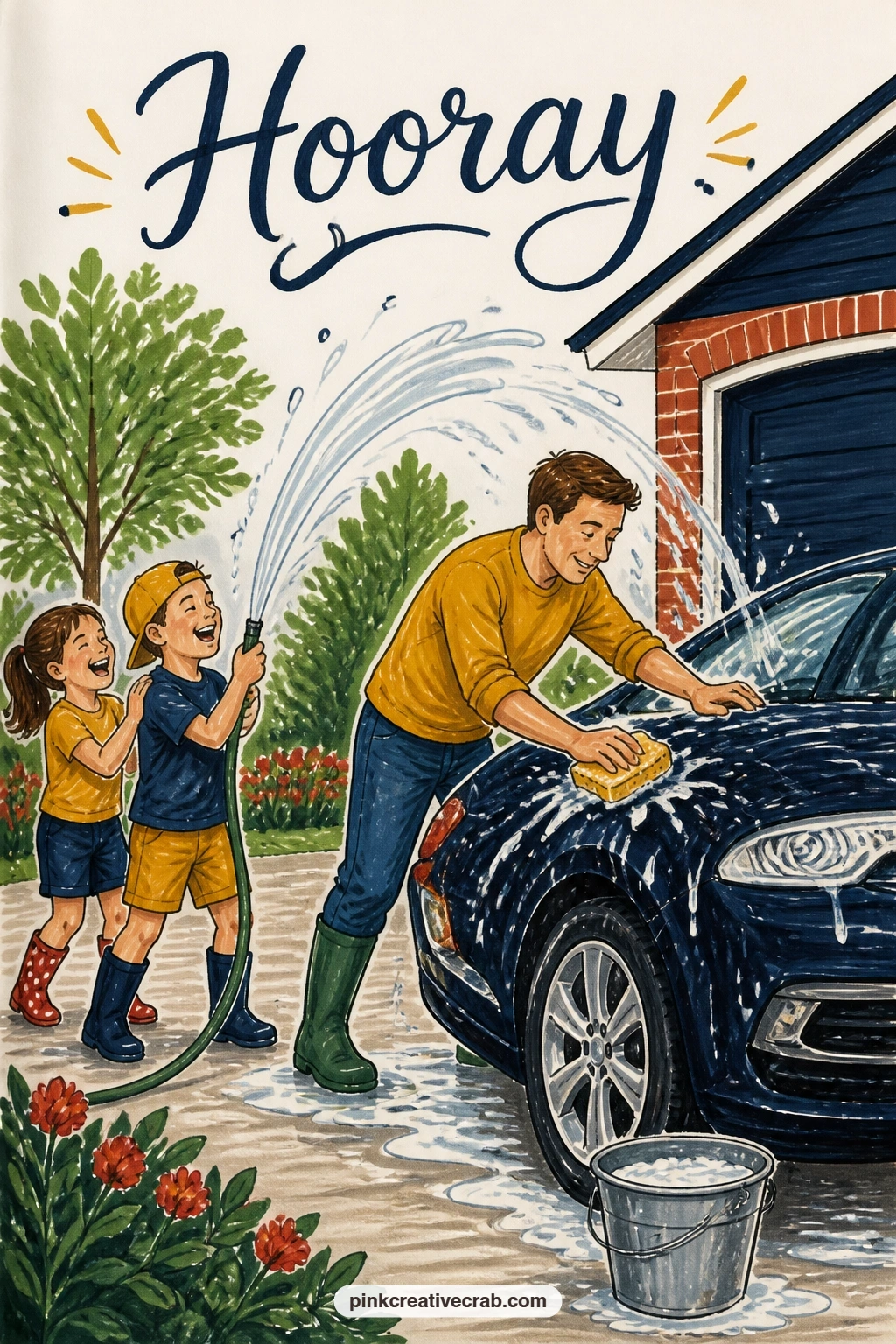
Bring some chaos into the driveway with dad washing the car while the kids spray the hose at each other nearby. Draw the car body first as a simple rounded shape with a soapy sponge in dad’s hand against one panel, then add one or two kids off to the side holding a curved hose line that arcs up into the air.
The water arc is the fun part here, a single confident curved line from the hose nozzle outward, with a few scattered droplets as small dots along its path. Navy and brick red work well on the car body, with mustard and forest green on the kids’ clothes so the whole scene has good contrast.
Soap suds drawn too neatly look like clouds rather than suds, so keep them as a loose cluster of small overlapping circles along the car’s edge rather than one smooth white shape.
If a hose arc feels tricky to get right first try, practice the curve a few times lightly in pencil before committing to ink, it only takes one confident line once you find the angle.
Palette: Navy Blue,Brick Red,Mustard,Forest Green
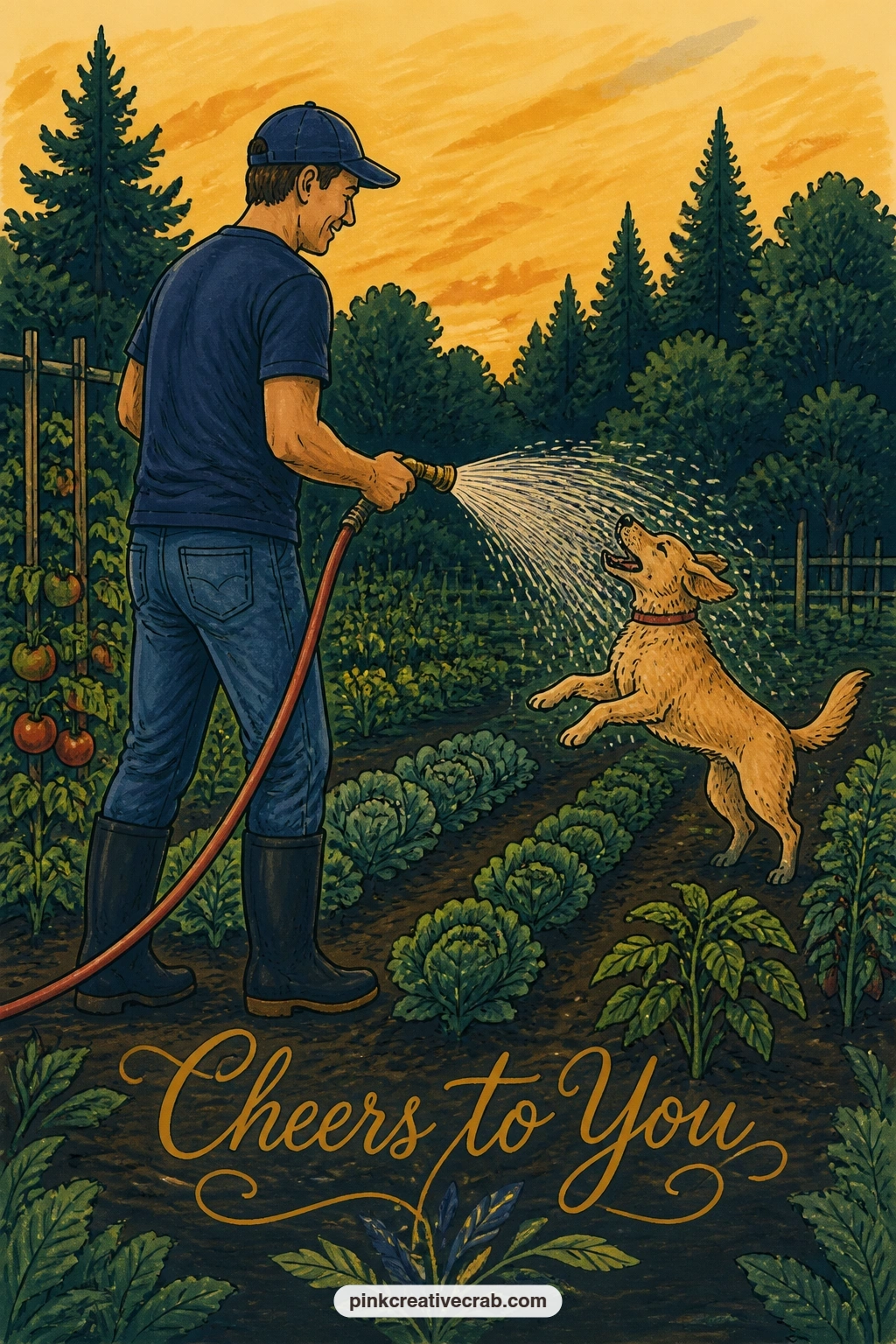
Wind down with dad watering the garden at dusk as the dog chases the spray. Draw dad standing with a hose or watering can angled toward a row of plants first, then add the dog mid leap nearby, front paws off the ground, chasing the water stream.
Dusk light sits low and warm, so let mustard and brick red tones wash across the upper sky while the garden itself settles into forest green and navy shadow below. That contrast between warm sky and cool ground is what gives this scene its evening feel.
A dog mid leap can look frozen or awkward if all four legs point the same direction, so bend the front legs up and stretch the back legs behind for a sense of real motion. Keep the water spray as a few simple curved lines rather than a solid shape.
No watering can handy for reference? A simple hose with a curved spray at the end works just as well and is easier to draw.
Palette: Mustard,Brick Red,Forest Green,Navy Blue
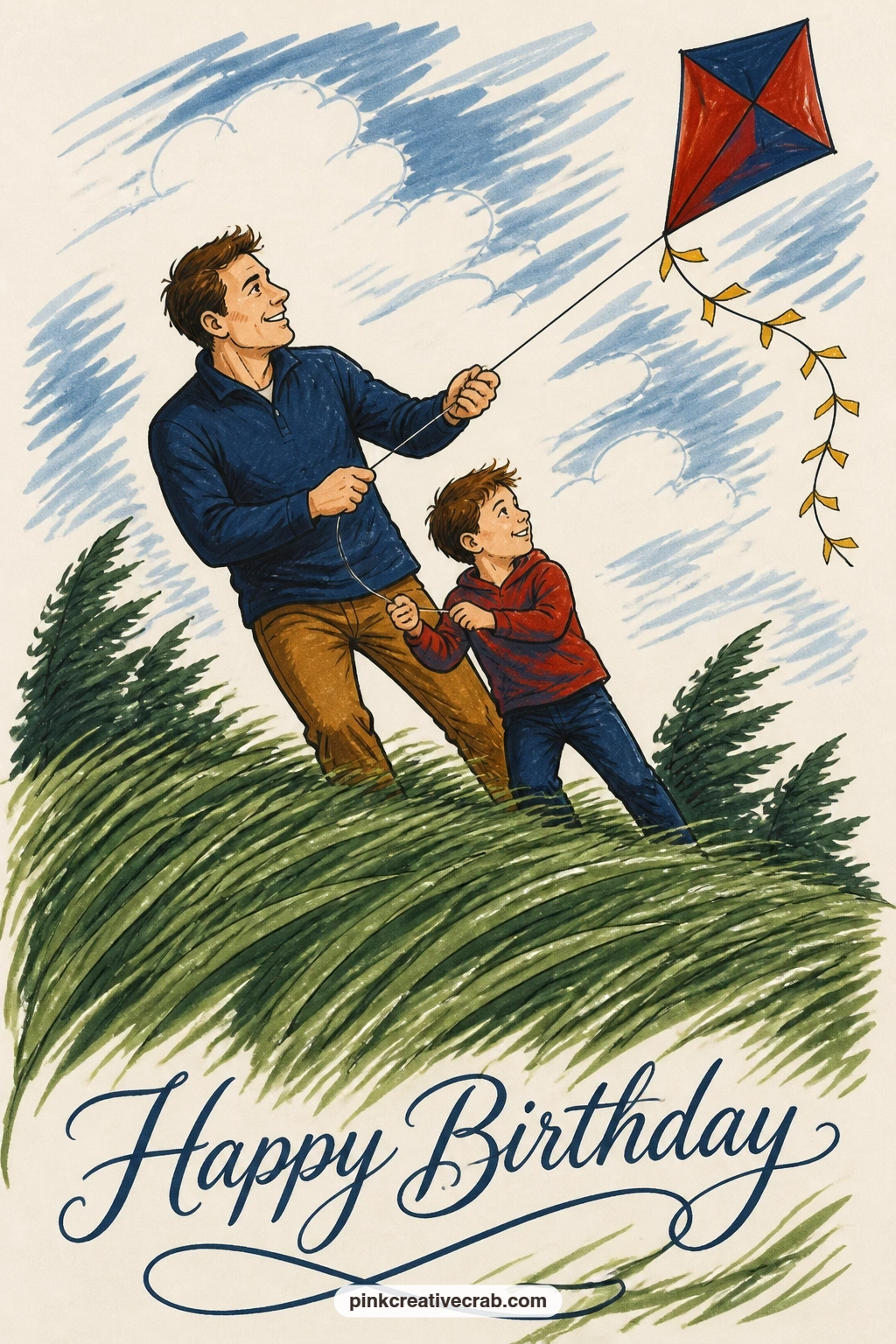
Take the scene uphill for dad and his son flying a kite on a windy hill. Draw the kite first, high in the sky as a simple diamond shape with a tail of a few small triangle flags, then trace the string down in one long curved line to where dad and the boy stand together at the bottom.
Lean both figures slightly backward against the wind, which is the small gesture that makes a windy hill scene actually feel windy rather than still. Let the grass on the hill bend in the same direction with a few quick curved marker strokes in forest green.
Kite strings drawn perfectly straight look stiff and unconvincing, so give the line a gentle sag or curve as it travels from hand to kite. Navy and brick red work well on the kite itself with mustard on its tail flags.
For more ideas pairing a figure with a windswept outdoor setting, the autumn watercolor landscape ideas page has useful composition tricks even though it uses a different medium.
Palette: Navy Blue,Brick Red,Mustard,Forest Green
Close the list out on a pier with dad sharing his sandwich with a hopeful seagull. Draw dad seated on a simple bench or railing first, sandwich held out in one hand, then add the seagull mid landing just in front of him, wings spread wide and feet reaching down.
Compare the seagull’s wingspan against dad’s arm length to keep the proportions believable, a gull’s spread wings should read close to the same width as his extended arm. Behind them, a simple pier railing and a flat strip of navy water are all the background this scene needs.
Birds mid flight often look pinned and lifeless if the wings are drawn perfectly symmetrical, so angle one wing slightly higher than the other for a sense of real movement. Brick red and mustard work well on dad’s clothing against all that navy water.
If wing shapes feel tricky to get right, start with two simple curved triangles and refine the feather edges only once the basic shape sits correctly.
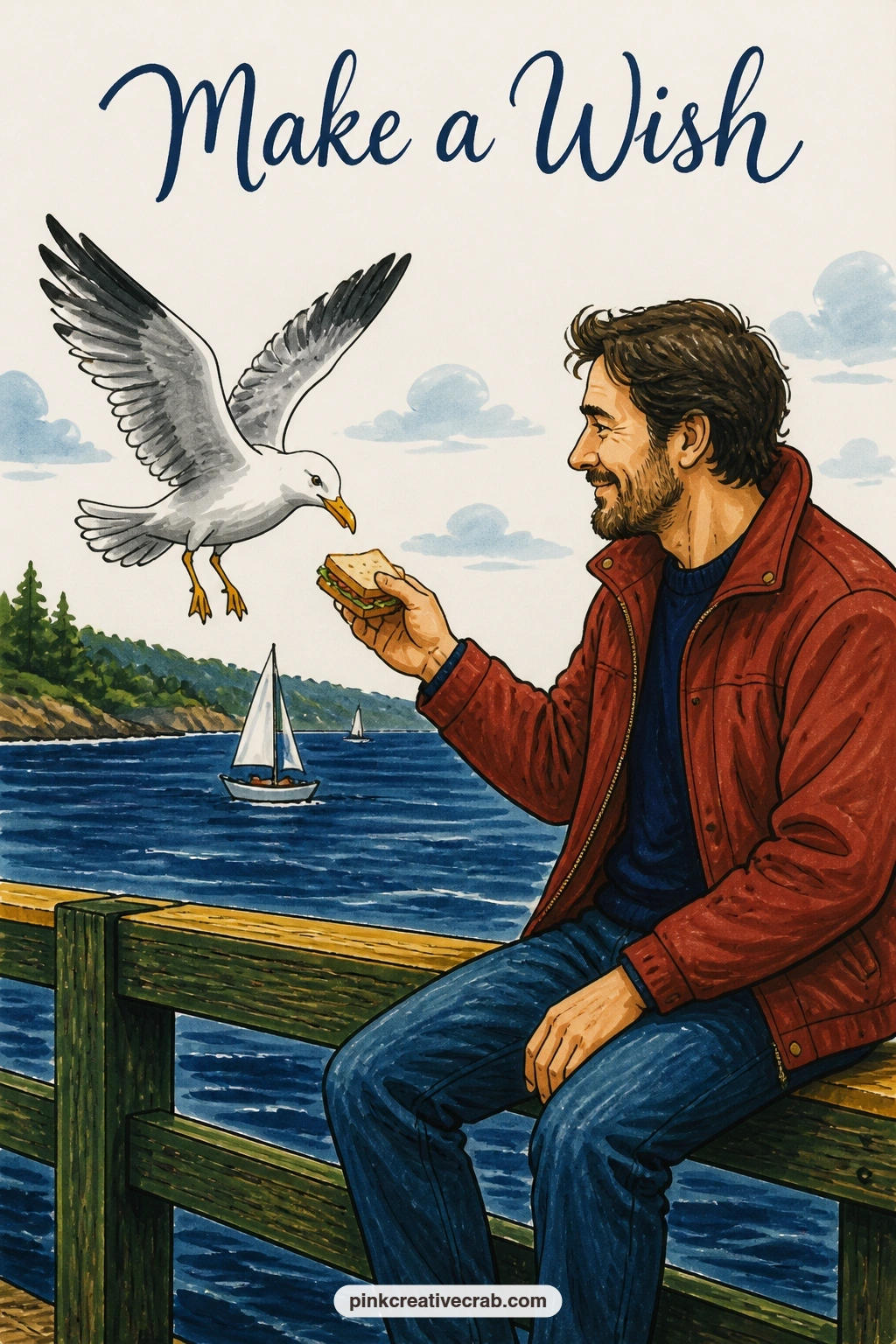
Palette: Navy Blue,Brick Red,Mustard,Warm Grey
What to Do Next
Pick the scene that sounds most like your dad, whether that is the grill, the fishing boat or the quiet porch chess game, and sketch it lightly in pencil on a blank folded card before any ink touches the page. Start with the easier ideas near the top of the list if this is your first time working with markers, and keep the proportions loose rather than perfect, since a warm, recognizable scene beats a stiff, careful one every time.
Frequently Asked Questions
What markers work best for birthday card ideas for dad?
Alcohol based markers work best because they blend smoothly without streaking. Pair them with a thin black fineliner for outlines and smooth marker paper so the color does not bleed through to the back of the card.
How do I keep a birthday card drawing from looking too busy?
Pick one clear action and one or two props, then leave the rest of the background simple or blank. A card front reads best with a single large subject rather than many small competing details.
Do I need to be good at drawing people to make these cards?
No, simple shapes carry most of these poses well. Focus on posture and gesture, like a bent knee or raised arm, rather than facial detail, since a small figure on a card does not need a fully rendered face.
What if I make a mistake with alcohol marker on the card?
Mistakes are hard to fully erase, so sketch the whole scene lightly in pencil first and only ink and color once the composition looks right. Keep a spare sheet of the same paper for test strokes before committing.
How long does one of these card drawings actually take?
Most of these scenes take between fifteen and forty minutes depending on how much background detail you add. The simpler ideas near the start of the list are the fastest to finish in one sitting.
Have any thoughts?
Share your reaction or leave a quick response — we’d love to hear what you think!
-
 0
-
0
-
0
-
0
-
0
-
0


