Table of Contents
This set of butterfly coloring pages gives you nineteen different sheets, each one a single butterfly or moth settled into its own small scene. A monarch rests on milkweed, a luna moth hangs under a lantern, a swallowtail perches on a garden gate, and every wing carries its own pattern of scales, spots and veining so no two pages ask for the same kind of attention.
Print on plain white cardstock rather than thin copy paper, since the fine lines hold up better and ink or marker will not bleed through to the next page. Set your printer to its best or highest quality setting, choose the actual paper size you are using (letter or A4), and trim away the white border afterward if you plan to frame a finished page or glue it into a journal.
Using these images: free for personal projects such as printing, coloring, cards, journals and gifts. Handmade items that include them may be sold up to 30 pieces per design. More than that is commercial use and is not permitted, and neither is selling or sharing the images themselves or passing them off as your own. Please ask before any other use.
Garden Butterflies
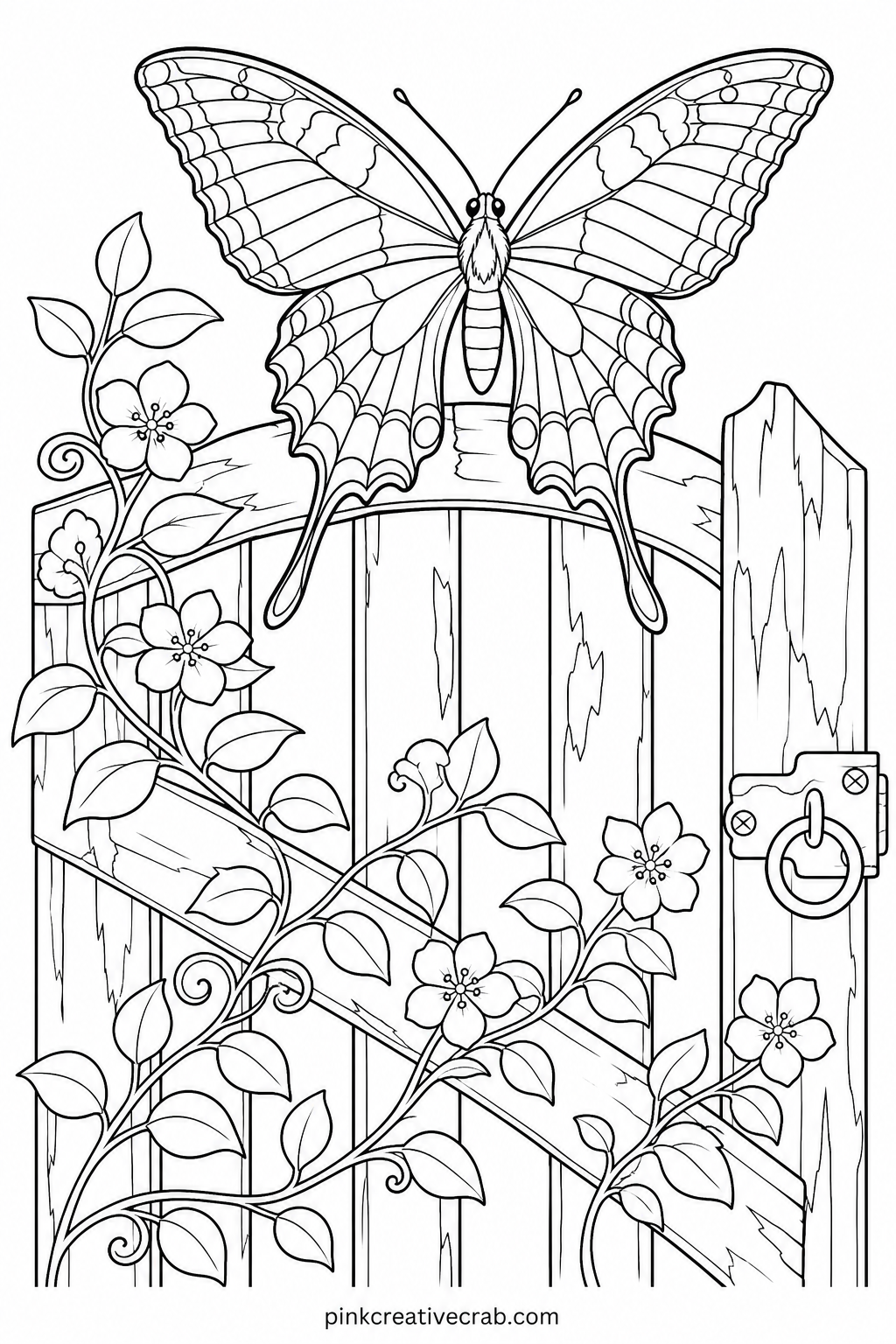
Monarchs suit anyone who wants a familiar shape to start with, since the orange and black pattern is easy to recognize but still rewards slow, careful filling once the milkweed pods and leaves come into play around the wings.
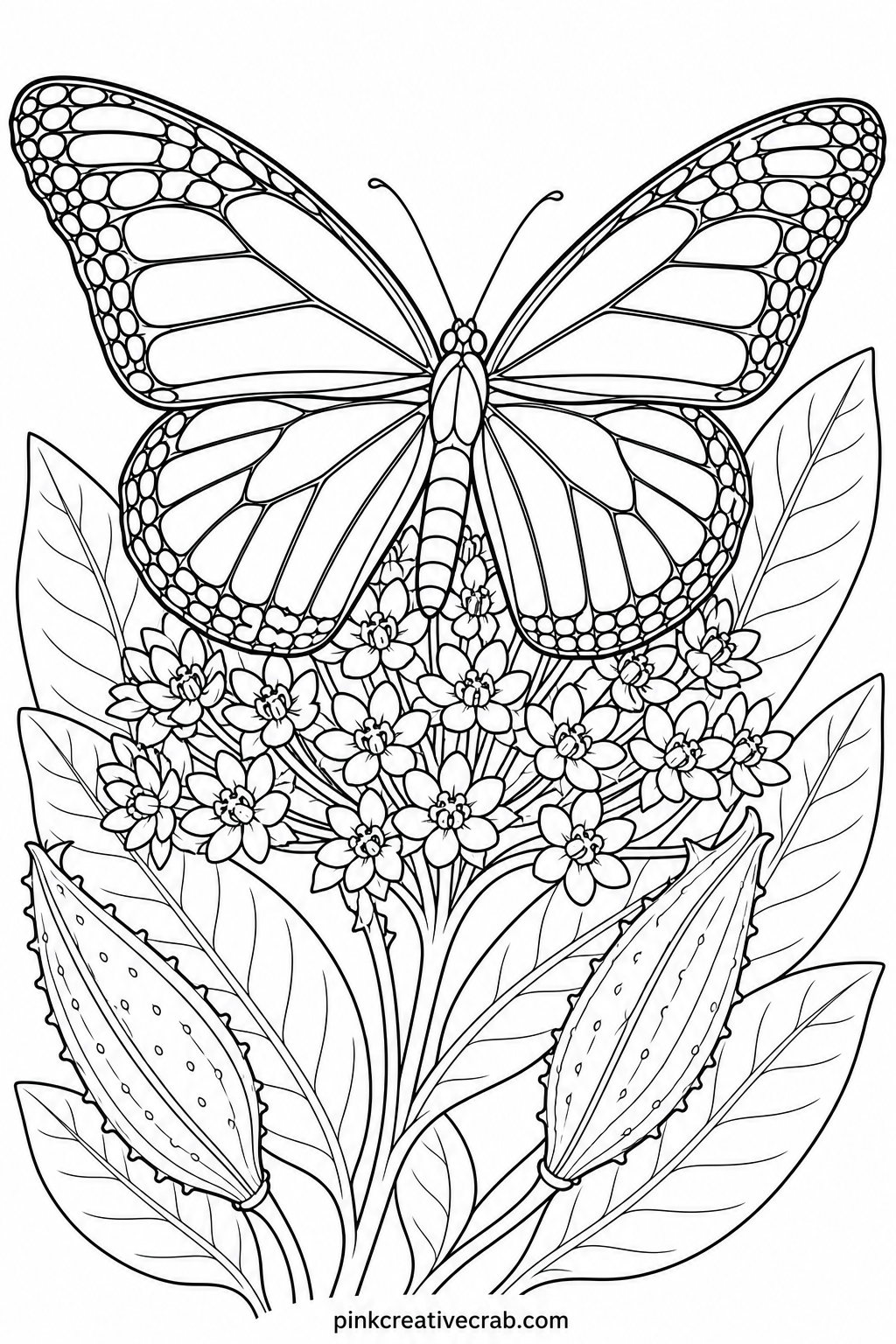
Fine liners in black or dark brown work well on this one, and the best place to start is the gate itself, since getting the wood grain and hinges settled first makes the wing pattern easier to plan around it.
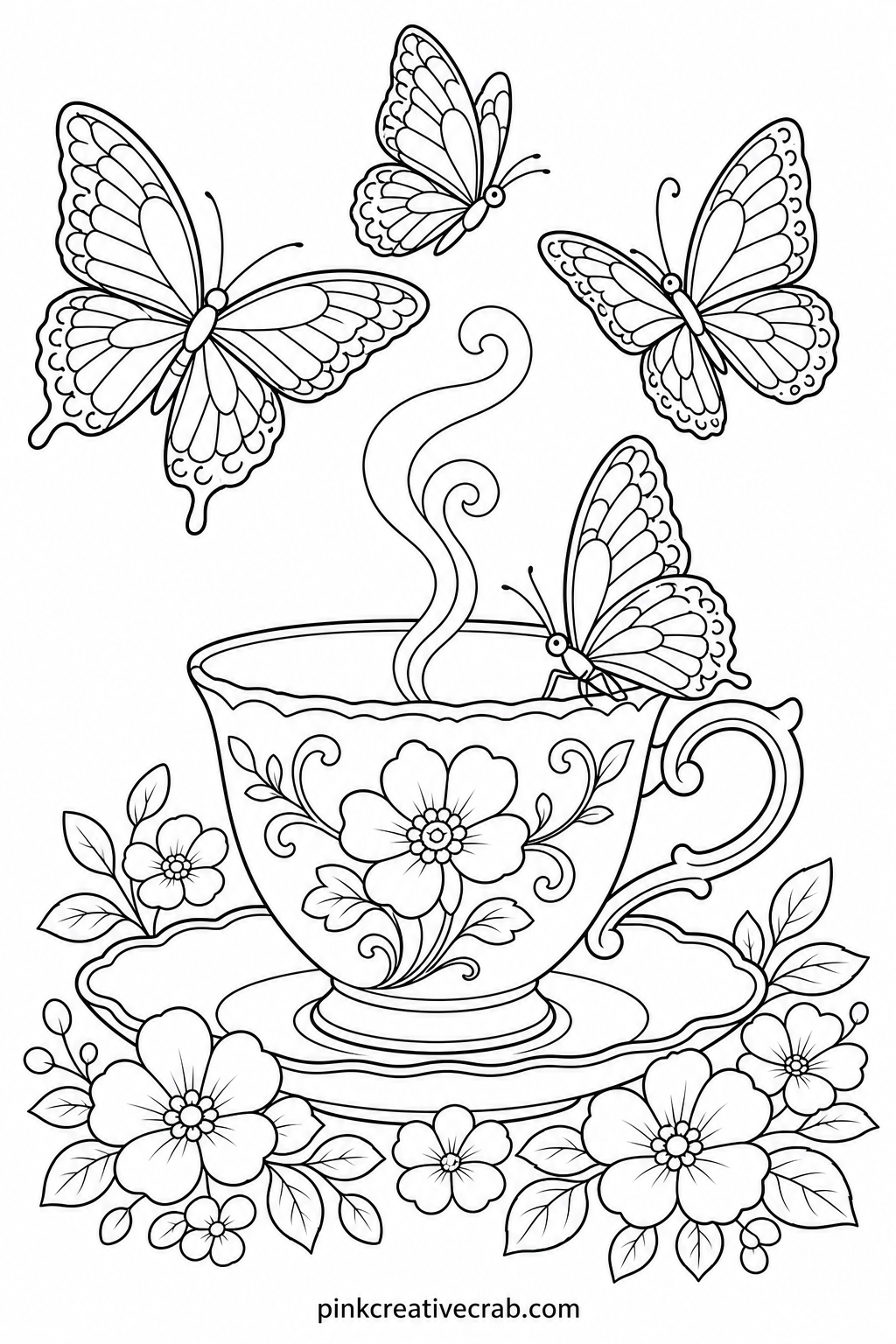
Leave the teacup itself white or very pale and let the butterflies carry all the color, since the contrast between a plain cup and patterned wings is what makes this page feel finished rather than busy.
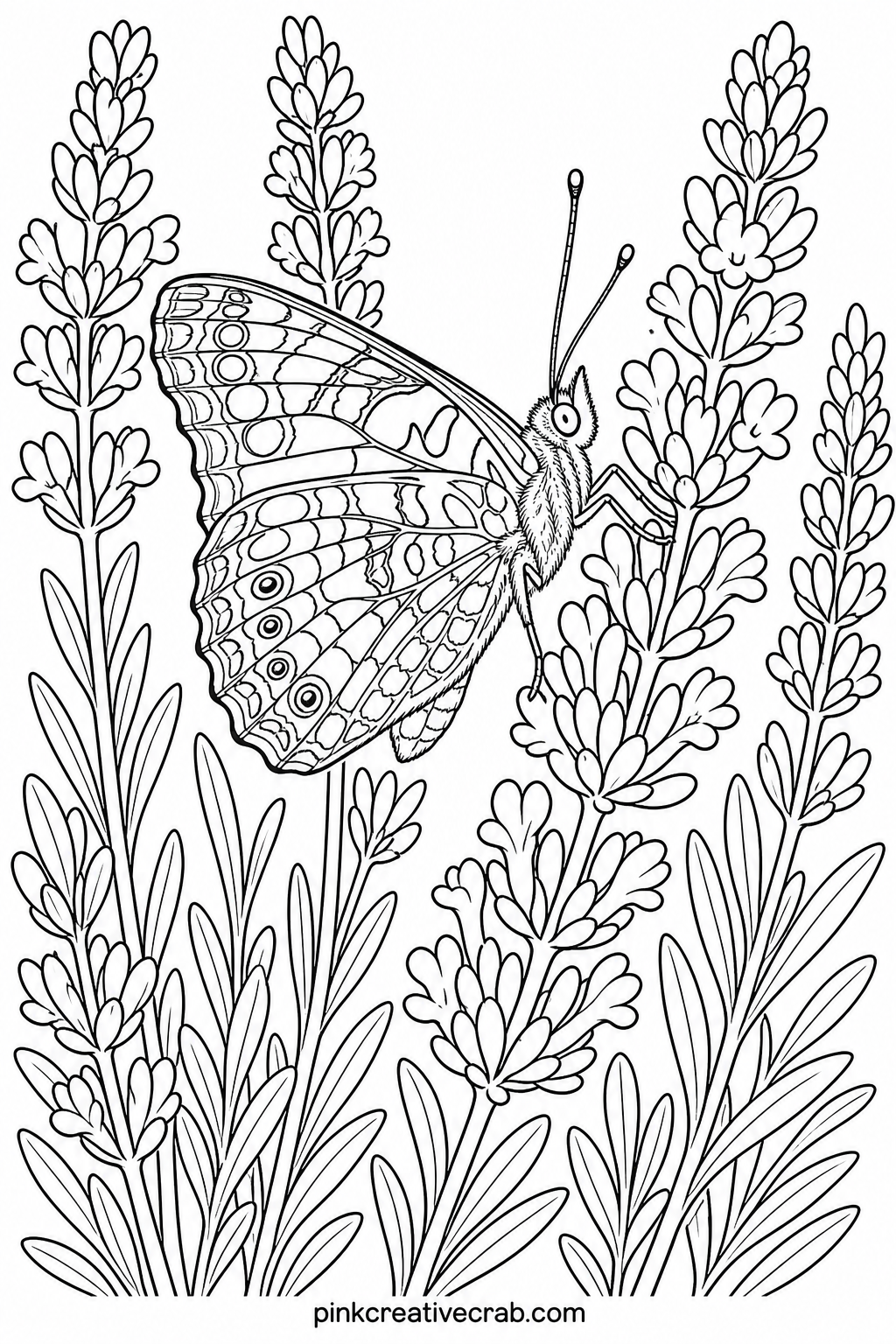
Painted lady butterflies drawn on long stems of lavender give you tall narrow spaces of tiny blossoms to fill alongside a mosaic wing pattern, good practice for switching between large and small detail in the same sitting.
Moths At Night
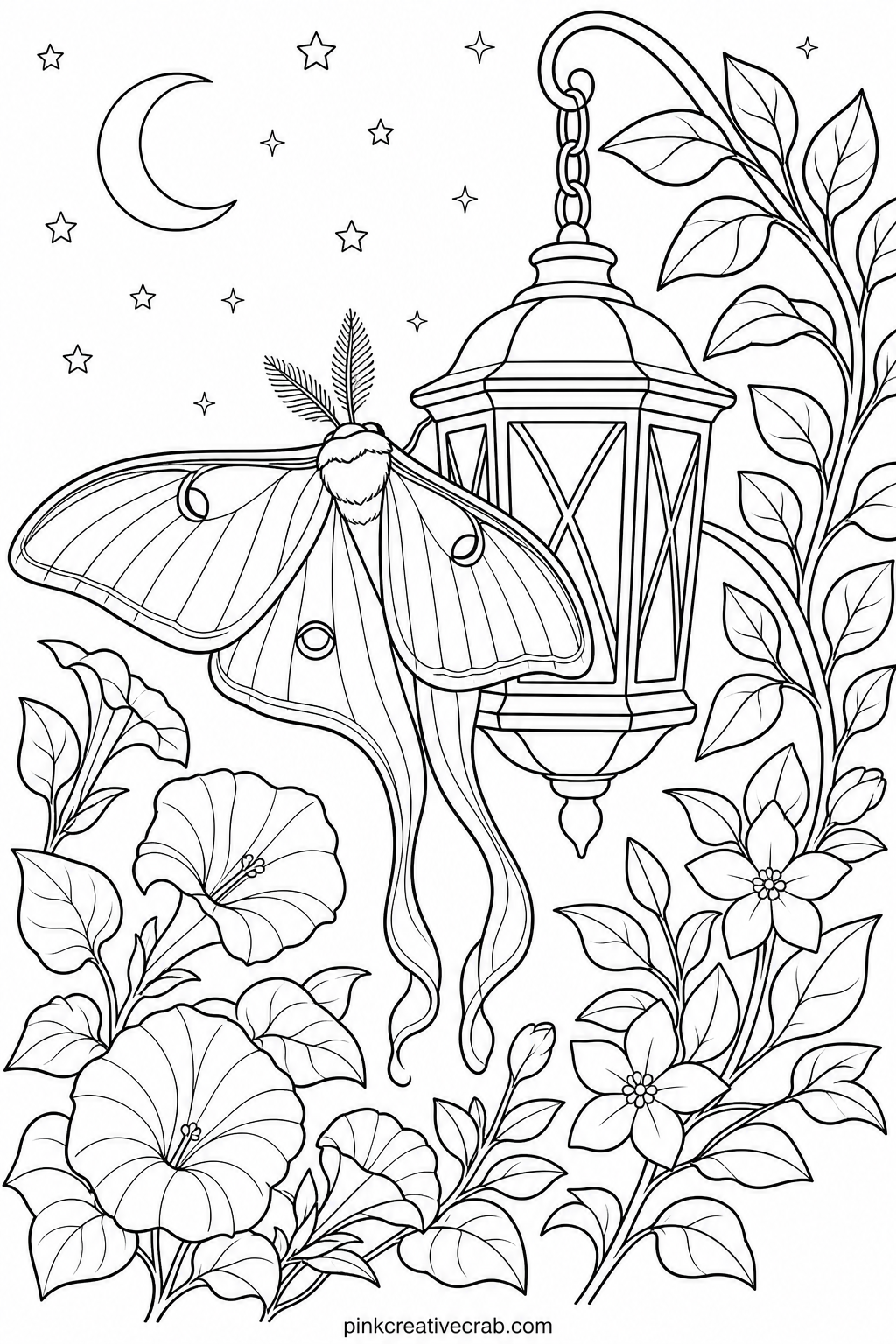
Luna moths pair naturally with a soft night sky background, so block in the pale wings first, then work outward into the lantern glow and darker sky once the pattern is set.
The long curved tails on the hind wings are the trickiest part to keep symmetrical, so turn the page as you go rather than twisting your wrist to reach them.
Pair this page with the luna moth sheet for a two page moth spread, since the atlas moth’s much larger wings and snake head wing-tip markings make a strong contrast next to the luna’s pale simplicity.
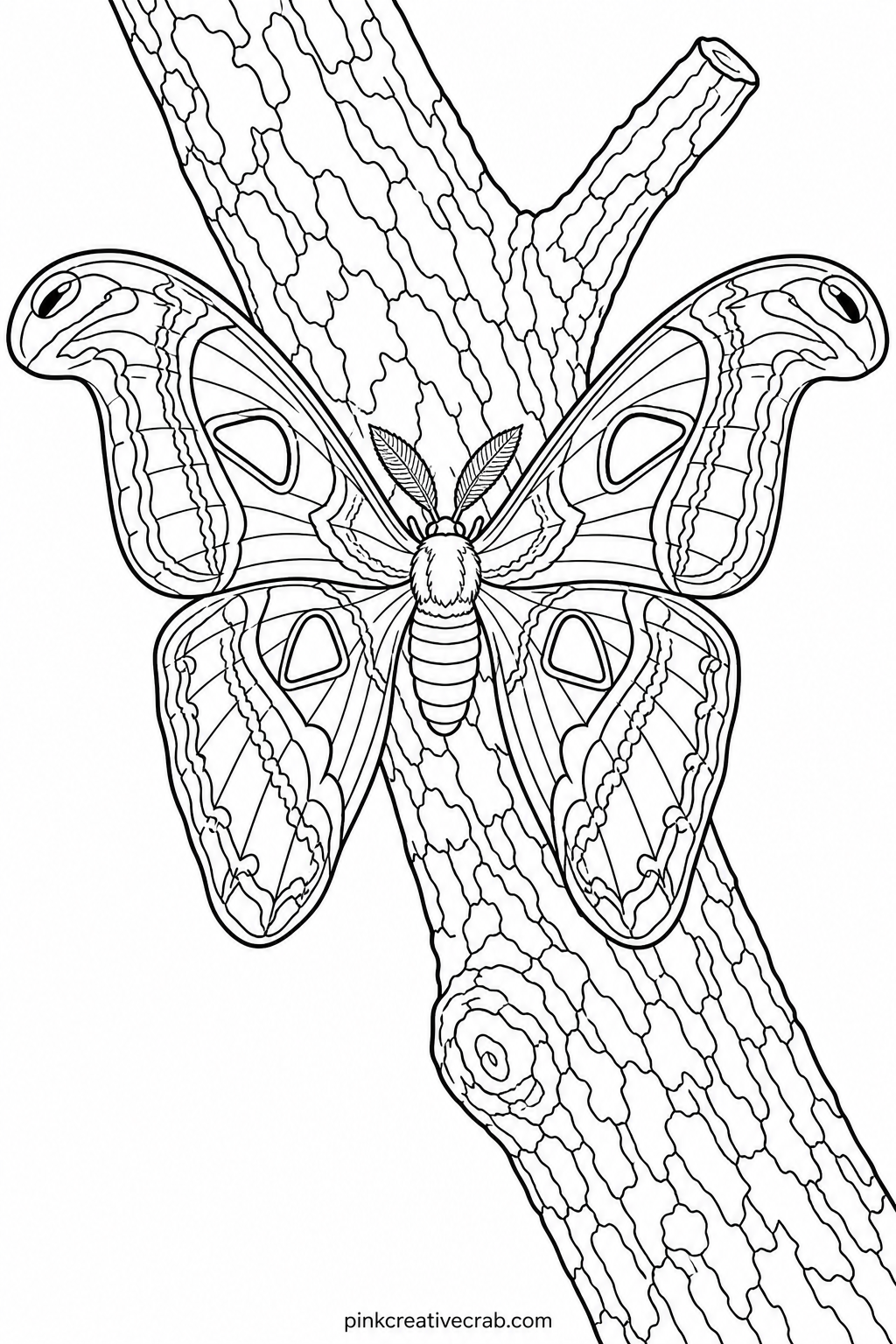
The usual mistake here is coloring the moth and the dusk sky in the same weight of color, which flattens the page. Keep the sky muted and let the moth’s banded wings carry the brightest tones so it still reads as the center of attention.
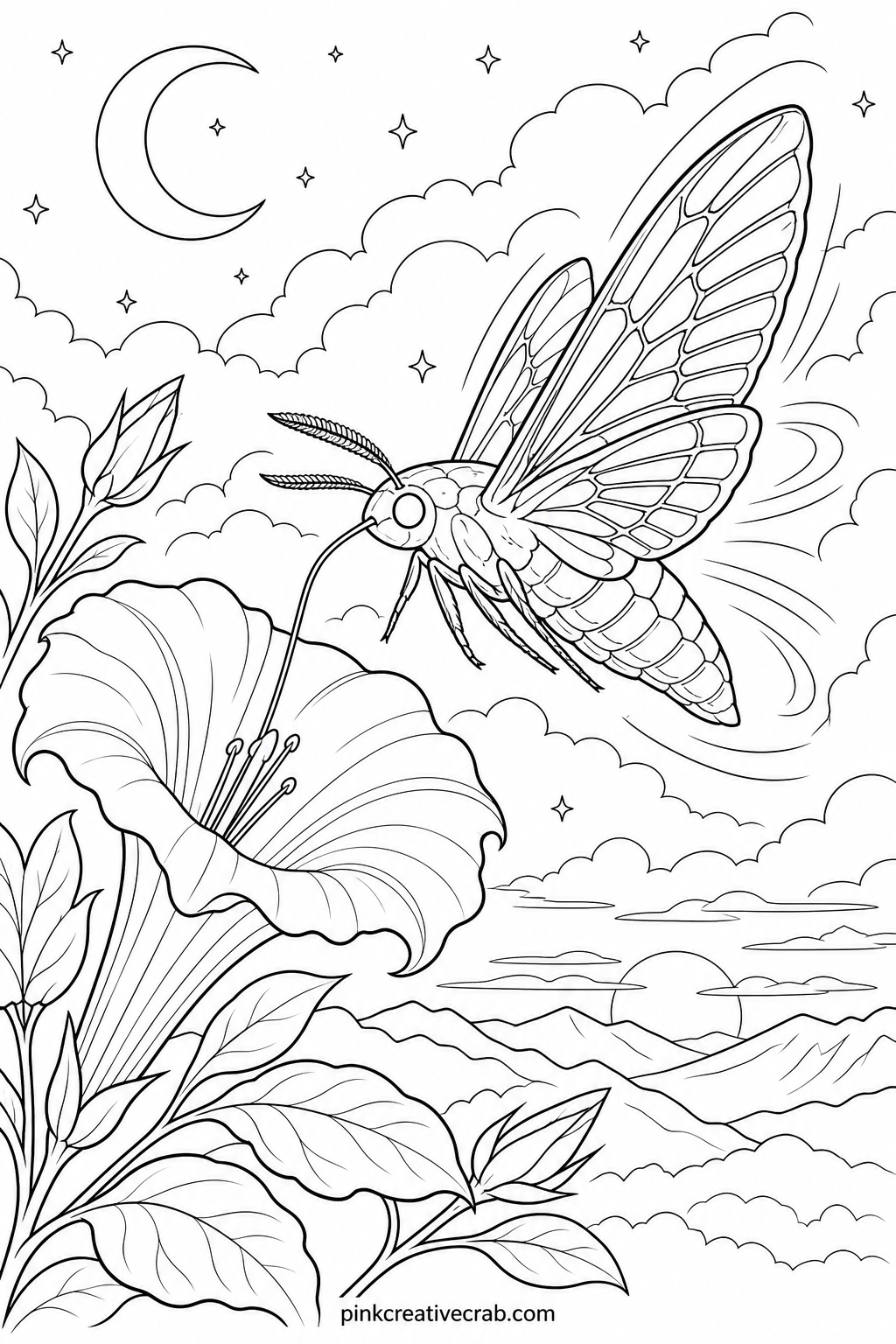
Tropical Wings
Start with the wings on this one before touching the background, since the iridescent blue morpho pattern is the whole point of the page and it is easier to plan the leaf shapes around a finished butterfly than the other way round.
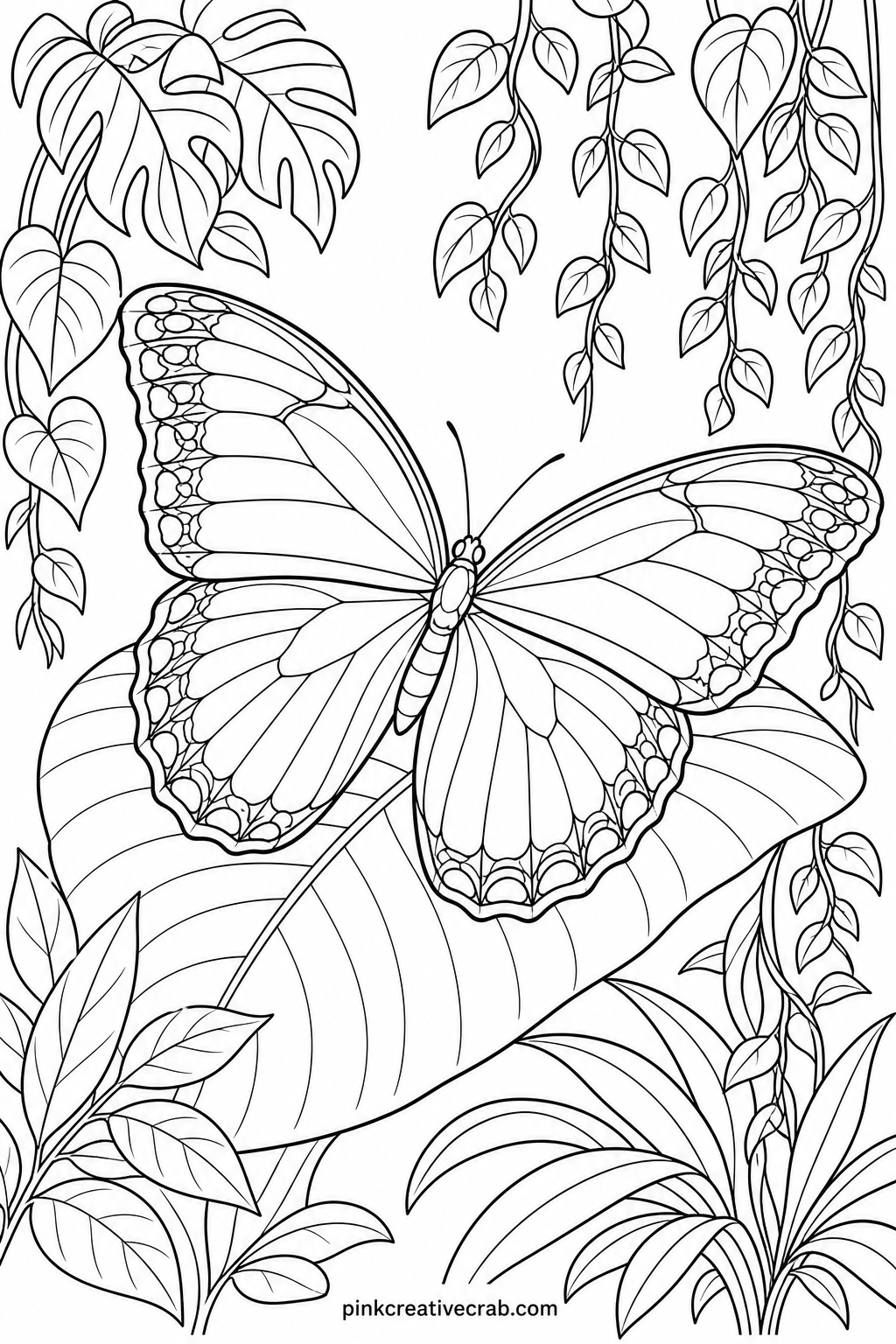
If you have ten minutes, this is the page to reach for: the glasswing’s clear wing panels need almost no color at all, just the dark veining and the orchid petals beneath it, so it finishes fast without feeling rushed.
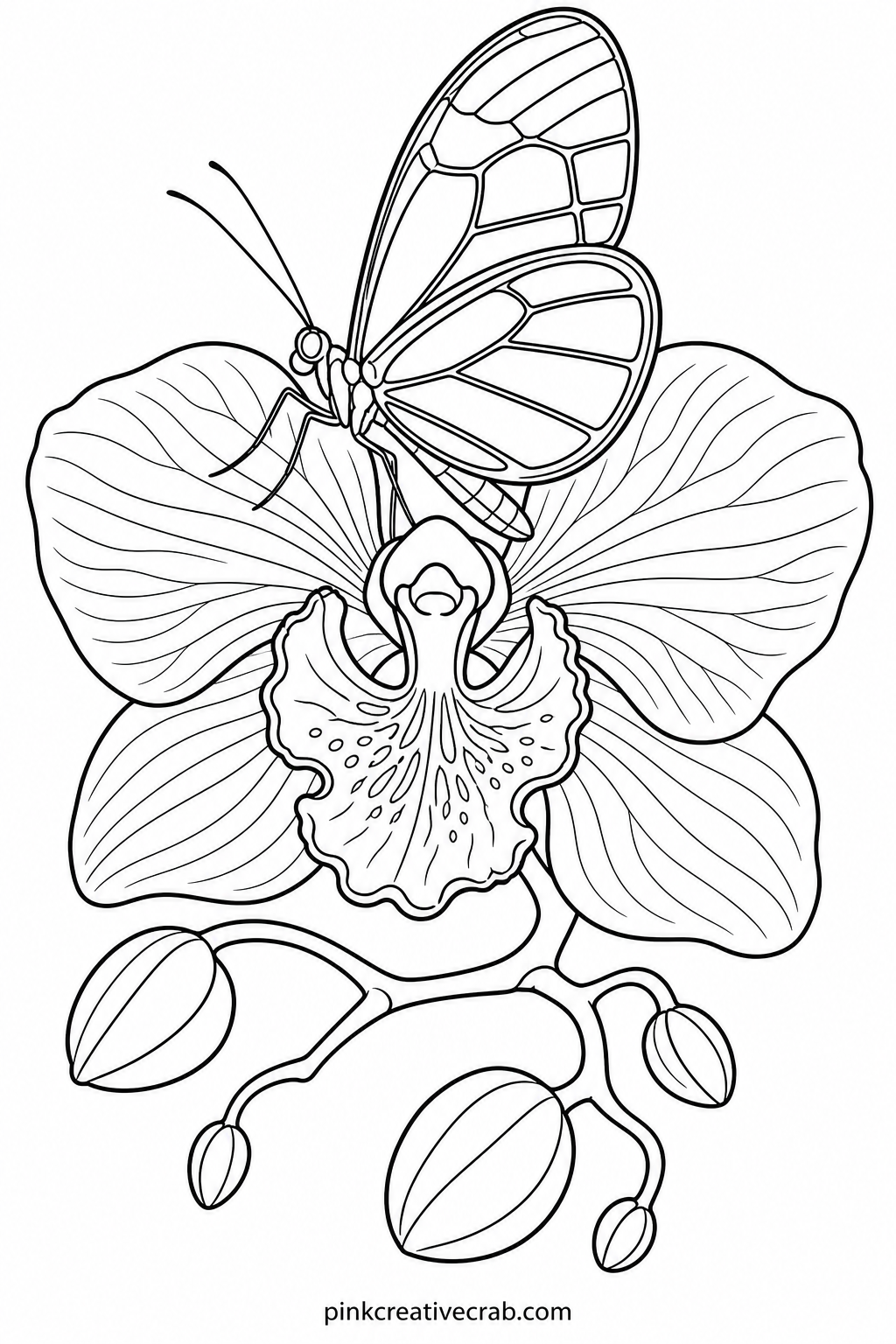
The owl butterfly’s eye-spot wing pattern asks what colors could actually belong to an eye, so this is a good page to color alongside a child and ask the question out loud rather than answering it yourself first.
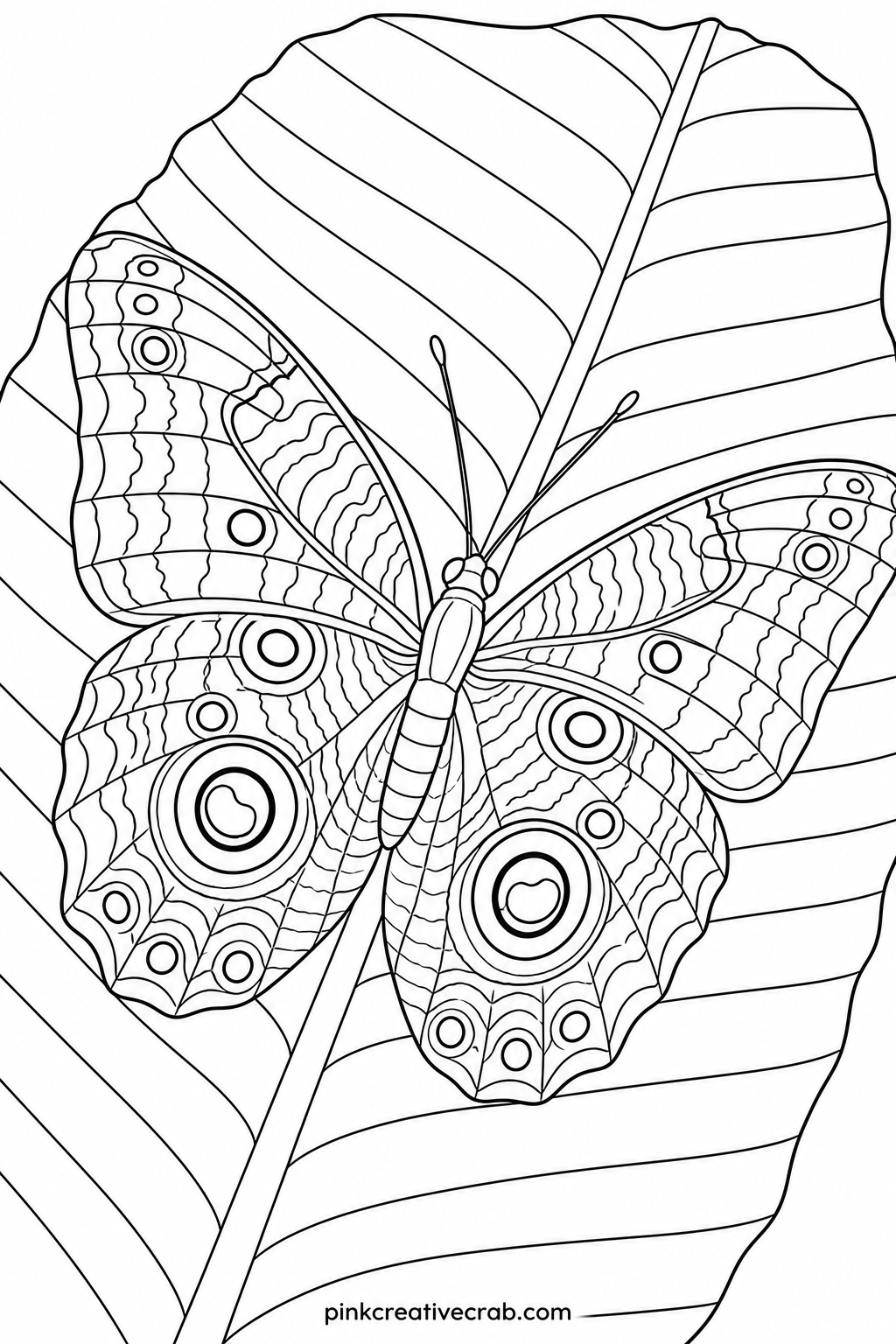
Birdwing butterflies have unusually elongated wings compared to most garden species, so colored pencils work better than markers here, letting you blend gradually from the wing base out toward the pointed tips without a hard line showing.
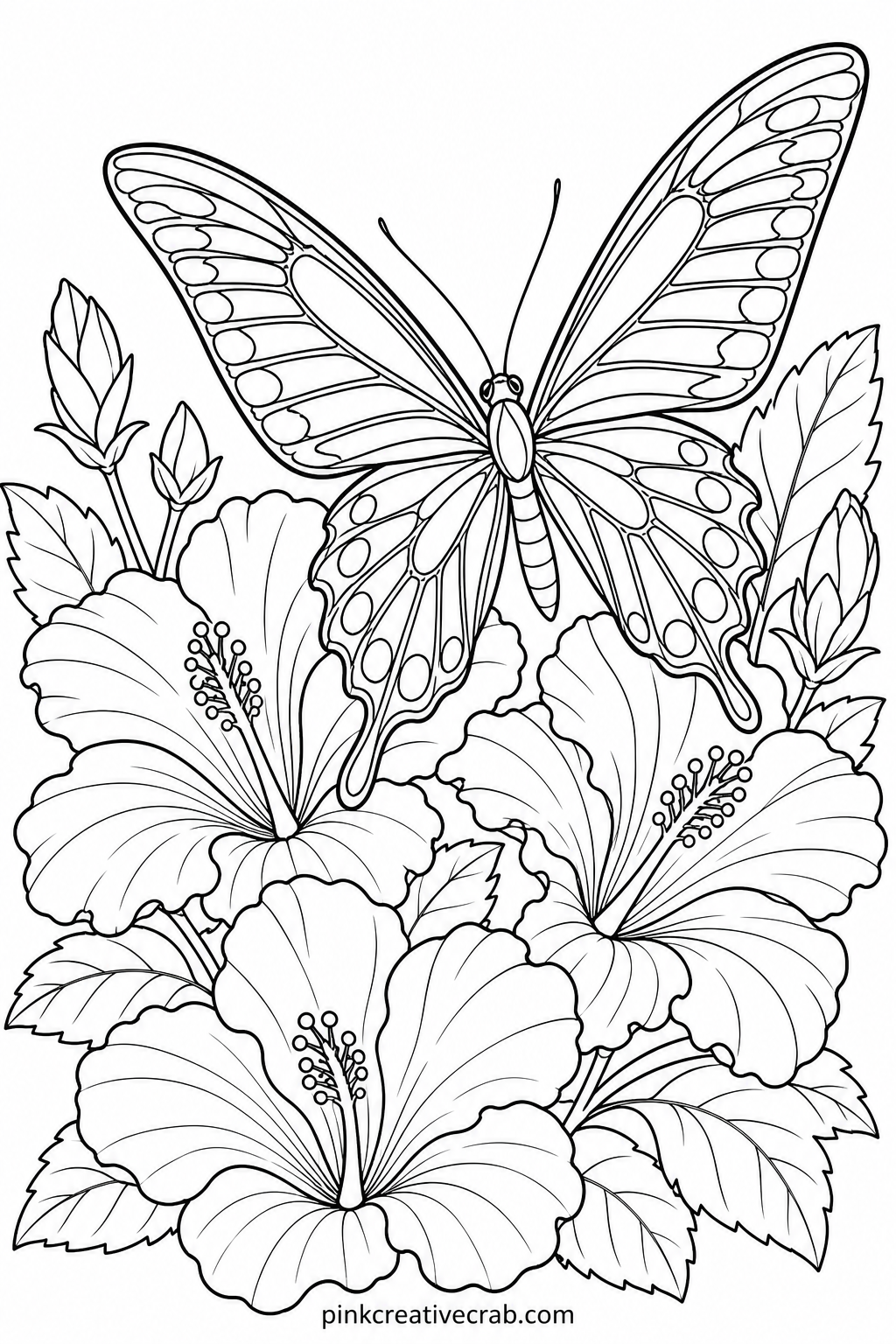
Meadow Butterflies
Sulphur butterflies suit anyone newer to detailed coloring, since the wing pattern is simpler than most pages in this set, just a border and a few round spots, which makes it a good warm up before tackling a busier sheet.
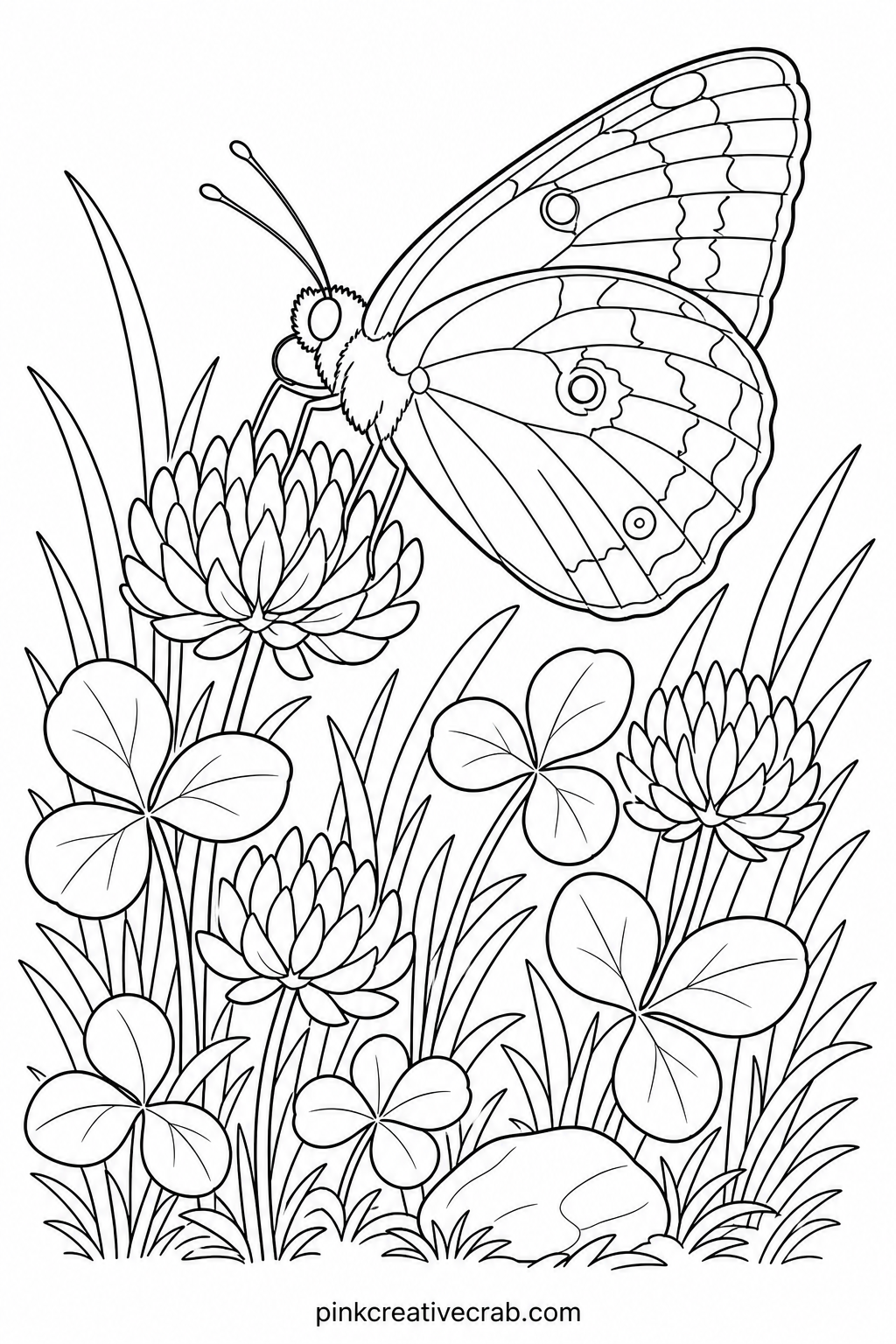
Try outlining the red admiral’s black and orange bands in pen first, then filling with pencil afterward, since a crisp dark outline keeps this pattern sharp even where the colors sit right next to each other.
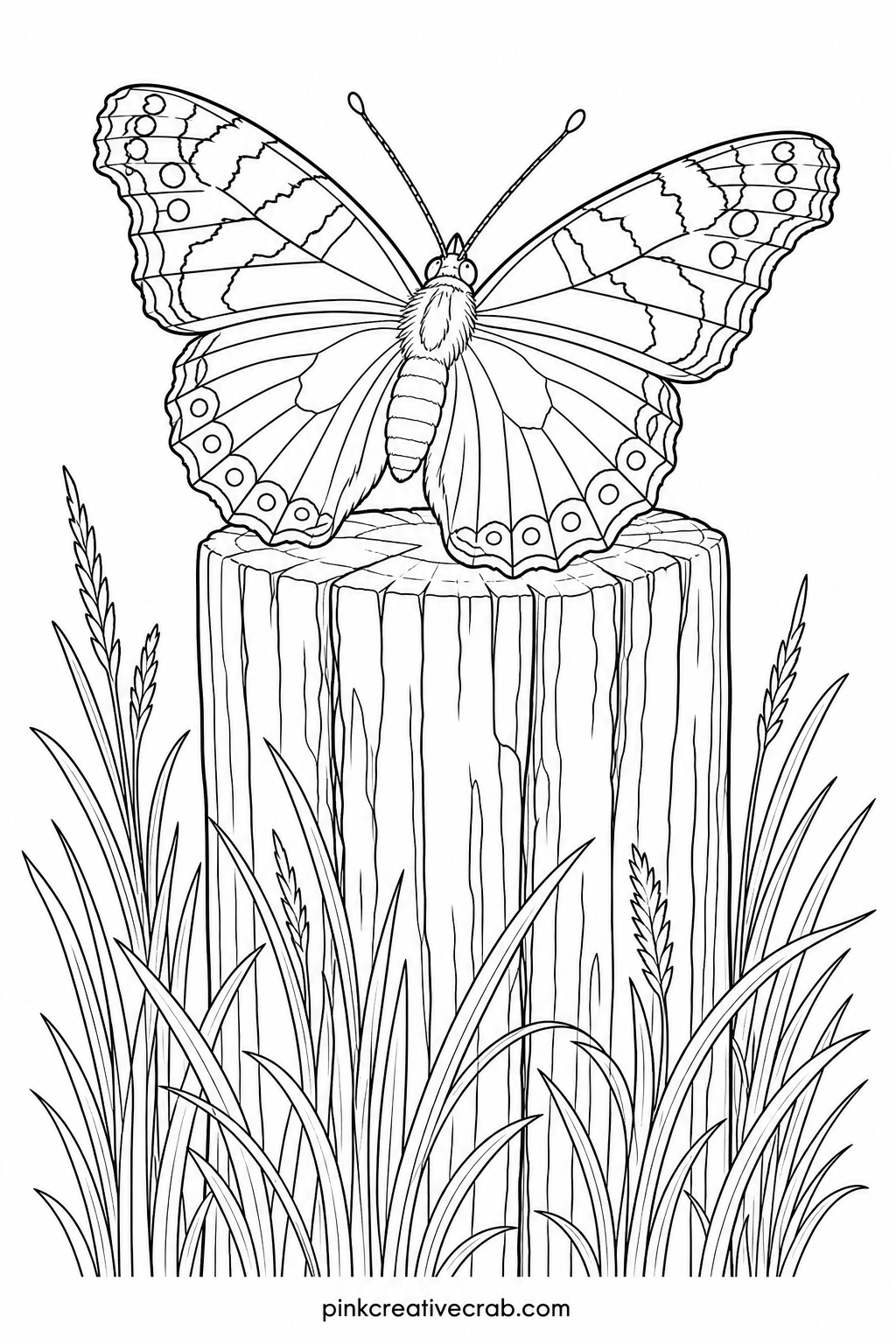
This page pairs naturally with the owl butterfly sheet, since both carry large eye-spot patterns, so coloring them side by side lets you compare how differently the same basic marking can be styled.
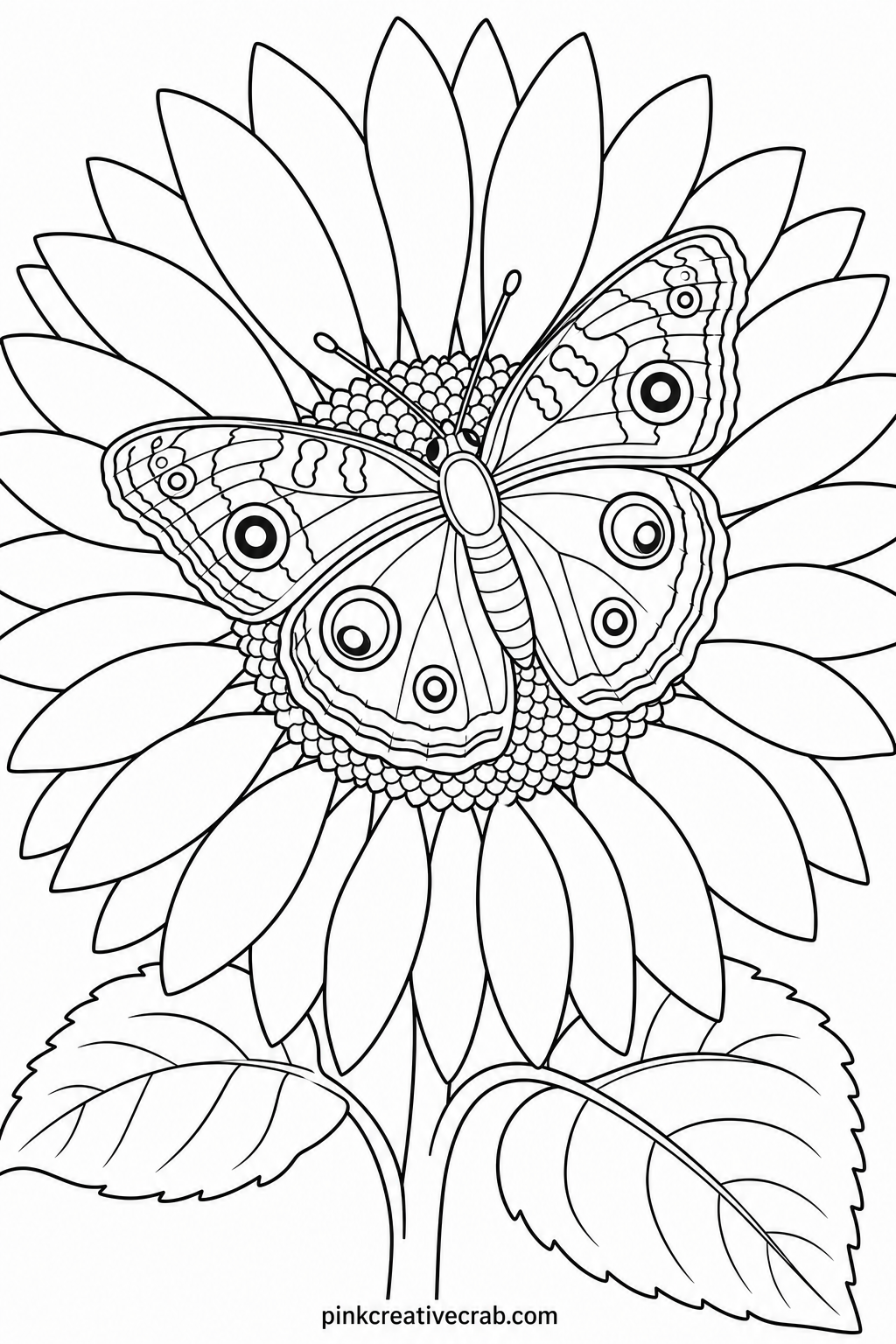
Skipper butterflies are small and plain compared to the rest of this set, so this page works well as a gift tag once colored, trimmed close, and glued onto plain cardstock with a loop of ribbon through a punched hole.
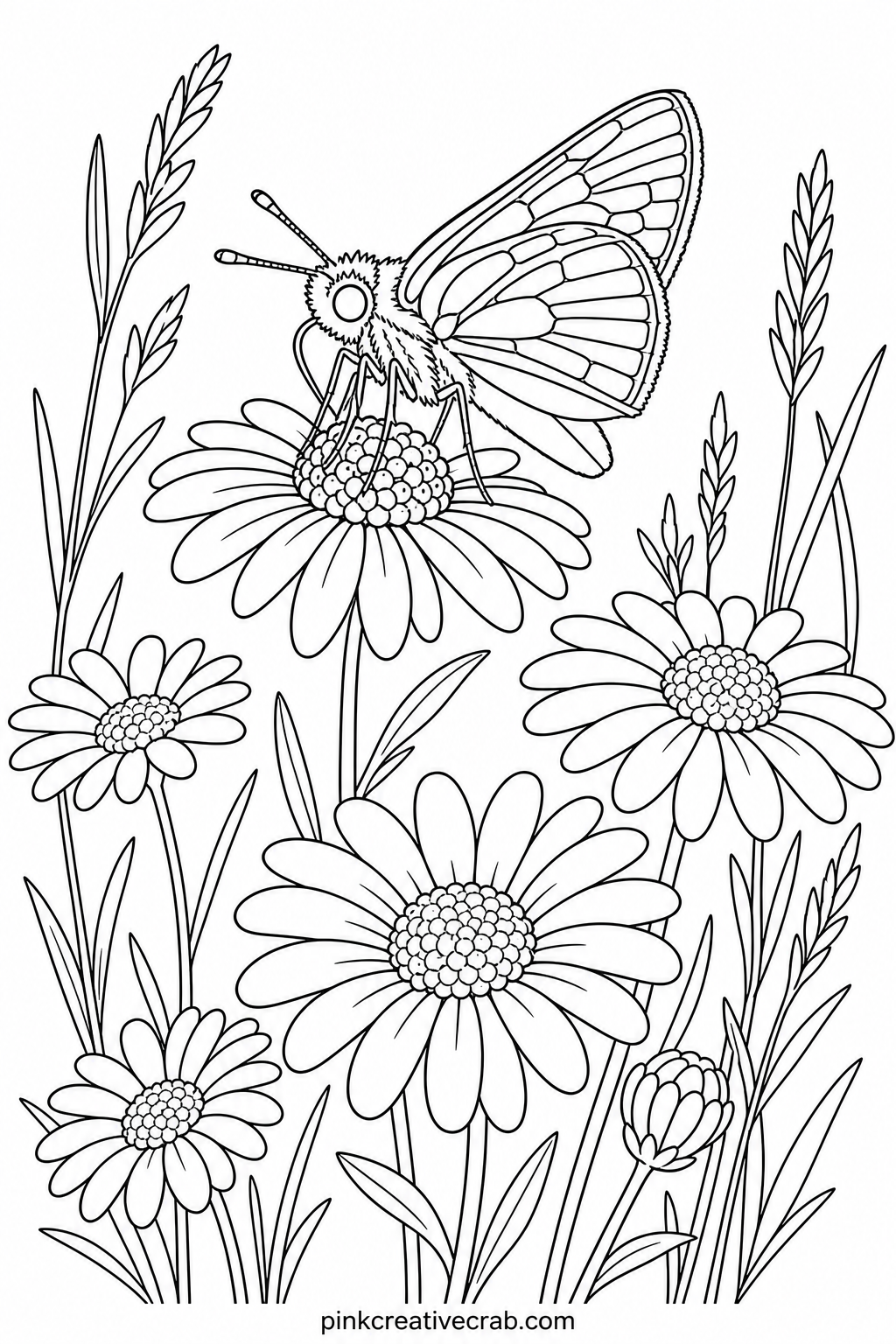
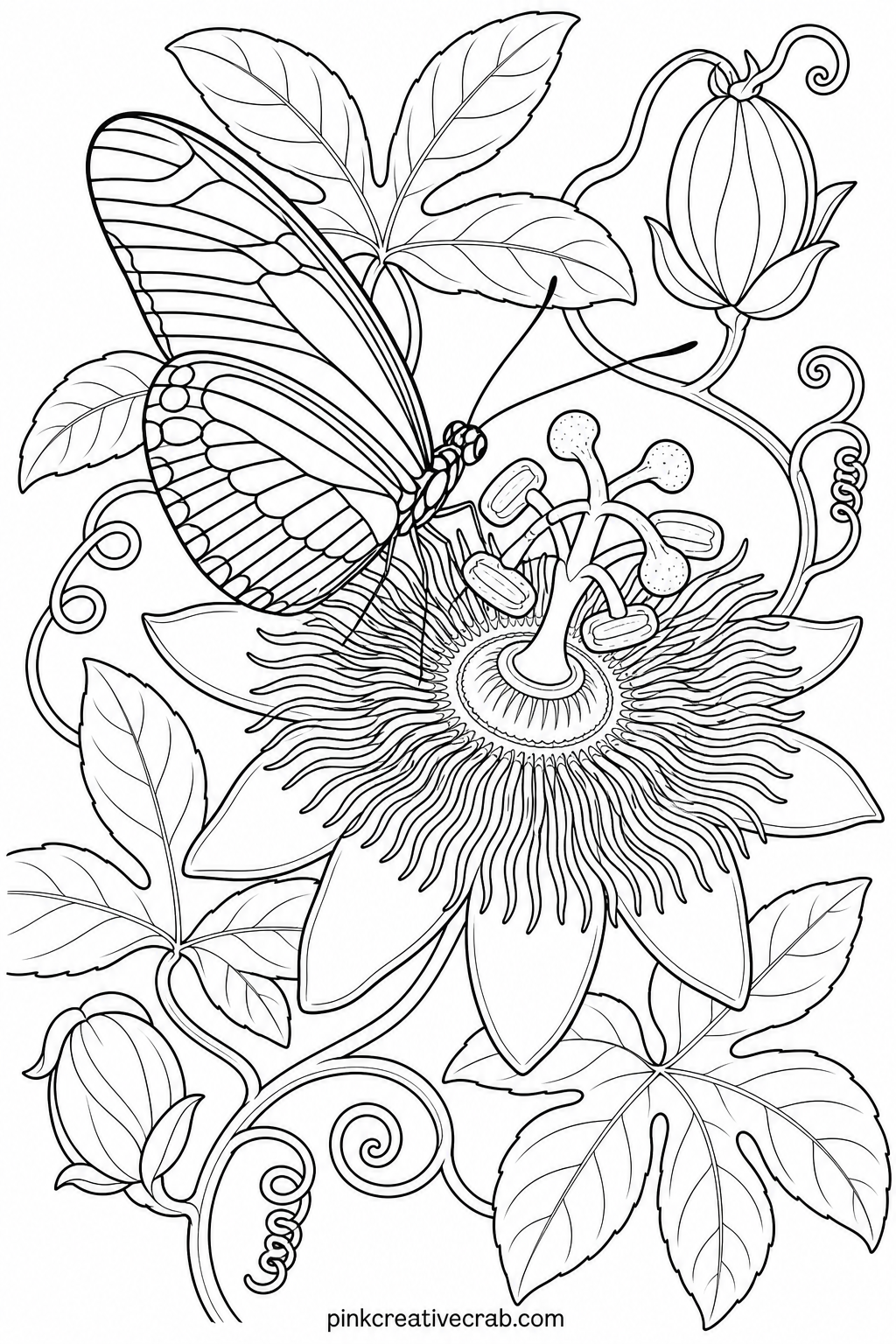
Wings In Close Detail
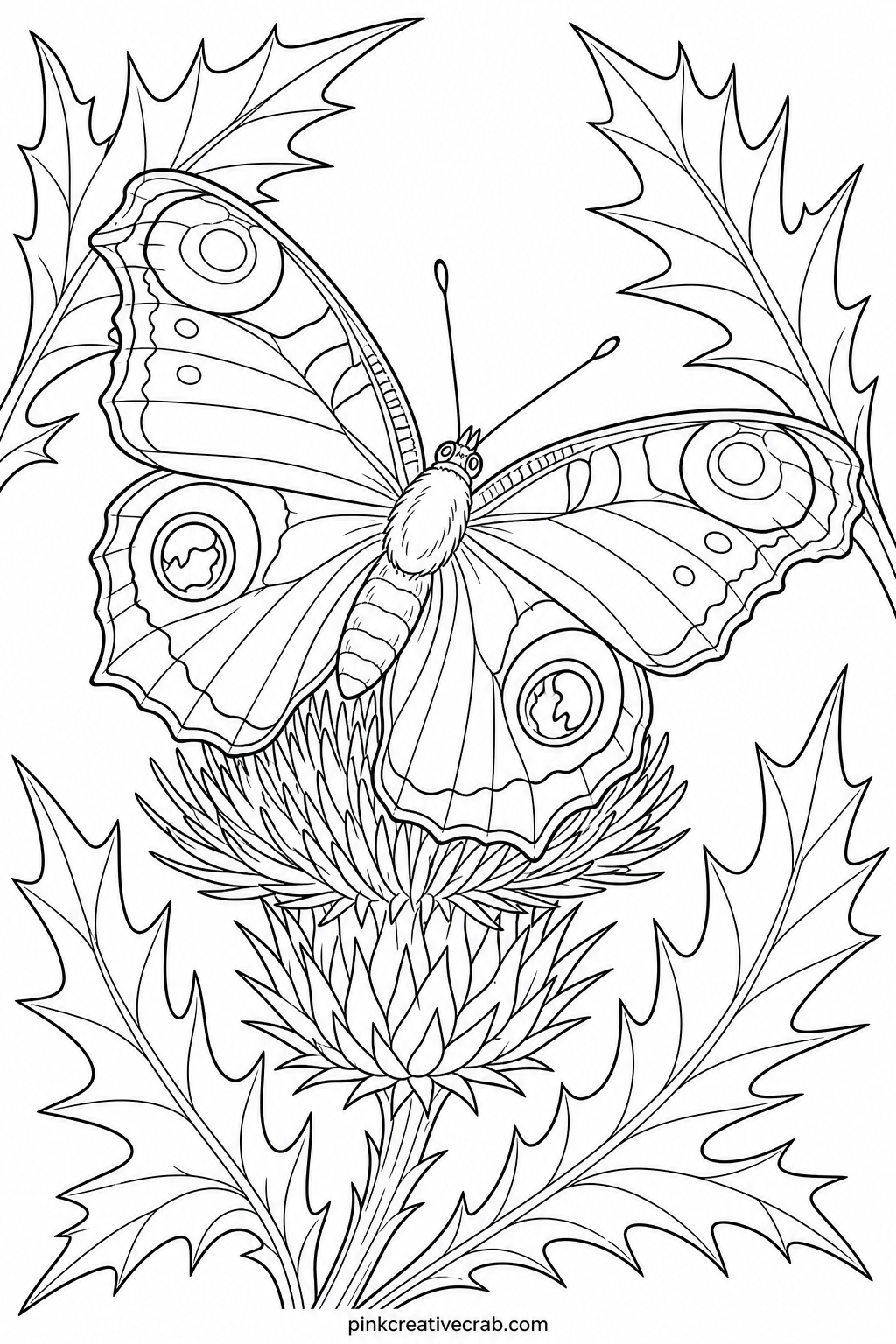
The usual mistake with this page is rushing past the four large eye spots to get to the rest of the wing. Slow down here first, shading each spot with two or three tones, since they carry most of the pattern’s impact.
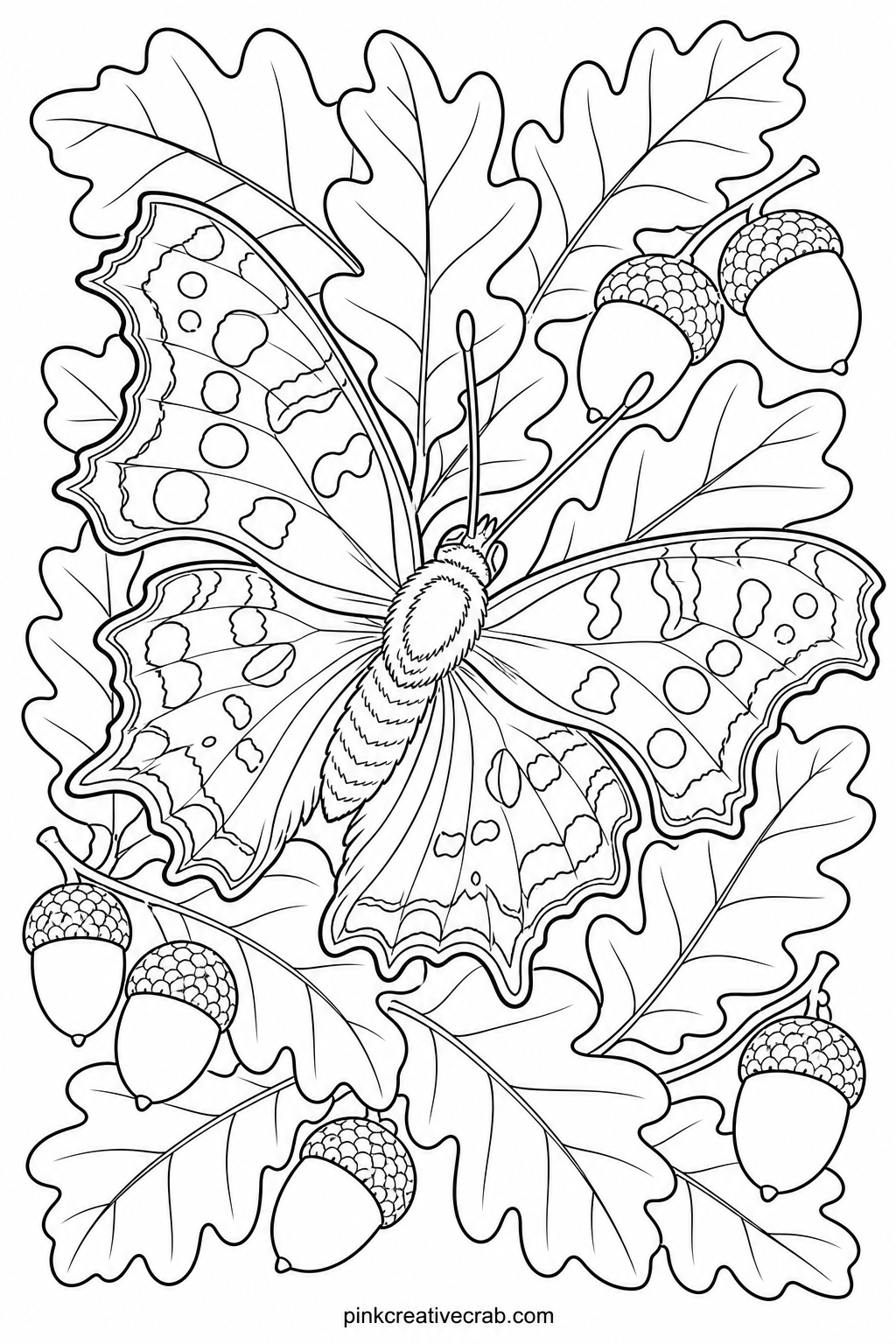
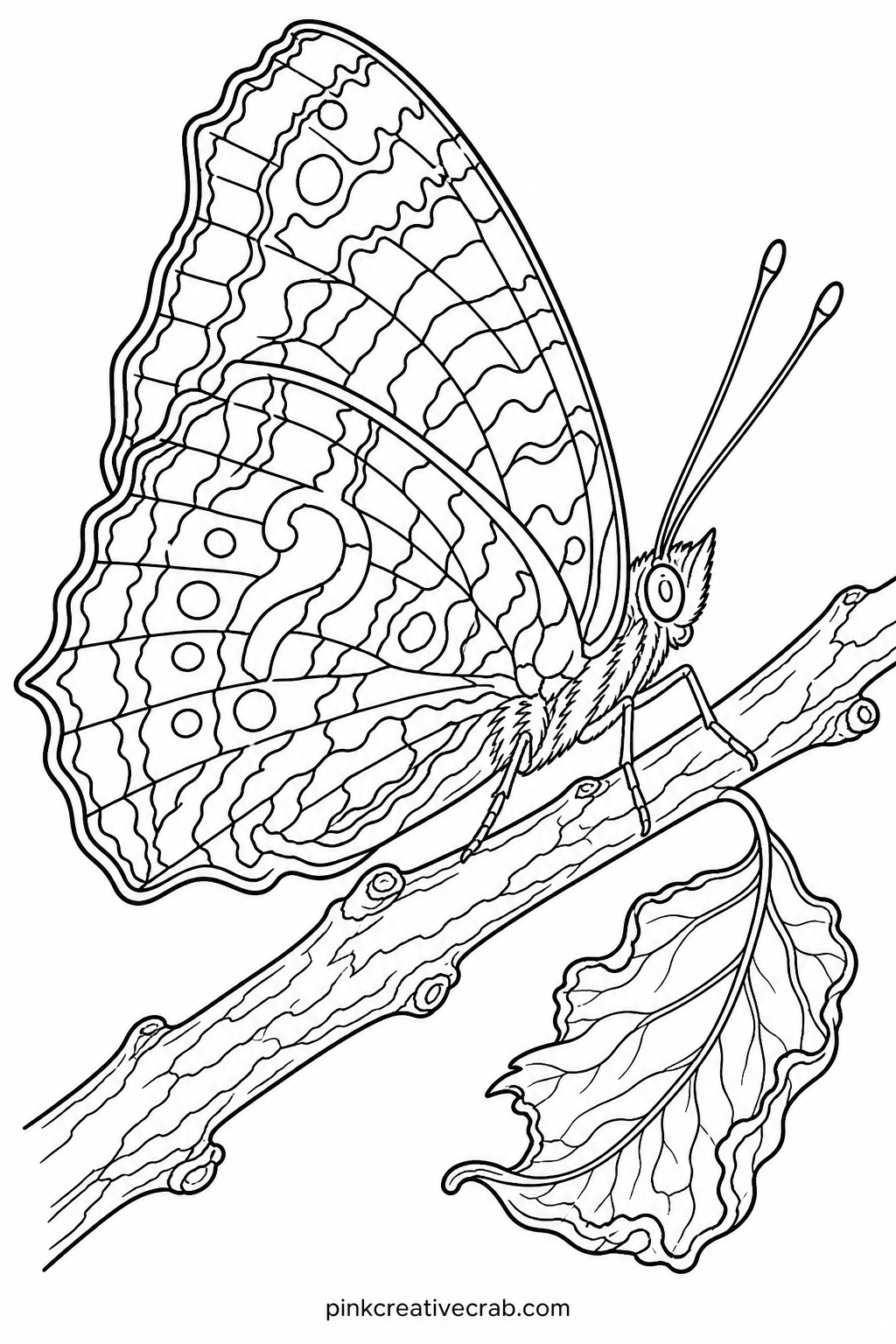
Ragged wing edges make the comma butterfly a good match for the swallowtail page earlier in this set, since coloring both in one sitting gives you practice with two very different silhouettes built from the same basic wing shapes.
Once colored, this page frames well on its own next to a plain mat, since the folded wing position shows mostly the mottled underside pattern rather than the bright upper wing, giving the finished piece a quieter, almost sketch-like look.
What to Do Next
Print the first few pages on plain cardstock, pick whichever butterfly or moth catches your eye, and start with the wings before the background settles in around it.
Frequently Asked Questions
What paper works best for these butterfly coloring pages?
Plain white cardstock, around 90 to 110 pound weight, holds fine lines well and resists bleed through from markers or gel pens. Regular copy paper will work in a pinch but tends to warp or let ink show through to the next sheet, especially with heavier marker use.
What printer settings should I use?
Choose your printer’s best or highest quality setting rather than draft or normal, since the wing patterns include very fine lines that can disappear at lower resolution. Set the paper size to match what is loaded, letter or A4, and print one page at a time to check the first result before running the full set.
Which pens or pencils suit this much fine detail?
Fine tip markers, in the 0.3 to 0.5mm range, handle the small wing sections cleanly without bleeding into neighboring shapes. Colored pencils are a good second layer for blending and shading once the main pattern is filled in, and they are gentler for very small spots than a broad marker tip.
What do I do with the pages once they are colored?
Trim the border and slide a favorite into a simple frame, or punch a hole and turn a smaller page like the skipper or teacup sheet into a gift tag. Several pages colored in a matching palette also work well bound together into a small journal or keepsake booklet.
Have any thoughts?
Share your reaction or leave a quick response — we’d love to hear what you think!
-
 0
0 -
0
-
0
-
0
-
0
-
0


