An easy canvas painting does not need a complicated scene to look good on a wall, it needs one strong trick: a smooth gradient sky and a flat black shape sitting on top of it. That is the whole formula behind every idea below, and it works whether you paint a lone tree or two kids running on a beach.
Each one below uses the same simple method, a blended sky in acrylic and a silhouette brushed on once it dries, so you can pick whichever subject speaks to you and finish it in an afternoon. Scroll through, find the one that fits your wall, and get your brushes wet.
Using these images: free for personal projects such as printing, coloring, cards, journals and gifts. Handmade items that include them may be sold up to 30 pieces per design. More than that is commercial use and is not permitted, and neither is selling or sharing the images themselves or passing them off as your own. Please ask before any other use.
Start with the easiest shape in this whole list: a palm tree silhouette against an orange and pink sunset. Wet the canvas with a thin layer of gesso or water first, then block in orange near the horizon, blending up into pink and a touch of lilac near the top using a soft flat brush worked in overlapping horizontal strokes while the paint stays wet.
Let that dry completely, then switch to a liner brush loaded with black and paint one curved trunk leaning slightly, topping it with five or six fronds that droop from a central point like a loose starburst.
The common mistake is making the trunk too straight and stiff, so look at it sideways before it dries and nudge the curve if it reads rigid. If you only have one brush, a cut corner of a sponge works fine for the blending stage.
Keep the fronds asymmetrical, uneven spacing between them looks far more natural than a perfect fan.
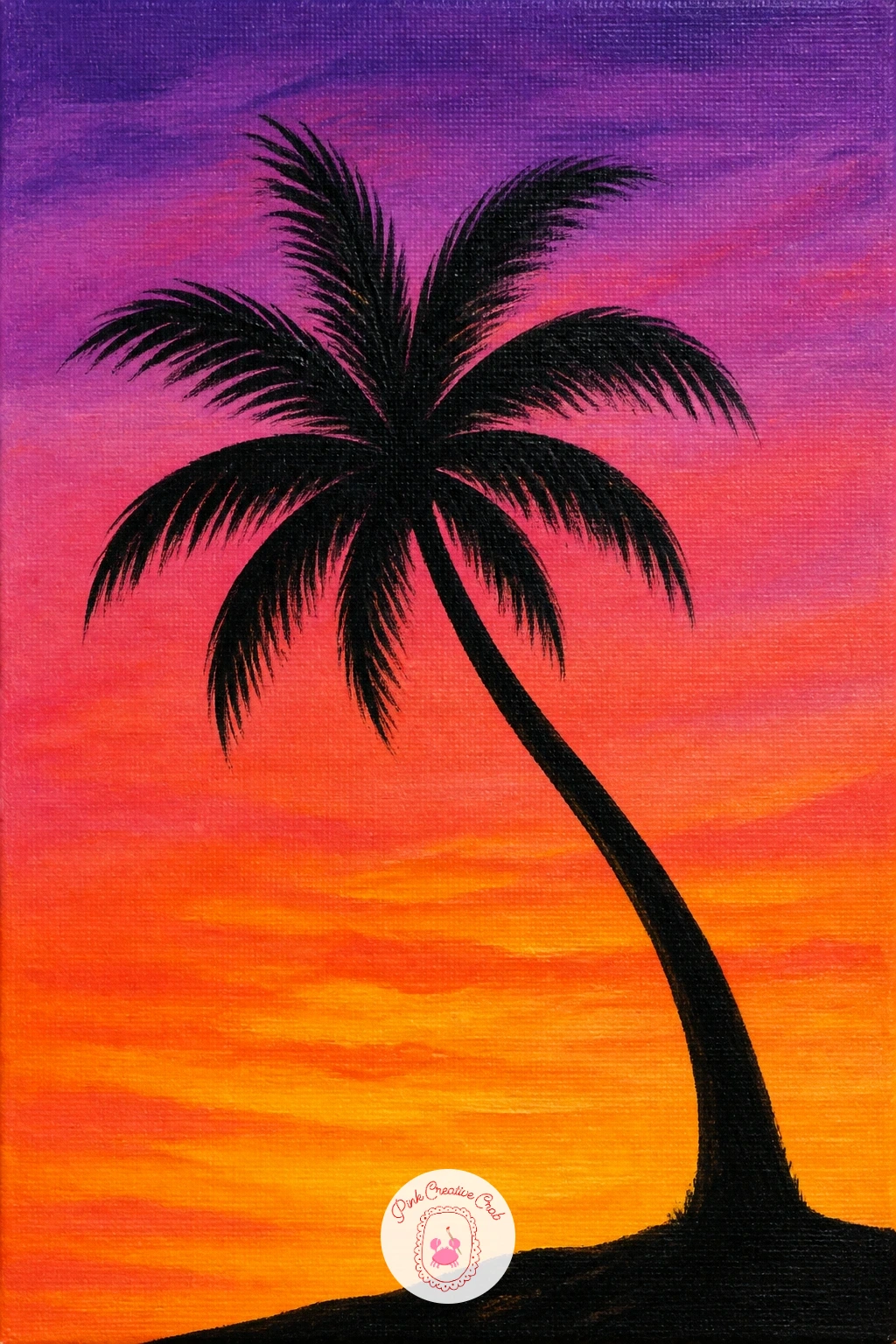
Palette: Cadmium Orange,Coral Pink,Soft Lilac,Mars Black
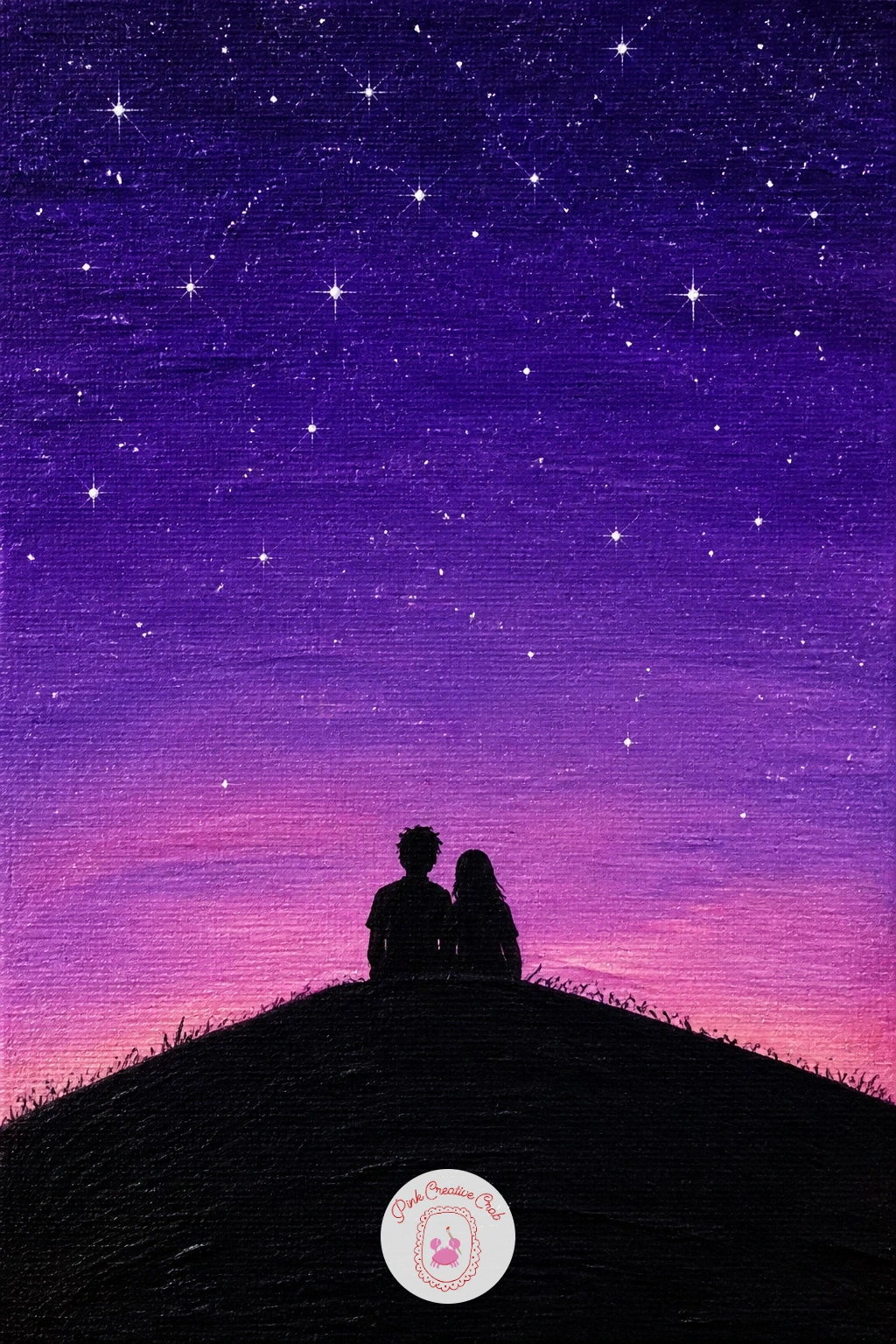
Once the palm tree feels comfortable, try a couple on a hill under a starry sky, which adds a rolling horizon line and two small figures instead of one shape. Paint the sky first in deep violet fading to midnight blue near the top, blending while wet, then let it dry before adding a gently curved black hill across the lower third.
Flick on stars with the tip of a round brush loaded with white or a toothbrush splatter for a scattered dusting, then paint the two figures sitting close together as simple rounded silhouettes, shoulders touching.
Proportion is what makes or breaks this one: keep the figures small against the hill, roughly a tenth of the canvas height, so the sky still feels huge around them. If they come out too large the whole mood shifts from quiet to cramped, so sketch their size lightly in pencil first and check it against the whole canvas before committing in black.
You Will Need
- toothbrush for star splatter
Palette: Deep Violet,Midnight Blue,Titanium White,Mars Black
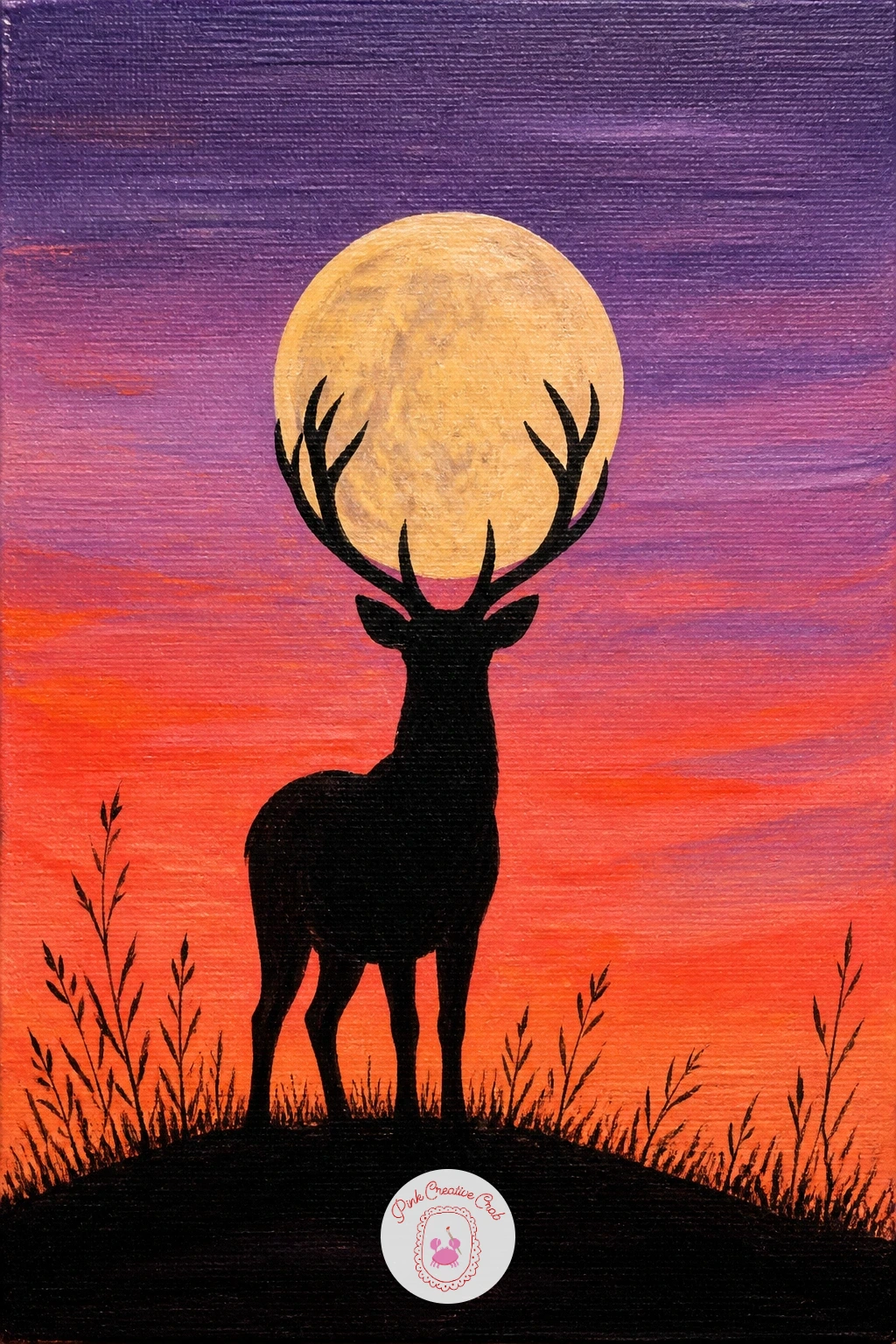
A deer in front of a big full moon turns the sky itself into the main shape, so this time you paint the moon before the silhouette goes anywhere near it. Block in a dusky blend of coral into lilac, then while it is still slightly tacky, press a circle stencil or the rim of a jar lid lightly to mark the moon’s position and fill it with warm white or pale yellow.
Once fully dry, paint the deer standing in profile near the bottom third, antlers reaching up so their tips just touch the edge of the moon, which is the detail that sells the whole composition.
Eye level matters here: keep the horizon low, near the bottom quarter of the canvas, so the moon reads as large and close, the way it looks rising over a field. If the antlers feel too fiddly in one go, paint the head and body first, let it dry, then add antlers last with a thin liner brush so a shaky line is easy to fix.
No stencil on hand, trace a cup or a roll of tape instead.
You Will Need
- circle stencil or jar lid to trace the moon
Palette: Dusty Coral,Soft Lilac,Warm White,Mars Black
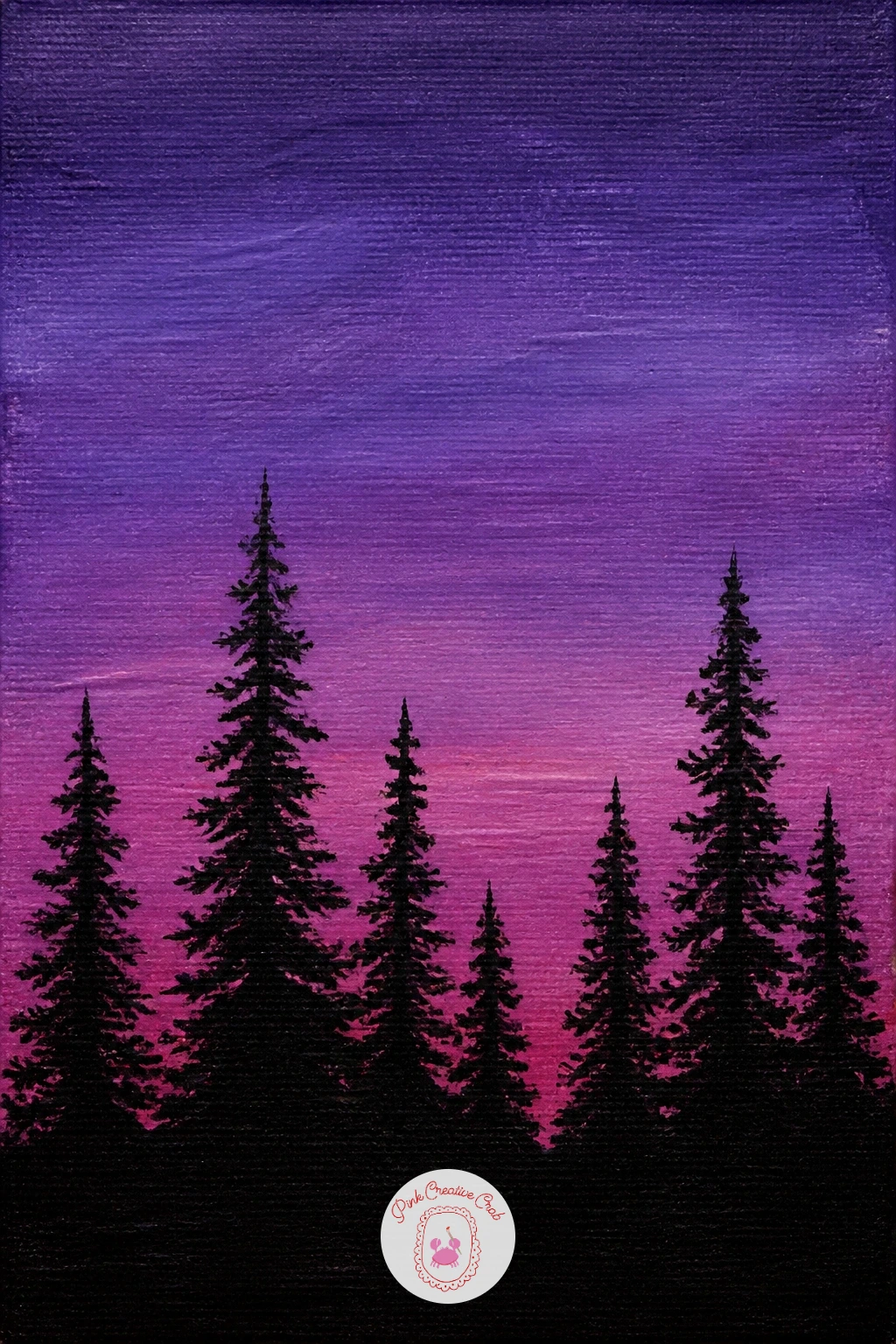
Pine trees in black against a purple dusk work as a calm palette cleanser after the deer, since the shapes are simple triangles repeated at different heights. Blend the sky from deep plum at the horizon up into soft lavender near the top, feathering the two colors together with a dry flat brush so no hard line shows.
Let it dry, then paint the pines as a row of narrow, slightly irregular triangles along the bottom edge, varying their height so the skyline has a natural rhythm rather than a straight fence of trees.
Dry brush technique saves the edges here: load just a little black paint on an almost-dry flat brush and drag it upward from the base of each tree so the top edge breaks into tiny ragged points instead of a smooth line, which reads far more like real pine texture.
Overlap a few trees slightly in front of others to add depth without any extra color.
Palette: Deep Plum,Soft Lavender,Mars Black
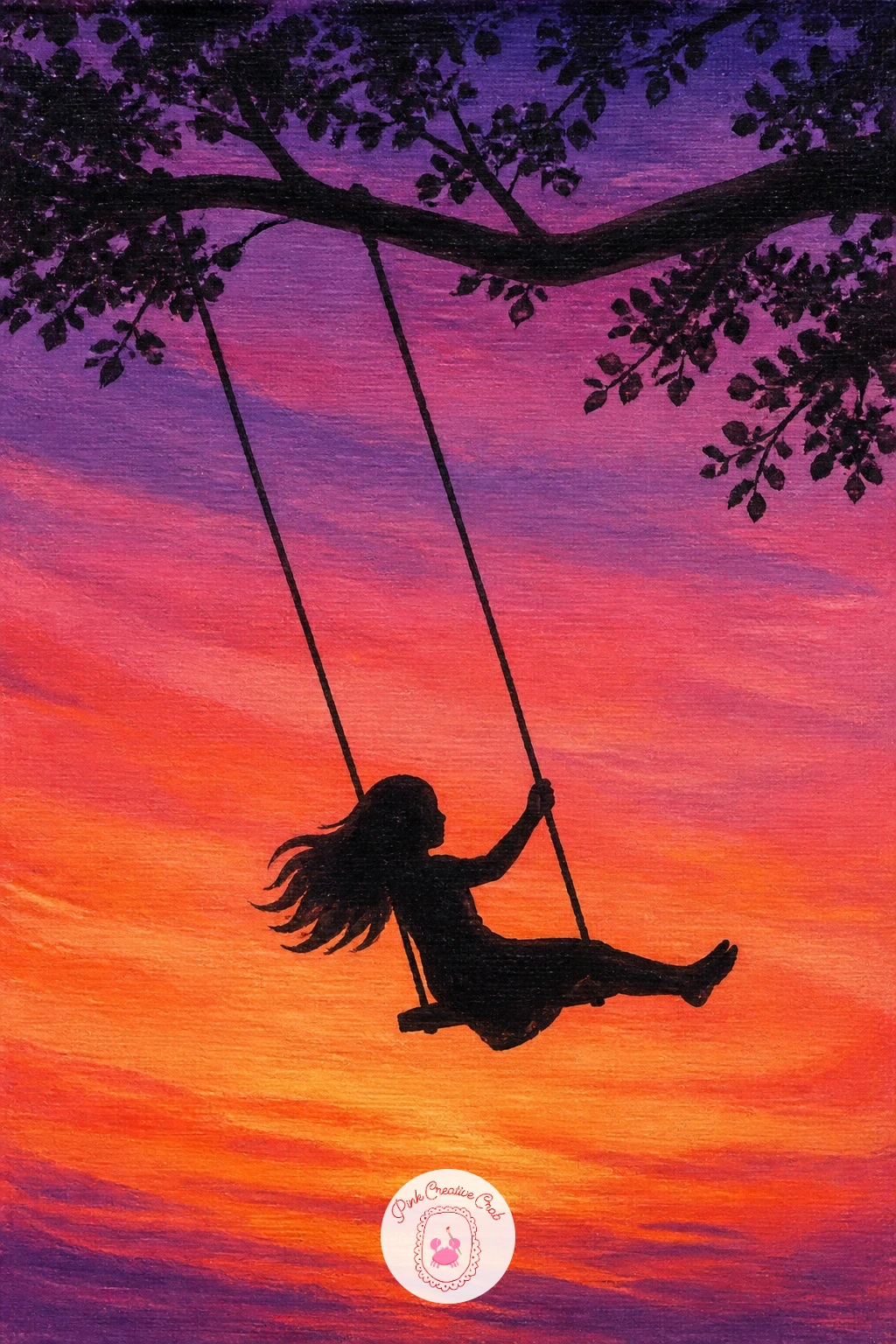
Move from a static skyline to something with a little motion: a girl on a swing hanging from a tree at sunset. Paint the gradient sky first in warm tangerine fading up into rose and pale lilac, then once dry, add one large tree shape to one side of the canvas, its canopy a soft rounded cluster of black rather than individual leaves.
Paint two thin rope lines hanging from a sturdy branch down to a small plank seat, then add the girl’s silhouette sitting on it with her legs swung slightly forward, which is what makes her look like she is actually mid-swing rather than just perched.
If this is your first time painting a figure this small, block her in as three simple shapes first: a round head, a curved torso, and bent legs, then tidy the outline with a liner brush once you are happy with the pose.
No liner brush, the very tip of a round brush does the same job.
Palette: Warm Tangerine,Dusty Rose,Pale Lilac,Mars Black
Paint the rope lines last with a ruler edge or the flat side of a card held against the canvas, it keeps them straight without a shaky hand.
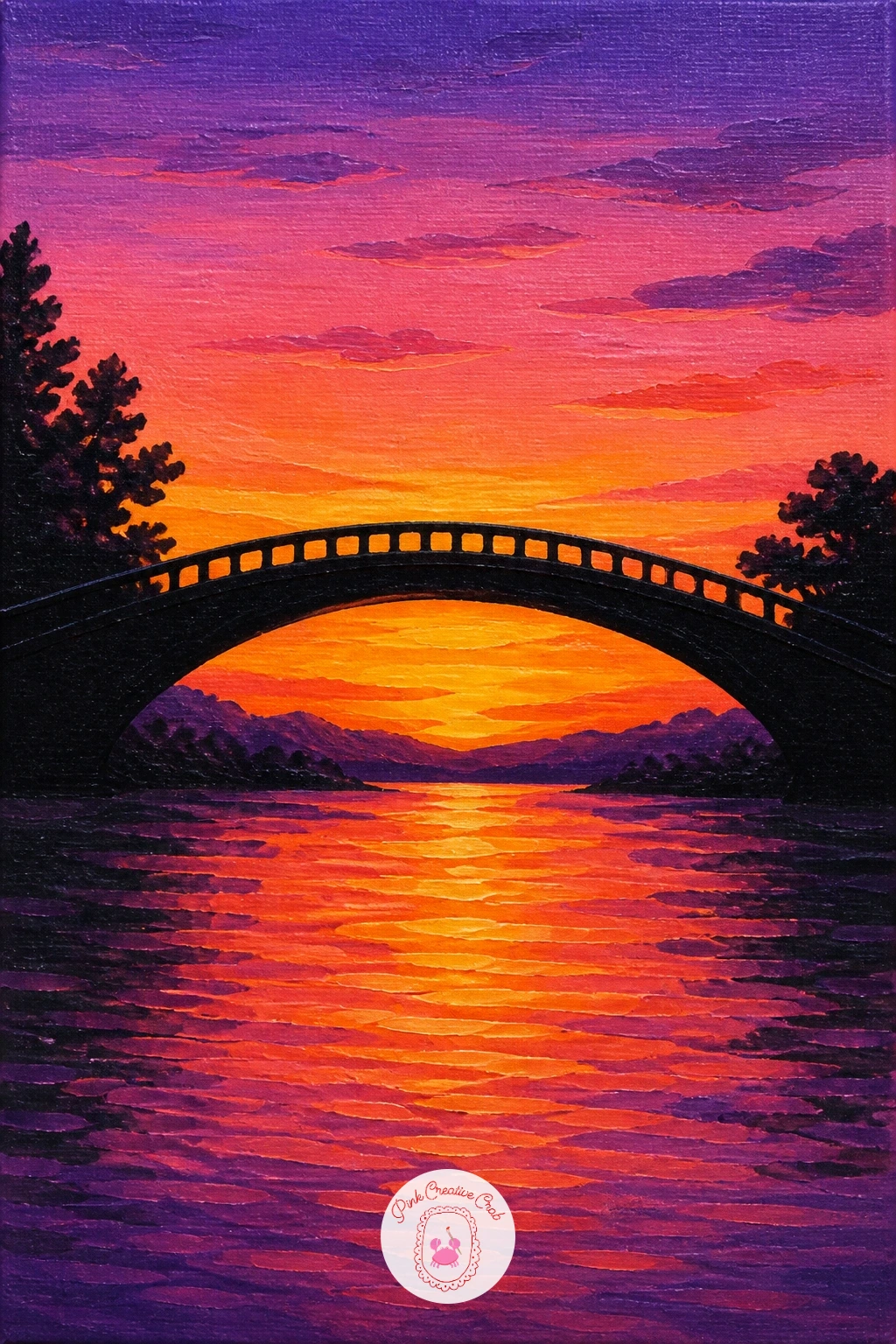
A bridge over a river at sunset brings reflection into the mix, which sounds tricky but is really just painting the sky twice. Block in the sky gradient from gold near the horizon into soft pink higher up, then paint a horizontal band of water below it using the same colors in reverse order, slightly muted, so it mirrors the sky.
Once dry, paint a simple arched bridge silhouette crossing the water, a gentle curve is far more flattering than a flat one, and add its mirrored arch reflected just below the waterline using a slightly wavy edge instead of a sharp copy.
The reflection is where beginners usually overthink it: keep it loose, a few horizontal drags of a dry brush through the wet reflection color break up the mirror just enough to read as water rather than a printed copy.
This idea pairs nicely with the quiet mood explored in these easy painting ideas on canvas if you want more flat-shape compositions to try next.
Palette: Golden Yellow,Blush Pink,Muted Teal,Mars Black
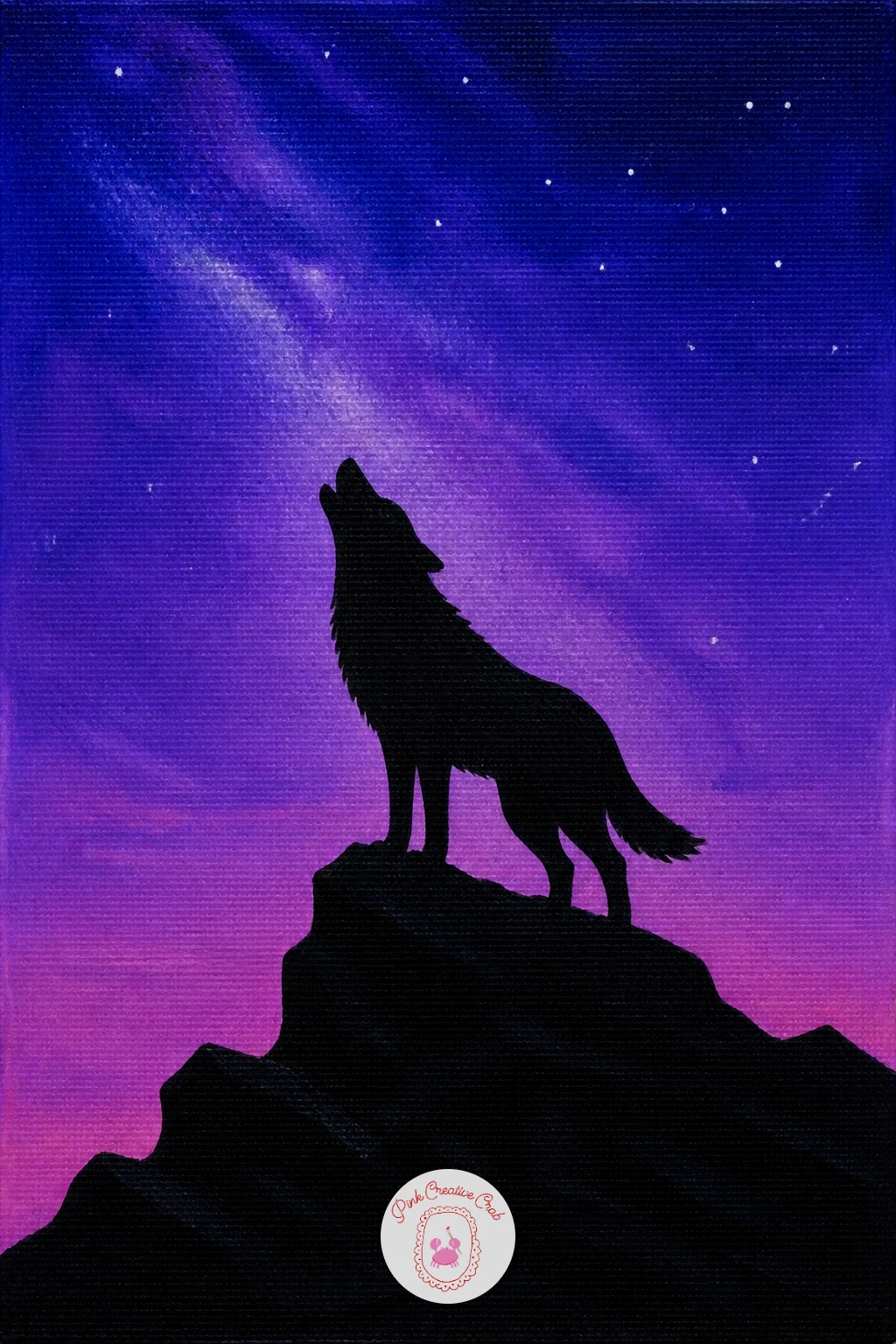
A wolf howling at the moon on a rocky ridge raises the drama a notch, built from one dramatic pose rather than a busy scene. Paint the night sky first in a blend of indigo into soft violet, place a pale circular moon off to one side using the jar-lid trick again, then let everything dry before the silhouette work begins.
Paint jagged rock shapes along the bottom using sharp angular strokes rather than smooth curves, then add the wolf standing on the highest rock with its head tilted back, nose pointed toward the moon.
Getting the howl pose right is about the neck angle: the head should tilt back far enough that the throat line curves, not just a head turned sideways, so sketch this in pencil first and check the silhouette still reads clearly as a wolf from a step back.
Vary this one next time by swapping the wolf for a coyote on a lower, flatter ridge for a quieter version of the same composition.
You Will Need
- circle stencil or jar lid to trace the moon
Palette: Deep Indigo,Soft Violet,Pale Moon White,Mars Black
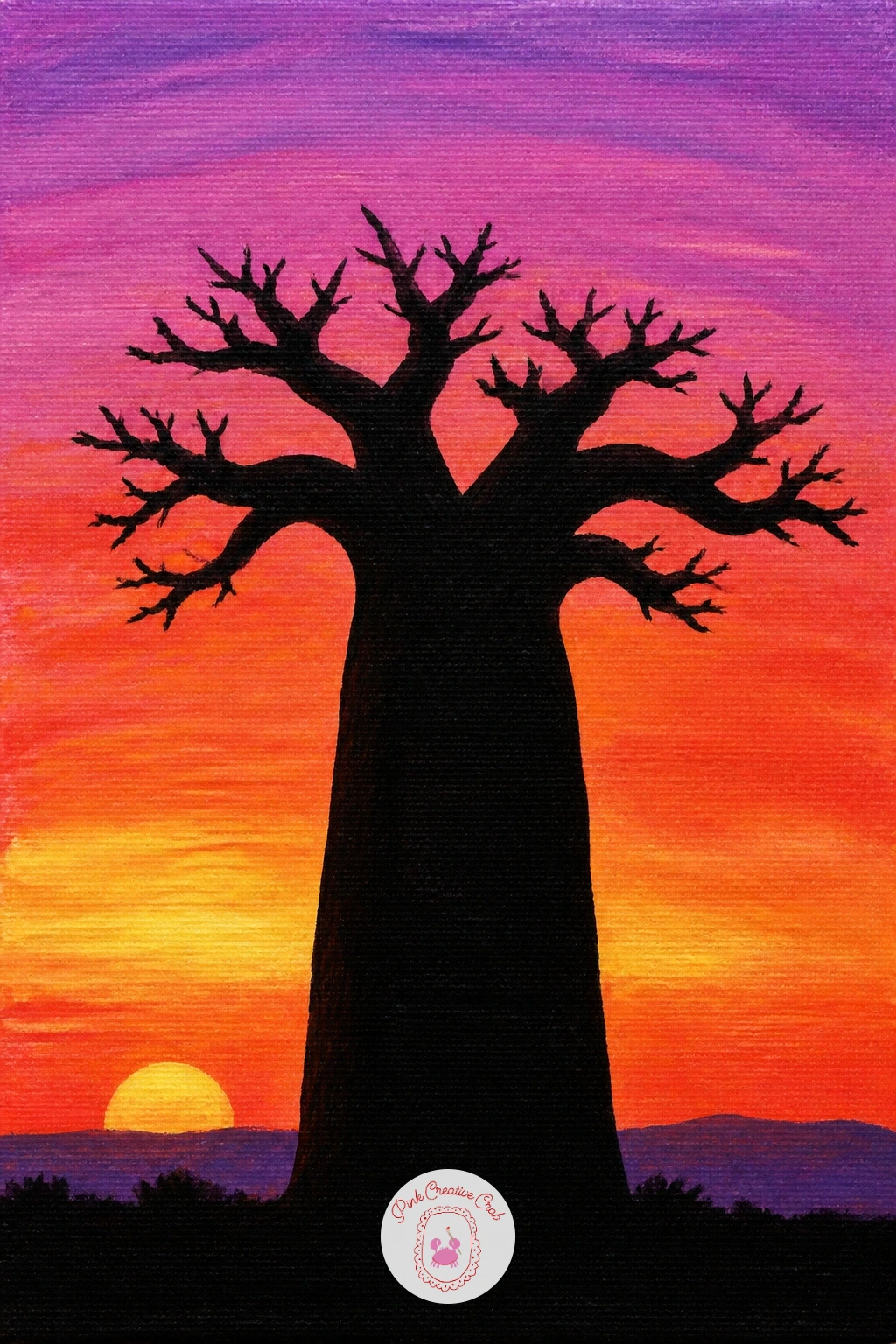
A baobab tree standing alone at sunset is one of the most forgiving shapes on this whole list, since its wide trunk and stubby branches hide any wobble in your brushwork. Blend the sky from deep red-orange at the horizon into dusty pink and pale gold higher up, keeping the transitions soft with a dry flat brush.
Once dry, paint a thick, slightly swollen trunk tapering only a little toward the top, then add four or five short, stubby branches reaching outward and upward like open fingers rather than the thin branches of other trees.
Where this goes wrong is making the branches too long and willowy, which turns a baobab into a generic tree, so keep every branch short, no longer than about a third of the trunk’s height, and let them end abruptly rather than tapering to fine points.
One concrete tip for today: paint the trunk first and let it dry fully before adding branches, it keeps the edges crisp instead of bleeding into each other.
Palette: Deep Red-Orange,Dusty Pink,Pale Gold,Mars Black
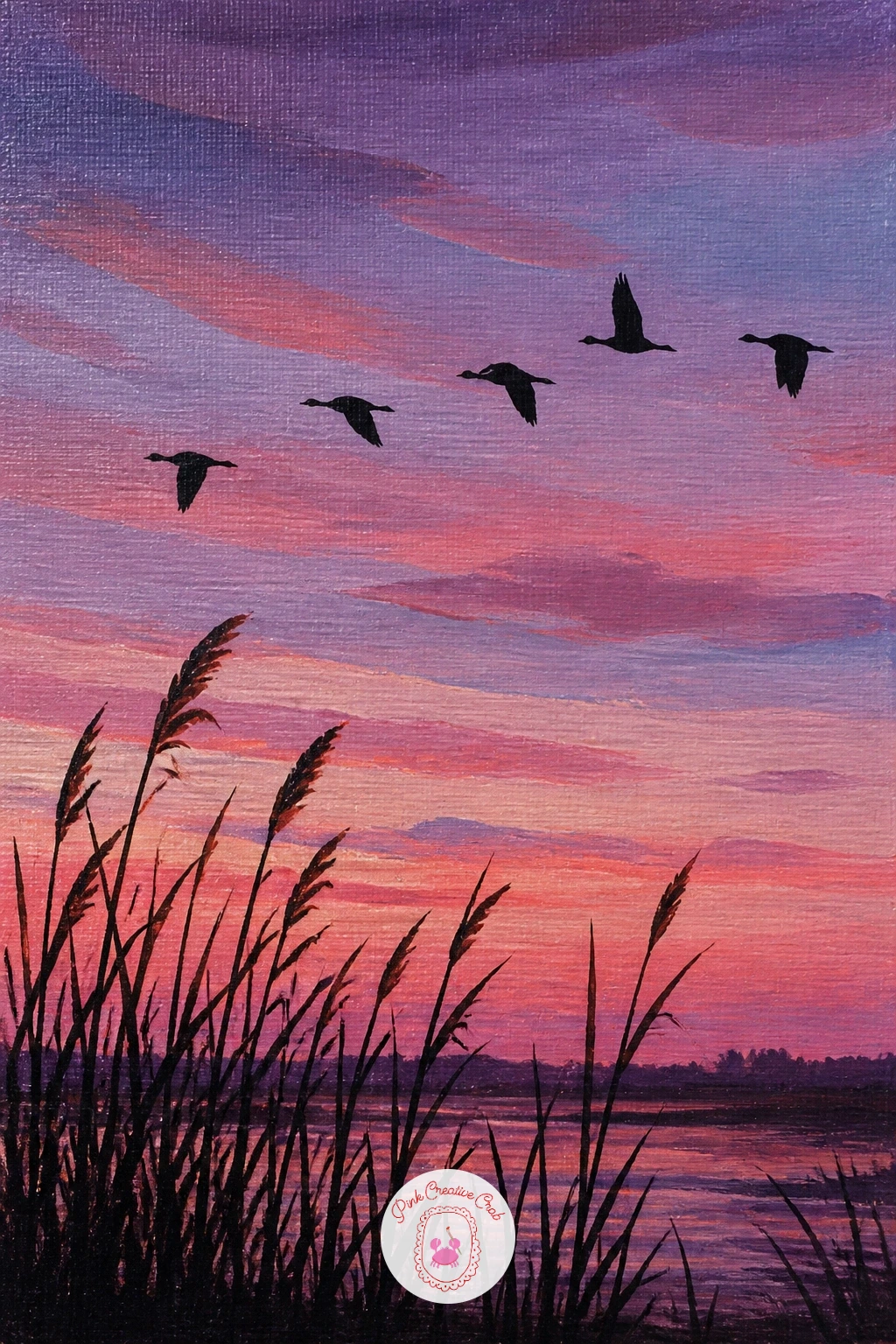
A V of wild geese over a marsh at dusk shifts the silhouette into the sky itself rather than along the ground. Paint the gradient first, a soft blend of mauve into pale grey-blue, then once dry, add a low marsh line at the bottom using tall thin reed shapes painted with quick upward flicks of a liner brush.
For the geese, paint small simple V-shaped wingspans, five or six of them arranged in a loose overall V formation, varying the size slightly so the ones further back look smaller and higher, which gives the flock some depth without any extra work.
Spacing is the trick here: uneven gaps between birds look far more natural than a perfectly even row, so place a couple close together and leave a bigger gap before the next pair.
If a liner brush feels too fine for the reeds, the edge of an old credit card dragged through wet paint makes a similar scratchy texture.
Palette: Soft Mauve,Pale Grey-Blue,Mars Black
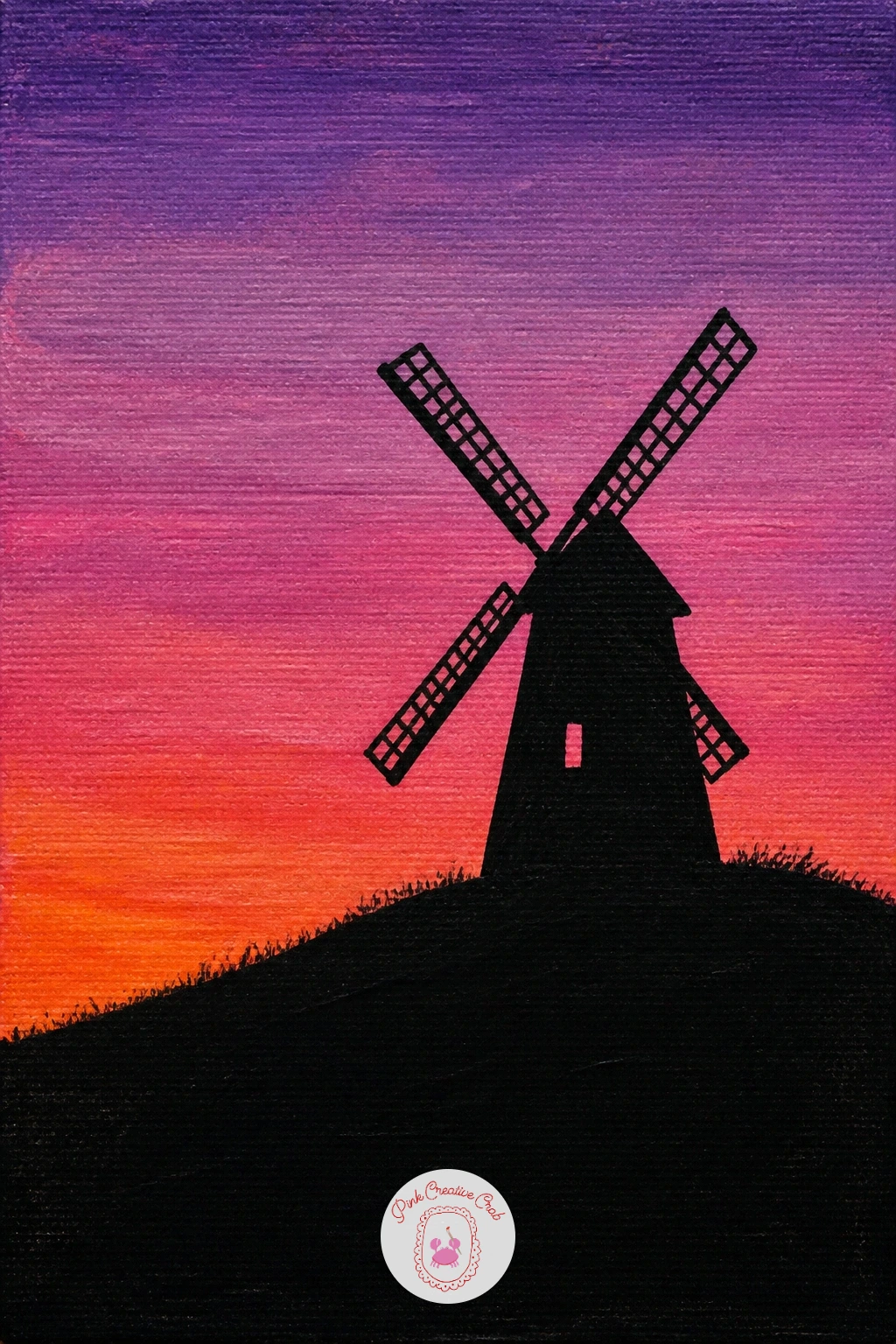
A windmill on a hill at dusk brings in one of the few subjects with moving parts, so plan the blades before you touch black paint. Lay the sky in a gentle blend from rose at the horizon into soft lilac, add a simple rolling hill shape once dry, then sketch the windmill’s tower and cap lightly in pencil before painting.
Paint the tower first as a tapered rectangle, slightly wider at the base, add the pointed cap on top, then paint four blades meeting at a center point, angled so they look caught mid-turn rather than perfectly symmetrical like a plus sign.
The easiest way to keep the blades even in length is to mark their tips lightly in pencil first using a small coin or cap as a size guide held at the center point, then connect each tip back to the hub with a confident single stroke.
Swap the windmill for a simple lighthouse on the same hill next time, using the same tower-and-light approach.
You Will Need
- small coin or cap to mark blade length
Palette: Dusty Rose,Soft Lilac,Mars Black
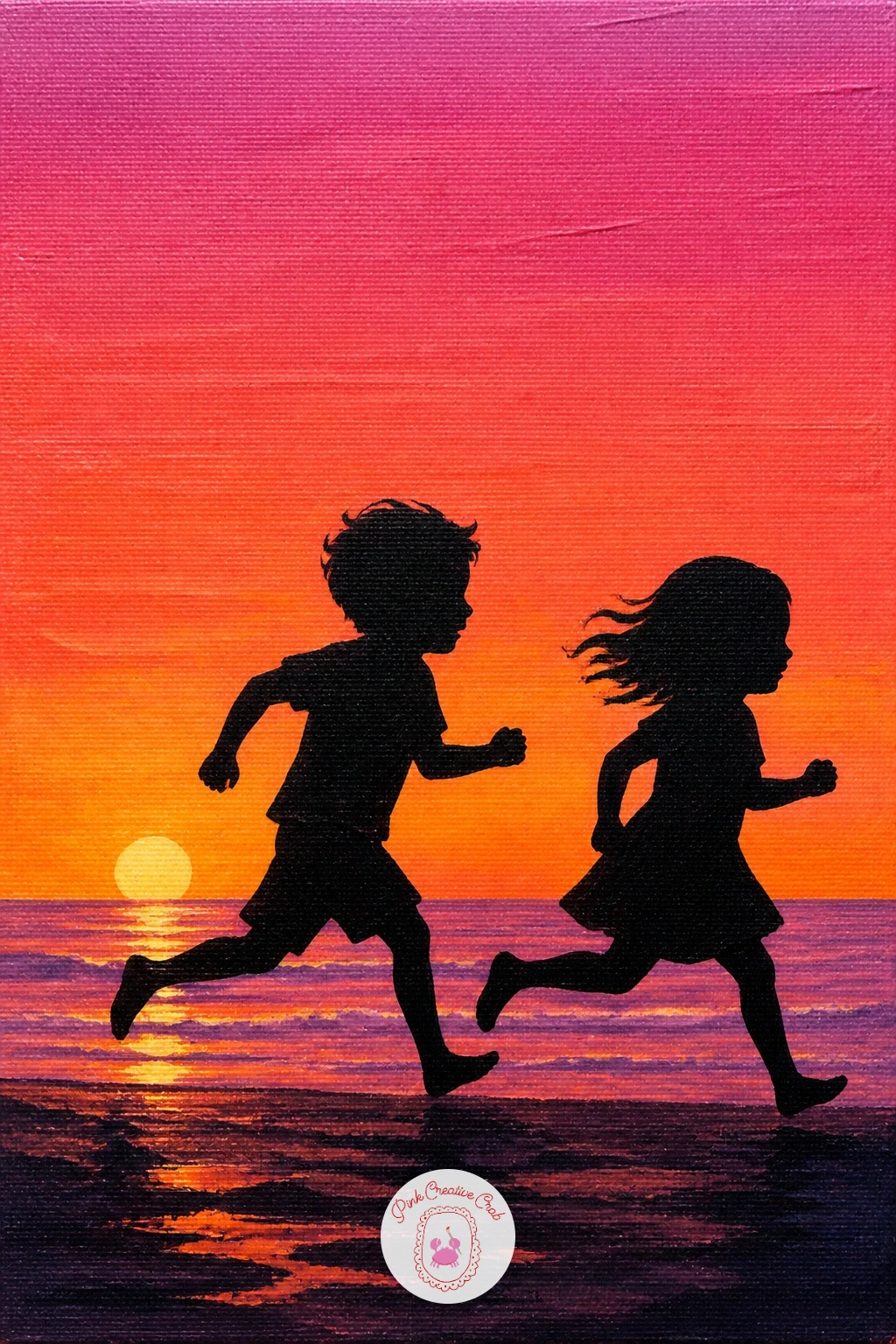
Two children running on a beach at sunset brings energy into the composition through posture alone, no need for detailed faces or clothing. Block the sky in a warm blend of tangerine into soft pink, then paint a lower band of muted sand color and a thin strip of sea between sky and shore, keeping all the color transitions soft.
Once dry, paint the two children as simple running silhouettes, one slightly ahead of the other, arms bent and one leg lifted mid-stride, small enough that they sit comfortably within the lower third of the canvas.
Getting a running pose to read correctly instead of just standing is about the arm angle: bend both arms at the elbow and raise one leg higher than the other, even a rough asymmetry instantly suggests movement where a straight symmetrical figure would not.
Paint one tall, wavy grass tuft or two near the children for scale and a sense of a real beach edge.
Palette: Warm Tangerine,Soft Pink,Muted Sand,Mars Black
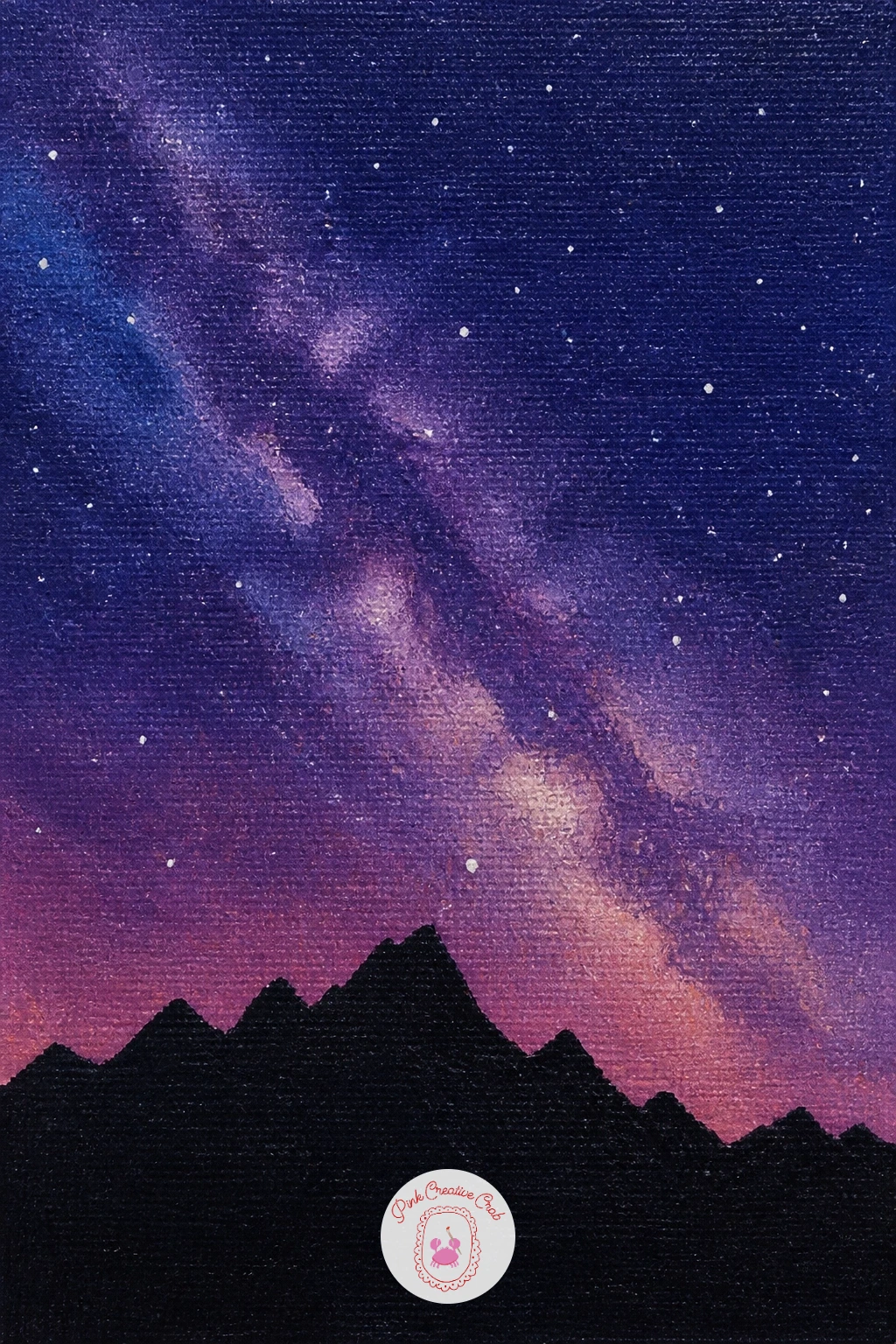
The milky way over a dark mountain ridge is the most atmospheric sky on this list, built from layered color rather than a flat gradient. Start with a deep blend of near-black navy at the top fading into plum and soft rose near the horizon, then while still slightly damp, drag a soft dry brush loaded with pale lilac and white diagonally across the upper half to suggest the hazy band of the galaxy.
Let that settle, then flick on scattered stars with a fine brush or toothbrush splatter, more dense within the hazy band and sparser elsewhere, before adding a jagged black mountain silhouette along the bottom.
If the galaxy band comes out too solid and cloud-like, soften it with a slightly damp clean brush dragged gently along its edges, which breaks up any hard border and lets it fade into the dark sky the way it should.
No soft dry brush handy, a makeup sponge dabbed lightly gives a similar hazy effect.
You Will Need
- toothbrush for star splatter
Palette: Deep Navy,Deep Plum,Soft Rose,Pale Lilac,Mars Black
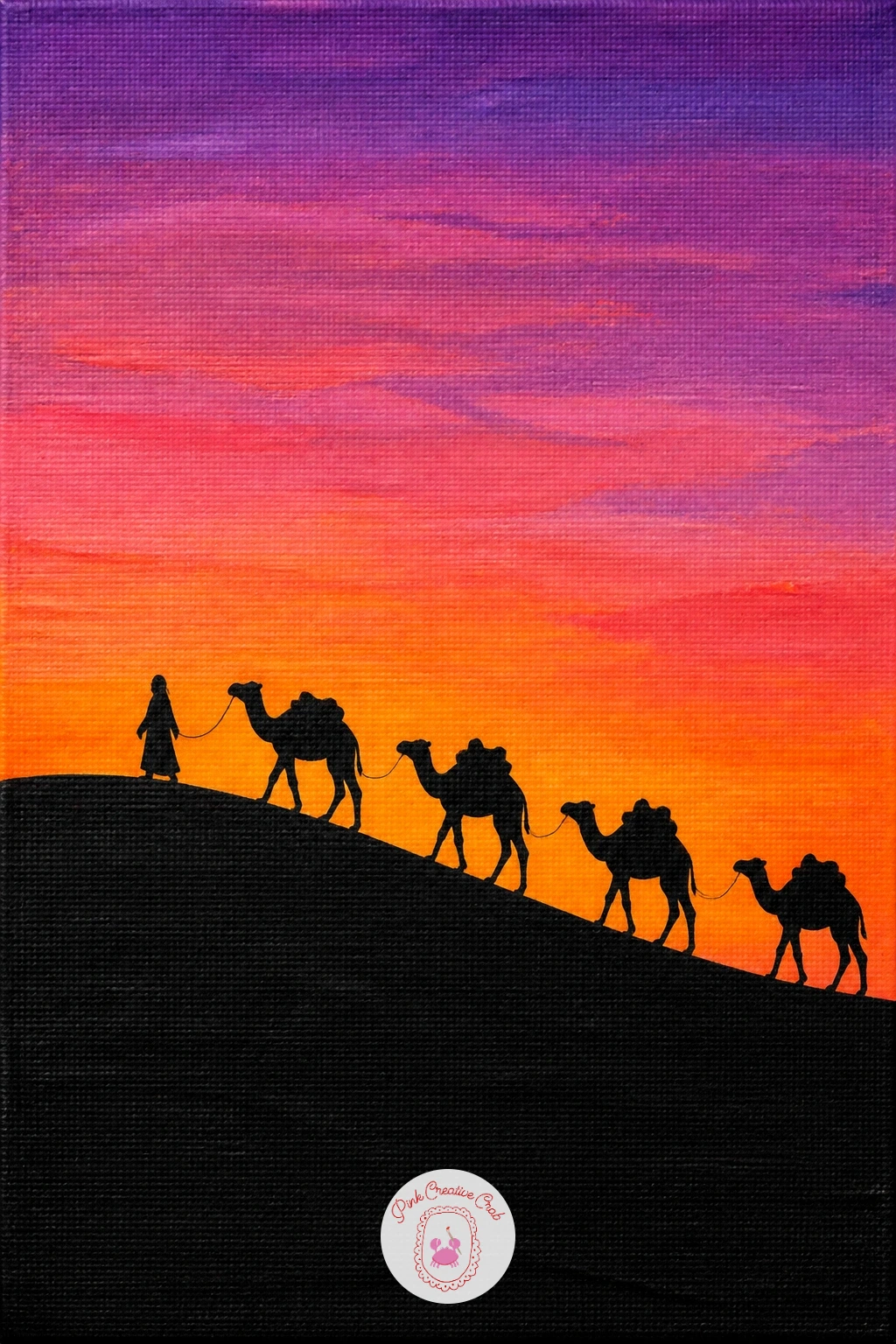
A camel caravan crossing dunes at sunset trades sharp rock shapes for soft, rolling ones, so the whole lower half of the canvas gets painted in smooth curves. Blend the sky from deep amber at the horizon up into dusty rose, then paint the dunes as a series of overlapping soft curved mounds, each one slightly darker than the one behind it to suggest distance.
Once dry, paint three or four camels in a line along the ridge of the nearest dune, each one a simple humped body shape on thin legs, slightly varied in size so they do not look stamped from the same shape.
Keeping the camels’ legs thin without them snapping off visually is the main challenge: paint the body first as a solid confident shape, let it dry, then add legs last with a steady liner brush rather than trying to get the whole animal right in one pass.
Reduce the caravan to a single camel next time for a simpler, quieter version of the same dune composition.
Palette: Deep Amber,Dusty Rose,Mars Black
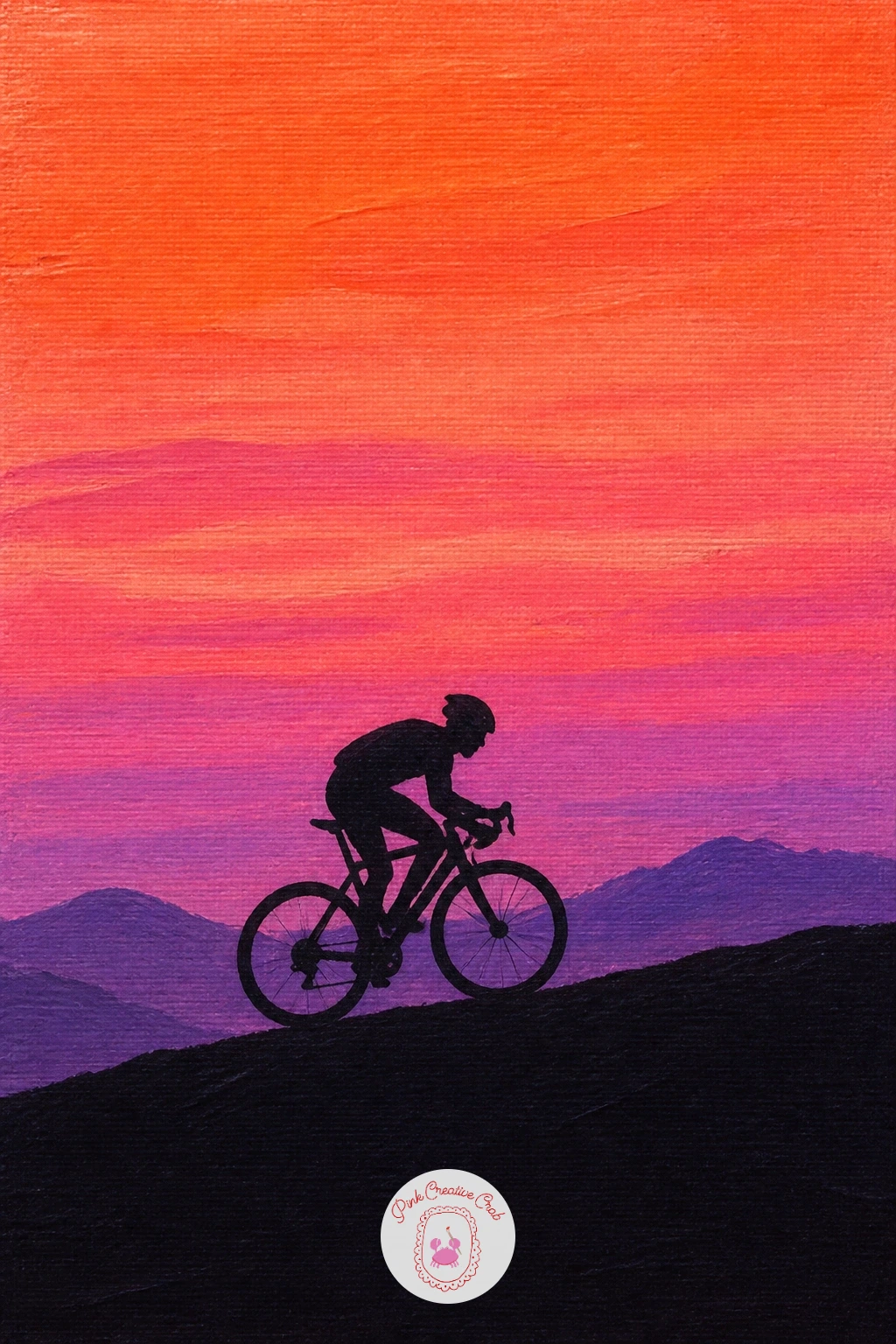
A cyclist riding along a ridge at sunset is a fun change of pace, since the whole figure reads from just a few confident curved lines. Paint the sky in a soft blend of peach into mauve, add a gently sloping ridge line in black once dry, then sketch the bicycle lightly in pencil before committing to paint, since getting the wheel size right matters more here than anywhere else in this list.
Use a small round object, a coin or a bottle cap, to trace two even circles for the wheels, connect them with simple frame lines, then paint the rider leaning slightly forward over the handlebars with one leg mid-pedal.
If the bicycle frame looks stiff, it is usually because the lines are too straight and too evenly spaced, so angle the top tube and seat post slightly and let the rider’s silhouette overlap the frame naturally rather than sitting neatly on top of it.
No coin on hand, trace around a bottle lid or a button instead.
You Will Need
- coin or bottle cap to trace the wheels
Palette: Soft Peach,Dusty Mauve,Mars Black
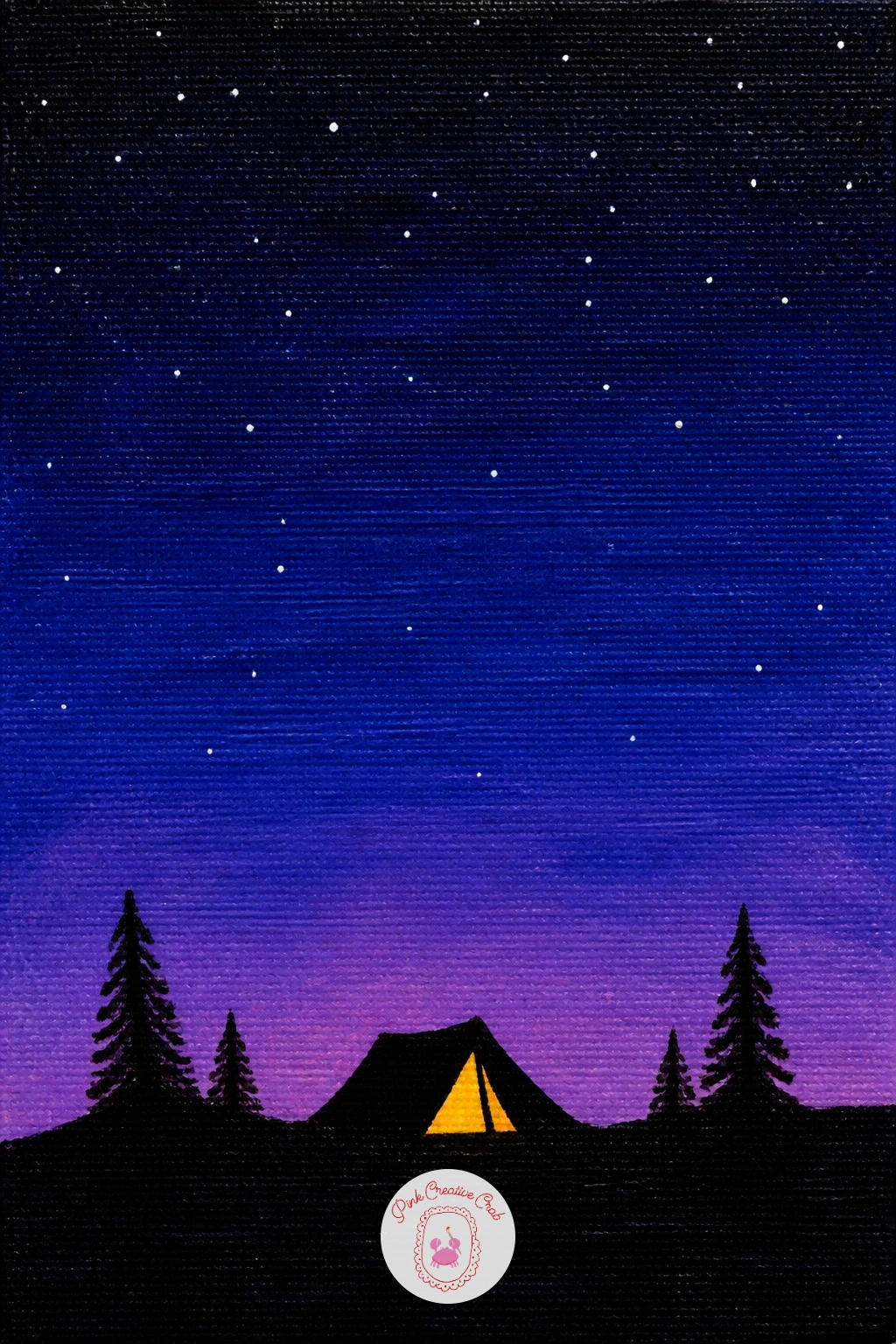
A tent glowing under a starry sky introduces a light source inside the silhouette itself, which is a nice trick to learn once the basic gradient and silhouette combo feels easy. Paint the night sky in a deep blend of indigo into black at the top, scatter stars with a fine brush or splatter technique, then let it dry fully before the tent goes in.
Paint the tent as a simple black triangle shape, then before that black fully dries, lift a small triangular patch near the base with a clean damp brush or a scrap of paper towel to reveal a warm glow of yellow or orange underneath that you painted first as a small triangle exactly where the tent’s open flap will sit.
This lifting trick is the one to practice: work quickly while the black is still workable, and keep the lifted shape small and controlled, a doorway glow rather than a halo.
Try it as a ten minute version with just the tent and glow, or spend closer to forty minutes adding a cluster of pine trees behind it and a small fire pit glow beside the entrance.
You Will Need
- paper towel for lifting technique
Palette: Deep Indigo,Warm Glow Yellow,Mars Black
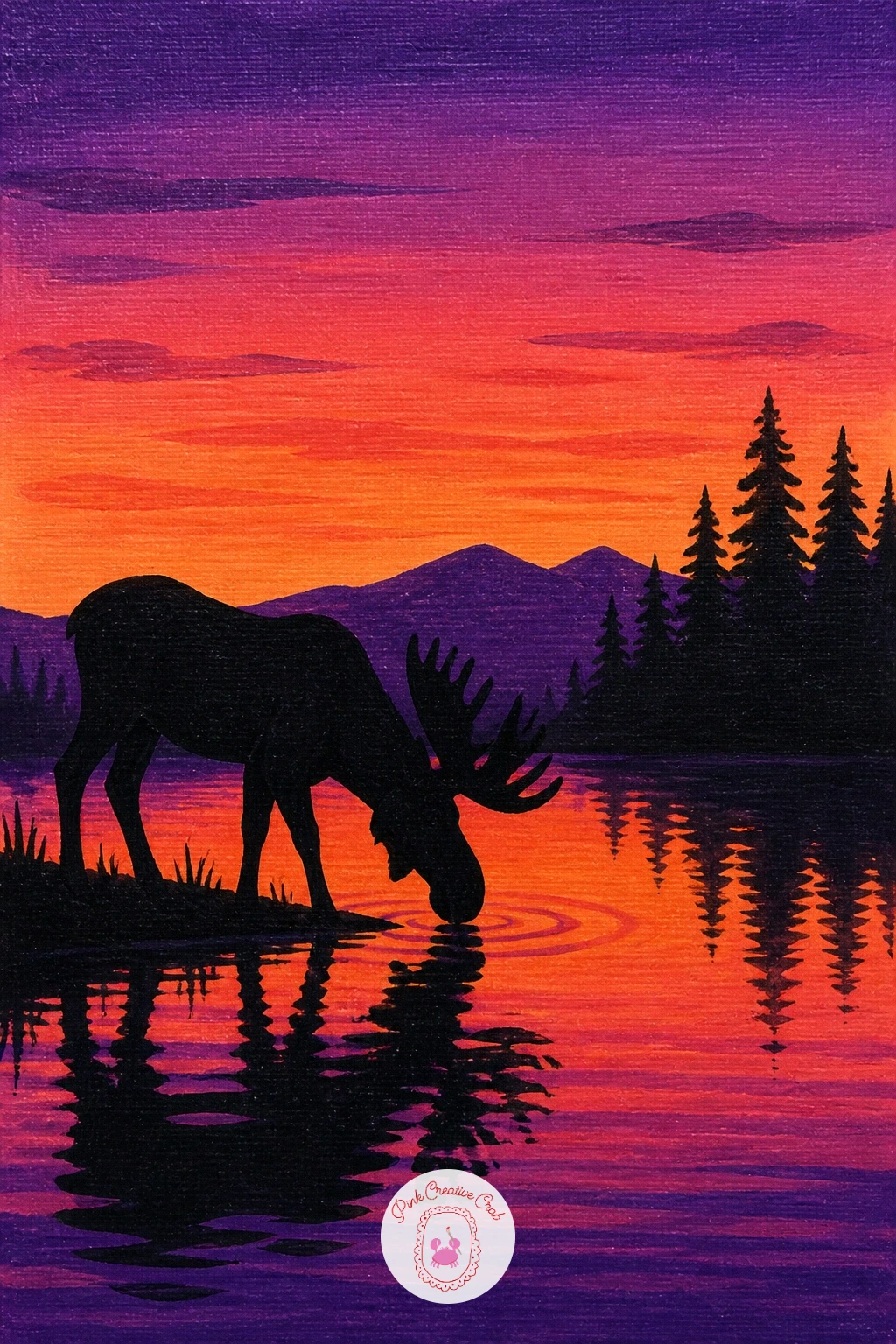
A moose drinking at a lake at dusk pairs a large, recognizable animal shape with a calm mirrored reflection, building nicely on the bridge reflection idea from earlier in this list. Blend the sky from soft amber into dusky blue, paint a still band of water below using the same colors in muted, reversed order, then let everything dry before the moose silhouette goes in.
Paint the moose standing at the water’s edge with its head lowered toward the surface, broad antlers spread wide above, then mirror the whole shape faintly below the waterline using a slightly looser, wavier outline so it reads as a reflection rather than a stamp.
Antlers are the part most likely to go wrong: paint the head and body as one solid silhouette first, let it dry completely, then add the antler branches last with a thin liner brush, building them from the center outward in short confident strokes rather than one long wobbly line.
This idea sits well alongside the wintry moods explored in these winter painting ideas if cold, quiet scenes are your thing.
Palette: Soft Amber,Dusky Blue,Mars Black
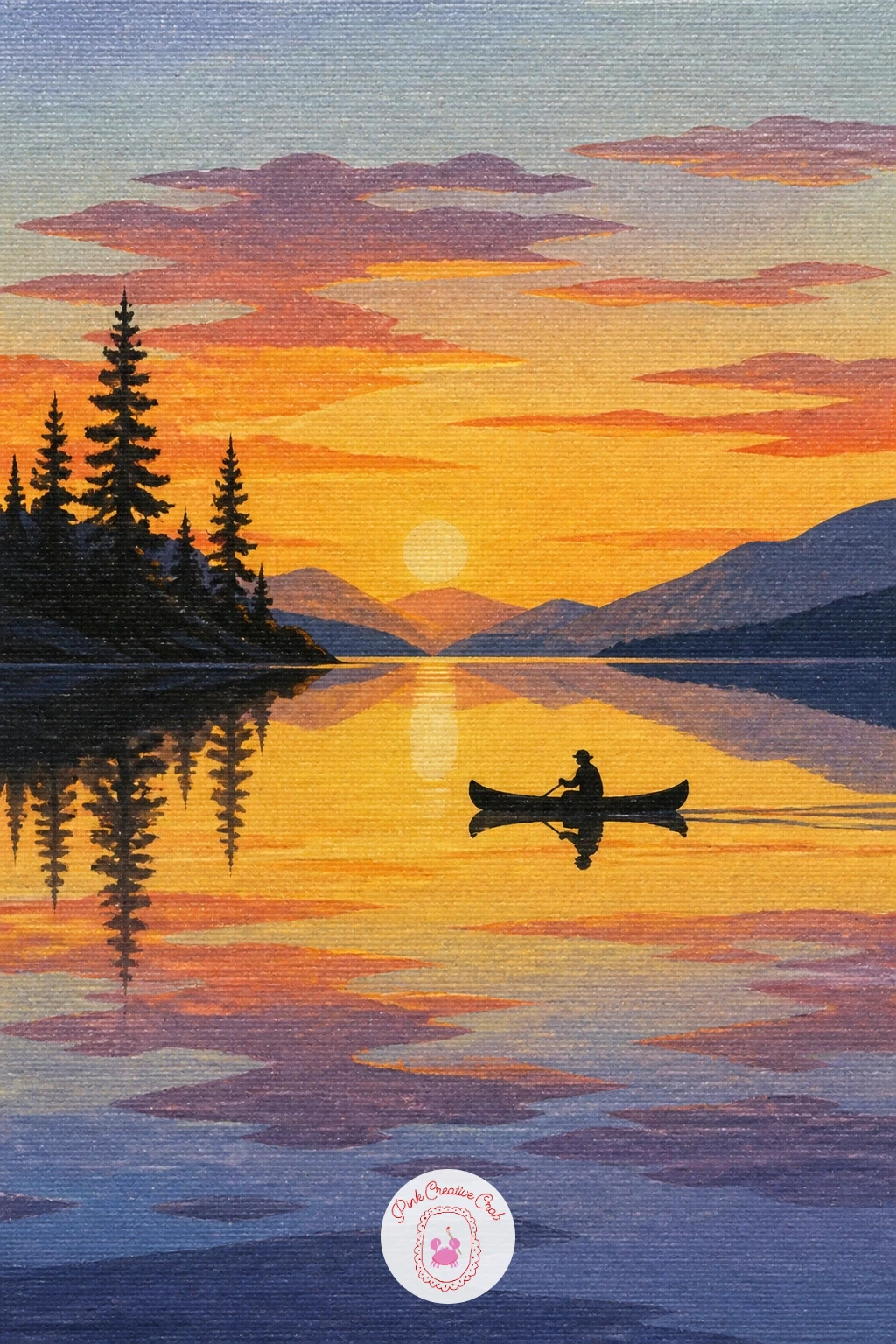
A canoe on a glassy lake at sunrise flips the color temperature cooler and quieter than most ideas so far, built around one still, simple reflection. Blend the sky from pale gold near the horizon into soft blue-grey higher up, then paint the water below in a near-mirror of those same colors, just slightly muted and softened with a dry brush dragged horizontally through it while still wet.
Once dry, paint a small canoe silhouette sitting low in the water with one figure inside holding a single paddle, keeping the whole shape compact and simple, no more than a tenth of the canvas width.
The trick that makes still water convincing is restraint: resist adding ripples or waves, a perfectly smooth gradient reflection is what sells “glassy,” so only the canoe’s own reflection gets a slightly broken edge where the paddle meets the water.
If gold and blue-grey feels too cool for your room, swap in a warmer peach and dusty lavender combination instead, the same technique still works.
Palette: Pale Gold,Soft Blue-Grey,Mars Black
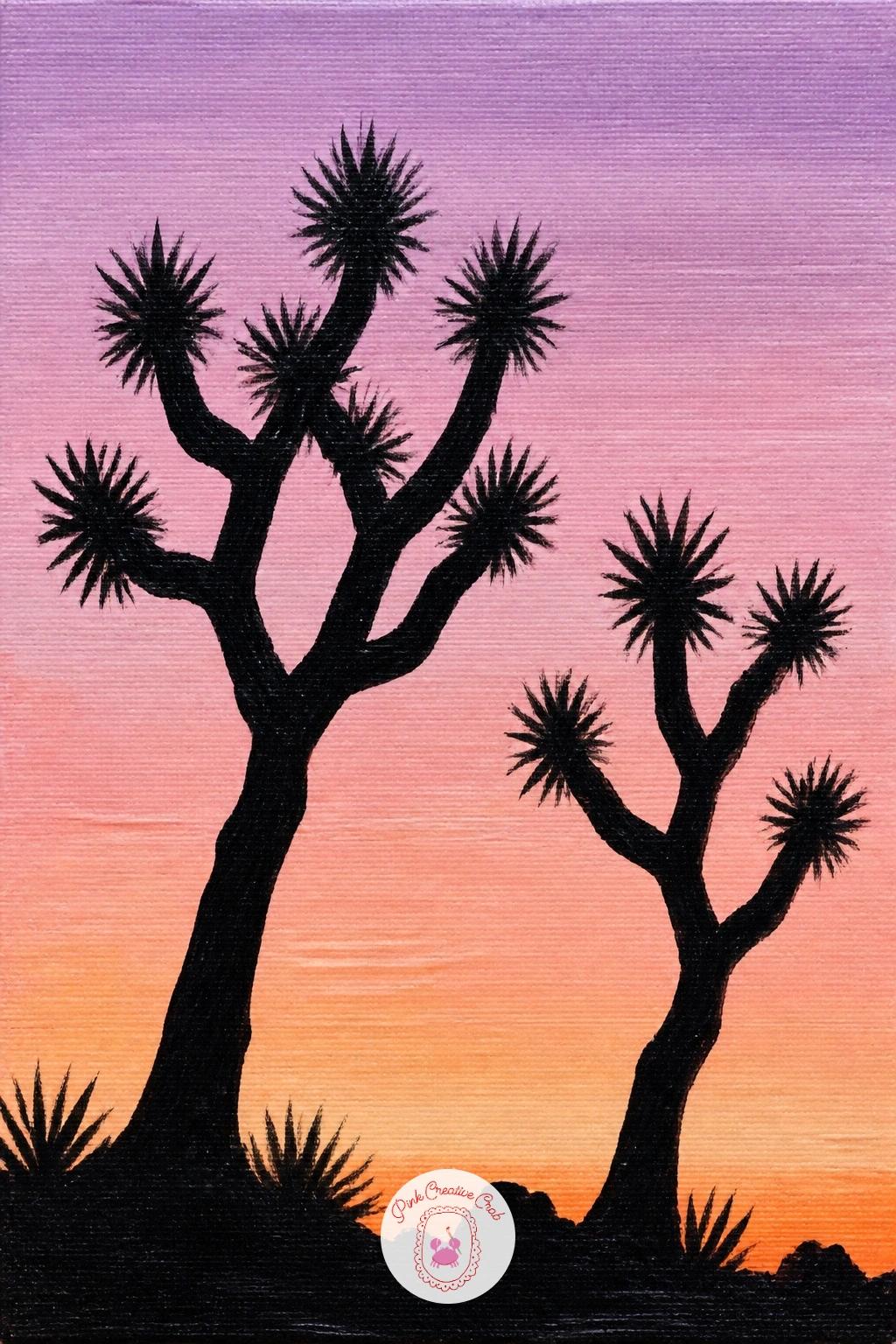
Joshua trees under a lilac sky brings an unusual, spiky silhouette shape that stands apart from the soft round canopies painted earlier. Blend the sky in a gentle gradient from pale lilac at the top down into warm peach near the horizon, keeping the colors soft and even.
Once dry, paint two or three Joshua trees at different heights, each with a short thick trunk that splits into a few awkward, angular branches, each branch ending in a small spiky tuft rather than a smooth rounded tip.
The spiky tufts are where a dry brush earns its keep: load just a touch of black paint on a worn, slightly splayed brush and tap it lightly at each branch tip so the edge breaks into short jagged points instead of a smooth blob, which is exactly the texture a real Joshua tree has.
Keep the trunks short and the branch angles irregular, a too-symmetrical tree loses the plant’s natural awkward charm.
Palette: Pale Lilac,Warm Peach,Mars Black
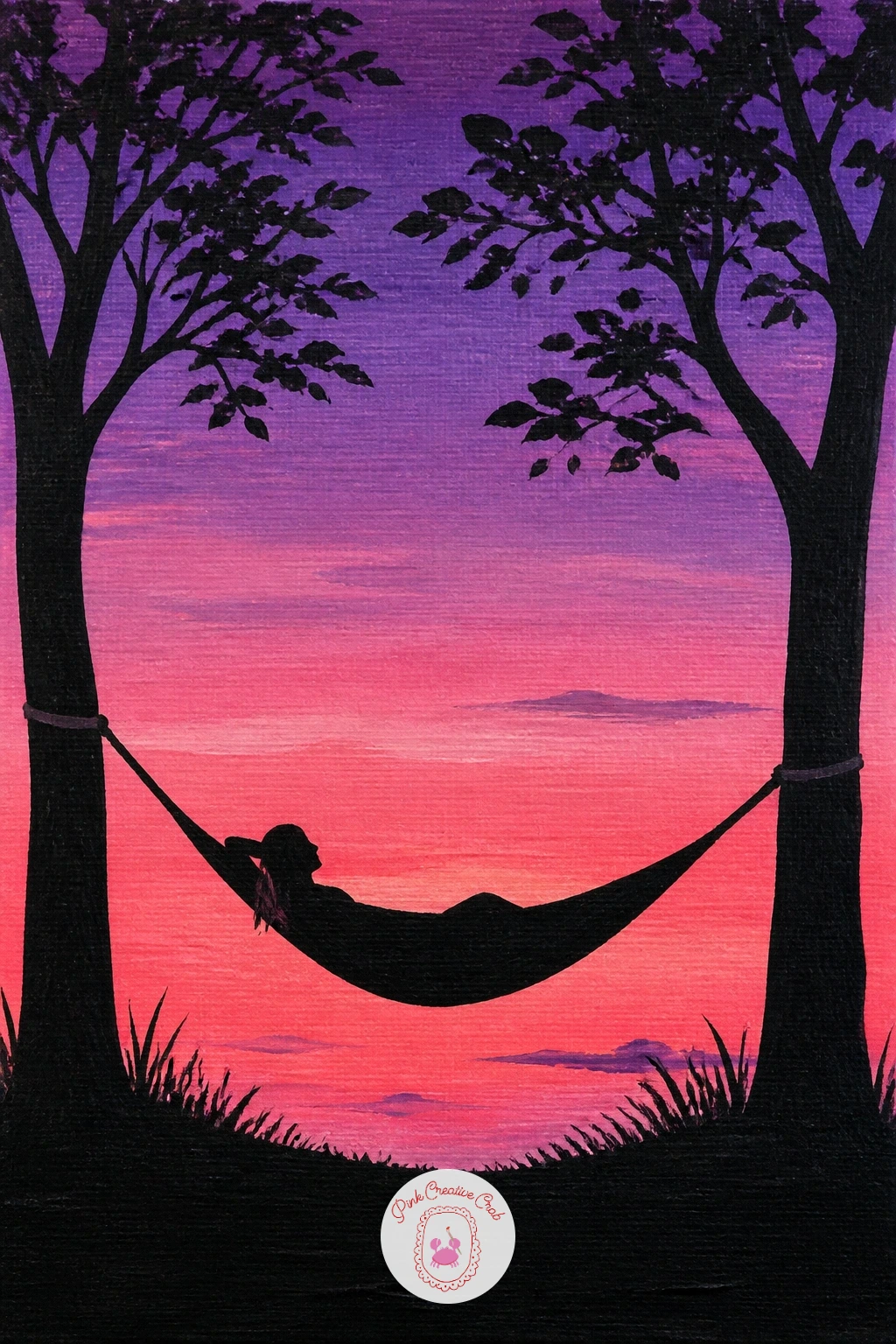
A hammock between two trees at dusk is a relaxed, almost architectural subject, built from two matching tree shapes framing a curved line. Paint the sky in a blend of dusty rose fading into soft violet, then once dry, add two simple tree trunks with rounded canopies on either side of the canvas, leaving open space between them for the hammock to hang.
Paint the hammock as a gentle curved line strung between the two trunks, slightly saggy in the middle, then add a small figure lying inside it as a simple elongated silhouette, one arm trailing over the side for a relaxed touch.
Balance is the thing to watch here: the two trees should feel like a matching pair without being identical twins, vary their height and canopy size slightly, and keep the hammock’s lowest point roughly centered between them so the whole composition feels settled rather than lopsided.
No steady hand for the curved hammock line, a piece of string dipped lightly in paint and pressed onto the canvas gives a clean curved print to paint over.
You Will Need
- string for pressing a clean hammock curve
Palette: Dusty Rose,Soft Violet,Mars Black
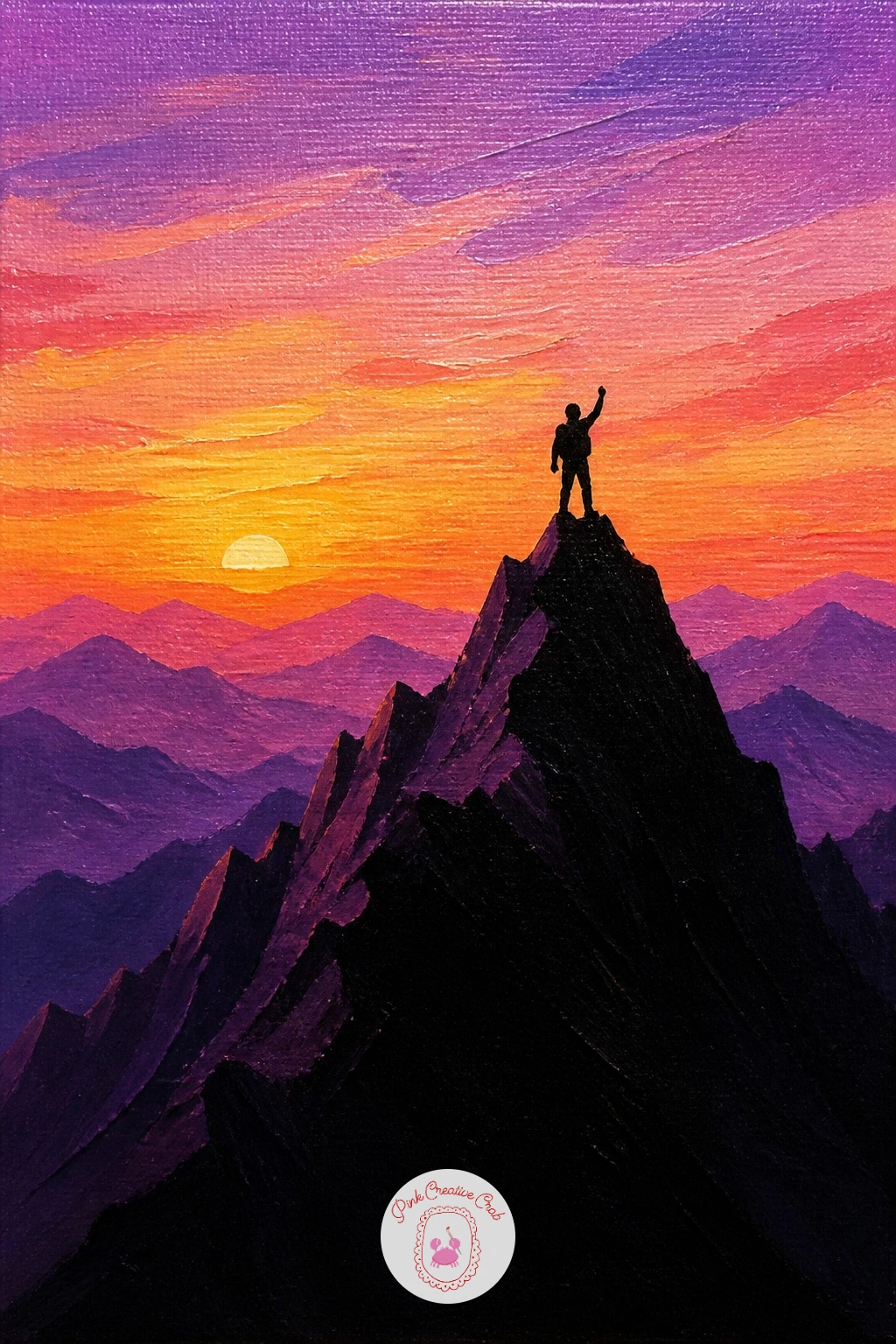
A hiker standing on a peak at sunrise is one of the simplest figure poses in this whole list, which makes it a good one to try if figures still feel intimidating. Blend the sky from warm gold at the horizon into soft pink higher up, then paint a jagged mountain peak shape in black once dry, keeping the final highest point sharp and clear.
Paint the hiker standing right at the summit, legs apart in a confident stance, one arm raised, small enough that the mountain still clearly dominates the canvas around them.
Eye level is the whole trick with this subject: paint the sky’s brightest, lightest color directly behind the hiker’s raised arm so the silhouette reads crisply against the glow, rather than getting lost against a mid-tone patch of sky.
Spend ten minutes on just the peak and hiker, or close to forty adding a smaller, lower second peak behind for extra depth.
Palette: Warm Gold,Soft Pink,Mars Black
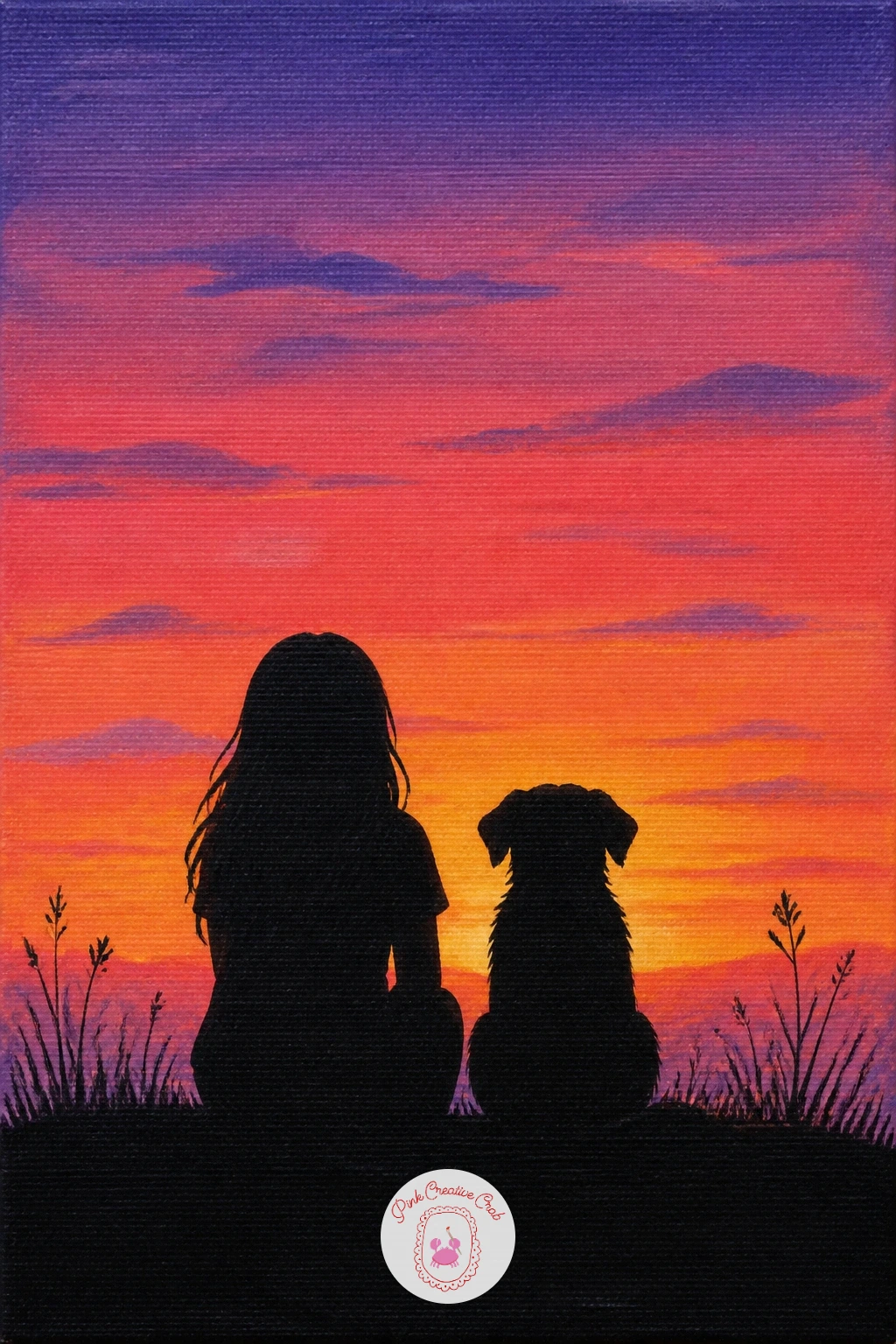
A girl and her dog sitting on a hill watching the sunset pairs two silhouettes that need to feel connected without touching, which is a nice composition lesson for any future piece. Blend the sky in warm tangerine fading into soft coral and pale lilac, add a simple curved hill once dry, then paint the girl sitting with her knees drawn up and the dog sitting beside her, both facing the same direction toward the sun.
Keep a small, deliberate gap between the two figures rather than pressing them together, a few inches of negative space reads as companionable rather than crowded, and angle both heads slightly toward the brightest part of the sky.
If the dog’s shape feels tricky, simplify it to three ovals, a rounded body, a smaller head, and pointed ears, connected smoothly rather than drawn as separate parts.
This pairs nicely with the quiet coastal and countryside moods in these canvas painting ideas for more wall-ready subjects.
Palette: Warm Tangerine,Soft Coral,Pale Lilac,Mars Black
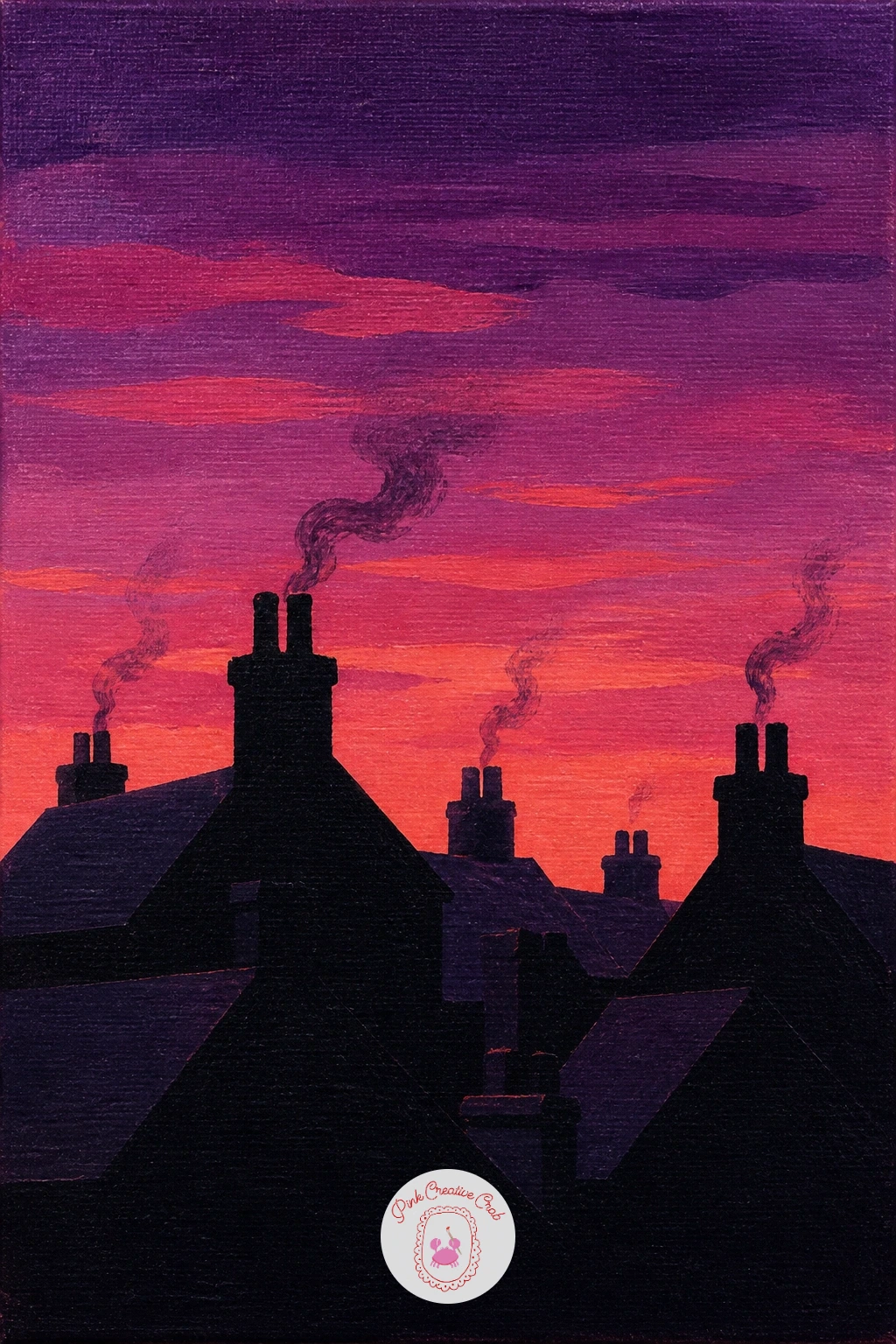
Village rooftops and chimneys at dusk shifts away from nature subjects into architecture, built from a simple repeated roofline rather than any single large shape. Blend the sky from soft plum near the top into warm rose near the horizon, then once dry, paint a row of simple triangular and rectangular rooftop shapes along the bottom, varying their height and width so the skyline has a natural, uneven rhythm.
Add a thin chimney rising from one or two of the rooftops, each topped with a tiny puff of grey-white smoke painted with a soft dry brush dabbed lightly rather than drawn as a solid shape.
Overlapping is the easy fix if the rooflines look flat and samey: let one or two buildings sit slightly in front of others, their rooflines overlapping just a little, which instantly suggests a street receding rather than a single flat row.
Keep every rooftop a clean geometric shape, triangles and rectangles only, resist the urge to add window detail, which is what keeps this version easy.
Palette: Soft Plum,Warm Rose,Grey-White,Mars Black
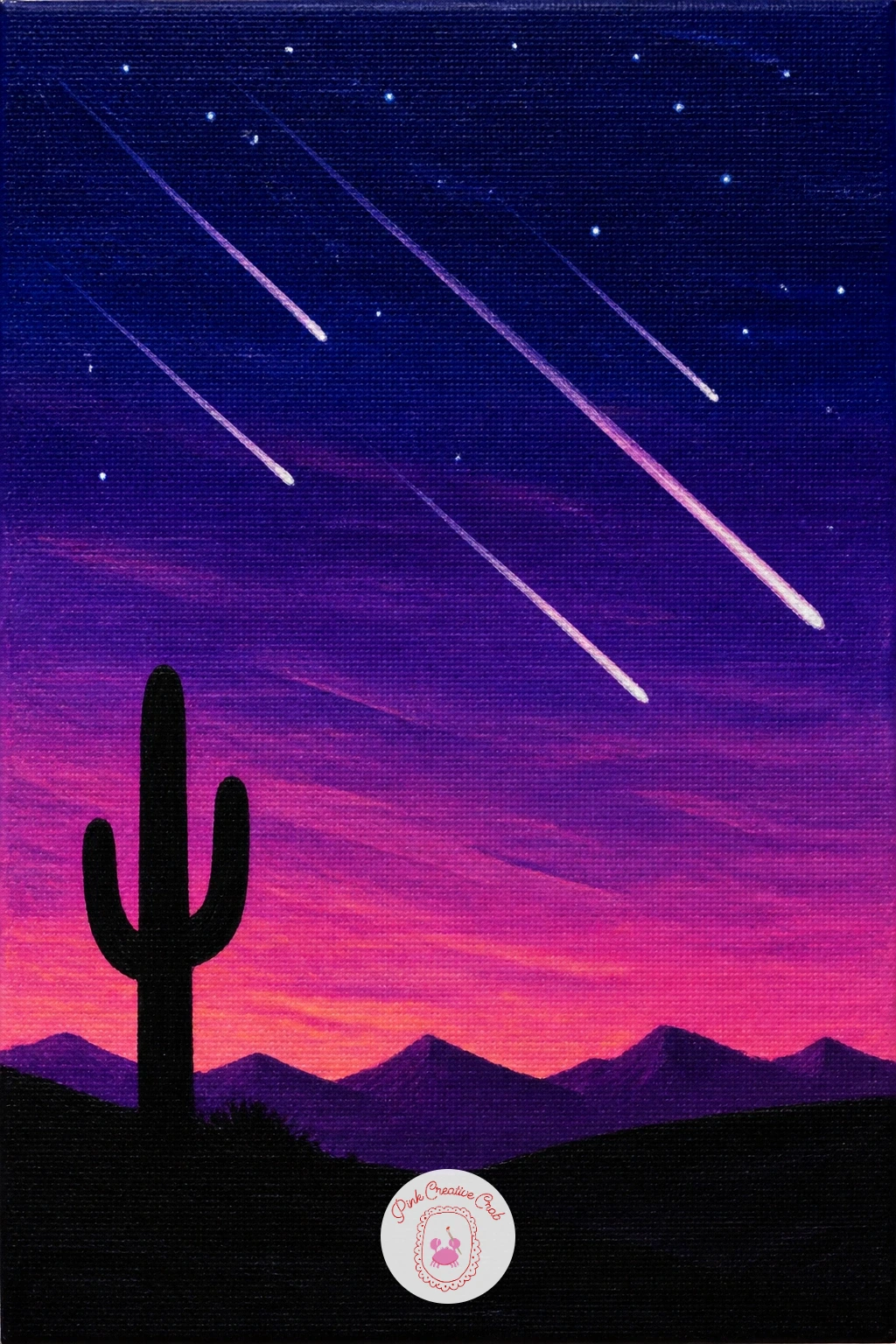
A meteor shower over a desert ramps up the drama in the sky itself, built from a handful of long diagonal streaks rather than scattered dots. Paint the night sky in a deep blend of navy into plum, scatter a light dusting of small stars first with a fine brush, then once that layer sets, add three or four longer streaking meteors in white or pale yellow, each one a confident diagonal stroke tapering to a fine point at the tail.
Once the sky is fully dry, paint a simple rolling desert dune line along the bottom with one or two cactus silhouettes standing on it, their arms a basic Y shape rising from a thick central stem.
Keep the meteors all streaking in roughly the same direction, parallel diagonal lines read as a shower while crossing lines just look chaotic, and vary only their length and thickness slightly for a natural, not mechanical, feel.
No fine brush for the meteor tails, the edge of an old gift card dragged quickly through wet white paint makes a clean tapered streak.
Palette: Deep Navy,Deep Plum,Pale Yellow,Mars Black
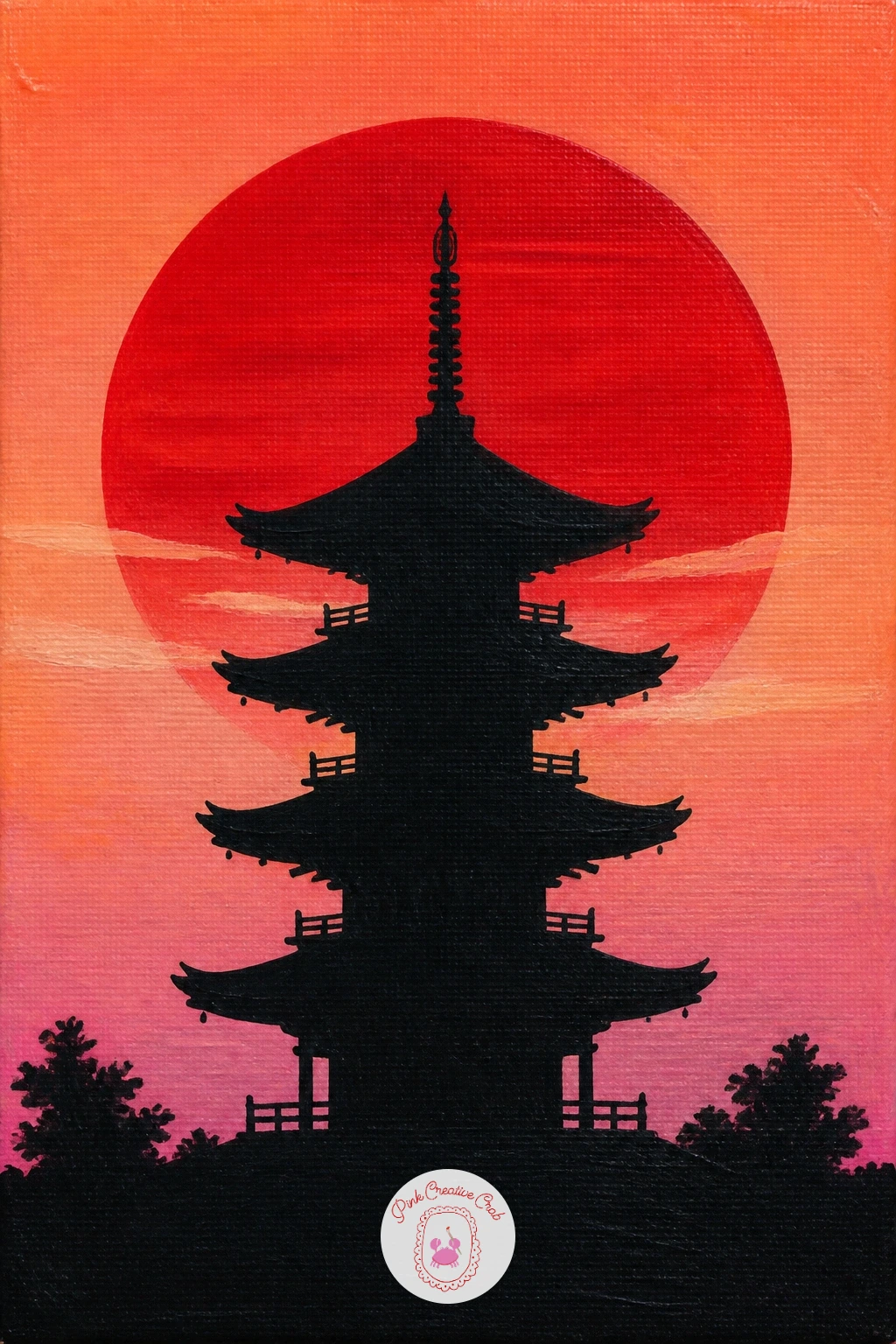
A pagoda against a big red sun turns the sun itself into the boldest shape on the canvas, so paint it first and build everything else around it. Mark a large circle with a plate or lid near the upper half of the canvas and fill it with a deep, saturated red, then blend the surrounding sky out from that red into soft peach and pale cream toward the edges.
Once fully dry, paint the pagoda’s tiered roofline in silhouette, three or four stacked tiers each a little narrower than the one below, with roof edges that curve up slightly at the corners rather than sitting flat.
Getting the tiers evenly stacked is the fiddly part: lightly pencil in horizontal guidelines first to keep each tier’s width consistent before committing to black paint, since an uneven stack is the single thing most likely to throw off this silhouette.
Try a simple pine tree beside the pagoda next time instead, using the same tiered shape logic for its branches.
You Will Need
- plate or lid to trace the large sun
Palette: Deep Red,Soft Peach,Pale Cream,Mars Black
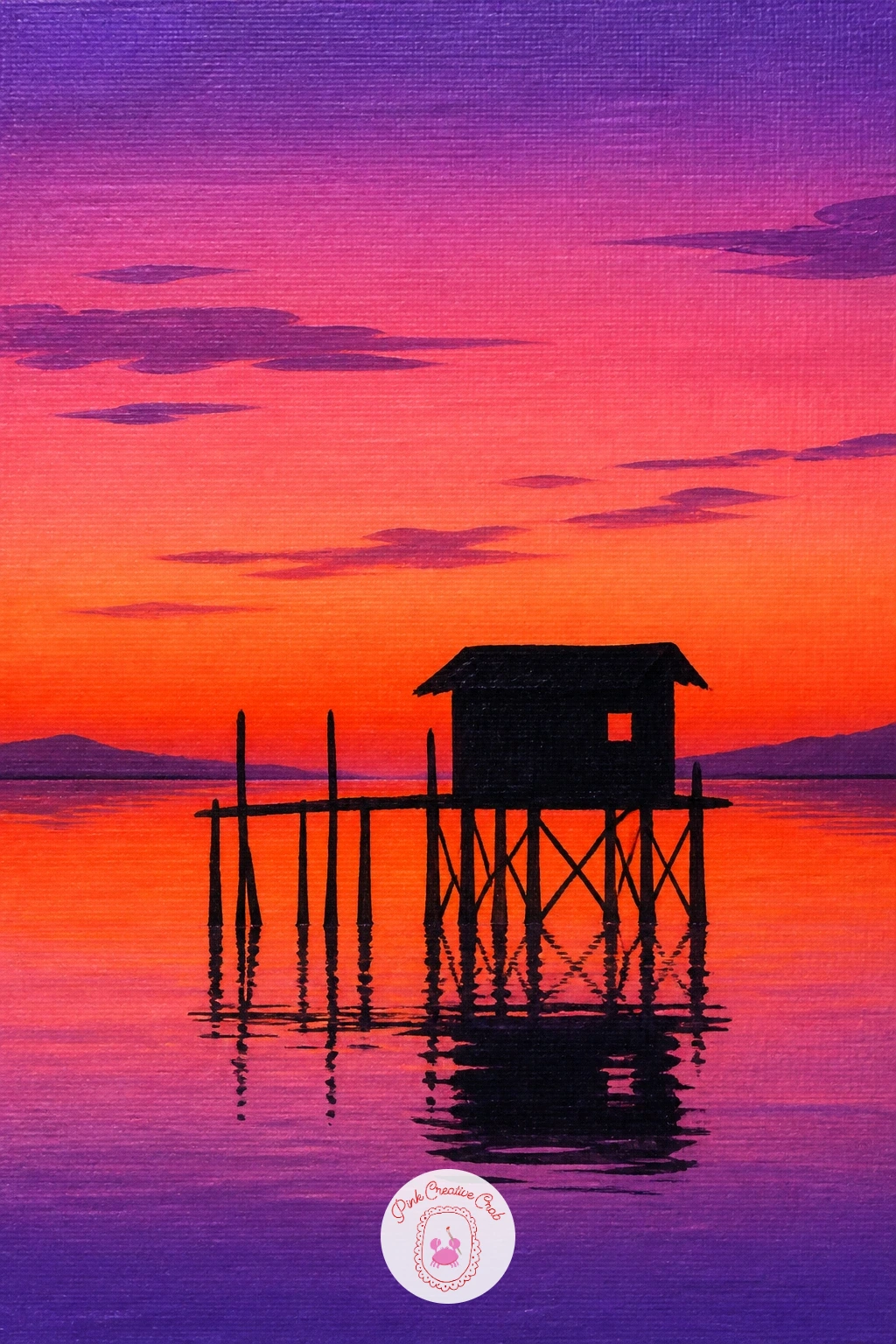
A fishing hut on stilts in a lagoon at sunset layers a reflection, a structure, and thin stilt lines all in one small scene, pulling together several tricks from earlier ideas. Blend the sky from warm coral into soft violet, paint a calm water band below in the same muted colors reversed, then let it all dry before adding the silhouette.
Paint the hut as a simple rectangular box shape with a peaked roof sitting above the waterline, then add three or four thin stilt legs running down into the water, finishing with a soft, slightly wavy reflection of the whole hut mirrored just below the surface.
Thin stilts are easy to get wobbly, so paint them last with a steady liner brush resting your hand on the canvas edge for support, and keep them perfectly vertical rather than angled, which is what makes the structure read as sturdy rather than collapsing.
Swap the single hut for two smaller huts side by side next time for a slightly busier version of the same lagoon scene.
Palette: Warm Coral,Soft Violet,Mars Black
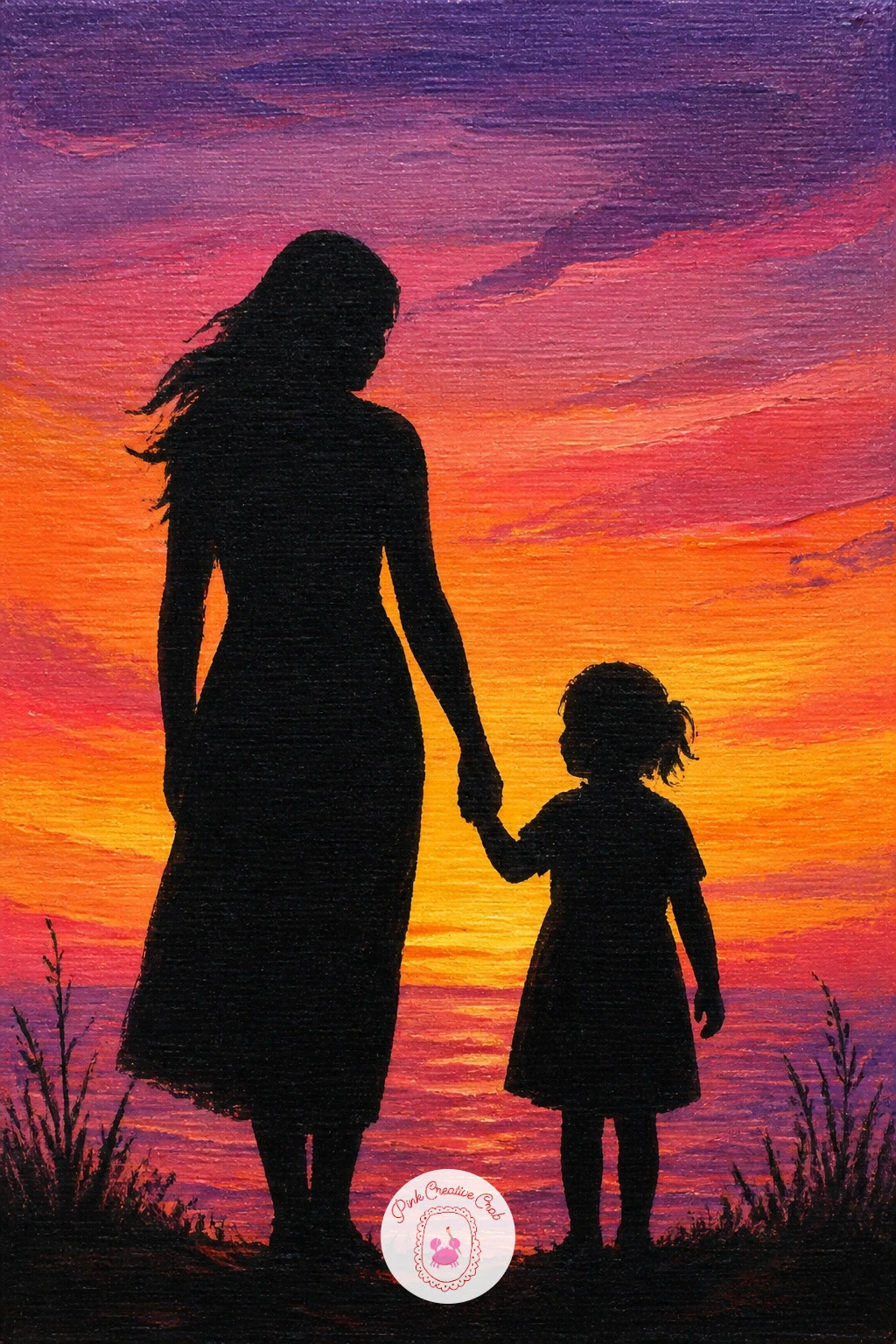
A mother and child holding hands at sunset is a tender composition built from two connected figures rather than two separate ones, so the join between their hands matters more than any other detail. Blend the sky in warm gold fading into soft rose, add a simple flat horizon line once dry, then paint the two figures standing together, the taller one’s arm extending down to meet the smaller one’s raised arm exactly at one connecting point.
Paint both figures as one continuous silhouette shape rather than two separate ones glued together, which keeps the connected hands from looking like an awkward gap, then add their legs and hemlines last with small clean strokes.
If their proportions feel off, measure the child’s height against the mother’s first in pencil, a child silhouette usually reads right at a little over half the adult’s height, and adjust before painting in black.
Keep both figures facing the same direction toward the horizon, which reads as a shared, peaceful moment rather than two strangers standing near each other.
Palette: Warm Gold,Soft Rose,Mars Black
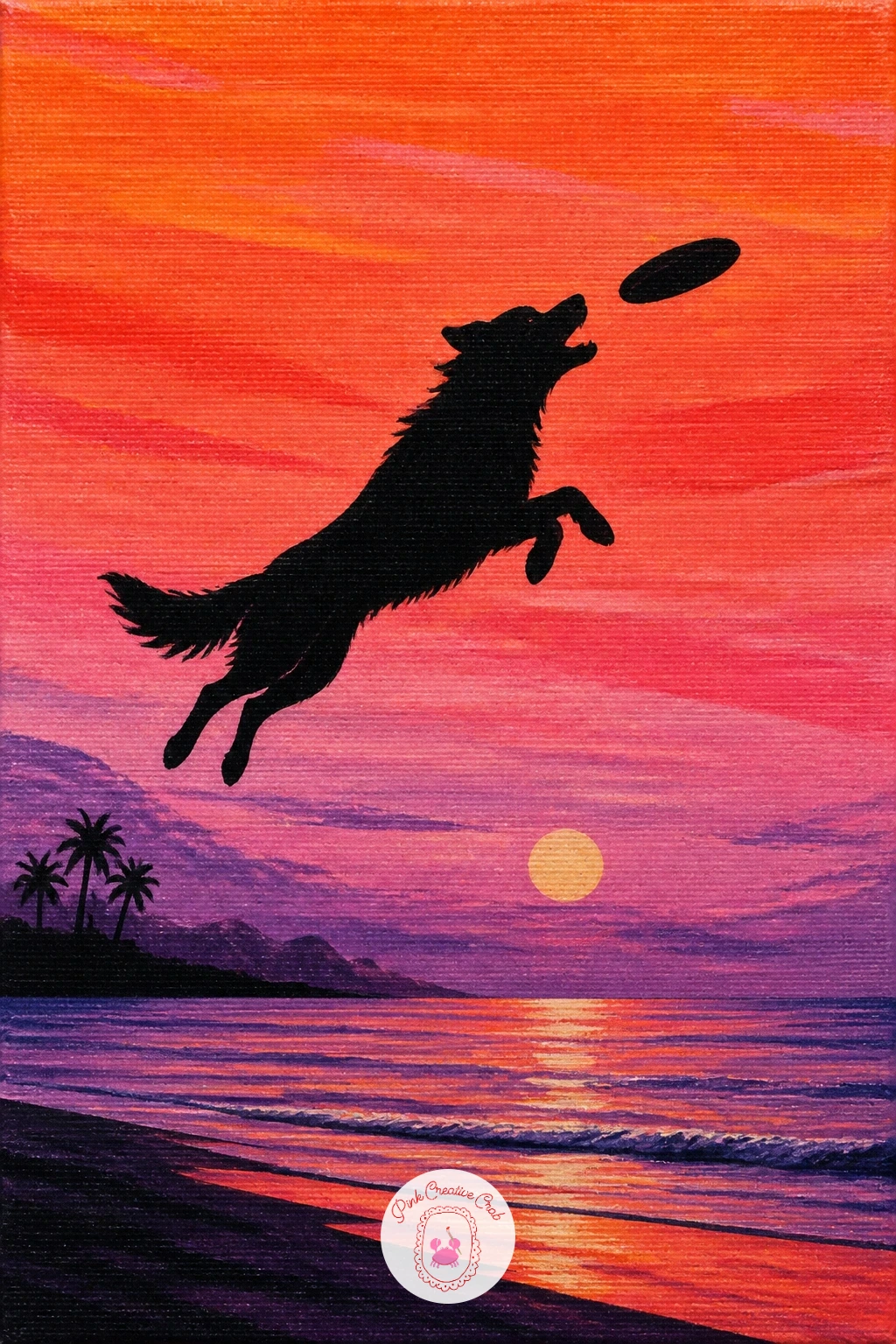
A dog catching a frisbee on a beach at sunset is the liveliest pose in this whole list, a mid-air leap that needs a clear sense of motion to read well. Blend the sky from bright tangerine into soft pink, add a thin band of muted sand and sea below, then once dry, paint the dog’s body stretched long and low, front legs reaching forward and back legs trailing behind, all four paws off the ground.
Paint a small oval frisbee shape just ahead of the dog’s open mouth, close enough that the two shapes almost touch, which is the detail that makes the leap feel purposeful rather than random.
The pose falls apart fastest when the body looks too curled or too straight, so aim for a long shallow arc from nose to tail, like a stretched letter C, and keep the legs at clearly different angles front to back rather than mirrored.
No steady hand for the frisbee’s oval, trace a small coin or button for a clean, consistent shape.
You Will Need
- coin or button to trace the frisbee
Palette: Bright Tangerine,Soft Pink,Mars Black
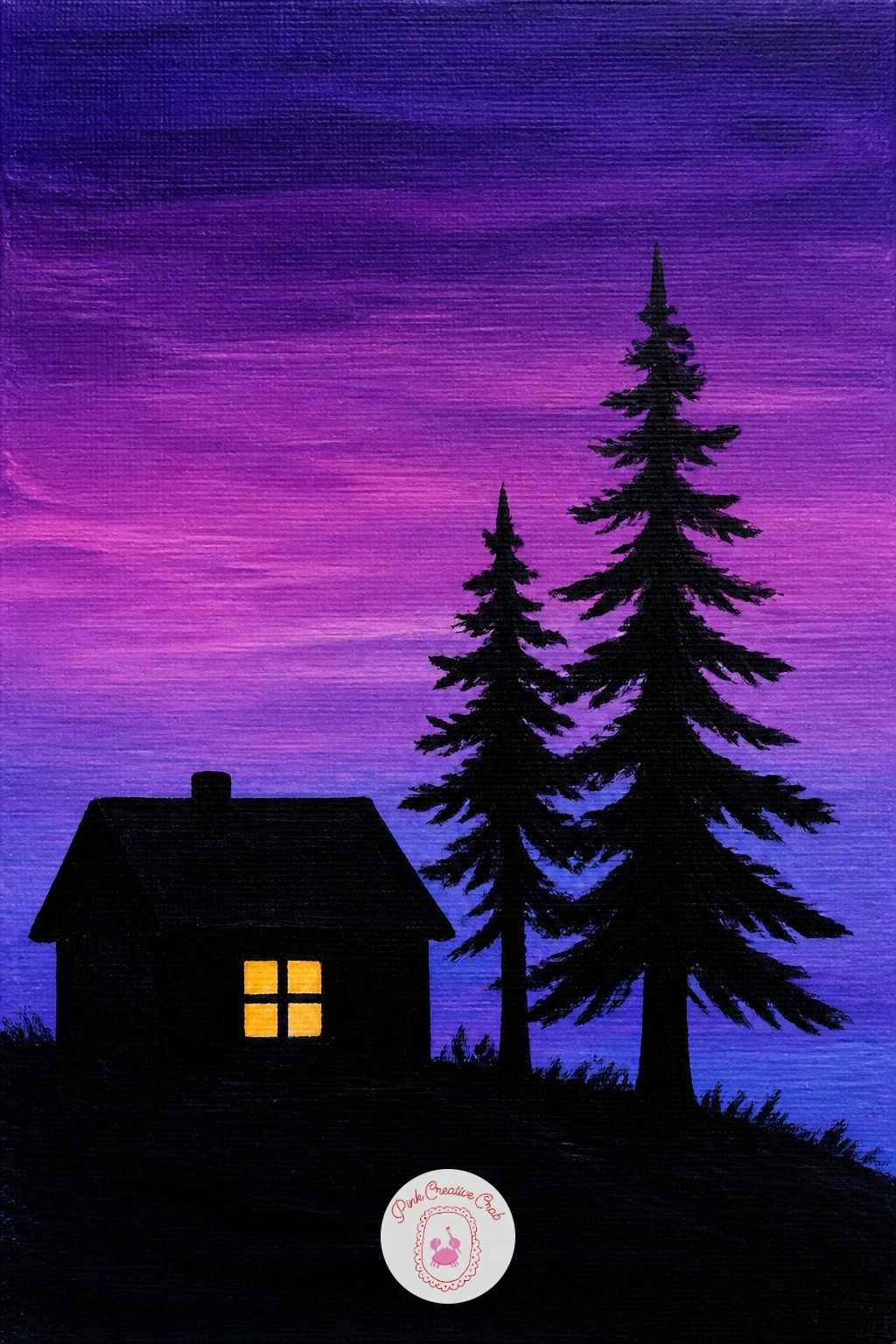
A cottage with a lit window under pines at dusk brings back the lifting trick from the glowing tent earlier, now applied to a small square window instead of a tent flap. Blend the sky from deep plum into soft periwinkle, paint a simple triangular-roofed cottage shape in black once dry, then before it fully sets, lift a small square near its center with a damp brush to reveal a warm yellow glow painted underneath beforehand in that exact spot.
Add two or three pine trees behind and beside the cottage using the same dry-brush ragged-edge trick from the earlier pine idea, overlapping one slightly behind the roofline for depth.
If the lifted window edge comes out ragged instead of clean, a straight edge like a small ruler or a flat toothpick held against the black paint while lifting keeps the square crisp.
This pairs well with the layered forest moods in these landscape painting ideas if you enjoy this kind of quiet, glowing scene.
You Will Need
- small ruler or flat toothpick for a crisp window edge
Palette: Deep Plum,Soft Periwinkle,Warm Glow Yellow,Mars Black
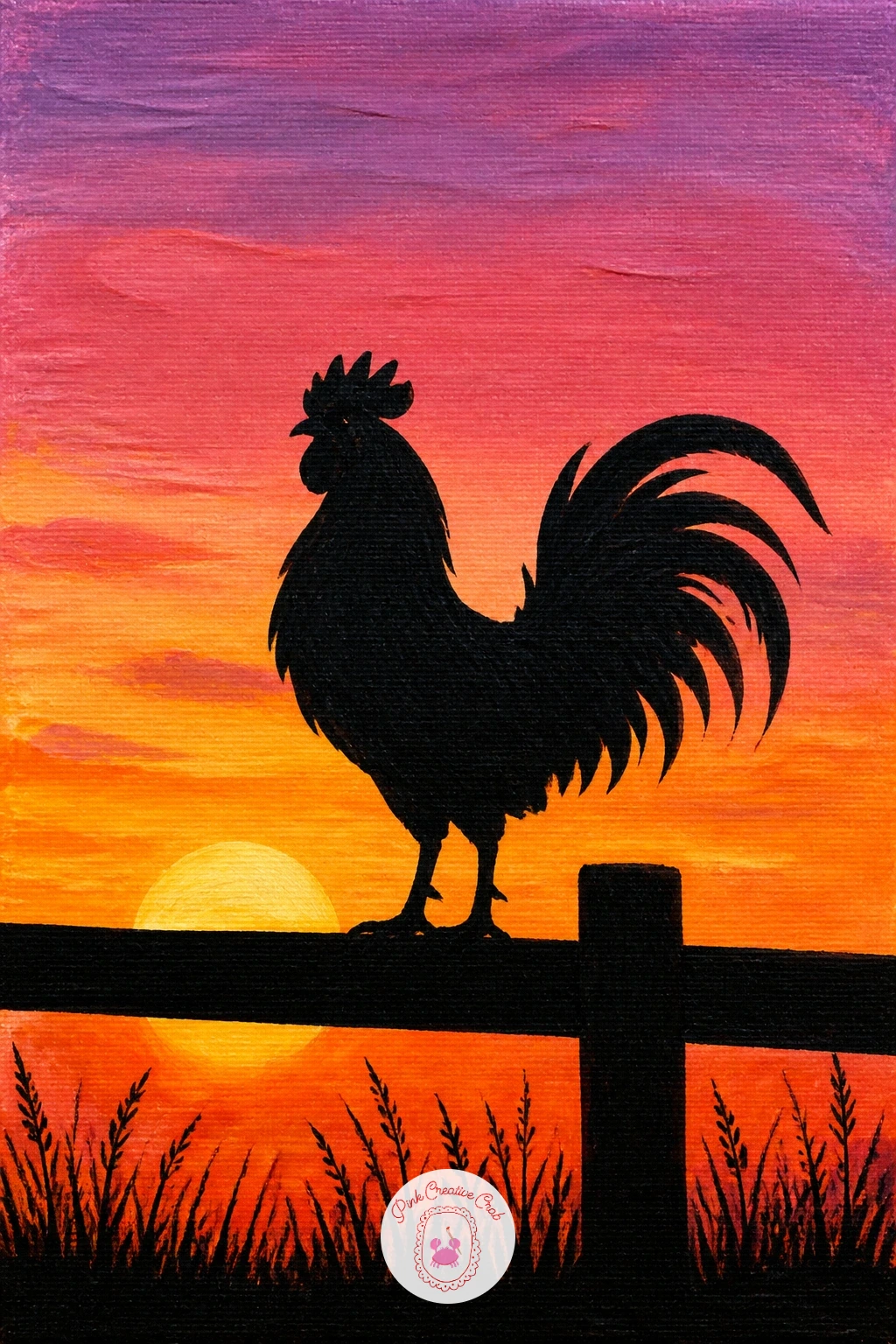
A rooster on a fence at sunrise closes out this list with the most character-driven silhouette here, all curves and a proud posture rather than straight lines. Blend the sky from soft gold at the horizon into pale peach higher up, add a simple horizontal fence rail once dry using two or three thin parallel lines, then paint the rooster perched on top, chest puffed forward and tail feathers sweeping up and back in a confident curve.
Build the body as one rounded silhouette first, then add the comb on top of the head and the tail feathers last as a few separate sweeping strokes fanning outward, which keeps those thinner details crisp rather than muddy.
The comb and wattle are easy to overdo, so keep them as two or three small bumps rather than a jagged crown, a simplified shape reads clearer from across a room than a fussy, detailed one.
Try a hen standing on the ground beside the fence next time for a simpler companion piece using the same rounded body shape.
Palette: Soft Gold,Pale Peach,Mars Black
What to Do Next
Pick whichever silhouette caught your eye, set up a small canvas and three or four paint colors, and block in the gradient sky first while you have the patience to blend it properly. The black silhouette goes on last and takes only minutes, so the hardest part of your whole afternoon is choosing which one to start with.
Frequently Asked Questions
What paint works best for an easy canvas painting with a gradient sky?
Acrylic paint works best because it blends well while wet and dries fast enough to layer a black silhouette on top within the same sitting, unlike oils which stay workable for days.
How do you blend a smooth gradient sky without streaks?
Work quickly while the paint is still wet, overlapping each new color into the edge of the last with a soft flat brush, and keep the canvas slightly damp if the paint starts drying before you finish blending.
How do you paint a clean black silhouette on top of a dry background?
Sketch the shape lightly in pencil first, then fill it with a liner or round brush loaded with black acrylic, painting from the inside out so the edge stays crisp rather than dragging color into the sky.
What size canvas suits these easy silhouette paintings?
A small canvas between eight by ten and eleven by fourteen inches works well, large enough to show the gradient clearly but small enough to finish comfortably in one sitting.
How do you fix a silhouette shape that comes out wrong?
Let the black paint dry fully, then paint back over the mistake with the matching sky color underneath it, let that dry too, and repaint the silhouette once the surface is clean again.
Have any thoughts?
Share your reaction or leave a quick response — we’d love to hear what you think!
-
 0
-
 0
-
 0
-
 0
-
 0
-
 0
