Get well soon card ideas get so much warmer when the animal on the front looks like it actually cares, and that is the whole point of this list. Every painting here shows someone being looked after: a bowl of soup carried up the stairs, a blanket tucked in, a jar of flowers set on a bedside table. Gouache is the perfect medium for it, because the flat shapes and crisp edges read instantly as a card front, even on a phone screen.
Below you will find 29 small scenes you can finish in one sitting, each with its own gentle mood and its own little act of kindness. Pick whichever friend or animal suits the person you are painting for, mix your mint, butter yellow and powder pink, and let the cream background do the quiet work around it.
Using these images: free for personal projects such as printing, coloring, cards, journals and gifts. Handmade items that include them may be sold up to 30 pieces per design. More than that is commercial use and is not permitted, and neither is selling or sharing the images themselves or passing them off as your own. Please ask before any other use.
Start with the bear carrying a steaming bowl of soup up a cottage staircase, since big rounded shapes like this are the easiest way into the whole set. Block in the staircase first as a simple diagonal band of flat cream or soft pink, then paint the bear as one chunky silhouette on top, leaving the bowl as a pale shape to fill in last.
Measure the bear against the stair width before you paint: if the body takes up more than two steps, it will crowd the page, so sketch it small in pencil first and compare it to the staircase before you commit to paint. Keep the soup bowl round and steady in the bear’s paws, with two or three short curved lines for steam rather than a cloud of squiggles.
If the edges go soft where the bear meets the stairs, let the gouache dry fully, then repaint a clean line along the silhouette with a smaller brush to sharpen it back up. No cottage staircase on hand to reference? A plain diagonal ramp shape works just as well and keeps the focus on the bear.
Finish with one bright dab of white gouache on the bowl’s rim to catch the light and make the soup look hot.
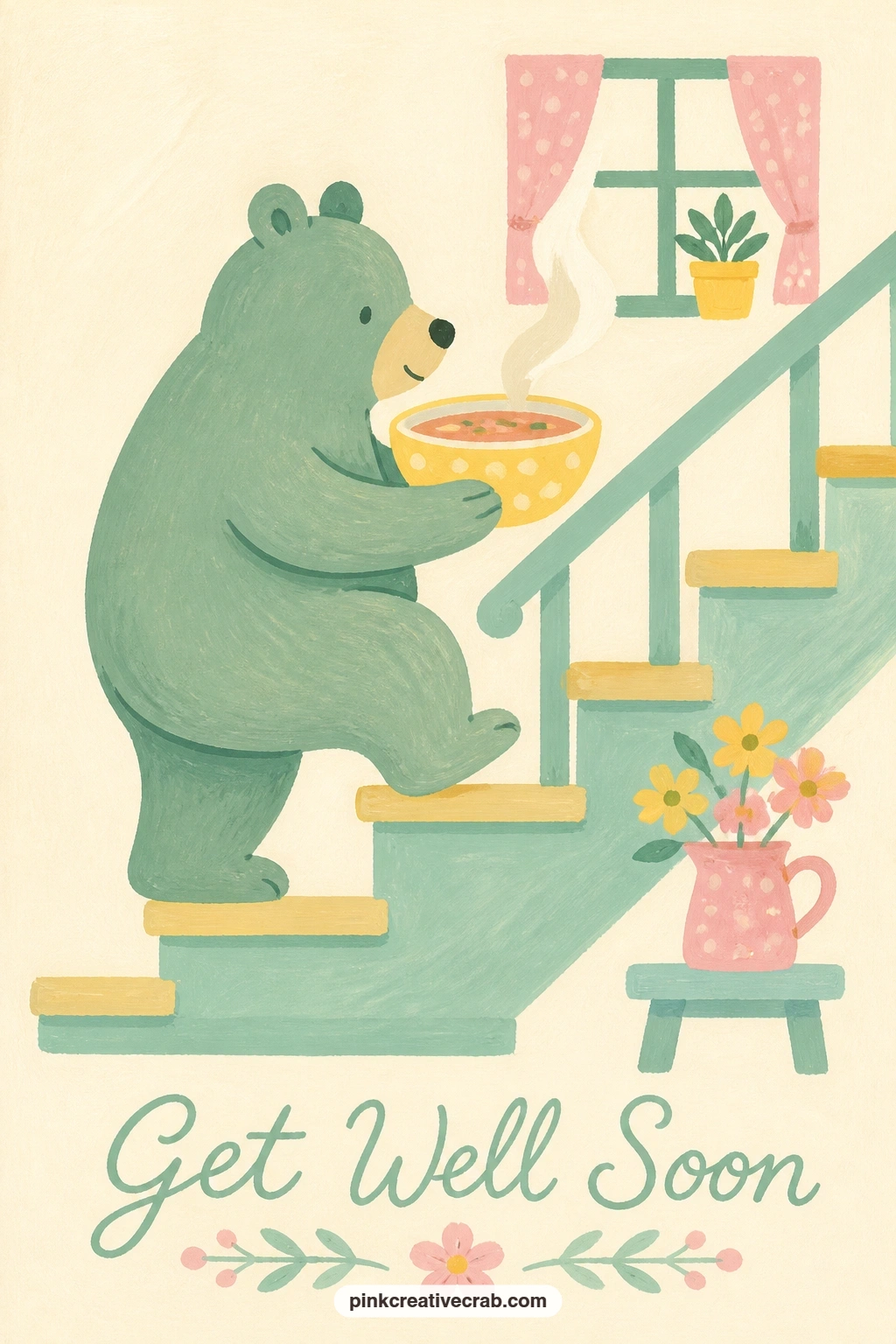
Palette: Raw Umber,Butter Yellow,Powder Pink,Cream
Following the bear up the stairs, bring the mood indoors with a cat tucking a blanket around a sniffly kitten on a sofa. Paint the sofa as one soft pink block first, then the kitten as a small curled shape tucked into it, and the mother cat leaning over last so her body overlaps both.
This is a good one for working on proportion and light together: keep the kitten’s head about a third the size of the cat’s to read clearly as a baby, and let a soft yellow glow from one side suggest a bedside lamp, which also gives you an excuse for warm highlights on the blanket folds.
If the kitten’s face gets muddy from too many colours, wipe it back while the paint is still damp with a clean dry brush, then repaint just the eyes and nose once it has dried. Swap the blanket pattern for plain pink if a patchwork print feels fiddly at this stage.
A single pink tissue box shape in the corner finishes the story without adding any extra detail work.
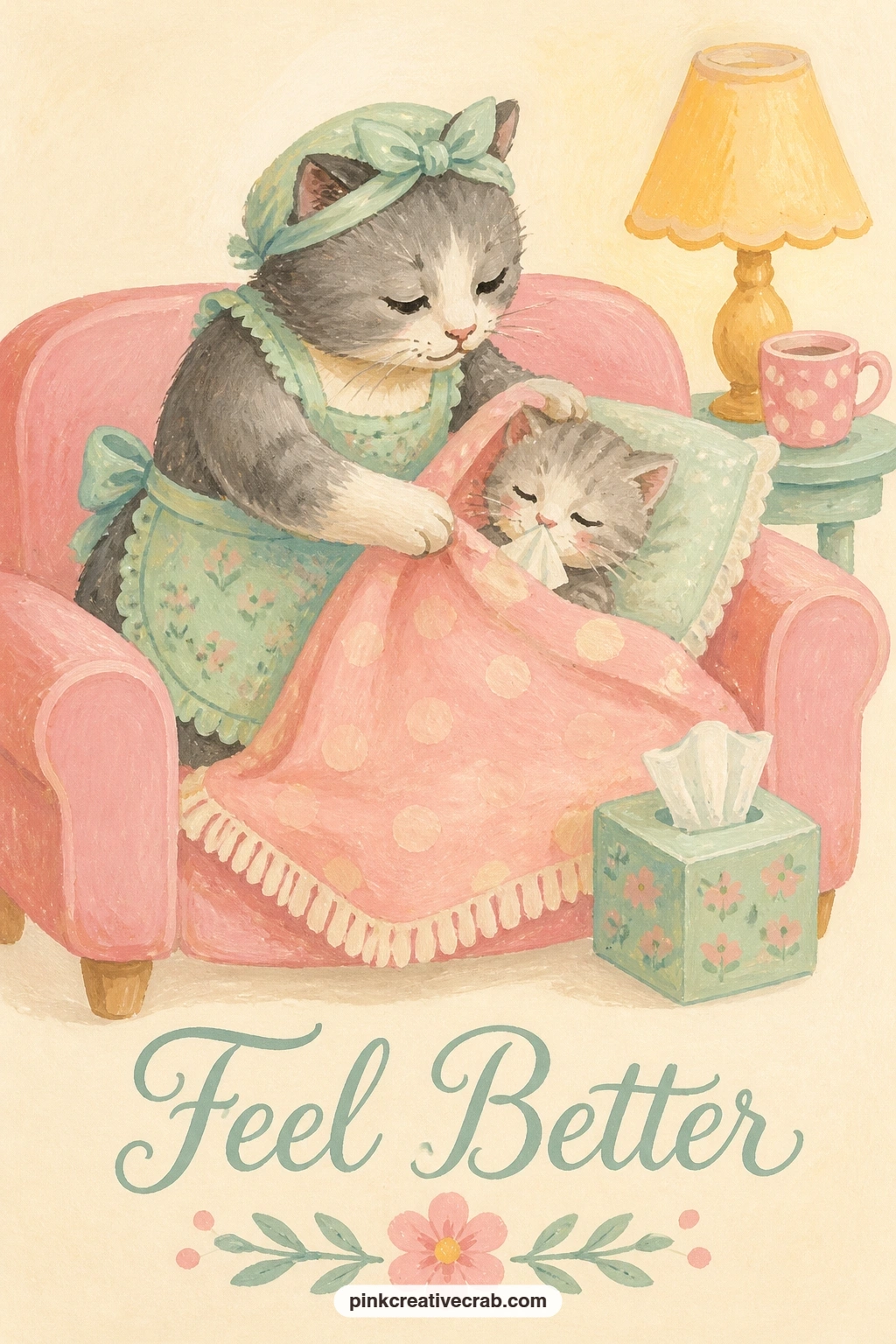
Palette: Soft Mint,Powder Pink,Butter Yellow,Cream
Scale right down next for the mouse bringing a thimble of tea to a friend tucked up in a matchbox bed, a favourite for how much charm small props can carry. Paint the matchbox as a simple rectangle with a slightly open lid shape, then the sleeping mouse inside it as a tiny curled form under a scrap of fabric.
Work from the matchbox outward: get its proportions right first, since everything else in the scene (the thimble, the visiting mouse) needs to look correctly tiny beside it. A kitchen thimble or a small bottle cap makes a good real object to glance at while you shape the thimble’s cup.
If your mice end up looking identical, change the ear angle and tail curl on the visiting mouse so the two characters read apart at a glance. No matchbox to study? A small open seed packet gives the same tiny rectangular bed shape.
Keep the steam off the thimble to one thin curved line, since anything busier will overwhelm a scene this small.
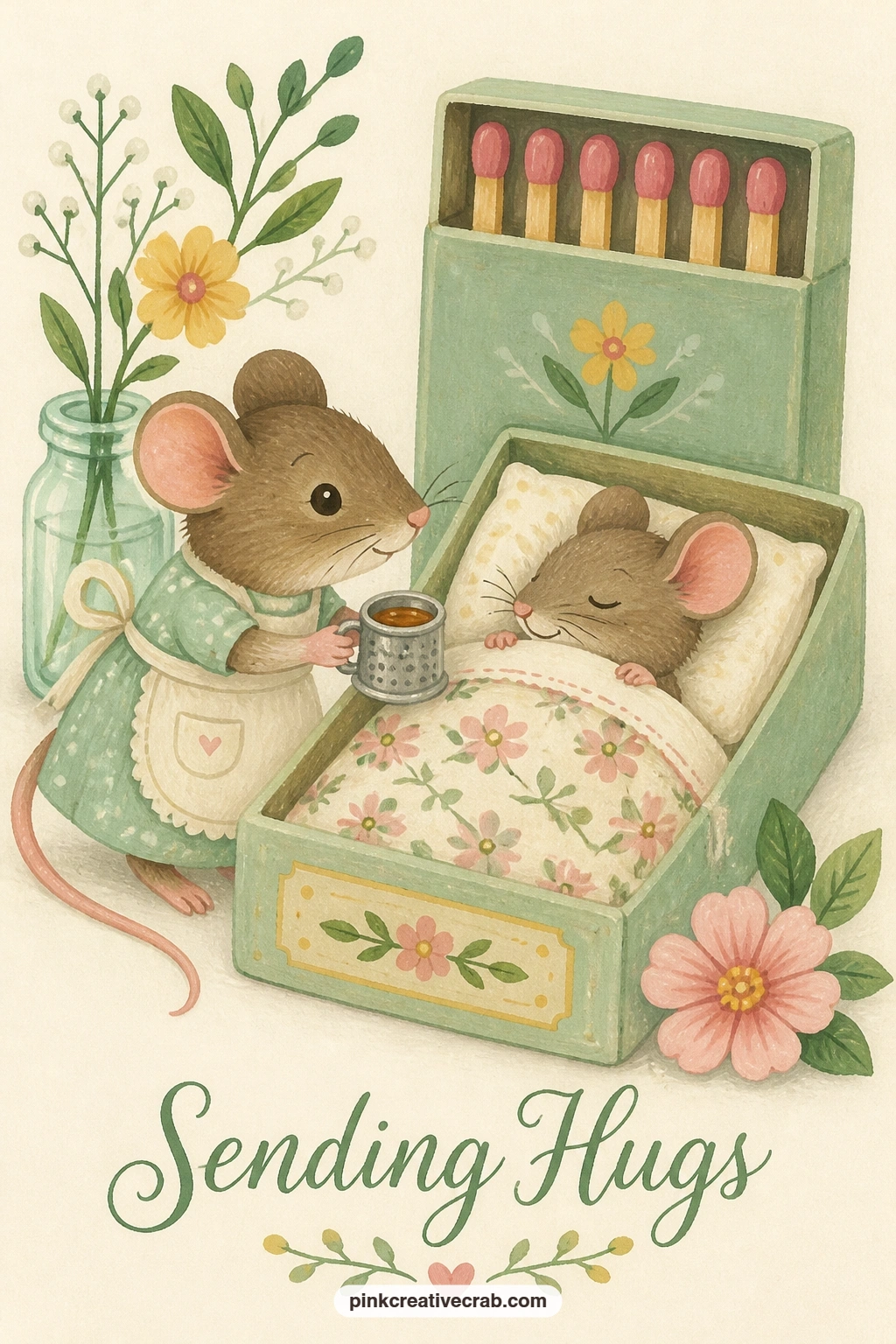
Palette: Butter Yellow,Soft Mint,Warm Grey,Cream
Paint the matchbox bed first and keep it smaller than you think, it is easy to let tiny props creep too large once the mouse goes in beside them.
Keep the bedridden mood going with a duck resting under a patchwork quilt, a hot water bottle shape tucked against its side. Paint the quilt first as a grid of flat colour blocks (pink, mint, cream, repeat), then lay the duck’s round body on top so the quilt pattern stops cleanly at its silhouette.
This idea is a good one for edges and texture: keep the duck’s feathers as two or three curved line strokes rather than a fully feathered surface, and use a dry brush loaded with just a little paint to scuff a soft texture along the quilt’s top edge where it folds over the duck.
If the patchwork grid comes out wobbly, use a ruler in pencil first to mark even squares before you paint inside them. Swap the hot water bottle for a simple orange rectangle with a rounded top if the rubber-bottle shape feels tricky to get right.
One tip: paint the duck’s bill a slightly deeper yellow than the quilt so it still pops against a busy pattern.
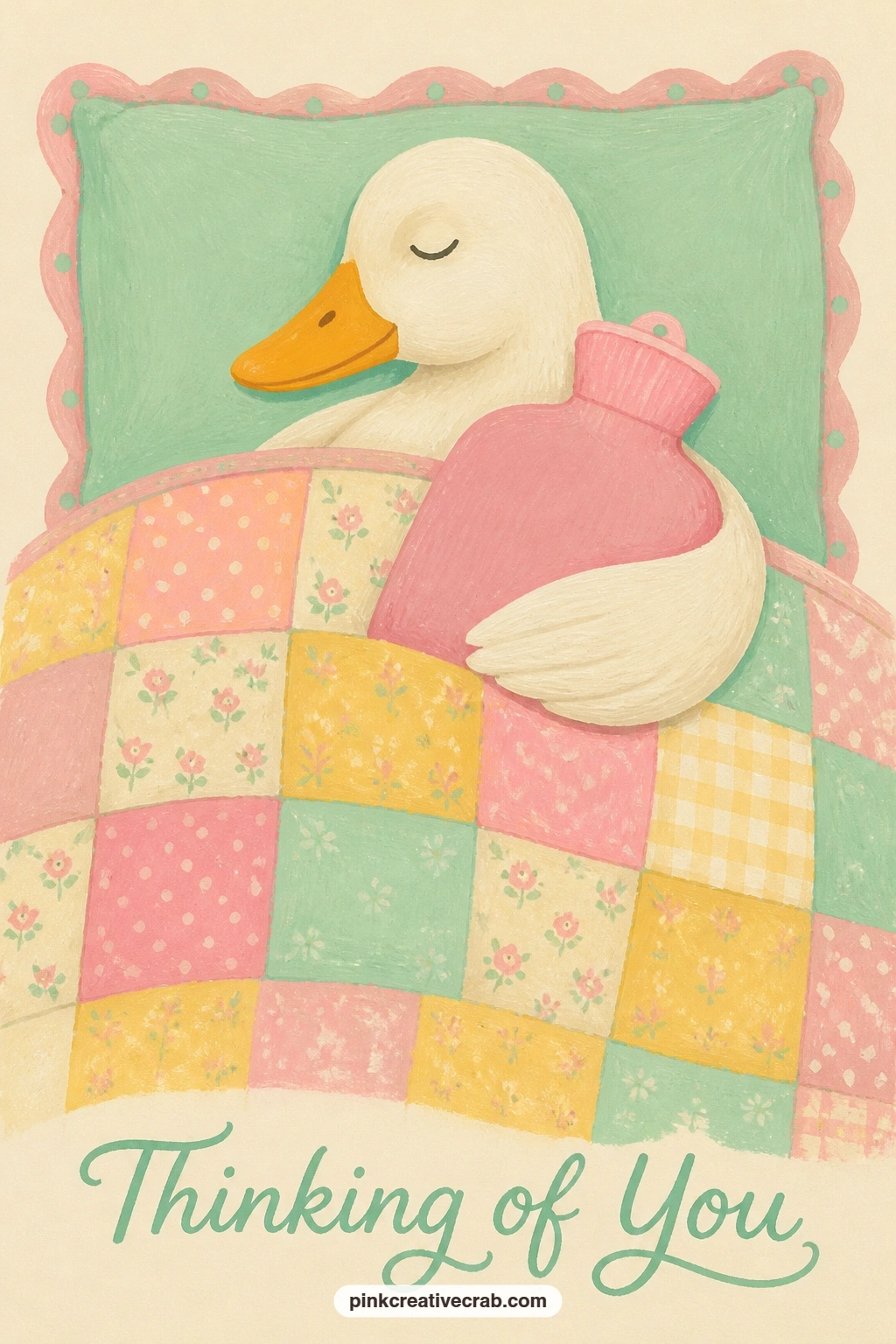
Palette: Butter Yellow,Powder Pink,Soft Mint,Burnt Orange
Move to a quieter, simpler scene with a dog resting its chin on the edge of a bed beside a jar of daisies, a good breather after the busier patchwork of the duck. Paint the bed’s edge as one flat horizontal band, the jar as a simple glass shape with a few daisy stems poking out, then the dog’s head last, resting heavy and still against the covers.
Since this is mostly about mood rather than action, spend your extra time on the dog’s eyes: keep them soft and slightly downturned, which does more to sell the gentle watching-over feeling than any other part of the scene. Loosely sketch the eye shape first, check it reads as calm rather than sad, and only then paint it solid.
If the daisies look stiff, paint the petals as quick flat ovals around a yellow centre rather than outlining each one. A jam jar from the kitchen makes a fine stand-in reference for the glass shape if you do not have a bud vase handy.
Keep the daisy jar smaller than the dog’s head so the eye goes straight to the face.
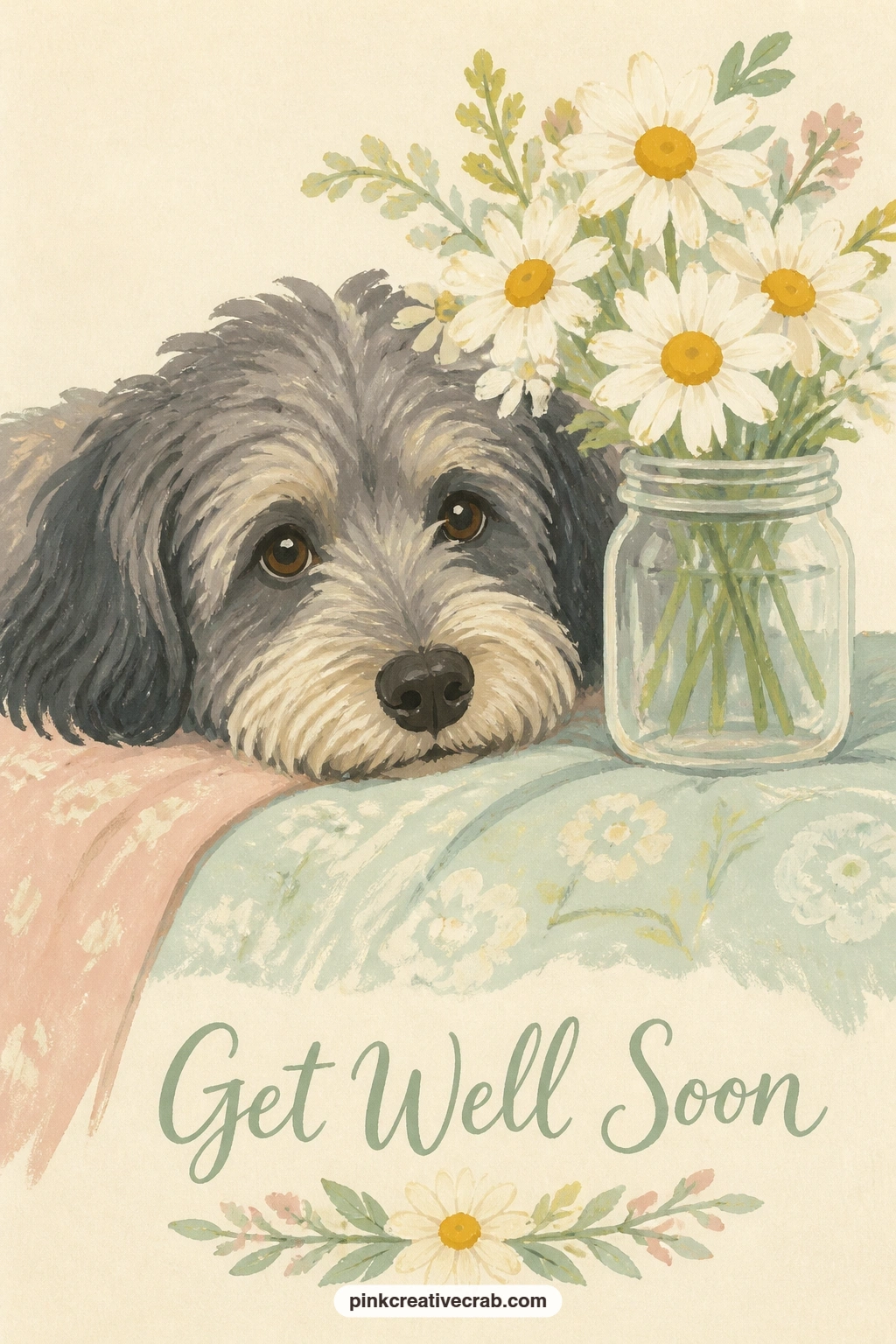
Palette: Warm Grey,Cream,Soft Mint,Butter Yellow
Lift the scene up into a tree hollow next for an owl reading a story to a sick owlet, a nice shift in setting after three bedside scenes in a row. Paint the hollow first as a rounded dark opening in a tree trunk shape, then the two owls nested inside it, the open book a simple pale rectangle between them.
Think about where the light comes from here: if it glows from outside the hollow, the owls’ outer edges catch warm highlights while the inside of the hollow stays in soft shadow, which gives the whole painting depth without any extra detail work. Try a pale yellow glow along just the outside curve of each owl’s body to test this.
If the hollow shape ends up too round and reads as a simple circle, flatten one side of it in pencil first so it reads as wood grain rather than a tunnel. No tree reference handy? A rounded arch shape with a few bark lines does the job.
Keep the storybook plain, two flat pale pages and nothing written on them.
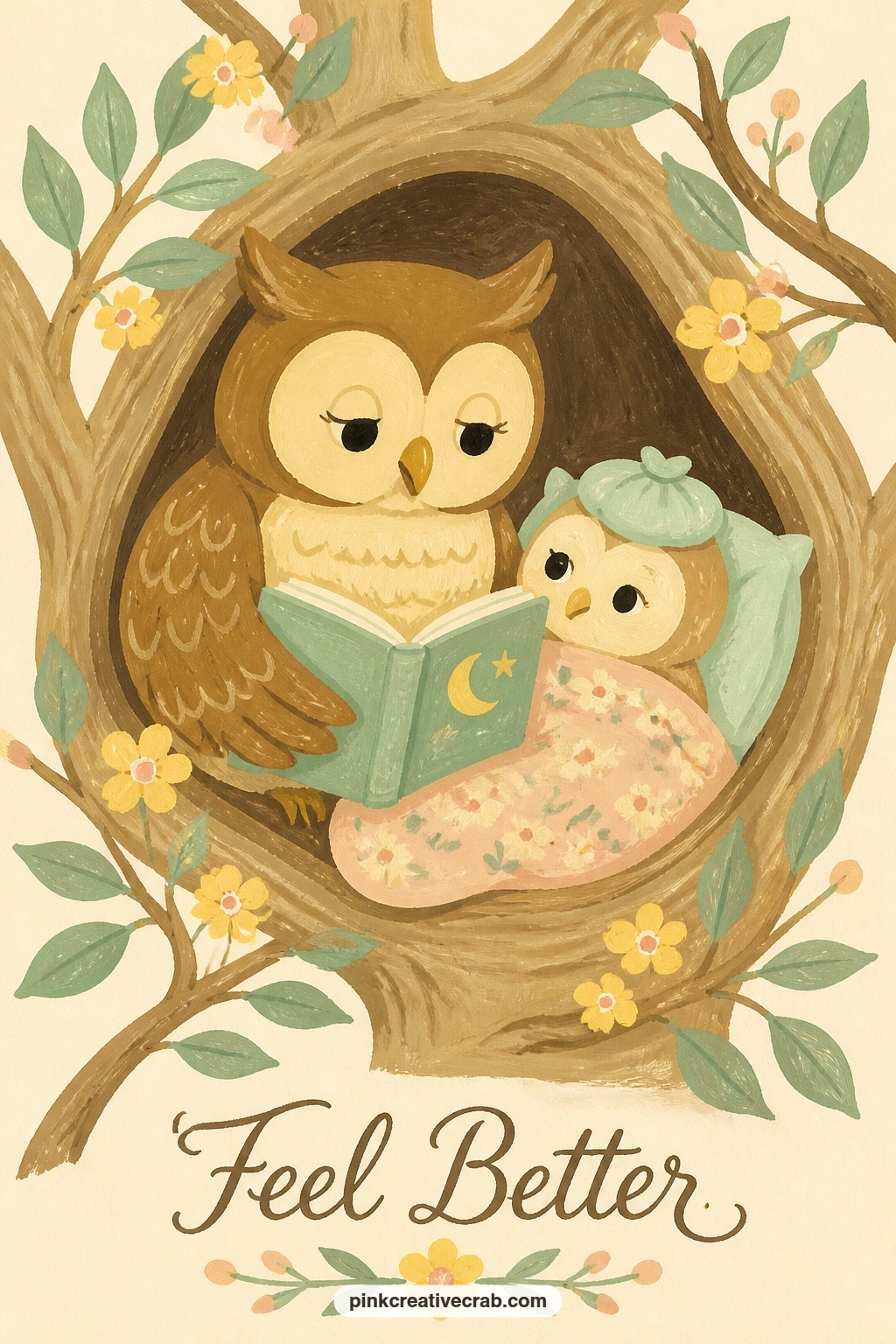
Palette: Raw Umber,Butter Yellow,Cream,Soft Mint
Bring some brightness back with a squirrel delivering a basket of oranges to a friend resting in bed, a nice excuse to work a punch of orange into the mint and pink palette. Paint the basket first as a woven oval shape, fill it with a cluster of round orange dots, then the squirrel carrying it toward the bed where the second animal waits under the covers.
Quick version, ten minutes: keep the squirrel mid-stride with one simple paw lifted, the basket a flat shape with no woven texture, and the bed just a rounded lump under a blanket. Forty-minute version: add a woven crosshatch texture to the basket with a fine brush, give the squirrel’s tail a soft two-tone shading, and paint individual orange segments peeking out where one orange has rolled loose.
If the oranges blend into one orange blob, separate them with a thin cream outline between each one once the base colour dries. Satsumas or clementines work as a reference if real oranges are not around.
Finish with one small green leaf stem on top of the basket for a fresh touch.
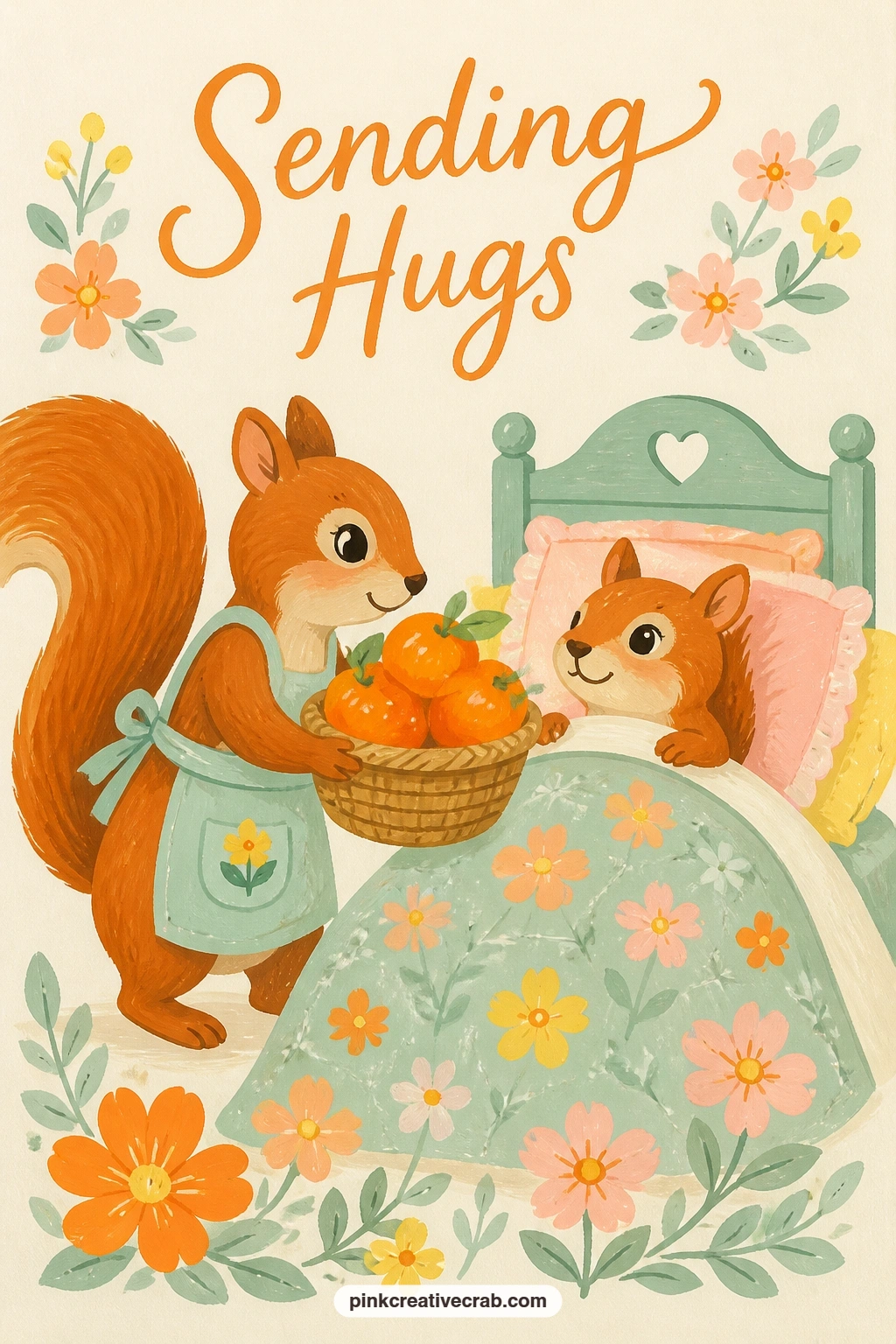
Palette: Burnt Orange,Soft Mint,Warm Grey,Cream
Settle into something cozier now with a sheep wrapped in a woolly scarf, sipping tea under a crocheted blanket. Paint the sheep’s fluffy body first as one soft cloud-like shape, then the scarf as a wrapped band of colour around its neck, and the teacup last, held carefully between two small hooves.
For a nice bit of texture work here, try dabbing the sheep’s wool with a slightly dry brush in small circular motions rather than painting one flat shape, which gives the fleece a bumpy, knitted look that echoes the crocheted blanket without adding any linework. Keep the scarf flat and smooth by contrast, so the two textures read clearly apart.
If the wool texture gets too busy or speckled, go back over the worst patches with one flat coat of the base colour to calm it down, then dab a lighter texture back in on top more sparingly. A cotton ball is a handy real-world reference for how fleece clumps and curls.
One tip: paint the crocheted blanket as simple overlapping scallops rather than individual stitches.
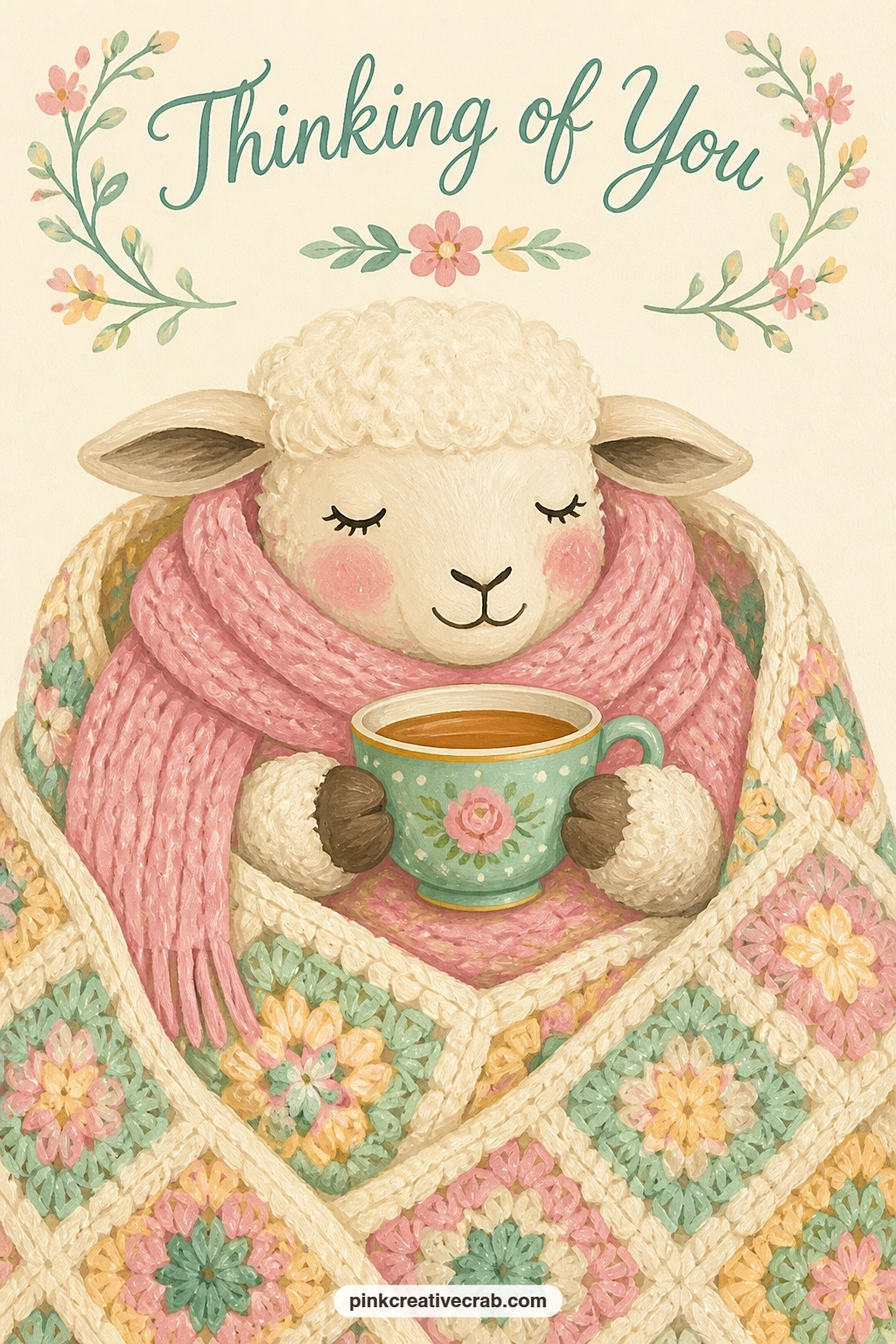
Palette: Cream,Powder Pink,Soft Mint,Butter Yellow
Head up into a nest next for a small bird bringing a sprig of mint to a sleepy chick, a good chance to practice keeping a tiny scene uncluttered. Paint the nest as a simple woven bowl shape first, the chick as one soft round puff tucked inside it, then the parent bird landing on the rim with the mint sprig in its beak.
Measure the chick against the parent bird before you commit to paint: the chick’s whole body should sit roughly the same size as the parent’s head, which keeps the baby reading as genuinely small rather than just a slightly shrunk adult. Sketch both in pencil and hold them side by side to check before painting.
If the nest’s woven texture turns into a messy scribble, simplify it to three or four curved lines sweeping the same direction rather than a tangle. Swap the mint sprig for a single small leaf shape if the leaflets feel too fiddly to paint small.
Keep the sky behind the nest one flat soft colour so the nest shape stays the clear focus.
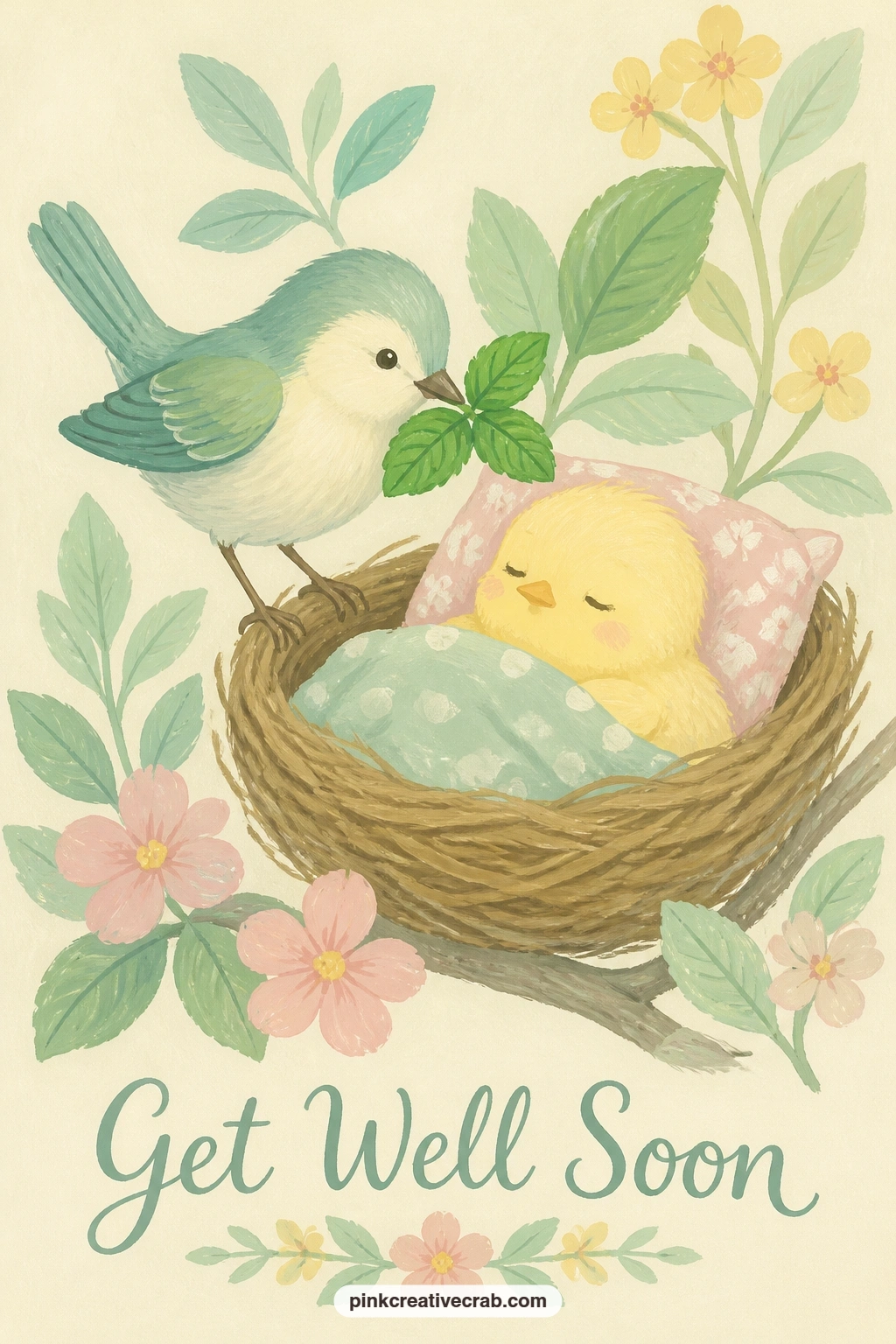
Palette: Soft Mint,Butter Yellow,Raw Umber,Cream
Go underground for a mole bringing a bunch of tulips to a friend tucked into a cozy burrow bed, which gives you a chance to paint a different kind of enclosed little room after the tree hollow and nest. Paint the curved burrow walls first as a rounded earthy shape, the bed inside it as a simple rectangle with the sleeping mole tucked under a blanket, then the visiting mole and its tulips last.
Keep the tulip bunch to three or four flat petal shapes on simple stems rather than a full bouquet, since a burrow this small needs the flowers to read instantly rather than reward close inspection. Group the tulip heads tightly together and let the stems fan out just slightly at the base for a natural hand-held look.
If the burrow walls look too flat and papery, add one or two darker curved lines following the same curve to suggest packed earth without extra detail. Swap tulips for any simple-petalled flower if tulip shapes feel stiff to paint small.
A single round pebble or acorn in the corner adds a nice finishing touch.
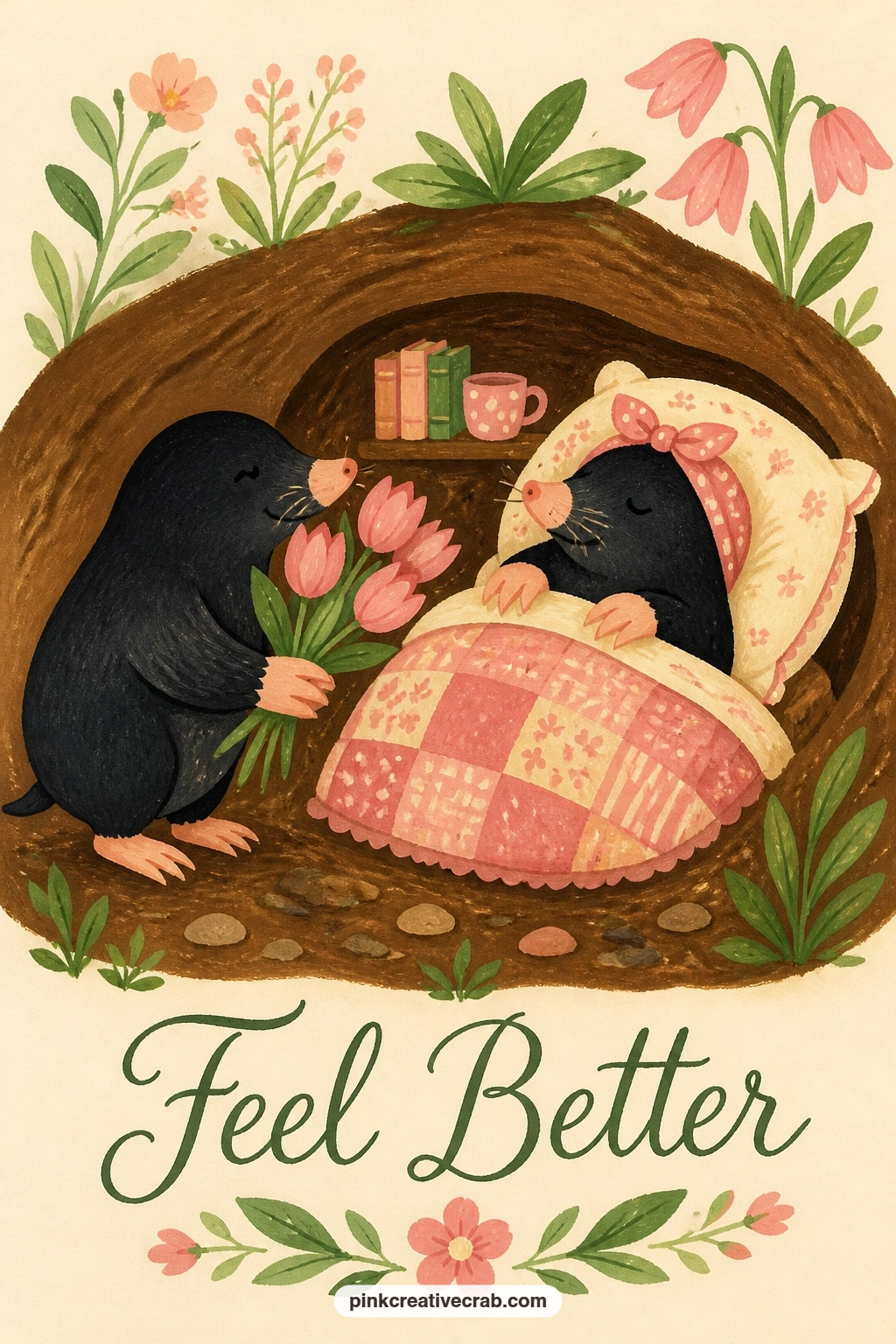
Palette: Raw Umber,Powder Pink,Soft Mint,Cream
Bring the flowers up to full size for a cat carefully arranging sunflowers on a bedside table for a sleepy dog resting nearby. Paint the sunflowers first as a cluster of yellow petal circles around dark centres, then the vase beneath them, and the cat reaching up to adjust one stem, with the dog’s resting shape filled in last off to the side.
If this is your first time painting sunflowers, keep the petals as simple triangular shapes radiating out rather than individually curved, which reads just as well at card size and is far faster to get even. Work the whole flower head in one go while the yellow is still wet so the petals blend softly at their base into the darker centre.
If the arrangement looks lopsided, turn the page upside down once it is dry: any imbalance in the vase shape jumps out immediately that way. A small drinking glass works fine as a vase reference if a proper vase is not around.
Keep the dog low and loose in the background so the sunflowers stay the brightest thing on the page.
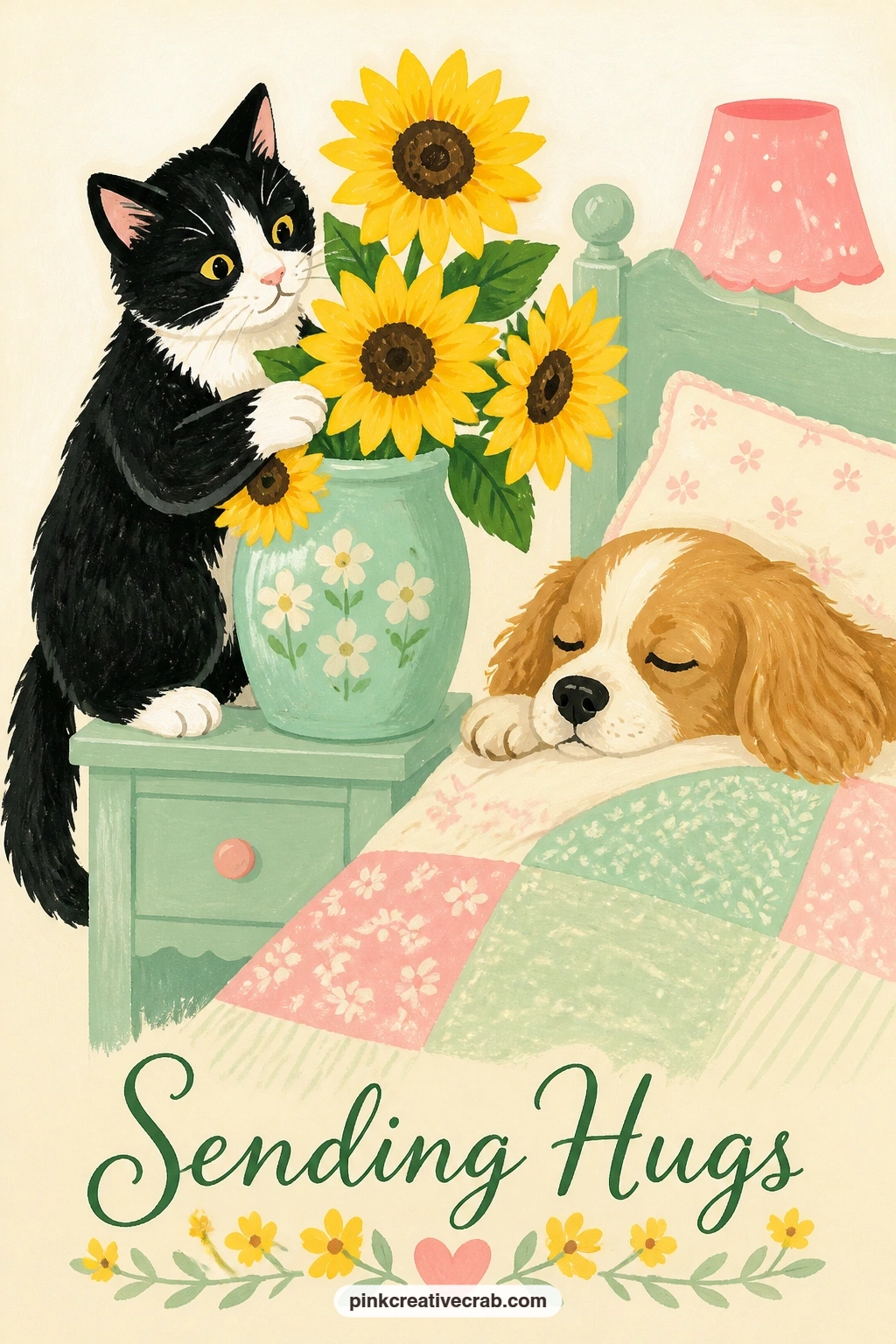
Palette: Butter Yellow,Raw Umber,Soft Mint,Cream
Add a little gentle humour with a cat nurse in a white cap taking a puppy’s temperature, a fun character study after several quieter scenes. Paint the cat’s body first in its nurse uniform as one flat pale shape, the white cap on top as a simple rounded triangle, then the puppy lying across her lap with the thermometer held carefully in place.
Costume details like this are where proportion really matters: keep the cap small, sitting just on top of the head rather than covering it, and keep the little red cross or stripe on the uniform simple and centered so it reads clearly even at a small card size. Sketch the cap’s placement in pencil first and check it from a distance before painting.
If the puppy’s pose looks stiff, loosen the sketch by drawing the body as one curved sausage shape first and fitting the legs and head onto that curve rather than building the pose from straight lines. A kitchen thermometer makes a fine stand-in reference if a medical one is not at hand.
Keep her expression soft and attentive rather than stern, which keeps the whole card feeling warm.
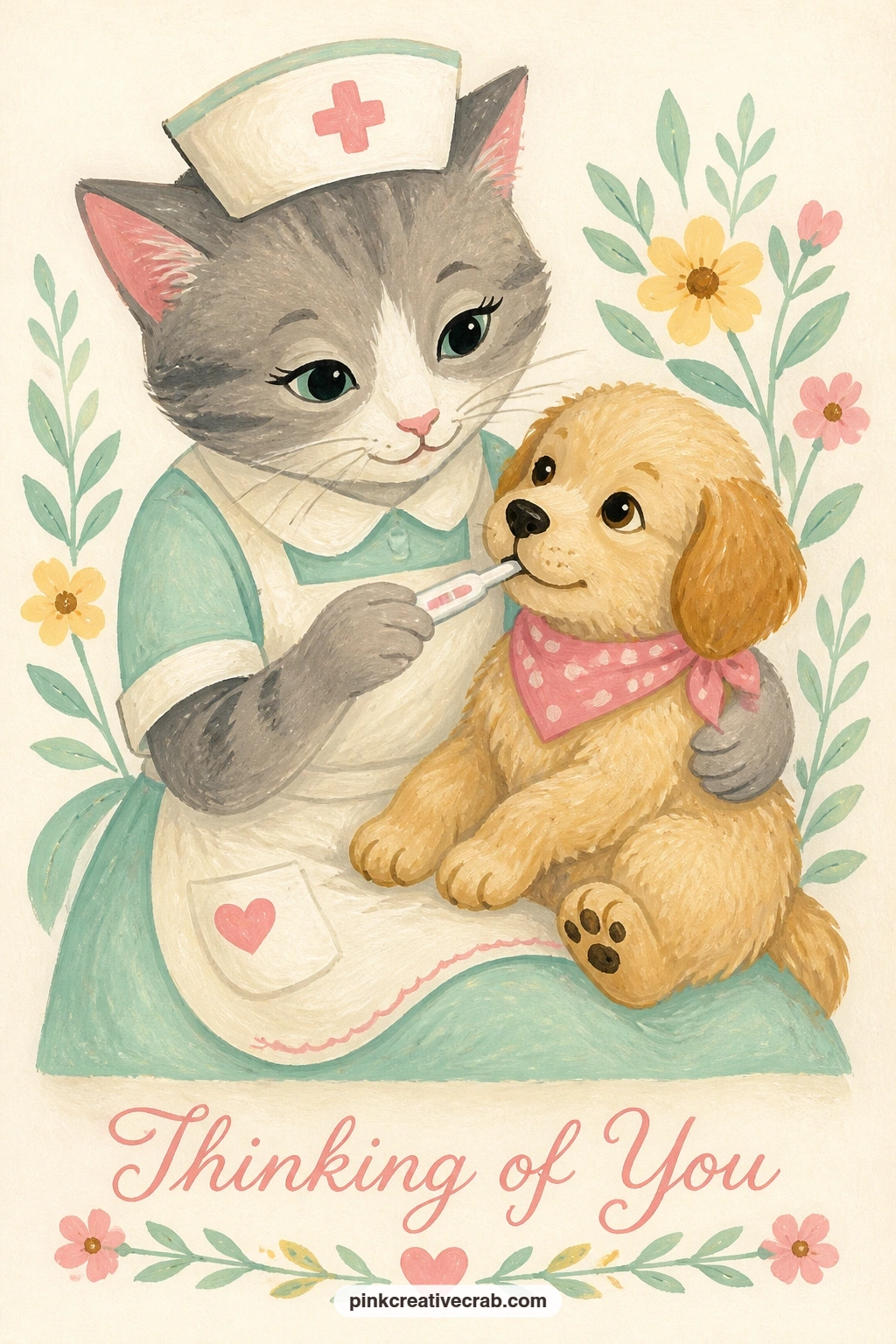
Palette: Cream,Powder Pink,Soft Mint,Warm Grey
Step into a tiny kitchen next for a badger making honey lemon tea, a scene that leans on objects more than a resting patient. Paint the stove or counter first as a simple flat block shape, the kettle and teapot on top of it, then the badger standing at the counter with a lemon slice and honey jar beside the cup.
Quick version, ten minutes: a flat kettle shape, one teapot, one cup, done with no steam or extra props. Forty-minute version: add rising steam lines from the kettle spout, a honey drizzle caught mid-pour from the jar, and a few lemon slices fanned out on the counter rather than just one.
If the honey drizzle comes out as a blob instead of a thin trail, thin your yellow paint with a touch more water and pull it in one continuous stroke rather than dabbing. Swap the honey jar for a simple sugar bowl shape if a honey dipper feels too fiddly to paint at this size.
Keep the badger’s stripes to two clean bands down the face, since more than that gets busy fast in a small kitchen scene.
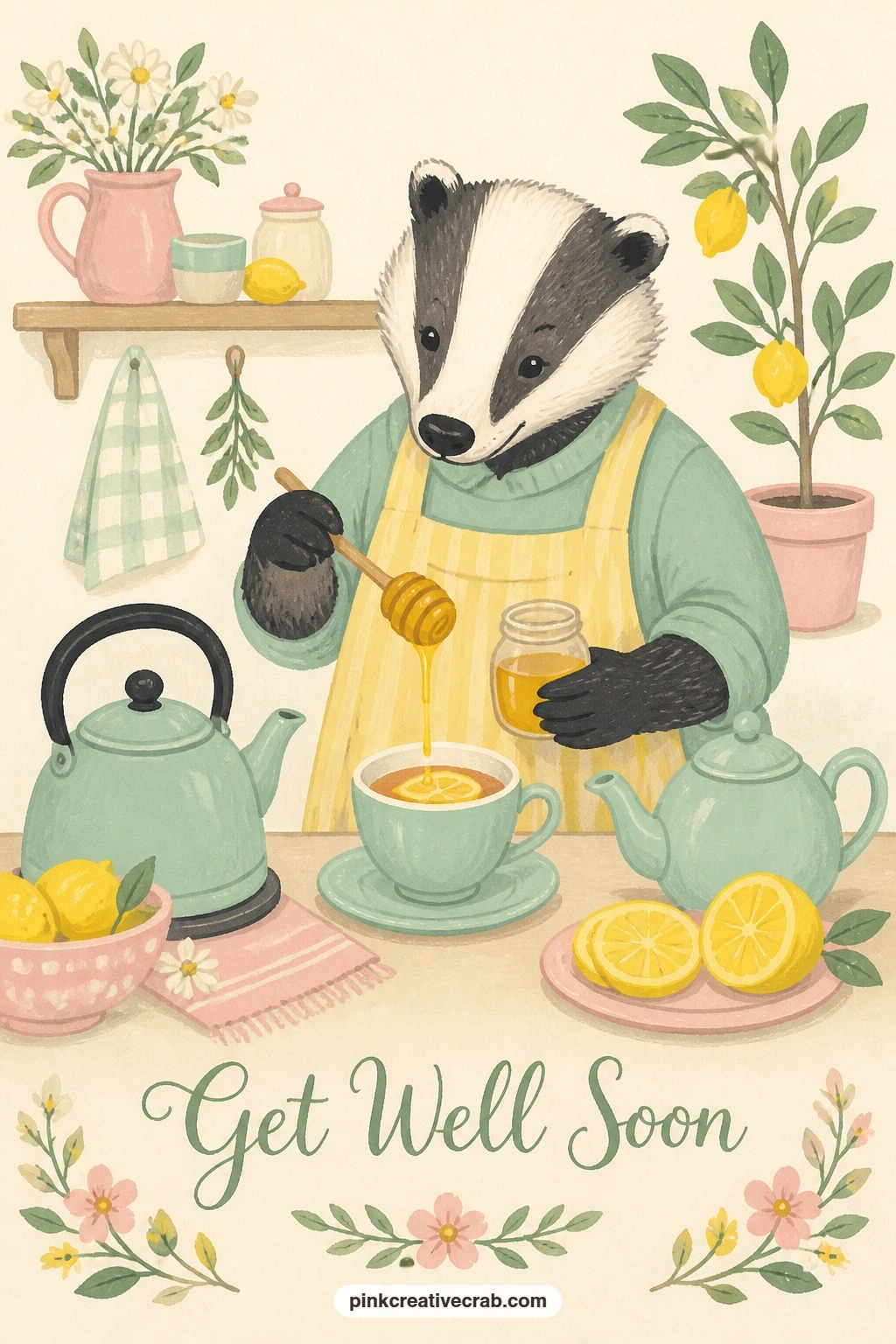
Palette: Warm Grey,Butter Yellow,Cream,Soft Mint
Lean into something a bit sillier now with a giraffe wearing a long striped scarf wound around its sore throat, a shape that is actually easier to paint than it sounds. Paint the long neck first as one tall tapering shape, then wind the scarf around it in simple overlapping bands before adding the head and spotted body last.
The neck’s proportion is everything here: keep it roughly as long as the giraffe’s whole body is tall, and sketch a light centre line down the neck in pencil first so the scarf bands wrap evenly rather than drifting off to one side as you paint upward. Step back and check the silhouette before committing to final colour.
If the scarf stripes come out uneven in width, mark the band widths lightly in pencil first all the way up the neck before switching to paint. Swap the classic stripes for simple polka dots if stripes feel tricky to keep straight on a curved surface.
Keep the giraffe’s spots few and large rather than many and small, so the scarf stays the clear star of the picture.
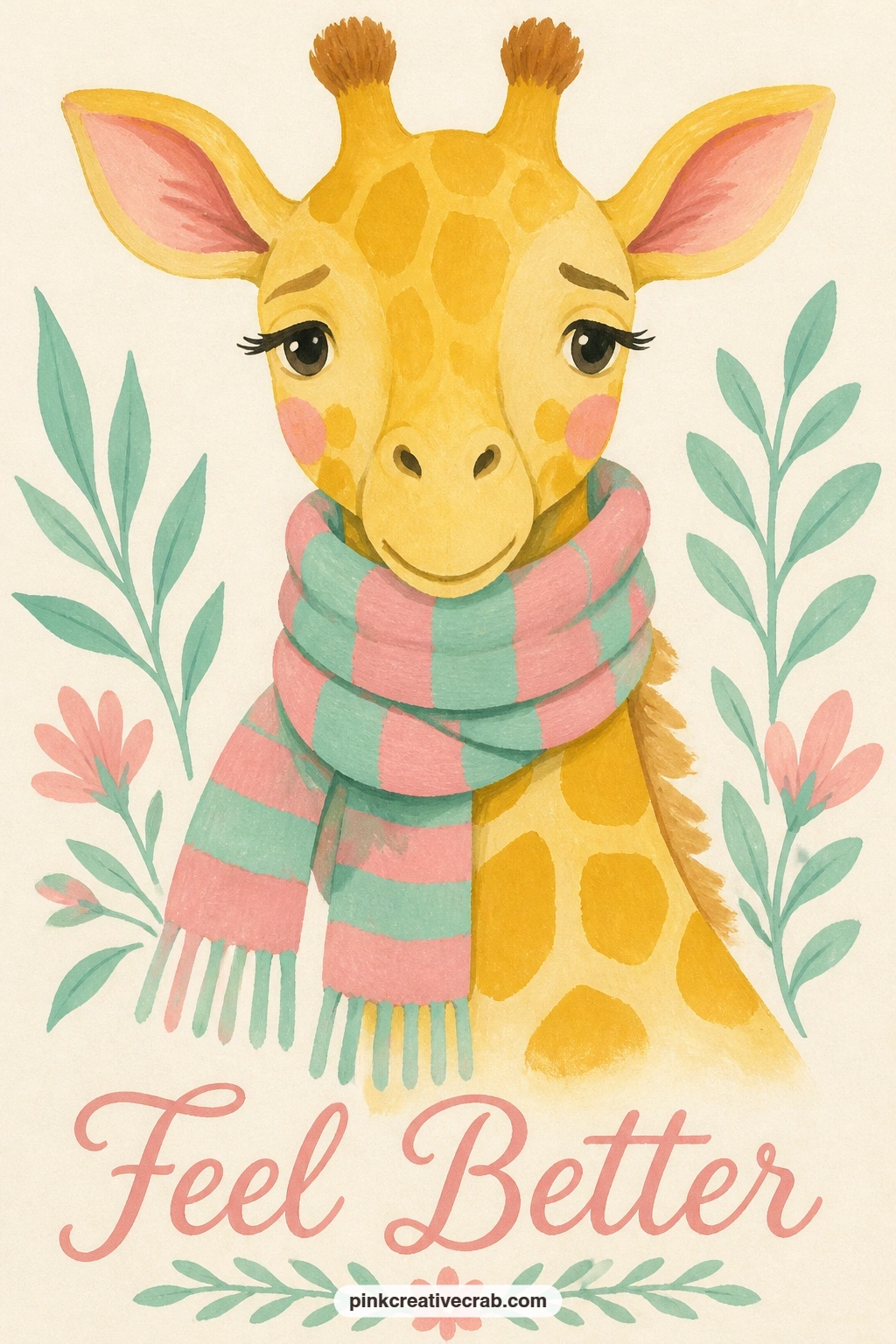
Palette: Butter Yellow,Burnt Orange,Powder Pink,Cream
Keep the gentle comedy going with an elephant resting on cushions, its trunk wrapped in a neat bandage. Paint the pile of cushions first as a stack of soft overlapping shapes, then the elephant’s large rounded body settling into them, and the bandaged trunk curled to rest on top of a cushion last.
Where the eye naturally goes first in this scene is the bandage, so put your light source there: a soft highlight along the top curve of the wrapped trunk draws attention exactly where the story is, and a little shadow underneath it grounds it against the cushion. Try this highlight before you add any other detail to the body.
If the elephant’s body ends up looking flat and shapeless against the cushions, add one soft shadow line where the body meets the cushion pile to separate the two shapes. A rolled hand towel is a fair stand-in reference for how a trunk bandage would wrap and fold.
Keep the cushions in just two colours so the bandage still stands out as the palest shape on the page.
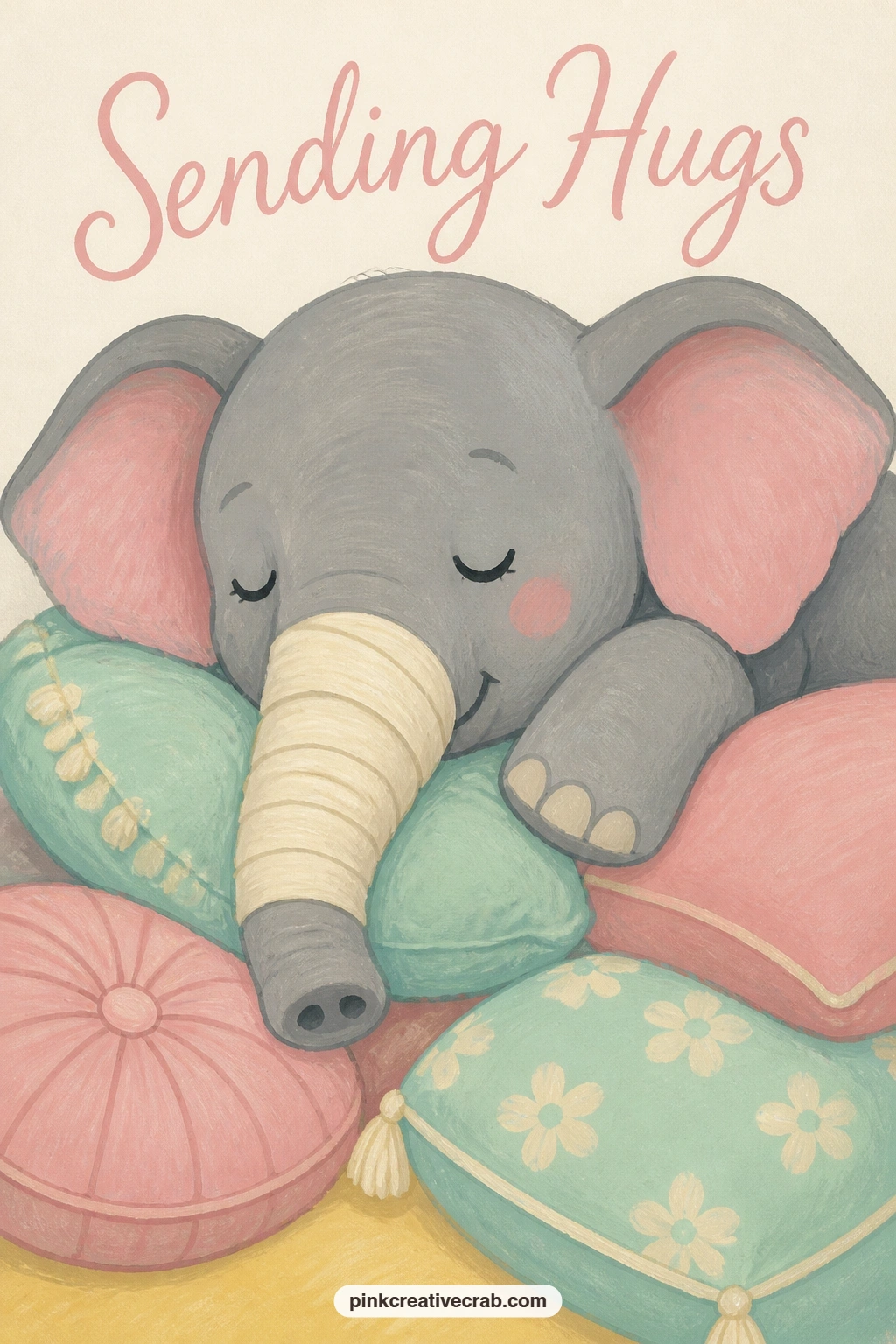
Palette: Warm Grey,Powder Pink,Soft Mint,Cream
Cool things down with a frog resting on a lily pad, an ice pack balanced on top of its head, a nice simple shape-based scene after the busier elephant cushions. Paint the lily pad first as one flat rounded leaf shape on the water, the frog sitting on top of it, then the ice pack last as a pale blue rounded shape pressed to its head.
This is a clean one for texture and edges: keep the lily pad’s edge crisp and slightly scalloped, while the water around it gets a softer, slightly dry-brushed texture to suggest ripples without drawing each one. Load the brush with less paint than usual and drag it lightly across the surface for this water texture.
If the frog’s body looks too stiff and geometric, round off every corner in your pencil sketch before you paint, frogs read as friendly mostly through soft curves. Swap the ice pack for a simple folded cloth shape if the rounded gel-pack look feels tricky.
A single dragonfly or ripple ring nearby adds life to the water without extra work.
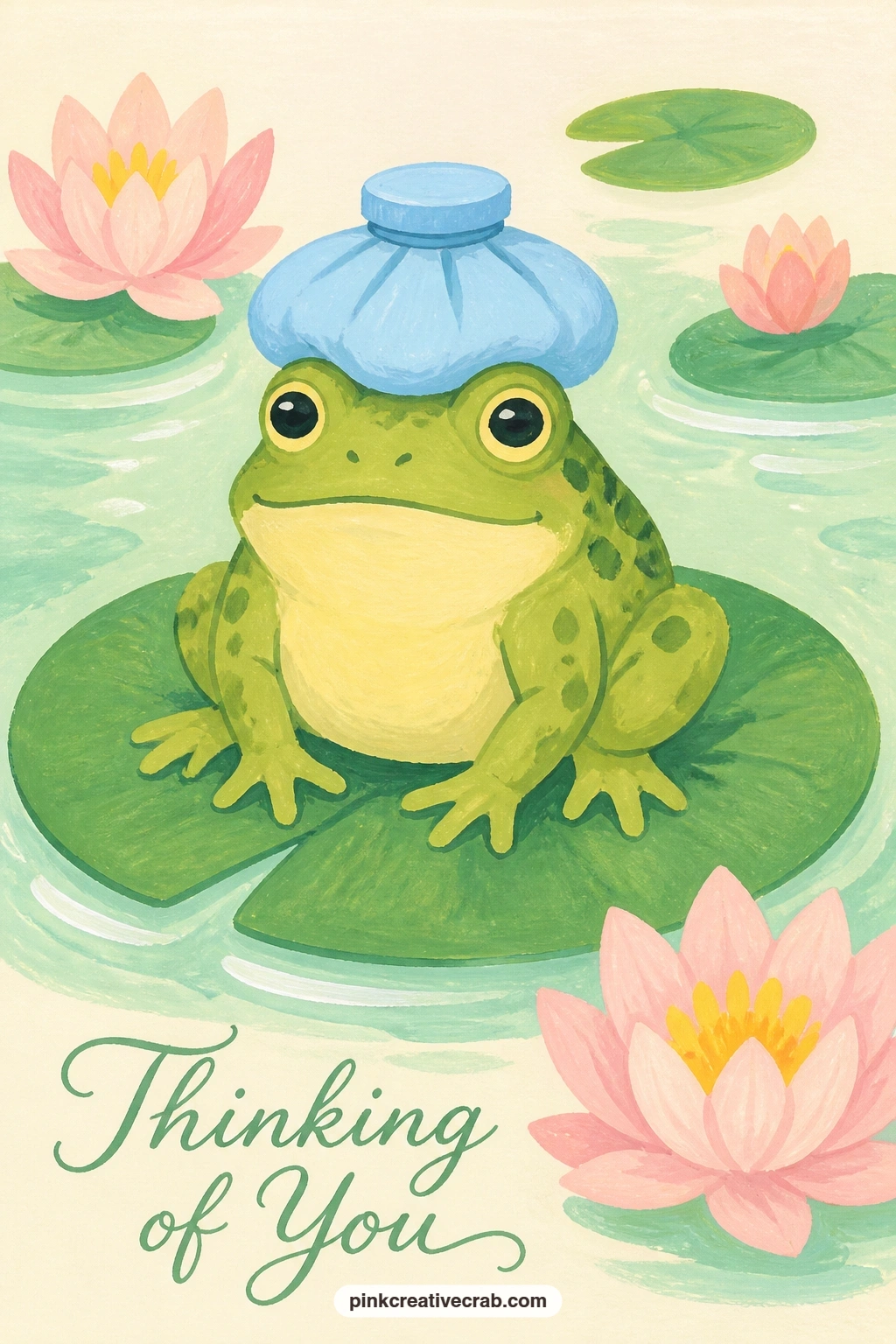
Palette: Soft Mint,Cream,Powder Pink,Butter Yellow
Settle into something soft and simple with a little lamb asleep beside a teddy bear, a small tray of toast waiting nearby. Paint the lamb’s fluffy body first with the same dabbed-wool technique from the sheep scene earlier, then the teddy tucked beside it, and the toast tray last as a flat rectangle with two simple toast triangles on top.
Quick version, ten minutes: flat fluffy lamb shape, one plain teddy silhouette, one toast triangle, nothing else. Forty-minute version: add a soft butter pat melting on the toast, a tiny jam jar beside the tray, and a gentle checked pattern on the teddy’s bow.
If the lamb and teddy start blending together into one fuzzy shape, separate them with a thin cream outline once both base colours have dried. Swap toast for a simple biscuit shape if triangles feel fussy at this scale.
Keep both the lamb and teddy’s eyes closed, which does more than anything else to sell a peaceful nap.
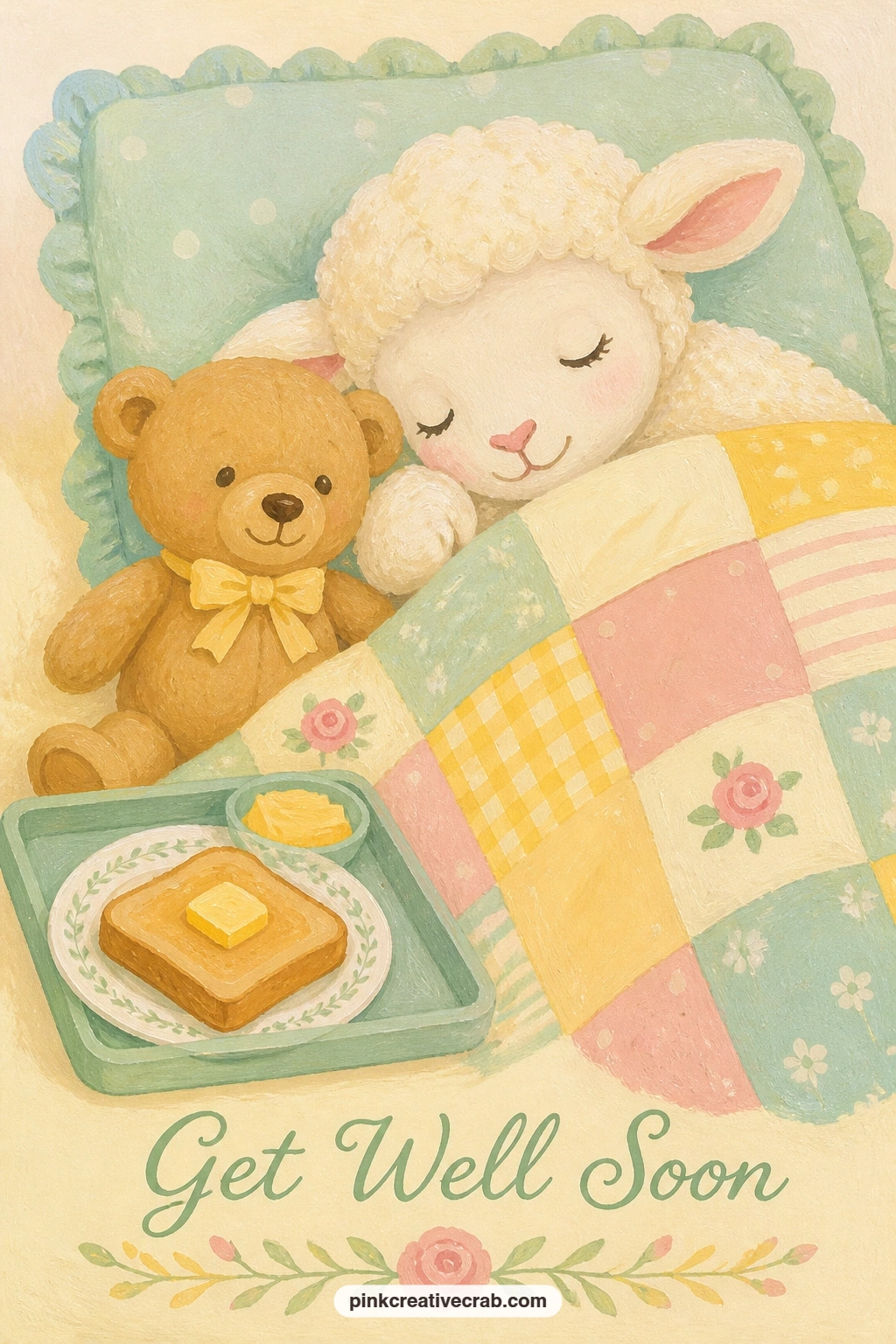
Palette: Cream,Butter Yellow,Powder Pink,Burnt Orange
Bring in a bit of quiet activity with two mice doing a jigsaw puzzle together on a bed tray, a nice change of pace from the sleeping scenes around it. Paint the tray first as a flat rectangle resting across the bed shape, then the puzzle pieces scattered on top as simple irregular shapes, and the two mice leaning over it last.
Once this version works, vary it next time by swapping the puzzle for a card game, a small board game, or a bowl of grapes between them, since the pose of two small friends leaning toward a shared tray is the real heart of the idea and carries easily to other small activities.
If the puzzle pieces look too uniform and grid-like, vary their shapes and tilt a few at slightly different angles before you paint the picture that appears across them. Swap a full picture puzzle for plain coloured shapes if painting a tiny image within the pieces feels like too much detail.
Keep the bed underneath simple and pale so the busier tray stays the focus of the page.
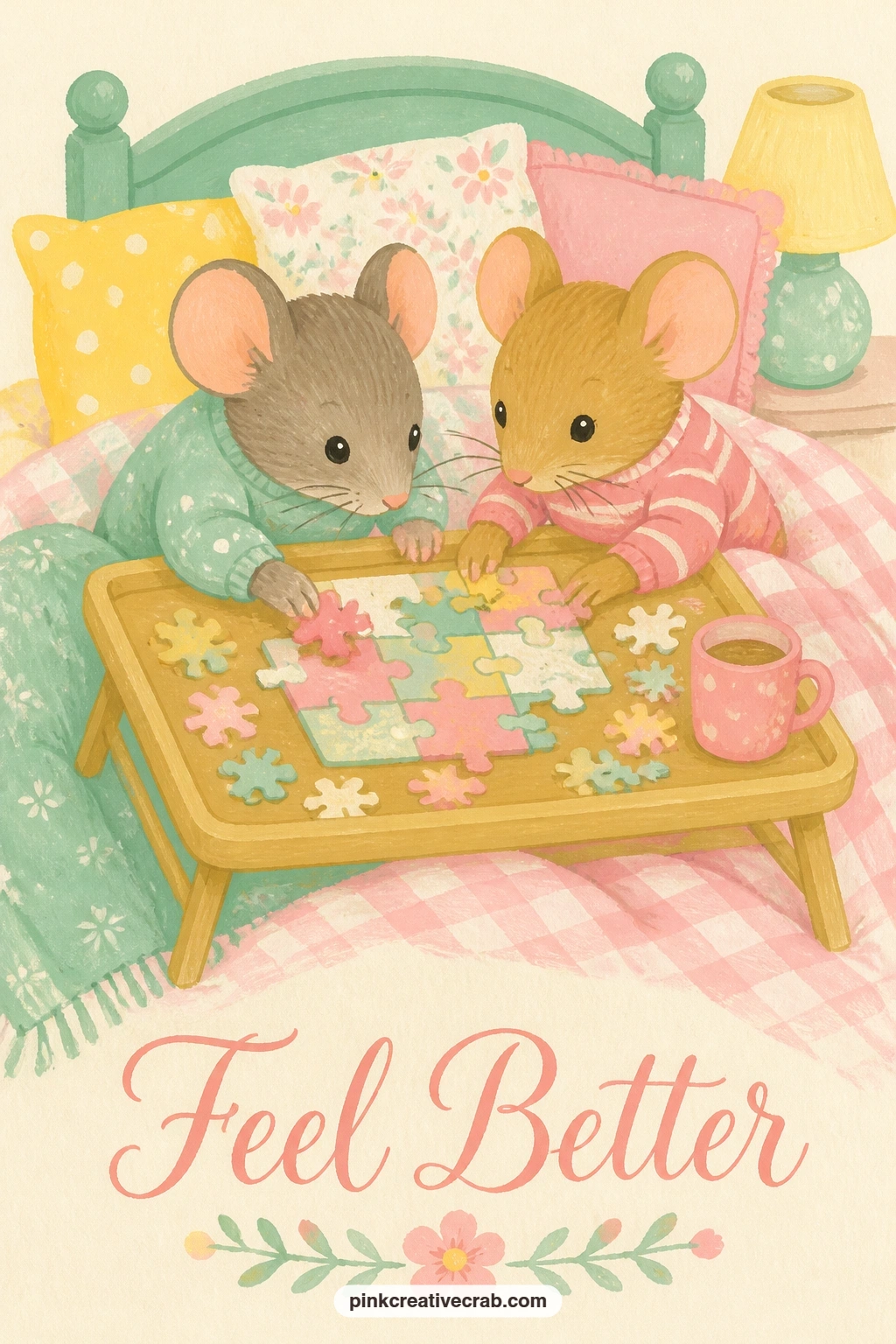
Palette: Butter Yellow,Soft Mint,Powder Pink,Cream
Return to a doorstep-visit feel with a hen bringing a fresh egg and a small posy of flowers to a sick friend. Paint the hen’s rounded body first with its wing shape layered on top, the egg held carefully in one wing or beak, then the little posy of flowers last, tied simply with a thin ribbon line.
Keep the egg and the posy similar in size to each other, since one noticeably larger than the other will pull the eye unevenly; hold them side by side in your pencil sketch before you paint either one. A real egg from the kitchen is a perfectly good reference for its gentle oval shape and soft shading.
If the hen’s feathers start looking like fish scales, break up the pattern by varying the size and spacing of each feather shape rather than repeating one identical mark across the whole body. Swap the posy for a single flower stem if a bundle feels like too much for the space.
Keep the ribbon around the posy a single simple colour so it does not compete with the flowers.
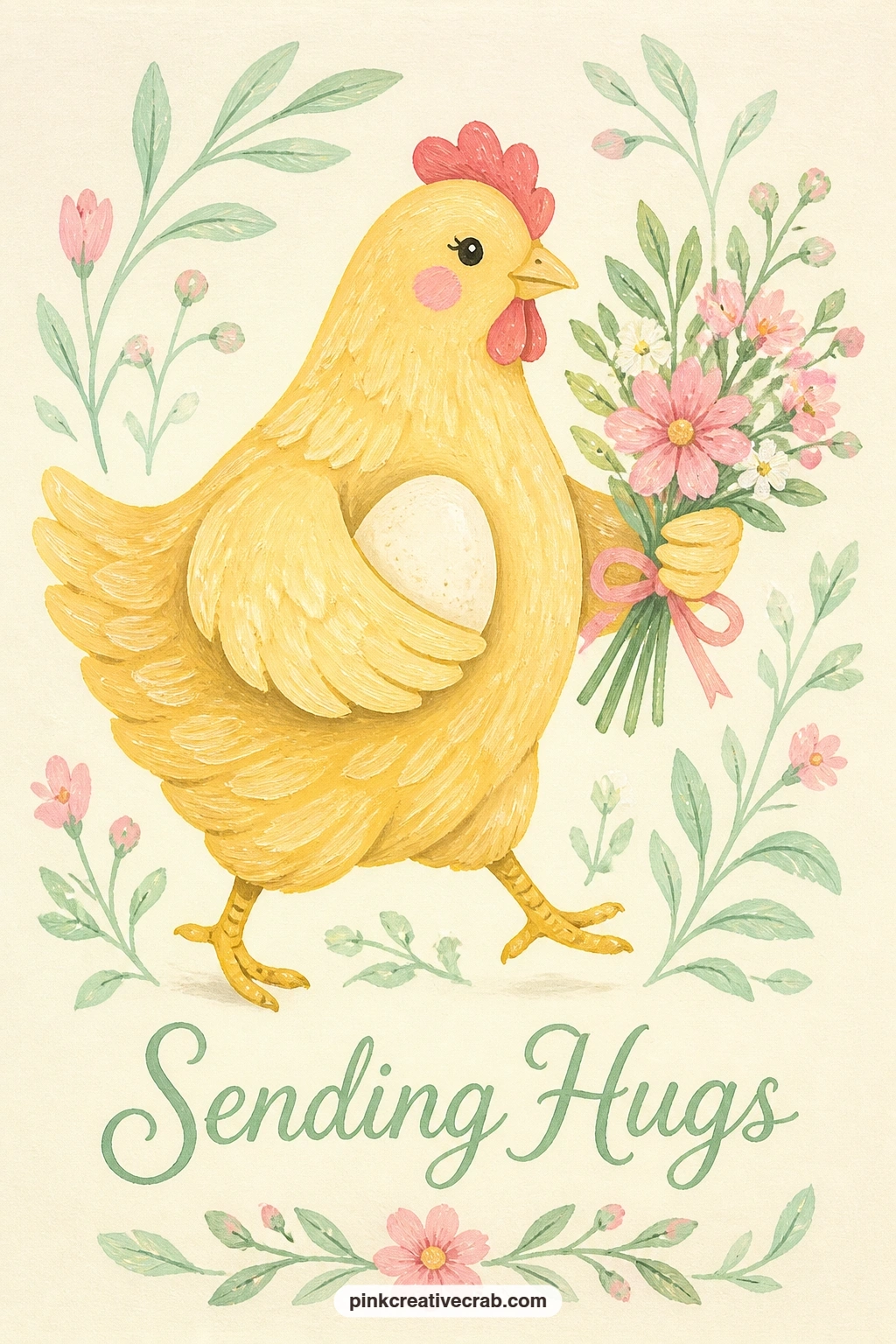
Palette: Butter Yellow,Powder Pink,Soft Mint,Cream
Bring in a touch of comedy again with a beagle wearing a cone collar, napping in a patch of sunny window light. Paint the window’s warm square of light on the floor first, then the beagle’s body curled inside it, and the cone collar shape wrapped around its neck last, painted slightly translucent against the light.
If this is your first time painting a translucent object like the cone, keep its base colour pale and add a very thin wash of the same colour over the beagle’s fur where the cone overlaps it, rather than a hard-edged separate shape, which reads as see-through without any complicated blending. Test this on scrap paper first if the paper you are using does not take thin washes evenly.
If the cone collar looks too stiff and papery, soften its edge where it meets the neck with a slightly damp brush before the paint fully dries. Swap the cone for a simple soft collar shape if the trumpet-like cone proves tricky to get right.
Keep the sunlight patch one flat warm colour so the napping dog stays the clear subject.
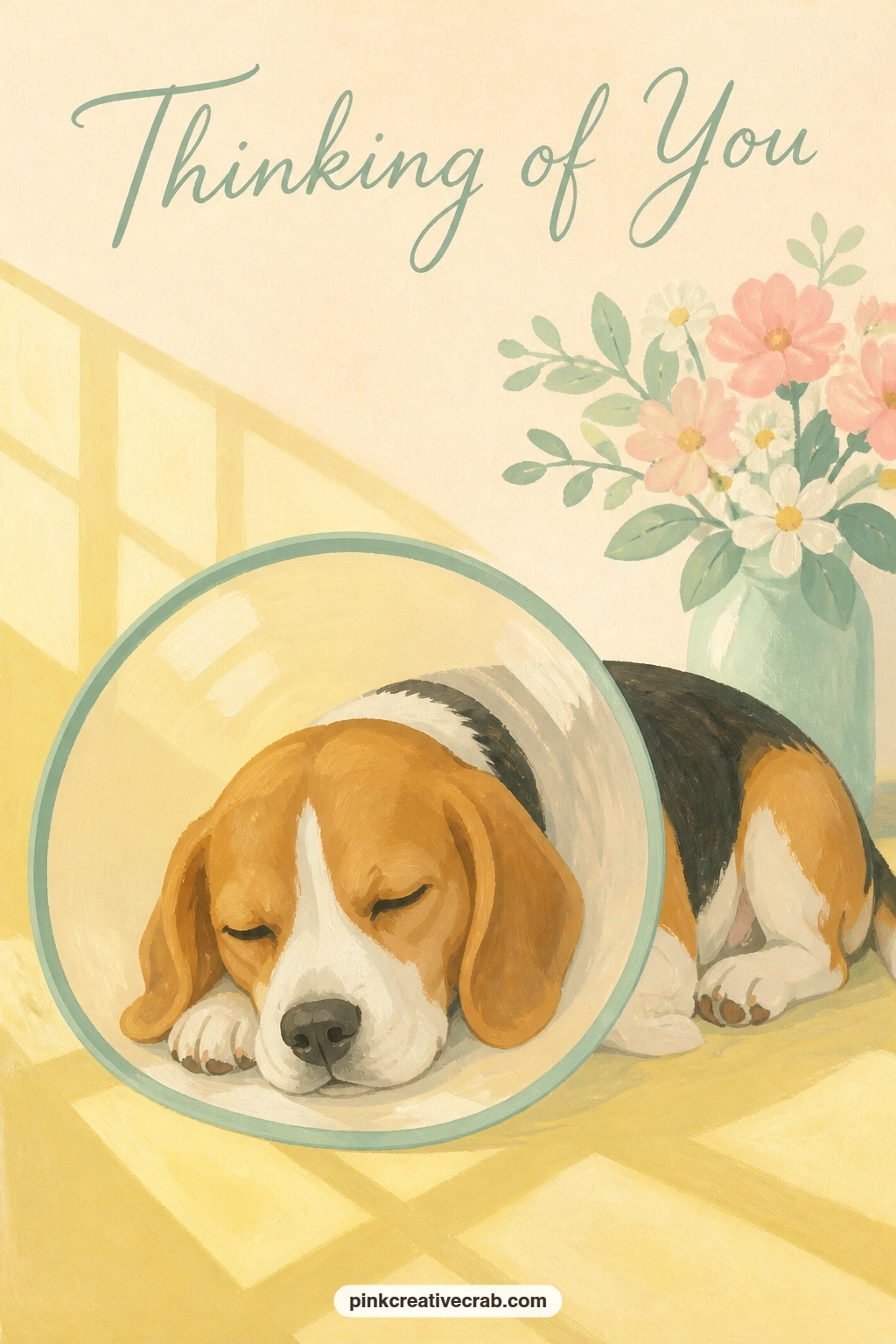
Palette: Butter Yellow,Warm Grey,Cream,Powder Pink
Shift gently into a human-and-animal pairing with a cat curled up on a sick girl’s feet under the duvet. Paint the duvet first as one large soft rounded shape covering most of the page, the girl’s face and shoulders peeking out at the top, then the cat curled into a comma shape on the raised bump of her feet at the bottom.
Getting the duvet’s bump right is mostly about one measuring trick: sketch the girl’s body as a simple lying-down oval first, mark where the feet naturally rise under the covers, then build the rounded duvet shape over that guide rather than guessing the bump freehand. This keeps the proportions readable even though most of the body is hidden.
If the duvet looks flat instead of fluffy, add one soft shadow line along each fold where the fabric dips, keeping the highlights on the raised parts pale and the dips slightly deeper in tone. Swap the duvet pattern for a plain solid colour if a print feels unnecessary at this stage.
Keep the girl’s expression calm and resting rather than unwell, since a peaceful face reads warmer on a card.
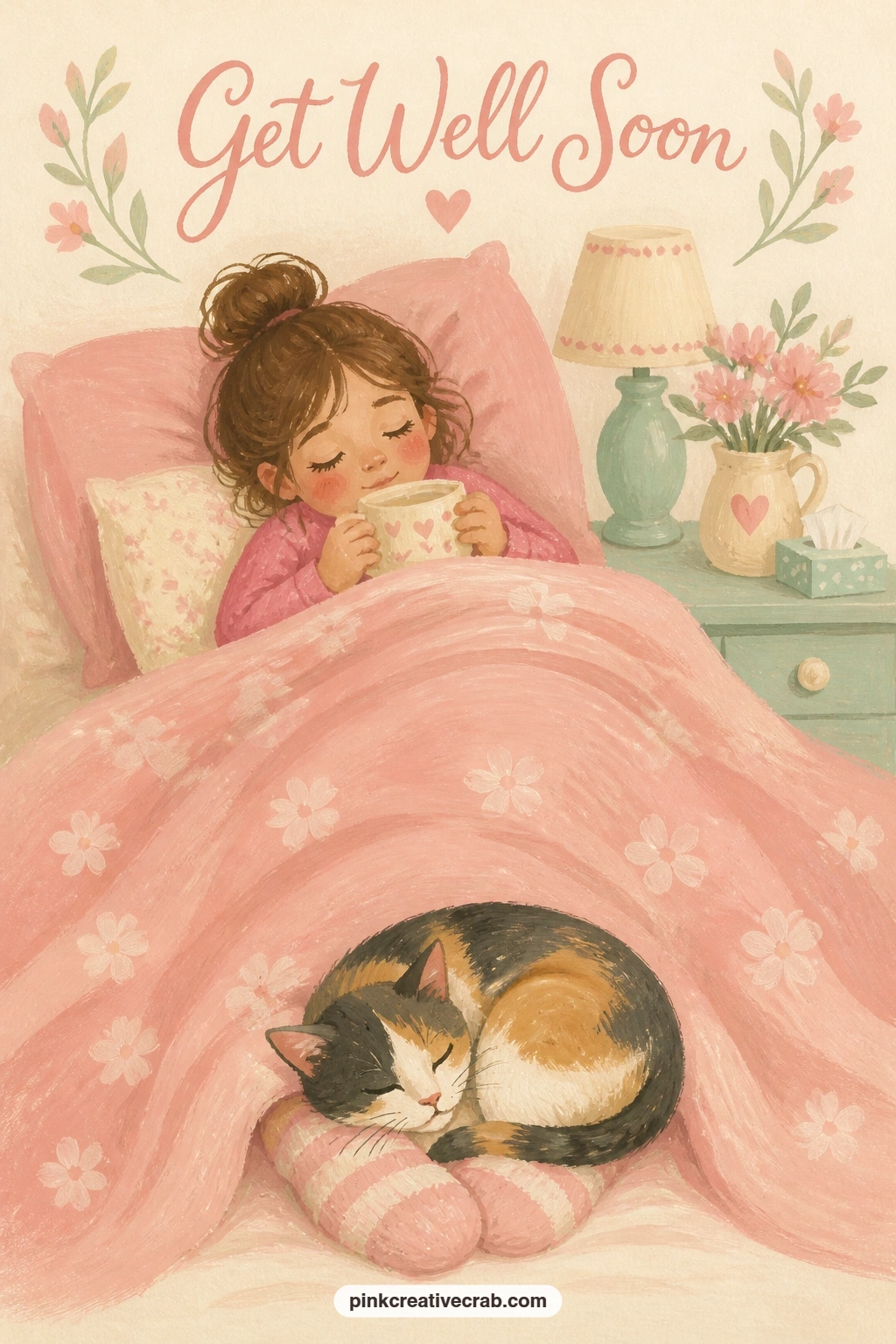
Palette: Powder Pink,Cream,Warm Grey,Soft Mint
Warm things back up with a koala wrapped in a blanket, a cup of cocoa held close beside a small fire. Paint the fire’s glow first as a soft warm patch behind the koala, then the blanket wrapped around its round body, and the cocoa cup last, a tiny curl of steam rising from the top.
Since the fire is the light source here, let it shape every other colour choice: the side of the koala facing the fire gets warmer, slightly orange-tinted highlights, while the far side stays in its normal grey, which gives the whole scene a believable glow without painting actual flames in detail. Keep the fire itself suggested as a soft warm shape rather than fully rendered.
If the blanket wrap looks flat against the round koala body, add one curved shadow line where the blanket overlaps itself to show the fold. Swap the fireside setting for a simple lamp glow if an open fire feels like too much background detail.
Keep the cocoa’s steam to one or two soft curved lines so it stays delicate rather than cloudy.
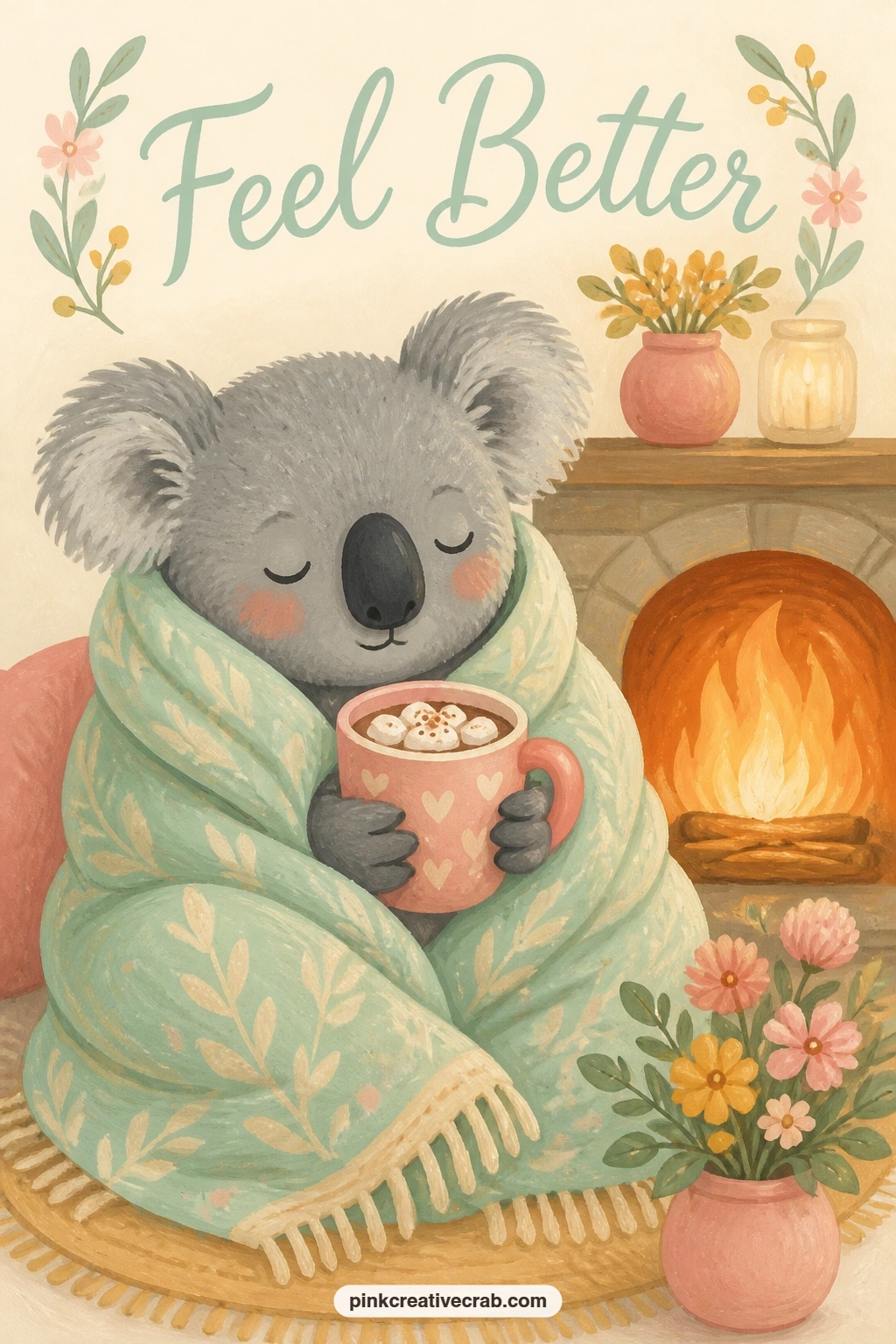
Palette: Warm Grey,Burnt Orange,Butter Yellow,Cream
Add a little playful relief with a piglet soaking its feet in a basin, a towel draped over its head. Paint the basin first as a simple rounded bowl shape with a flat wash of water colour inside it, then the piglet sitting behind it with its feet dipped in, and the towel draped over its head last as one soft folded shape.
If this is your first time painting a soaking scene like this, keep the water in the basin just slightly darker than the piglet’s skin tone so the two shapes stay distinct, and leave one small pale highlight on the water’s surface to suggest its shine without adding ripple detail. A real washing-up bowl is a fine stand-in reference for the basin’s proportions.
If the towel on the piglet’s head looks like it is floating rather than resting, add a soft shadow line right where the fabric meets the ears so it reads as draped weight rather than a hat balanced on top. Swap the basin for a simple bucket shape if a round bowl feels tricky.
Keep the piglet’s expression content and half-closed-eyed for the full relaxed effect.
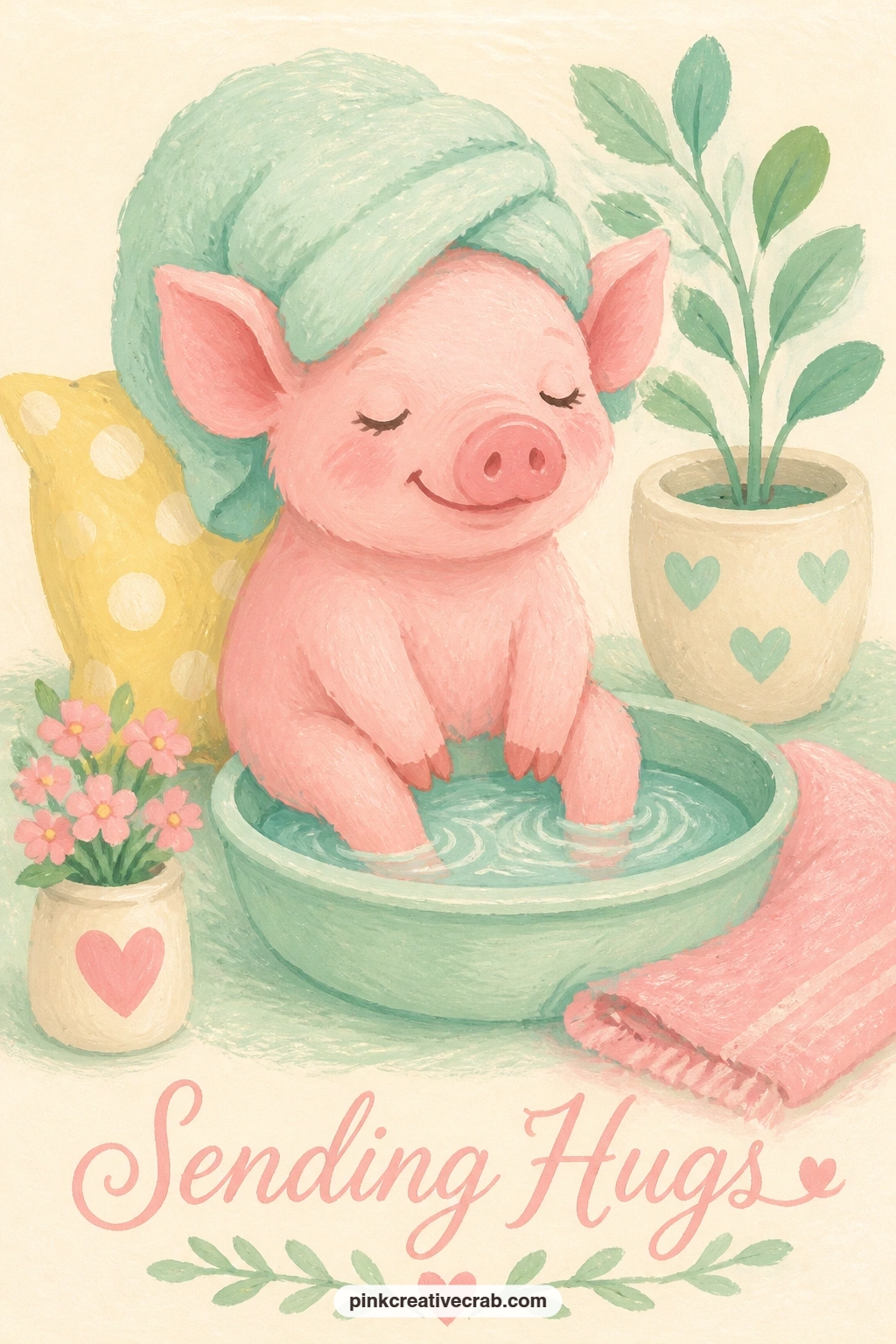
Palette: Powder Pink,Soft Mint,Cream,Warm Grey
Bring a quieter, more domestic moment next with a bear in a dressing gown, watering a row of tulips on a windowsill. Paint the windowsill first as a flat horizontal shape with the tulip pots lined along it, then the bear standing beside it in its dressing gown, the watering can tipped gently over the flowers last.
Once this scene works well, vary it next time by changing the season visible through the window behind the sill, a sunny garden, a rainy afternoon, even a light dusting of snow, since the bear-and-windowsill composition carries easily across very different moods just by changing what sits outside the glass.
If the tulip row looks too evenly spaced and mechanical, vary the height of each pot and tilt one or two stems slightly off upright before you paint. Swap the dressing gown’s pattern for a plain solid colour if stripes or spots feel like too much alongside the tulip row.
Keep the watering can’s stream to one or two thin curved lines rather than a full spray.
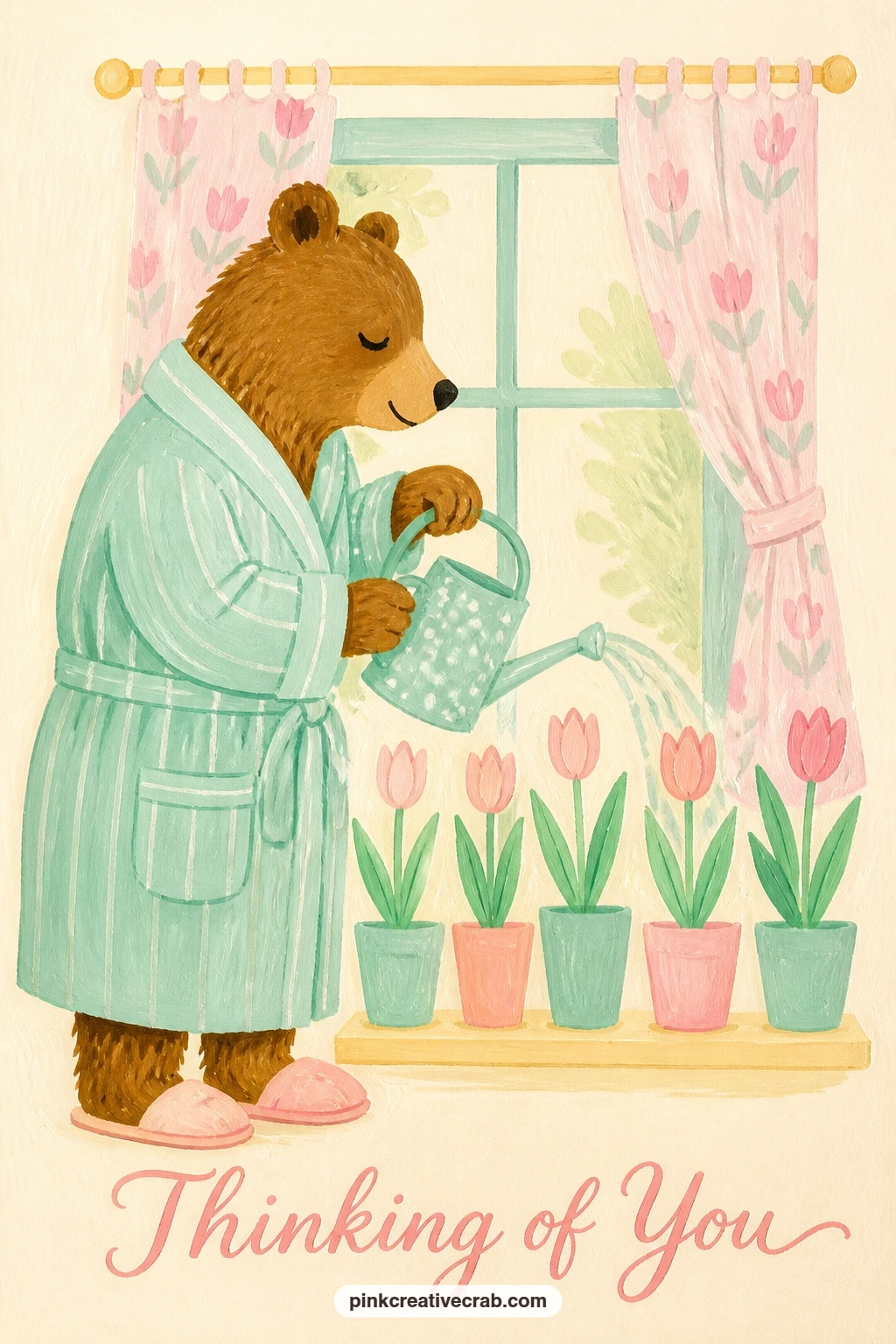
Palette: Soft Mint,Powder Pink,Butter Yellow,Cream
For more cozy animal scenes with a similar gentle mood, the bear painting ideas list has plenty of other poses to borrow from.
Bring in a touch of the outdoors with a hummingbird hovering at a window, bringing a tiny flower to the patient resting inside. Paint the window frame first as a simple rectangle, the patient’s shape suggested softly behind the glass, then the hummingbird outside it last, wings a quick blur of colour and the small flower held in its beak.
The hummingbird’s wings are the one tricky part of this scene, so keep them to two or three soft overlapping curved strokes painted quickly while the brush still has some looseness, rather than trying to paint each wing as a solid shape, since a blurred wing reads instantly as motion. Practice the stroke once or twice on scrap paper before committing to the final piece.
If the body looks stiff next to the blurred wings, round off its edges and keep it in one solid, simple colour so the contrast between still body and blurred wing reads clearly. Swap the hummingbird for any small garden bird if the hovering pose feels hard to pin down.
Keep the window glass a very pale, almost cream tint so it does not compete with the bird outside it.
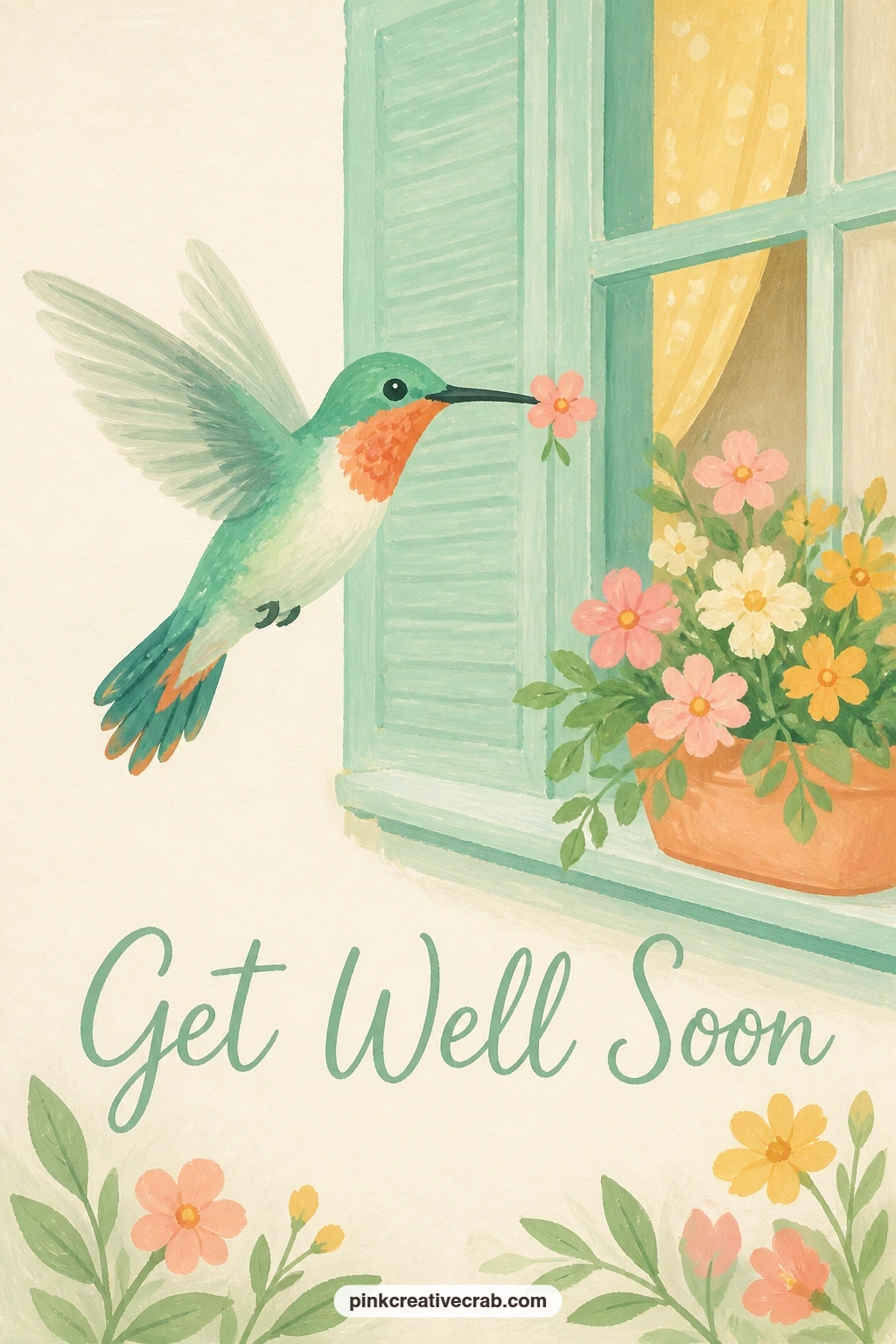
Palette: Soft Mint,Burnt Orange,Powder Pink,Cream
If hovering birds interest you beyond this one card, the hummingbird painting ideas list has more poses and garden settings to try.
Keep the light, helpful tone going with a dachshund carrying a pair of fluffy slippers to a friend resting on the sofa. Paint the sofa first as a simple flat shape with the resting friend suggested softly on it, then the long dachshund body trotting toward it, the slippers held in its mouth last.
The dachshund’s long body is the thing to get right here, so compare its length to its own height before you paint: a good cozy proportion sits around three times as long as it is tall at the shoulder, which keeps it looking endearing rather than oddly stretched. Sketch this ratio lightly in pencil and check it before moving to paint.
If the slippers in its mouth look stiff and flat, round every corner of the slipper shape and add one small shadow where they overlap the dog’s muzzle to show they have some weight. Swap slippers for a small wrapped gift box if that reads easier to shape at this size.
Keep the dachshund’s legs short and simple, two or three visible at most, so the pose stays clean rather than tangled.
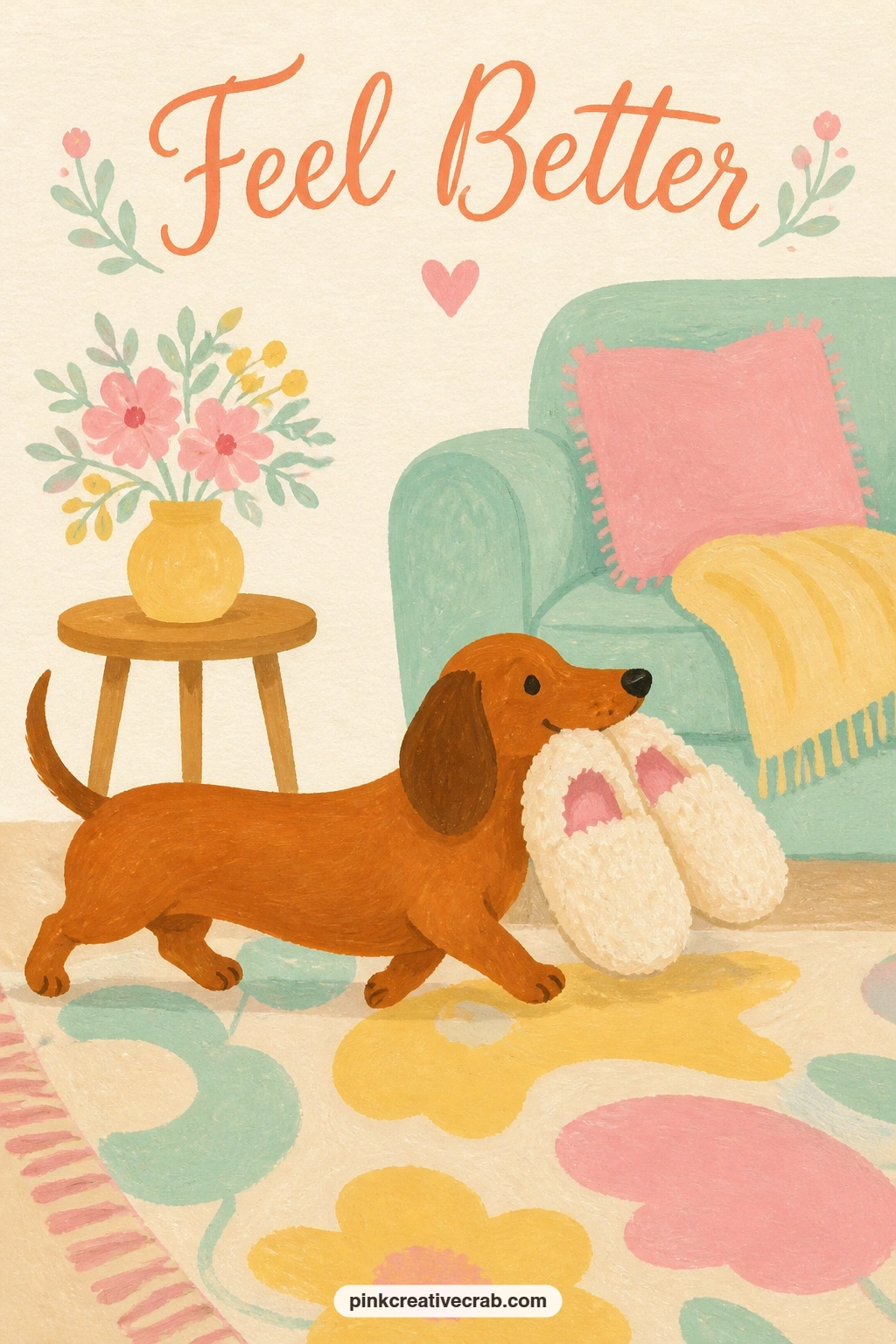
Palette: Burnt Orange,Cream,Powder Pink,Soft Mint
Step out into open grass for a deer bringing a bundle of wildflowers to a fawn resting in the meadow. Paint the ground first as a simple flat band of soft green or cream, the fawn curled into it, then the standing deer last, the bundle of wildflowers held gently at its mouth.
Keep the wildflower bundle to just three or four distinct flower shapes in different simple forms, a few small ovals, one or two tiny star shapes, rather than a dense wild tangle, since a card-front scene like this needs the bouquet to read clearly from a glance rather than reward close study. Group them tightly at the base and let only the very tips spread apart.
If the fawn’s spots make the body look overly busy, limit them to a handful of soft rounded dots along the back only, not scattered across the whole body. Swap the meadow ground for a simple garden lawn shape if a wild grassy texture feels too detailed to paint quickly.
Keep both deer figures facing gently toward each other to hold the story together.
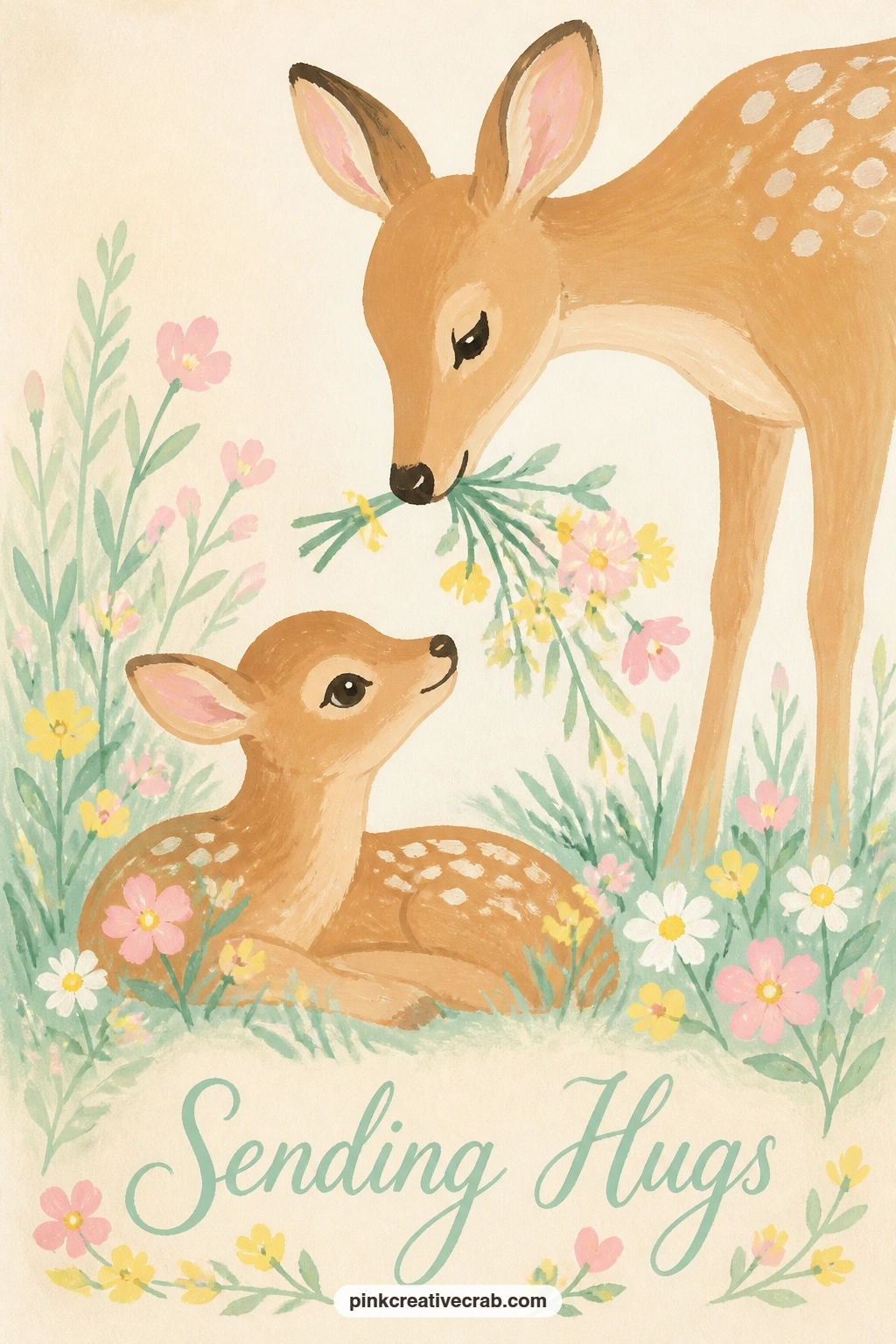
Palette: Soft Mint,Powder Pink,Butter Yellow,Cream
For more gentle meadow scenes with deer and fawns, the deer painting ideas list is worth a look for extra poses and settings.
Bring the quiet, homely feeling back with a goose knitting a pair of socks beside a sleeping gosling. Paint the gosling first as a small soft curled puff resting nearby, then the goose sitting beside it, the knitting needles and half-finished sock shape held in its wings last.
If this is your first time painting knitting needles and yarn, keep the needles as two simple straight lines crossing at an angle and the sock as one soft striped shape rather than trying to render individual stitches, which would be far too fine a detail for a card-front gouache piece. A loosely rolled ball of yarn beside the goose, painted as one solid coloured circle with a few thin curved lines on top, finishes the idea quickly.
If the goose’s wing holding the needles looks awkward, simplify the wing to one rounded shape wrapped gently around the needles rather than trying to show individual feathers gripping them. Swap socks for a scarf shape if that silhouette feels easier to read at this size.
Keep the gosling tucked close against the goose’s body for warmth in the composition as well as the story.
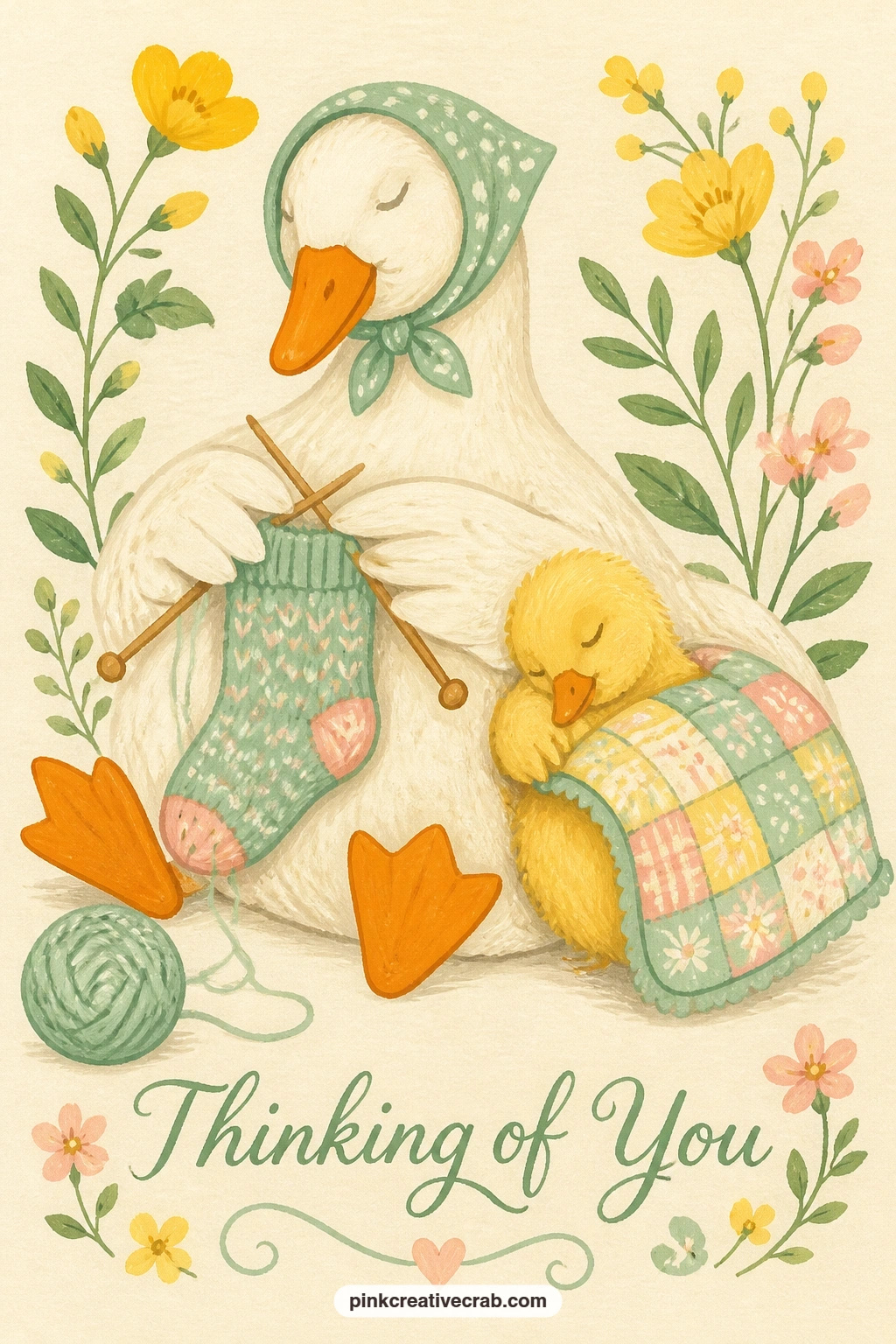
Palette: Butter Yellow,Soft Mint,Powder Pink,Cream
Close the set on something sweet and small with a hamster asleep in a teacup bed, a tiny bunch of balloons tied beside it. Paint the teacup first as a simple rounded shape with a handle, the hamster curled asleep inside it, then the tiny balloon bunch last, three or four small round shapes on thin curved strings.
Since this is the last and smallest scene in the set, it is worth varying it once this version works: try a thimble instead of a teacup, or swap the balloons for a tiny flag or a single candle shape, since the resting-creature-in-a-small-vessel idea is flexible and makes a nice simple closing image for almost any get well card.
If the balloon strings look stiff and ruler-straight, curve each one very slightly and at a slightly different angle so the bunch reads as light and floaty rather than tied to a post. Swap the teacup for a small basket shape if a rounded china cup feels tricky to get right.
Keep the whole scene small and centred on the page, since the charm here is in how tiny and complete it looks.
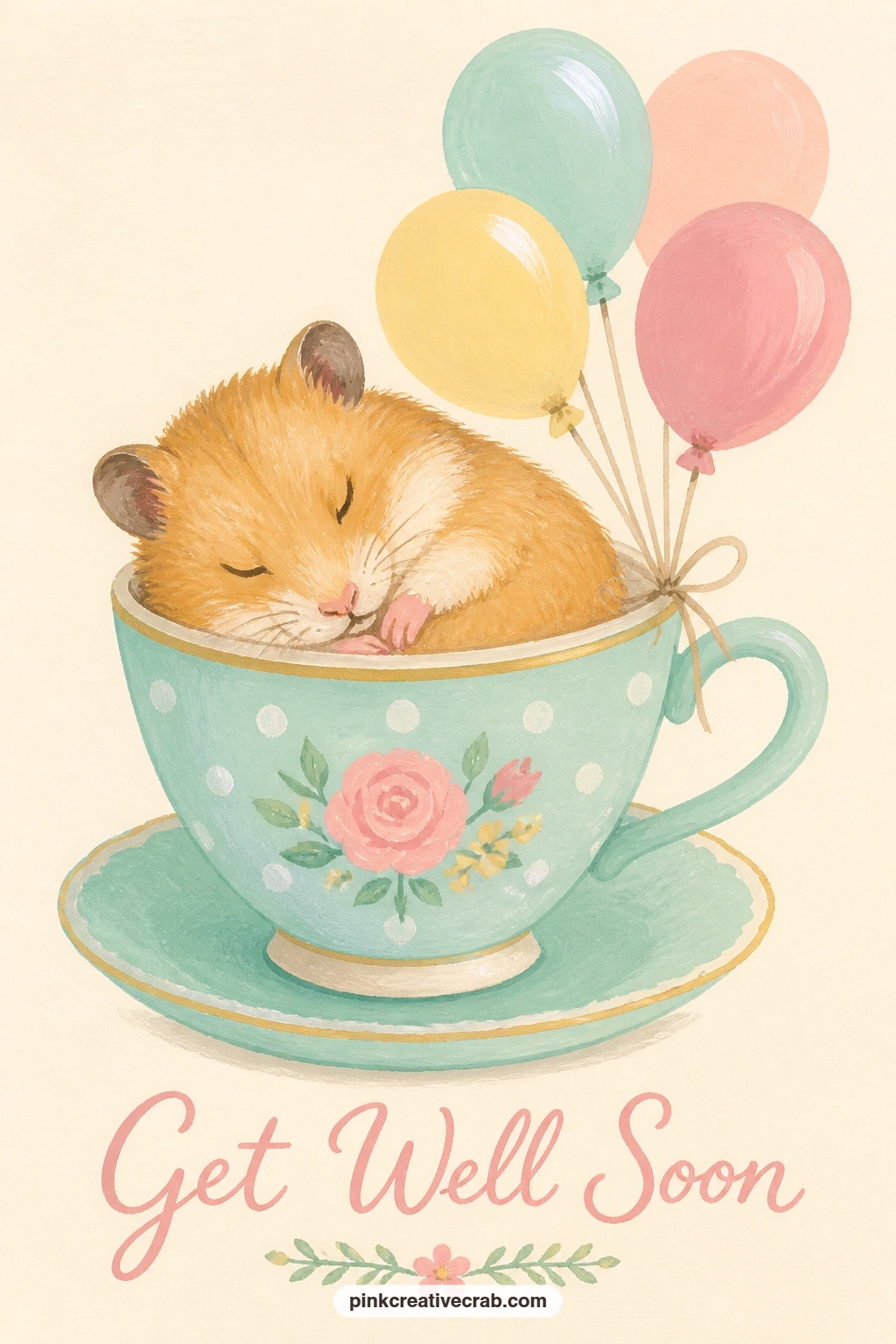
Palette: Powder Pink,Soft Mint,Butter Yellow,Cream
What to Do Next
Pick one animal from this list, mix your mint, butter yellow and powder pink before you start, and paint the whole scene in one sitting on a page no bigger than five by seven inches. Once the card dries flat, trim it to size, fold a plain cream base to mount it on, and it is ready to send.
Frequently Asked Questions
What gouache colours work best for get well soon card ideas like these?
A small palette of soft mint, butter yellow, powder pink and cream covers almost every scene here. Keep each colour flat and matte, mix only what you need for one session, and add one deeper accent like warm grey or burnt orange for contrast.
Can I paint these get well soon card ideas on regular paper?
Gouache works fine on any paper heavy enough to resist warping, around 300gsm or higher is ideal. Mixed media or watercolor paper both hold flat colour well, though a smooth hot press surface gives the crispest edges for this style.
How do I get the flat, crisp-edged look shown in these ideas?
Load the brush with enough paint to cover fully in one or two strokes and let each shape dry before painting the one beside it. Thin, watery gouache dries patchy, while a slightly thicker, creamy consistency gives solid, even colour.
How long does one of these card paintings usually take?
Most of these scenes finish in thirty to forty minutes once the palette is mixed and ready. Simpler single-animal scenes can be done in ten to fifteen minutes if you skip extra textures and keep shapes flat.
What size should I paint these if they are going on an actual card?
A square or portrait rectangle around five by seven inches suits most card fronts and leaves room to trim to size. Painting slightly larger than the final card gives margin for cropping without losing any part of the scene.
Have any thoughts?
Share your reaction or leave a quick response — we’d love to hear what you think!
-
 0
-
0
-
0
-
0
-
0
-
0


