Table of Contents
A wildflower junk journal gathers up every roadside bloom you have ever stopped the car for: poppies leaning in the wind, cornflowers caught at the edge of a field, Queen Anne’s lace nodding along a fence line. This set of 33 pages gives you 23 full scenes to glue in as journal pages, 5 seamless background papers for covers and pockets, and 5 lined writing pages for the notes that belong next to a pressed flower.
Print the whole kit on matte cardstock heavy enough to take glue without curling, using your printer’s best or photo quality setting so the fine linework stays crisp. Trim to your journal’s page size before you start gluing, and keep a bone folder nearby for crisp folds on any page you tuck or fold.
Using these images: free for personal projects such as printing, coloring, cards, journals and gifts. Handmade items that include them may be sold up to 30 pieces per design. More than that is commercial use and is not permitted, and neither is selling or sharing the images themselves or passing them off as your own. Please ask before any other use.
Fields and Footpaths
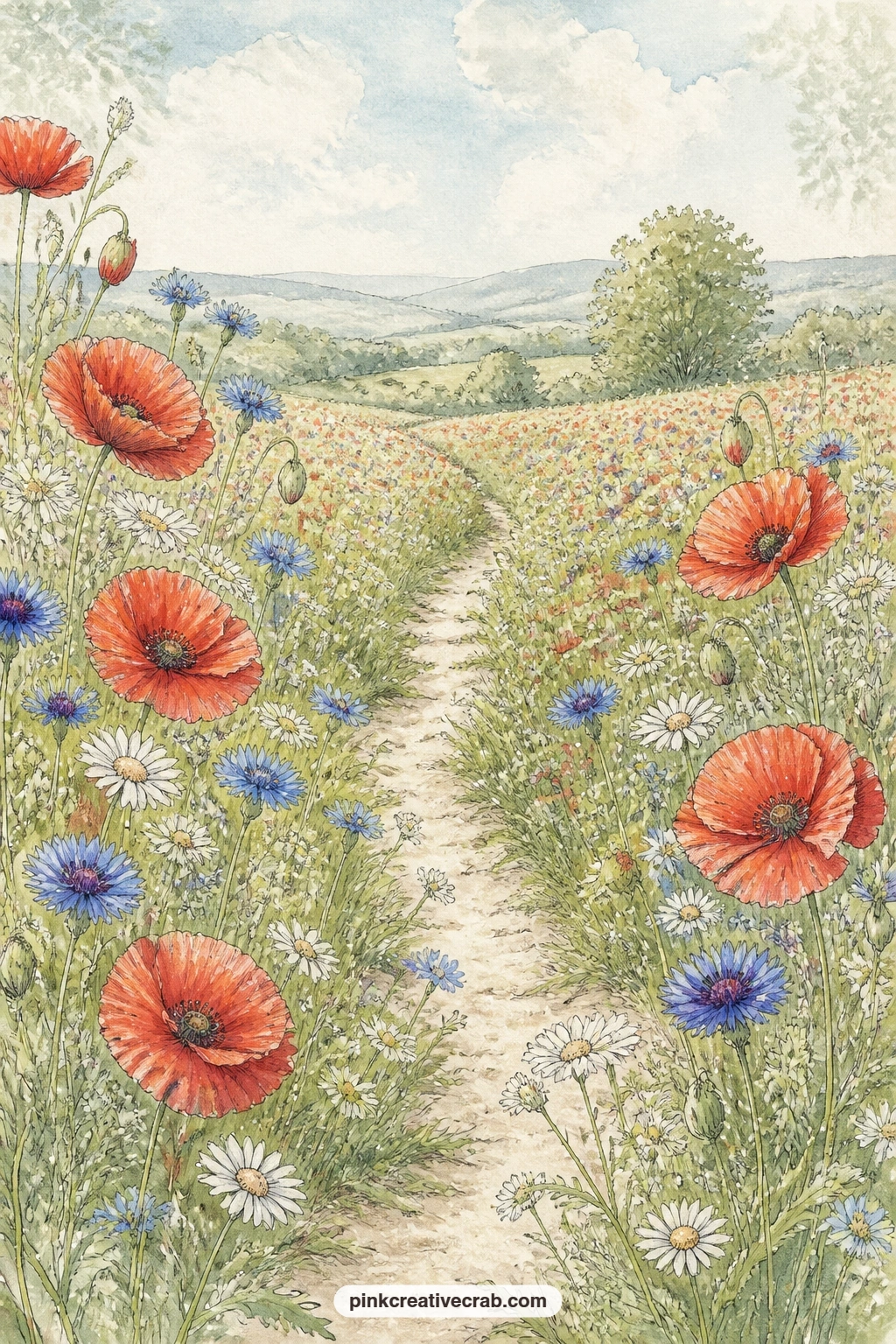
Open the journal with a wide meadow of poppies, cornflowers and daisies parting around a winding footpath that leads the eye straight into the page.
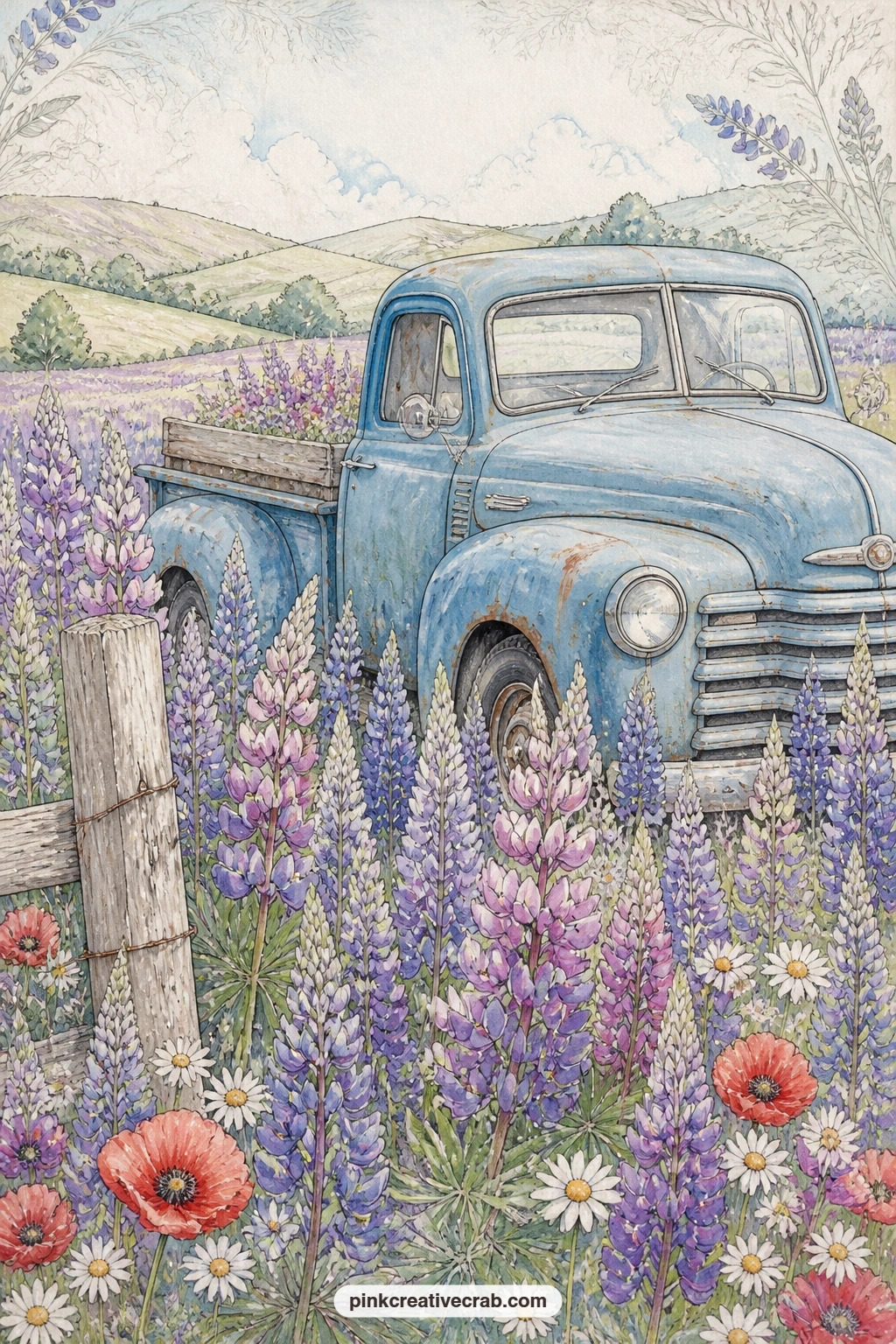
Sitting at the far end of this kit’s fields, an old blue truck rests nose-first in a sweep of lupines, its paint a little worn, its wheels half hidden in bloom.
Tuck a ticket stub or a scrap of a road map under the back bumper for a trip you actually took, or leave it bare and let the flowers carry the page on their own.
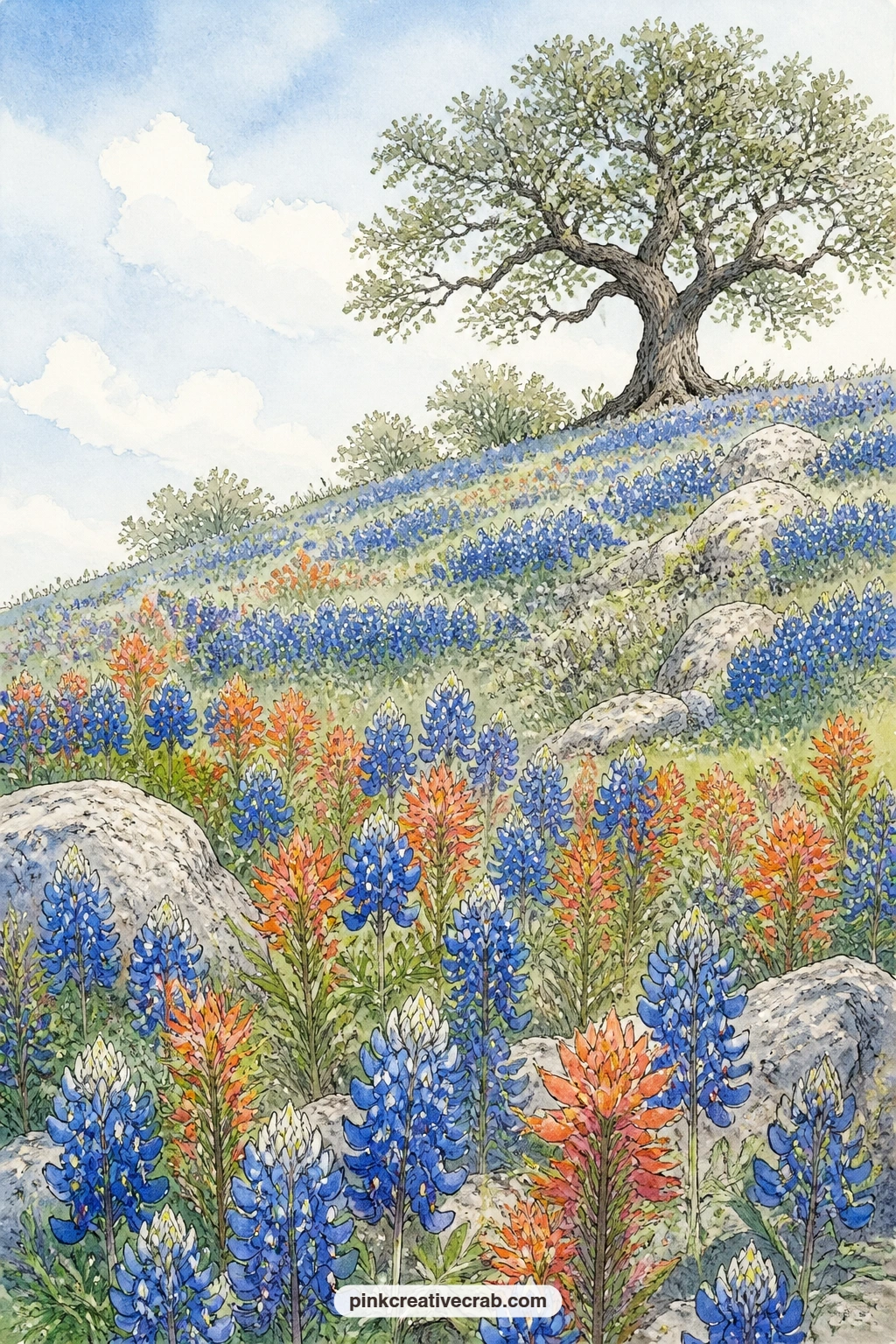
An old oak anchors a gentle hillside where bluebonnets and orange paintbrush blooms spread out in drifts under a wide painted sky.
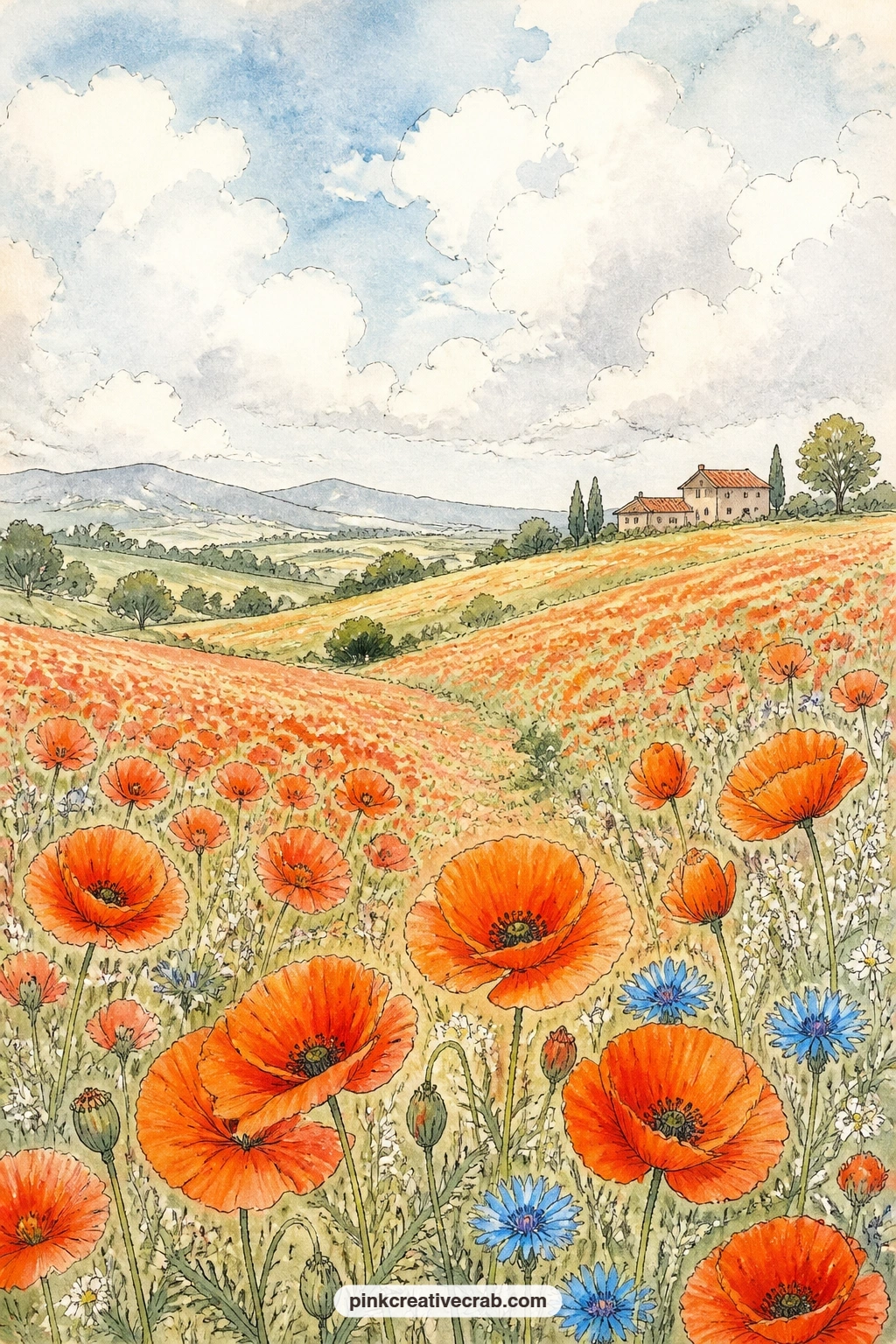
Closing this section, an orange poppy field rolls away toward distant hills and a small farmhouse, the kind of view worth pulling the car over for.
Pair this page with the ditsy wildflower background further on in the set, laid behind it as a facing page, so the small print echoes the big field without competing with it.
Jars, Baskets and Bouquets
A mason jar bouquet of mixed wildflowers sits balanced on a weathered farmhouse porch rail, with a watering can and a folded garden glove nearby.
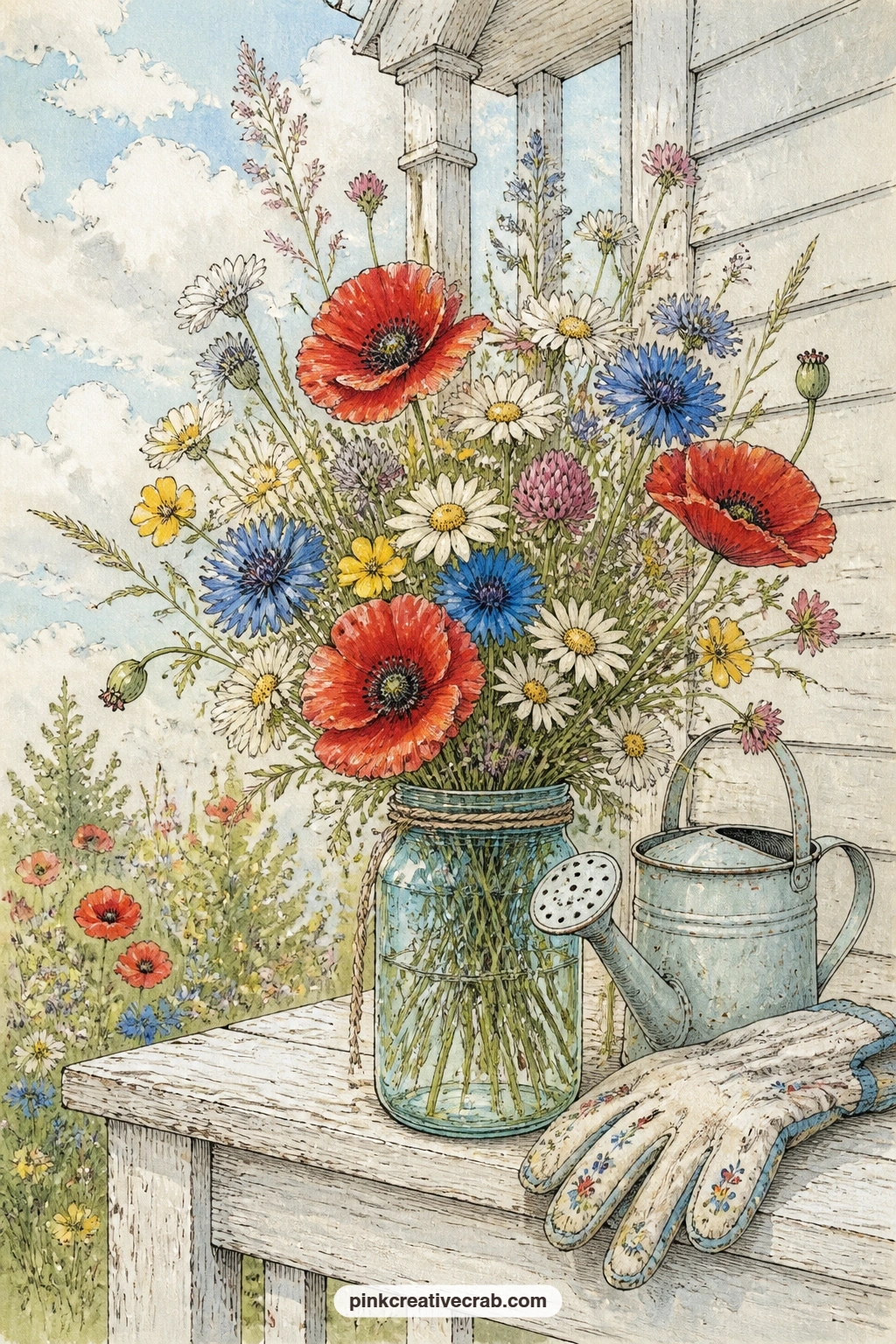
Place a short line here about the day this page was made: where the flowers came from, who was along, what the weather was doing.
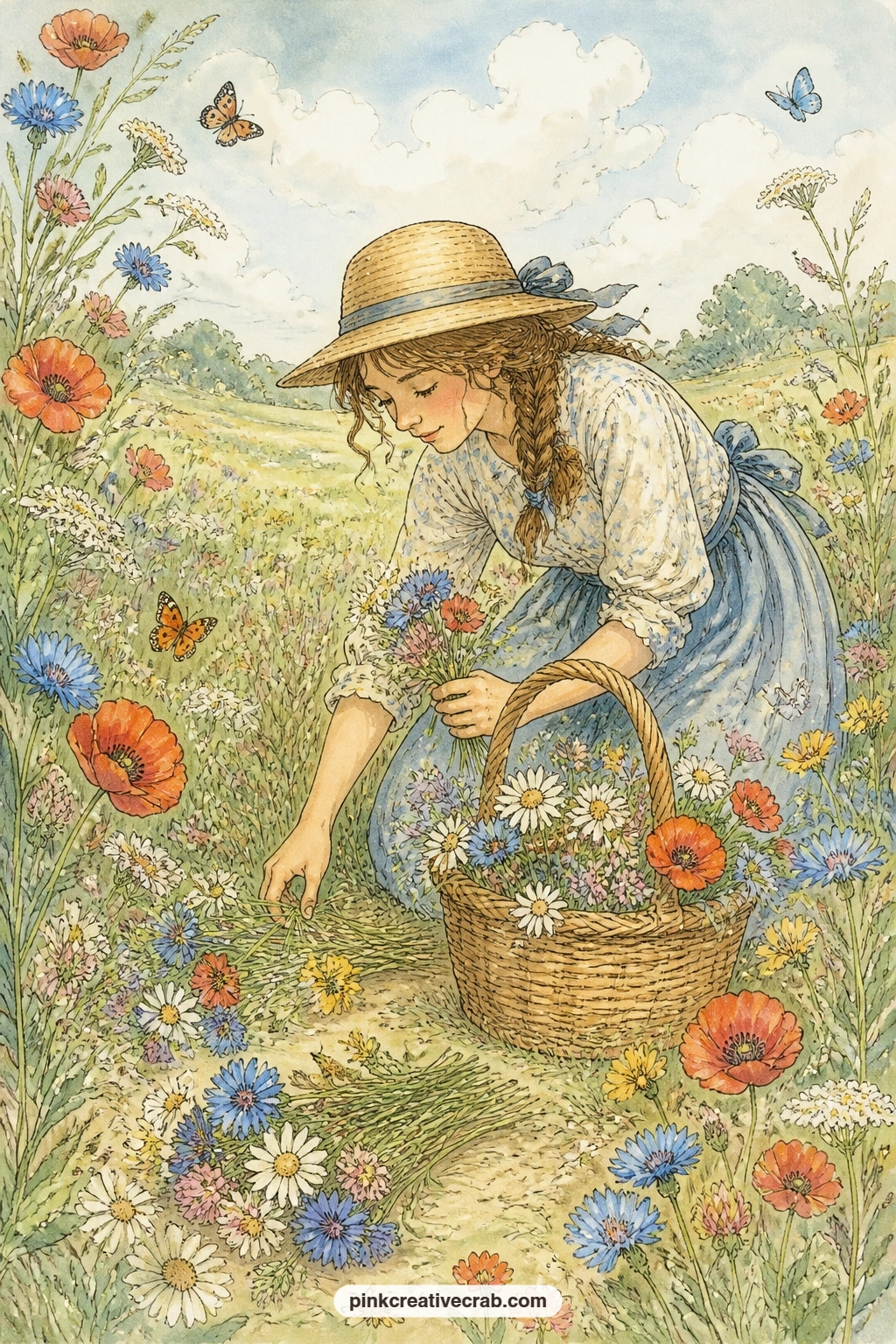
A girl in a straw hat moves through tall grass gathering wildflowers into a woven basket, with a few loose stems dropped at her feet and butterflies drifting past.
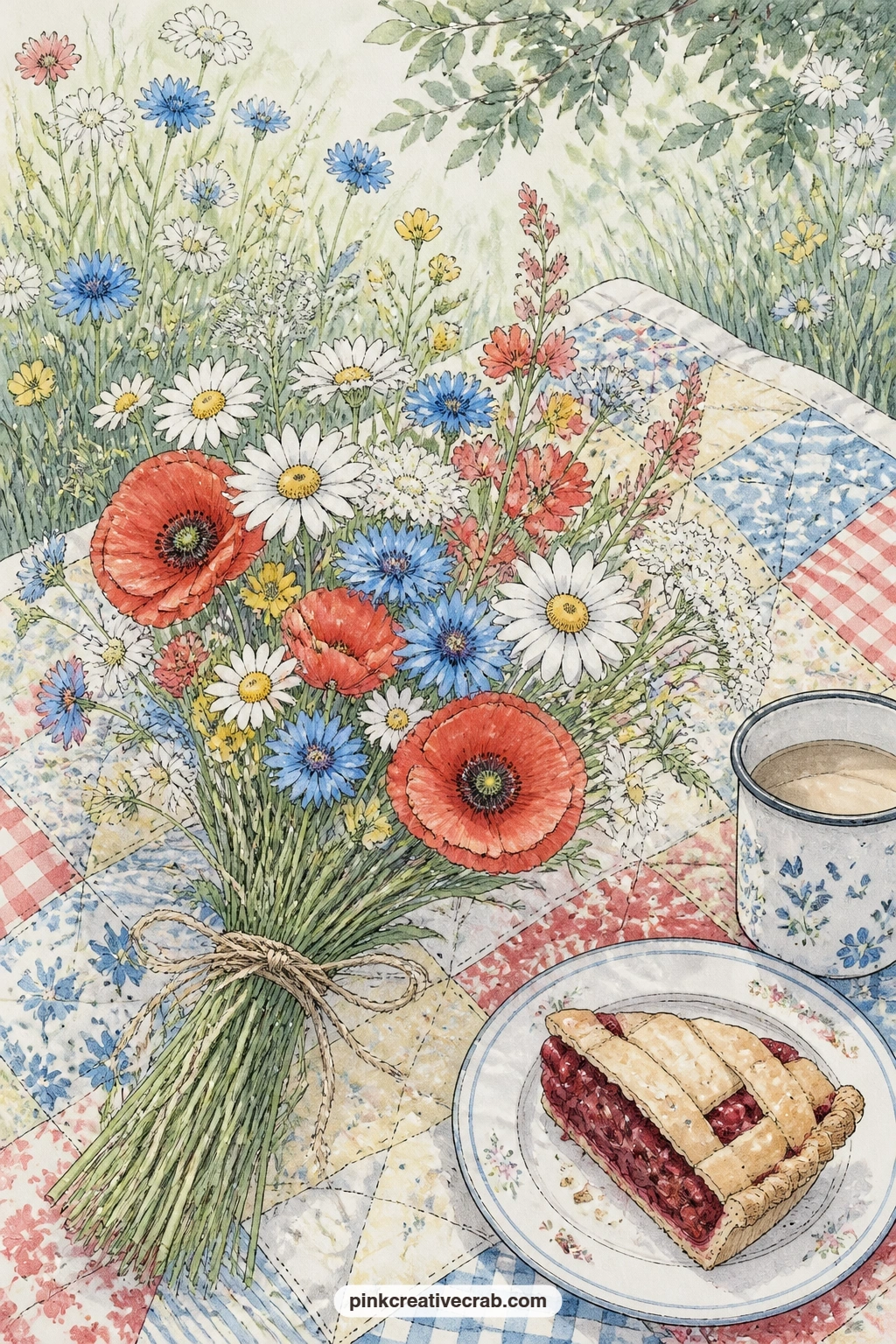
A wildflower bouquet tied with plain twine rests on a patchwork picnic quilt, a slice of pie and a tin cup set just beside it.
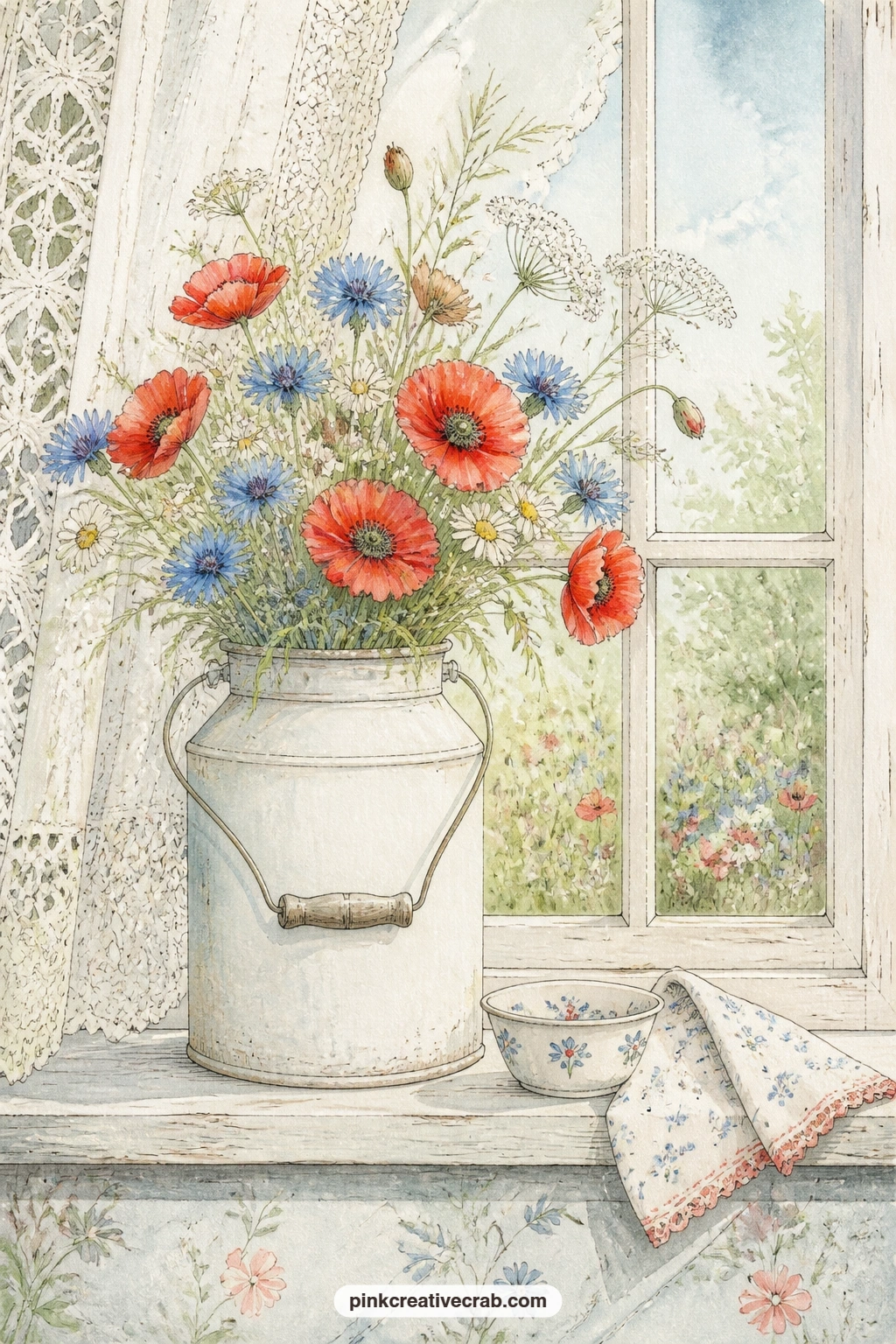
A tin milk jug of wildflowers stands on a windowsill edged with lace, the glass beyond it painted in a soft wash of afternoon light.
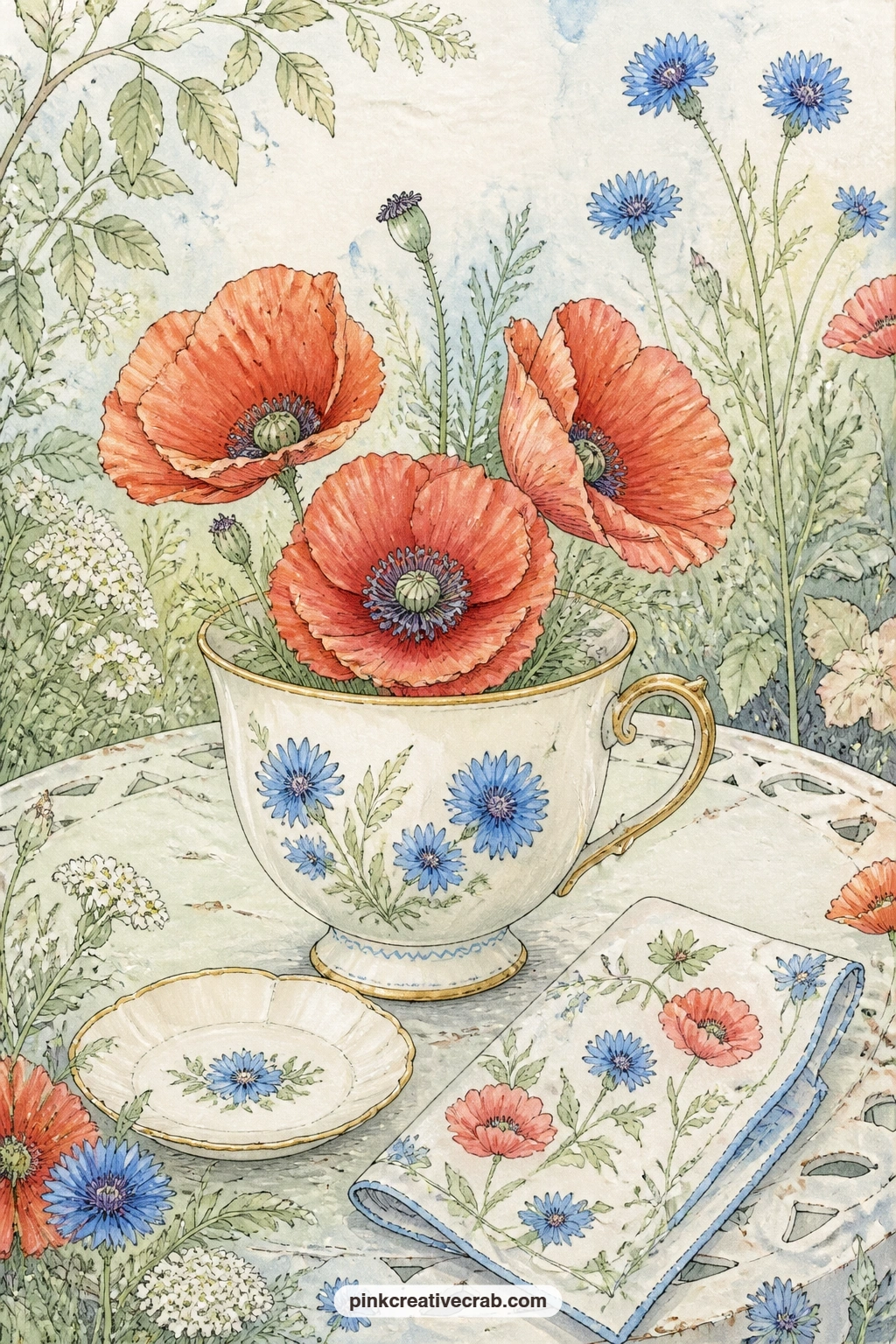
The five-minute version of this page needs only a vintage teacup, three or four poppies tucked inside it, and a garden table painted loosely behind.
Small Creatures of the Meadow
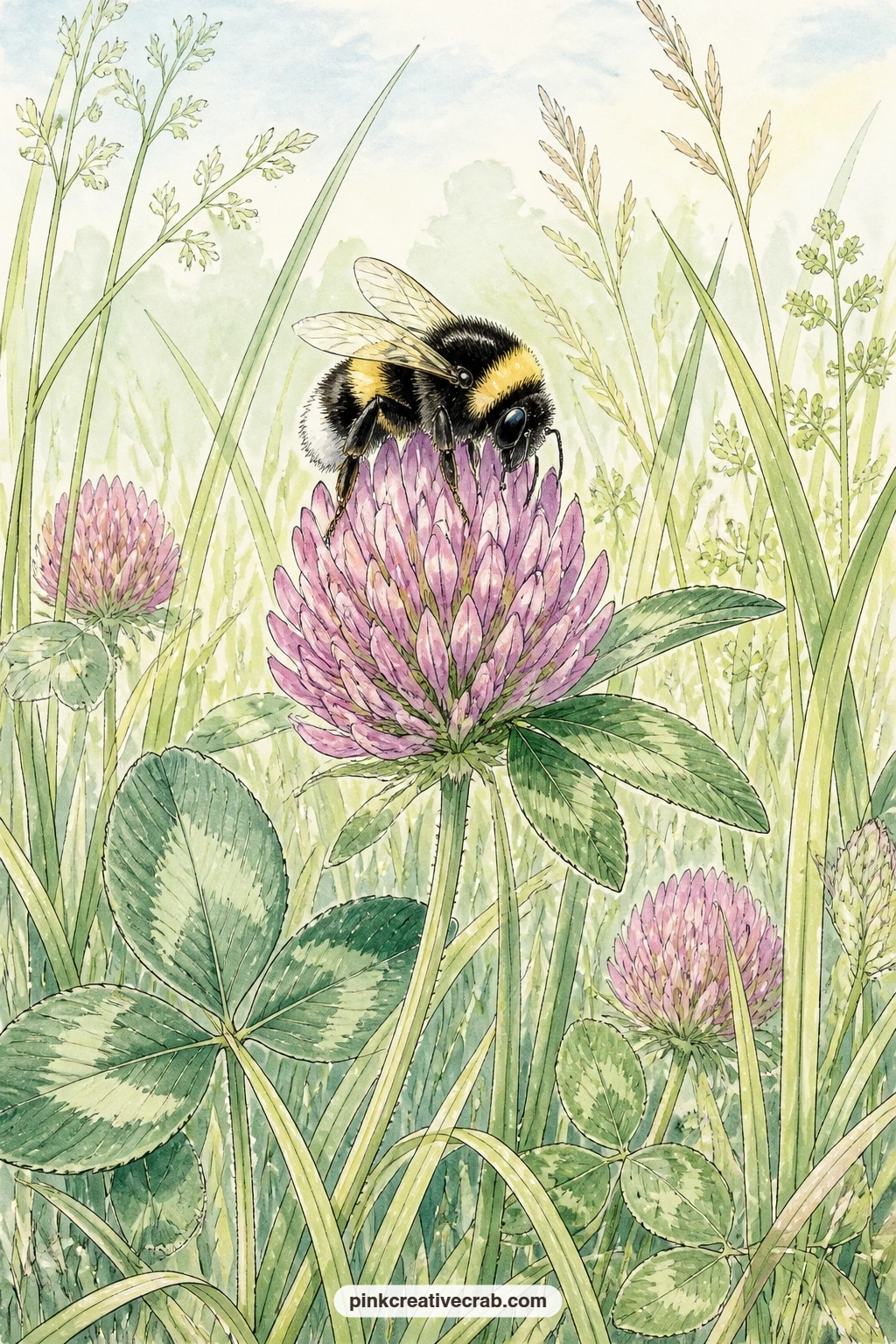
A bumblebee rests on a purple clover blossom deep in tall grass, caught mid-visit with pollen already dusted on its legs.
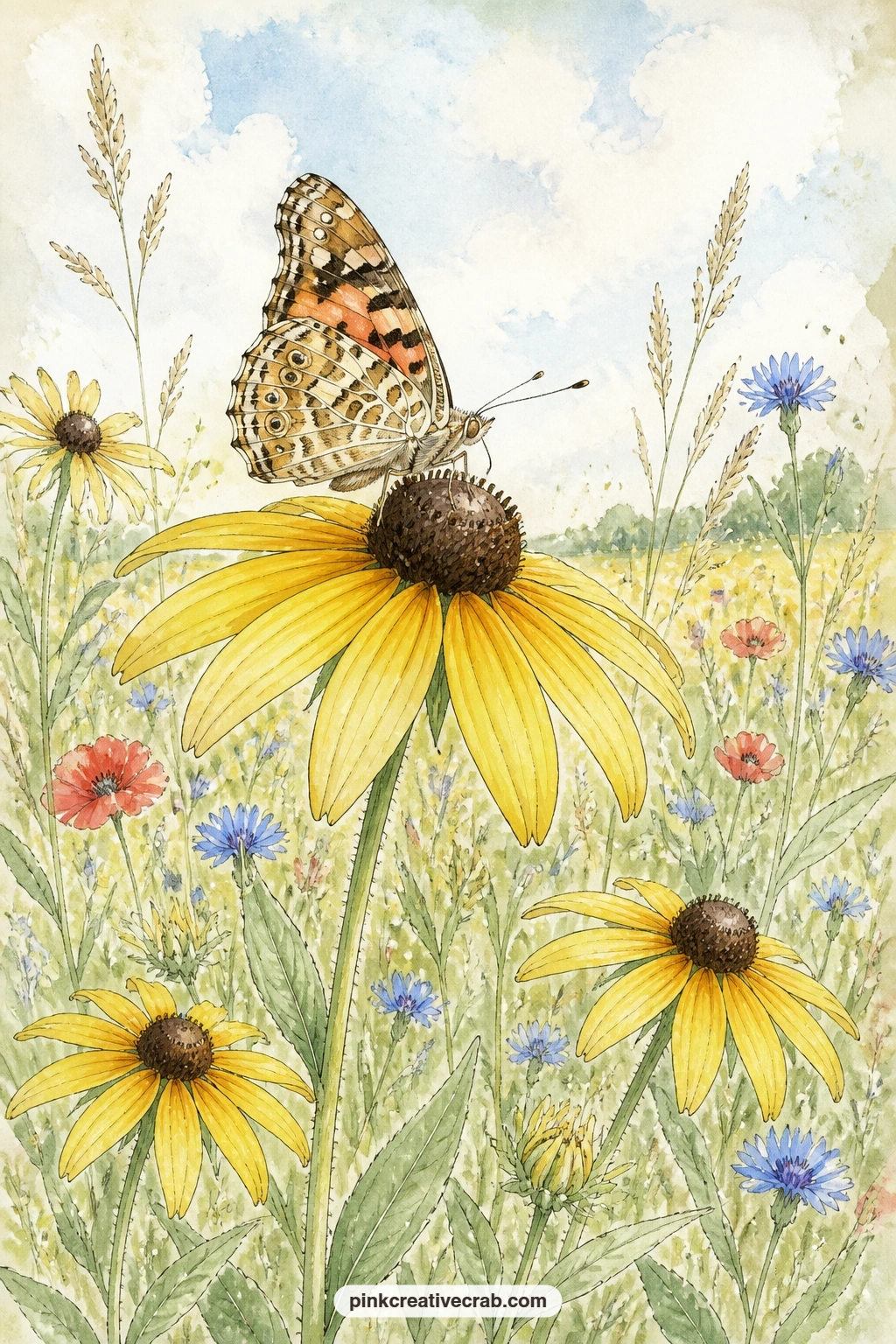
The usual mistake with a page like this is drawing the flower too small and losing the butterfly in empty space: here the black-eyed Susan fills most of the sheet, with the field painted loosely around it.
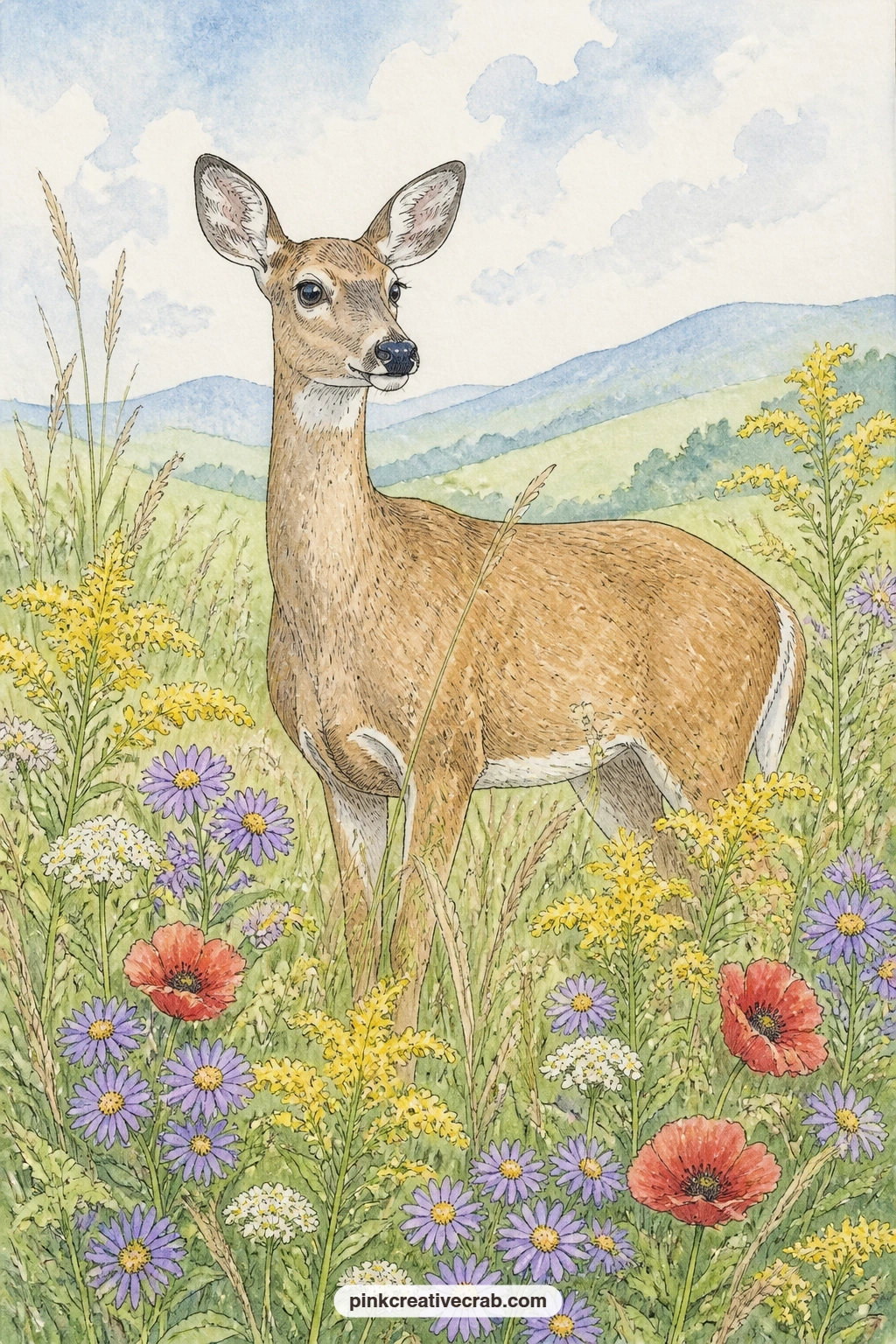
A deer stands still in a meadow of goldenrod and asters, ears turned forward, the late season color rising up around its legs.
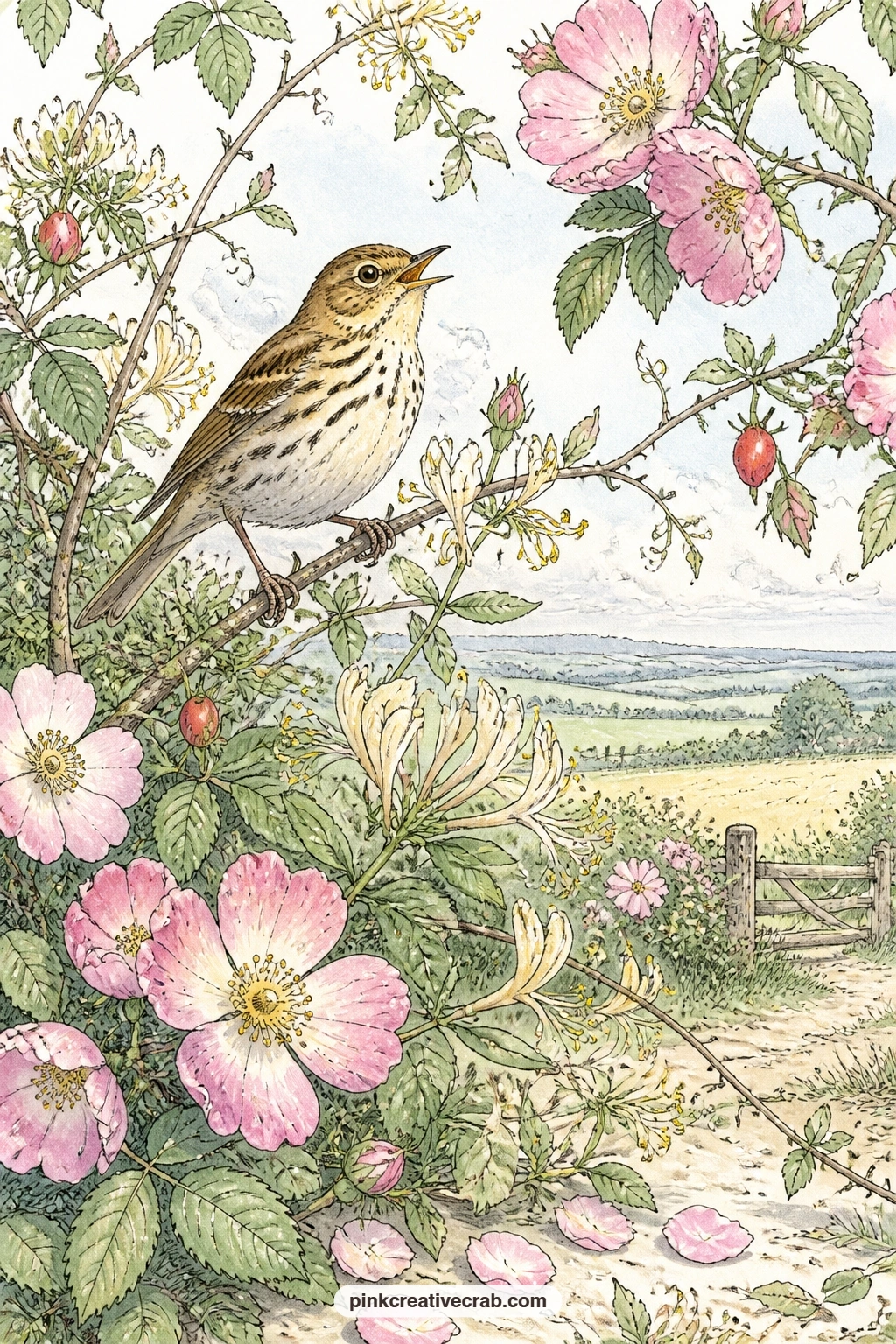
Give this page to whoever in the family loves birds more than flowers: a songbird perches in a hedgerow thick with wild roses and honeysuckle, the vines doing most of the work.
Leave a little room at the base of the hedge for a pressed leaf or a feather found on a walk, held down with a dab of glue at one corner only.
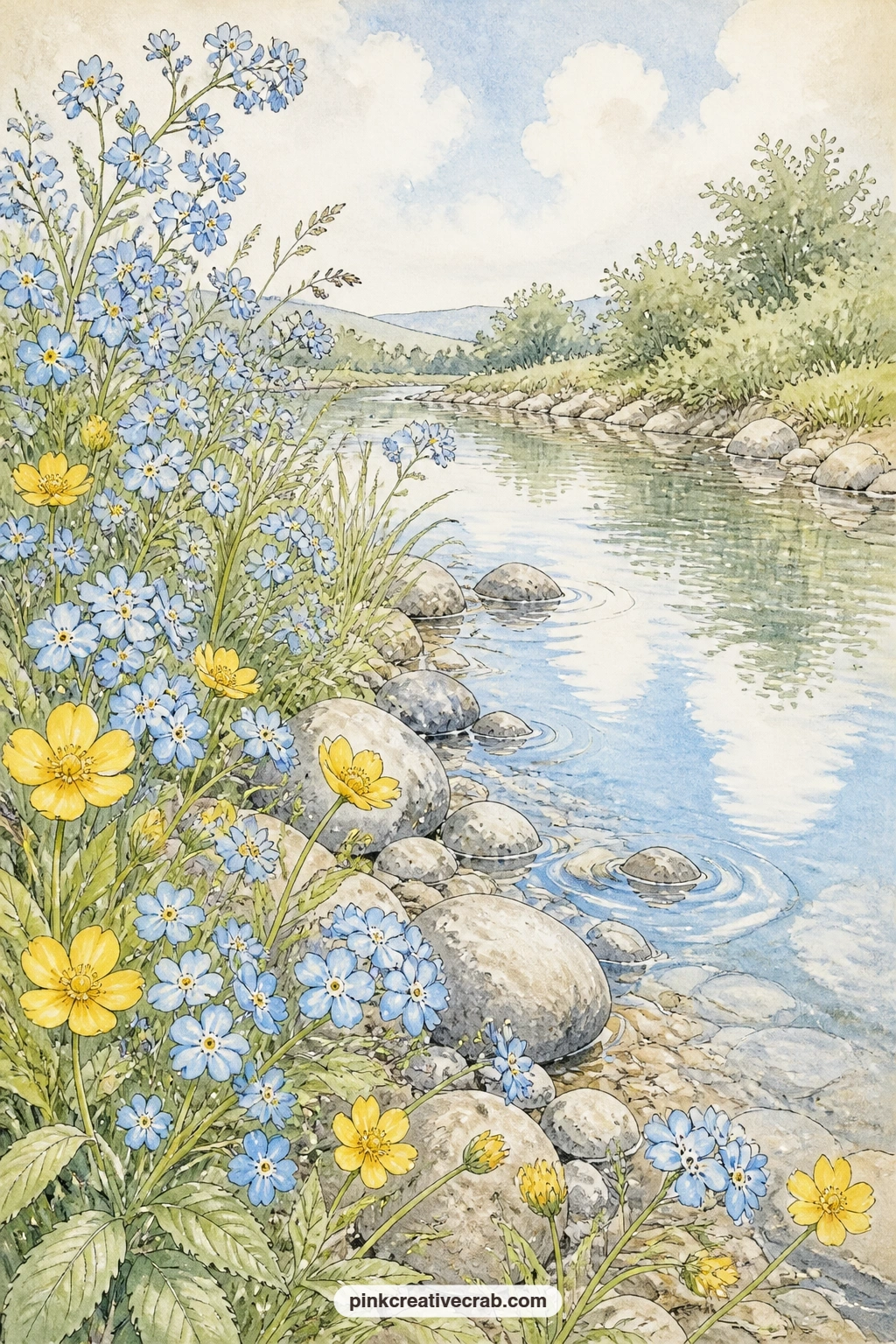
Forget-me-nots and buttercups crowd a stream bank where the water catches a thin ribbon of reflected sky.
Pressing and Keeping
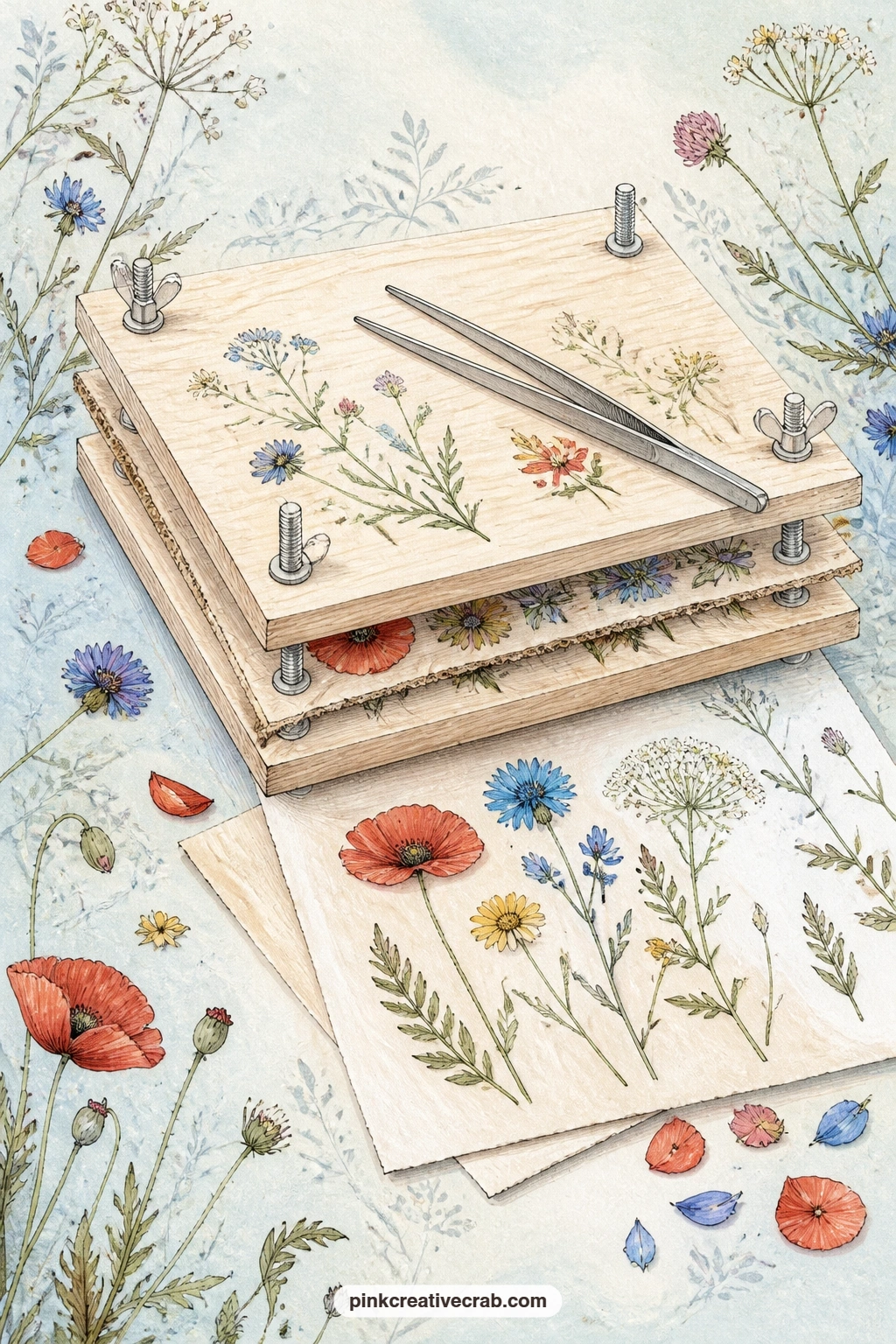
Pressed wildflowers rest beside a wooden flower press with a pair of tweezers laid across it, mid-task, as if the page was stepped away from for a moment.
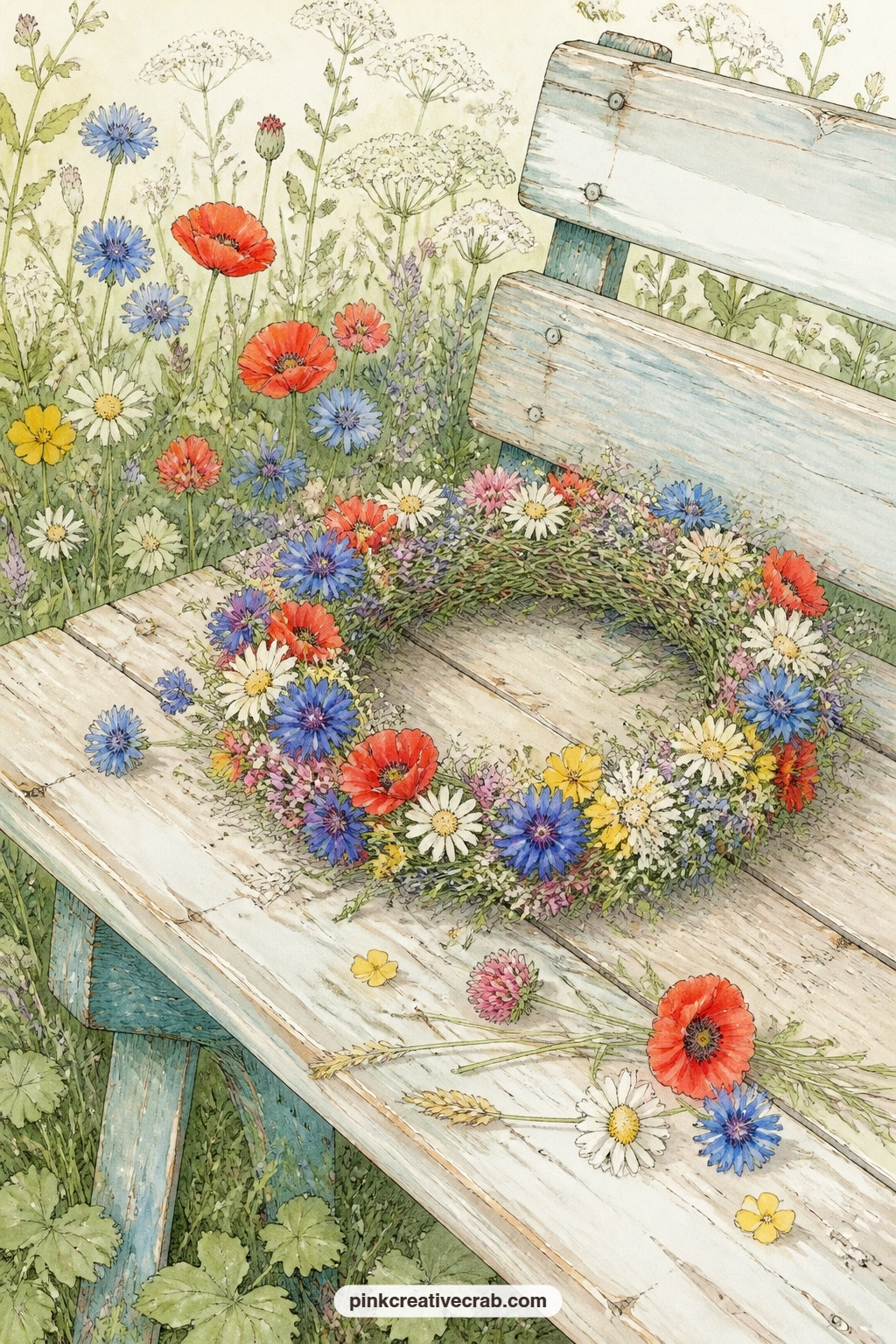
A finished wildflower crown rests on a wooden bench, left behind for a minute while its maker wanders off after more blooms.
A soft question for the entry on this page: who taught you to make a daisy chain, and does the knack still come back to your fingers.
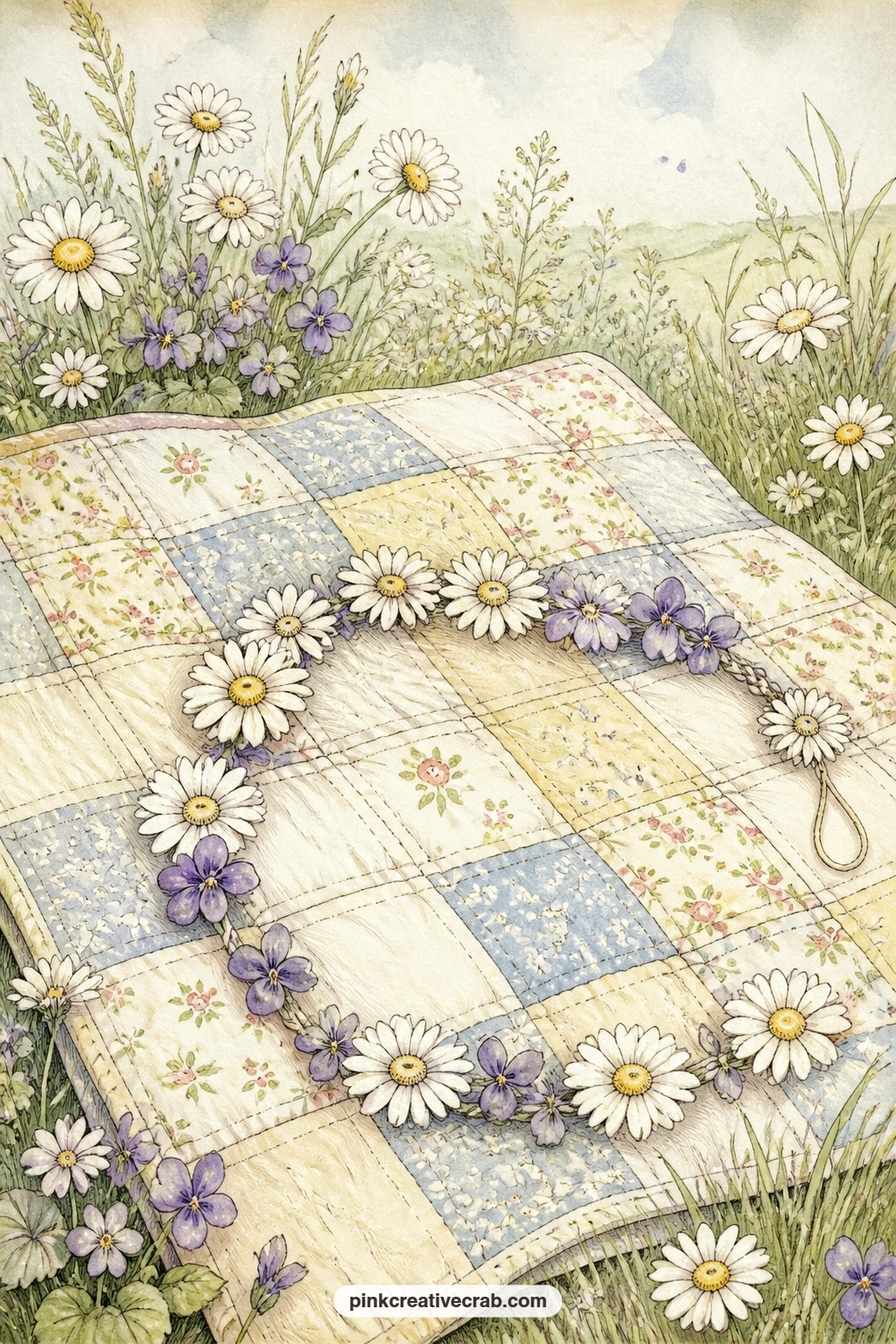
A quilted blanket spread with daisies and violets waits for flower crown making, with a half finished chain already looped across one corner.
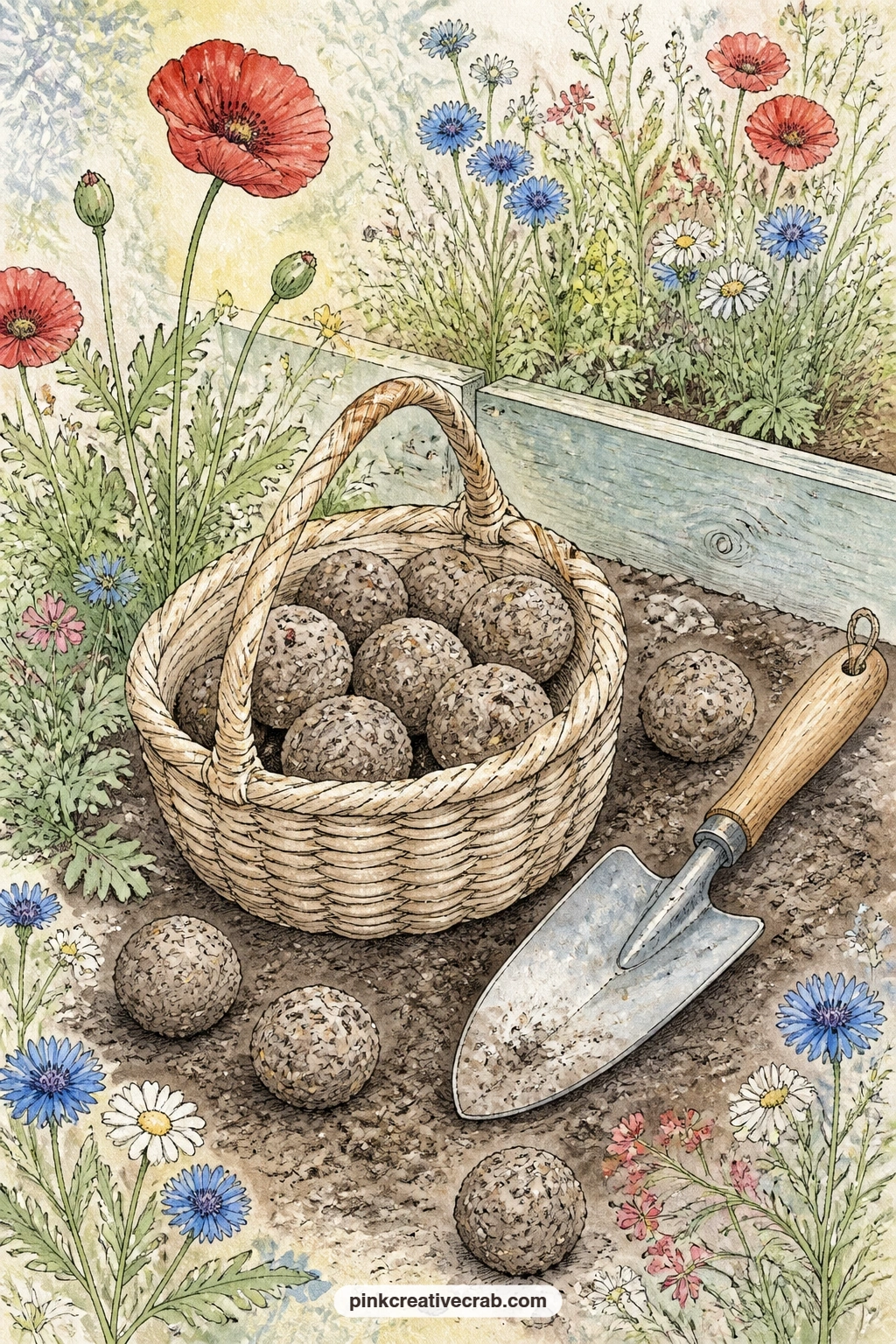
A small basket of wildflower seed balls sits beside a garden trowel, ready for scattering along whatever bare patch needs color next.
Country Edges and Gardens
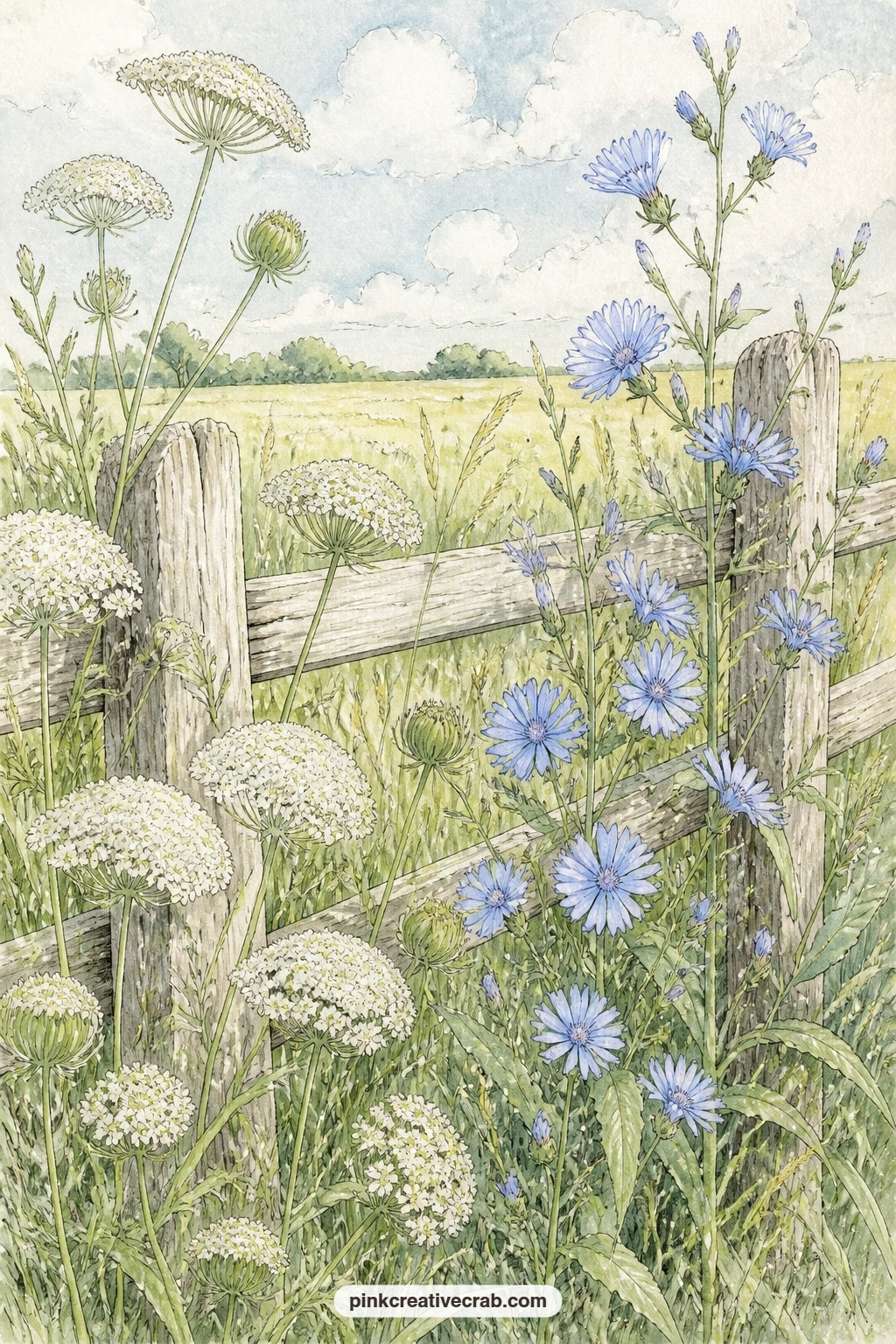
Queen Anne’s lace and chicory crowd along a country fence line, their lace-fine heads and blue stars mixed together the way they really grow.
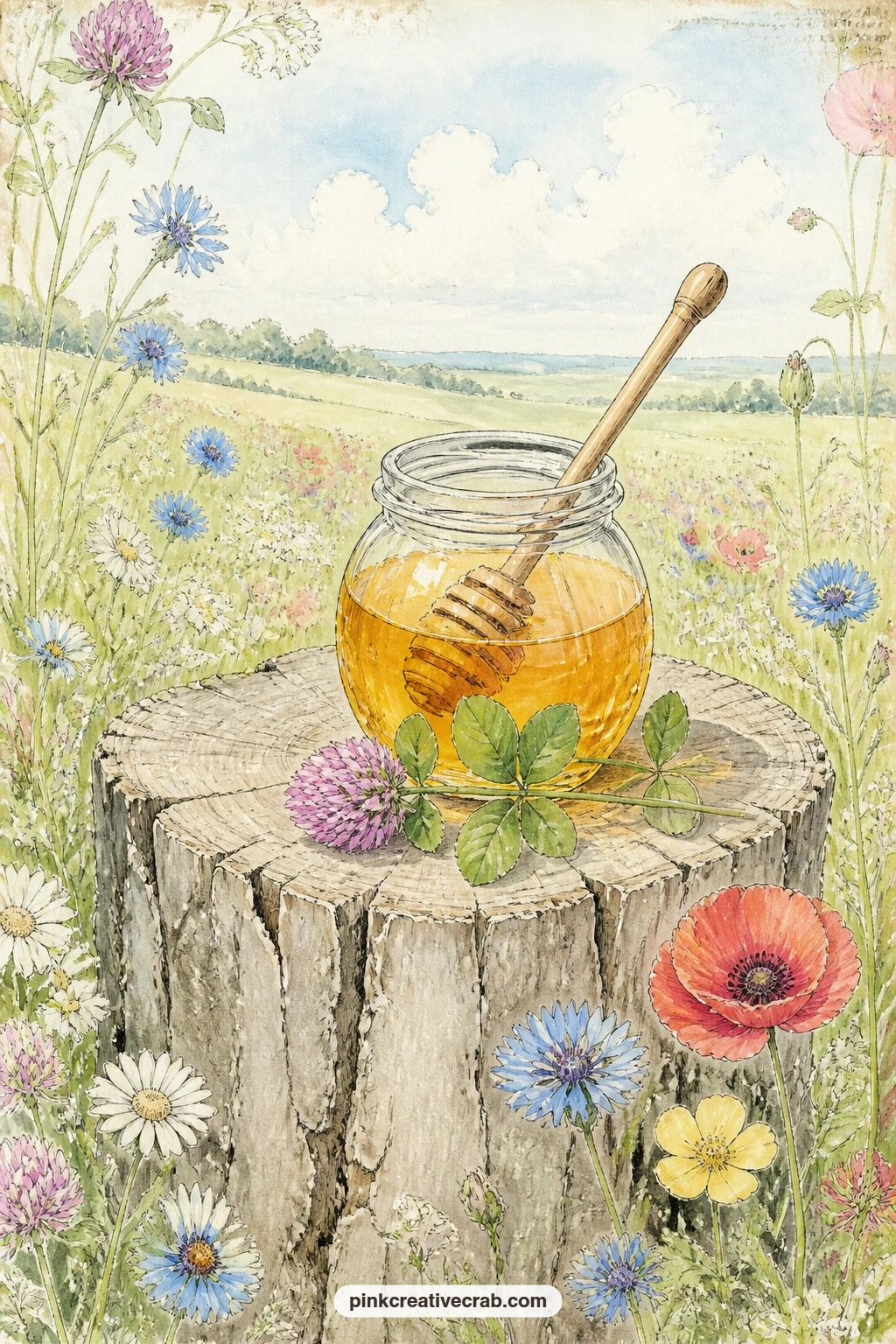
Place this page across from the pollinator garden scene so the honey makes sense beside the flowers that made it: a glass honey pot with its dipper rests on a meadow stump next to a single sprig of clover.
If you keep bees or know someone who does, this is the page to write their story on, in whatever space is left around the jar.
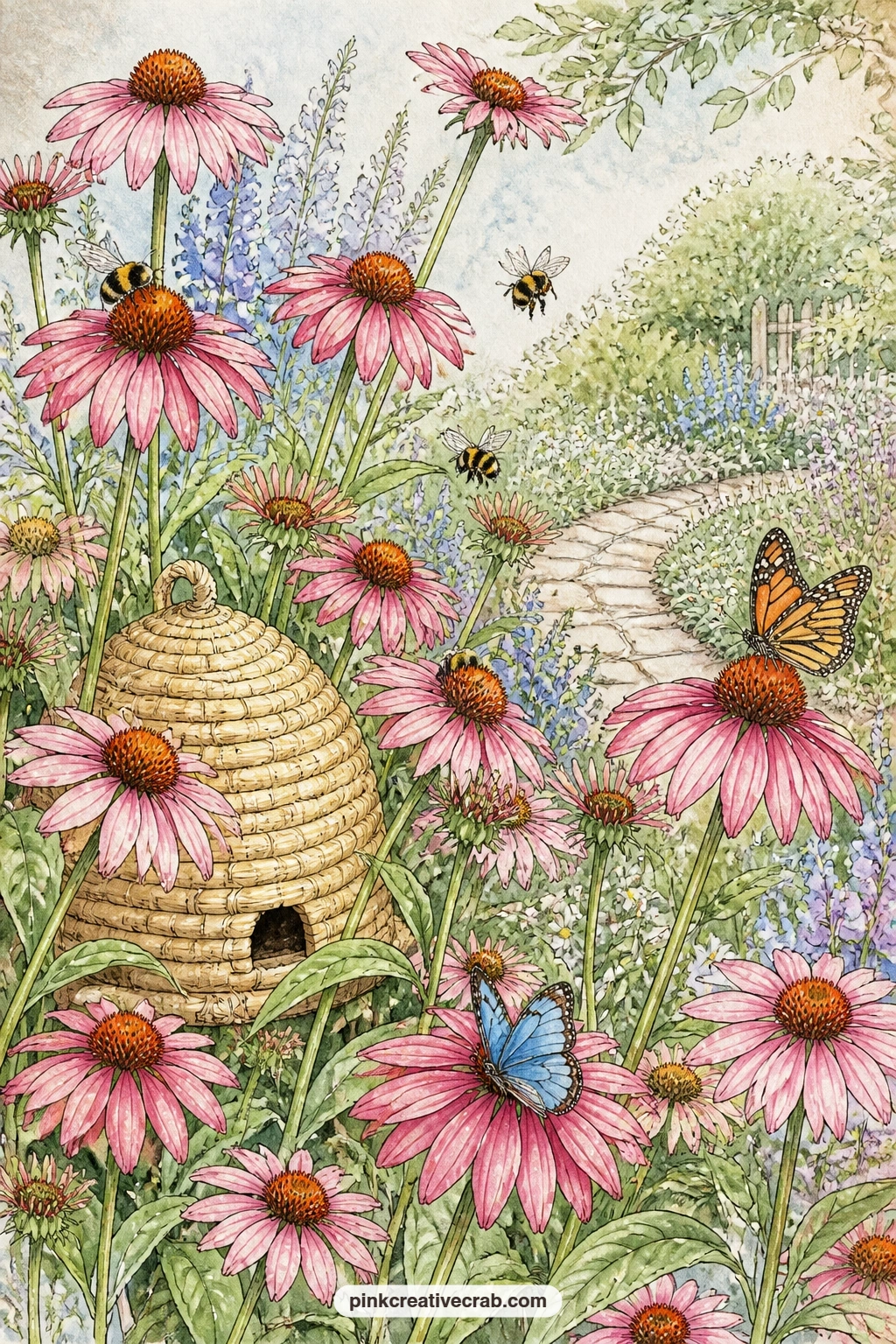
Coneflowers rise through a pollinator garden where a straw bee skep sits tucked among the stems, a small nod to the bees doing the real work.
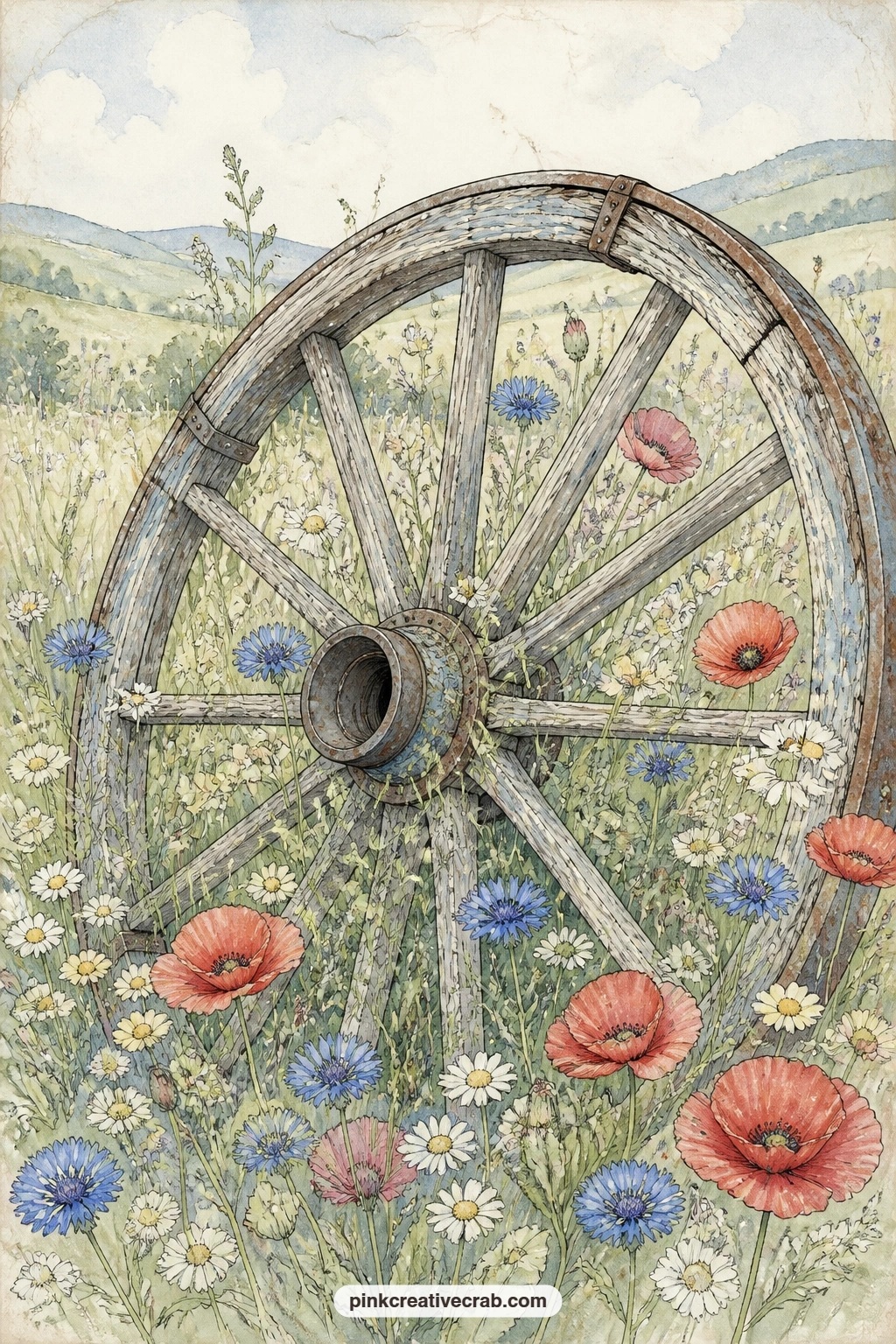
Wildflowers have grown up through the spokes of a weathered wagon wheel left standing in a field, the metal rim gone soft with rust.
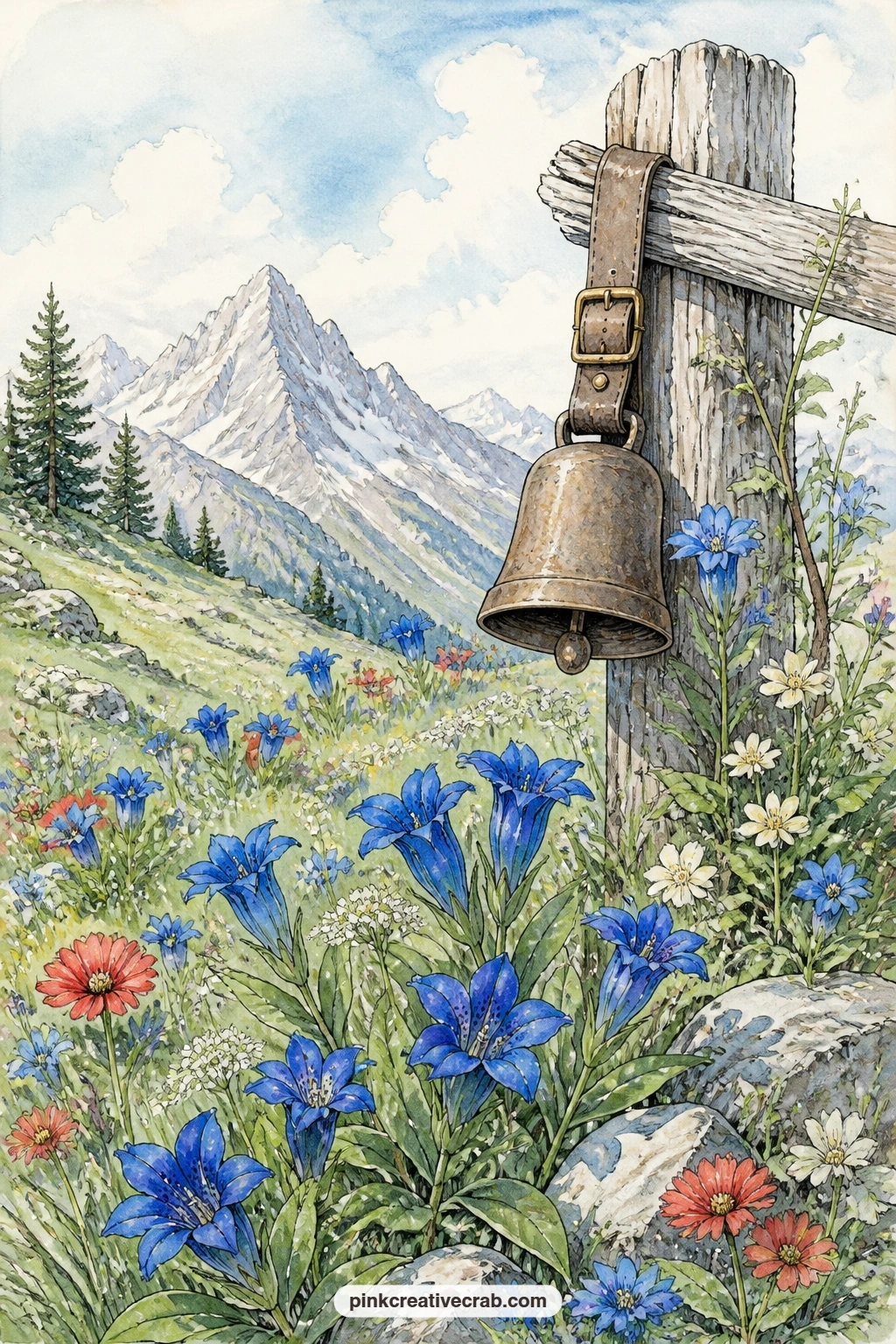
Close the scene pages up high: an alpine meadow of gentians spreads below a worn cowbell hanging from a wooden post, the air clearly thinner here.
Background Papers
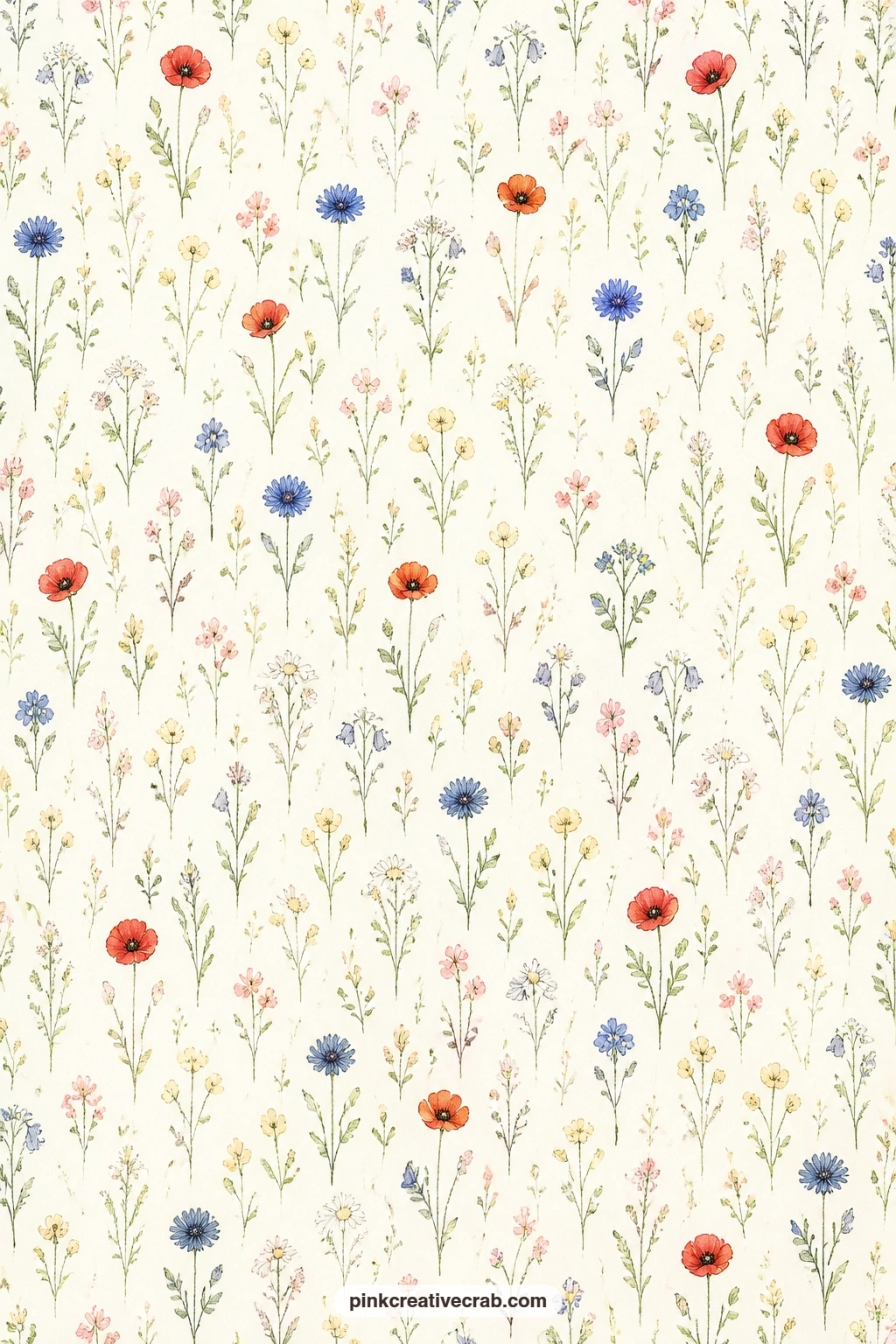
Tiny ditsy wildflowers scatter evenly across a cream ground, small enough to sit quietly behind a photo without pulling focus from it. Use it as a pocket lining, a journal cover, or the backing for a pressed flower held under tape.
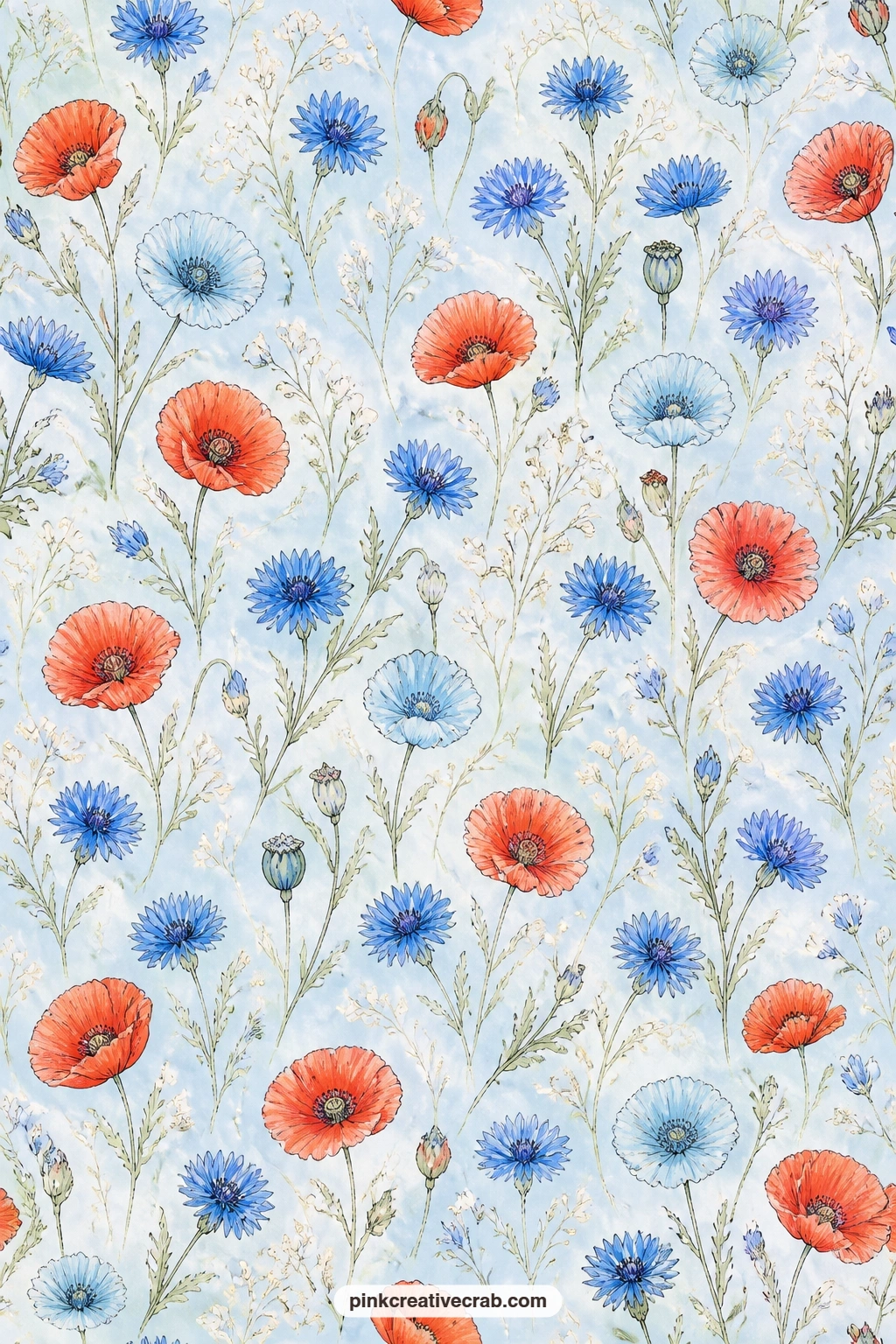
Poppies and cornflowers repeat across a soft blue field, dense enough to carry a cover on its own. Try it behind a windowed page, as endpapers, or folded into a simple envelope for loose pressed petals.
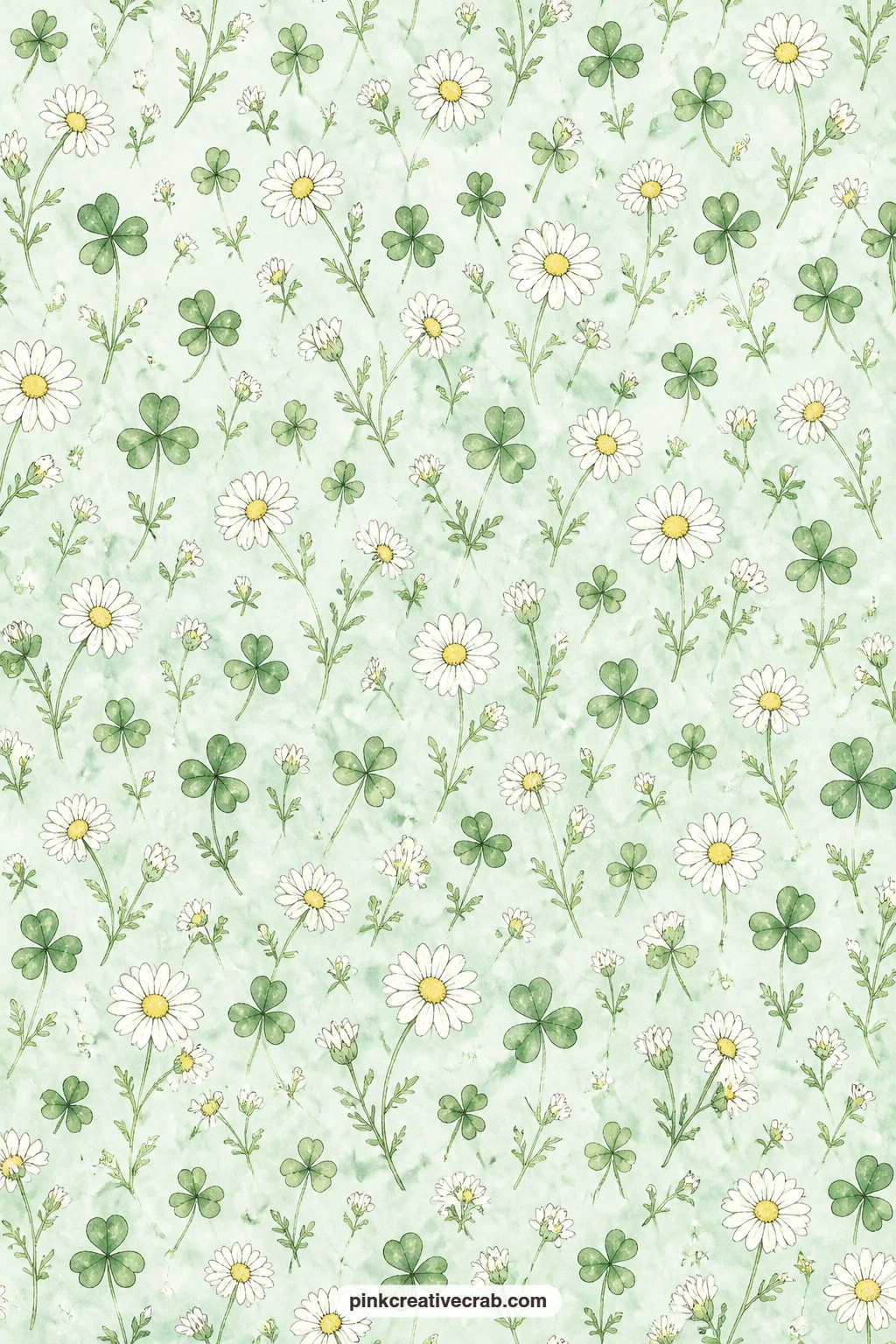
Daisies and clover drift across a mint ground in a pattern light enough for a full-page background without crowding whatever sits on top. Slide it under a photo mat, use it as a tab, or back a pocket page with it.
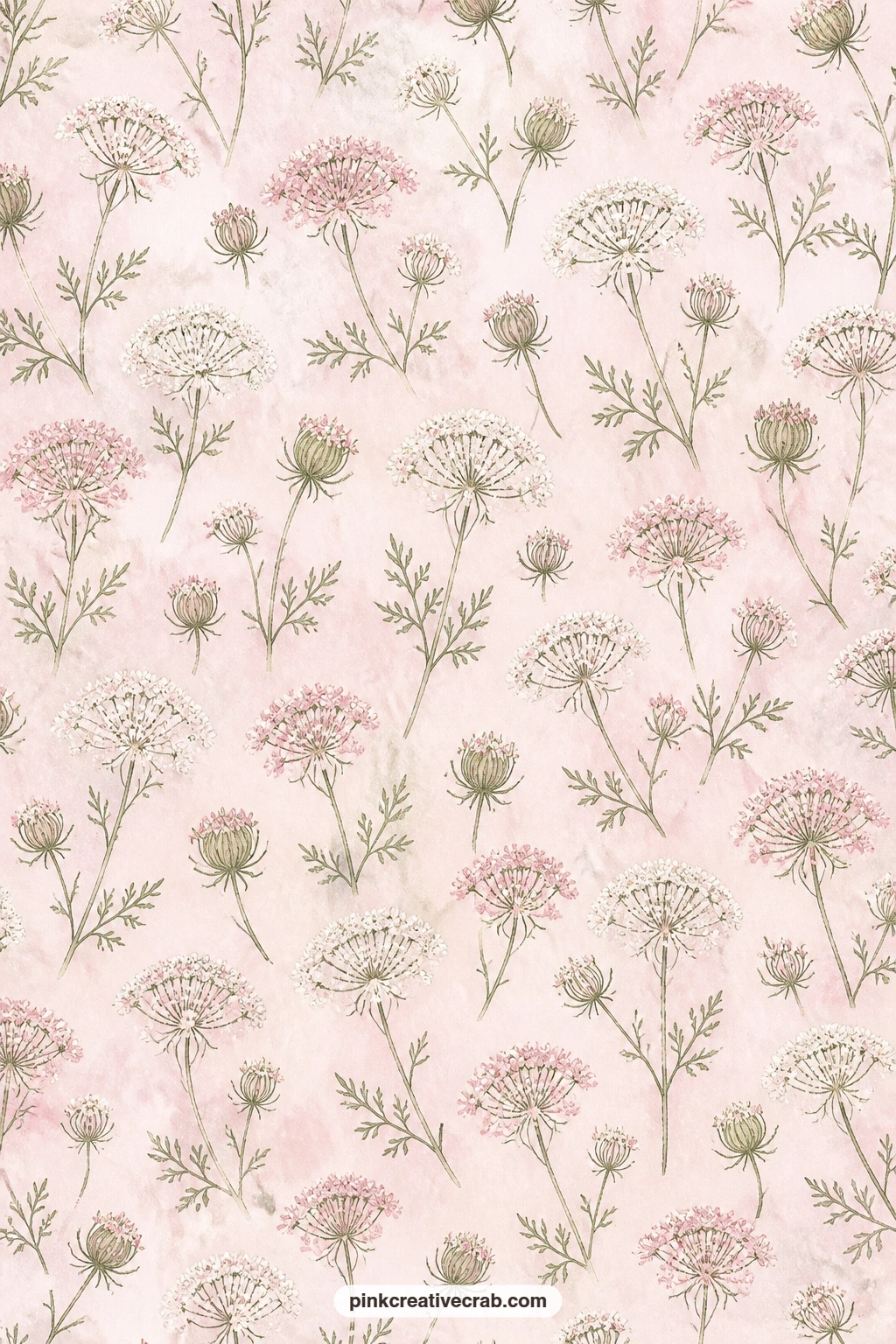
Queen Anne’s lace sprigs float across a blush ground, delicate enough to sit behind handwriting without fighting it. Good for a title page backing, a pocket lining, or wrapped around a small gift tucked into the journal.
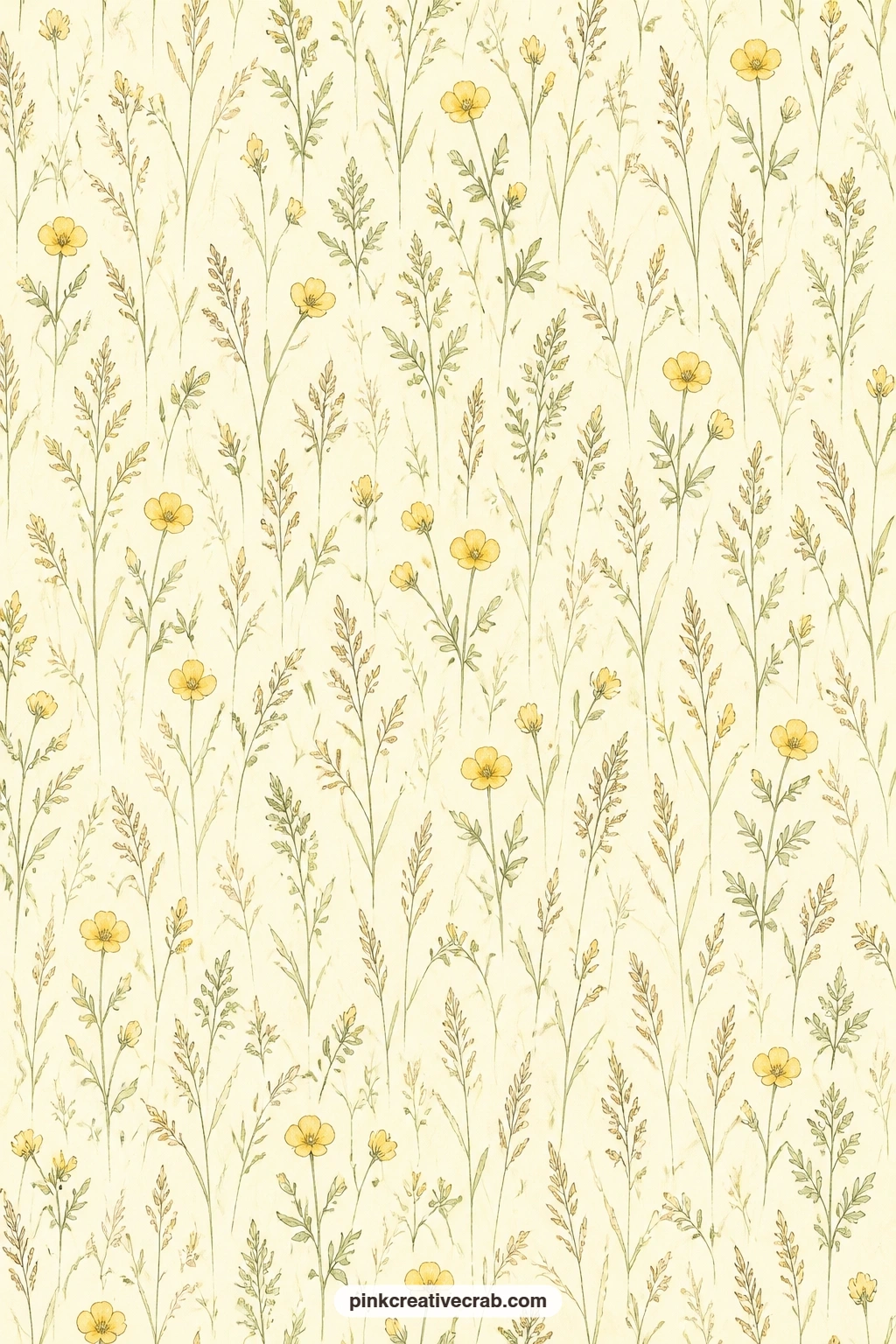
Meadow grasses and buttercups repeat across a pale yellow ground, warm enough to use as a cover on its own. Line a pocket with it, back a torn-edge accent, or use it full page behind a cluster of pressed flowers.
Lined Writing Pages
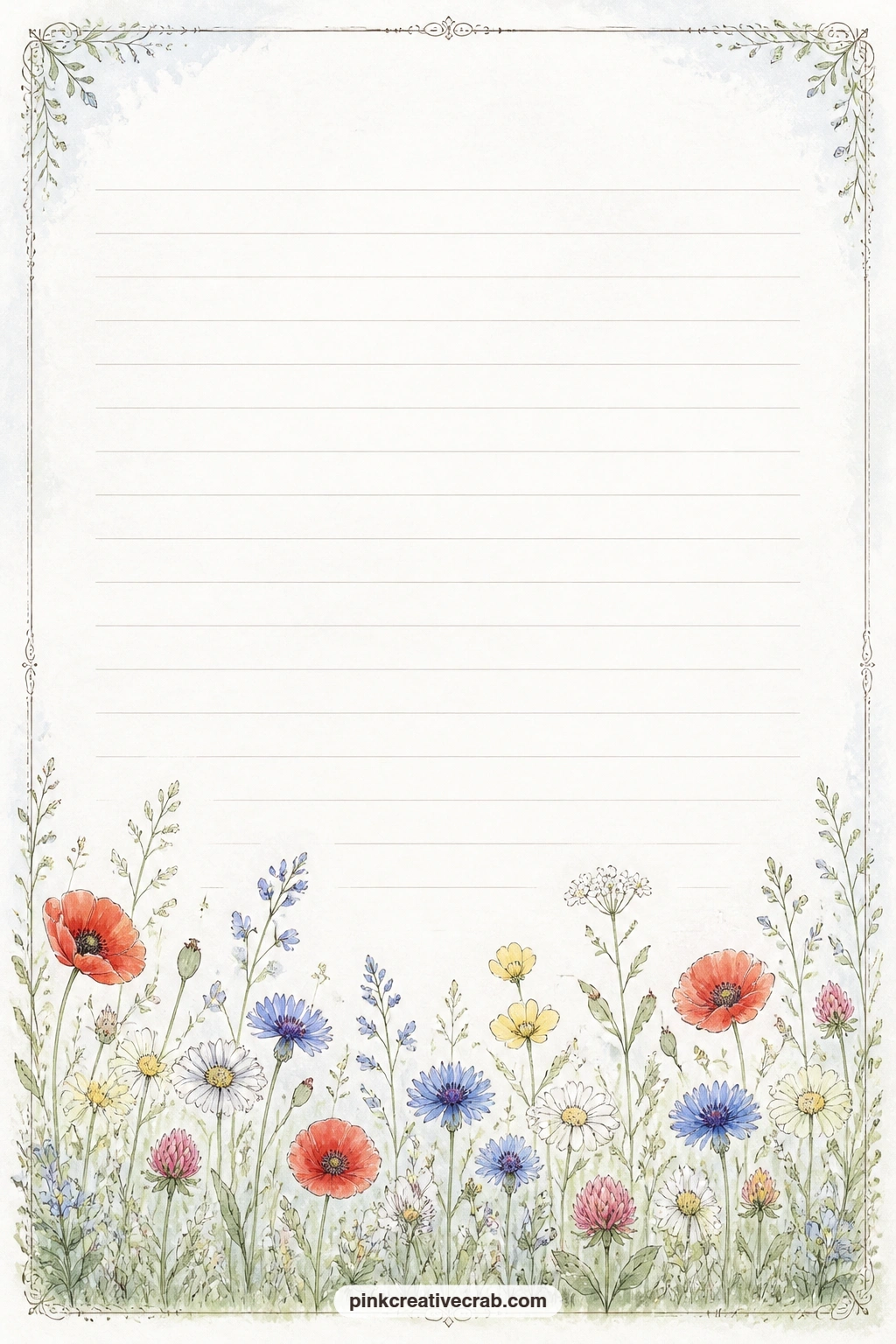
A low border of mixed wildflowers runs along the bottom of this page, leaving the ruled lines above free for a gift list, a day’s walk recorded in full, or a short letter to next year’s self.
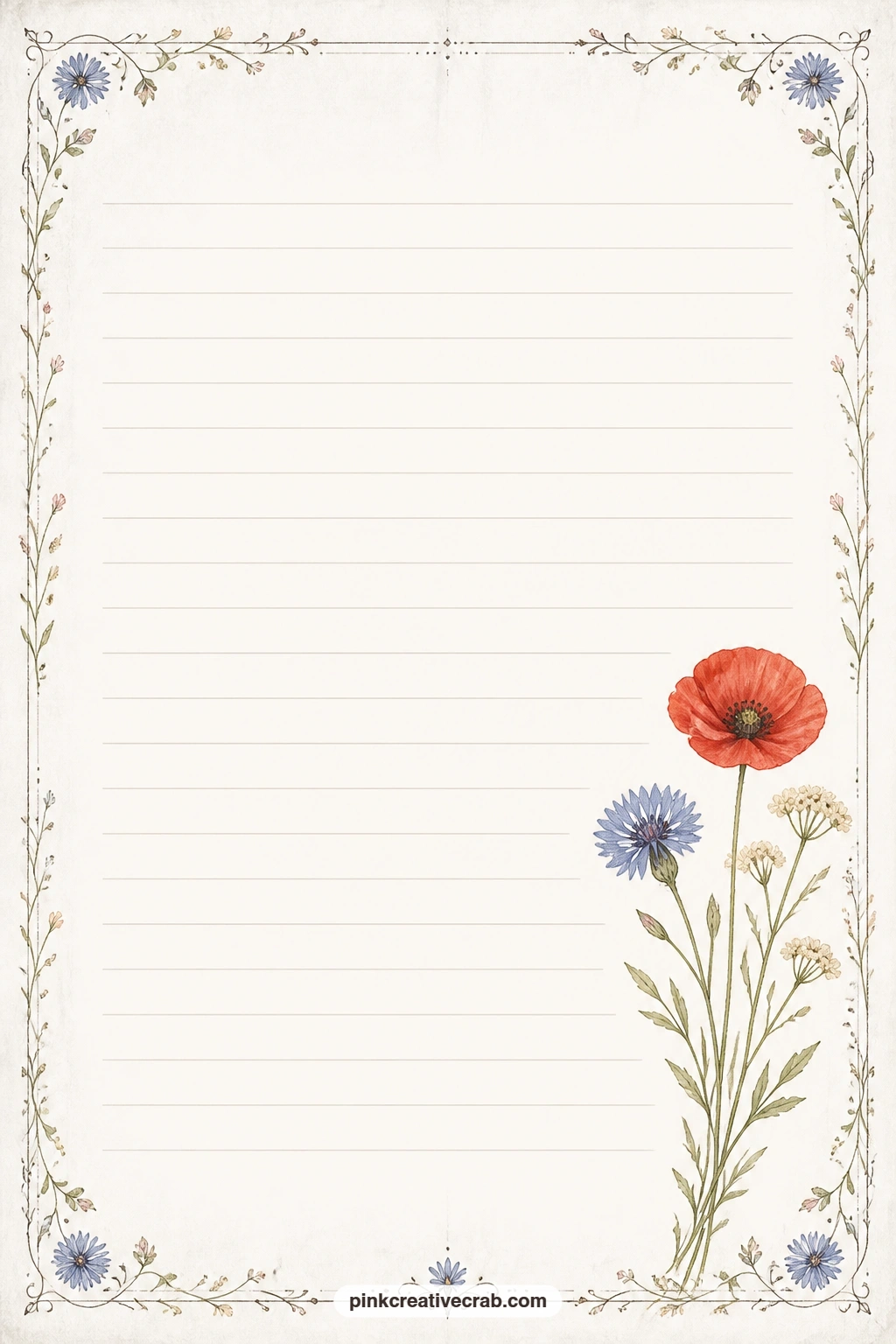
A single pressed-looking wildflower spray sits in one corner, light enough not to crowd a menu, a packing list, or notes copied from a seed packet.
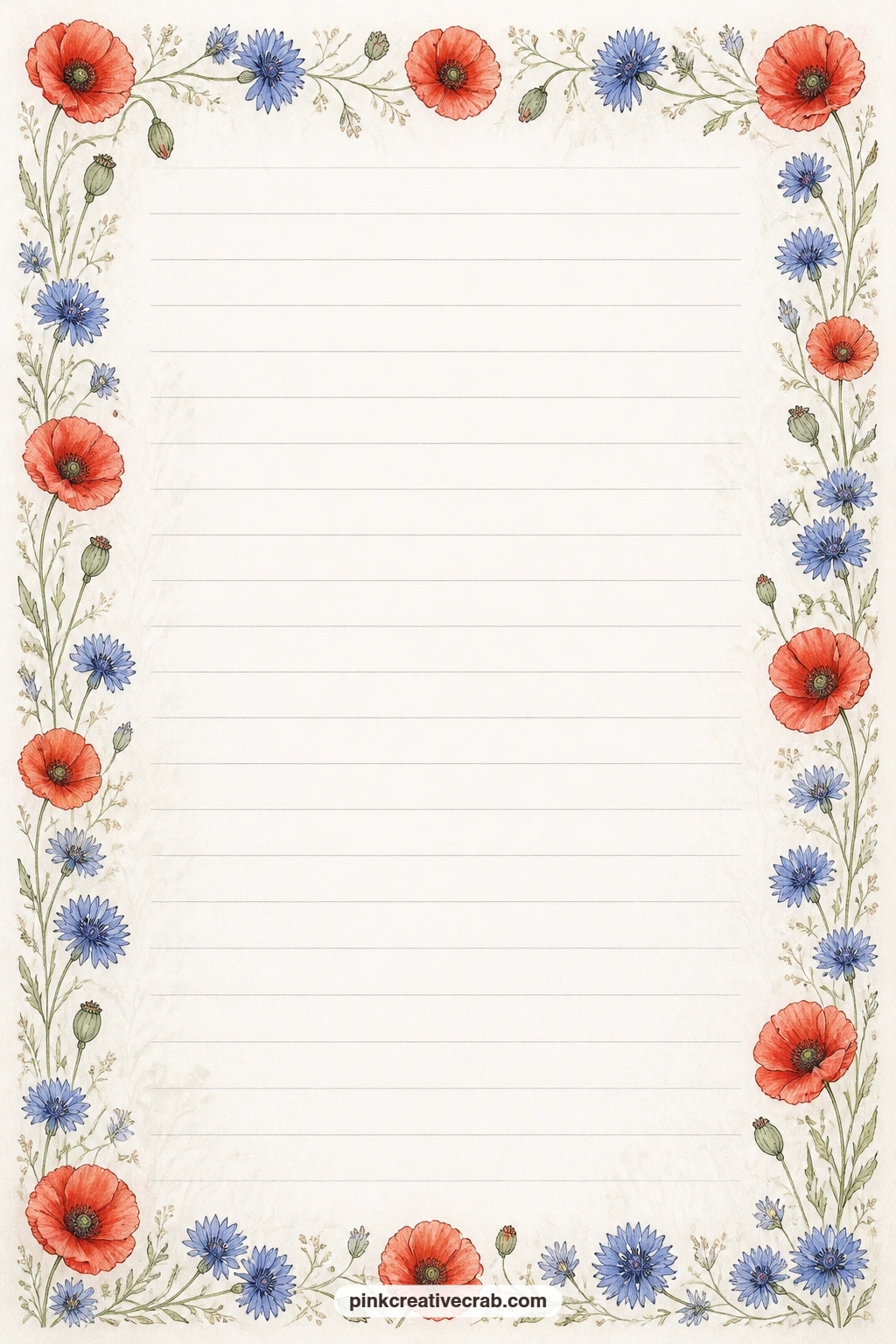
Poppies and cornflowers frame the full page in a thin continuous border, room enough inside for a flower identification list, a recipe using edible blooms, or a letter tucked in for later.
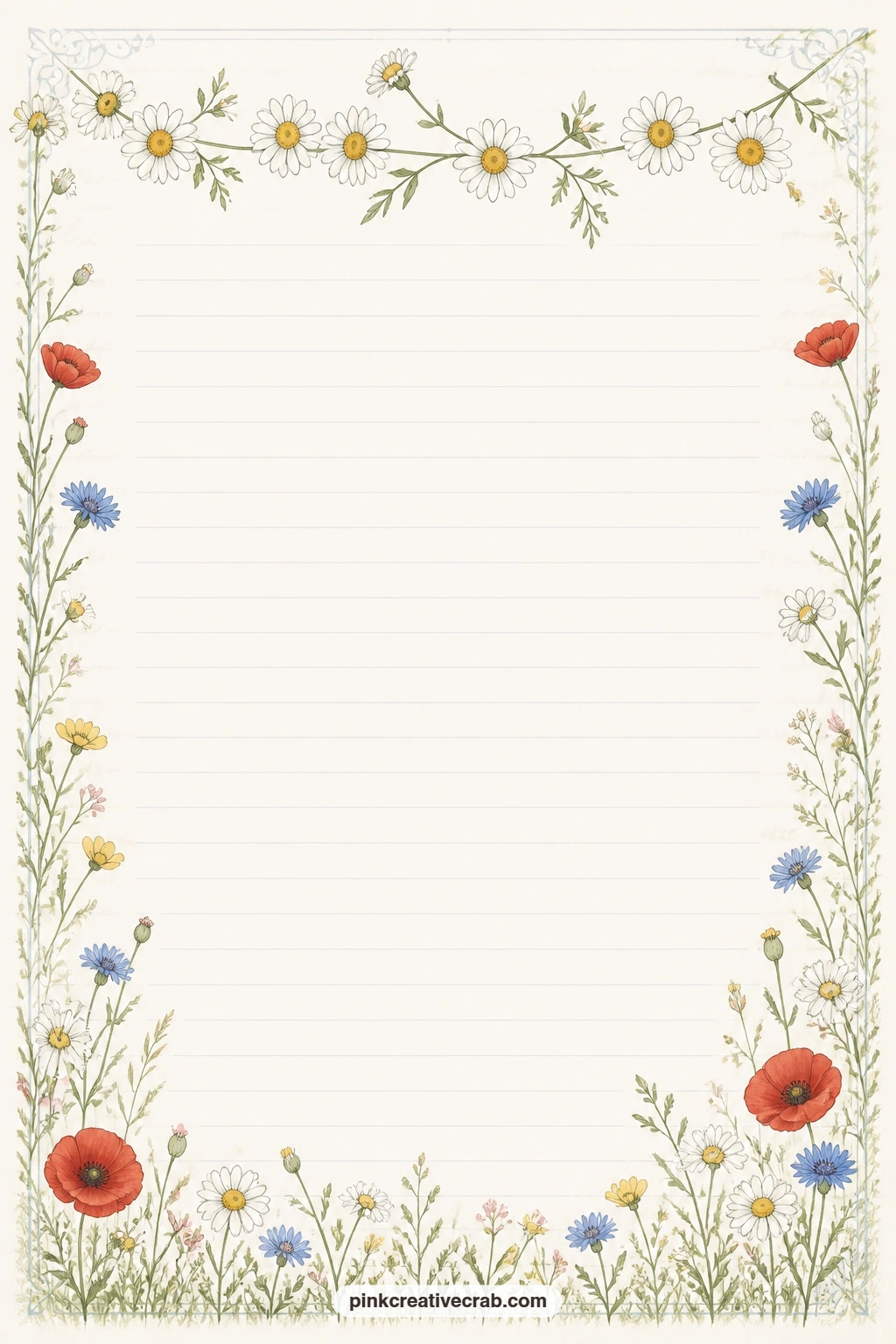
A daisy chain border links its way across the top of the sheet, leaving the rest open for a packing list for a meadow walk, a weather log, or a note left for whoever finds this journal.
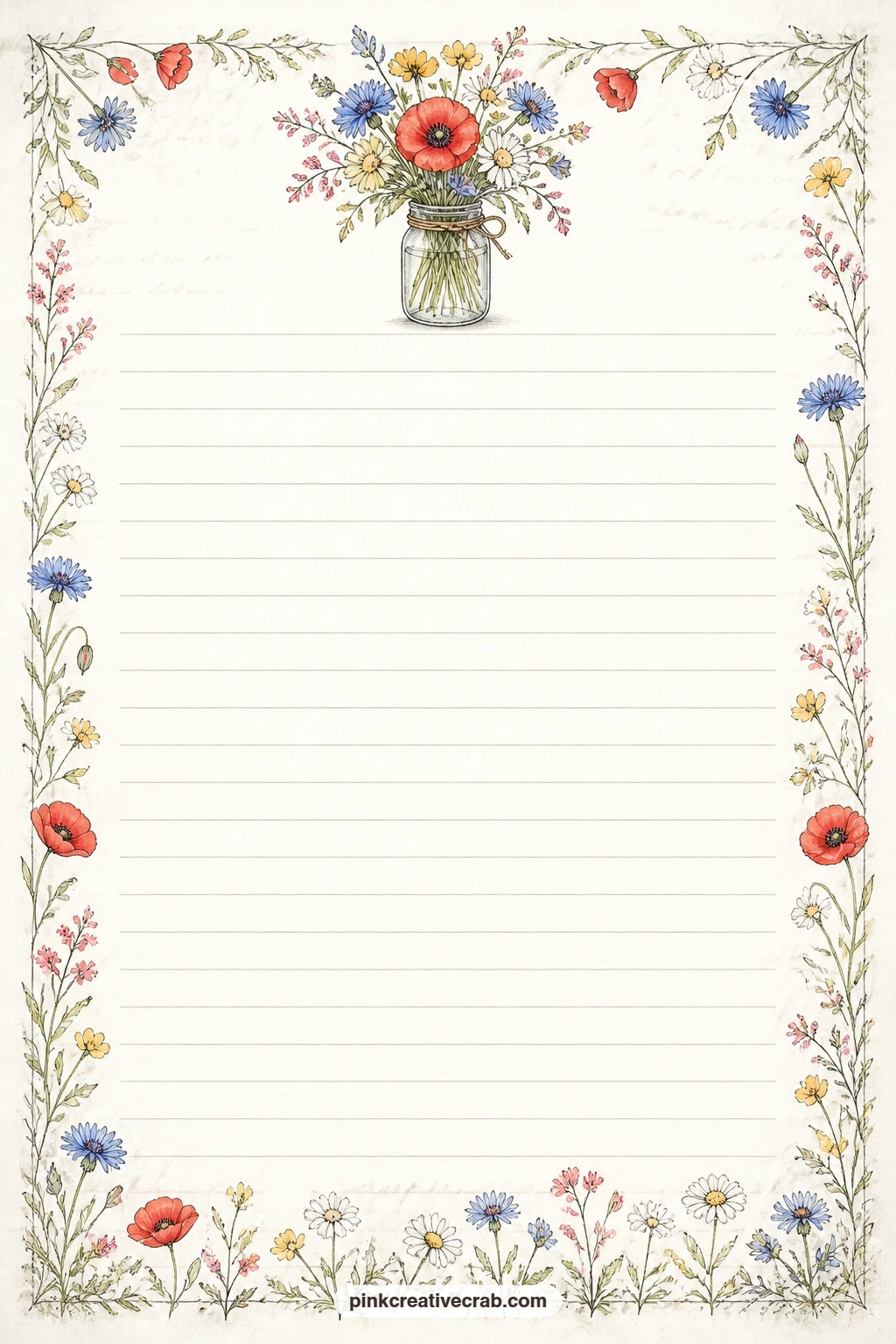
A small jar bouquet of wildflowers sits at the top of the page, a quiet start to a gift list, a guest’s address, or a line or two about where each flower came from.
What to Do Next
Print the set, trim each sheet to size, and start with the meadow footpath scene as your opening page before moving through the jars, creatures and country edges in whatever order your own wildflower walks took you.
Frequently Asked Questions
What paper works best for a wildflower junk journal kit?
Matte cardstock around 65 to 110 lb holds up best, since it takes glue and layering without curling or showing through. Plain printer paper works for a quick test print but feels thin once pages are glued and handled.
What printer settings keep the colors looking right?
Set your printer to its best or photo quality and choose matte or cardstock as the paper type if that option exists. This slows the print slightly but keeps the fine outlines sharp and the pastel washes even across the page.
What size should I print the pages at?
Print at full letter or A4 size for a standard journal, or shrink to roughly 75 percent on a copier for a smaller travel-sized book. Trim after printing so every page lines up neatly once bound.
Do I need anything beyond glue and scissors to use this kit?
A glue stick and craft scissors cover most of the set, with a bone folder helpful for any page you tuck, fold or turn into a pocket. Fine tip pens suit the lined pages well for small, even handwriting.
Can these pages hold actual pressed flowers?
Yes, several pages are designed with open space for exactly that, especially the lined pages with corner or border motifs. Use a thin strip of glue or small photo corners so a real pressed flower can be lifted later without tearing the page.
Have any thoughts?
Share your reaction or leave a quick response — we’d love to hear what you think!
-
 0
-
0
-
0
-
0
-
0
-
0


