

Table of Contents
This cottage garden junk journal set gathers an English garden at its fullest moment: hollyhocks leaning over fences, roses tangled through arbors, bees working the lavender. Inside are 19 scene pages full of brick paths, potting benches and garden gates, 4 seamless background papers for covers and pockets, and 4 lined writing pages with floral borders for the entries themselves.
Print the whole kit on matte cardstock for the scenes and backgrounds, and a lighter paper for the lined pages if you want the pen to glide more easily. Set your printer to its best or photo quality so the small petals stay crisp, then trim each sheet to your journal size before you start gluing.
Using these images: free for personal projects such as printing, coloring, cards, journals and gifts. Handmade items that include them may be sold up to 30 pieces per design. More than that is commercial use and is not permitted, and neither is selling or sharing the images themselves or passing them off as your own. Please ask before any other use.
Cottage And Gate Pages
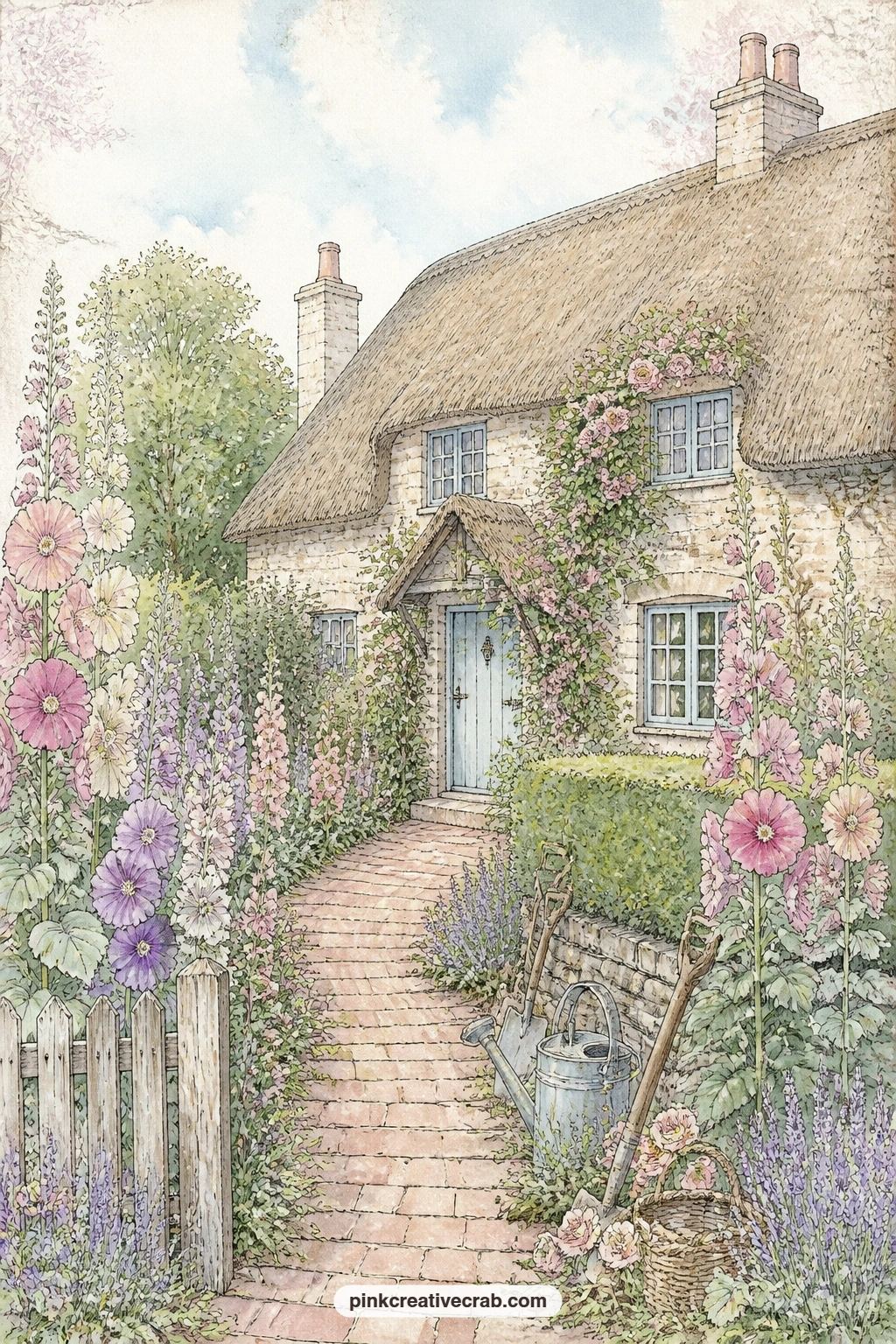
Settle the whole journey here, with a thatched cottage anchoring the page while hollyhocks and roses crowd the brick path leading to its door.
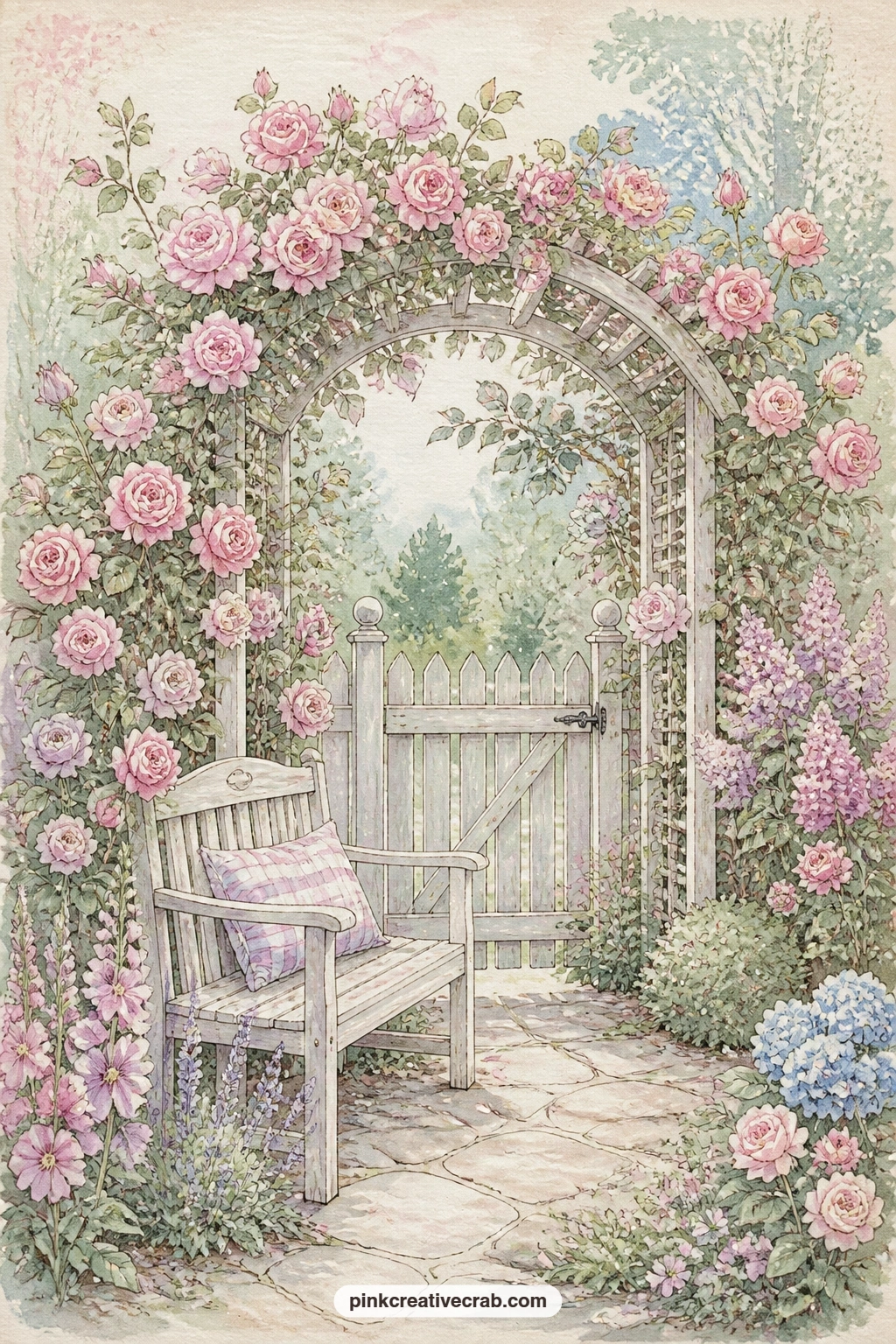
Tuck a pressed rose petal or a ticket stub under this one, since the bench beneath the arbor gives a natural little pocket for keepsakes from the garden.
Glue a flap along the bench seat so it lifts to reveal a small note card, or leave it flat and simply write the date of your visit along the bottom edge in small letters.
Border And Bed Pages
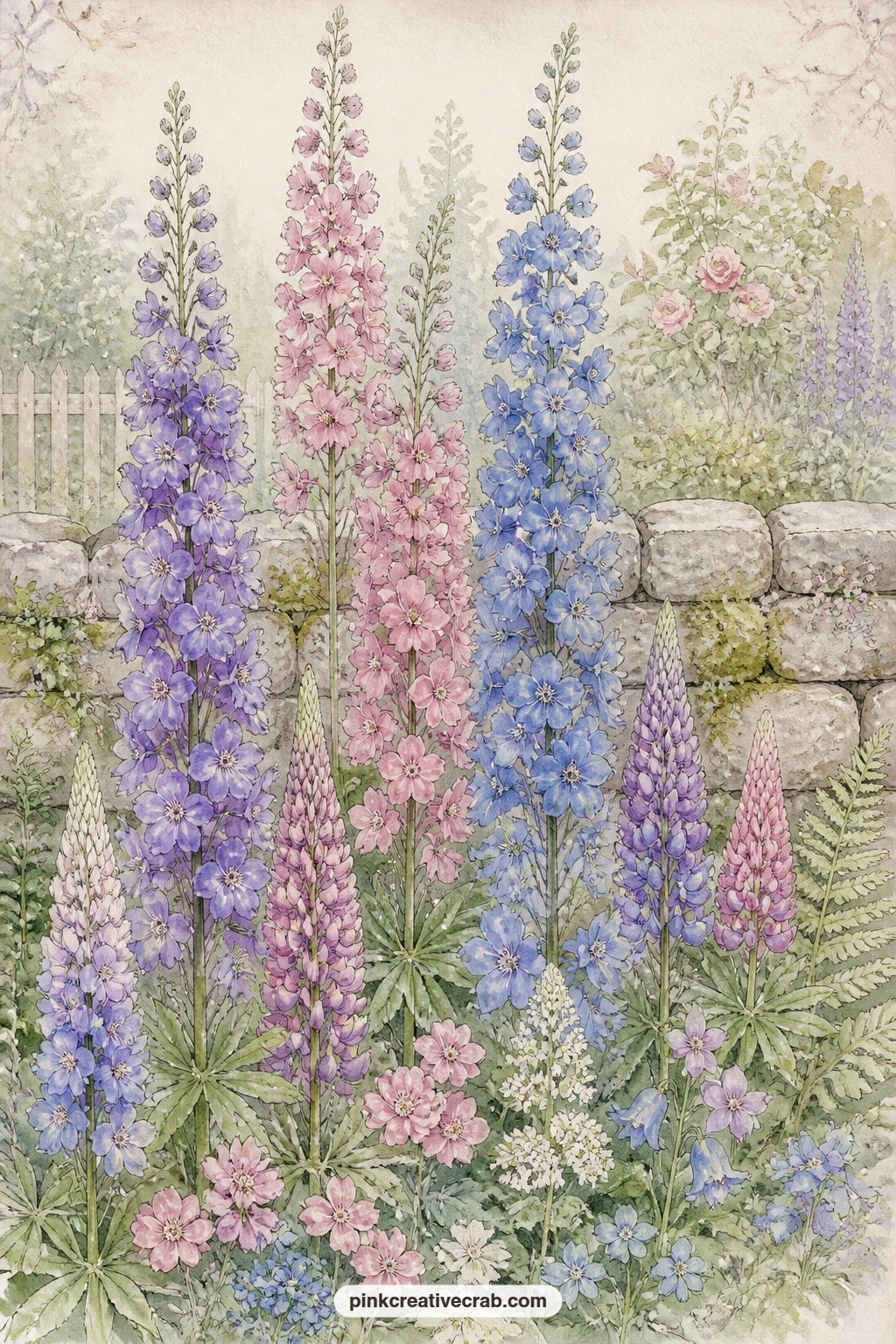
Pair this page with the hollyhocks and roses background from later in this set, laying one behind the other so the tall blue spikes seem to rise straight out of the pattern.
The usual trouble with a border like this is cramming every flower to the same height, so let a few lupins lean forward and a few delphiniums lag back for real depth.
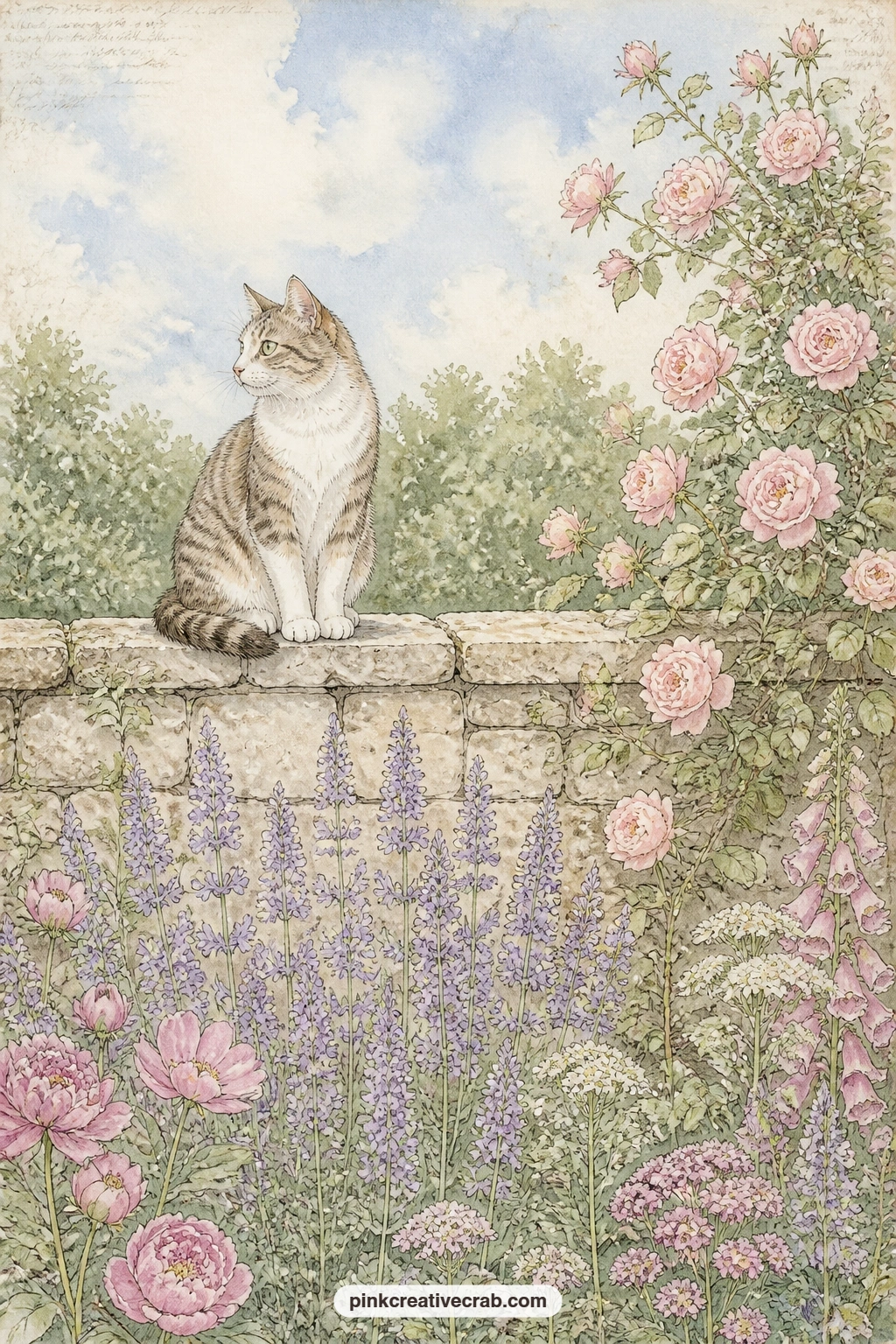
Give this page to whoever in the gift journal loves a cat more than the garden itself, since the real subject here is the watchful animal, not the pinks below.
Try tea-staining just the bottom corner of this page before gluing it in, so the climbing roses look sun-faded the way an old cottage photograph would.
If torn edges feel like too much commitment on a first attempt, a light sanding along one side gives nearly the same worn look with far less risk to the page.
Tools And Potting Pages
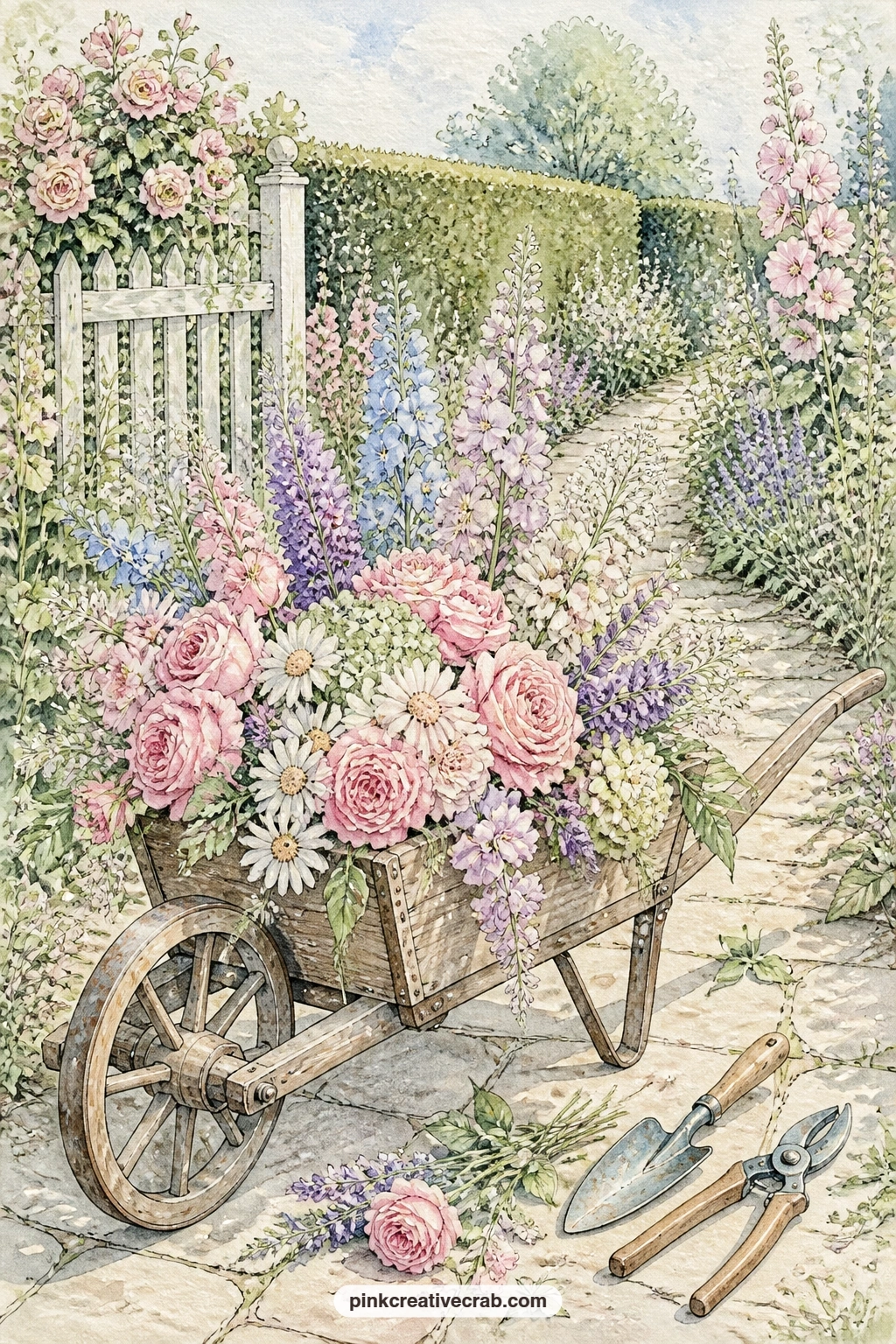
What goes on this page is a flower list, since the wheelbarrow practically asks for a record of everything cut that day, from sweet peas to the last of the roses.
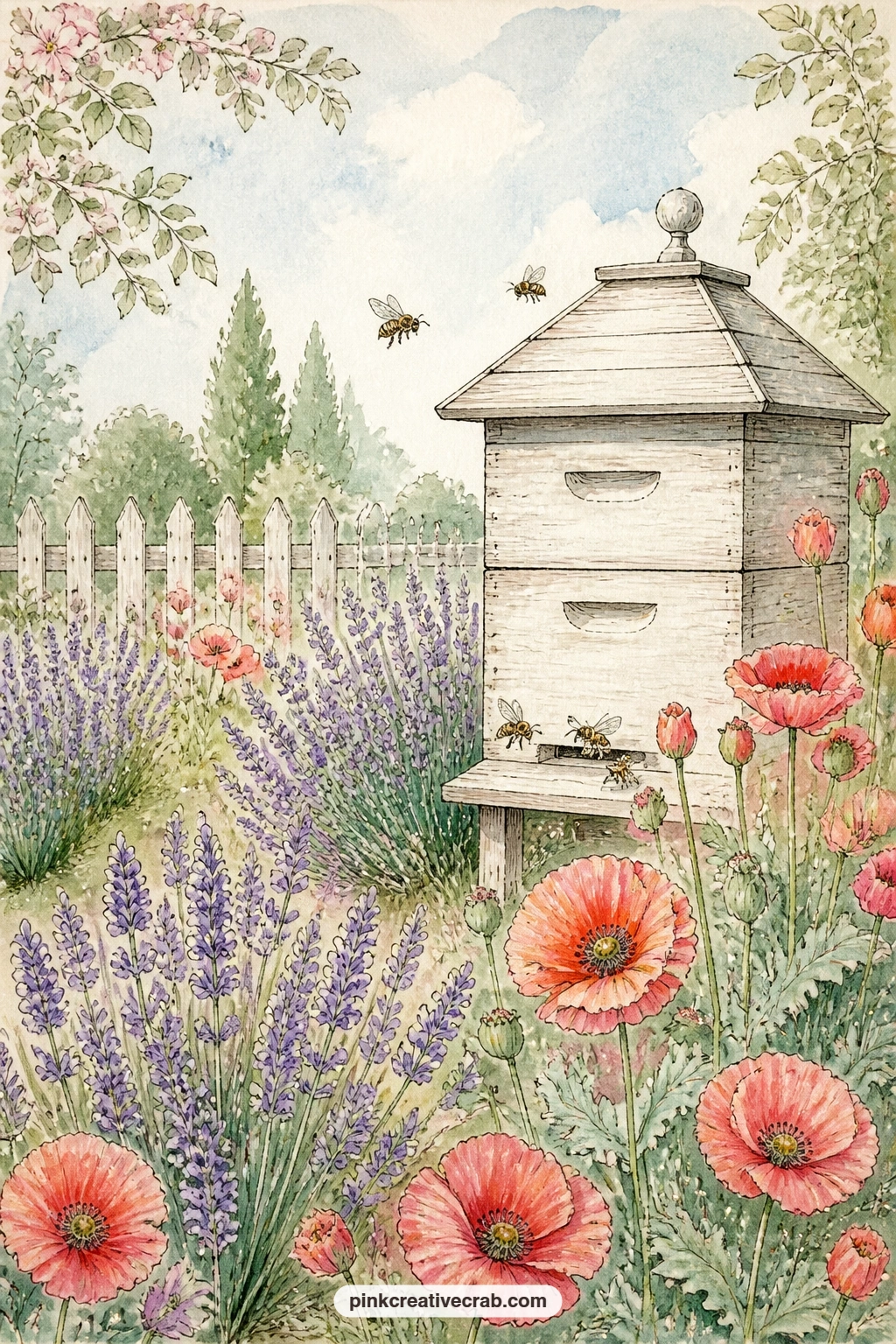
Set this five minutes aside for a quick version: colour just the beehive and the nearest row of lavender, then let a soft wash of green stand in for the rest of the bed.
For a fuller page, work right out to the poppies at the edge and let a few bees travel across the open sky above the hive.
Border And Bed Pages
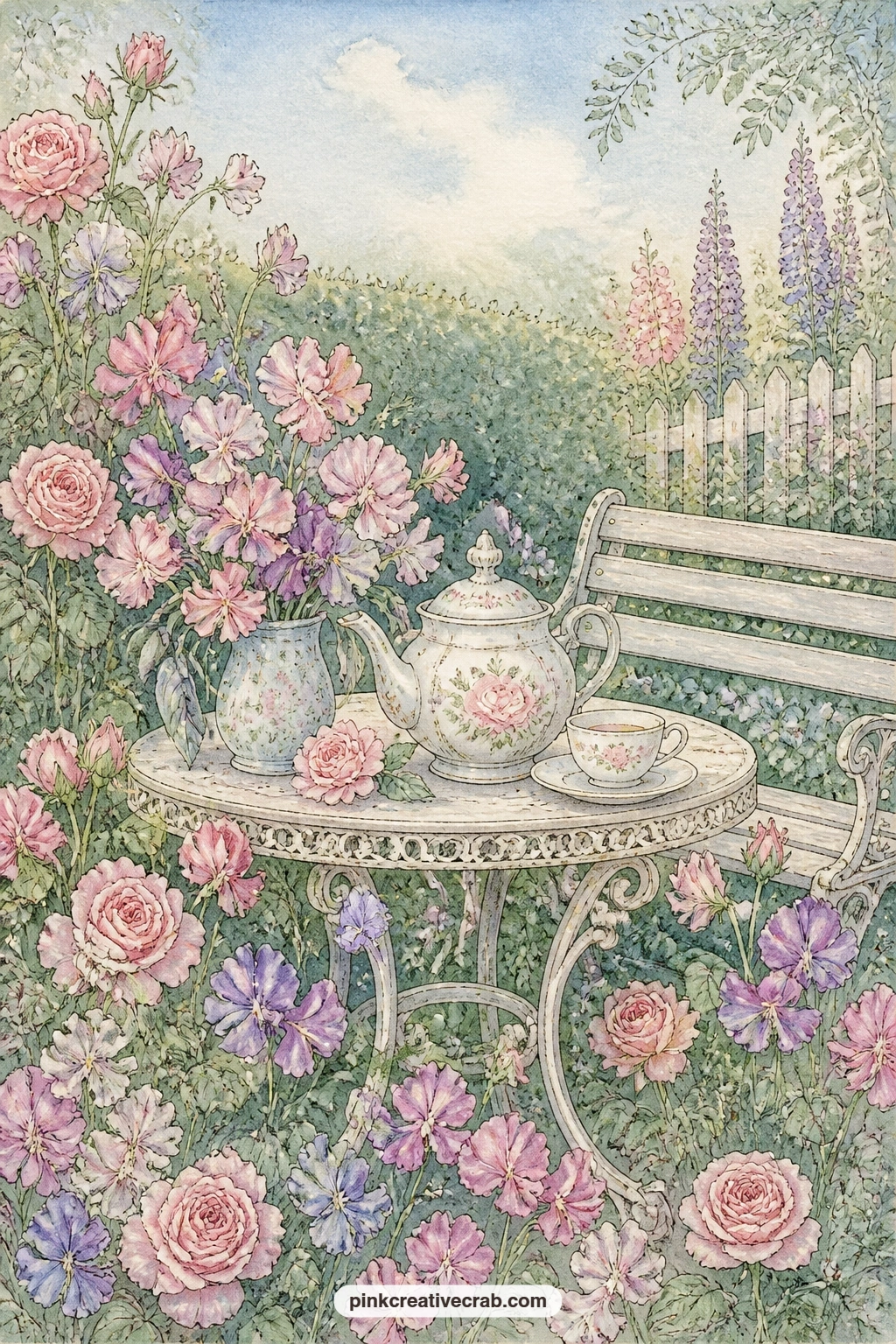
Ask a simple question on this entry: what would you serve at this table, and who would you invite to sit beside the sweet peas with you.
Place this page beside the pond scene later in the set, matching water for water, so the two pages read as one quiet corner of the garden across a spread.
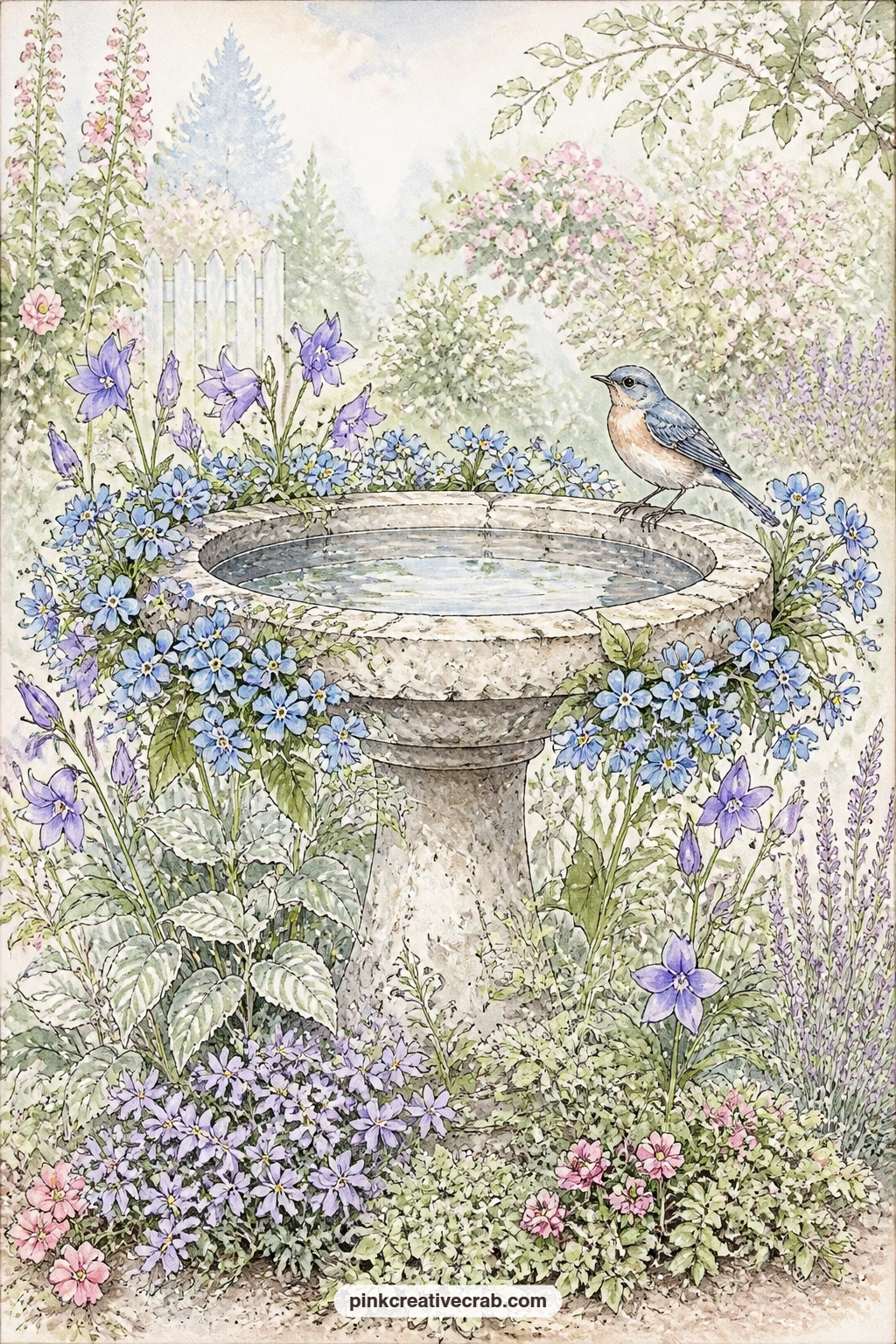
A common slip here is painting the birdbath water too dark, which flattens the whole page, so keep it a pale wash and let the stone basin do the work instead.
Cottage And Gate Pages
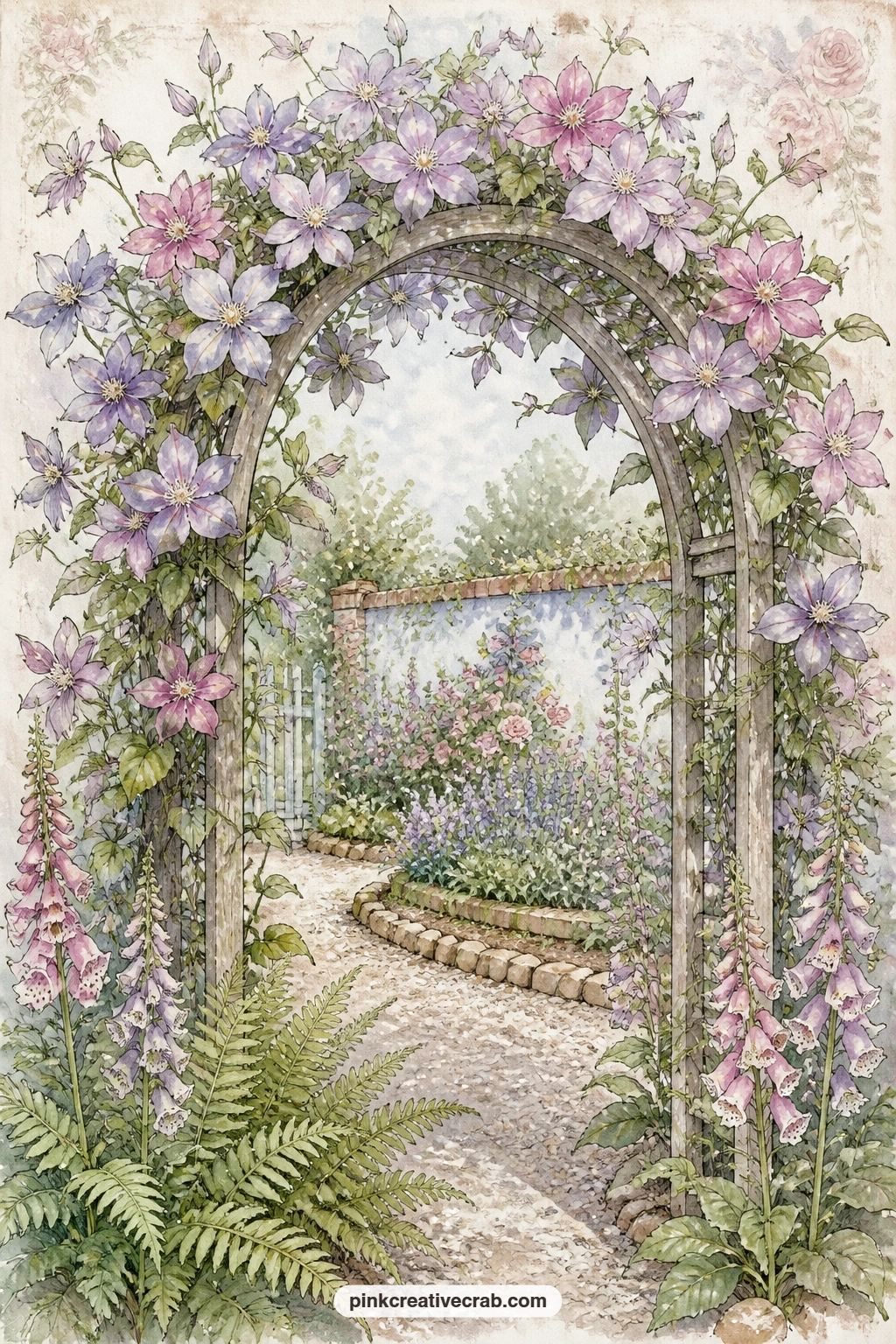
An arched trellis thick with clematis stands over a gravel path, with ferns and foxgloves gathered at its feet and a garden bed glowing softly behind.
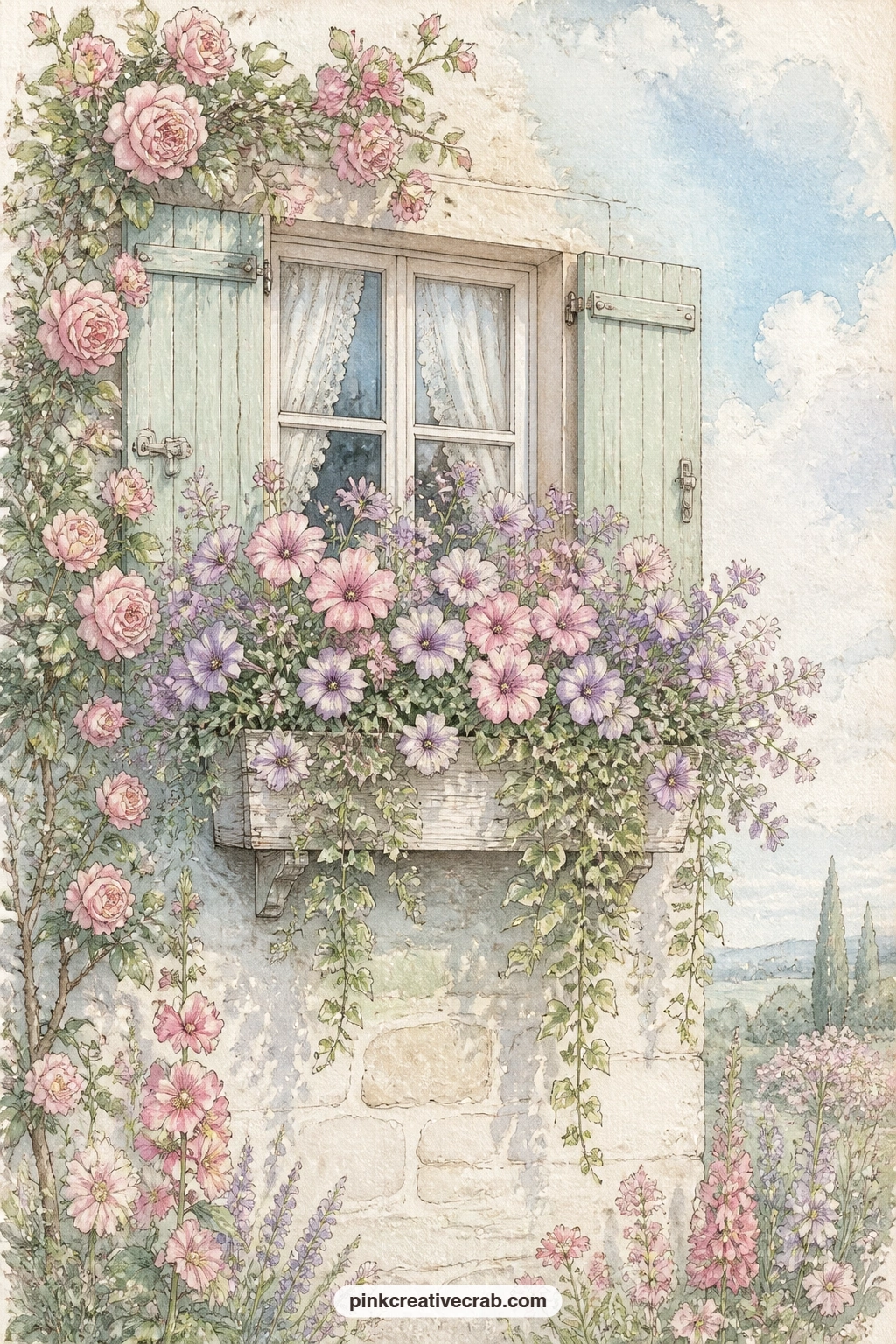
For a quick five minute page, paint just the window box and the sill beneath it, letting the painted wall behind stand in plain rather than adding the whole cottage front.
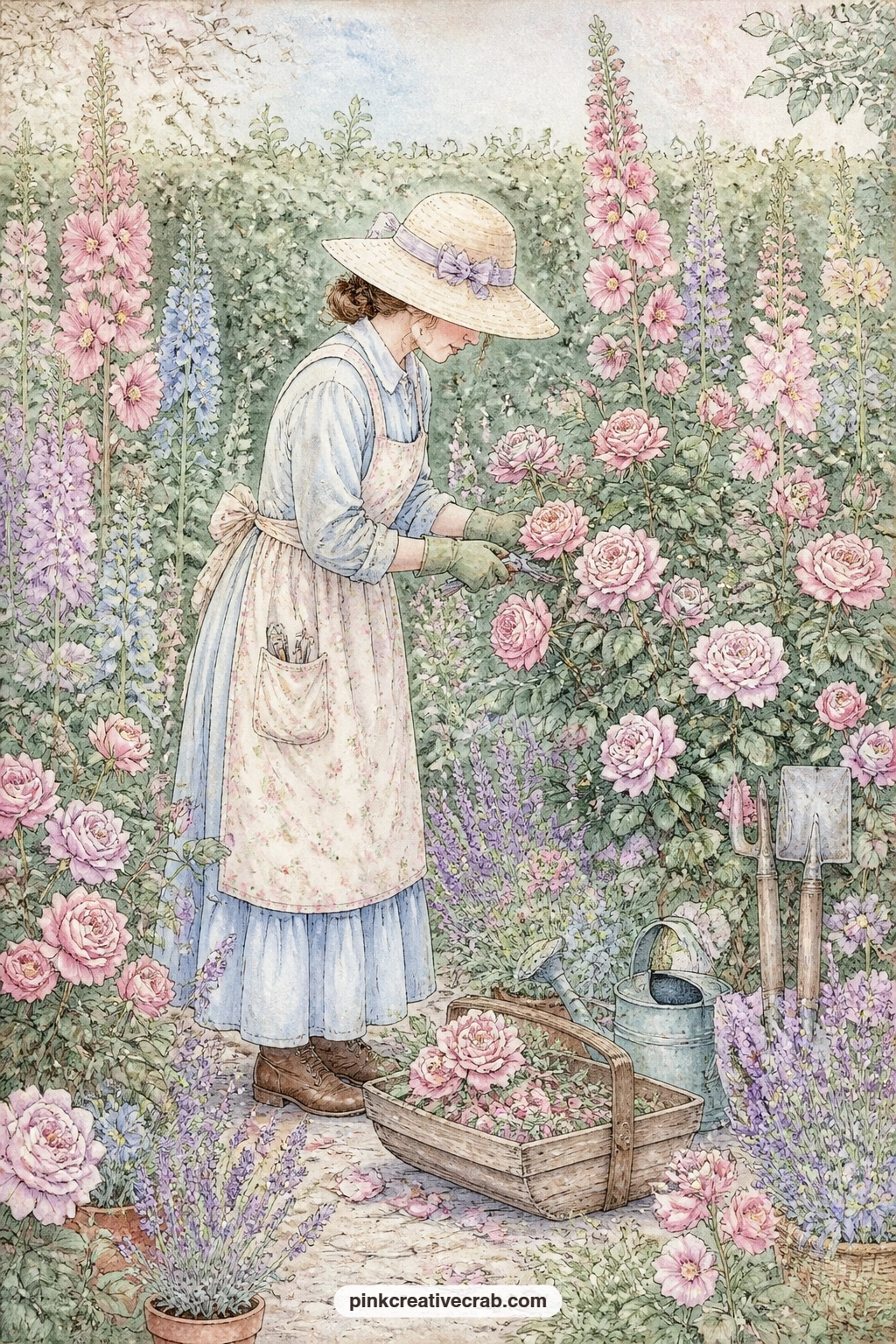
A gardener in a straw hat works through a rose bed with a wooden trug at her feet, spent blooms already gathered, the fuller border glowing behind her in the afternoon light.
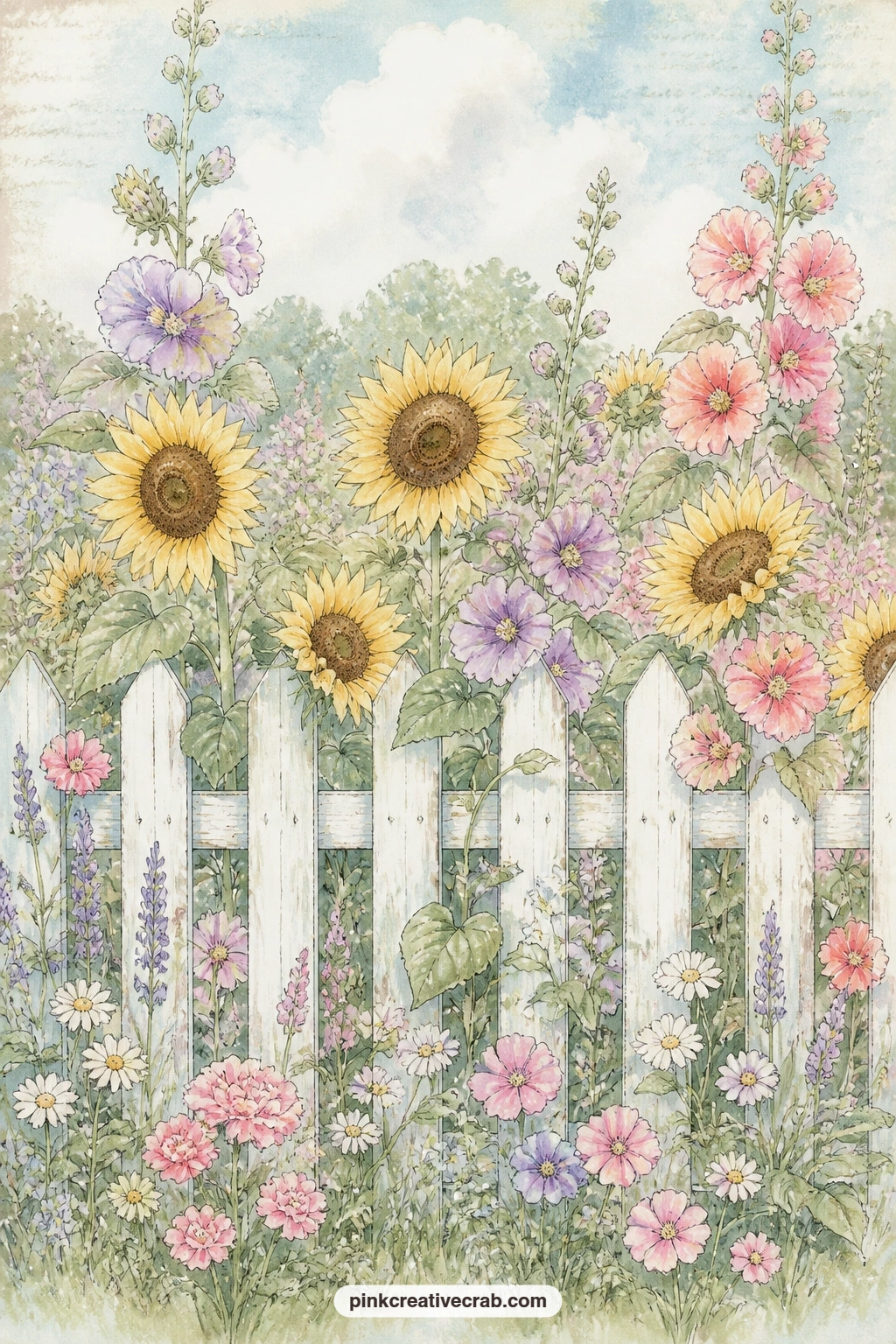
Fold this page down the middle so the fence opens like a little gate, with the sunflowers and hollyhocks rising taller on the half that unfolds.
If folding feels fiddly, simply glue the page flat and let the tall flowers run off the top edge, which gives nearly the same sense of height without any extra cutting.
Gardeners And Creatures Pages
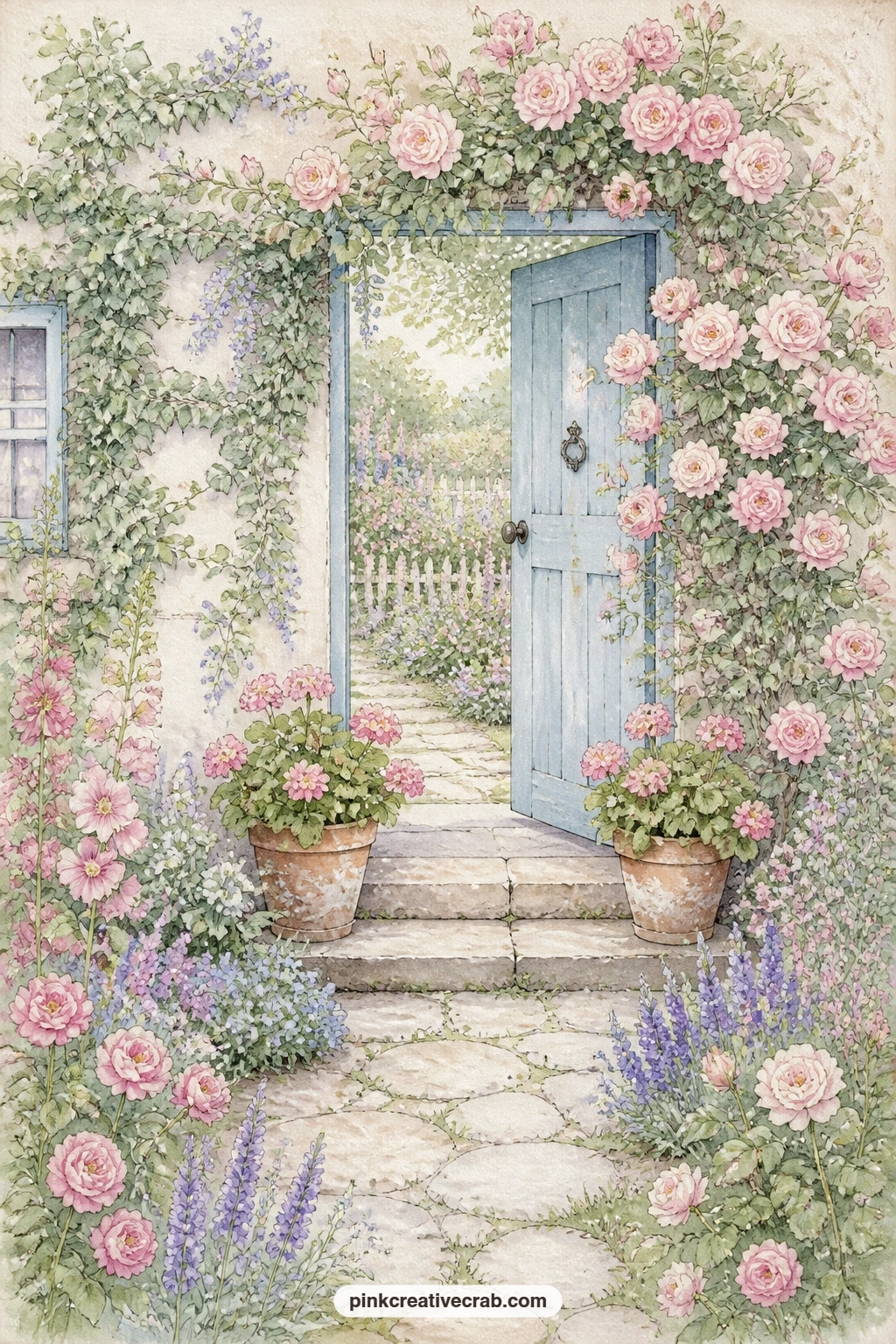
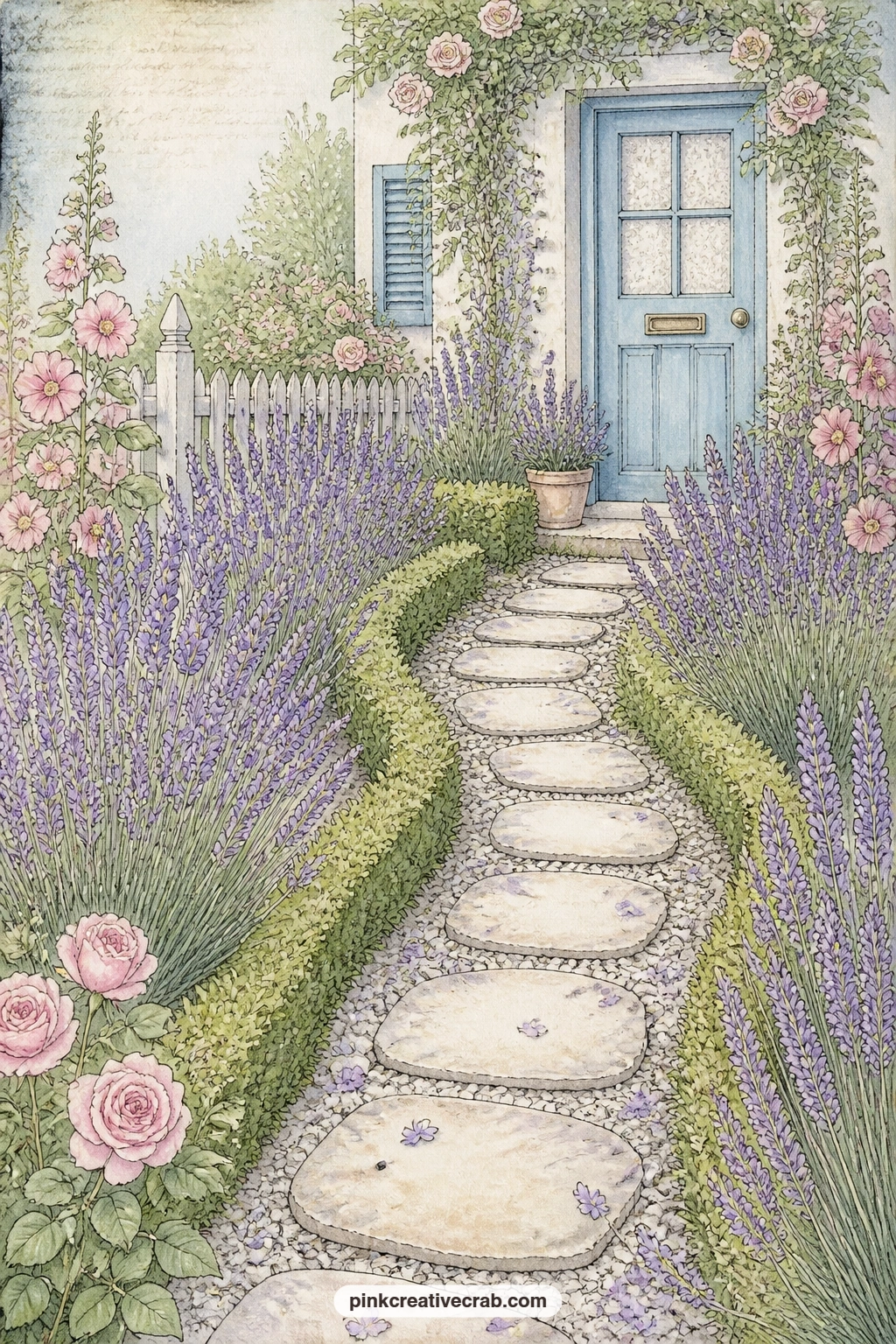
Lay stepping stones through a bank of lavender, the path ending at a blue cottage door, with low box hedging and a scatter of fallen petals along the stones.
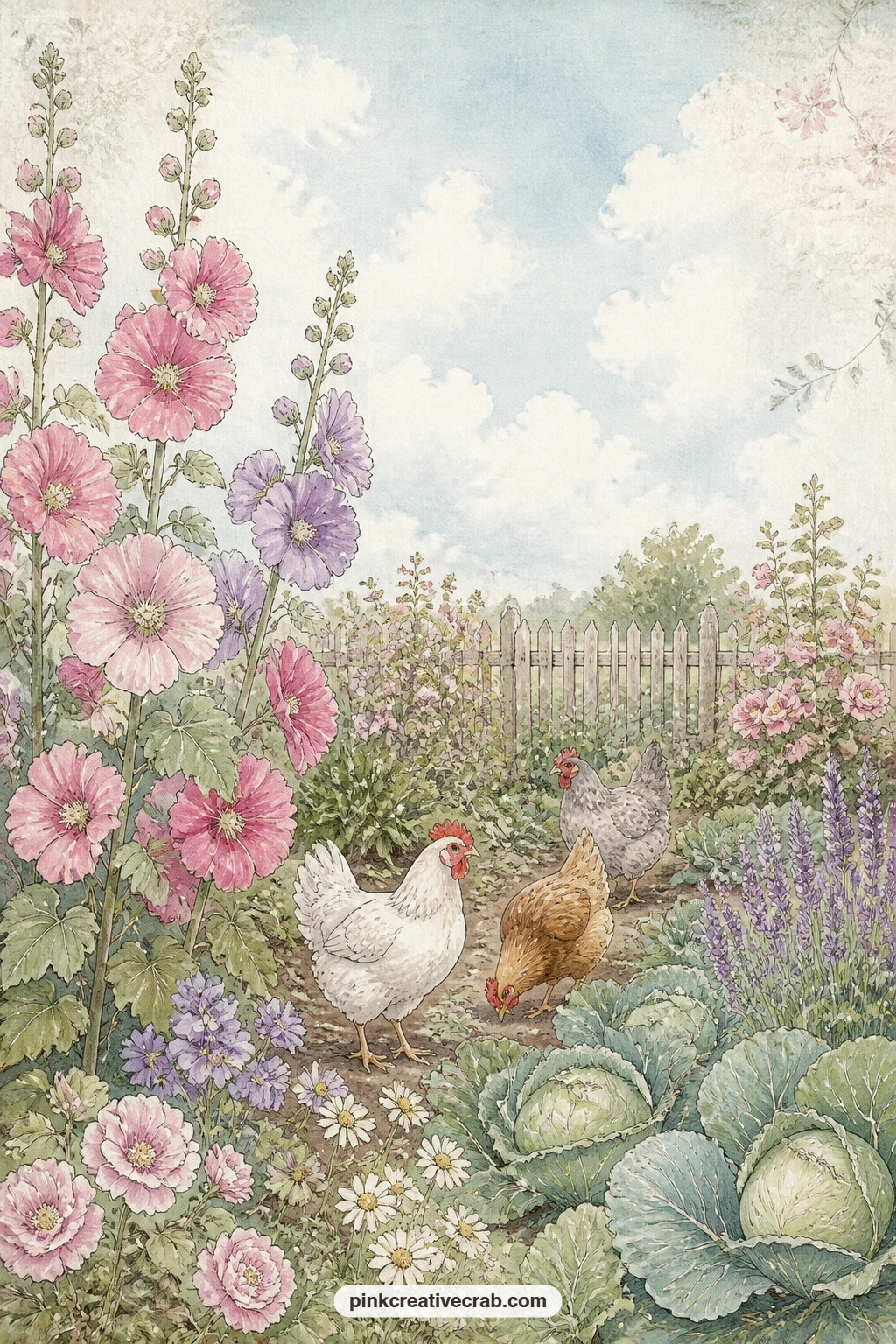
Let a sketchbook lover try this one in full, since a hobbyist with more confidence can work the hollyhocks, cabbages and chickens all in one loose, lively pass across the page.
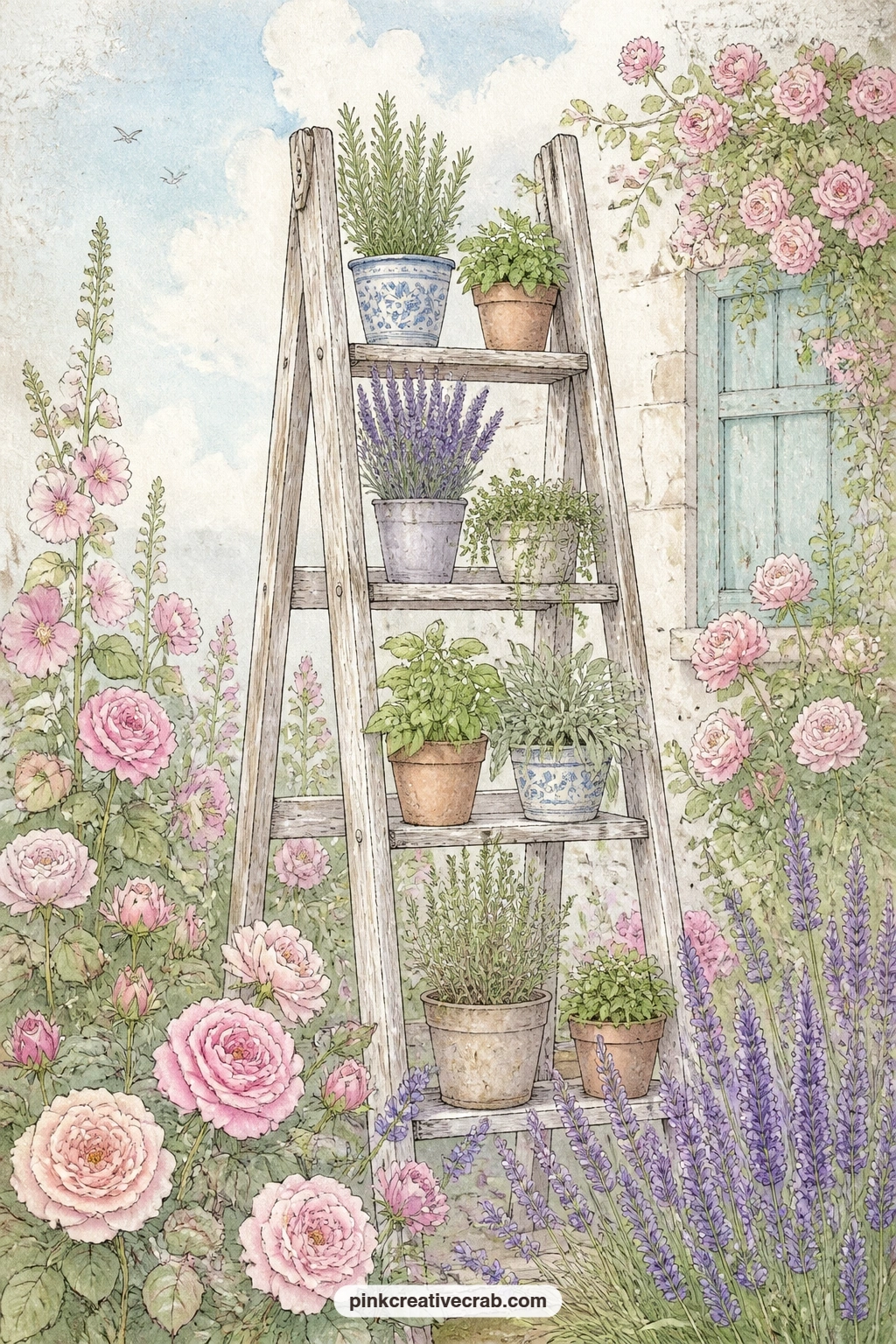
Write a short herb list down this page, naming what grows in each pot on the ladder, from rosemary to mint, as a little record for next year’s planting.
Gardeners And Creatures Pages
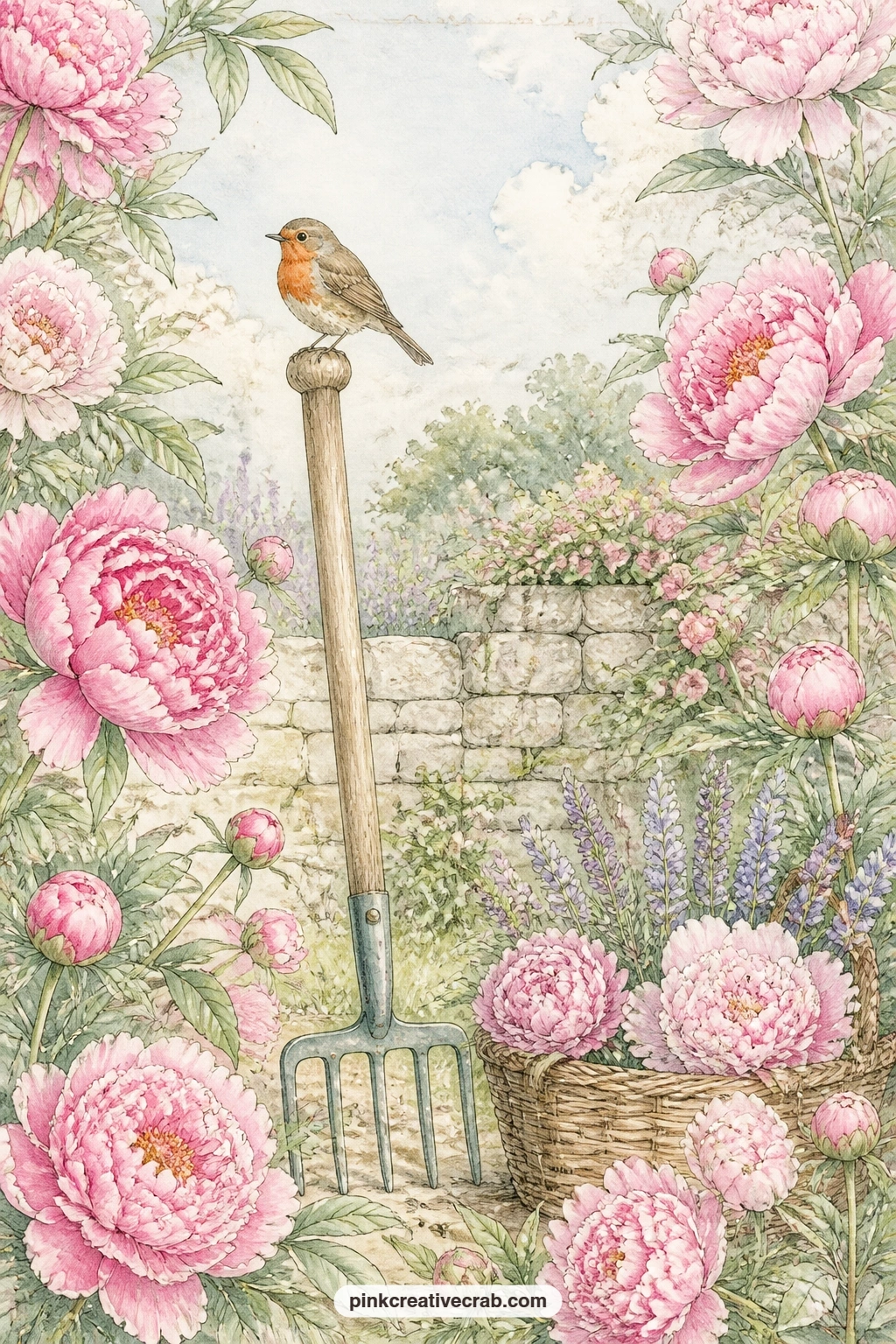
A robin perches on an upright rake handle in a border thick with peonies, a basket of cuttings nearby and a low stone wall closing the scene behind it.
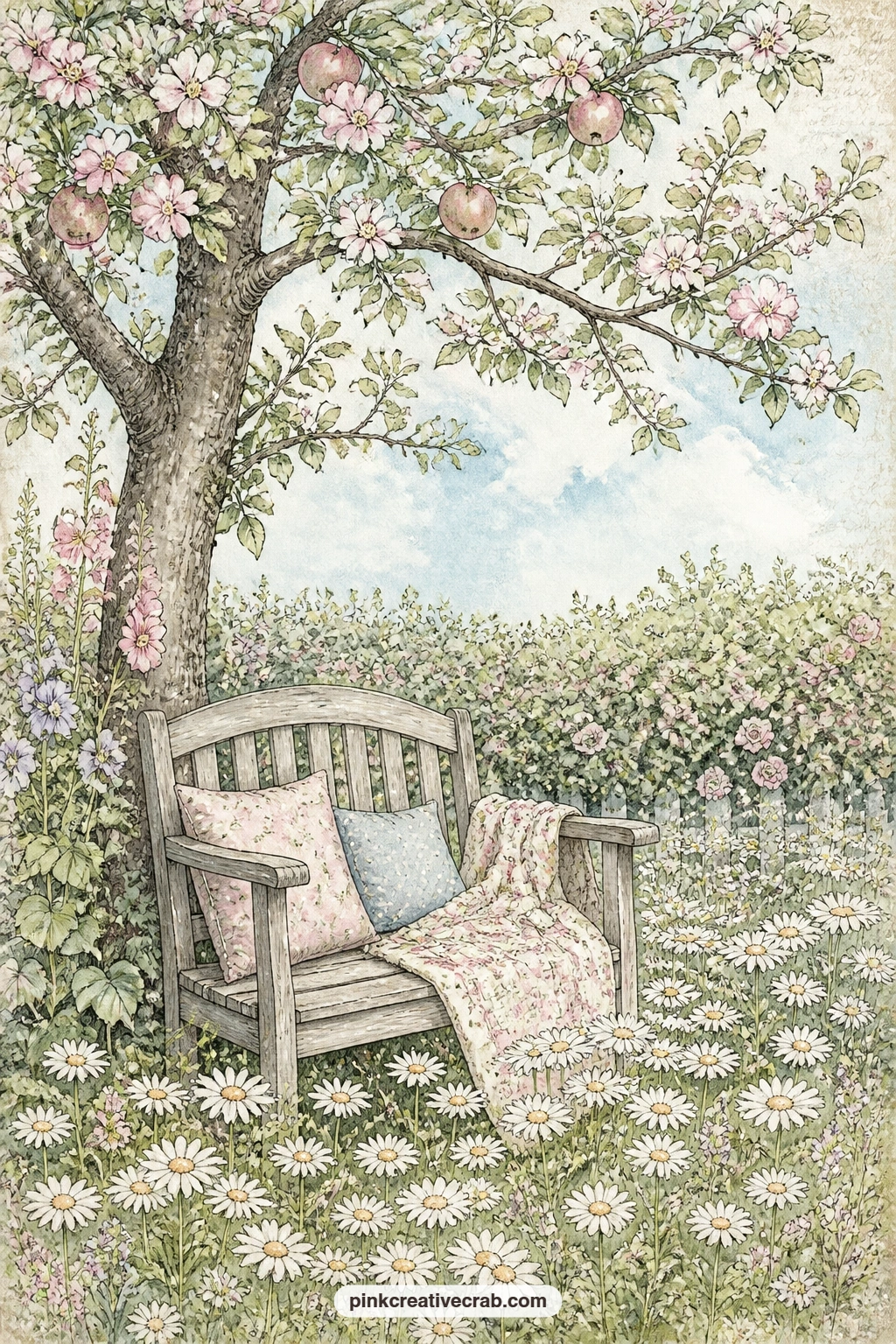
Ask what you would read or write sitting on this seat, with daisies scattered thick at your feet and the apple tree’s branches filling the quiet space overhead.
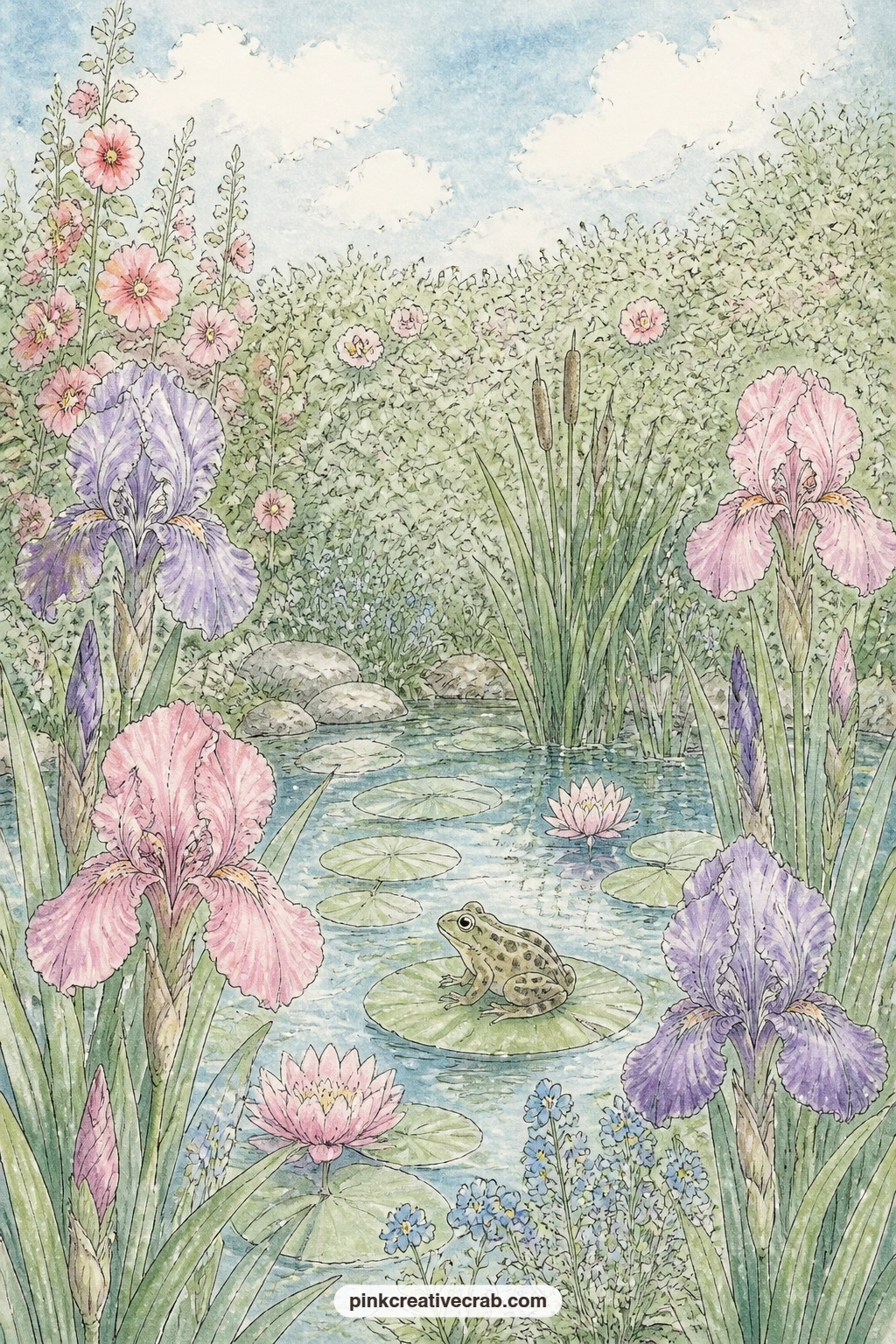
A cottage pond sits ringed with irises, a frog resting on a lily pad at its centre, reeds and forget-me-nots along the bank and a soft hedge painted behind the water.
Background Papers
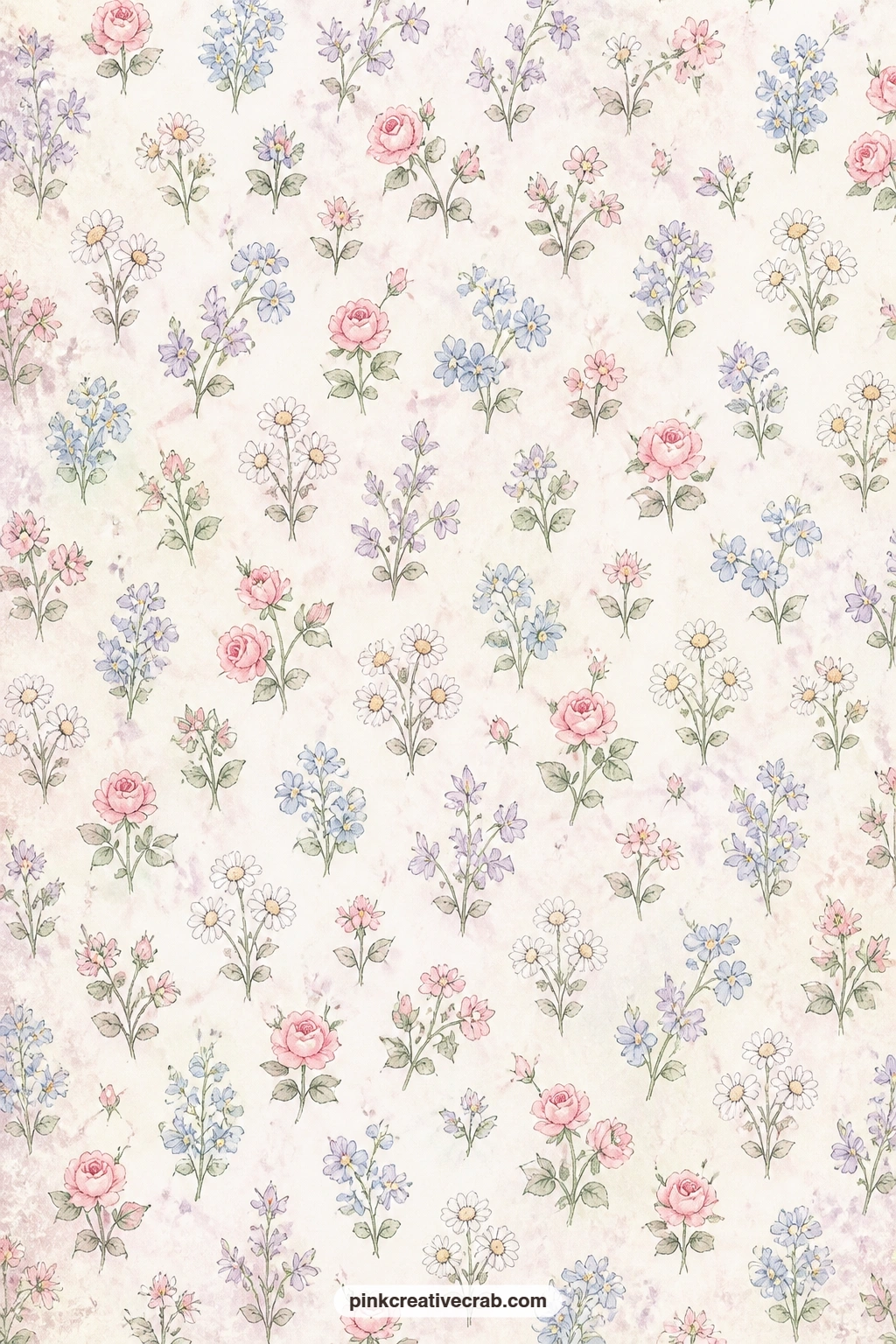
Small cottage garden flowers scatter edge to edge across a cream ground, in the same soft palette as the scene pages. Use it under a photo of your own garden, as a pocket lining for pressed petals, or as a journal cover.
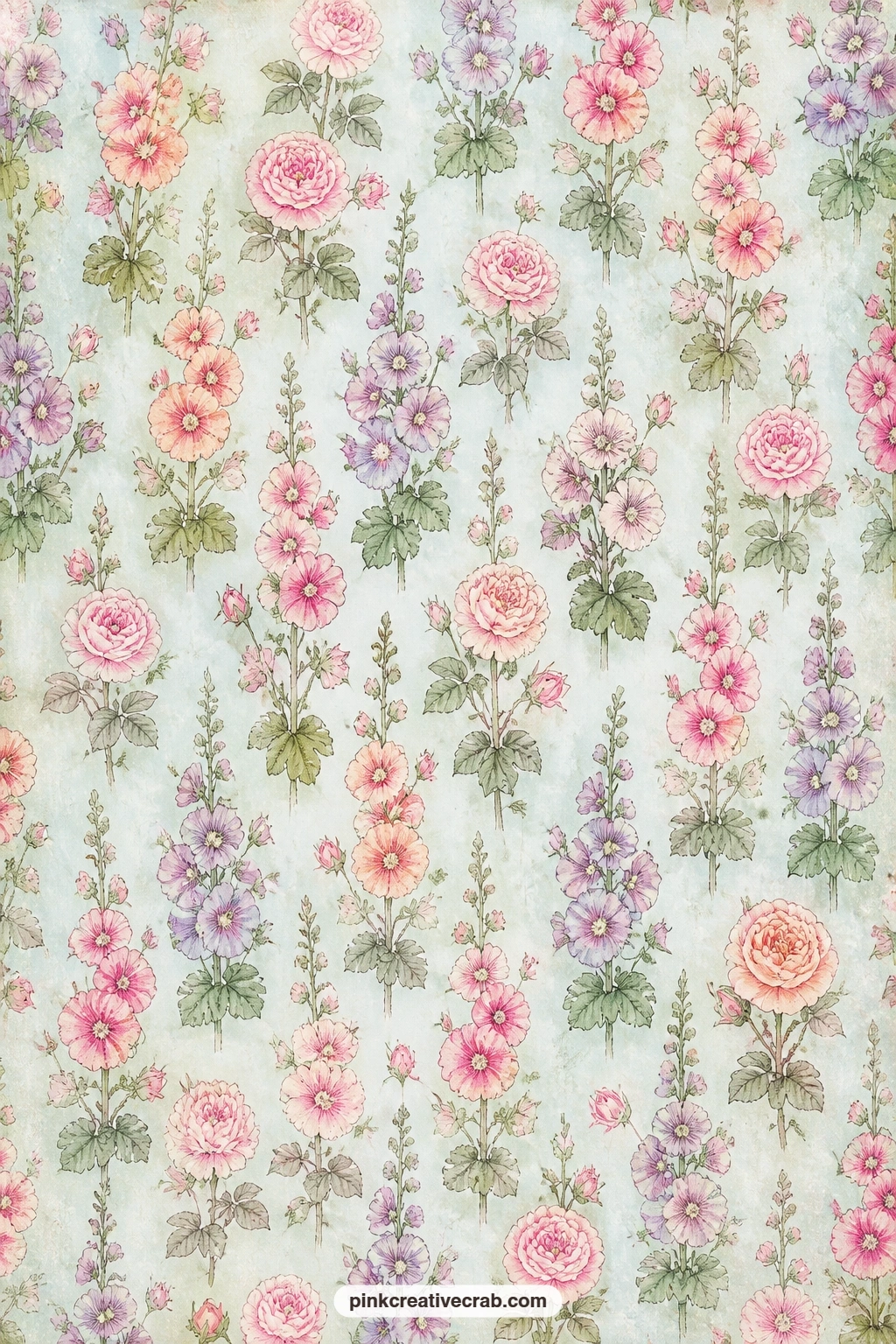
Hollyhocks and roses repeat across a soft blue ground for a cover that feels like a June border. Pair it with the picket fence lined page for a matching cover and first spread, or use it to back a pocket of garden notes.
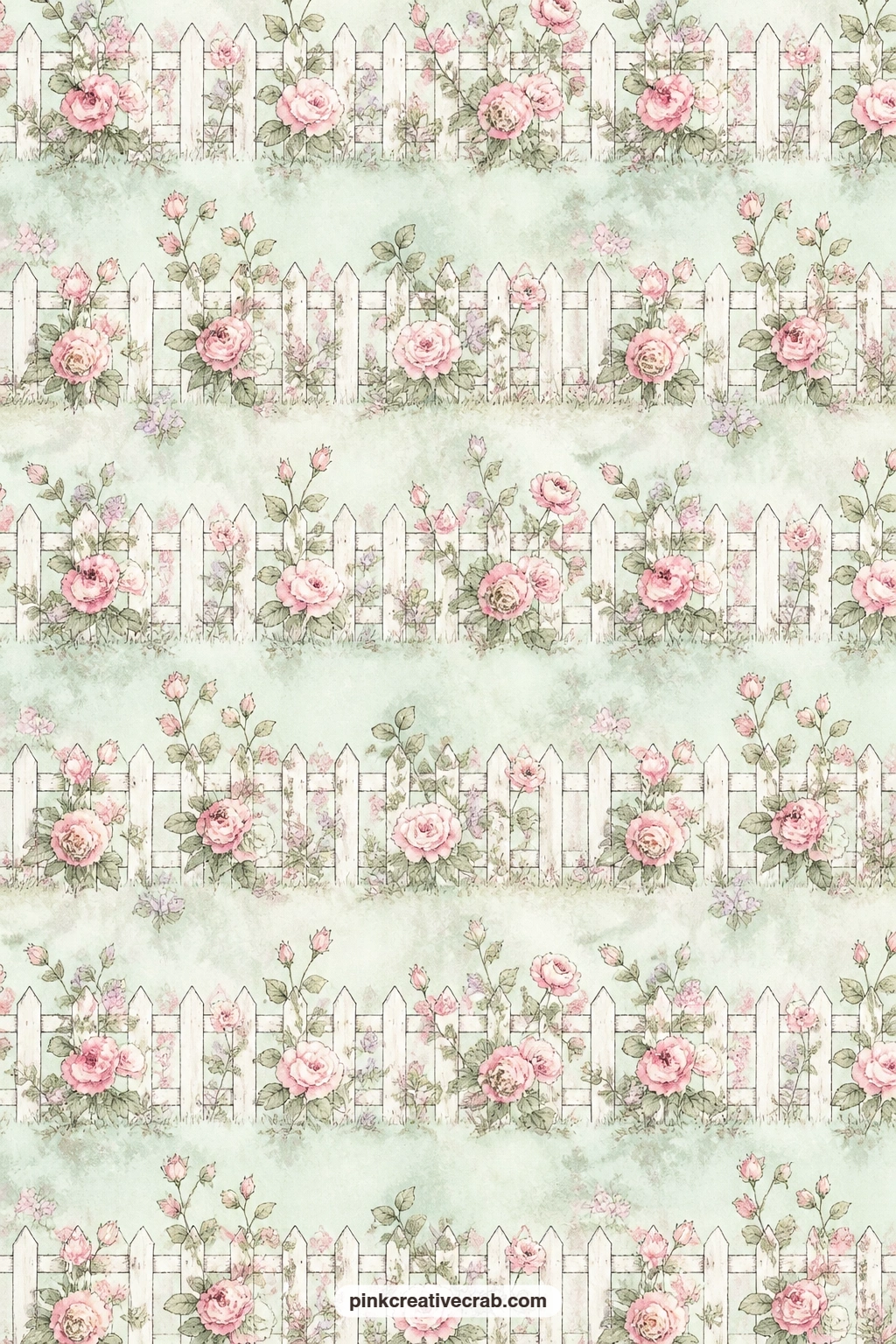
A picket fence runs the width of the page under climbing roses, repeated in mint across the whole sheet. Good under a sunny garden photo, as a pocket for seed packets, or wrapped around a smaller signature as a cover.
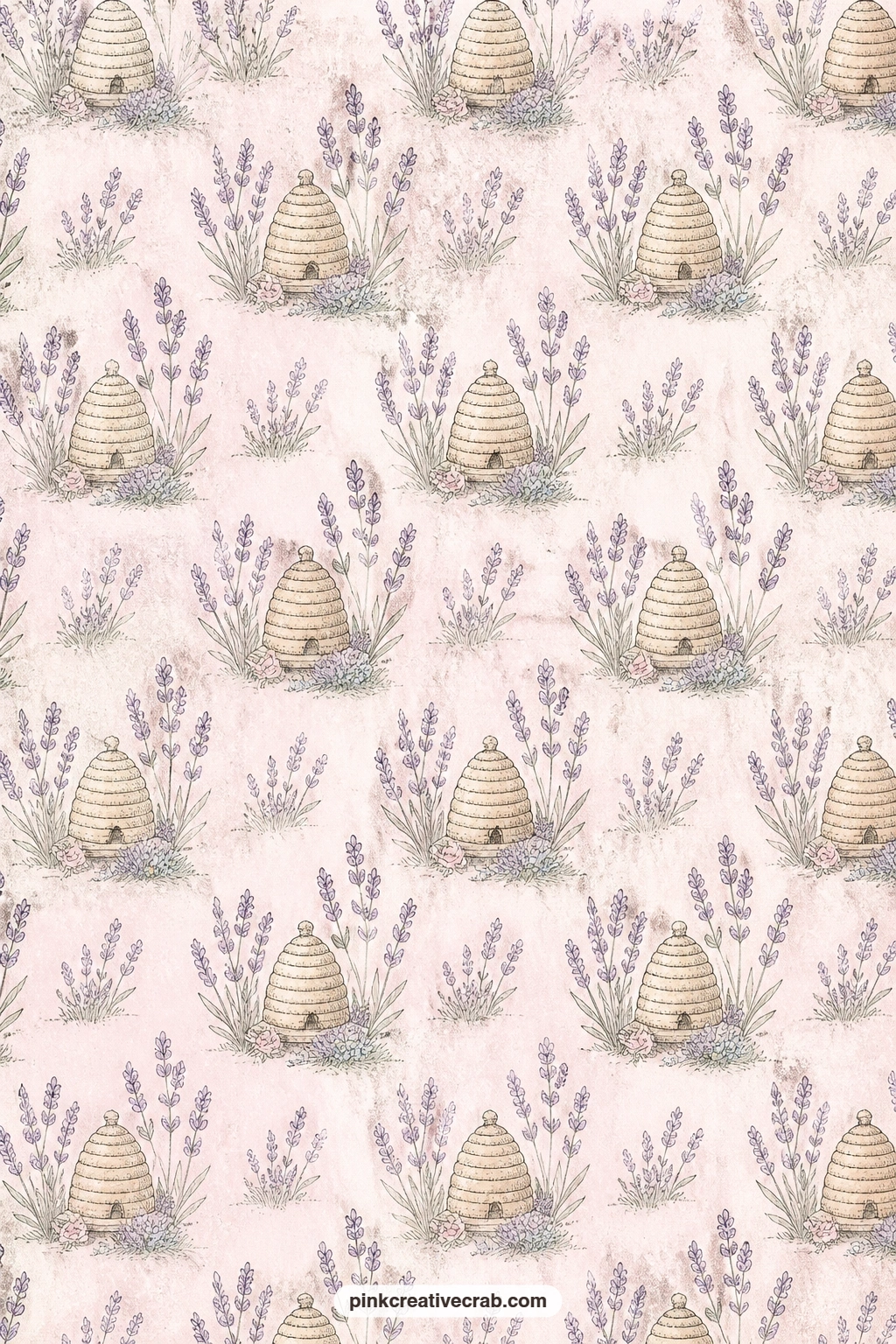
Little beehives sit among rows of lavender on a blush ground, repeated gently across the whole page. Use it behind a photo from a summer garden visit, as a pocket lining, or as endpapers for the finished journal.
Lined Writing Pages
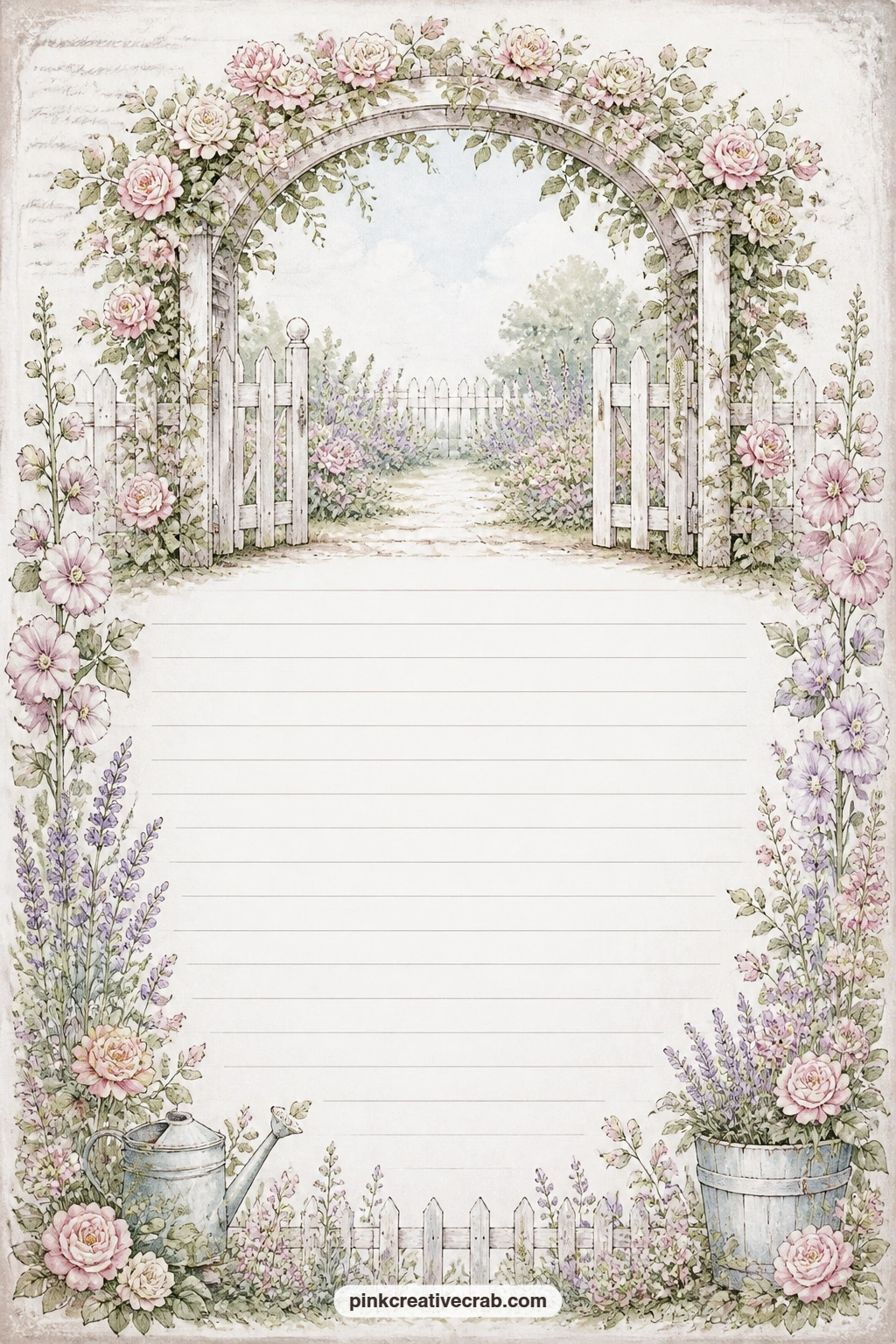
A rose arbor and picket gate frame the top of this page, faint ruled lines running beneath for the writing itself. Good for a garden visit log, a planting plan, or a letter to next year’s gardener.
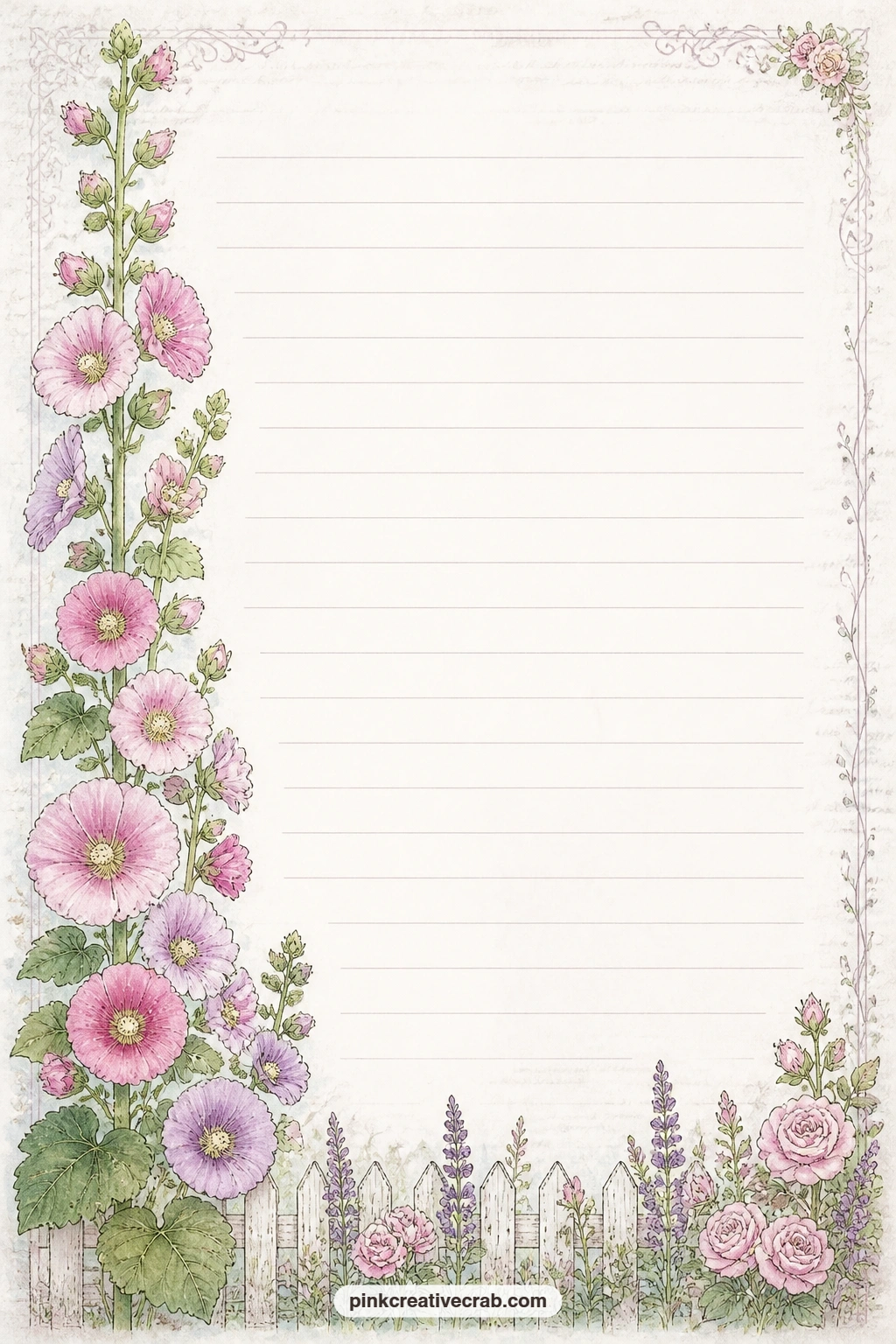
Hollyhocks climb the full length down one side of this page, faint lines crossing the rest for writing. Use it for a seed shopping list, notes on this season’s blooms, or a quiet letter about the garden.
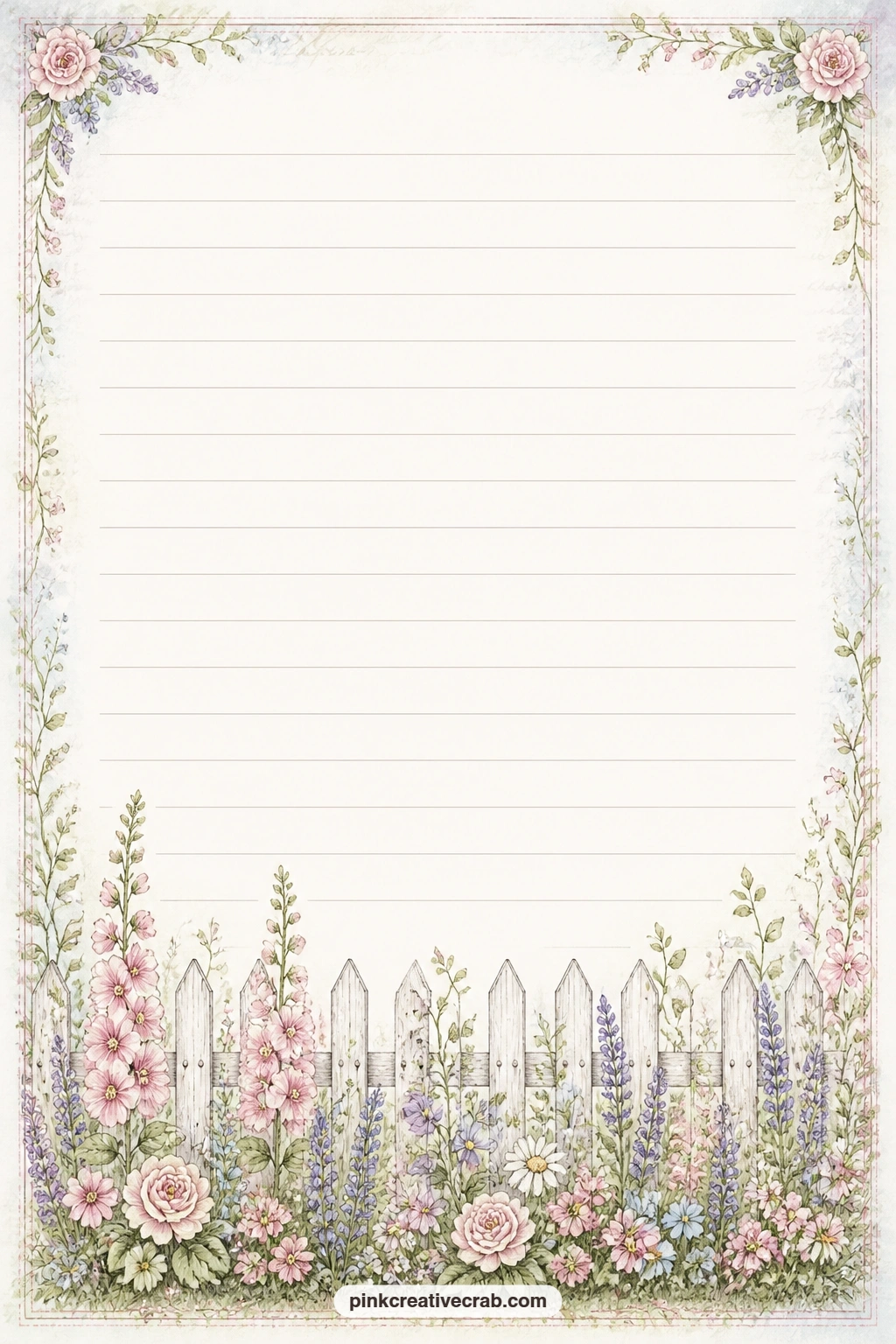
A picket fence crowded with cottage flowers runs along the bottom edge, faint lines filling the page above for writing. Try it for a garden gift list, a menu for an outdoor tea, or a few lines about today’s weather.
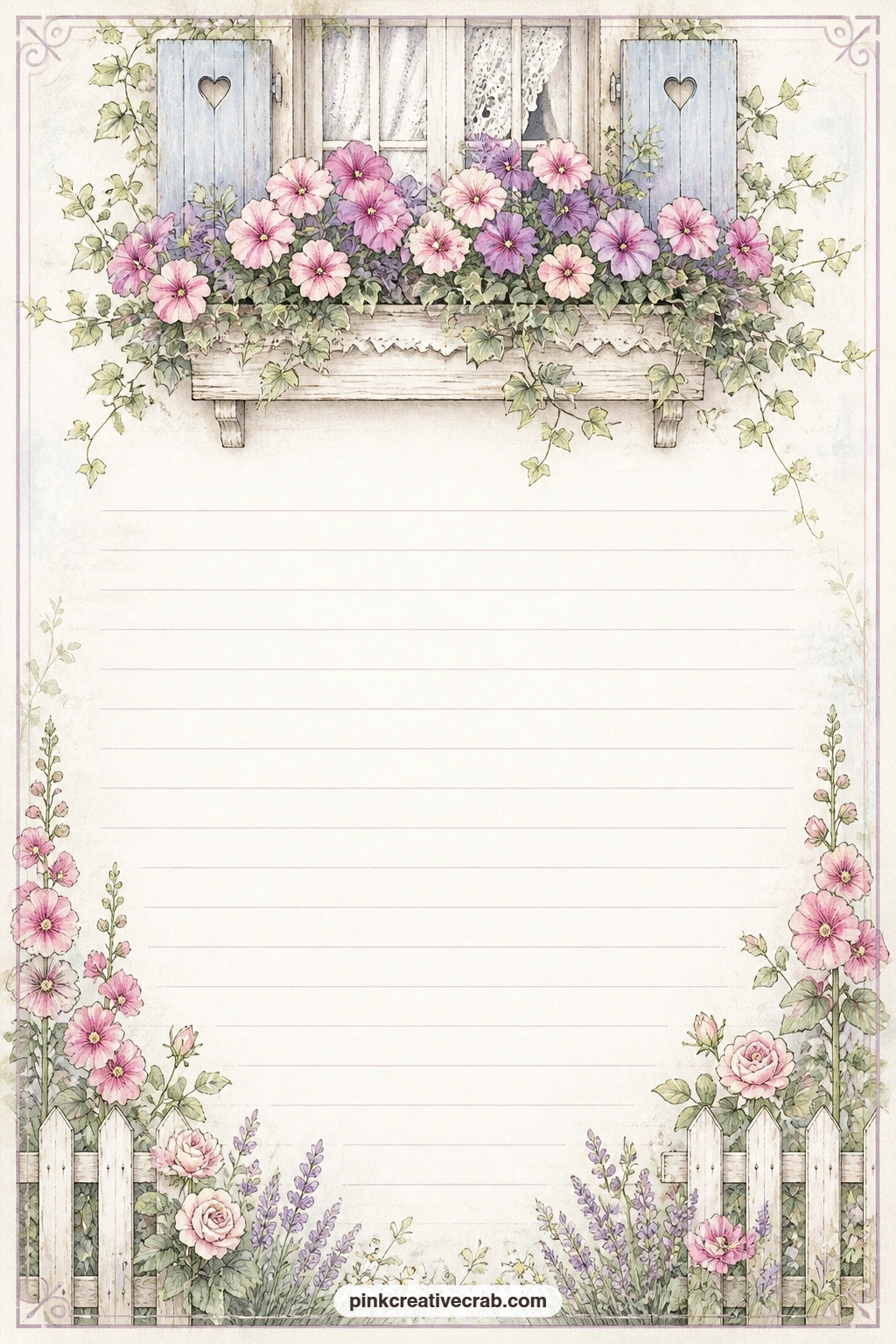
A cottage window box spilling with petunias and ivy sits along the top border, faint lines running beneath for the entry. Good for a potting schedule, a flower press log, or a short letter to a gardening friend.
What to Do Next
Print the pages you want first, trim them to size, and start gluing from the thatched cottage scene forward so the garden grows across the journal the way it would across a season.
Frequently Asked Questions
What paper works best for a cottage garden junk journal?
Matte cardstock around 65 to 80 lb suits the scene pages and backgrounds best, since it holds colour well without curling. Lighter paper, around 24 to 32 lb, works fine for the lined pages if you plan to write across them often.
What printer settings give the sharpest results?
Set the printer to its best or photo quality and choose the matte or cardstock paper type if that option exists. This keeps fine details like petals and ink outlines crisp rather than soft or patchy.
What size should I print these pages at?
Standard US letter or A4 suits most home printers and journal sizes. Trim each page down after printing to match your journal’s cover, or fold larger sheets in half for a smaller handmade book.
Do I need to colour these pages myself?
No, every page already comes in full colour, ready to print and use straight away. You can still add extra touches with coloured pencils or a water brush if you want more texture on a particular page.
What glue works best for gluing pages into a journal?
A standard acid free glue stick works well for flat pages and keeps the paper from wrinkling. For pockets, flaps or foldouts, a little washi tape along the edges holds better than glue alone.
Have any thoughts?
Share your reaction or leave a quick response — we’d love to hear what you think!
-
 0
-
0
-
0
-
0
-
0
-
0


