Table of Contents
A velveteen rabbit junk journal gathers the quiet moments from Margery Williams’ 1922 story into one printable kit: the nursery with its old toys, the spring woods where wild rabbits dance, and the worn little rabbit who waits through all of it to become real. This set follows the book’s own path, from toy basket to bracken wood, without quoting a line of it.
Inside you get 22 scene pages full of nursery shelves, garden corners and woodland light, 4 seamless background papers in velvet and primrose patterns, and 5 lined writing pages trimmed with bracken and patchwork borders for your own notes. Print everything on a heavier matte paper so the washes do not show through, set your printer to its best photo quality, and trim close to the edge before you glue or tuck anything in.
Using these images: free for personal projects such as printing, coloring, cards, journals and gifts. Handmade items that include them may be sold up to 30 pieces per design. More than that is commercial use and is not permitted, and neither is selling or sharing the images themselves or passing them off as your own. Please ask before any other use.
Nursery Toy Box
A soft velveteen rabbit sits folded into a woven toy basket, waiting among ribbons and worn cloth for someone to notice it again.
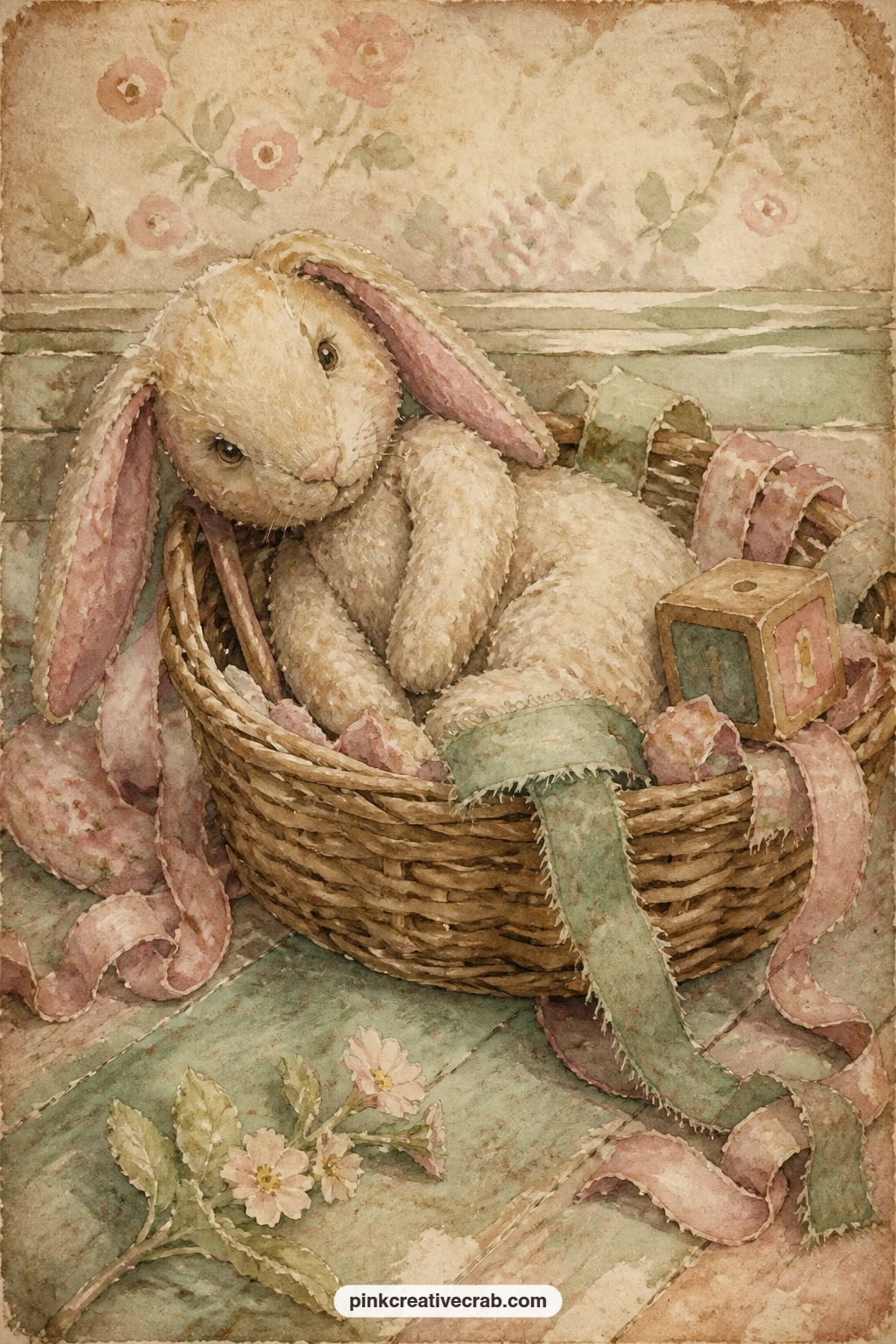
Try gluing a small paper tag to the shelf edge with a child’s name or a date, turning the page into a keepsake of toys once loved.
A row of worn toys sits along a narrow wooden shelf: a tin soldier, a cloth doll, a spinning top and the rabbit at the end, all catching the same soft nursery light.
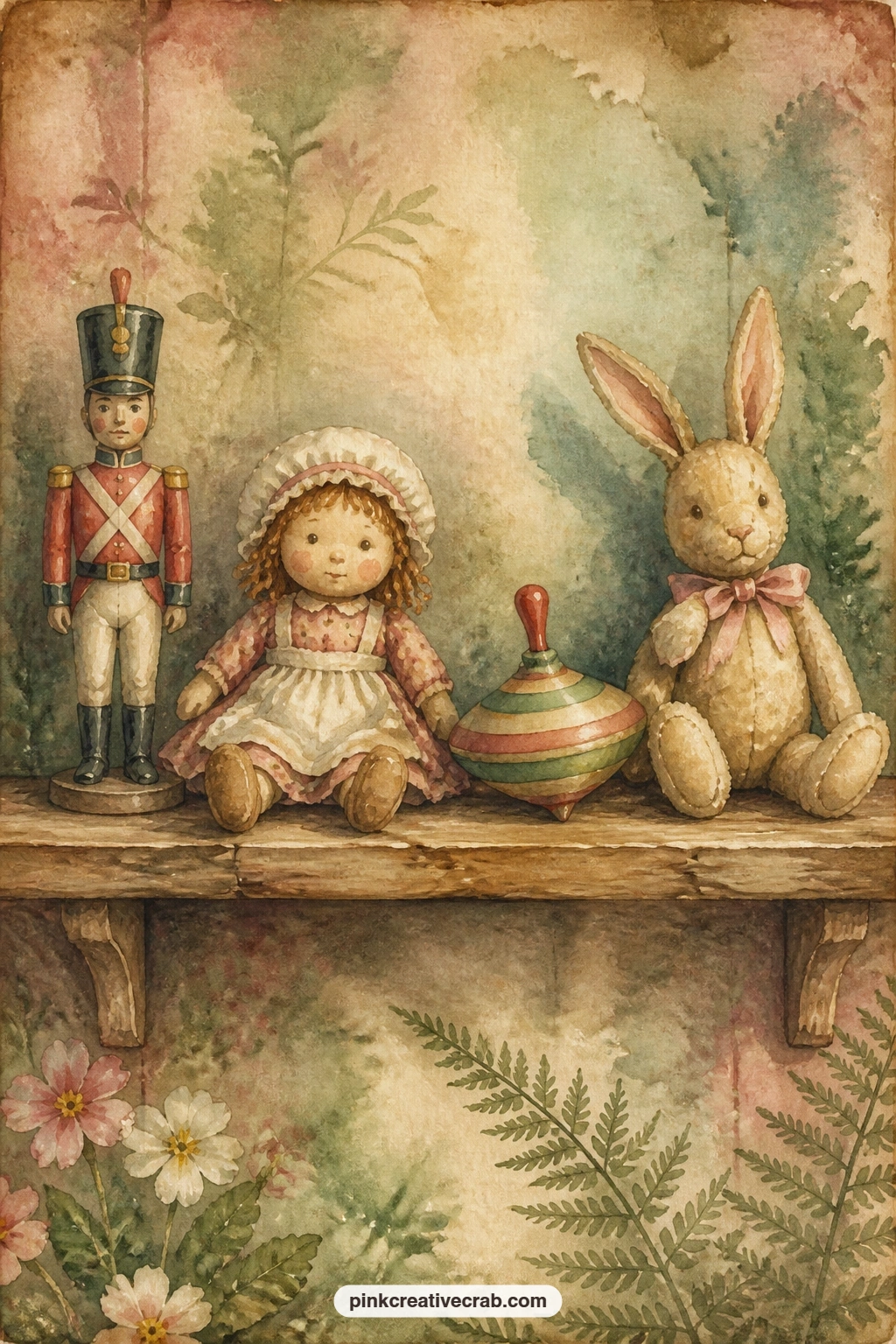
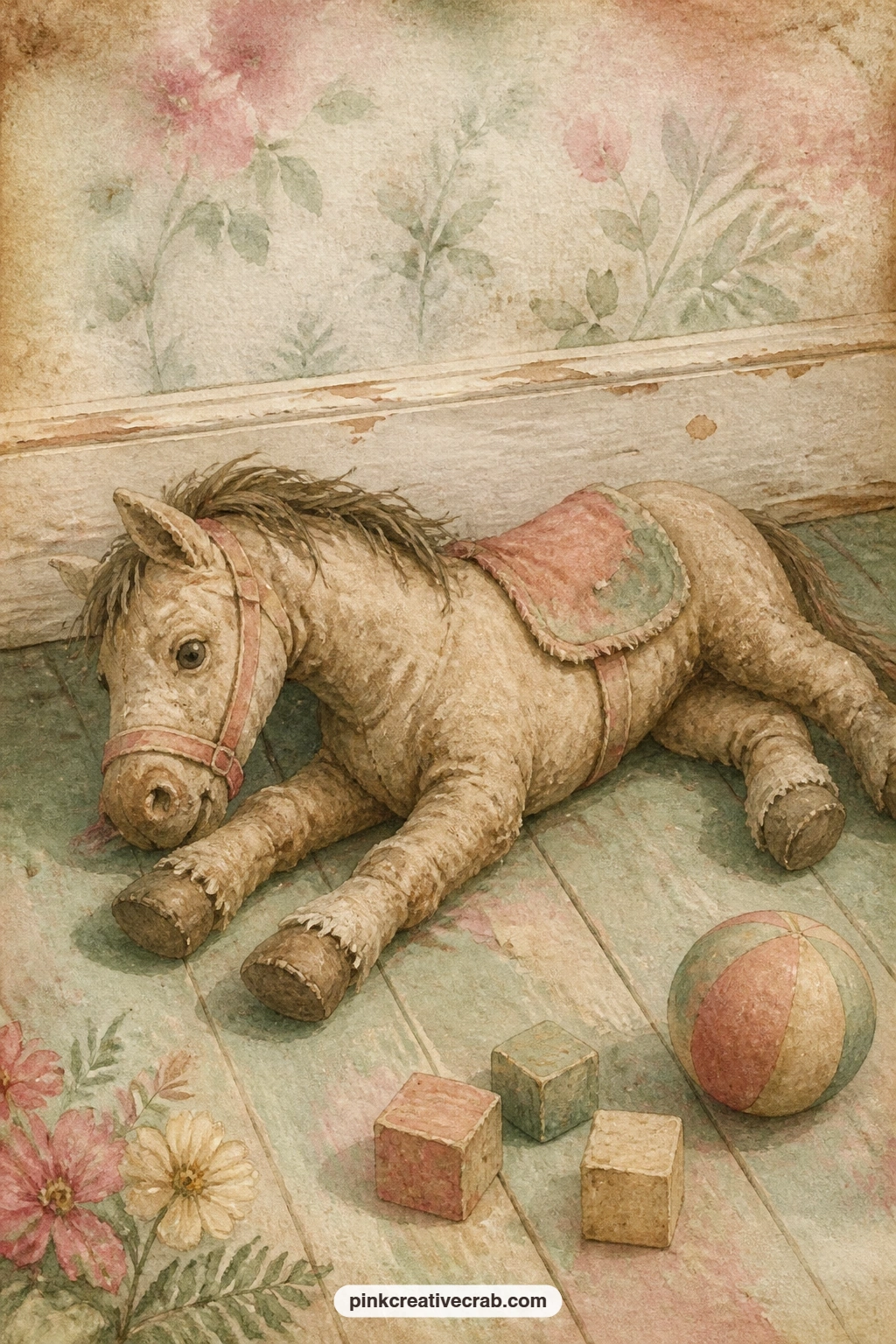
Pair this page with the faded nursery wallpaper stripe background behind it in your spread, letting the old horse rest against a softer pattern.
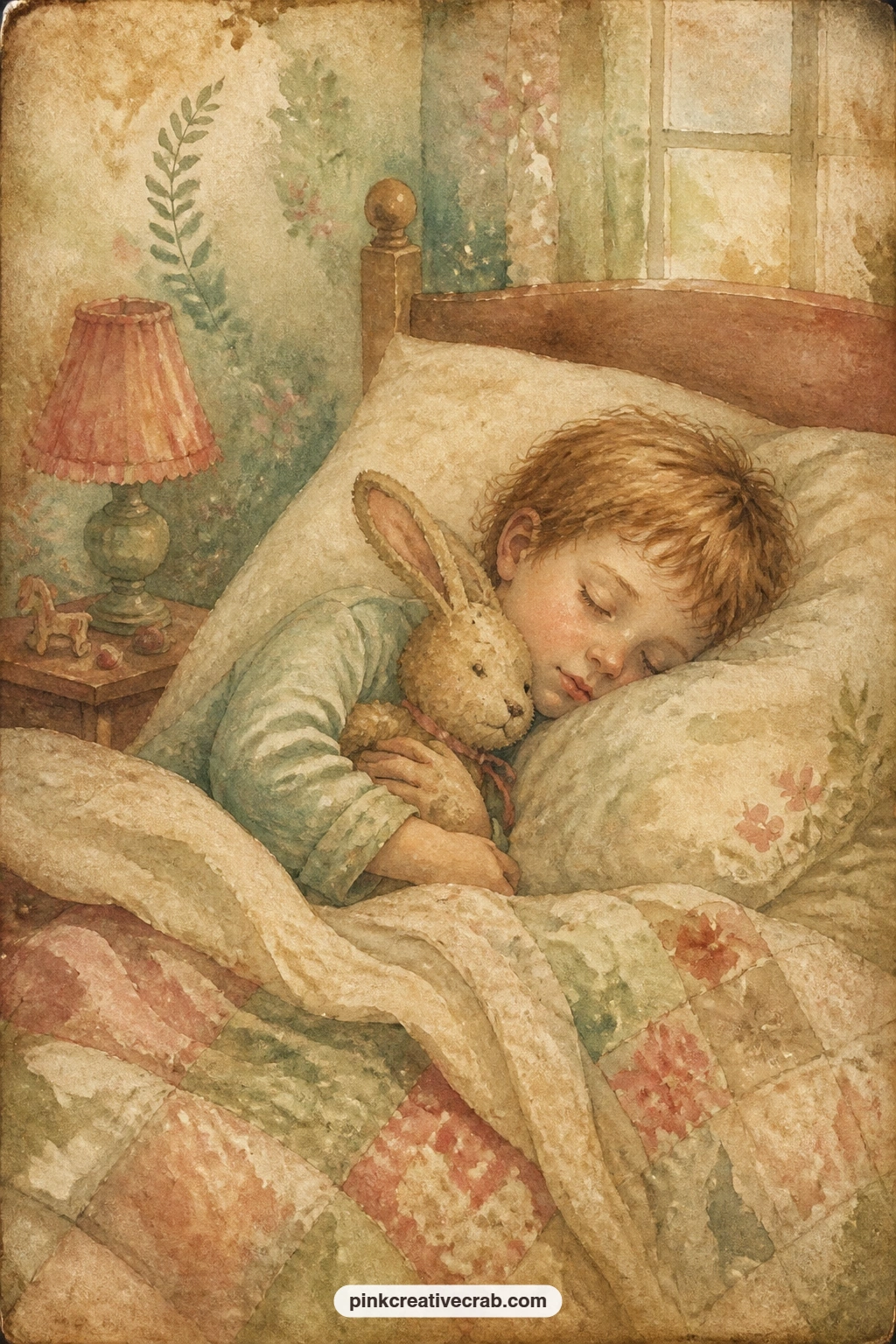
A sleeping boy holds the velveteen rabbit close under a folded blanket, both still against the quiet dark of the nursery.
Tuck a small paper moon or a handwritten line about bedtime rituals into the corner of this page if you want to add your own memory beside the story’s.
Garden And Meadow Pages
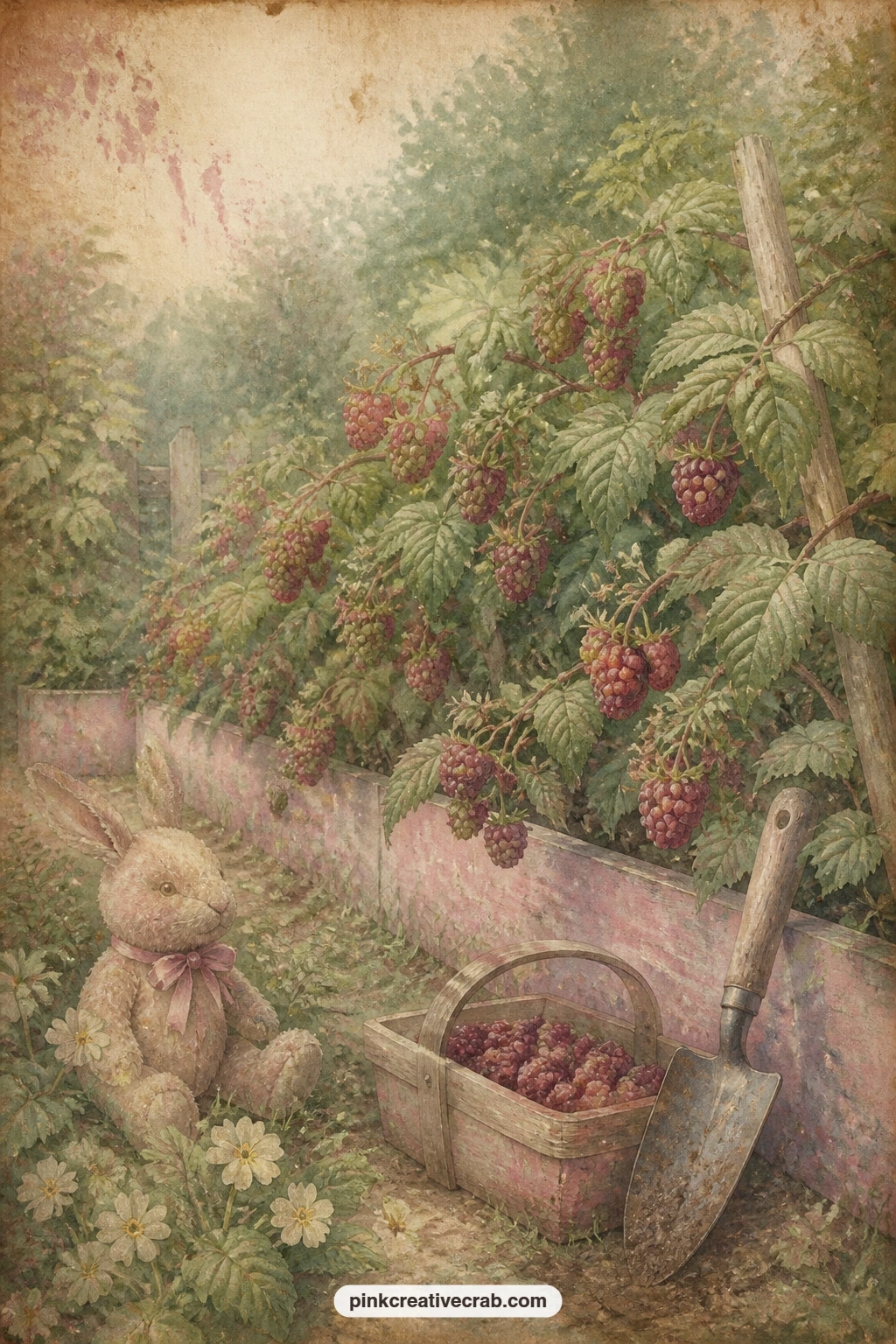
The usual mistake here is painting the canes too neat and tidy; let them lean and tangle a little, the way real raspberry rows do by midsummer.
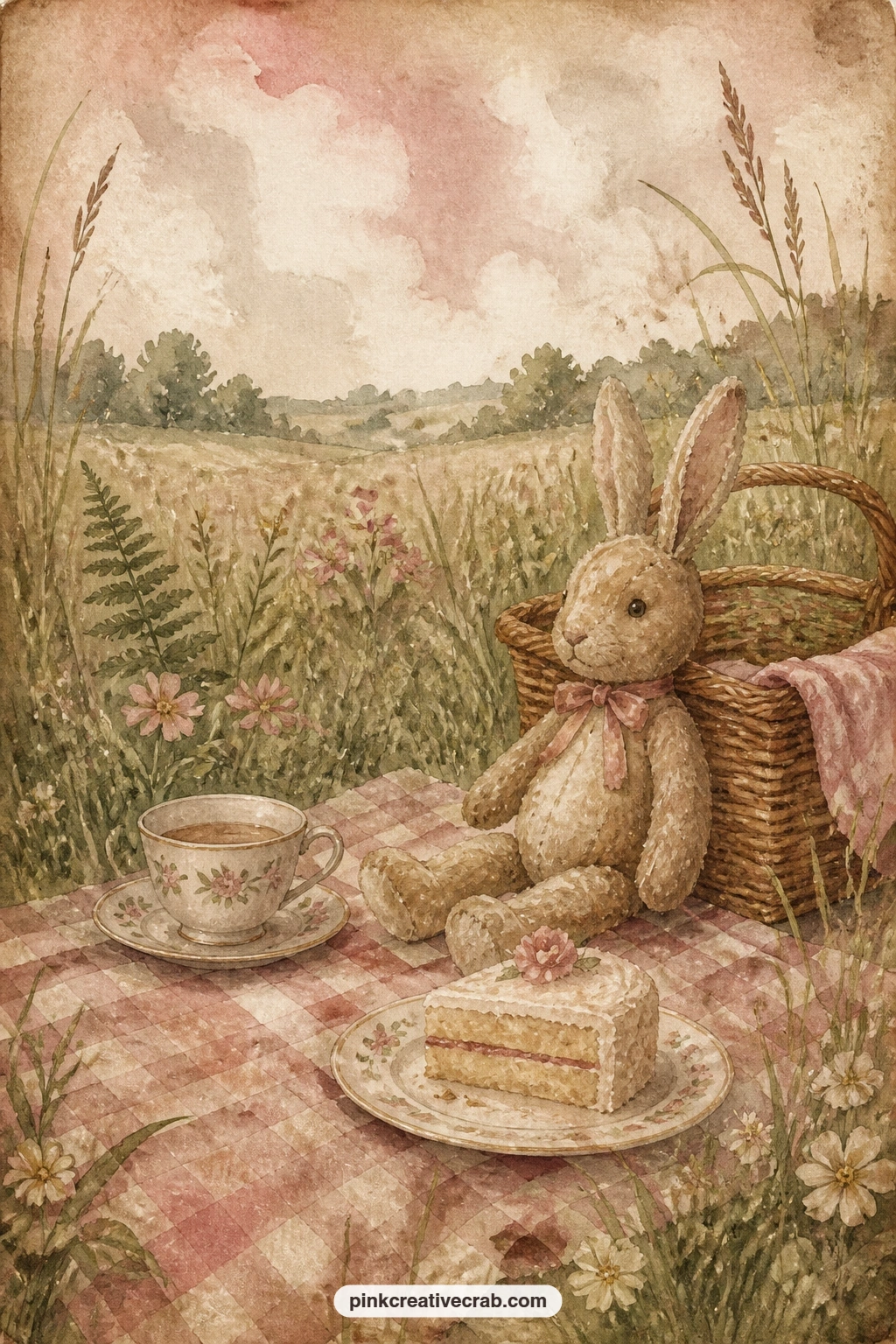
A checked cloth spreads through tall grass with the rabbit propped beside a small teacup and a slice of cake left half eaten.
This page suits anyone making a spring themed journal who wants a gentle outdoor scene, and a beginner can keep the grass as a few simple strokes while a more confident painter can add seed heads and shadow.
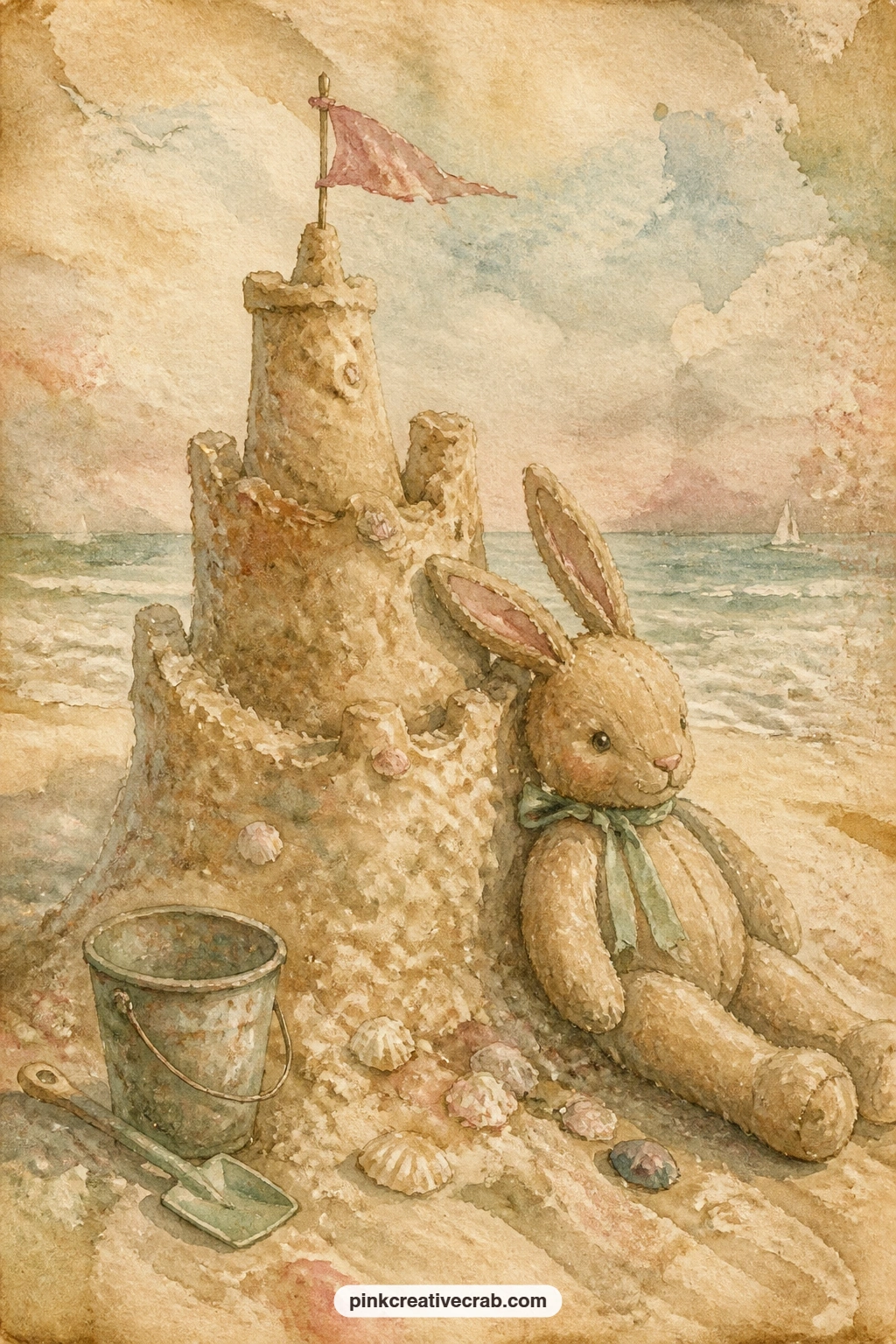
Five minutes is enough for this one: a small bucket, a flag and a lopsided sandcastle with the rabbit settled against its base.
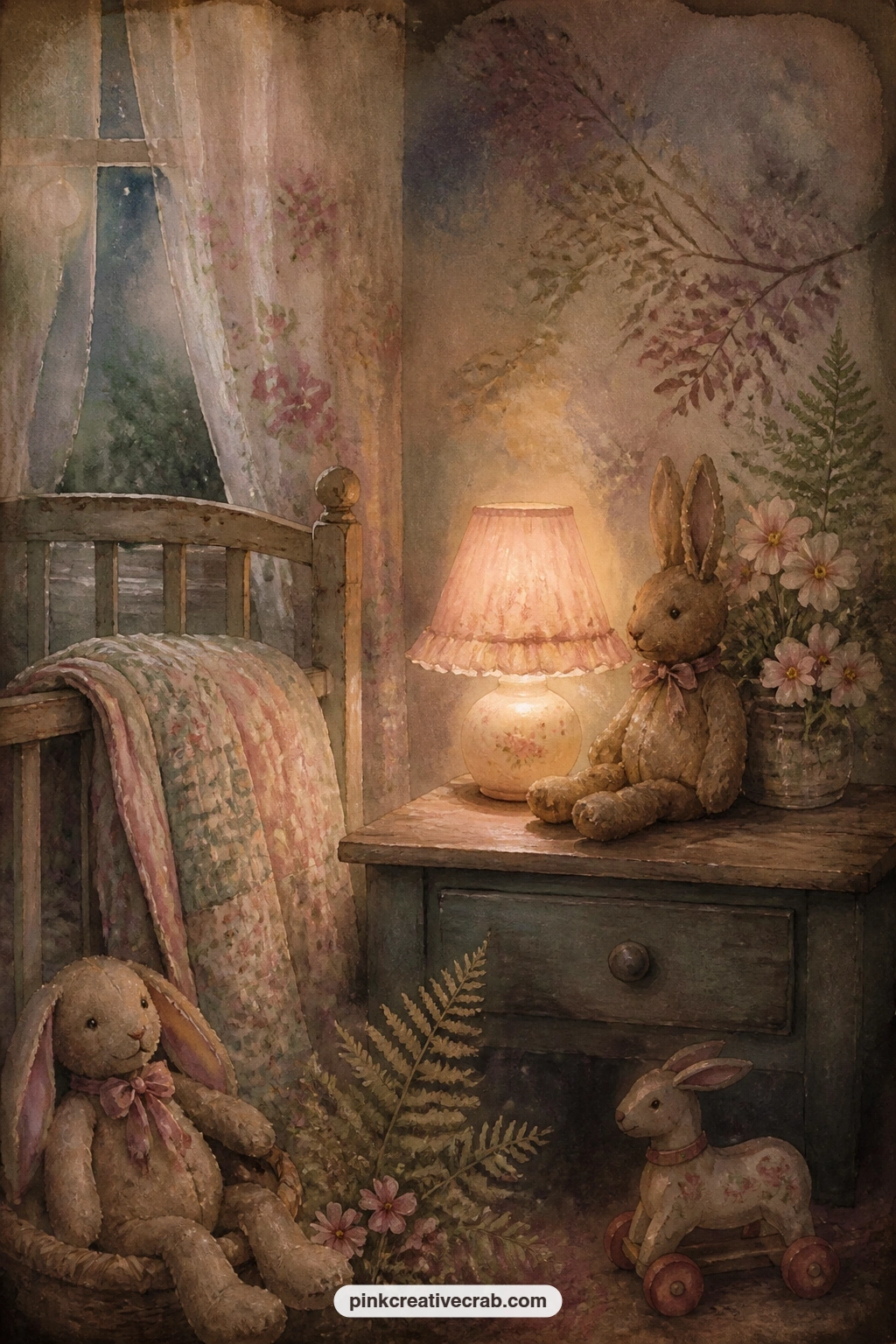
Glue in a small cut paper window shape over the painted one here, so the night light glows through an added layer when the page is turned.
The Rabbit Grows Old
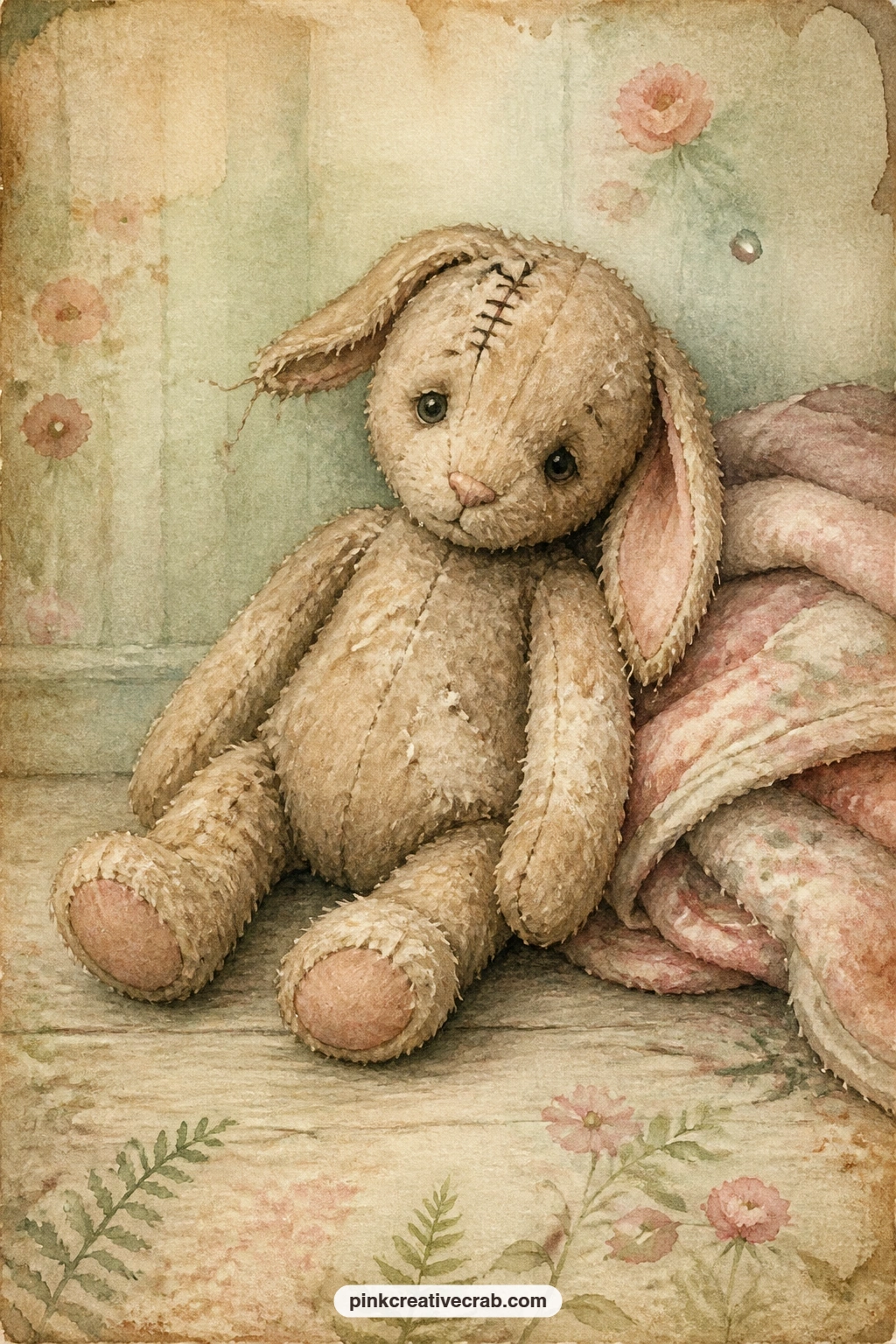
Whiskers gone and one ear hanging loose, the little rabbit shows every sign of having been loved hard for a very long time.
Write a short note beside it about something of your own that got worn soft with use, a cardigan or a favourite mug, and let this page hold that small memory.
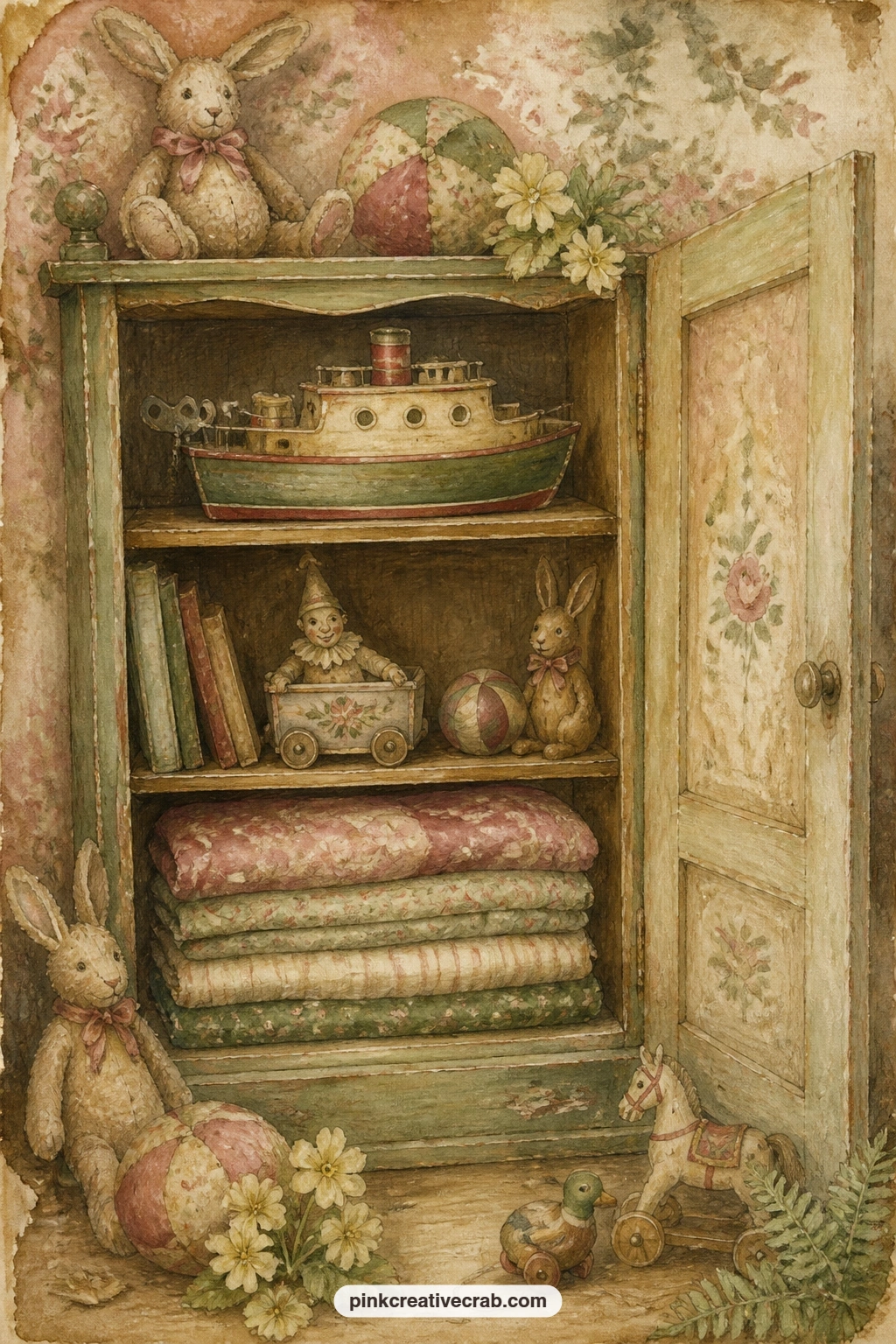
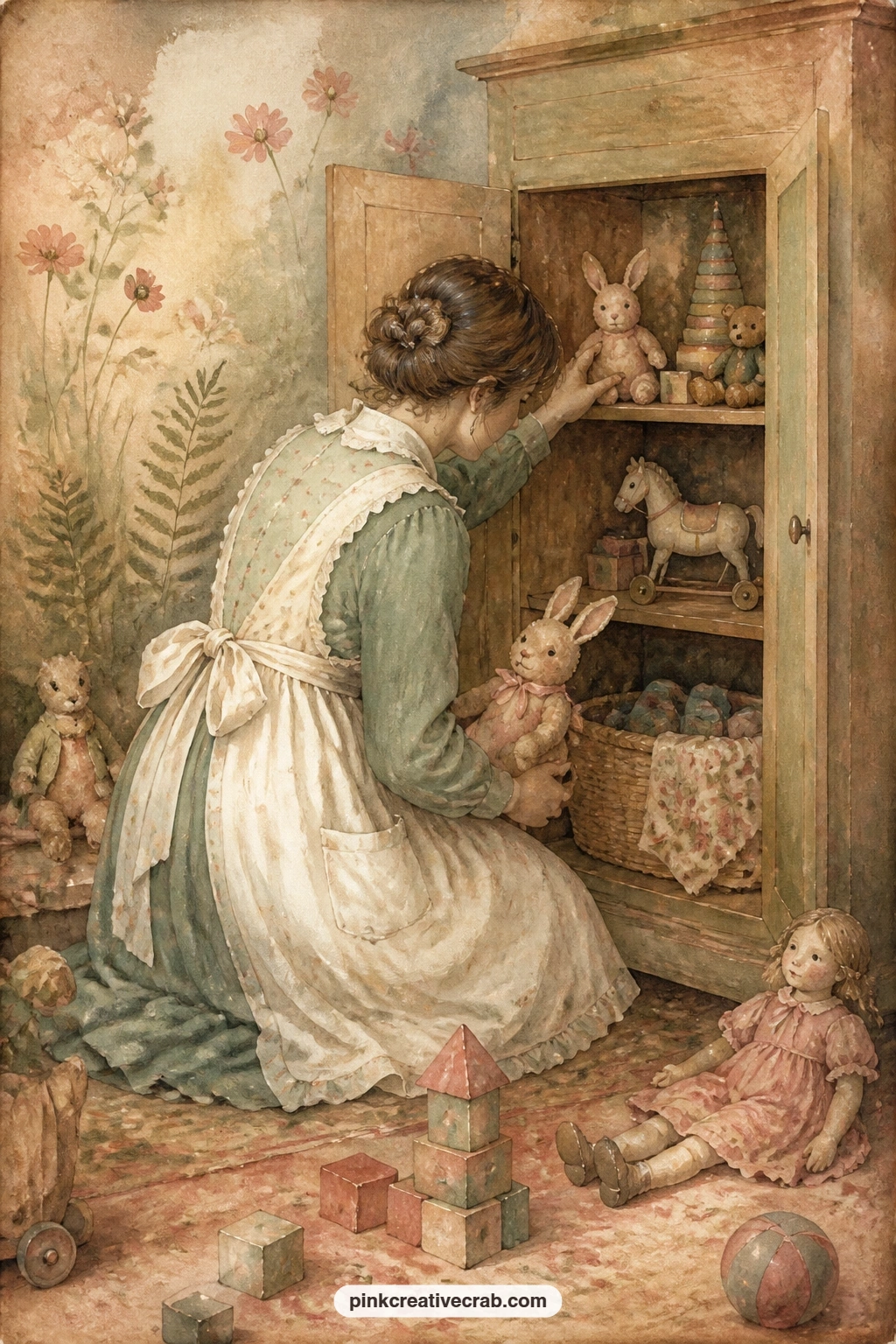
Pair this with the nursery toys pattern background as a pocket lining behind the page, so a small drawing or ticket can slide in beside the cupboard door.
The Spring Woods
Who is this page for? Anyone filling a nature themed journal who wants woodland green without a single animal in sight, just fern and light.
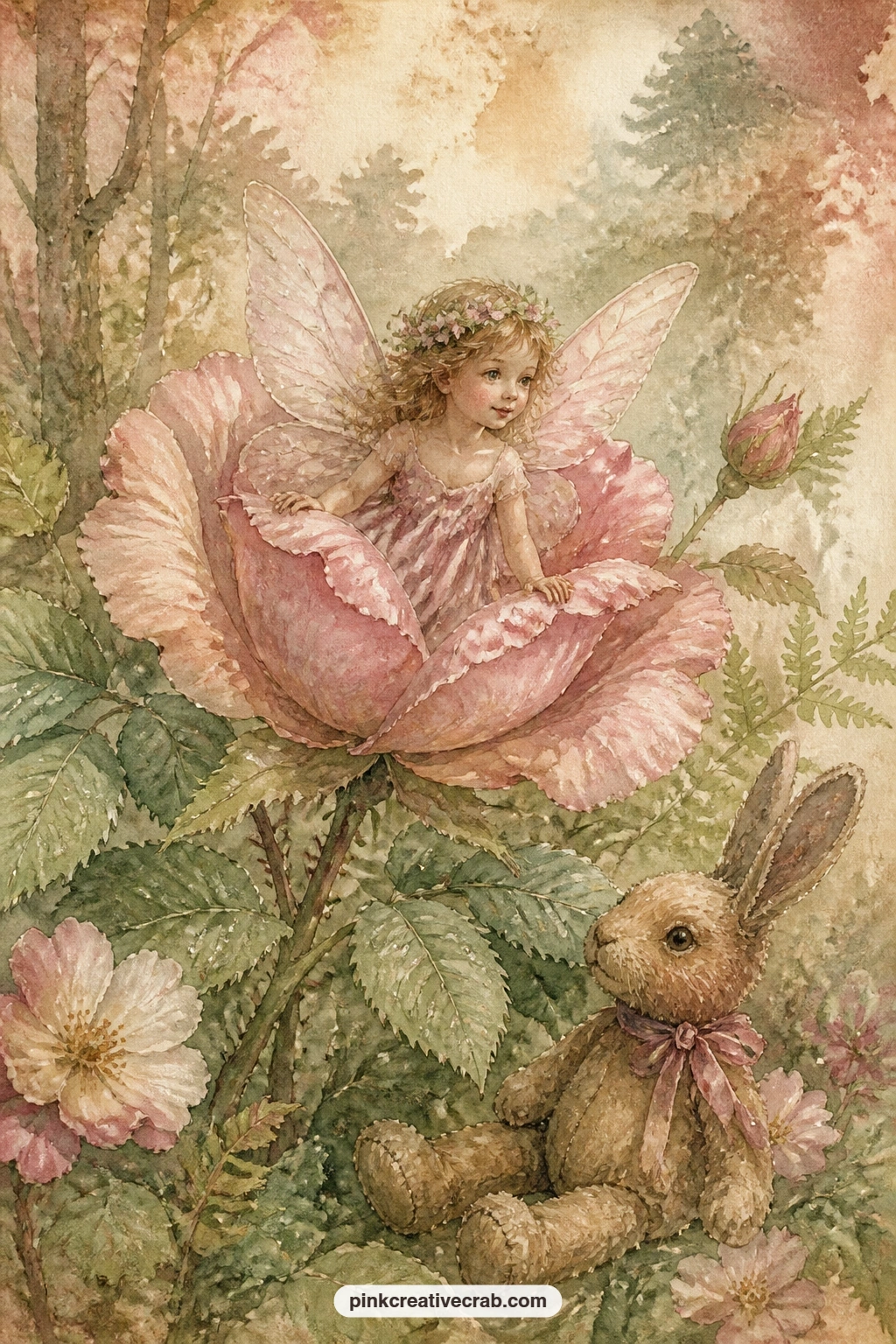
A small winged figure steps out from the curled petals of a wild rose, caught mid movement against the hush of the spring wood.
If you enjoy figures like this, the fantasy junk journal set carries the idea further with castles and enchanted forest scenes to add alongside it.
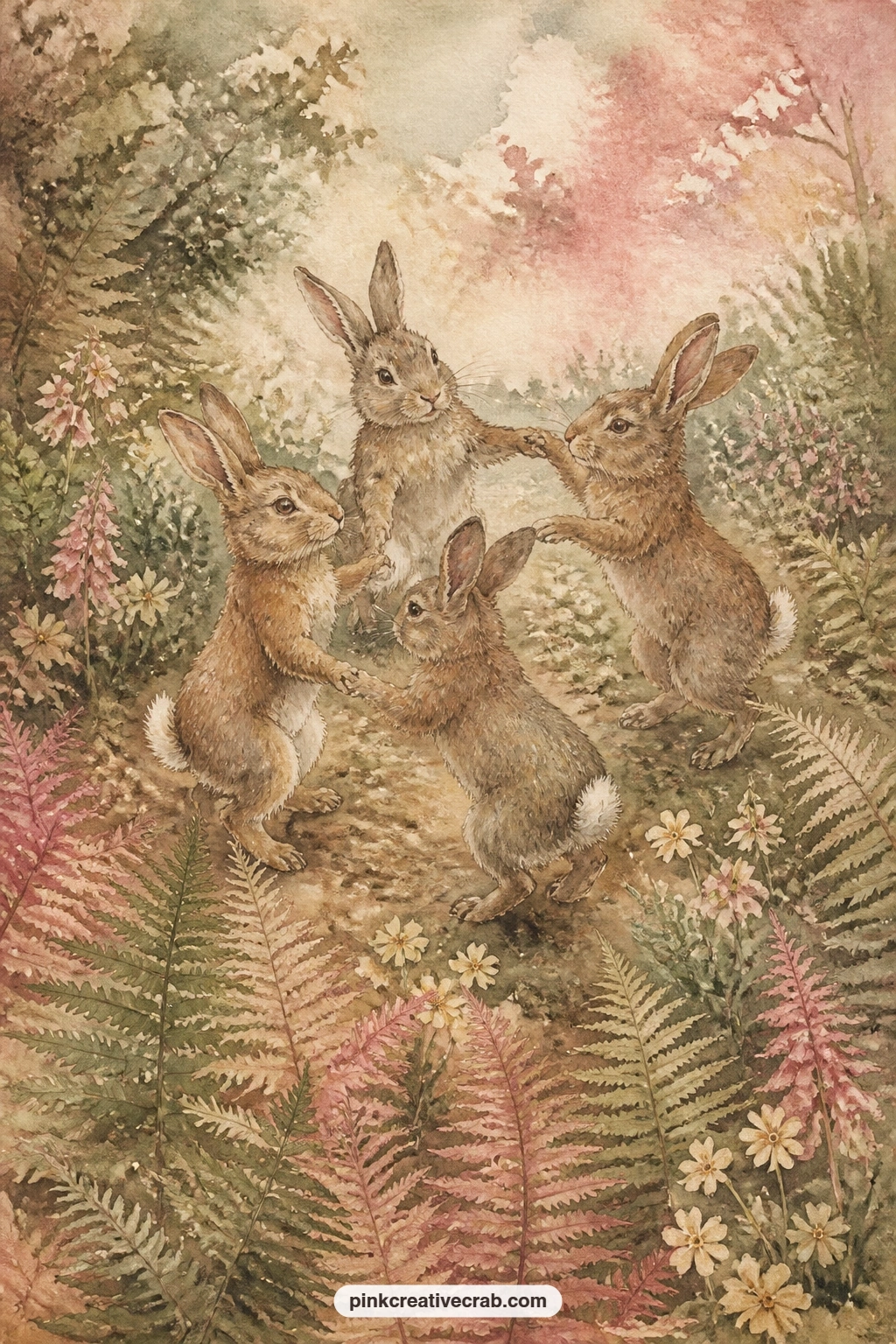
A small group of wild rabbits circles together among the ferns, caught in the kind of spring light that makes a wood feel alive.
Tear the edge of this page roughly before gluing it in, so it sits against its neighbour like a scrap carried in from the woods rather than a flat printed sheet.
The Rabbit Grows Old
The usual mistake is making the sack look neat; loosen the drawstring, let a toy edge poke out, and the page reads much more true to the story’s sadder turn.
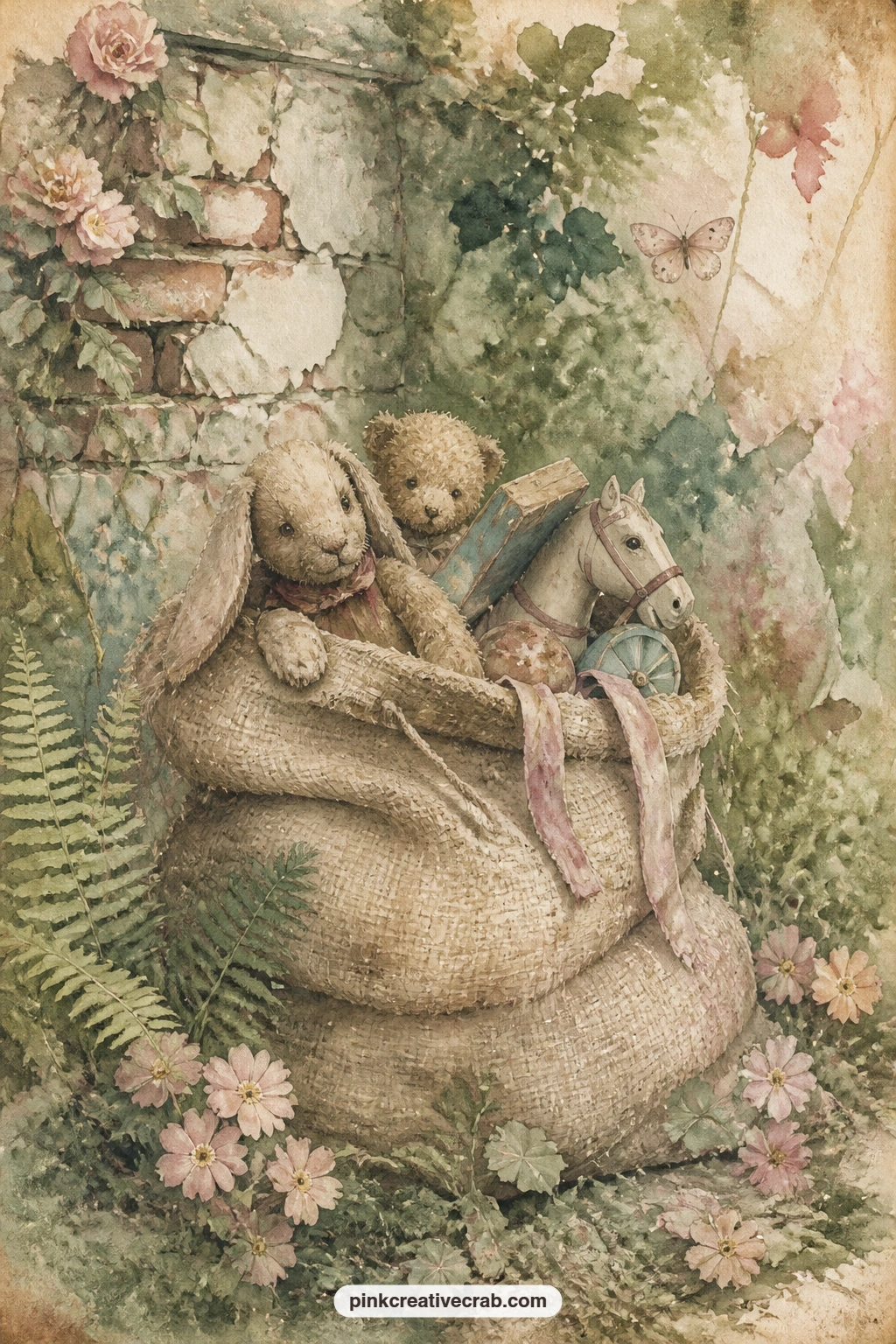
A single small question for the entry on this page: what is something you kept long after it stopped being useful, simply because you loved it.
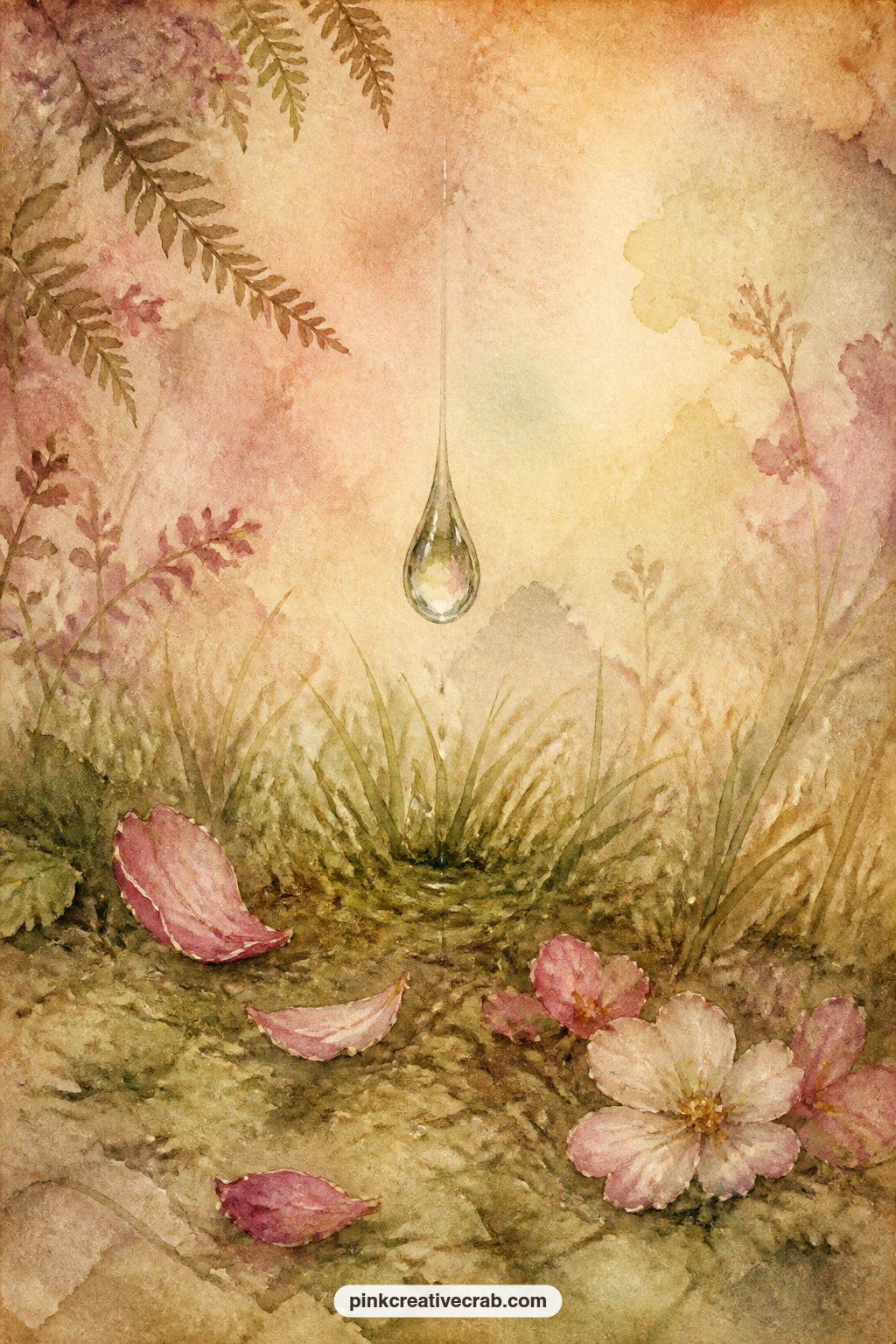
Nursery Toy Box
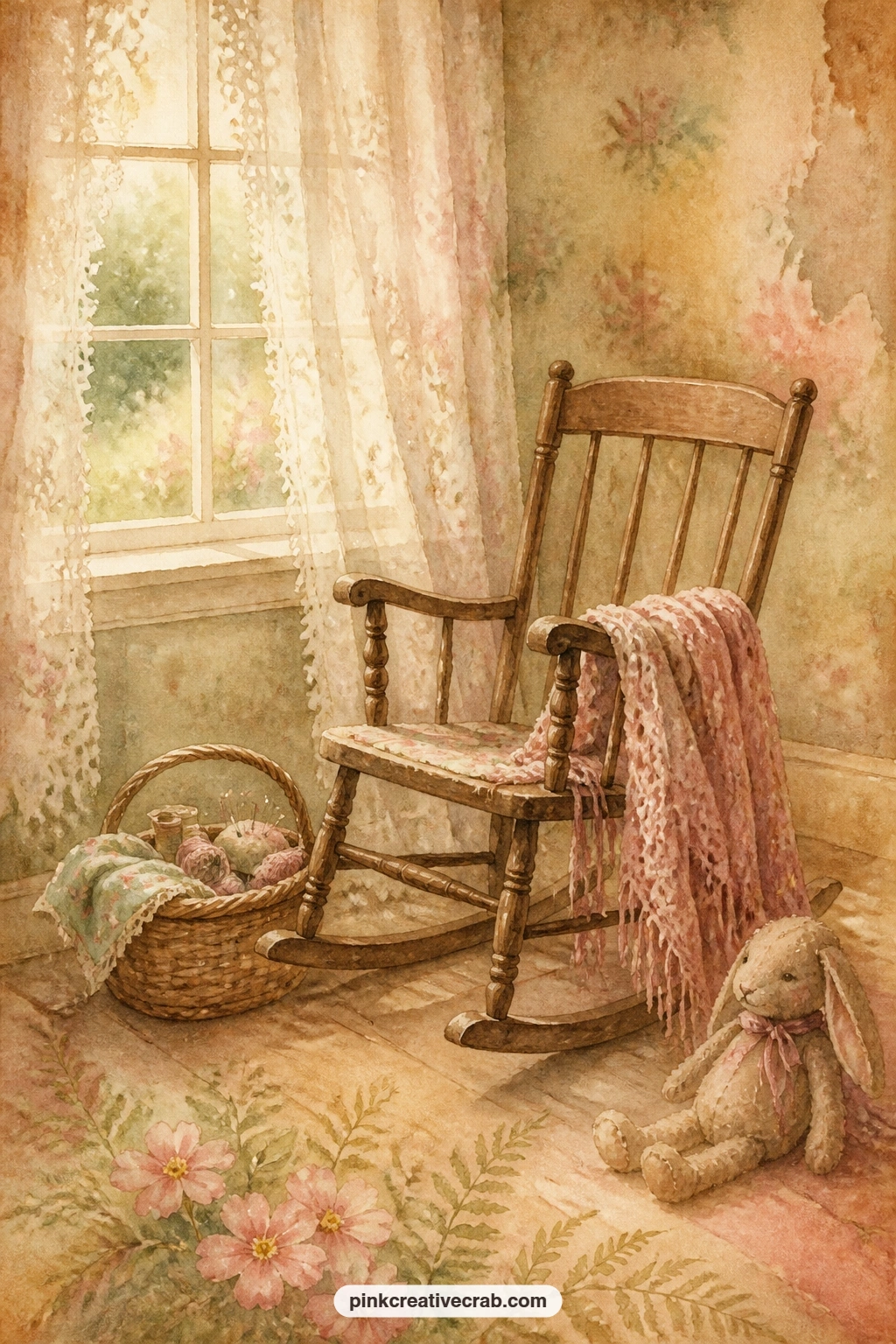
Light falls across a small rocking chair set near a window with lace curtains, a shawl folded over one arm and a basket of mending beside it.
A beginner can keep the window plain and bright, while someone more confident can add the lace pattern and a soft cast shadow from the chair across the floor.
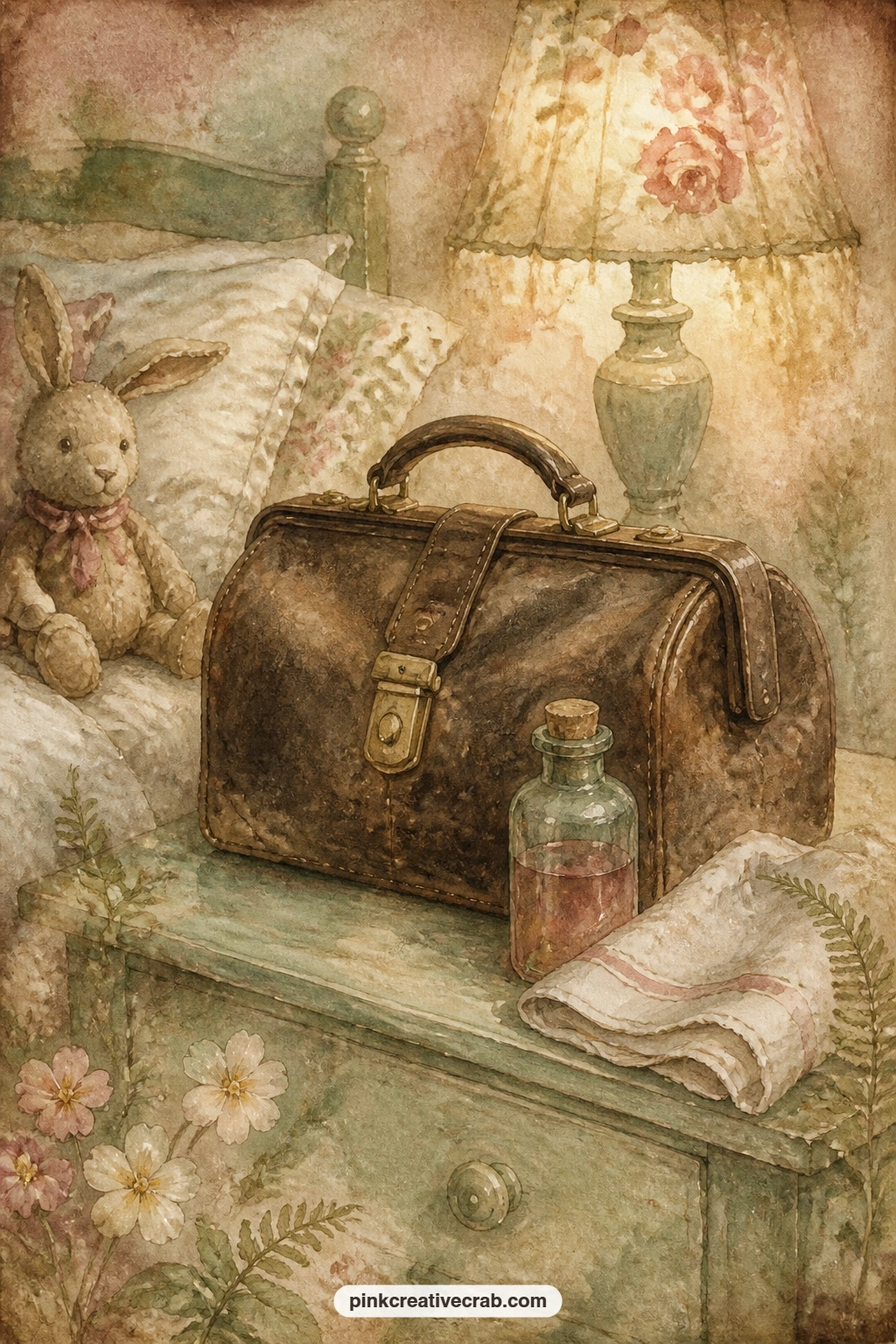
Set this page facing the sleeping boy page in your spread, letting the bag’s quiet worry sit right beside the earlier warmth of the two together.
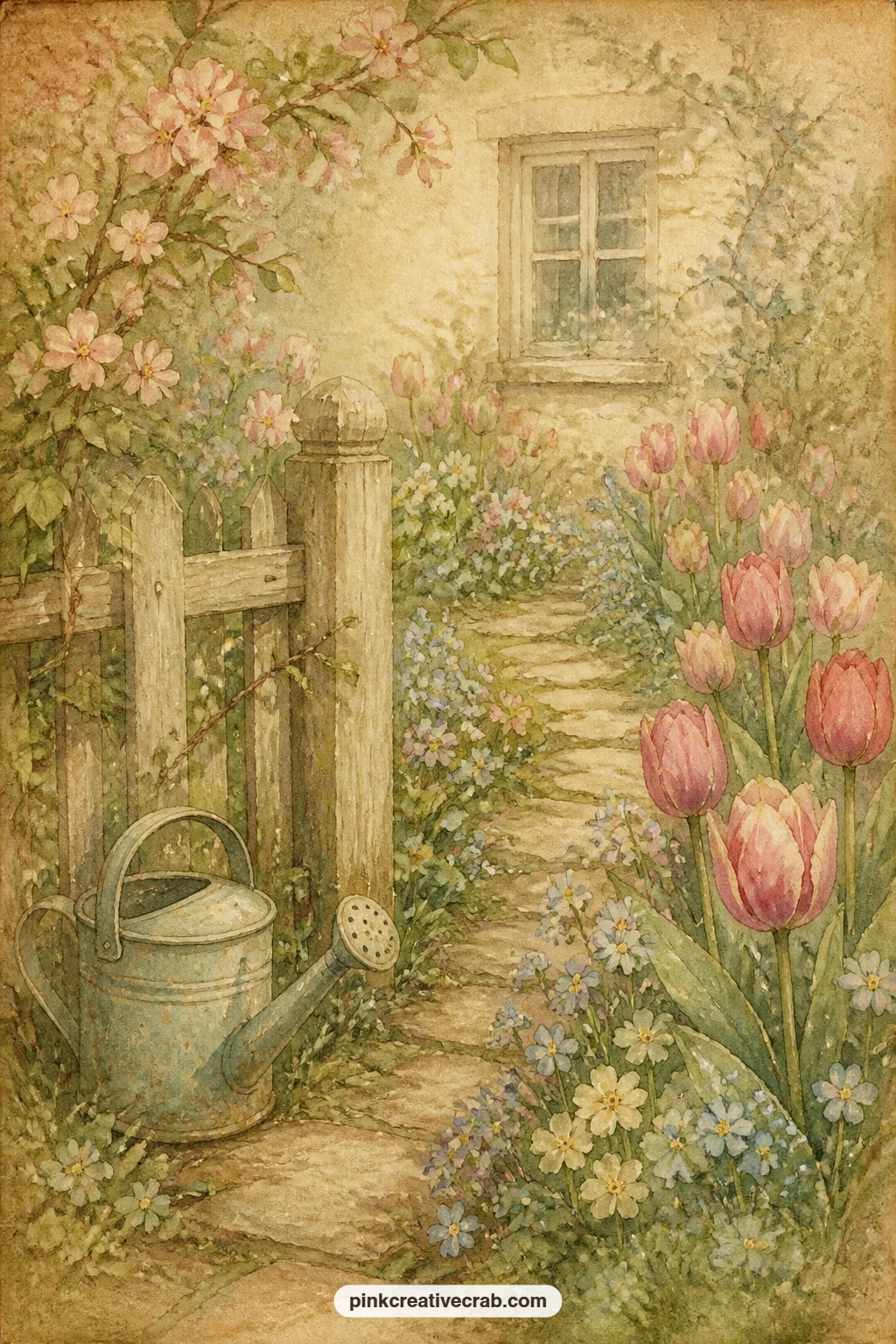
Glue a small pressed flower shape or a cut paper label onto this page naming a favourite spring bloom, tucked among the painted rows.
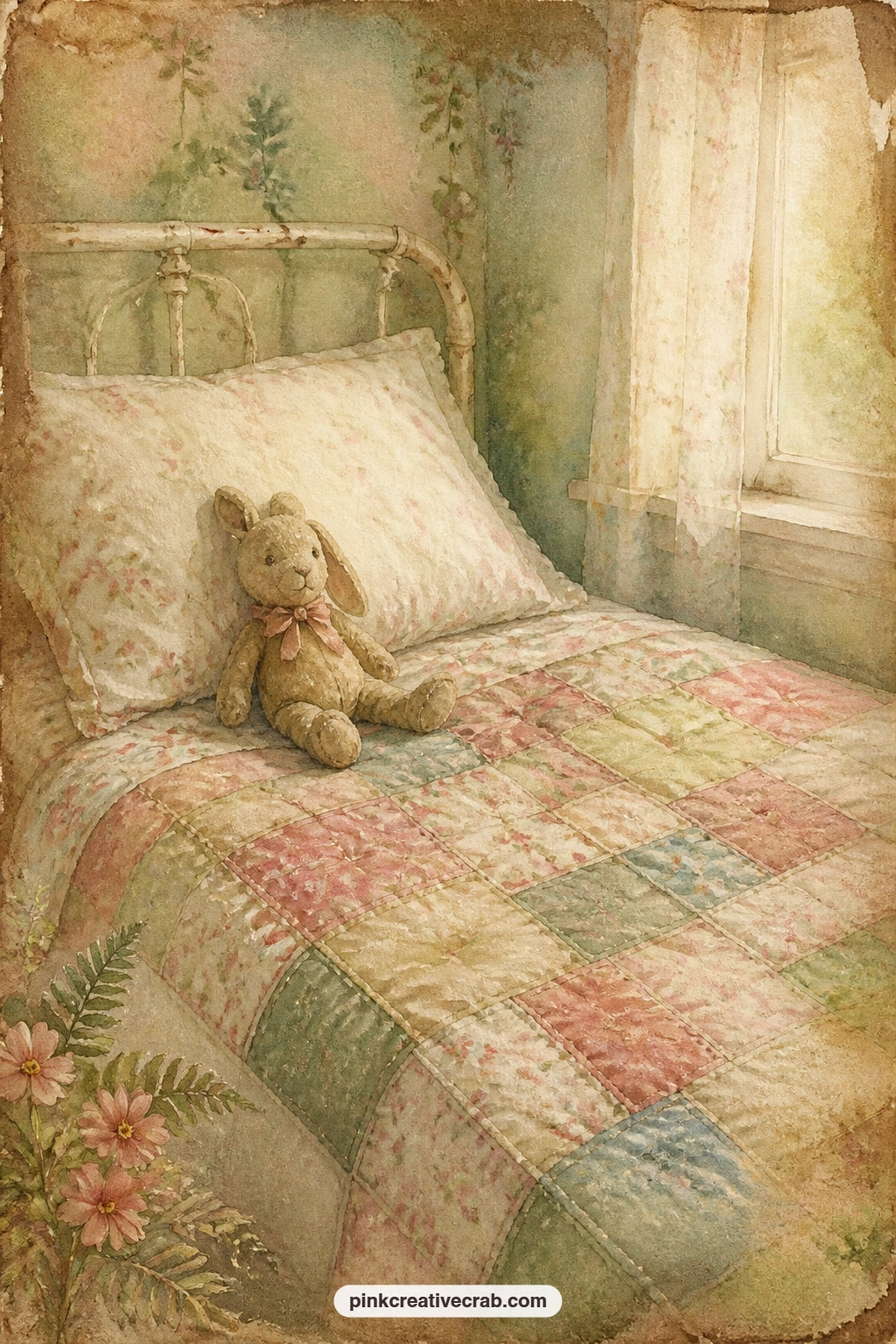
A neatly made bed carries a patchwork quilt in soft faded squares, a single toy left resting near the pillow.
This suits a reader building a cozy nursery themed journal who wants pattern and softness together on one page, with room to write a short bedtime memory in the corner.
The five minute version here is just a pair of hands and an open cupboard door, with the toys only half painted in, scattered rather than stacked.
The Spring Woods
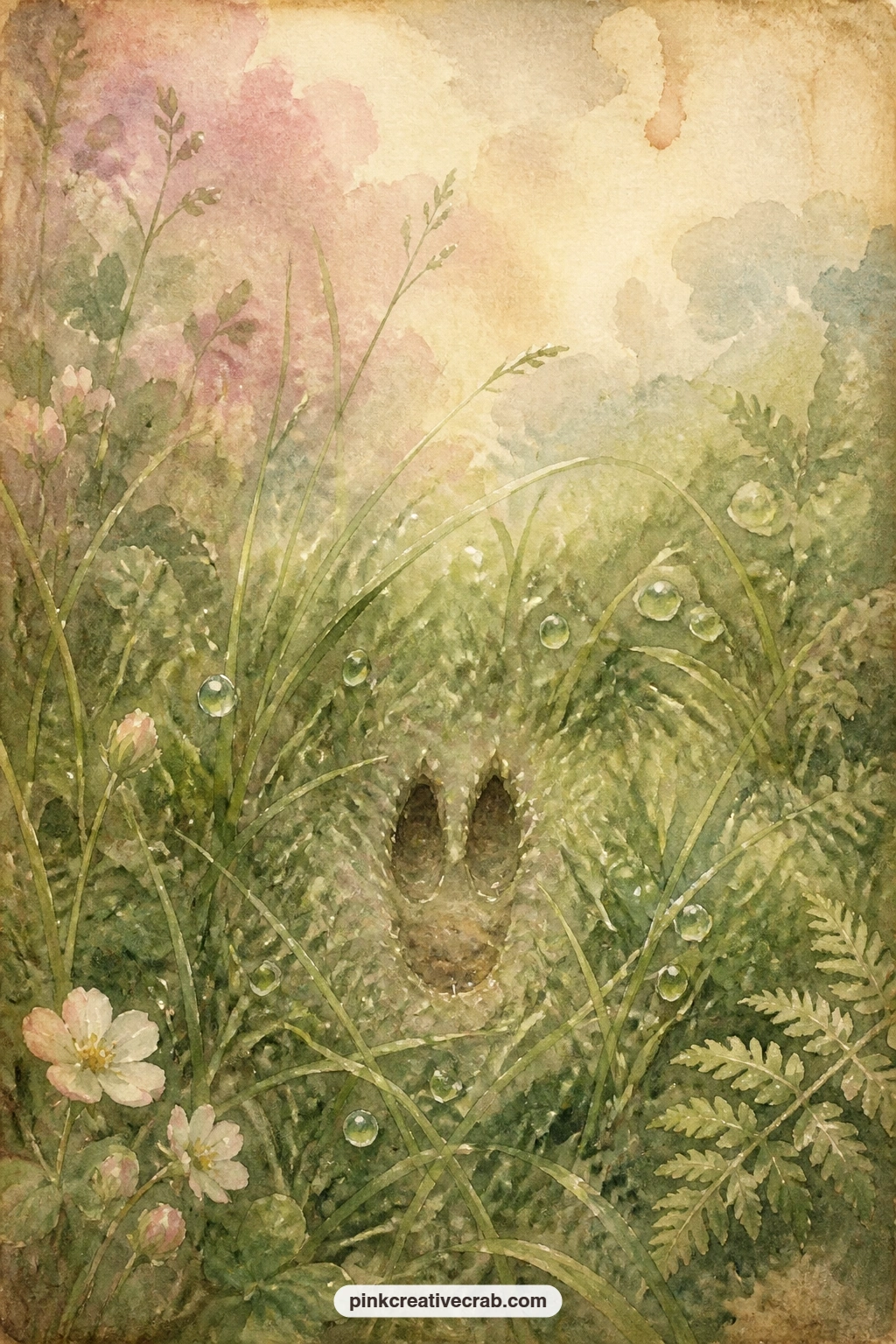
A small question for this page: where would you go, if you could follow one set of footprints through spring grass without knowing the end.
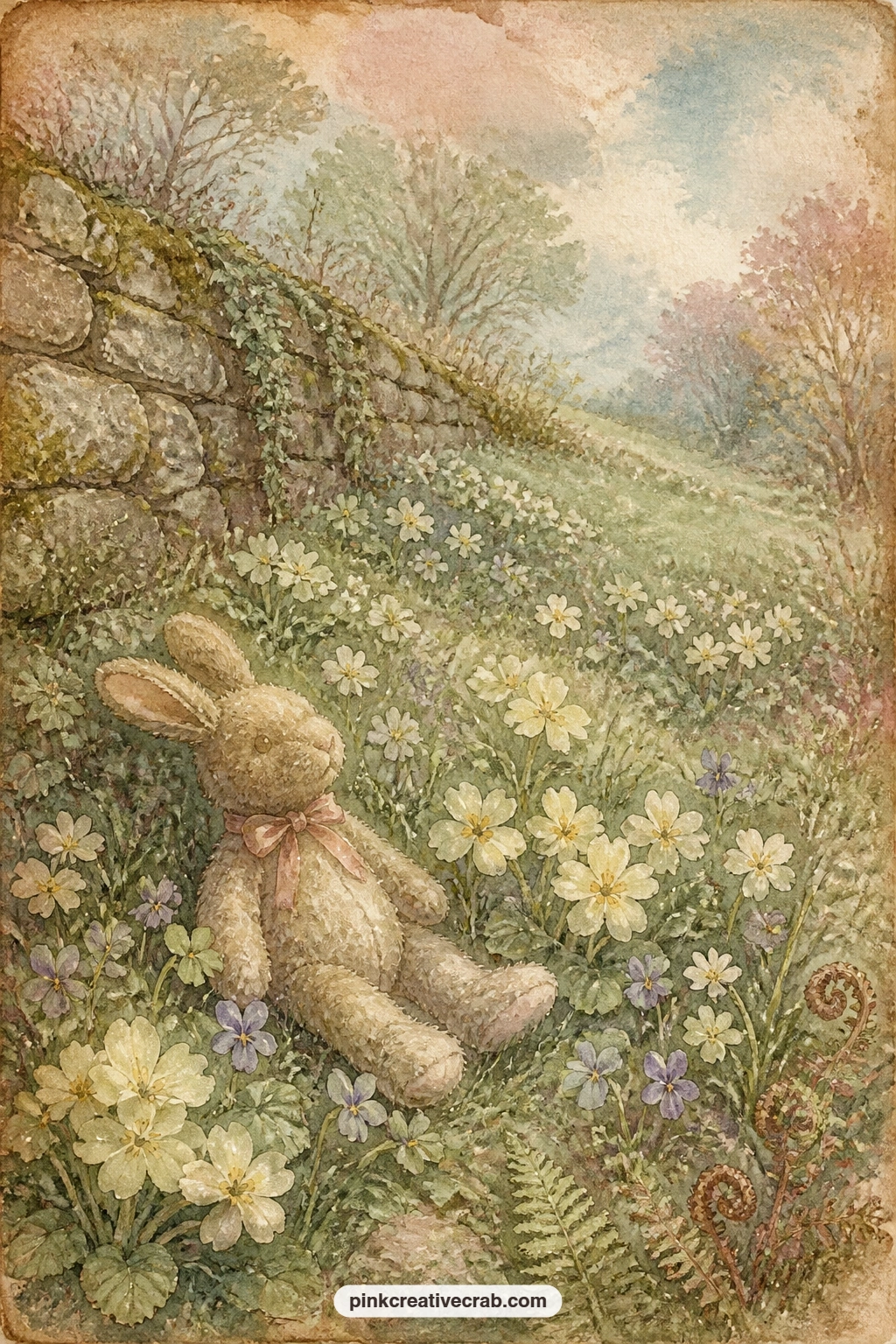
Clusters of pale primroses dot a gentle meadow slope, with a low stone wall and a few scattered violets along its edge.
Readers who enjoyed the gardens in the Peter Rabbit junk journal set will find this page sits comfortably alongside it, same soft spring palette, different story entirely.
Background Papers
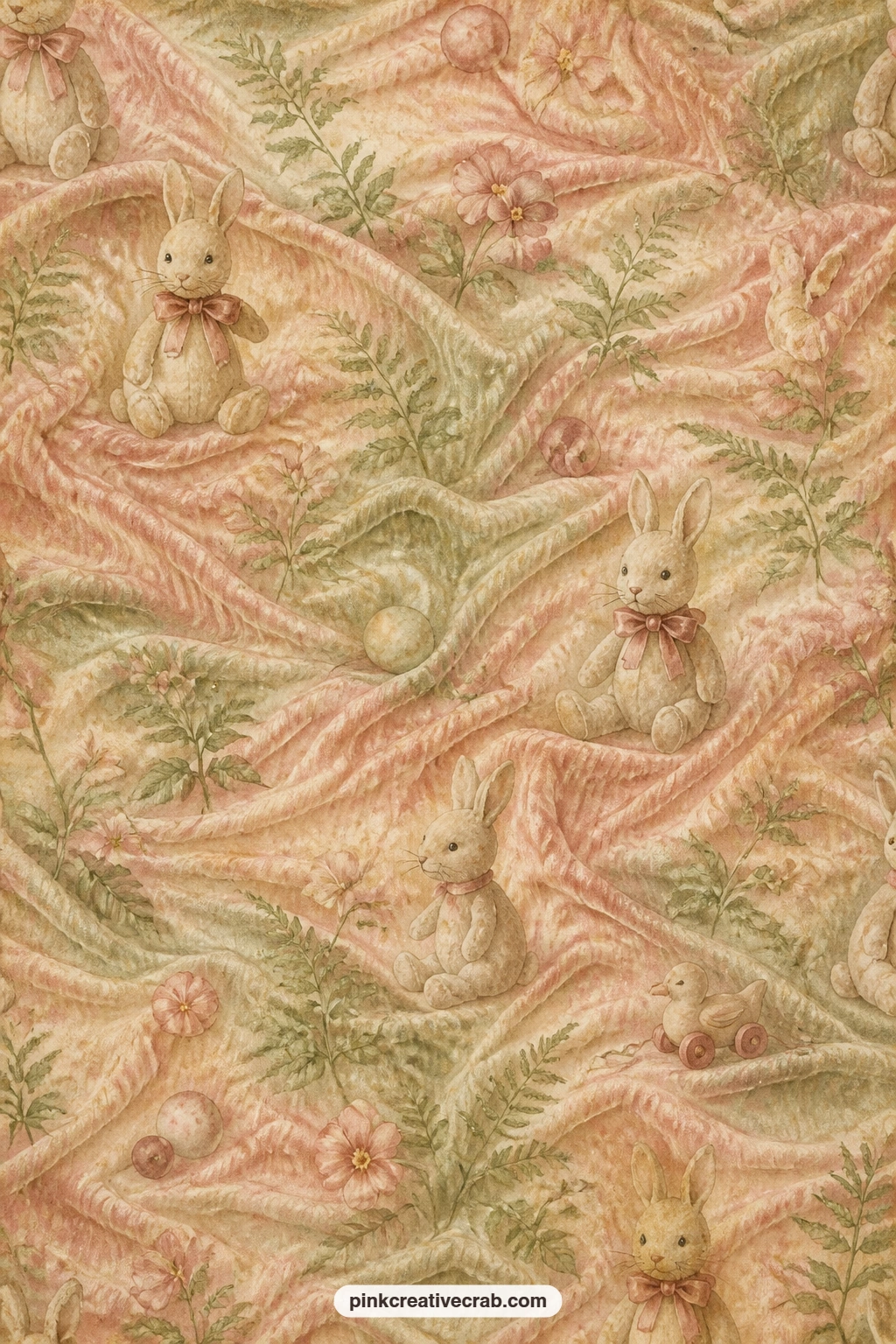
Use this soft velvet texture under a photo of a favourite childhood toy, as a pocket lining inside the front cover, or wrapped around a simple journal spine.
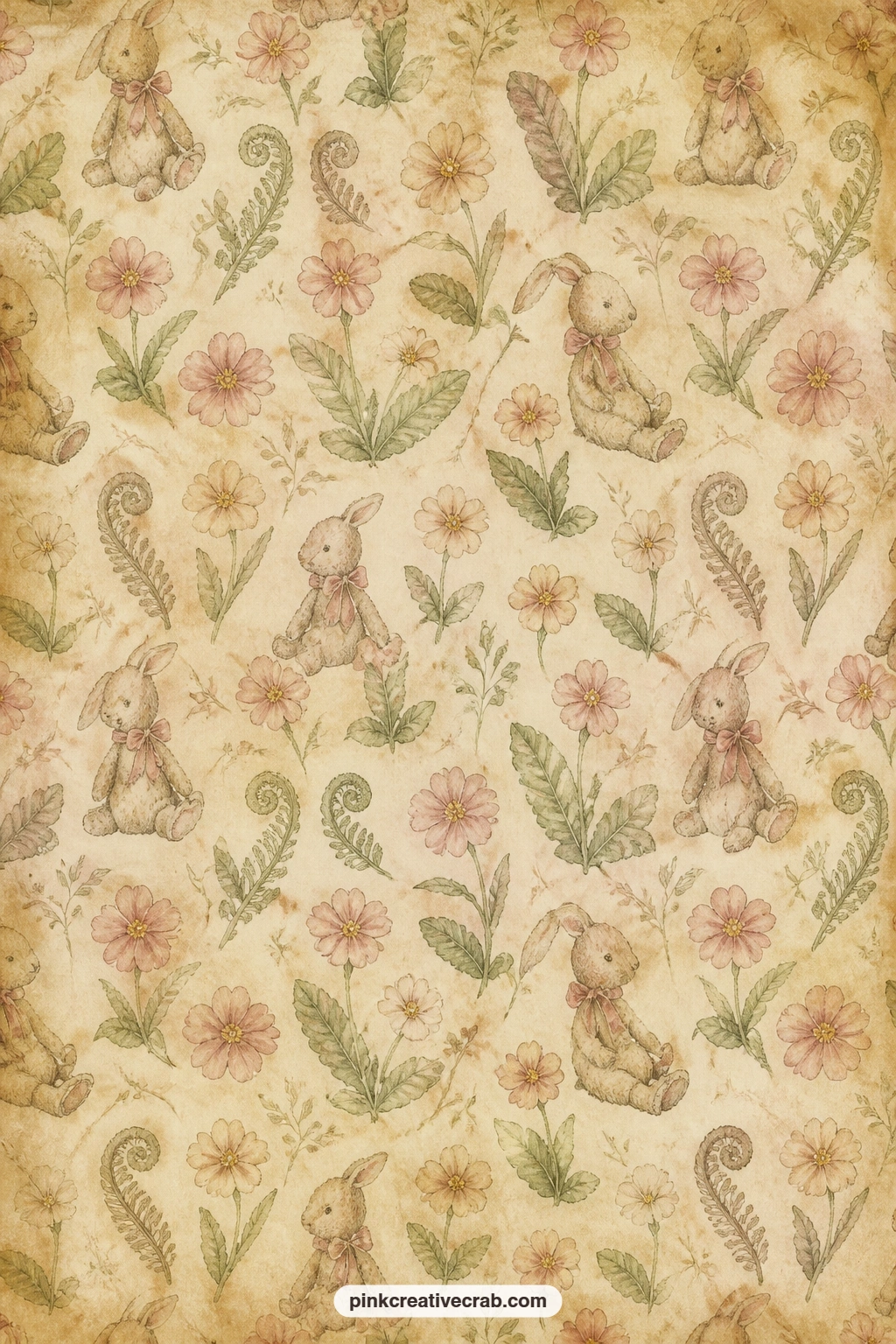
Set this primrose and bracken pattern behind a woodland photo, inside a small pocket for pressed flowers, or as the cover of your finished journal.
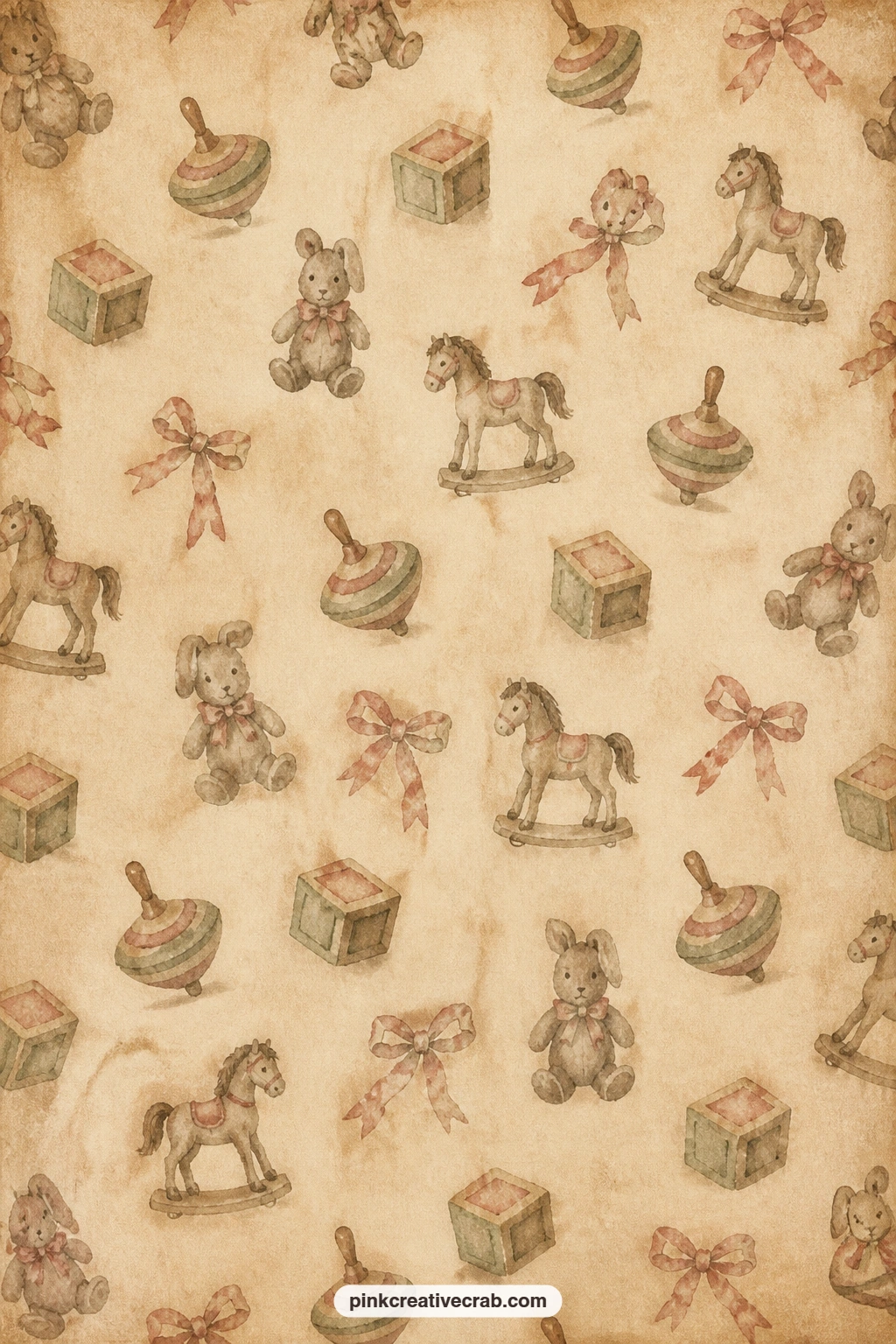
Try this nursery toys pattern under a photo of your own childhood keepsakes, as a lining for a toy cupboard pocket, or as endpapers at the front of the kit.
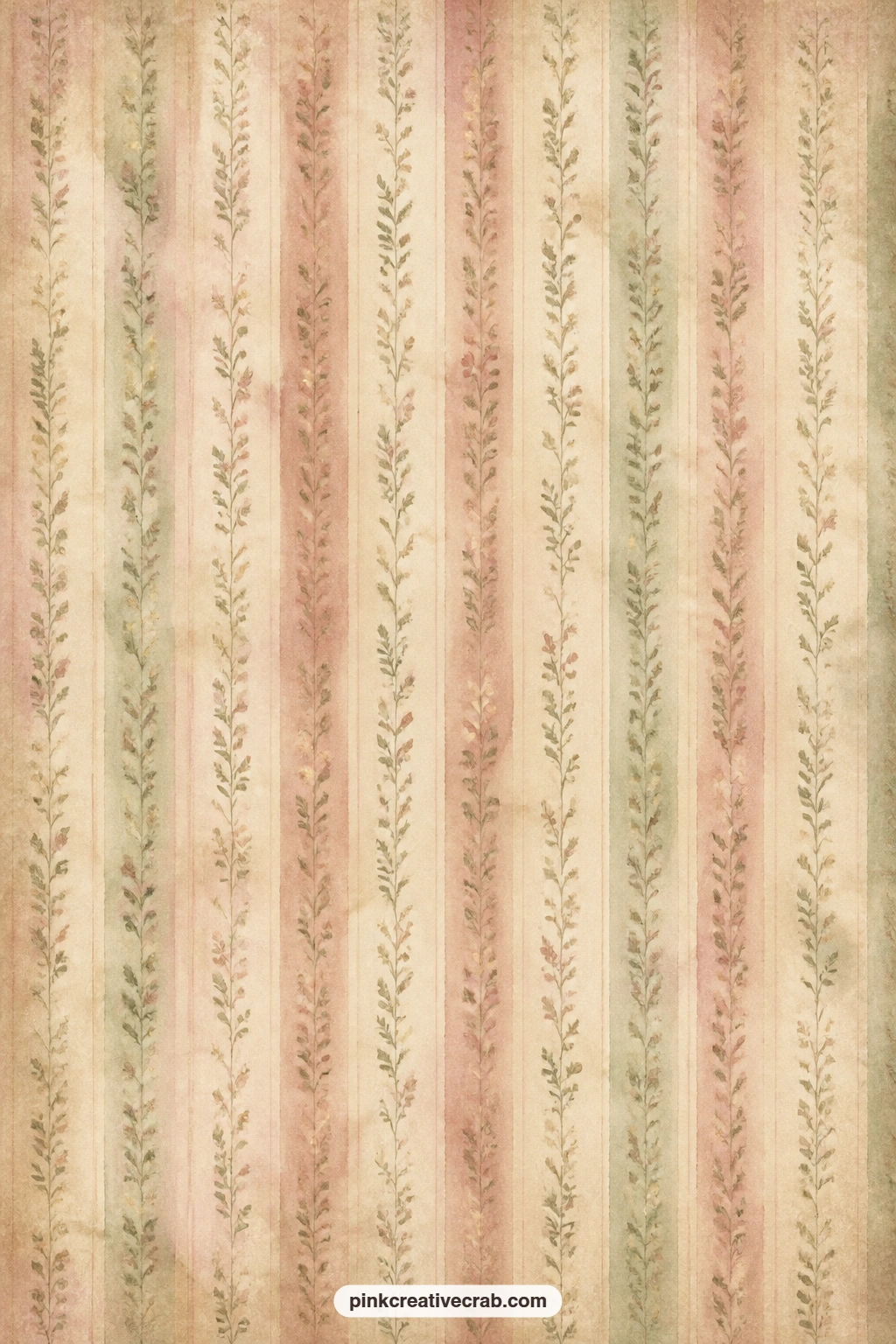
This faded wallpaper stripe suits a cover sheet, a backing for the nursery shelf page, or a simple pocket lining where a quieter pattern works better.
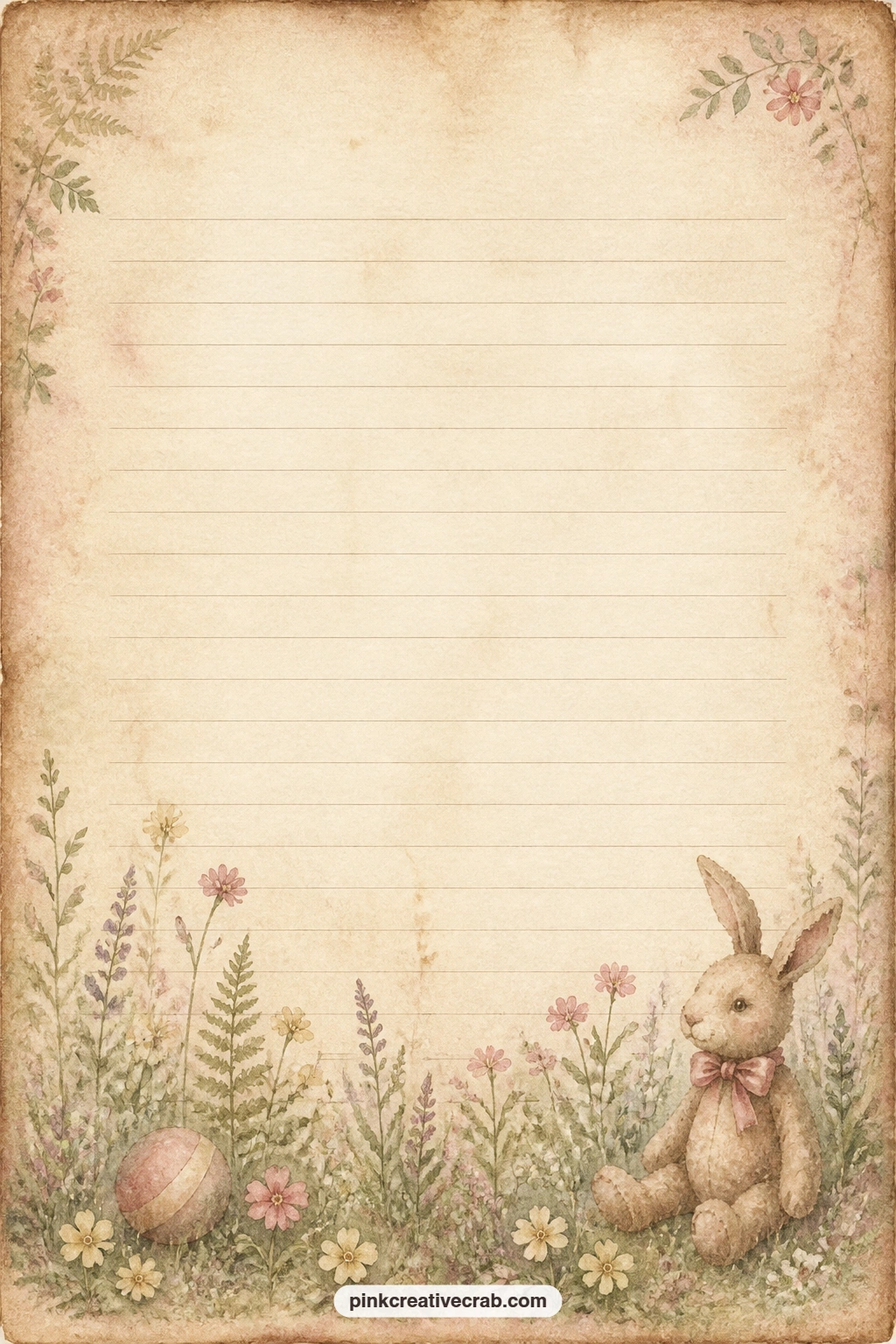
Lined Writing Pages
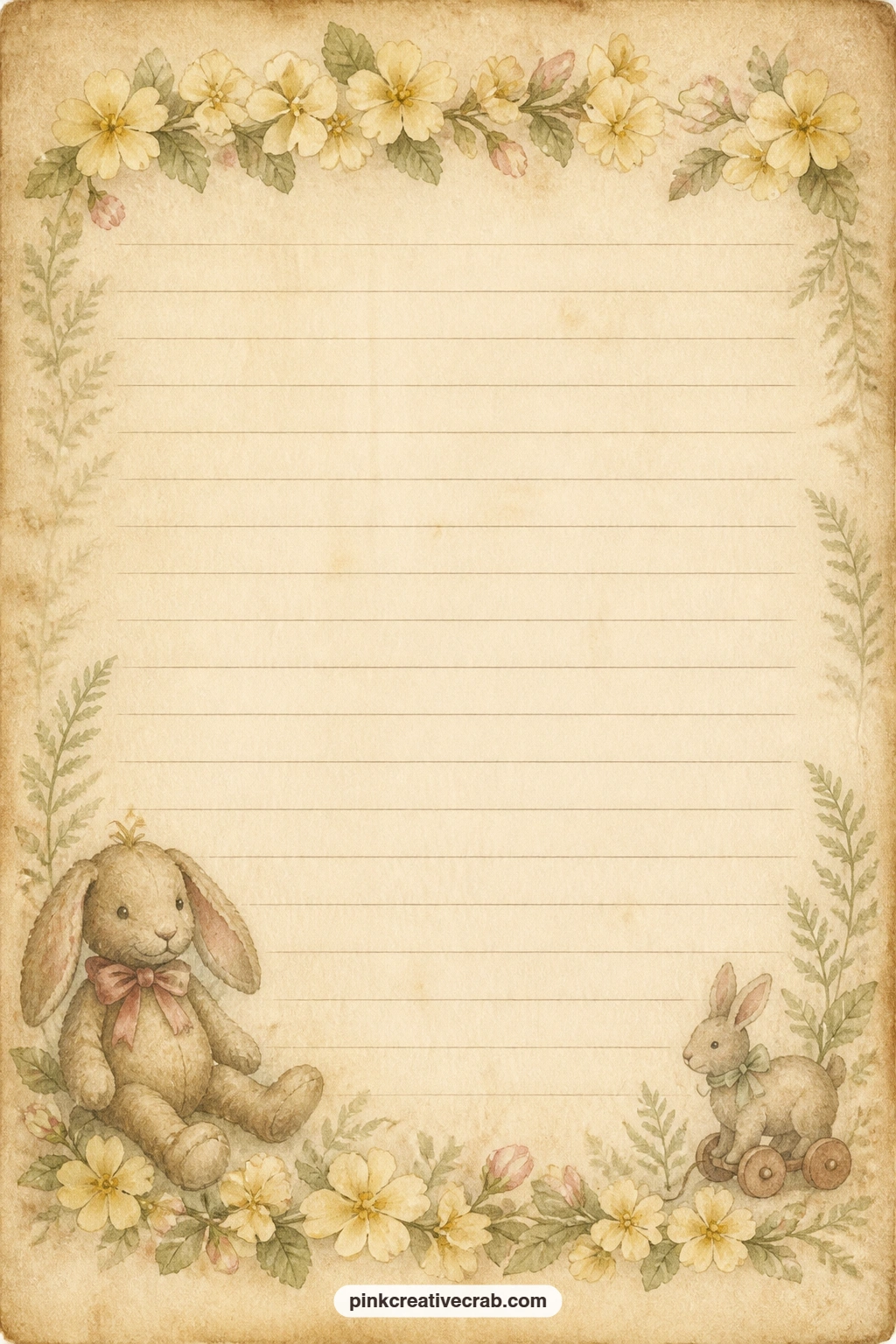
Write a spring garden list, the names of flowers you want to grow, or a short letter to the person who first read you this story.
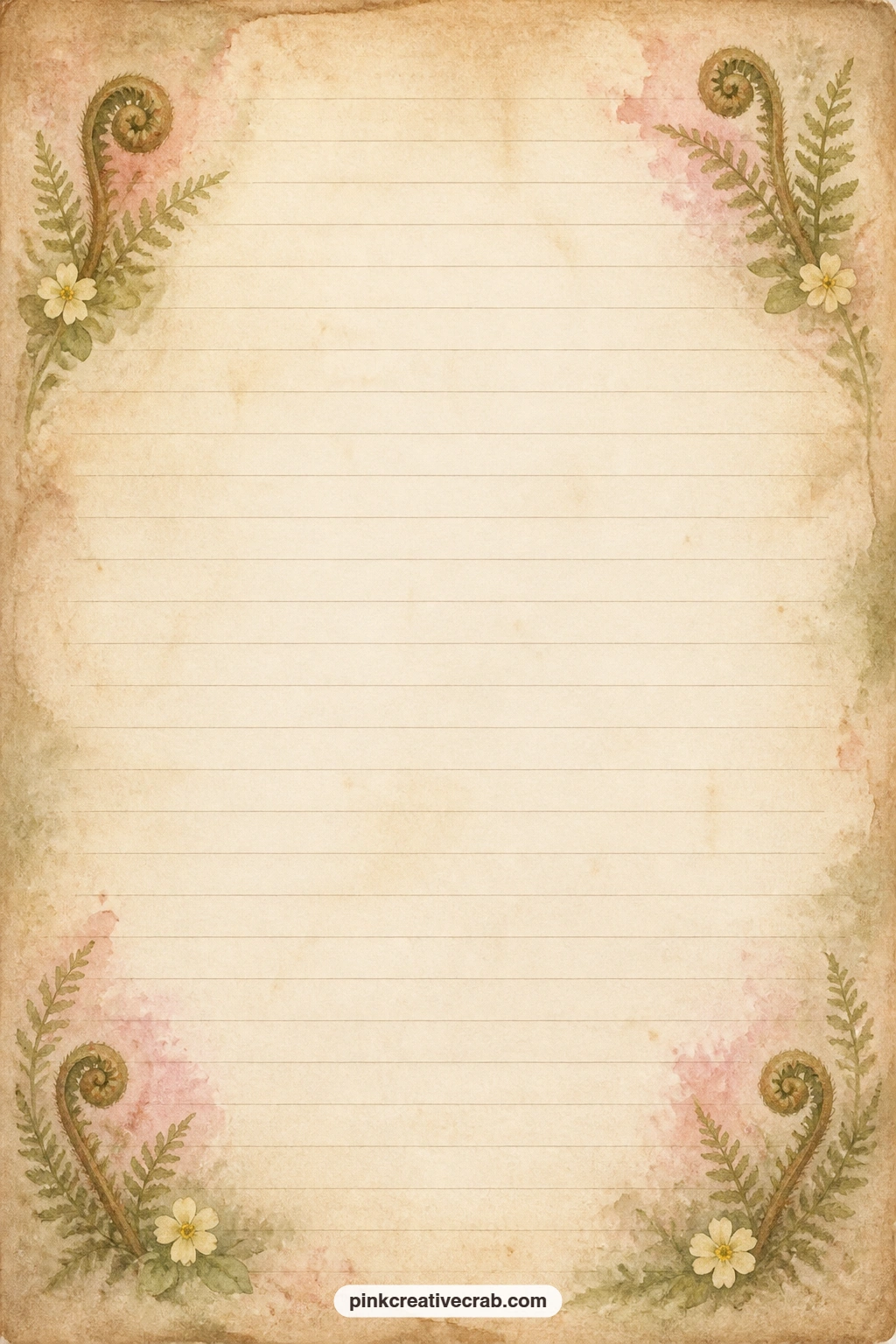
Use this page for a packing list before a woodland walk, a note about a spring morning, or a few lines about something that finally became real to you.
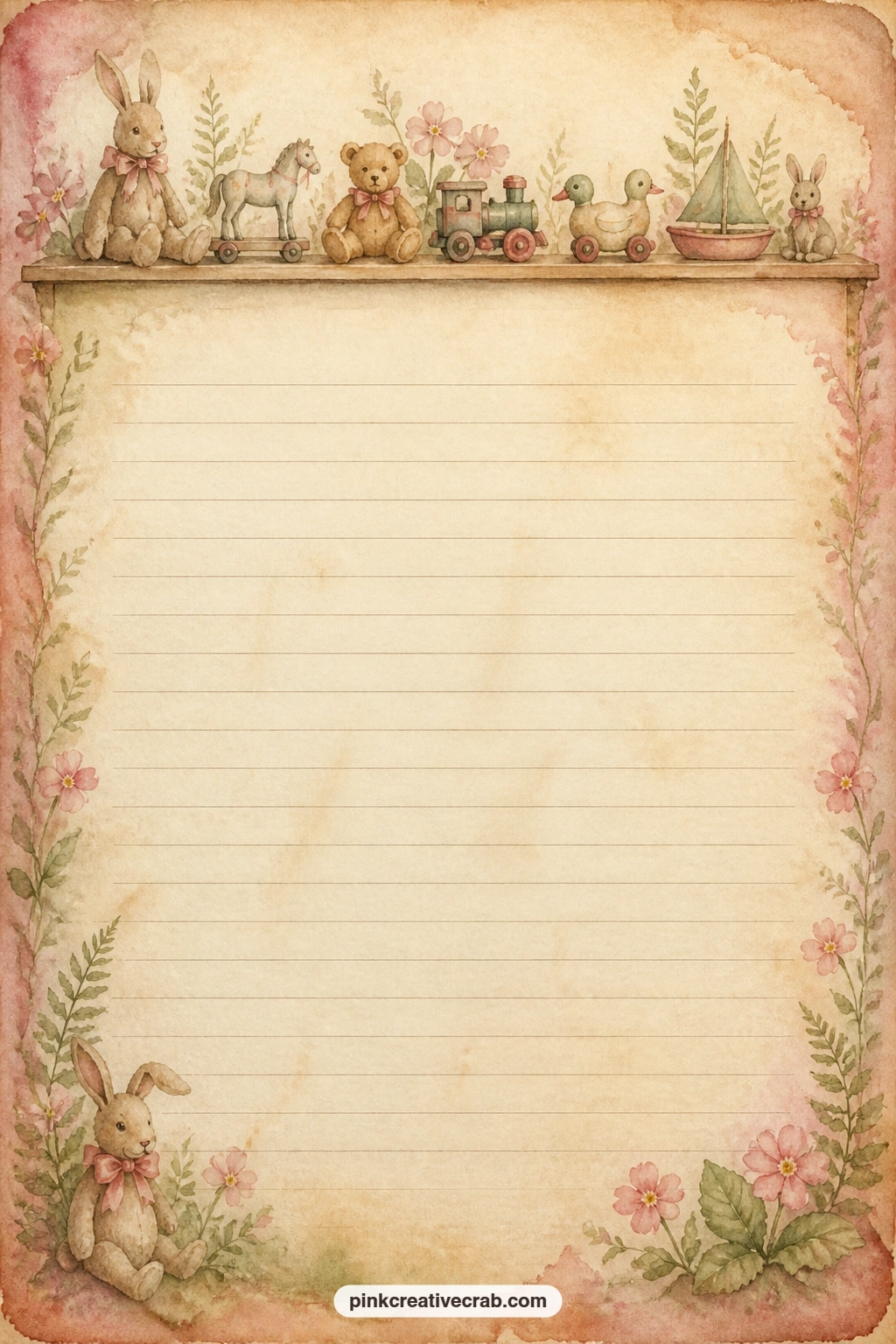
Good for a list of favourite childhood toys, a note to a younger relative, or a short memory of a nursery shelf from your own early years.
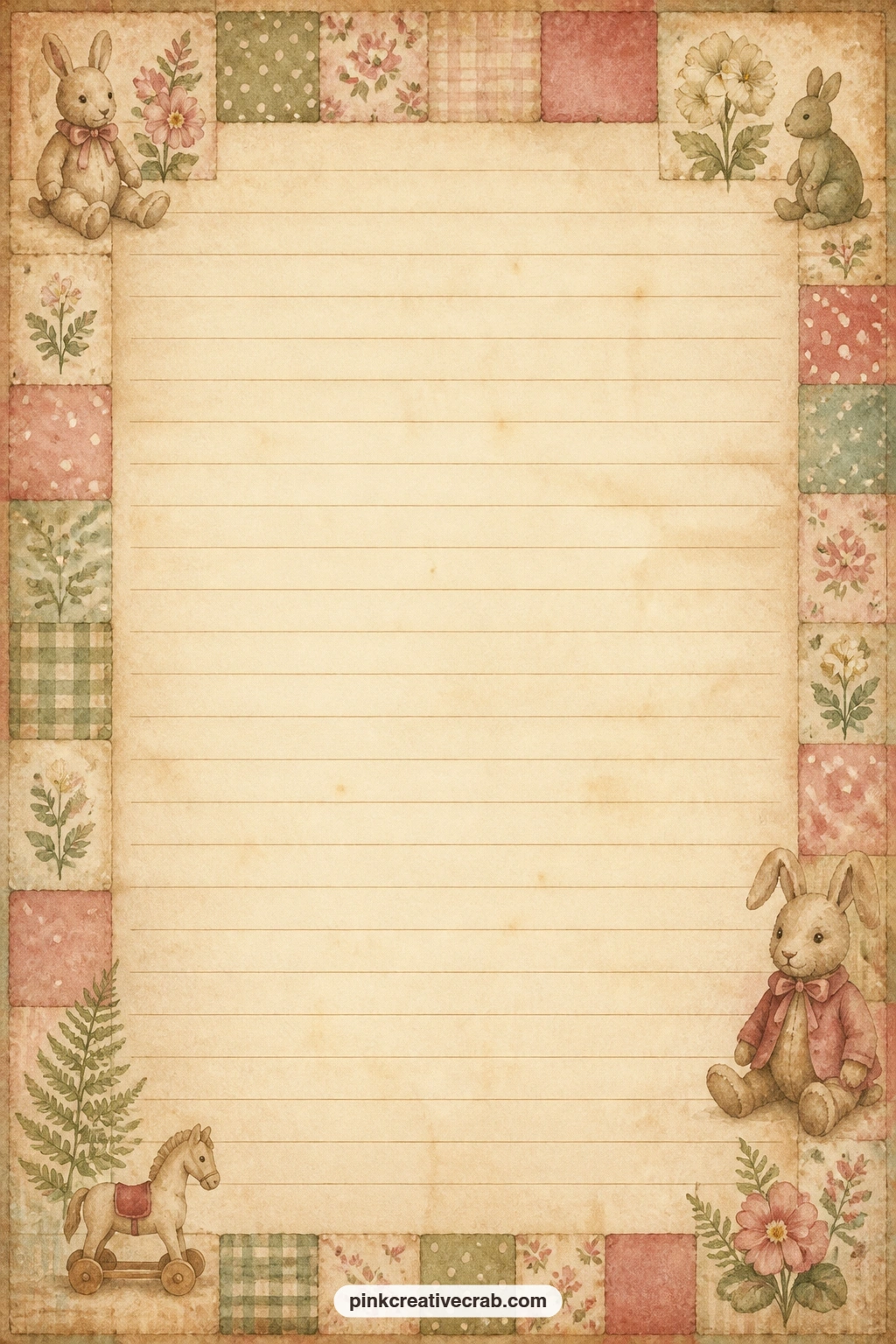
Fill this one with a quilt pattern you plan to sew, a gift list for a new baby, or a letter to next year about something you hope to finish.
Write a spring menu, a list of seeds to plant, or a short entry about the first warm day of the season on this open meadow page.
What to Do Next
Print the full set, sort the scenes by section, and start gluing from the nursery pages outward into the spring woods, letting the backgrounds and lined pages fall in wherever your journal needs a pause.
Frequently Asked Questions
What paper works best for printing these pages?
A heavier matte paper, around 24 to 32 lb, keeps the washes crisp and stops ink from showing through the back. Cardstock also works well for the background and lined pages if you want extra durability.
What printer settings give the best result?
Choose your printer’s best or photo quality setting and select the matching matte or heavyweight paper option in the print dialog. This keeps the soft watercolor edges smooth instead of banded or grainy.
What size should I print the pages?
Standard US letter or A4 both work well for a full size junk journal. Trim the edges close after printing if your binding needs a slightly smaller page.
Can I color or add to these pages myself?
Yes, watercolor pencils or a light wash of paint blend easily into the printed texture without fighting it. Keep any additions soft and muted so they match the rest of the set.
What do I use to glue the pages into a journal?
A fine tip glue pen gives the most control for small page edges and torn corners. Craft glue stick works too for larger areas like full page backgrounds.
Have any thoughts?
Share your reaction or leave a quick response — we’d love to hear what you think!
-
 0
-
0
-
0
-
0
-
0
-
0


