

Table of Contents
This vintage junk journal kit gives you 37 pages built around one faded, old-fashioned world: sepia portraits, parlor corners, handwritten letters and quiet still life objects that look like they came out of a trunk in the attic. Twenty six scene pages carry the main story, five seamless background pages give you wallpaper, lace and paper textures to fill in the gaps, and six lined writing pages leave room for your own words inside all that history.
Print everything on heavyweight matte paper, at least 24 lb or so, so the ink does not bleed through when you glue pages back to back. Set your printer to its best or photo quality and let each sheet dry flat for a minute before handling. Trim to your journal size with scissors or a paper trimmer, and keep a quarter inch border if your pages will be glued near a spine.
Using these images: free for personal projects such as printing, coloring, cards, journals and gifts. Handmade items that include them may be sold up to 30 pieces per design. More than that is commercial use and is not permitted, and neither is selling or sharing the images themselves or passing them off as your own. Please ask before any other use.
Portraits and Keepsakes
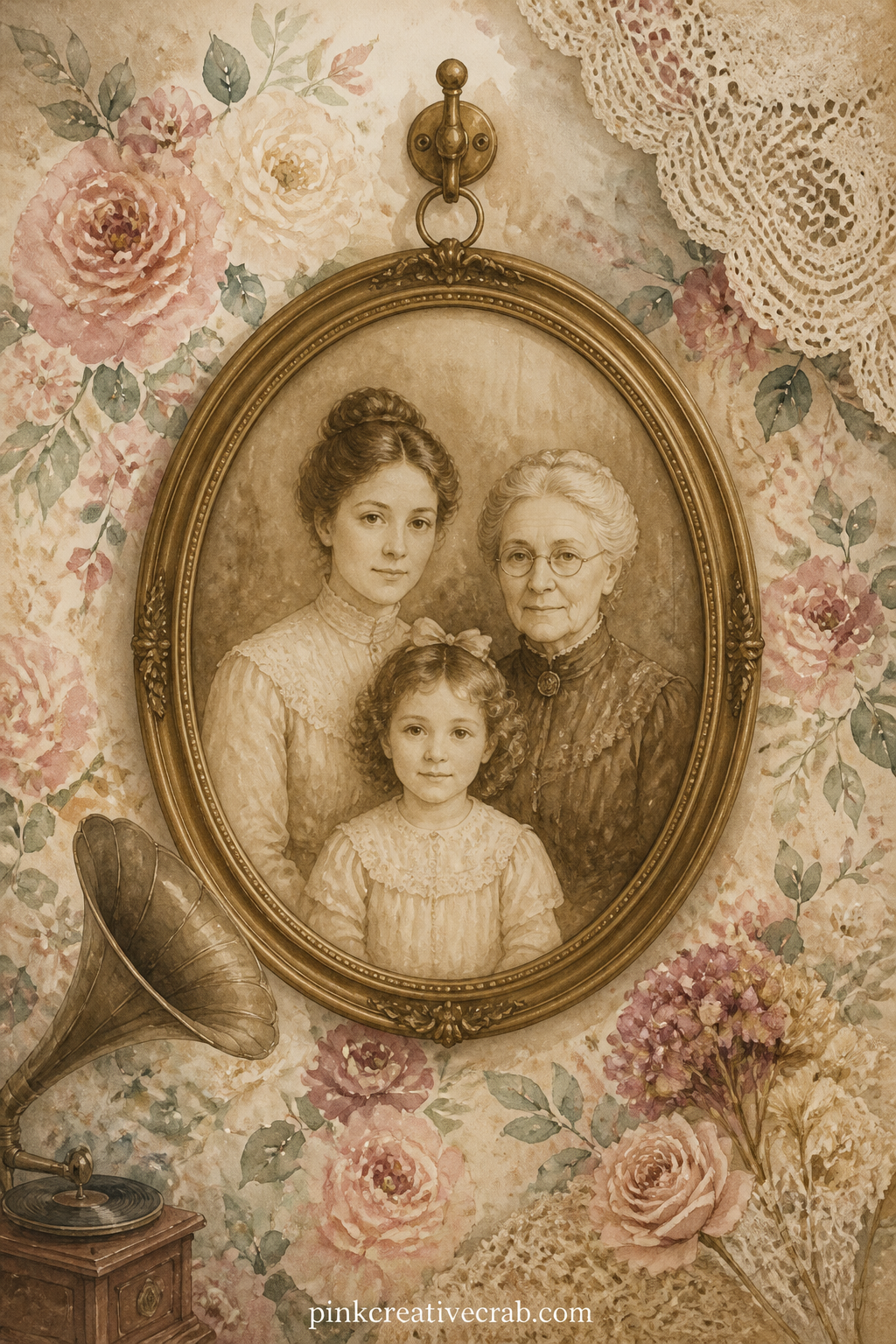
An oval-framed family group sits at the center, with a carved wood frame edge, a small brass hook painted above it, a lace doily corner tucked beneath, and a faded floral wallpaper ground filling the rest of the page.
Tuck a real name and date under the frame when you glue this in, or write who these people might have been to you. A line like ‘found in grandmother’s trunk, names unknown’ sits well along the bottom edge and gives the page its own quiet story.
A brass gramophone with a wide horn anchors a Victorian parlor corner, a fringed lamp, a tasseled cushion, a stack of records and a heavy curtain edge arranged around it against a dim papered wall.
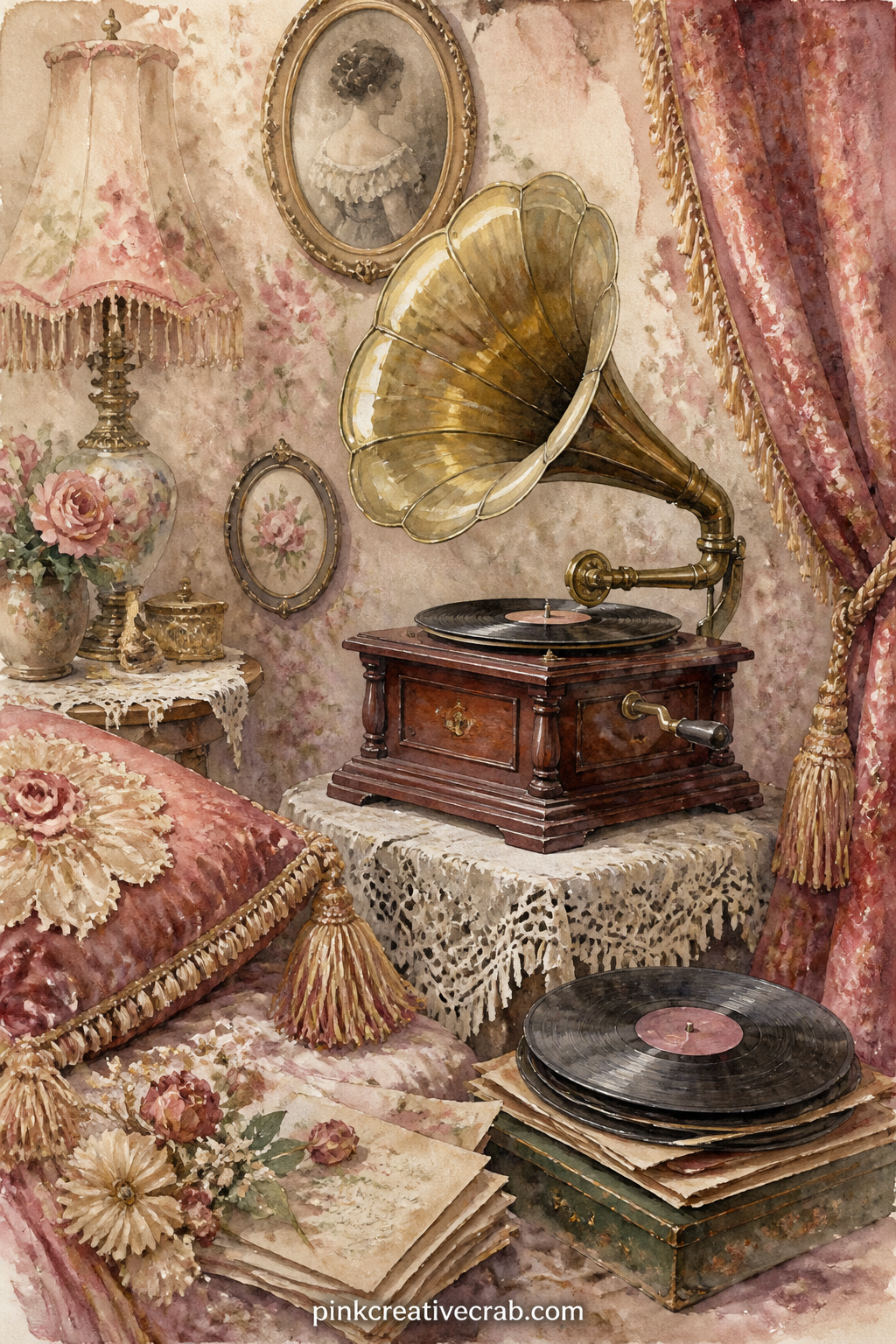
Pair this one with the faded wallpaper rose pattern page further on, using a strip of it as a false mantel shelf glued under the clock so the two pages feel like one room.
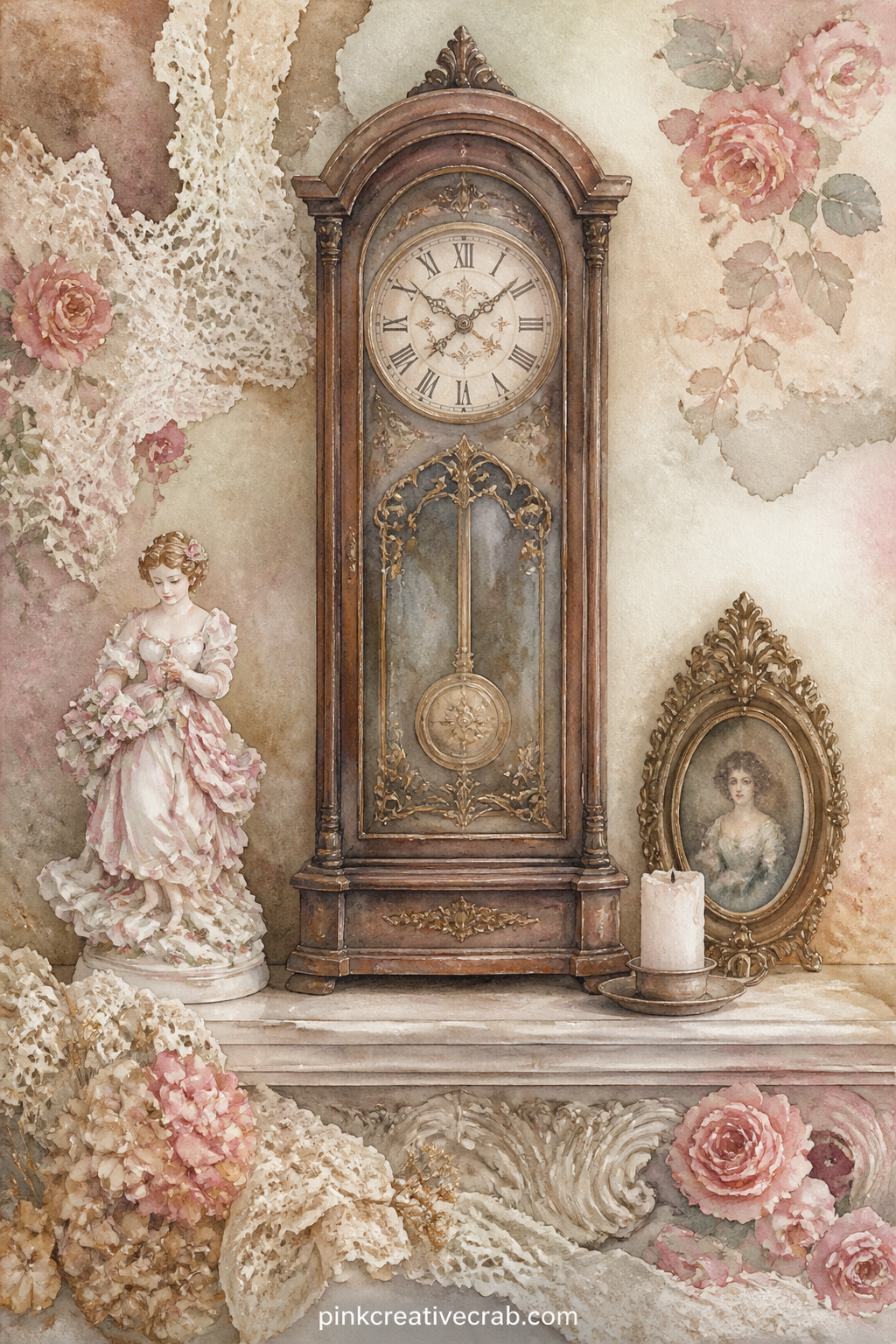
The tall case clock stands center page with a porcelain figurine, a small framed miniature and a candle stub lined along its ledge, the wall behind it washed in dusty plaster tones.
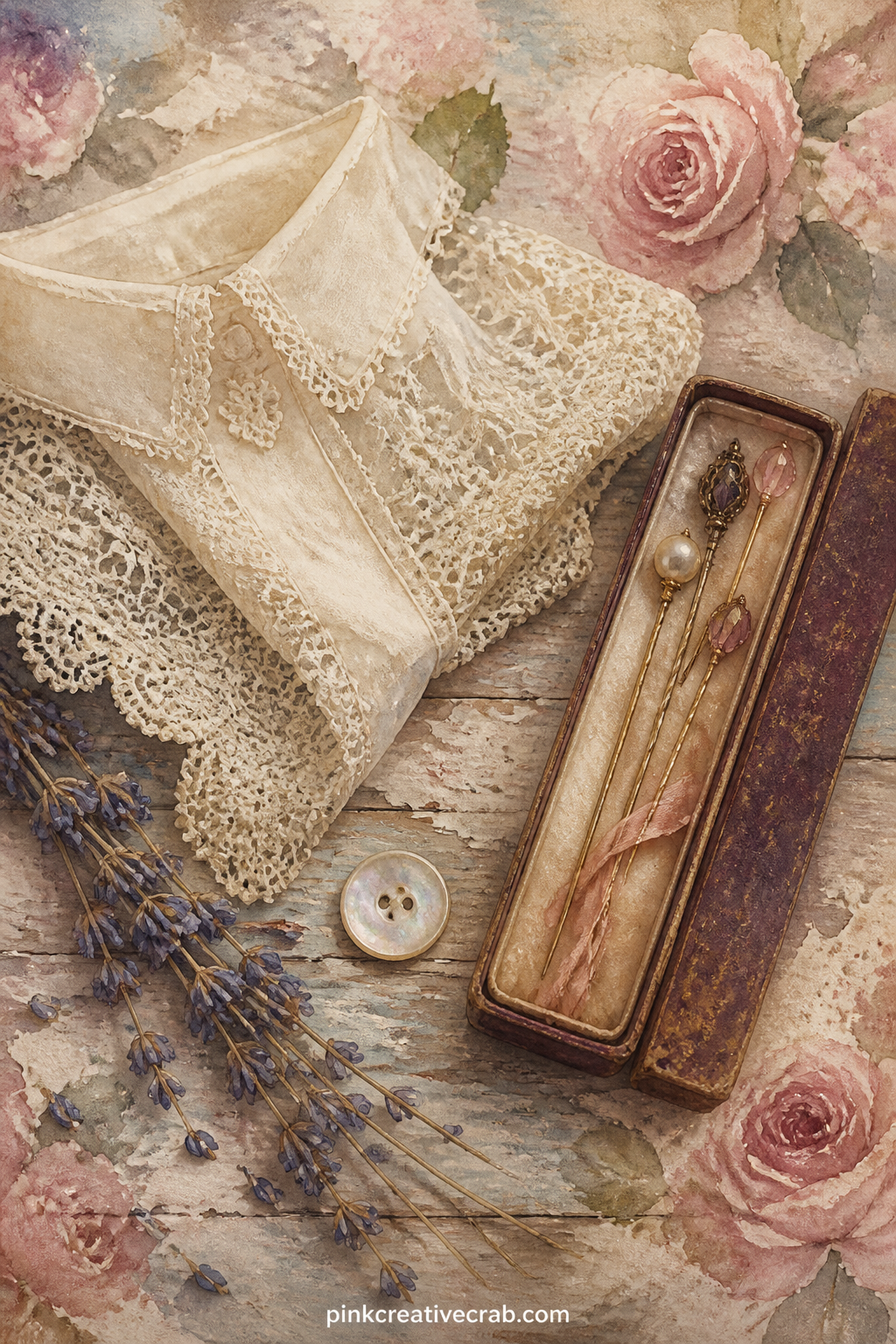
The usual mistake with a small still life like this is leaving too much bare paper around the objects. Keep the lace collar, hatpin box, a loose button and a sprig of dried lavender close together so the painted background still reads as a tabletop, not empty space.
Letters and Correspondence
Three cream letters lie fanned across the page, their ink faded to brown, a wax seal broken on the topmost one, a pressed violet and a postage stamp tucked between the folds.
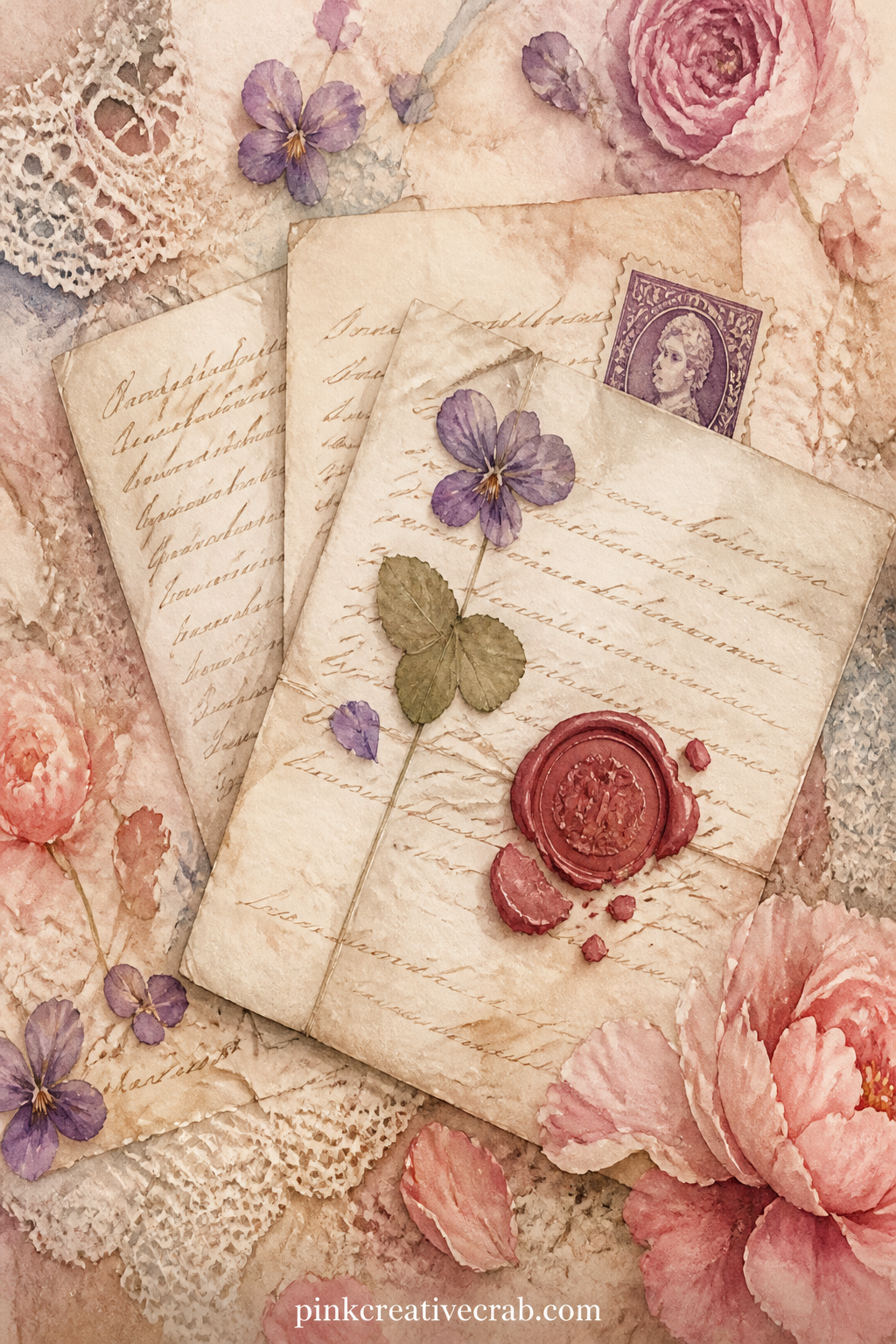
Write the opening line of a real or imagined love letter straight onto the empty corner of this page, or copy out a line from a letter someone once wrote to you. The ribbon and the folded paper leave just enough room beside them for a sentence or two in your own hand.
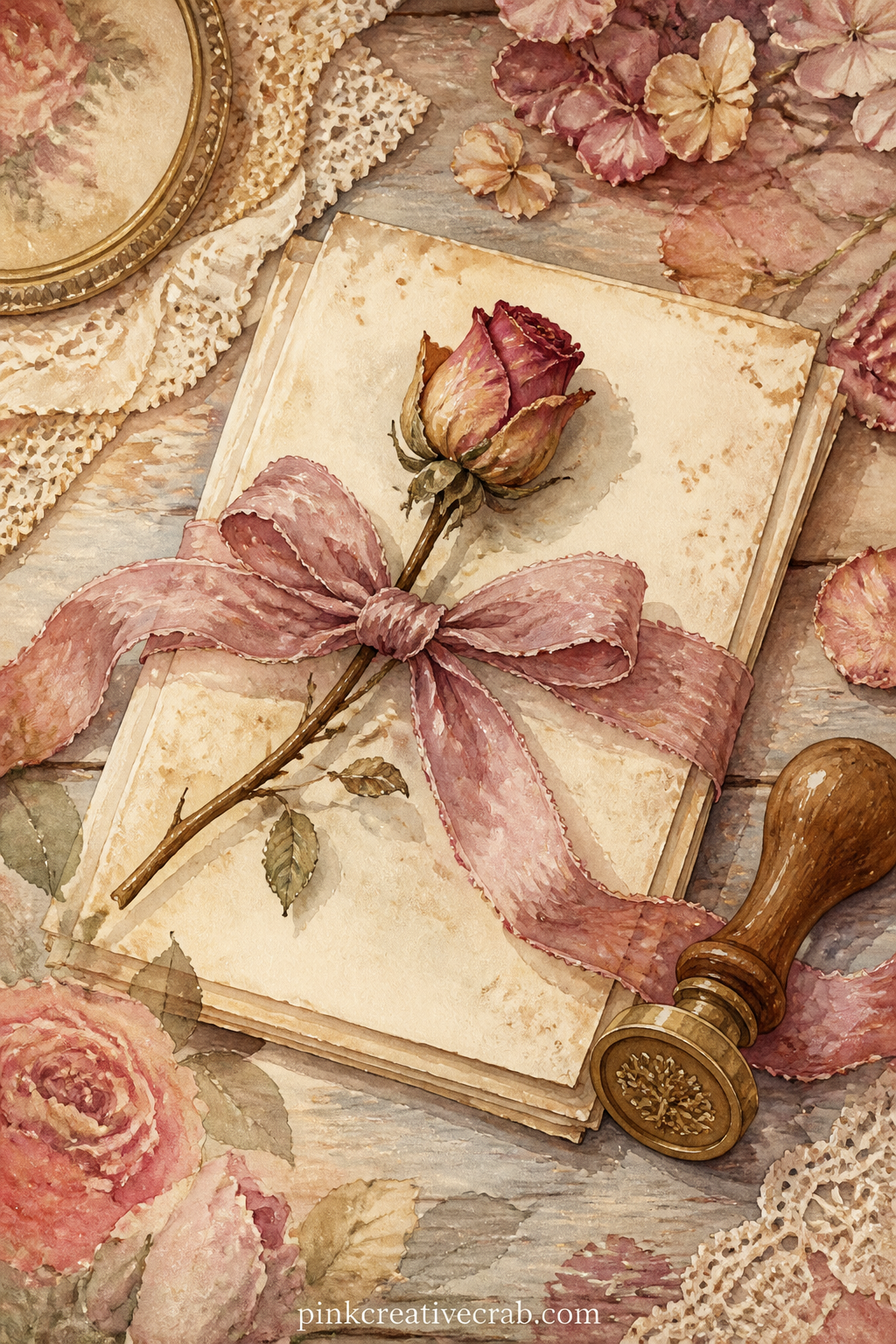
Fold the postage ledger corner of this page down for a five minute window effect, then slide a real stamp or a cut one from scrap paper underneath so it peeks through.
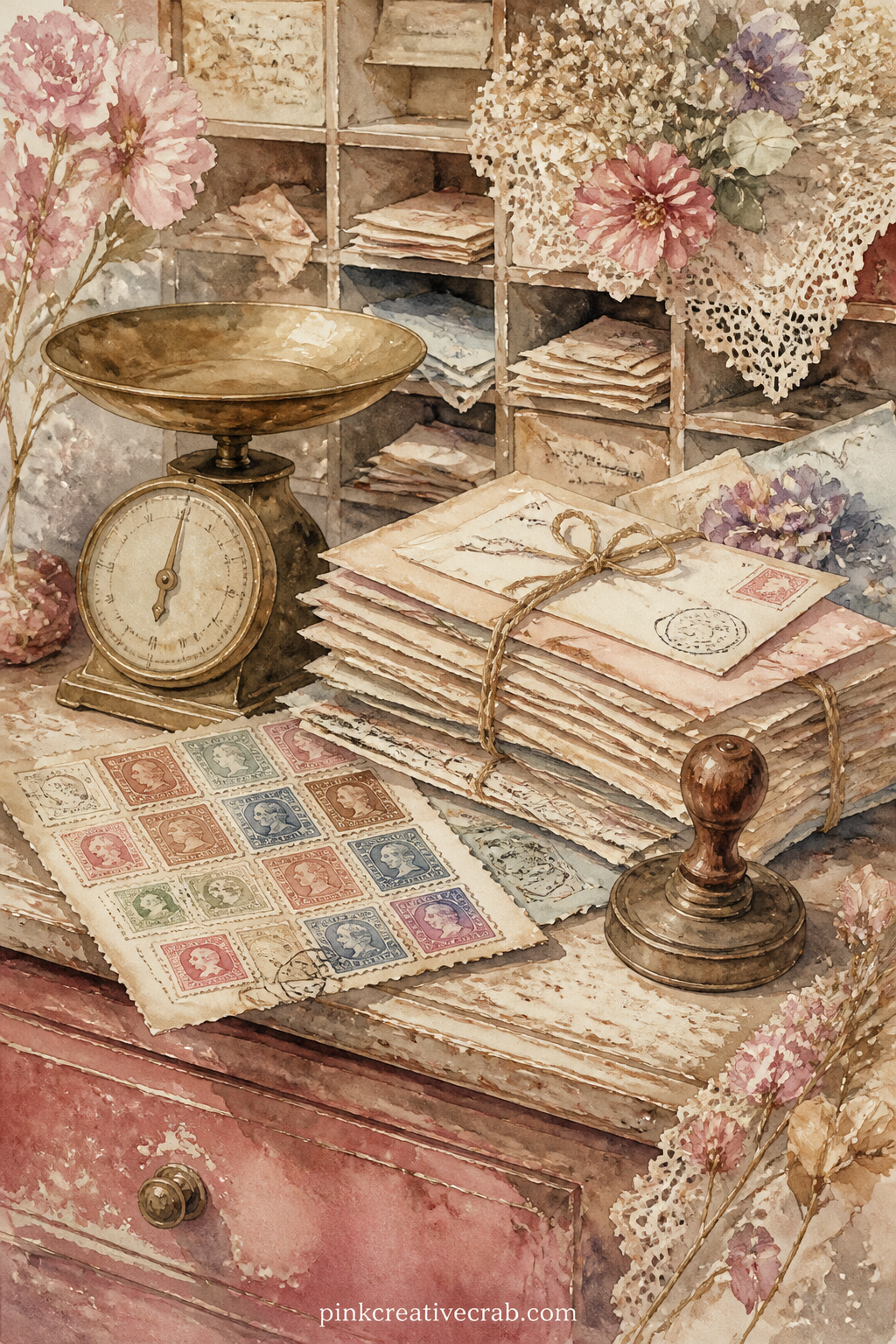
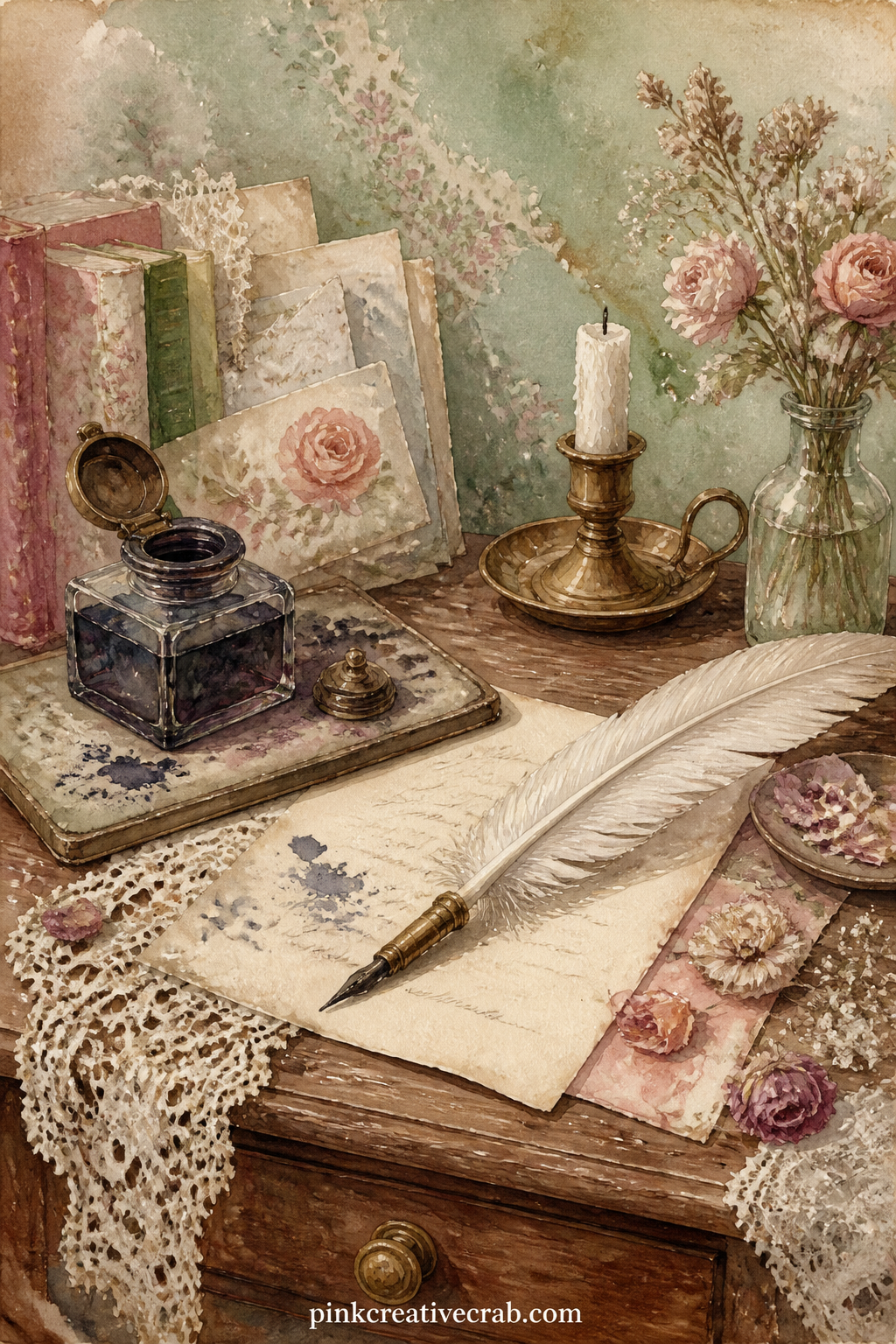
A writing desk holds a glass inkwell, a quill pen resting across it, a blotter stained with old ink, a half-written letter and a small brass candle holder, the wall behind washed in faded green.
Tea Rooms and Parlors
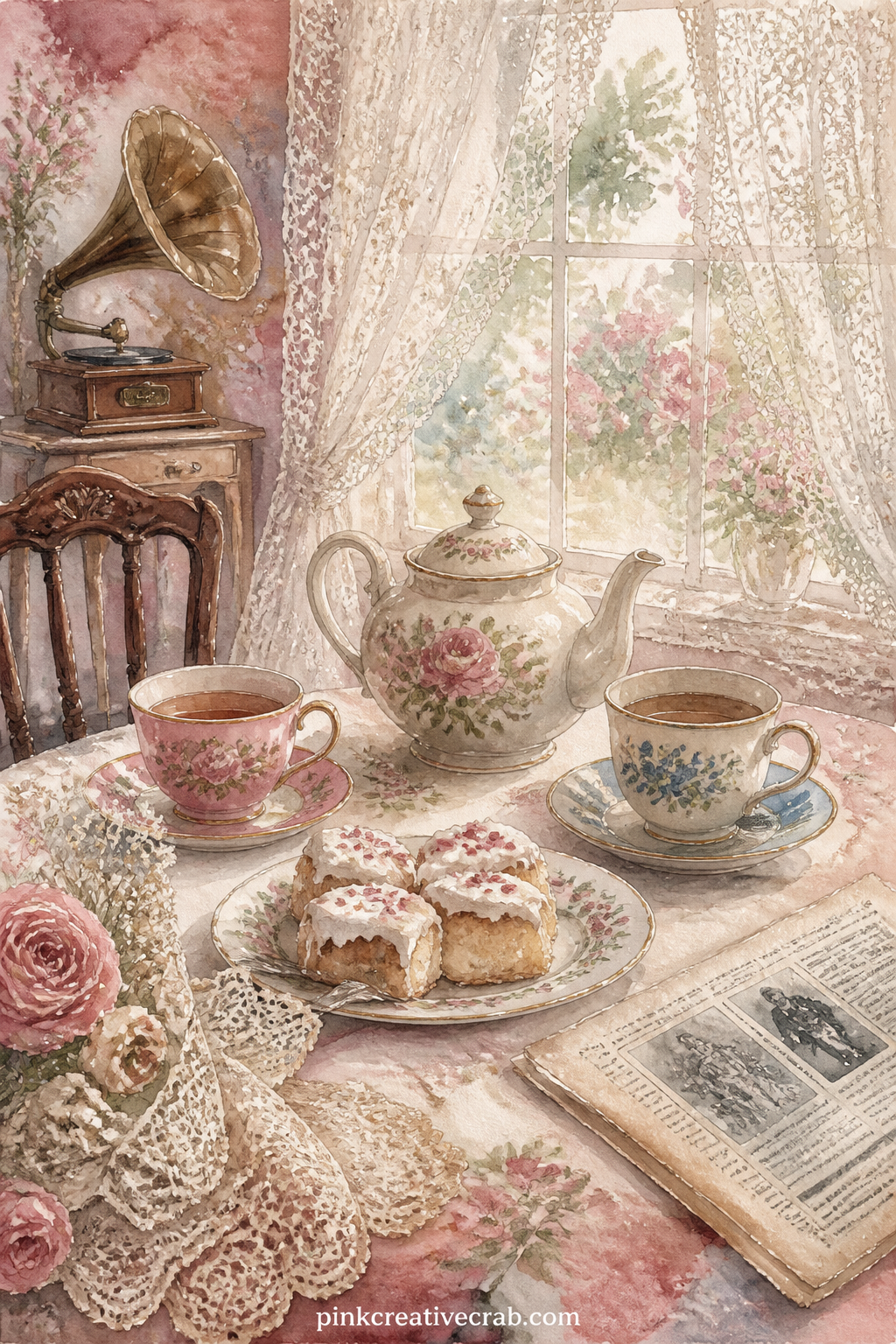
A lace-curtained window lights a small tea room table set for two, with a floral teapot, mismatched cups, a plate of iced cakes and a folded newspaper laid across the cloth.
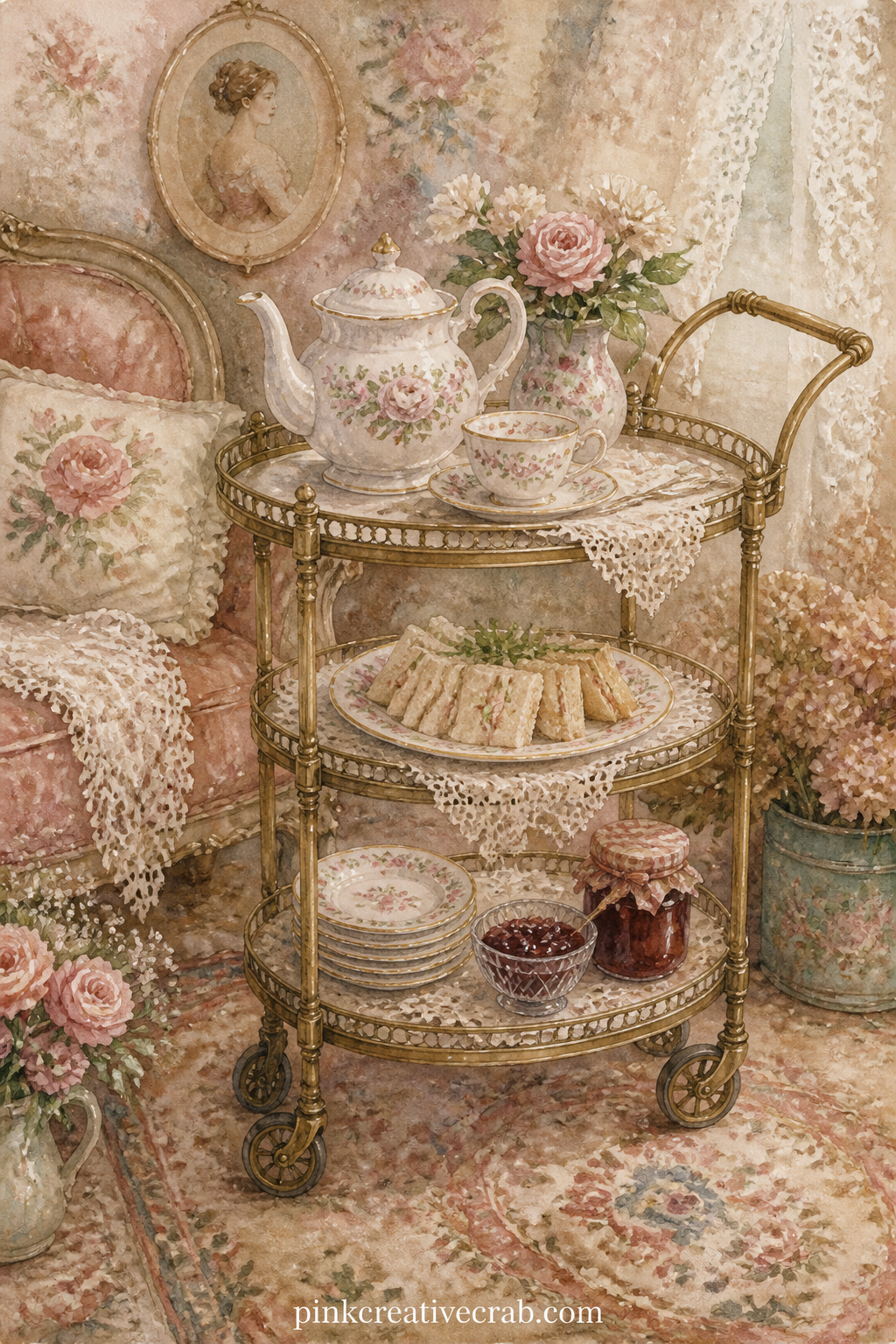
This page works well next to the tea room page before it: trim the edge of this trolley scene and overlap it slightly so the two tables appear to share one room when the journal is open flat.
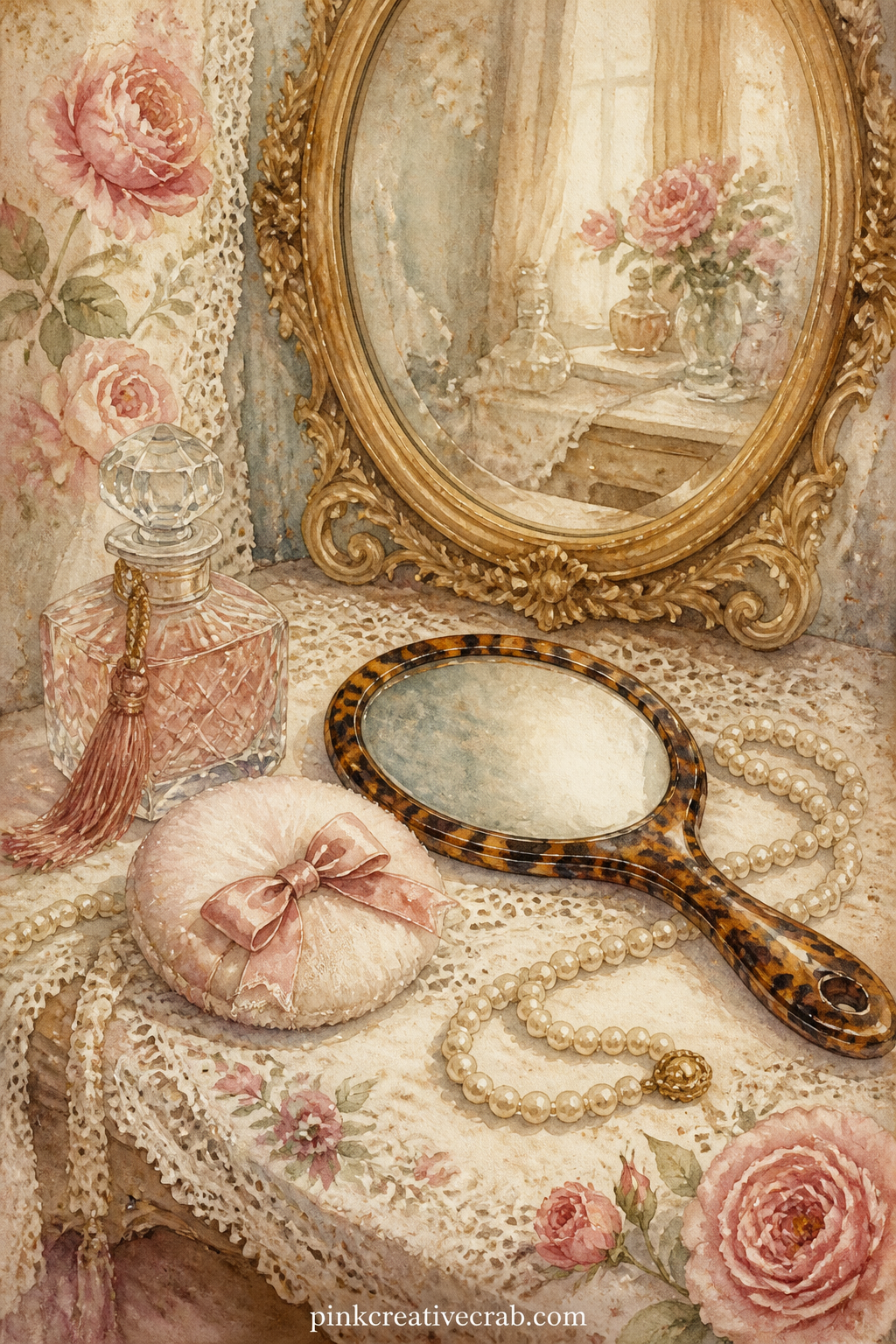
A tortoiseshell hand mirror, a perfume bottle, a powder puff and a string of pearls sit on a lace vanity runner, a gilt-framed mirror hanging on the wall behind them.
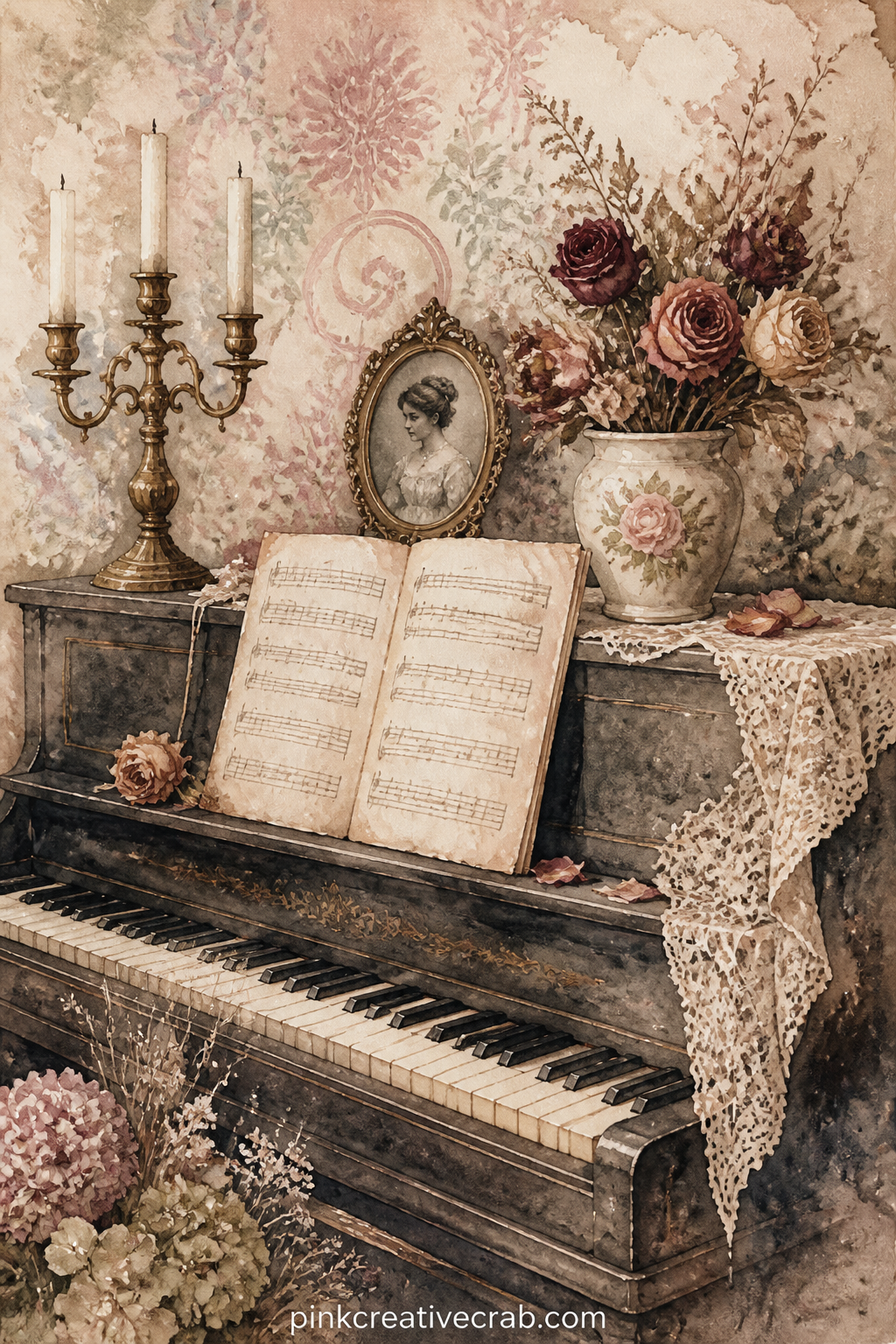
An upright piano holds open sheet music, a brass candelabra, a framed photograph and a vase of dried roses, the wallpaper behind it dim and faintly patterned.
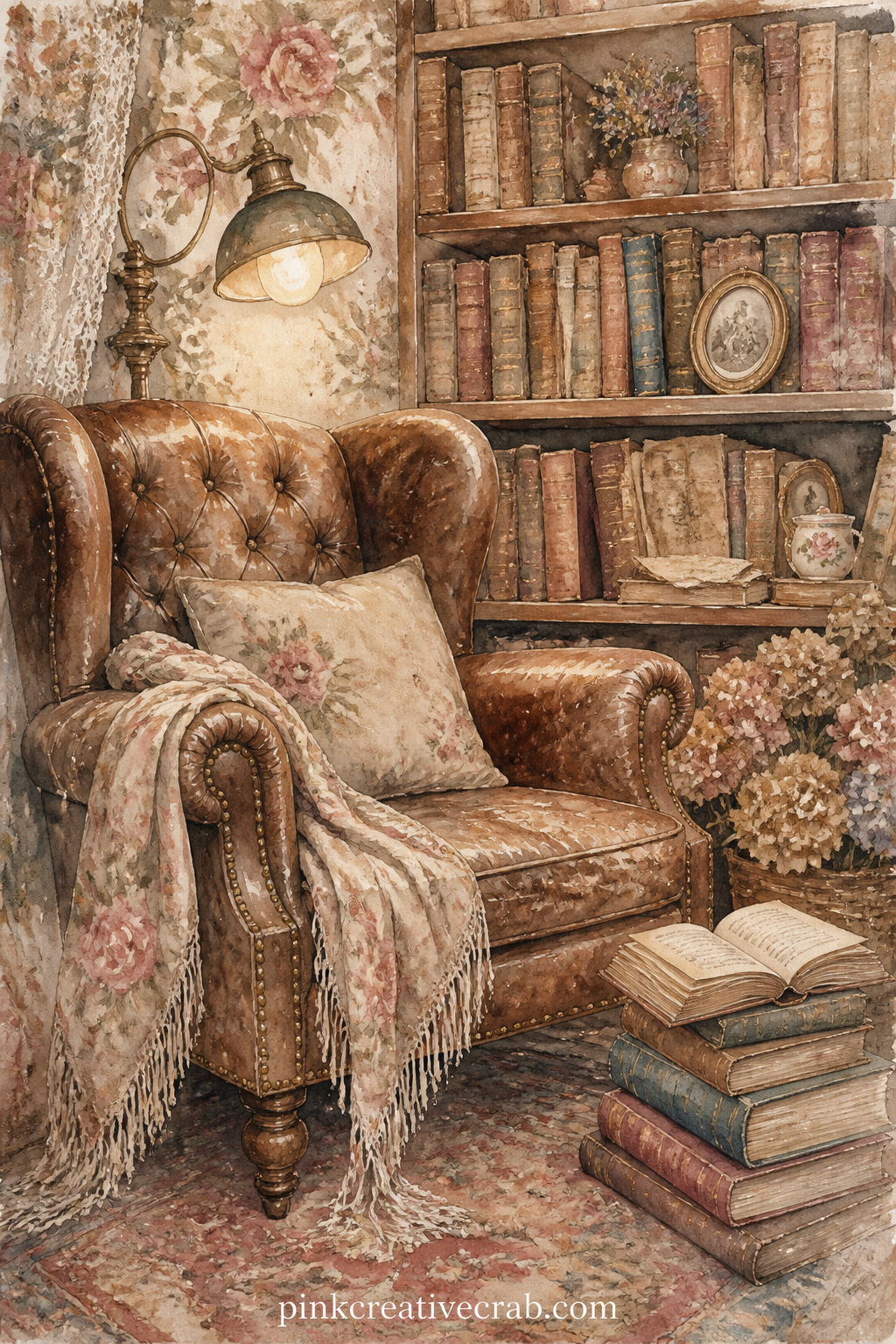
If the pattern feels like too much to paint by hand, trace just the chair and the shelf edge faintly in pencil first, then build the leather books and the lamp glow around that simple frame.
A worn leather chair sits beside a crowded bookshelf, a reading lamp, a folded shawl and a stack of books on the floor beside it, the wall behind washed warm and dim.
Garden and Window Views
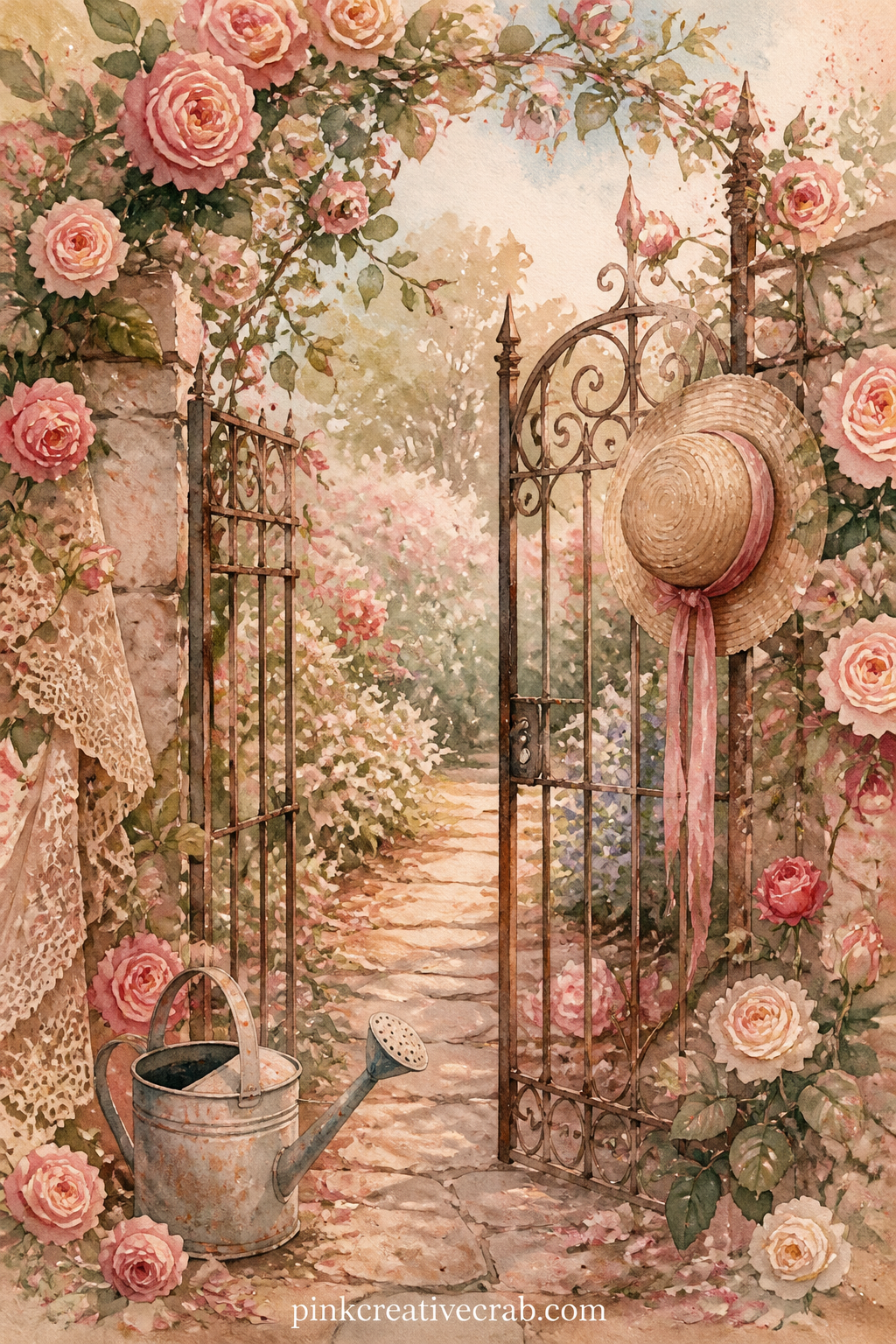
Who is this page for. Give it to the journaler who loves her garden more than her parlor: an iron gate wrapped in climbing roses, a watering can, a straw hat and a stone path leading off behind it.
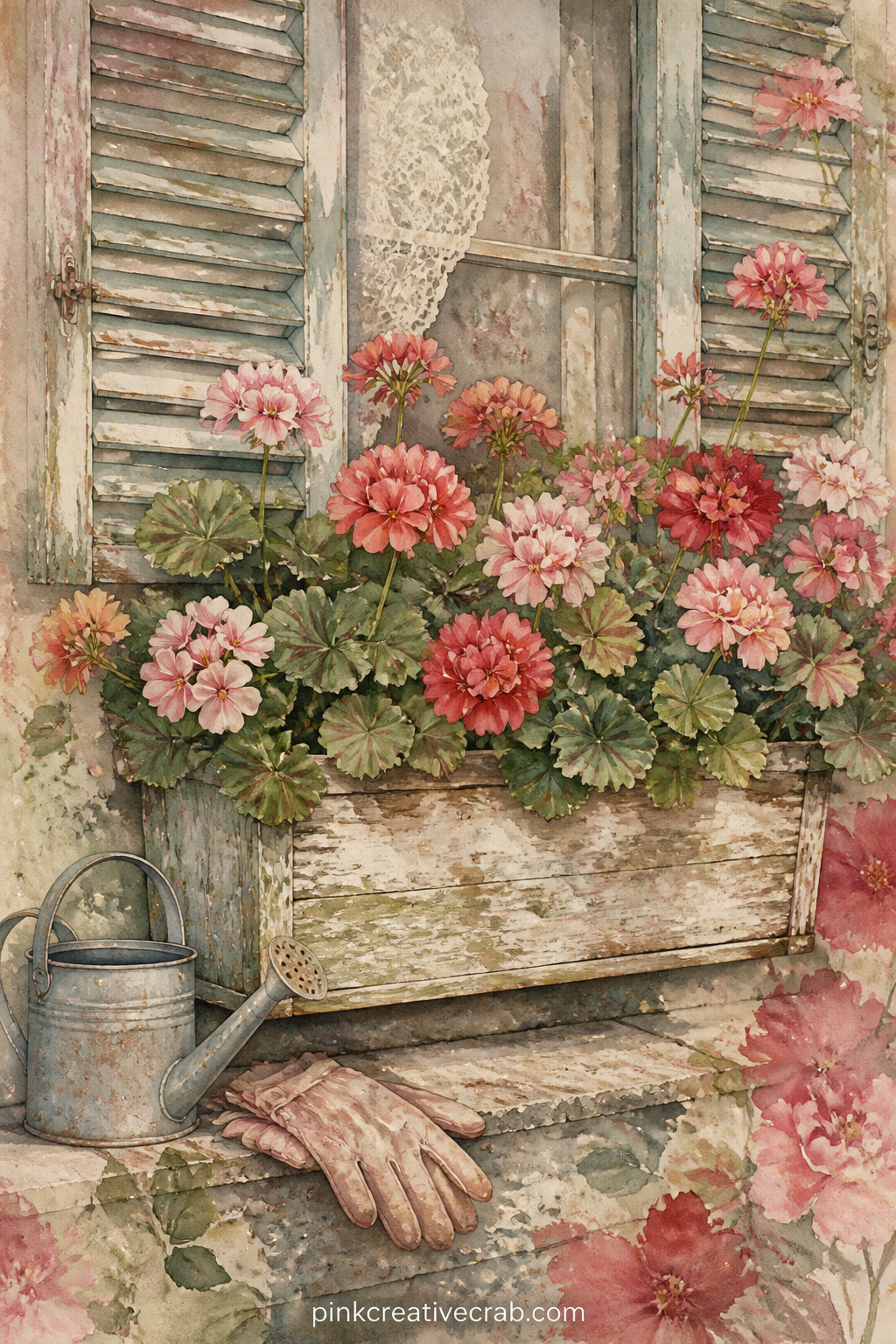
A weathered window box of geraniums sits beneath a shuttered window, a watering can and a pair of garden gloves resting on the sill beside it.
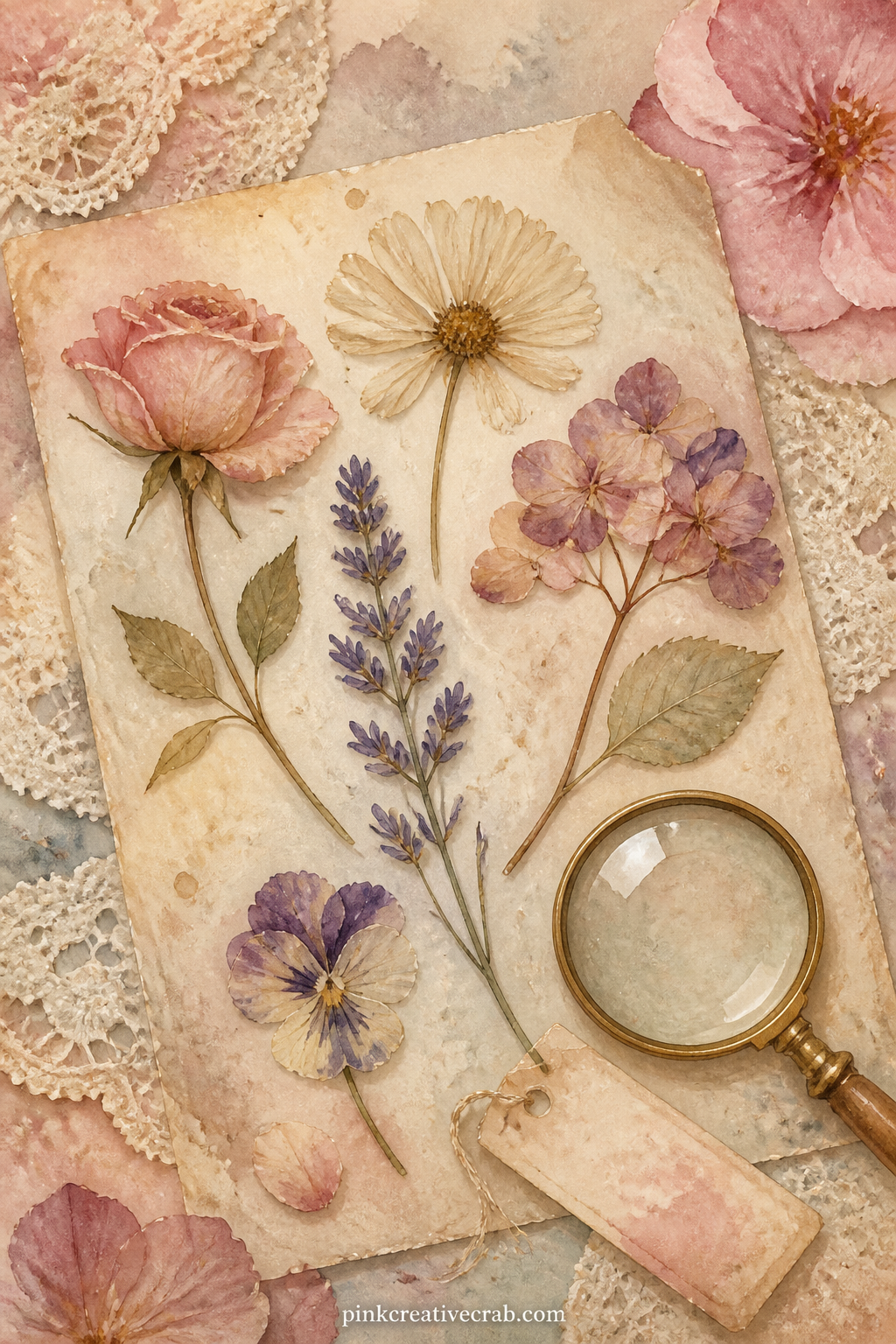
What would you ask the woman who pressed these flowers, if you could. Write the question across the bottom of the page, under four or five dried blooms laid out on aged paper with a magnifying glass beside them.
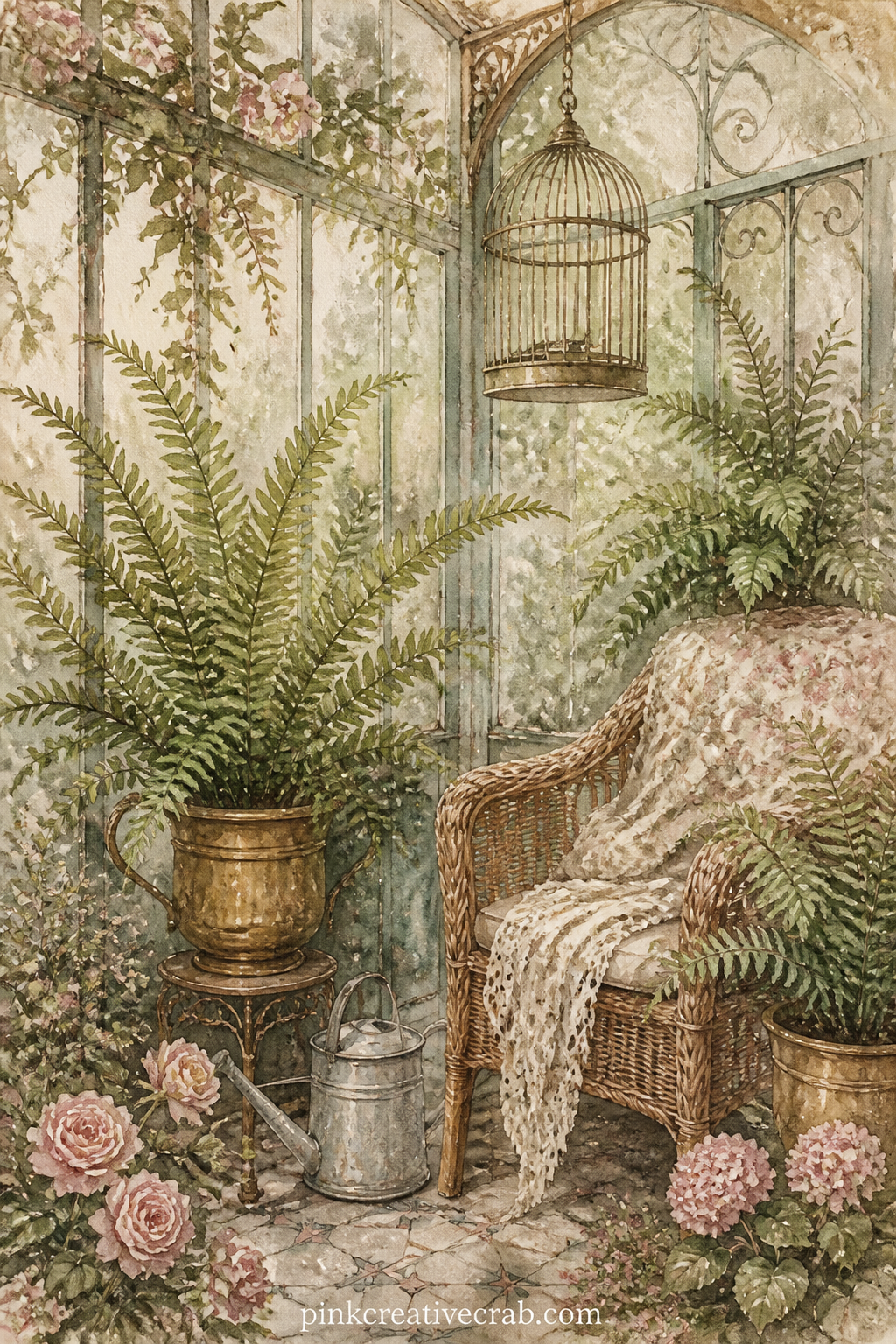
A glass conservatory corner holds tall ferns in brass pots, a wicker chair, a watering can and a bird cage hanging from above, the glass panes faintly steamed.
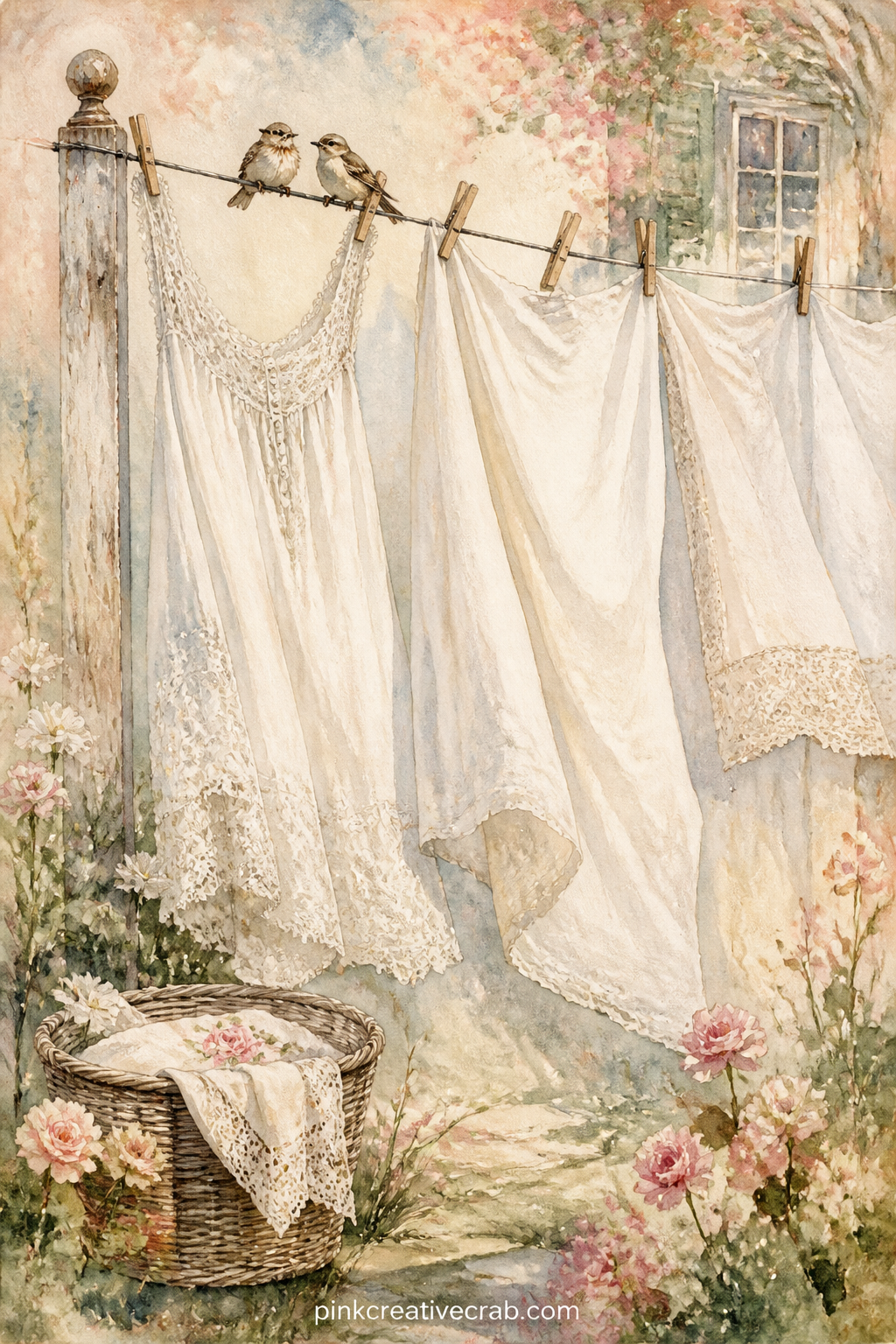
The five minute version of this page: paint just the line of hanging linens and the fence post behind, skip the basket and the birds, and let the plain washed sky carry the rest of the space.
Attic and Travel Keepsakes
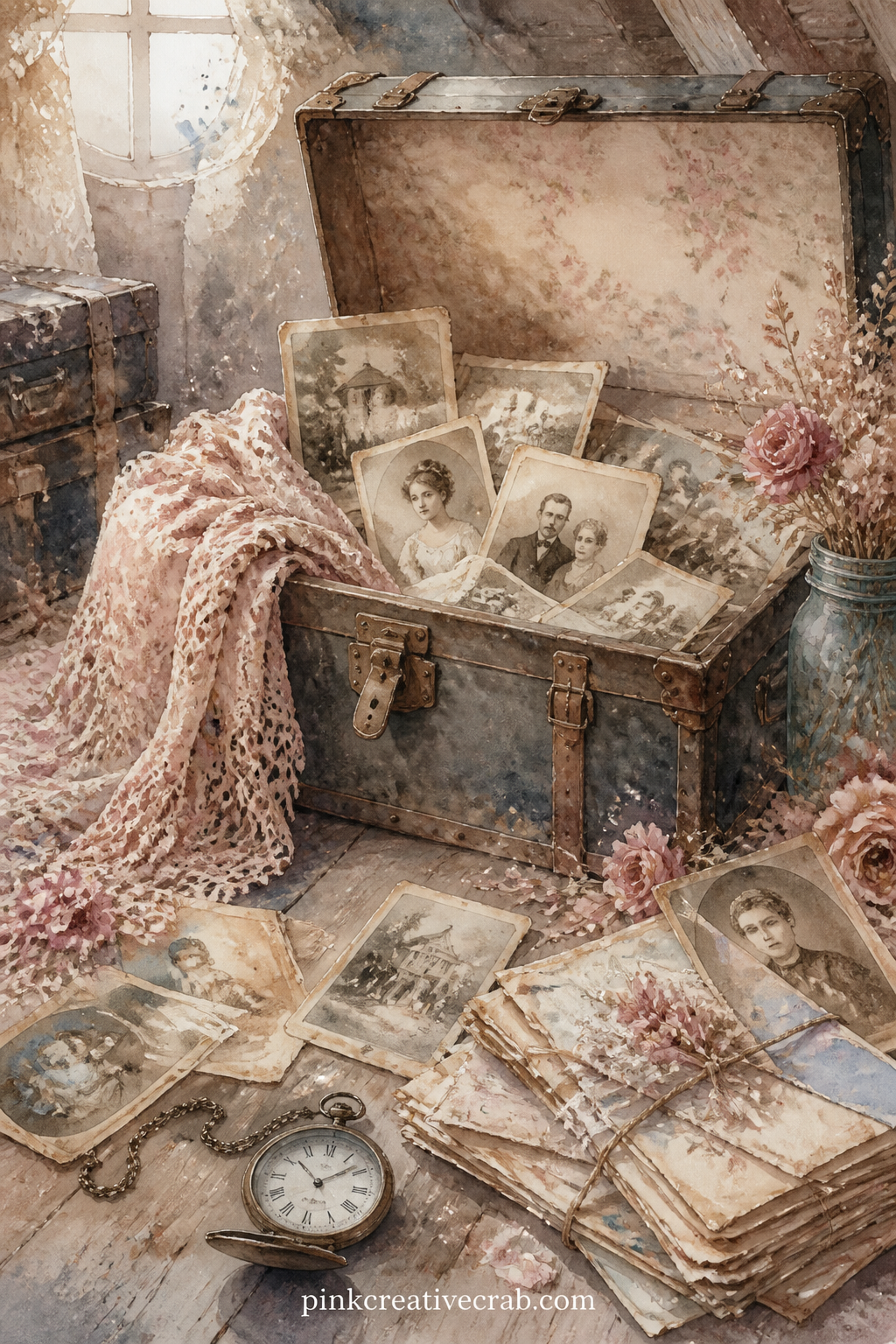
An open steamer trunk spills loose photographs, a folded shawl, a pocket watch and a bundle of letters across the attic floorboards, dust motes painted faintly in the light above.
Readers building a travel-themed journal alongside this one may want more street scenes and skylines: the travel junk journal ideas collection has matching pages built for exactly that.
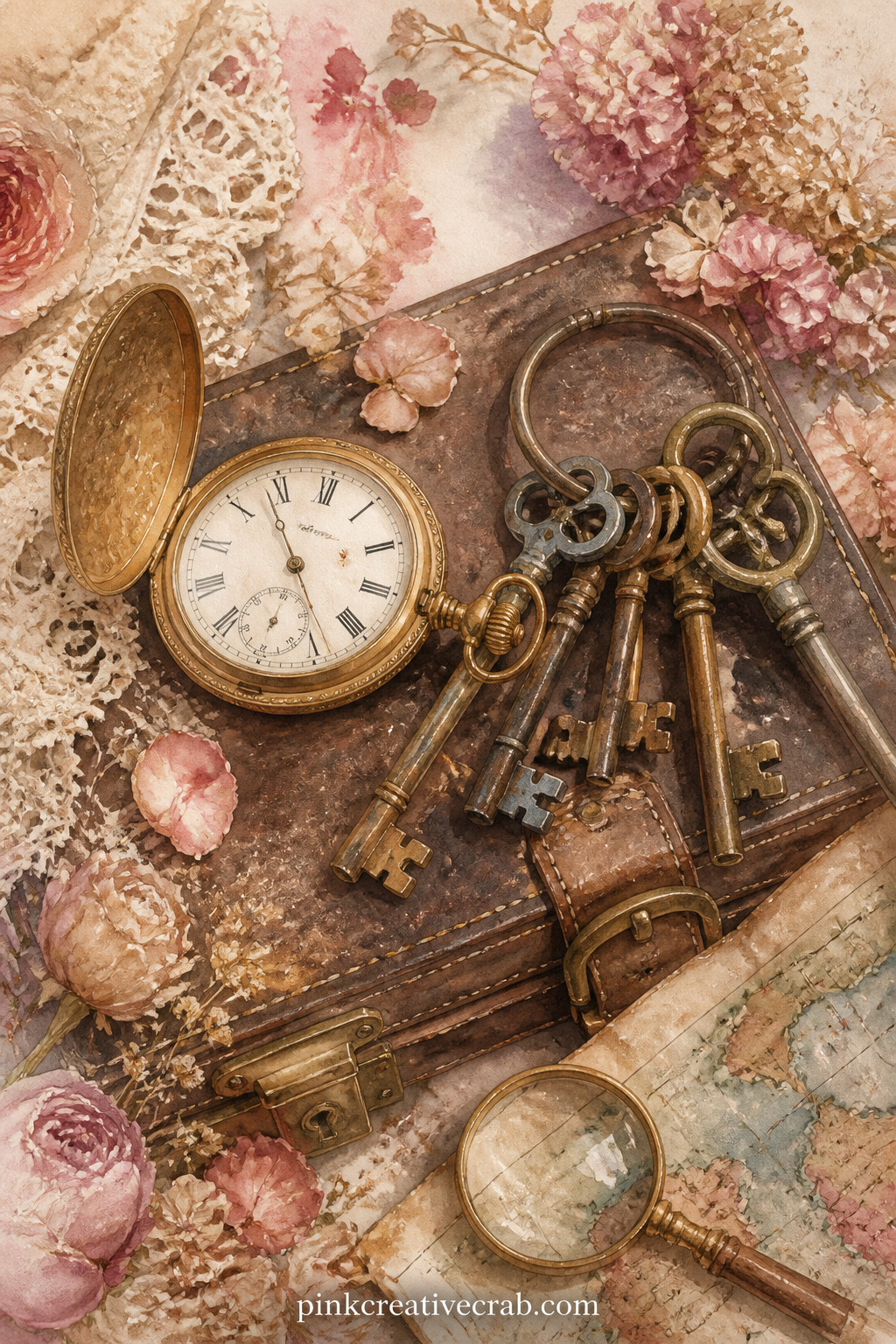
A gold pocket watch lies open beside a ring of old keys, a folded map corner and a magnifying lens, all set on a worn leather travel case.
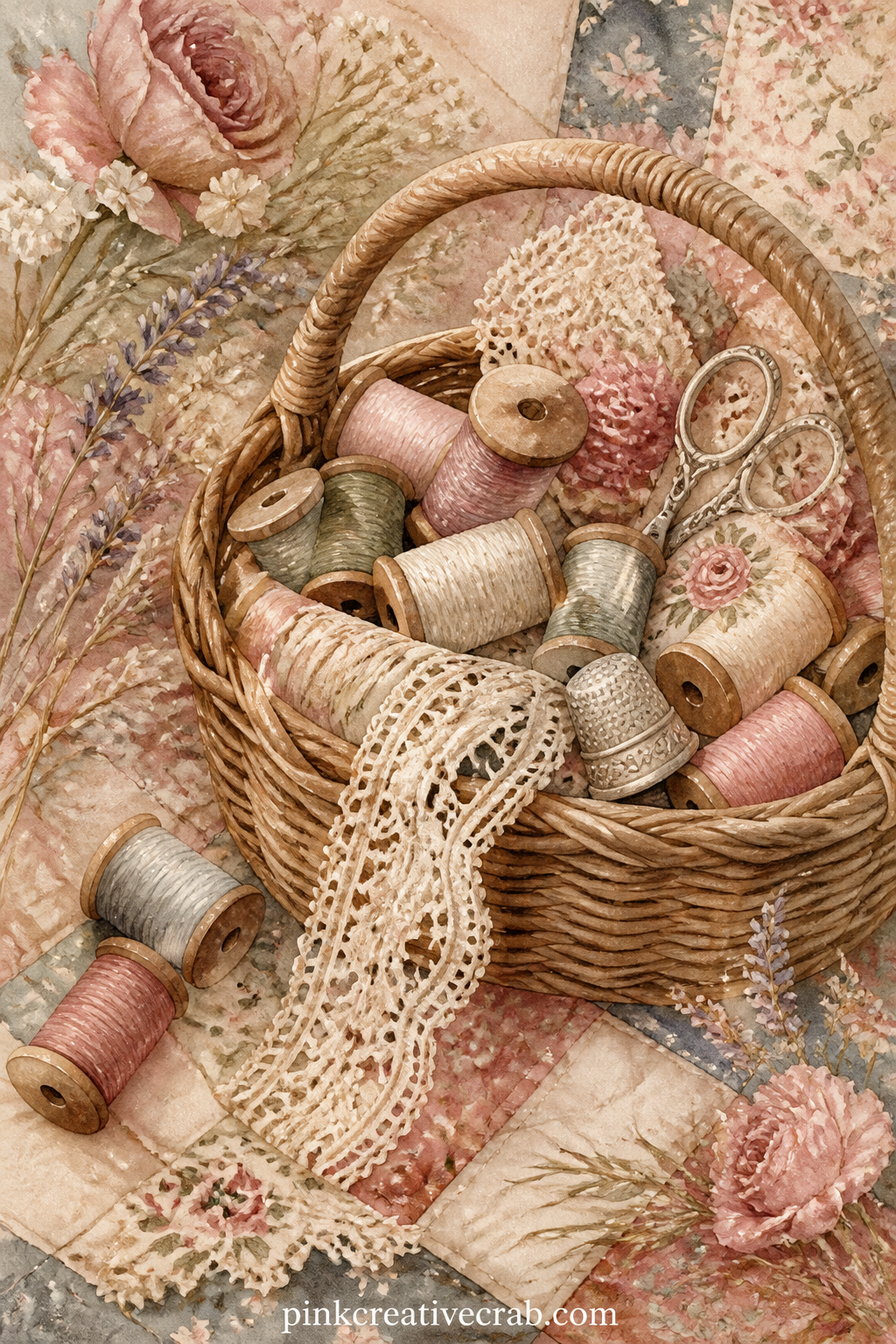
A wicker sewing basket overflows with spools of thread, a thimble, a pair of scissors and a half-finished lace edge, set on a faded quilt square.
If your journal leans toward the holidays, this scene sits well beside pages from the Christmas junk journal ideas set, keeping the same faded, candlelit feeling through winter pages.
Keepsake Portraits
A dried wedding bouquet sits under a glass dome, a folded veil, a pair of white gloves and a ribboned invitation arranged beside it on a lace cloth.
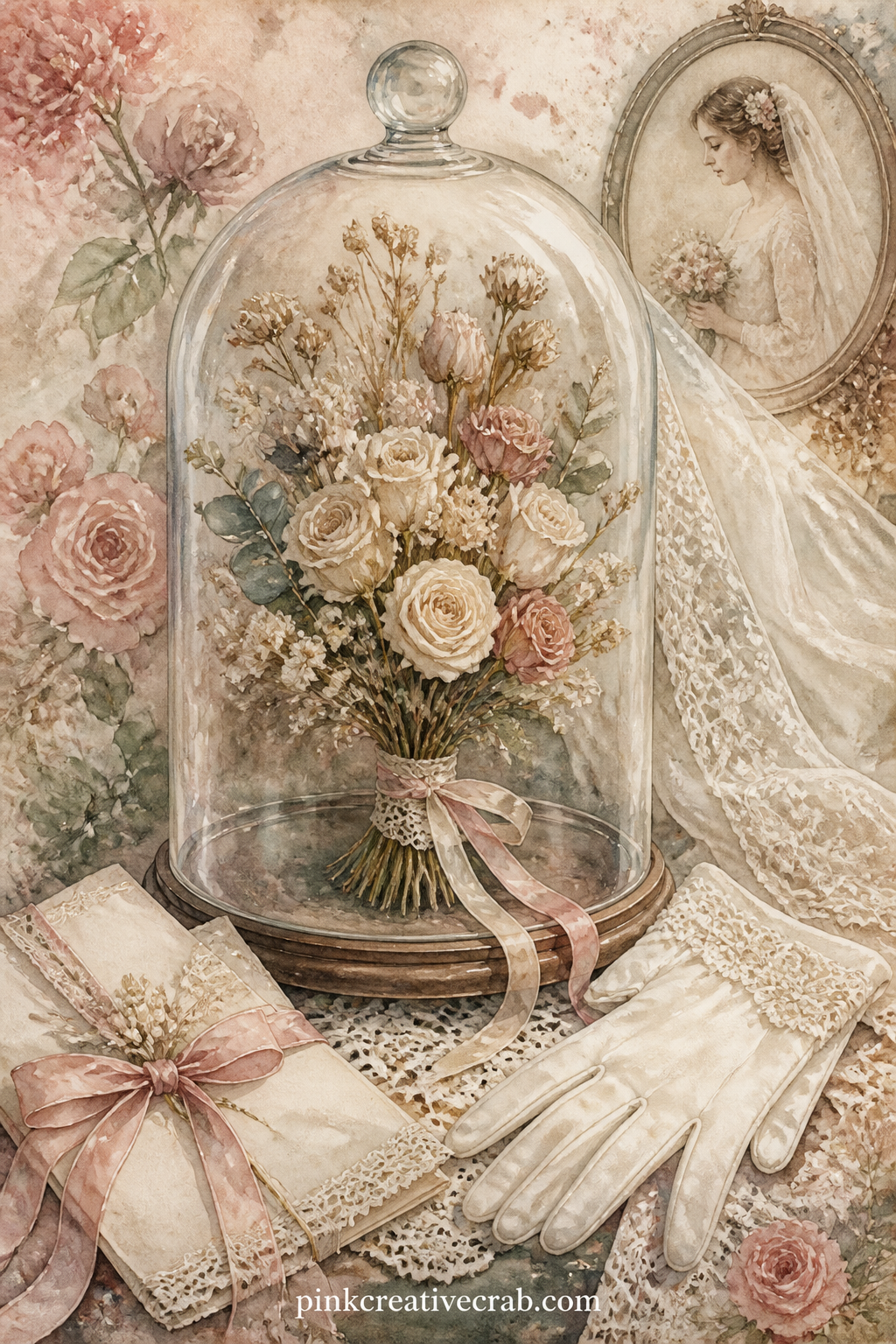
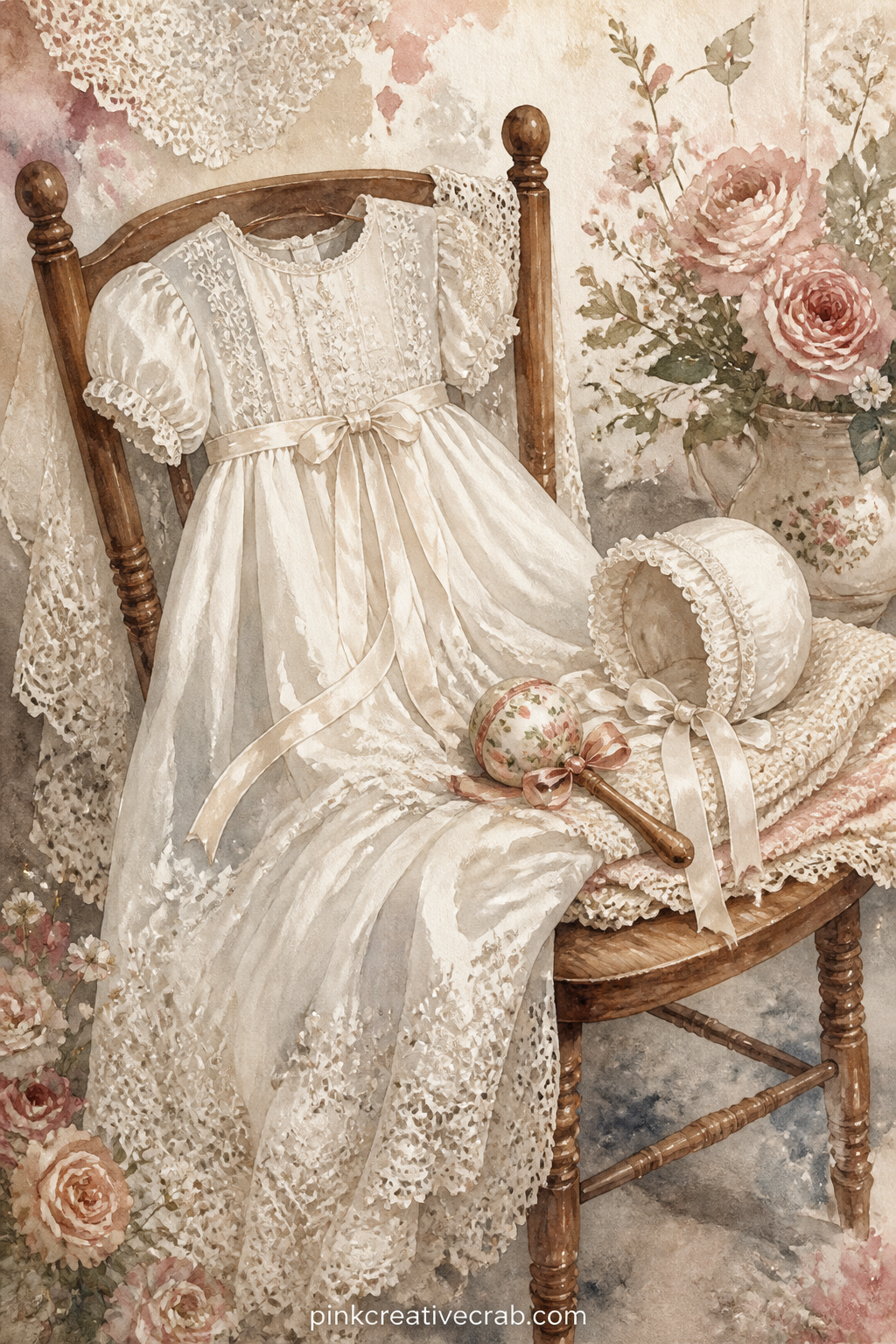
Pair this page with a lined page further in the kit for recording a child’s name and birth date, since the gown itself leaves no room for writing of its own.
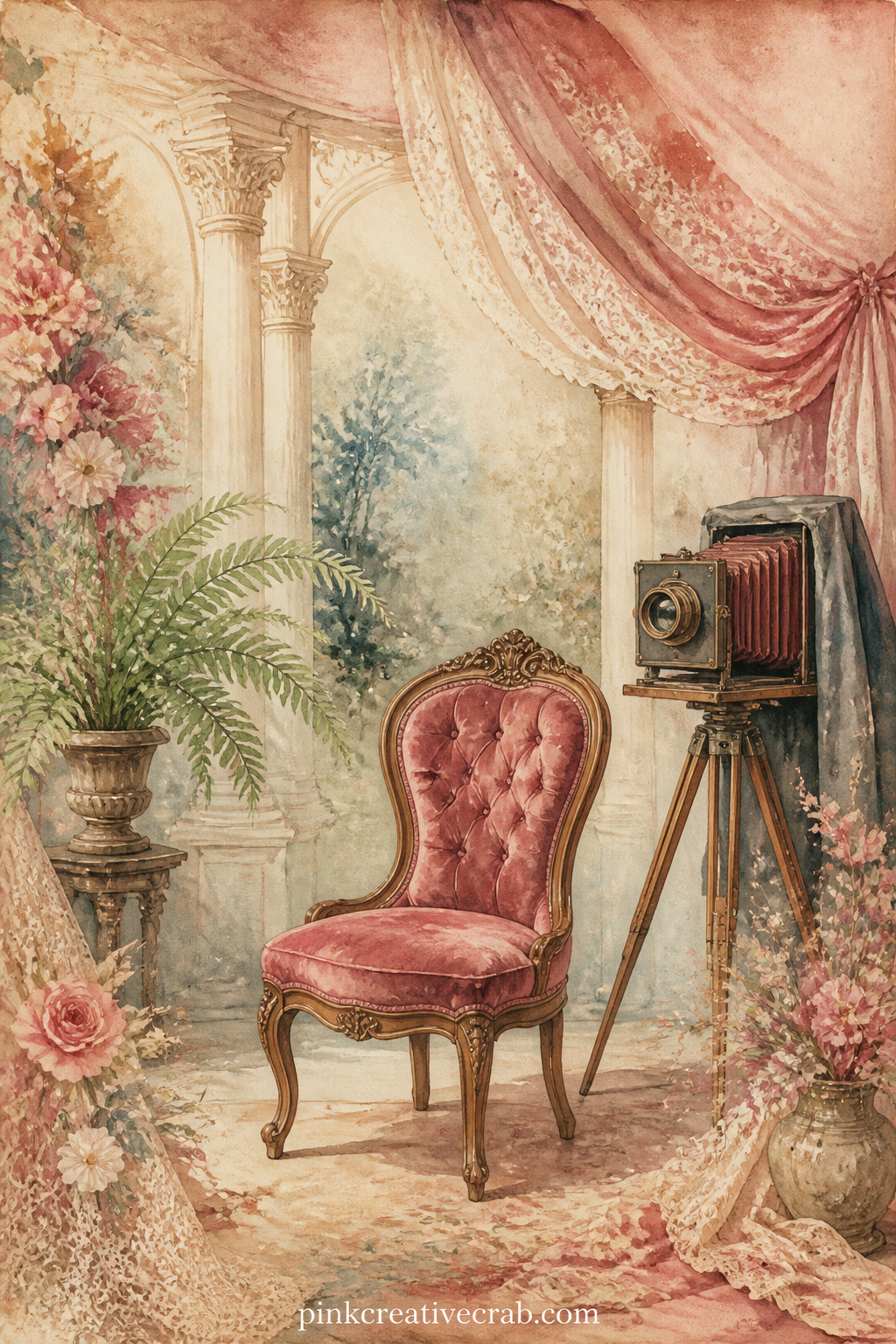
A painted studio backdrop of columns and drapery stands behind an empty posing chair, a potted fern and a folding camera on its tripod to one side.
Background Papers
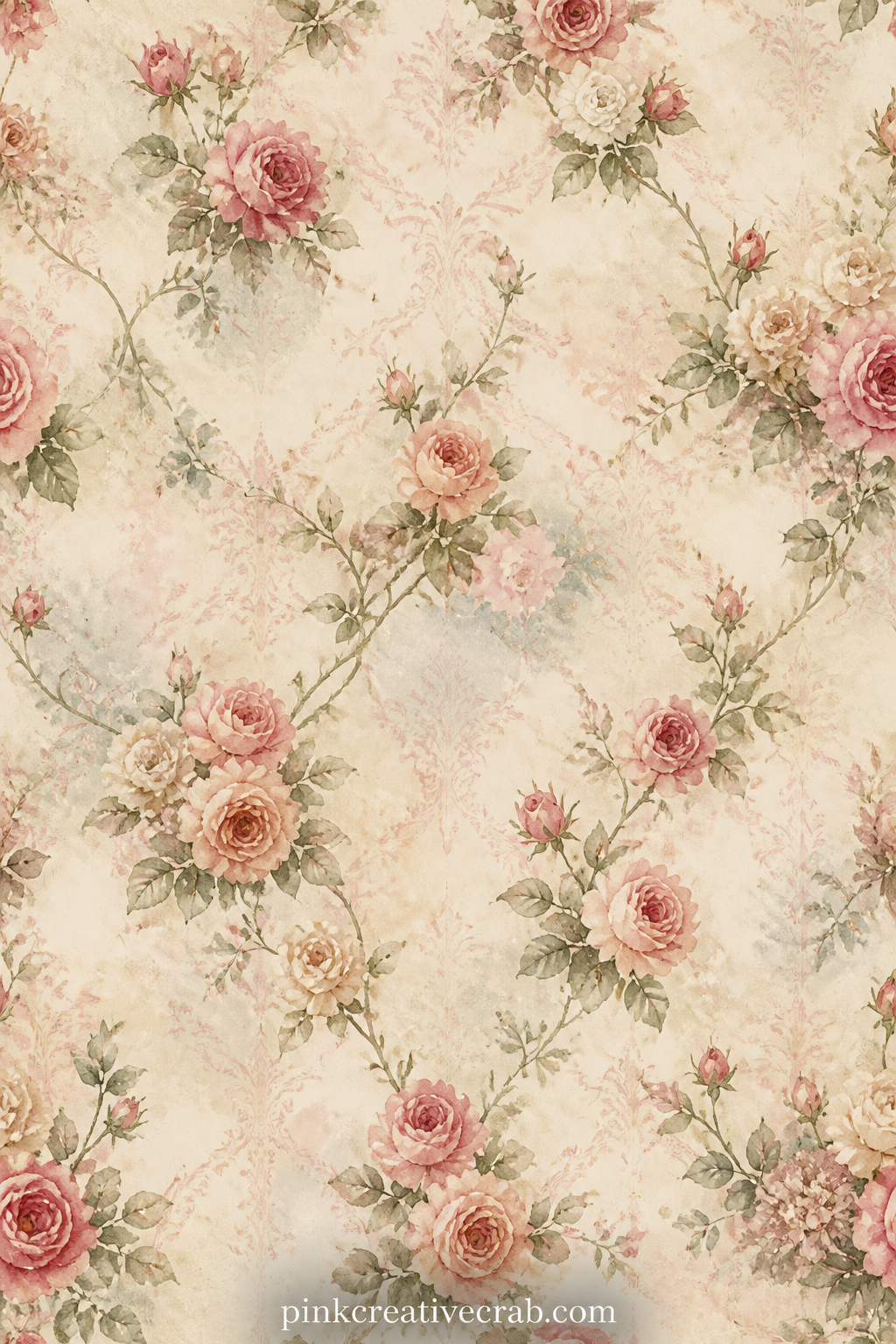
Faded rose clusters and thin trailing stems repeat edge to edge in a soft damask rhythm, perfect under a photograph, lining a journal cover, or filling a spread where a scene page needs a quieter neighbour.
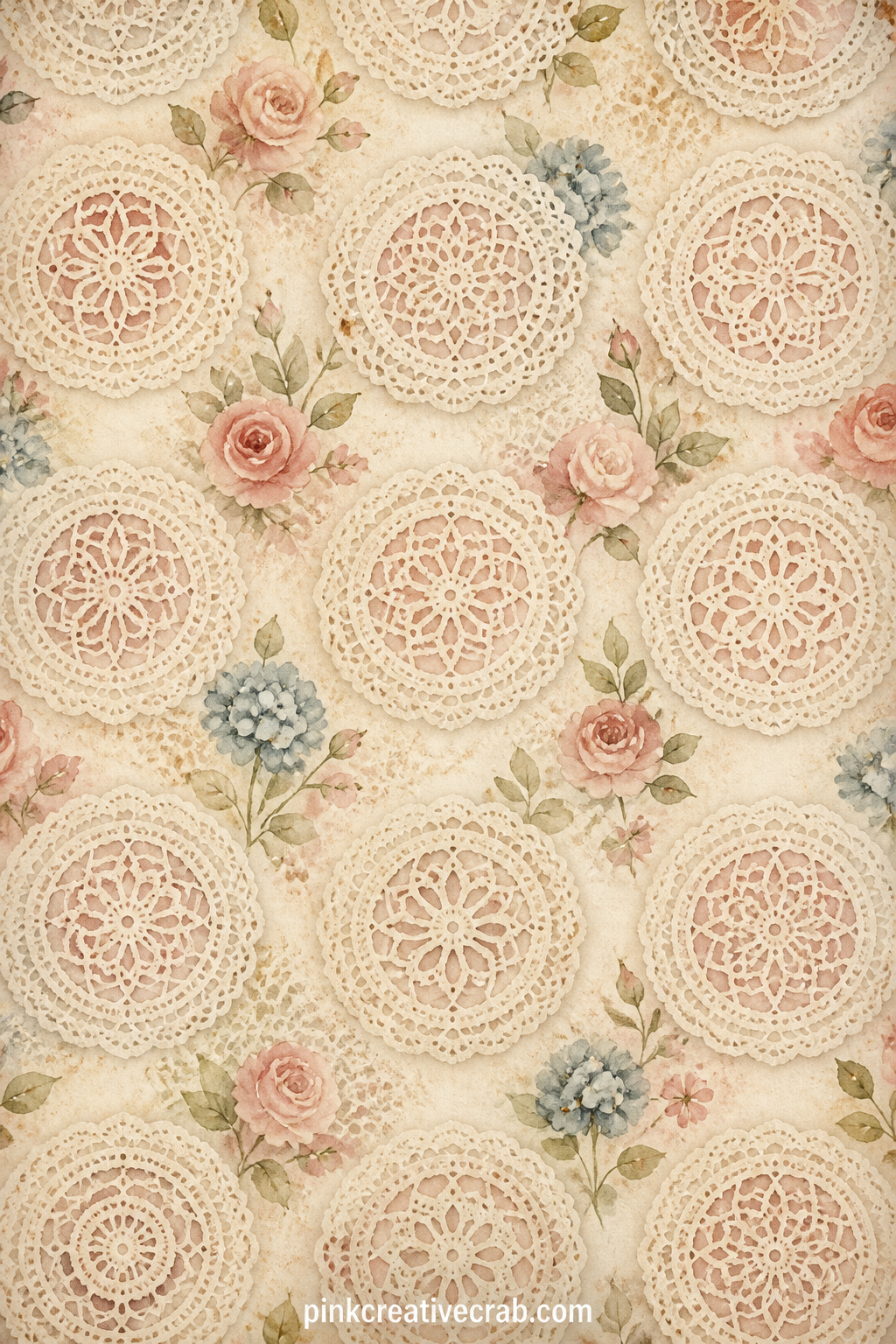
Small lace medallions repeat in loose rows across the page, suited to a cover sheet, a backing behind a delicate portrait page, or a soft border strip trimmed and glued along a page edge.
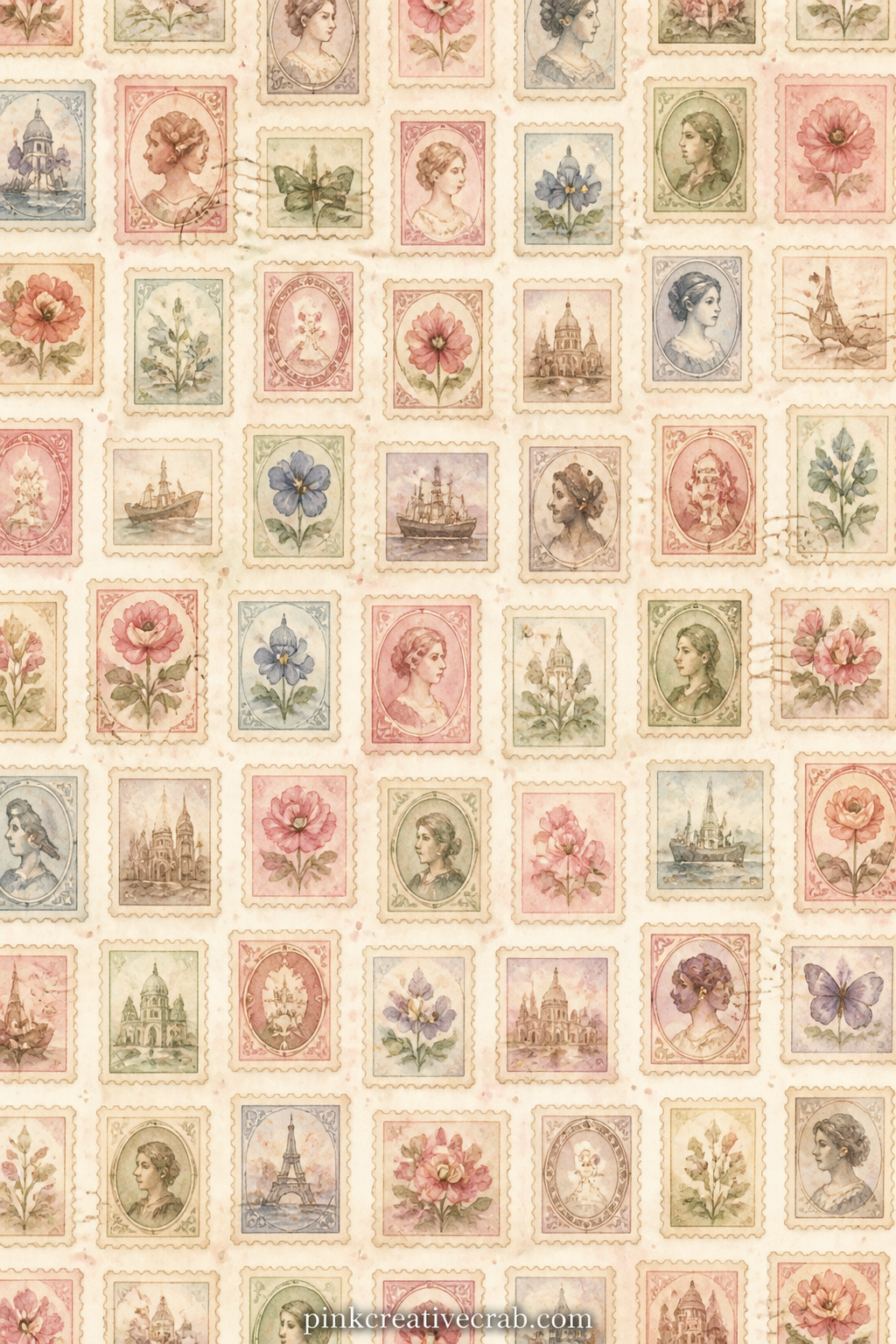
Rows of small faded postage stamps, each slightly different, tile across the page and suit a cover, a lining behind the letters pages, or a strip cut for a border around a journal entry.
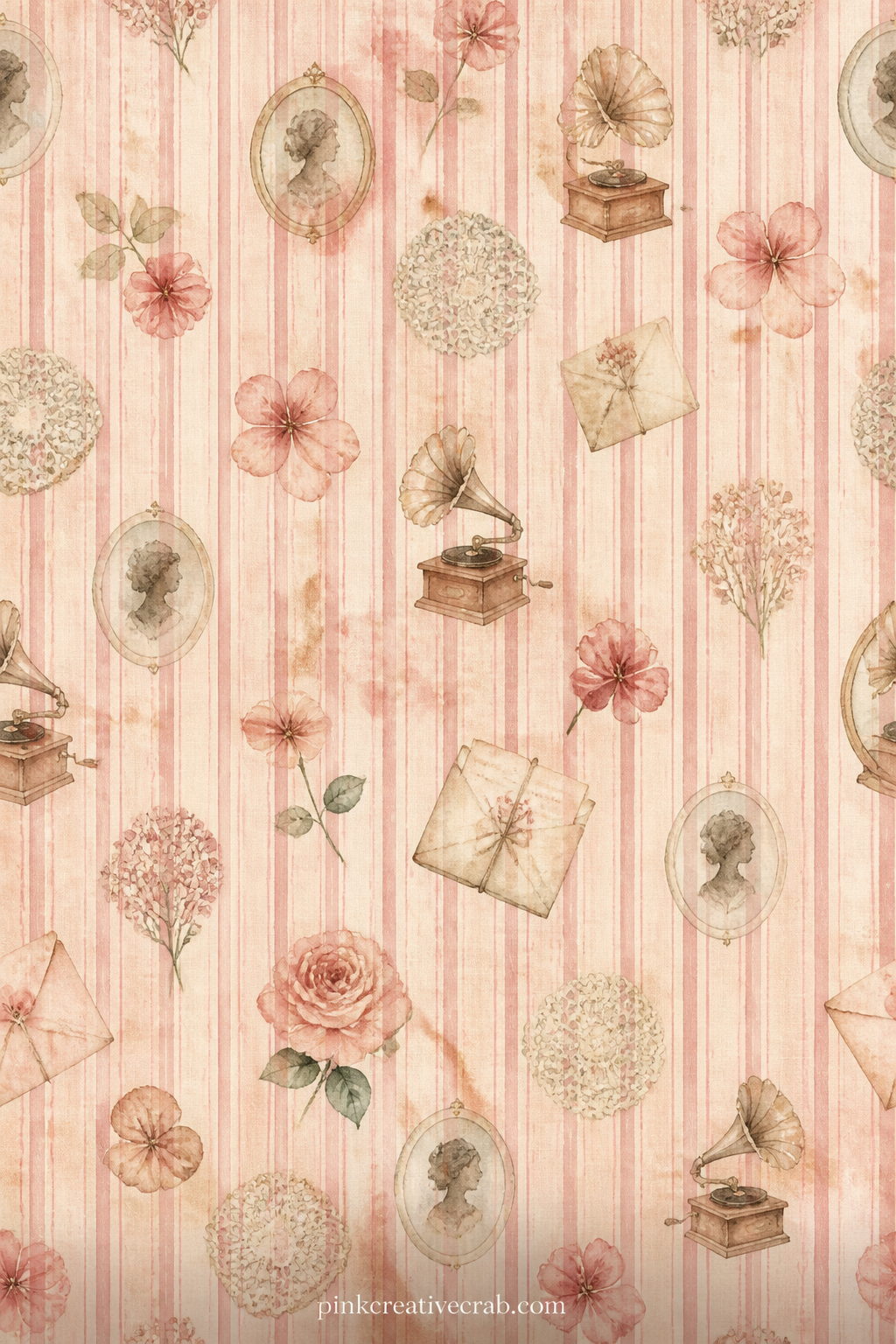
Narrow faded stripes run the length of the page like old linen ticking, a steady background for a cover, a lining behind a sewing basket page, or a calm page between two busy scenes.
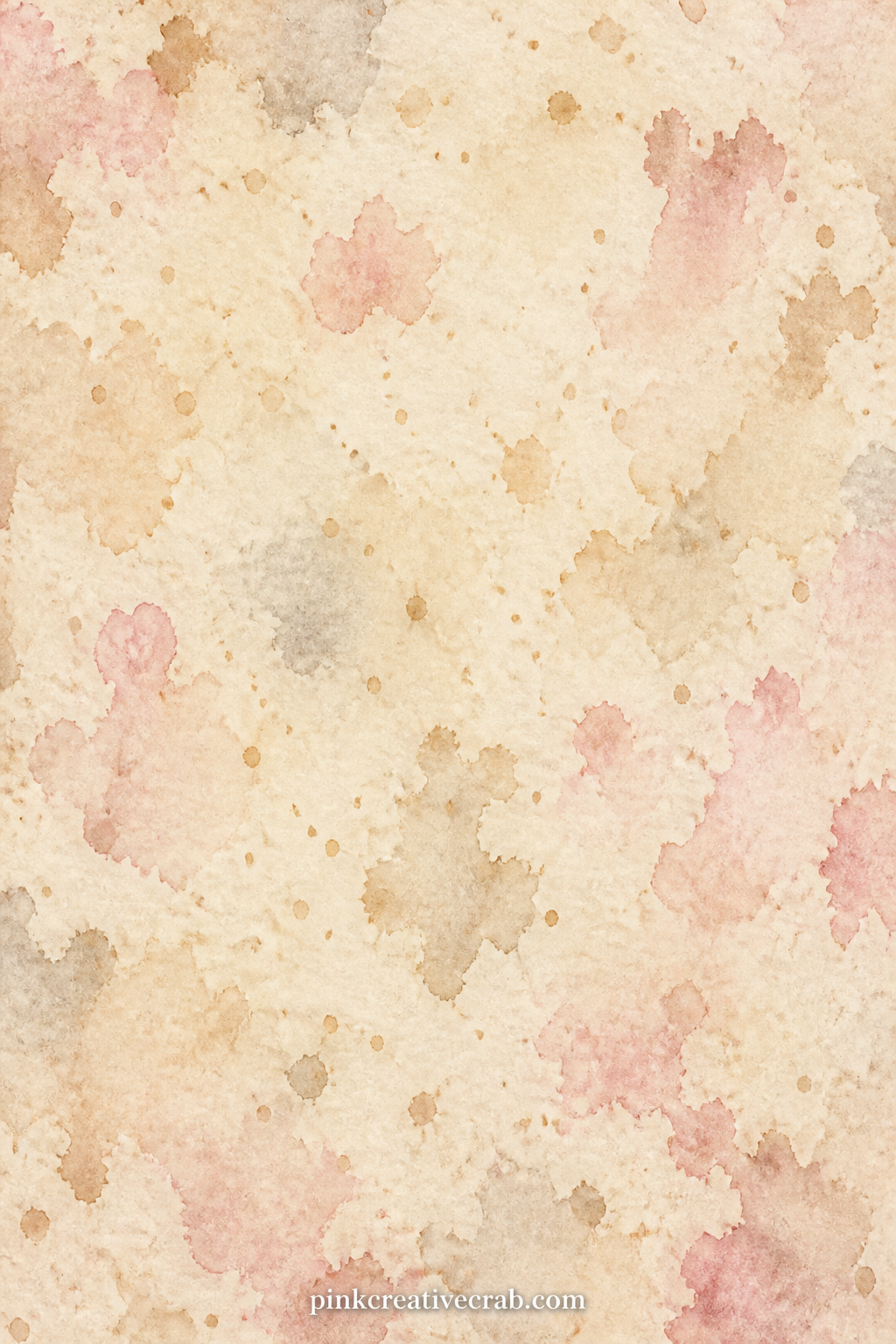
A plain aged paper texture carries small foxing spots and faint water stains scattered across it, useful as a cover sheet, a lining under a heavier scene, or a quiet base for extra writing.
Lined Writing Pages
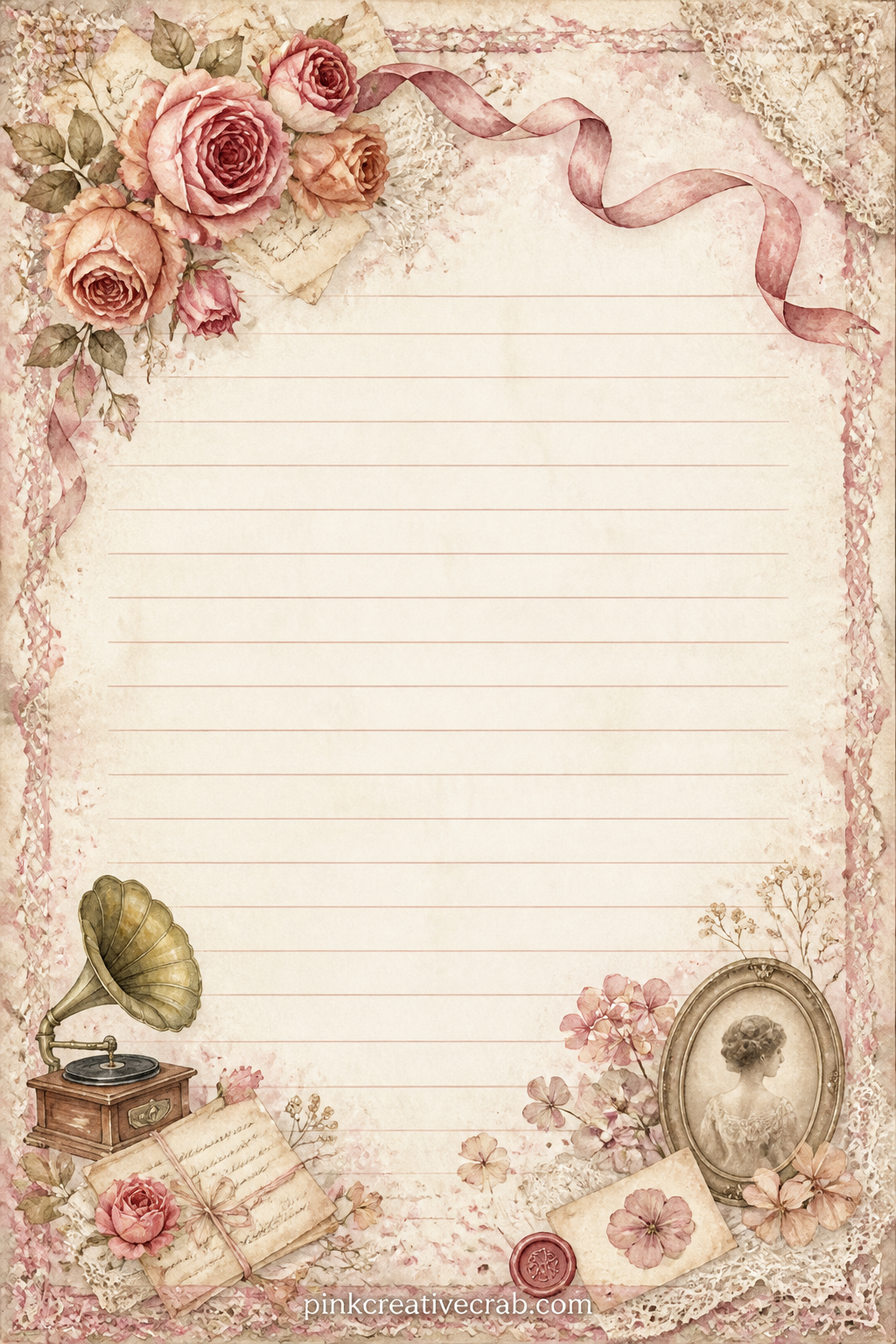
A corner spray of dried roses and a trailing ribbon frame the top edge, with room below to write a letter to a grandchild, a family recipe passed down, or a note about where a keepsake came from.
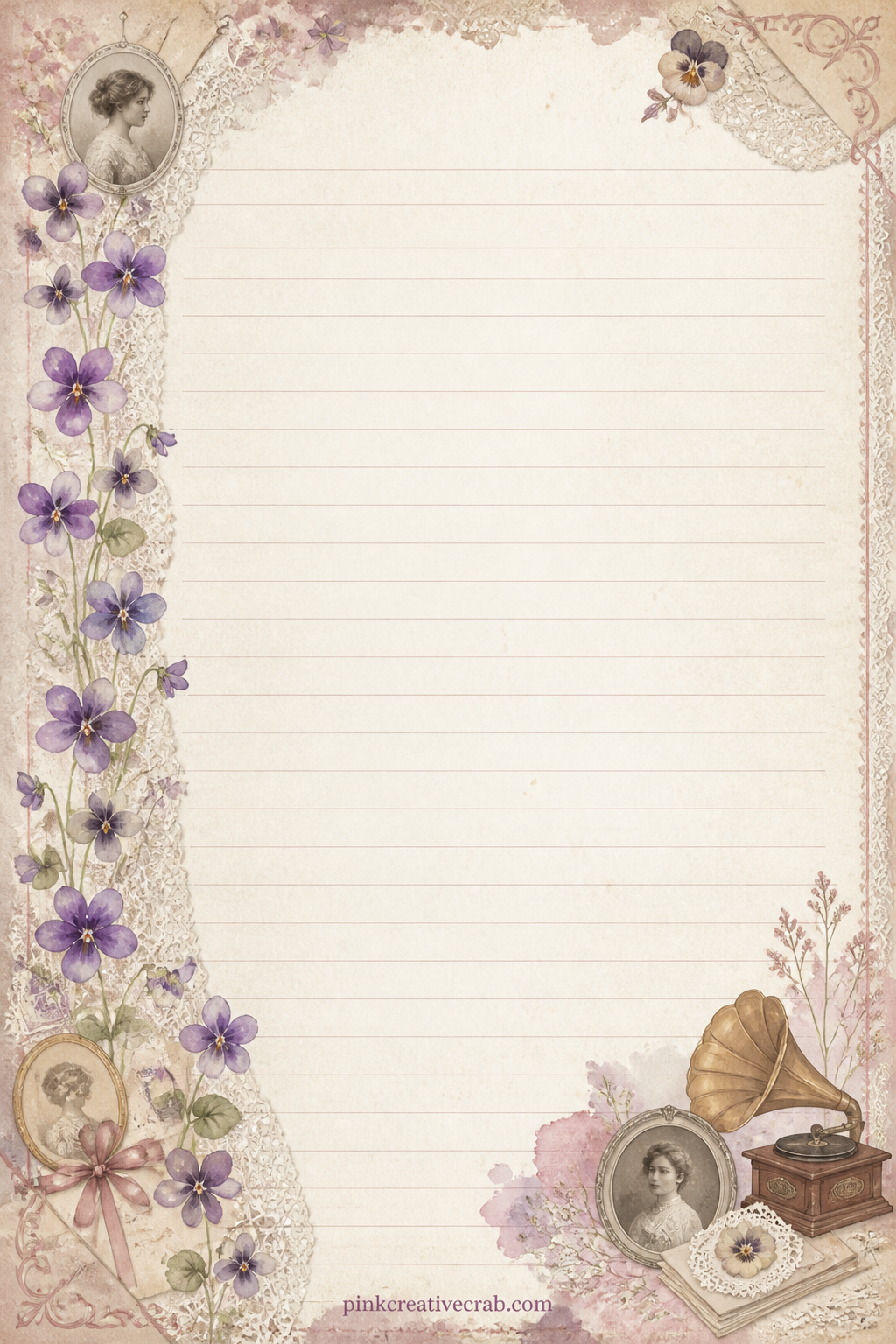
A thin band of pressed violets runs down the left edge, leaving space to log a gift list of inherited items, a description of a photograph, or a memory tied to a particular object.
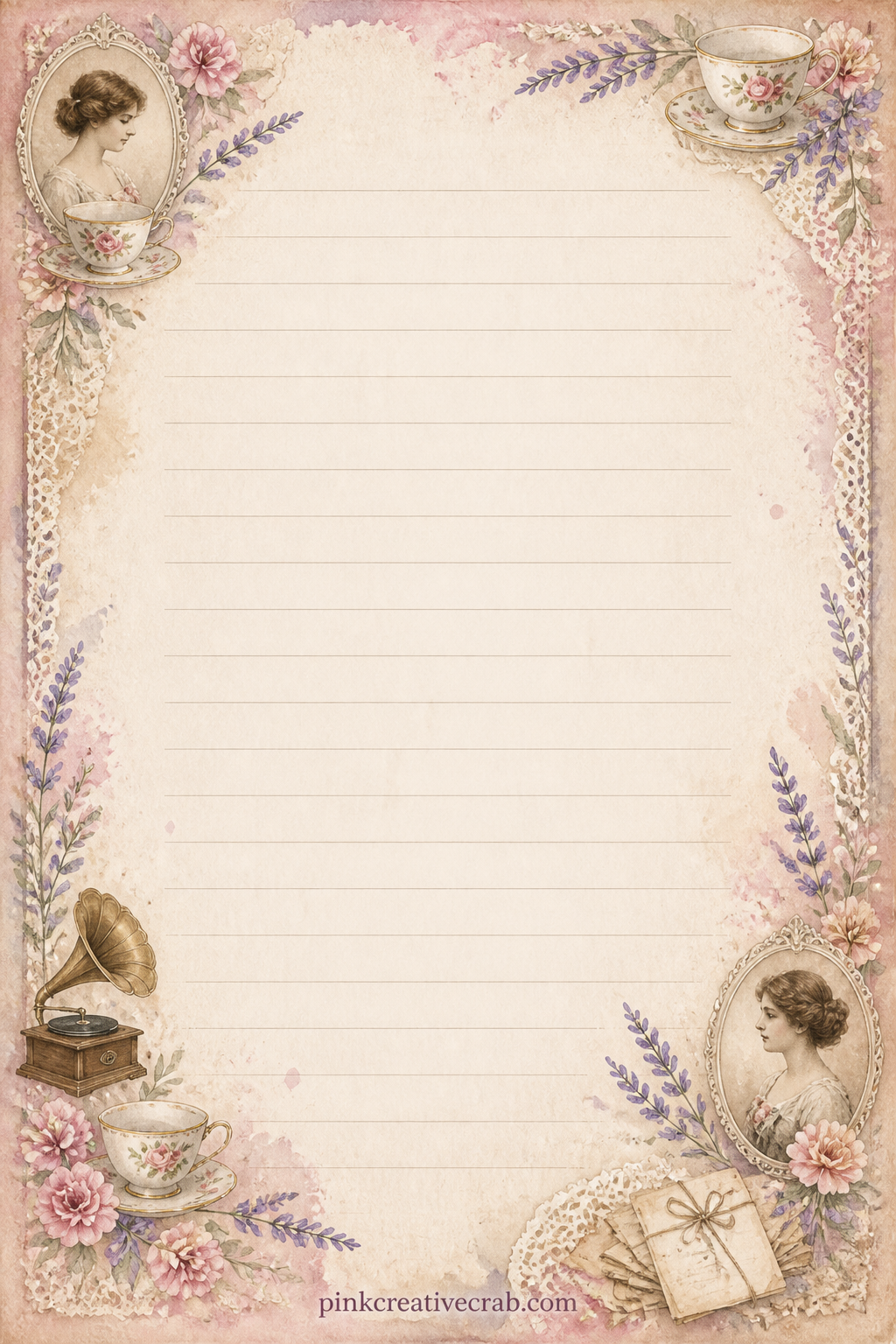
Small teacups and sprigs of lavender frame all four corners, suited to writing out a favourite tea blend, the menu from a real afternoon tea, or a letter describing an old friend’s parlor.
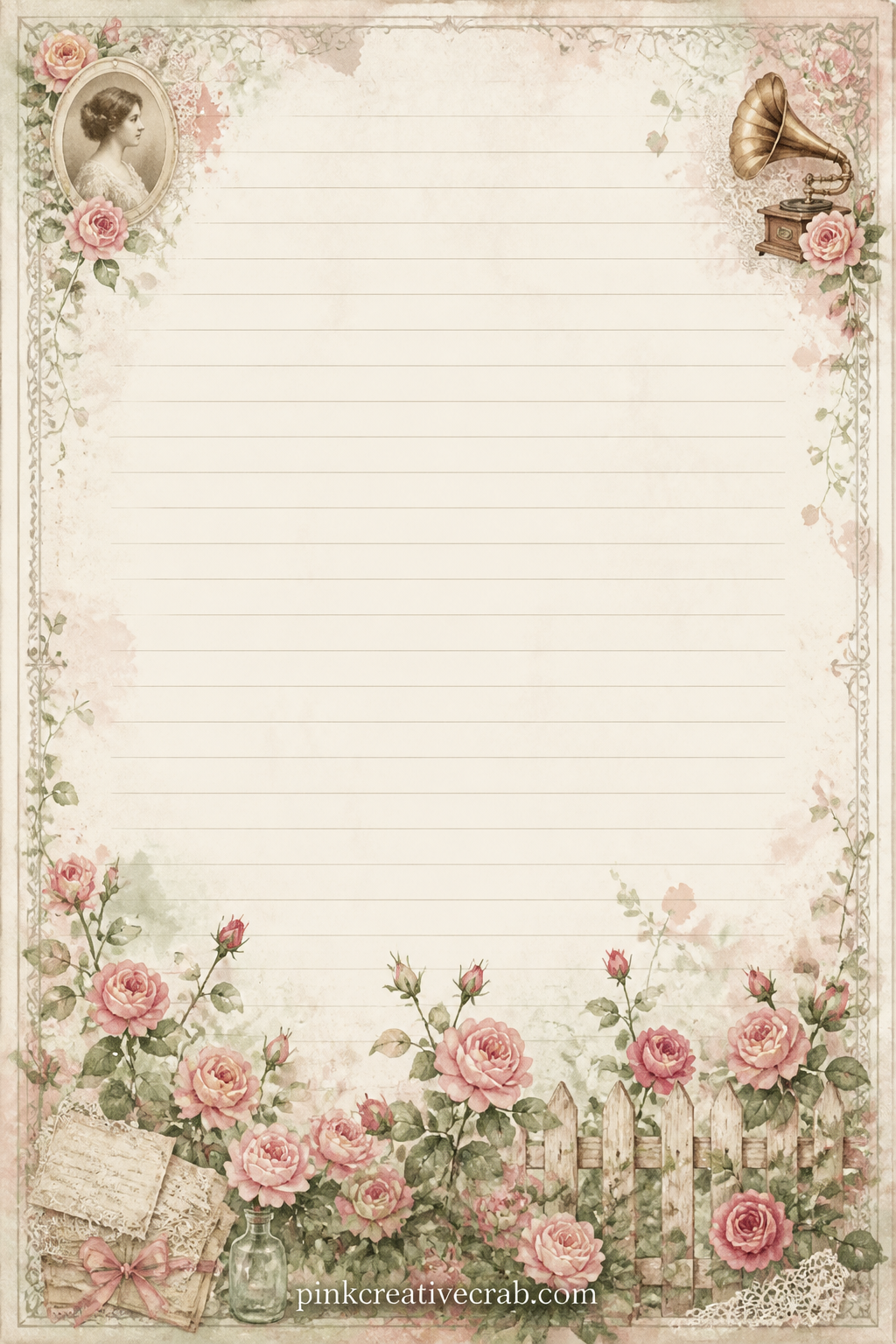
A trailing vine of climbing roses runs along the bottom edge, leaving room to write planting notes, a description of a garden long gone, or a letter to next year about what to grow again.
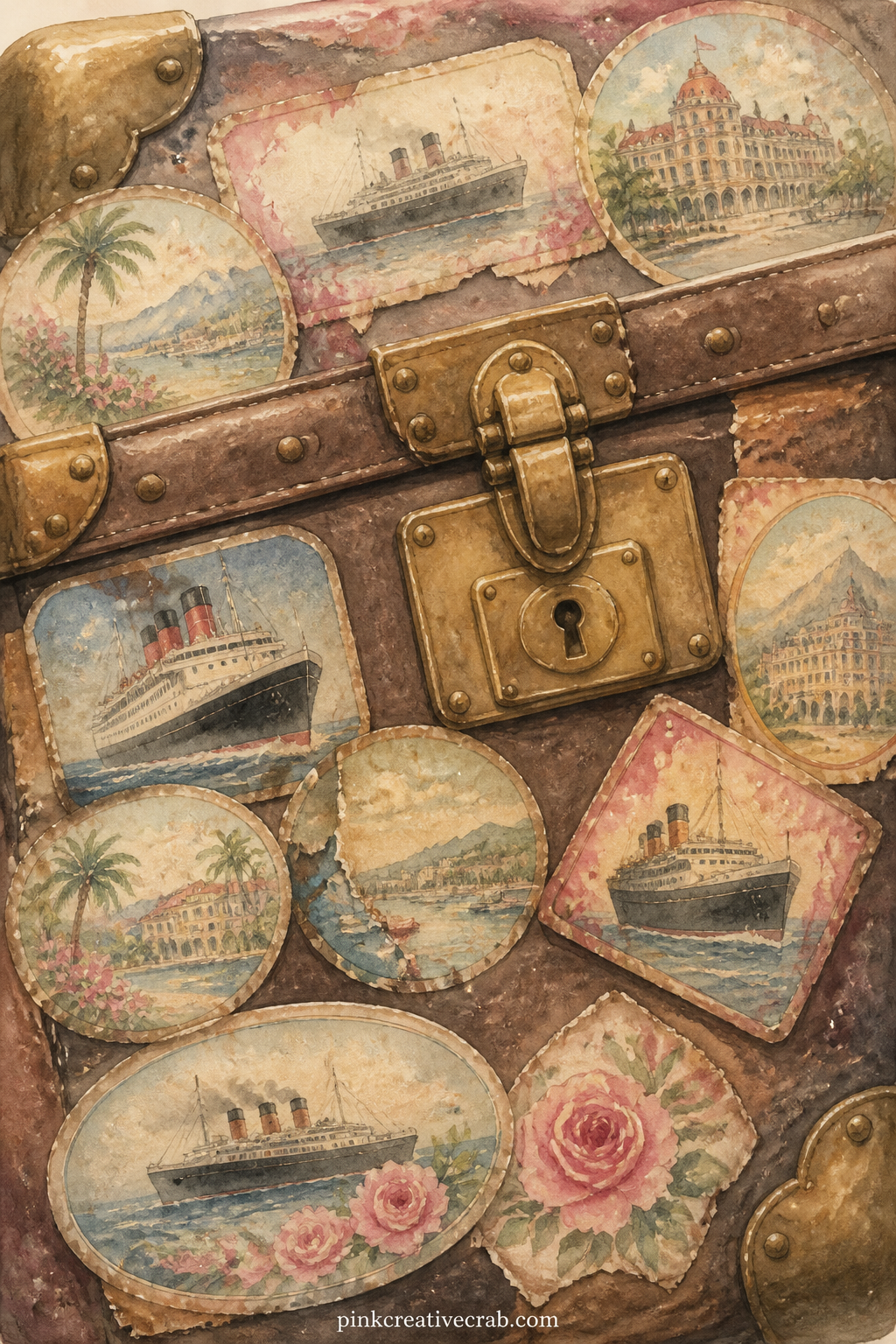
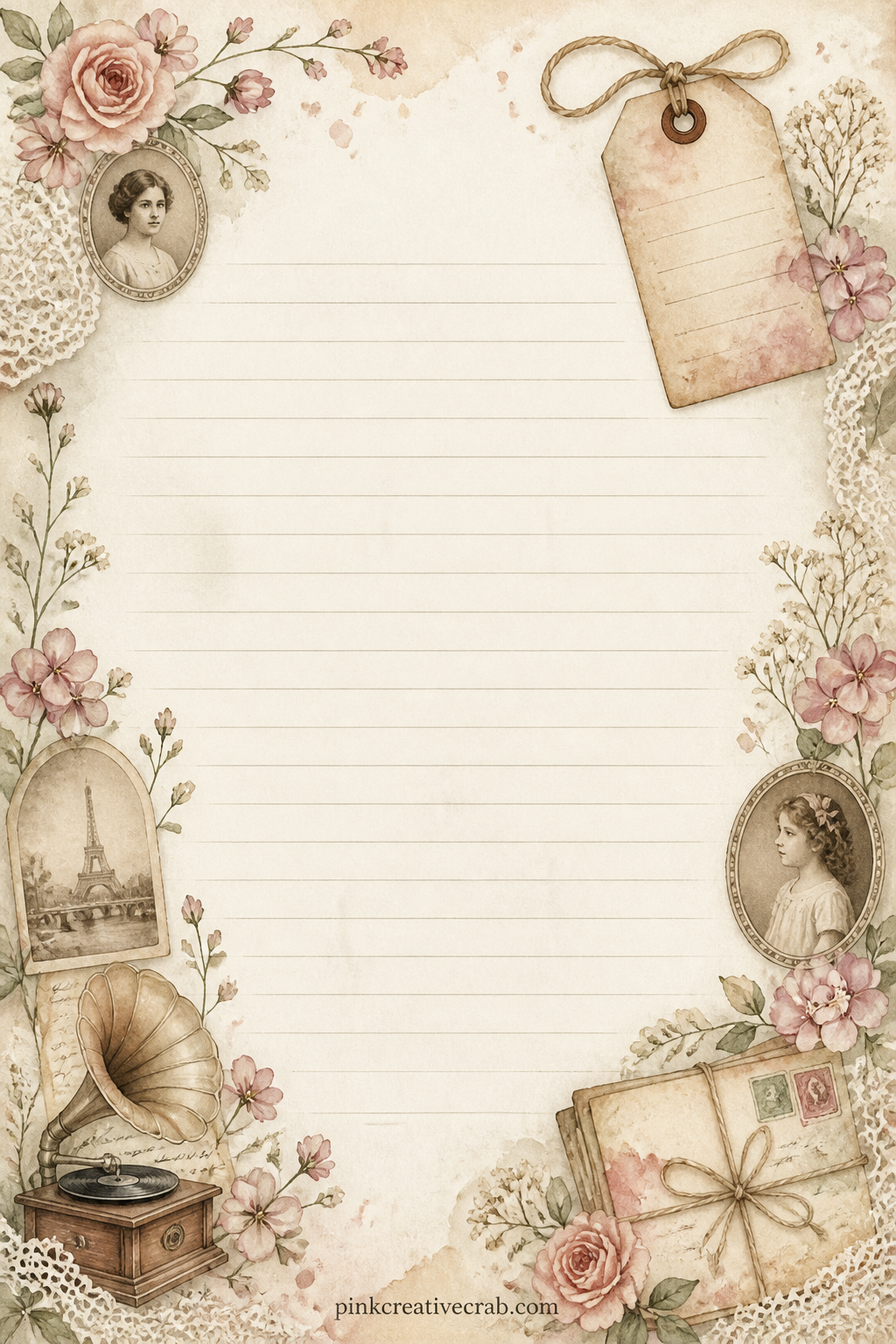
A faded luggage tag and a loop of twine decorate the top right corner, giving space to write what an attic find might have been used for or who might have owned it.
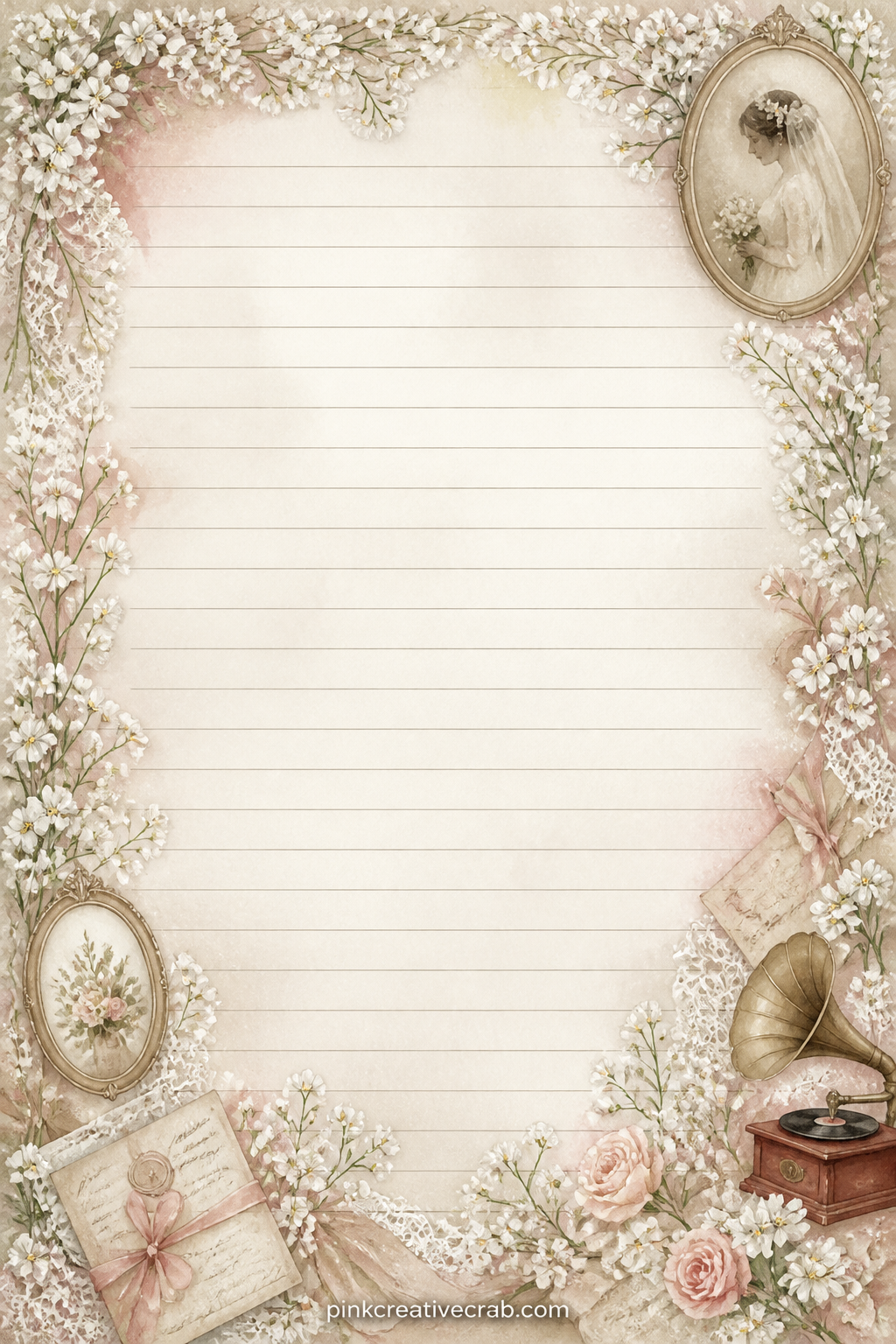
A frame of tiny white blossoms borders the whole page, leaving the center clear for a love letter, vows copied out by hand, or notes about a wedding day long past.
What to Do Next
Print the set on one paper stock, let the ink dry, then trim and sort the pages into scenes, patterns and lined pages before you start gluing, so the attic feeling holds together from the first page to the last.
Frequently Asked Questions
What paper works best for a vintage junk journal kit like this one?
Heavyweight matte paper, 24 lb or higher, holds the washed colours well and feels closer to old paper than thin copy paper. Cardstock works too if your printer and glue can handle the extra thickness, especially for pages that get folded or handled often.
What printer settings give the most accurate colours?
Choose your printer’s best or photo print setting and select matte or plain paper in the driver, not glossy photo paper. This slows the print slightly but keeps the soft washes from looking too flat or too saturated compared to the intended faded palette.
What size should I print these pages at?
Standard A4 or US letter suits most junk journals and fits a regular printer without scaling. If your journal is smaller, print at 75 to 85 percent and trim the extra border away, keeping a small margin near any spine for gluing.
Do I need to add anything to the scene pages or are they finished as printed?
Every scene page prints as a complete picture, so no extra painting is required. Many journalers still add a handwritten line, a date or a small pressed flower on top once glued in, since the pages are designed with a little open space for exactly that.
How do I keep the aged look consistent across a whole journal?
Since every page in this kit shares the same faded sepia and dusty rose palette, printing them all at once on the same paper keeps the set looking like one find rather than scattered prints. Avoid mixing in glossy paper, which breaks the aged effect immediately.
Have any thoughts?
Share your reaction or leave a quick response — we’d love to hear what you think!
-
 0
0 -
0
-
0
-
0
-
0
-
0


