
Table of Contents
This beach junk journal kit gives you 33 full-page sheets built around one long summer at the shore: seaside towns, sandcastles, striped umbrellas and all the small objects a beach day leaves behind. Twenty-three scene pages carry the pictures, five seamless background pages give you all-over patterns of shells and stripes, and five lined writing pages leave room for the words.
Print the whole set on heavyweight matte paper, at least 200gsm so paint and ink do not show through, using your printer’s best or photo quality setting. Trim each sheet to your journal size once it is dry, and the pages are ready to glue straight in, no pockets or extra assembly needed.
Using these images: free for personal projects such as printing, coloring, cards, journals and gifts. Handmade items that include them may be sold up to 30 pieces per design. More than that is commercial use and is not permitted, and neither is selling or sharing the images themselves or passing them off as your own. Please ask before any other use.
Seaside Town Pages
Pastel beach huts in a tidy row, each one a slightly different shade, make a cheerful anchor for the first page of the set.
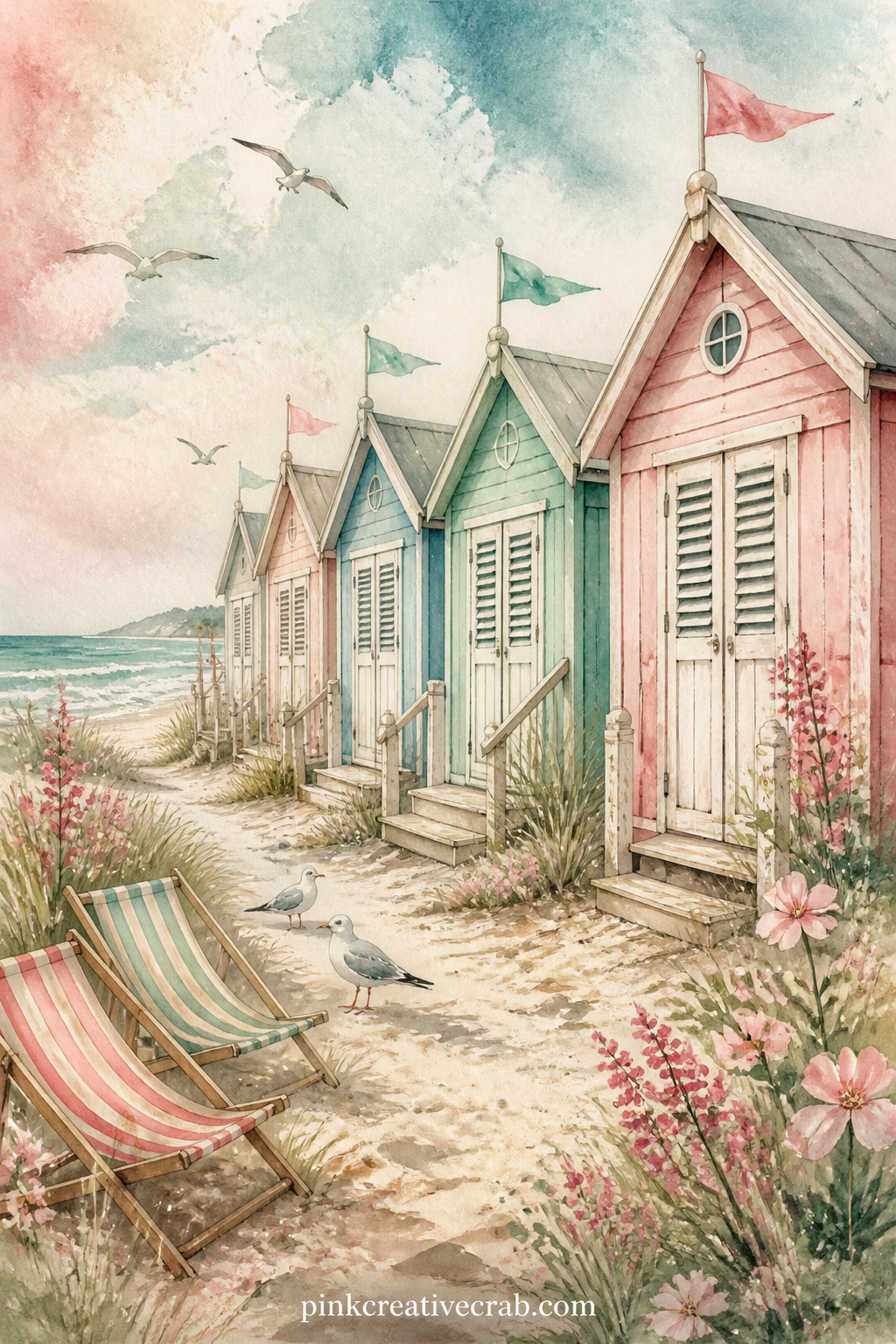
Give this one to the planner of the family, the one who always wants the day mapped out before breakfast. The long pier with its lit carousel at the end suits a page where she pastes the schedule for a beach trip or a list of rides tried.
Leave the carousel’s bright colours as the one busy spot on the page and the rest reads calm.
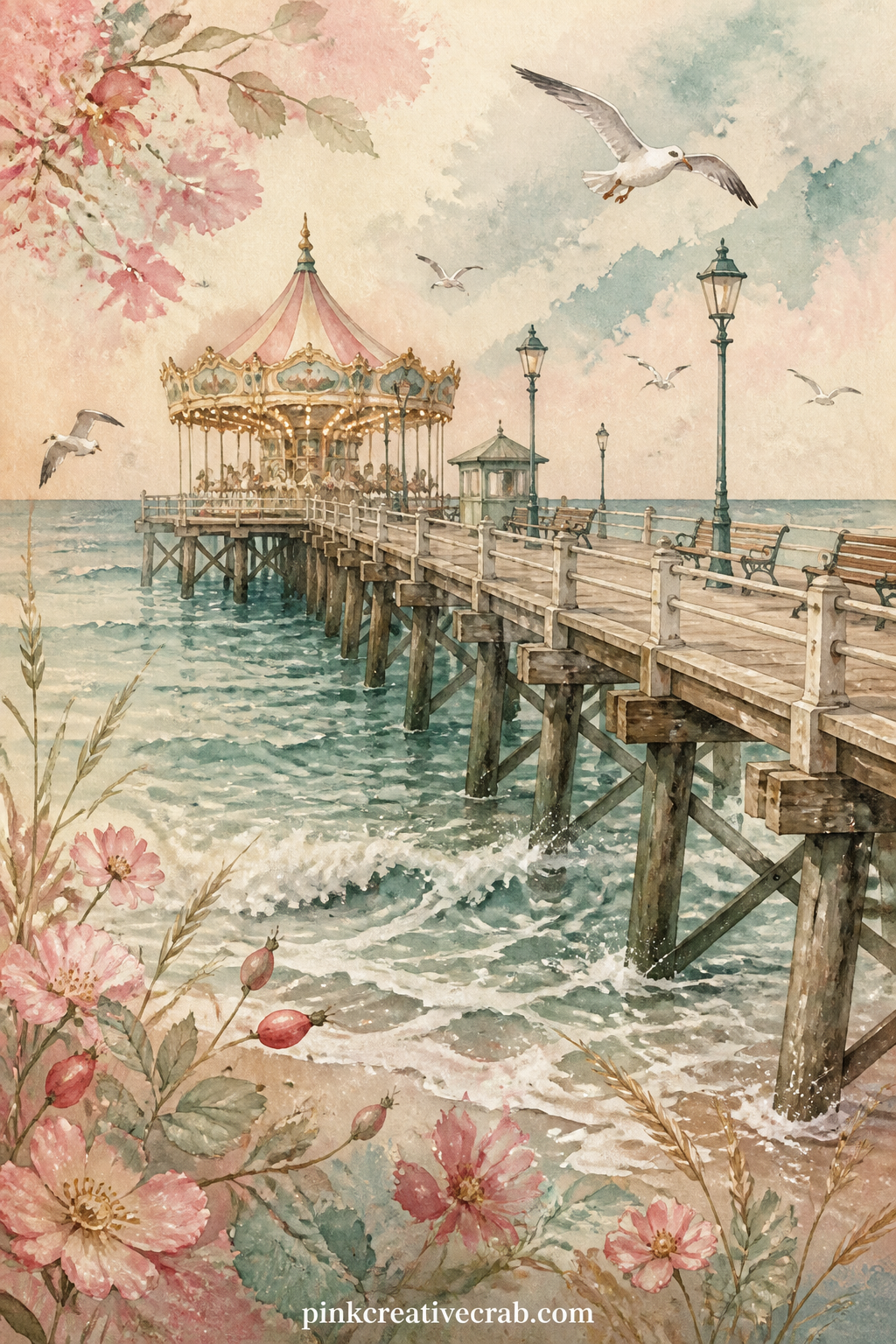
Tuck a pressed sprig of dune grass or a small ticket stub at the base of the lighthouse before you glue this page in, so the page holds something real from the walk, not just the paint.
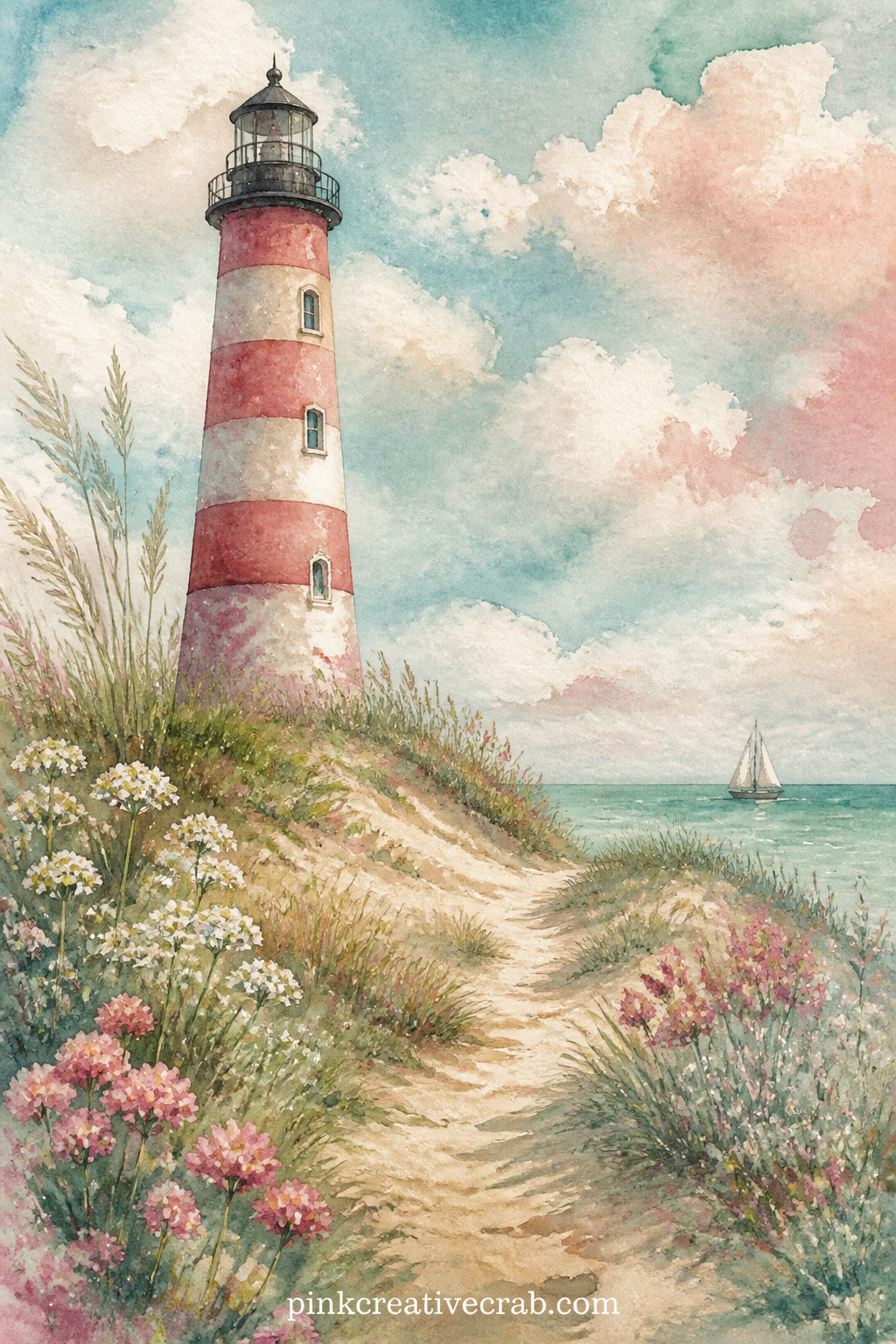
Pair this page with the shell pattern background further on in the set: use the pattern as a facing page so the quiet harbour scene sits next to all that texture, and the spread reads as one calm morning at the water.
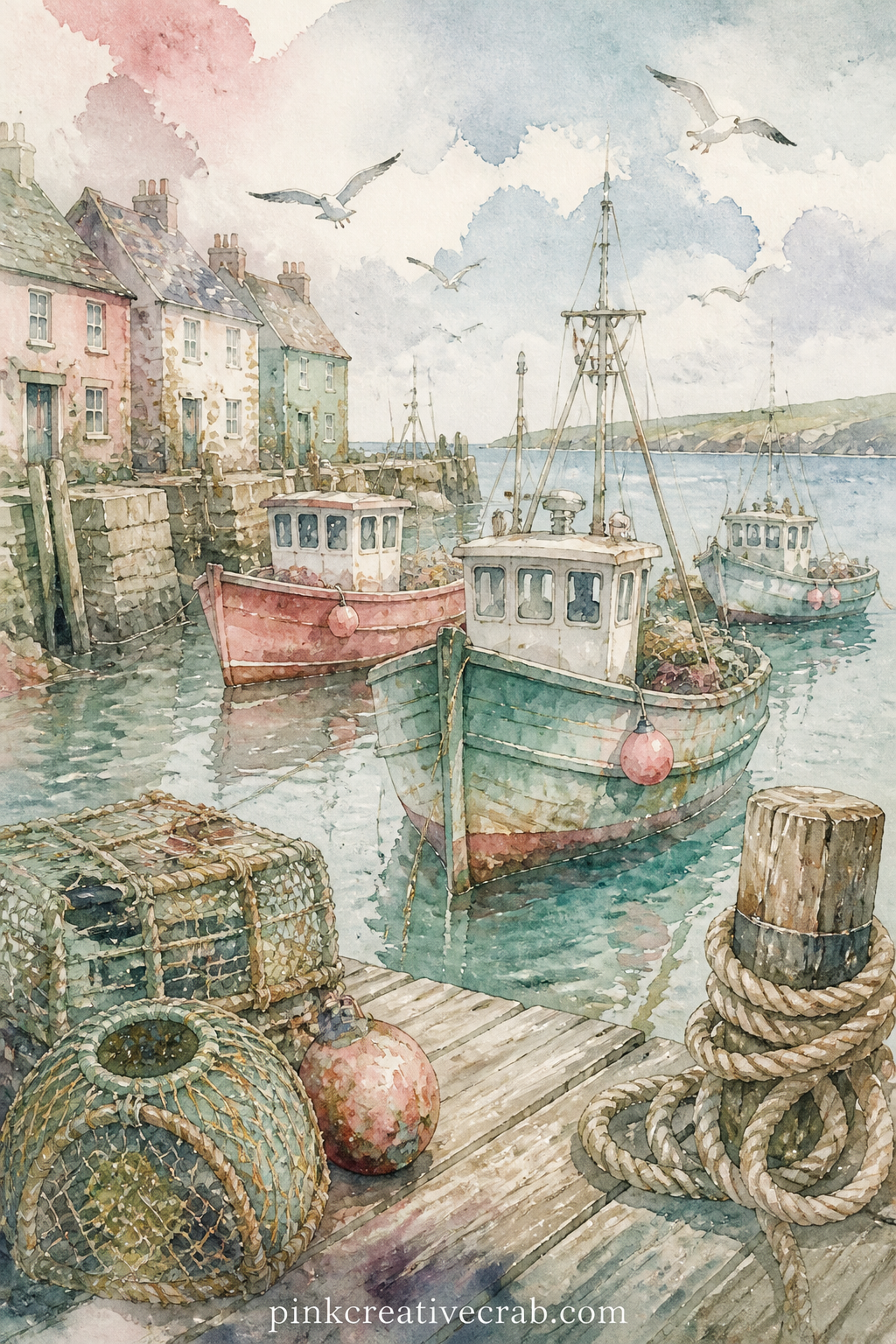
Write the flavour of the day right across the awning in the margin, or glue a small wrapper beside the stand if one survived the walk home.
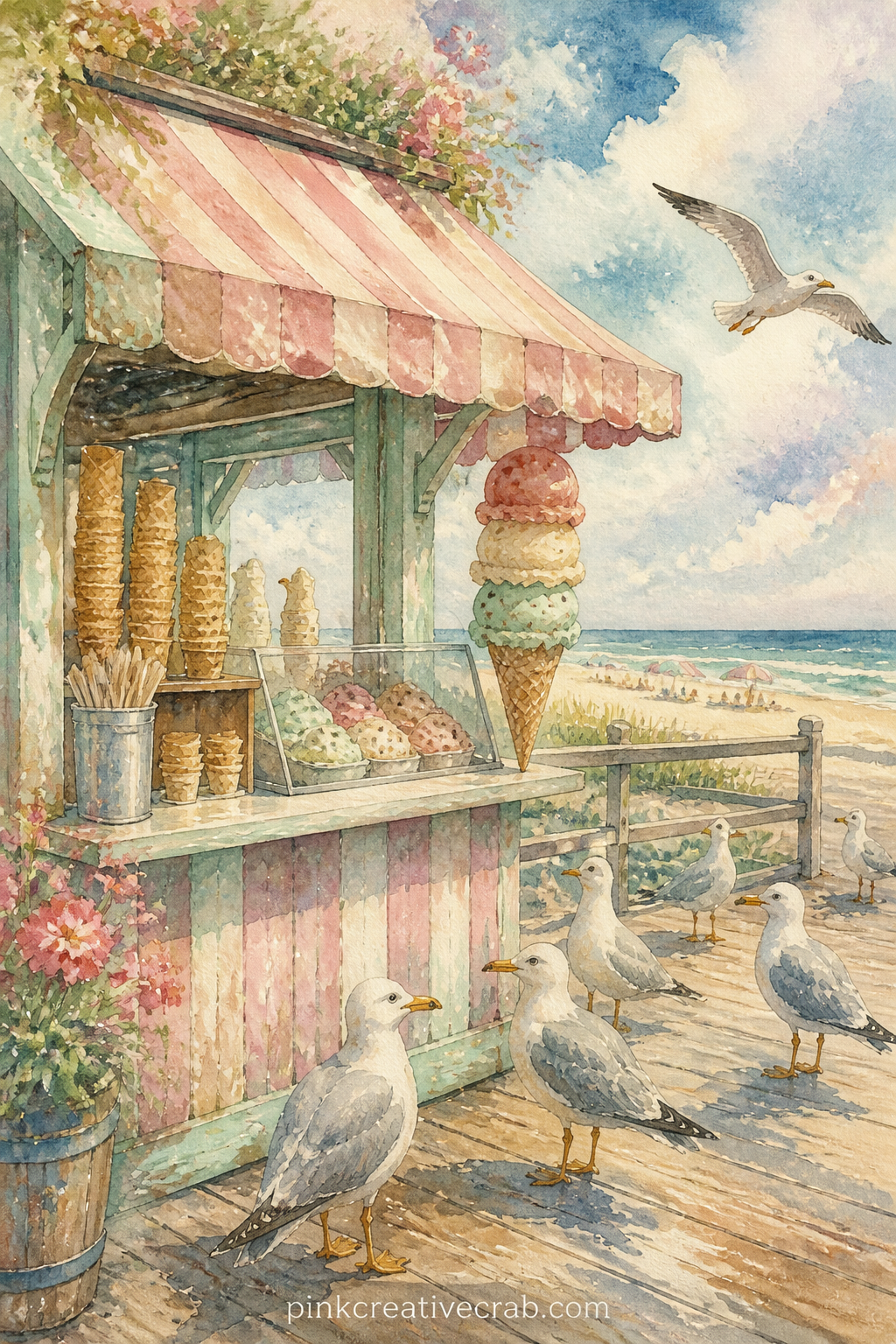
The usual mistake with a cottage page is cramming every window with detail until the house disappears. Keep one or two shutters open with a hint of curtain, leave the rest plain, and let the climbing roses by the door carry the charm instead.
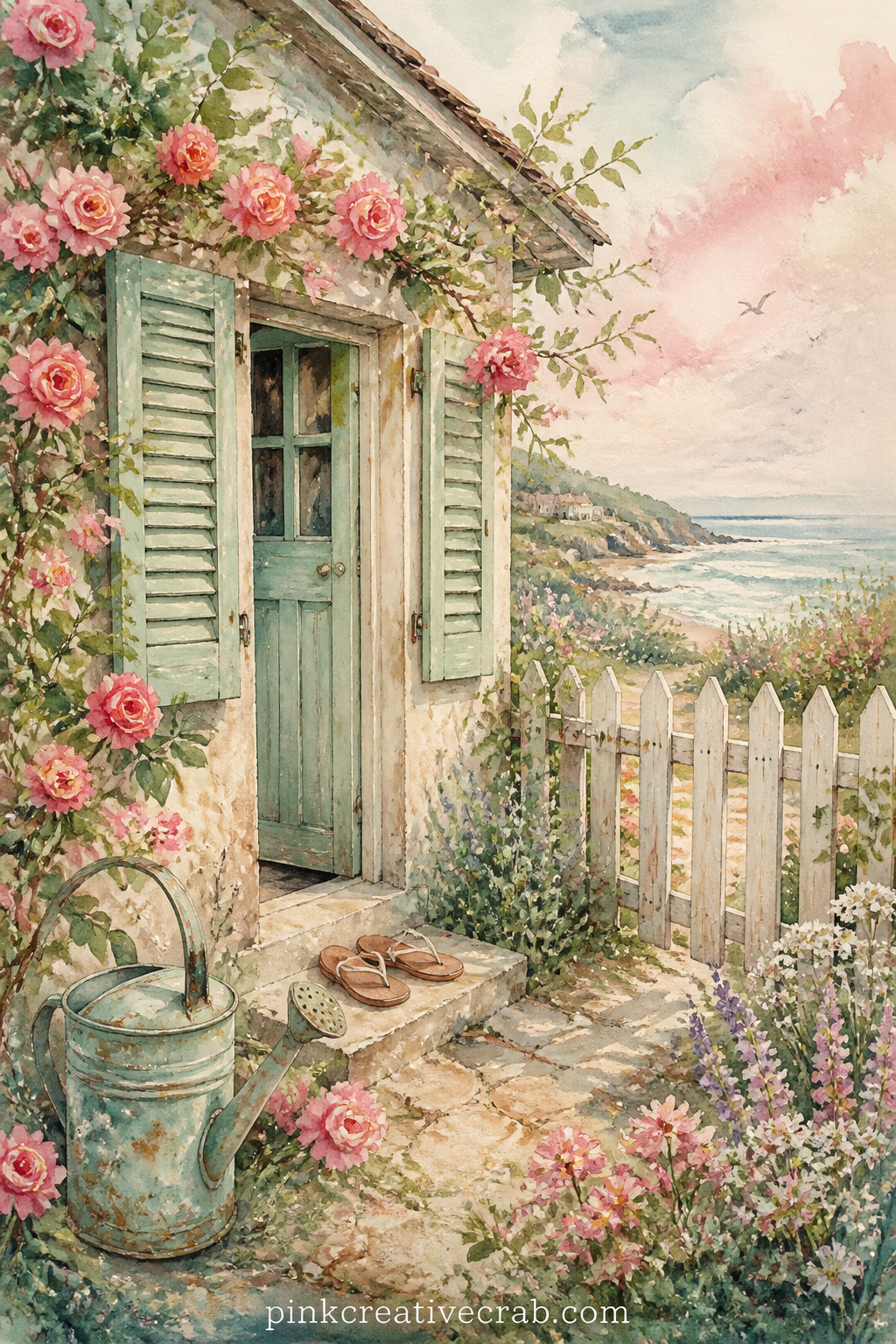
Sand And Shore Pages
A tall sandcastle with turrets and a small paper flag on top sits in wet sand, with a dropped bucket and spade and a thin line of incoming tide painted around it.
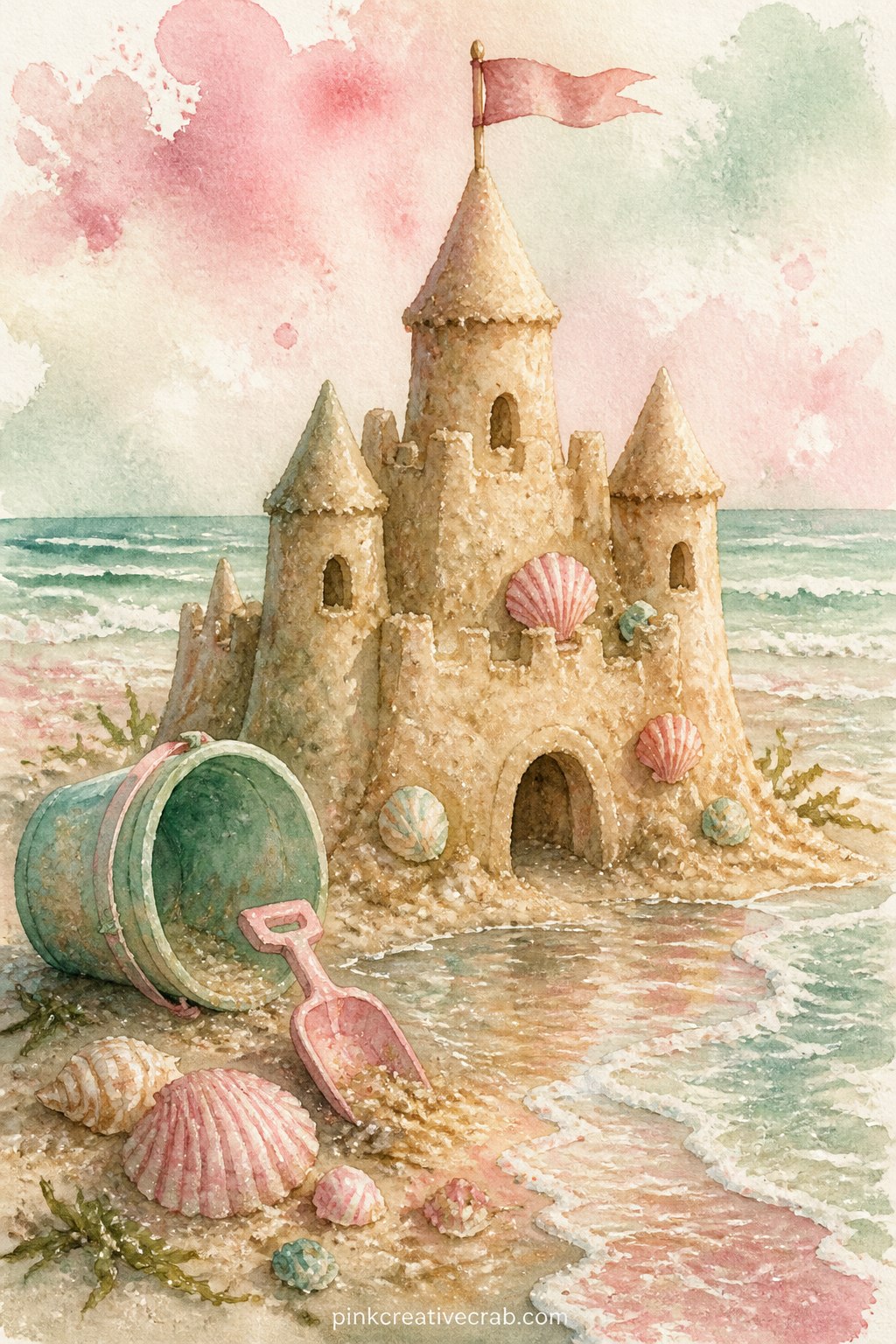
This is the five-minute version of a beach page: one bucket, one spade, a scatter of shells, nothing more to paint or plan. Good for an evening when the day was long and the journal still wants a page filled.
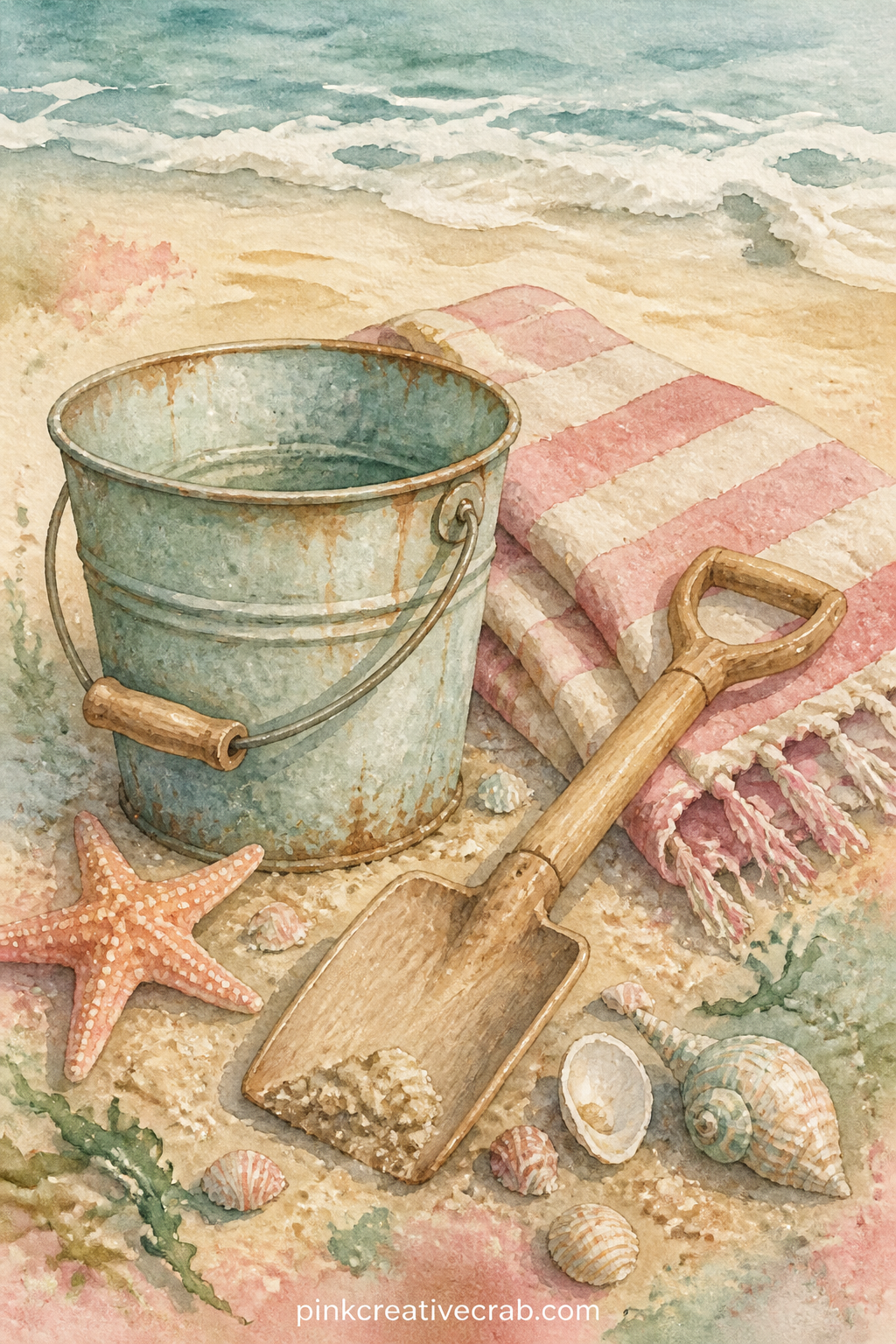
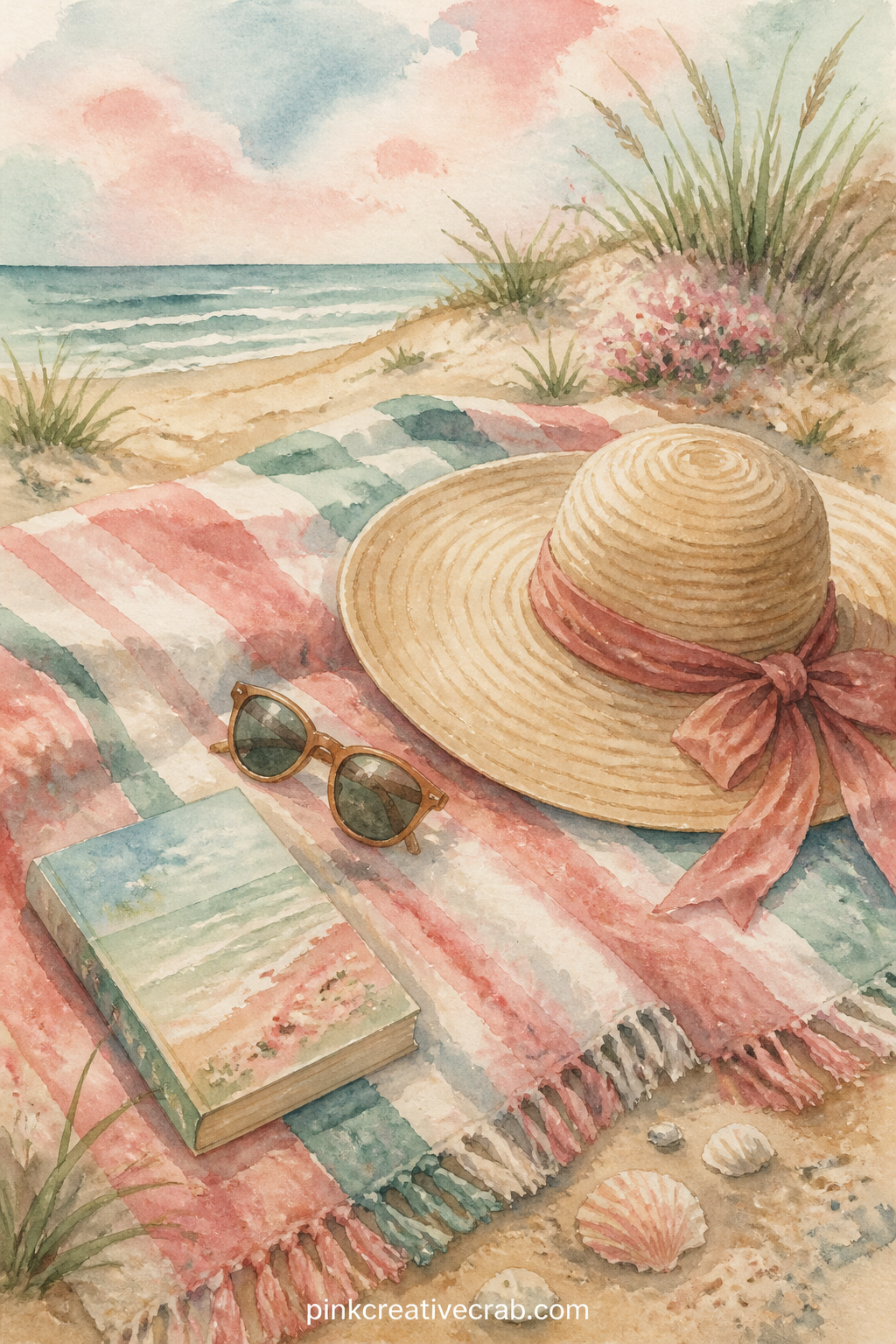
Write a short answer to this on the towel’s edge: what time did the sun actually feel too hot today. One line is enough, and the question keeps the page from being only decoration.
Several striped umbrellas lean at slightly different angles along the sand, with folded chairs and a line of footprints trailing toward the water.
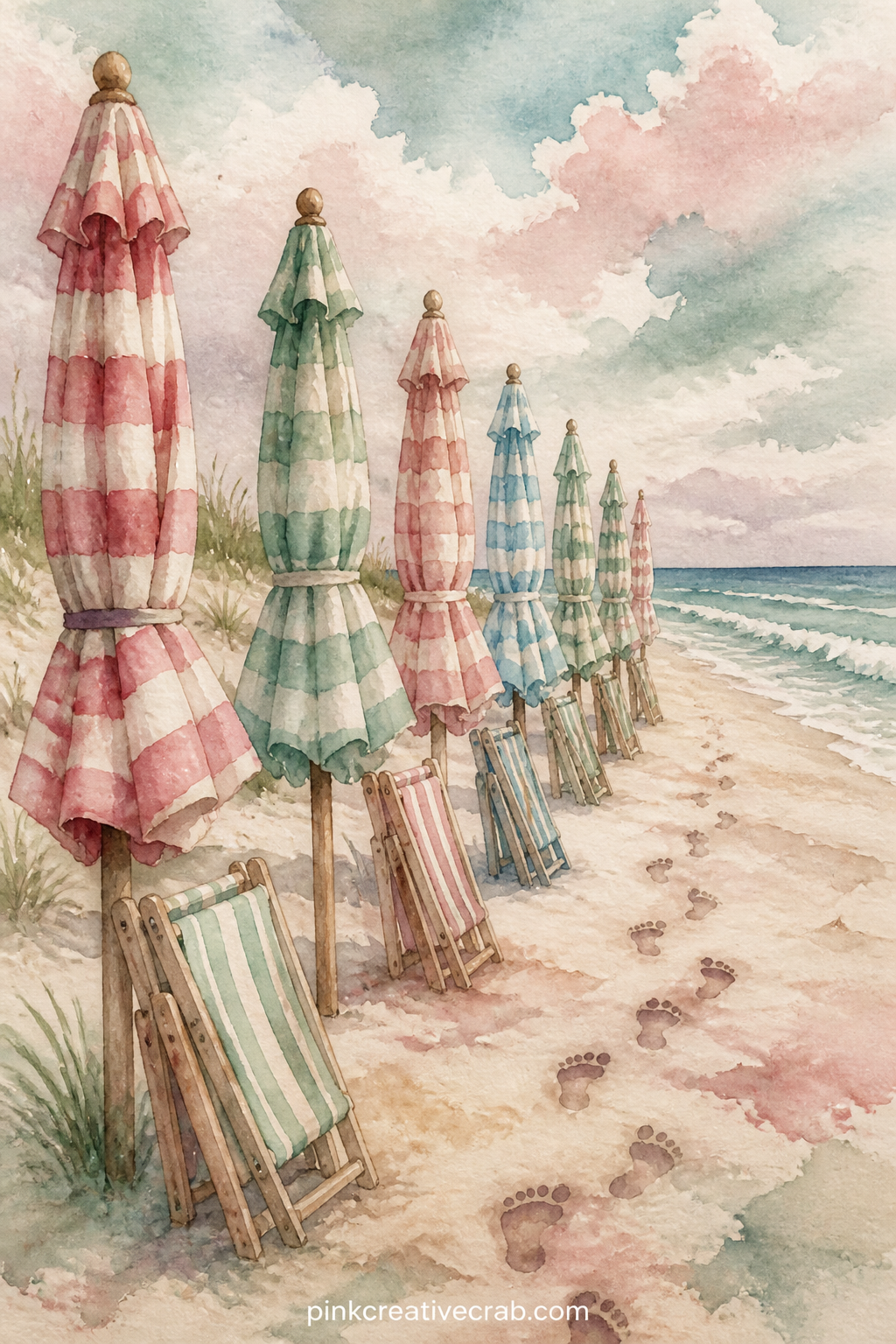
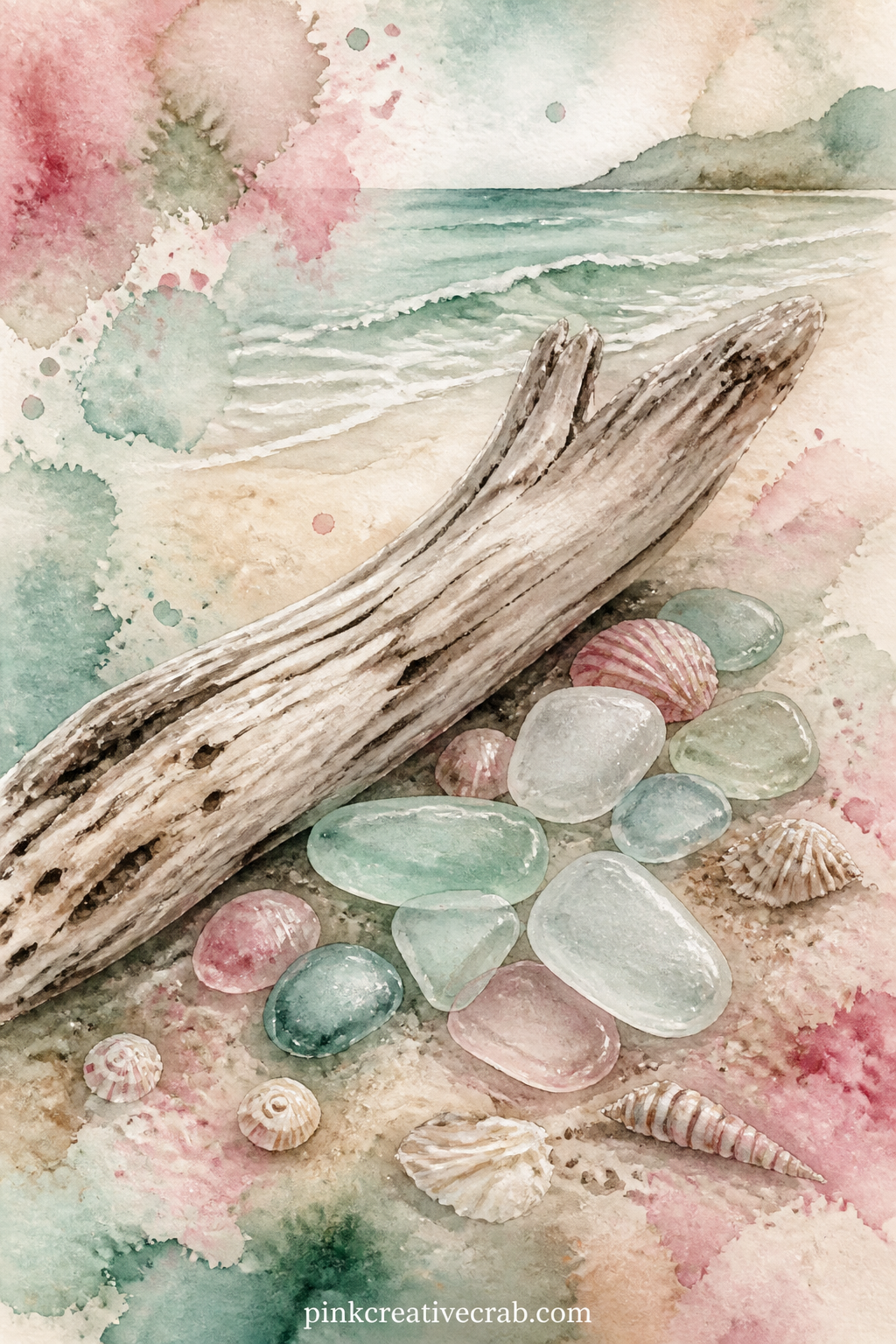
Place this page across from the lined writing page with the shell border later in the set, and let the found objects on one side answer the list started on the other.
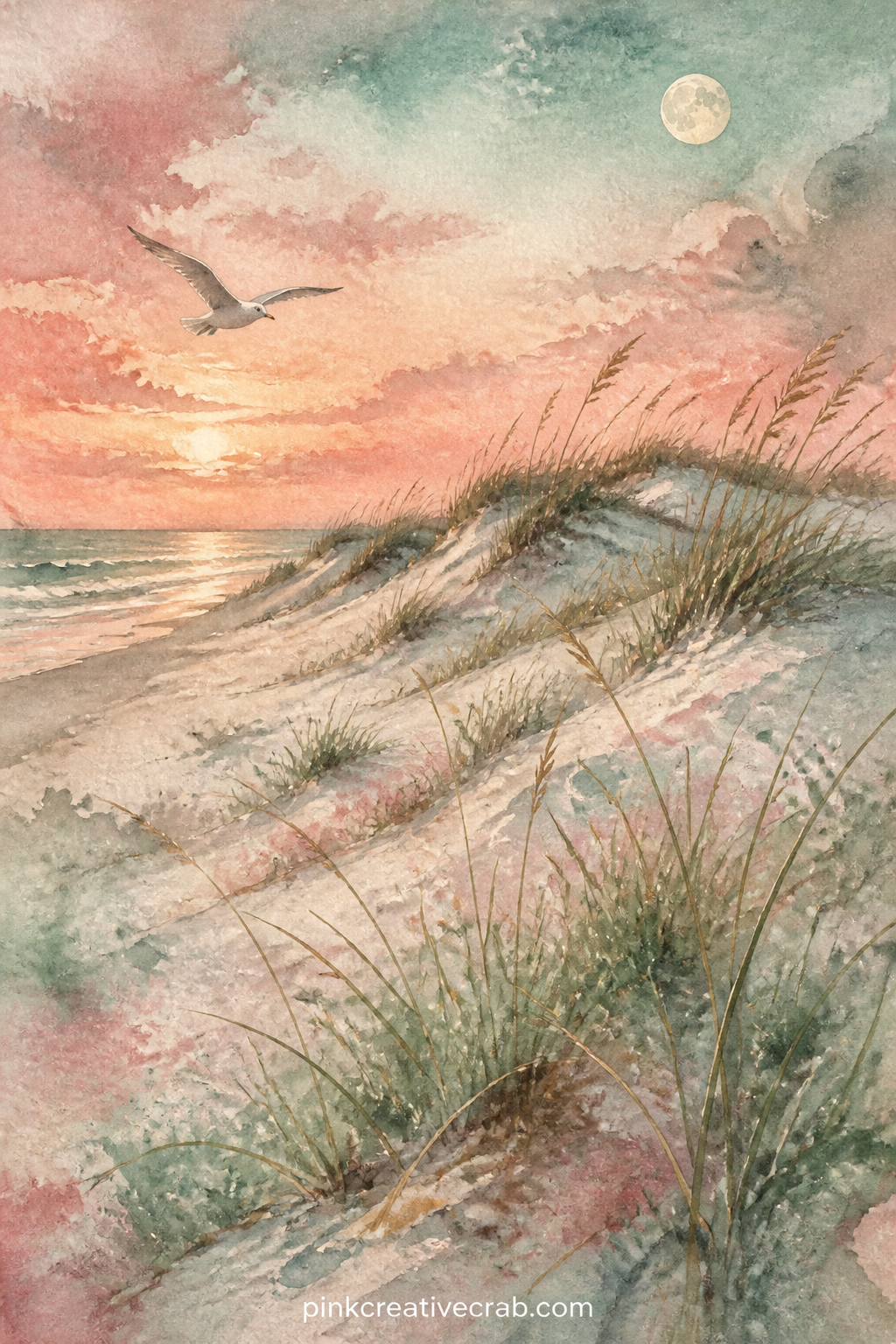
Soft dunes roll toward a dimming sky, with a few tufts of beach grass bending in the wind and one gull crossing low over the sand.
Shells And Treasures Pages
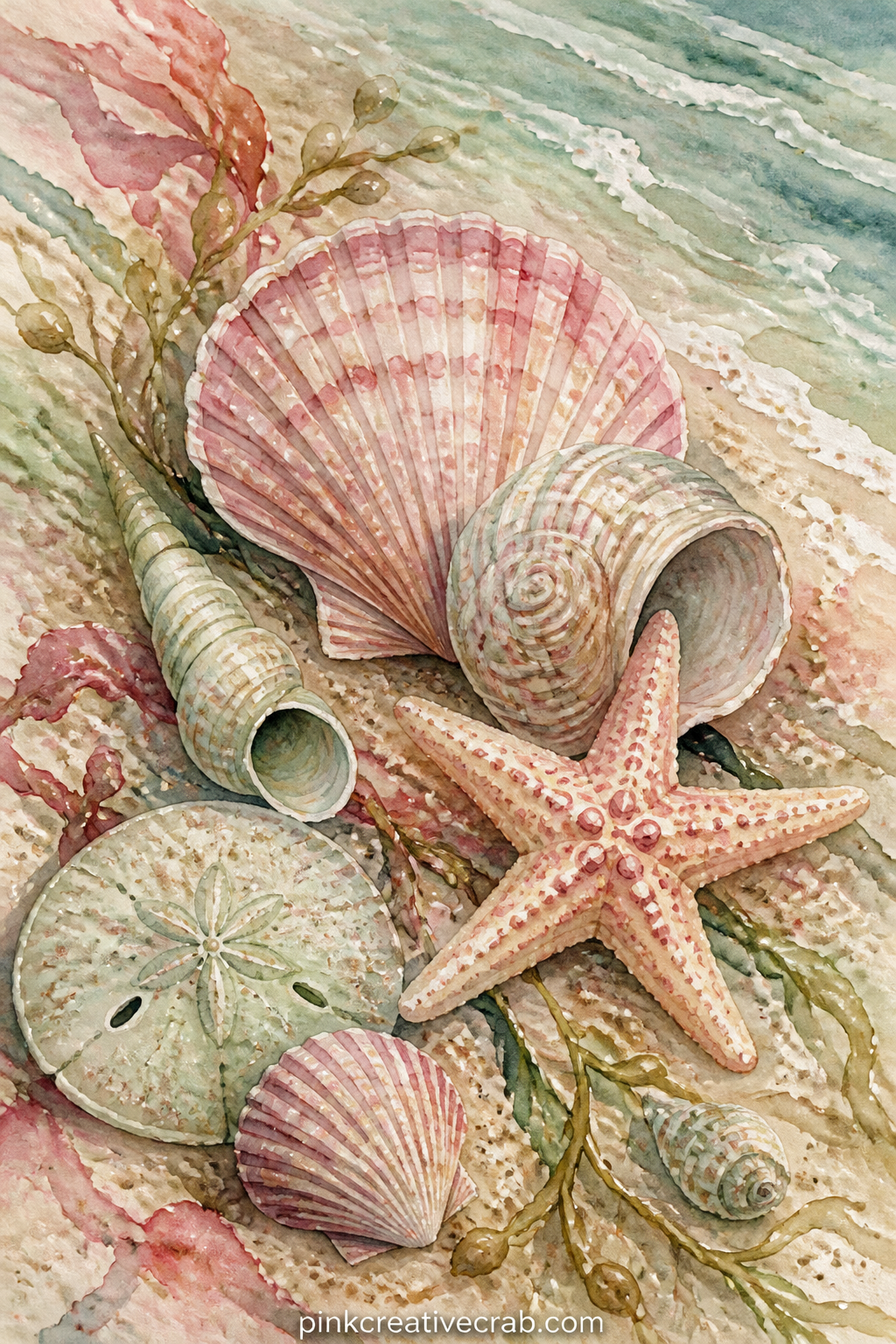
Several shells and a small starfish rest together on pale sand, chosen to show different shapes side by side rather than many of the same kind.
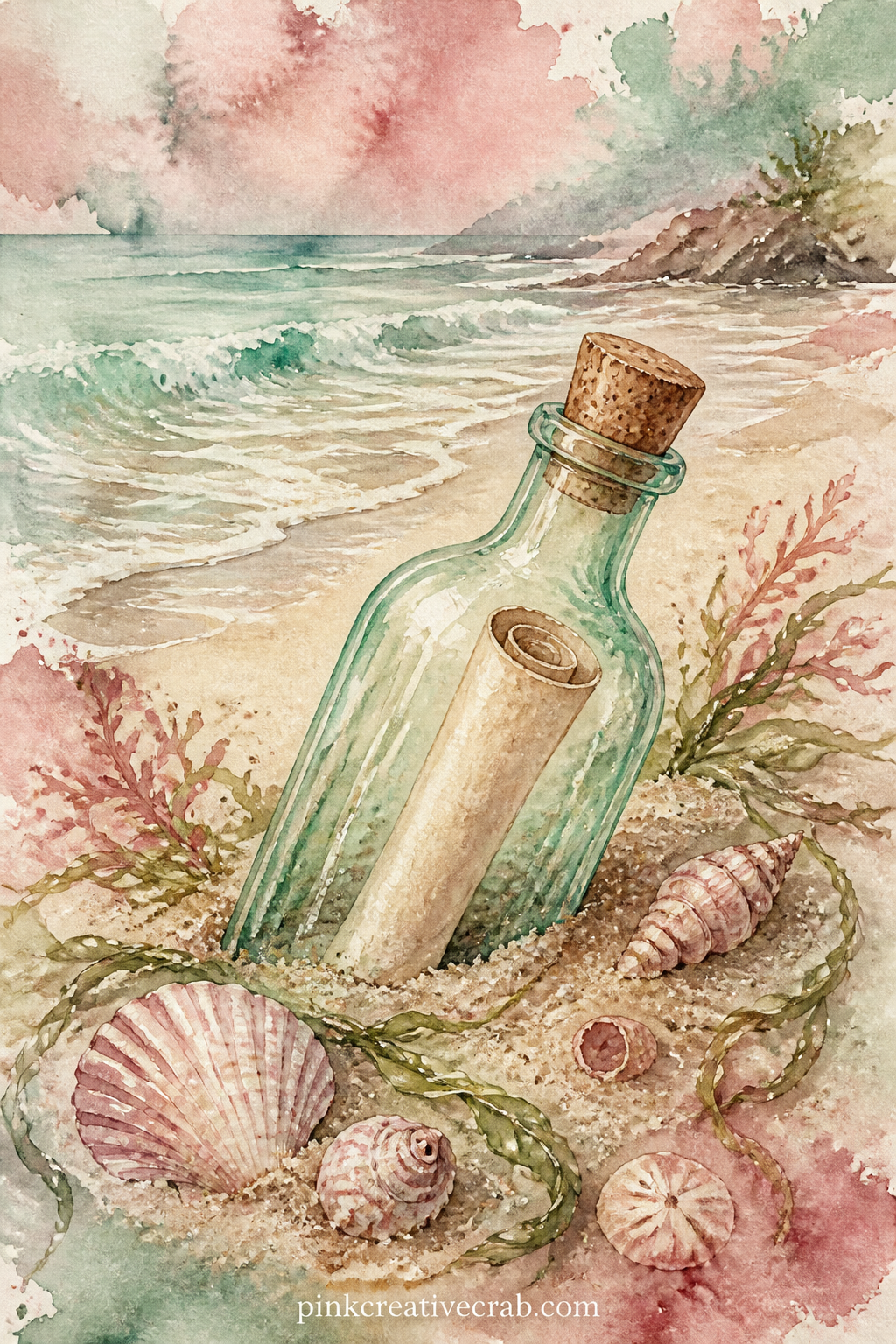
Leave a blank curl of paper peeking from the bottle’s neck and write your own short message on it once the page is dry, as if it had just washed up on this sheet.
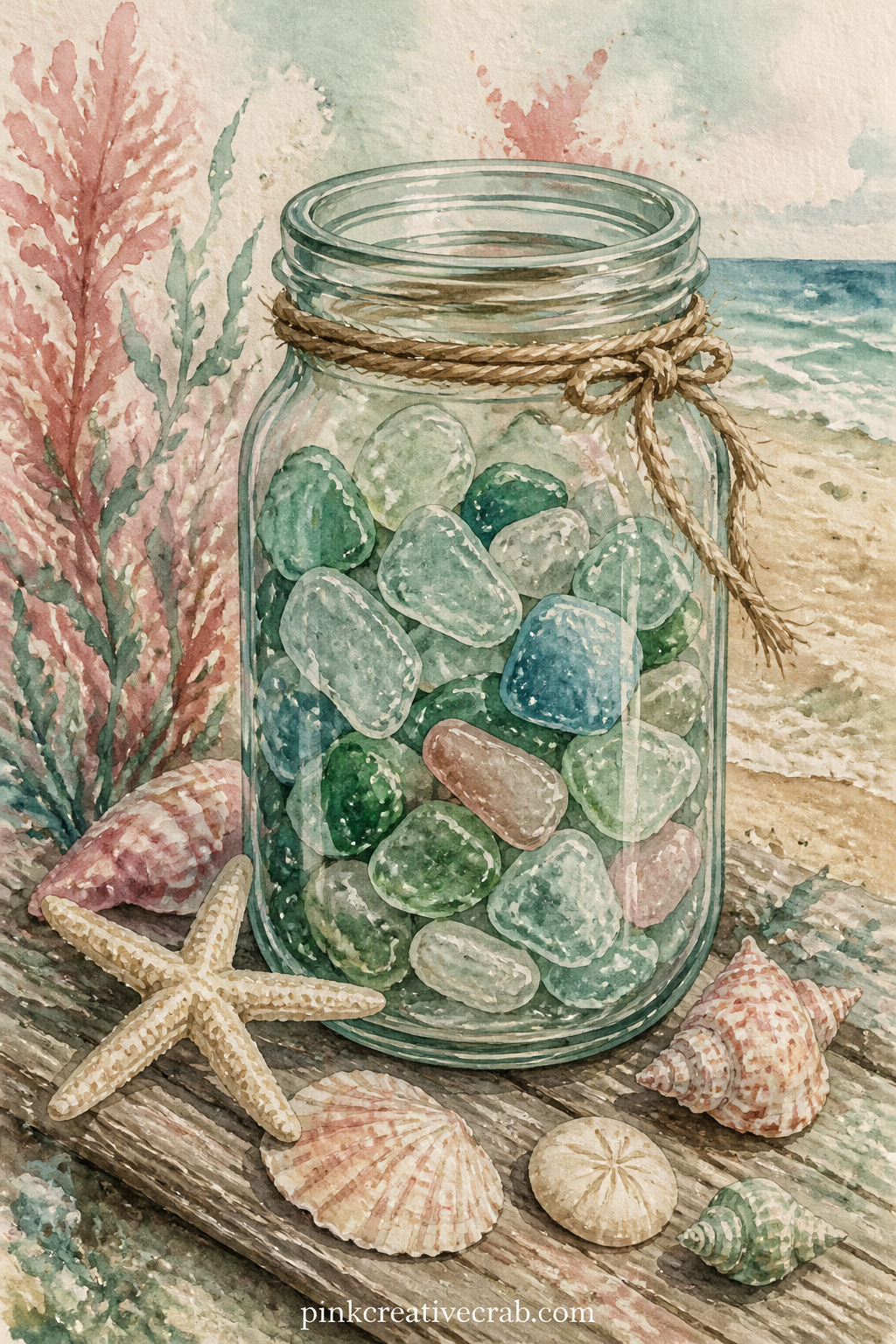
Glue a small tide chart or ferry ticket beside the jar before this page goes in, since the whole point of the page is collecting small proof of a day spent walking the shoreline.
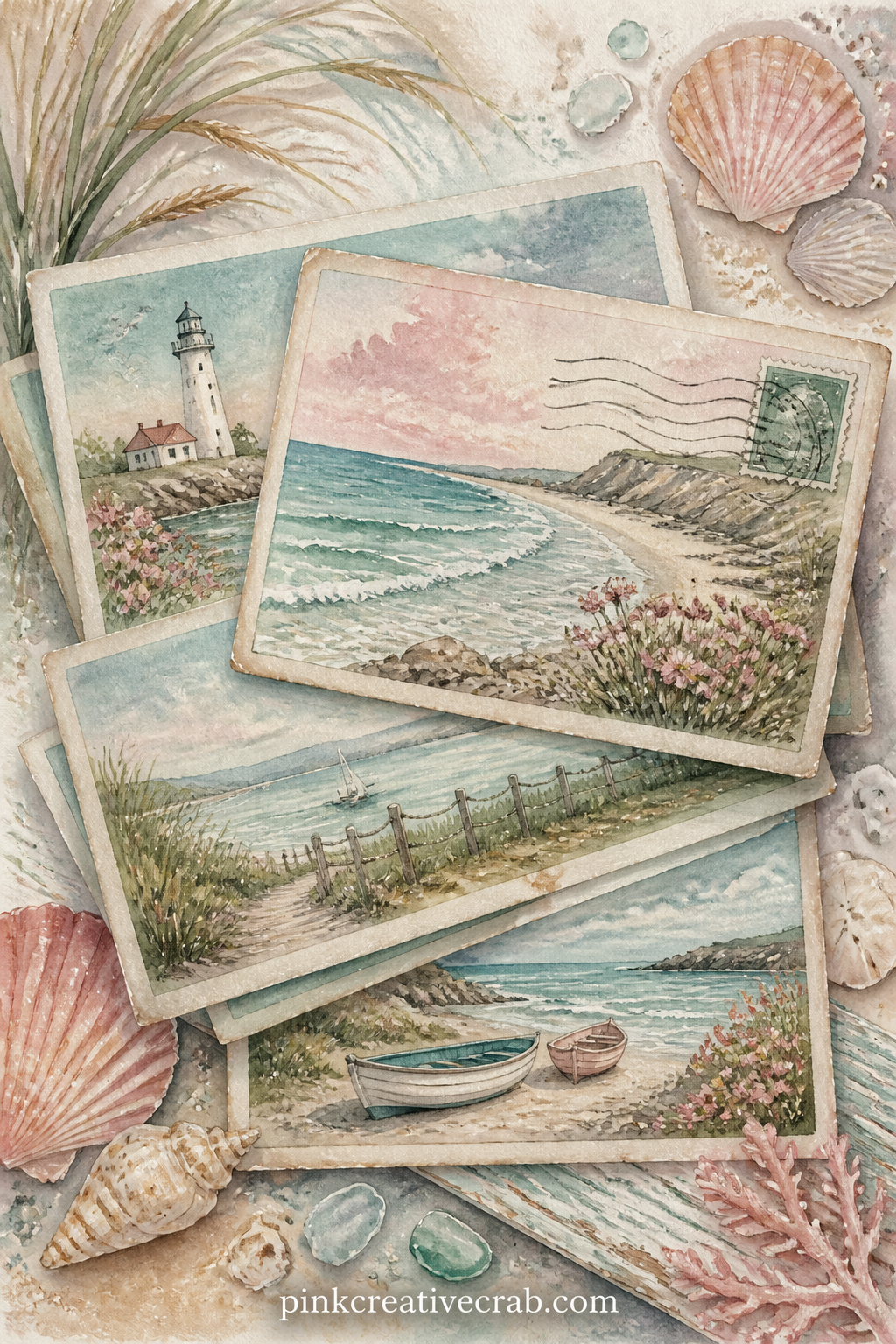
Three or four painted postcards overlap slightly, each showing a different coastal view, with a stamp and a short line of handwriting sketched on the nearest one.
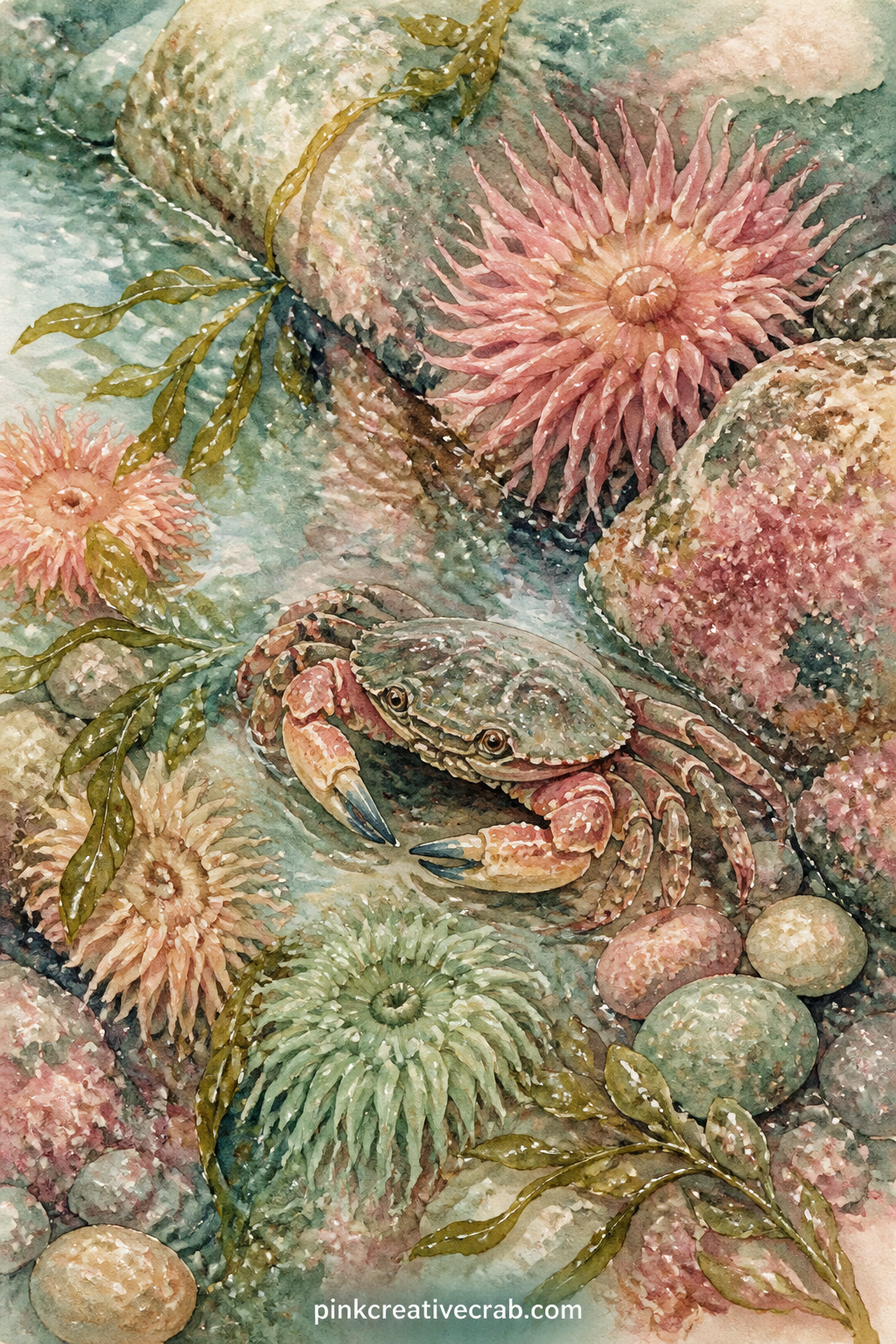
A small crab sits among shallow rock pools, with anemones, trailing seaweed and a few pebbles catching the light around it.
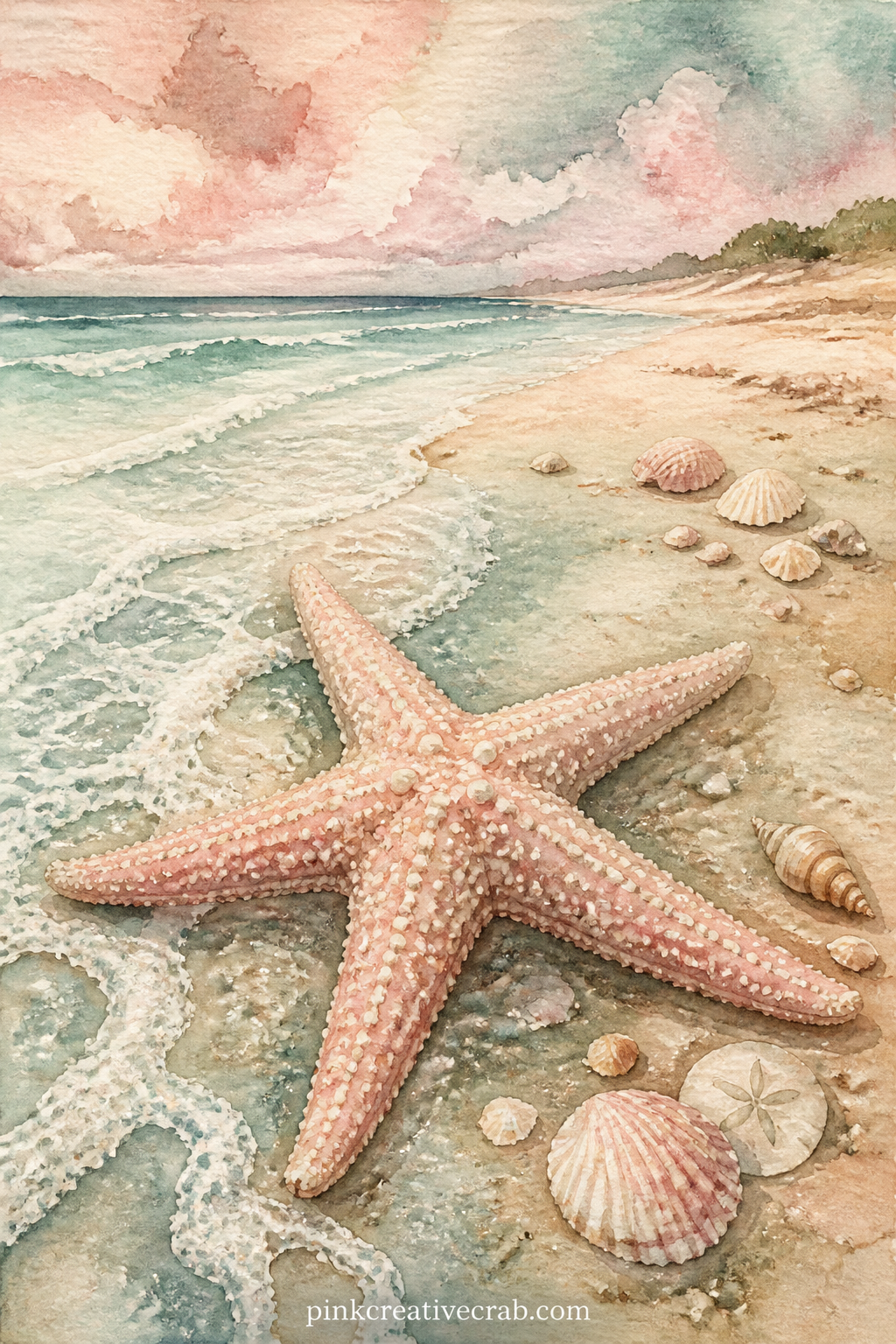
One large starfish lies on wet sand at the tideline, twenty five to thirty five words is all this page needs since the shape itself does the talking against the quiet wash of sea behind it.
Coastal Food Pages
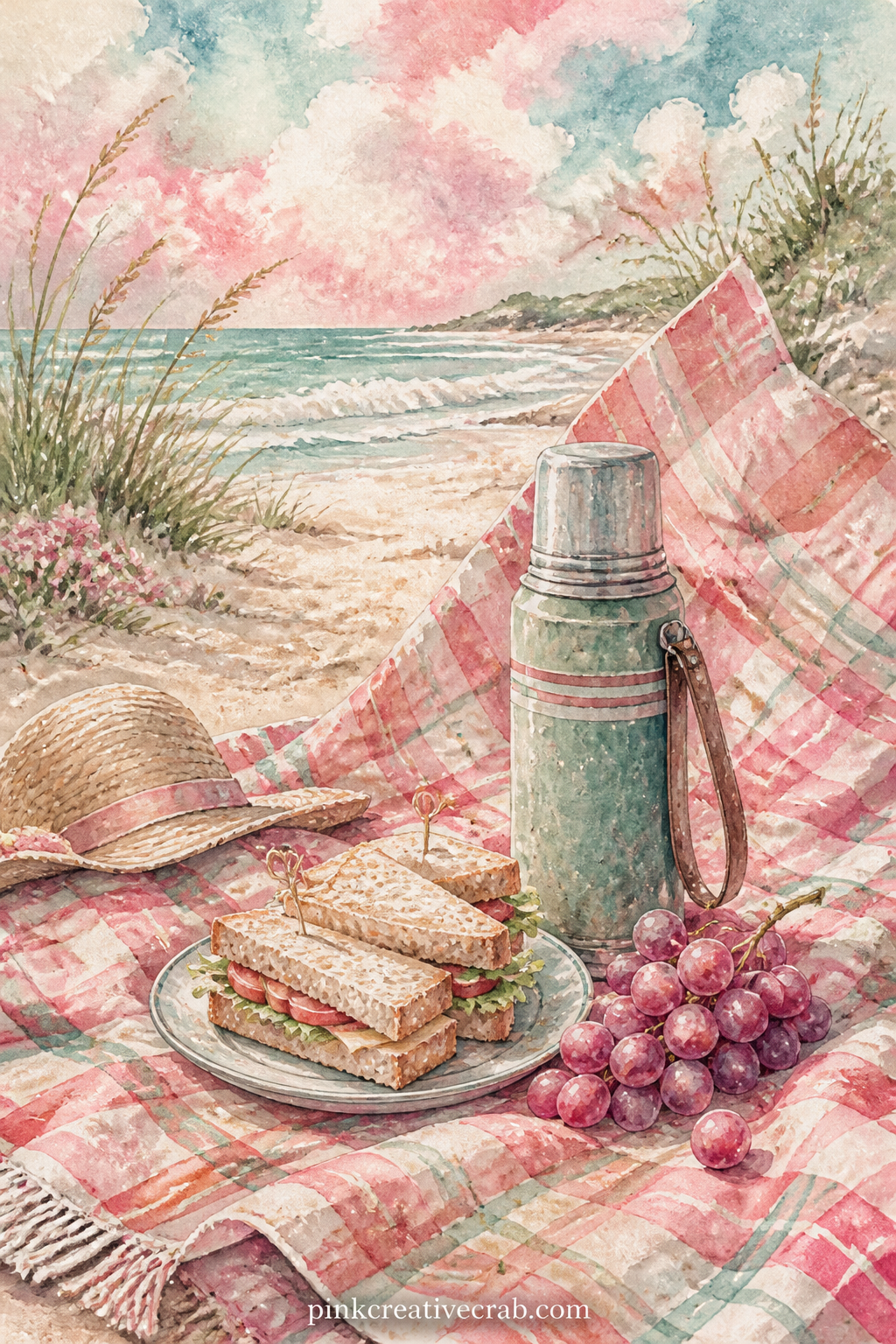
A checked blanket holds a simple seaside picnic, sandwiches, a thermos and a bunch of grapes, with a corner of the blanket lifting slightly in a painted breeze.
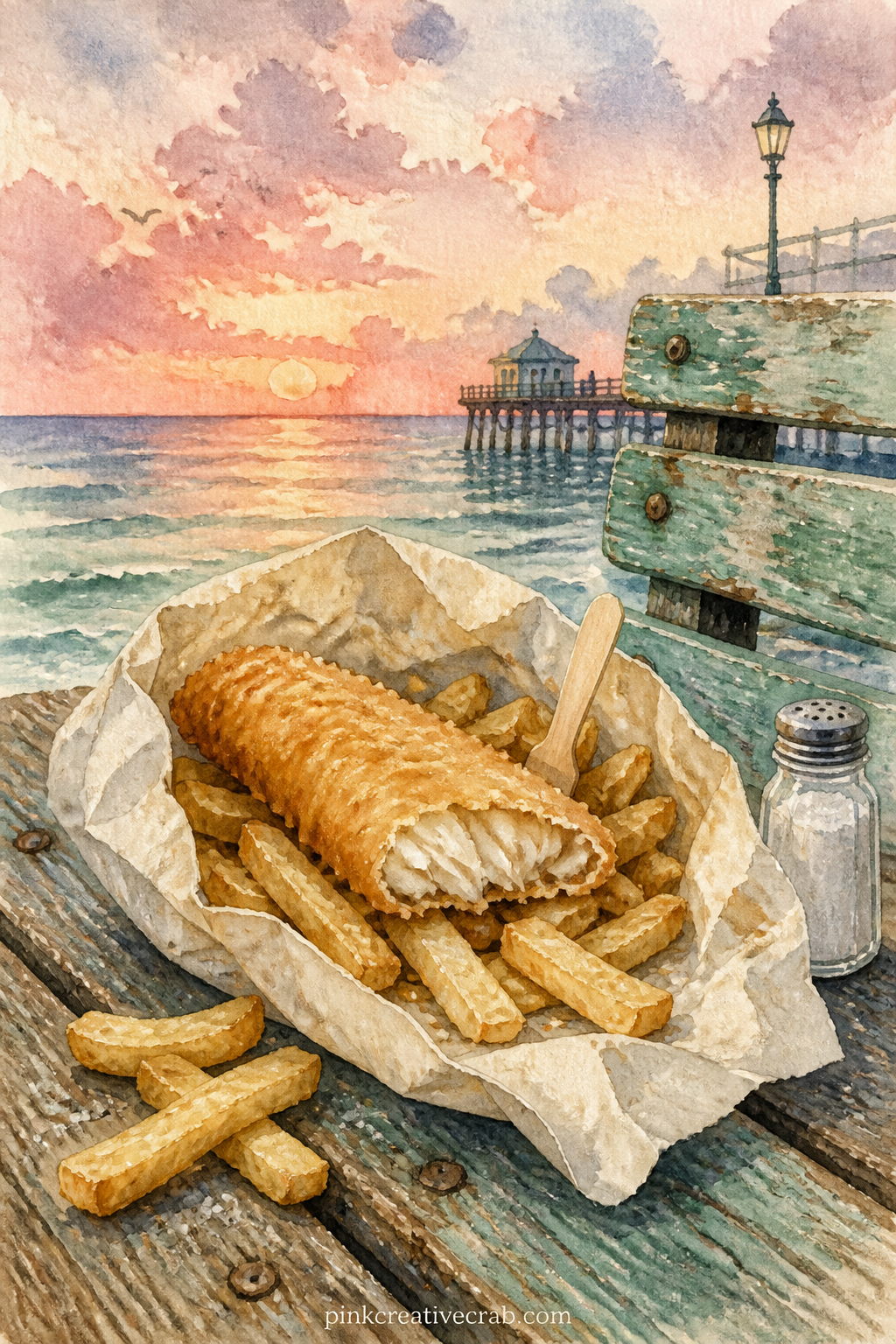
Write the name of the little shop that sold it, if you remember, right along the paper wrapper. If not, leave it blank and let the smell of vinegar be implied by the steam lines alone.
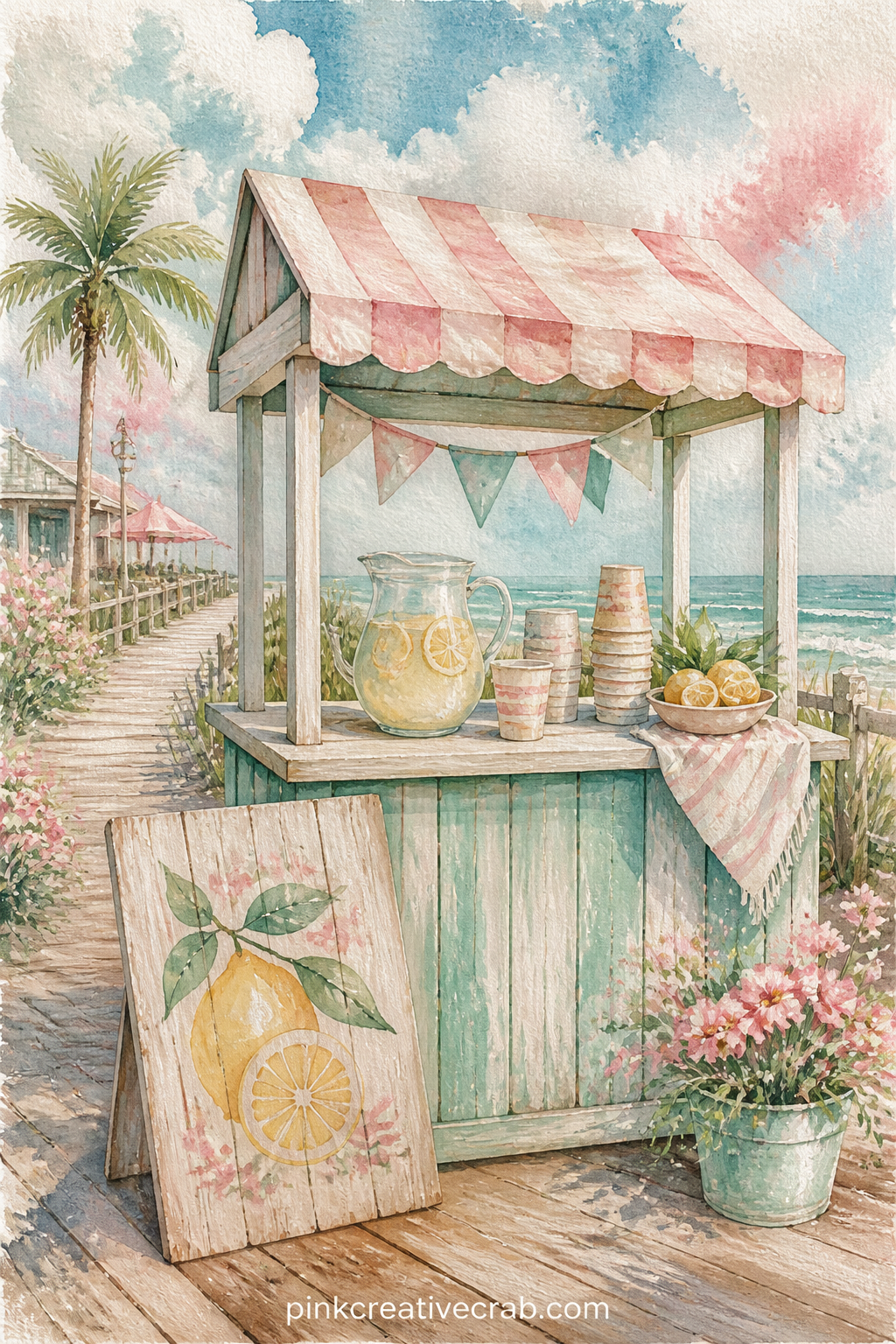
A small hand painted lemonade stand sits along the boardwalk, with a pitcher, a stack of paper cups and a hand lettered sign leaning against the counter.
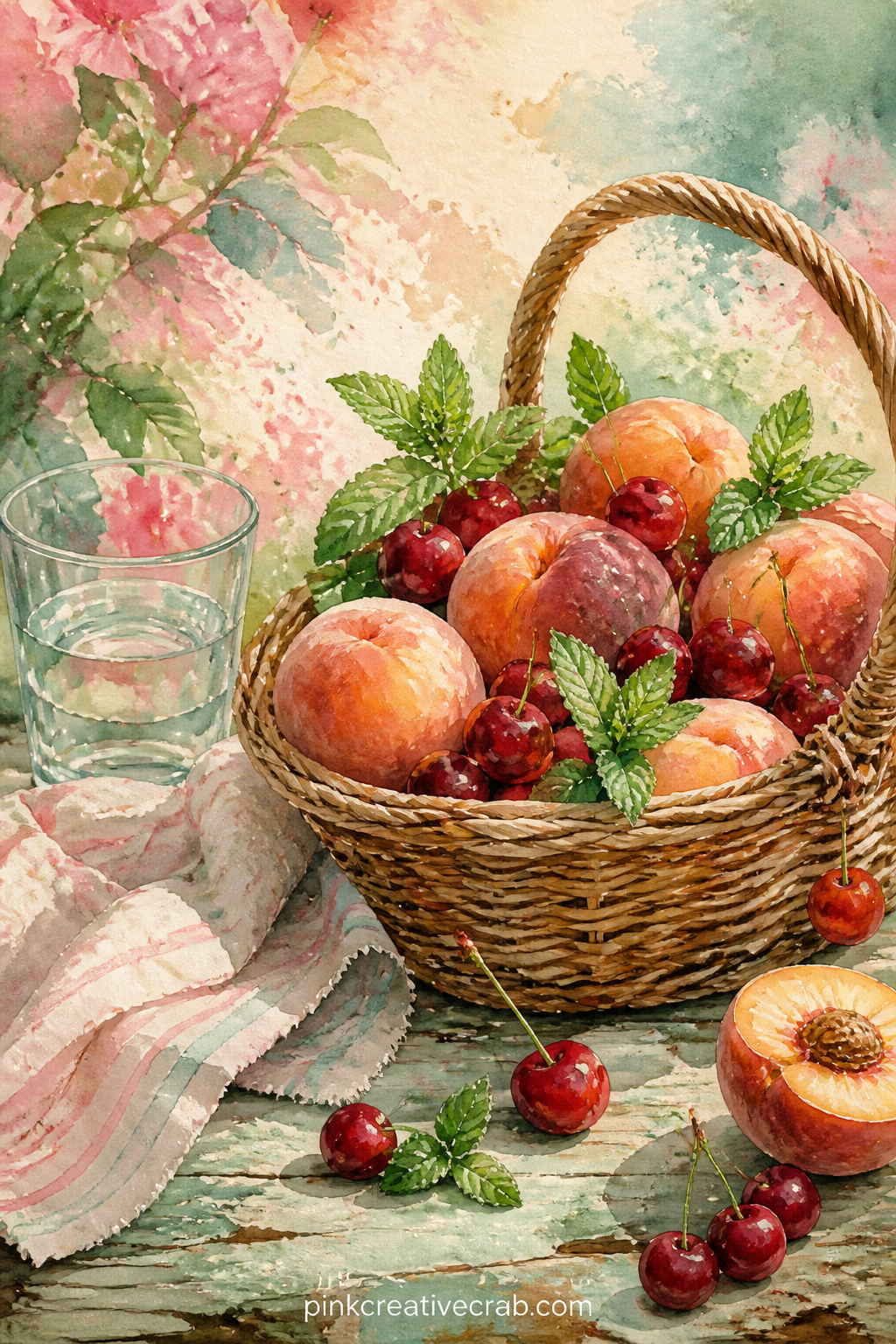
A woven basket overflows with peaches, cherries and a few sprigs of mint, set on a weathered wooden table with a folded napkin and a glass of water nearby.
Keep the basket as the only tightly painted shape and let the table fade softer toward the edges of the page.
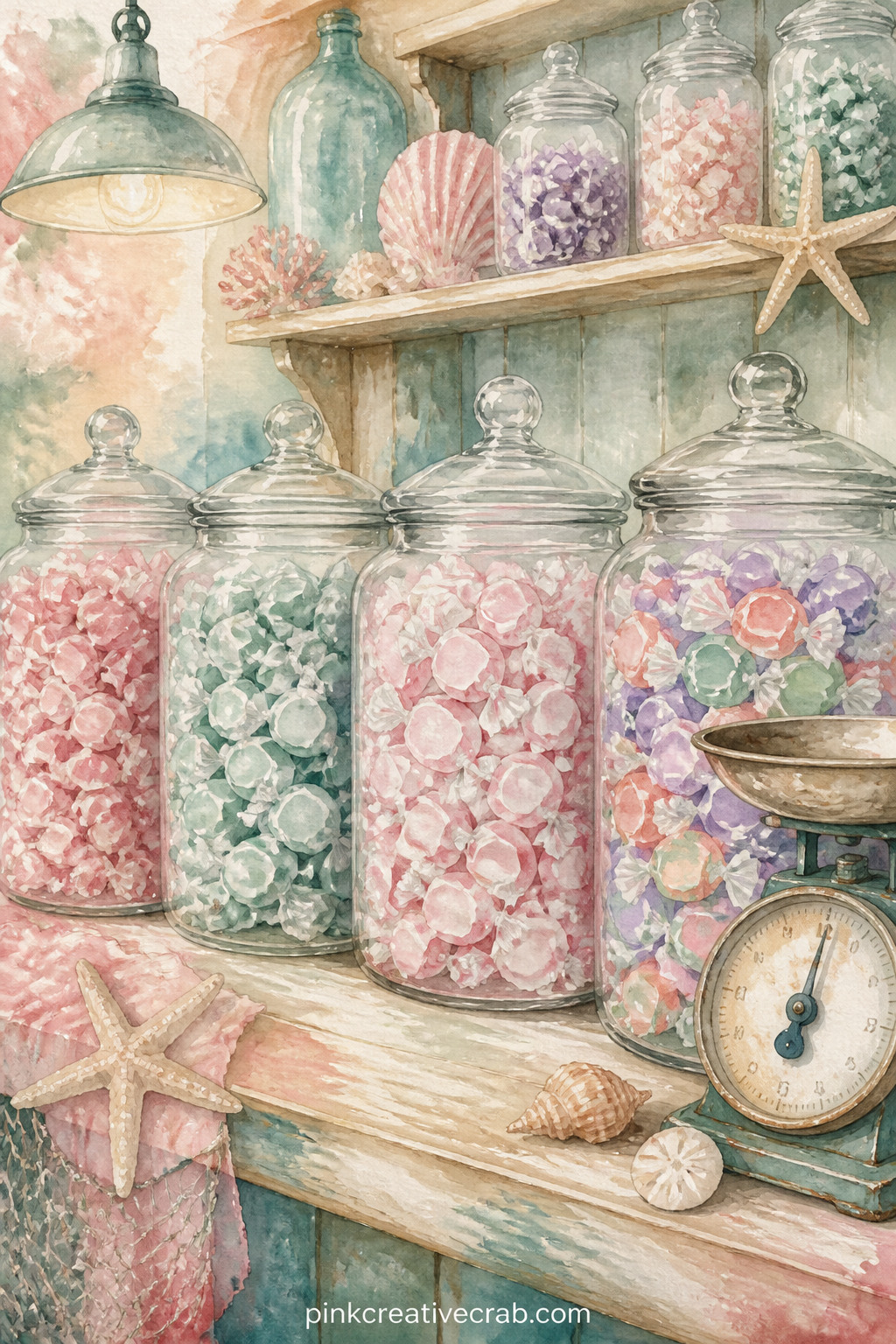
Rows of glass jars hold twists of saltwater taffy in soft pastel wrappers, lined up on a shop counter with a small weighing scale at one end.
Background Papers
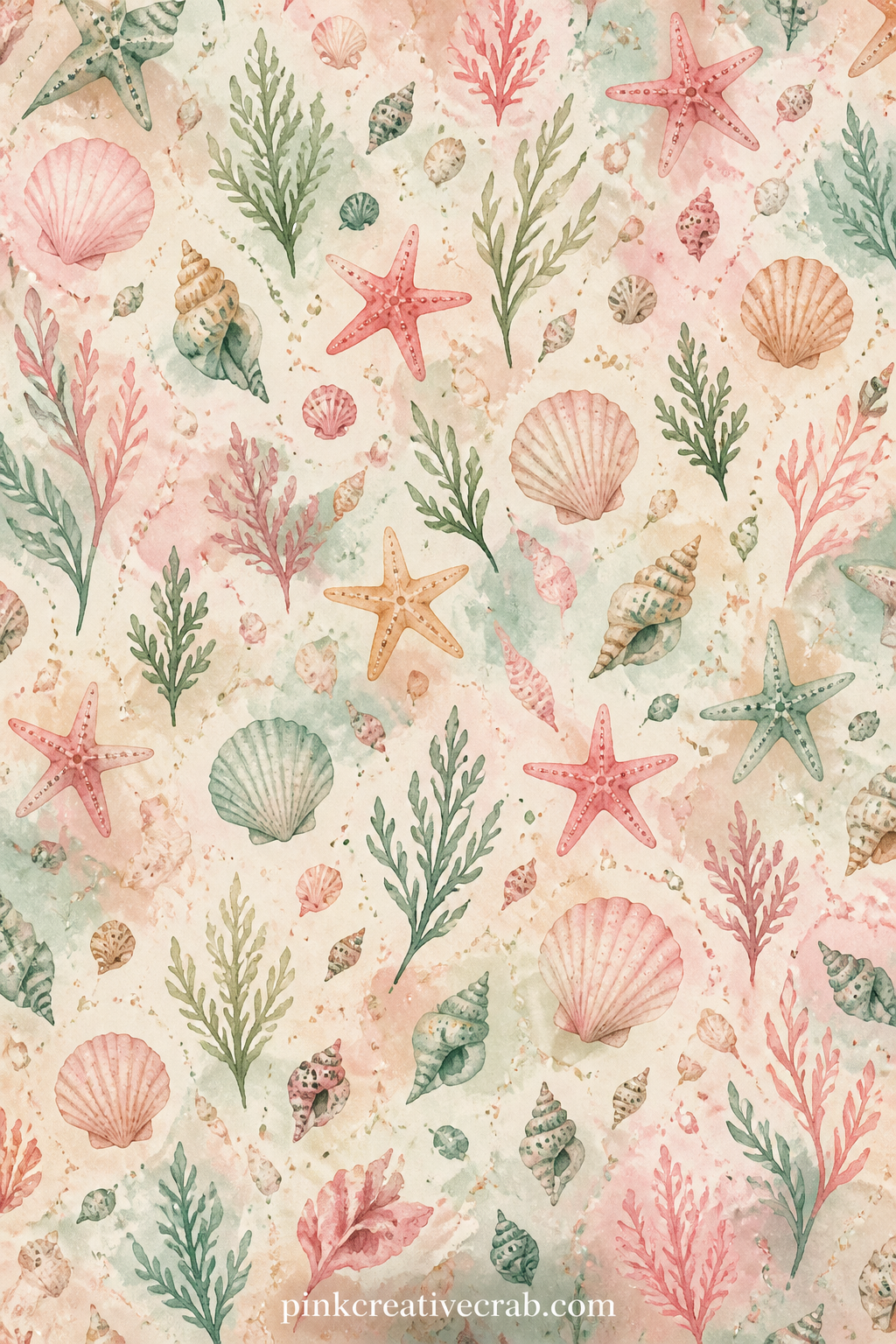
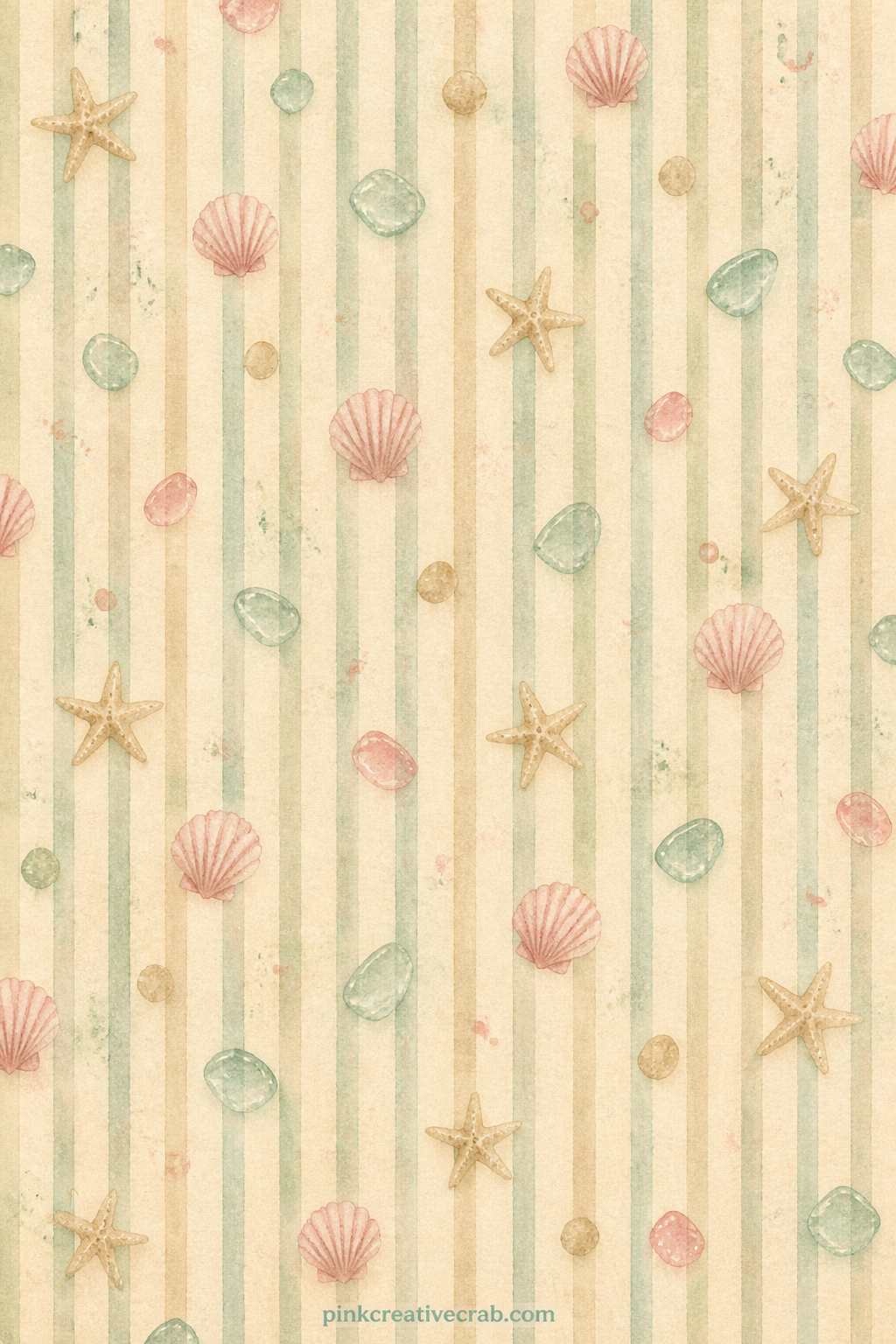
Small shells, starfish and sprigs of seaweed repeat edge to edge in the set’s dusty rose and sand tones, good as a backing under a shell photo, a cover sheet, or the lining behind a pressed memento.
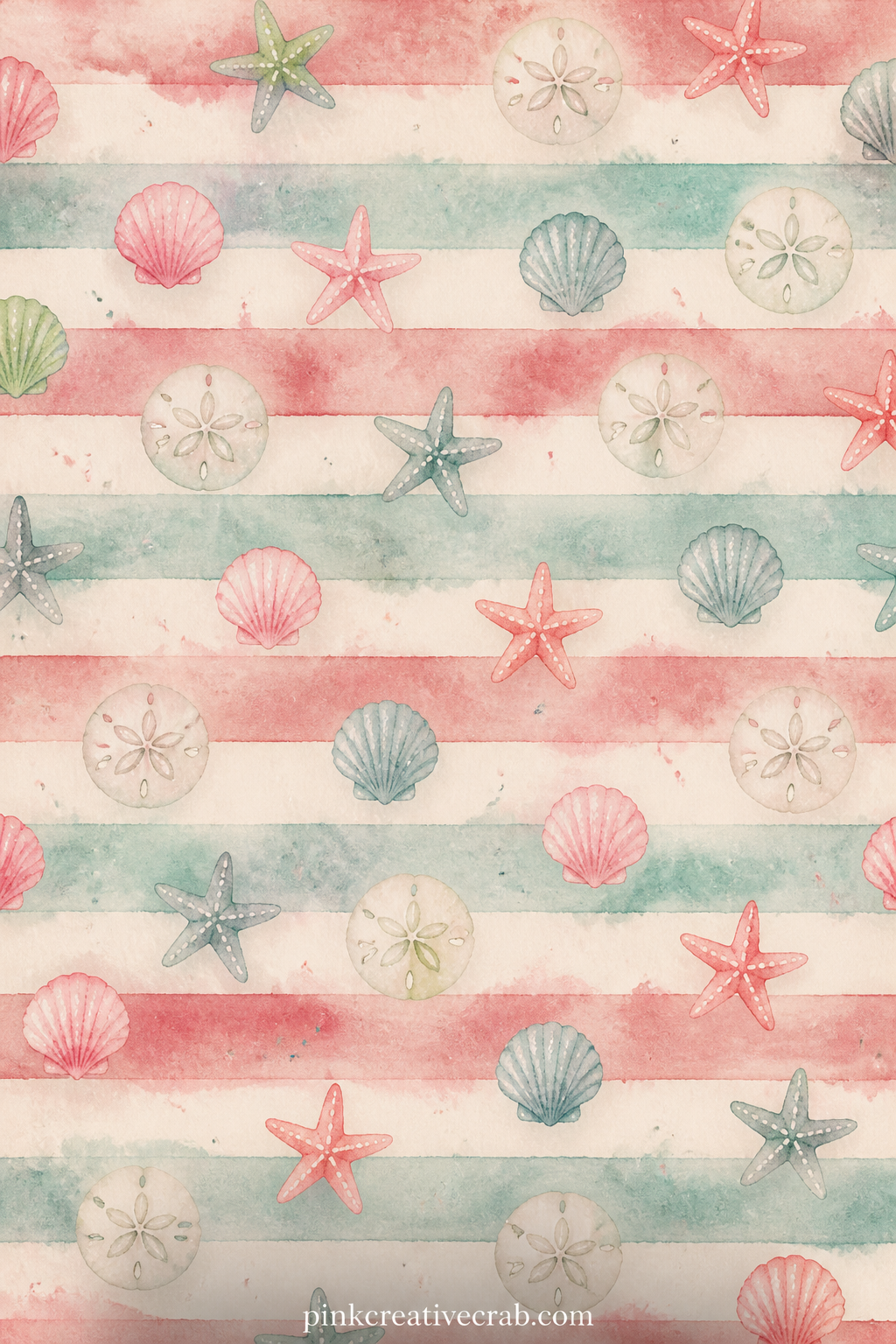
Soft horizontal stripes in sand and seafoam tones repeat across the page, a steady backing for a photo of the beach day itself or for a simple divider sheet between two sections of the journal.
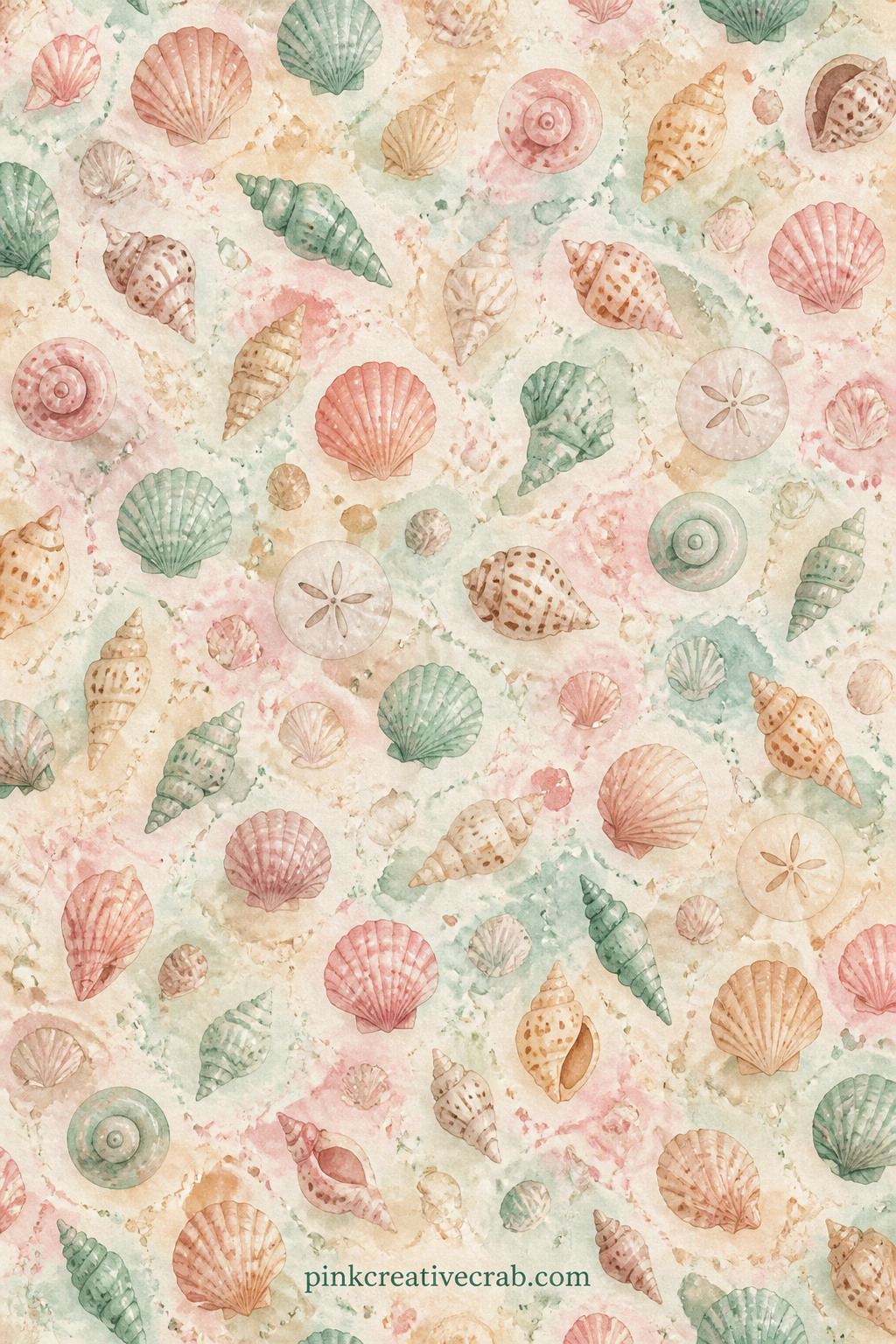
Loose scattered shells of several shapes cover the page at an even scale, well suited as a backing behind a photo of the shoreline or as the inside cover sheet for the whole journal.
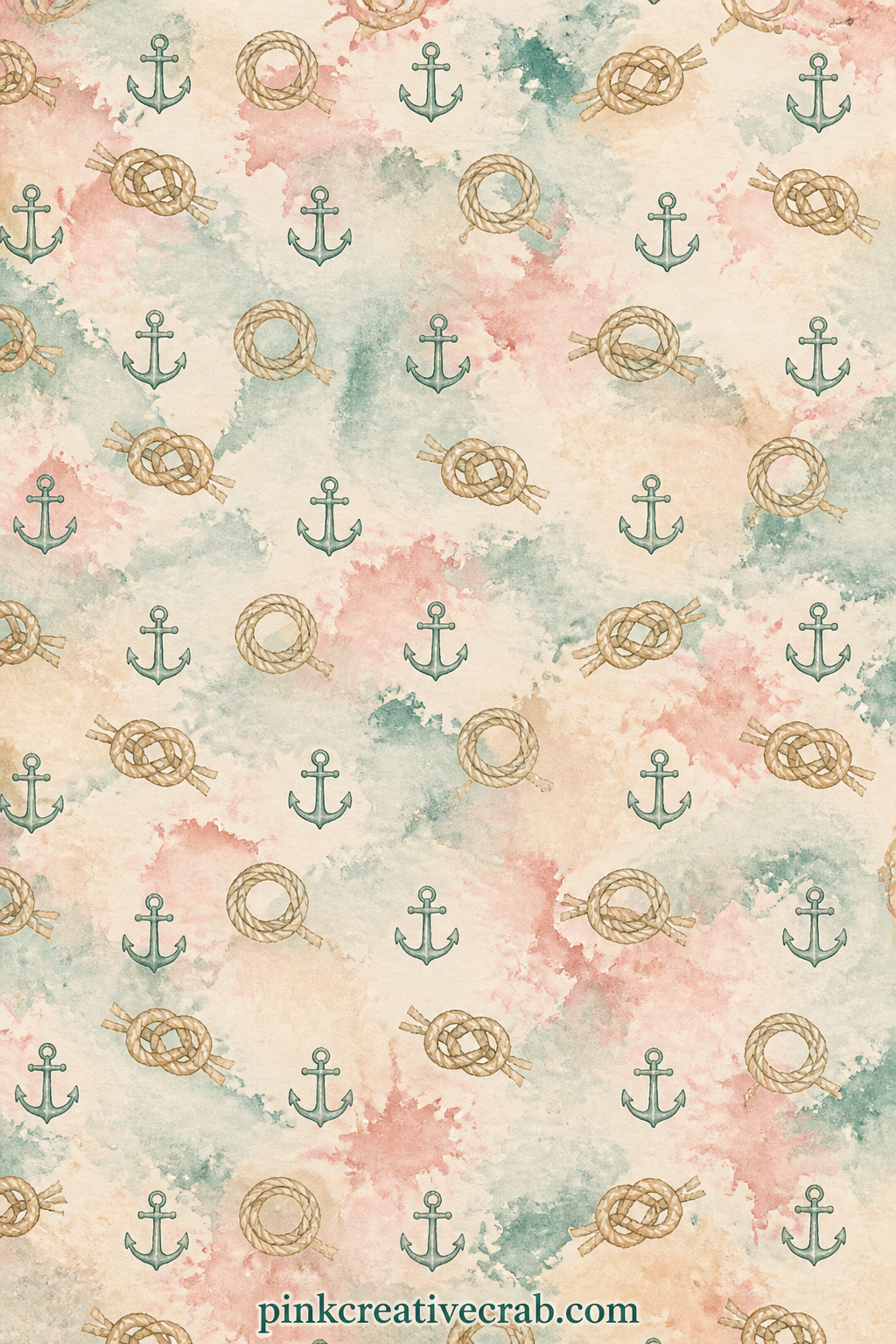
Looping coils of rope and small anchors repeat in a steady rhythm, useful as a backing behind a harbour photo, a lining for the back cover, or a divider before the lined pages begin.
Narrow ticking stripes in warm sand and cream run the length of the page, a quiet backing for a pressed flower, a photo corner, or the sheet behind a folded letter.
Lined Writing Pages
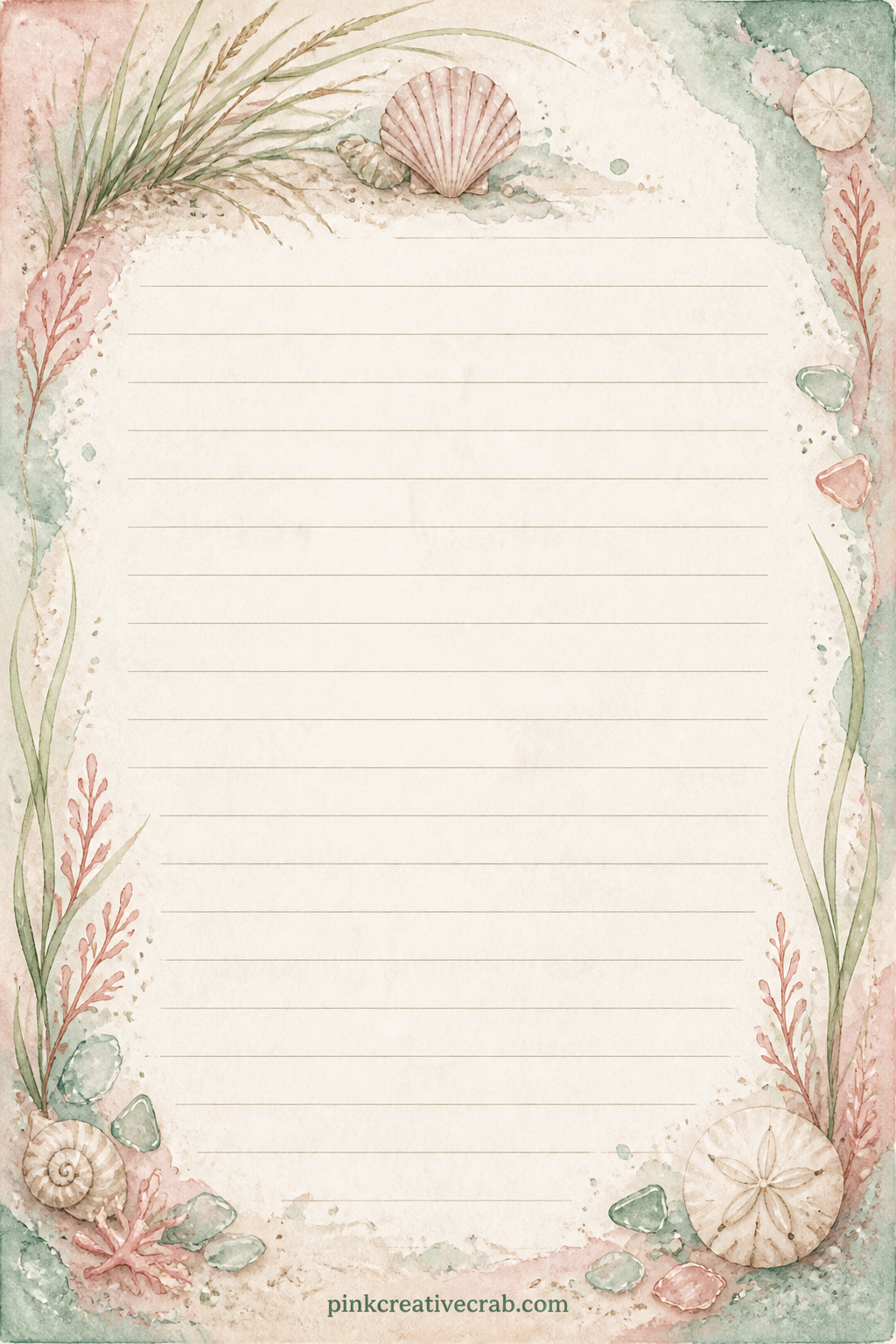
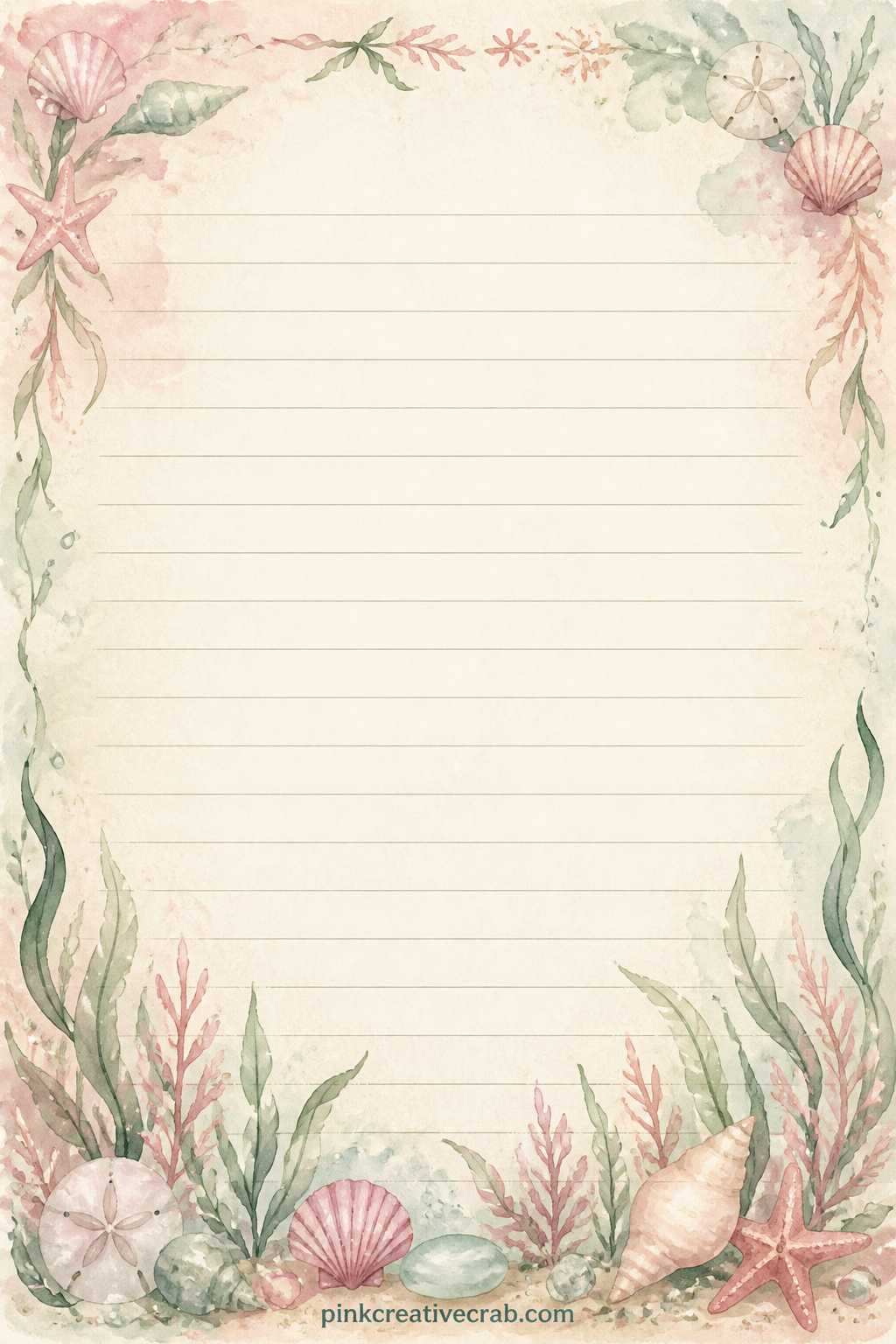
A corner spray of beach grass and a single shell border the top of this page, room enough below for a short list of the smells and sounds from one afternoon at the shore.
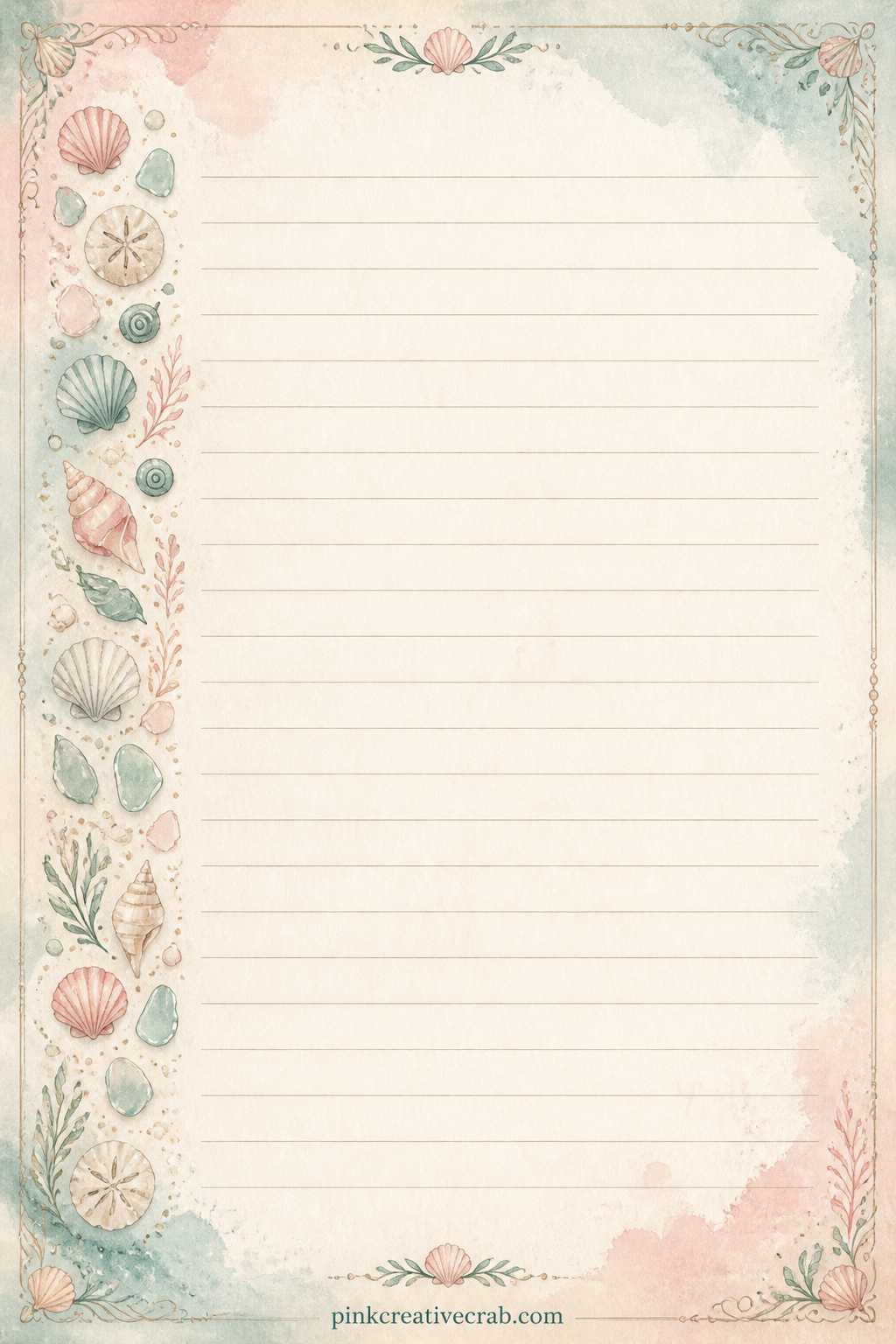
A thin band of scattered shells runs down one side, leaving the rest open for a short letter to next year about one thing worth doing again at the beach.
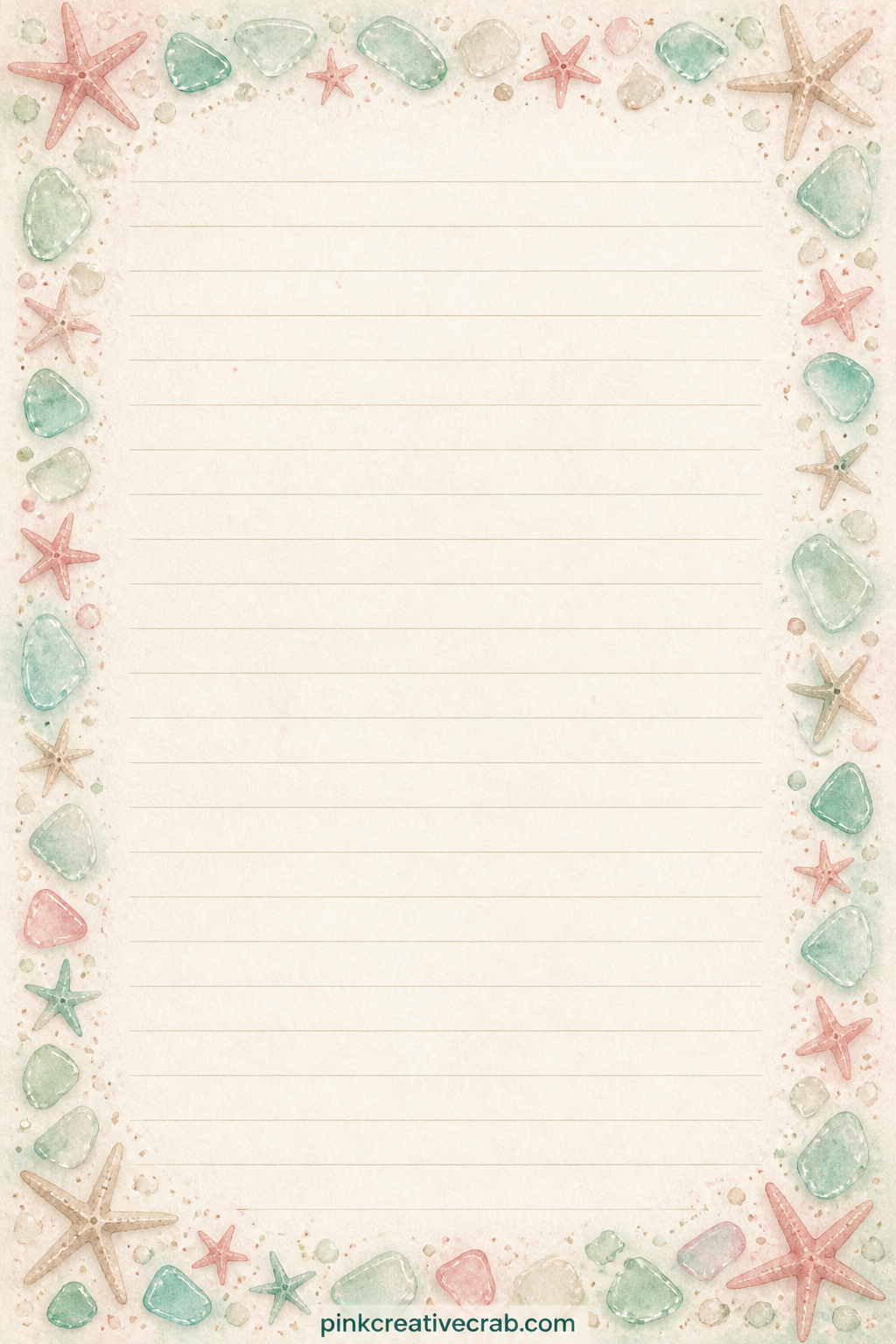
A frame of tiny starfish and sea glass borders this page, suited to a packing list for the cooler, the towels and whatever else never makes it into the car on time.
A soft border of seaweed fronds curls along the bottom edge, leaving the page open for the day’s seaside menu, ice cream flavours and all, written out in full.
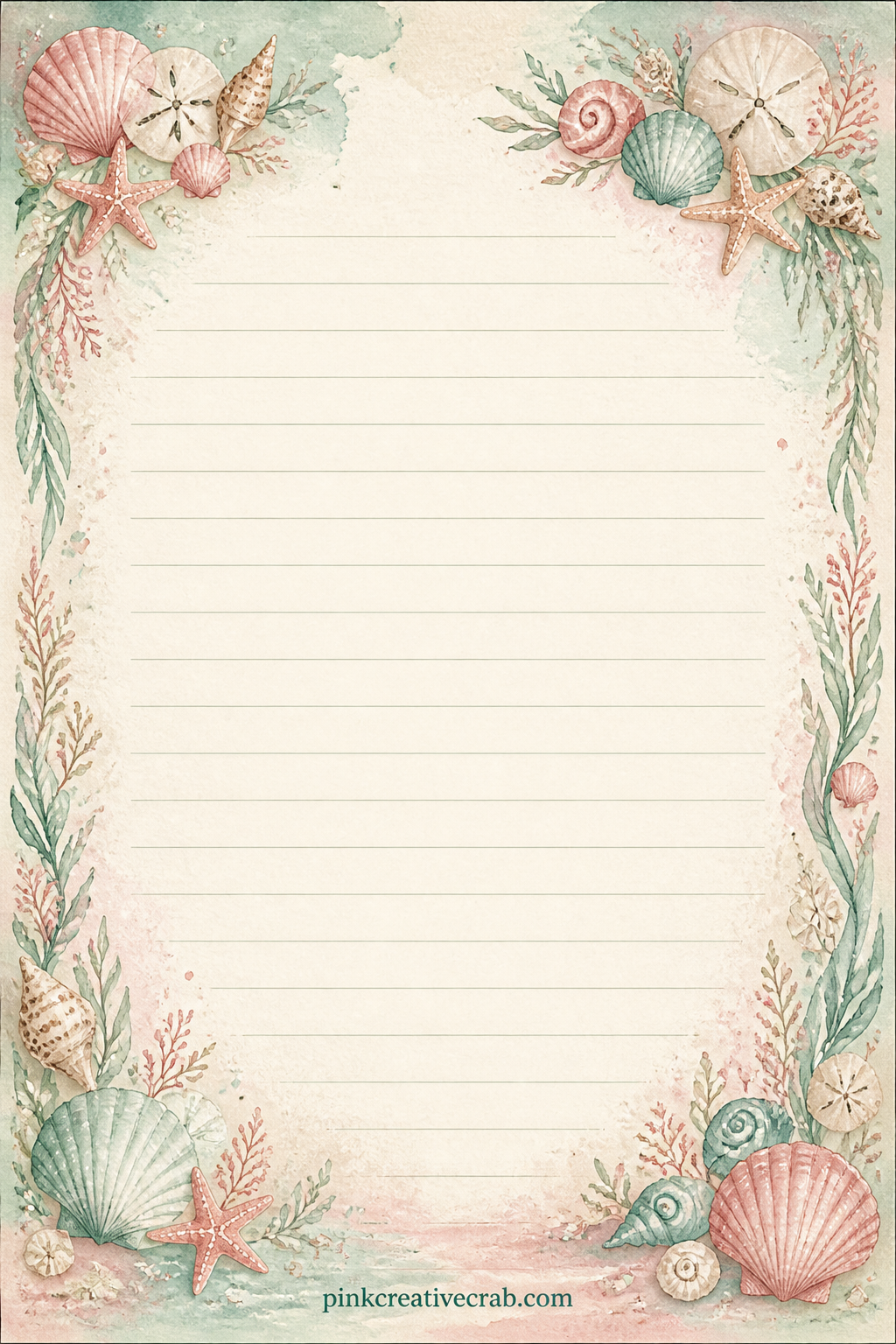
A delicate garland of small shells and starfish wraps the top corners, room below for a short note on what the sea left behind this time and who it is meant for.
What to Do Next
Print the set, trim the sheets to your journal size, and start gluing from the seaside town pages forward so the whole kit reads like one long stretch of coastline by the time the lined pages arrive.
Frequently Asked Questions
What paper works best for a beach junk journal kit like this one?
Choose a heavyweight matte paper, at least 200gsm, so the soft watercolour washes do not bleed through to the next sheet. Matte finishes also take pencil and pen for journaling far better than glossy photo paper, which tends to resist ink.
What printer settings give the truest colour on these pages?
Set your printer to its best or photo quality mode and choose matte or plain paper in the driver, not glossy. Turn off any automatic colour correction so the dusty rose and sand tones print as painted rather than brightened or cooled.
What size should I print the pages for a standard journal?
Most junk journals run close to a half letter or A5 size, so print at full page first and trim down with a paper trimmer once the ink is fully dry. Printing oversized and trimming gives you a clean edge with no printer margin showing.
Can I add my own photos or writing over these pages?
Yes, the lined pages are left open for that, and the scene pages take a small photo, ticket or pressed flower glued on top without trouble. Keep anything glued on thin so the journal still closes flat once it is full.
Do I need to colour or paint anything myself?
No, every page prints fully finished in colour and is ready to glue straight into a journal. If you want to practise the same loose watercolour technique by hand, the wet-on-wet watercolor guide covers the basic method.
Have any thoughts?
Share your reaction or leave a quick response — we’d love to hear what you think!
-
 0
0 -
0
-
0
-
0
-
0
-
0


