
Table of Contents
A nature junk journal needs more than a few leaf stickers to feel like something you carried on a walk. This kit gives you 24 full scene pages, from a forest stream to a mountain lake at dawn, 5 seamless background pages of pinecones, feathers and pressed botanicals, and 5 lined writing pages with quiet nature borders for your own notes.
Print everything on heavyweight matte paper, at least 180gsm so paint and ink do not show through, using your printer’s best or photo quality setting. Trim each sheet to the size of your journal before gluing or binding it in.
Using these images: free for personal projects such as printing, coloring, cards, journals and gifts. Handmade items that include them may be sold up to 30 pieces per design. More than that is commercial use and is not permitted, and neither is selling or sharing the images themselves or passing them off as your own. Please ask before any other use.
Woodland Pages
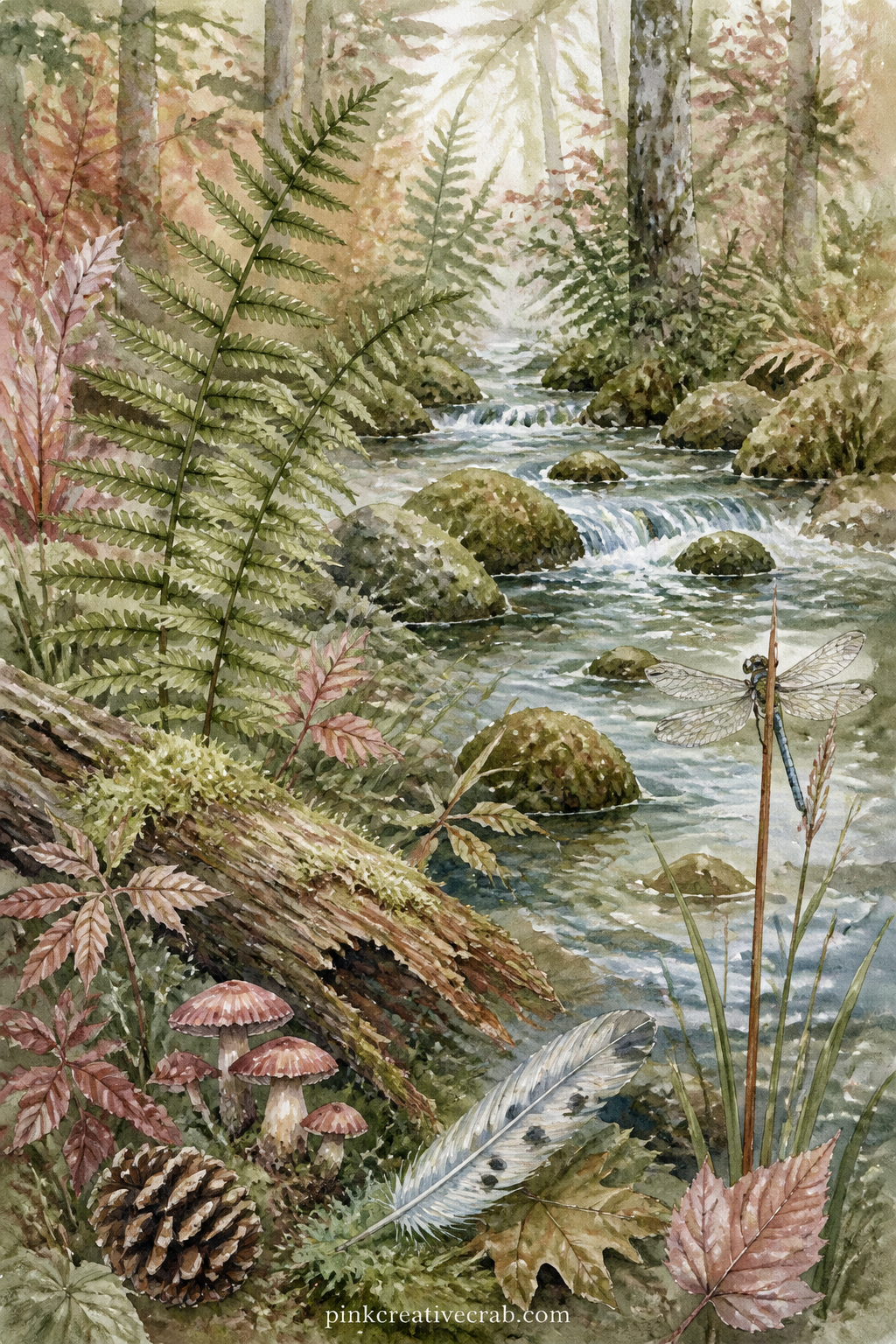
A narrow stream curves between mossy stones and tall ferns, with a fallen log, a cluster of mushrooms and a dragonfly resting on a reed.
Pair this page with the pinecone and feather pattern later in the set: print the fox scene on the right page of a spread and the pattern on the left, so the eye moves from the animal into the texture behind it.
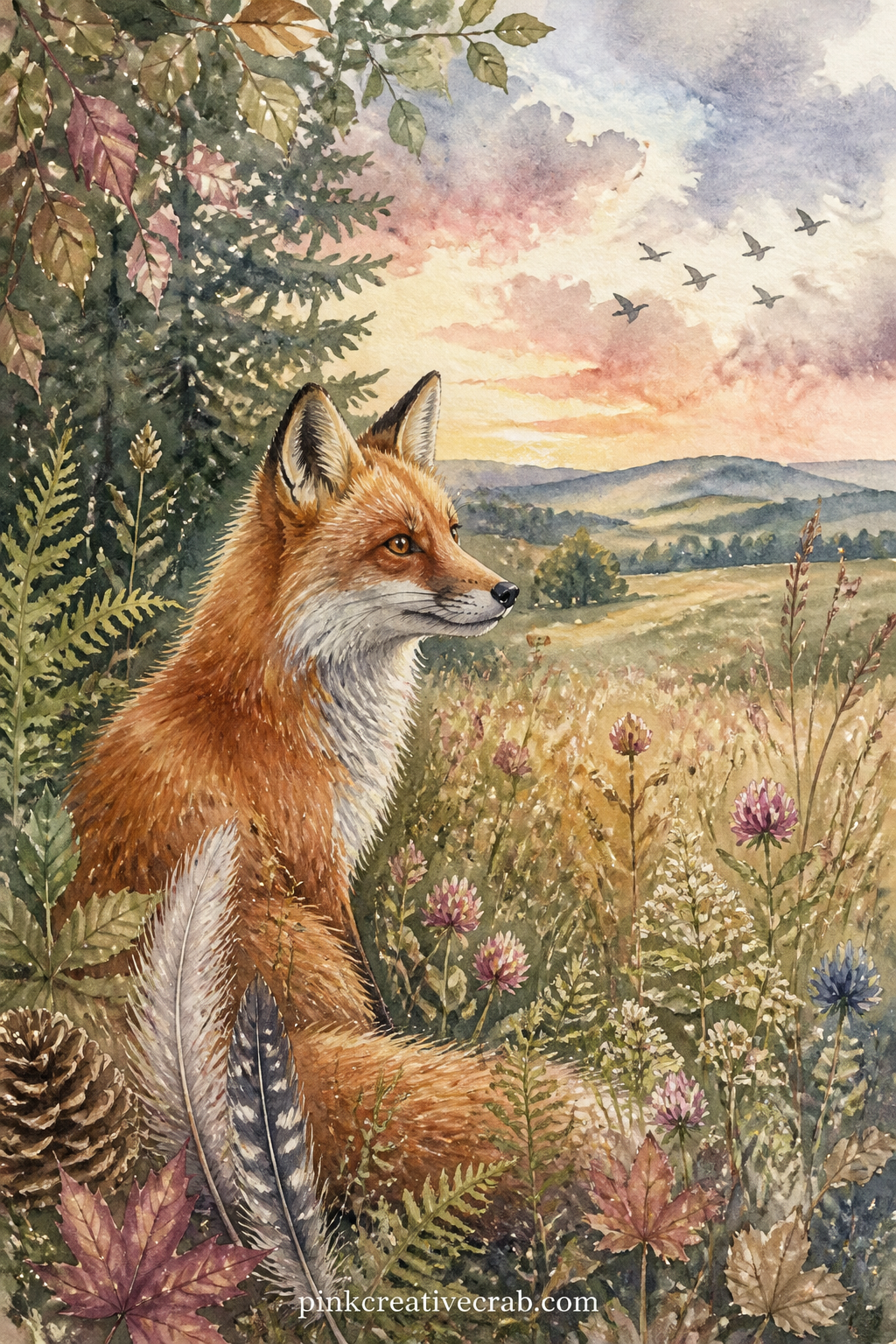
The fox sits low at the tree line, watching a meadow of tall grass and wildflowers, with a few birds rising in the distance and soft evening light behind the hills.
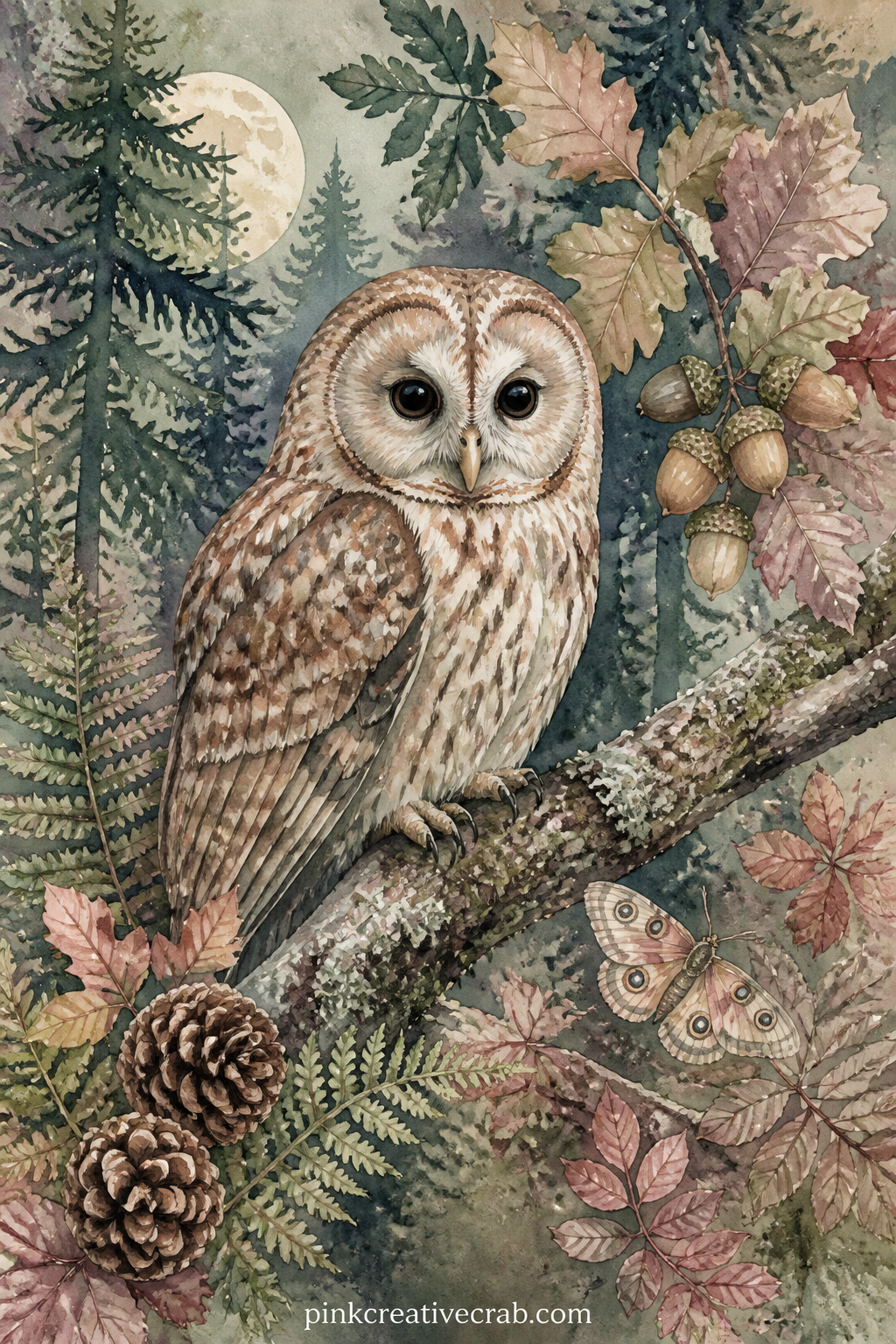
Write the date and the name of the trail under this one, since an owl page often marks the quiet end of a long walk journal entry.
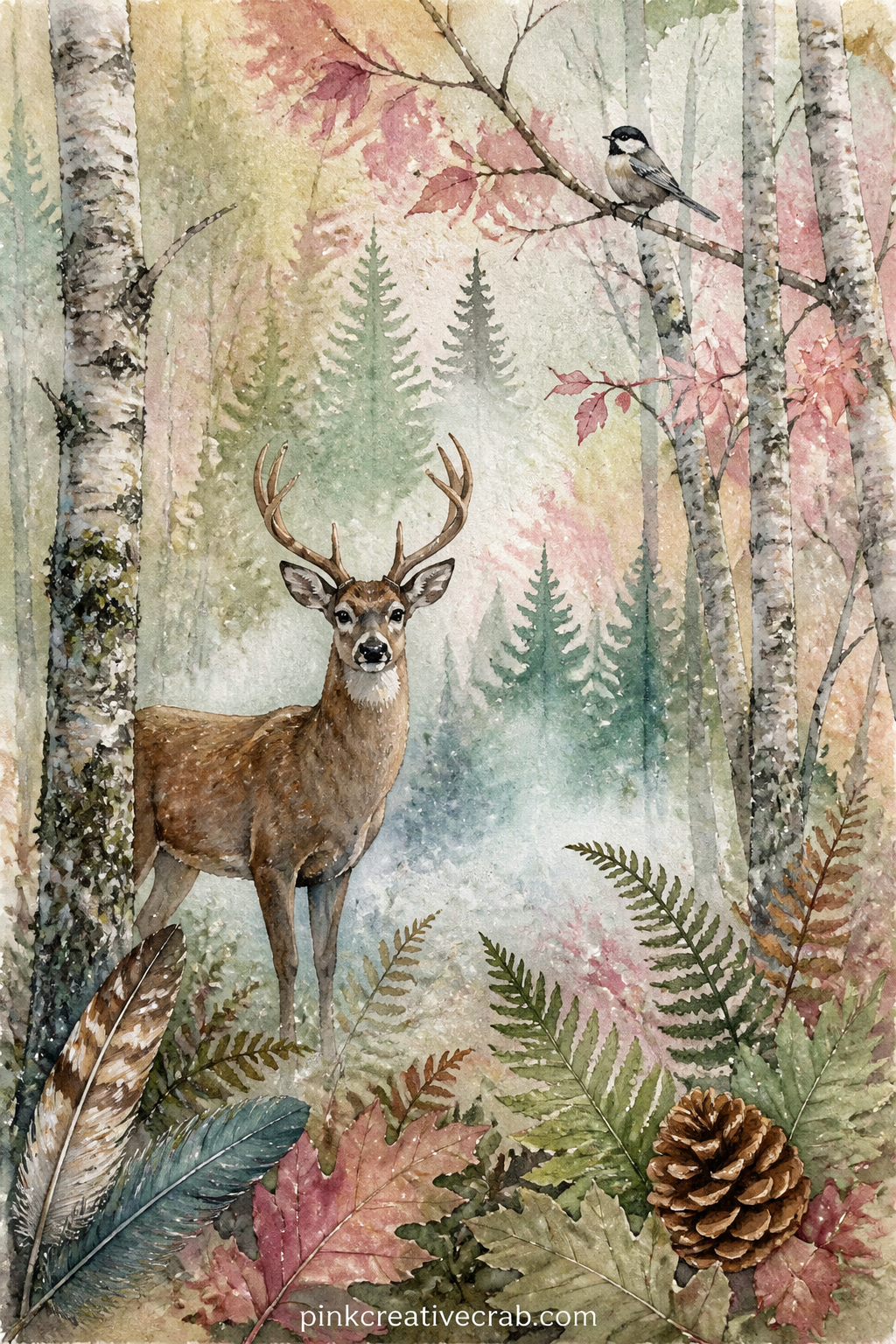
The usual mistake with a misty scene is leaving the background too pale, so the deer seems to float with nothing around it. Keep the wash soft but unbroken from edge to edge, with the trees fading gradually rather than stopping in a hard line.
A deer stands among slender birch trunks, with low mist, a scatter of fallen leaves and a single bird on a branch above.
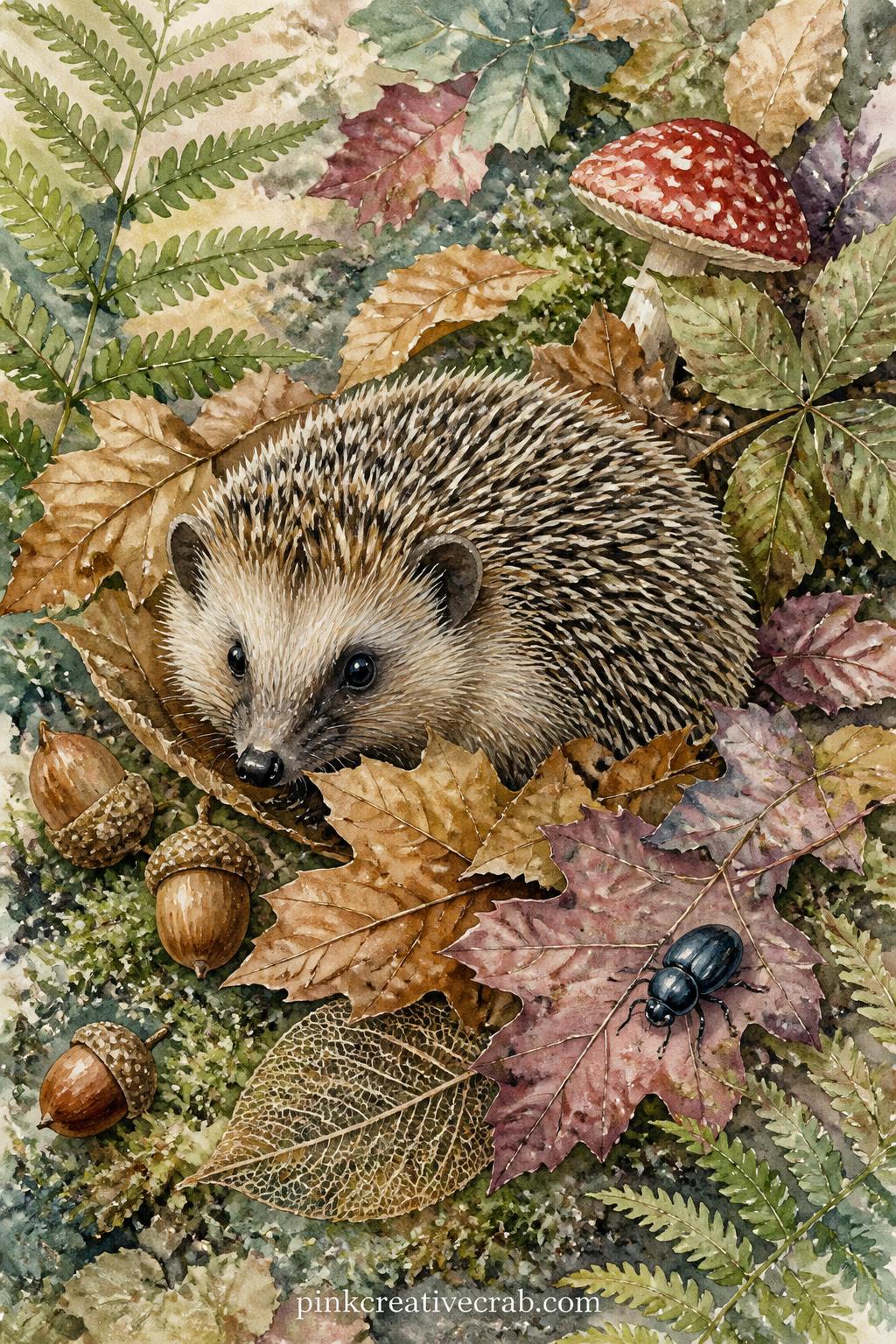
Glue a small pressed leaf or a torn scrap of autumn-colored paper right beside the hedgehog, tucked half under the painted leaf pile so real and painted leaves overlap.
Botanical Specimen Pages
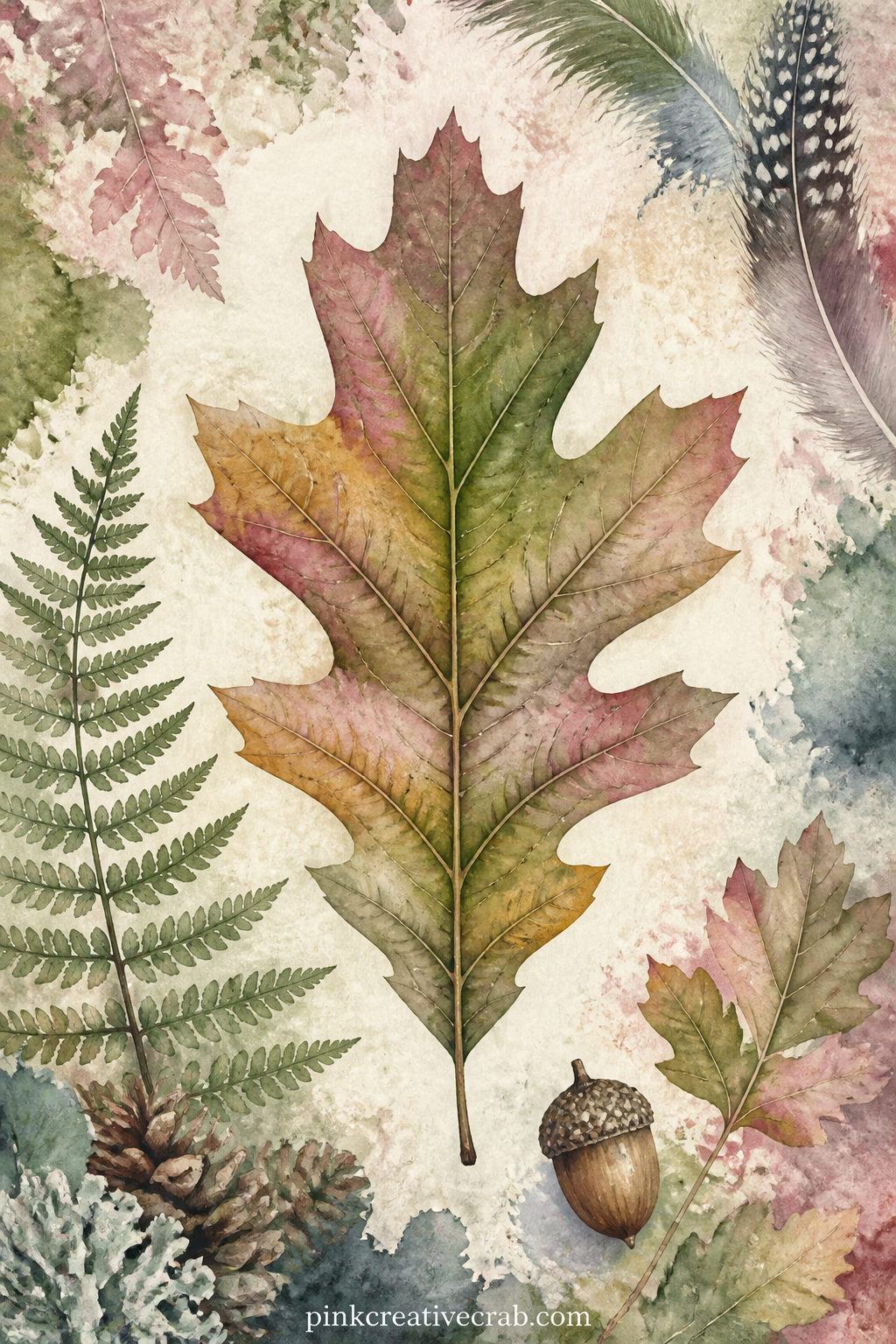
Which leaf did you actually find today. Name the tree, note the color it turned, and if you pressed a real one, tuck it flat against this painted specimen before the page dries shut in your journal.
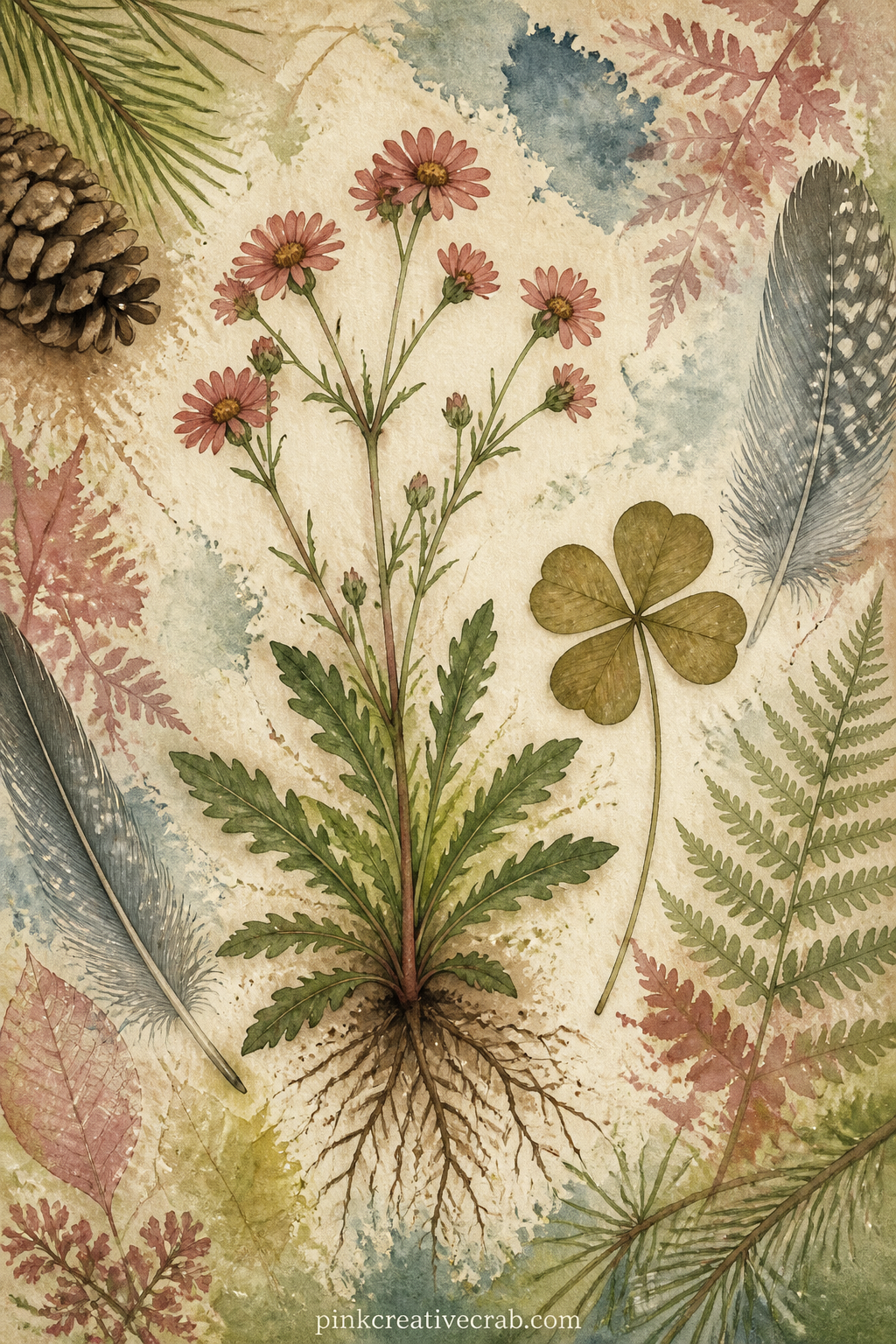
For the five minute version, skip the full specimen layout and paint just the flower head with its label line beneath it, leaving the rest of the page as plain aged paper for a quick entry.
A wildflower specimen sits center page with its stem and roots shown, flanked by a pressed clover and a small hand-lettered note of where it grew.
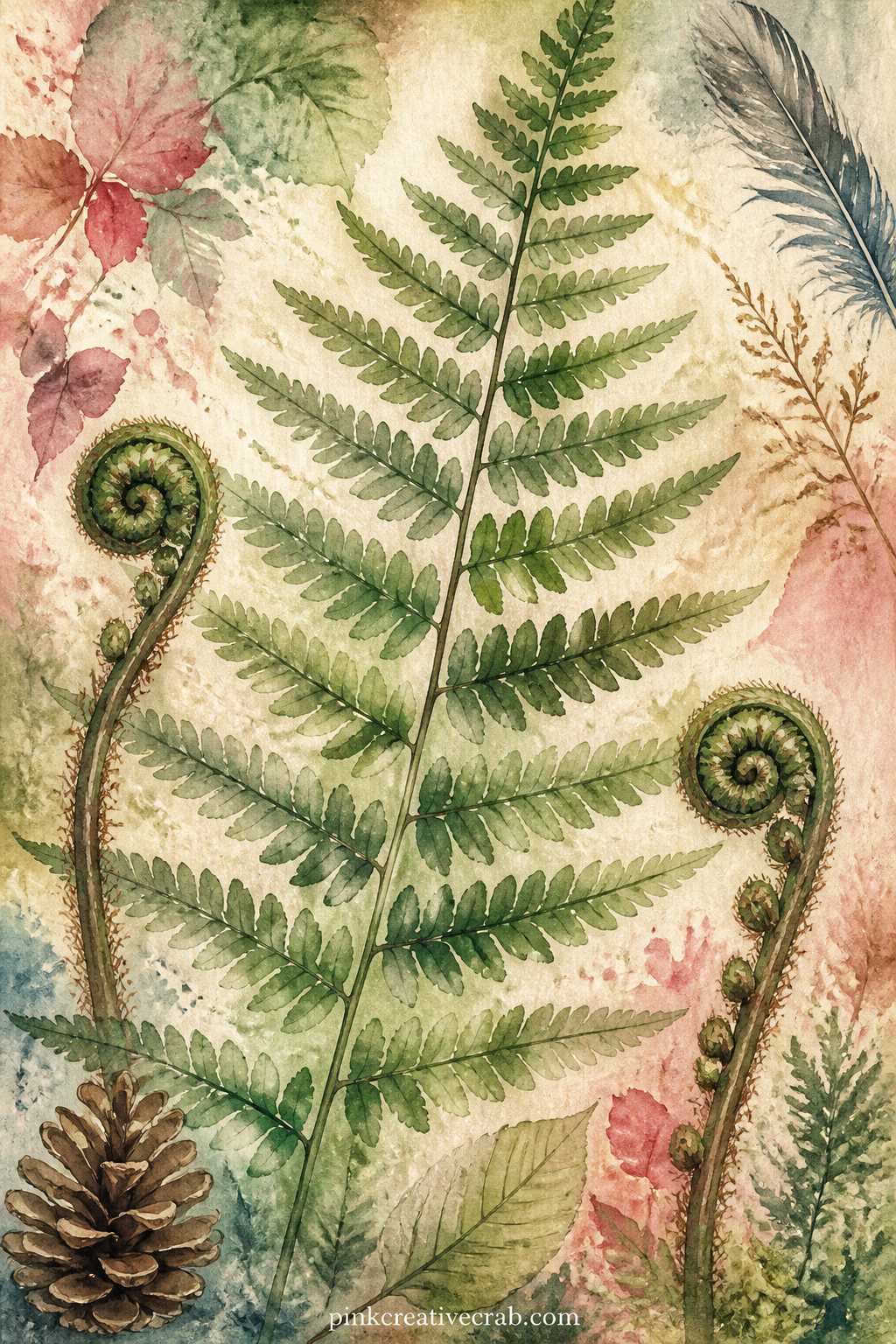
Try this page as a two-sentence prompt entry: describe the shade under the fern and one sound you noticed there, written right across the lined space you leave at the bottom of the painted frond.
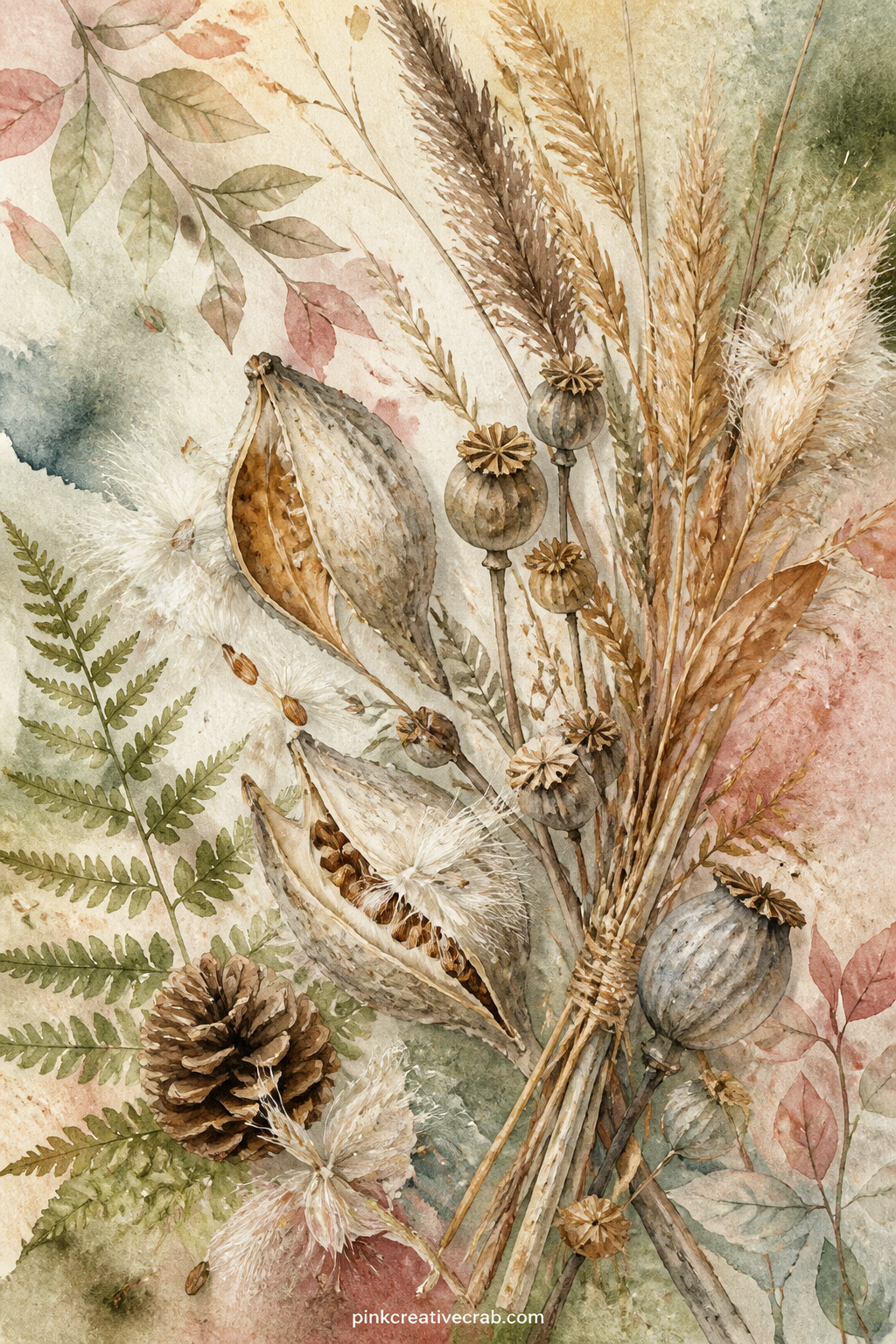
Tear the right edge of this sheet by hand rather than cutting it, so the seed pods look like they were gathered loose and slipped between the journal pages.
A row of dried seed pods, milkweed husks and tall grass stems is arranged across the page like a small collected bundle.
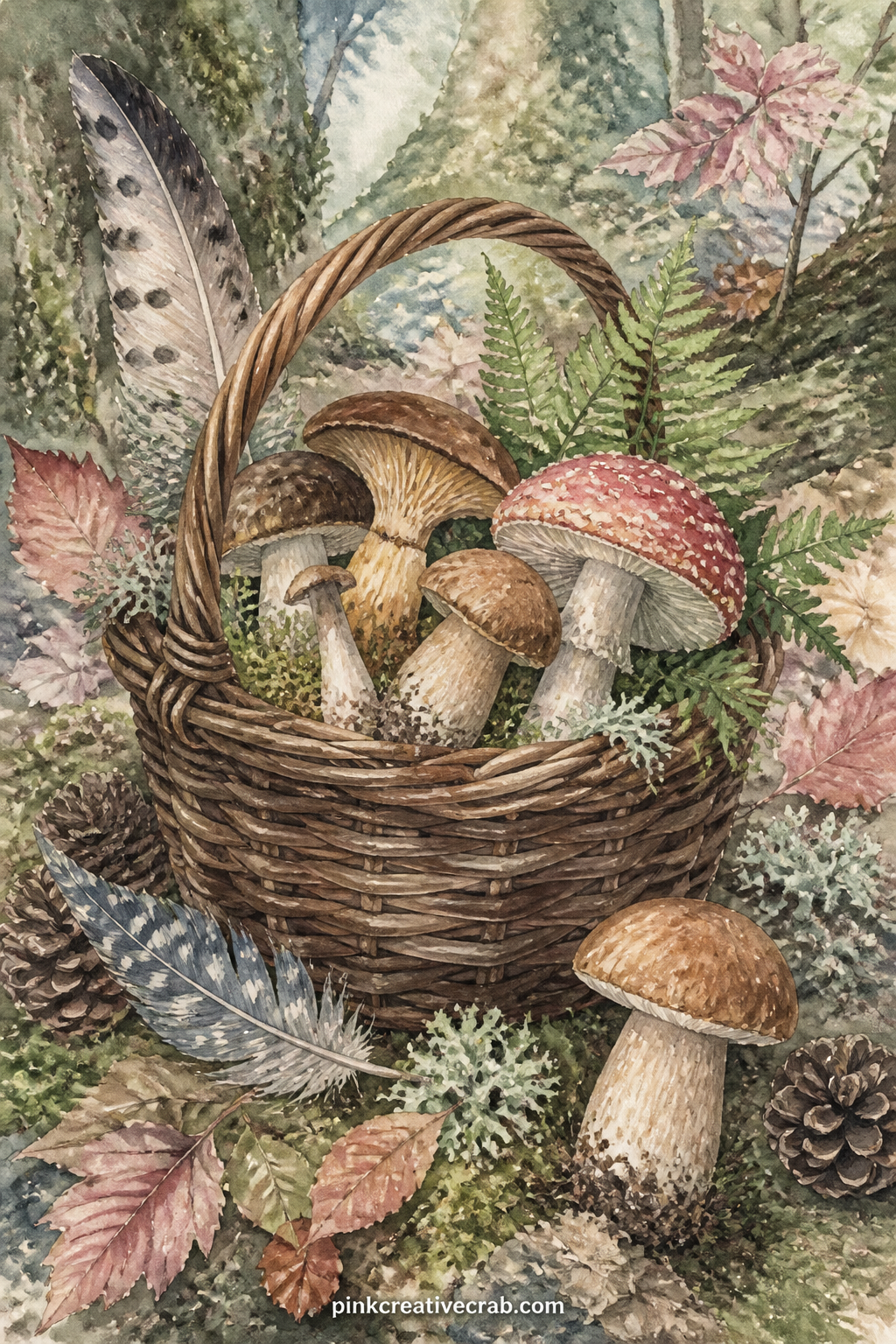
This page suits a reader who journals her foraging walks, since there is room beside the basket to note where each mushroom grew and whether she picked it or only sketched it.
Sky, Water and Horizon Pages
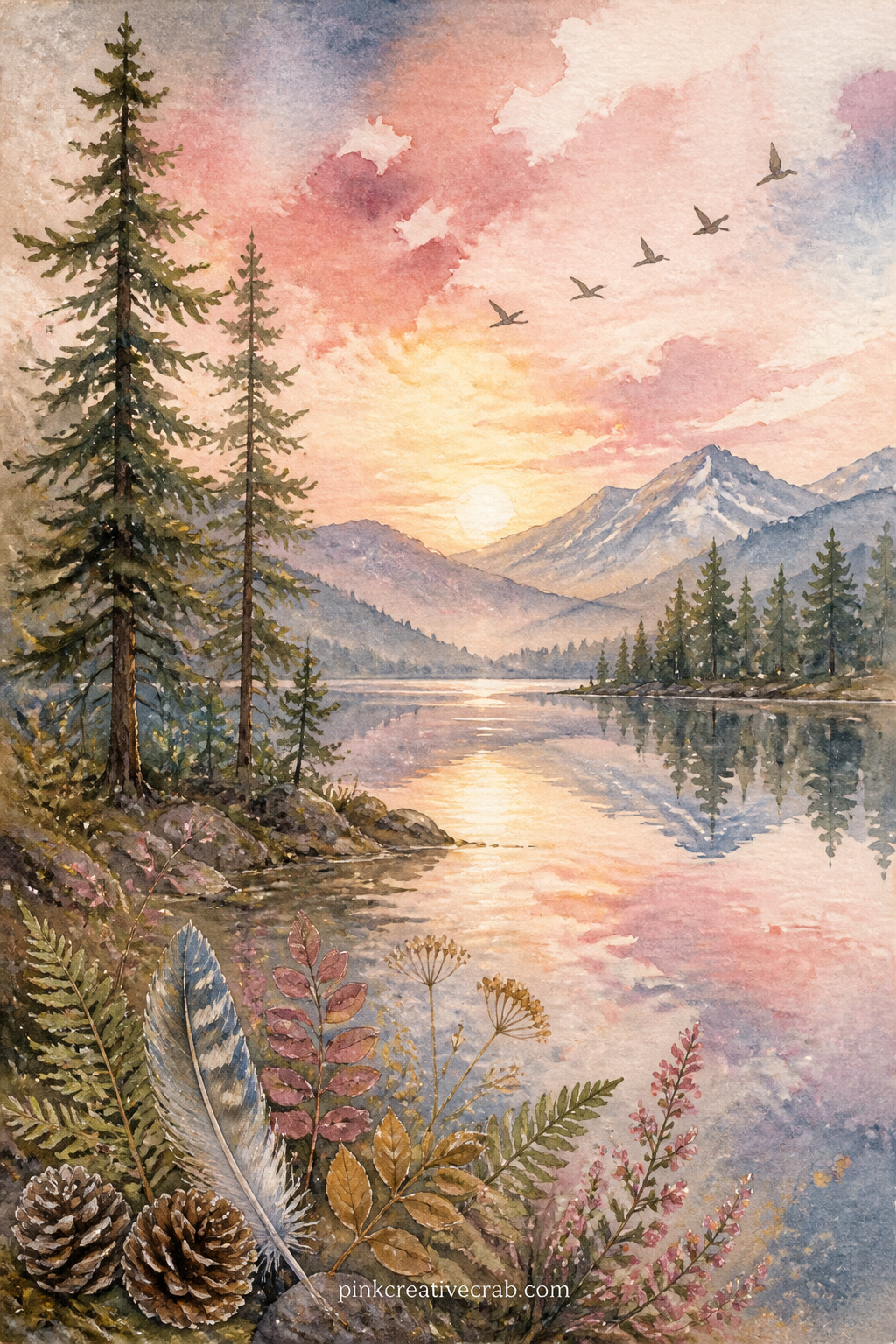
Use a short entry here: one sentence naming the lake and the hour the light looked like this is enough, since the painted sky is already doing most of the talking on this page.
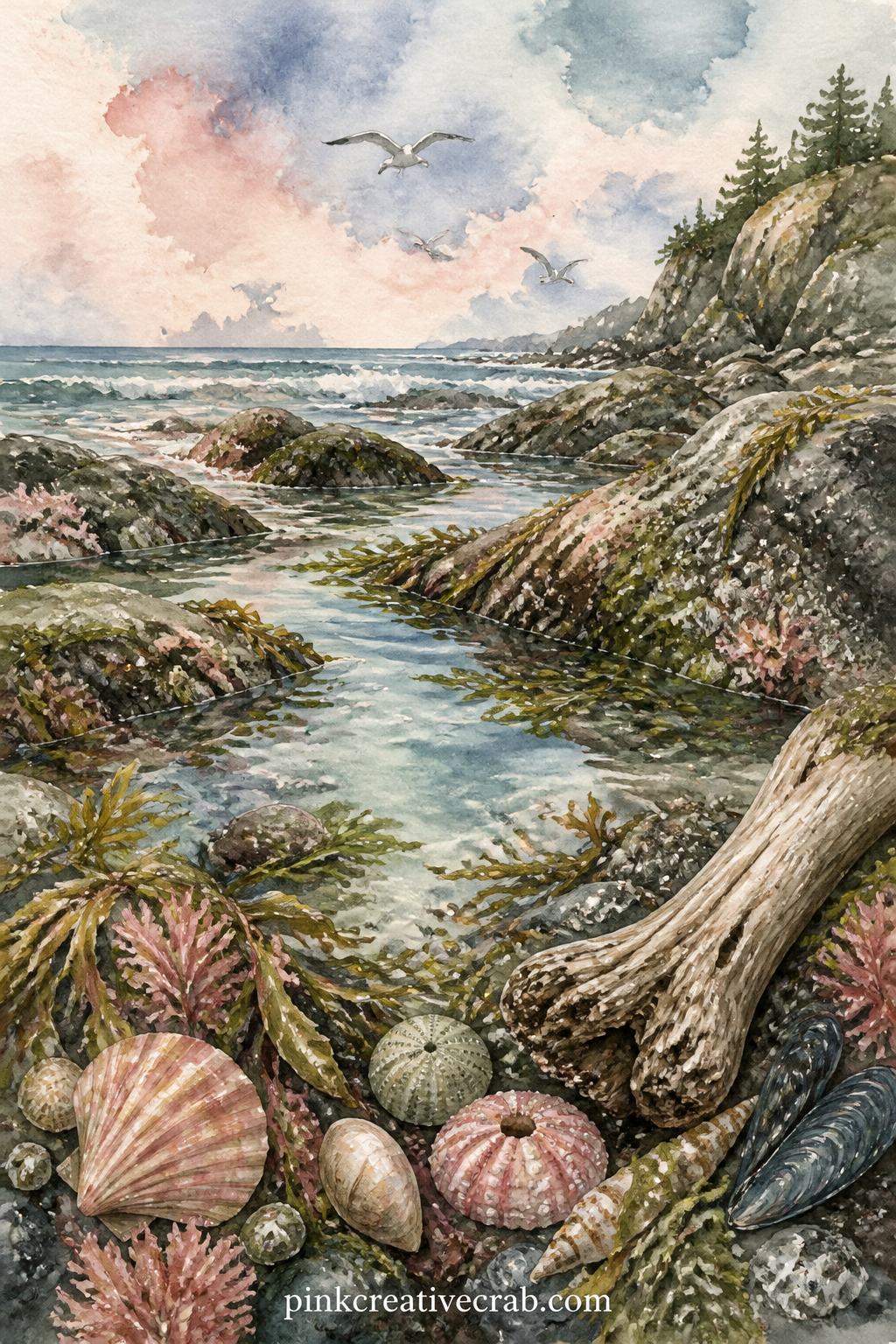
Tea-stain just the bottom third of this sheet before painting, so the tide line looks naturally darker and weathered once the watercolor goes over it.
A rocky coastline shows tide pools, scattered shells, a piece of driftwood and gulls over the waves in the distance.
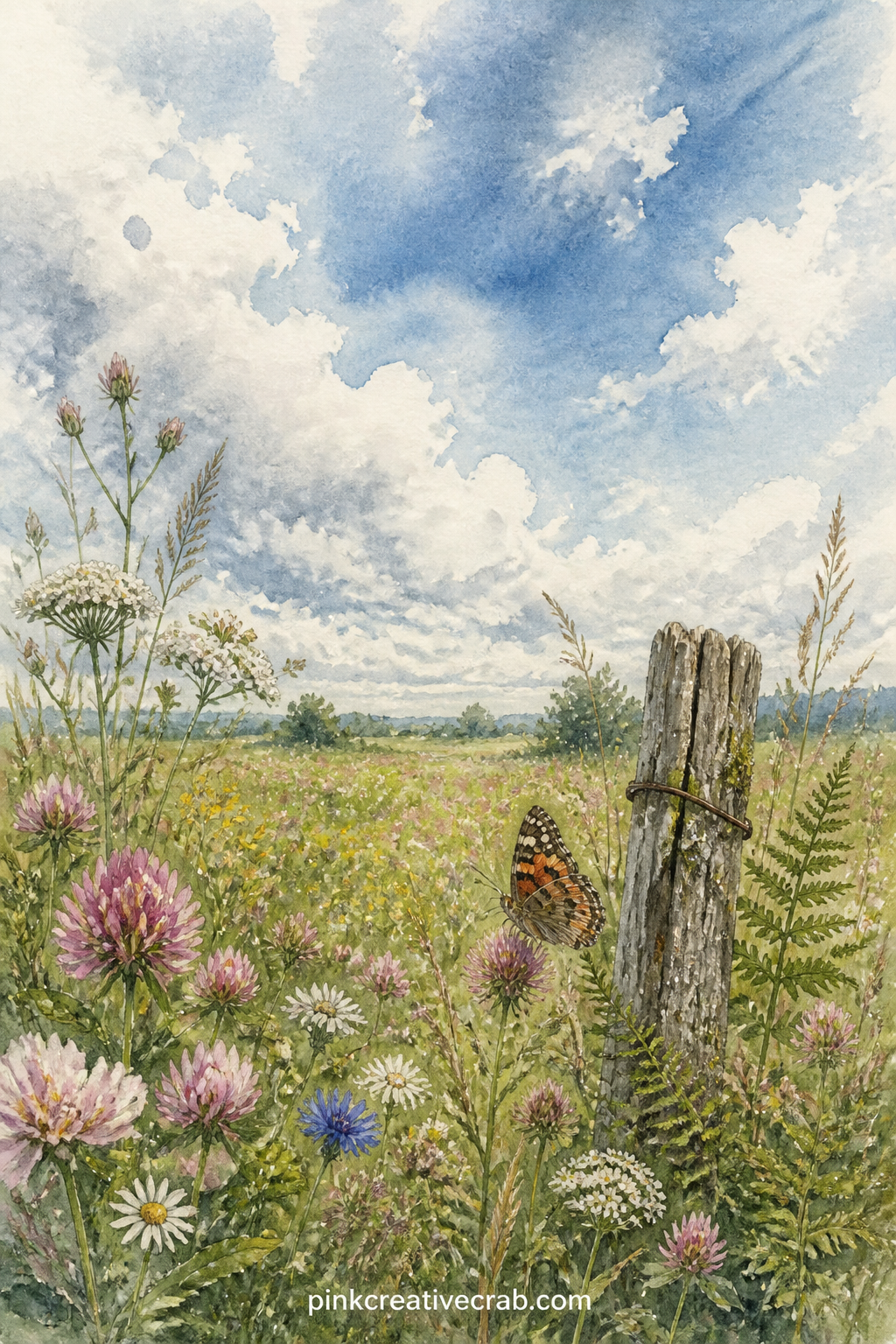
Pair this page with the floral border lined page later in the set, placing the open meadow on the left and the lined page on the right, so a wide view sits opposite a page meant for close writing.
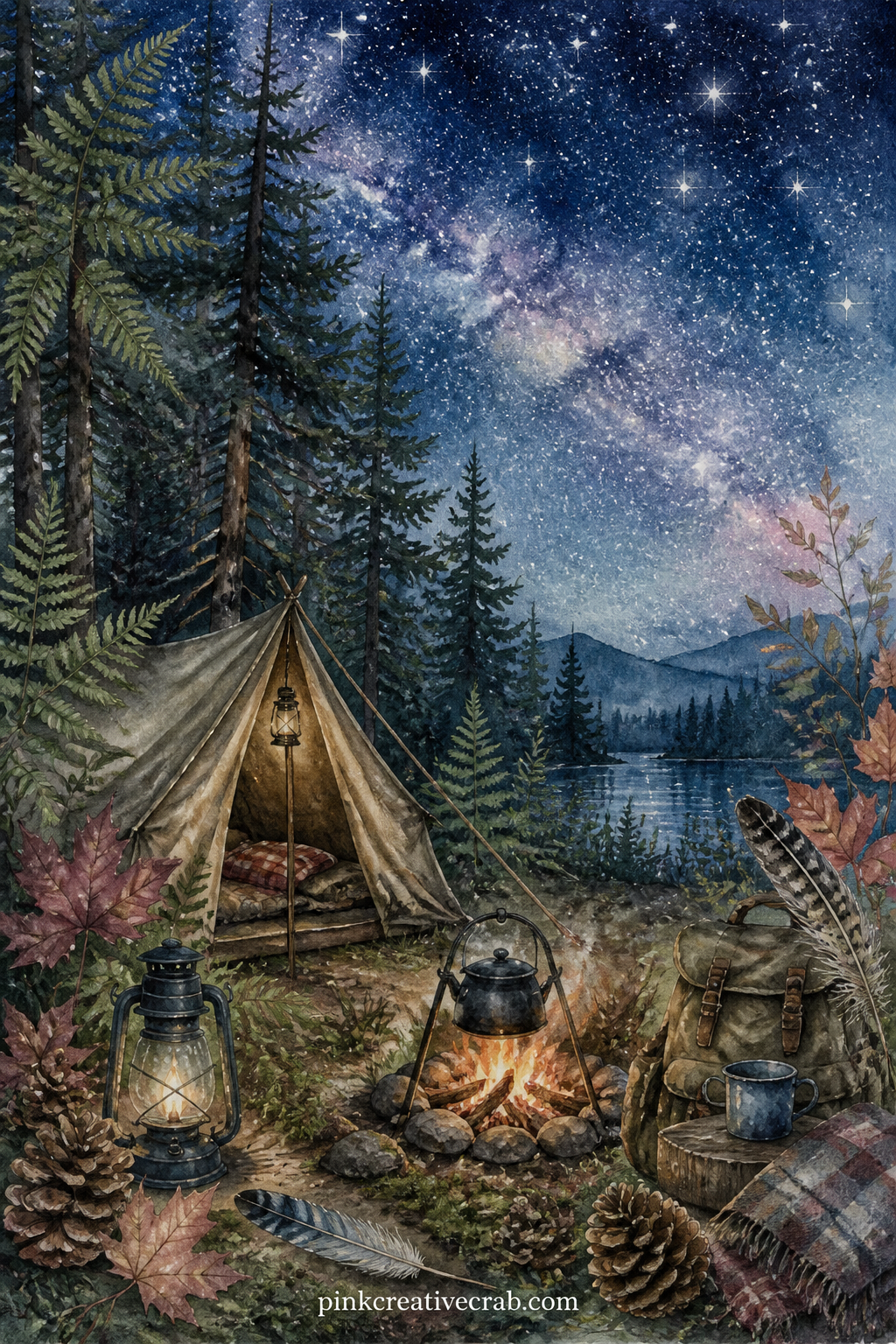
The usual mistake with a night scene is painting the sky too dark to print well on a home printer, which loses all the stars in solid black. Keep the sky a deep muted blue rather than true black, and the stars will hold up once printed.
A small tent sits near a low campfire at the edge of the trees, with a kettle, a lantern and a starlit sky overhead.
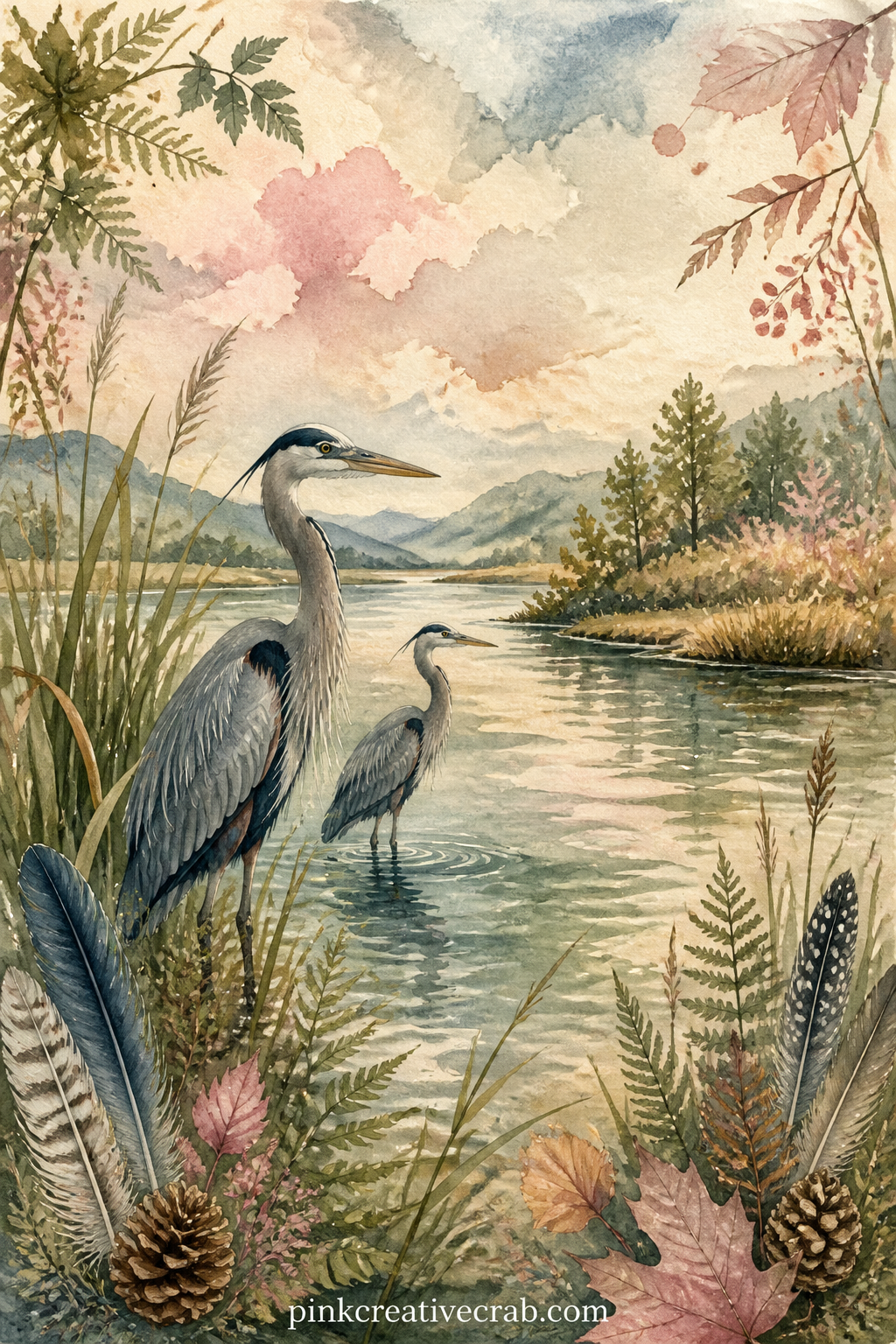
Two herons stand in the shallows of a wide river bend, with reeds along the bank and low hills fading into the painted distance behind the water.
Garden and Backyard Pages
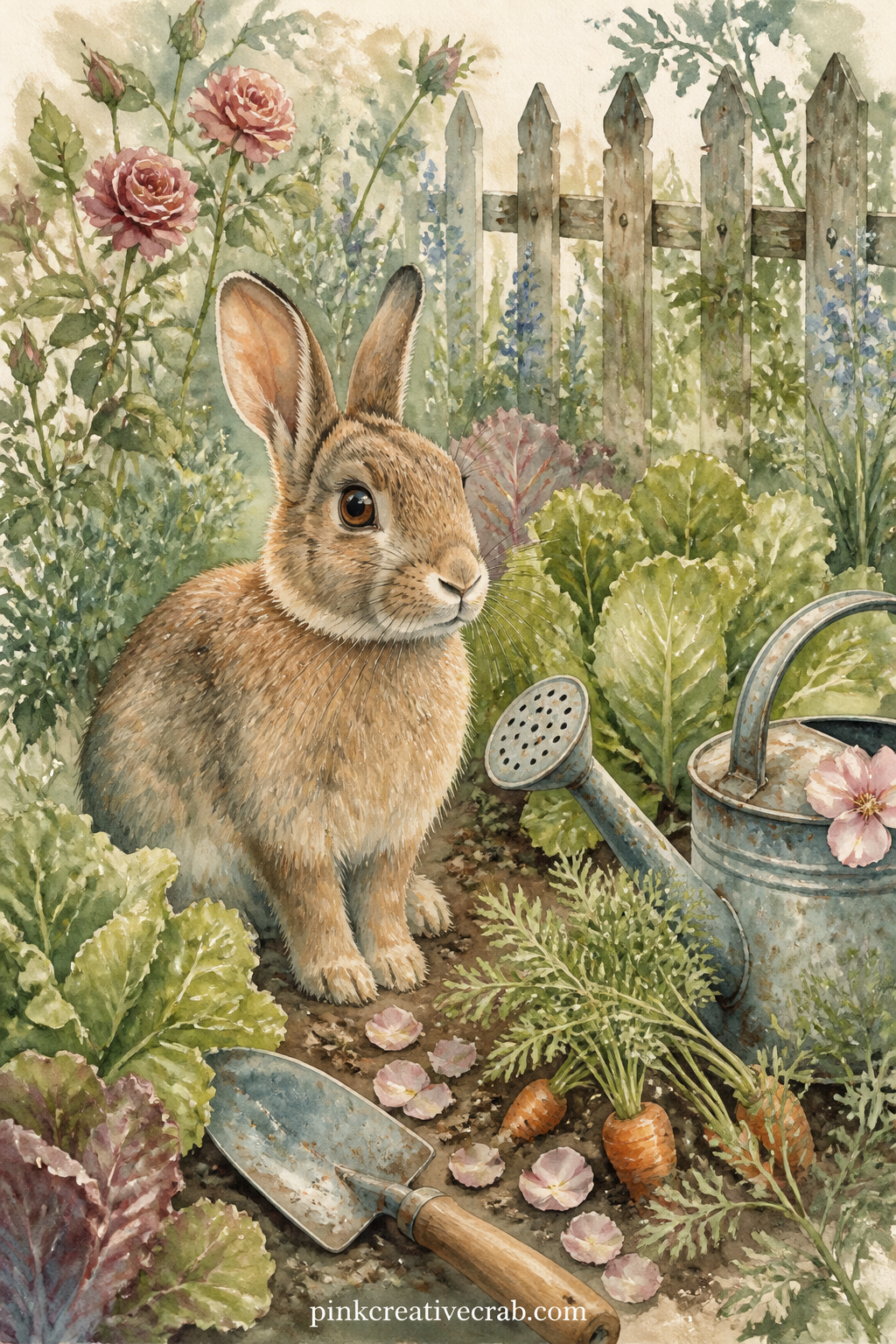
A rabbit sits among rows of lettuce and carrot tops in a small garden patch, with a watering can, a trowel and a few fallen petals nearby.
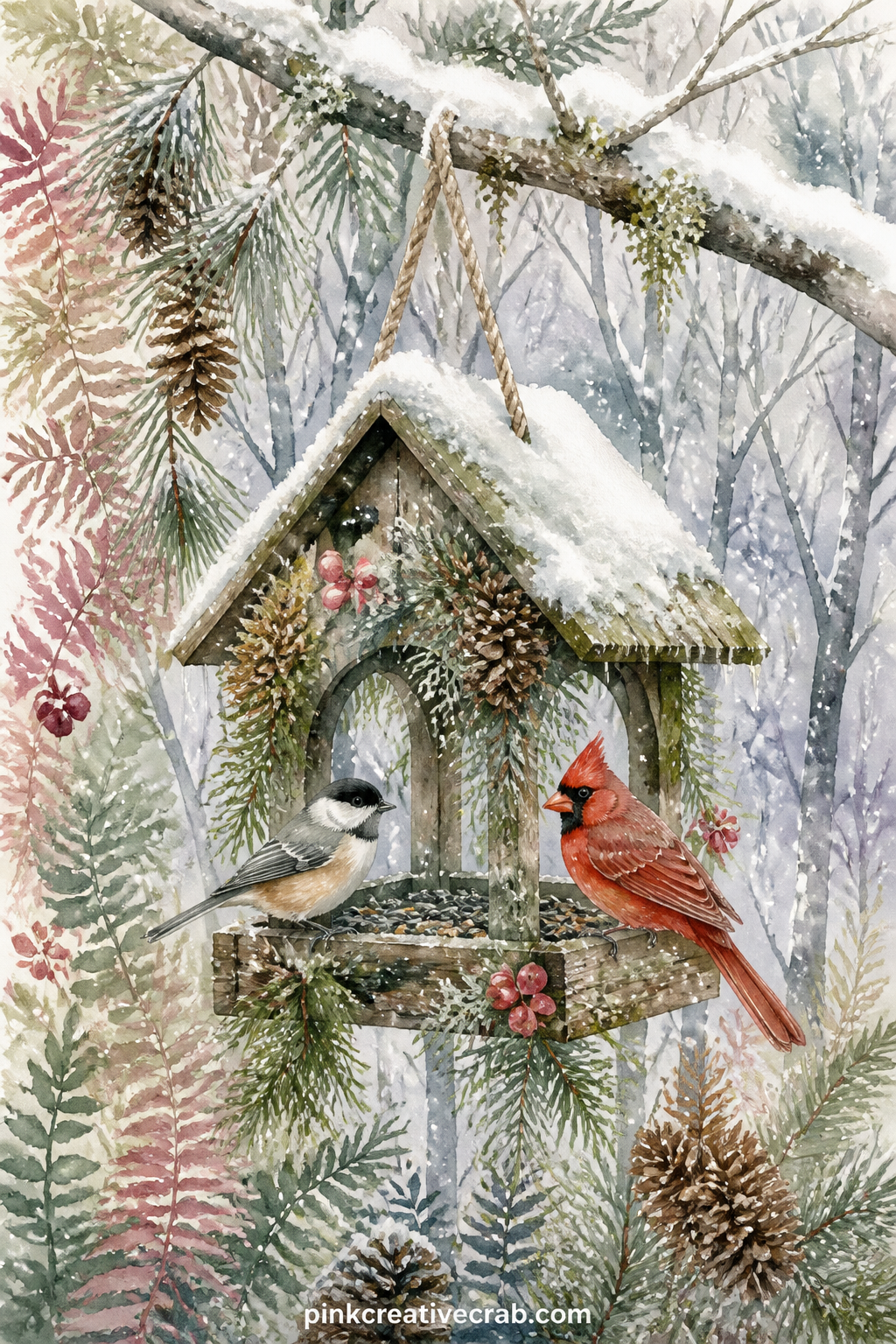
Cut a small window into the printed snow around the feeder before gluing this page in, so a real photo or a scrap of fabric can peek through from the page beneath it.
A wooden bird feeder hangs from a snowy branch, visited by a chickadee and a cardinal, with falling snow and bare winter trees behind it.
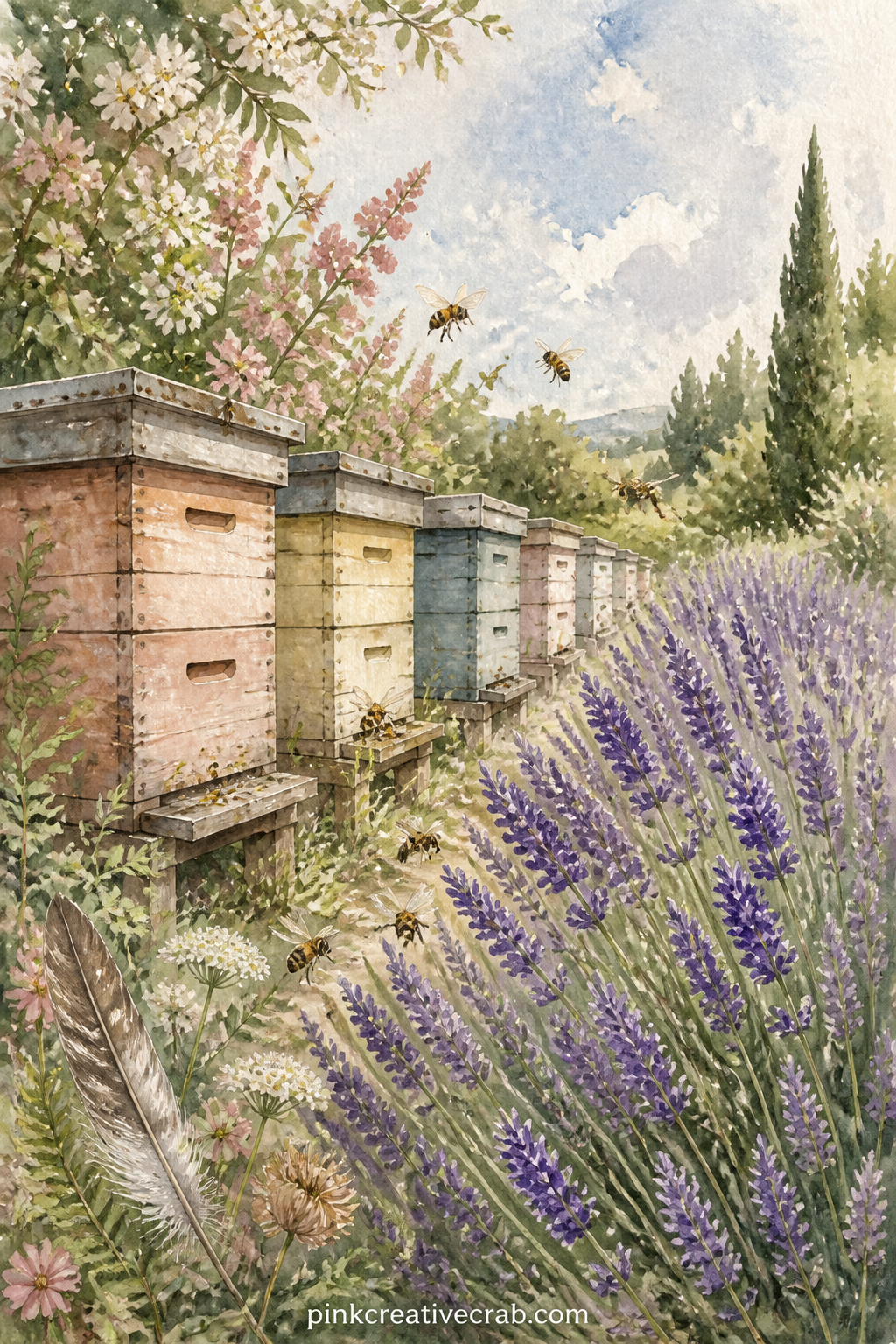
Make this page a gift for the reader in your life who keeps bees or just loves lavender, since the small details here, the hive boxes and the bees mid-flight, give her plenty to point to and talk about.
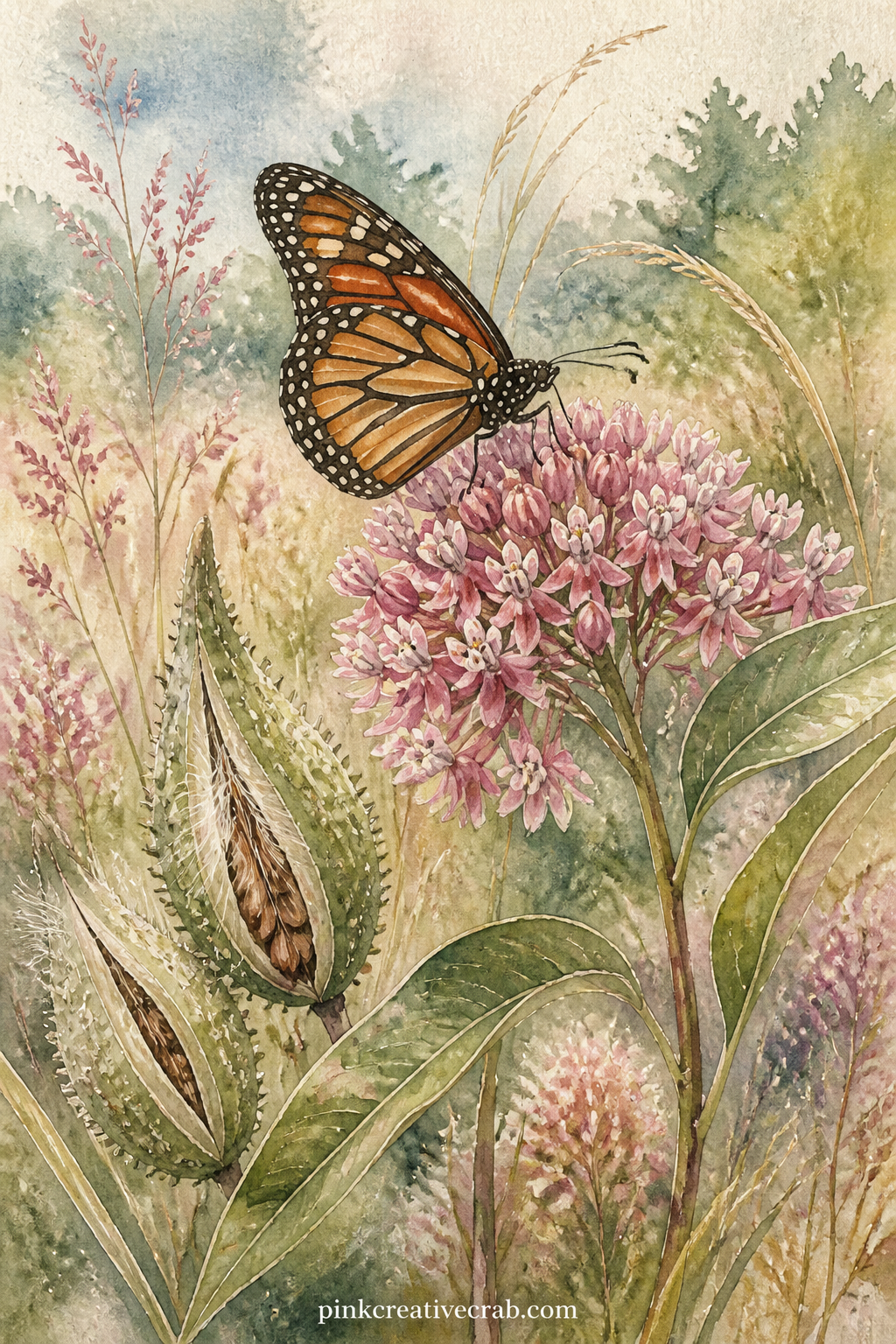
A single monarch butterfly rests on a milkweed bloom.
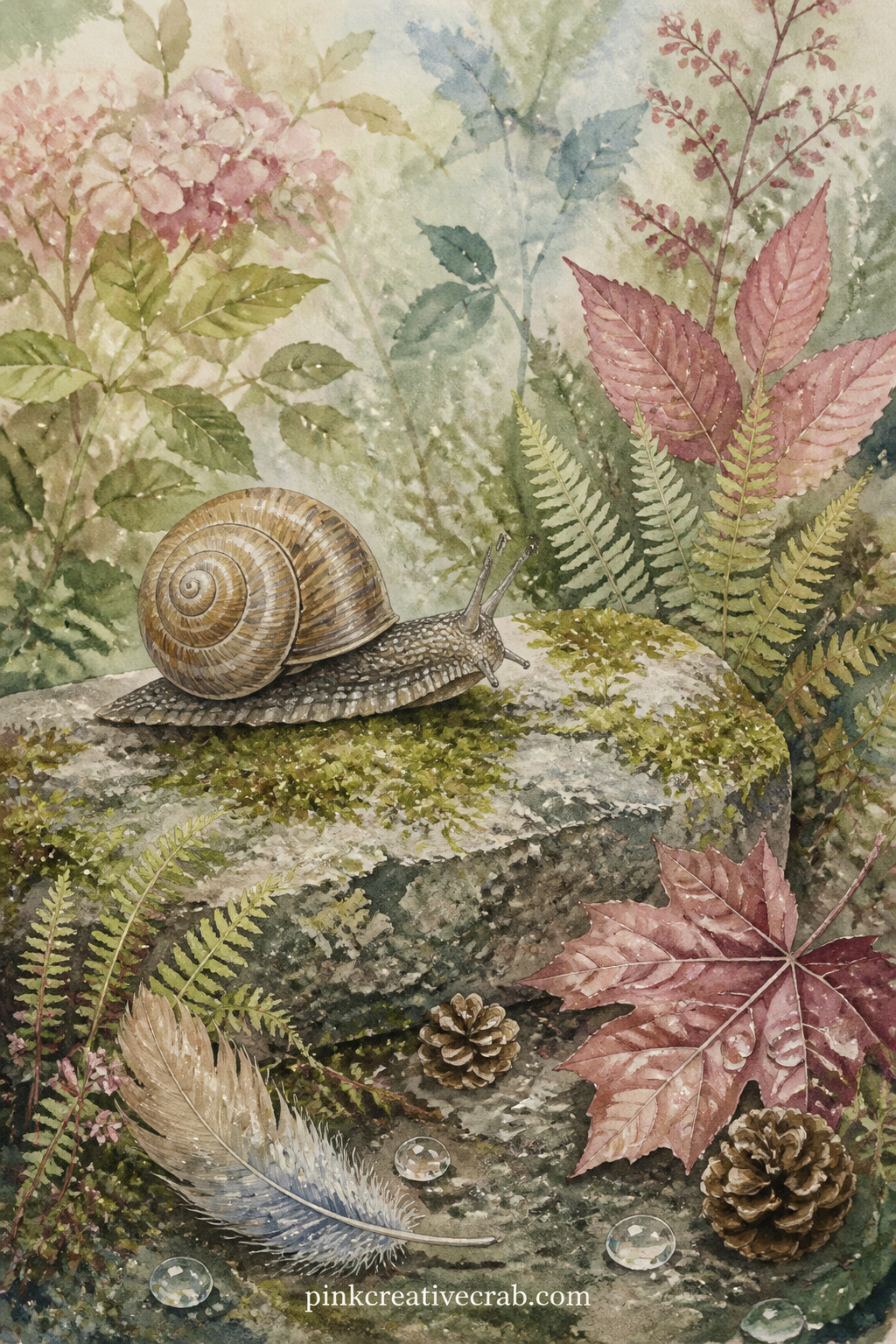
Try a short question for this one: what is the smallest thing you noticed on your walk today. A snail page is the right size for an answer of just one or two lines.
A snail rests on a flat garden stone, with moss, a few small ferns and a scatter of dew drops around it.
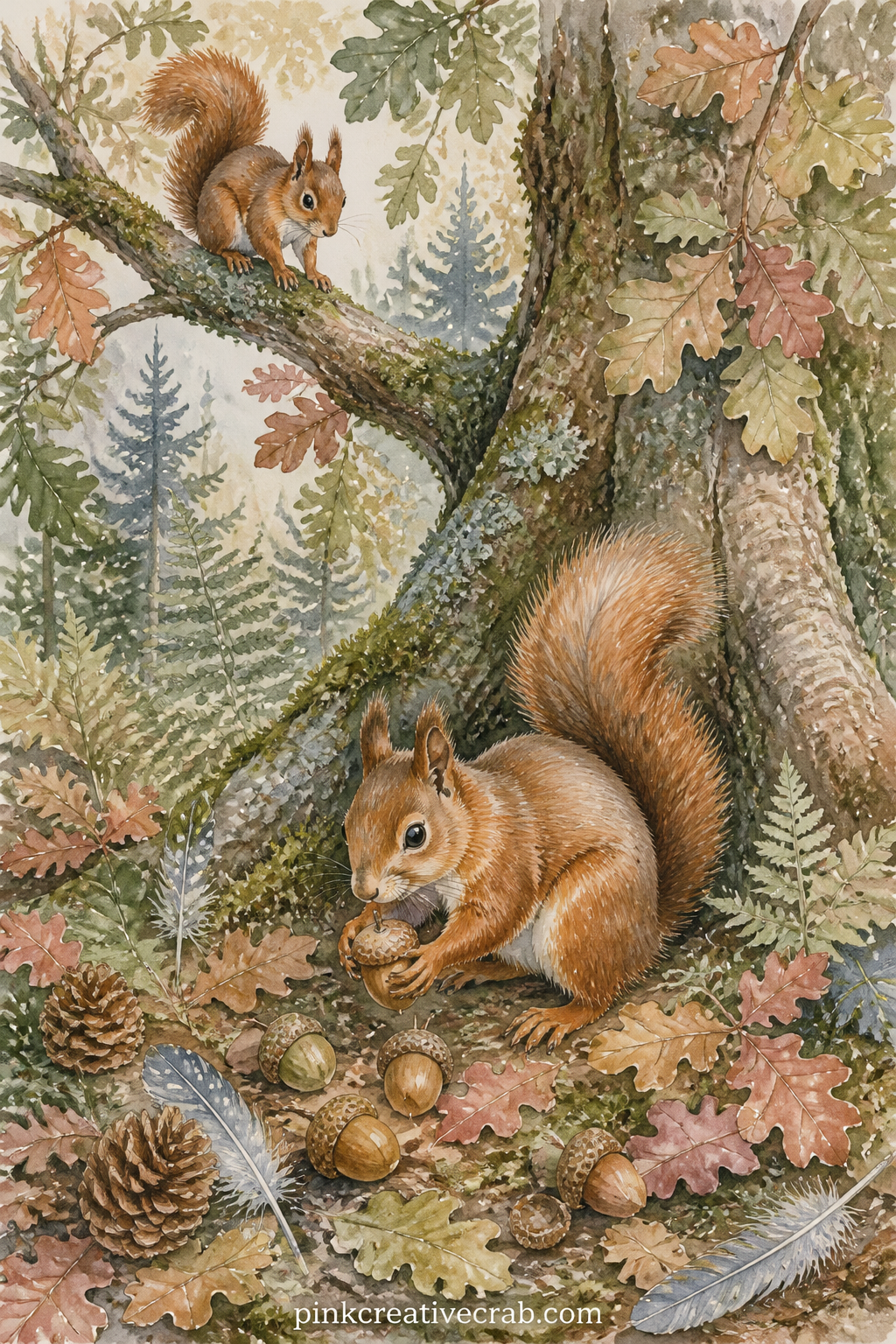
A squirrel gathers acorns at the base of an old oak tree, with more acorns scattered nearby, a few fallen leaves and a second squirrel watching from a low branch above.
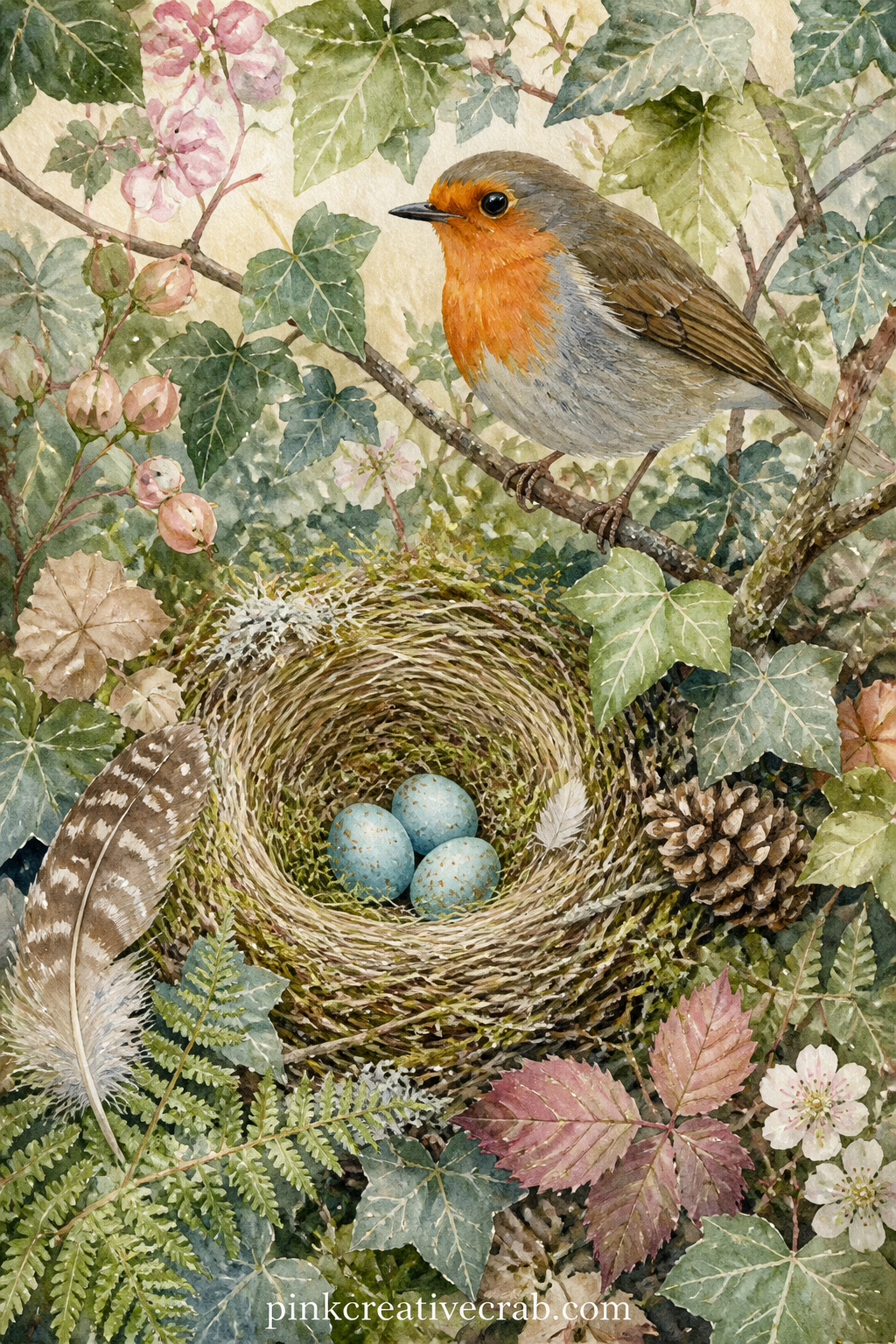
Place this page across from the lake at dawn page from earlier in the set, so a close nest full of small blue eggs sits opposite a wide open view, nest and horizon facing each other across the spread.
A robin’s nest holds three small blue eggs, tucked into a leafy hedge with a parent bird perched just above it.
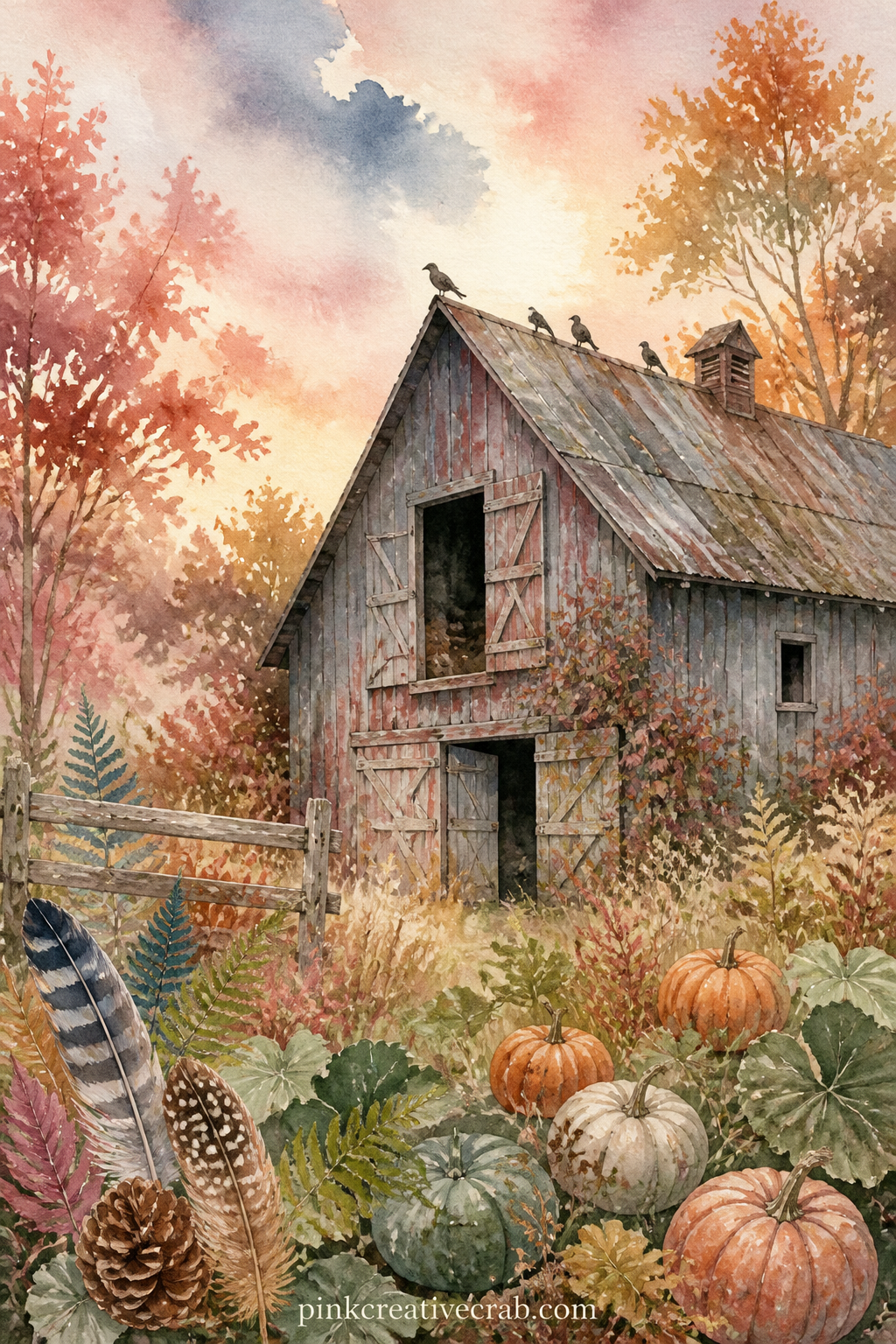
An old wooden barn stands at the edge of a field, with a pumpkin patch nearby, a few crows on the roofline and tall autumn trees behind it.
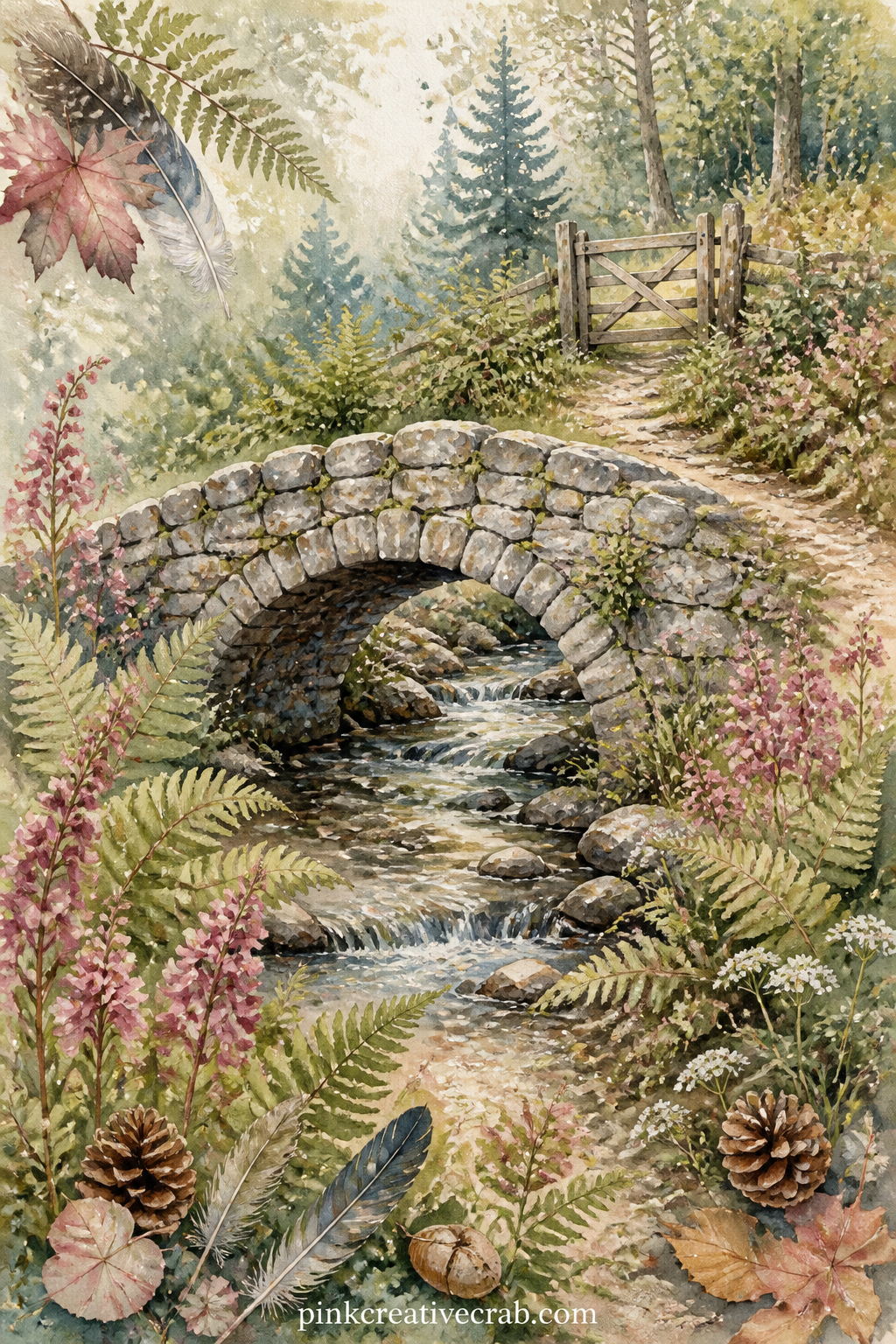
A small stone bridge crosses a shallow brook lined with ferns and wildflowers, with a wooden gate and a worn path leading into the trees beyond.
Background Papers
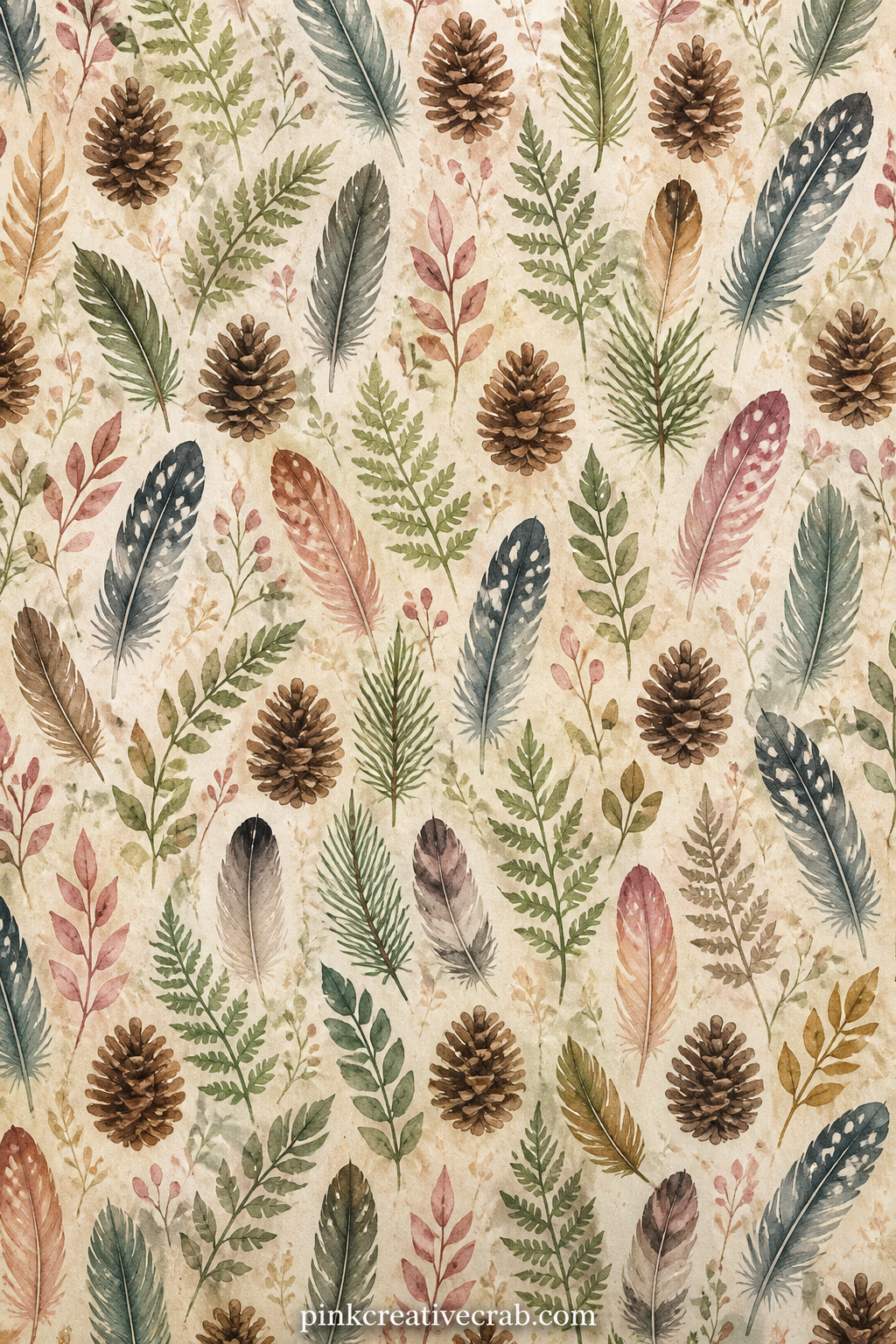
Use this one under a woodland photo, as a lining behind a specimen page, or as the opening cover of the whole journal, since the pinecones and feathers repeat evenly in muted moss and ochre across the full sheet.
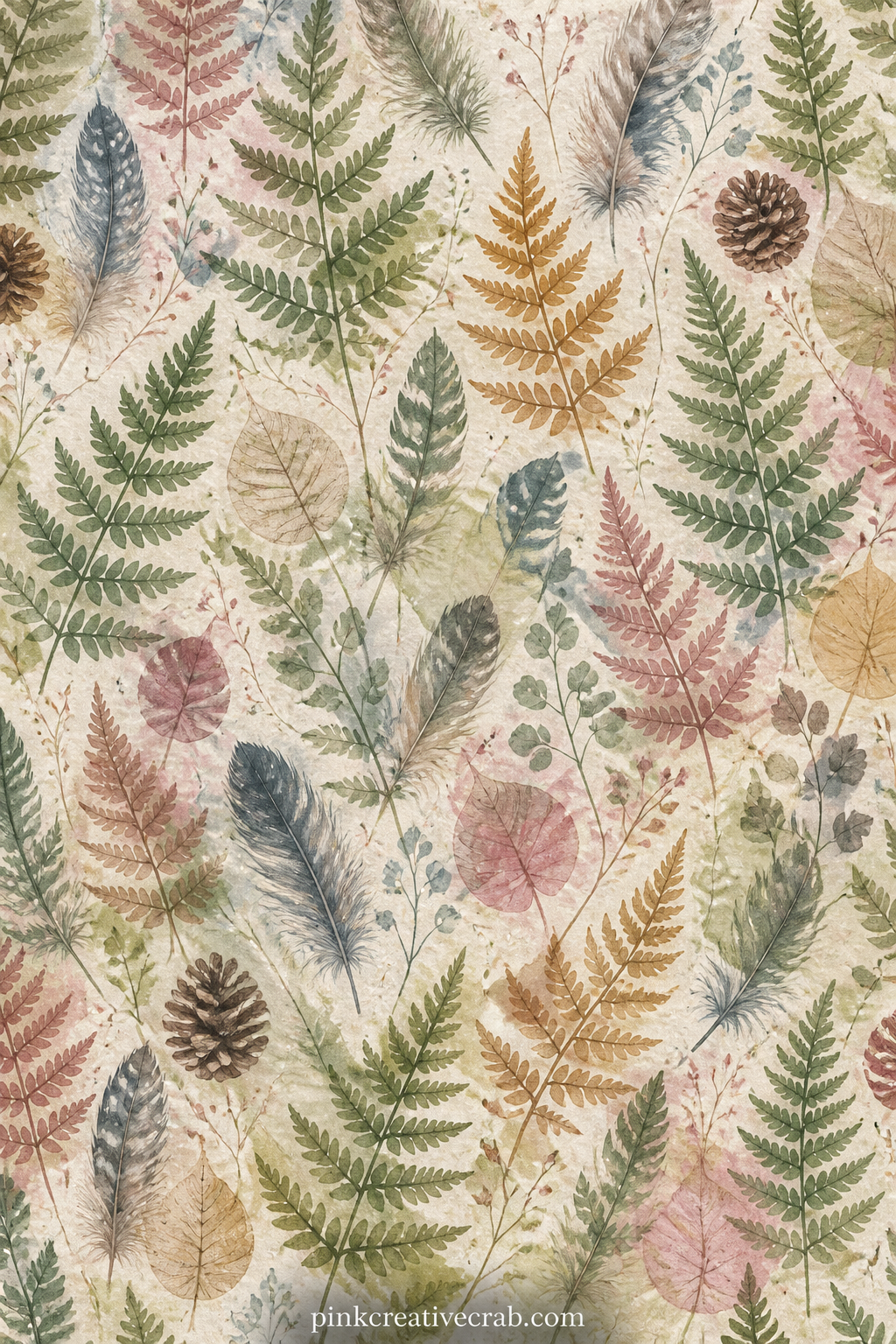
Sage and dusty rose fern fronds repeat in overlapping rows across this sheet, suited to a cover, a lining behind a pressed-leaf page, or a backdrop for a mounted photograph.
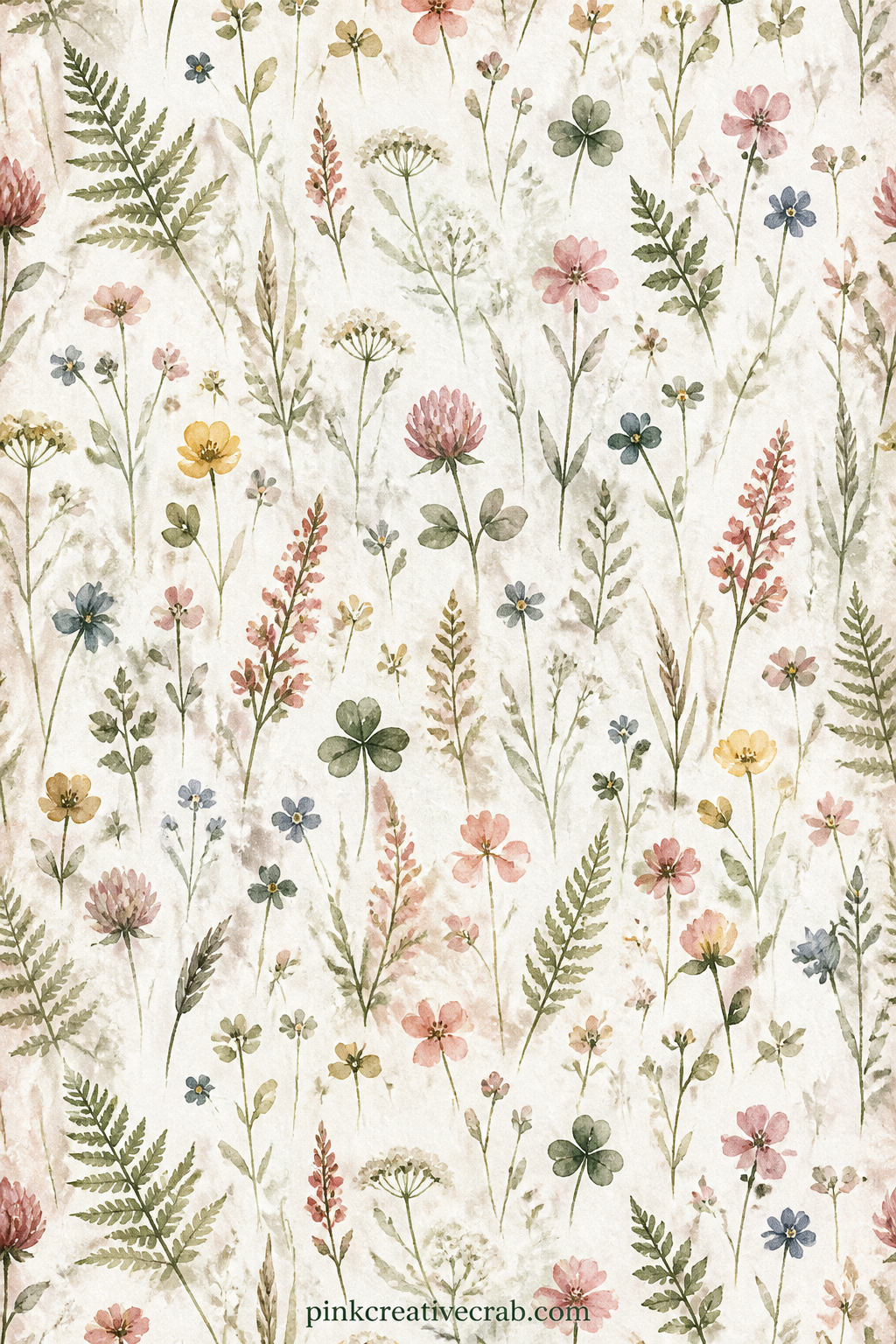
Scatter this sheet behind a summer photo, use it as the base of a cover, or line it under a lighter page so the small wildflowers show faintly through.
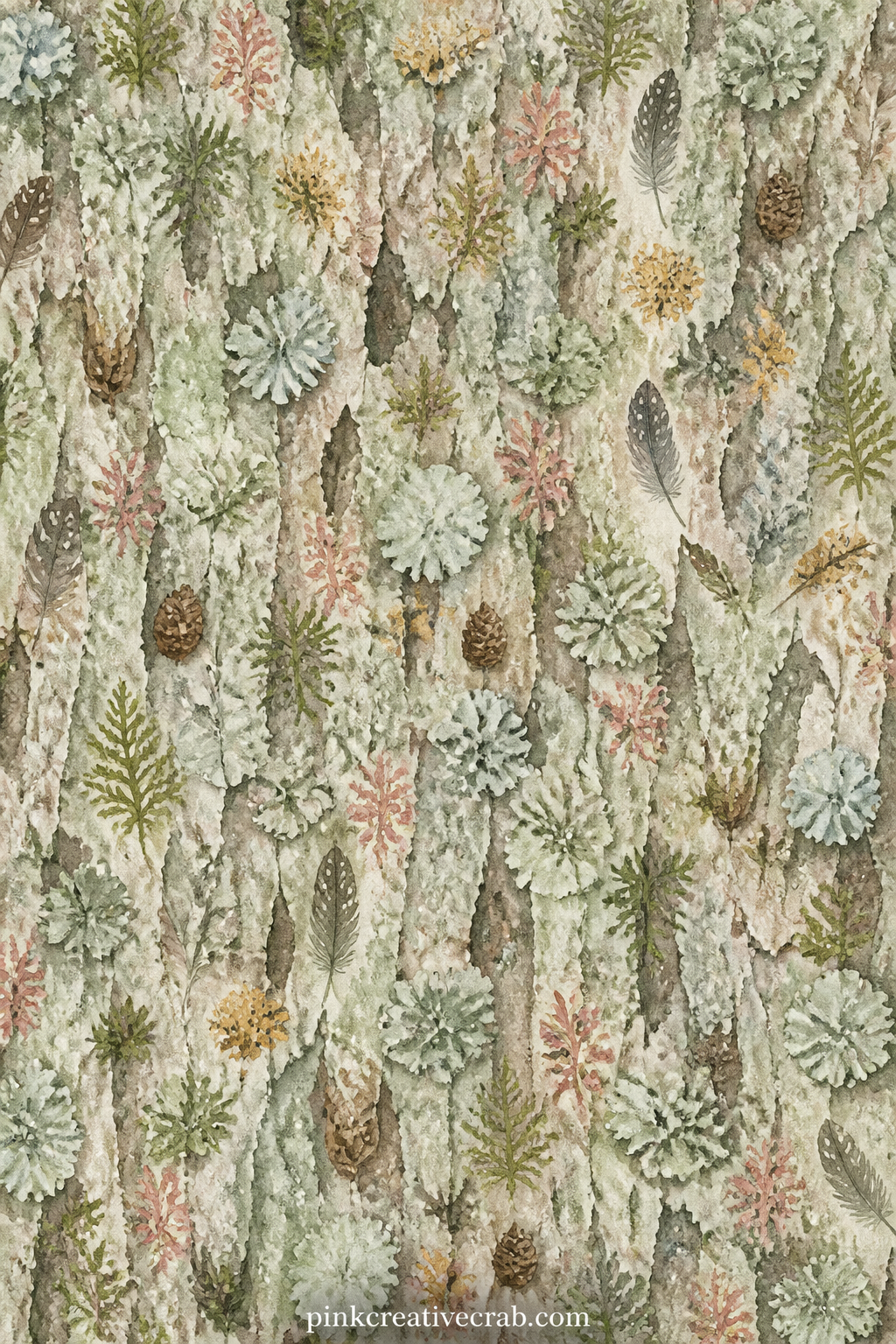
This mottled bark and lichen texture works well as a cover, under a forest photo, or as a quiet lining behind a busier scene page elsewhere in the journal.
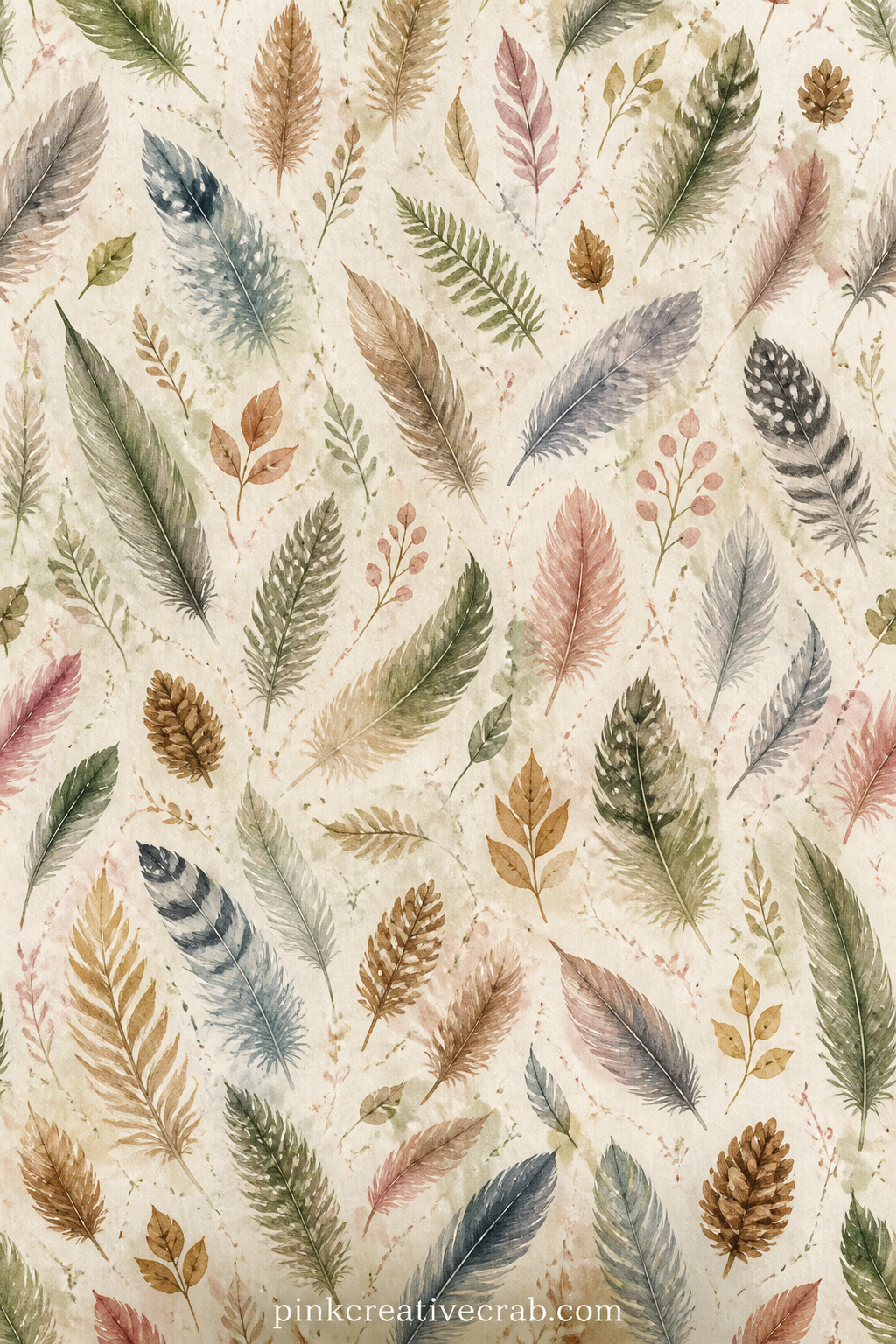
Small feathers of different shapes repeat loosely over the page, good as a lining behind a bird page, a cover sheet, or a backdrop for a photo of a walk through the woods.
Lined Writing Pages
Use the lines here for a packing list before a hike, a short letter to next year about a favorite trail, or notes on what grew back in the garden since spring.
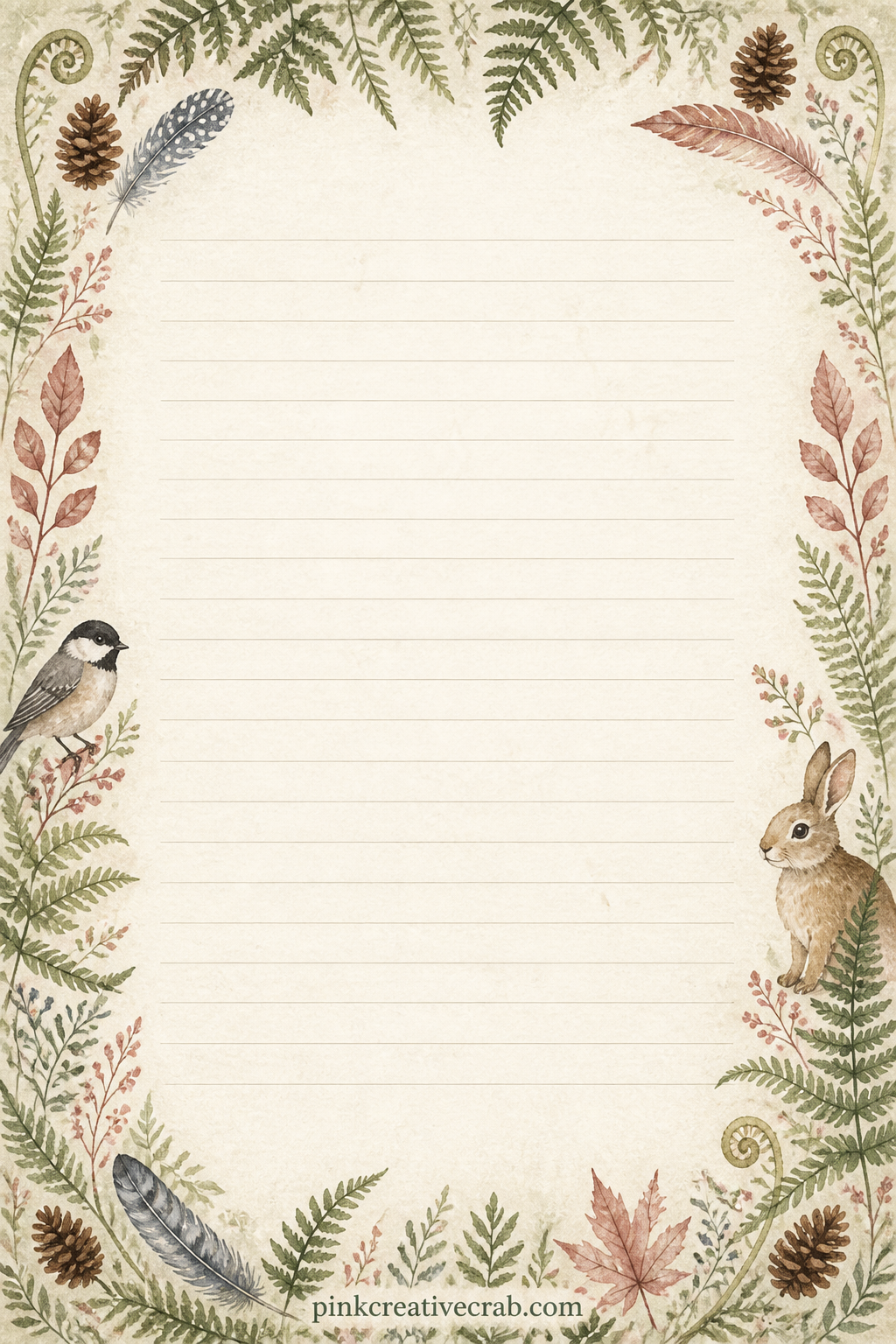
Good for a short wildlife log, a list of birds spotted on one walk, or a plain diary entry about the weather and the color of the leaves that day.
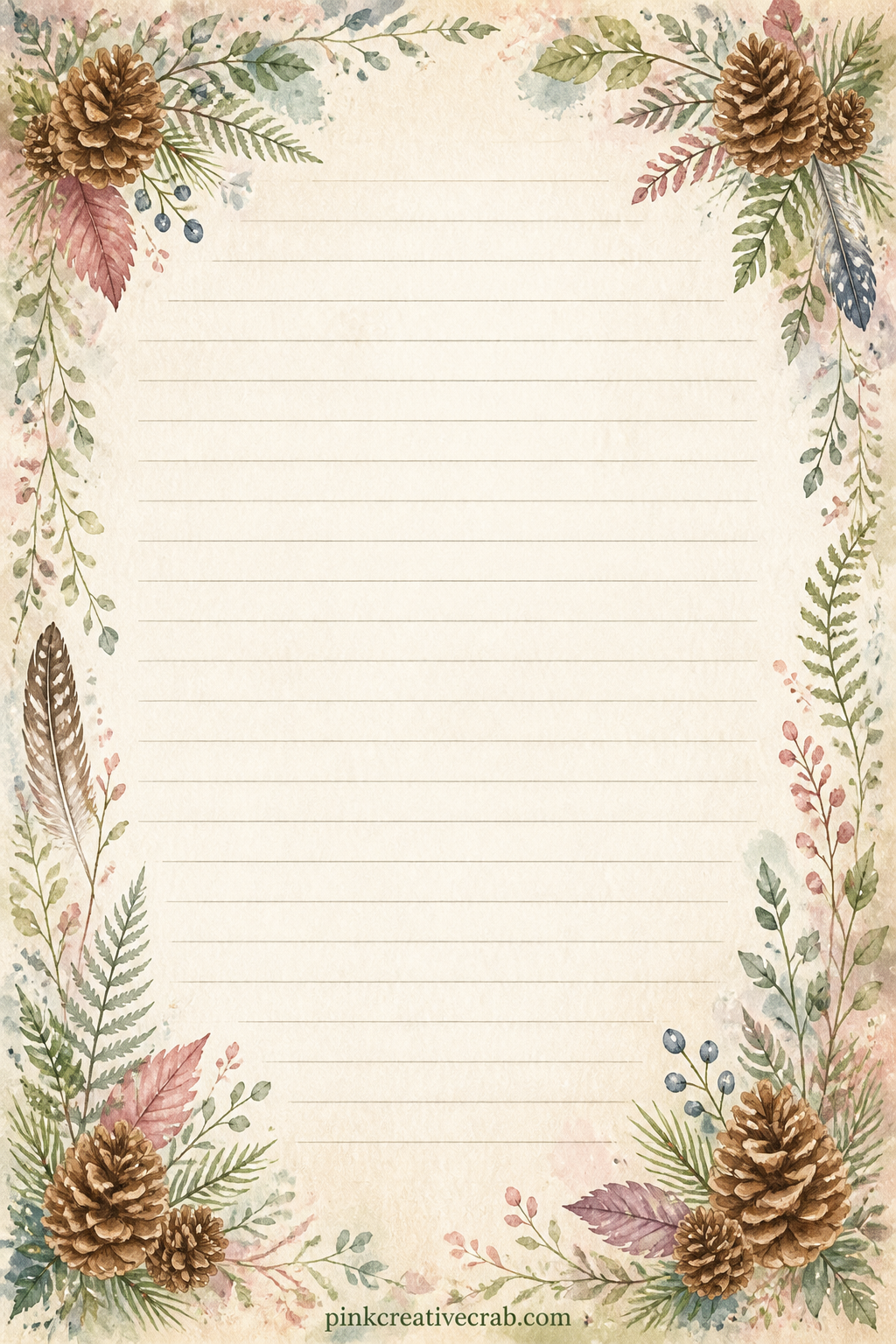
Fill these lines with a flower identification note, a memory of where a bouquet was picked, or a short gratitude list from a walk through the meadow.
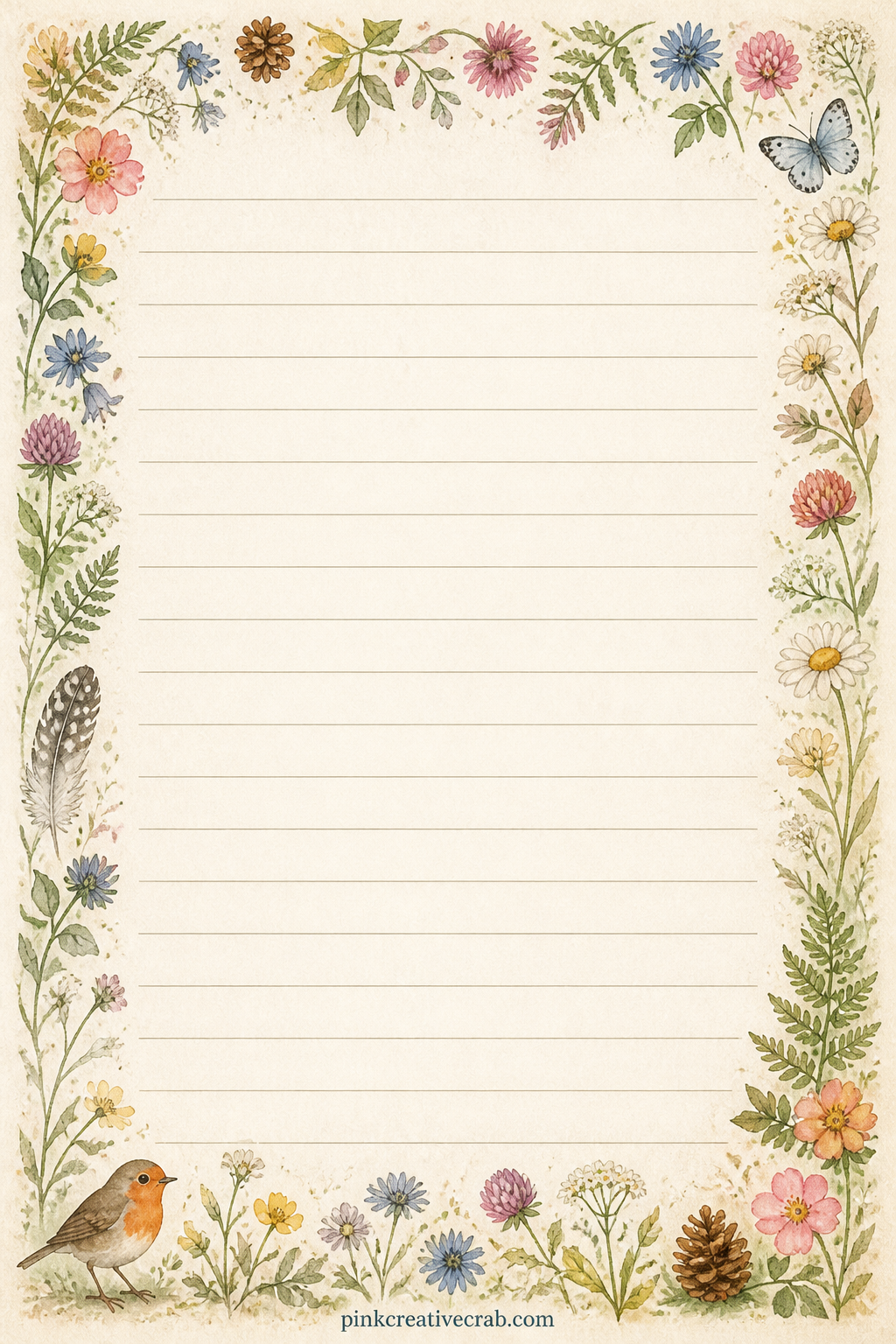
Write a short description of a bird you could not identify, a recipe for something foraged, or a simple list of sounds heard on the trail that morning.
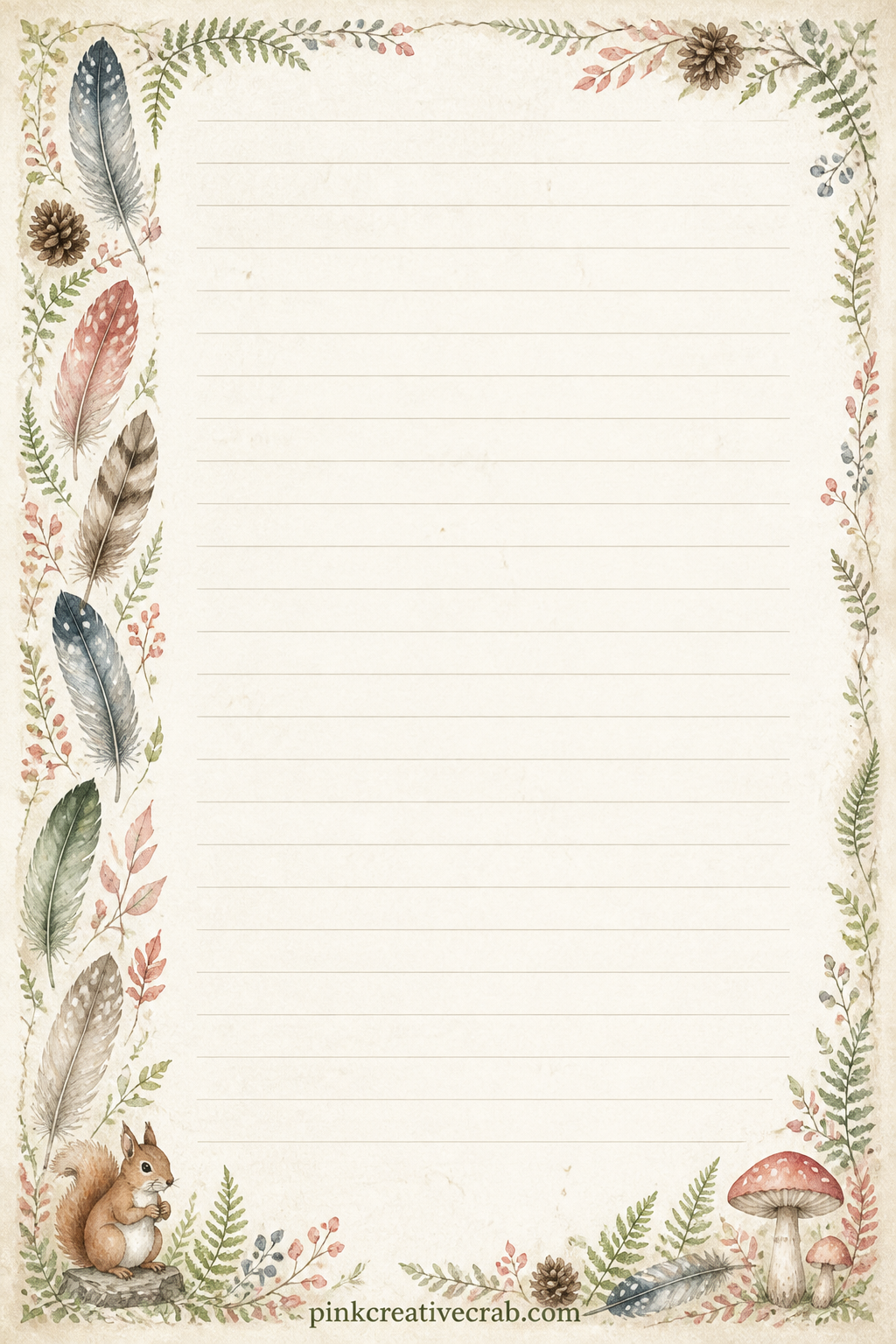
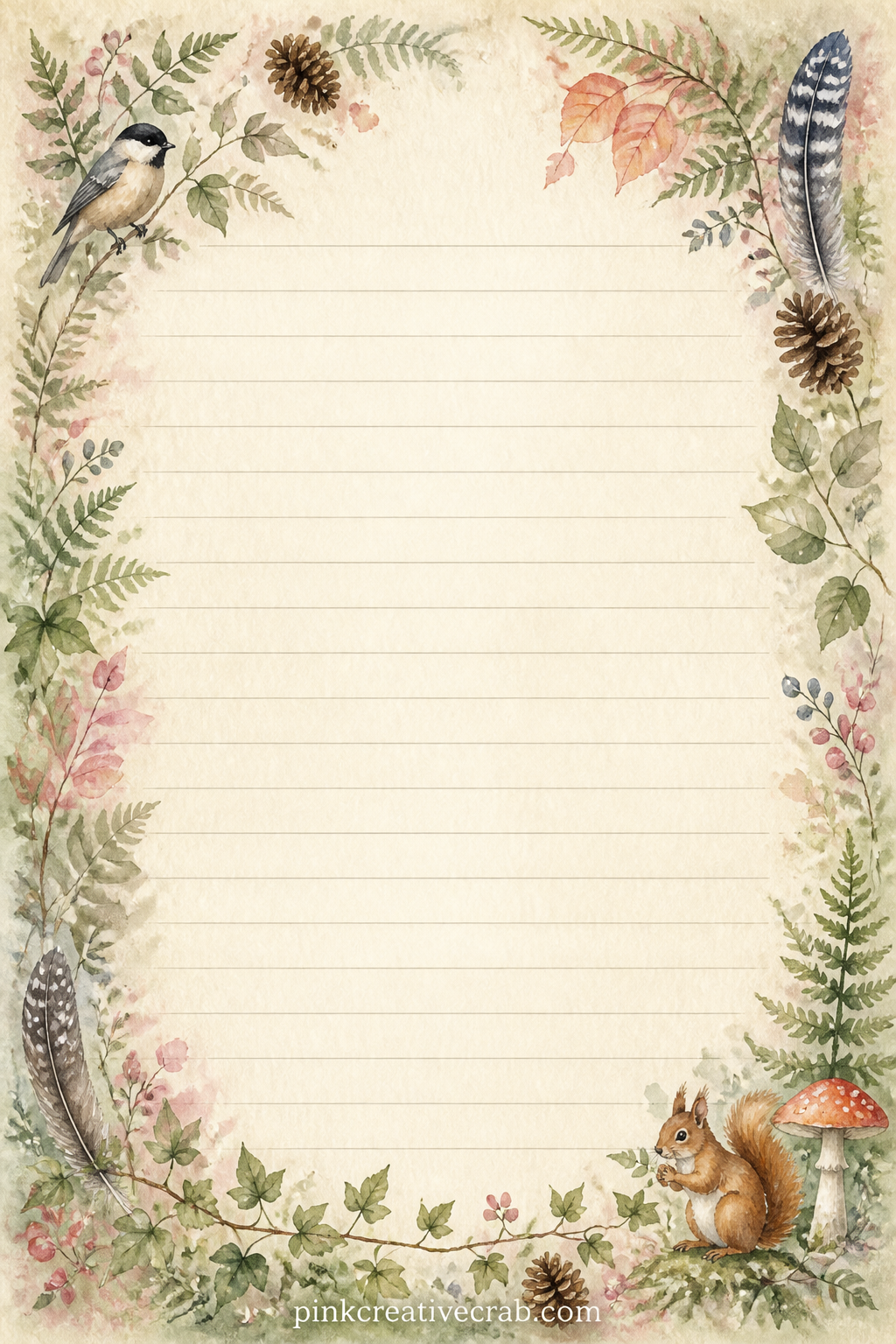
Use this one for a seasonal to-do list, a note on when the trees changed color this year, or a short letter describing your favorite spot on the trail.
What to Do Next
Print the set, trim each sheet to match your journal, and start with the forest stream page or the one that matches your last walk best. For more on putting a full theme journal together, see the junk journaling handbook, browse watercolor field flower ideas for extra botanical pages, or look at the vintage junk journal set for a companion kit with an older, well-worn feel.
Frequently Asked Questions
What paper should I print these nature junk journal pages on?
Use a heavyweight matte paper, at least 180gsm, so the watercolor look prints clearly and nothing shows through from the other side. Cardstock works too if your printer feeds it well. Avoid glossy photo paper, since it fights with the soft washed look of the pages.
What printer settings give the best colors?
Choose your printer’s best or photo quality setting rather than draft or normal, and select matte or plain paper in the paper type menu even on cardstock. This slows the print slightly but keeps the muted greens and rose tones from printing flat or streaky.
What size should I print the pages for my journal?
Print at full letter or A4 size and trim to match your journal’s cover, or scale down in your printer dialog to a smaller fixed size like 5 by 7 inches if your journal runs small. Keep every page the same size before trimming so the set lines up once bound.
Can I color or add to these pages myself?
Yes. Colored pencils, light watercolor touches and fine pens all sit well over the printed washes, especially for adding your own small details or deepening a shadow. Keep any added color light so it blends with the printed palette instead of standing apart from it.
What do I use to glue these pages into a journal?
A standard glue stick works well for flat pages and will not wrinkle the paper. For pages near the spine, add a thin line of glue rather than coating the whole sheet, which keeps the paper from buckling once it dries.
Have any thoughts?
Share your reaction or leave a quick response — we’d love to hear what you think!
-
 0
0 -
0
-
0
-
0
-
0
-
0


