
Table of Contents
A jane austen junk journal needs more than lace and old paper: it needs rooms, roads and people from the novels themselves. This kit gives you 20 full scene pages, 4 seamless background patterns and 4 lined writing pages, each one a different corner of that Regency world, from a candlelit writing desk to a muddy coaching road. Glue the scenes in as pages, slip the patterns behind photographs or use them as covers and dividers, and fill the lined pages the way a heroine would fill her own diary.
Print everything on heavyweight paper, at least 200gsm if your printer will take it, so the colour sits well and the page does not curl once it dries. Set your printer to its best or photo quality and let the sheets rest flat for a few minutes after printing before you trim or glue them.
Using these images: free for personal projects such as printing, coloring, cards, journals and gifts. Handmade items that include them may be sold up to 30 pieces per design. More than that is commercial use and is not permitted, and neither is selling or sharing the images themselves or passing them off as your own. Please ask before any other use.
Grand Houses and Ballrooms
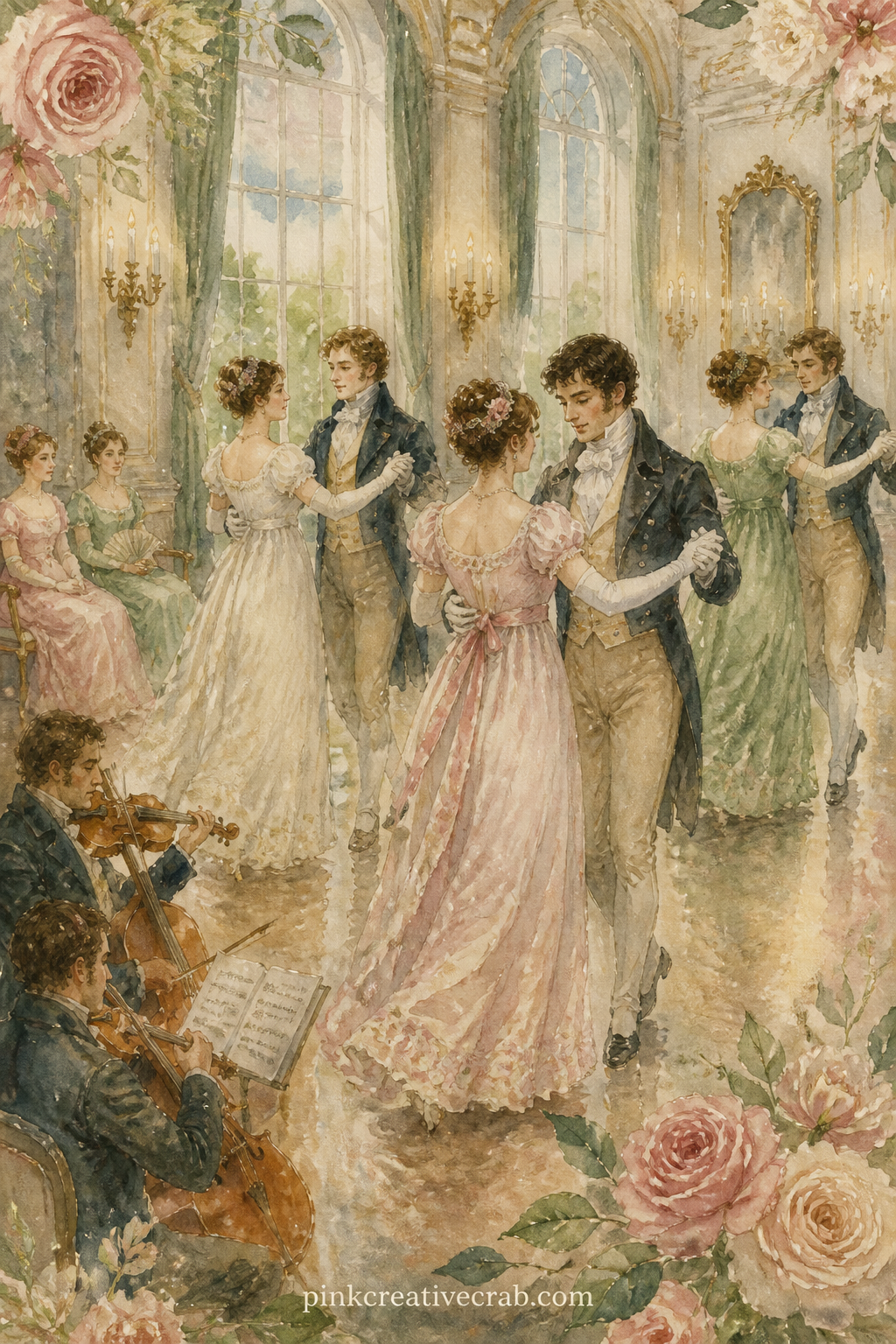
Couples turn down the set beneath a row of candle sconces, skirts lifted mid step, while a cluster of chaperones sits along the wall and a violinist leans into her bow in the corner, the whole room washed in warm candlelight behind them.
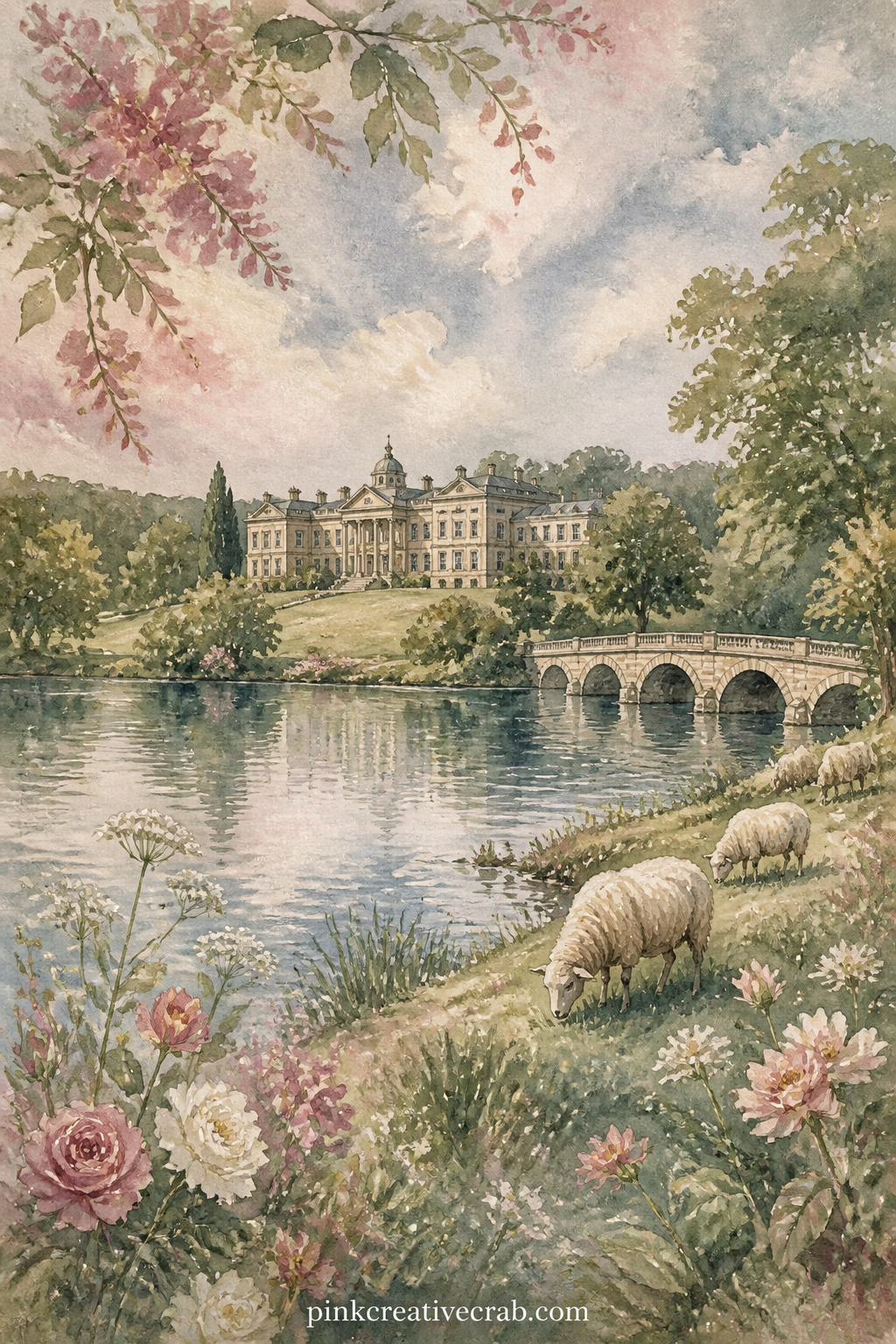
Glue a torn ticket stub or a pressed leaf onto the far shore of this page, as if someone left it there on a walk around the grounds.
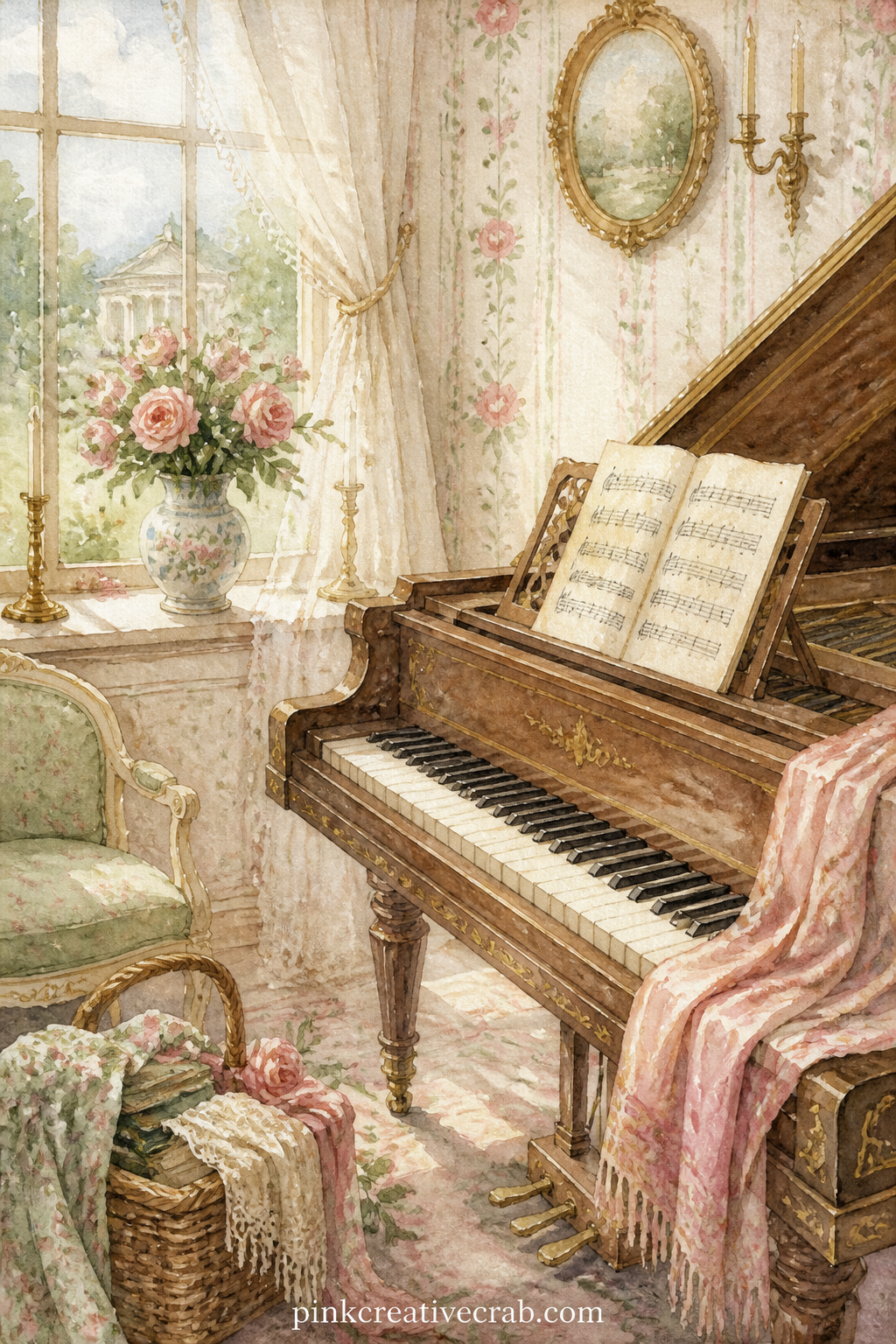
Pair this page with the Quill and Rose pattern a few pages ahead: use the pattern as a facing page so the open piano here sits against a soft printed border instead of blank paper on the other side.
The room holds the piano itself, a stack of sheet music, a workbasket and a vase of garden roses on the sill, with pale wallpaper and a window washed in behind everything.
The usual mistake with a library page is leaving the shelves too sparse, so the room reads empty rather than lived in: pack a few more spines in uneven rows before you call it finished.
A tall globe stands beside a rolling ladder, with leather bound books stacked on a side table and a worn armchair facing the window, all set against shelves that run to the edge of the page.
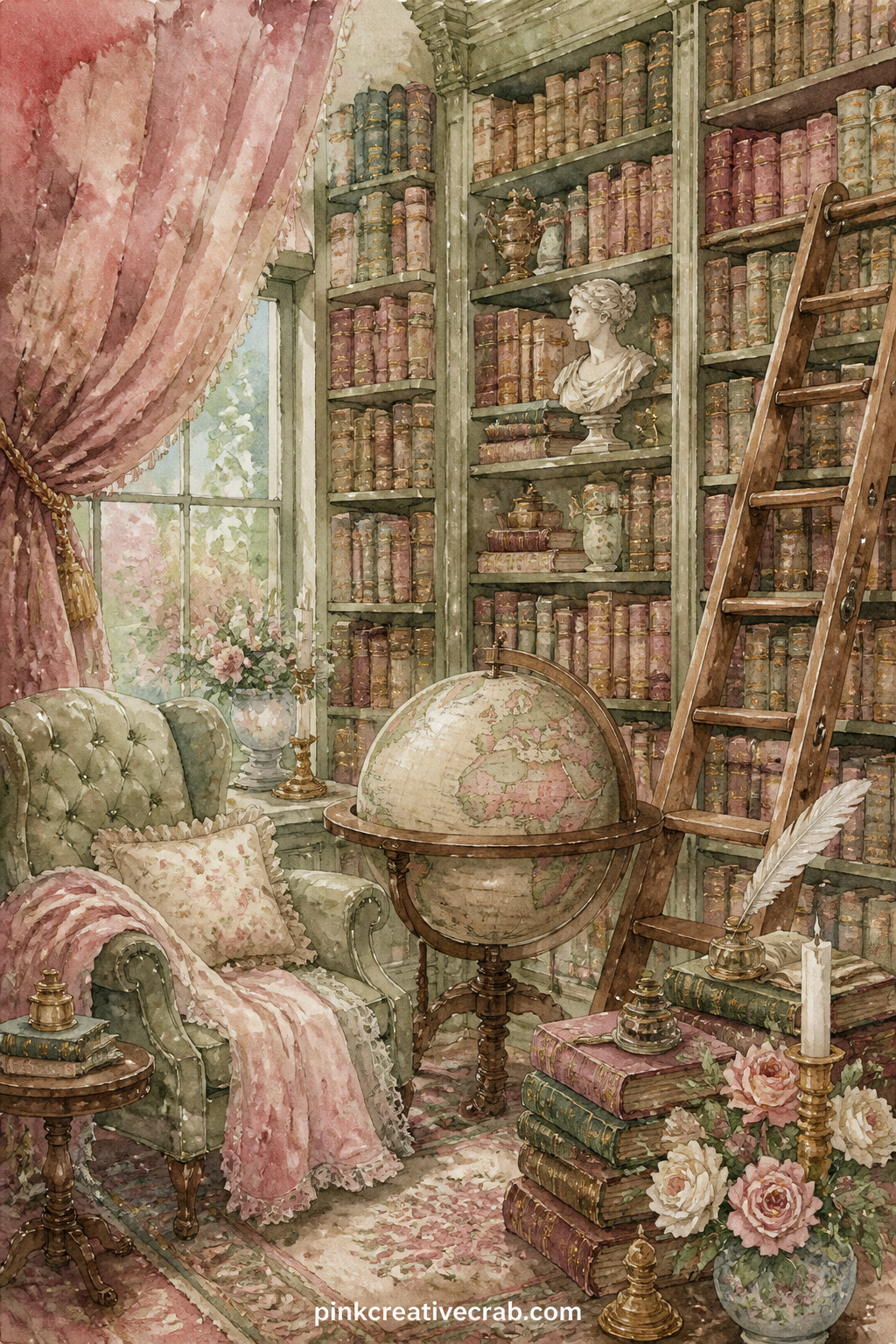
Works well as a page to glue in after the morning room, so a reader turns from an indoor scene straight into the garden beyond its window, keeping the sense of one walk through the house.

Letters and Quiet Rooms
Who is this page for in a gift journal: the friend who writes long letters herself and keeps every one she receives, the kind of reader who underlines her favourite lines in a novel.
A woman sits at a small writing desk, candle burning beside her, with a half finished letter, a pot of ink, a folded fan and a stack of sealed letters waiting at her elbow.
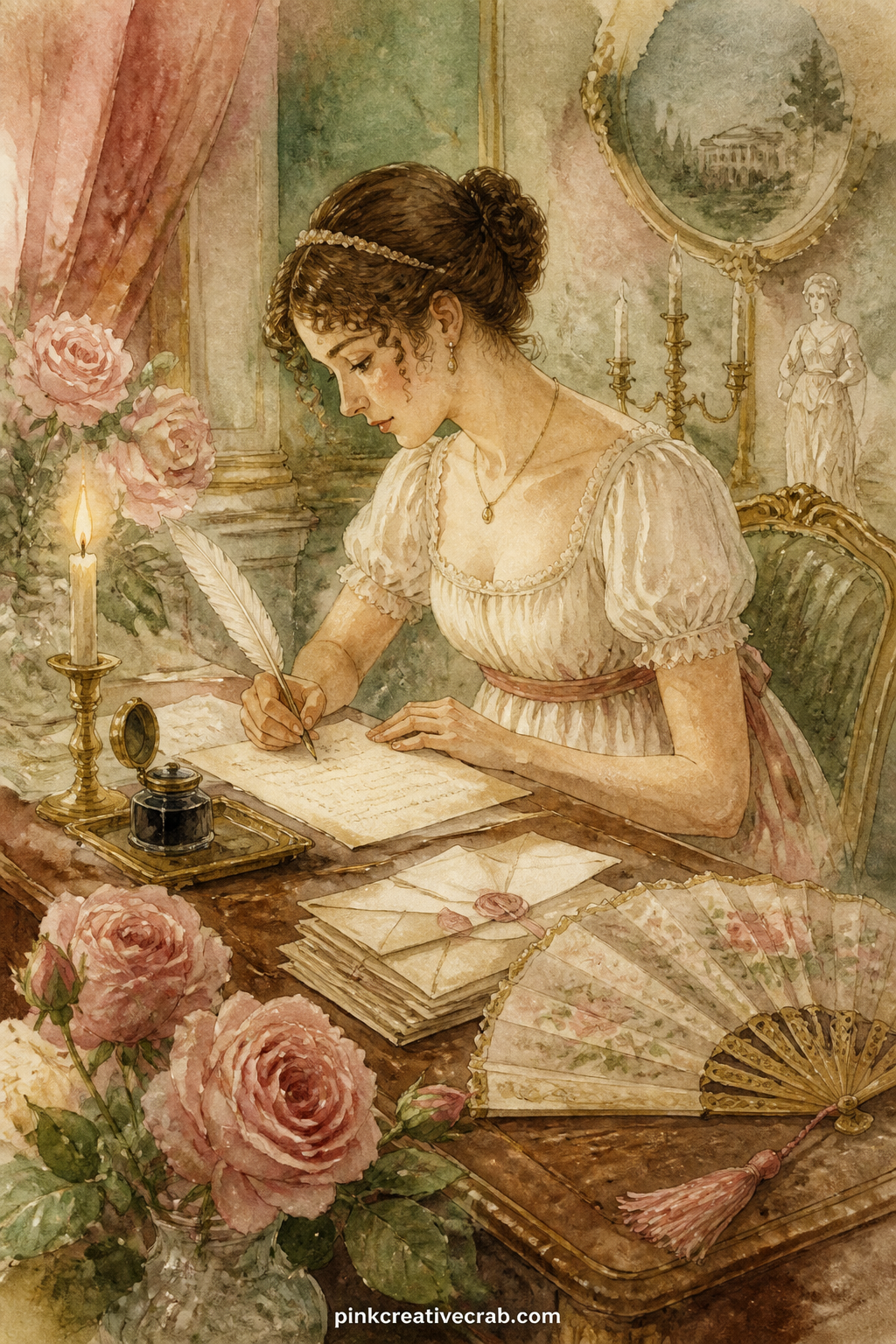
Tuck a real scrap of ribbon or a pressed flower onto this page before you glue it in, resting it across the inkwell so it looks like part of the still life itself.
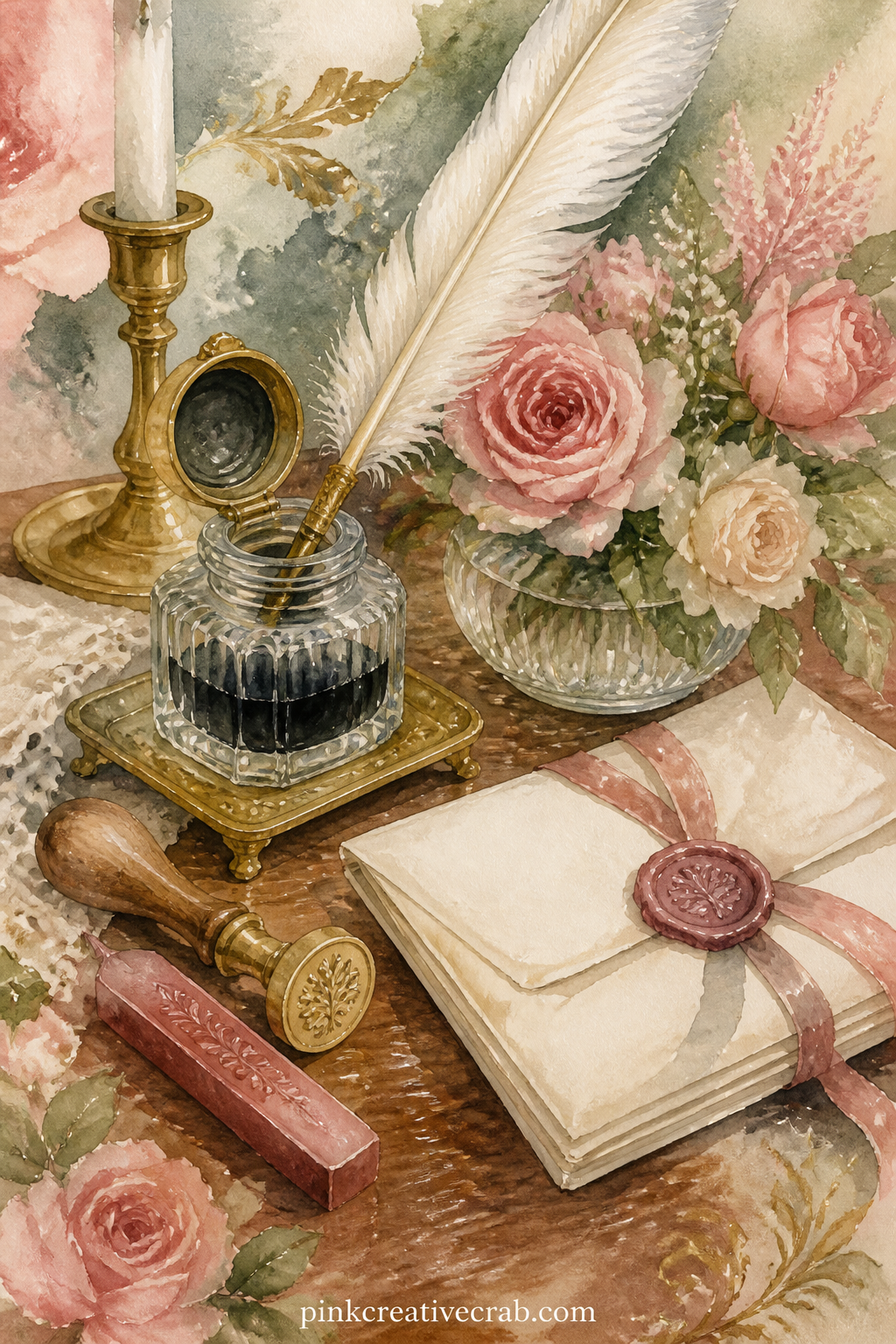
The five minute version of this page: paint the sealed letter itself, add one sprig of flowers tucked under the ribbon and stop there, leaving most of the background a simple soft wash.
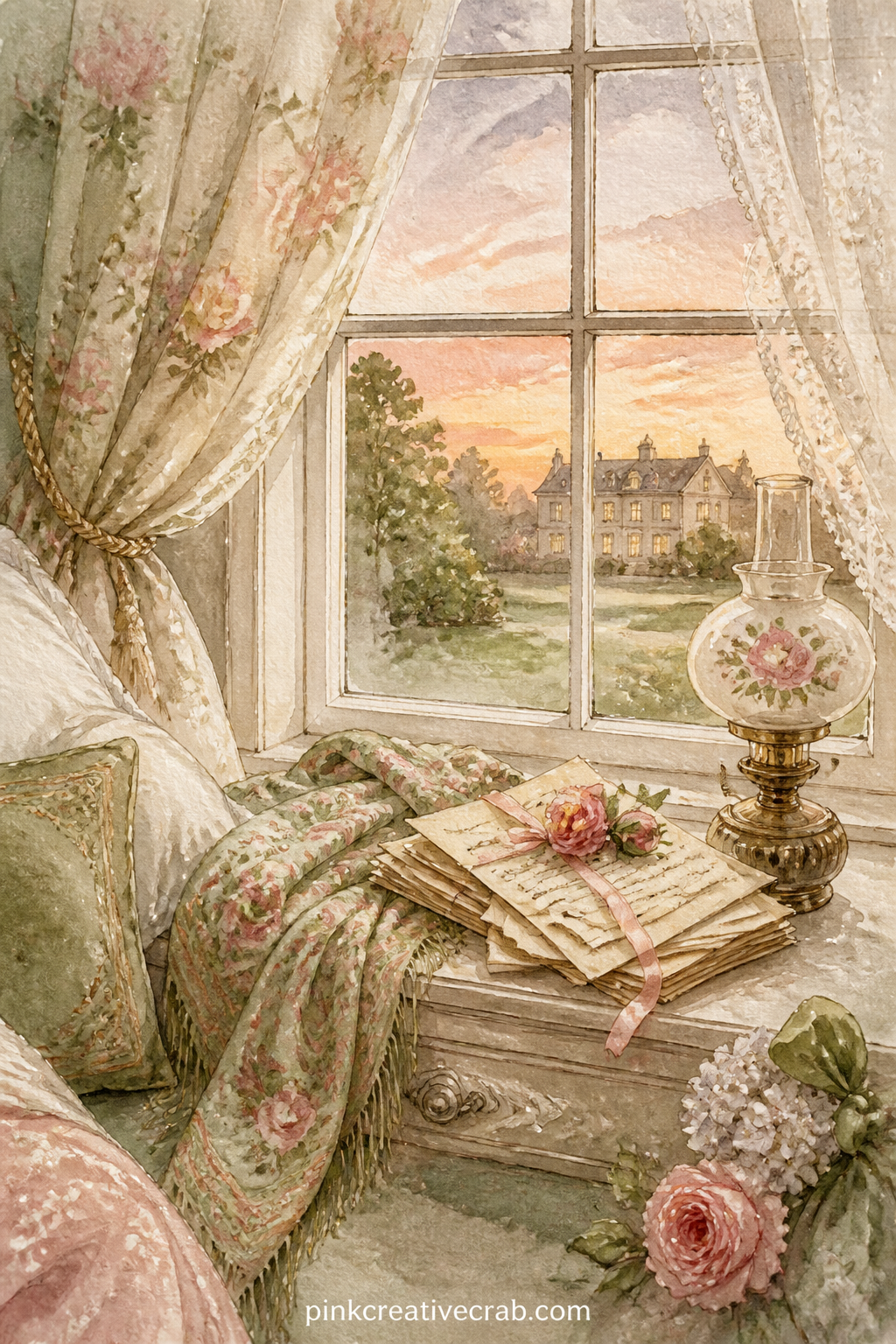
A folded letter sits sealed with a wax stamp and a narrow ribbon, a few dried flowers slipped beneath the knot, resting on a pale cloth with a candle glowing nearby.
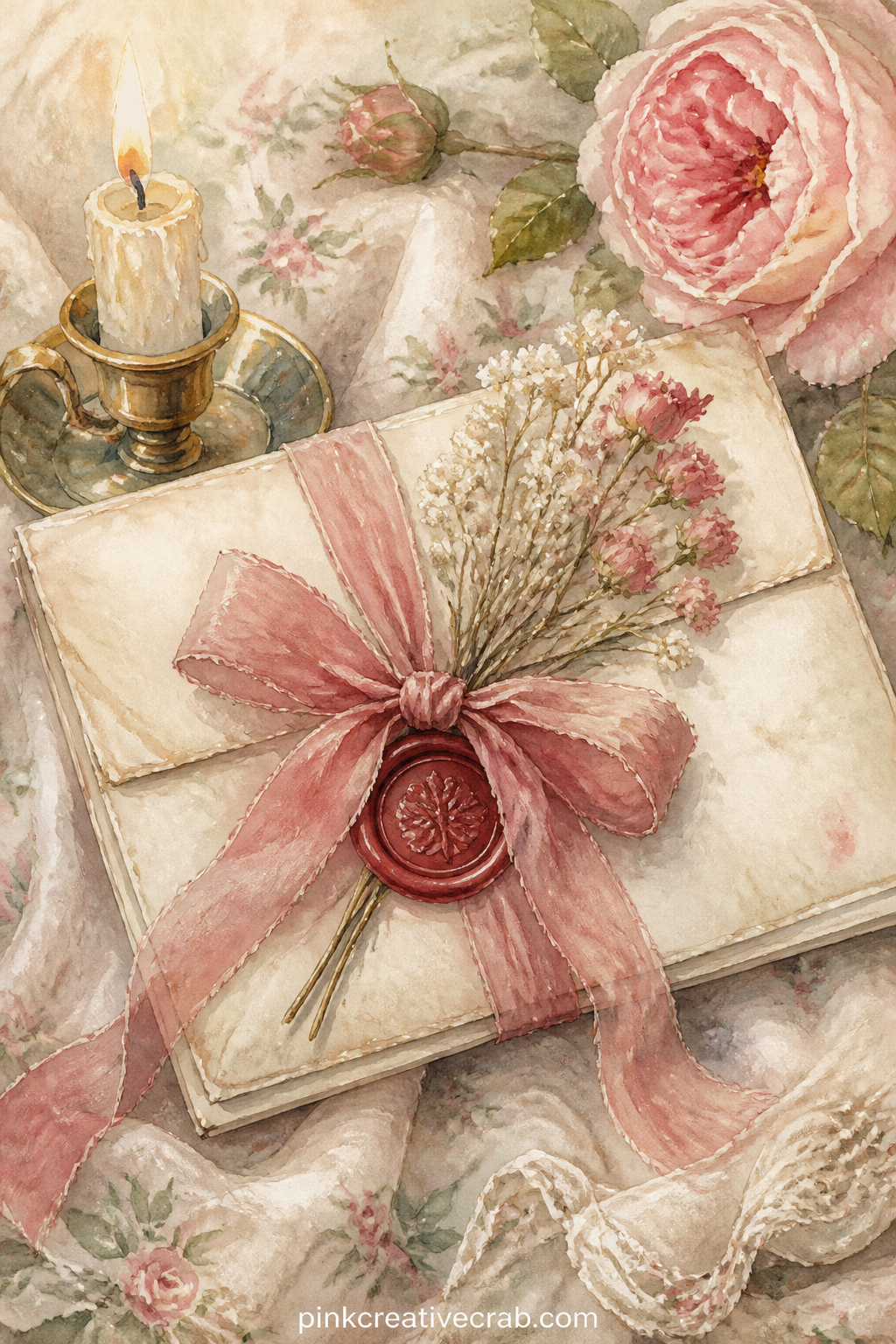
Write a short question at the top before you glue this one in: what would you most want to hear in a letter from someone far away, and answer it in the space below the window.
Roads and Country Walks
A horse drawn carriage rolls along a rutted lane between hedgerows, its wheels caked with mud, while a signpost and a distant church spire mark the route behind it.
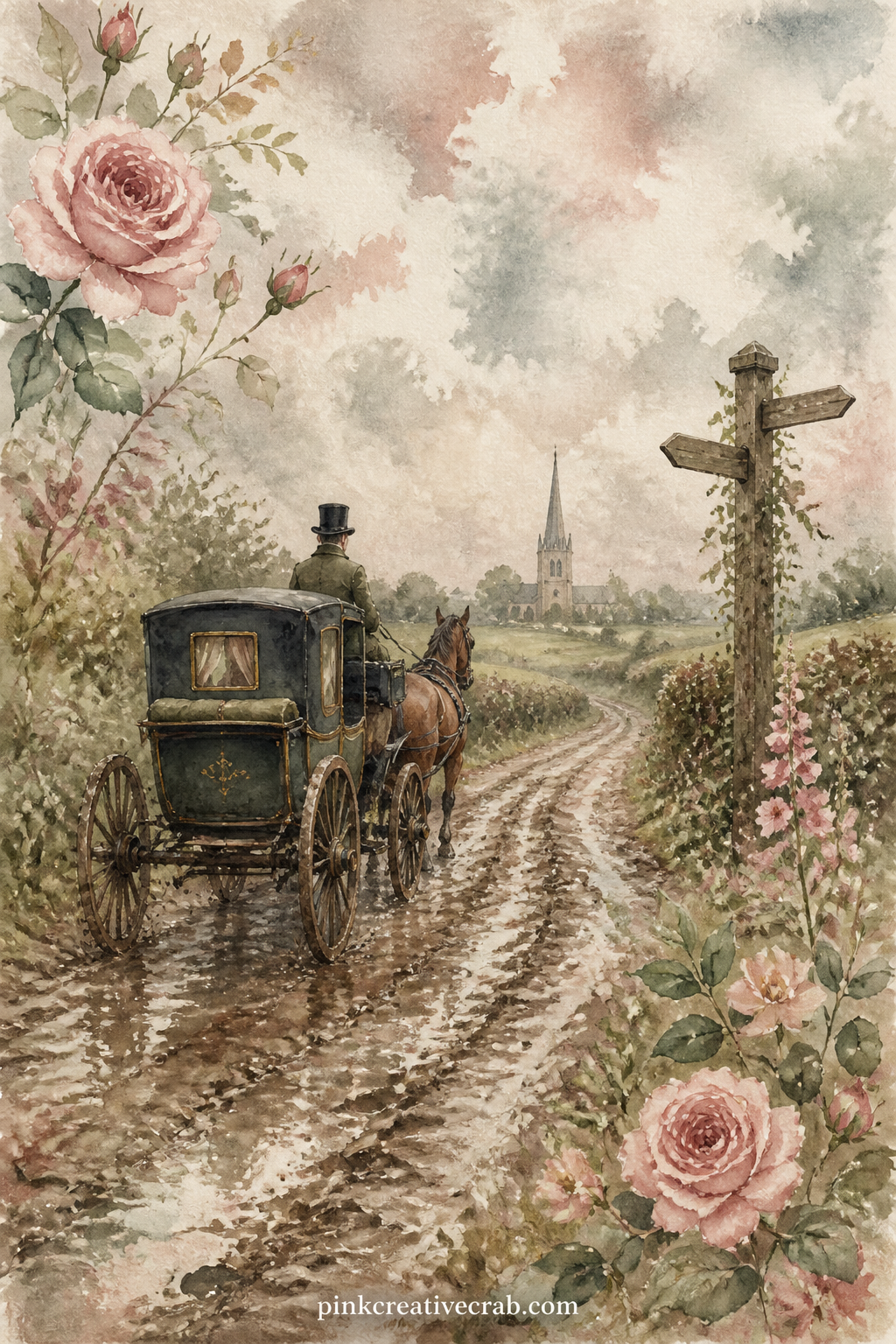
Place this page beside the Carriage On A Muddy Country Road, so the journal moves from travelling by coach to walking the same countryside on foot, one page after the other.
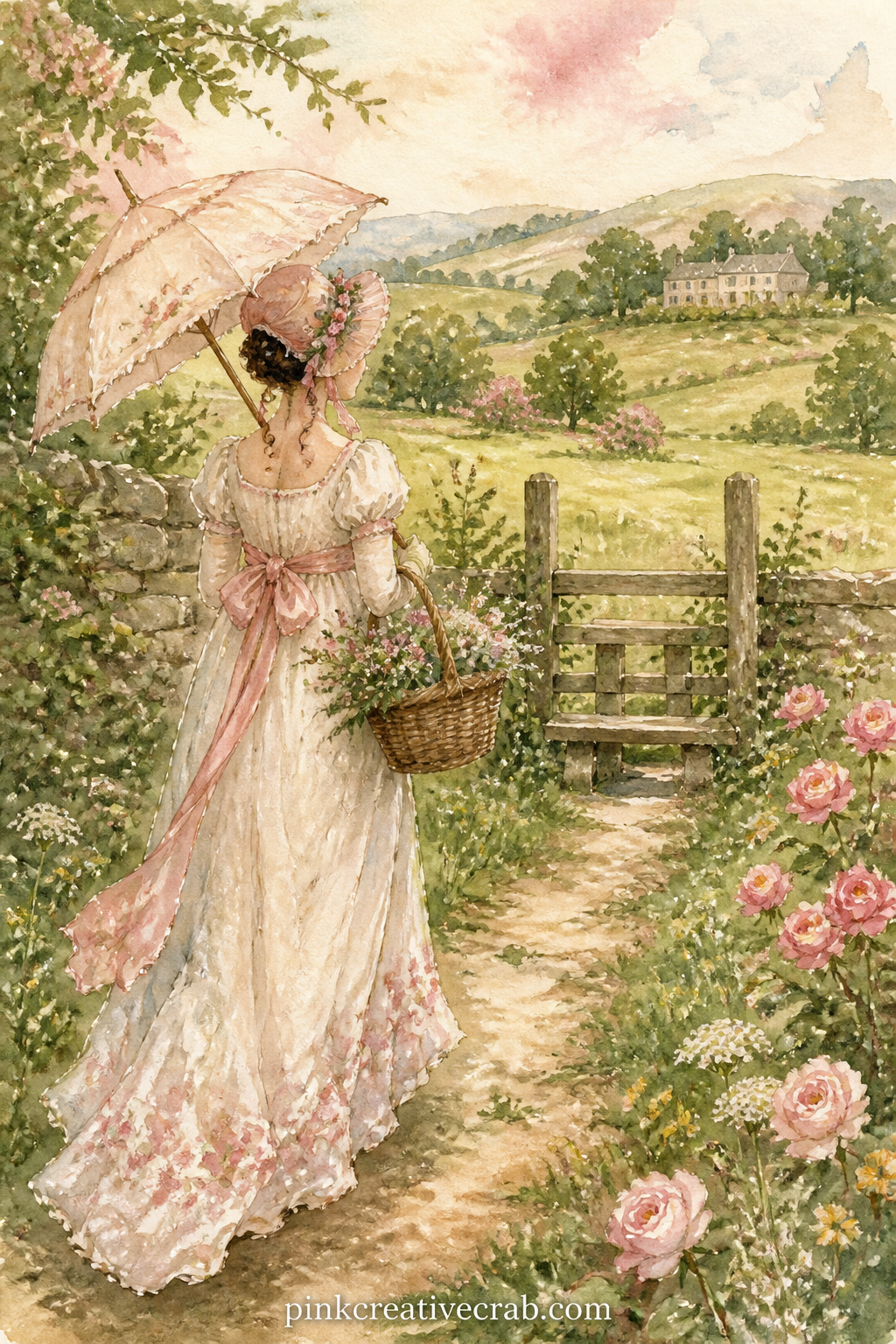
A woman in a bonnet walks a hedge lined path with a parasol over one shoulder, a basket of wildflowers on her arm and a stile ahead leading into the next field.
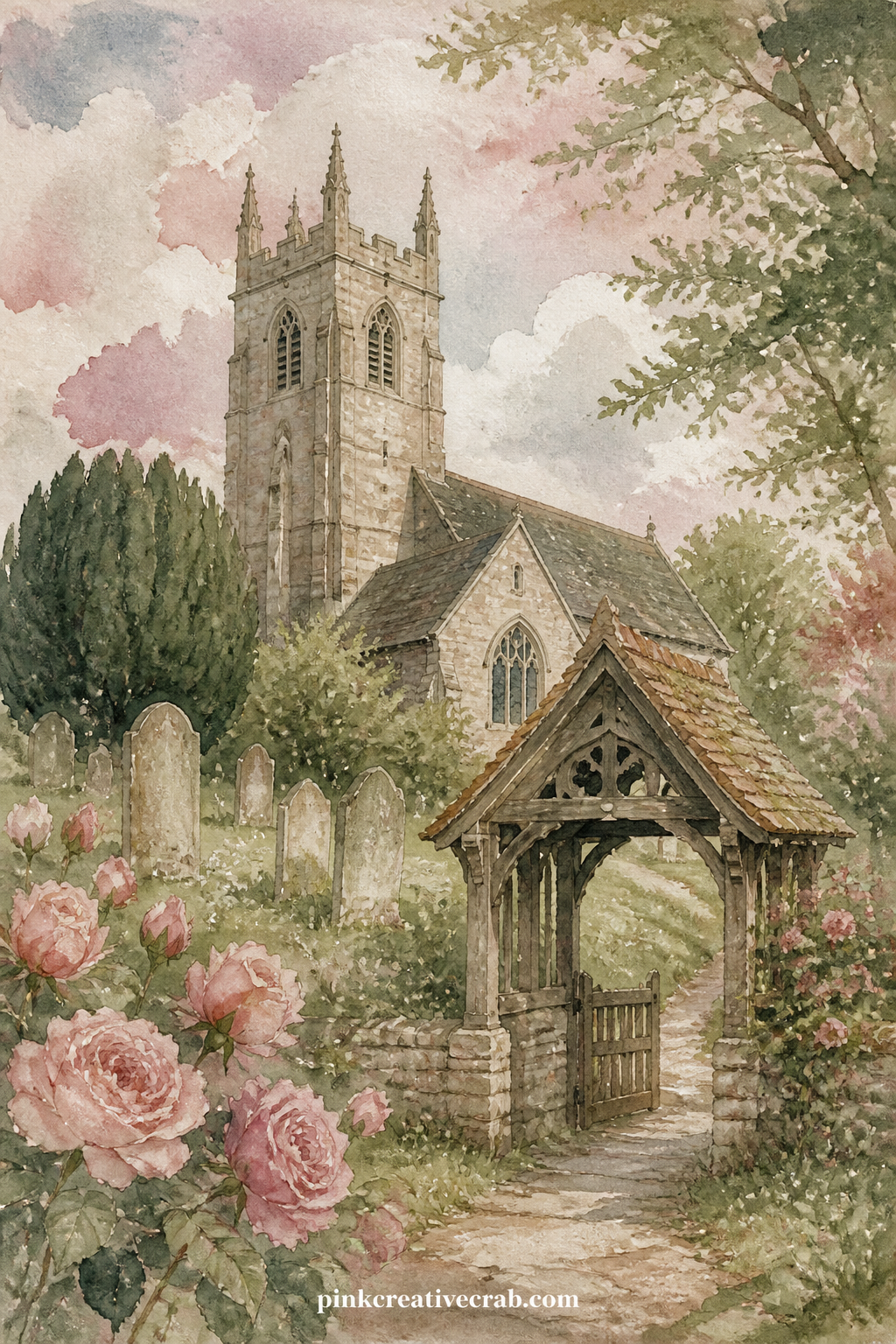
Tea stain just the lower edge of this page before gluing it in, so the churchyard grass looks faintly worn, the way a well walked path would look after years of Sunday services.
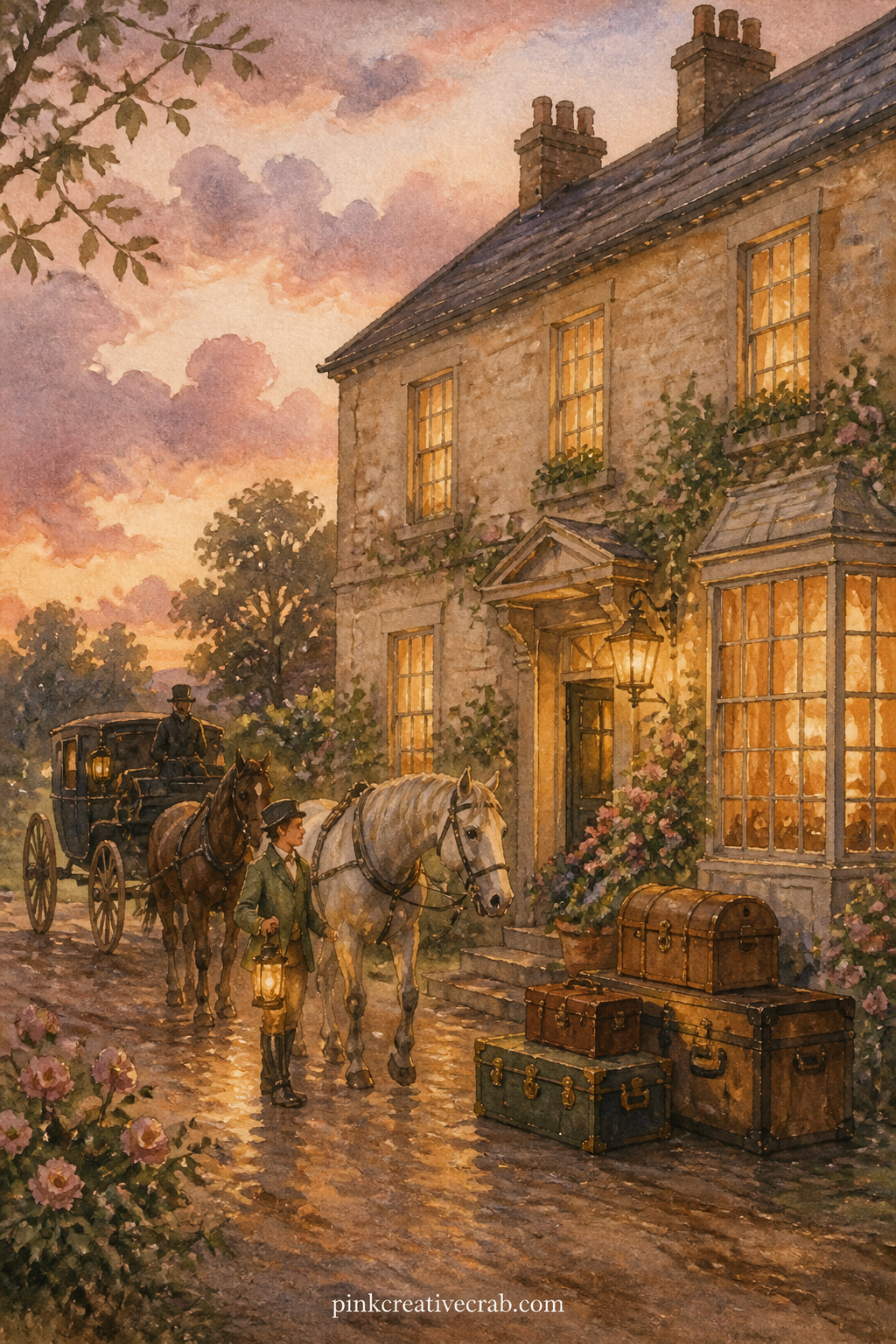
The usual mistake here is painting the inn alone with nothing happening around it: add the ordinary business of arrival, a boy with a lantern, a trunk being unloaded, horses being led away.
A coaching inn glows with lit windows at dusk, horses being led to the stable, a lantern held by a stable boy and travelling trunks stacked by the door.
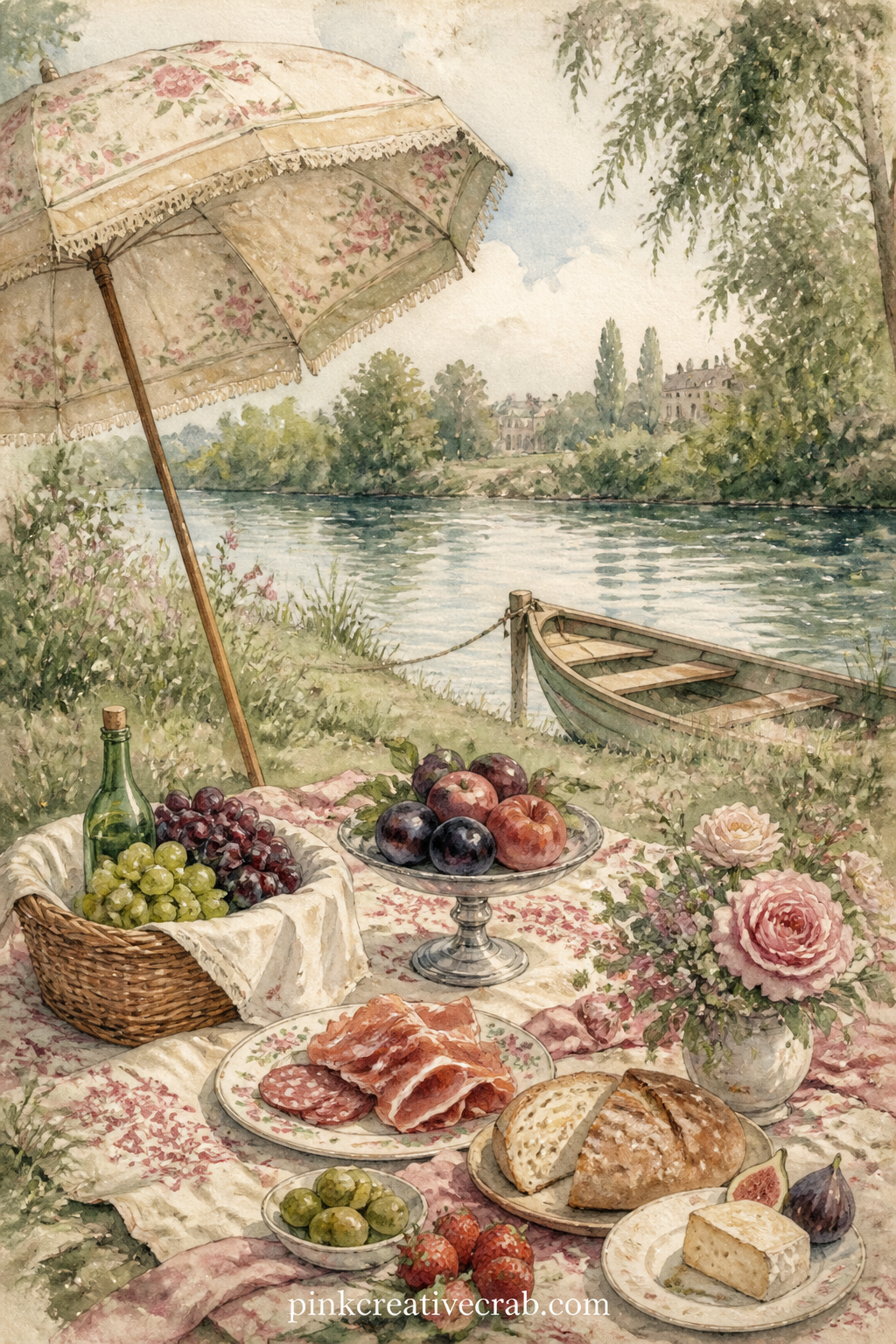
A spread of cold meats, bread and fruit sits on a cloth by the riverbank, with a parasol planted in the grass and a boat tied at the water’s edge nearby.
Tea and Drawing Rooms
Glue a small handwritten recipe card beside the teapot on this page, the way a kept family recipe might have travelled from one kitchen to the next across a whole century.
A silver teapot sits with porcelain cups, a plate of small cakes, a sugar bowl and a folded newspaper, all set on a lace cloth with a drawing room window washed in behind.
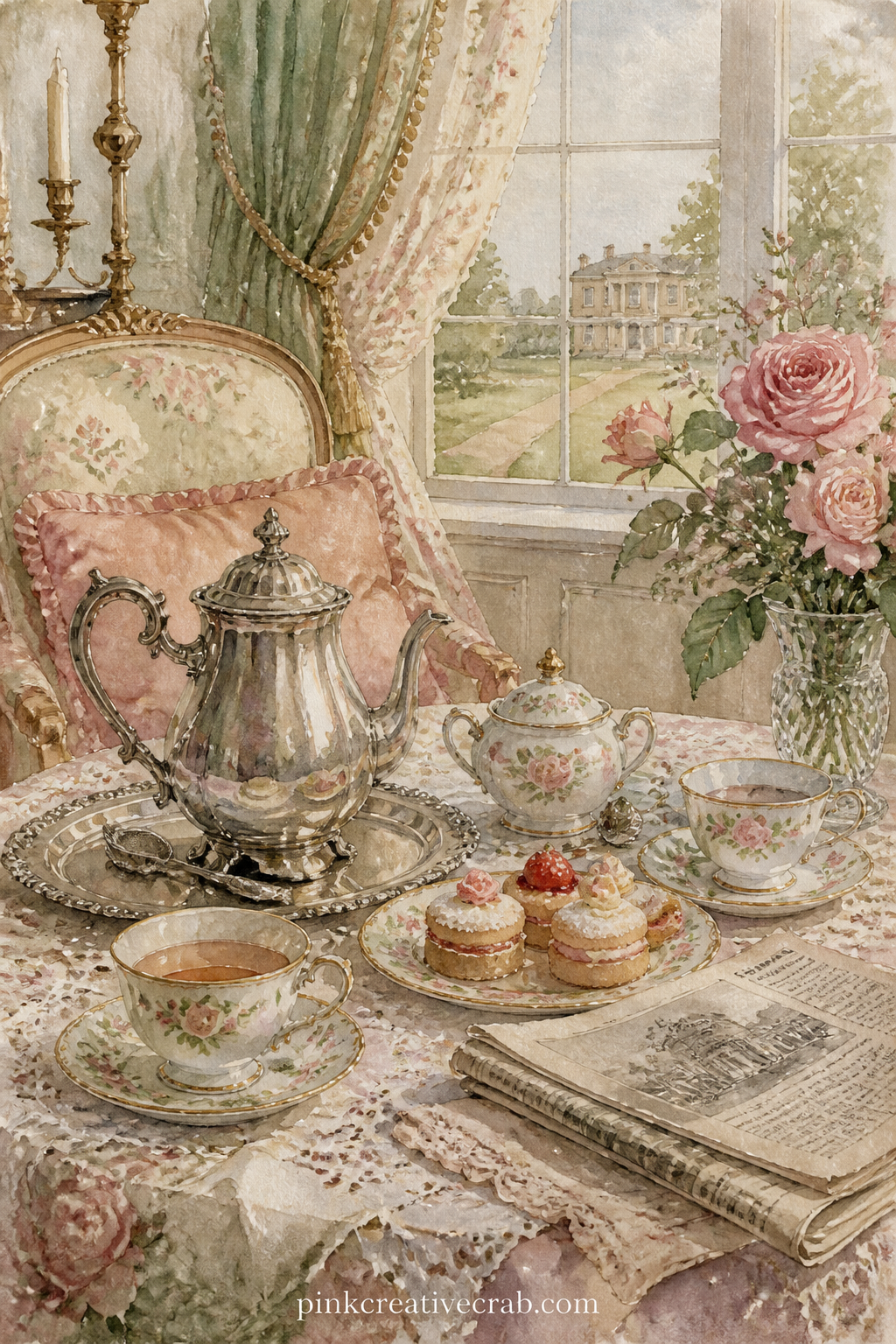
Works best paired with the Tea Table page across a spread, since both sit in the same drawing room and share its soft, settled, indoor light.
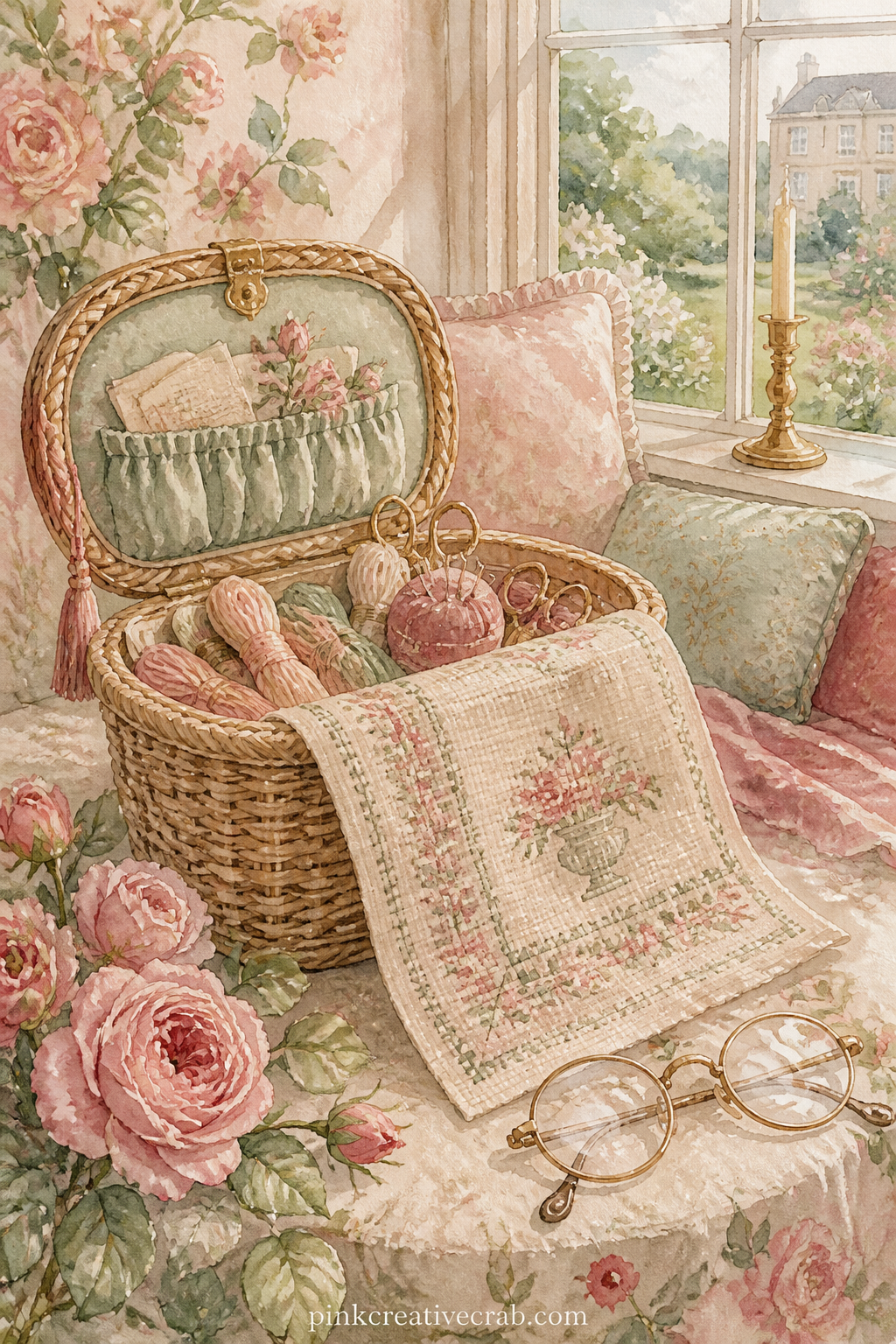
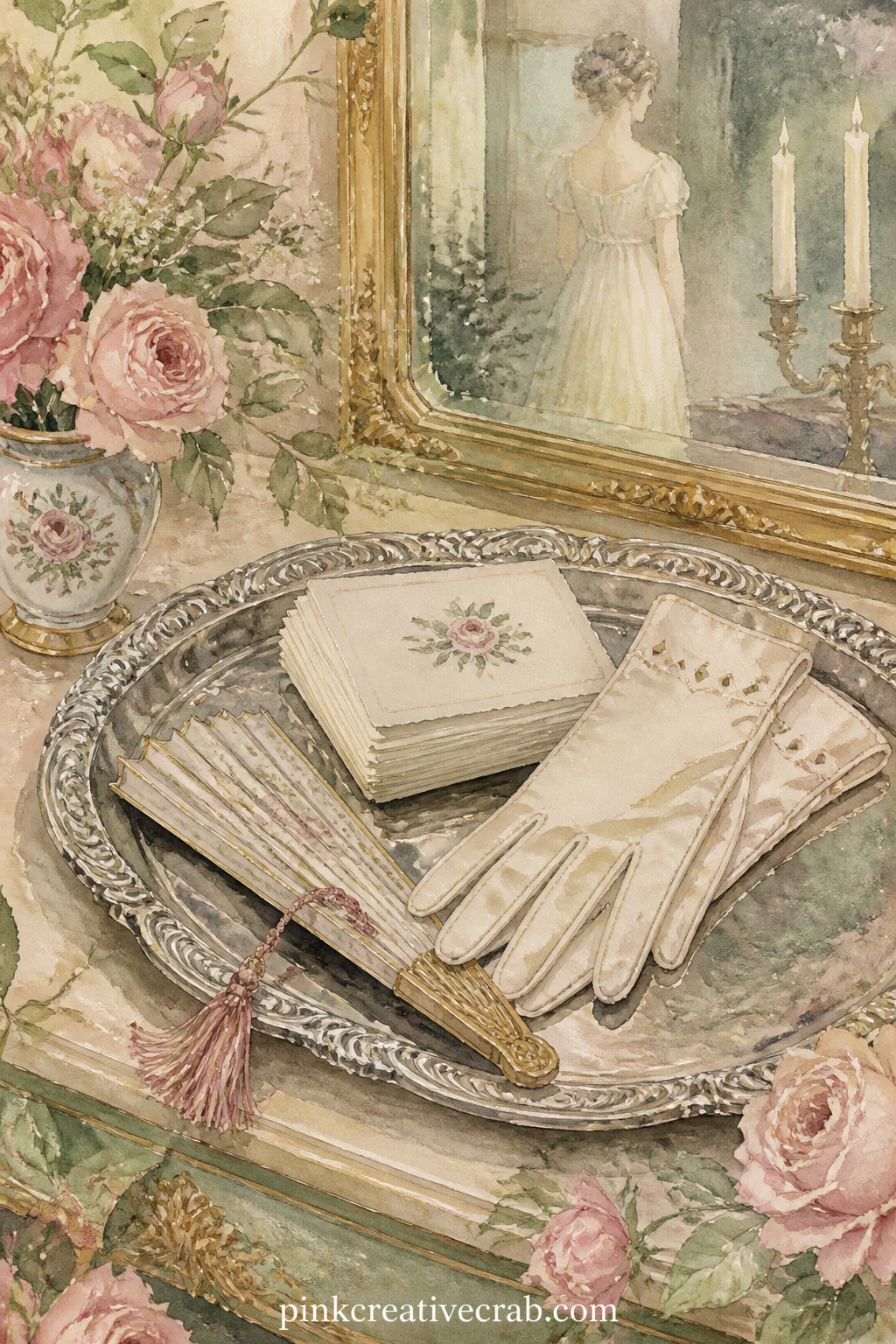
A single sentence is enough for a page this quiet: a silver tray holds a small stack of calling cards, a pair of folded gloves and a fan, left waiting on a hallway table.
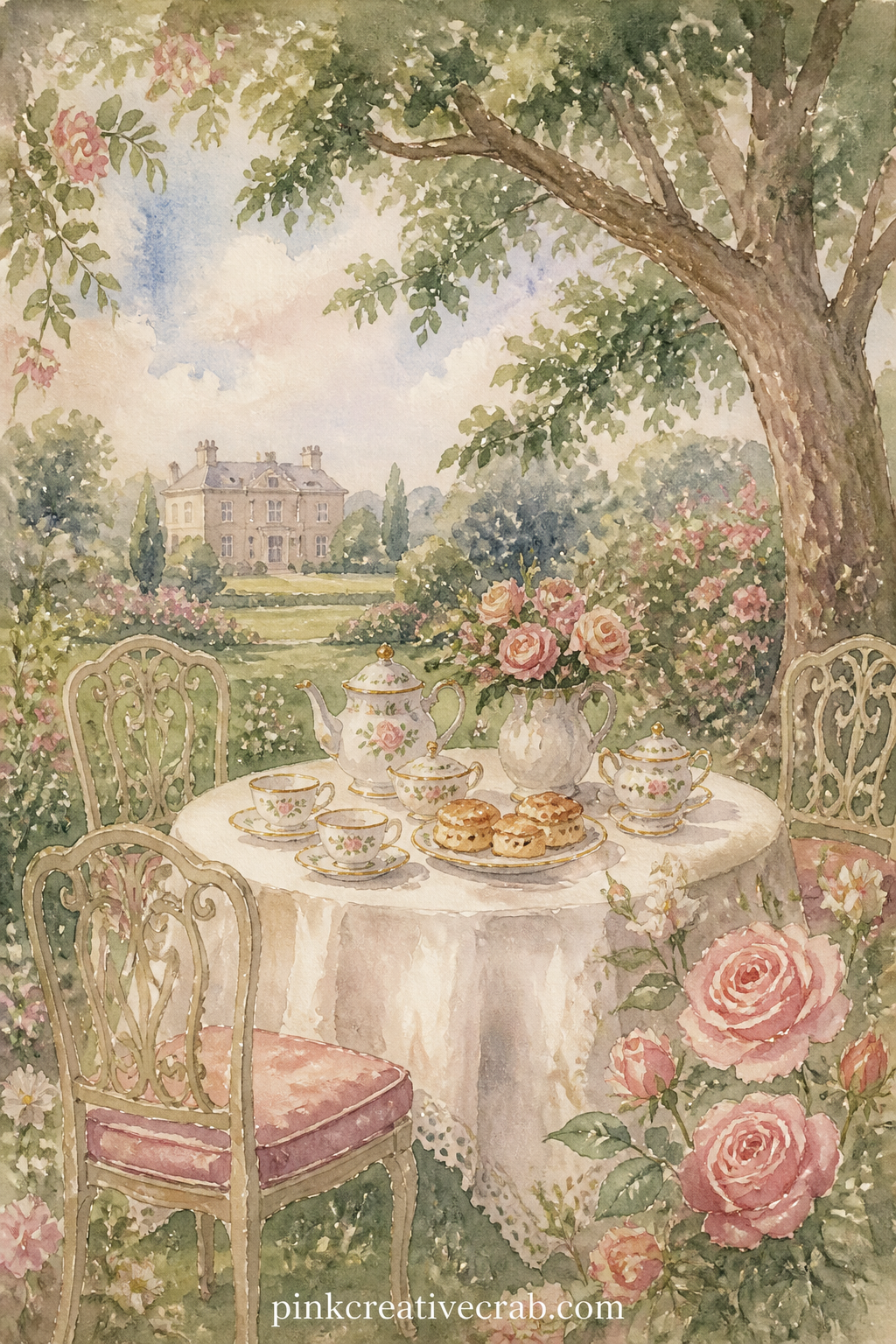
The five minute version: paint just the laid table under its tree and skip the figures entirely, letting the empty chairs and the breeze in the tablecloth suggest the guests are only just arriving.
Wardrobe and Keepsakes
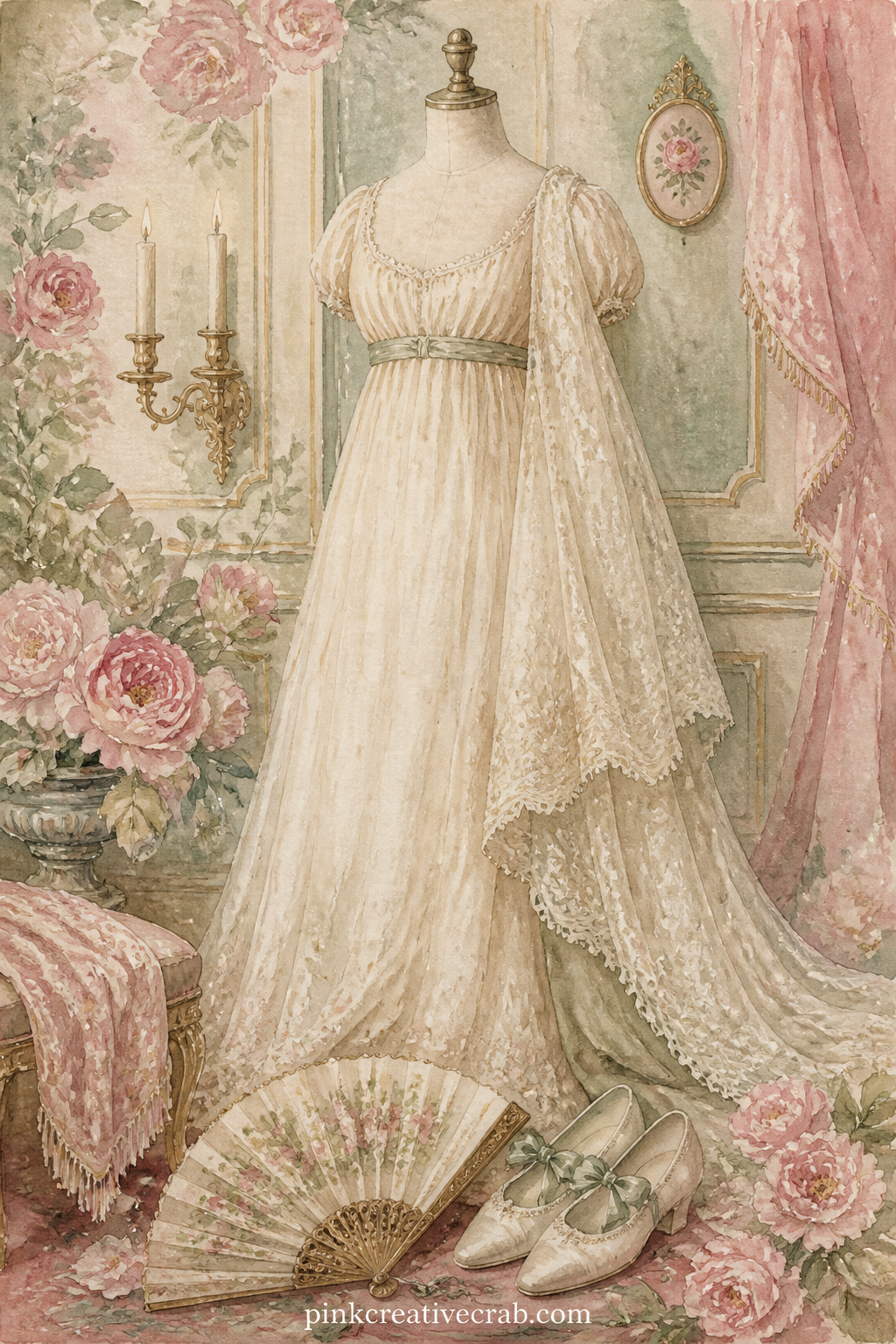
The usual mistake is painting the gown as a flat shape, so give it folds and a little weight, with a shawl, a fan and a pair of slippers set around its base to finish the page.
A pale muslin ball gown hangs on a dress form, with a lace shawl, a folded fan and a pair of satin slippers arranged at its feet, a dressing room wall washed in behind.
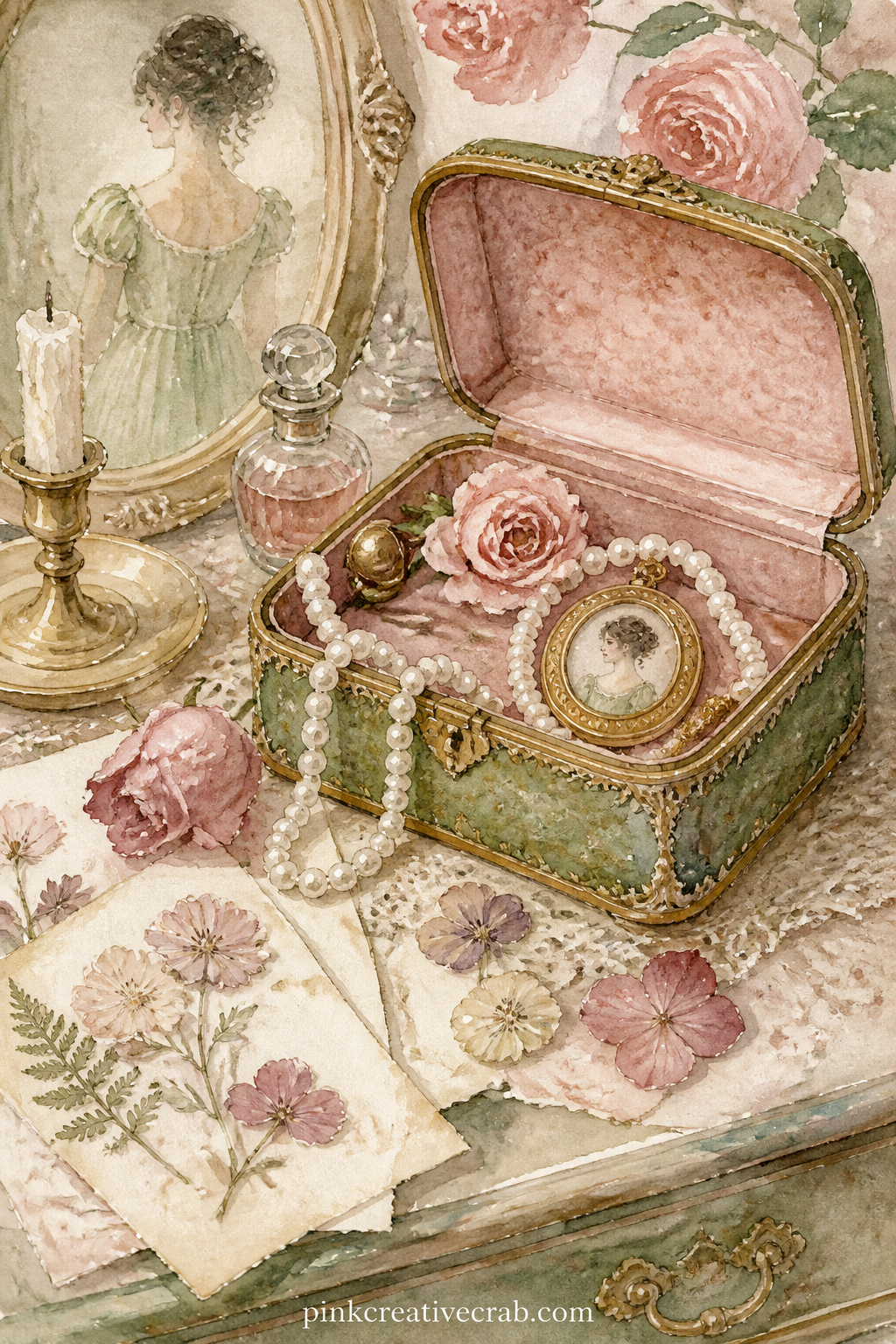
Write a short list in the space left at the bottom of this page: the keepsakes you would choose to keep in a box like this one, three or four items, nothing more.
Background Papers
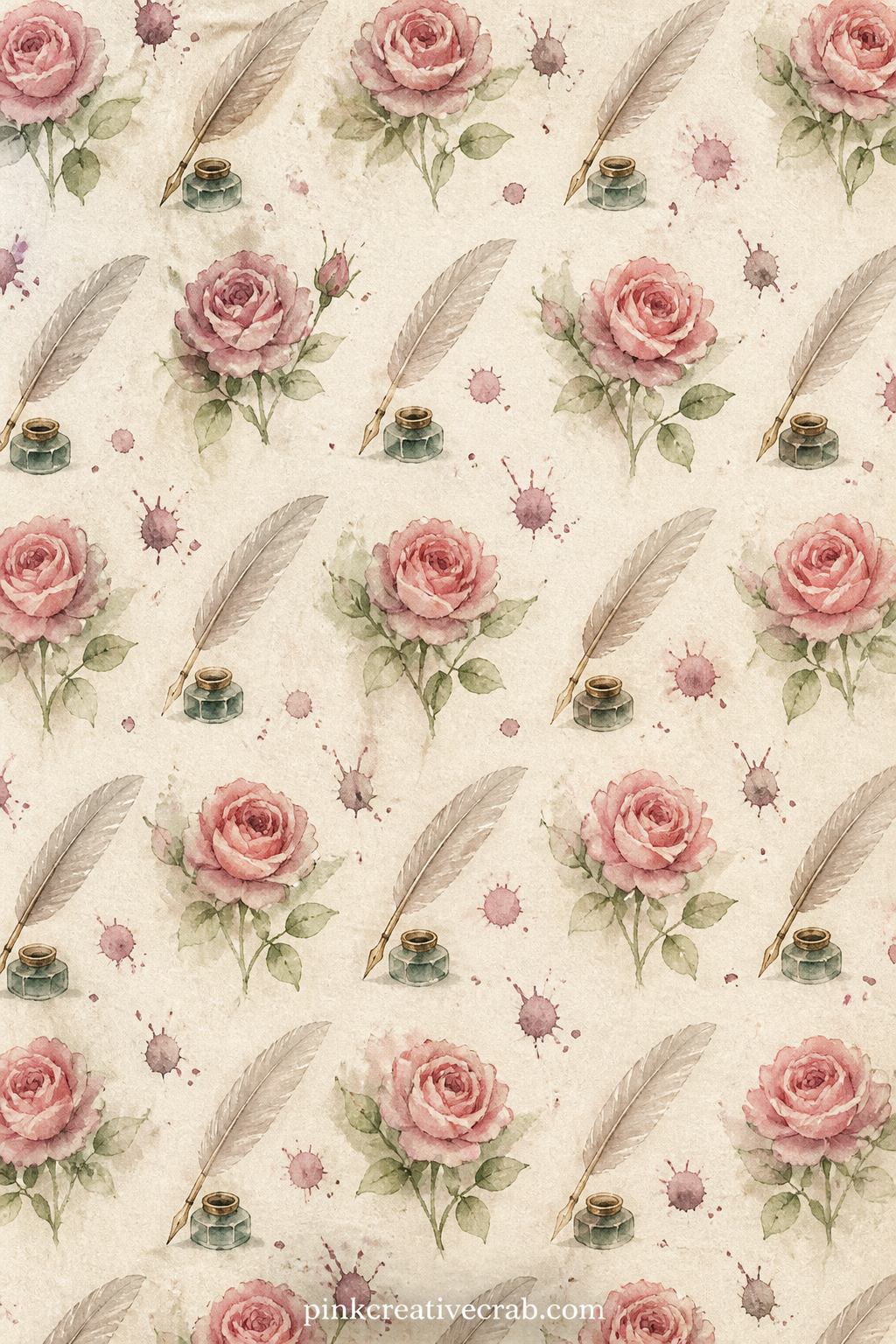
Small quills, ink drops and open roses repeat in loose rows across the page in dusty rose and faded gold. Use it behind a letter page, as a lining for the inside cover, or printed small for a title page border.
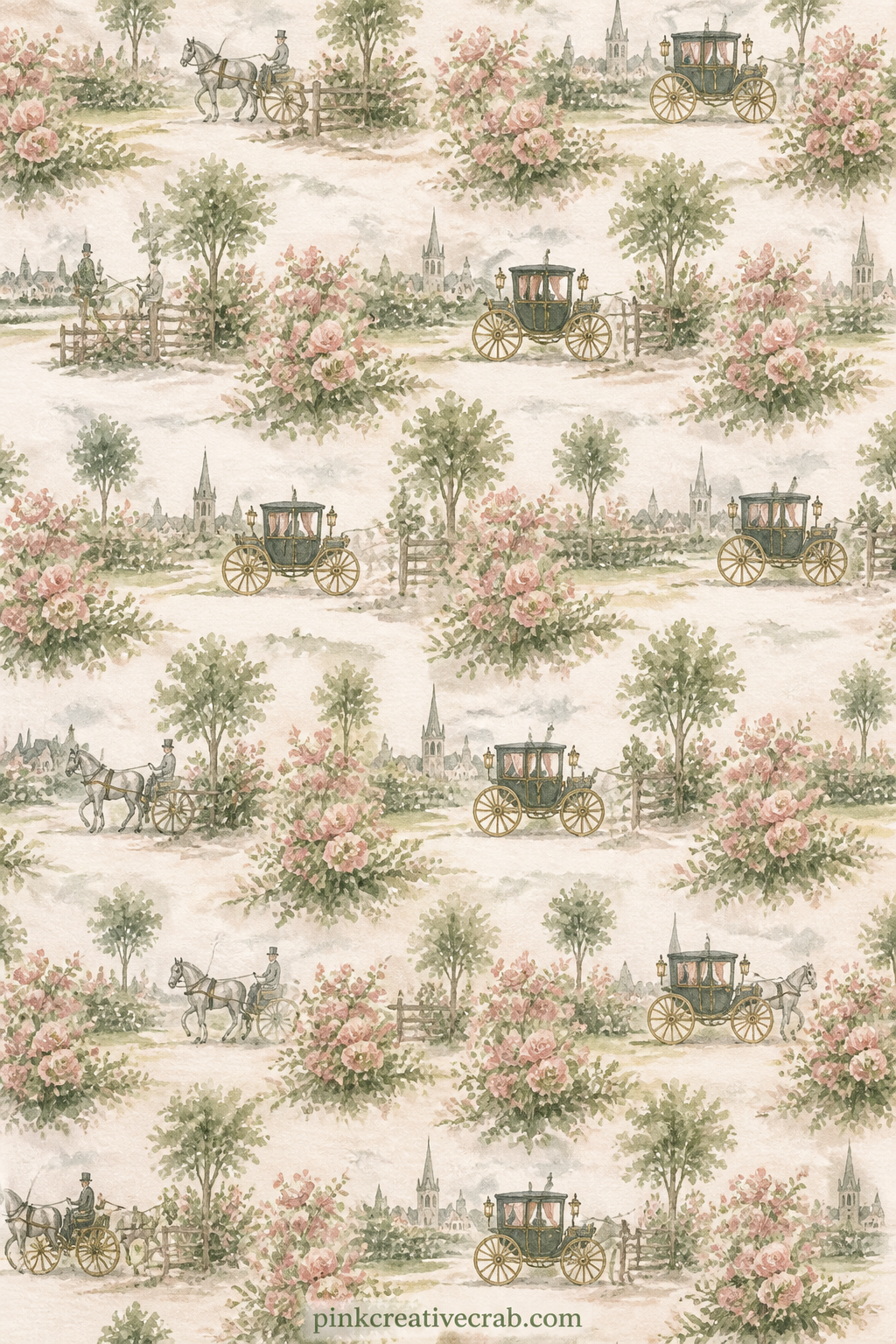
Tiny carriages, hedgerows and distant church spires repeat in soft sage toile style rows. Set a photo of a country drive on top, use it as a cover sheet, or line a pocket page cut from this set.
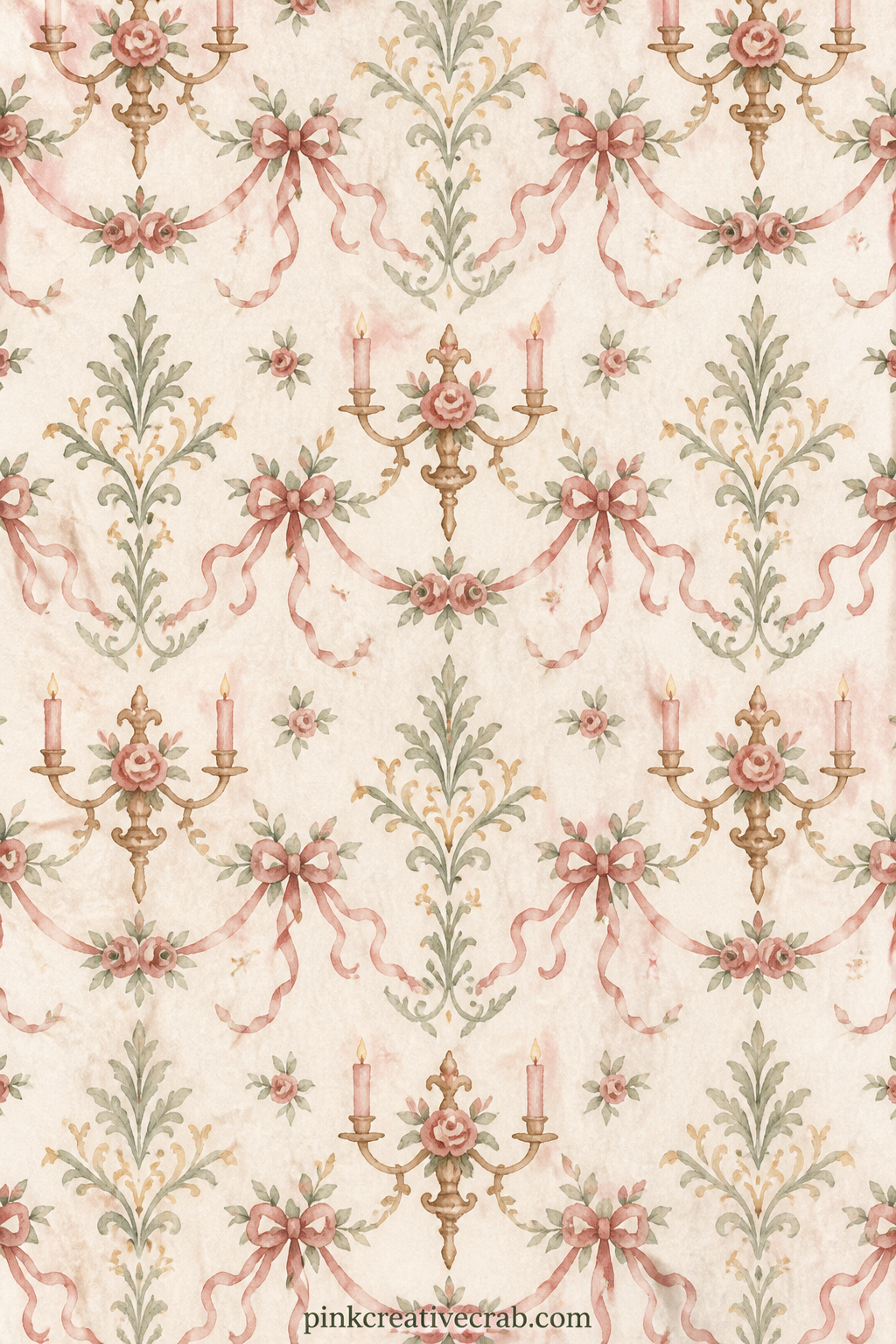
A faded damask of candle sconces and looped ribbon runs edge to edge in dusty rose and cream. Lay it behind a ballroom scene, use it as a journal cover, or back a page of dance cards.
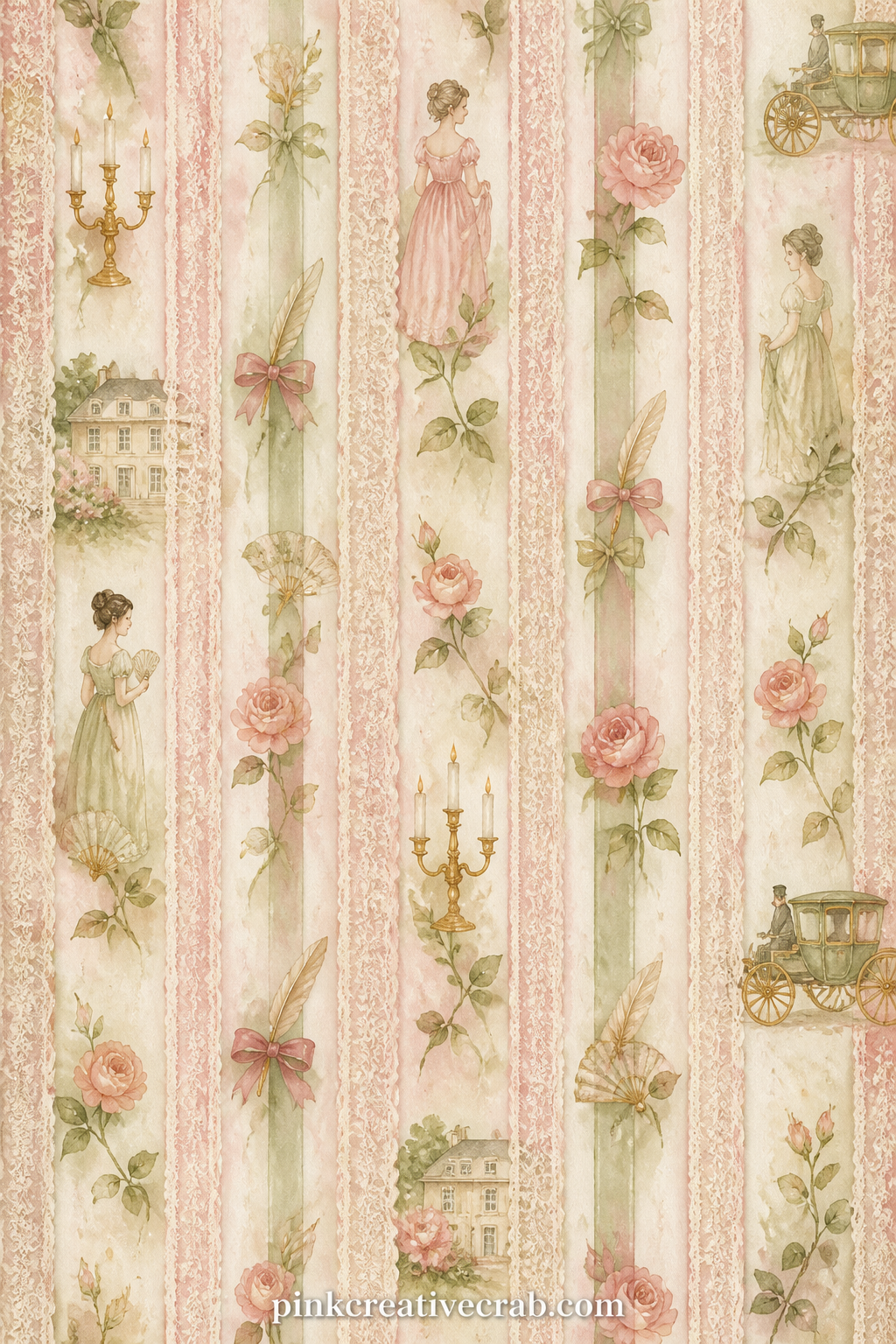
Narrow stripes of lace edging and thin ribbon alternate down the page in cream and sage. Place it under a gown or jewellery photo, use it as a divider page, or back a sheet of pressed flowers.
Lined Writing Pages
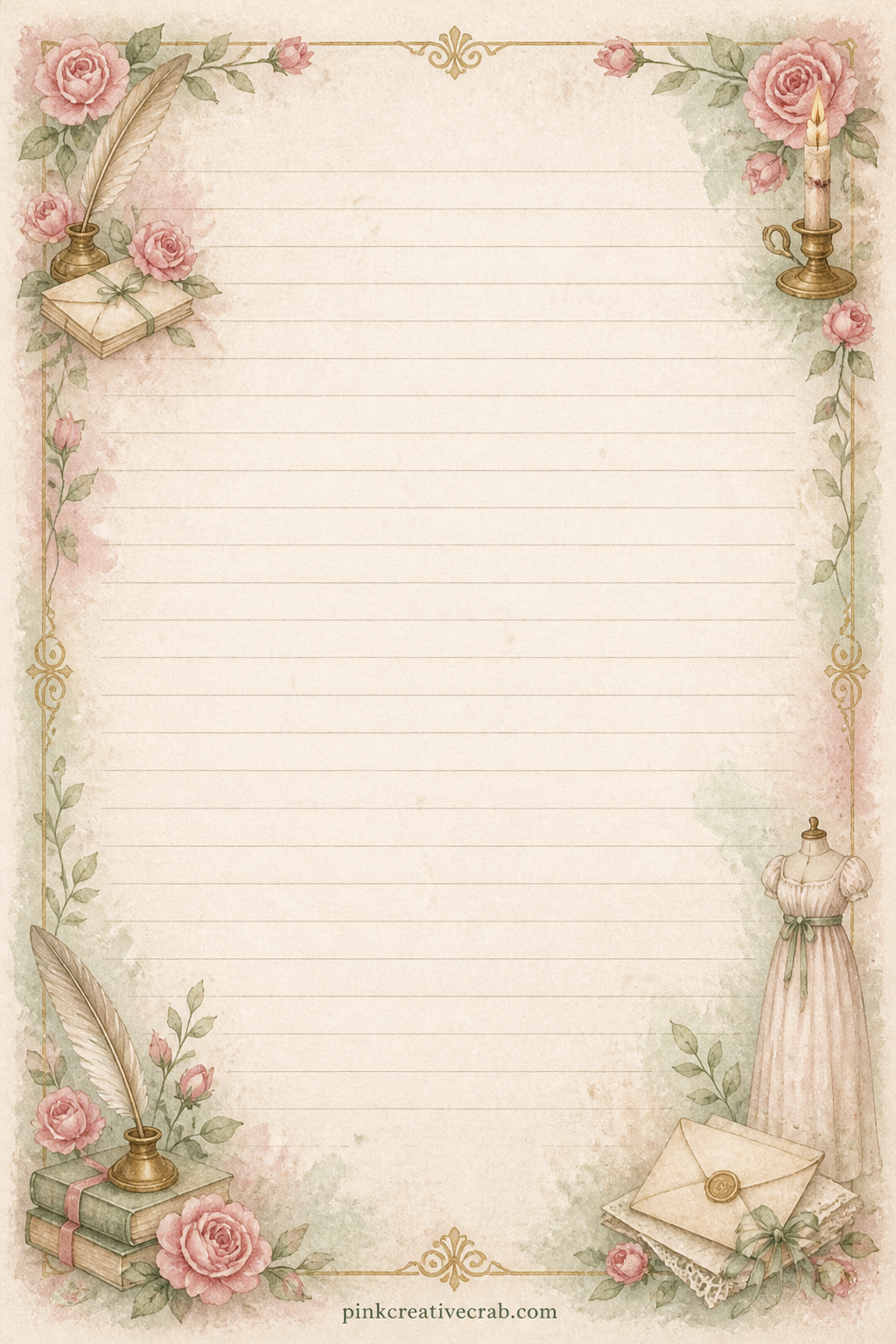
A corner spray of quills and roses frames space enough for a letter to next year, a line copied from a favourite novel, or a short note meant for someone to find later.
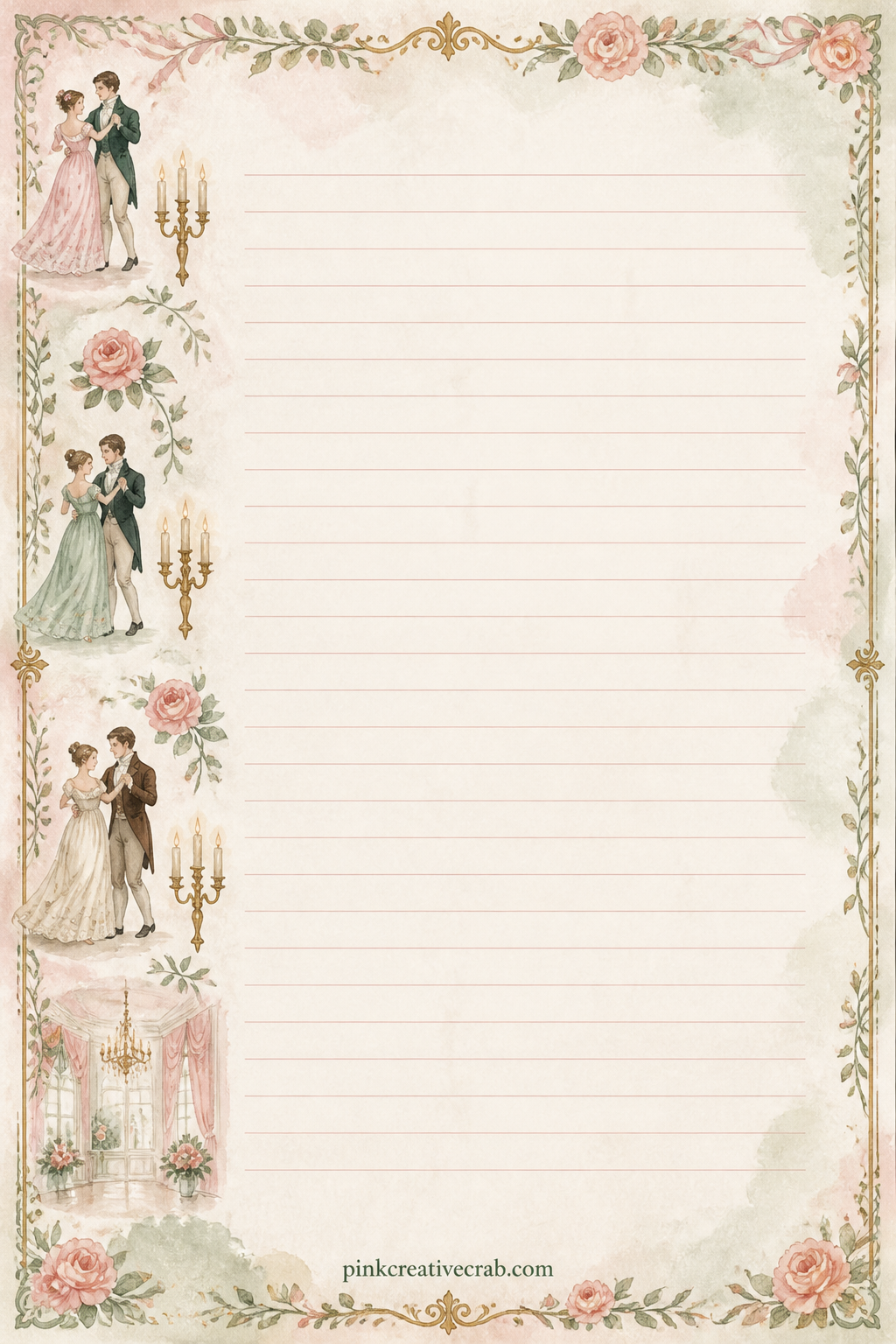
A band of tiny dancing figures and candle sconces runs down one side, leaving room to write a guest list for an imagined ball, a dance card, or notes on a favourite scene.
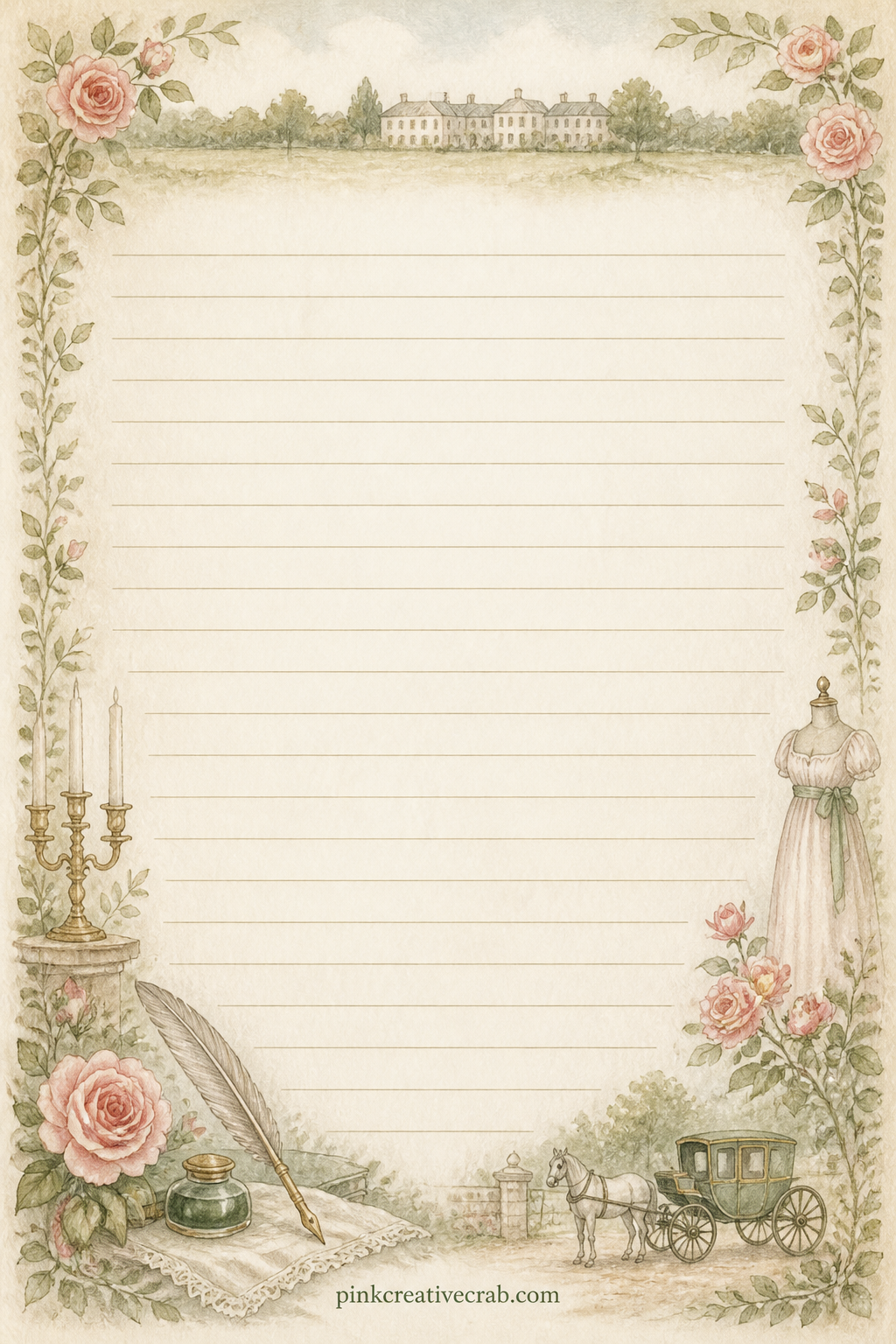
A frame of tiny hedgerows and a distant rooftop runs along the top edge, with space below for a packing list, a travel itinerary, or a description of a house you would like to visit.
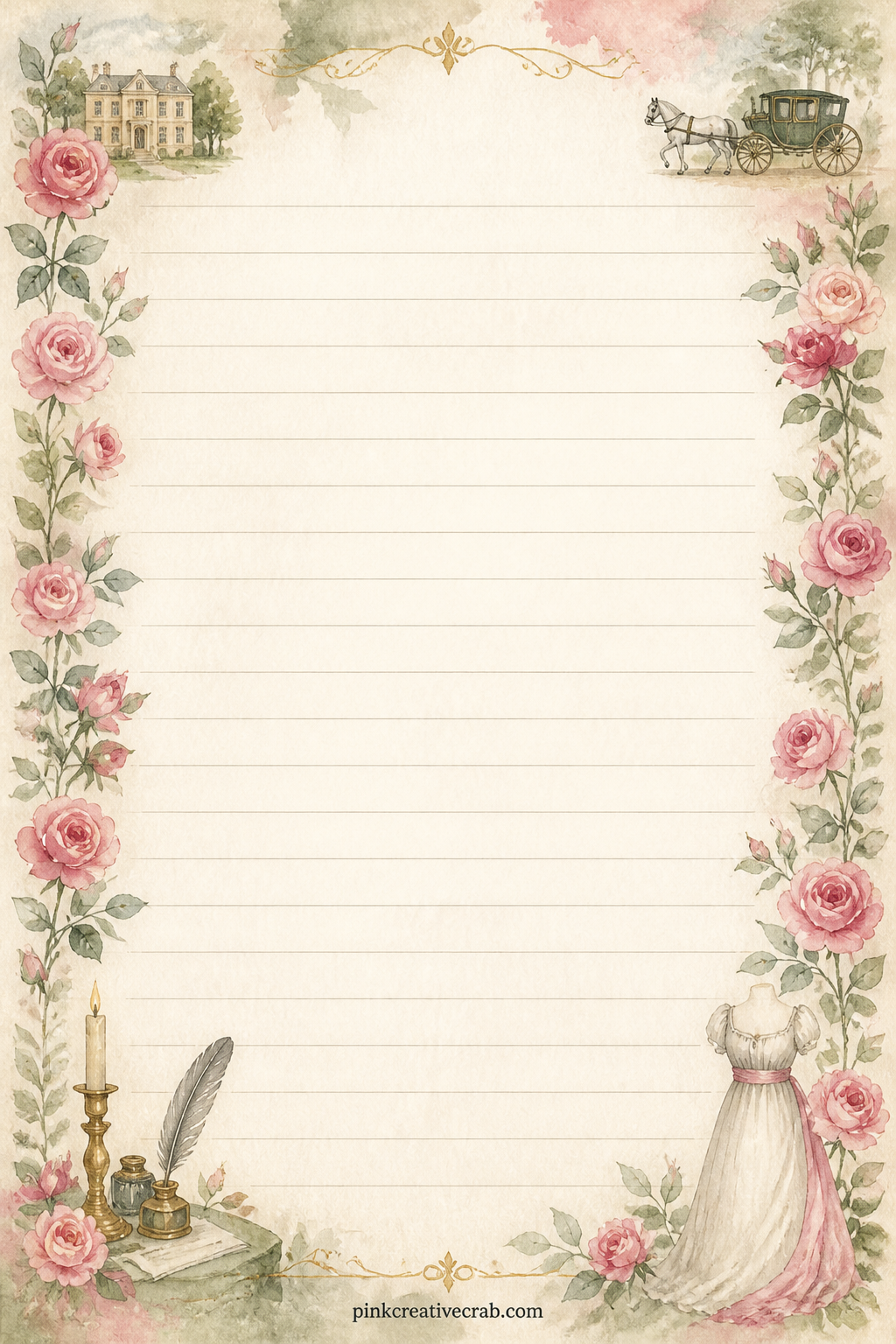
A frame of small open roses runs along both side edges, leaving the centre clear for a recipe for tea cakes, a garden wish list, or a diary entry about the day’s weather.
What to Do Next
Print the full set, trim the edges if your journal runs smaller than the page, and start gluing from the first ballroom scene through to the last lined page, in whatever order your own story needs. For more vintage paper ideas to mix in, look at the vintage junk journal ideas, or start from the basics with the junk journaling handbook.
Frequently Asked Questions
What paper works best for a jane austen junk journal kit like this one?
A heavyweight matte paper, at least 200gsm, holds the washes well and resists curling once it dries. Cardstock works for the scene and background pages, while a slightly lighter weight is fine for the lined pages if you plan to write on them with a fountain pen.
What printer settings should I use?
Choose your printer’s best or photo quality setting and select the matching paper type in the driver so the colours stay rich rather than faint. Print one test page first to check the colours before you run the whole set, since settings vary between printers.
What size should I print the pages at?
Standard US letter or A4 suits most journals and binds easily. If your journal is smaller, scale the pages down at the print dialog rather than trimming heavily afterward, so the borders and patterns stay in proportion.
Can I add my own writing or drawing to these pages?
Yes, the lined pages are left open on purpose for your own handwriting, and the painted borders on every page leave room for a small sketch, a pressed flower or a line copied from a favourite Austen novel.
How do I glue the pages into my journal without wrinkling them?
Use a thin, even layer of glue from a glue pen or glue stick rather than a wet liquid glue, working from the centre of the page outward. Press the page flat under a heavy book for a few minutes while it dries.
Have any thoughts?
Share your reaction or leave a quick response — we’d love to hear what you think!
-
 0
0 -
0
-
0
-
0
-
0
-
0


