Table of Contents
A sunflower junk journal needs more than one yellow flower repeated on every sheet, and this kit gives you twenty-nine pages that never do that. You get twenty full scene pages (a field at sunset, a farmhouse jug, a bee on a petal, a red barn and more), four seamless background papers and five lined writing pages, so the whole journal comes from one set.
Print everything on heavyweight paper or cardstock so the paint washes do not show through, set your printer to its best or highest quality setting, and trim each sheet to your journal size once it is dry. From there it is only glue and a pen: no pockets, no envelopes, nothing to assemble.
Using these images: free for personal projects such as printing, coloring, cards, journals and gifts. Handmade items that include them may be sold up to 30 pieces per design. More than that is commercial use and is not permitted, and neither is selling or sharing the images themselves or passing them off as your own. Please ask before any other use.
Golden Field Pages
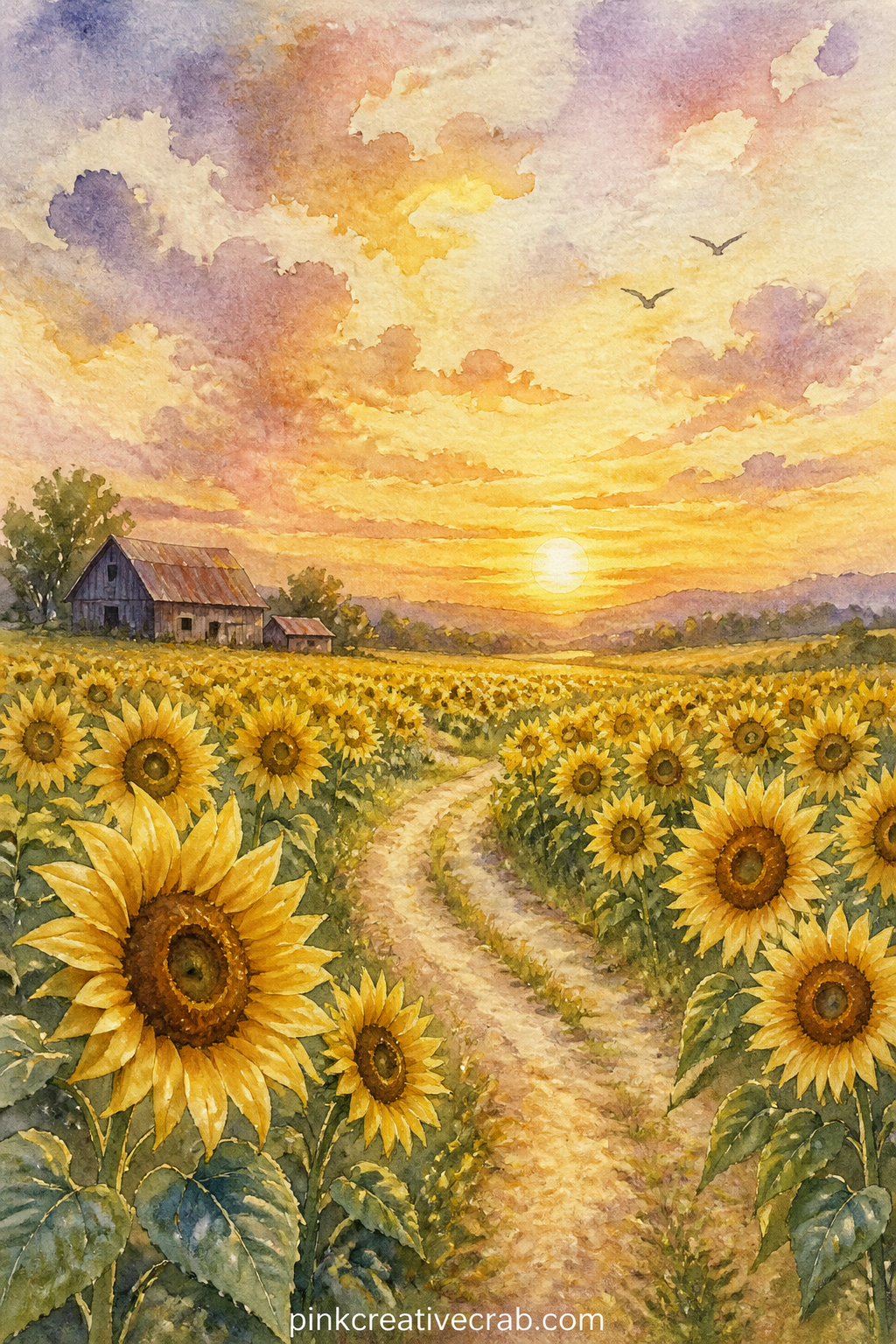
Rows of sunflowers turn their faces toward a low orange sun in this one, a quiet gold and lavender sky stretching behind the whole field.
Pair this page with the gingham background paper later in this set: glue a small square of it behind the page as a border peeking out along one edge, so the kitchen fabric pattern frames the dewy field.
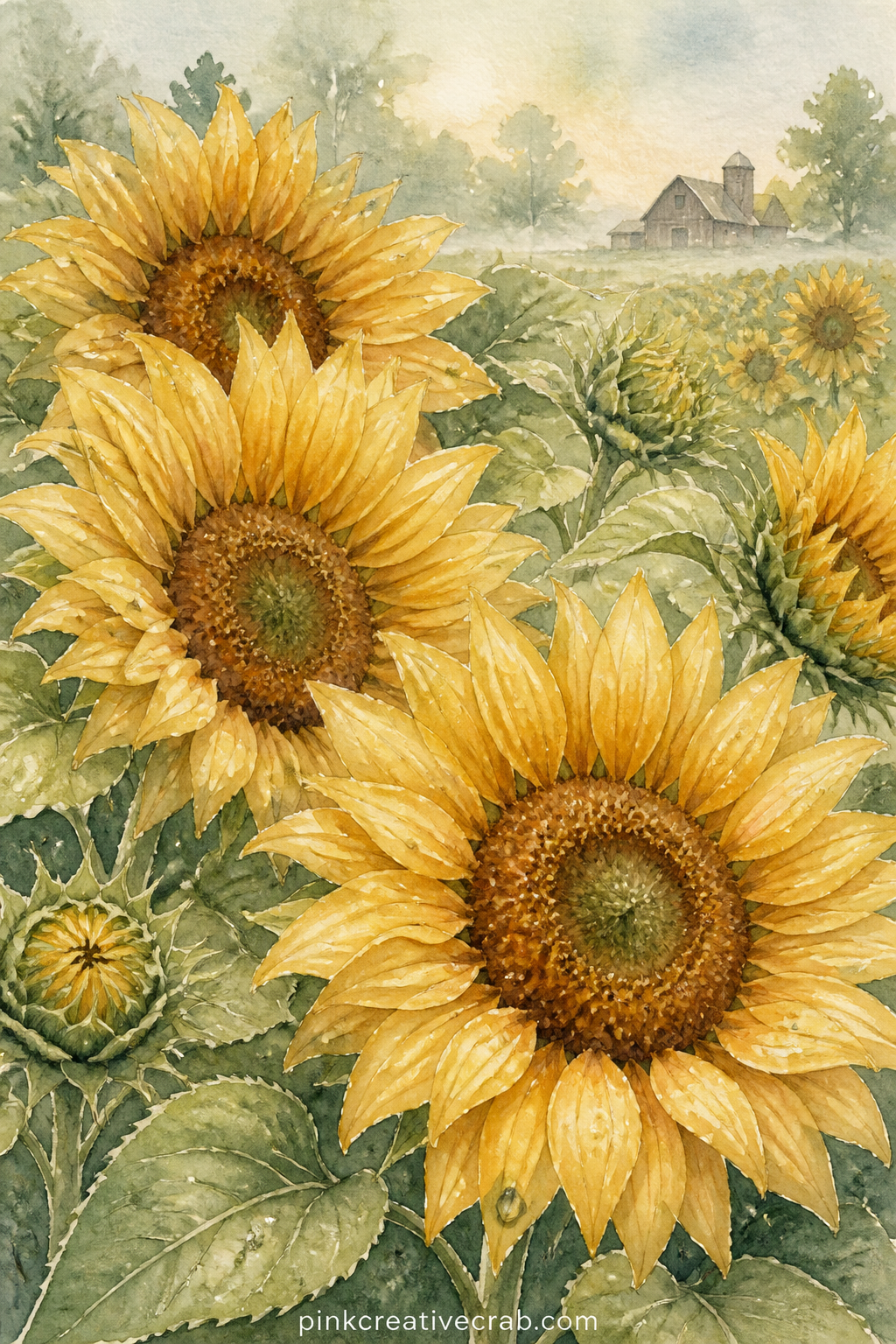
The sunflowers here lean slightly, heavy with early light, and a low mist sits along the ground behind them.
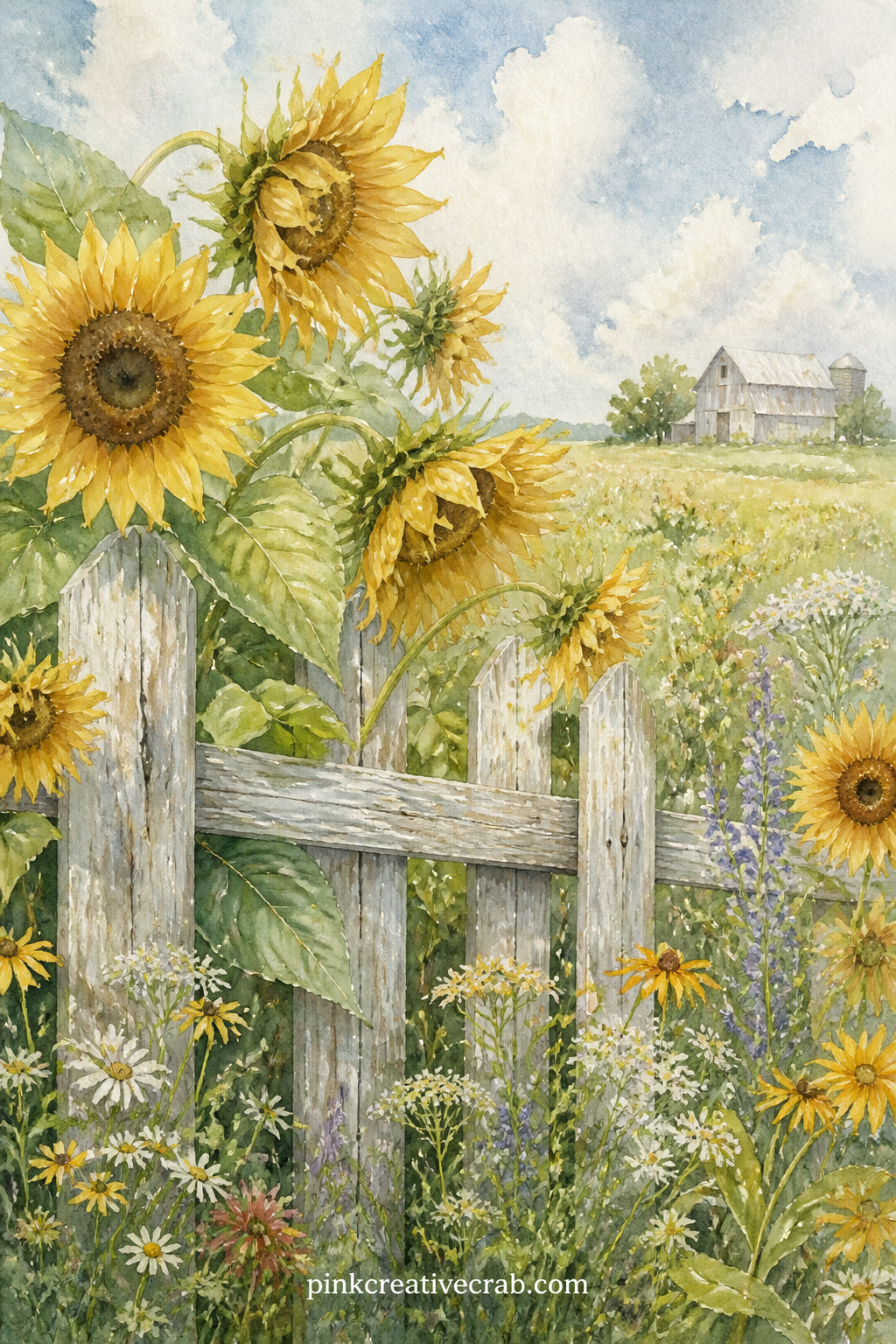
A simple wooden fence catches the eye first, then a loose crowd of tall sunflowers leaning over it toward an open meadow and pale blue sky beyond.
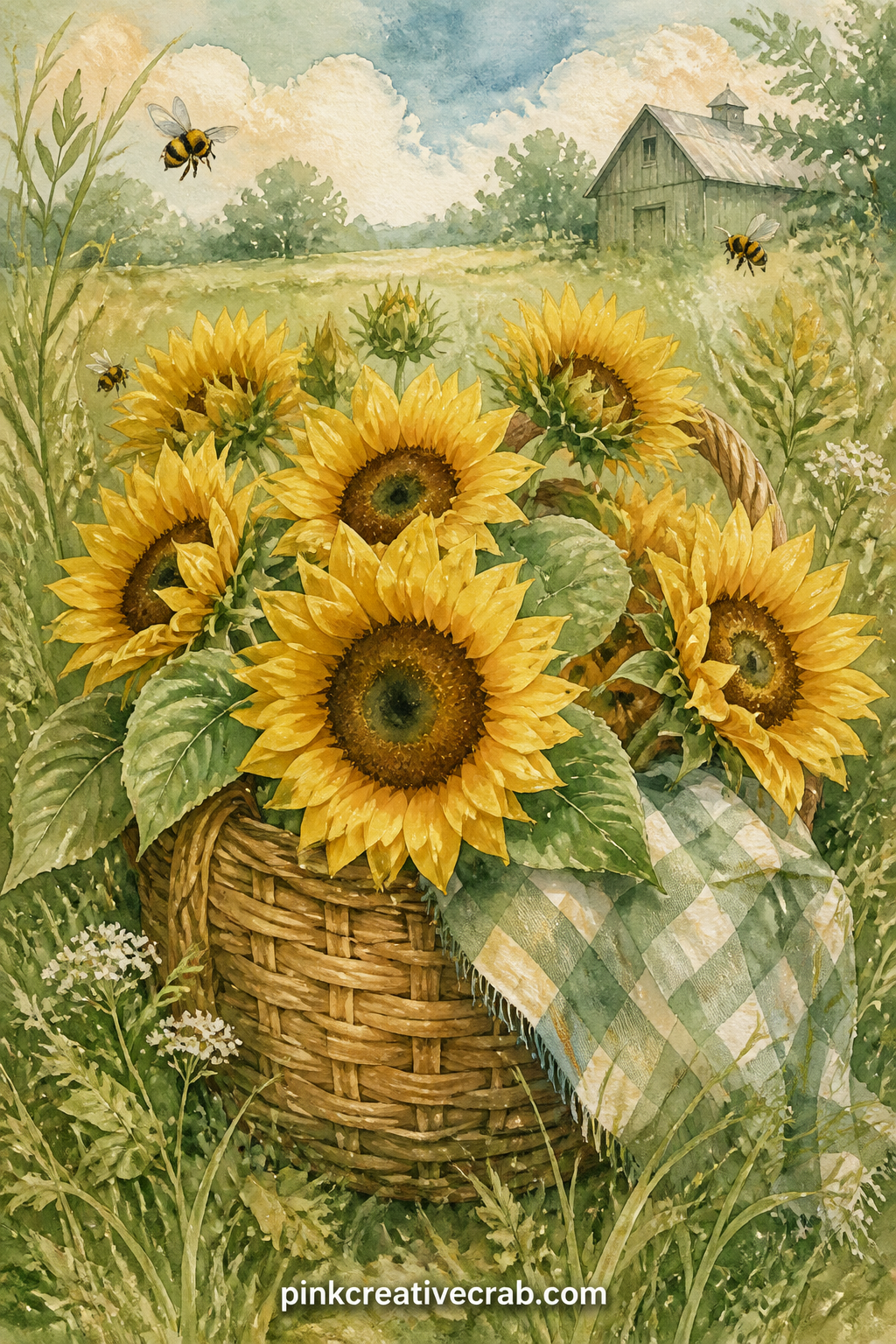
The usual mistake on a page like this is drawing a bouquet so tight it looks stiff: let two or three stems lean out of the basket at different angles so it reads as just-picked, not arranged.
A woven basket sits in tall grass, heavy with cut sunflowers and a few loose leaves scattered near its base.
Farmhouse Kitchen Pages
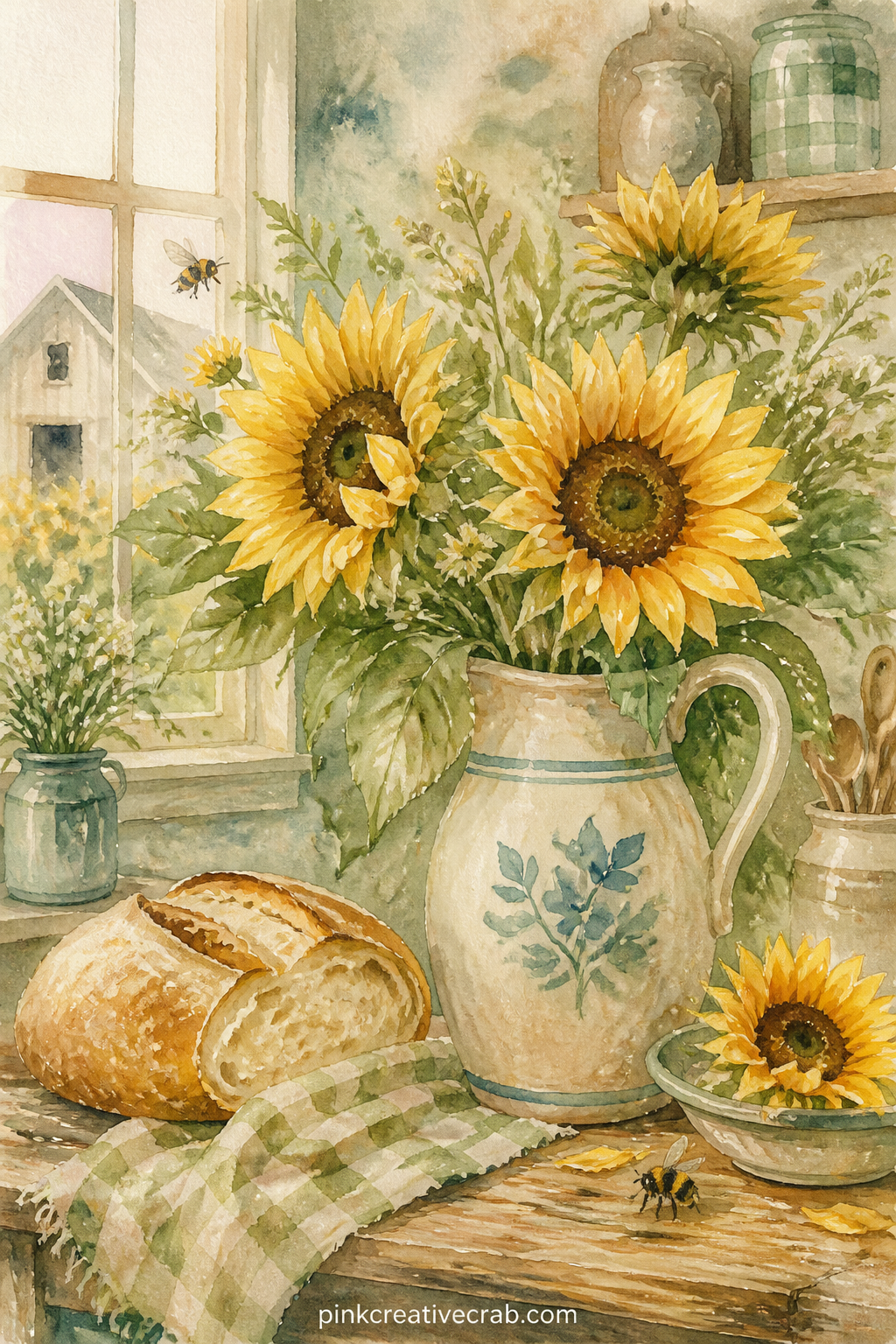
Write the name of a favourite summer recipe along the bottom edge of this page, tucked between the jug and the bread basket, so the scene doubles as a title page for a kitchen section.
A ceramic jug stuffed with sunflowers sits on a wooden farmhouse table, next to a loaf of bread and a folded gingham cloth, with a sunlit window painted behind.
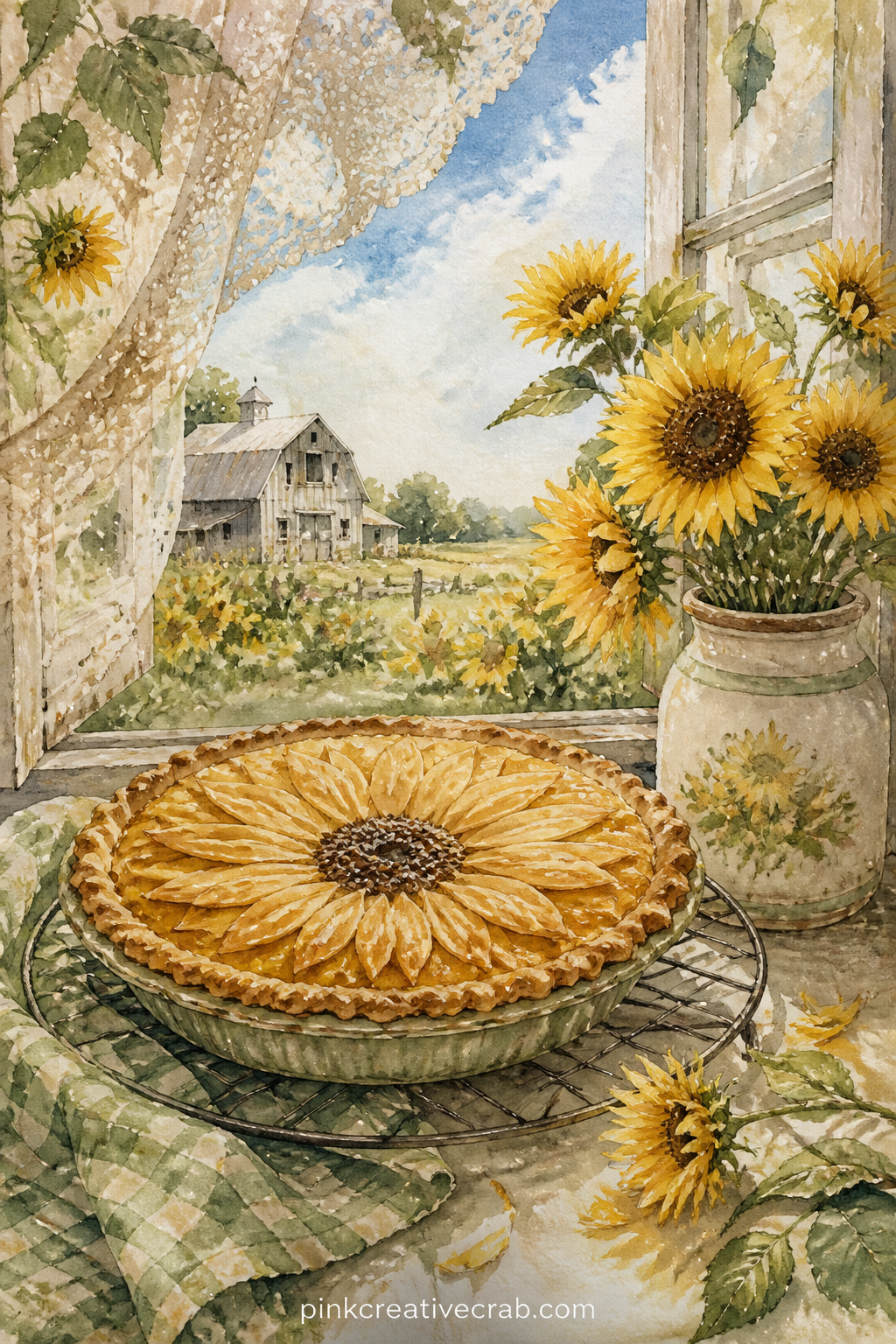
A pie cools on a windowsill, a small jar of sunflowers beside it and a lace curtain stirring in the open window behind.
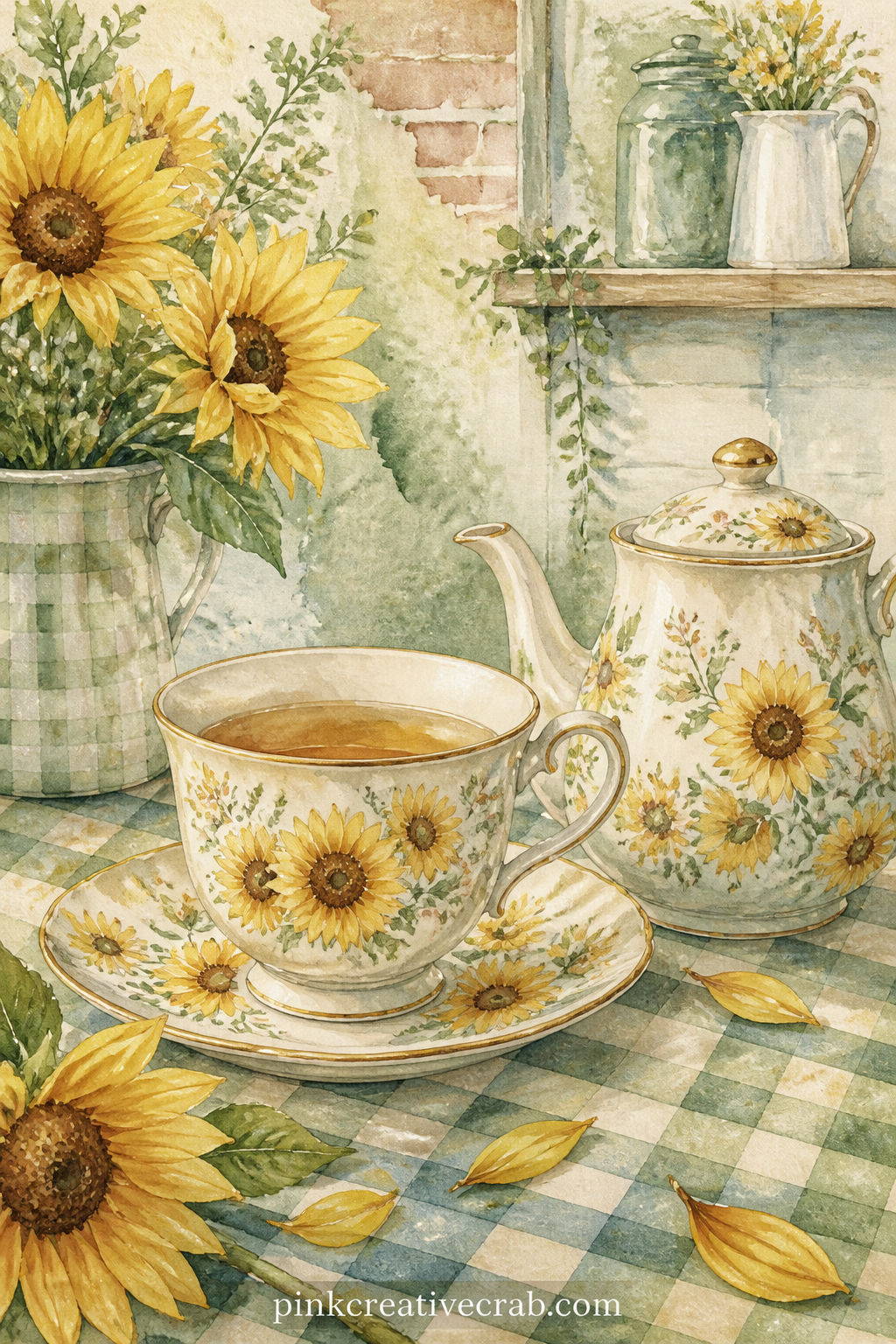
This page is for the reader who collects old teacups more than flowers: glue in a photo of her own cup over the painted one, or leave it as is for a cottage kitchen page.
A painted teacup patterned with tiny sunflowers sits on a saucer beside a small teapot, a few loose petals scattered on the table around them.
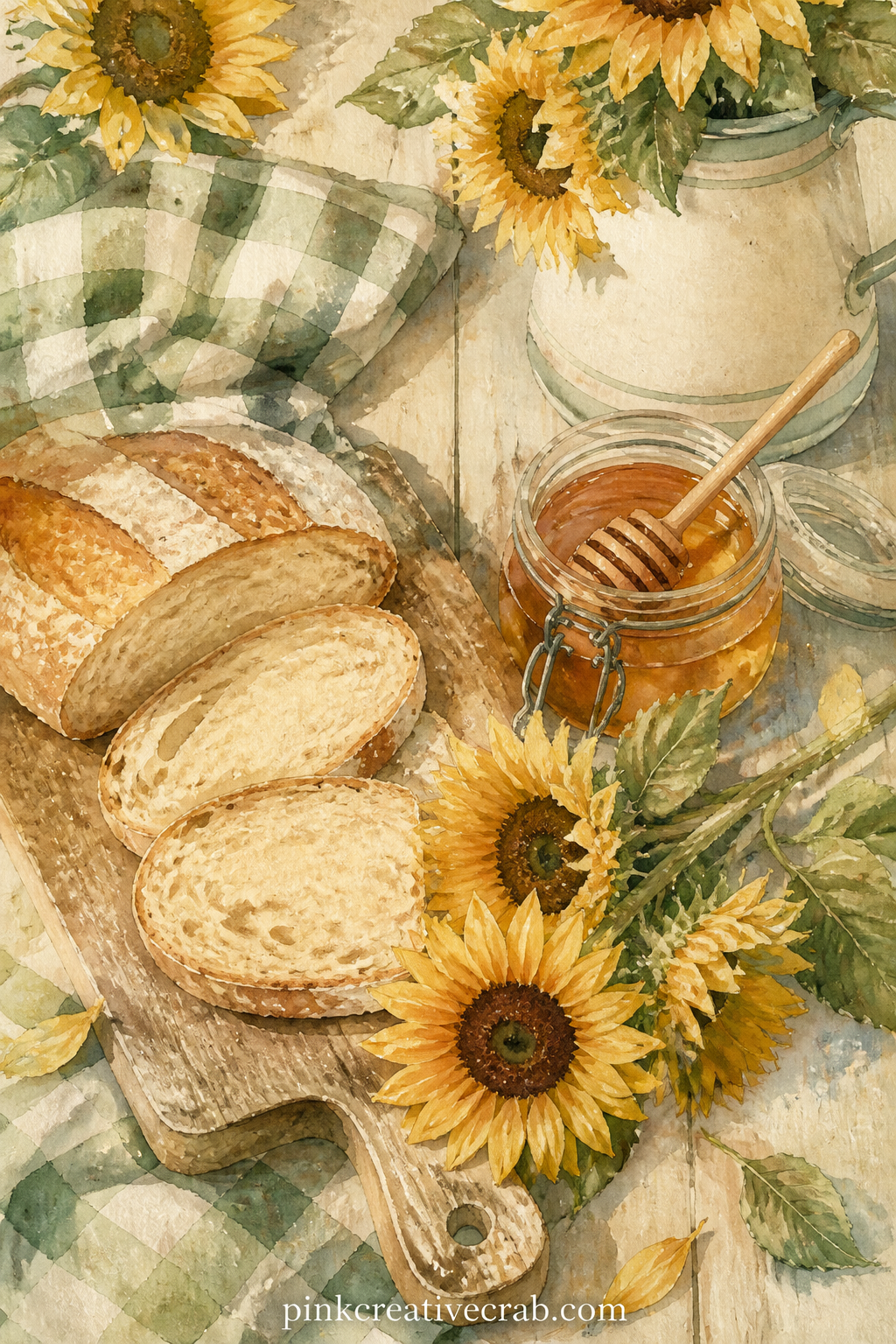
Sliced bread, a honey jar with a wooden dipper, and a short stem of sunflowers laid across the board behind them fill this one, a warm kitchen counter painted below.
Garden Life Pages
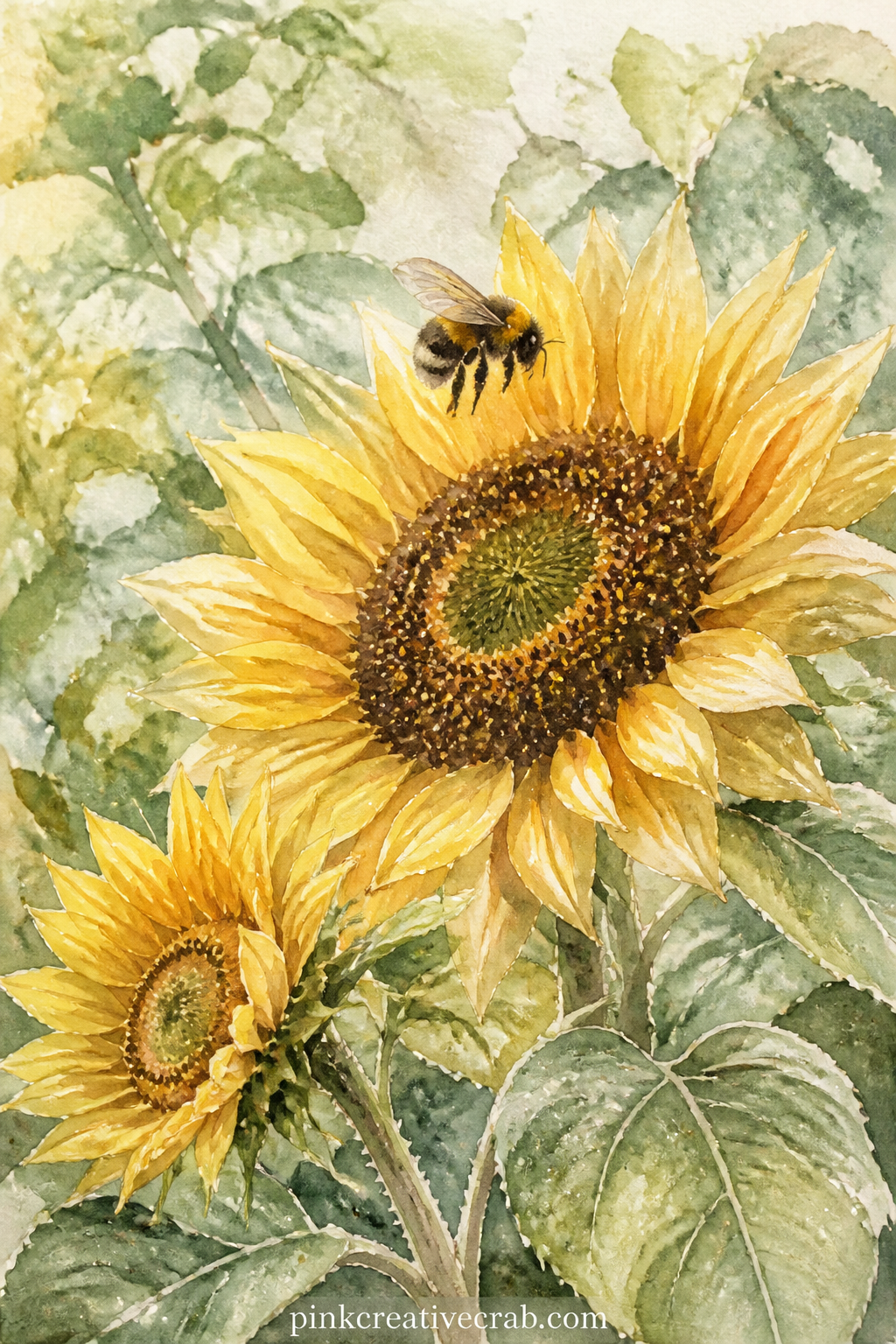
Glue a real pressed leaf or petal near the base of the stem on this one, the kind of small addition that makes a garden page feel gathered rather than only painted.
A bee hovers just above the center of a large sunflower head, a second smaller flower leaning beside it and a soft green garden painted behind both.
What landed on the page today, and did it stay long enough to notice its colors? A line or two about a real garden visitor fits well under this one.
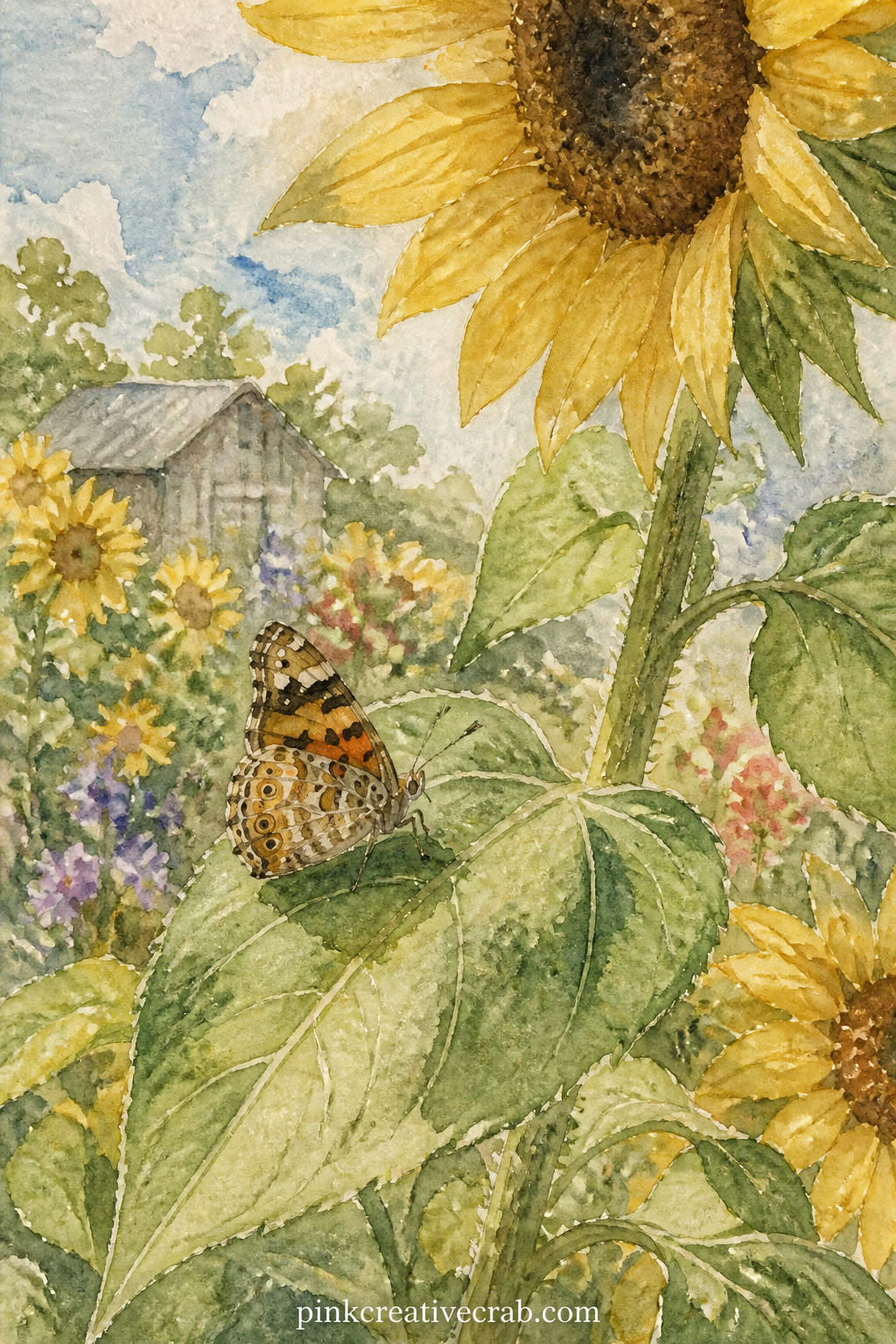
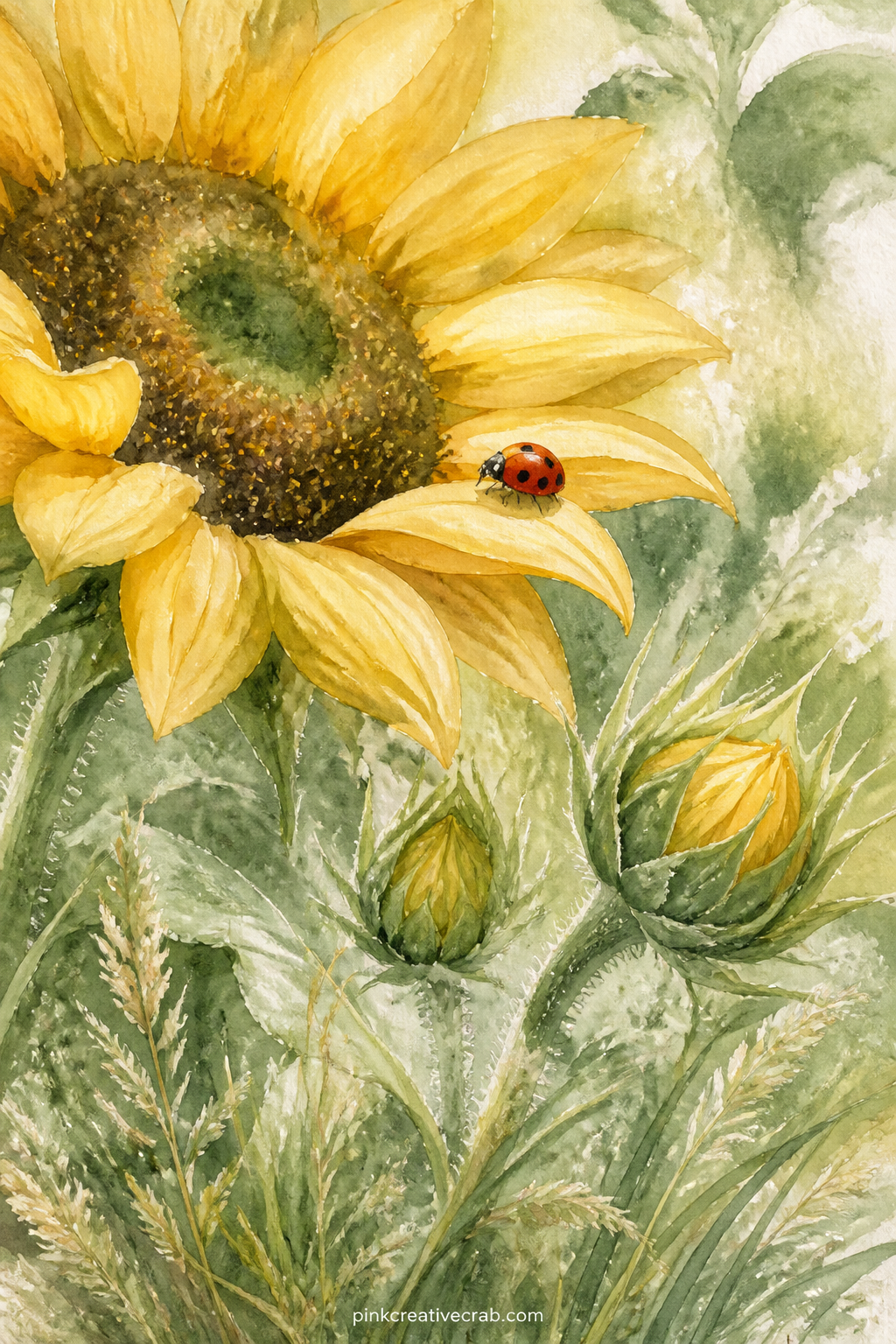
A ladybird rests on the edge of a curling sunflower petal, two smaller buds nearby and a patch of soft grass painted beneath the whole scene.
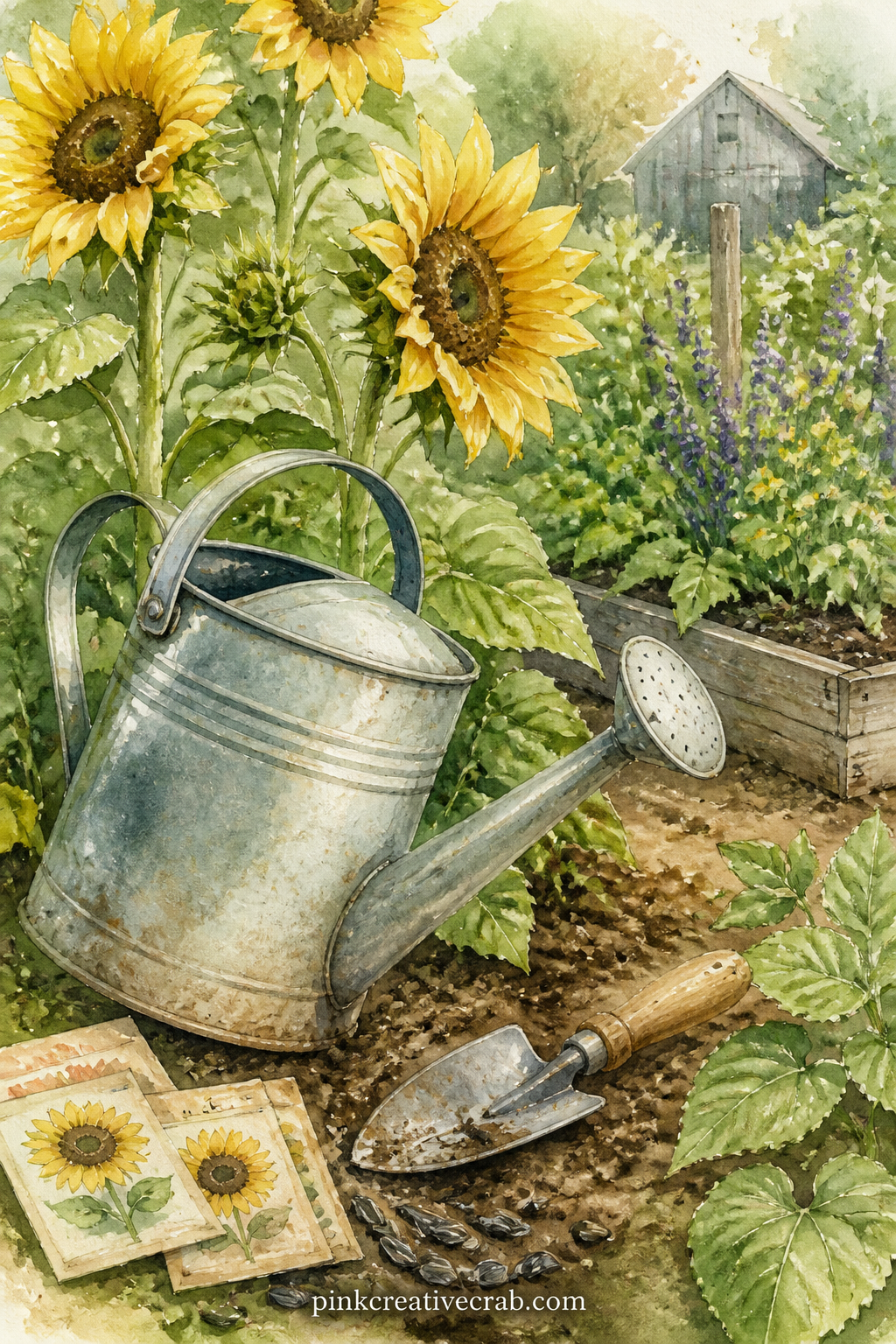
An old tin watering can leans against a row of young sunflowers, with a trowel and a scatter of seed packets lying nearby on the soil.
Barn and Countryside Pages
Tear the right edge of this page unevenly before gluing it in, so the barn’s roofline seems to continue past the paper, a small trick that works well for any page with a strong horizon.
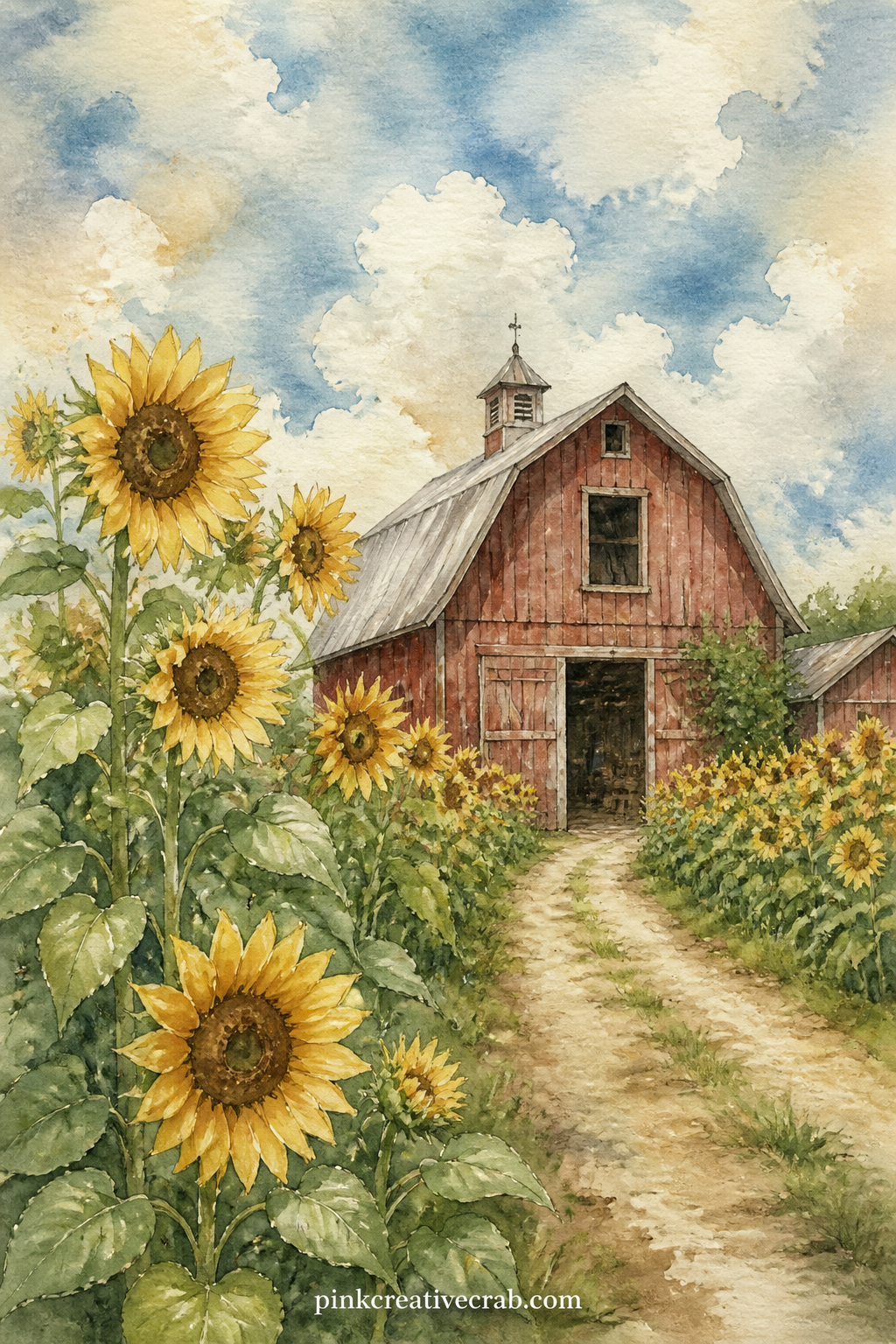
A weathered red barn rises behind a row of tall sunflowers, a dirt track leading toward its open door and a wide sky painted above the whole scene.
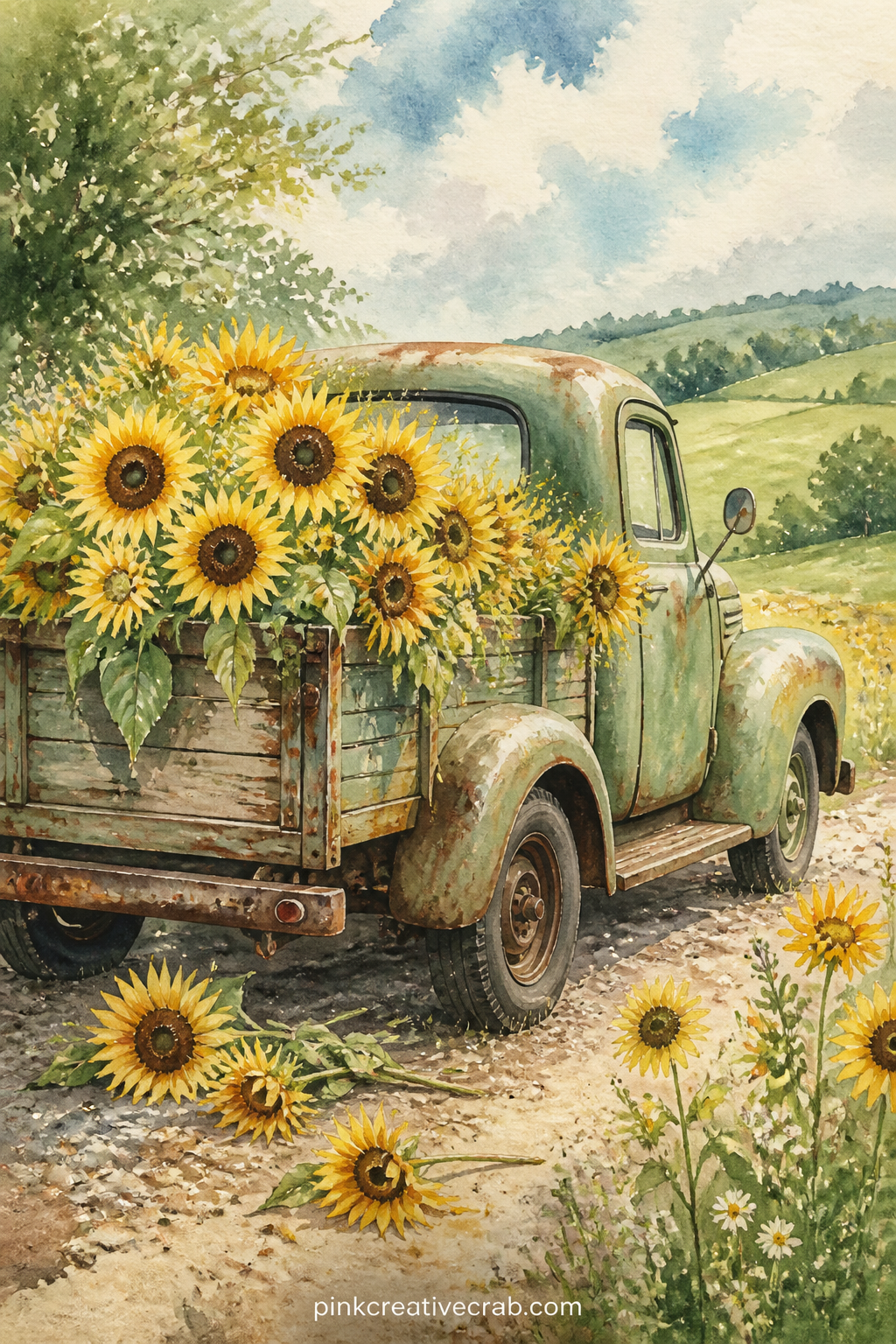
Overflowing from the bed of a rusted farm truck, loose sunflowers spill out onto a gravel lane, a quiet green hillside painted behind the whole load.
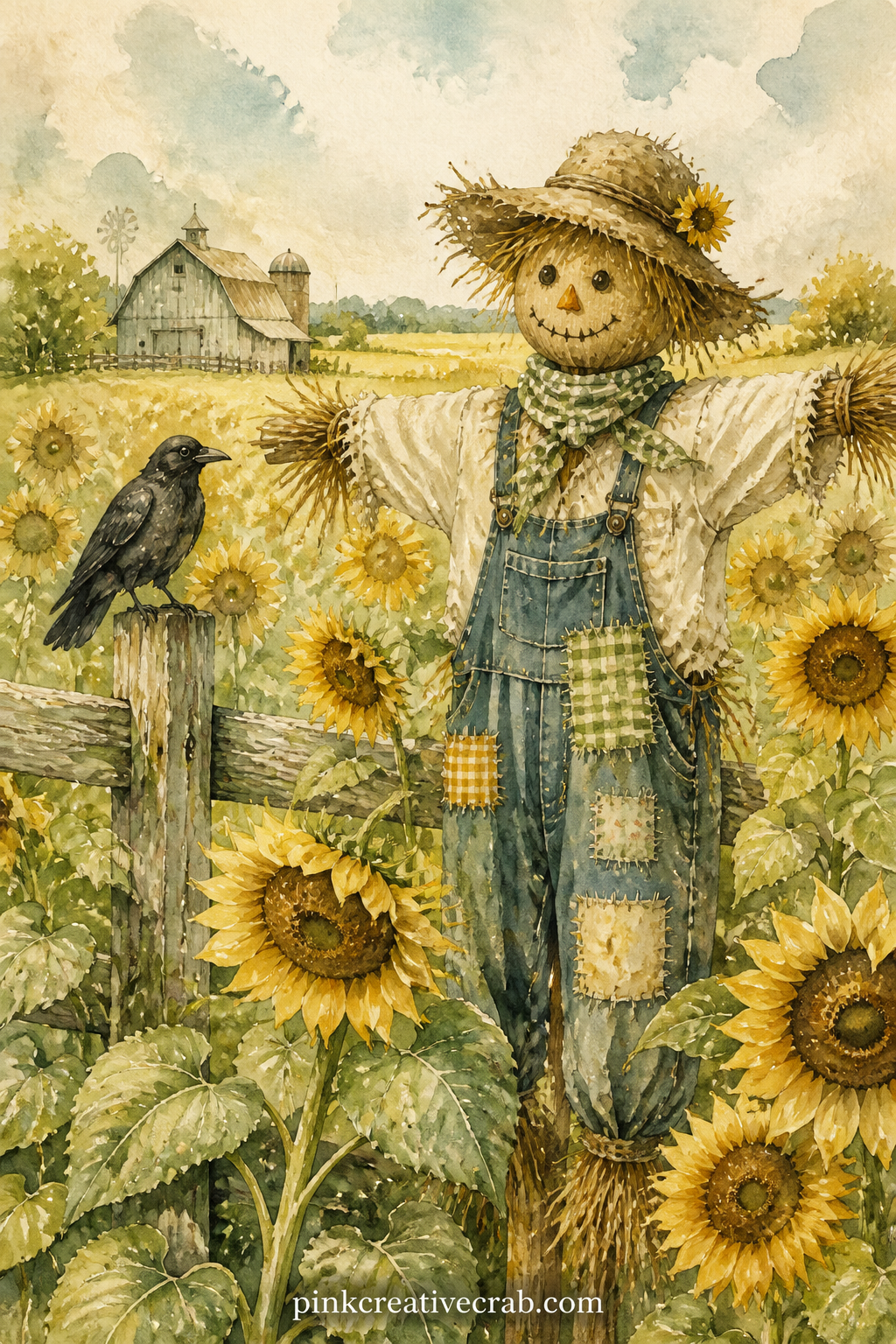
Pair this page with the seamless gingham background to come: cut a narrow strip of that pattern as a sash on the scarecrow’s waist before gluing this page in, tying the field and the farmhouse fabric together.
A patched scarecrow stands among leaning sunflowers, a crow perched nearby on an old fence post, with a wide golden field painted behind.
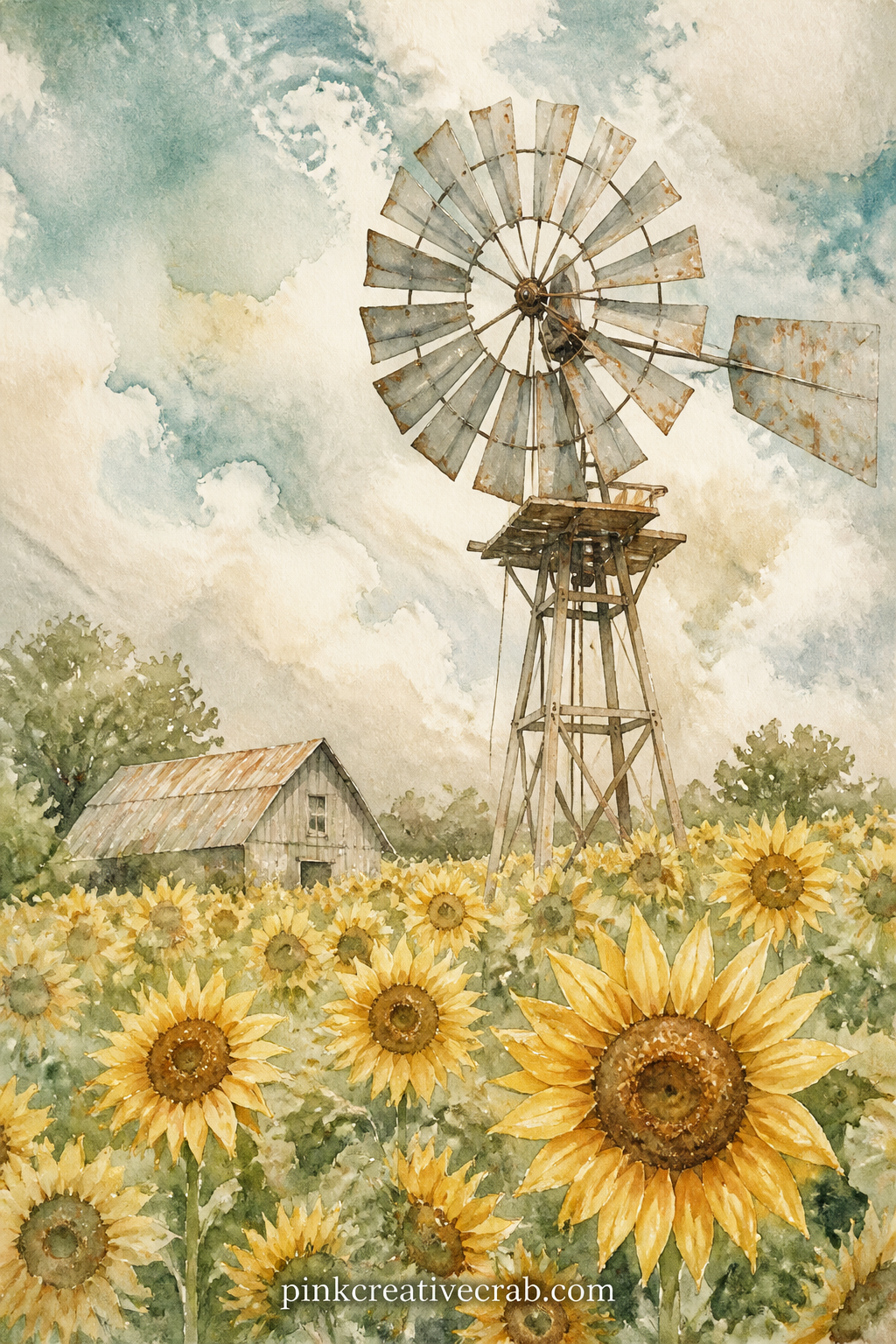
A weathered windmill turns slowly over a stretch of sunflowers, its blades caught mid turn against a soft clouded sky.
Porch and Windows Pages
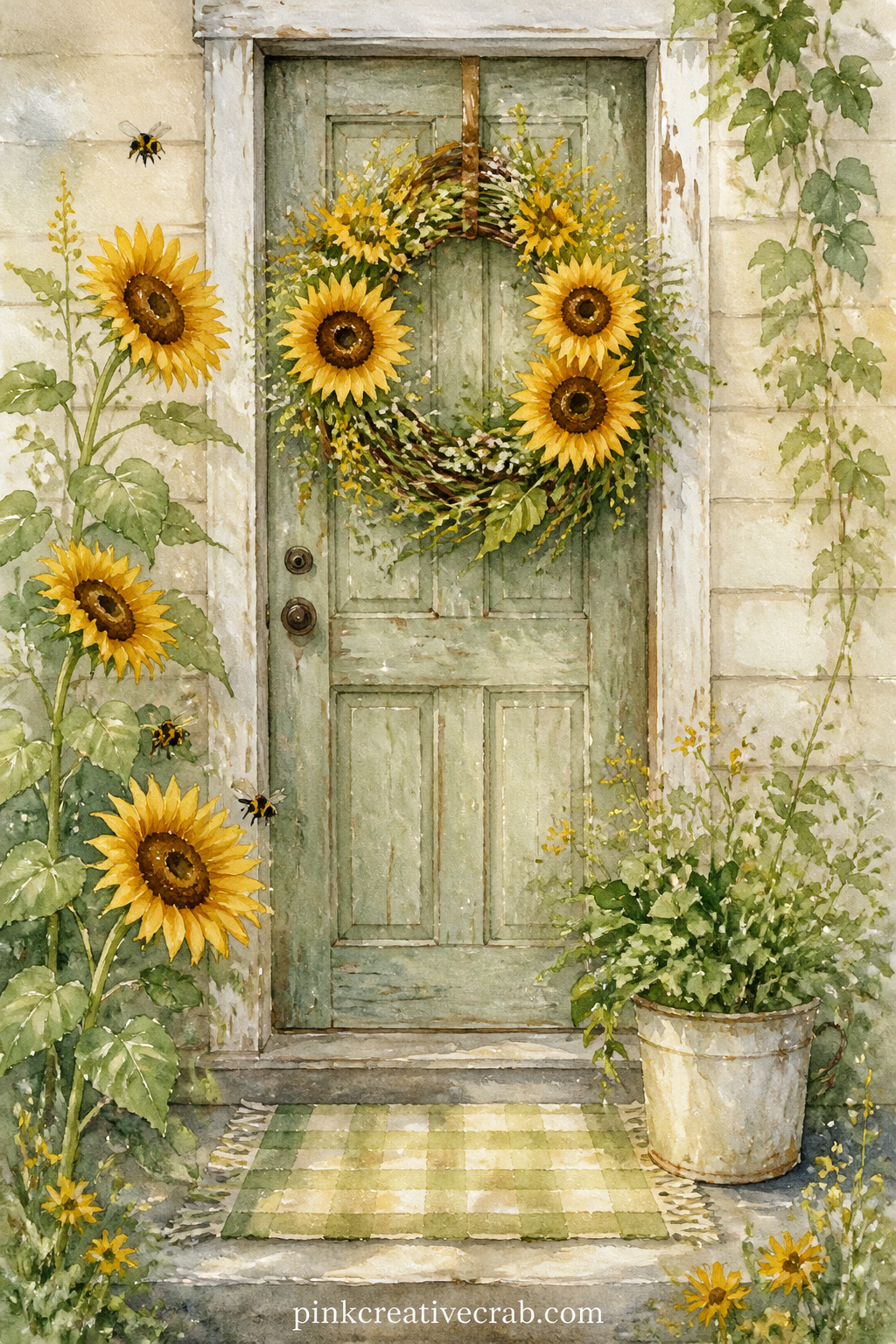
The five minute version of this page: paint or print only the wreath and the door panel below it, skip the porch details entirely, and still have a page worth gluing in.
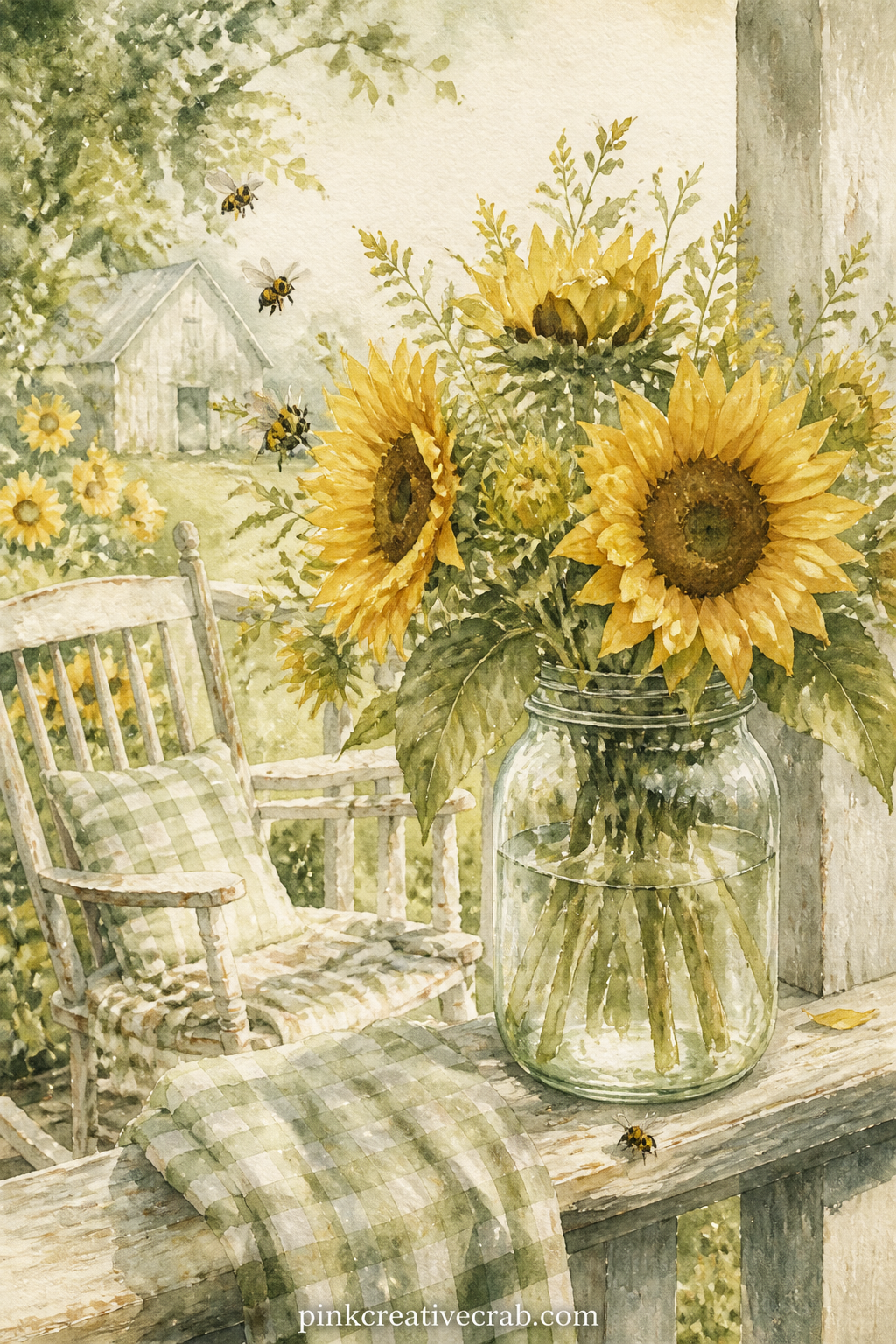
A mason jar of sunflowers sits on a porch rail, a rocking chair just visible behind it and a stretch of soft green yard painted beyond the railing.
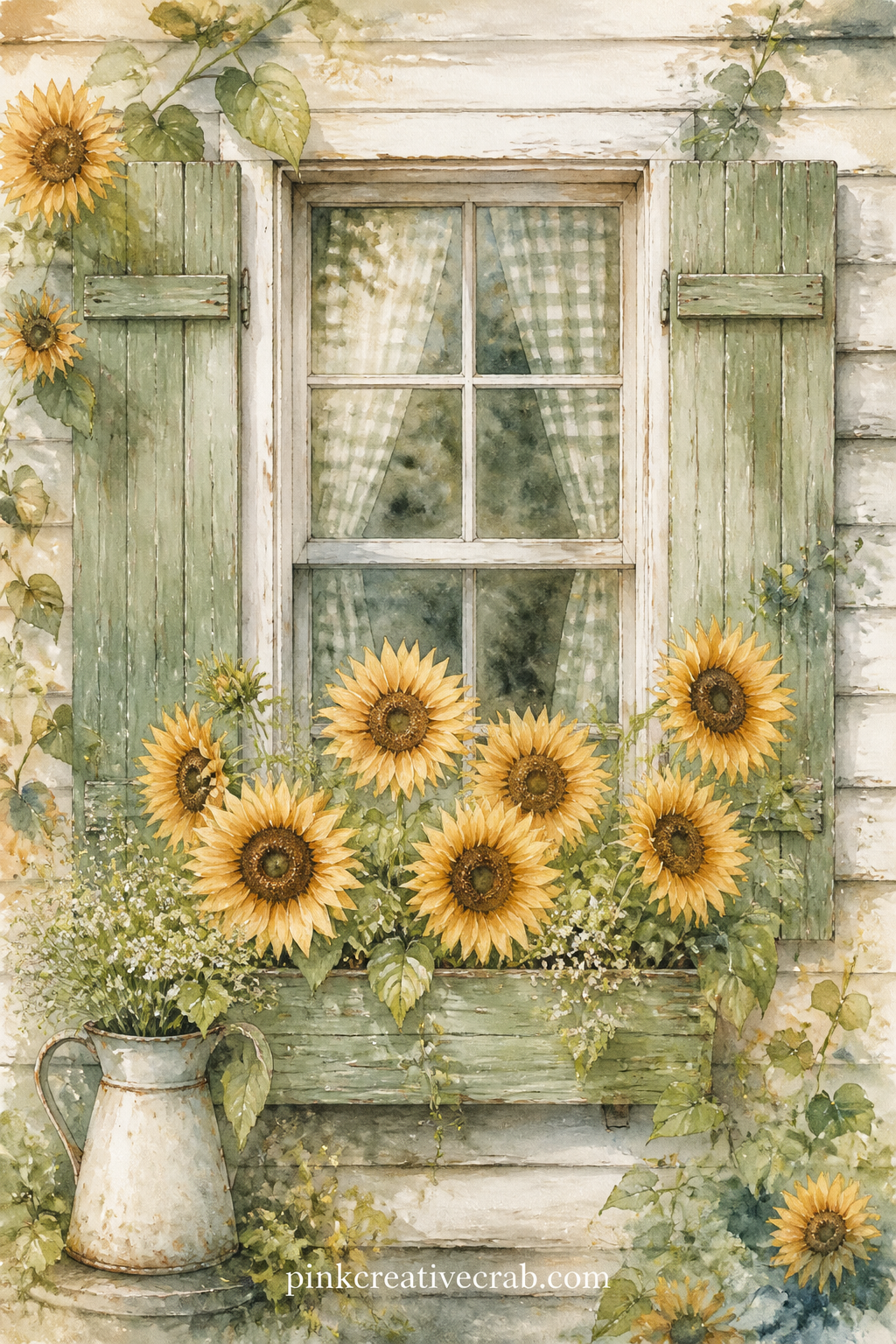
A window box crowded with sunflowers sits below shuttered farmhouse windows, the weathered wood siding painted around the whole frame.
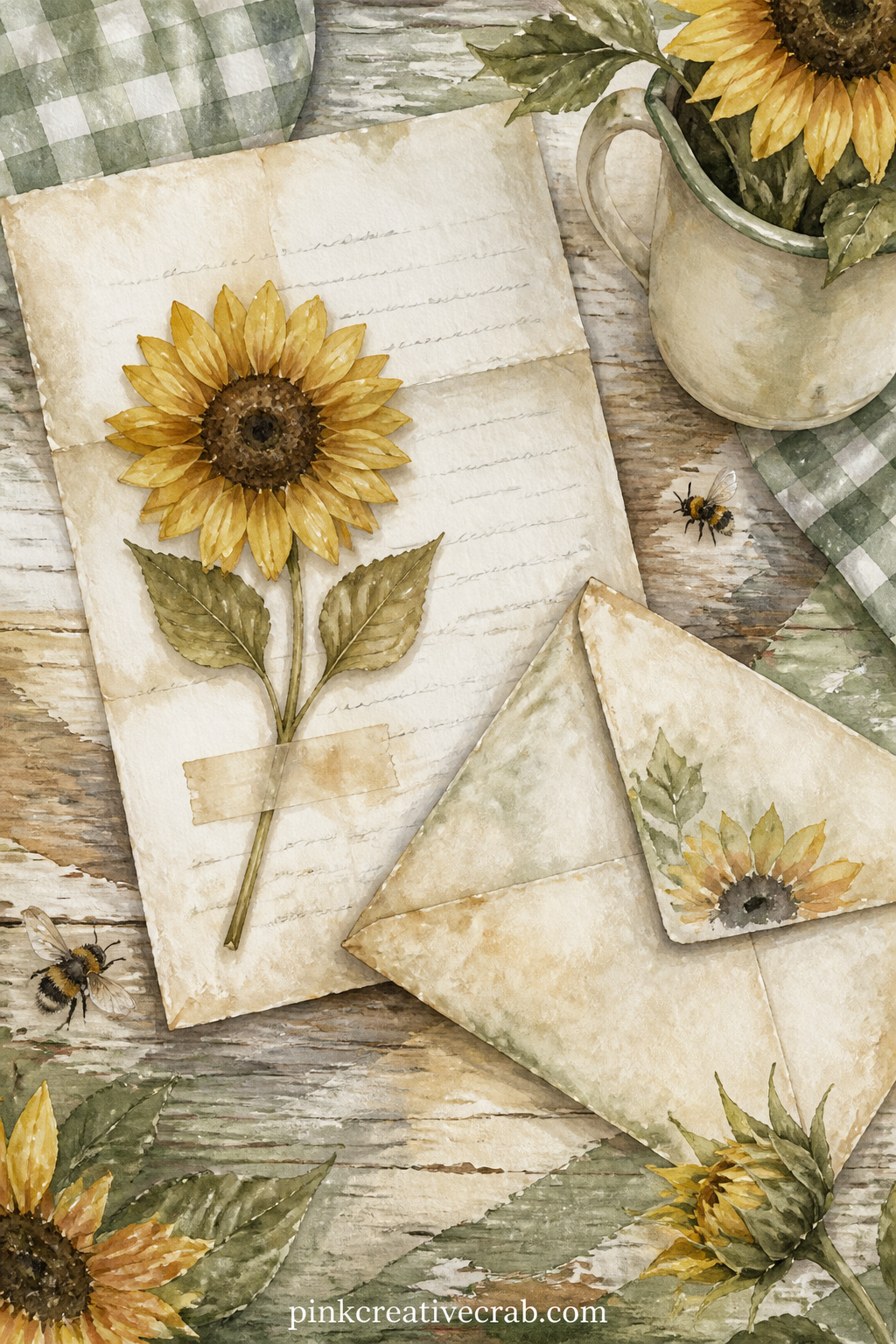
Who is this page for in a gift journal: the friend who writes real letters, not texts. Leave the folded paper inside blank enough for her to tuck in a note of her own later.
A handwritten letter lies half unfolded beside a pressed sunflower and an old envelope, a wooden table surface painted beneath the whole still life.
Background Papers
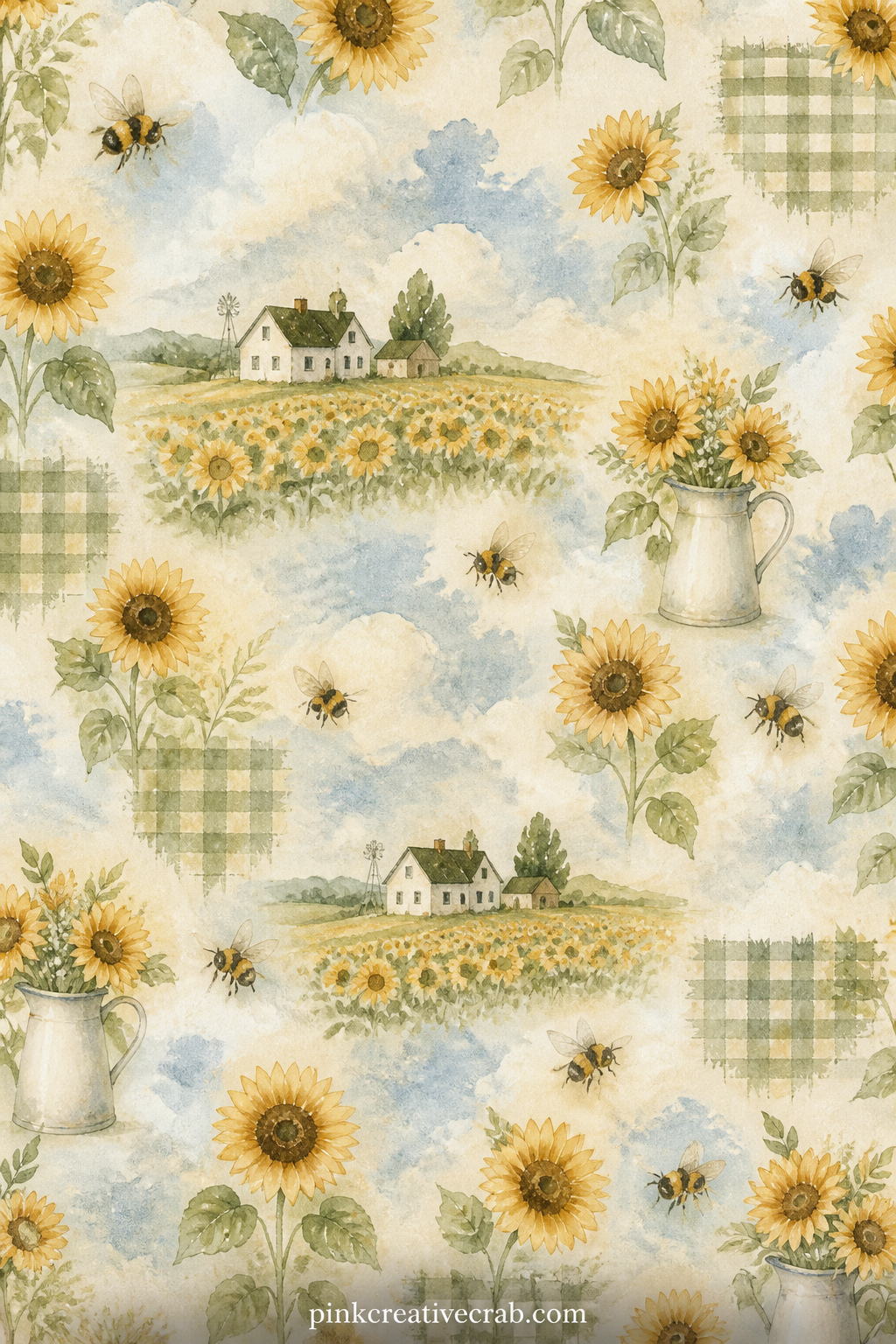
A small white farmhouse sits at the far edge of a sweeping sunflower field under a wide painted sky, closing this section the way the first field page opened it.
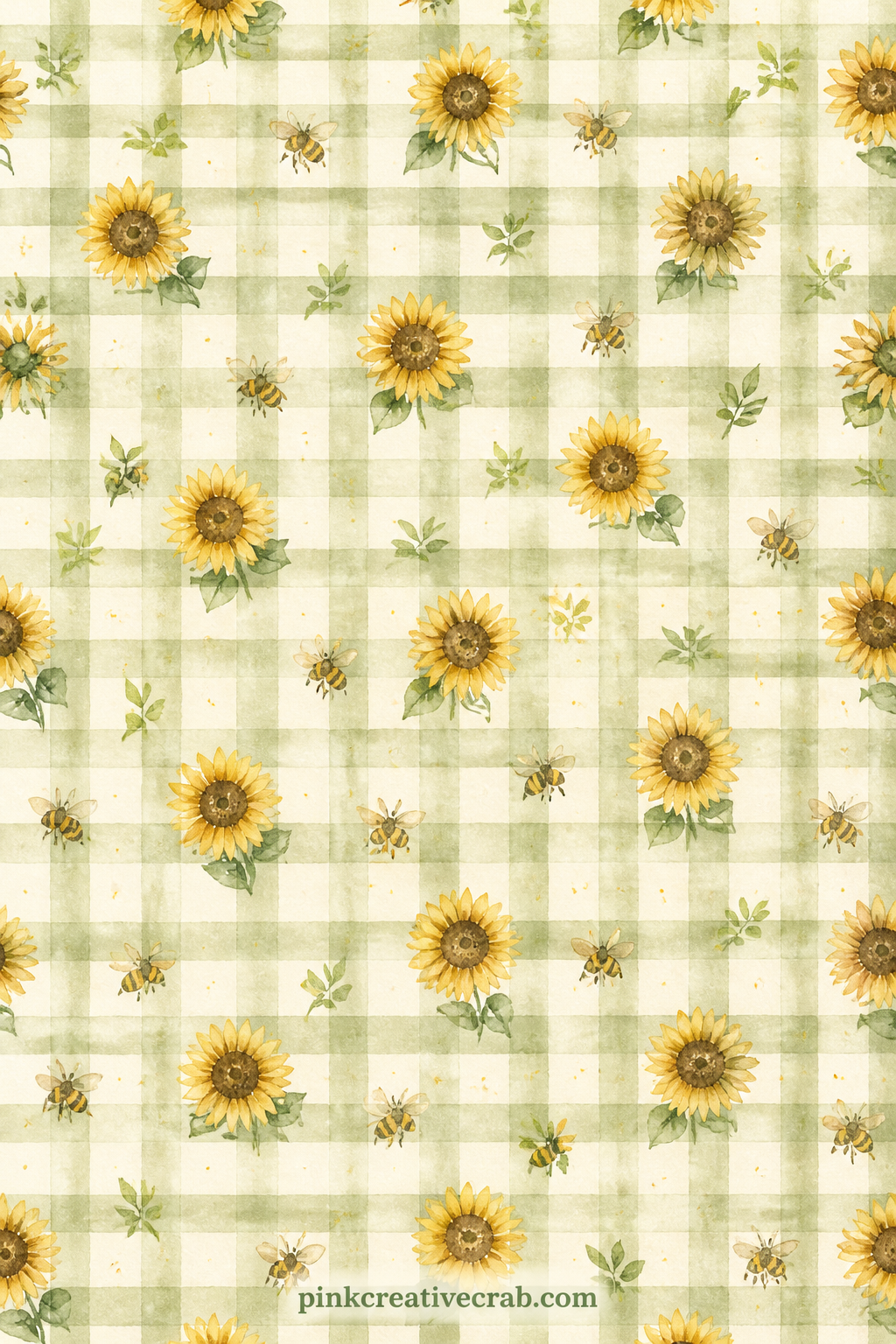
Small sunflower heads scatter over a gingham check in this all-over pattern, useful as a cover sheet, under a photo of a summer picnic, or cut down for a page border.
Rows of simple sunflower shapes repeat edge to edge, close enough in tone to sit quietly behind a photo yet bold enough to work alone as a cover.
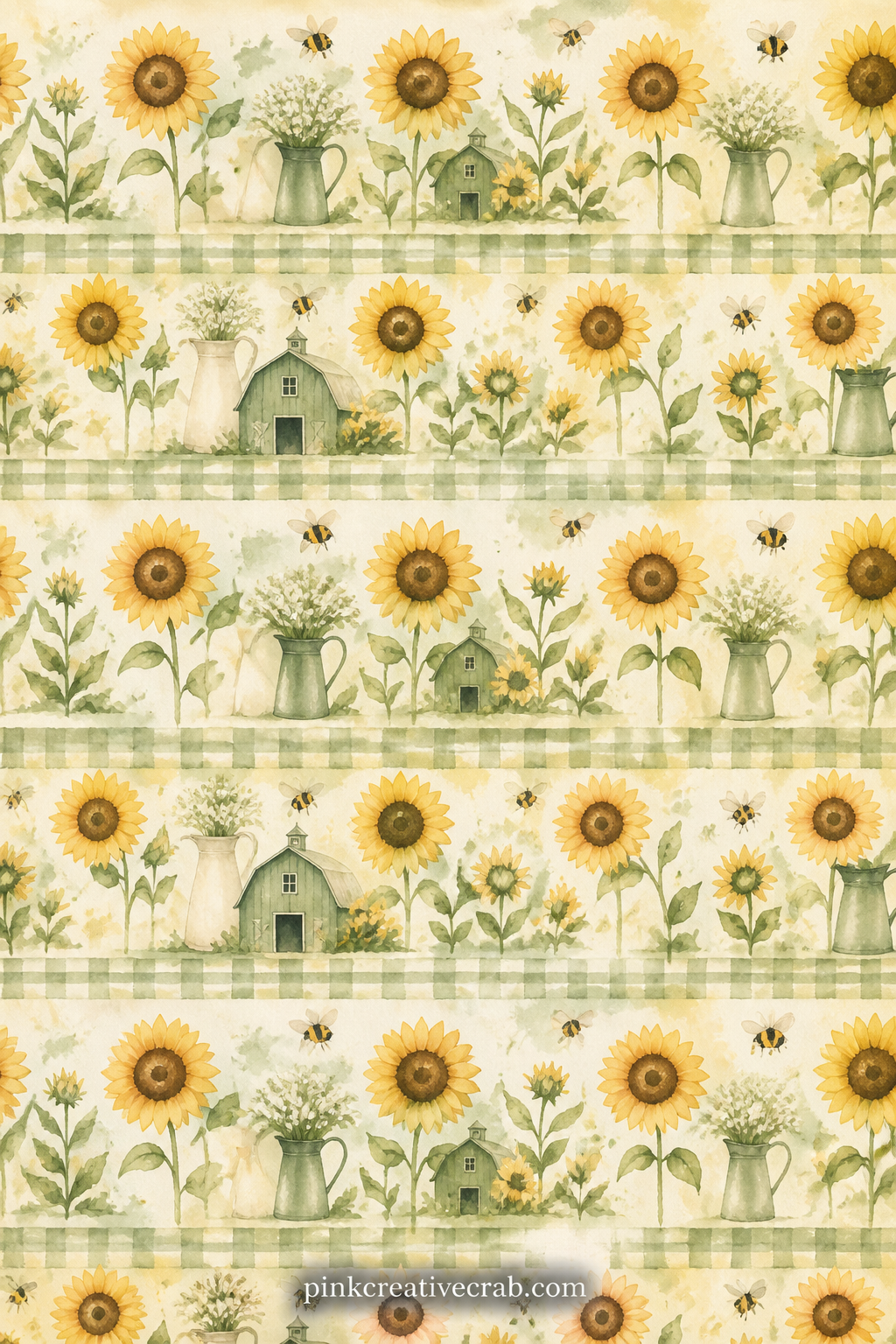
Scattered sunflower seeds and small leaf shapes drift loosely over the whole sheet, good as a photo backing, under a kitchen section, or as a lining behind a torn page edge.
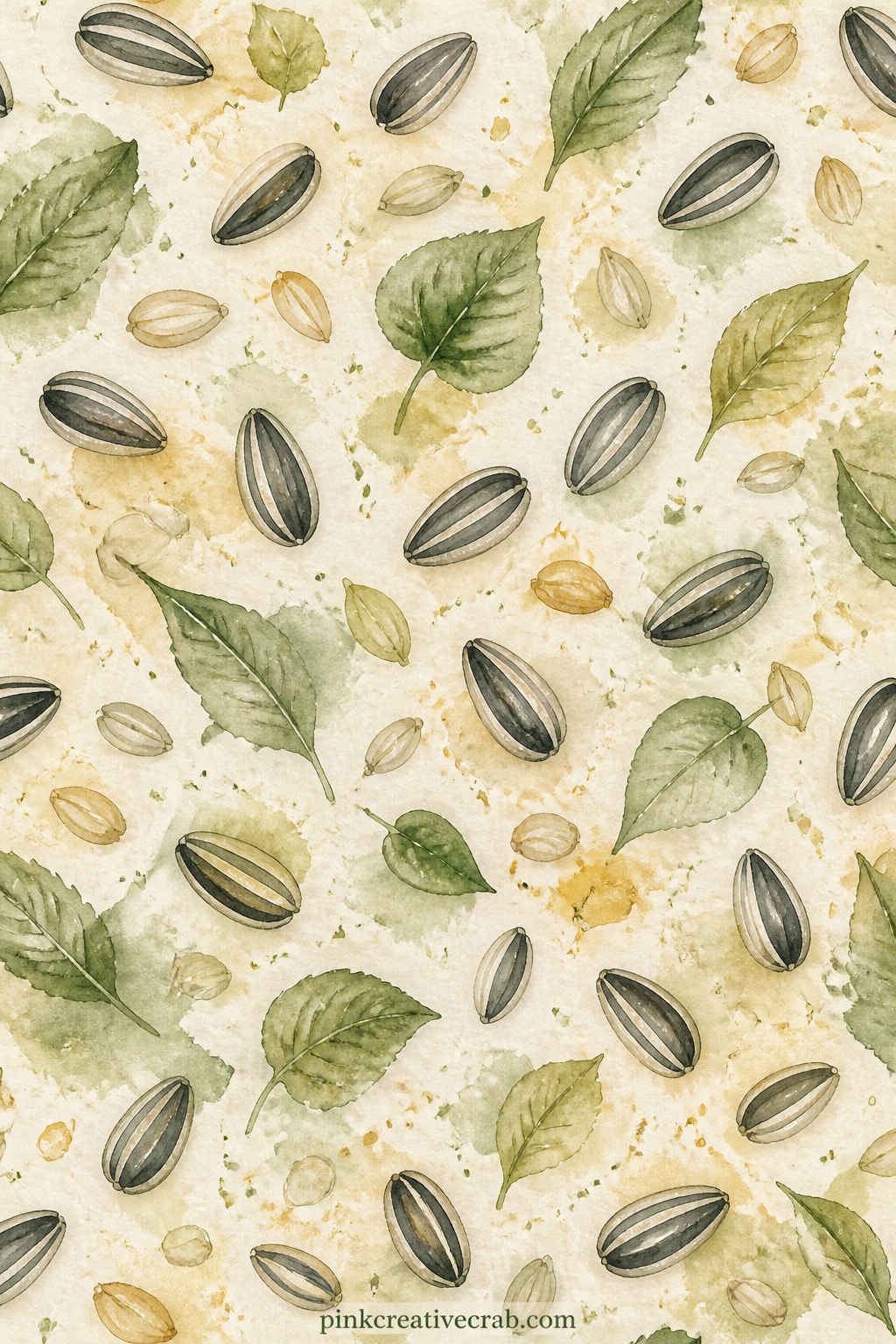
Lined Writing Pages
Soft vertical stripes alternate with narrow bands of tiny sunflowers, steady enough to use as a cover sheet or to back a run of scene pages in one section.
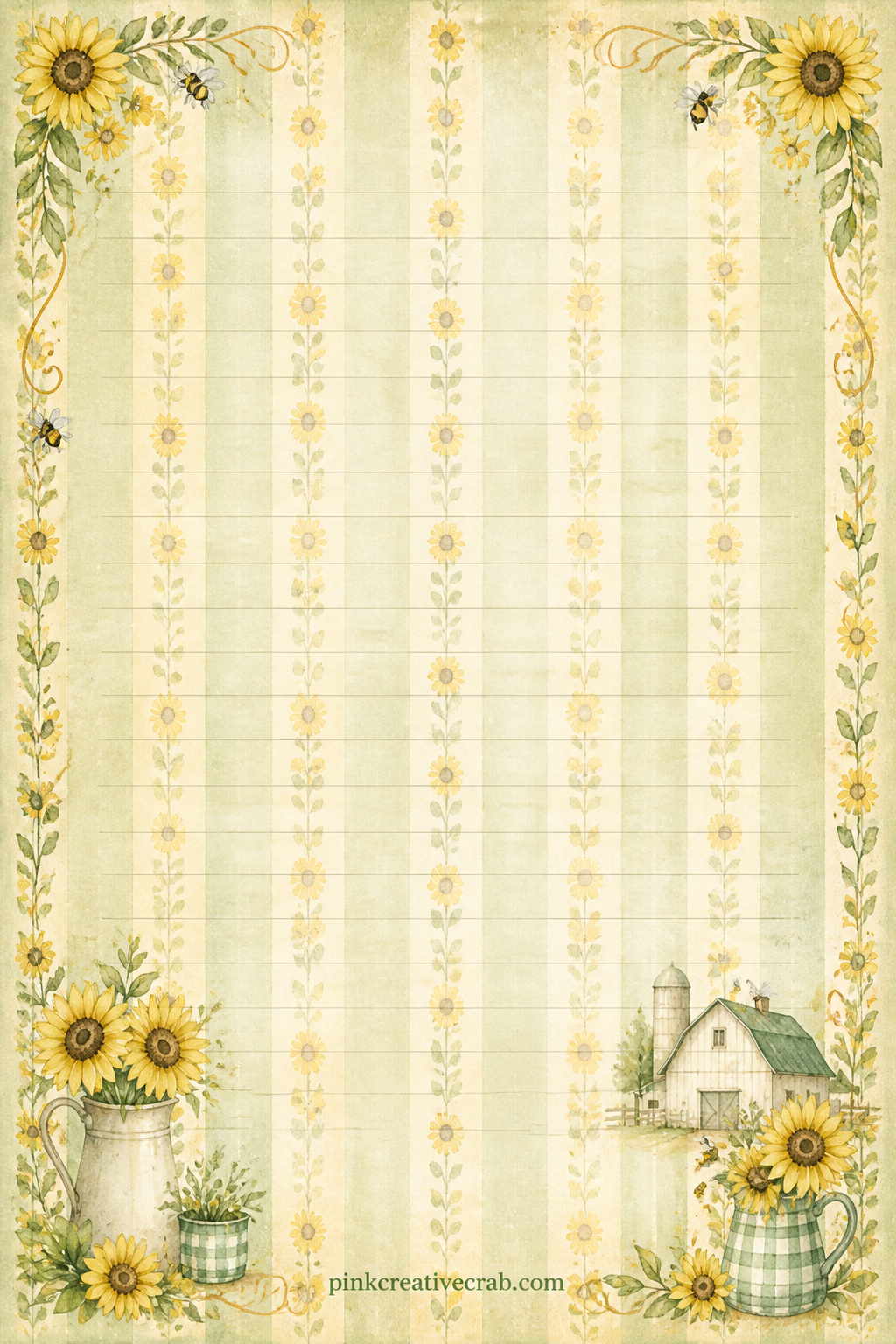
Corner sprays of sunflowers frame the ruled lines here, ready for a gift list, a note about the summer garden, or a short letter to next year’s self.
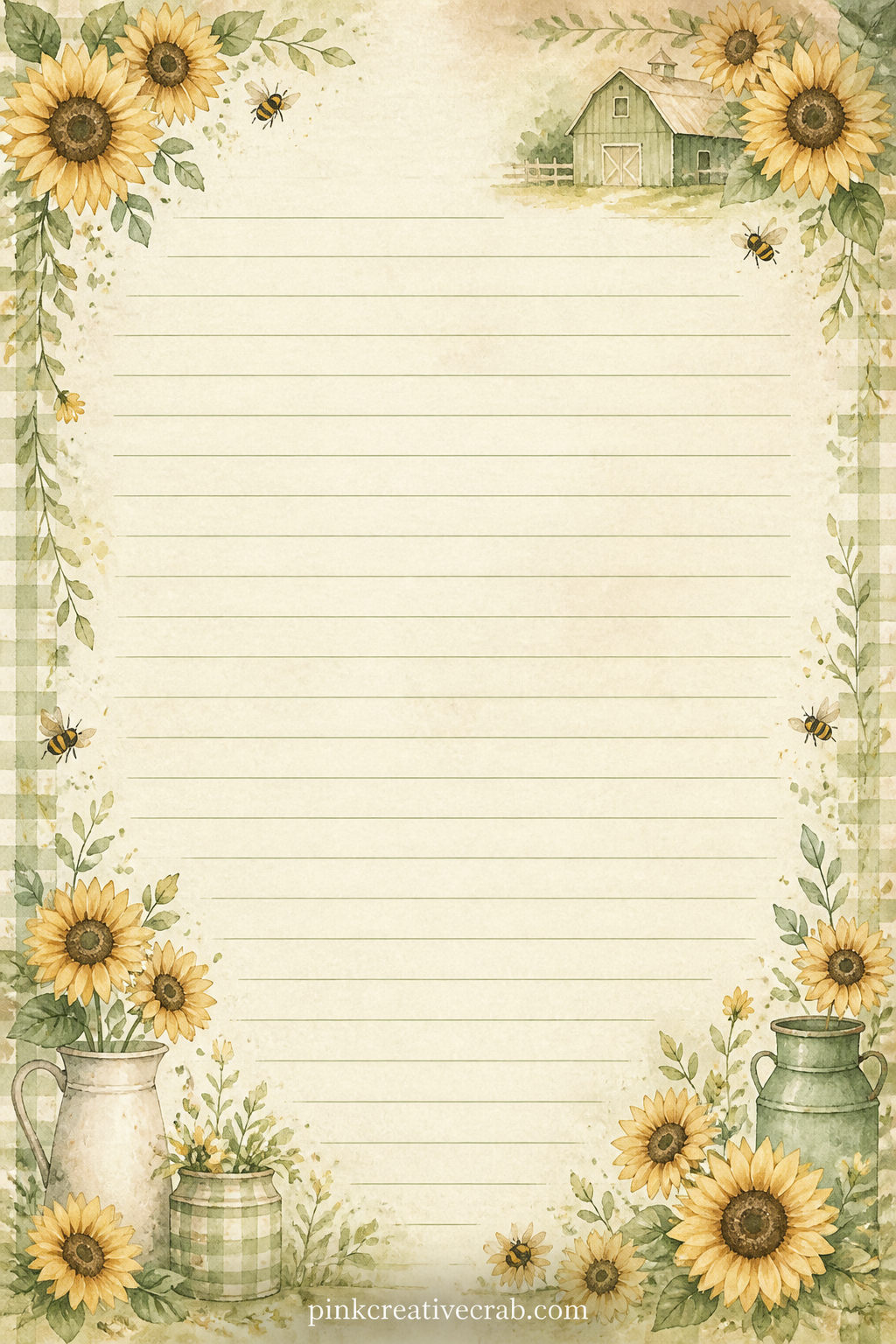
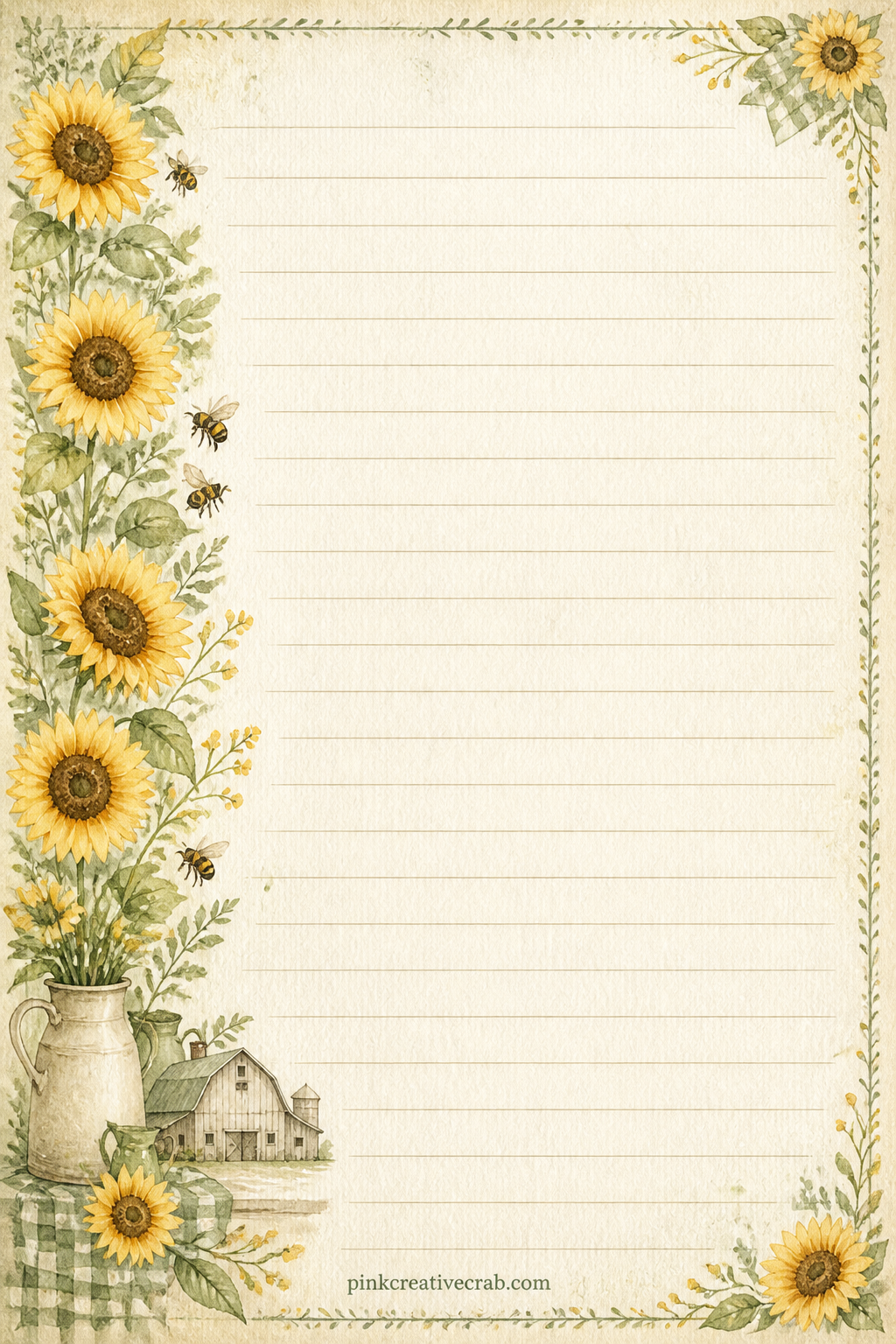
A narrow band of sunflowers runs down the left edge, leaving the ruled lines free for a farmhouse recipe, a packing list for a summer trip, or a daily note.
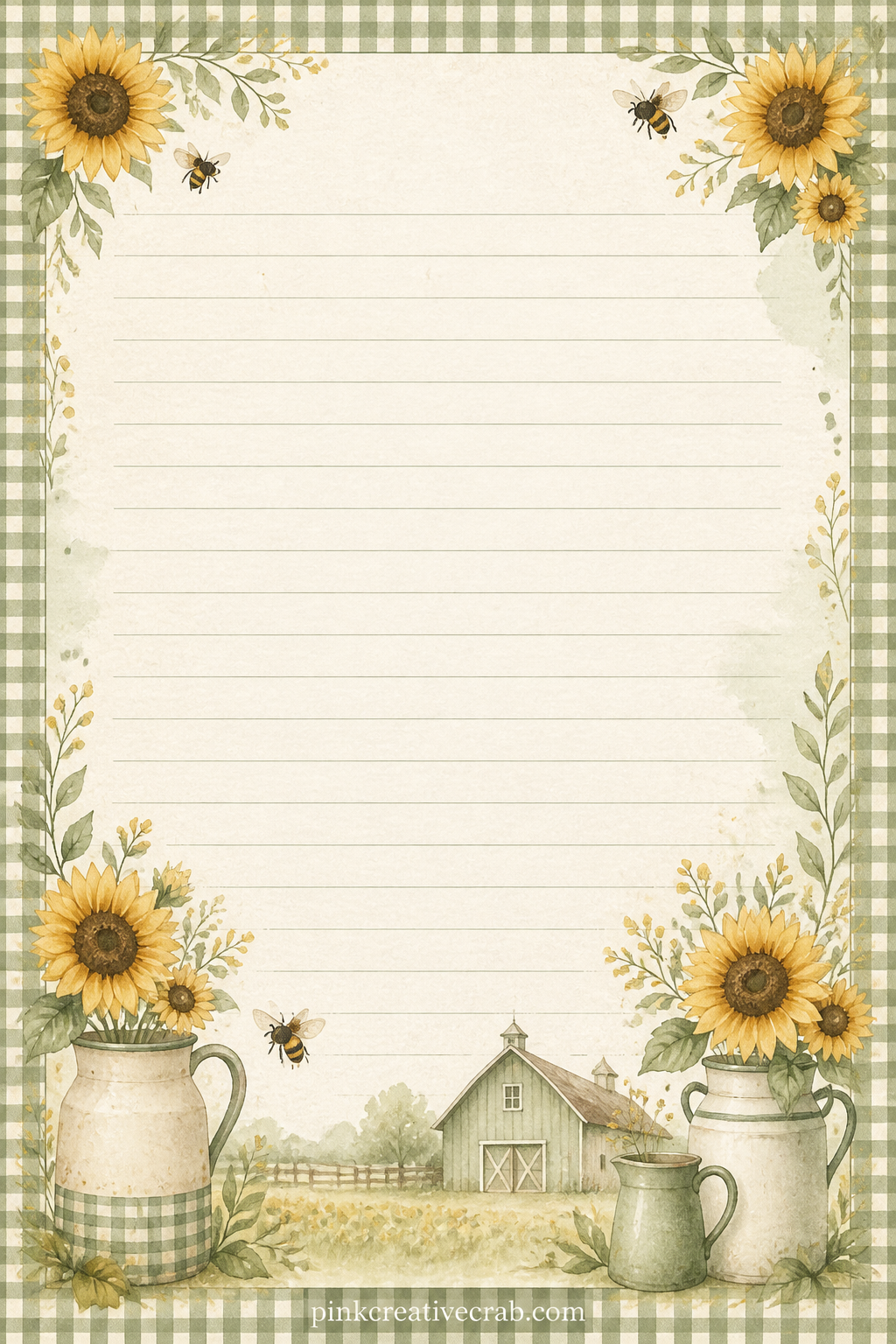
A thin gingham frame borders this page, suited to a kitchen memory, a list of summer visitors, or a note about what grew well in the garden this year.
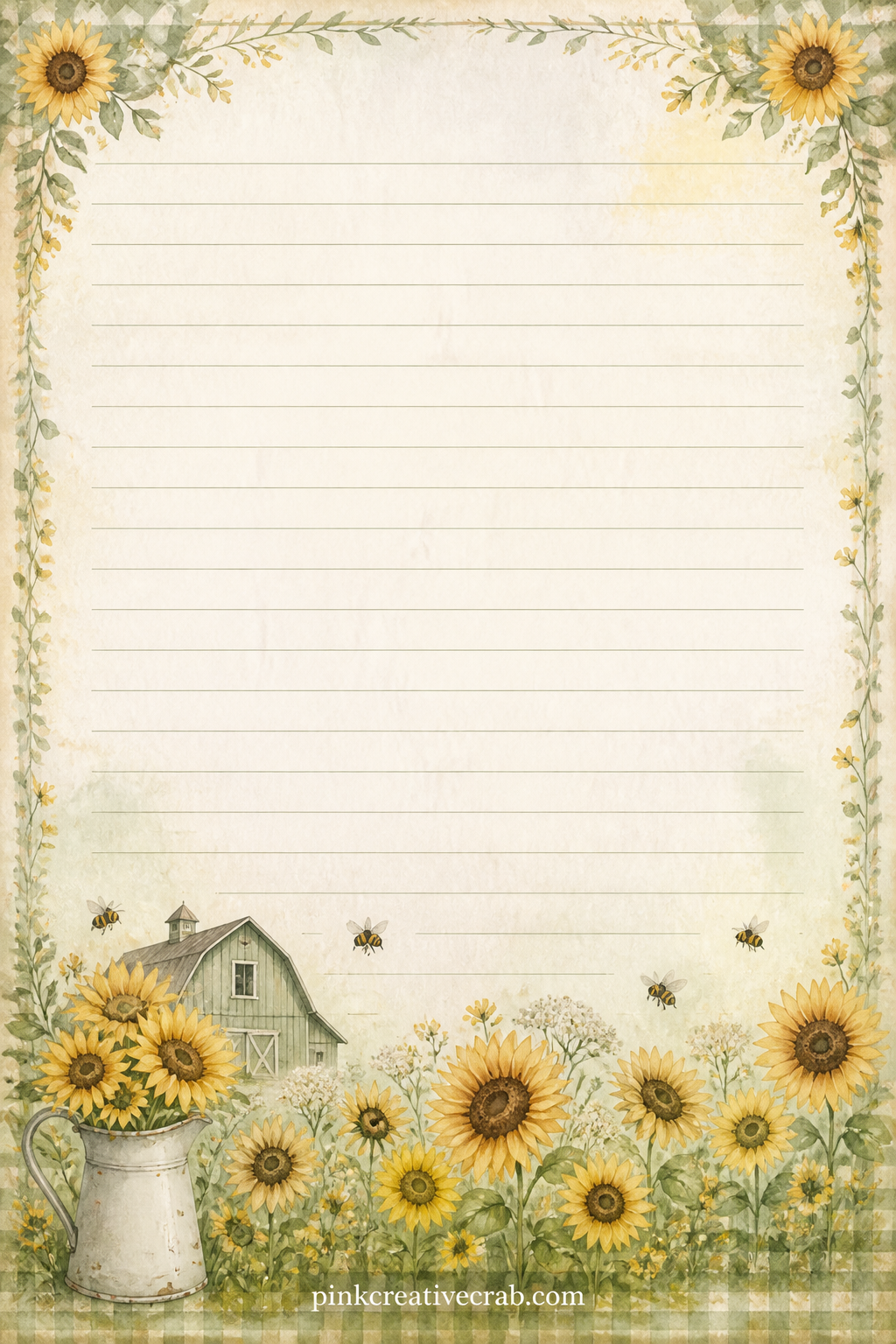
A low painted field of sunflowers sits along the bottom edge only, the rest of the page kept clear for a weather note, a harvest date, or a short entry about the day.
What to Do Next
Print the set, trim it to size, and start gluing the field and kitchen pages in first so the lined pages have company before you write a single word.
Frequently Asked Questions
What paper works best for these sunflower junk journal pages?
Use a heavyweight matte paper or light cardstock, around 100 to 120gsm. It holds the watercolour washes without curling or letting ink show through from the other side, and it still folds and glues easily into a handmade journal.
What printer settings give the best color on these pages?
Choose your printer’s highest quality or photo setting and select matte or plain paper in the driver, not glossy. This keeps the muted golds and greens close to what you see on screen instead of printing washed out or overly bright.
What size should I print the pages at?
Standard A4 or US letter works for most journals and keeps all twenty-nine pages consistent. If your journal is smaller, scale the whole set down together when printing rather than resizing individual pages, so proportions stay matched across the kit.
Do I need to color anything in myself?
No, every page prints fully finished in color and is ready to glue straight into your journal. If you want to personalize a page, add handwriting, a pressed flower or a small photo on top once the glue has dried.
What glue or tools do I need to assemble the journal?
A glue stick works well for flat pages and keeps the paper from wrinkling. A paper trimmer gives cleaner edges than scissors if you are cutting many sheets to size, and a fine tip pen is enough for any writing on the lined pages.
Have any thoughts?
Share your reaction or leave a quick response — we’d love to hear what you think!
-
 0
0 -
0
-
0
-
0
-
0
-
0


