Table of Contents
Whether you’re browsing art supply stores, reading product descriptions, or following tutorials, understanding art terminology can feel overwhelming. This comprehensive art supplies glossary breaks down 200+ essential terms every artist should know, from basic materials to specialized tools and professional-grade supplies.
This glossary covers everything from watercolor painting supplies to pencil drawing materials, helping you make informed decisions about the tools and materials you need for your creative journey. You’ll find clear definitions, practical context, and guidance on when and why to use specific supplies.
Who this glossary is for:
- Beginning artists learning about materials
- Intermediate artists expanding their toolkit
- Anyone confused by art supply terminology
- Students following art instruction guides
- Shoppers researching products online
Understanding these terms will help you choose the right supplies, follow tutorials more effectively, and communicate clearly about art materials with other artists and instructors.
How to Use This Glossary
This glossary is organized alphabetically for easy reference, but you can also jump to specific categories using our # section at the end.
Each entry includes:
- Clear, concise definition
- Practical context for use
- Related terms and cross-references
- Quality considerations where relevant
Formatting guide:
- Bold terms are the main glossary entries
- Italicized terms indicate related concepts
- Links connect to related articles and guides
- Categories help you find related supplies quickly
Pro tip: Bookmark this page as a reference while shopping online or reading art tutorials. Understanding these terms will save you money and help you avoid purchasing the wrong supplies.
A-D: Art Supplies Terms
A
Absorbency The rate at which paper or canvas soaks up water, paint, or ink. High absorbency means liquid is absorbed quickly, while low absorbency (also called sizing) allows more working time. Important for watercolor paper selection and understanding how different surfaces behave.
Acrylic Paint Fast-drying water-based paint made from pigment suspended in acrylic polymer emulsion. Becomes water-resistant when dry and can be used on almost any surface. Available in various viscosities from fluid to heavy body. Learn more in our painting mediums comparison guide.
Additive Substances mixed with paint or mediums to alter properties like drying time, texture, or flow. Common additives include retarders (slow drying), flow improvers, and texture gels.
Airbrush Tool that sprays fine paint mist using compressed air. Used for smooth gradients, fine detail work, and illustration. Requires specialized acrylic paint formulations or properly thinned traditional paints.
Alla Prima Italian term meaning “at first attempt” – painting wet-on-wet in a single session without letting layers dry. Common in oil and acrylic painting for fresh, spontaneous effects.
Archival Materials designed to resist deterioration over time. Archival supplies are acid-free, lightfast, and chemically stable. Critical for artwork intended to last decades or centuries.
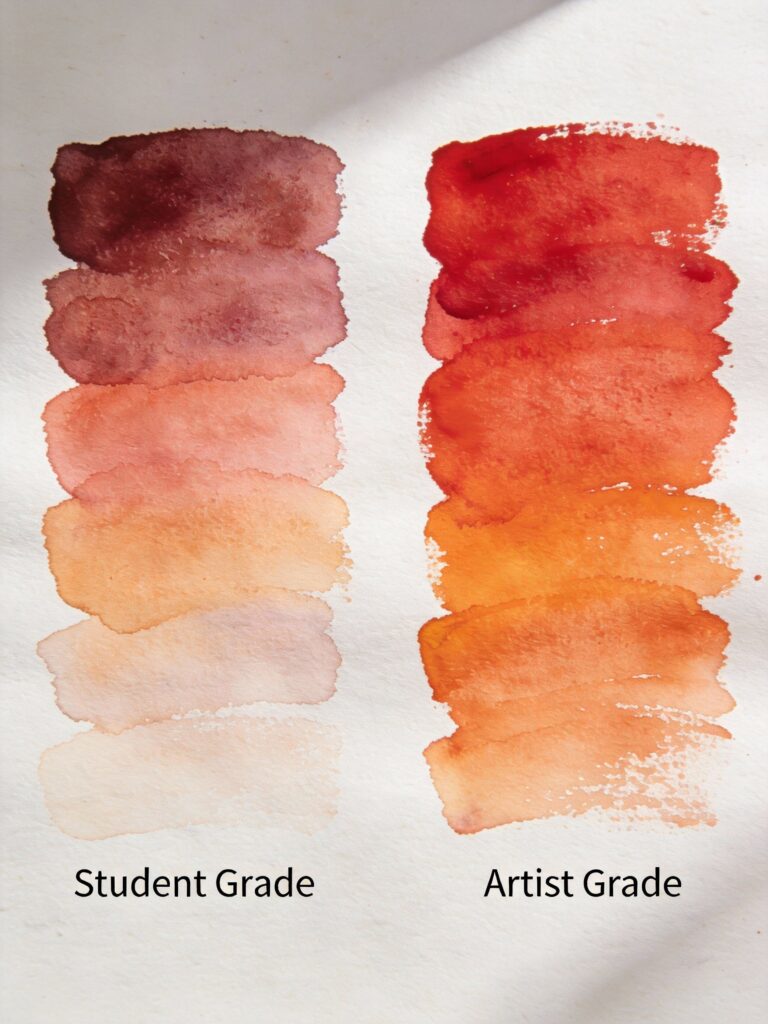
Artist Grade Highest quality art supplies containing more pigment, better binders, and superior materials compared to student grade. More expensive but offer better color intensity, mixing properties, and longevity.
ASTM American Society for Testing and Materials – organization that sets lightfastness standards for art materials. ASTM lightfastness ratings help artists choose permanent colors: I (excellent), II (very good), III-V (fair to poor).
Atelier French term for artist’s studio or workshop. Often used to describe professional art supply brands or studio-quality materials.
B
Binder Substance that holds pigment particles together and adheres them to surfaces. Different mediums use different binders: gum arabic for watercolor, linseed oil for oil paint, acrylic polymer for acrylics.
Bleed When paint or ink spreads beyond intended boundaries, particularly on wet paper. Can be intentional for wet-on-wet effects or unwanted when colors mix unintentionally.
Blending Stump (Tortillon) Tightly rolled paper tool used to blend graphite, charcoal, or pastel. Creates smooth gradients and soft edges. Also called tortillon when pointed on one end only.
Blocking In Initial stage of painting where basic shapes and color masses are established without detail. Foundation for building more refined work.
Bloom Unwanted watercolor effect where paint pushed back by water creates a cauliflower-like pattern. Can occur when adding wet paint to partially dried areas.
Blotting Technique of lifting excess paint or water using absorbent material like paper towels, sponges, or blotting paper. Used for corrections and creating texture.
Body Thickness or viscosity of paint. Heavy body paints are thick and hold brush marks, while fluid or high flow paints are thinner and more transparent.
Bristol Board Smooth, heavy paper made by laminating sheets together. Comes in plate finish (smooth) or vellum finish (slightly textured). Excellent for pen and ink, marker art, and detailed drawing.
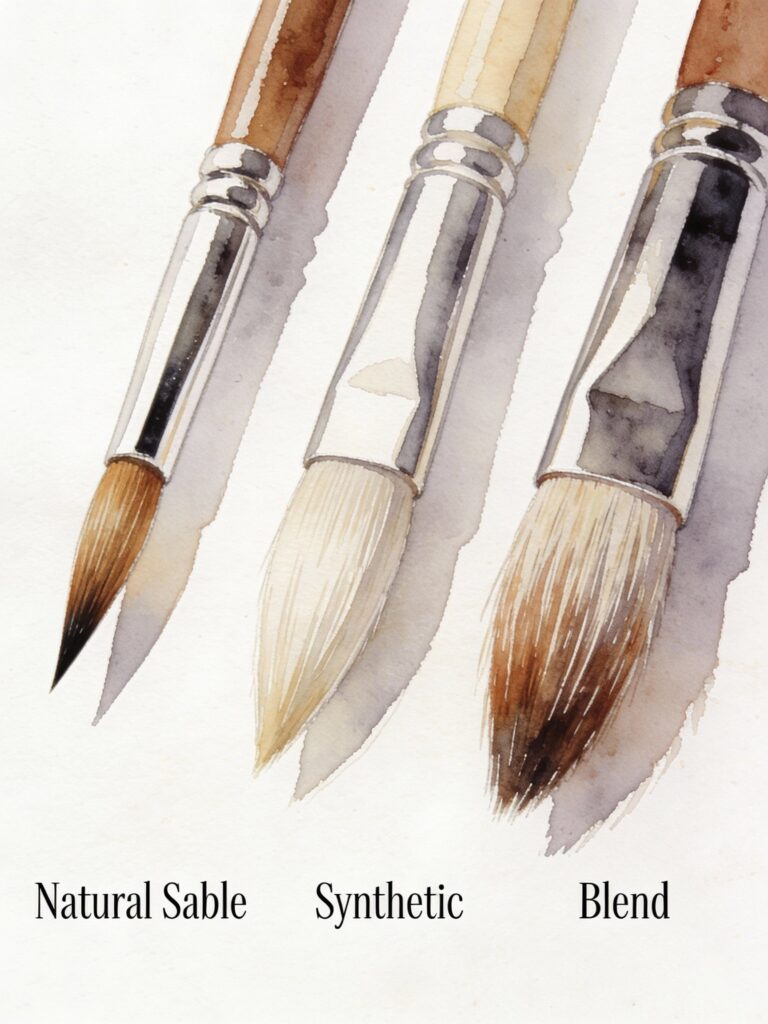
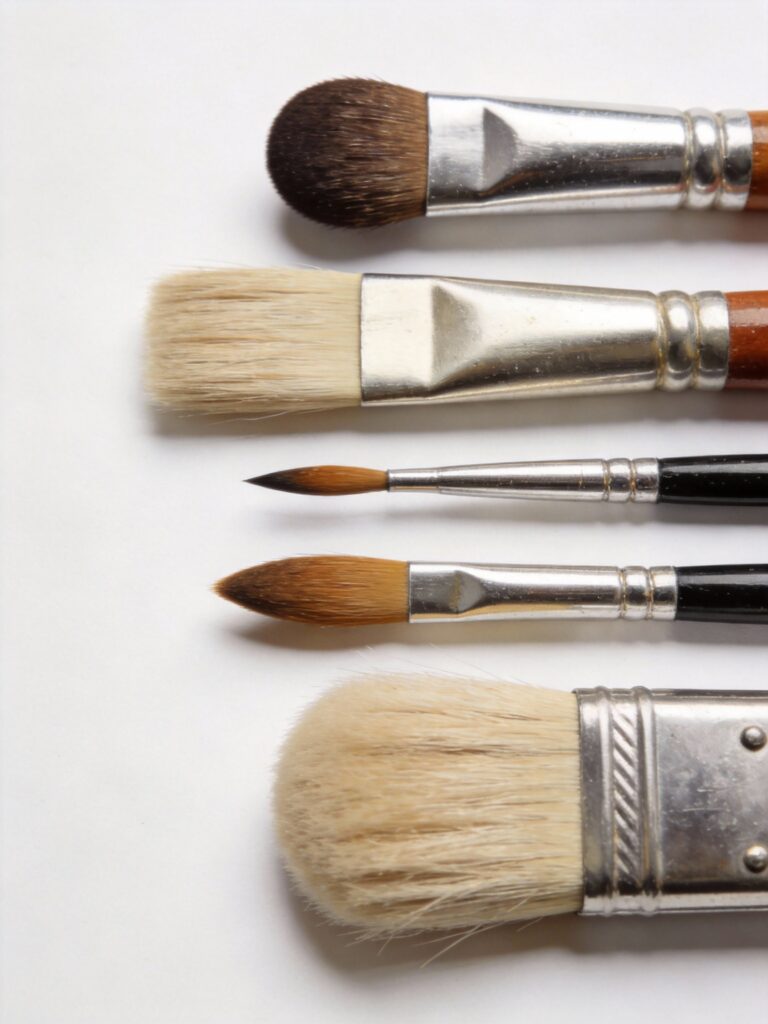
Brush Hair/Bristle Material used to make brush filaments:
- Natural hair: Sable, squirrel, goat, hog bristle
- Synthetic: Nylon, taklon, polyester
- Blend: Combination of natural and synthetic
Each type has different properties for water holding, spring, and durability.
Burnishing Technique in colored pencil where heavy pressure is applied to blend colors and create a smooth, polished surface. Also refers to smoothing paper with a hard tool.
C
Canvas Woven fabric stretched over a frame, used as a painting surface. Traditionally linen or cotton, must be primed with gesso before use with most paints.
Canvas Board Pre-primed canvas glued to rigid cardboard backing. More affordable and portable than stretched canvas, good for practice and studies.
Cartridge Paper British term for general drawing paper, similar to sketch paper. Usually 100-130 gsm weight, suitable for pencil, pen, and light marker work.
Chamois Soft leather cloth used for blending charcoal, pastel, or graphite. Creates softer effects than paper stumps.
Charcoal Drawing material made from burned wood. Available in vine charcoal (soft, easy to erase), compressed charcoal (darker, more permanent), and charcoal pencils. Learn more in our drawing mediums comparison.
Chroma Intensity or purity of color. High chroma colors are vivid and saturated, low chroma colors are muted or grayed.
Cockling Warping or buckling of paper when wet. Occurs most on thin papers without proper stretching or mounting. Use 140 lb watercolor paper or heavier to minimize cockling.
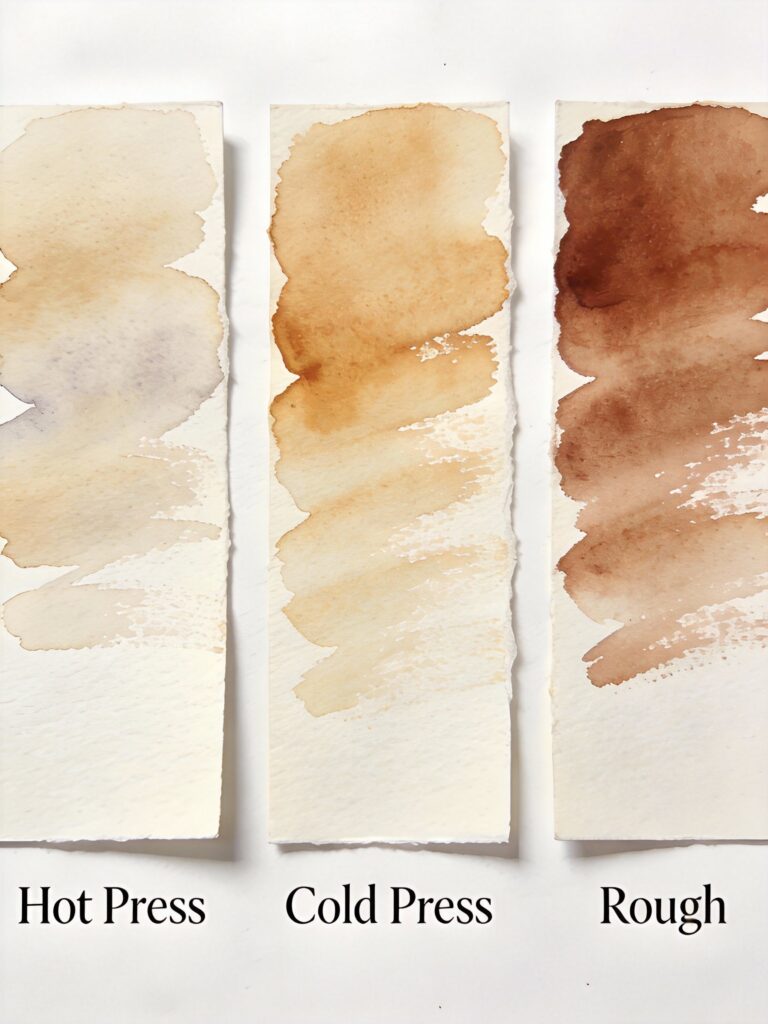
Cold Press Paper Paper with medium texture created by pressing between cold cylinders. Most popular watercolor paper surface, balancing texture and smoothness. Also called NOT paper (not hot pressed).
Color Wheel Circular diagram showing relationships between colors. Essential tool for understanding color mixing, complementary colors, and harmonious palettes.
Complementary Colors Colors opposite each other on the color wheel (red/green, blue/orange, yellow/purple). When mixed, they create neutral grays or browns. When placed side by side, they create maximum contrast.
Composition Arrangement of elements in artwork. Includes placement, balance, focal points, and visual flow.
Conte Crayon Square sticks of compressed pigment and clay, harder than pastels. Available in traditional colors (sanguine, bistre, white, black) and wide color range. Named after inventor Nicolas-Jacques Conté.
Cotton Paper High-quality paper made from cotton fibers rather than wood pulp. More durable, archival, and expensive than wood-based papers. Arches and other professional watercolor papers use 100% cotton.
Coverage How well paint obscures the surface beneath. Opaque paints provide full coverage, transparent paints allow underlayers to show through.
Cracking Damage where paint surface develops fissures. Common in oil paintings when too much medium is used, paint is applied too thickly, or fat over lean rule is violated.
Crayon Drawing tool made of wax, chalk, or oil. Different from crayons marketed for children – artist-quality crayons offer better pigmentation and permanence.
Crosshatching Drawing technique using intersecting sets of parallel lines to create tone, texture, and form. Fundamental shading technique in pen, pencil, and ink work.
D
Deckle Edge The irregular, feathered edge on handmade or mold-made paper. Indicates quality paper production and is often left visible for aesthetic appeal.
Dilution Thinning paint with water, solvent, or medium. Affects transparency, flow, and drying time.
Dip Pen Traditional pen with removable nib that must be dipped in ink. Offers line variation based on pressure and angle. Popular for calligraphy and illustration.
Drawing Board Rigid, flat surface for supporting paper while drawing or painting. Can be simple plywood or professional drafting boards with adjustable angles.
Dry Brush Technique using minimal paint on a nearly dry brush to create textured, broken color effects. Works across all painting mediums.
Drying Time How long paint takes to dry enough for overpainting or handling. Varies by medium: watercolor (minutes), acrylic (20-30 minutes), oil (days to weeks).
Drypoint Printmaking technique where lines are scratched directly into plate. Also refers to drawing with sharp tools to create fine lines.
E-H: Art Materials Glossary
E
Easel Adjustable stand for holding artwork while painting or drawing. Types include:
- Tabletop: Compact, portable
- Tripod/Field: Lightweight, for outdoor work
- Studio/H-frame: Heavy-duty, adjustable height
- French: Three-legged design, highly portable
Earth Colors Pigments derived from natural minerals and clays: yellow ochre, raw sienna, burnt sienna, raw umber, burnt umber. Generally excellent lightfastness and affordability.
Encaustic Ancient painting technique using heated beeswax mixed with pigment. Creates rich, luminous surface with unique texture.
Extender Colorless substance added to paint to increase volume and transparency without adding color. Reduces pigment cost while maintaining body.
Eye Dropper Tool for precise measurement and transfer of liquid mediums, water, or paint. Essential for mixing consistent color ratios.
F
Fat Over Lean Fundamental oil painting rule: each successive layer should contain more oil (fat) than the layer below (lean). Prevents cracking as paint cures.
Ferrule Metal band on brush that connects bristles to handle. Usually made of aluminum, brass, or nickel-plated brass. Quality ferrules are seamless and crimped securely.
Filler Inert substance added to paint to increase volume and modify properties without adding color. Can reduce color intensity in lower-quality paints.
Filbert Brush Brush shape with flat ferrule and oval tip, combining qualities of flat and round brushes. Versatile for general painting, blending, and detail work.
Fineliner Technical pen with very fine point, typically 0.05mm to 0.8mm. Popular for detailed ink drawings, illustrations, and line work. Brands like Sakura Pigma Micron offer archival ink options.
Fixative Spray coating that protects drawings and prevents smudging. Workable fixative allows additional work on top, final fixative permanently seals the surface. Essential for charcoal, pastel, and graphite work.
Flat Brush Brush with square ferrule and straight edge. Creates crisp edges, fills large areas efficiently, and produces distinctive brush marks.
Flat Wash Painting technique creating even, uniform color across an area. Fundamental watercolor technique requiring proper paper angle and consistent paint dilution.
Flow Improver Additive that reduces surface tension, allowing paint to flow more smoothly and level out. Particularly useful for acrylic painting and airbrushing.
Fluid Acrylic Thin-viscosity acrylic paint with same pigment concentration as heavy body but lower viscosity. Excellent for detail work, glazing, and techniques requiring smooth flow.
Fugitive Colors that fade significantly over time when exposed to light. Opposite of lightfast. Check ASTM ratings to avoid fugitive pigments in permanent artwork.
G
Gallery Wrap Canvas stretched technique where canvas continues around sides of stretcher bars, allowing display without frame. Painting extends to edges for finished look.
Gel Medium Thick acrylic polymer medium used to extend paint, create texture, or act as adhesive. Available in gloss, matte, and various viscosities.
Gesso Primer applied to surfaces before painting to create proper tooth and absorbency. Traditional gesso contains chalk, rabbit skin glue, and white pigment. Modern acrylic gesso uses acrylic polymer binder.
Glazing Applying transparent or semi-transparent layer of paint over dried paint. Creates luminosity, depth, and color mixing through optical effects rather than physical mixing.
Gloss Shiny finish that reflects light. Paint can be naturally glossy or made glossy with varnish or medium. Opposite of matte.
Gouache Opaque water-based paint similar to watercolor but containing white pigment or chalk. Dries to matte, velvety finish. Can be reactivated with water even when dry.
Gradation (Gradient) Smooth transition from one color, tone, or value to another. Fundamental technique across all mediums.
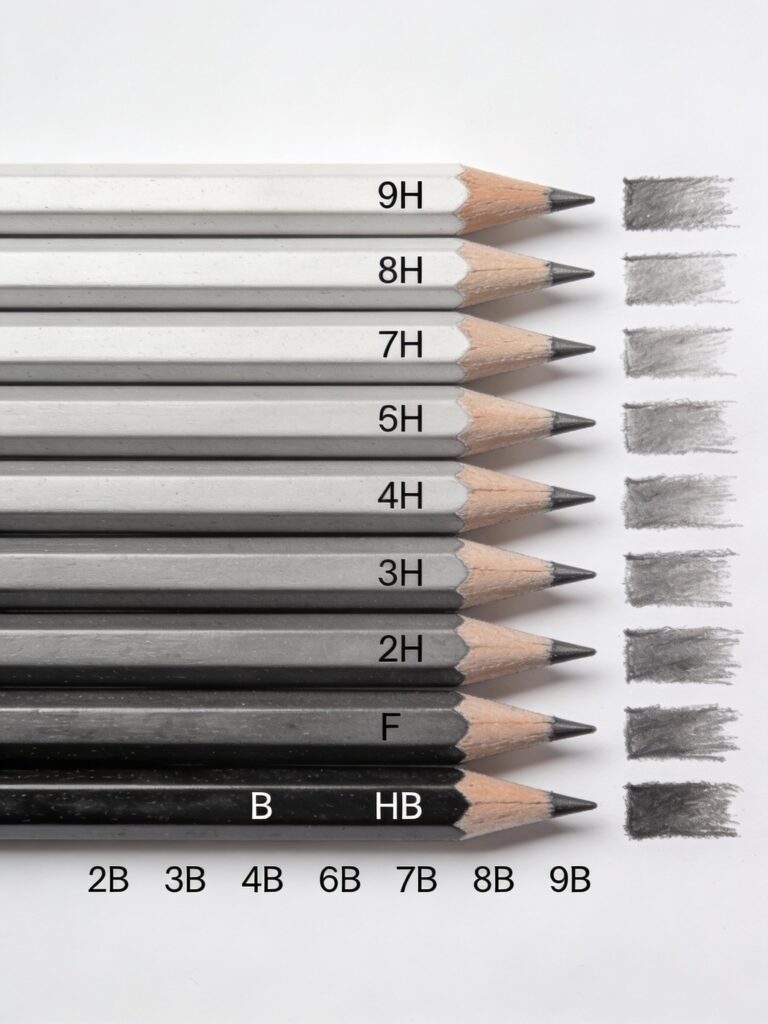
Graphite Form of carbon used in pencils. Available in various hardness grades from 9H (hardest, lightest) to 9B (softest, darkest). HB is middle grade. See our complete drawing pencils guide for grade selection.
Ground Prepared surface layer that receives paint. Can be absorbent (for watercolor), semi-absorbent (for acrylic/oil), or textured. Also refers to base color of surface.
Gsm (g/m²) Grams per square meter – standard measurement for paper weight. Higher gsm means thicker, heavier paper:
- 80-100 gsm: Printer/copy paper
- 130-150 gsm: Sketch paper
- 200-300 gsm: Drawing paper
- 300+ gsm: Watercolor paper, cardstock
Gum Arabic Natural tree resin used as binder in watercolor paint. Makes watercolor rewettable and gives it characteristic flow properties. Available as additive to improve gloss and transparency.
H
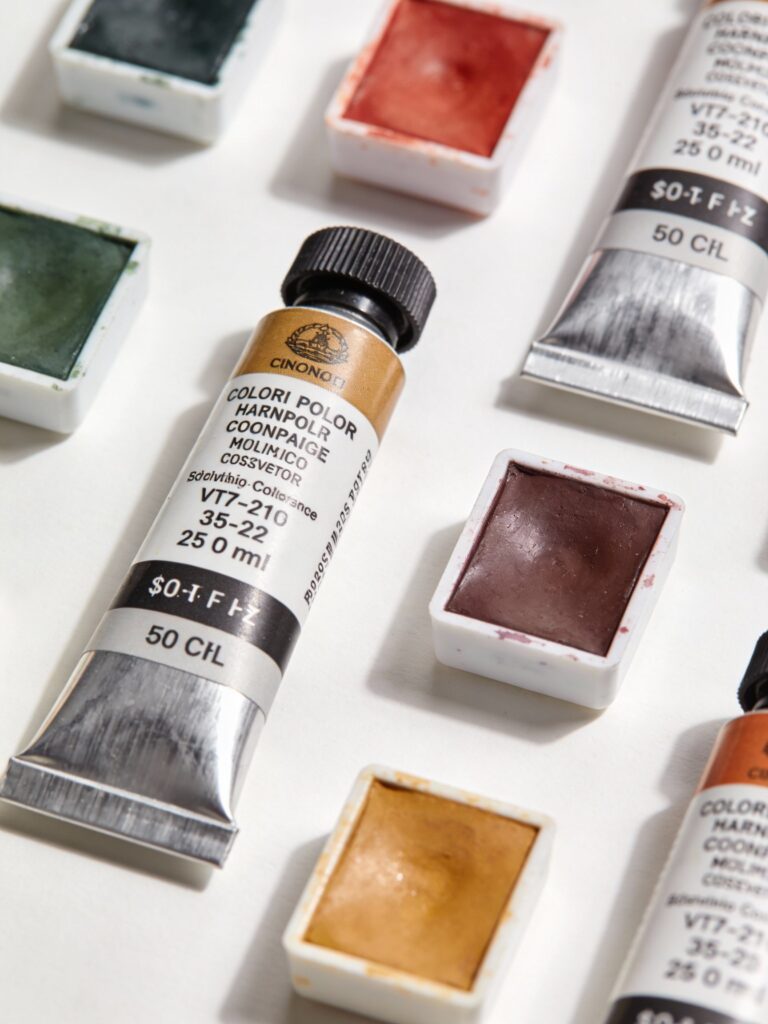
Half Pan Small rectangular watercolor paint cake, half the size of full pan. Standard size in portable watercolor sets. Easy to activate with wet brush.
Hard Pastels Pastel sticks with higher binder content, making them firmer than soft pastels. Better for detailed work and preliminary drawings. Include brands like Conté and NuPastel.
Hatching Drawing parallel lines to create tone and texture. Fundamental drawing technique for pen, pencil, and ink work. When lines cross, it becomes crosshatching.
Heavy Body Thick, buttery paint consistency that holds brush and knife marks. Allows impasto techniques. Available in acrylics, oils, and some gouache.
Hide (Hiding Power) Paint’s ability to cover what’s underneath. Opaque paints have high hiding power, transparent paints have low hiding power.
Highlight Lightest areas in artwork where most light hits surface. Often pure white or lightest value in composition. Critical for creating form and dimension.
Hot Press Paper Very smooth paper created by pressing through hot cylinders. Minimal texture makes it ideal for detailed work, technical drawing, and smooth washes. Less popular for watercolor due to limited absorbency.
Hue Another word for color. Also used in paint names to indicate synthetic alternative to expensive or toxic pigments (e.g., “Cadmium Red Hue” contains no actual cadmium).
I-L: Artist Tools and Terms
I
Illustration Board Heavy cardboard with paper surface laminated on one or both sides. Very stable, won’t buckle with wet media. Available in hot press, cold press, and rough surfaces.
Impasto Thick application of paint creating visible texture and dimension. Works best with heavy body paints and palette knives. Common in oil and acrylic painting.
India Ink Dense black ink traditionally made from carbon black. Water-resistant when dry (though check specific products). Used for drawing, calligraphy, and illustration.
Ink Wash Diluting ink with water to create lighter tones, similar to watercolor technique. Allows full value range from black to light gray.
Interference Colors Special effect pigments that change color depending on viewing angle. Contain mica or other reflective particles. Add shimmer and color shift to paintings.
Iridescent Shimmery, color-shifting quality in paint. Contains interference or metallic pigments that reflect light.
J
Junk Journal Handmade journal incorporating recycled and found materials. Uses varied papers, ephemera, and embellishments. See our complete junk journaling handbook for techniques and supplies.
Juxtaposition Placing contrasting elements side by side for dramatic effect. Applies to colors, values, textures, or subjects.
K
Kneaded Eraser Pliable eraser that can be shaped and stretched. Lifts media without abrasion, can be used for subtle lightening. Essential tool for graphite and charcoal drawing. Popular brand: Faber-Castell Kneaded Eraser.
Knife (Painting/Palette) Flexible metal blade tool for mixing and applying paint:
- Palette knife: Straight blade for mixing
- Painting knife: Angled blade for application
- Available in various shapes for different techniques
L
Laying In Initial stage of painting, similar to blocking in. Establishing basic composition and color distribution before refining.
Layering Building artwork in successive stages, allowing each layer to dry before adding next. Fundamental technique in watercolor, oils, acrylics, and colored pencil.
Lightfastness Resistance to fading when exposed to light. Rated using ASTM standards: I (excellent), II (very good), III-V (fair to poor). Critical for archival work.
Lifting Removing wet or dried paint from surface. In watercolor, can be done with clean damp brush, sponge, or paper towel. Some paints (staining) resist lifting.
Line Weight Thickness variation in drawn lines. Heavier lines advance and suggest weight, lighter lines recede. Fundamental concept in drawing composition.
Linen Canvas Canvas made from flax fibers. Superior to cotton canvas in strength, texture, and archival qualities. More expensive but preferred by professional painters.
Linseed Oil Most common oil used as binder in oil paint and as medium. Available in raw, refined, sun-thickened, and stand oil forms. Yellows slightly with age.
Liquid Frisket See Masking Fluid
Local Color Actual color of object under neutral light, without shadows, highlights, or atmospheric effects. Foundation for realistic painting before adding light effects.
M-P: Materials and Mediums
M
Manga Paper Smooth, bright white paper designed for manga and comic illustration. Usually 110-135 gsm, compatible with ink and markers without bleeding.
Mapping Pen Fine-pointed dip pen nib for detailed ink work. Creates very thin, precise lines. Popular for illustration and technical drawing.
Marker Broad category including:
- Alcohol-based: Copic markers, Prismacolor – blend smoothly, permanent
- Water-based: Washable, less blending
- Acrylic/Paint markers: Opaque, work on varied surfaces
- Brush markers: Flexible brush tip for varied line width
Masking Fluid (Liquid Frisket) Latex-based liquid that dries to rubbery film, protecting paper from paint. Apply to areas you want to keep white, paint over when dry, remove by rubbing. Essential watercolor technique tool.
Masking Tape Adhesive tape for creating crisp edges, protecting areas, or stretching paper. Artist’s tape is less aggressive than standard tape, reducing paper damage. Painter’s tape and washi tape also used.
Masonite Hardboard made from compressed wood fibers. Popular as rigid painting support when properly primed. Smooth on one side, textured on other.
Matte Non-reflective, flat finish. Opposite of gloss. Reduces glare and creates subtle surface quality.
Medium (Singular) Substance mixed with paint to alter properties: flow, transparency, texture, or drying time. Different from medium (plural: media) meaning art materials generally.
Metallic Paint Paint containing metal flakes (aluminum, copper, gold) creating shiny, reflective finish. Available in most paint types.
Mineral Spirits Petroleum-based solvent for thinning oil paint and cleaning brushes. Odorless versions available. Also called white spirits. Always use in well-ventilated area.
Mixed Media Artwork combining multiple materials or techniques (watercolor + ink, acrylic + collage, etc.). Requires paper or surface compatible with all media used.
Mixing Palette Surface for mixing paints before application:
- Tear-off pads: Disposable paper sheets
- Ceramic/Glass: Easy cleaning, non-porous
- Plastic: Lightweight, portable
- Wood: Traditional, absorbs some moisture
- Stay-wet: Keeps acrylics workable longer
Modeling Paste Thick acrylic-based paste for creating heavy texture and dimensional effects. Can be carved, molded, or textured before or after drying.
Mop Brush Large, round brush with very soft hair (usually squirrel or goat). Holds lots of water, excellent for laying large washes and loosening color.
Motif Recurring element, pattern, or subject in artwork. Can be compositional element or decorative pattern.
Mounting Attaching artwork to rigid backing board for stability and display. Methods include dry mounting, wet mounting, and hinging.
Muddy Colors Dull, murky colors lacking vibrancy. Usually result of mixing too many colors, using complementary colors, or overworking paint. Common beginner issue in watercolor painting.
N
Negative Painting Technique of painting background around subject rather than painting subject directly. Creates defined shapes and interesting compositions. Advanced watercolor technique.
Negative Space Empty or background space around and between subjects. As important to composition as positive (subject) space.
Nib Pointed tip of pen that contacts paper. Available in various materials (steel, gold, synthetic) and sizes (extra fine to broad).
NOT Paper Another term for cold press paper, meaning “not hot pressed.” Medium texture between hot press and rough.
O
Odorless Solvents, mediums, or thinners with reduced smell. Not scent-free, but significantly less odorous than traditional versions. Example: odorless mineral spirits vs. regular turpentine.
Oil Paint Slow-drying paint made from pigment suspended in oil (usually linseed, poppy, or safflower). Allows extended blending and manipulation time. Requires proper ventilation and safety practices. Learn more in our painting mediums comparison.
Oil Pastel Drawing stick made with soft wax and oil. Doesn’t dry or set, remains workable indefinitely. More vibrant than soft pastels, less dusty, but cannot be layered as extensively.
Opaque Paint that completely covers underlying colors. Opposite of transparent. Opacity varies by pigment – some colors naturally more opaque than others.
Organic Pigments derived from living matter or containing carbon compounds. Includes many modern synthetic pigments. Can be less lightfast than inorganic pigments.
Overworking Excessive manipulation of paint causing muddy colors, disturbed underlayers, or loss of freshness. Common problem in wet media like watercolor and oil painting.
Ox Gall Traditional additive made from cattle bile. Reduces surface tension in watercolor, improving flow and preventing beading. Available in liquid form as watercolor flow improver.
P
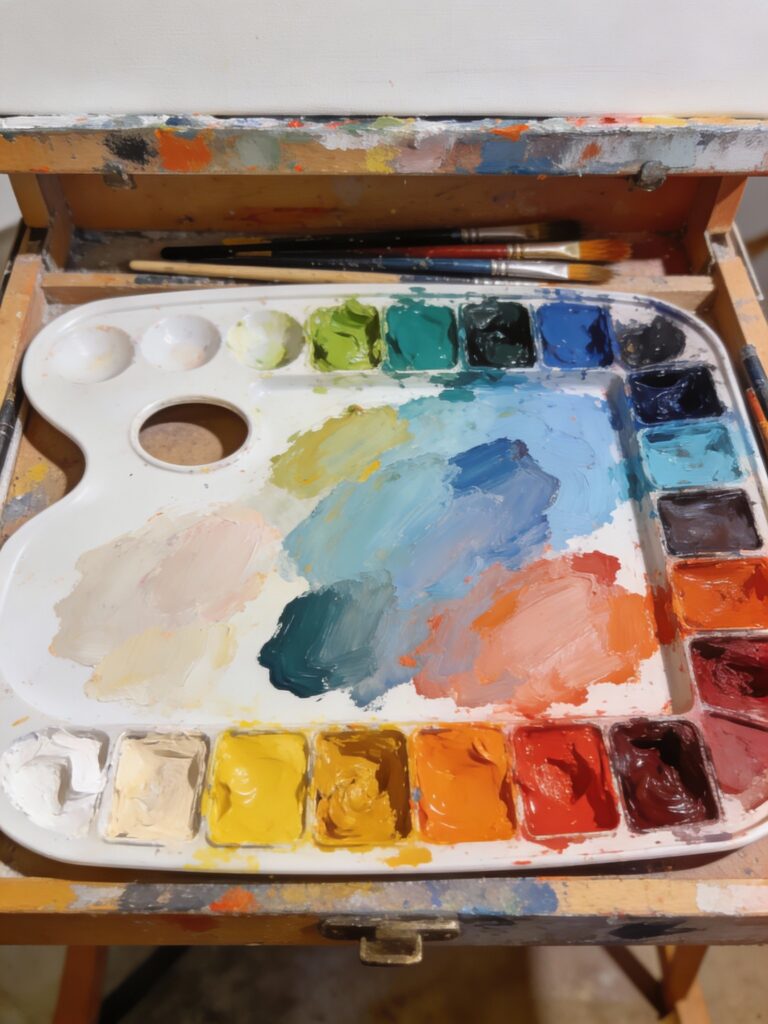
Palette Surface for arranging and mixing colors. Also refers to the selection of colors an artist uses. Types include traditional wood palettes, tear-off pads, plastic palettes, and specialized designs like butcher trays or stay-wet palettes.
Palette Cup Small container that clips to palette edge, holds medium or solvent during painting. Usually metal or plastic with spring clip.
Pan (Watercolor) Dried cake of watercolor paint in rectangular form. Available as half pans (standard) or full pans (double size). Reactivate with wet brush. More economical and portable than tubes.
Panel Rigid painting support made of wood, MDF, or other solid material. Must be properly primed with gesso before use. More stable than canvas, won’t bounce or sag.
Paper Grain Direction of fibers in paper. Paper tears more easily with grain, resists across grain. Important for paper folding, cutting, and mounting.
Paper Stump See Blending Stump
Paper Tooth Surface texture of paper that holds dry media like pencil, charcoal, or pastel. More tooth provides better grip but can be harder to achieve smooth effects.
Paper Weight Thickness and density of paper, measured in pounds (lbs) or grams per square meter (gsm):
- 90 lb (190 gsm): Light, suitable for sketching
- 140 lb (300 gsm): Standard watercolor weight
- 260 lb (356 gsm): Heavy, won’t buckle when wet
- 300+ lb (640+ gsm): Premium, board-like quality
Proper paper weight selection is critical for watercolor success.
Pastel Drawing medium made from pure pigment and minimal binder:
- Soft pastels: High pigment, buttery texture, vibrant colors
- Hard pastels: More binder, better for details and sketching
- Oil pastels: Oil and wax binder, never dry completely
- Pastel pencils: Pastel core in wood casing for precise work
Pencil Extender Metal or plastic holder that allows use of short pencil stubs. Economical and ergonomic for drawing with short pencils.
Permanent Pigments or materials resistant to fading, color change, or deterioration. Check lightfastness ratings and archival properties for truly permanent results.
Perspective Technique for creating illusion of three-dimensional space on two-dimensional surface. Types include one-point, two-point, and three-point perspective.
pH Neutral Neither acidic nor alkaline (pH 7). Important for archival papers and materials that won’t yellow or deteriorate over time.
Pigment Colored substance, usually powder, that provides color to paint. Can be organic or inorganic, natural or synthetic. Quality and concentration determine paint quality.
Pigment Load Concentration of pigment in paint. Higher pigment load means more intense color, better mixing, and less binder. Artist grade paints have higher pigment load than student grade.
Plein Air French term meaning “open air” – painting outdoors directly from subject. Requires portable supplies, quick-drying mediums, and field easels.
Ply Number of sheets laminated together to create paper or board. More plies mean heavier, more rigid material. Bristol board typically 2-3 ply.
Pochade Box Compact portable painting kit with palette, storage, and easel function. Popular for plein air oil and acrylic painting.
Polymer Medium Acrylic-based medium that acts as binder, extender, or finish. Available in various viscosities and finishes (gloss, matte, satin).
Portable Watercolor Set Compact watercolor palette, usually metal or plastic, containing pans of paint and small mixing areas. Includes fold-out or built-in wells. Essential for outdoor watercolor painting. Recommended: Winsor & Newton Cotman Pocket Set.
Portraiture Art of depicting human subjects. Requires understanding of proportions, values, and capturing likeness.
Positive Space Areas in composition occupied by subjects or objects. Opposite of negative space.
Priming Applying preparatory coating to surface before painting. Creates proper absorbency, tooth, and color base. Gesso most common primer.
Primary Colors Colors that cannot be mixed from other colors: red, yellow, blue (in traditional theory). All other colors can theoretically be mixed from primaries. Learn more about color mixing fundamentals.
Proportion Relative size relationships between elements in artwork. Critical for realistic representation and pleasing composition.
PVC (Pigment Volume Concentration) Ratio of pigment to binder in paint. Higher PVC means more pigment, less binder, better quality.
Q-T: Techniques and Tools
Q
Quill Traditional pen made from bird feather, particularly goose feather. Historical writing and drawing tool, still used by some calligraphers and artists for distinctive line quality.
R
Rag Paper Paper made from cotton or linen rags rather than wood pulp. More durable, archival, and expensive. Used in fine art printmaking and watercolor.
Ream 500 sheets of paper. Standard quantity for purchasing bulk paper.
Reworking Revising or modifying dried areas of painting. Easier with opaque media like acrylics and oils, more challenging with transparent watercolor.
Rigger Brush Long, thin brush originally used for painting rigging on ships. Excellent for fine lines, branches, details, and continuous strokes without lifting.
Round Brush Brush with round ferrule and pointed tip. Most versatile brush shape, suitable for washes, details, and varied line weights. Essential in every artist’s collection.
Rough Paper Watercolor paper with pronounced texture, created without pressing. Maximum tooth and texture, excellent for dry brush techniques and textured washes. Takes practice to master smooth washes.
S
Sable Premium natural hair from kolinsky sable (actually mink). Makes finest watercolor brushes with excellent spring, snap, and water-holding capacity. Very expensive. Winsor & Newton Series 7 are gold standard.
Sanding Block Abrasive block for sharpening pencils, smoothing paper, or creating texture. Various grits available for different effects.
Saturation Intensity or purity of color. Highly saturated colors are vivid and pure, desaturated colors are muted or grayed.
Scalpel Extremely sharp knife with replaceable blades. Used for precise cutting, scraping paint, or creating texture. Essential tool for detailed work.
Scumbling Dry brush technique with broken color application, allowing underlayer to show through. Creates texture and optical color mixing.
Secondary Colors Colors mixed from two primary colors: orange (red + yellow), green (yellow + blue), purple (red + blue).
Sepia Brown color originally made from cuttlefish ink. Now usually synthetic. Popular for vintage effects and monochrome work.
Shade Color mixed with black to darken it. Opposite of tint (color + white).
Shading Creating illusion of form and volume through value gradation. Fundamental drawing technique requiring understanding of light source and form.
Shellac Natural resin used as fixative or sealer. Available as orange or clear dewaxed shellac. Traditional gold standard for sealing drawings.
Sgraffito Technique of scratching through wet or dry paint layer to reveal color beneath. Can be done with knife, sharp tool, or fingernails.
Sizing Substance applied to paper to control absorbency. Internal sizing added during manufacturing, external sizing (tub sizing) applied to surface after production. Affects how paint behaves on paper.
Sketch Quick, loose drawing to capture ideas or composition. Usually preliminary work, not finished piece. Can be done in any dry medium.
Sketchbook Bound book of paper for drawing and sketching. Available in various sizes, bindings (spiral, hardbound, perfect bound), and paper types.
Soft Pastels Pastels with minimal binder, maximum pigment content. Create buttery, vibrant marks but are powdery and require fixative. Brands include Rembrandt, Sennelier, and Schmincke.
Solvent Liquid that dissolves or thins paint:
- Water: For watercolor, gouache, acrylic
- Mineral spirits/turpentine: For oil paint
- Alcohol: For shellac, some inks Always use proper ventilation and safety equipment.
Spacer Tool or material used to create consistent spacing in composition. Can be ruler, custom template, or hand measurement.
Spattering Technique of flicking or tapping brush to create fine spray of paint. Adds texture and dynamic effects.
Sponge Natural or synthetic tool for creating texture, lifting paint, or applying color:
- Natural sea sponge: Organic texture patterns
- Synthetic sponge: Uniform texture, less expensive
- Cosmetic sponge: Soft, fine texture
Staining Paint that penetrates paper fibers rather than sitting on surface. Staining colors resist lifting and are difficult to remove. Important consideration for watercolor painting.
Stay-Wet Palette Specialized palette for acrylics with reservoir and membrane that keeps paint moist for days or weeks. Prevents waste and maintains workability.
Stencil Template with cut-out design for creating repeated patterns. Can be bought or handmade. Used across all mediums for texture and pattern.
Stippling Drawing or painting technique using small dots to create tone and texture. Labor-intensive but creates unique effects. Common in pen and ink work.
Stretcher Bars Wooden frame pieces over which canvas is stretched. Usually solid pine with keyed corners allowing tension adjustment.
Stretching (Paper) Securing wet paper to board, allowing it to dry taut. Prevents cockling when painting with wet media. Essential for watercolor on light papers.
Studio Quality See Artist Grade
Student Grade Lower quality art supplies with less pigment, more filler, and fewer color options. More affordable, good for practice and learning, but produces less vibrant results than artist grade.
Stump See Blending Stump
Substrate Any surface that receives paint or other media – canvas, paper, wood, metal, etc.
Supports Another term for painting surfaces – canvas, panel, paper, or board.
Synthetic Brush Brush made from manufactured fibers (nylon, taklon, polyester) rather than natural hair. More affordable, durable, and suitable for vegans. Modern synthetics rival natural hair quality. Good option: Princeton Velvetouch brushes.
T
Tacky Slightly sticky stage as paint dries. In oil painting, ideal time for certain techniques. Can also refer to tape or adhesive with light stick.
Tarlatan Loosely woven cotton fabric used in printmaking for wiping intaglio plates. Also used as texture tool in painting.
Technical Pen Precision pen with controlled ink flow and consistent line width. Sizes from 0.13mm to 2.0mm. Popular for drafting, architecture, and detailed illustration. Brand: Staedtler Pigment Liner.
Tempera Fast-drying paint traditionally made with egg yolk binder. Modern tempera or poster paint uses different binders. Historical medium producing matte, permanent surface.
Tertiary Colors Colors mixed from primary and adjacent secondary color: red-orange, yellow-orange, yellow-green, blue-green, blue-purple, red-purple.
Texture Surface quality – actual physical texture you can feel, or implied texture created through technique. Achieved through impasto, dry brush, materials, or tool marks.
Thinner Liquid that reduces paint viscosity:
- Water: For water-based paints
- Mineral spirits: For oils
- Acrylic thinner/flow improver: For acrylics Different from mediums which may alter other properties beyond viscosity.
Tint Color mixed with white to lighten it. Opposite of shade (color + black). Also refers to slight color cast.
Tinted Ground Colored primer or base layer rather than white. Provides middle value to work from, allowing both lighter and darker values. Popular in oil painting.
Tinting Strength How much color affects mixtures. High tinting strength colors dominate mixes even in small amounts. Phthalo colors have notorious high tinting strength.
Titanium White Most common white pigment (PW6). Bright, opaque, good mixing properties. Standard white in most paint lines.
Tone Overall lightness or darkness of color. Also refers to color purity and value. Toning means adding gray to reduce intensity.
Tooth Texture or roughness of surface that grabs and holds media. More tooth better for dry media, less tooth better for smooth application.
Torchon Another term for blending stump or tortillon.
Tortillon Tightly rolled paper tool pointed at one end for blending. Similar to blending stump but usually single-ended.
Tracing Paper Translucent paper for transferring drawings. Lightweight, smooth surface. Not archival. Used for planning compositions and transferring designs.
Transfer Paper Paper coated with pigment on one side. Placed between original and surface to transfer line drawings. Available in various colors.
Transparency Quality of paint allowing light to pass through and reflecting off underlying layers. Creates luminosity. Opposite of opacity.
Tube (Paint) Metal or plastic container for paint. Keeps paint moist and protected. Common sizes: 5ml, 15ml, 37ml, 150ml. Tubes better than pans for large washes and intense color needs.
Turpentine (Turps) Traditional solvent distilled from pine resin for oil painting. Strong smell, can cause sensitivity. Being replaced by odorless mineral spirits for health reasons.
U-Z: Advanced Art Terms
U
Underpainting Initial paint layer establishing composition, values, and color foundation. Usually monochrome or limited palette. Subsequent layers built on top. Traditional oil painting technique also called grisaille when done in gray.
Undertone Secondary color characteristic visible in certain lighting or when paint is spread thin. Different from mass tone (color in concentrated form).
Uniform Wash See Flat Wash
Unprimed Canvas or surface without gesso or primer. Raw surface absorbs paint differently, can be intentional choice for certain effects.
V
Value Lightness or darkness of color independent of hue. Light values (tints), middle values, and dark values (shades). Understanding value crucial for creating form, depth, and contrast. See our art fundamentals guide for value exercises.
Value Scale Gradation from white through grays to black, typically in 5-11 steps. Essential reference tool for judging and mixing values accurately.
Vanishing Point Point on horizon line where parallel lines appear to converge in perspective drawing. Foundation of linear perspective.
Varnish Protective clear coating applied over finished artwork. Provides:
- UV protection: Slows fading
- Moisture barrier: Prevents damage
- Unified finish: Evens out matte and glossy areas
- Removability: Professional varnishes can be removed for conservation
Available in gloss, matte, or satin finishes. Must allow painting to cure completely (6-12 months for oils).
Vehicle Liquid component of paint that carries pigment. Can be water, oil, acrylic polymer, or other binding agent.
Vellum Originally calf skin used for manuscripts. Now refers to smooth, slightly translucent paper with slight tooth. Good for pencil, ink, and mixed media.
Viewfinder Tool for isolating and framing compositions. Can be purchased or made from mat board. Helps visualize cropping and proportions before committing to artwork.
Viscosity Thickness or flow characteristics of paint. High viscosity = thick (heavy body), low viscosity = thin (fluid).
Viridian Rich, transparent blue-green pigment (PG18). Powerful, staining color useful for mixing greens. Named from Latin viridis (green).
W
Warm Colors Colors associated with heat: reds, oranges, yellows. Appear to advance in composition. Create energy and intensity.
Wash Thin, diluted layer of paint creating transparent effect:
- Flat wash: Uniform color and value
- Graded wash: Gradual value change
- Variegated wash: Multiple colors blending
Fundamental watercolor technique requiring practice to master.
Washing Removing unwanted graphite, charcoal, or paint with water and gentle abrasion. Can lighten areas or remove marks for corrections.
Watercolor Paper Paper specifically designed for water-based media. Available in three surfaces (hot press, cold press, rough) and various weights (90-300+ lb). Must have proper sizing to prevent paint absorption. Best brands include Arches, Fabriano, and Saunders Waterford.
Watercolor Pencils Colored pencils with water-soluble binder. Can be used dry like regular colored pencils or activated with water for watercolor effects. Versatile medium bridging drawing and painting.
Water Brush Brush with hollow handle containing water reservoir. Squeeze to release water onto bristles. Excellent for portable watercolor painting and travel.
Wax Bloom White hazy surface appearing on oil paintings as wax from paint rises to surface. Harmless, easily removed by gentle buffing.
Wet-into-Wet (Wet-on-Wet) Applying fresh paint onto wet paint or wet surface. Creates soft edges and spontaneous blending. Essential watercolor technique producing characteristic flowing effects.
Wet-on-Dry Applying wet paint to dry surface. Creates crisp edges and layered effects. Allows maximum control and precision.
White Spirit British term for mineral spirits. Petroleum-based solvent for oil painting.
Wood Pulp Paper Paper made from processed wood fibers. Less expensive and archival than cotton paper but suitable for practice and studies. Most sketch and drawing papers are wood pulp.
X
X-Acto Knife Brand name for precision hobby knife with replaceable blades. Generic term often used for any craft knife. Essential tool for cutting, scraping, and detail work.
Y
Yellowing Discoloration occurring as oil paint ages, particularly in shadows and dark areas. Some oils (linseed) yellow more than others (safflower, poppy). Proper varnish helps prevent yellowing.
Z
Zinc White White pigment (PW4) more transparent and cooler than titanium white. Less opaque, mixes well for tints. Sometimes causes cracking in oil paintings when used alone.
Art Supplies by Category
Drawing Supplies
Dry Media:
- Graphite pencils (9H to 9B)
- Charcoal (vine, compressed, pencils)
- Colored pencils (wax-based, oil-based, watercolor)
- Pastels (soft, hard, oil, pencil)
- Conte crayons
- Carbon pencils
Paper:
- Sketch paper (80-130 gsm)
- Drawing paper (130-190 gsm)
- Bristol board (plate, vellum)
- Toned paper
- Tracing paper
- Vellum
Tools:
- Erasers (kneaded, plastic, vinyl)
- Blending stumps/tortillons
- Fixative spray
- Sharpeners (manual, electric)
- Pencil extenders
- Sandpaper blocks
Painting Supplies
Watercolor:
- Watercolor paints (tubes, pans)
- Watercolor paper (140-300 lb)
- Watercolor brushes (round, flat, mop)
- Palette (porcelain, plastic, travel)
- Masking fluid
- Gum arabic
- Ox gall
- Water containers
See complete list in our watercolor painting guide.
Acrylic:
- Acrylic paints (heavy body, fluid, soft body)
- Canvas (stretched, panel, board)
- Acrylic brushes (synthetic or stiff natural)
- Palette (tear-off, stay-wet)
- Mediums (gel, glazing, texture)
- Gesso
- Palette knives
- Water containers
Oil:
- Oil paints (artist grade, student grade)
- Canvas or panels (primed)
- Oil painting brushes (hog bristle, synthetic)
- Palette (wood, glass, tear-off)
- Solvents (mineral spirits, turpentine)
- Mediums (linseed oil, liquin)
- Palette knives
- Brush cleaner
Gouache:
- Gouache paints
- Watercolor paper or illustration board
- Watercolor brushes
- Palette
- Water containers
Ink & Pen Supplies
Pens:
- Technical pens (Micron, Staedtler)
- Dip pens and nibs
- Fountain pens
- Brush pens
- Markers (Copic, Prismacolor)
Inks:
- India ink
- Acrylic ink
- Alcohol ink
- Fountain pen ink
- Sumi ink
Paper:
- Bristol board
- Marker paper
- Mixed media paper
- Illustration board
Paper Crafts & Scrapbooking
Paper:
- Cardstock
- Pattern paper
- Vellum
- Tissue paper
- Specialty papers (glitter, metallic, handmade)
Adhesives:
- Glue sticks
- Double-sided tape
- Foam tape
- Liquid glue
- Photo-safe adhesives
Cutting Tools:
- Scissors (straight, decorative edge)
- Craft knives
- Die-cutting machines
- Paper trimmers
- Circle cutters
Embellishments:
- Stickers
- Washi tape
- Ribbons
- Brads
- Eyelets
- Stamps
Junk Journaling Supplies
Papers:
- Vintage papers
- Book pages
- Maps
- Sheet music
- Tissue paper
- Ephemera
Embellishments:
- Washi tape
- Stickers
- Ribbons
- Buttons
- Lace
- Found objects
Tools:
- Scissors
- Glue stick
- Bone folder
- Stamps
- Ink pads
- Distressing tools
See our junk journaling handbook for complete supply lists and techniques.
Common Abbreviations in Art Supplies
Paint Pigment Codes
Paint pigments identified by standardized codes indicating pigment type and color:
PB – Pigment Blue PBk – Pigment Black PBr – Pigment Brown PG – Pigment Green PO – Pigment Orange PR – Pigment Red PV – Pigment Violet PW – Pigment White PY – Pigment Yellow
Examples:
- PB29 – Ultramarine Blue
- PR101 – Red Iron Oxide
- PY42 – Yellow Iron Oxide (Yellow Ochre)
- PW6 – Titanium White
Understanding pigment codes helps identify actual pigments in paint, especially when comparing brands or avoiding fugitive colors.
Paper Size Abbreviations
A-Series (International Standard):
- A6: 4.1 × 5.8 inches
- A5: 5.8 × 8.3 inches
- A4: 8.3 × 11.7 inches (similar to US letter)
- A3: 11.7 × 16.5 inches
- A2: 16.5 × 23.4 inches
- A1: 23.4 × 33.1 inches
- A0: 33.1 × 46.8 inches
US Sizes:
- Letter: 8.5 × 11 inches
- Legal: 8.5 × 14 inches
- Tabloid: 11 × 17 inches
Quality Grades
AA – Artist Grade / Professional Grade SA – Student Grade CP/AP – Certified Product / Approved Product (non-toxic certification from ACMI) HB – Hard Black (standard pencil hardness)
Measurement Abbreviations
gsm – Grams per square meter (paper weight) lb – Pounds (US paper weight measurement) ml – Milliliters (paint tube volume) oz – Ounces (fluid volume) “ or in – Inches cm – Centimeters mm – Millimeters
Understanding Quality Grades
Student Grade vs Artist Grade
The difference between student and artist grade supplies significantly affects your results and experience:
Student Grade Characteristics:
Advantages:
- More affordable
- Good for practice and learning
- Wide availability
- Less intimidating for beginners
Limitations:
- Lower pigment concentration
- More filler and extender
- Fewer color options
- Less lightfast options
- Duller color mixing
- Less smooth application
Best for:
- Beginners learning techniques
- Practice and experimentation
- Art therapy and casual creating
- Children’s art
- Projects where permanence isn’t critical
Recommended student brands:
- Watercolor: Winsor & Newton Cotman, Prang
- Acrylic: Liquitex Basics, Artist’s Loft
- Colored Pencil: Crayola, Prang
Artist Grade Characteristics:
Advantages:
- Higher pigment concentration
- Better lightfastness (most colors)
- Richer, more vibrant colors
- Better mixing properties
- Smoother application
- More color options
- Professional results
Limitations:
- Significantly more expensive
- Can feel wasteful while learning
- Sometimes requires experience to appreciate
Best for:
- Artwork intended to last
- Professional work
- Gifts and sales
- Artists comfortable with techniques
- Projects requiring vibrant color
- Archival pieces
Recommended artist brands:
- Watercolor: Daniel Smith, Winsor & Newton Professional, Schmincke
- Acrylic: Golden, Liquitex Professional, Sennelier
- Oil: Gamblin, Winsor & Newton, Old Holland
- Colored Pencil: Prismacolor, Faber-Castell Polychromos
When to Upgrade
Consider upgrading when:
- Colors appear muddy despite proper technique
- You’re confident in fundamental techniques
- Creating artwork for sale or display
- Gifts for special occasions
- Working on commissions
- Colors fade noticeably
- You understand color mixing principles
Stay with student grade when:
- Still learning basic techniques
- Practicing new methods
- Experimenting with unfamiliar media
- Teaching children
- Budget is tight
- Creating quick studies
Hybrid Approach
Many artists use combination of grades:
- Artist grade for frequently used colors
- Student grade for practice and experiments
- Artist grade white (most used color)
- Student grade for rarely used hues
- Artist grade for final artwork
- Student grade for preliminary sketches
This strategy balances quality and economy, making art more accessible while maintaining professional results when needed.
FAQ
Q: What’s the difference between watercolor and gouache? A: Both are water-based paints, but watercolor is transparent and relies on white paper for light values, while gouache contains white pigment making it opaque. Gouache dries matte, can be reactivated with water, and allows light colors over dark. Watercolor is more transparent and luminous. Learn more in our painting mediums comparison guide.
Q: How do I know if art supplies are archival quality? A: Look for terms like “archival,” “acid-free,” “pH neutral,” and “lightfast.” Check ASTM lightfastness ratings (I or II excellent). Papers should be cotton or high-quality wood pulp without lignin. Avoid materials labeled “student grade” for permanent work. Archival supplies resist yellowing, fading, and deterioration over decades.
Q: What does gsm mean on paper and what weight should I use? A: GSM (grams per square meter) measures paper weight and thickness. For watercolor, use minimum 140 lb (300 gsm) to prevent buckling. For drawing, 130-150 gsm works well. For heavy wet media or professional watercolor, consider 260-300+ lb (540-640+ gsm). Higher gsm means thicker, more durable paper that handles moisture better.
Q: Can I use acrylic brushes for watercolor and vice versa? A: While possible, it’s not ideal. Watercolor brushes are softer (sable, squirrel) to hold water and paint without dragging. Acrylic brushes are stiffer (synthetic, hog bristle) to move thicker paint. Using acrylic brushes for watercolor results in less water capacity and potential paper damage. Using watercolor brushes for acrylic can damage delicate hairs with harsh acrylic binder.
Q: What’s the difference between hot press, cold press, and rough watercolor paper? A: These terms describe paper texture. Hot press is smooth (minimal texture), best for detailed work and smooth washes but challenging for wet-on-wet. Cold press has medium texture, most versatile and popular. Rough has pronounced texture, excellent for dry brush and textured effects but difficult for smooth washes. See our watercolor paper guide for detailed comparisons.
Q: How do I choose the right pencil hardness? A: Pencil grades range from 9H (hardest, lightest) through HB (middle) to 9B (softest, darkest). For general drawing, start with HB, 2B, and 4B. Use H grades for light lines and technical work, B grades for shading and expressive work. The higher the number, the more extreme the property (9H extremely hard and light, 9B extremely soft and dark). Learn more in our complete pencil drawing guide.
Q: What’s the difference between transparent and opaque paint? A: Transparent paint allows light to pass through to underlying layers or paper, creating luminosity. Opaque paint completely covers what’s beneath. Watercolor is traditionally transparent, gouache opaque. Acrylics and oils vary by pigment – some naturally transparent (phthalo colors), others naturally opaque (cadmiums). Check paint transparency on color charts before purchasing.
Q: How long does acrylic paint take to dry compared to oil paint? A: Acrylic paint dries in 20-30 minutes for thin layers, 1-2 hours for thick applications. Once dry, it’s permanent and water-resistant. Oil paint takes days for surface drying, weeks for layers to cure enough for overpainting, and 6-12 months for complete curing before varnishing. This makes acrylics better for quick work, oils better for extended blending and manipulation.
Q: What does “lightfast” mean and why does it matter? A: Lightfastness measures how well colors resist fading when exposed to light. Rated by ASTM standards: I (excellent, 100+ years), II (very good, 50+ years), III-V (fair to poor, may fade within years). For artwork you want to last, choose only I or II rated pigments. Student grade paints often use less lightfast pigments to reduce cost.
Q: Can I mix different brands of the same medium? A: Yes, generally safe to mix same medium from different brands (all acrylics together, all oils together, all watercolors together). Pigment quality, concentration, and working properties may vary, but they’ll remain compatible. Exception: avoid mixing student and professional grade extensively as pigment load differences can create unexpected results. Never mix incompatible mediums like oil and acrylic without proper isolation layers.
Q: What supplies are absolutely essential for beginning watercolor painting? A: Essential watercolor supplies include: 12-color paint set (tubes or pans) with primary colors plus earth tones, 140 lb cold press watercolor paper, three brushes (large round like size 12, medium round like size 6, small round like size 2), two water containers, palette (ceramic plate works), paper towels, and masking tape. This basic kit costs $50-80 and covers most beginner techniques. See our complete watercolor guide for detailed recommendations and techniques.
Related Resources
Complete Guides:
- Watercolor Painting: Complete Beginner to Advanced Guide
- Pencil Drawing: Complete Guide
- Color Mixing: Everything You Need to Know
- Junk Journaling: Complete Handbook
- Art Fundamentals Guide
Comparison Guides:
Technique Deep-Dives:
- Wet-on-Wet Watercolor Technique
- Shading Techniques for Realistic Drawing
- Drawing Techniques Encyclopedia
Have any thoughts?
Share your reaction or leave a quick response — we’d love to hear what you think!
-
 0
0
-
0
-
0
-
0
-
0
-
0


