Table of Contents
Choosing your painting medium shapes everything about your artistic journey. Each paint type—watercolor, acrylic, oil, and gouache—offers unique characteristics, working properties, and creative possibilities. Moreover, understanding these differences helps you select the medium that aligns with your goals, budget, and working style.
This comprehensive comparison examines all four major painting mediums objectively. You’ll discover how each medium behaves, what subjects it handles best, and which one matches your needs. Furthermore, we’ll cover practical considerations like cost, supplies needed, and learning curves.
Whether you’re a complete beginner choosing your first medium or an experienced artist exploring new options, this guide provides the information you need to make an informed decision. According to art educators at institutions like The National Gallery of Art, understanding medium properties is fundamental to developing technical mastery and artistic expression.
The right medium feels intuitive and exciting to work with. However, there’s no single “best” medium—only the best medium for you, your goals, and your circumstances. Let’s explore each option thoroughly.
Understanding Paint Medium Basics
Before diving into specific mediums, understanding fundamental paint components helps you grasp why each medium behaves differently.
What Makes Paint
All paint consists of three basic components:
Pigment: The colored powder providing hue and intensity. Pigments remain consistent across mediums—Ultramarine Blue pigment is essentially the same whether in watercolor, acrylic, or oil.
Binder: The substance holding pigment together and adhering it to your surface. This is what differentiates mediums:
- Watercolor: Gum arabic (water-soluble)
- Acrylic: Acrylic polymer emulsion (plastic)
- Oil: Linseed oil or similar oils
- Gouache: Gum arabic with additional white pigment and fillers
Vehicle/Solvent: The liquid making paint spreadable. Water for watercolor, acrylic, and gouache. Mineral spirits or turpentine for oils.
Transparency vs Opacity
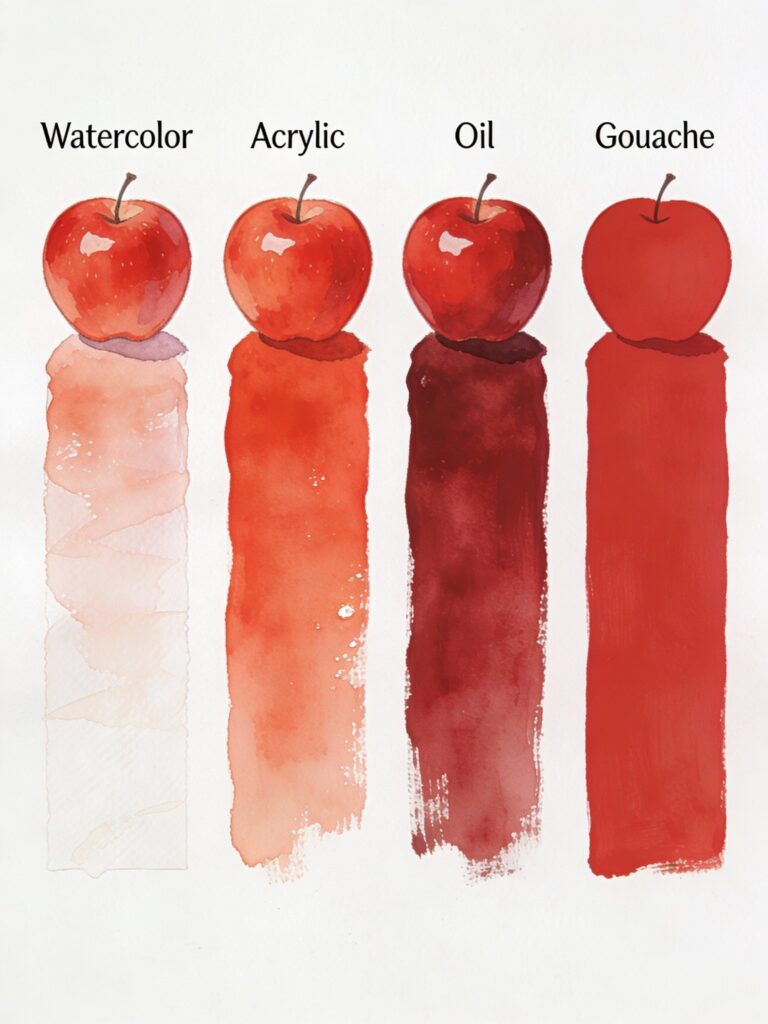
Transparent mediums (watercolor) allow light to pass through paint layers and reflect off the white surface beneath, creating luminosity.
Opaque mediums (gouache, most acrylics and oils) sit on the surface, blocking light from reaching what’s underneath.
Understanding transparency affects how you layer colors and build your paintings.
Working Properties That Matter
Several characteristics define how mediums handle:
Drying time: Watercolor and acrylic dry within minutes. Oil takes days to weeks. Gouache falls in between.
Reversibility: Watercolor reactivates with water after drying. Acrylic and oil are permanent once dry. Gouache partially reactivates.
Blending capability: Oil allows extended blending time. Watercolor blends while wet. Acrylic requires fast work or special mediums.
Color shifting: Some mediums change value or hue as they dry. Others remain consistent.
These properties fundamentally shape painting techniques and workflows.
Watercolor: Transparent and Luminous
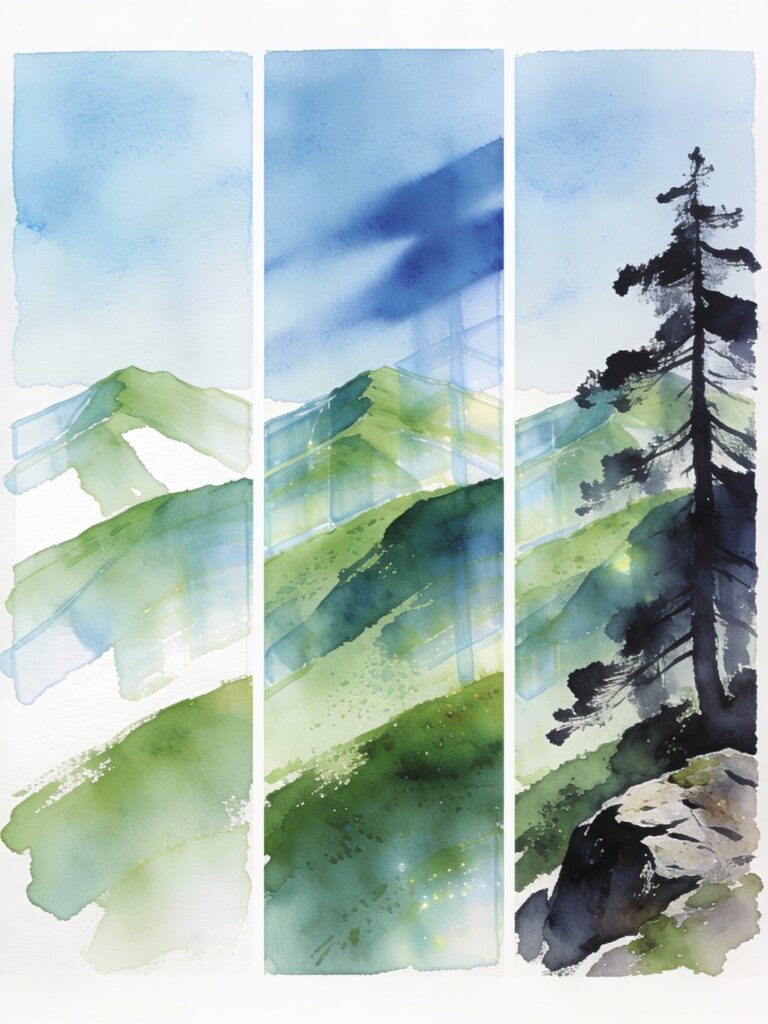
Watercolor painting uses water-soluble pigments bound with gum arabic, creating transparent washes of color. Light passes through these layers, reflecting off white paper to create watercolor’s characteristic luminosity.
How Watercolor Works
Watercolor relies on transparency and the white of your paper. You build colors through layering transparent washes. Therefore, you must plan light areas from the beginning—there’s no white paint in traditional watercolor. Dark values come from concentrated pigment or multiple layers, while light values use diluted pigment.
Water controls everything in watercolor. The water-to-pigment ratio determines color intensity. Paper moisture levels affect how paint spreads and blends. Consequently, mastering water control is the primary watercolor skill.
Advantages of Watercolor
Luminous quality: Light reflecting through transparent layers creates unmatched luminosity. Colors appear to glow from within.
Portability: A small palette, brushes, and paper fit in a bag. Perfect for travel painting and outdoor work.
Quick setup and cleanup: Minimal supplies, no toxic materials, easy water cleanup.
Affordable entry point: Basic supplies cost less than other mediums. Quality student-grade watercolors work well for learning.
Spontaneous effects: Water creates beautiful, unpredictable patterns. Wet-into-wet techniques produce organic blending impossible with other mediums.
Fast drying: Most washes dry within minutes, allowing quick layering. However, you can rewet areas to make adjustments.
Challenges of Watercolor
Unforgiving nature: Mistakes are difficult to correct. You can’t easily paint light over dark. Therefore, planning is essential.
Water control required: Too much water creates uncontrolled blooms. Too little prevents smooth washes. This learning curve frustrates beginners.
Limited opacity: You can’t create thick, textured paint applications or cover mistakes completely with new paint.
Paper buckling: Lightweight paper warps when wet. Heavier paper or stretching prevents this but adds complexity.
Unpredictability: Water and paint flow create both beautiful effects and frustrating accidents. Control comes only with extensive practice.
Best For
- Landscapes, especially atmospheric scenes
- Loose, expressive painting styles
- Botanical illustration
- Travel sketching and plein air work
- Artists who enjoy spontaneity and water effects
- Painters wanting portable, minimal setups
Learn complete watercolor techniques in our ultimate watercolor painting guide.
Acrylic: Versatile and Fast-Drying
Acrylic paint uses pigments suspended in acrylic polymer emulsion. When water evaporates, the polymer forms a flexible, waterproof plastic film. This modern medium combines advantages from multiple traditional mediums.
How Acrylic Works
Acrylic behaves like watercolor when diluted—you can create transparent washes and fluid effects. However, it also works like oil paint when used thickly—you can build impasto texture and opaque layers. Once dry, acrylic is permanent and waterproof, allowing unlimited layering without disturbing previous work.
Acrylic dries through water evaporation, typically within 10-30 minutes depending on thickness and conditions. This quick drying is simultaneously an advantage and a challenge. Furthermore, dried acrylic can’t be reactivated, unlike watercolor.
Advantages of Acrylic
Versatility: Works on almost any surface—canvas, paper, wood, fabric, walls. No other medium offers this flexibility.
Fast drying: Complete paintings in one session. Layer without long waits. Finish and display artwork immediately.
Water-based cleanup: No toxic solvents needed. Wash brushes with soap and water during painting. However, dried acrylic is permanent, so clean brushes thoroughly before paint dries.
Permanent when dry: Layers don’t disturb each other. You can paint light over dark, dark over light, repeatedly without muddying colors.
Affordable: Quality student-grade acrylics cost less than oils and last longer than equivalent amounts of watercolor.
Non-toxic: No harmful fumes or solvents. Safe for home studios, schools, and artists with sensitivities.
Color stability: Minimal color shift from wet to dry. What you see while painting is what you get.
Challenges of Acrylic
Fast drying limits blending: You must work quickly or use retarders to extend blending time. Subtle gradations require practice or special mediums.
Plastic appearance: Acrylic can look “plastic” compared to oil’s luminous depth, especially in thick applications. Quality paints and proper techniques minimize this.
Permanent when dry: You can’t rewet and adjust areas like watercolor. Mistakes require painting over or scraping off.
Brush maintenance critical: Dried acrylic ruins brushes permanently. You must clean brushes every 20-30 minutes during painting sessions.
Can feel “slippery”: The polymer binder creates a smooth, slightly slippery surface that some artists find less pleasant than oil’s buttery consistency.
Best For
- Mixed media artwork
- Large-scale paintings
- Beginning painters (forgiving and accessible)
- Artists wanting quick results
- Painters working in shared spaces (no fumes)
- Experimental techniques and textures
- Budget-conscious artists
According to Golden Artist Colors, a major acrylic manufacturer, understanding acrylic’s unique properties allows artists to achieve effects impossible with traditional mediums.
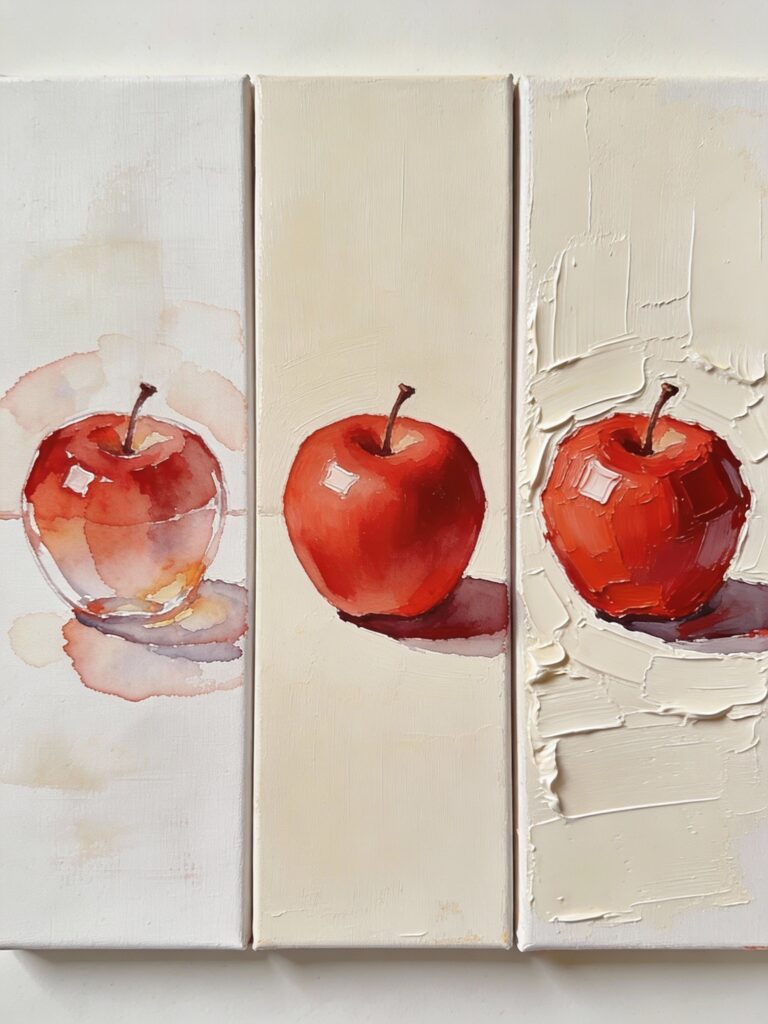
Oil Paint: Rich and Timeless
Oil paint suspends pigments in drying oils, typically linseed oil. This traditional medium has dominated fine art painting for over 500 years, prized for its rich colors, smooth blending, and archival permanence.
How Oil Paint Works
Oil paint dries through oxidation—a chemical process where the oil reacts with oxygen, forming a hard film. This process takes days to weeks, depending on paint thickness and oil type. Consequently, oil paint remains workable for extended periods, allowing subtle blending and gradual building of forms.
You can work wet-into-wet for the entire painting session, even across multiple days. Furthermore, you can add layers when the previous layer is dry to the touch (though not fully cured). Full curing takes 6-12 months for thick paint layers.
Advantages of Oil Paint
Extended working time: Blend colors subtly over hours or days. Make adjustments and refinements without rushing. This suits contemplative, methodical working styles.
Rich, luminous color: Oil paint has unmatched depth and vibrancy. The oil binder creates optical effects that appear more luminous than acrylic. Historical master paintings demonstrate oil’s exceptional color quality.
Buttery consistency: Oil paint feels substantial and responsive. The smooth, creamy texture provides tactile satisfaction many artists prefer.
Permanent and archival: Properly executed oil paintings last centuries. Museum collections prove oil’s exceptional longevity when used with sound techniques.
Forgiving: Wipe away mistakes easily while wet. Paint over areas when dry. The long drying time allows deliberate decision-making.
No color shift: Colors remain consistent from wet to dry. What you paint is what you see in the finished work.
Texture possibilities: Build from transparent glazes to thick impasto. Oil paint handles all consistency levels beautifully.
Challenges of Oil Paint
Slow drying: Patience is required. You can’t rush a painting or display it immediately. Thick areas may take weeks to become touch-dry.
Solvent requirements: Cleaning brushes and thinning paint requires mineral spirits or turpentine. These emit fumes, requiring ventilation. However, solvent-free oils and cleaning methods exist.
More expensive: Quality oil paints cost more than acrylics. Canvas, primers, and mediums add to costs.
Technical complexity: Understanding fat-over-lean principles, proper surface preparation, and painting procedures prevents cracking and deterioration. The learning curve is steeper than simpler mediums.
Yellowing over time: Some oils yellow slightly with age, especially in dark storage. Quality pigments and proper varnishing minimize this.
Requires dedicated space: Wet paintings need safe storage. Solvent use requires ventilation. Oil painting typically needs more space than water-based mediums.
Best For
- Traditional representational painting
- Portraiture requiring subtle blending
- Landscape painting with atmospheric effects
- Artists who work methodically and deliberately
- Painters wanting museum-quality permanence
- Those who enjoy rich, buttery paint consistency
- Artists with dedicated studio space
According to The National Gallery in London, understanding oil paint’s unique working properties has been essential to master painters throughout history.
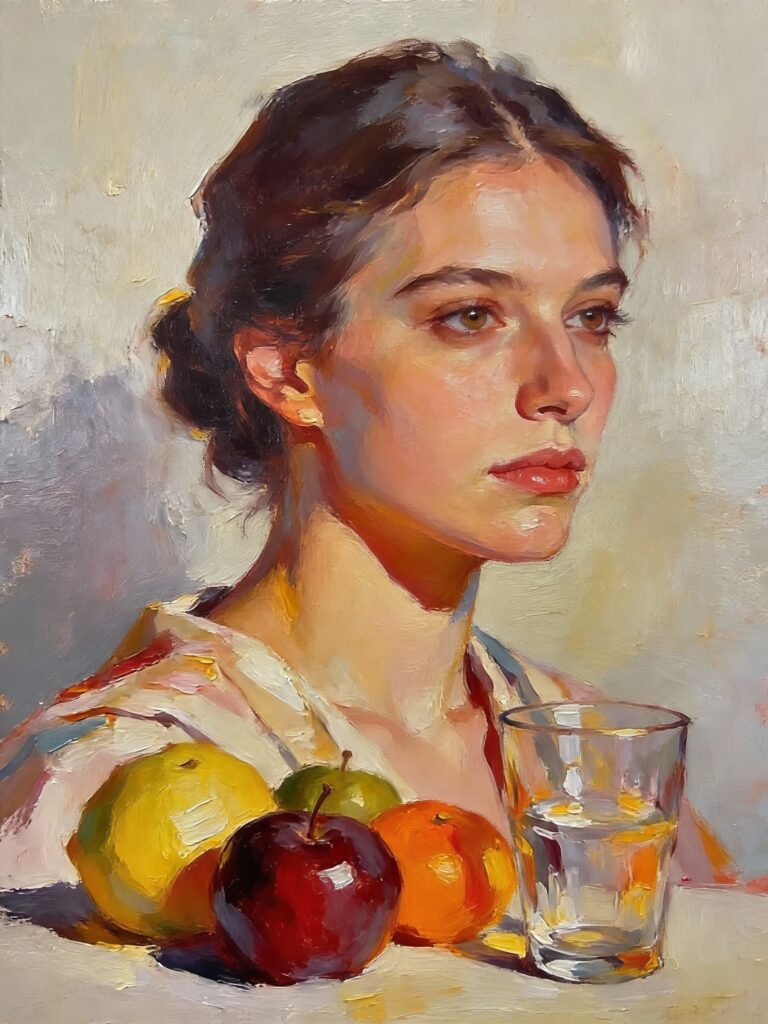
Gouache: Opaque and Matte
Gouache (pronounced “gwash”) is an opaque watercolor—pigments bound with gum arabic like watercolor, but with added white pigment and higher pigment-to-binder ratios. This creates an opaque paint with a distinctive velvety matte finish.
How Gouache Works
Gouache combines watercolor’s water-solubility with opacity similar to acrylic. You can paint light colors over dark, unlike transparent watercolor. However, dried gouache reactivates with water, unlike acrylic. This creates unique working properties—both an advantage and a challenge.
Gouache dries quickly like watercolor, typically within minutes. Furthermore, it dries to a lighter, more matte finish than it appears when wet. This color shift requires adjustment but becomes predictable with experience.
Advantages of Gouache
Opaque coverage: Paint light over dark confidently. Cover mistakes or change compositions easily. This makes gouache more forgiving than transparent watercolor.
Matte finish: Creates a distinctive flat, velvety appearance different from other mediums’ sheen. This aesthetic suits illustration, design, and certain artistic styles.
Rewettable: Correct mistakes by rewetting and lifting paint. Blend edges after drying. This flexibility offers more control than watercolor.
Works on paper: No special surfaces needed. Use watercolor paper or illustration board, which cost less than canvas.
Portable: Similar to watercolor—small palette, brushes, and paper create a complete setup.
Flat color areas: Gouache excels at creating even, solid color areas impossible with transparent watercolor. This makes it ideal for graphic work and illustration.
Water-based: Easy cleanup with no toxic solvents needed.
Challenges of Gouache
Rewettable is double-edged: While allowing corrections, rewettability means new layers can disturb previous ones. Working too much over an area creates muddy colors.
Color shift: Gouache dries lighter and more chalky than when wet. This predictable shift still requires adjustment in your painting process.
Cracks when too thick: Unlike acrylic or oil, gouache cracks if applied very thickly. You must build up gradually with thinner layers.
Less archival: Gouache is more fragile than oil or acrylic. It can be reactivated by moisture even after drying, requiring protection under glass or fixative.
Surface sensitive: Works best on paper or similar absorbent surfaces. Doesn’t perform well on canvas or non-absorbent surfaces.
Limited availability: Fewer brands and colors available compared to watercolor, acrylic, or oil. Some specialized colors are harder to find.
Best For
- Illustration and design work
- Plein air painting (combines opacity with portability)
- Studies and color sketches
- Flat, graphic styles
- Artists who want opacity with water-media convenience
- Paintings requiring matte finish aesthetic
- Medieval manuscript-style artwork
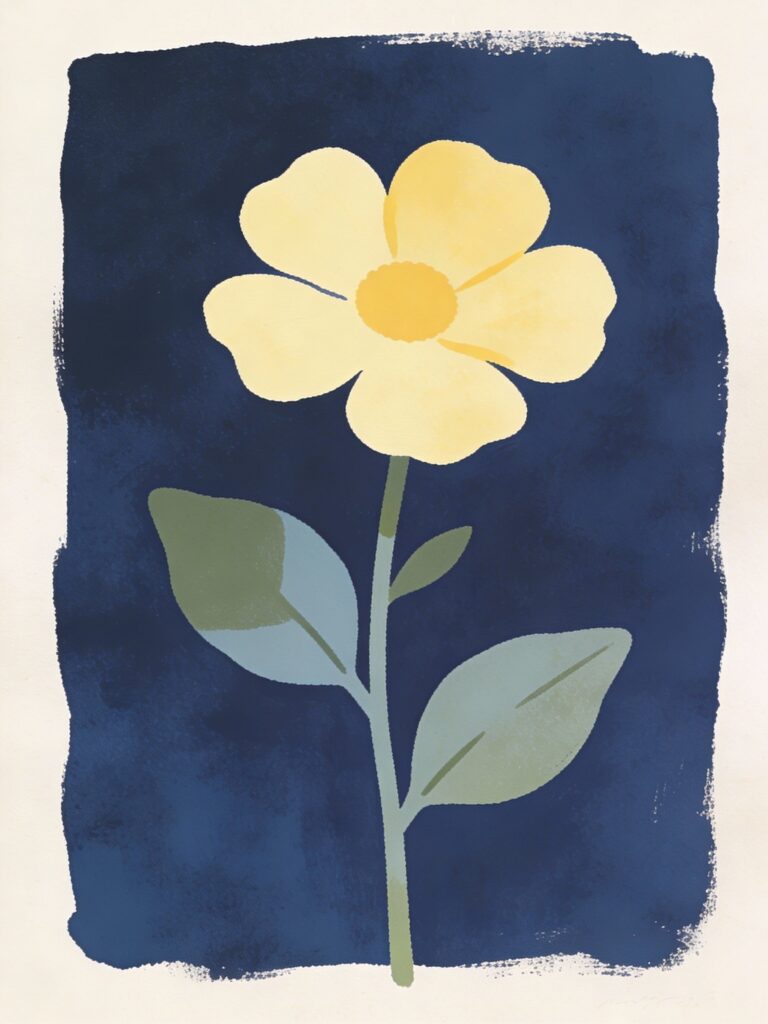
Side-by-Side Comparison
Direct comparison reveals each medium’s distinct characteristics and helps narrow your choice.
Comparison Table
| Feature | Watercolor | Acrylic | Oil | Gouache |
|---|---|---|---|---|
| Transparency | Transparent | Variable | Variable | Opaque |
| Drying Time | Minutes | 10-30 minutes | Days to weeks | Minutes |
| Rewettable | Yes | No | No | Yes (partially) |
| Working Time | Fast (wet only) | Fast | Extended | Fast (rewettable) |
| Cleanup | Water | Water (before dry) | Solvents/oil | Water |
| Permanence | Good | Excellent | Excellent | Good (requires protection) |
| Opacity | Transparent | Opaque | Opaque | Opaque |
| Blending | Easy (wet) | Difficult | Very easy | Moderate |
| Corrections | Difficult | Paint over | Easy when wet | Moderate (rewet) |
| Surfaces | Paper | Almost anything | Canvas, board | Paper, board |
| Initial Cost | Low | Low-Medium | Medium-High | Low-Medium |
| Toxicity | None | None | Low (solvents) | None |
| Color Shift | Minimal | Minimal | None | Significant (dries lighter) |
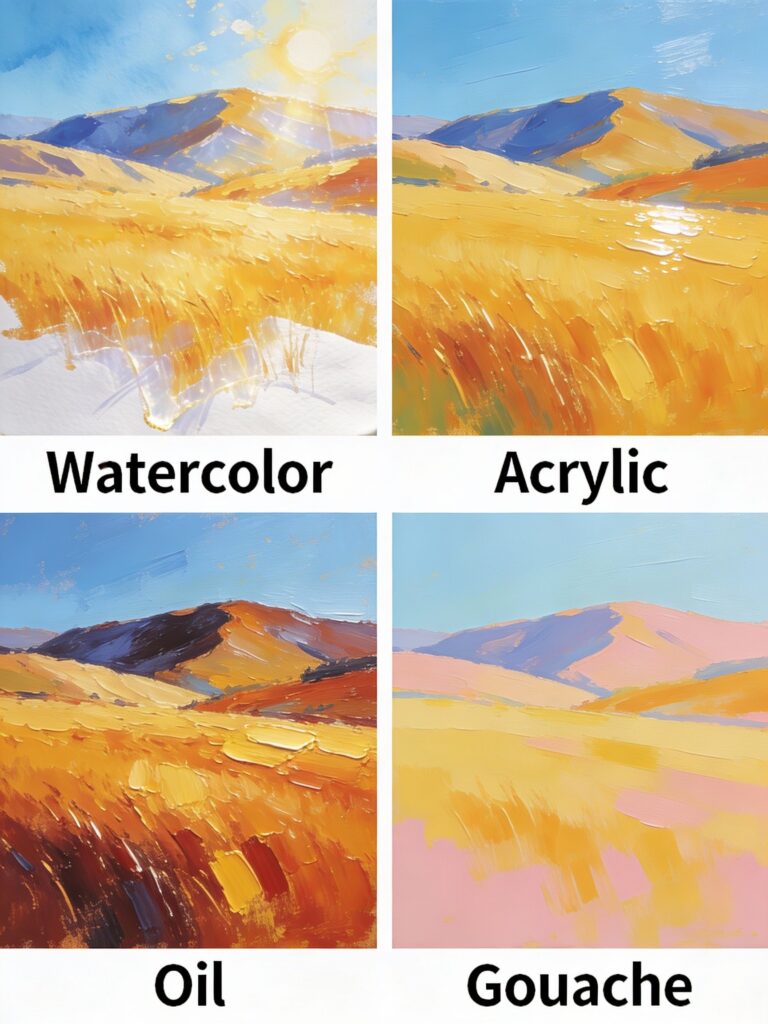
Visual Characteristics
Watercolor: Luminous, transparent, shows paper texture, soft edges possible, atmospheric quality
Acrylic: Can be matte or glossy, uniform coverage, crisp edges, modern aesthetic
Oil: Rich depth, subtle transitions, visible brushwork, traditional fine art appearance
Gouache: Flat matte finish, opaque coverage, velvety surface, illustration aesthetic
Technical Complexity
Easiest to learn: Acrylic (forgiving, straightforward) Moderate difficulty: Gouache, Watercolor (each has quirks but manageable) Most complex: Oil (requires understanding of proper techniques and materials)
However, “easiest” doesn’t mean “best”—each medium rewards dedication with unique expressive possibilities.
Choosing Your First Medium
Several factors should guide your decision. Consider your goals, working preferences, and practical constraints.
Based on Your Goals
If you want to create finished paintings quickly: Choose acrylic. Fast drying allows completing and displaying work immediately. Alternatively, gouache offers portability with quick results.
If you dream of traditional fine art painting: Choose oil. This medium offers the richest colors and most forgiving working properties for representational painting. However, be prepared for the learning curve.
If you love spontaneity and water effects: Choose watercolor. No other medium creates its characteristic blooms, flows, and luminous washes.
If you work in illustration or design: Choose gouache or acrylic. Both create flat, even color areas and offer opacity for working light over dark.
Based on Your Working Space
Limited space or shared living areas: Choose watercolor or acrylic. Both use water cleanup and produce no fumes. Watercolor requires the least space overall.
Dedicated studio: Any medium works. However, oil particularly benefits from dedicated space where wet paintings can dry safely and solvents can be used with proper ventilation.
Frequent travel or outdoor painting: Choose watercolor for maximum portability. Gouache offers similar portability with added opacity.
Based on Your Budget
Tightest budget: Watercolor or acrylic offer the most affordable entry points. Basic supplies for either medium cost $50-100 for quality materials.
Moderate budget: Gouache or acrylic allow expanding beyond basics. Budget $100-200 for comprehensive starting supplies.
Investment mindset: Oil painting requires the highest initial investment ($200-400 for quality supplies) but materials last longer per painting than consumable water media.
Based on Your Learning Style
Prefer forgiving, experimental learning: Acrylic allows mistakes to be painted over easily. Oil offers extended time for adjustments and corrections.
Enjoy discipline and planning: Watercolor rewards careful planning and deliberate technique. Its challenges teach valuable painting principles.
Want something in between: Gouache offers watercolor’s portability and cleanup with acrylic’s opacity and forgiveness.
Common First Medium Recommendations
For absolute beginners: Start with acrylic. Its versatility and forgiving nature build confidence while teaching fundamental painting concepts.
For artists with drawing experience: Try watercolor or gouache. Both suit artists comfortable planning compositions before painting.
For those committed to traditional painting: Begin with oil if you’re patient and willing to invest time learning proper techniques. The investment pays off with unmatched working properties.
For experimenters: Acrylic offers the most experimental possibilities—works on any surface, mixes with many mediums, and forgives bold experiments.
Switching Between Mediums
Many artists work in multiple mediums, either simultaneously or at different times. Understanding how skills transfer helps you decide whether to specialize or diversify.
Skills That Transfer
Value control: Understanding light and dark translates perfectly across all mediums. Furthermore, mastering values in one medium immediately benefits work in others.
Color theory: Color mixing principles apply universally. A red mixed with yellow creates orange whether you’re using watercolor, oil, or acrylic.
Composition: Design principles work regardless of medium. Strong compositions succeed in any material.
Observation skills: Learning to see accurately benefits every medium. Drawing and painting strengthen observation regardless of specific materials.
Medium-Specific Skills
Watercolor water control doesn’t transfer directly to other mediums. However, the discipline of planning light-to-dark does.
Oil blending techniques teach subtlety applicable to slow-drying acrylics with retarders, though not to quick-drying mediums.
Acrylic layering strategies work in oils but require adjustment for longer drying times.
Gouache opacity techniques transfer partially to acrylic but not to transparent watercolor.
Common Medium Combinations
Watercolor + Gouache: Natural pairing—same cleanup, similar working methods, combines transparency with opacity.
Acrylic + Mixed Media: Acrylic’s permanence makes it ideal for combining with collage, pastels, ink, and other materials.
Oil + Charcoal/Pencil: Traditional combination for underpainting and value studies before painting in oil.
Acrylic Underpainting + Oil: Some artists use fast-drying acrylic for underpainting, then finish with oil for rich surface quality.
When to Try a New Medium
Consider exploring new mediums when:
- You feel limited by your current medium’s characteristics
- Specific projects require different working properties
- You’re seeking fresh creative inspiration
- You’ve mastered fundamentals in your primary medium
- You’re curious and willing to embrace a learning period
However, mastering one medium before exploring others builds a stronger foundation than dabbling superficially in many.
Cost Comparison
Budget considerations matter when choosing a medium. Here’s realistic cost breakdown for each option.
Initial Investment
Watercolor:
- Basic paint set: $25-60
- Brushes (3-4): $15-40
- Paper (pad): $15-30
- Palette, water containers, supplies: $10-20
- Total: $65-150
Acrylic:
- Basic paint set: $30-70
- Brushes (4-5): $20-50
- Canvas or canvas boards (5-10): $20-40
- Palette, mediums, supplies: $15-30
- Total: $85-190
Oil:
- Basic paint set: $60-120
- Brushes (4-6): $40-80
- Canvas or boards (3-5): $30-60
- Solvents, mediums, palette: $30-50
- Easel (optional but helpful): $50-200
- Total: $210-510
Gouache:
- Basic paint set: $30-70
- Brushes (3-4): $15-40
- Paper or board: $15-30
- Palette, supplies: $10-20
- Total: $70-160
Ongoing Costs
Paint consumption:
- Watercolor: Lasts longest—small amounts go far when diluted
- Gouache: Moderate consumption—used more heavily than watercolor
- Acrylic: Moderate to high—dries out if not sealed properly
- Oil: Moderate—a little goes far, but tubes are more expensive
Surface costs:
- Watercolor/Gouache: Paper is affordable, even quality options
- Acrylic: Canvas more expensive than paper, but versatile surface options
- Oil: Canvas or prepared boards necessary, higher ongoing cost
Replacement supplies:
- Watercolor: Infrequent paint replacement, paper is main cost
- Acrylic: Regular paint replacement, brushes wear faster
- Oil: Infrequent paint replacement, solvents and mediums ongoing
- Gouache: Moderate paint replacement, paper main ongoing cost
Budget Recommendations
Under $100 to start: Watercolor or gouache offer complete setups within this budget.
$100-200 to start: Acrylic provides comprehensive supplies with this investment.
$200+ investment: Oil becomes viable with this budget, though starting modestly costs less.
Hidden Costs to Consider
- Framing: Watercolor and gouache require glass protection, adding to display costs. Acrylic and oil need only frames.
- Mediums and additives: Oils require various mediums. Acrylics benefit from retarders and glazing mediums.
- Workspace: Oil may require ventilation equipment. All mediums need adequate storage.
- Learning resources: Books, courses, and materials for practice add to total investment.
According to Blick Art Materials, a major art supply retailer, understanding complete supply needs helps artists budget realistically for their chosen medium.
Conclusion & Next Steps
Choosing between watercolor, acrylic, oil, and gouache depends on your goals, working style, space, and budget. Each medium offers unique advantages, and none is objectively “best”—only best for specific purposes and preferences.
Your next steps:
- Identify your priorities from this guide. What matters most—portability, blending time, cleanup, cost, or permanence?
- Start with one medium rather than collecting supplies for multiple mediums. Depth beats breadth when learning.
- Invest in quality basics rather than extensive cheap supplies. A few good brushes and paints outperform many poor ones.
- Take a structured approach with our comprehensive guides:
- Watercolor Painting: Ultimate Guide for transparent water media
- Art Fundamentals Guide for principles applying to all mediums
- Practice consistently with your chosen medium. Mastery comes from focused practice, not medium-hopping.
- Join communities of artists working in your chosen medium for support, feedback, and inspiration.
Remember that many professional artists work primarily in one medium while occasionally exploring others. Furthermore, skills developed in any medium transfer to others—no learning is wasted.
The best medium is the one that excites you enough to practice regularly. Trust your instincts, start with manageable supplies, and commit to learning your chosen medium thoroughly. Your artistic voice will develop through dedicated practice regardless of which paint you choose.
FAQ
Q: Can I start with multiple mediums at once?
A: While possible, starting with one medium builds stronger foundations. Learning any medium requires focused practice to understand its unique properties. Moreover, juggling multiple mediums simultaneously divides your attention and slows progress in each. Start with one medium for 3-6 months, gain competence, then explore others if desired. However, combining complementary mediums (watercolor + gouache or acrylic + mixed media) works better than combining very different ones (watercolor + oil).
Q: Is watercolor really harder than other mediums?
A: Watercolor has a different challenge profile, not necessarily harder overall. Its unforgiving nature (difficult to correct mistakes) frustrates beginners initially. However, oil painting’s technical complexity (fat-over-lean rules, proper surface preparation) presents different challenges. Acrylic’s fast drying creates its own difficulties with blending. Therefore, “hardest” depends on your working style—methodical painters may find watercolor’s planning easier than acrylic’s speed requirements, while spontaneous artists might struggle with oil’s slow drying.
Q: Will learning one medium help with others?
A: Absolutely. Fundamental skills—value control, color theory, composition, observation—transfer completely between mediums. Furthermore, understanding how paint behaves builds general painting intelligence applicable everywhere. However, each medium also has unique technical skills requiring separate practice. Think of mediums like musical instruments—learning violin builds general musicianship that helps with piano, though each instrument requires specific technical mastery.
Q: Can I mix different painting mediums in one artwork?
A: Some combinations work well, others don’t. Safe combinations: watercolor with gouache (both gum arabic-based), acrylic with various media (acrylic as base layer), oil over completely dry acrylic underpainting. Risky combinations: oil and water media in same layers (won’t adhere properly), acrylic over oil (poor adhesion). General principle: “fat over lean” means oil/slower-drying mediums can go over faster-drying ones, but not vice versa. Learn more about mixed media approaches in our art fundamentals guide.
Q: Which medium is best for beginners?
A: Acrylic is most beginner-friendly due to its forgiving nature, reasonable cost, and versatility. You can paint over mistakes easily, experiment with different techniques, and see results quickly. However, the “best” beginner medium depends on your goals—if you specifically want to learn watercolor landscapes or oil portraits, starting with those mediums makes sense despite steeper learning curves. Furthermore, beginning with your passionate interest sustains motivation through initial challenges better than starting with the “easiest” medium.
Q: How much should I spend on my first painting supplies?
A: Budget $75-150 for watercolor or gouache, $100-200 for acrylic, or $200-400 for oil. These amounts get quality materials sufficient for learning. Moreover, investing in decent supplies makes learning significantly easier—cheap paints with poor pigmentation and terrible brushes make even simple techniques frustratingly difficult. Start with basic color sets (6-12 colors) and expand gradually. Quality matters more than quantity—five good brushes outperform twenty cheap ones.
Q: Do I need an easel to paint?
A: Not necessarily, though it helps with certain mediums. Watercolor typically works flat on a table or tilted board—horizontal working prevents unwanted paint runs. Acrylic works fine on table or easel. Oil benefits from vertical easel work for better posture during long sessions and proper viewing angles. Gouache works on table or tilted surface like watercolor. However, serious painters in any medium eventually benefit from proper easels for ergonomics and viewing paintings from correct angles.
Q: Which medium creates the most realistic paintings?
A: Oil paint traditionally excels at photorealistic work due to extended blending time and rich color depth. However, all mediums can achieve realism in skilled hands—hyperrealistic watercolors, acrylics, and gouache paintings exist. The medium matters less than the artist’s observation skills, patience, and technical mastery. Furthermore, each medium brings unique qualities to realism—watercolor’s luminosity, oil’s depth, or acrylic’s precision each create distinct realistic aesthetics.
Q: Can I use the same brushes for different mediums?
A: Technically yes, but it’s not ideal. Natural hair brushes work with all mediums but are expensive and require careful care. Synthetic brushes work well for acrylics and watercolor but may not perform optimally with oils. Furthermore, dried acrylic permanently ruins brushes, while oil requires thorough solvent cleaning. Most artists maintain separate brush sets for different mediums to prevent cross-contamination and preserve brush longevity. However, when starting out, quality synthetic brushes can handle watercolor, gouache, and acrylic adequately.
Q: How long until I see good results with my chosen medium?
A: Expect 3-6 months of regular practice (2-3 times weekly) before creating paintings you’re genuinely pleased with. However, you’ll see steady improvement from day one. Moreover, “good results” means different things—satisfying paintings come before masterpieces. The learning curve varies by medium and background—artists with drawing experience progress faster, while complete beginners need more time building foundational skills. Most importantly, enjoy the learning process rather than rushing toward “good enough” results.
Related Resources
Complete Guides:
- Watercolor Painting: Complete Beginner to Advanced Guide
- Pencil Drawing: Complete Guide
- Color Mixing: Everything You Need to Know
- Junk Journaling: Complete Handbook
- Art Fundamentals Guide
- Art Supplies Glossary: 200+ Terms Every Artist Should Know
Comparison Guides:
Technique Deep-Dives:
- Wet-on-Wet Watercolor Technique
- Shading Techniques for Realistic Drawing
- Drawing Techniques Encyclopedia
Have any thoughts?
Share your reaction or leave a quick response — we’d love to hear what you think!
-
 0
0 -
3
-
0
-
0
-
0
-
0


