
Table of Contents
This spring junk journal kit gives you 34 pages built around one soft, blooming season: cherry trees, robin nests, garden sheds and rainy afternoons, all painted to fill the sheet edge to edge. The set runs 24 full scene pages, then 5 seamless background patterns, then 5 lined writing pages, so you can glue, layer and write without hunting for matching paper.
Print on a heavier matte paper, something in the 160 to 200gsm range, so the washes do not show through when you glue pages back to back. Set your printer to its best or photo quality and let each sheet dry flat for a minute before handling. Trim to your journal size once everything is printed, or leave a deckled edge on the scene pages for a softer look.
Using these images: free for personal projects such as printing, coloring, cards, journals and gifts. Handmade items that include them may be sold up to 30 pieces per design. More than that is commercial use and is not permitted, and neither is selling or sharing the images themselves or passing them off as your own. Please ask before any other use.
Blossom and Branch Pages
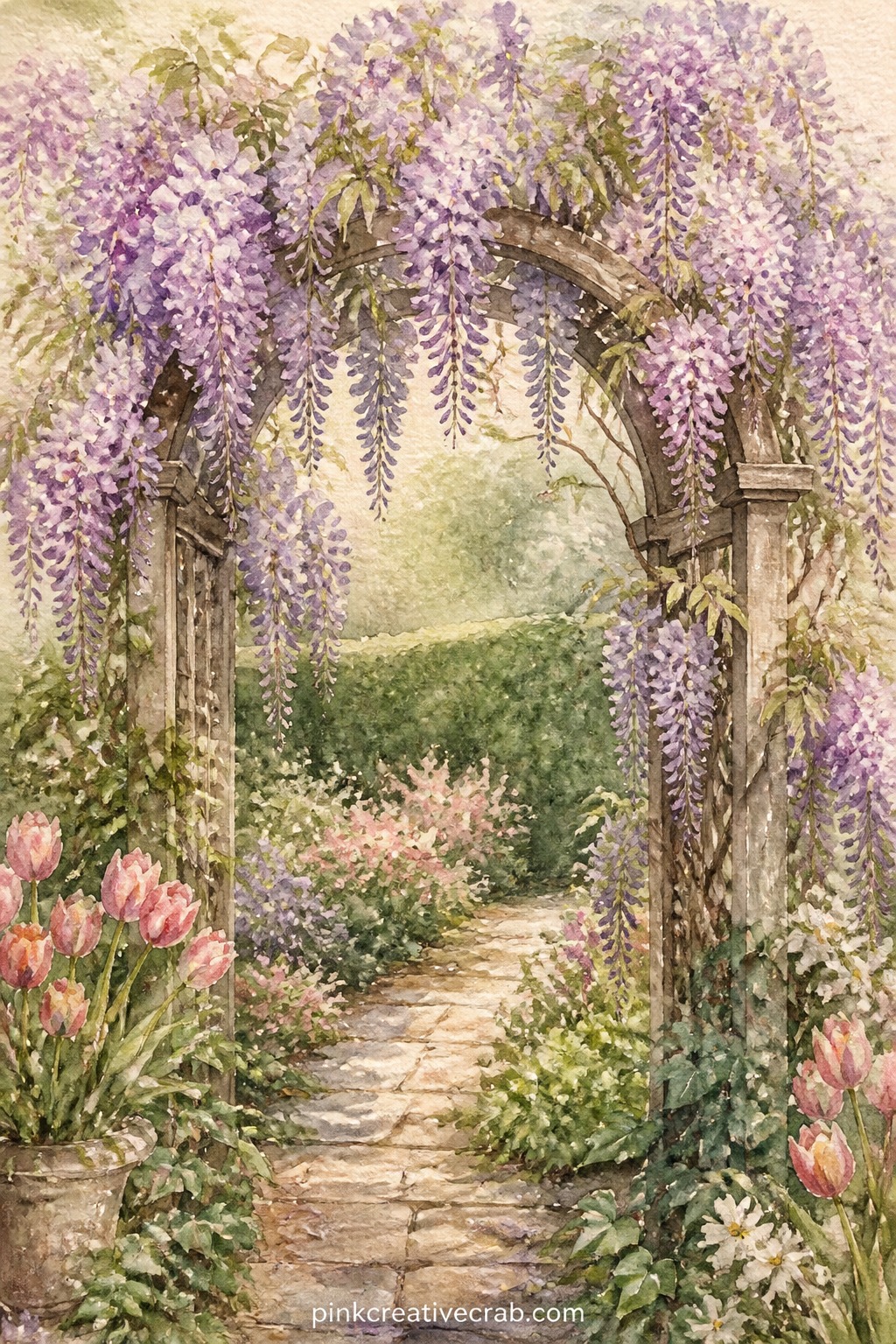
A cherry tree stands heavy with pink blossom against a pale spring sky, with a scatter of fallen petals and a low stone wall at its base.
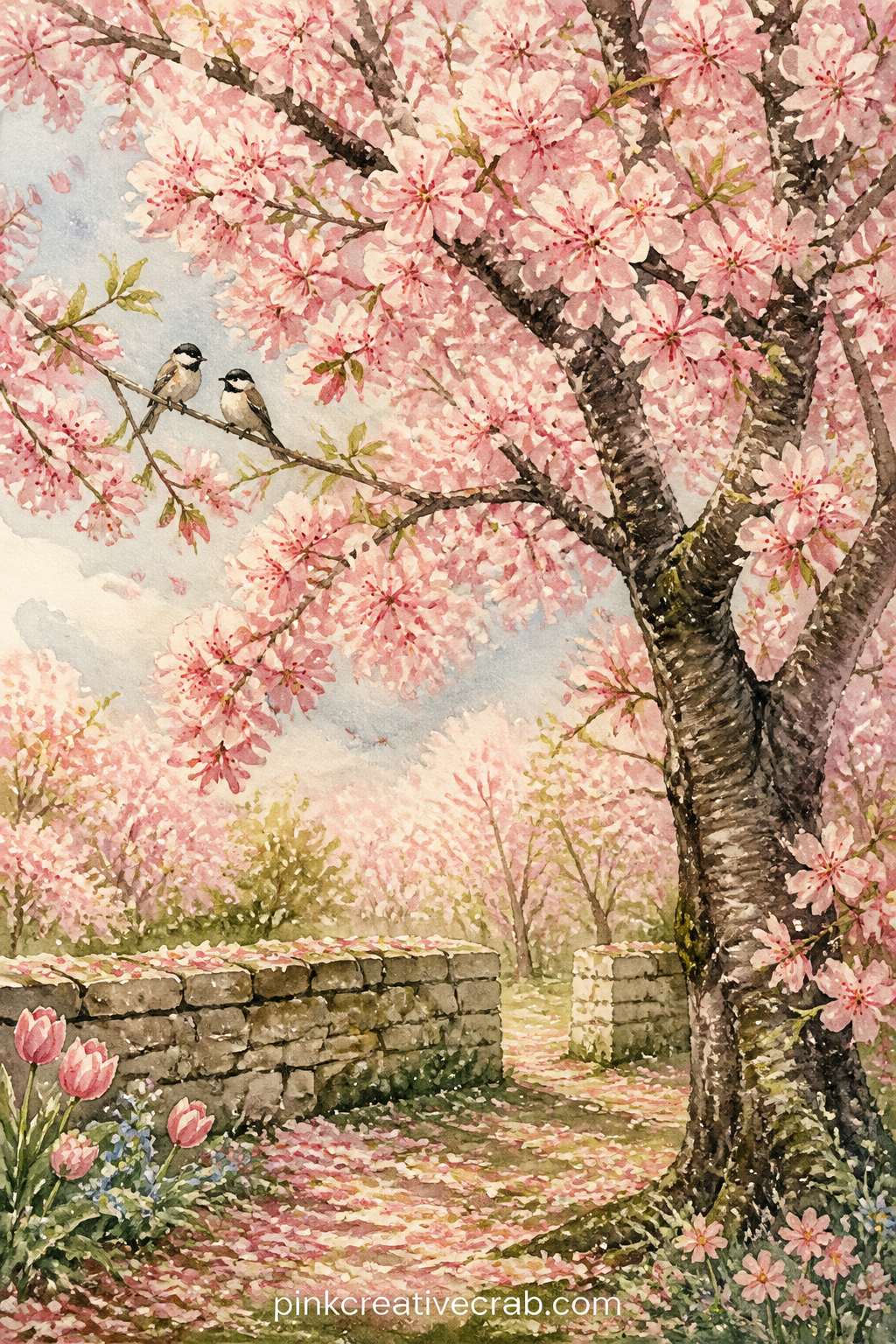
Glue a pressed real petal or a cut paper one directly onto this branch study, then jot the date spring arrived beside it this year.
The pale pink and white blossoms leave enough clear space at the base of the page for a short line or two of handwriting, so treat it as a small nature log as well as a decoration.
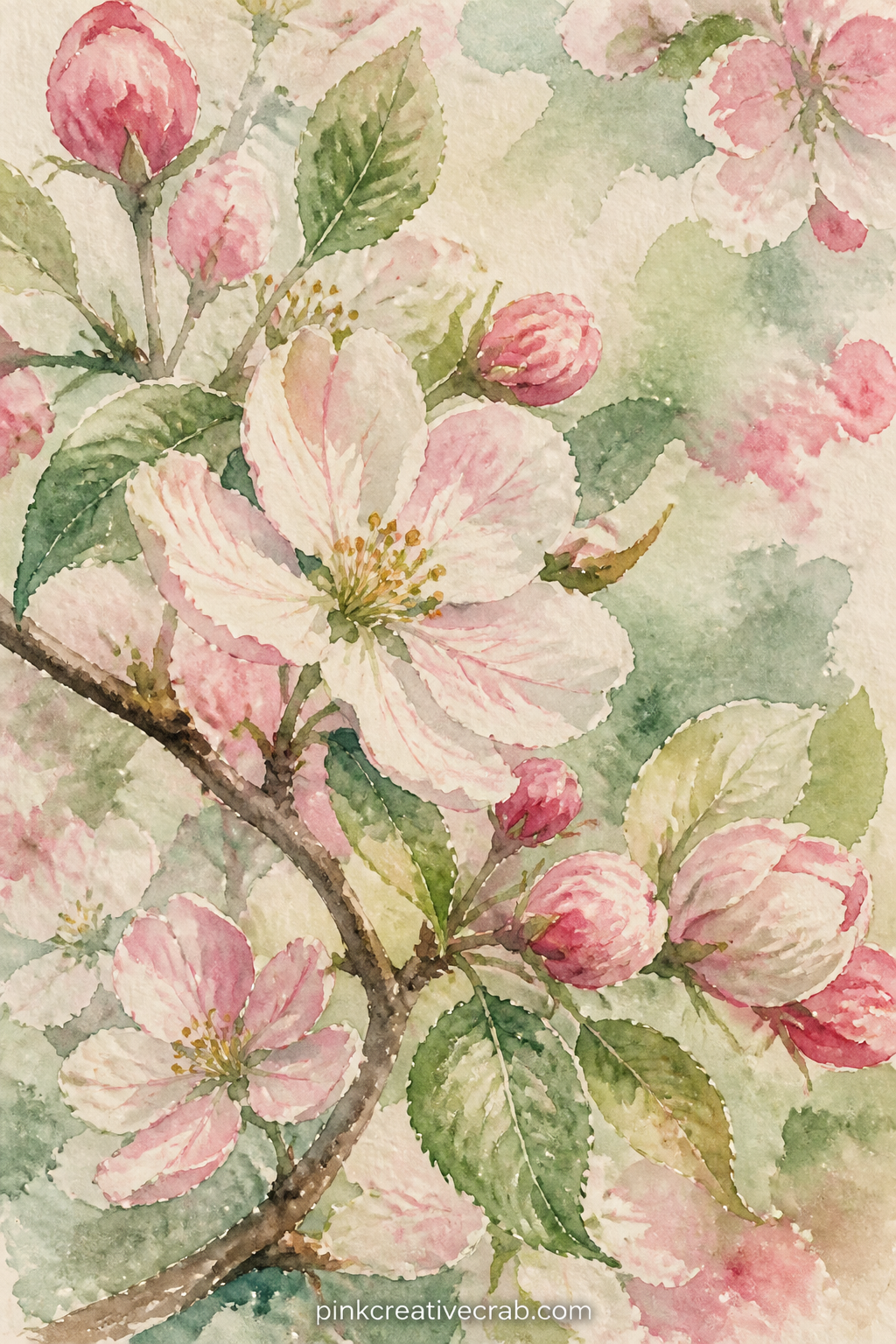
Pair this page with the Tulip and Bee Pattern from this set: use the pattern as a facing page so the purple wisteria has a bright partner across the spread.
Trail the hanging blooms toward the gutter of your journal when you glue it in, so the arch feels like it continues into the fold.
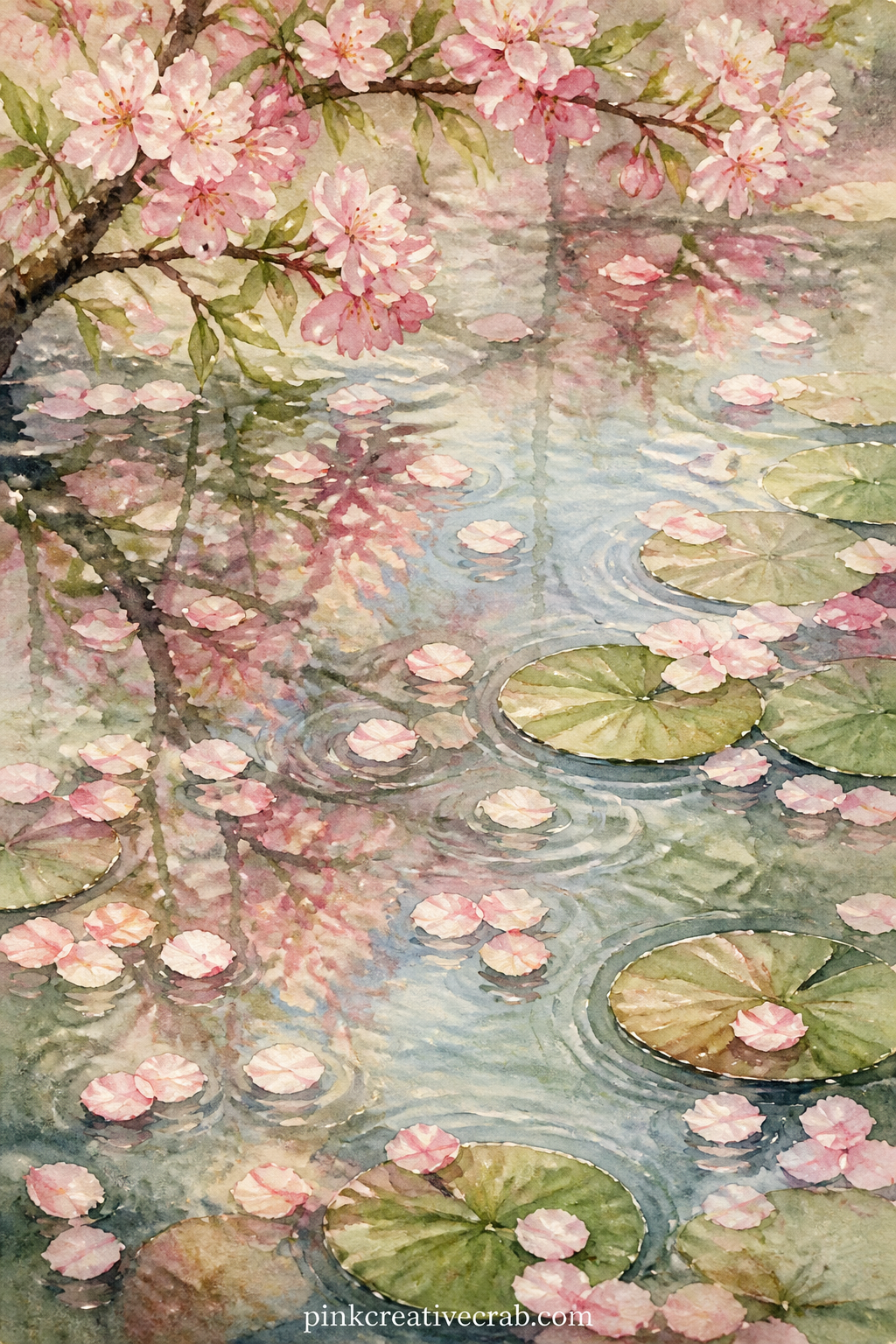
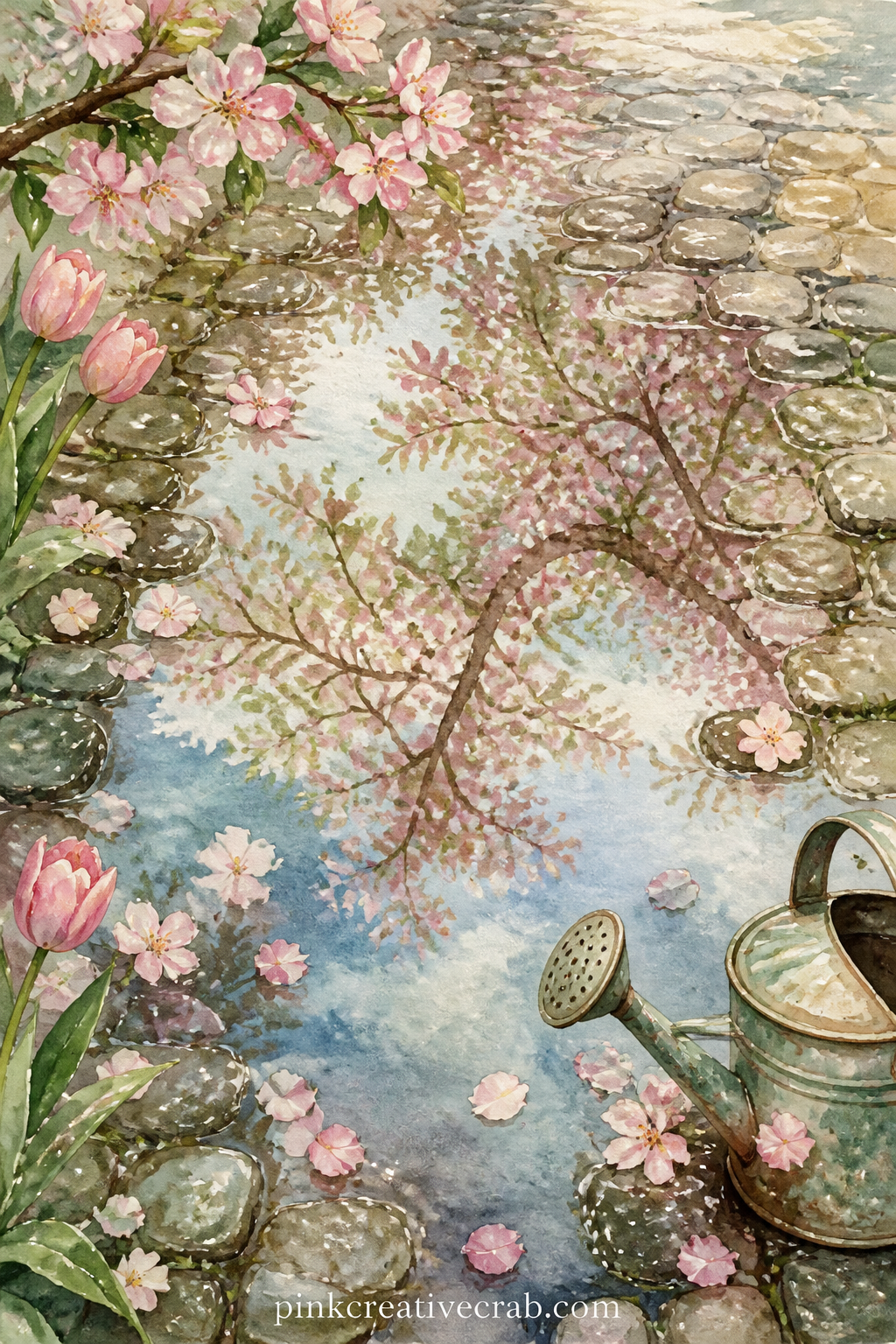
Fallen petals drift across a still pond, scattered among lily pads and the reflection of an overhanging branch.
Nests and Garden Birds
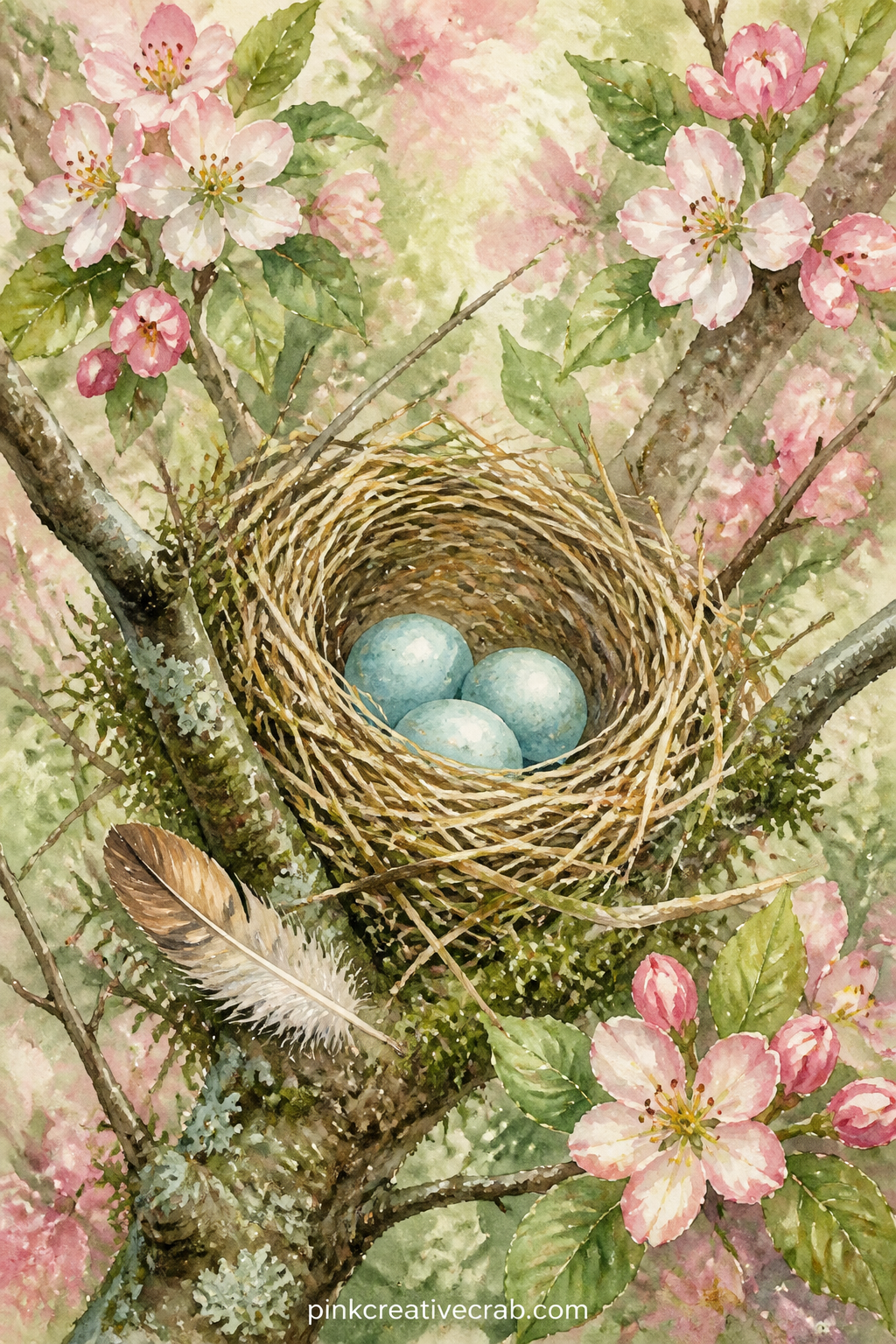
A robin’s nest sits tucked in a forked branch, holding three pale blue eggs, with a scatter of twigs, moss and a single feather around it.
If you want more detail to work from before painting your own version, the guide on spring watercolor birds and nests covers nest shapes and egg colours in more depth.
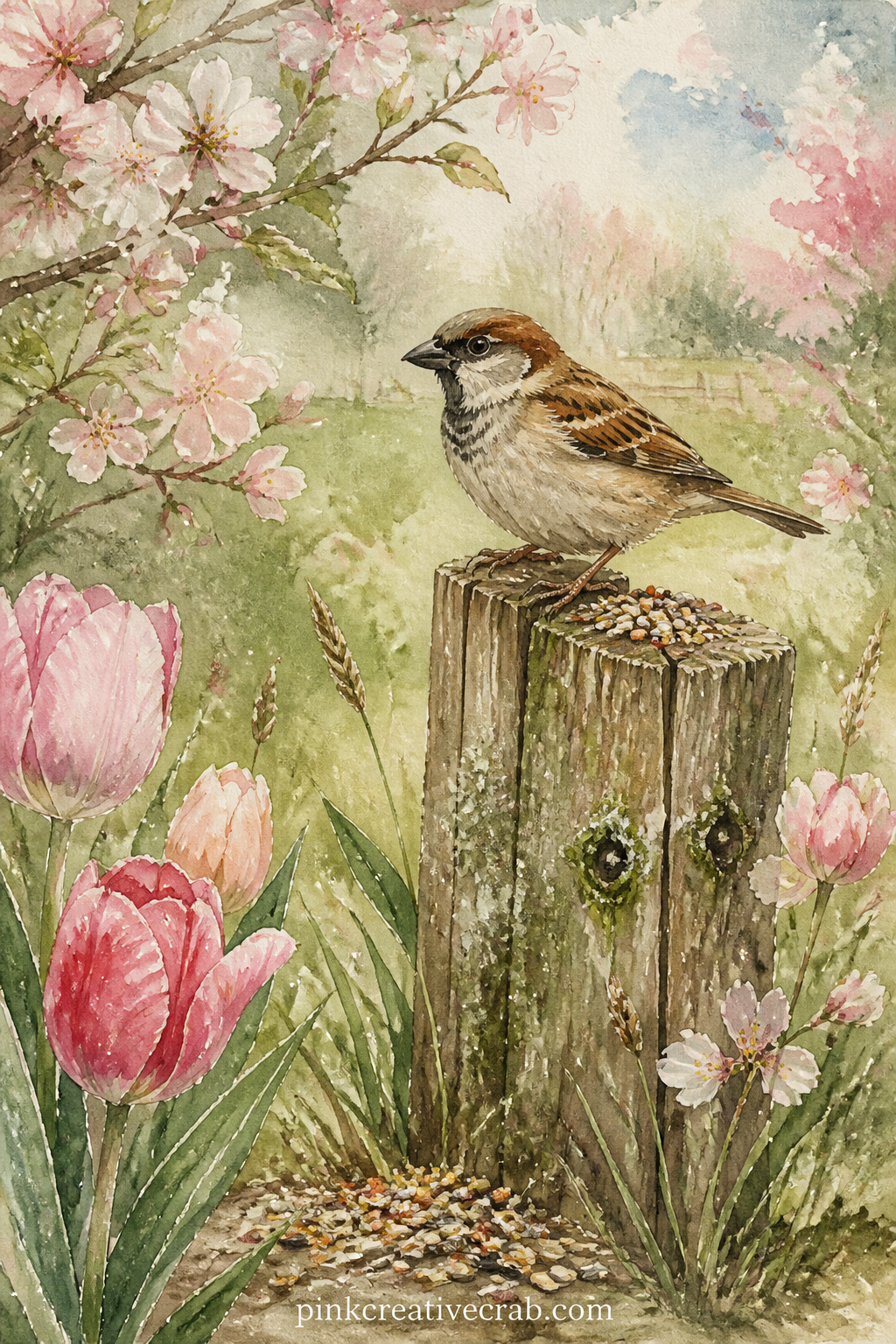
The usual mistake here is painting the fence post too dark and flat, which pulls focus from the bird: keep the wood pale and let the sparrow carry the contrast.
Add a few scattered seeds at the base of the post and a soft wash of green field behind, so the whole page reads as one quiet moment rather than a single cutout bird.
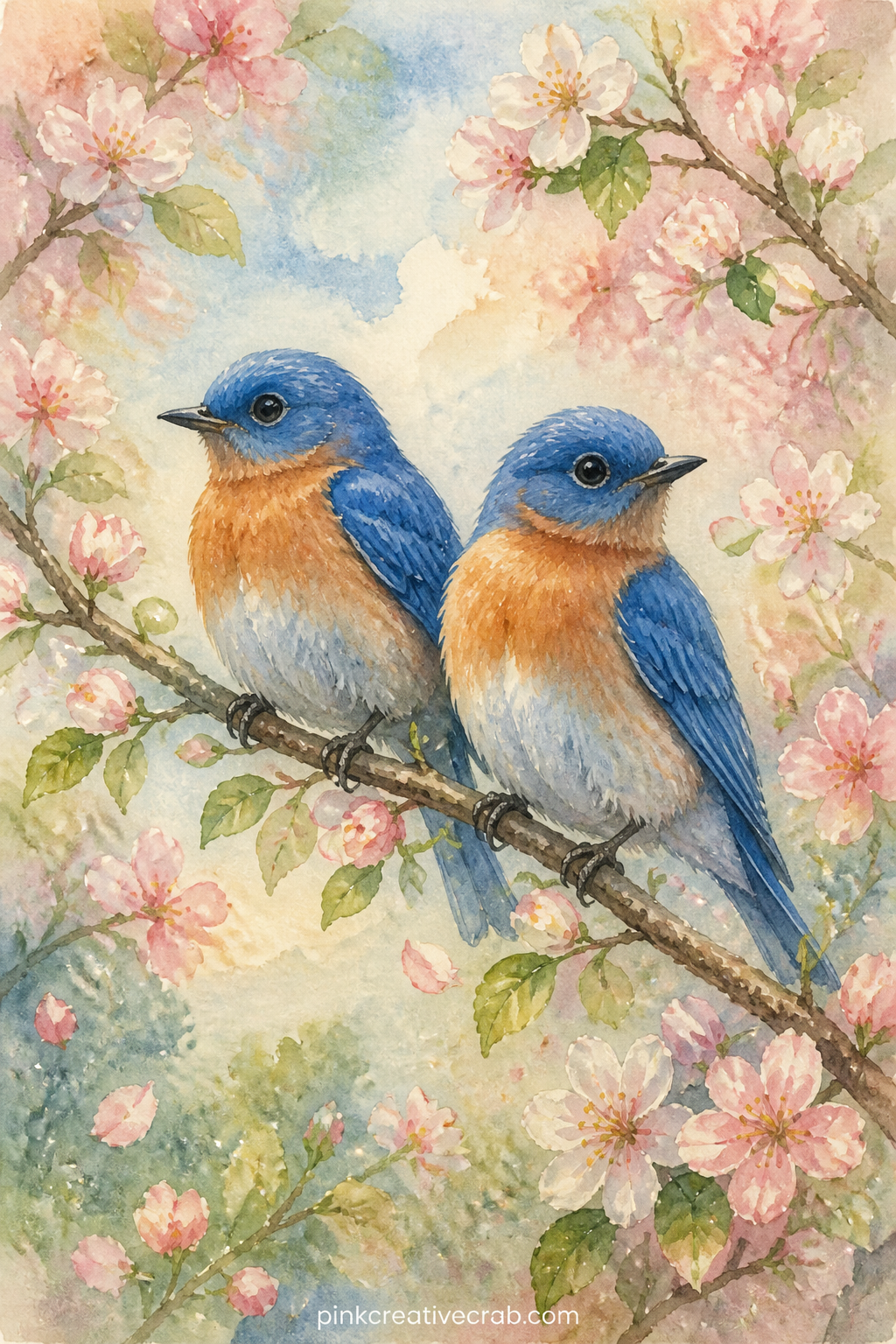
Two bluebirds share a blossom branch, surrounded by a handful of small leaves and petals, painted over a wash of pale morning sky.
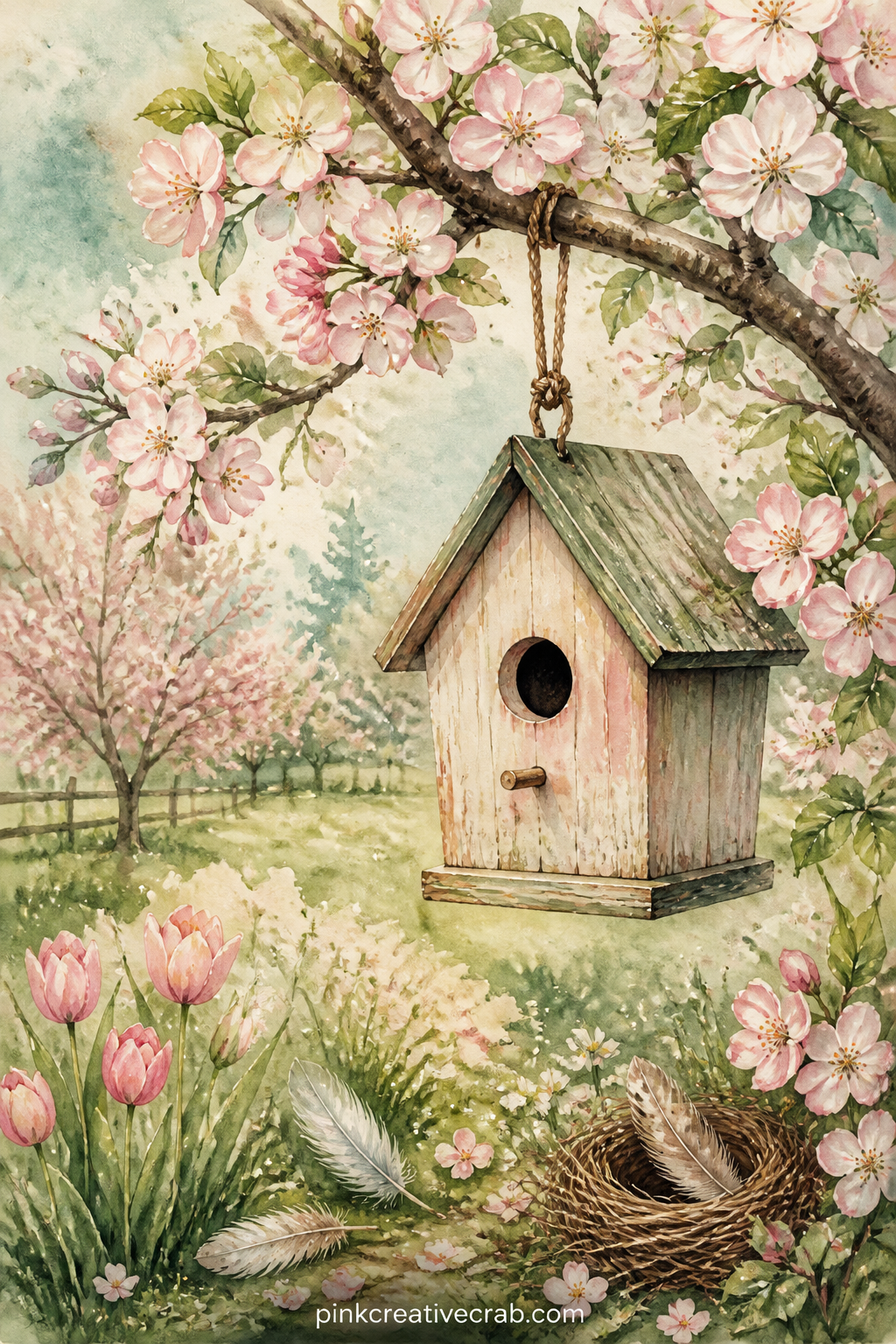
Leave a short caption space under the roofline of the birdhouse and write a one line wish for the season there, something small like what you hope to grow or notice.
Surround it with a blossoming tree branch, a few scattered feathers and a soft grassy ground, so the birdhouse has company rather than sitting alone.
Garden and Potting Pages
A weathered garden shed stands open with rows of seed packets, a trowel and a coiled hose leaning against the wall, framed by climbing vines.
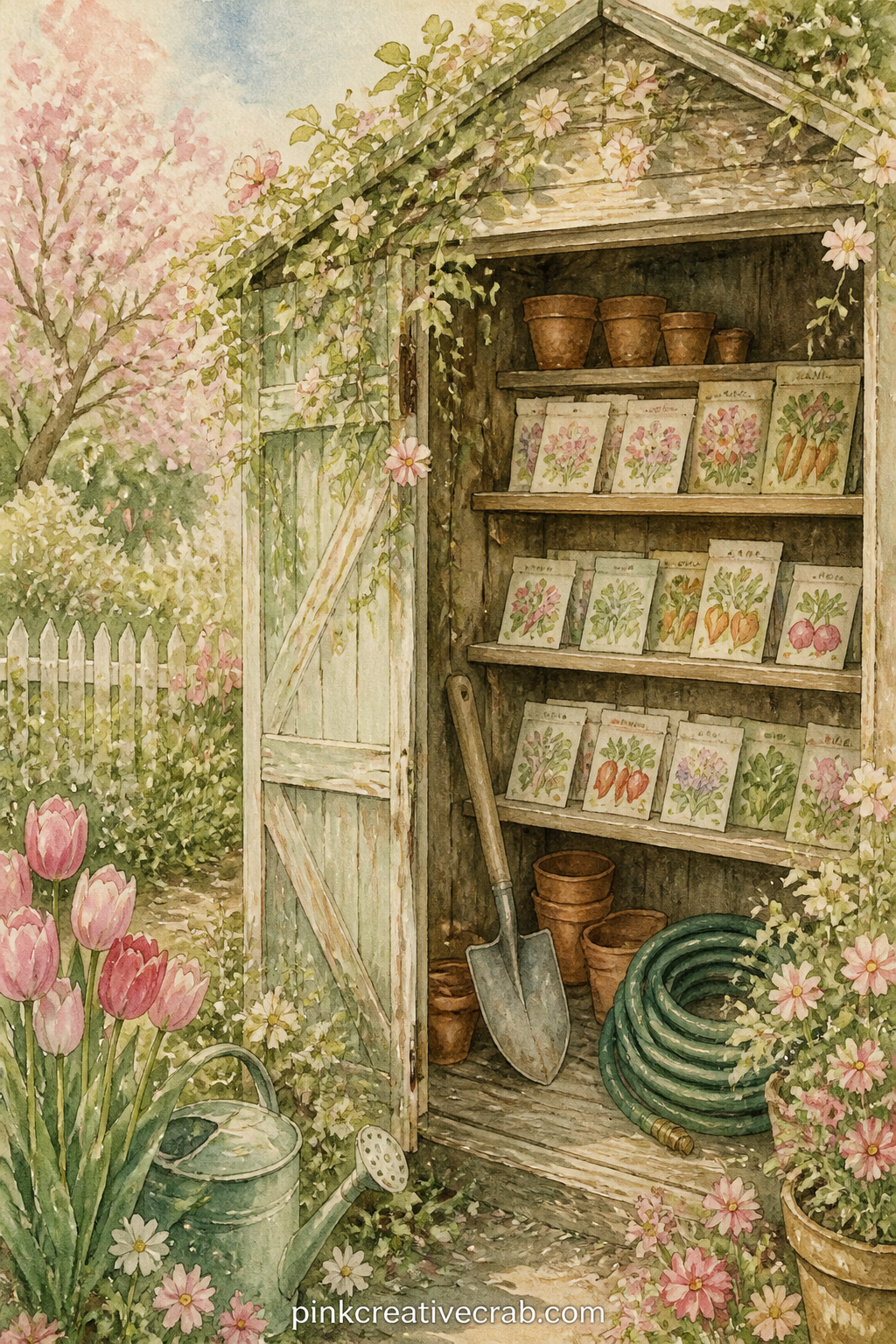
Fold a real seed packet or a small gardening note into the pocket of this page’s border, slipping it along the edge where the bench meets the wash behind it.
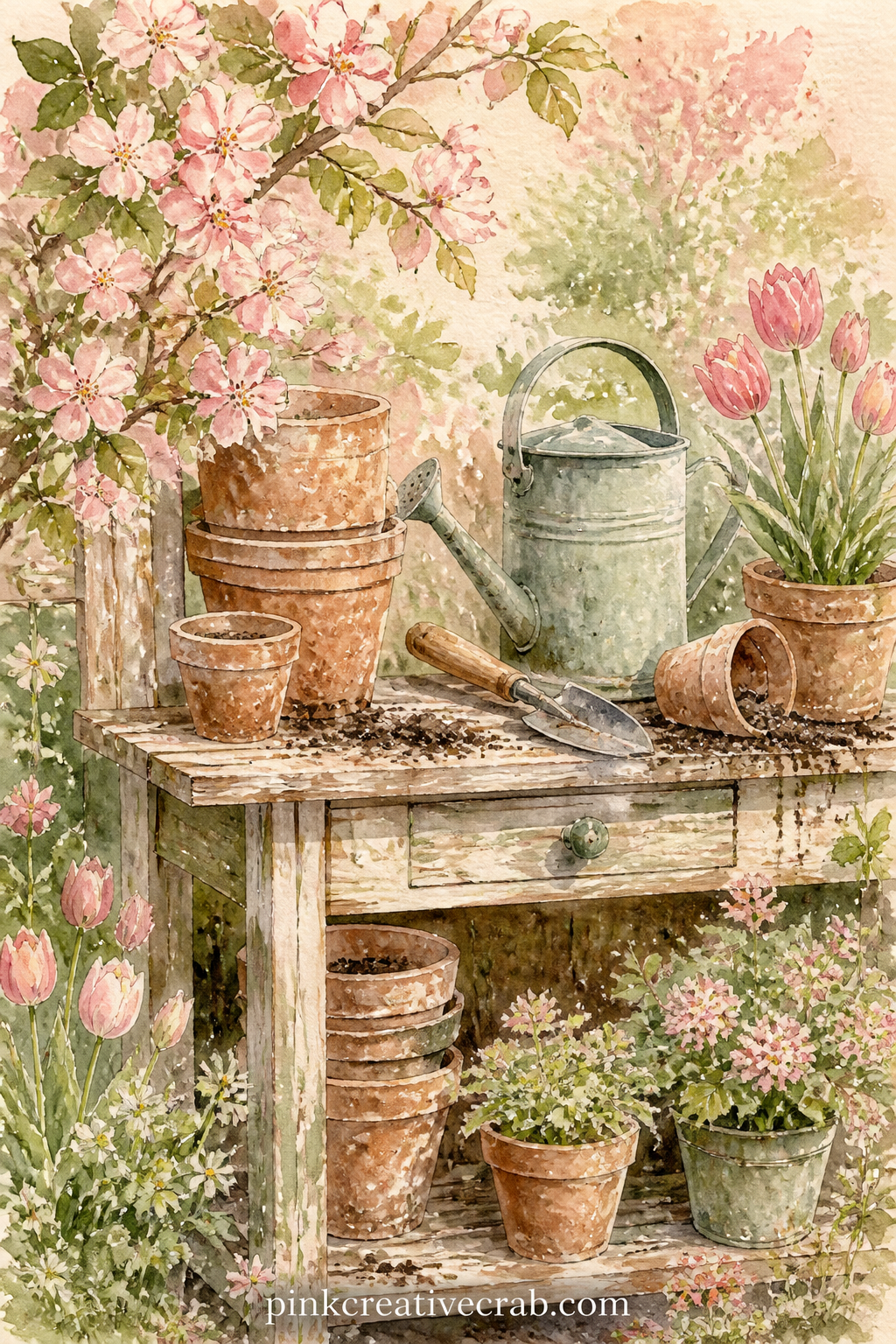
The scattered clay pots and spilled soil leave room to glue in a photo of your own plant if you want this page to double as a record of the year.
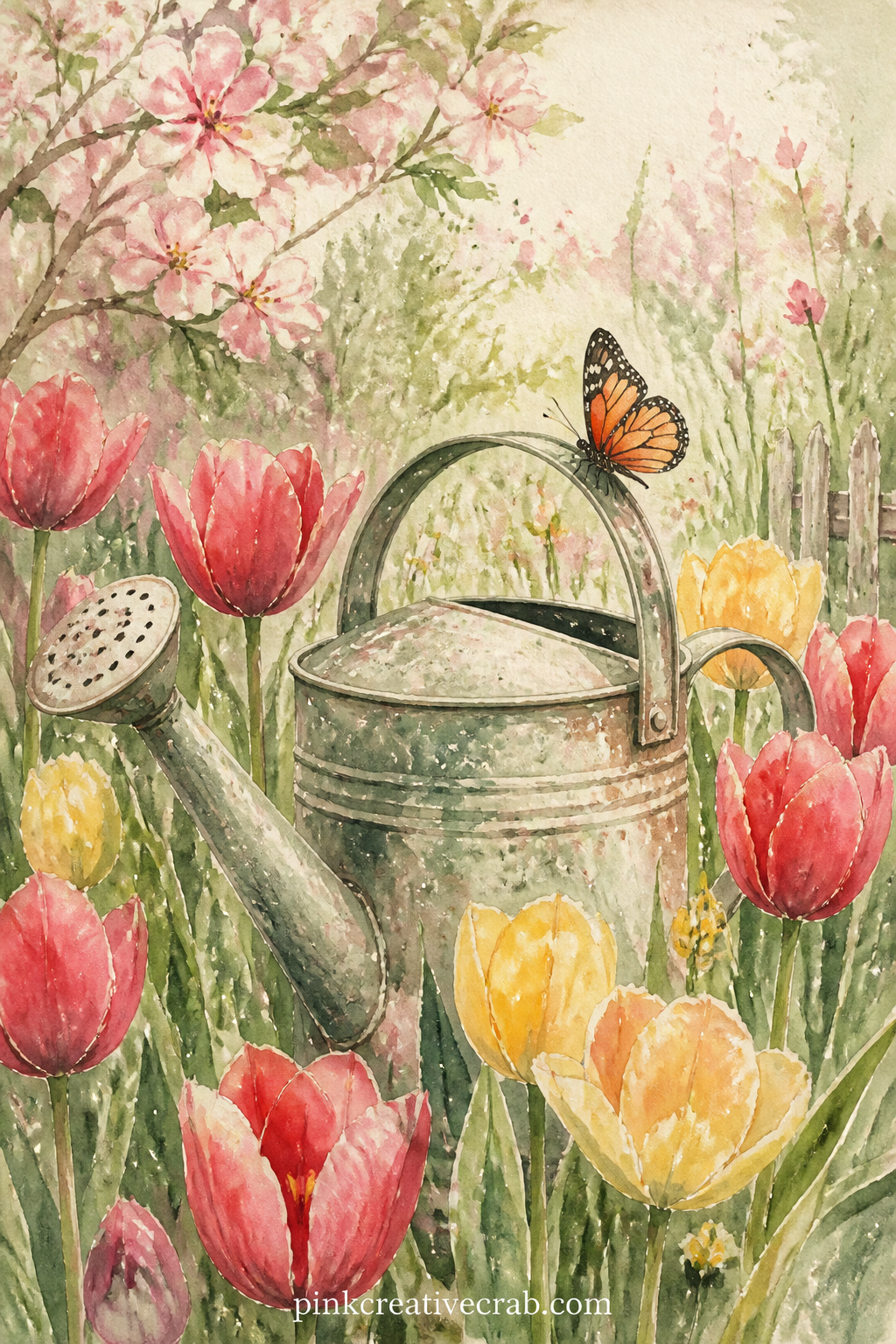
An old tin watering can rests among a bed of red and yellow tulips, with a butterfly resting on the handle and soft grass painted behind.
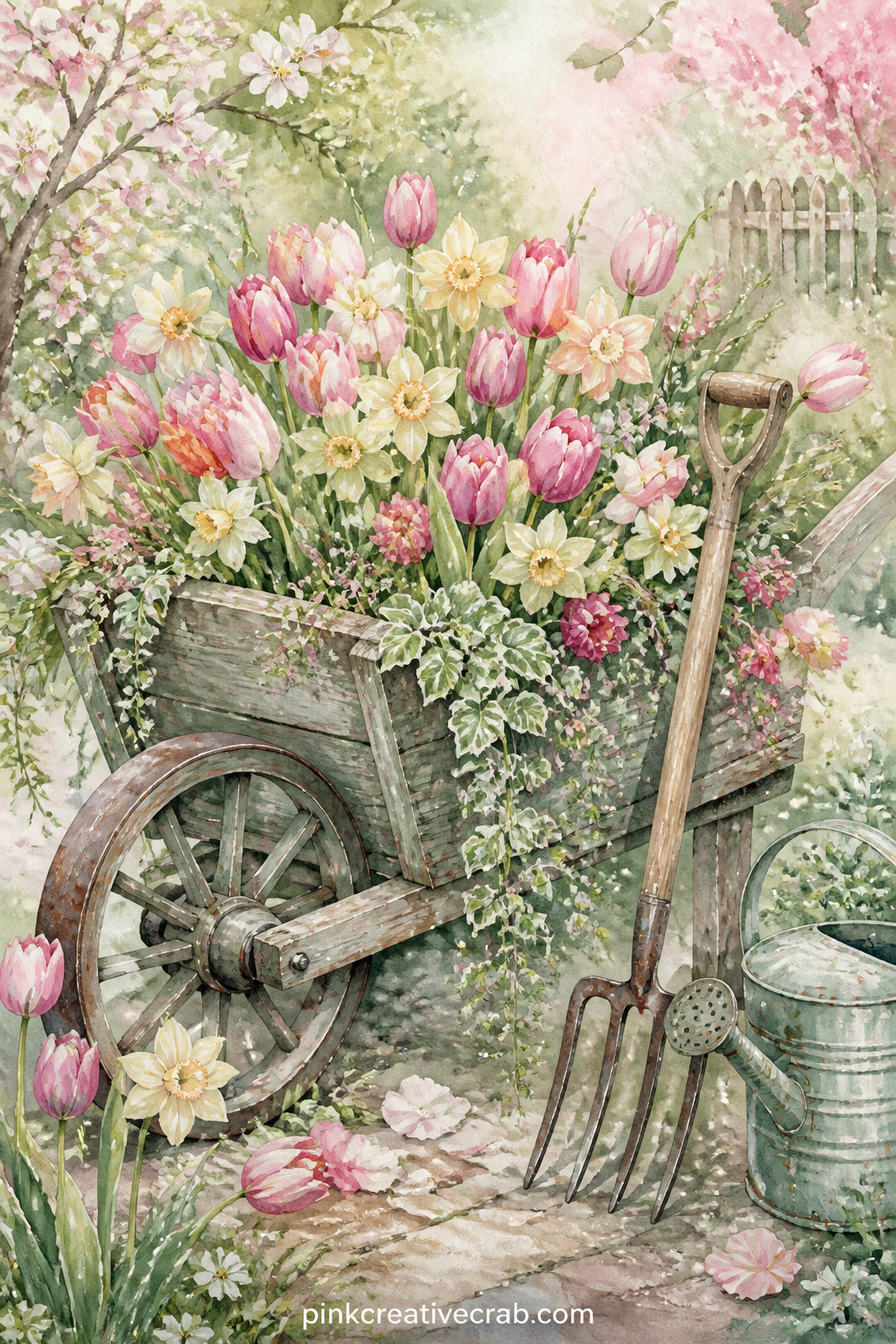
Tear the right edge of this page roughly instead of cutting it, so the overflowing flowers in the wheelbarrow look like they spill past the paper itself.
Keep a strip of plain wash along the left side when you tear, so the torn edge has somewhere to land without cutting into the main subject.
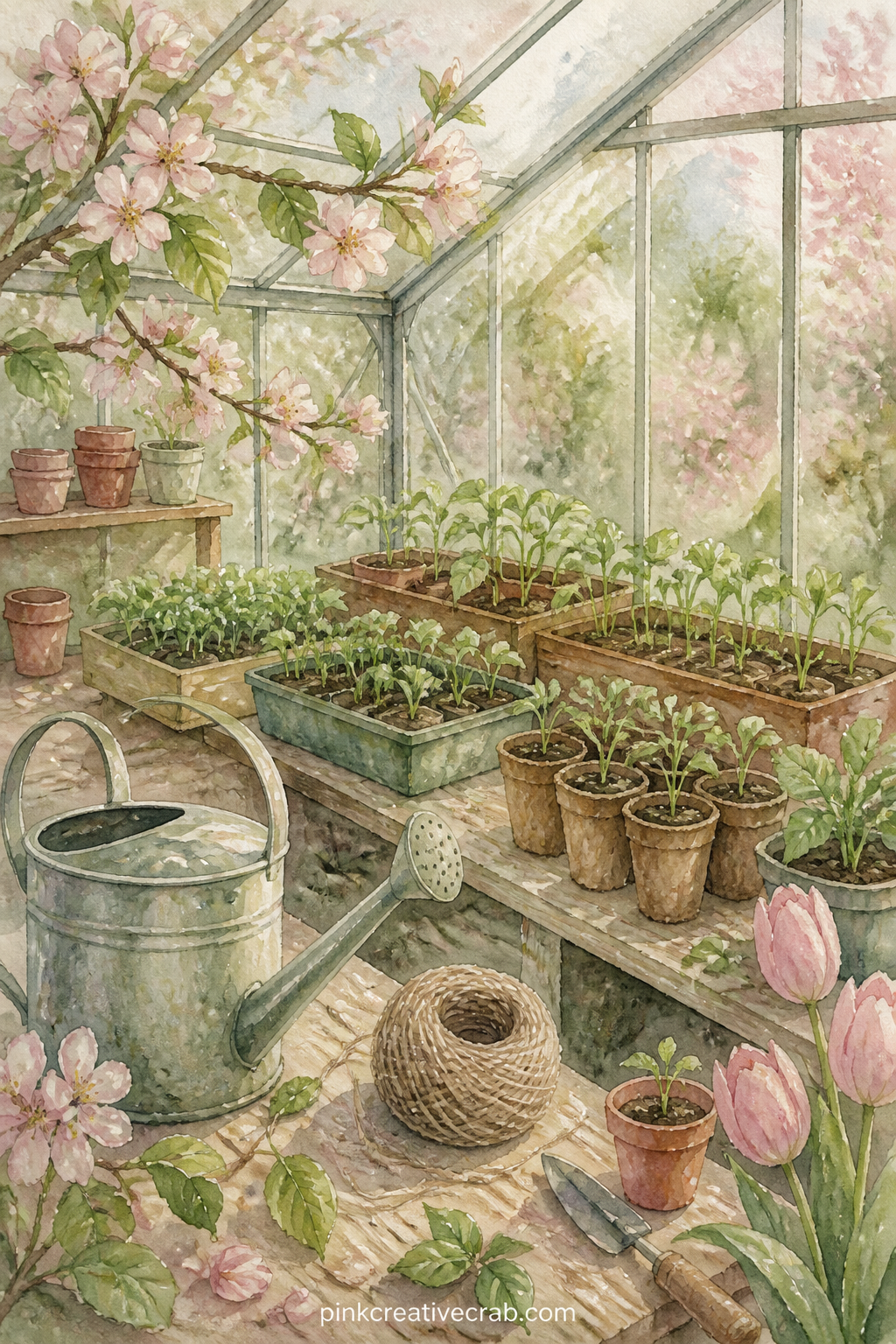
Rows of small seedlings grow in a glass greenhouse, with a watering can, a ball of twine and a few scattered leaves on the potting shelf.
Rain and Puddle Pages
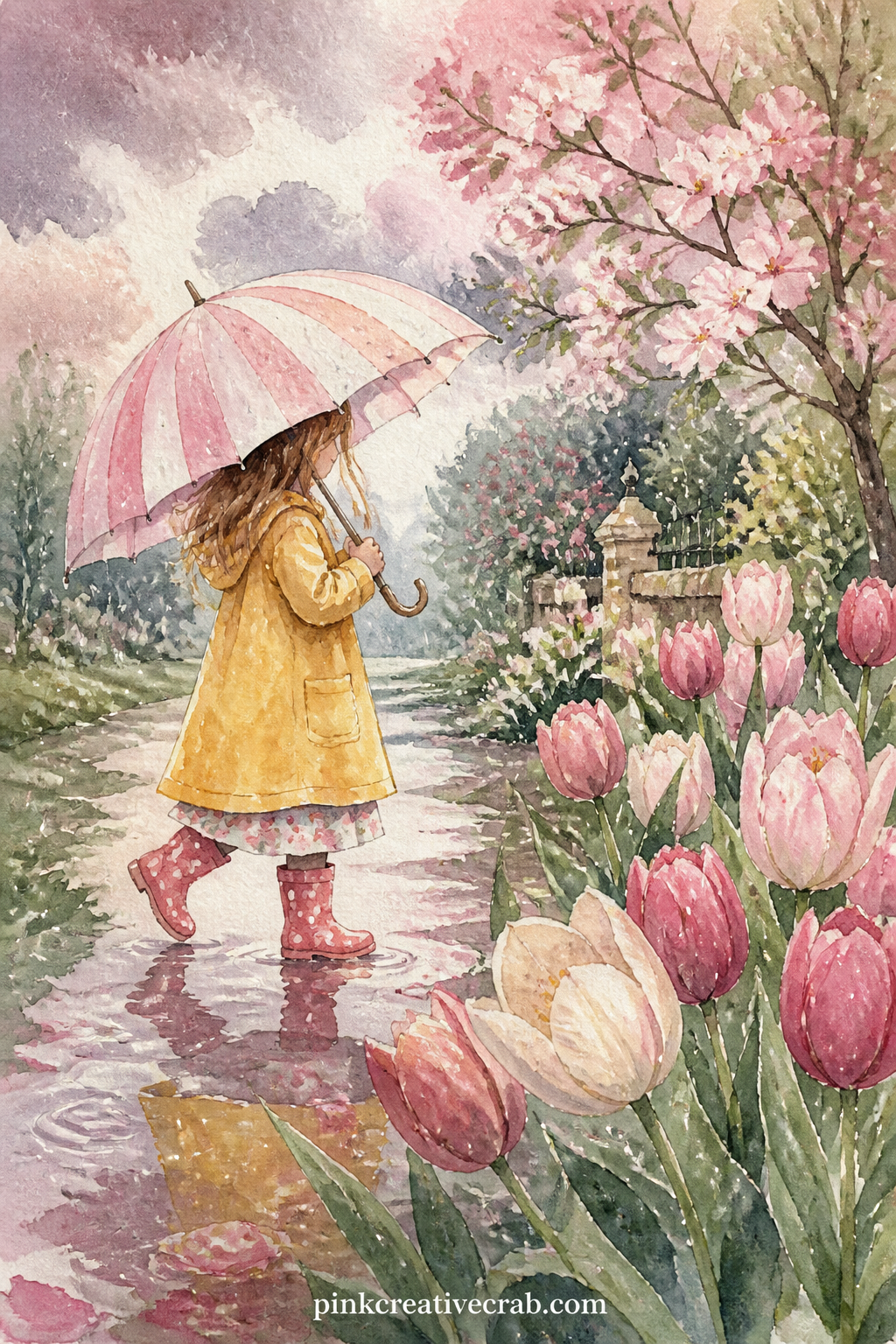
A girl in a yellow coat walks under a striped umbrella through gentle spring rain, past a row of blooming tulips and a puddle reflecting the clouds.
This page suits a gift journal made for a daughter or a young niece who loves rainy walks and bright boots more than sunny days.
Raindrops trail down a windowpane, with a blurred garden of blossom trees visible beyond the glass and a small potted plant on the sill.
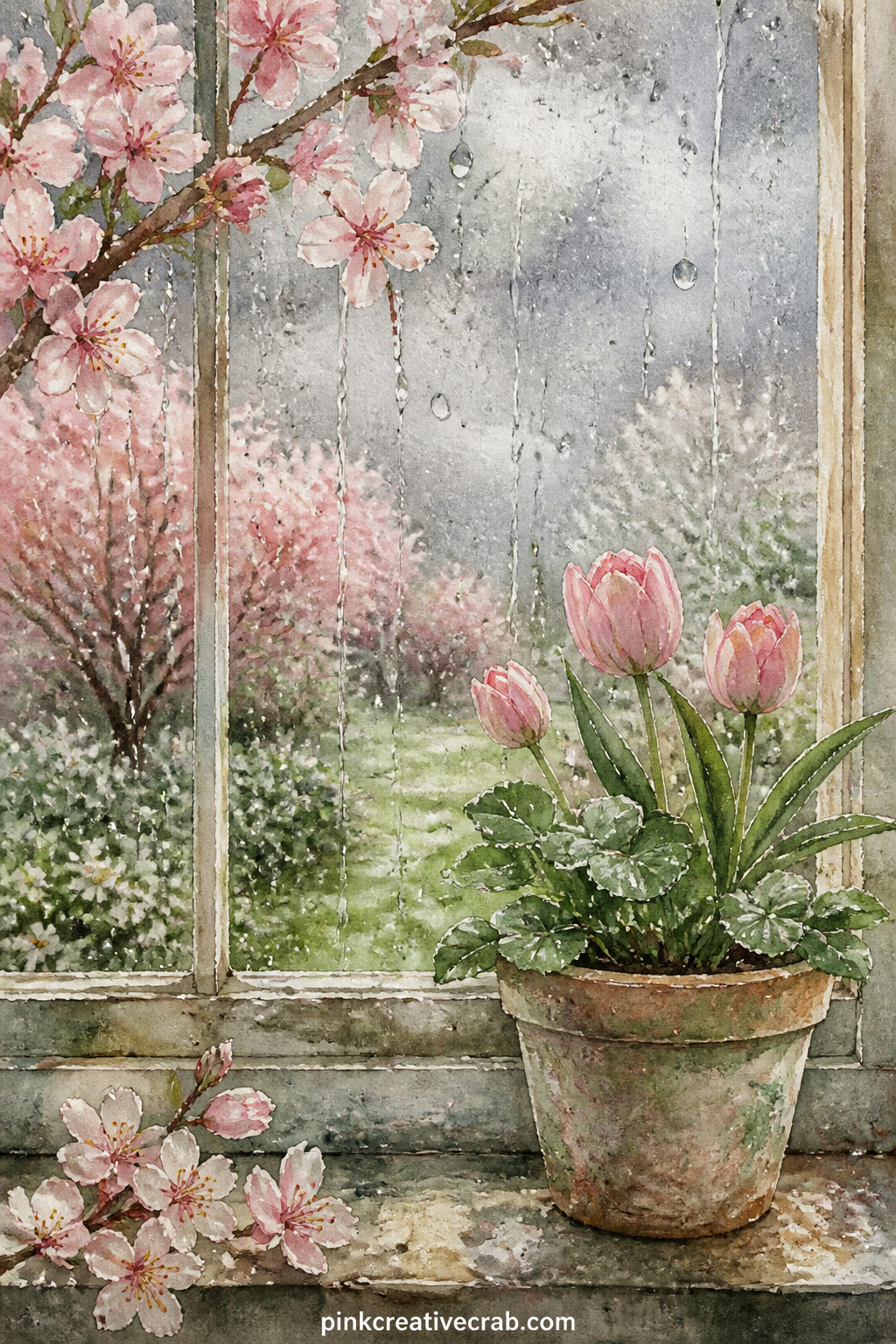
Ask yourself in the margin here what spring rain usually makes you remember, then write the answer directly onto the still water of the puddle.
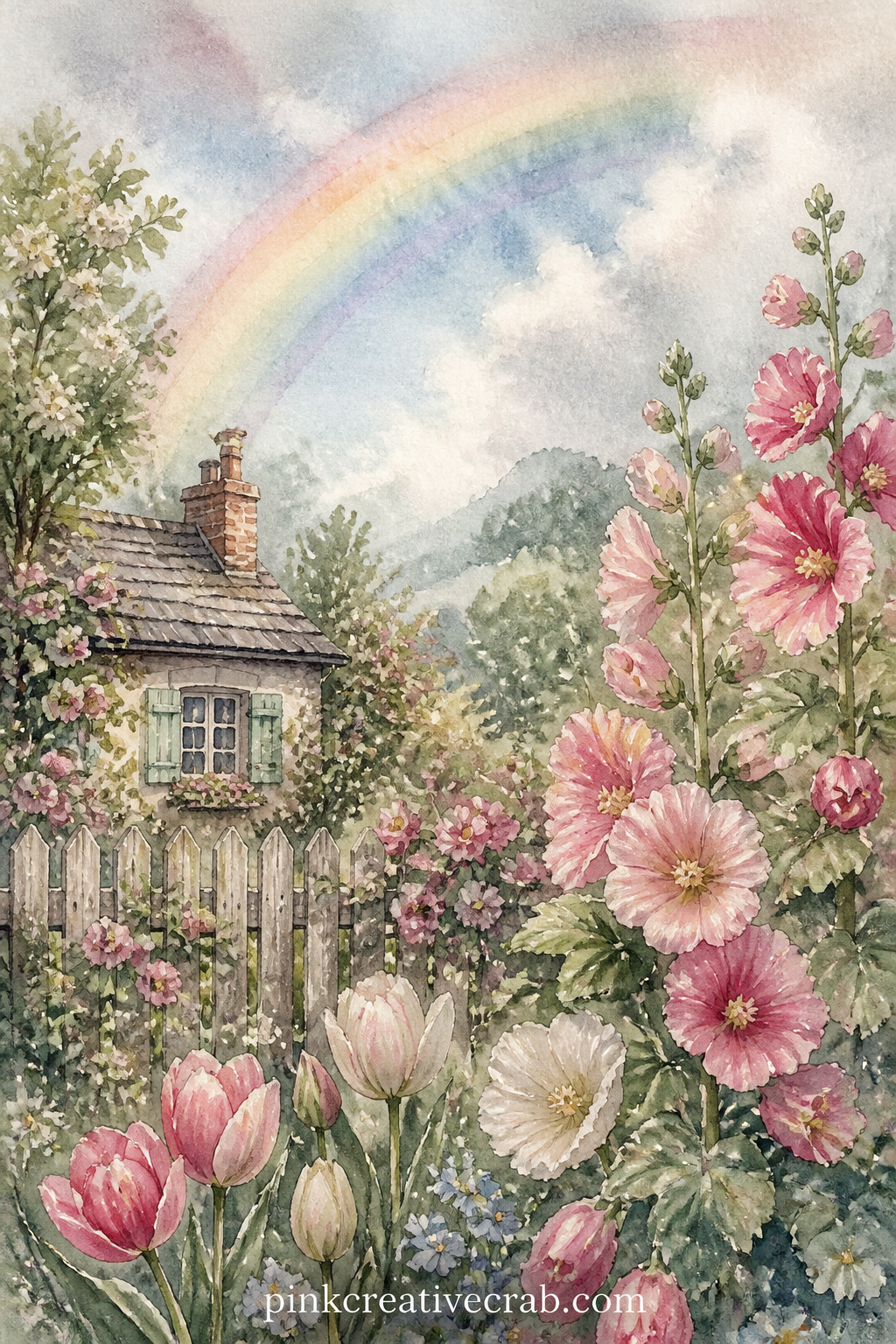
Place this page across from the Lined Garden Journal Page later in your book, so the calm rainbow sky sits opposite space for writing about the day’s weather.
The cottage garden below the rainbow is full enough on its own, with hollyhocks and a low fence, so keep anything you glue onto it small and near the corners.
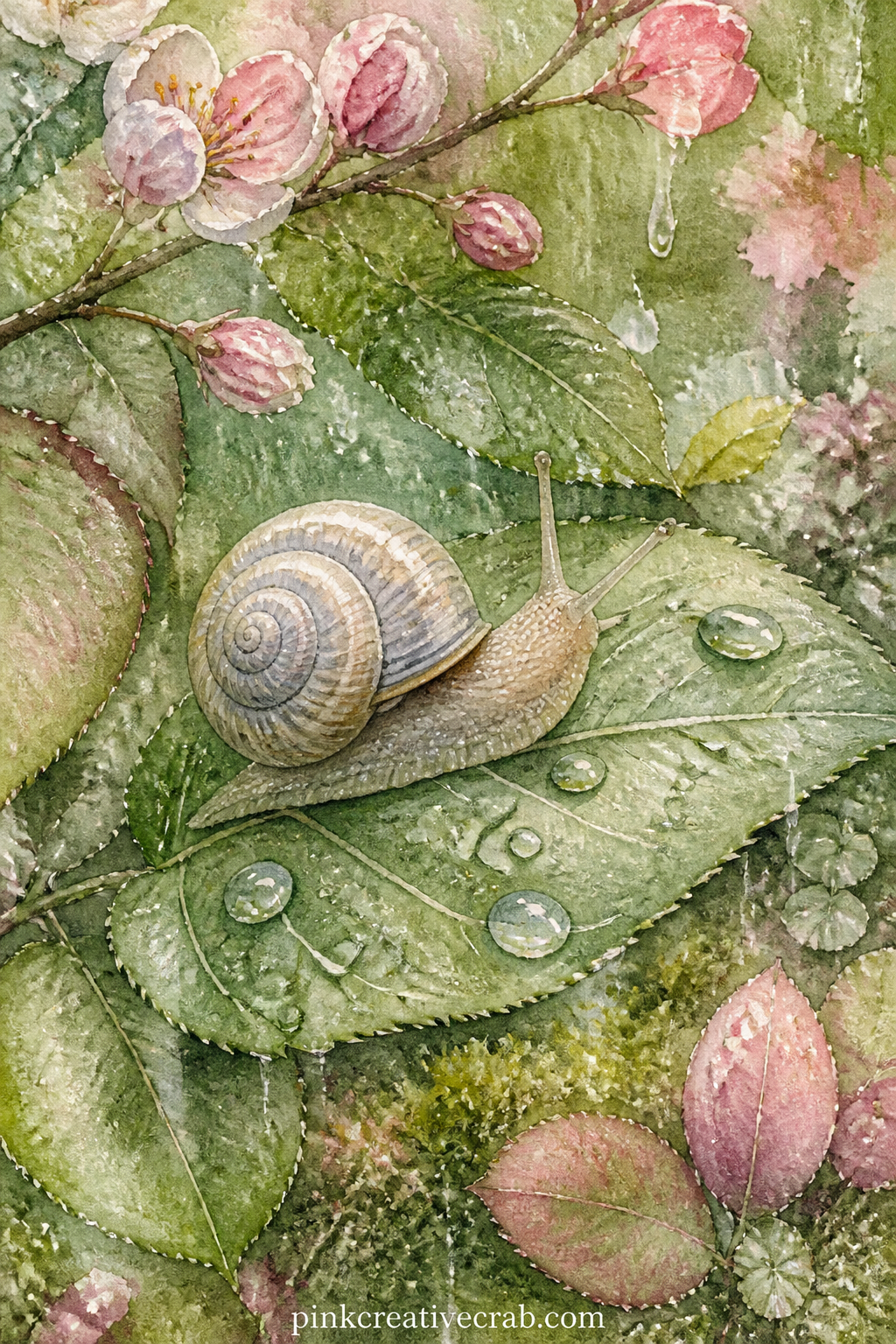
A garden snail rests on a large wet leaf, surrounded by smaller leaves, a few raindrops and a soft mossy ground beneath.
Spring Table and Basket Pages
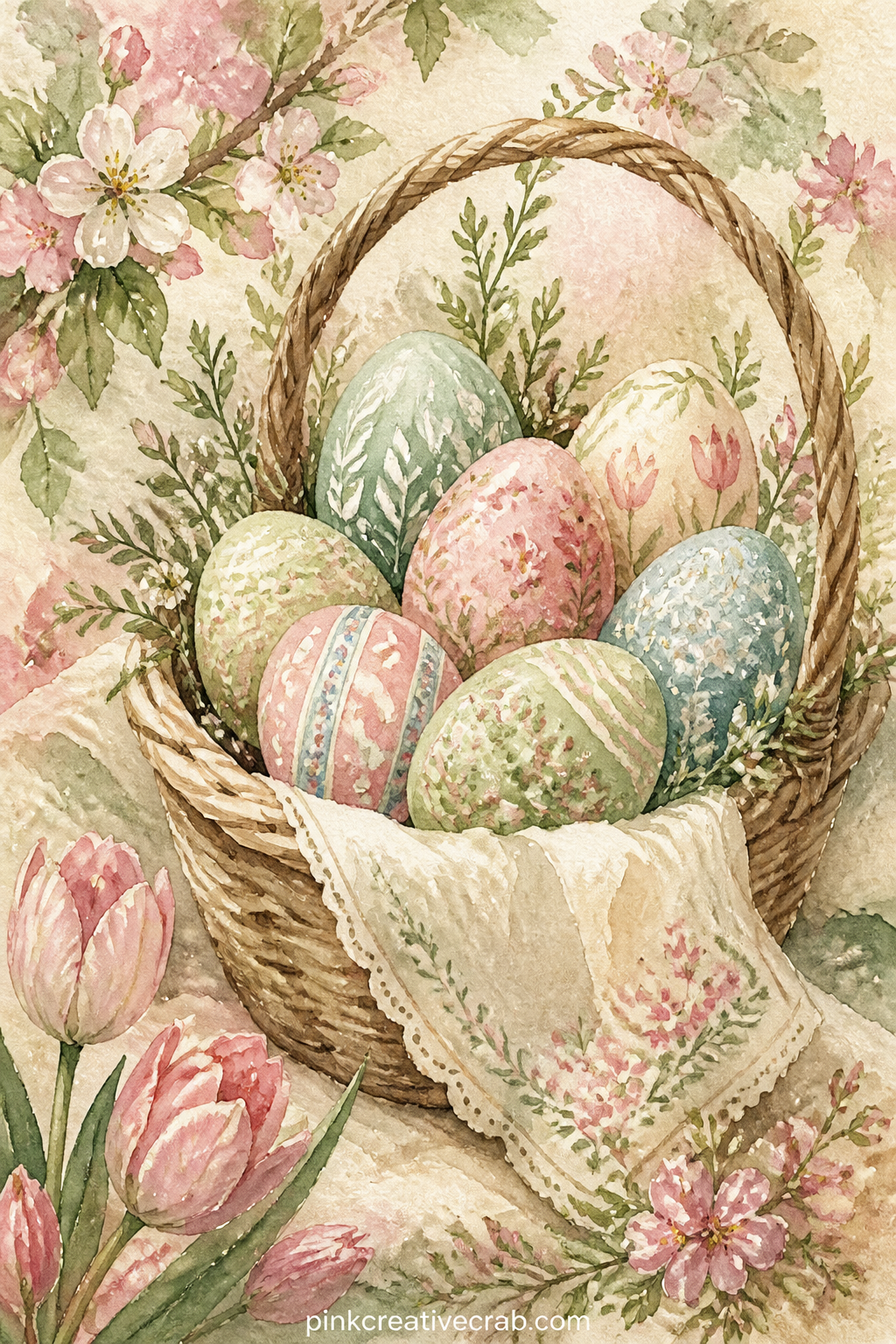
Here is the five minute version: paint just the basket and three eggs loosely, skip the background greenery entirely, and let a plain cream wash stand in for the table.
Done quickly like this the page still reads as a full scene, since the basket and eggs carry enough colour and detail on their own.
A small garden table is set with a jug of lemonade, two glasses and a jar of wildflowers, with a checked cloth and soft afternoon light behind it.
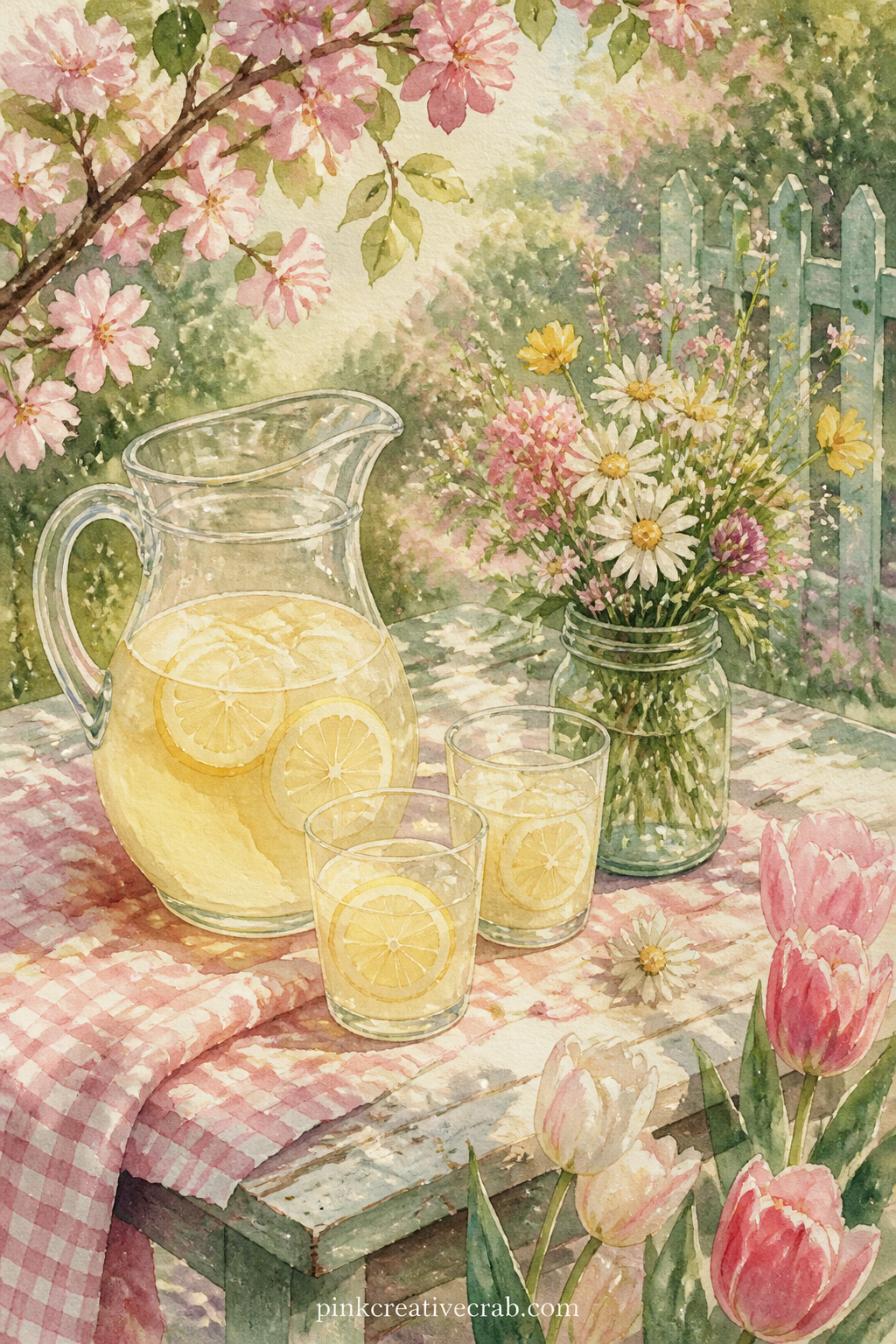
A simple still life like this suits anyone building a kitchen or garden section in their journal, since it pairs easily with recipe or harvest notes nearby.
If you want more still life ideas built the same way, the easy watercolor food ideas page covers other small kitchen subjects worth painting.
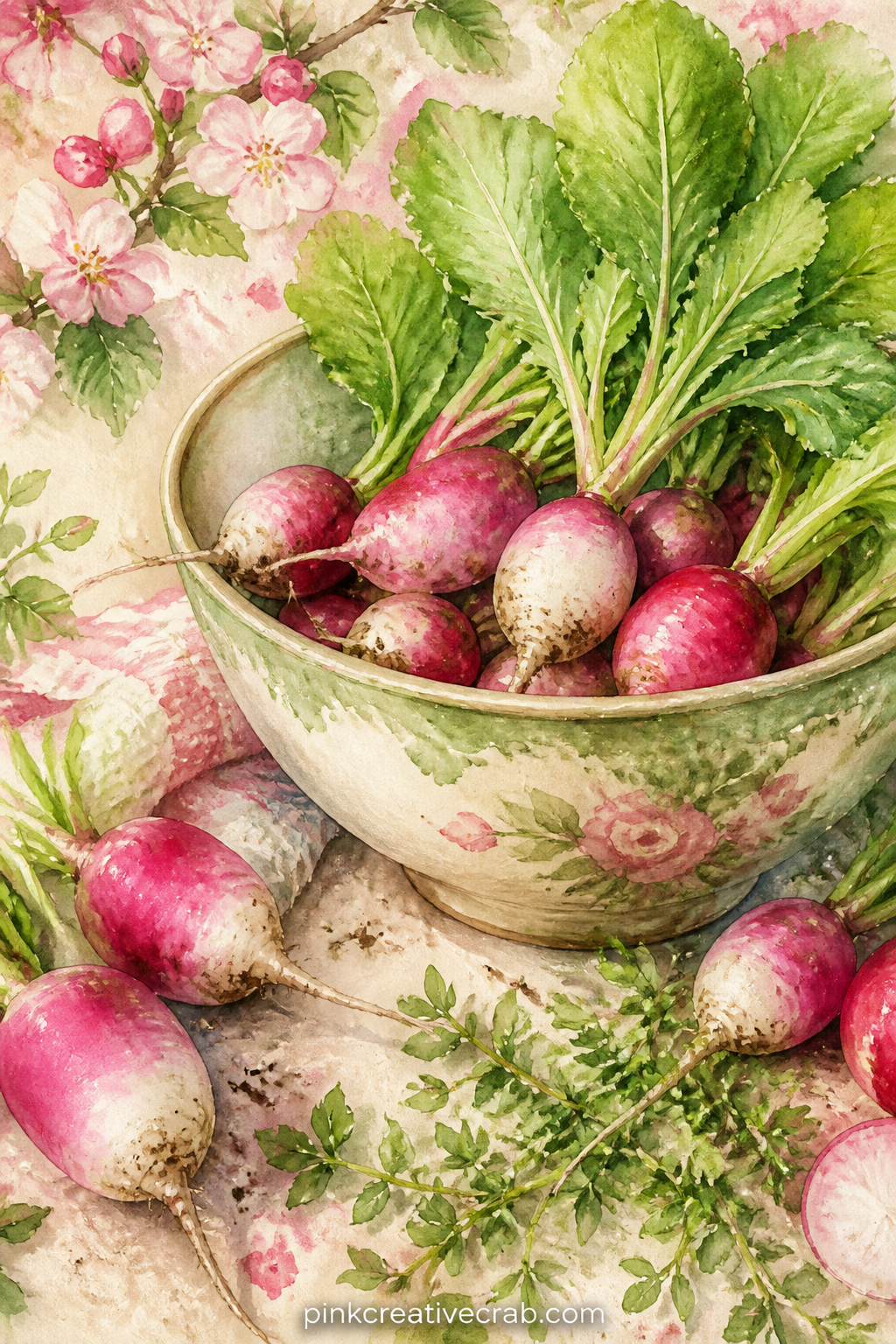
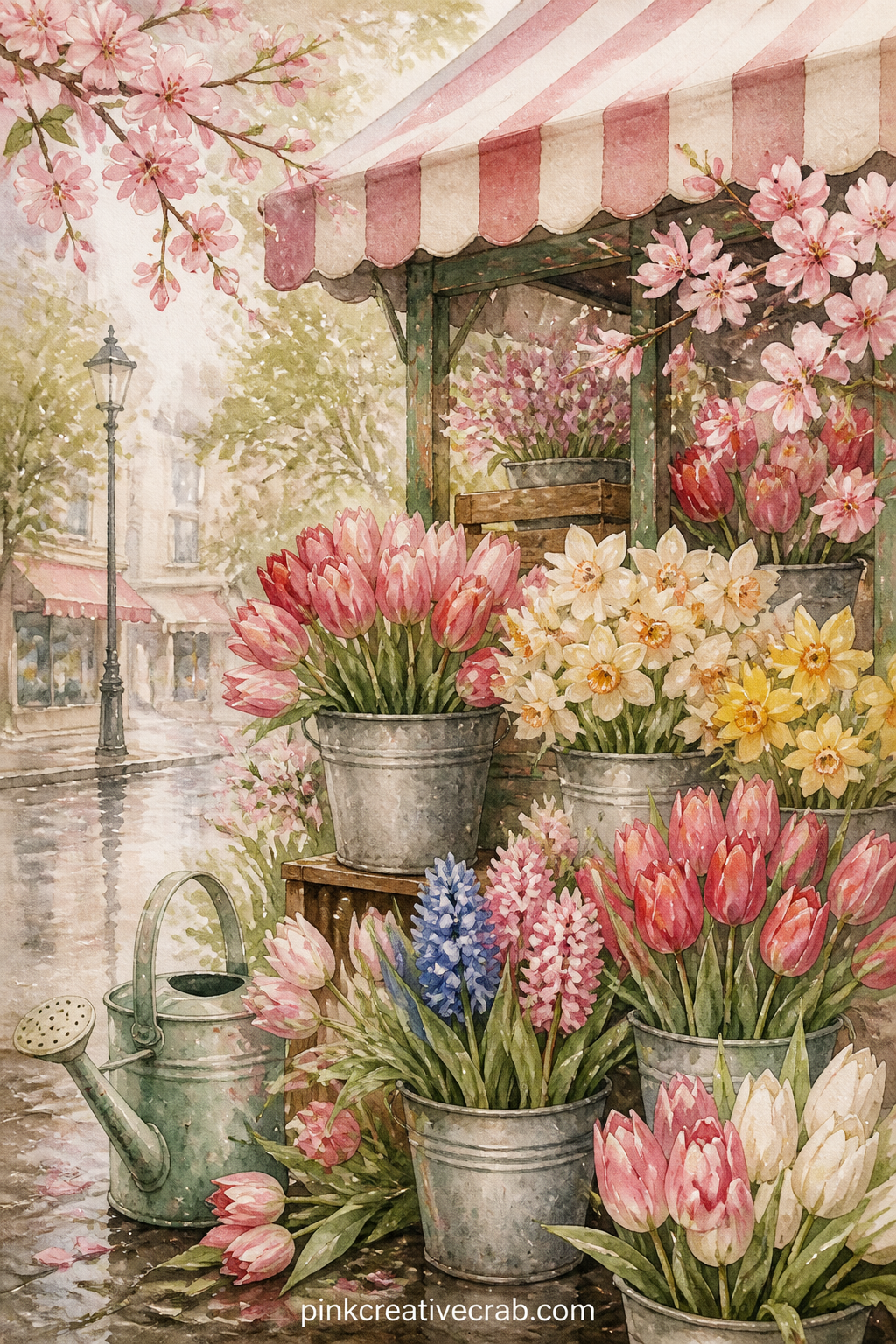
A small flower stall displays buckets of tulips, daffodils and hyacinths, with a chalkboard price sign and a striped awning overhead.
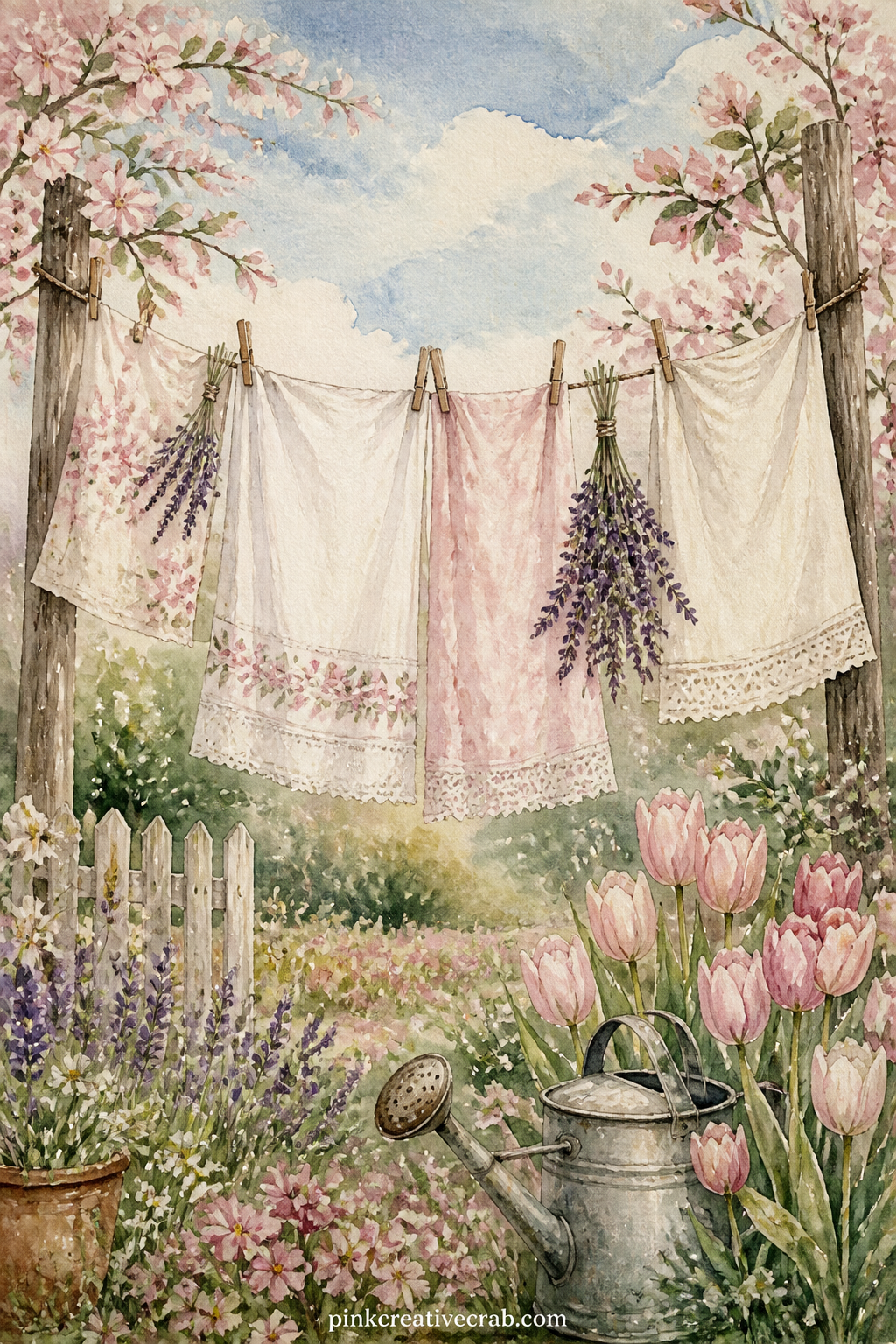
The usual mistake with a clothesline page is making every sheet the same shape: vary the folds and lengths of the hanging linens so the line has rhythm across the page.
Hang a few sprigs of lavender from clothespins among the linens for a small detail that ties the scene back to the season.
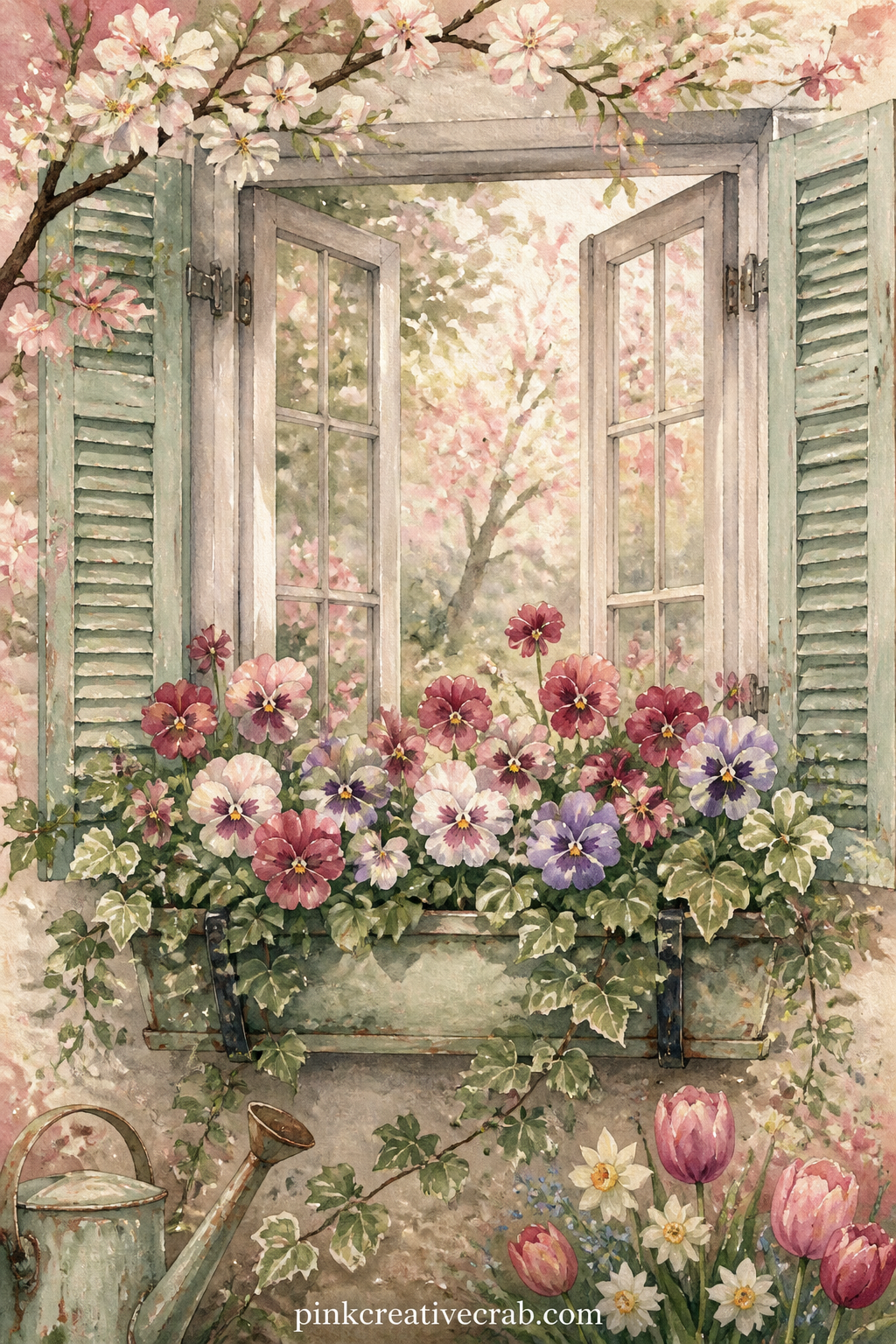
Write the name of a place that feels like spring to you along the sill of this window, somewhere you have visited or still hope to go.
Background Papers
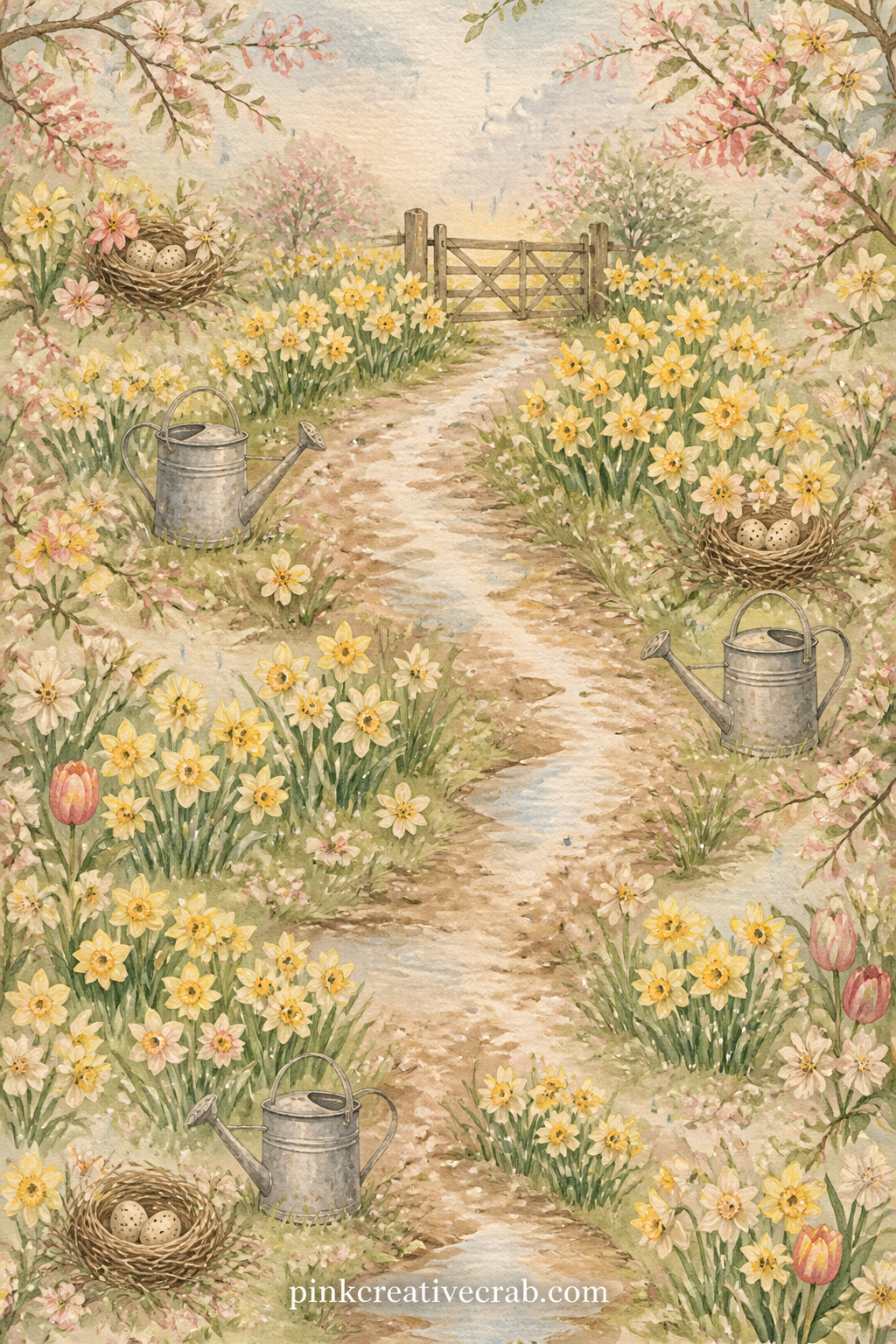
A winding country lane runs between two banks thick with daffodils, with a wooden gate in the distance and a pale spring sky overhead.
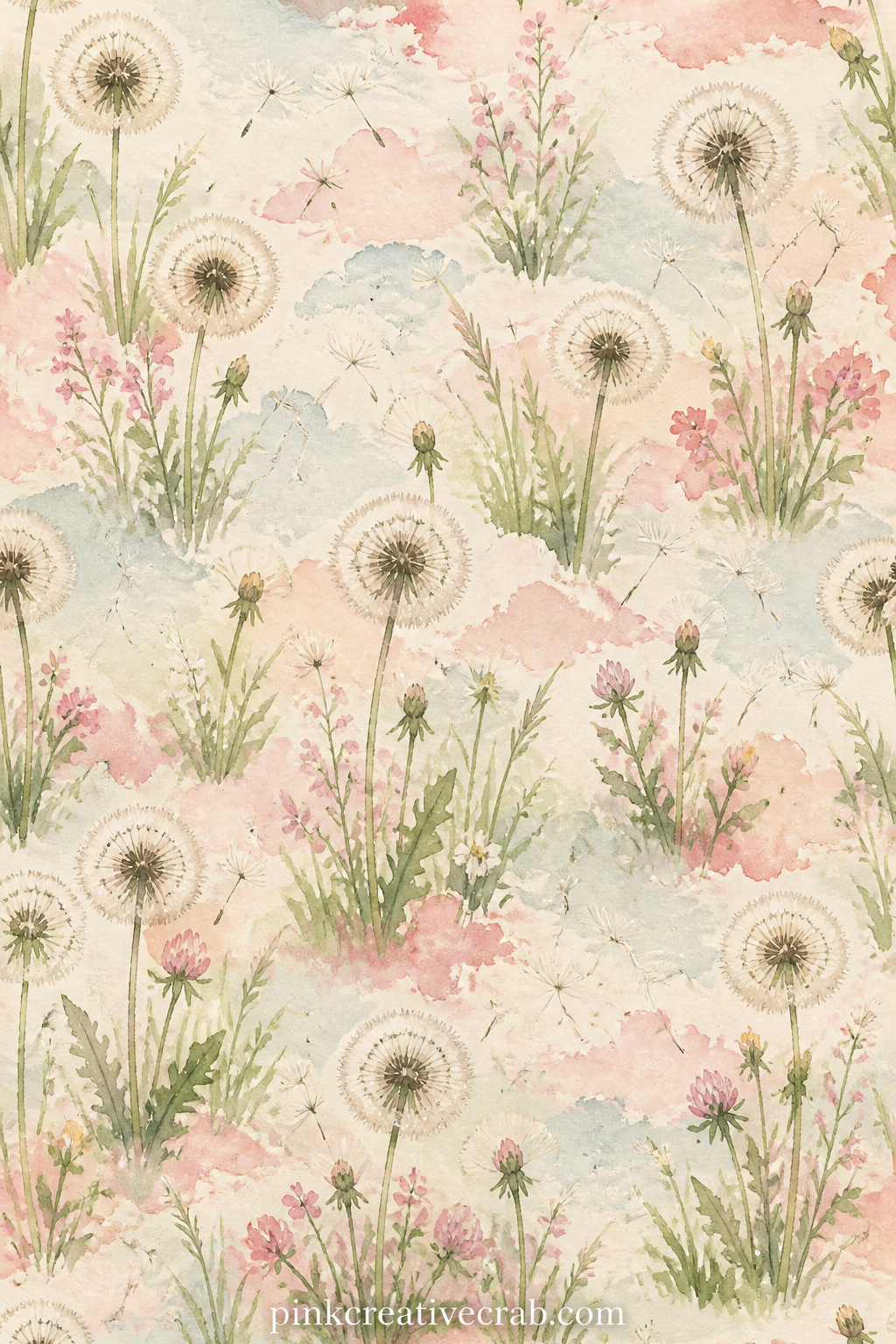
Keep the meadow background loose and pale rather than detailed, since the single dandelion clock in the centre needs the quiet space around it to stand out.
A few scattered seeds drifting off to one side finish the page without crowding the open sky above the grass.
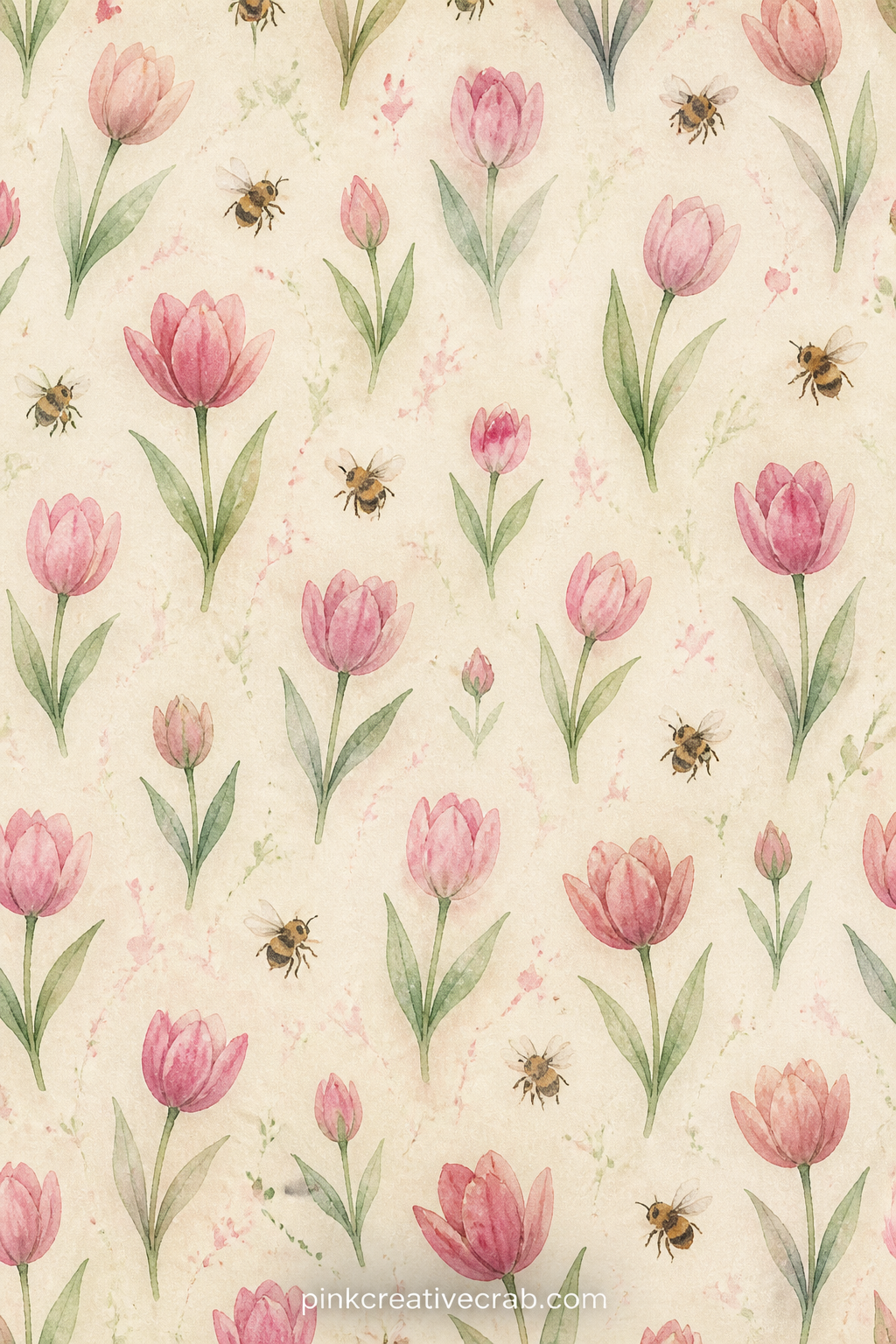
Small tulips and bees repeat edge to edge across this sheet in dusty rose and soft yellow. Slip it under a photo of a garden visit, line the inside of a journal cover, or use it as a backing sheet behind a thinner scene page.
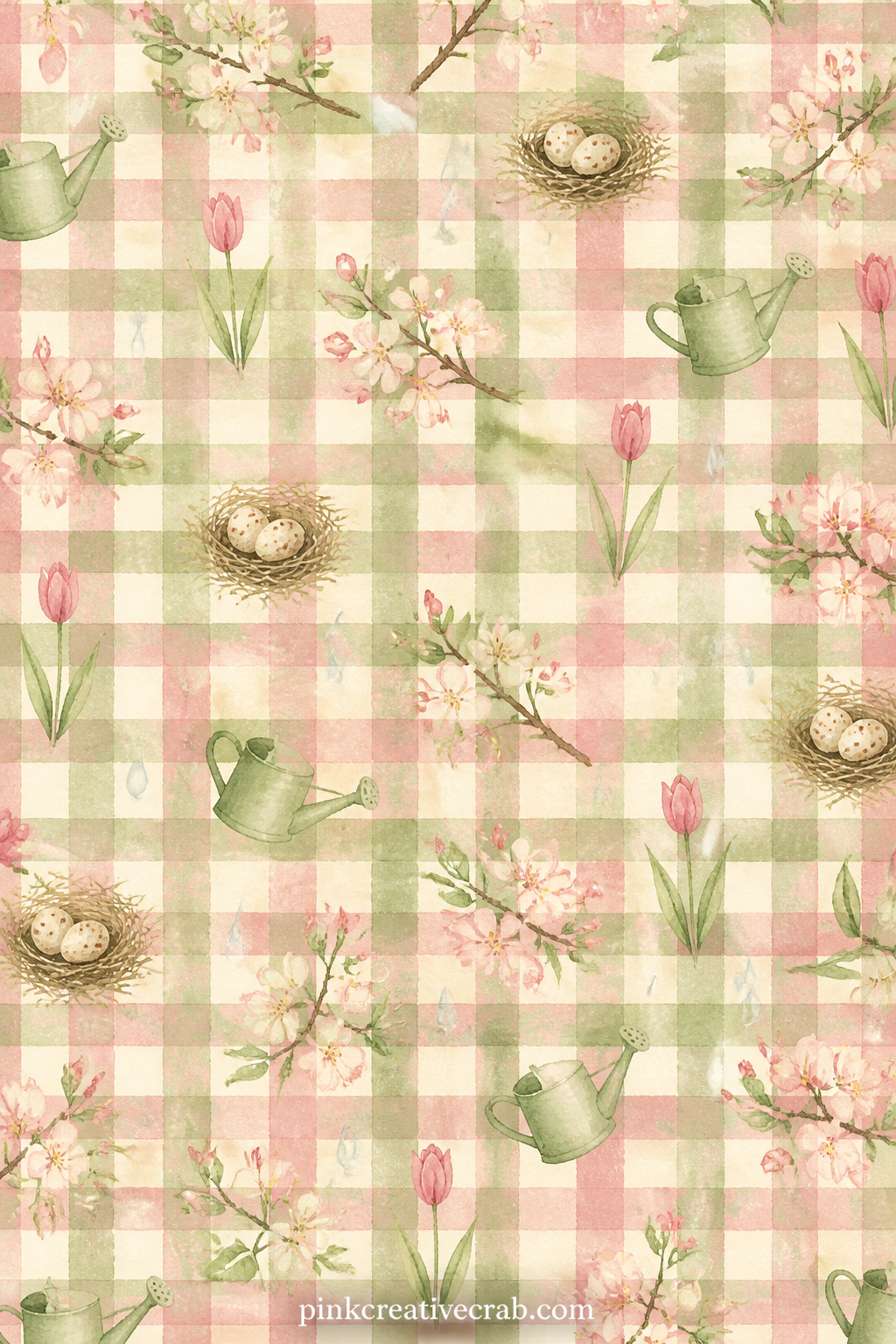
A soft gingham check repeats across the page in muted sage and cream. Use it behind a picnic photo, as a journal cover lining, or cut down for a simple divider page between sections.
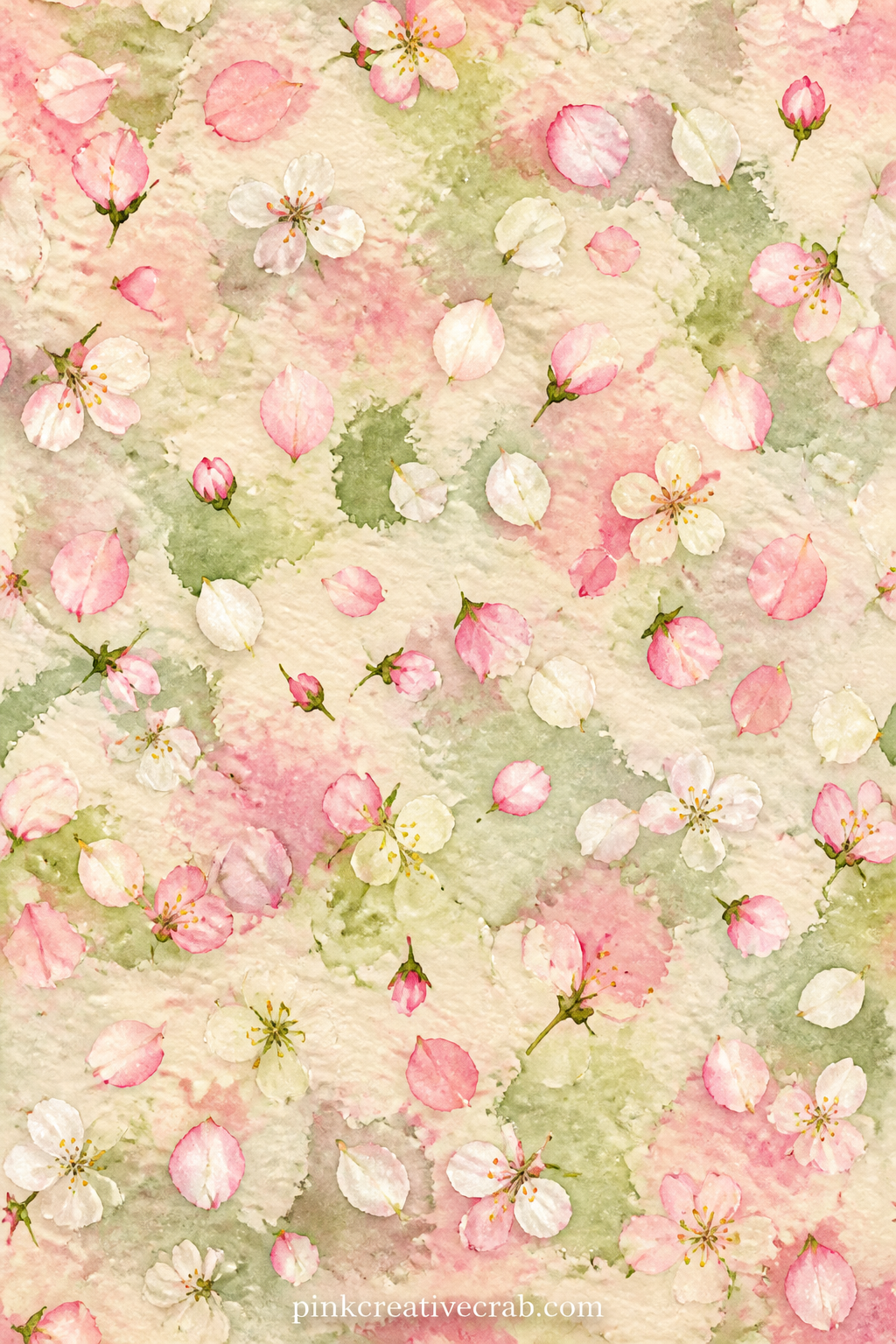
Loose pink and white petals drift across the page at random, small and evenly spaced. Place it under a spring portrait, behind a pressed flower, or as the opening sheet of your journal.
Lined Writing Pages
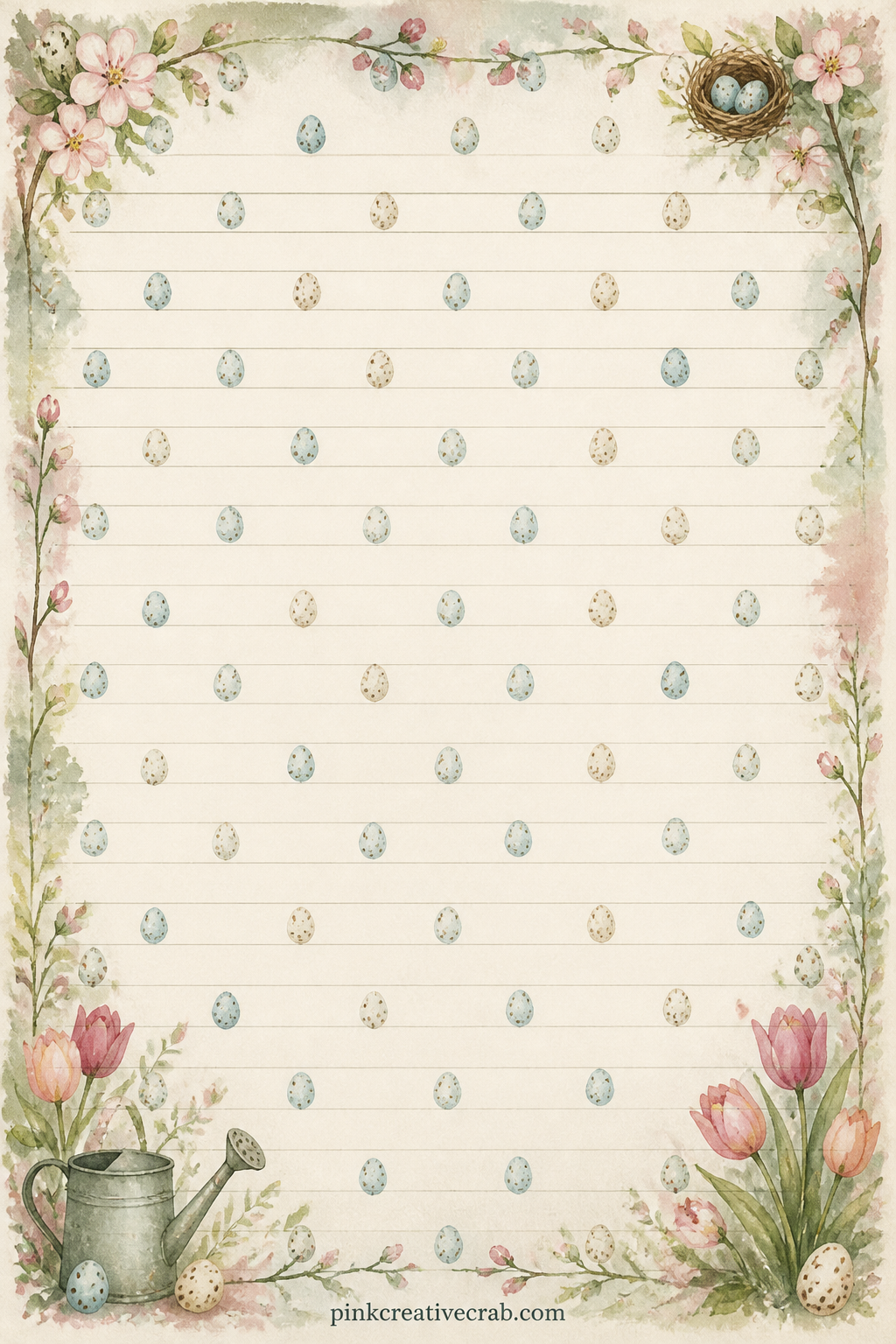
Tiny speckled eggs in pale blue and cream repeat in loose rows across the sheet. Use it behind a nest photo, as a soft cover lining, or trimmed into strips for a simple border.
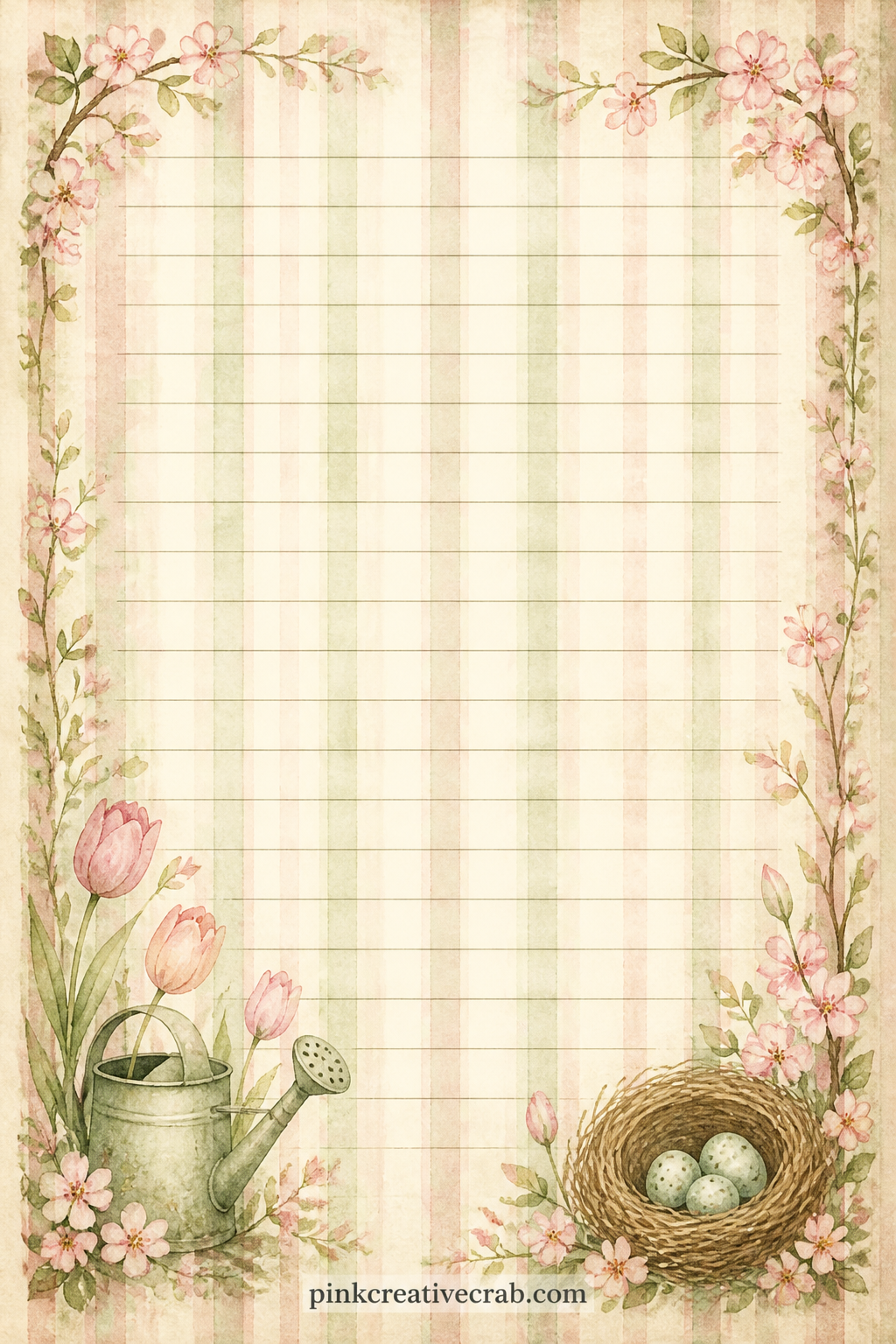
Faint vertical stripes in sage and cream run the length of the page, worn and soft at the edges. Use it as a plain backing sheet, a cover lining, or behind a busy scene page to let it breathe.
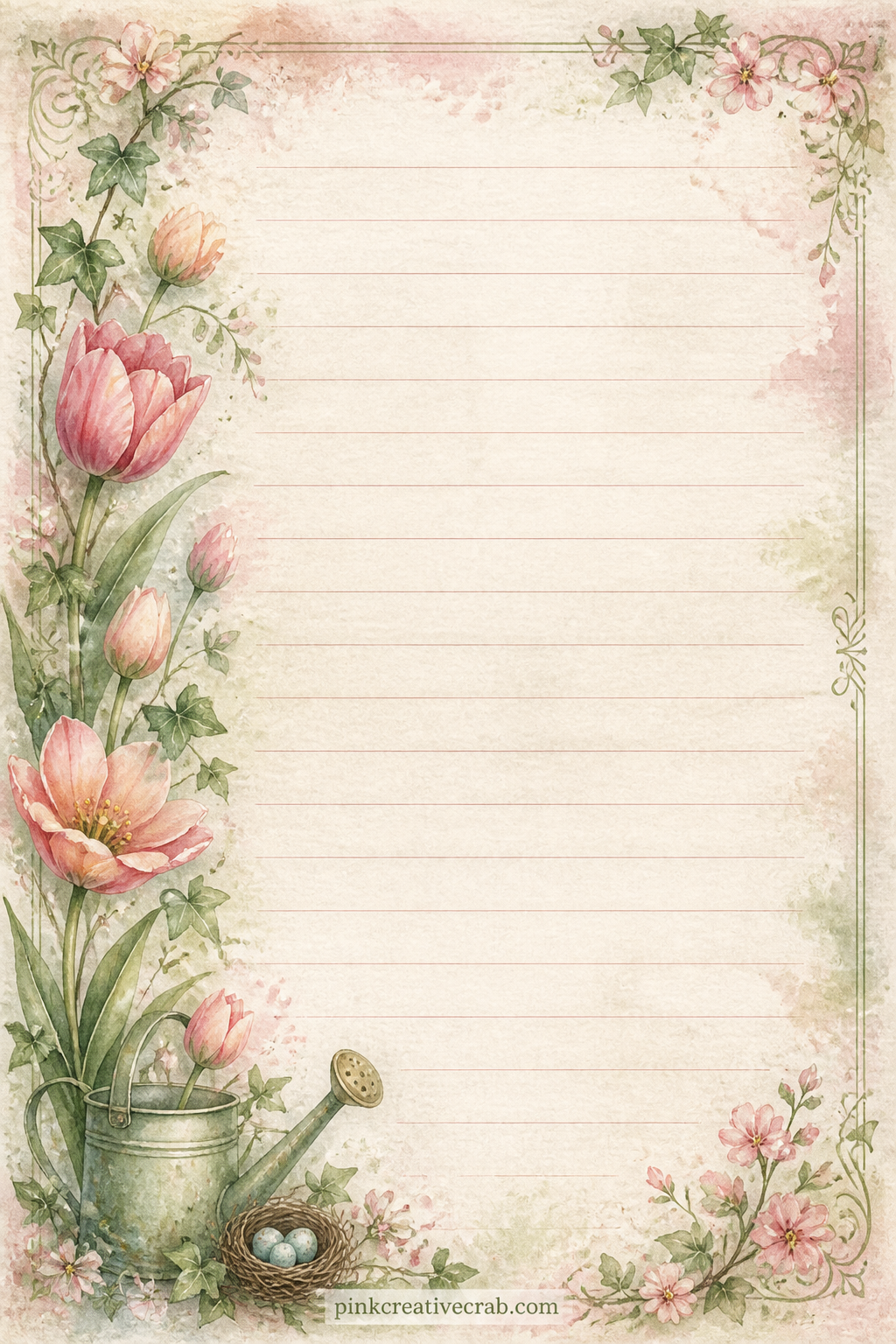
A trailing border of tulips and ivy runs down the left side of this page. Write a gardening to-do list here, the date the first bloom opened, or a short note to next spring’s self.
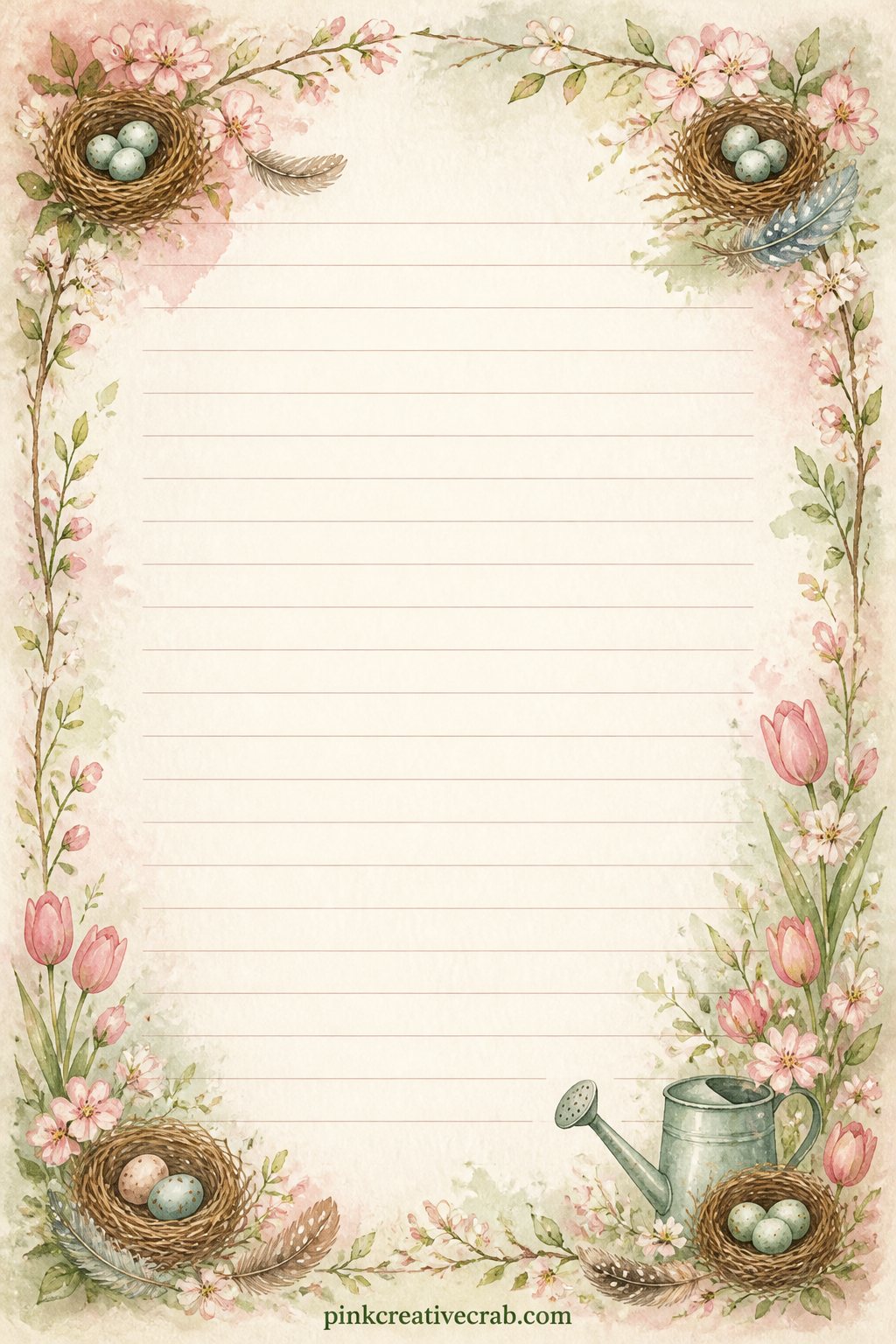
Small nests and feathers decorate each corner of this page. Use it for a list of birds spotted this season, a short letter to a friend, or a record of the first warm day.
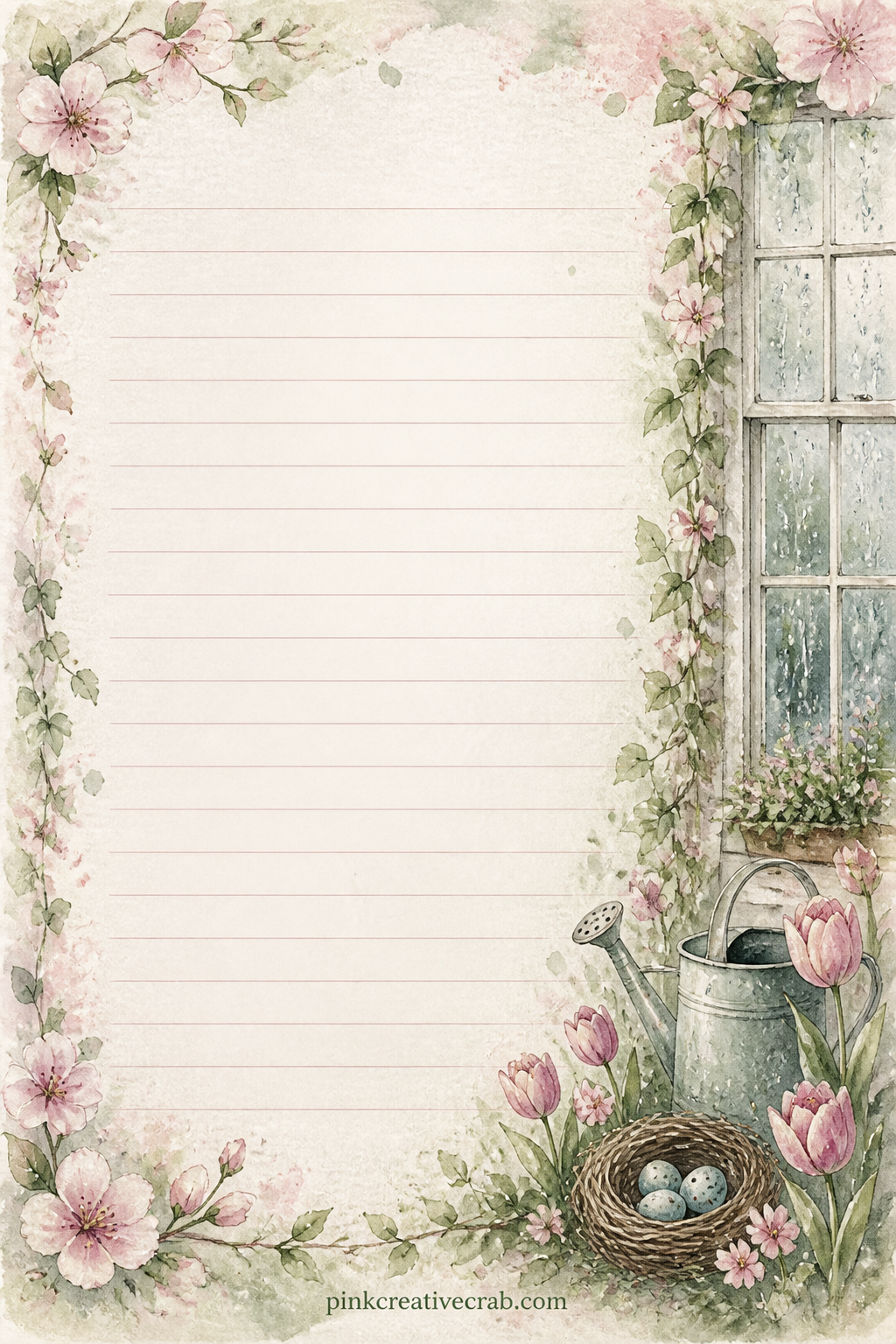
A soft band of raindrops and trailing vines runs down the right side of the page. Jot a rainy day reading list, a recipe for cocoa, or a memory of a spring storm.
What to Do Next
Print the set, let the ink dry fully, then start gluing scene pages toward the front of your journal and save the lined pages for wherever you want room to write. If you want more seasonal ideas to paint alongside this kit, the watercolor spring flower ideas guide pairs well with the blossom pages here.
Frequently Asked Questions
What paper works best for printing these spring junk journal pages?
Choose a matte cardstock between 160 and 200gsm. It holds the watercolour washes without warping, prints colours true to screen, and takes glue without the page curling once you assemble your journal.
What printer settings give the best colour on these pages?
Select your printer’s best or photo quality setting and choose matte or plain cardstock in the paper type menu, not glossy photo paper. This keeps the soft washes from printing too saturated or shiny.
What size should I print the pages for a standard junk journal?
Most home journals run close to A5 or a half letter size. Print the pages at full letter or A4 size first, then trim them down once dry, which gives you room to adjust the final size to your journal covers.
Do I need to colour or paint anything on these pages myself?
No, every page prints fully coloured and ready to use. You only add your own touches through writing, gluing in photos, or trimming edges, no painting or colouring required before you use them.
Can I use these pages for projects other than a junk journal?
Yes. The scene pages work well as standalone art for framing, the patterns suit gift wrap or card backing, and the lined pages make fine stationery on their own if you print extra copies.
Have any thoughts?
Share your reaction or leave a quick response — we’d love to hear what you think!
-
 0
0 -
0
-
0
-
0
-
0
-
0


