⭐ Key Takeaways
✦ Starting with simple shapes like circles and ovals makes any dog pencil drawing feel far less intimidating for beginners.
✦ Focusing on one expressive feature — such as the eyes or nose — can bring your whole drawing to life without needing perfect proportions.
✦ Loose, sketchy pencil strokes actually add charm and personality to dog drawings, so embrace the happy accidents along the way.
A dog pencil drawing is one of the most rewarding things a beginner artist can try — and honestly, it is so much more approachable than you might think. Dogs have so much personality packed into their fuzzy faces, floppy ears, and soulful eyes. That natural expressiveness means even a simple sketch can feel full of life and warmth right away.
Whether you have a beloved pet sleeping at your feet or you simply adore dogs from afar, there is a subject here for you. Additionally, you do not need fancy supplies or years of experience to get started. A pencil, some paper, and a little willingness to play — that is truly all it takes. So pick an idea that makes you smile and let’s draw together!
Table of Contents
- Classic Dog Portrait in Pencil
- Scruffy Terrier Face
- Sleepy Puppy Curled Up
- Playful Golden Retriever Sketch
- Big Soulful Dog Eyes
- Floppy-Eared Beagle Study
- Fluffy Samoyed Dog Drawing
- Curious Puppy Pencil Drawing
- Wrinkly Bulldog Face
- Happy Dog with Tongue Out
- Tiny Dachshund Side Profile
- Shaggy Sheepdog Fur Texture
- Sitting Border Collie Pose
- Paw Print and Pencil Study
- Dog Nose Close-Up Sketch
- Perky-Eared Corgi Portrait
- Energetic Dog Mid-Zoomies
- Gentle Greyhound Profile
- Wagging Tail Pencil Study
- Dog and Owner Friendship Sketch
- Spotted Dalmatian Pencil Drawing
- Fluffy Puppy Pile Scene
- Expressive Mixed-Breed Dog Face
Classic Dog Portrait in Pencil
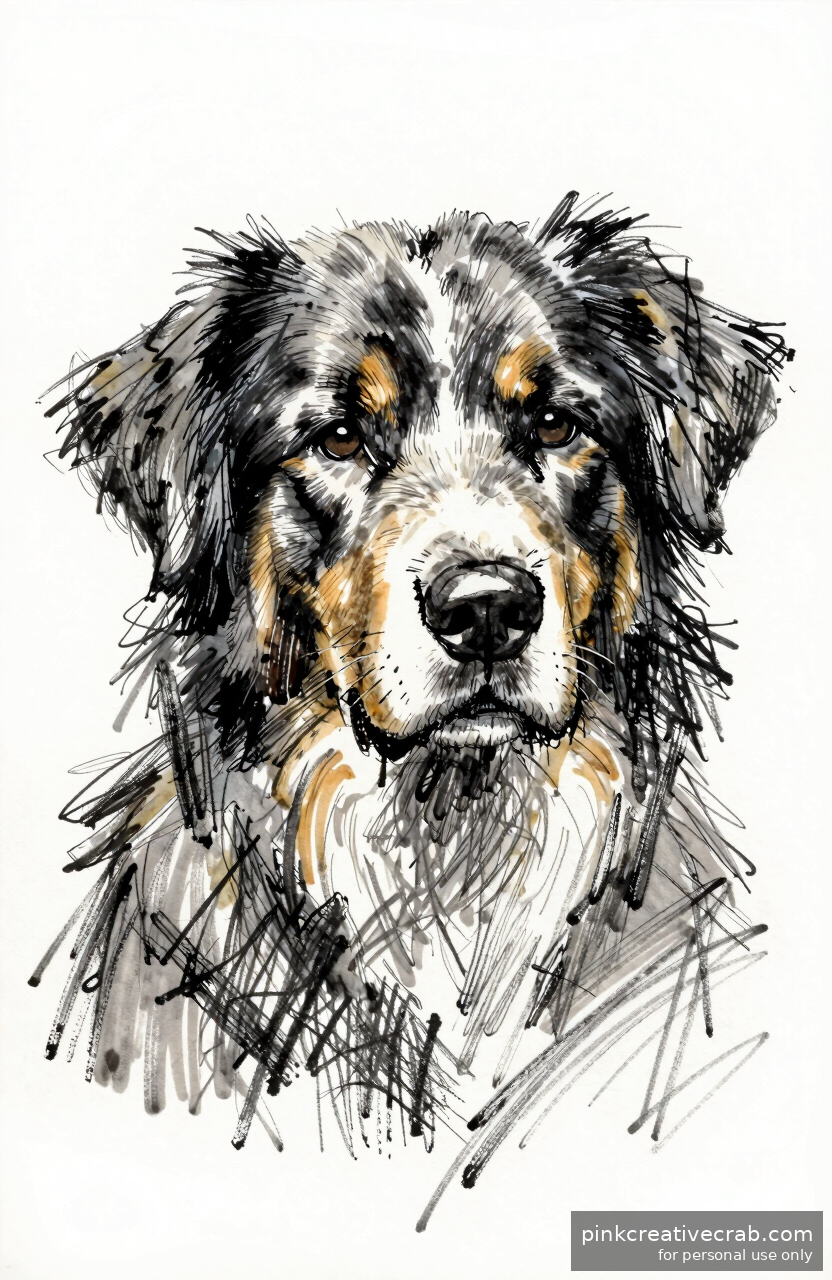
A classic dog portrait is honestly one of the best first projects you can try. It teaches you so much about shape, shading, and patience — all at once. Start by sketching a simple oval for the head and place the eyes roughly halfway down. That one trick alone makes faces look so much more realistic.
From there, build up the fur with short, feathery strokes. You don’t need perfect lines — in fact, loose, sketchy marks give pencil portraits so much life and warmth. Meanwhile, keep your pencil light at first so you can adjust as you go. Small wins like getting the nose right feel amazing.
Having the right pencil set makes a huge difference for beginners. A good range of grades lets you go from soft fur to deep shadows easily. Try starting with a pencil drawing set for beginners and enjoy every mark you make.
Scruffy Terrier Face
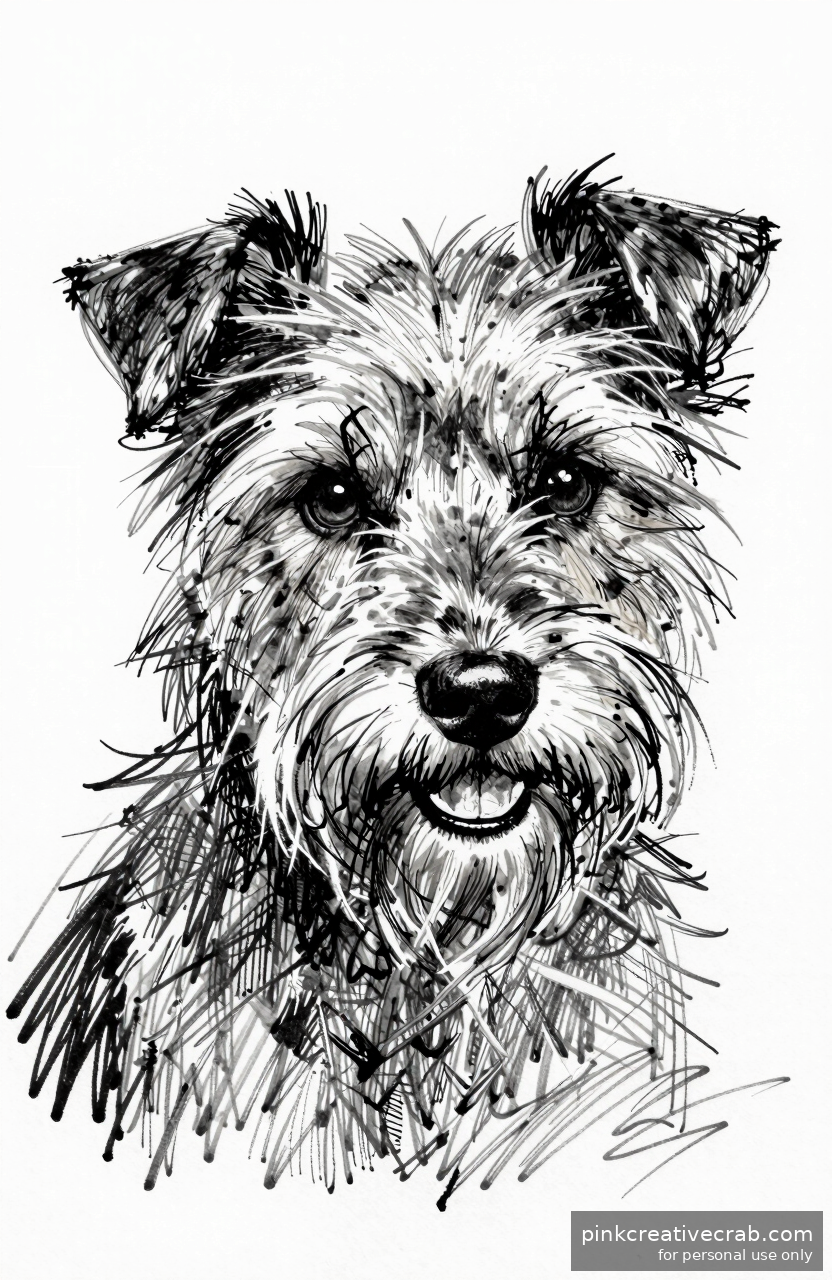
Terriers have the most wonderfully chaotic fur, and that actually makes them perfect for beginner drawings. All those messy, wiry tufts mean your sketch doesn’t have to be precise — it just has to feel lively. Short, quick flicks of your pencil in random directions create that scruffy texture beautifully.
Focus first on the eyes and nose, since those anchor the whole face. Once those feel right, everything else builds naturally around them. Additionally, don’t worry about symmetry — real terrier faces are wonderfully lopsided and full of personality. Embrace the quirks in your drawing too.
Soft sketch paper with a little tooth really helps pencil strokes grip and layer nicely. For a scruffy, textured look especially, paper choice matters more than you’d think. Grab some sketch paper pad for drawing and let that terrier energy loose on the page.
Sleepy Puppy Curled Up
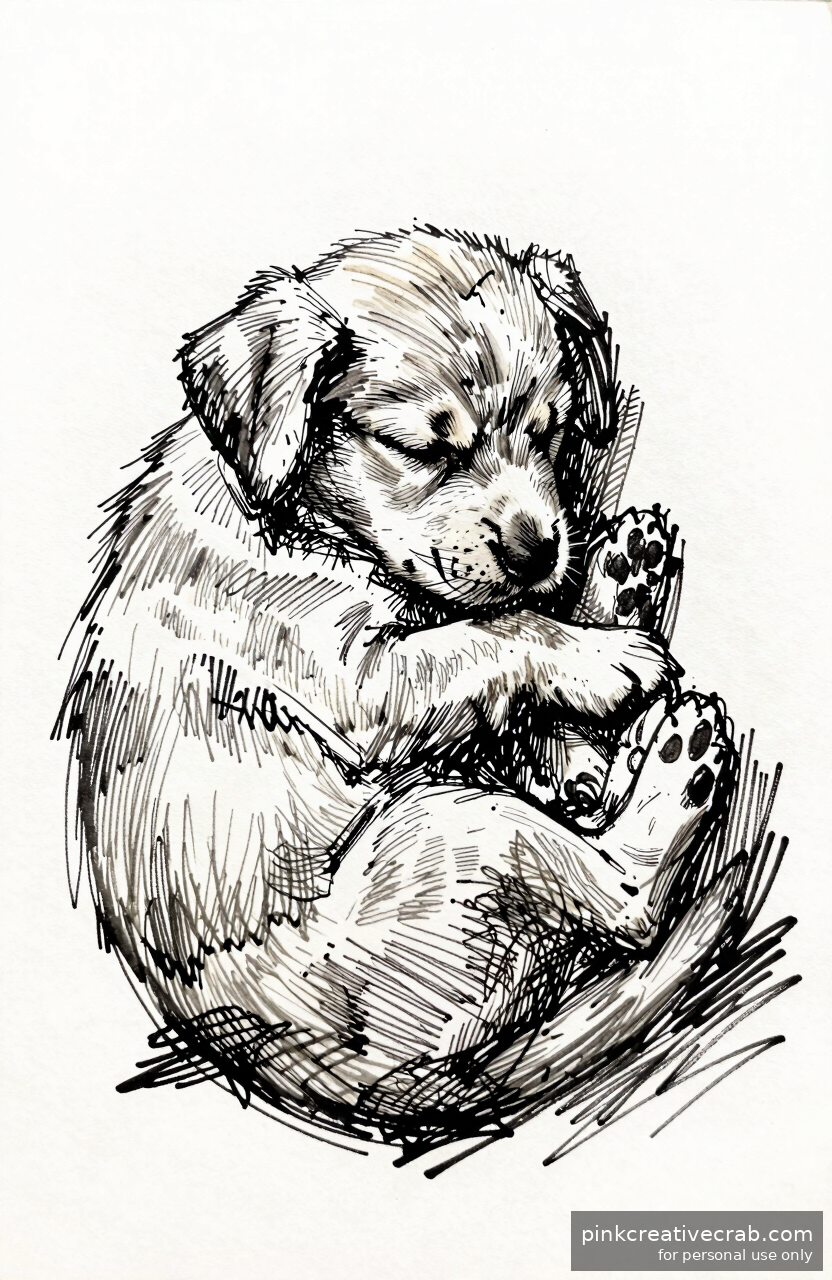
There is something so peaceful and totally irresistible about a curled-up sleeping puppy. As a drawing subject, it’s wonderfully forgiving — soft rounded shapes, gentle curves, and no need for sharp details. Start with a large circle or bean shape to capture the whole curled body before adding any fur or features.
Because the puppy is resting, you can take your time with soft, slow shading. Layer your pencil strokes gradually to build up the shadow tucked underneath the body. Meanwhile, leave the lightest areas completely untouched — that contrast between dark and light creates incredible softness. It feels like magic when it comes together.
A blending stump is your best friend for this kind of soft, dreamy shading. It smooths pencil marks into velvety fur tones effortlessly. Pick up a blending stumps set for pencil drawing and watch your shading instantly level up.
Playful Golden Retriever Sketch
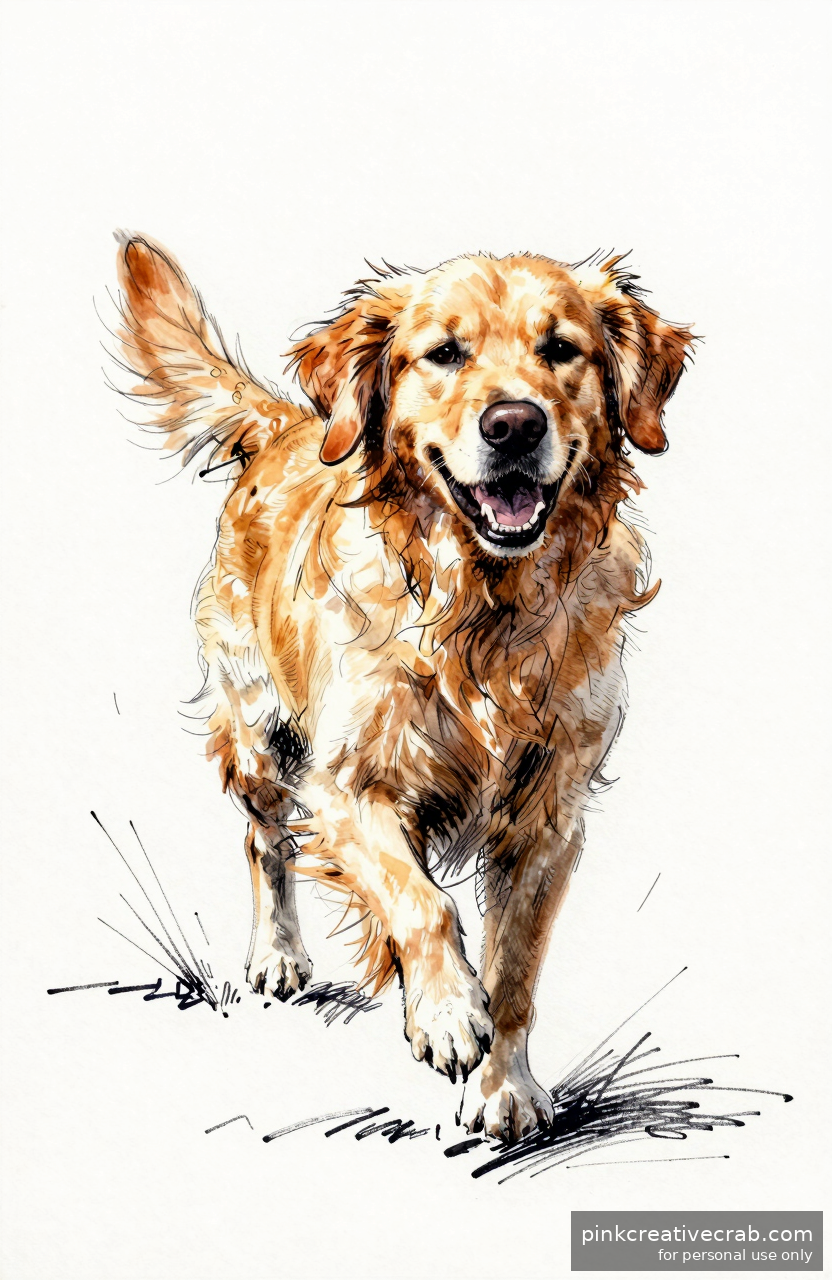
Golden Retrievers are pure joy to draw — all wavy fur, big smiles, and happy energy. For a playful pose, try sketching them mid-motion with ears flying or tongue out. Loose, flowing lines work perfectly here, so don’t overthink it. Your pencil should feel almost like it’s dancing across the page.
The wavy fur is easier than it looks. However, instead of drawing every single hair, suggest layers with curved, flowing groups of strokes. Vary your pressure to show where fur catches light versus where it falls into shadow. As a result, the drawing gains incredible depth without feeling stiff or overworked.
For capturing flowing fur especially, a range of soft pencils gives you beautiful tonal variety. Softer grades like 4B or 6B glide on and layer richly. Treat yourself to a soft graphite pencil set and feel the difference in every stroke.
Big Soulful Dog Eyes
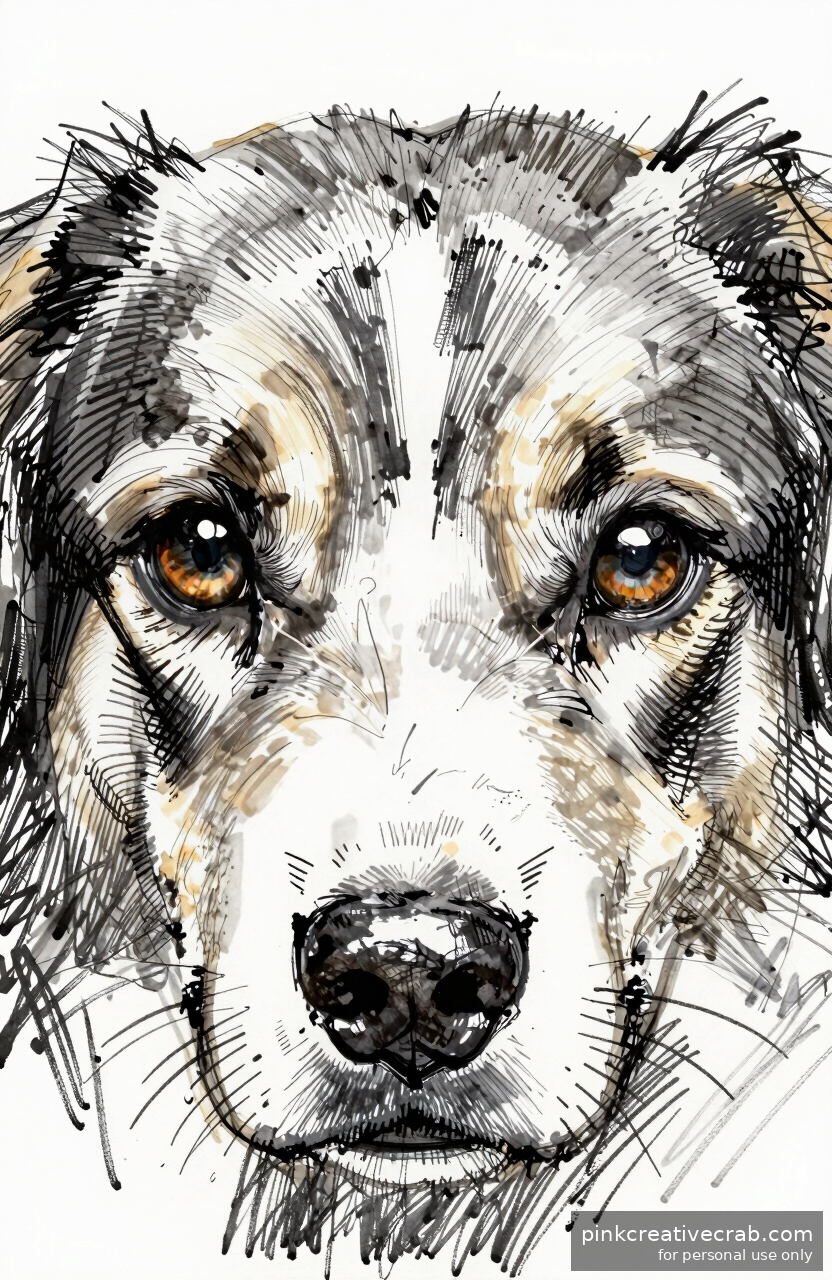
Dog eyes might be the most expressive thing you’ll ever draw — and focusing an entire sketch on just the eyes is a brilliant beginner exercise. Zooming in close removes a lot of pressure and lets you really study what makes eyes feel alive. The secret is the tiny white highlight dot inside each iris. That small detail changes everything.
Start with a simple almond shape, then build up the iris in layers of circular strokes. Additionally, the area around the eye — the fur, the eyelid fold — adds so much warmth and character. Therefore, spend time on those surrounding textures and watch the emotion grow naturally in your drawing.
A good kneaded eraser lets you lift out those bright highlights cleanly and precisely. It’s one of the most satisfying tools in any pencil artist’s kit. Grab a kneaded eraser for artists and use it to make those eyes absolutely shine.
Floppy-Eared Beagle Study
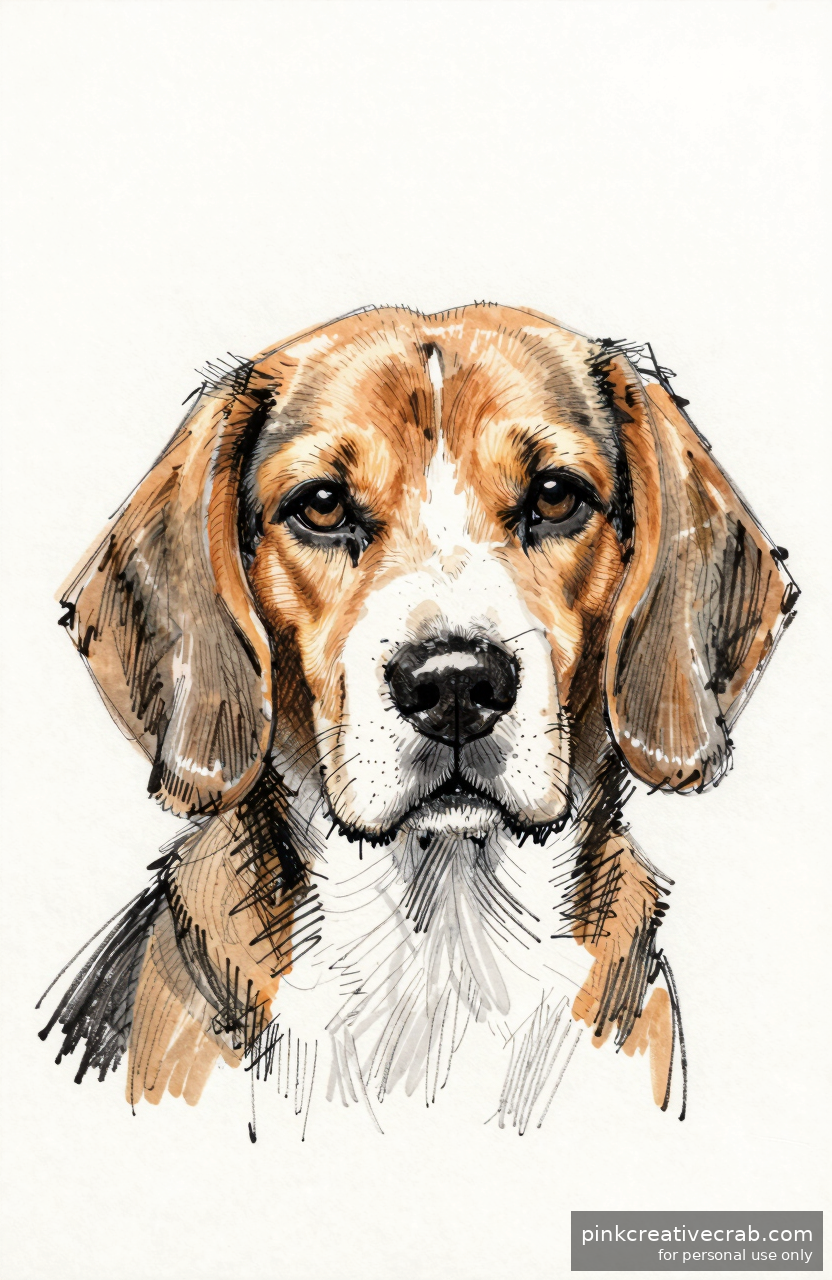
Beagles are such wonderful drawing subjects because those long, velvety ears are basically built-in practice for soft shading. The ears drape and fold in gentle curves, making them perfect for exploring light and shadow. Start by drawing the basic head shape, then let those ears hang naturally on either side — they really do most of the charm work for you.
For the fur, short directional strokes following the shape of the ear create a smooth, velvety look. Meanwhile, the top of the head has slightly coarser fur, so vary your stroke length there. Transitions like these between textures make a drawing feel genuinely observational and alive. You’ll surprise yourself with how good it looks.
Having a fine-pointed pencil alongside your regular ones helps with delicate details like whisker dots and fine fur lines. Consider picking up a mechanical pencil for detailed drawing to add those crisp finishing touches with confidence.
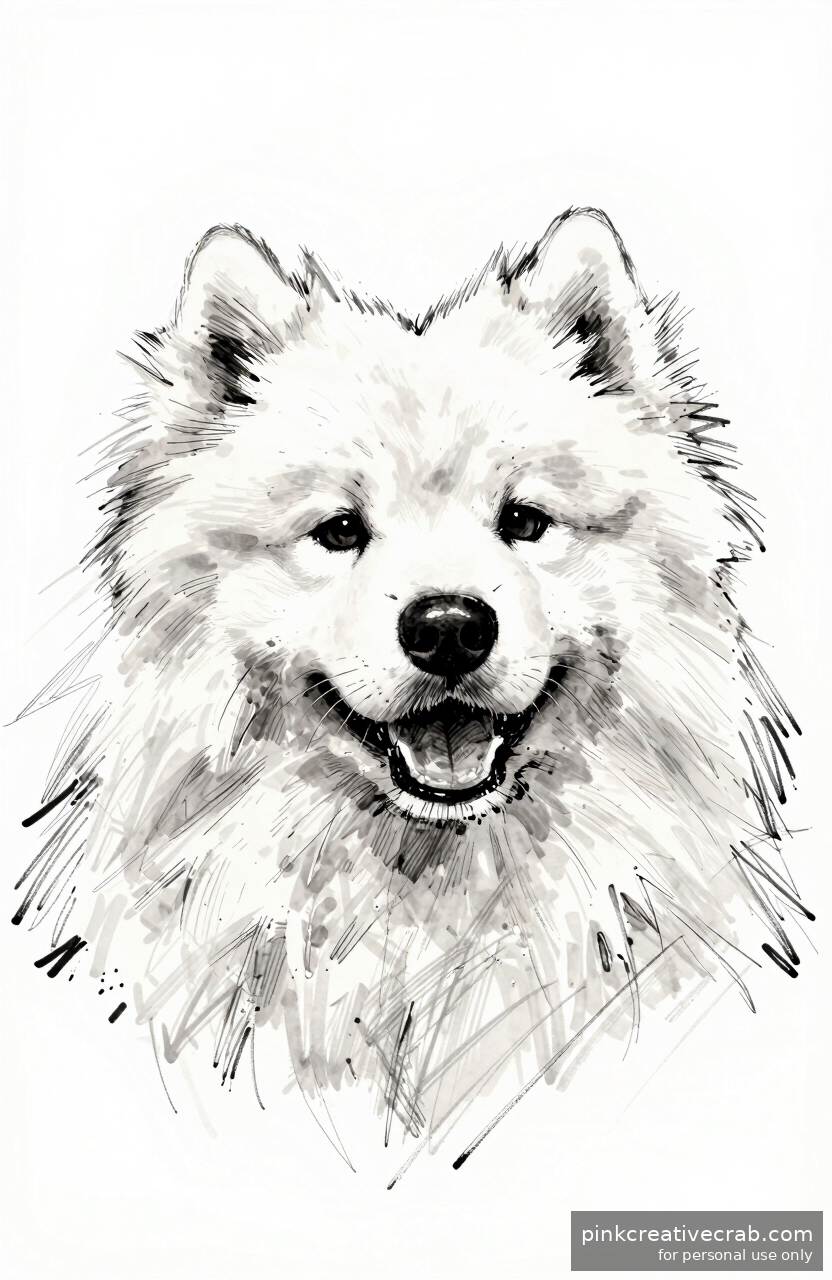
Fluffy Samoyed Dog Drawing
A Samoyed’s cloud-like white fur is one of the most joyful drawing challenges you can take on. Here’s the fun twist — because they’re white, you’re actually drawing the shadows, not the fur itself. The paper does the work of showing all that bright fluffiness. That approach feels a little magical once it clicks.
Use very light pencil pressure to build up soft grey tones in the shadow areas between fur tufts. However, keep the highlighted areas nearly untouched. As a result, the dog appears to glow right off the page. Additionally, the classic Samoyed smile — that upturned mouth — is the most rewarding detail to nail at the end.
For light, feathery fur like a Samoyed’s, harder pencil grades like H or 2H give you beautifully delicate pale marks. Combining hard and soft pencils transforms your drawings. Try a complete graphite pencil drawing set to have every grade ready whenever you need it.
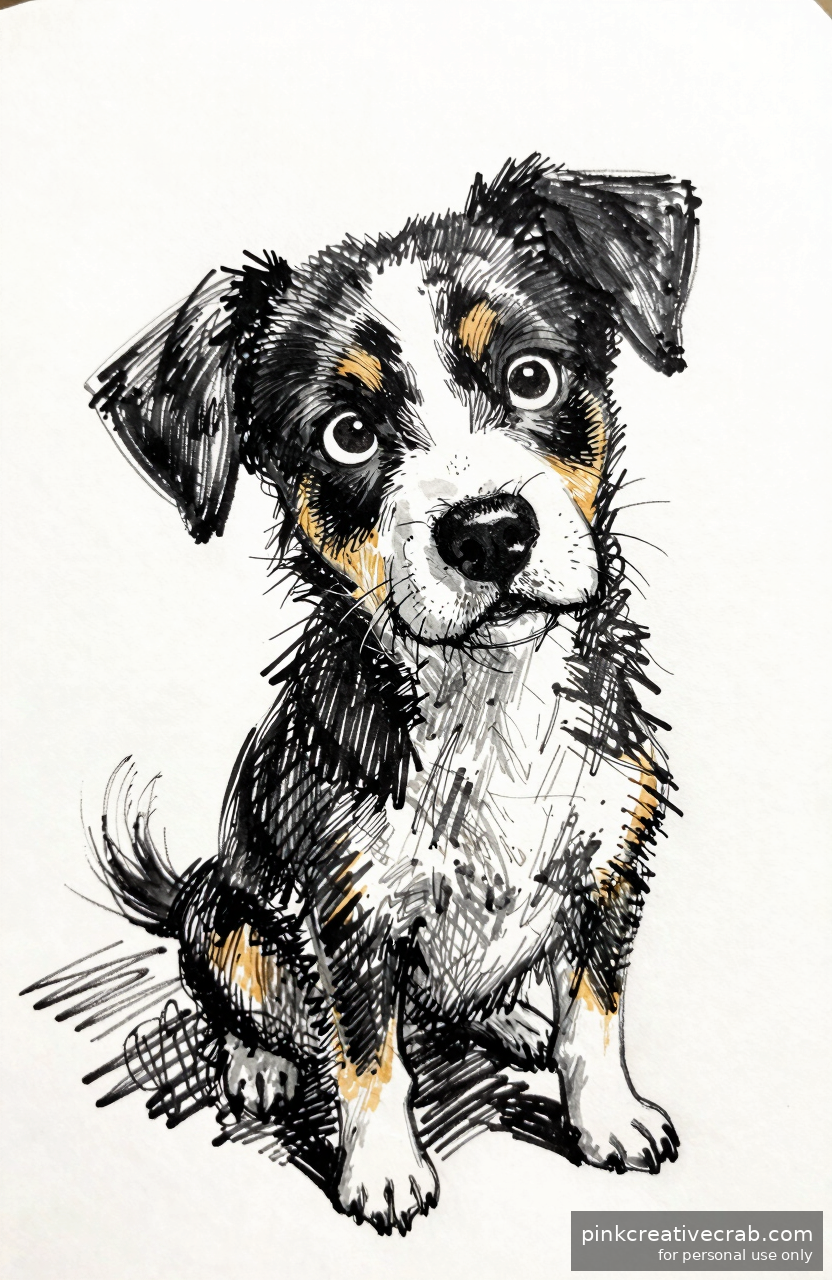
Curious Puppy Pencil Drawing
Drawing a curious puppy is one of the most joyful ways to start your pencil art journey. Those big, wondering eyes and slightly tilted head are actually beginner-friendly shapes once you break them down. Start with a simple circle for the head, then add two smaller ovals for the eyes. You can do this!
Additionally, puppies have soft, rounded features that forgive small mistakes beautifully. A wobbly line here or there just adds charm. Focus on the eyes first, because getting those right makes the whole drawing come alive. Meanwhile, keep your pencil strokes light so you can erase and adjust freely.
For this project, a good set of graphite pencils makes a huge difference. Softer grades like 2B and 4B help you build those lovely dark eyes with ease. Therefore, grabbing a reliable beginner set is a smart first step. Try these graphite pencil sets for beginners to get started on the right foot.
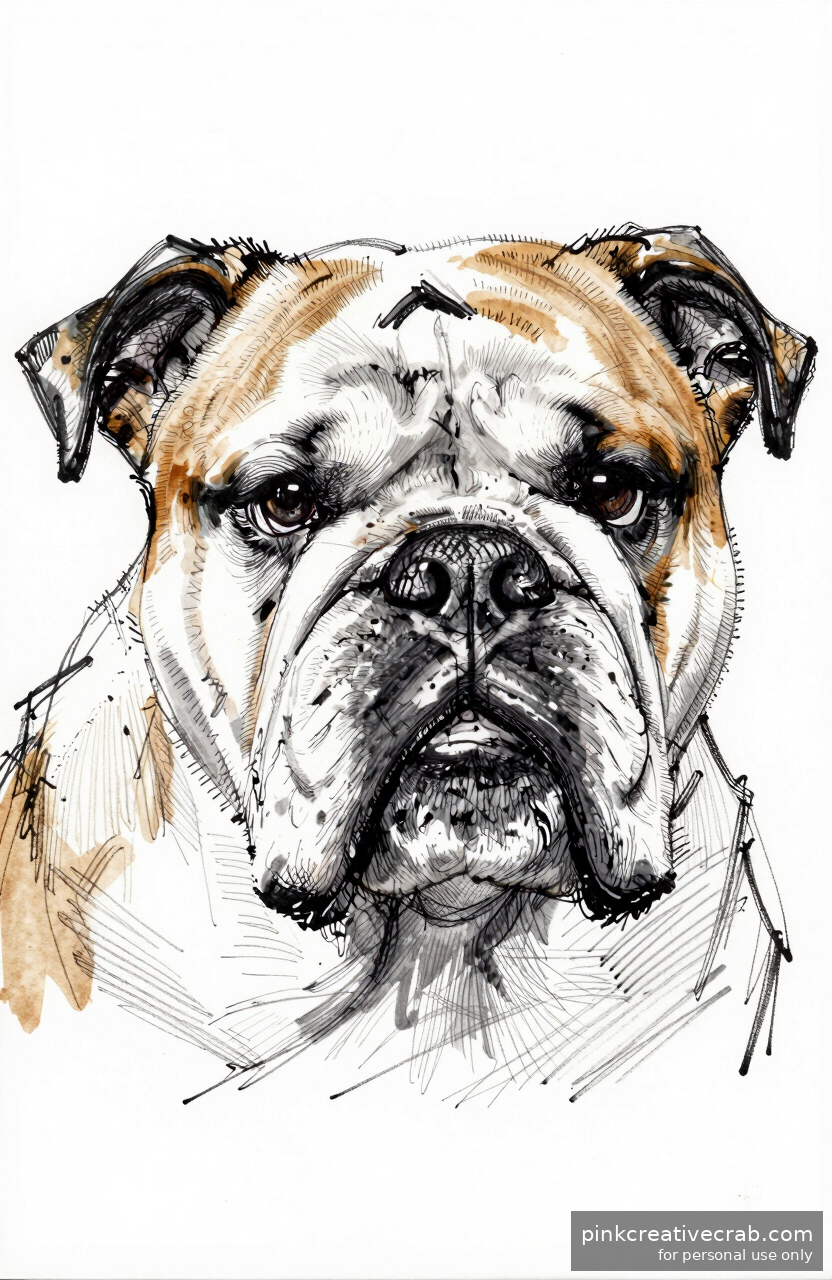
Wrinkly Bulldog Face
A bulldog face is secretly one of the best subjects for beginner pencil artists. All those wrinkles and folds give you natural lines to follow, so there is always something interesting to draw. Start by sketching the broad, flat nose and work outward from there. Those deep creases practically draw themselves!
Additionally, shading the wrinkles is a wonderful way to practice light and shadow for the very first time. Use the side of your pencil tip to gently darken the deep folds. However, leave the raised skin areas lighter so the texture pops. As a result, your bulldog will look wonderfully three-dimensional even as a beginner.
Having a good kneaded eraser on hand is a game changer for this drawing. You can lift pencil marks to create highlights on those wrinkled ridges with ease. Meanwhile, it keeps your paper clean and smudge-free throughout. Pick up some kneaded erasers for pencil drawing and watch your bulldog come to life.
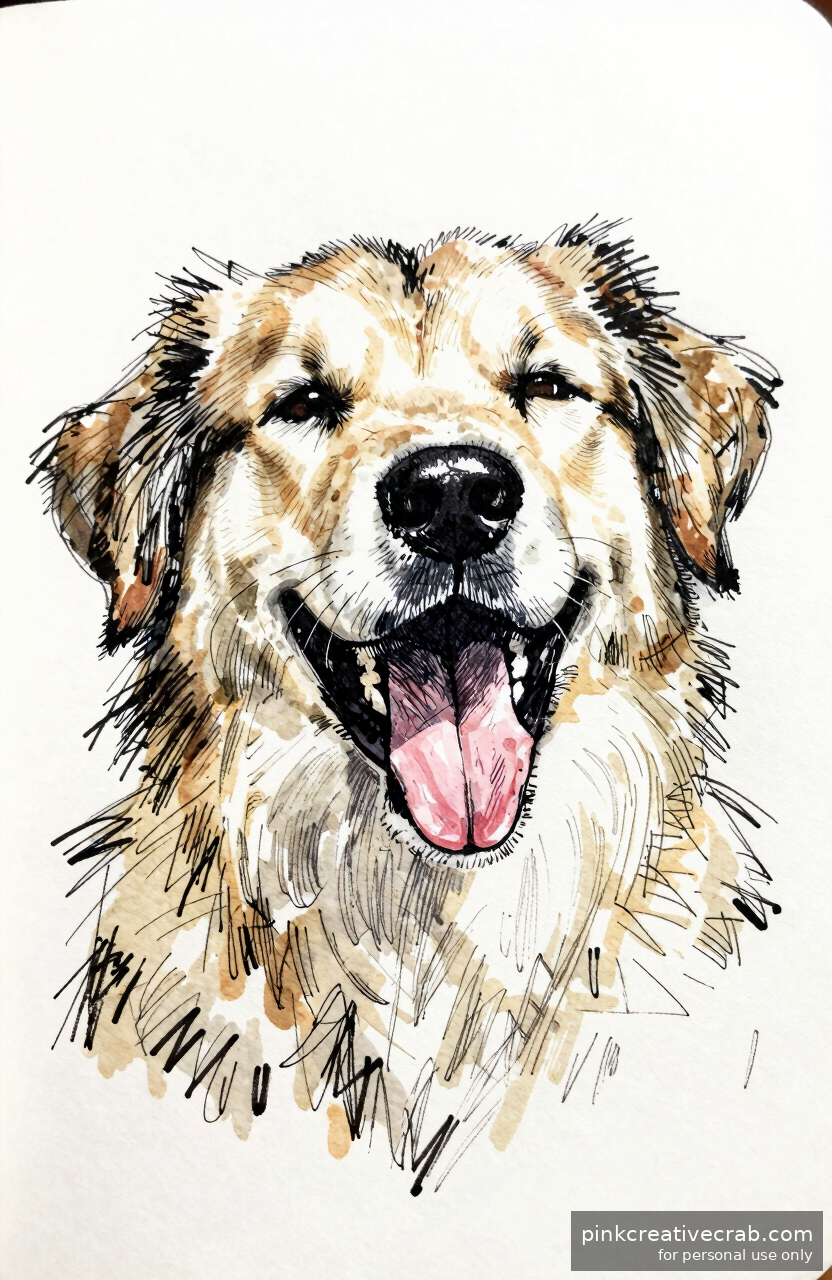
Happy Dog with Tongue Out
Nothing beats drawing a happy, panting dog with its tongue flopping out! This is such a fun and forgiving subject because the whole expression radiates joy, and that energy covers any beginner wobbles. Start with a big rounded head shape and a wide open mouth. The tongue is simply a curved teardrop hanging below, so easy!
Furthermore, the eyes on a happy dog are slightly squinted, which actually makes them simpler to draw than wide open eyes. Use short, curved lines to suggest that joyful squint. Meanwhile, adding a few quick fur texture lines around the cheeks and ears brings the whole face together beautifully.
Smooth blending stumps help you soften pencil lines and create that lovely fluffy fur look around the cheeks. Therefore, having one in your kit makes this drawing so much more satisfying. Additionally, they are inexpensive and easy to use right away. Grab some blending stumps for pencil drawing and enjoy the process.
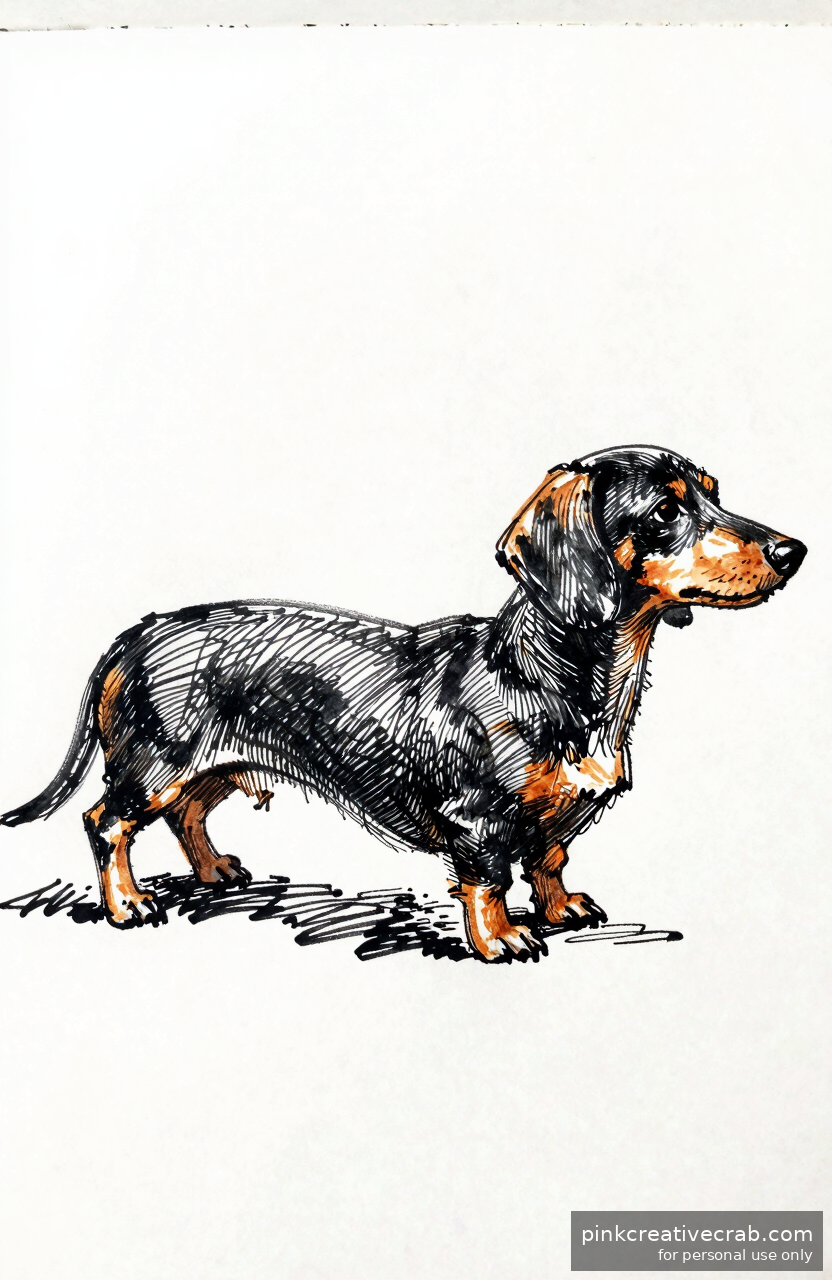
Tiny Dachshund Side Profile
A dachshund side profile is a wonderfully simple beginner drawing because the shape is basically one long, gentle oval with four short legs underneath. That iconic low slung body and long snout make this breed immediately recognizable even in a loose sketch. Start with a horizontal oval for the body and add the long nose from there.
However, the real magic comes from capturing those adorable droopy ears hanging down from the head. Use soft, flowing pencil strokes to suggest their gentle curve. Additionally, the legs are tiny and stubby, so do not overthink them. Simple rectangular shapes work perfectly and actually look quite charming.
Drawing on quality sketching paper makes a noticeable difference because it holds pencil marks smoothly without tearing under erasure. As a result, you can experiment freely and build confidence with every line. Therefore, setting yourself up with good paper from the start is truly worth it. Check out these sketching paper pads for beginners for your dachshund drawing.
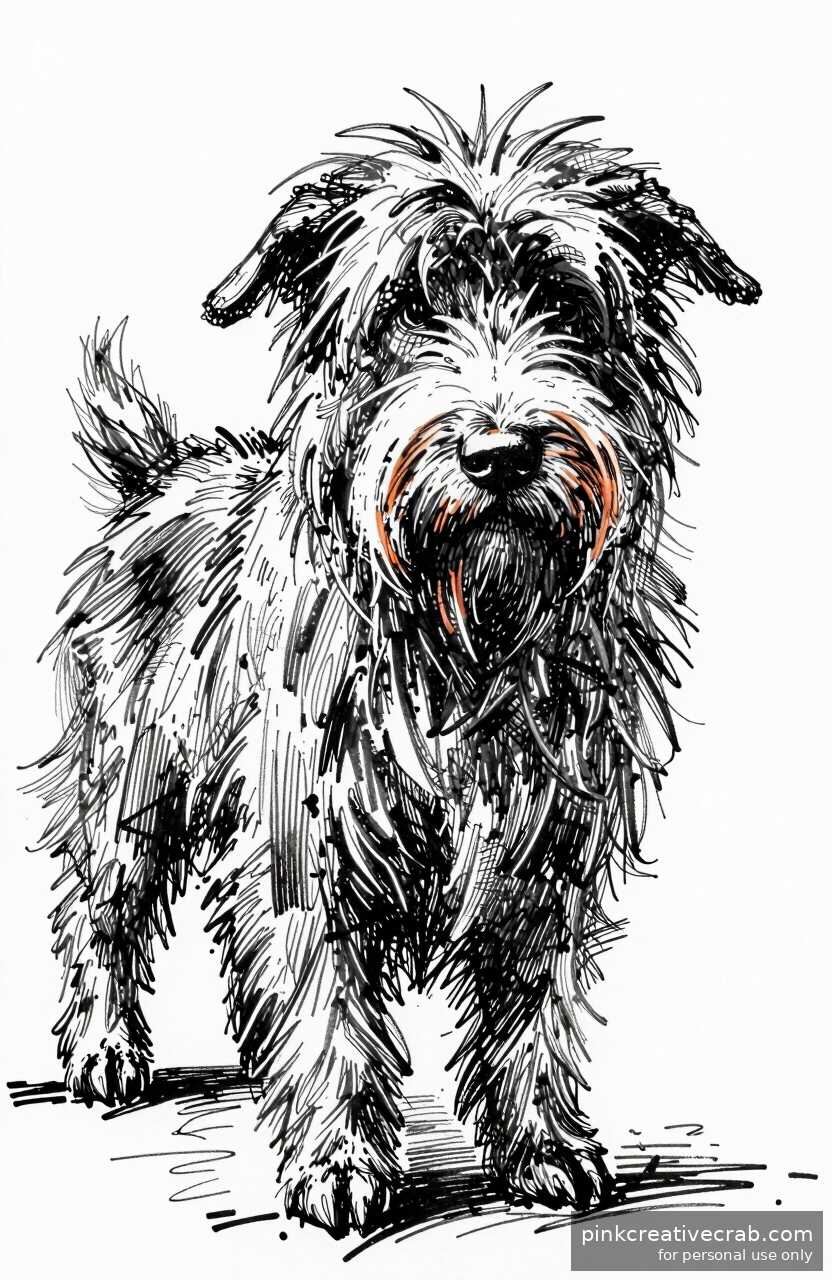
Shaggy Sheepdog Fur Texture
Drawing a shaggy sheepdog is the perfect way to practice pencil texture, and honestly it is more fun than it sounds! The key is using loose, flowing pencil strokes that follow the direction the fur falls. Do not worry about drawing every single hair. Instead, suggest the movement and fluffiness with groups of curving lines.
Additionally, the contrast between dark shaded areas and lighter fluffy patches is what gives shaggy fur its wonderful depth. Try pressing harder on your pencil for the deeper shadow areas underneath the fur. Meanwhile, lighter feathery strokes on top create that soft, touchable texture. As a result, the drawing feels alive and dimensional even at beginner level.
Using a range of pencil hardness values really helps when drawing fur texture. For example, a hard 2H pencil creates fine light hairs beautifully, while a soft 6B builds deep shadow quickly. Therefore, having a full pencil range available opens up so many creative possibilities. Try a complete drawing pencil set to tackle that gorgeous shaggy coat.
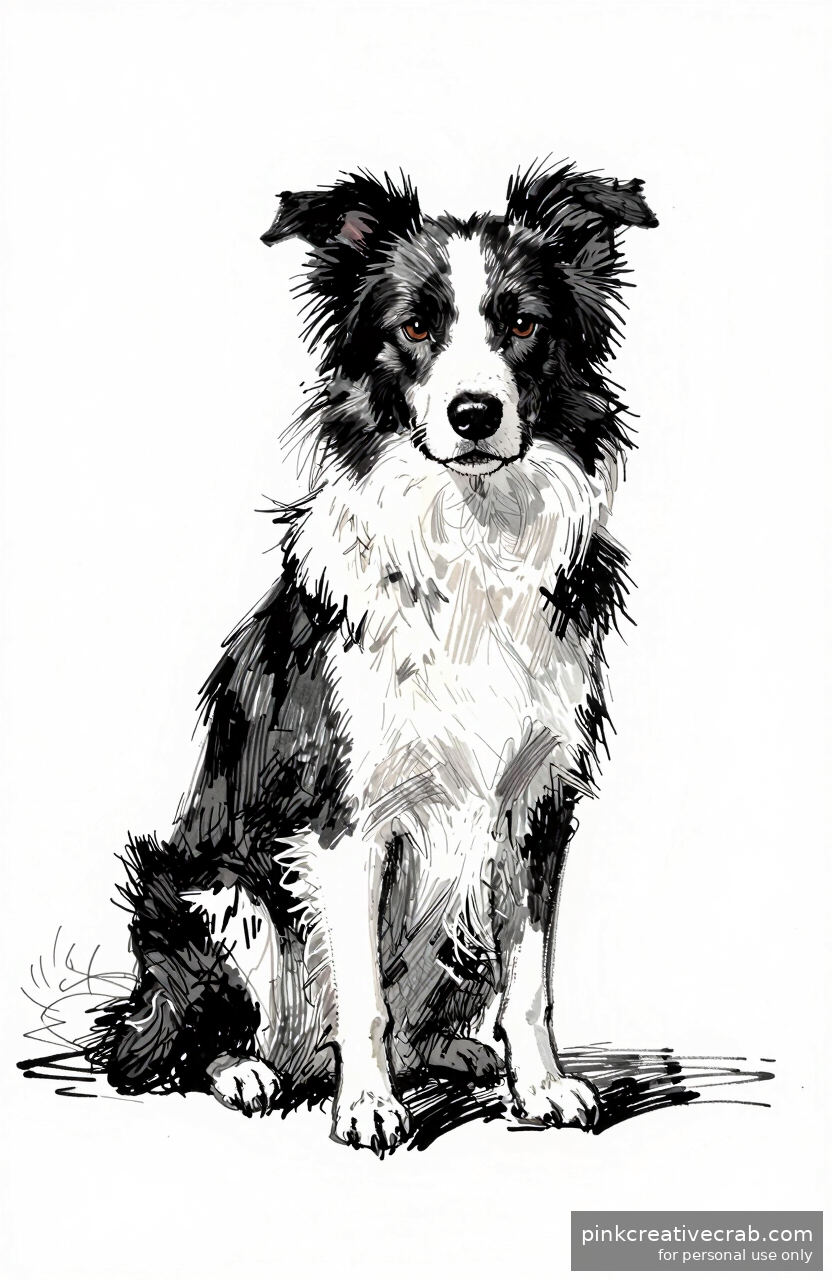
Sitting Border Collie Pose
A sitting border collie is one of the most satisfying dog poses to draw because the upright posture gives you clear, confident shapes to work with. Start with an oval for the head and a larger rounded rectangle for the body. The front legs sit straight down like two simple pillars, which makes proportion feel much more manageable.
Furthermore, border collies have that beautiful two tone coat which is actually a fantastic beginner shading exercise. Use heavier pencil pressure for the dark patches and leave the white areas almost untouched. However, adding just a whisper of light shading to the white areas stops them looking flat. As a result, the contrast really pops off the page.
A quality mechanical pencil is wonderful for capturing the fine details in the collie’s expressive face and pointed ears. Additionally, the consistent line width gives beginners more control than a regular pencil can sometimes offer. Therefore, it is a brilliant tool to add to your kit early on. Explore some mechanical pencils for drawing to refine those lovely details.
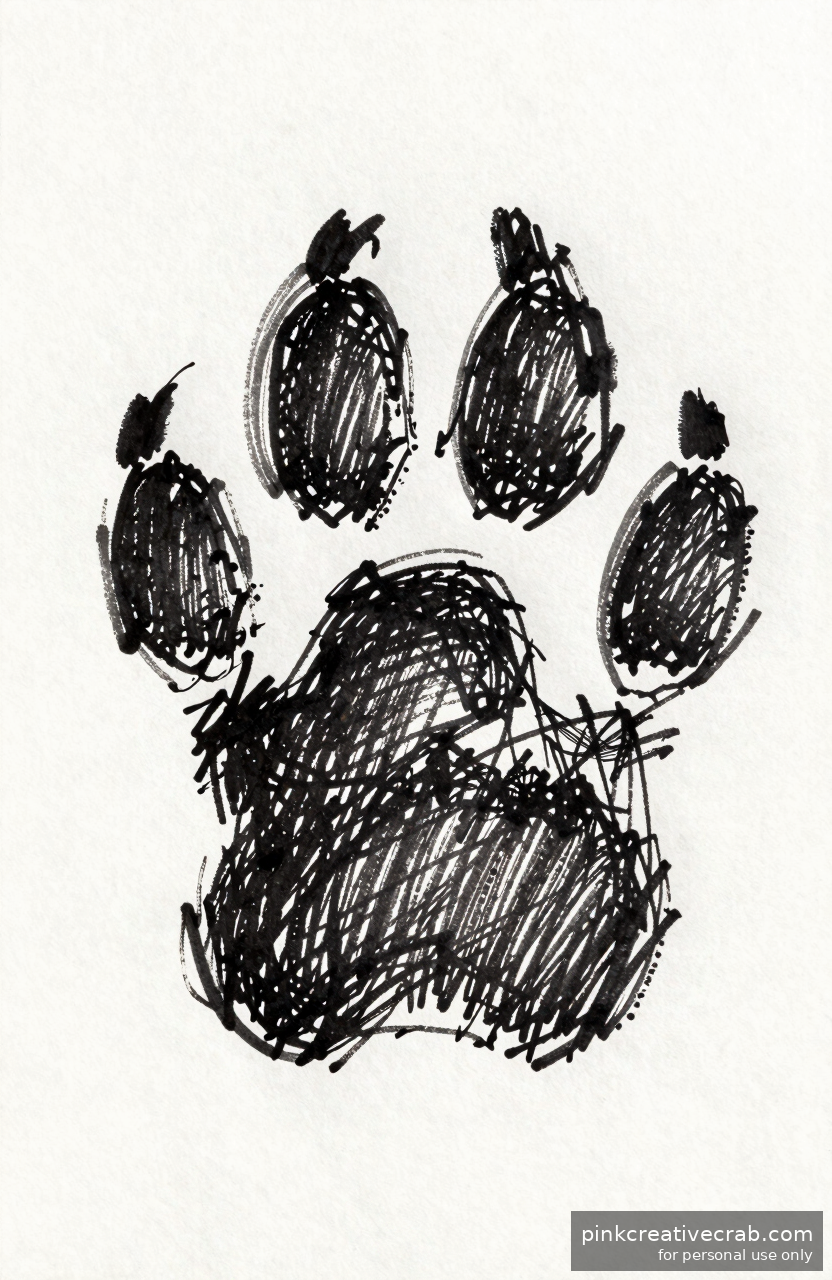
Paw Print and Pencil Study
Drawing a paw print study is one of the sweetest and most beginner friendly exercises you can try. The shape is made of simple circles, one large central pad and four smaller toe pads arranged around it. Because the forms are so geometric, you can practice consistent pressure and smooth curves with zero stress.
Additionally, this exercise teaches you to control pencil weight beautifully. Try pressing firmly around the outer edges of each pad to suggest a soft rounded form. Meanwhile, leaving the centers slightly lighter creates a gentle three dimensional effect that looks really impressive. As a result, even a single paw print study feels like a proper finished artwork.
For this kind of detailed study, smooth Bristol paper is an excellent choice because it holds fine pencil marks crispy and clean. Therefore, your pad textures and subtle shading will look their absolute best. Furthermore, Bristol paper is affordable and widely available, making it a brilliant beginner investment. Find some Bristol paper for pencil drawing and enjoy every careful mark.
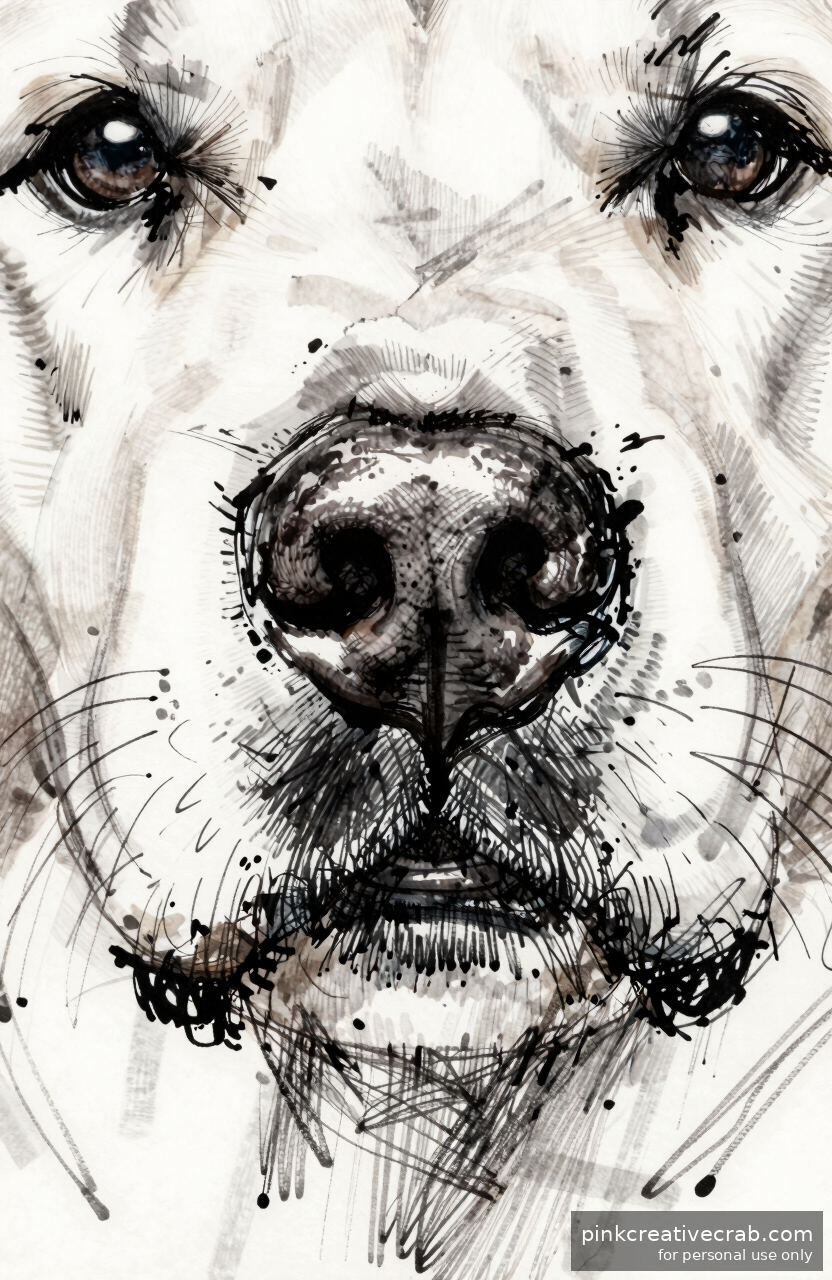
Dog Nose Close-Up Sketch
A dog’s nose is one of the most fun things to draw up close. Those little bumpy textures and the soft rounded shape make for a really satisfying pencil study. Best of all, you only need a small piece of paper and a few minutes to get started.
Begin by sketching a simple oval shape for the main nose structure. Then add the two nostril openings — they curve gently like little commas. Light shading around the edges helps the nose look round and real. Don’t worry about perfection here. Even a slightly wobbly nose looks totally charming.
Additionally, practicing this close-up builds your shading confidence fast. You’ll start noticing how light hits rounded surfaces, which helps with everything else you draw later. For smooth, blendable shading, try a set of pencil drawing sketching set — they make soft gradients so much easier to achieve.
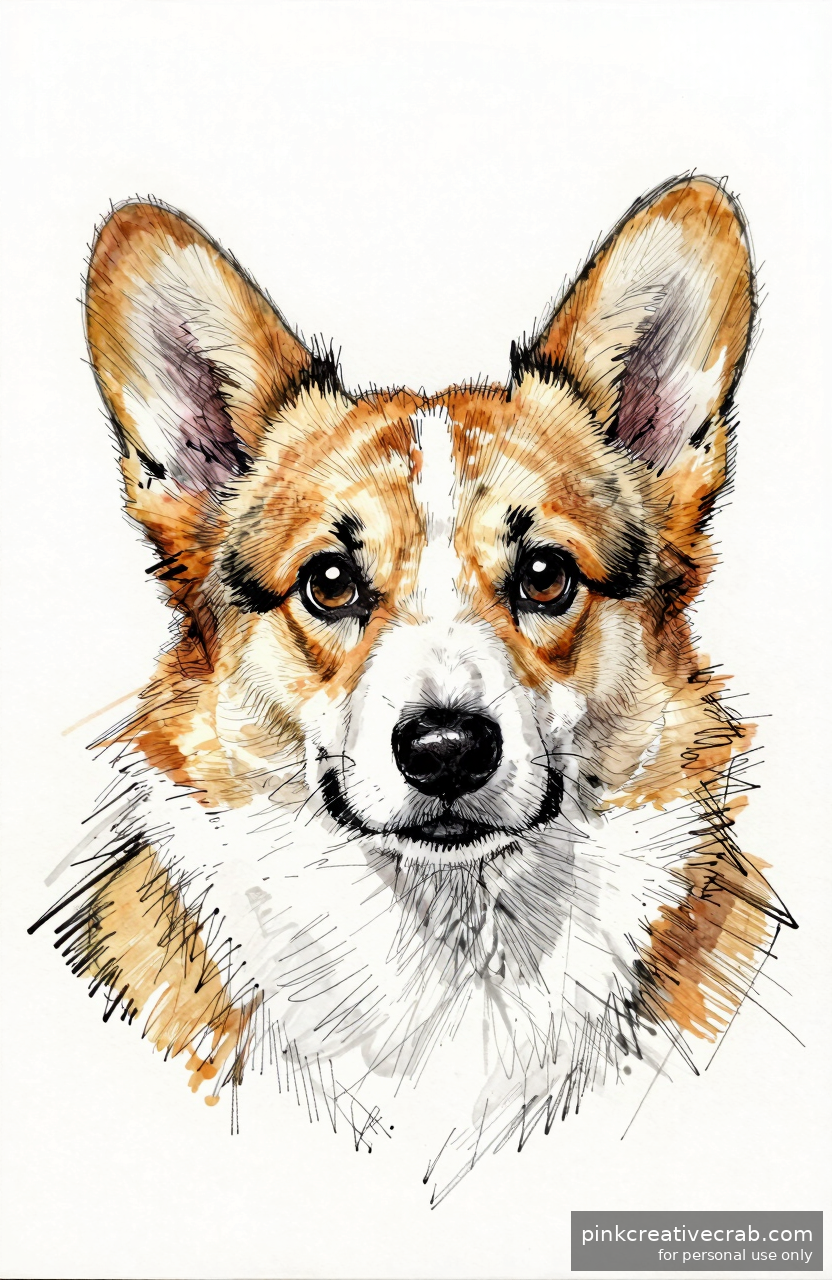
Perky-Eared Corgi Portrait
Corgis are basically made for pencil drawings. Those enormous triangle ears and round fox-like faces are pure joy to sketch. Even beginner artists find that a corgi’s simple shapes come together surprisingly quickly on the page.
Start with a wide circle for the face, then add two big triangles pointing upward for the ears. The eyes sit low and wide apart, giving corgis their famously sweet expression. A tiny oval nose and a simple curved mouth finish the face nicely. However, the ears are really the star — make them bold and upright.
Additionally, adding just a little fur texture with short pencil strokes around the cheeks makes the portrait feel warm and alive. You don’t need many details to capture that corgi charm. For building those soft fur lines, a good blending stump art tool set helps you smooth shading around those fluffy cheeks beautifully.
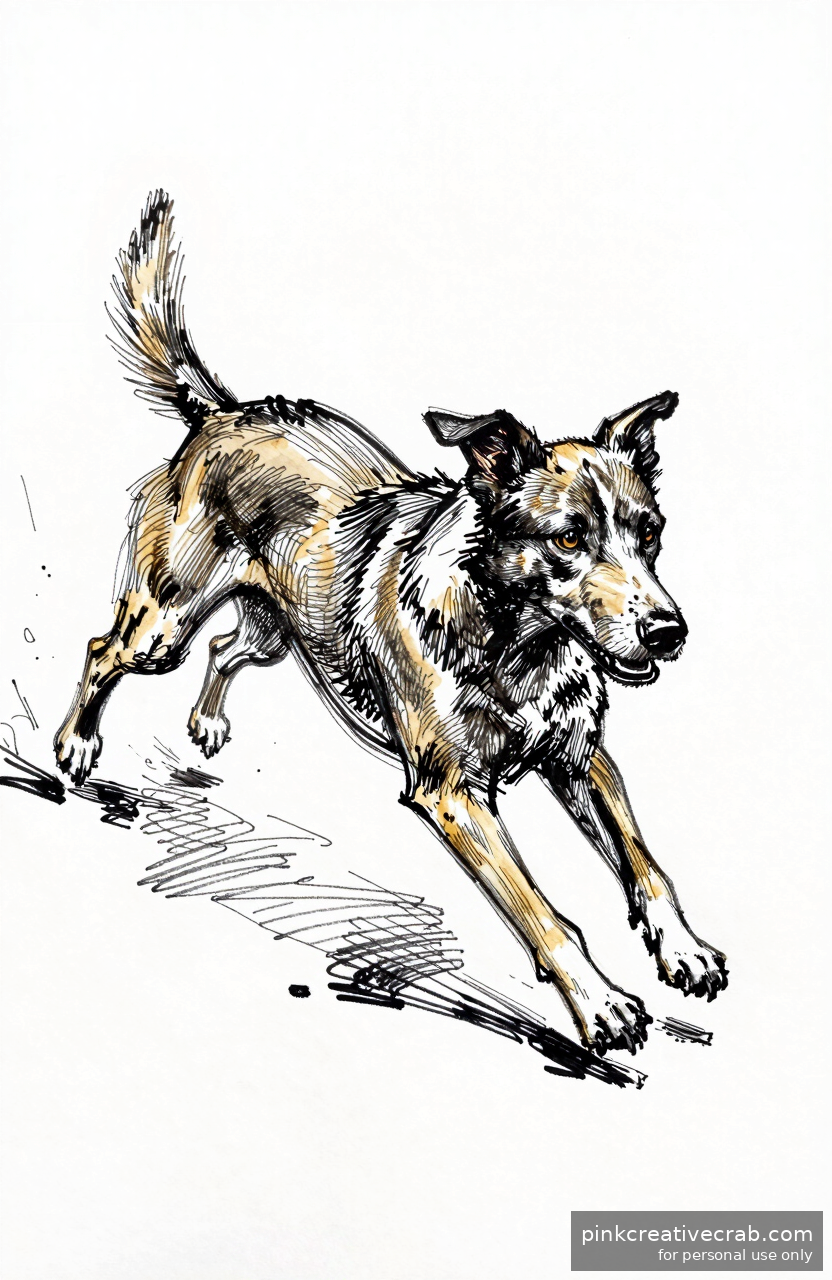
Energetic Dog Mid-Zoomies
Drawing a dog in full zoomie mode is one of the most exciting beginner challenges you can try. Motion and energy might sound tricky, but actually a few simple tricks make a running dog look fantastic. Loose, confident pencil lines are your best friend here.
Sketch the body as a long stretched oval, almost like a banana curve. The legs splay out in all four directions — front paws reaching forward, back paws kicking behind. Meanwhile, the ears fly back and the tail curves upward. This exaggerated pose instantly reads as wild, happy speed.
Therefore, don’t overthink the details. Messy, energetic strokes actually add to the feeling of movement. A few motion lines behind the dog help sell the zoomies perfectly. For this kind of expressive sketching, a sketchbook with smooth drawing paper lets your pencil glide freely and keeps those loose lines feeling spontaneous.
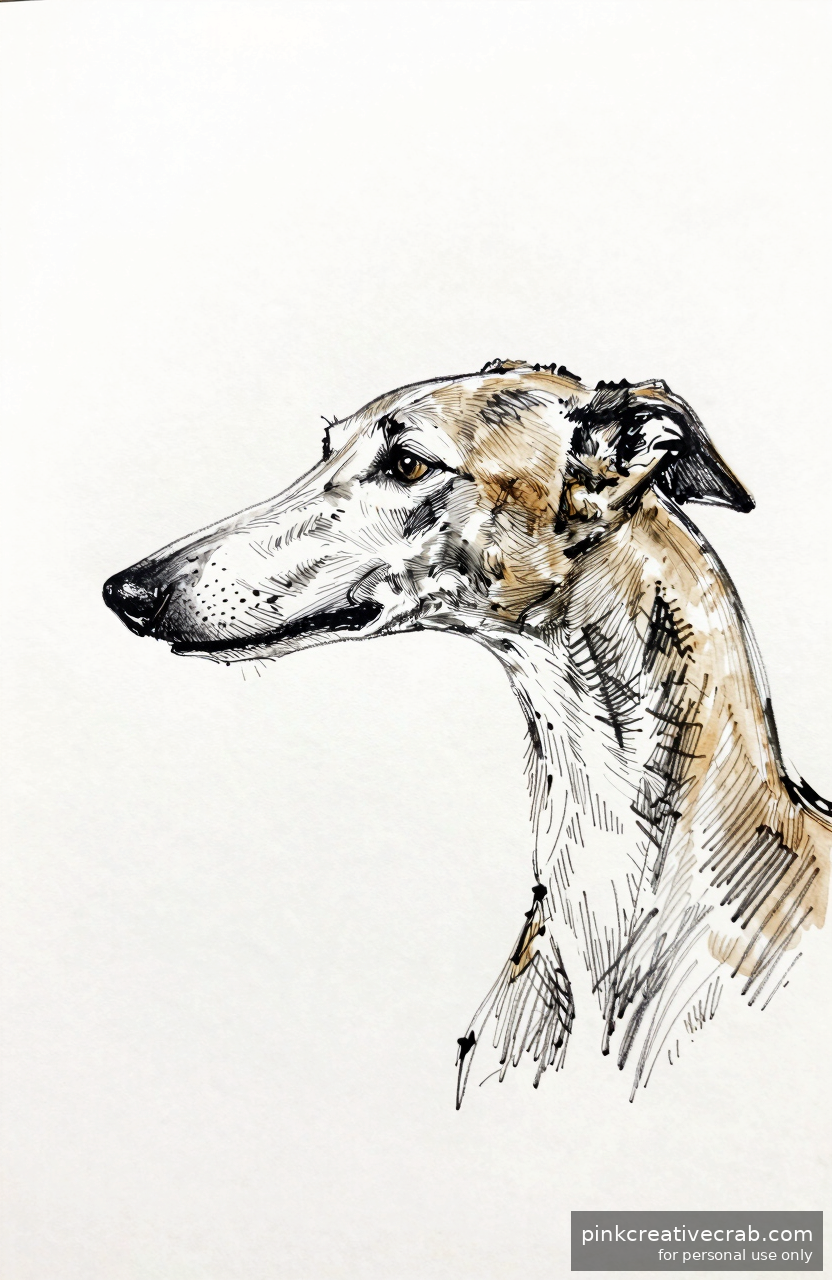
Gentle Greyhound Profile
A greyhound profile is honestly one of the most elegant pencil drawings a beginner can attempt. That long narrow snout and graceful arching neck create beautiful flowing lines that almost draw themselves. Additionally, the simple silhouette means you can focus on clean, confident strokes.
Start with the long nose, then curve gently upward toward the slim forehead. The neck dips down in a lovely S-curve before widening into narrow shoulders. Greyhounds have such thin frames that shading is minimal — just soft shadows along the neck and under the jaw. As a result, this drawing comes together faster than you might expect.
For extra refinement, a few gentle pencil strokes suggest the short smooth coat without heavy texture. The simplicity is actually what makes this portrait so striking. To keep your lines clean and your erasing gentle, a kneaded eraser for artists lifts pencil marks without roughing up your paper surface.
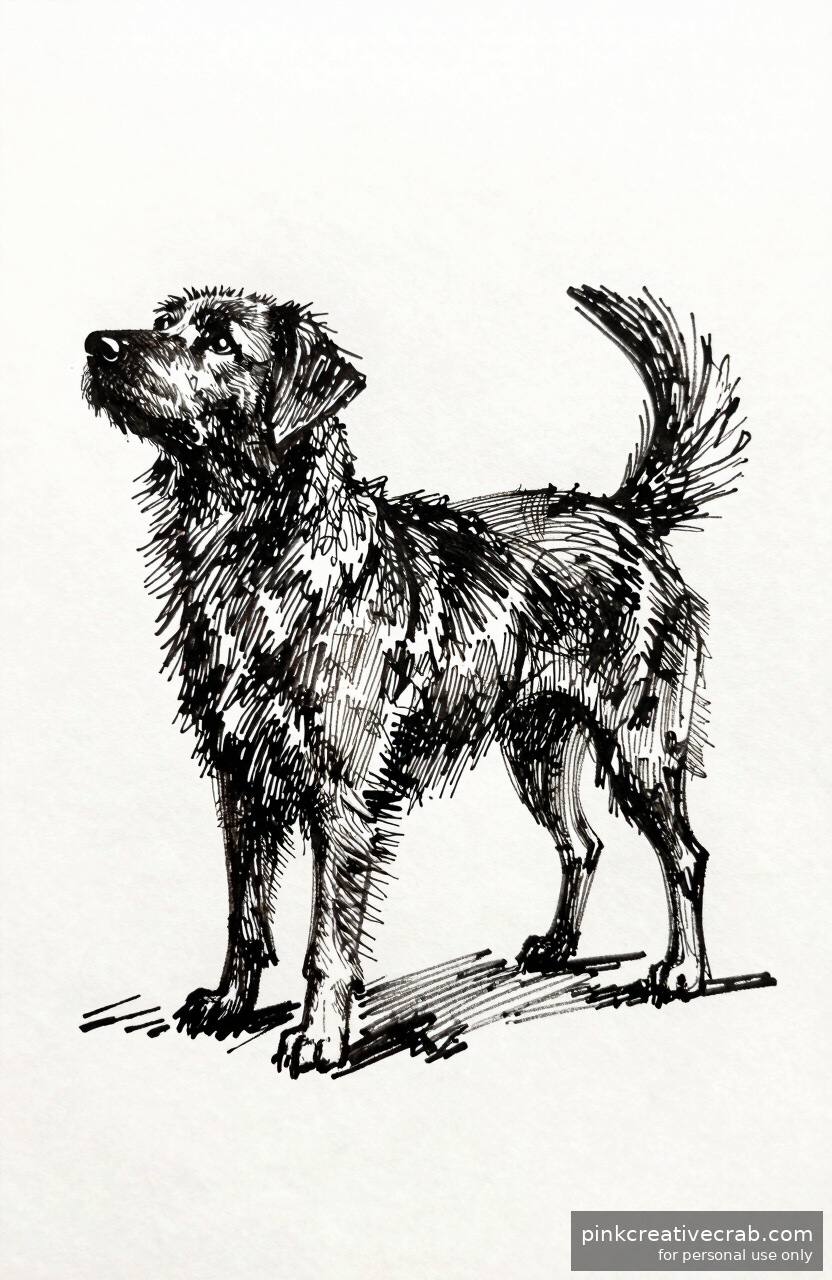
Wagging Tail Pencil Study
Here’s a fun and unusual drawing idea — sketch just a dog’s wagging tail and hindquarters. It’s a playful composition that beginners don’t expect to love, but it turns out wonderfully expressive. The curve of a happy wagging tail tells a whole story all by itself.
Begin with the dog’s back as a simple curved line. The tail sweeps up in a big arc, maybe curling at the tip. Short pencil strokes suggest fur texture along the tail, getting fluffier toward the end. Meanwhile, a little motion blur effect — a few repeated curved lines near the tail tip — captures that joyful wagging energy.
Additionally, this focused study is a great way to practice fur texture without feeling overwhelmed. You’re only drawing one small area, which builds real confidence. For sketching those soft layered fur strokes, a set of graphite drawing pencils HB 2B 4B gives you the perfect range from light fluff to deep shadow.
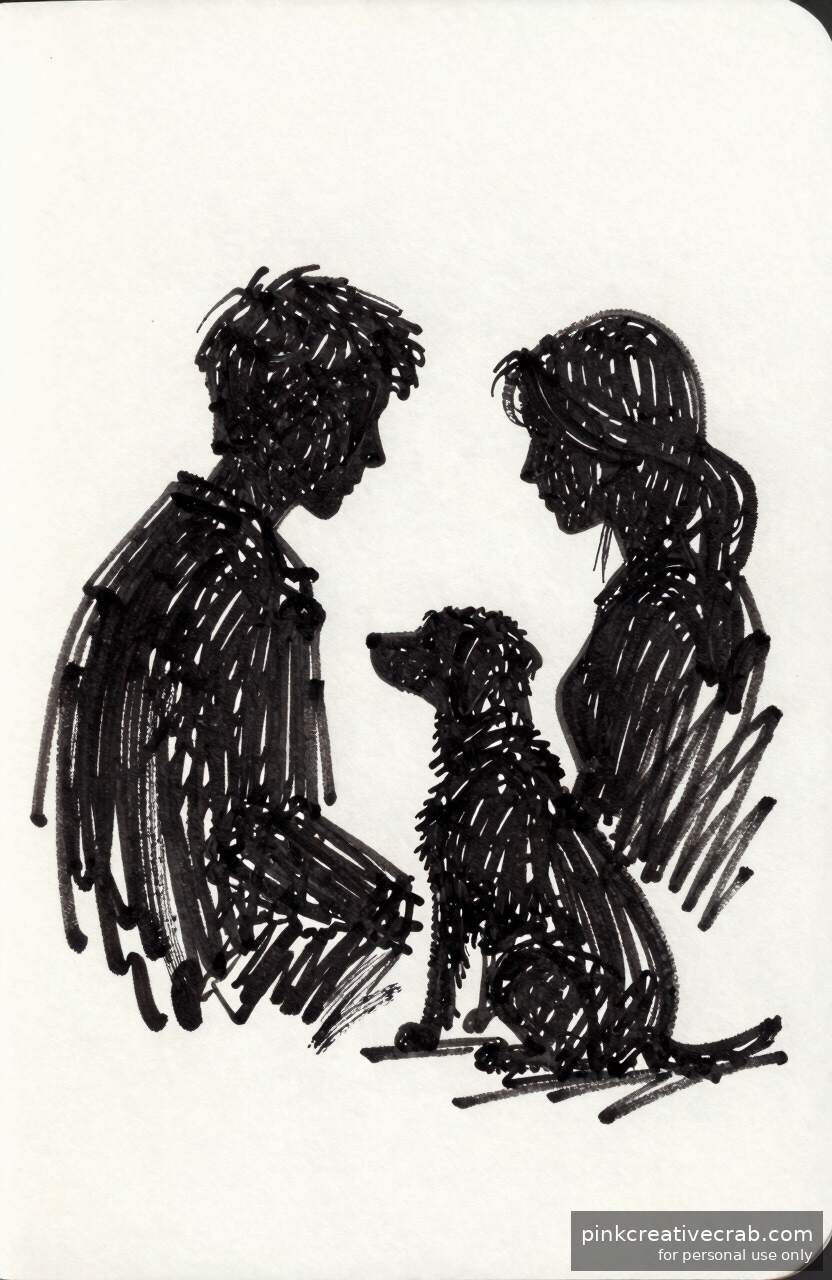
Dog and Owner Friendship Sketch
Capturing the bond between a dog and their person is one of the sweetest things you can put on paper. This kind of two-subject sketch might sound advanced, but simplifying both figures into basic shapes makes it totally beginner-friendly. Therefore, don’t let the idea of drawing two subjects intimidate you at all.
Sketch the human as a simple rounded silhouette — just a head and shoulders. The dog sits beside or looks up adoringly, which is the most natural pose in the world. A gentle lean between the two figures, or a hand resting on a dog’s head, immediately communicates that warm connection. Keep both figures loose and simple.
Additionally, the emotional impact comes from the relationship between the shapes, not from perfect details. Even a rough sketch feels touching when the pose is right. For practicing these loose expressive compositions, a spiral bound sketchbook for beginners lets you fill pages freely without worrying about wasting expensive paper.
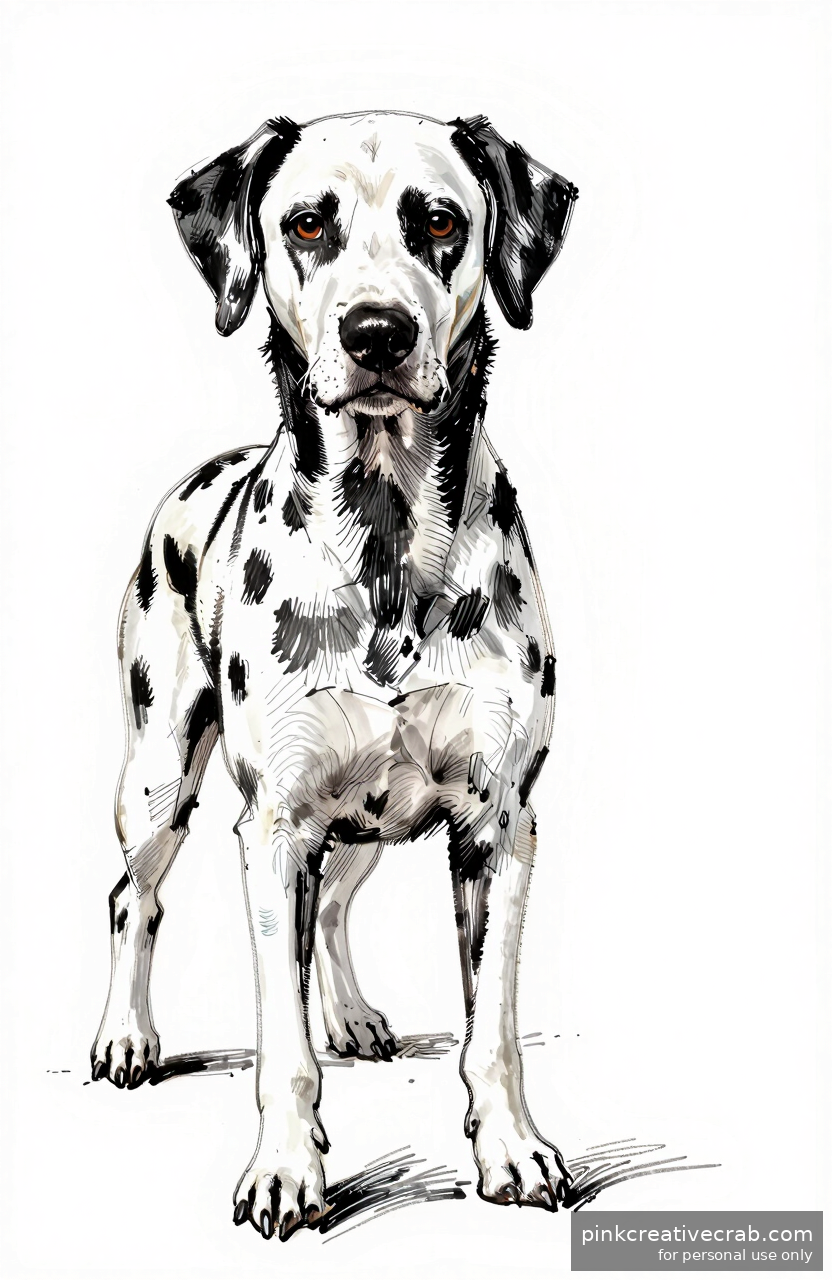
Spotted Dalmatian Pencil Drawing
Drawing a dalmatian is secretly one of the best beginner exercises around. Those bold black spots on a white coat are basically a built-in pencil drawing lesson in contrast and pattern. Best of all, every spot is unique, so there’s no such thing as getting it wrong.
Start with the dog’s basic body outline — a simple standing or sitting pose works beautifully. Then comes the really fun part: adding spots. Scatter irregular oval and round shapes across the body, making some larger and some tiny. However, leave plenty of white space between spots so the coat reads as clean and bright.
As a result, the contrast between the dark pencil spots and the white paper does all the heavy lifting for you. This drawing looks impressive with surprisingly little effort. For creating those crisp dark spots, a mechanical pencil set for drawing gives you sharp consistent lines that make each spot look clean and confident.
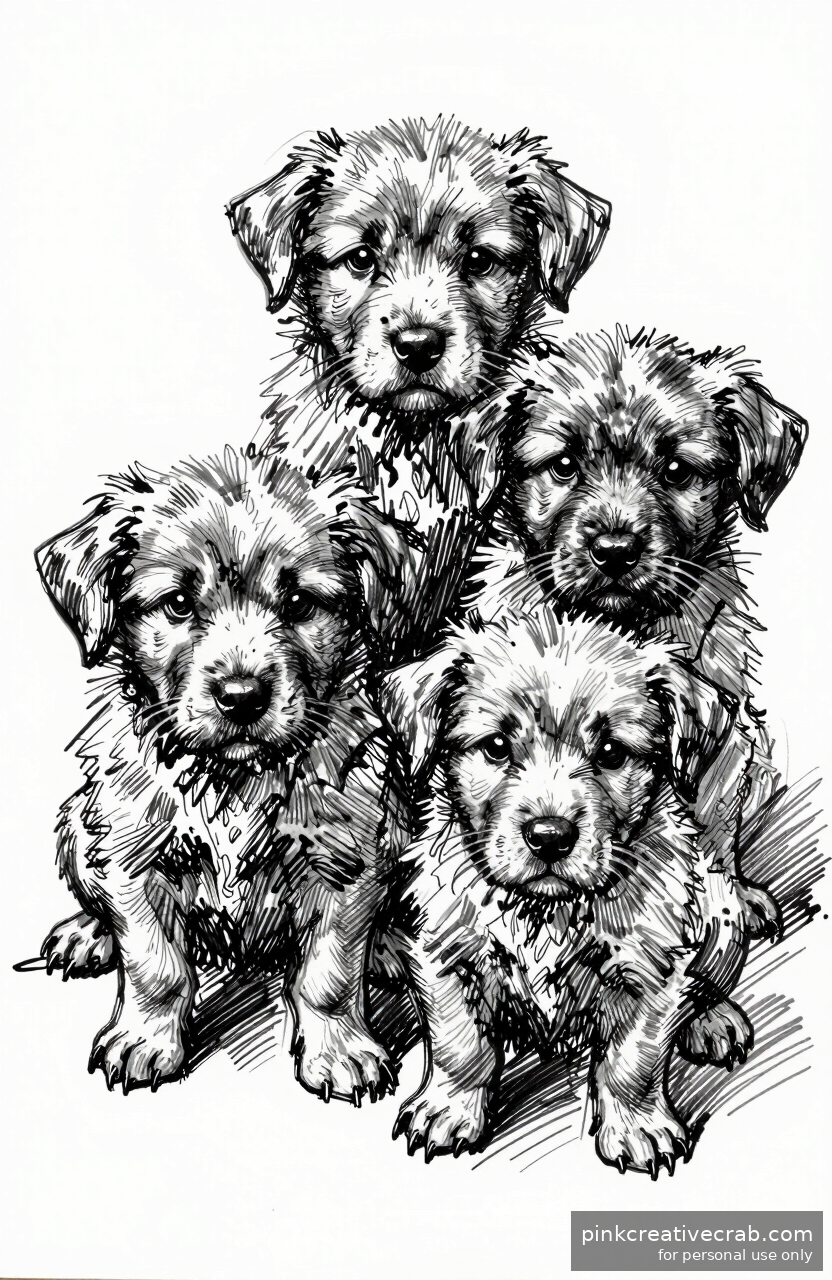
Fluffy Puppy Pile Scene
Drawing a pile of fluffy puppies sounds tricky, but honestly it’s one of the most forgiving subjects you can pick. Overlapping shapes actually hide wobbly lines beautifully. Start by sketching three or four simple oval bodies tumbling together, then add rounded ears and tiny paws peeking out wherever feels natural.
The secret here is texture. Short, quick pencil strokes radiating outward from each puppy’s body create that irresistible fluffiness. Meanwhile, leaving white gaps between puppies helps the eye separate one little body from another. Don’t worry about perfection — a slightly lopsided ear just adds personality and charm.
For soft, fluffy results, a blending stump works wonderfully alongside your pencil. Additionally, a kneaded eraser lets you lift highlights right out of the fur. Try this project with a good set of graphite pencils graded from light to dark — a graphite pencil set for beginners gives you everything needed to capture all that adorable fluffiness.
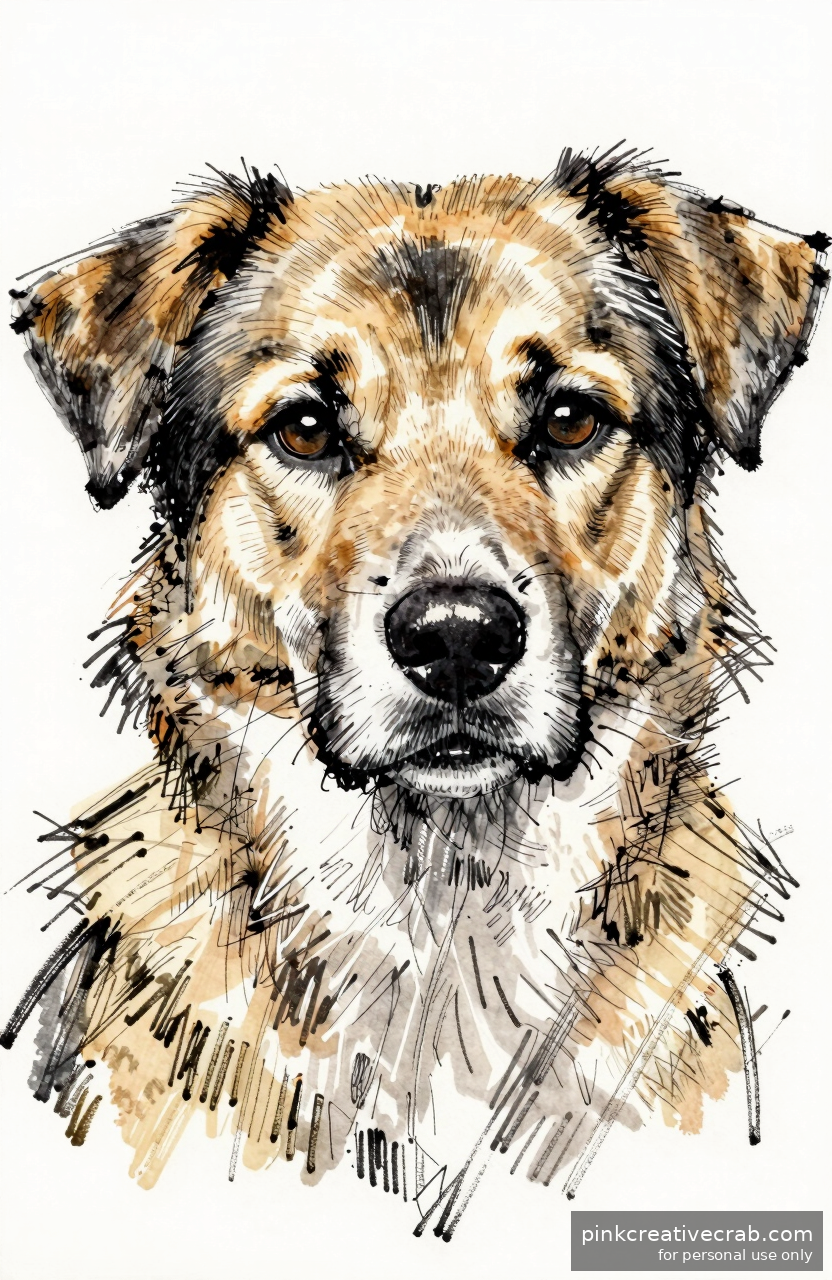
Expressive Mixed-Breed Dog Face
Mixed-breed dogs have the most wonderfully unique faces, and that makes them absolutely perfect for expressive portrait practice. Every quirky feature — a lopsided ear, a broad nose, deep soulful eyes — gives your pencil something interesting to celebrate. Therefore, don’t try to ‘correct’ any features; lean into what makes the face special.
Start with two large almond-shaped eyes placed roughly in the center of your oval head shape. From there, the nose drops naturally below, and the muzzle fans outward on both sides. Loose, confident pencil strokes around the jowls and cheeks suggest fur without requiring precise detail. Even a few quick marks go a long way.
Expressive portraits really shine when you vary your pencil pressure — dark bold strokes for the eyes and nose, lighter feathery marks for the fur. Additionally, working on smooth bristol paper helps fine details pop clearly. A smooth bristol drawing pad is a fantastic affordable upgrade that beginners absolutely notice right away.
Final Thoughts
Every single dog pencil drawing you attempt is a small victory worth celebrating. The first sketch might feel wobbly and uncertain — however, that is exactly how every artist starts. Each line you put down teaches your hand and your eye to work together a little better than before.
Therefore, do not worry about perfection. A crooked ear or a slightly lopsided nose just adds character to your drawing. Additionally, dogs themselves are wonderfully forgiving subjects because their fur, expressiveness, and energy naturally hide any small mistakes. For example, a few loose scruffy strokes can instantly suggest a terrier’s wild coat without any technical precision at all.
So pick up your pencil, choose a subject from this list that excites you, and just begin. Progress happens one joyful sketch at a time, and before long you will look back at your early drawings with real pride. You have got this — now go draw some dogs!
Frequently Asked Questions
What pencil should a beginner use for a dog pencil drawing?
A simple HB pencil works perfectly to start. However, adding a 2B for darker shadows and a 4H for light fur details can really elevate your work. Therefore, a small set of three pencils covers most beginner needs beautifully. Additionally, a good eraser is just as important as the pencil itself for refining your lines.
How do I make dog fur look realistic in a pencil sketch?
Short, light strokes drawn in the direction the fur actually grows are your best friend here. Additionally, varying the pressure on your pencil creates natural-looking depth. For example, press harder near shadow areas and go very lightly for highlighted patches. Meanwhile, leaving some white space on the paper suggests shine and softness without any extra effort.
Is a dog pencil drawing suitable for absolute beginners?
Absolutely yes! Dogs are wonderfully expressive subjects, which means even a loose or imperfect sketch captures plenty of personality. Therefore, beginners should not feel intimidated. Starting with simple shapes like circles for the head and ovals for the snout makes the process feel manageable. Additionally, focusing on just one facial feature at a time builds confidence quickly.
How long does a simple dog pencil drawing take?
A quick expressive sketch can be done in as little as ten minutes, which is great for beginners building a daily habit. However, a more detailed portrait might take an hour or two. For example, working on fur texture and shading naturally extends the time. Meanwhile, the process itself is so enjoyable that the time tends to fly by pleasantly.
Do I need to use a reference photo for my dog drawing?
Using a reference photo is highly recommended for beginners, and there is absolutely no shame in it. Additionally, a clear photo helps you understand how light falls across fur and where shadows naturally sit. Therefore, grab a favourite photo of a dog and use it freely. Even professional artists rely on references regularly — it is simply good artistic practice.
Have any thoughts?
Share your reaction or leave a quick response — we’d love to hear what you think!
-
 1
1 -
0
-
0
-
0
-
0
-
0


